
Listening to the land or reading the land is a profound concept, rooted in the belief that nature communicates through signs and signals, much like a silent language. As a research based artist, I am inspired by the ecological lectures, where speakers often urge us to observe and understand what the land’s ecological role is in a given ecosystem, instead of what we would like it to be. This idea may initially seem unconventional, but it becomes clearer when you consider that Earth conveys messages through its responces to human interference with flora, fauna and weather.
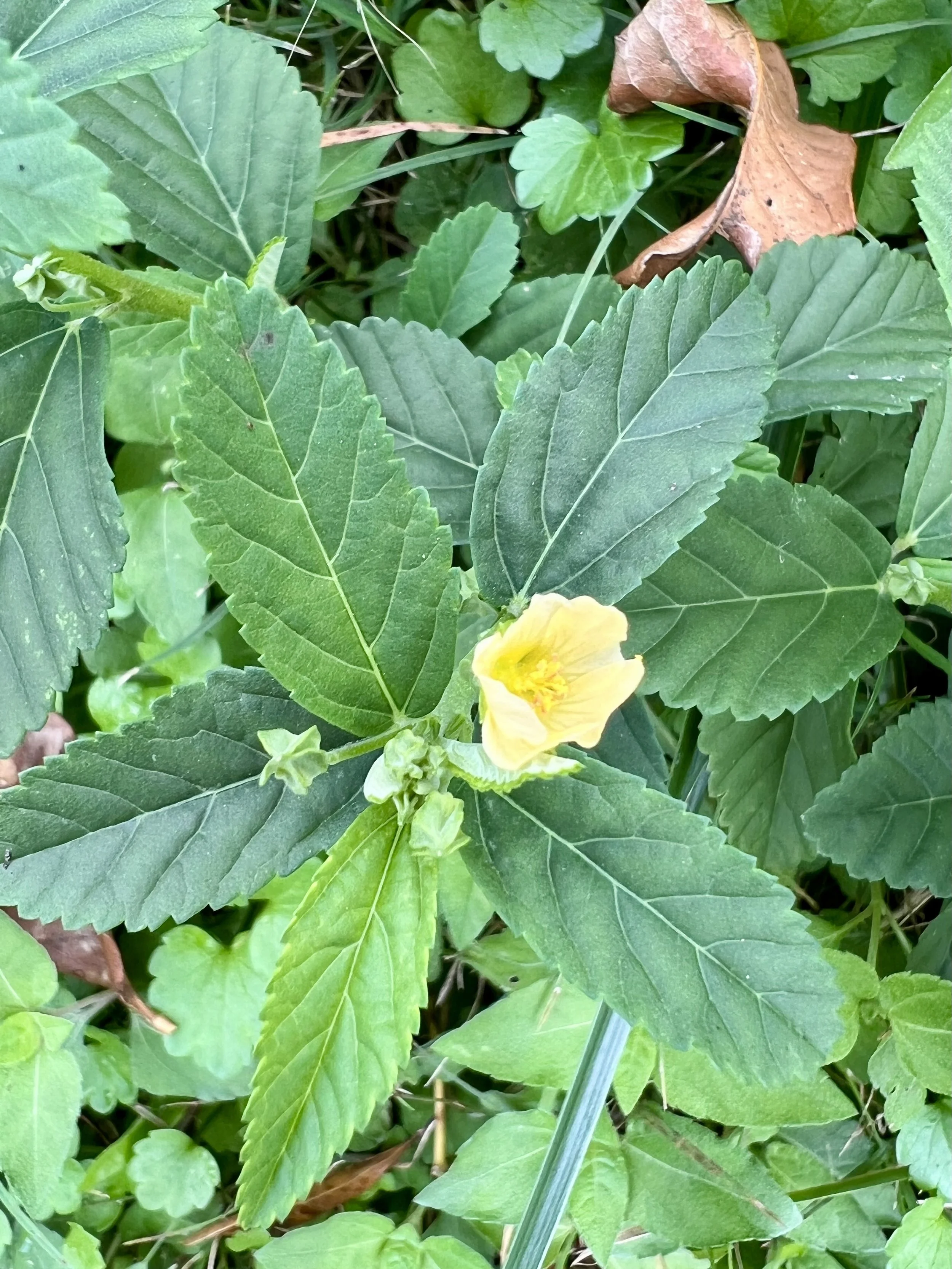
In my experiences, I spend considerable time immersed in various landscapes, keenly observing and listening to what the land needs to thrive. One such experience was in “Sequel,” where I was attuned to the environment through the presence of a songbird, the buzzing of a bee, and the dancing of a butterfly, which all narrated the story of a living ecosystem. It was here that I encountered Sida rhombifolia, or arrowleaf sida. This plant, through its silent discourse, revealed much about the health and needs of the land.
Sida rhombifolia, though sometimes viewed as invasive, plays a significant role in ecological wellbeing. Its nature as invasive tells me the land needs plants that compete for light and maximize the Earth’s surface for photosynthesis. First, it serves as a vital nectar source for bees and butterflies, crucial pollinators that sustain plant diversity and ecosystem health. Second, its robust root system acts as an anchor, stabilizing soil and preventing erosion, especially in disturbed areas. Third, the plant's ability to thrive in arid conditions makes it a valuable component in water-limited environments, showcasing its drought tolerance. Lastly, while not a staple for all herbivores, it can provide forage in ecosystems where food sources may be scarce.
The interplay between flora such as Sida rhombifolia and the broader ecosystem illustrates how plants can indicate the needs of the land. By "listening" to such signs — be it through the plants, the sounds of insects, or the sway of grasses — we can better understand and respond to these needs, leading to healthier landscapes.
My personal journey in listening to the land is one I hope to share widely, with the aim of inspiring others to cultivate a deeper connection with nature. The target audience includes individuals interested in ecology, sustainability, and anyone eager to understand their environment more intimately. Through this awareness, I hope to foster a sense of responsibility and action — a call to observe, learn, and ultimately, coexist in harmony with the natural world. Recognizing that the Earth speaks to us, not through words, but through the rich tapestry of its living ecosystems, empowers us to be stewards of the land, ensuring its health and vitality for future generations.
