2026
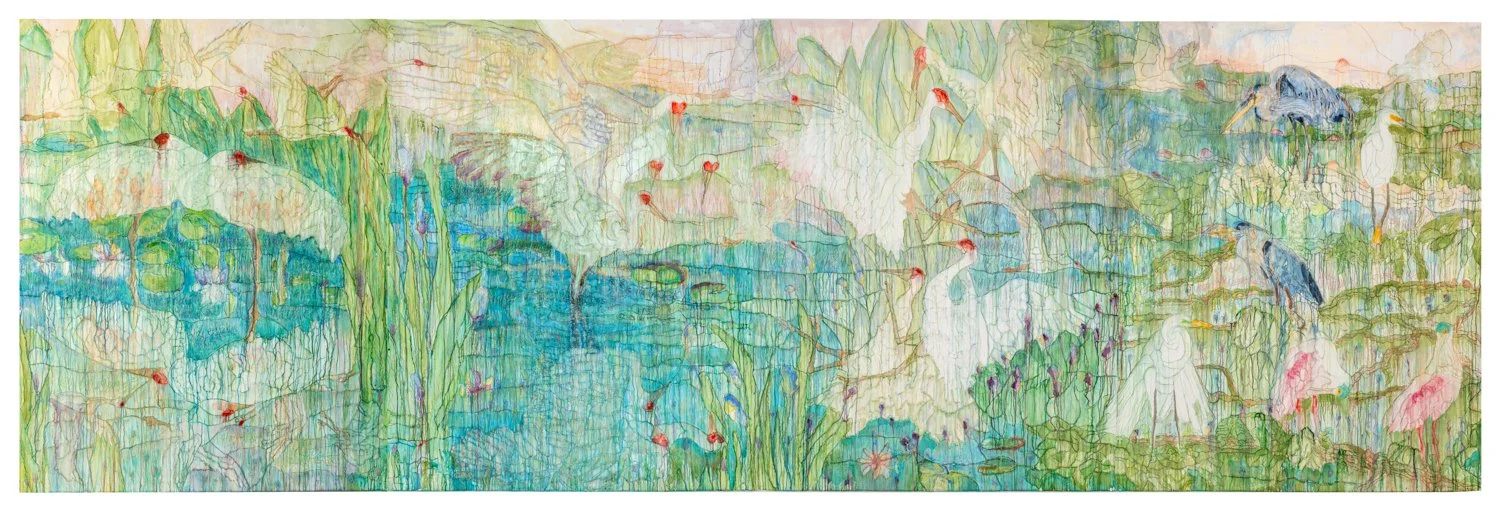
UNFOLDING HOPE
9’ X 28’ X .25”
Quadriptych — watercolor, ink, pastel, and collage on Stonehenge paper
Hope, for me, lives in the specific. Not in abstractions, but in the documented fact that twelve sandhill crane pairs nearly vanished from the coastal prairie in the early 1900s — and came back. Through the Migratory Bird Treaty Act, restored wetlands, and people who decided something irreplaceable was worth saving.
Unfolding Hope is a site-specific quadriptych blurring the boundaries between visual art, social sculpture, and poetry. Four panels — Quiet Estuary, Life’s Stubborn March, Courtship Dance, Knowledge Is The Bridge — carry the full arc of that story, from near-silence to recovery to what recovery asks of us now. My poem is written directly into the surface in pastel, layered and recolored until the words dissolve into the landscape. Some phrases are readable up close. From a distance, they become marks. That’s intentional.
The process is one I developed in 2025: large pencil drawings on Stonehenge paper, torn — not cut — then collaged back onto fresh paper to build a layered relief. Watercolor and ink were applied in broad washes, then pushed into the ridges with a garden sprayer. Pastel, more water, repeat. The finished panels are three to four sheets thick.
Richard Louv’s line runs through everything I make: we cannot protect what we don’t love, can’t love what we don’t know, can’t know what we don’t see. This piece is built around that belief. The cranes came back. The coastal prairie can too.
The Anthropocene is not yet written. Its last word is the one we choose.
Video
Hope Takes Flight-in an award-winning art installation
Video by Tripp Films (@trippfilms) courtesy of Weingarten Art Group (@weingartenartgroup) and Houston Endowment (@HoustonEndowment)
Read more
Made possible through the Houston Endowment Jones Artist Awards Program 2026. Presented in partnership with Weingarten Art Group.
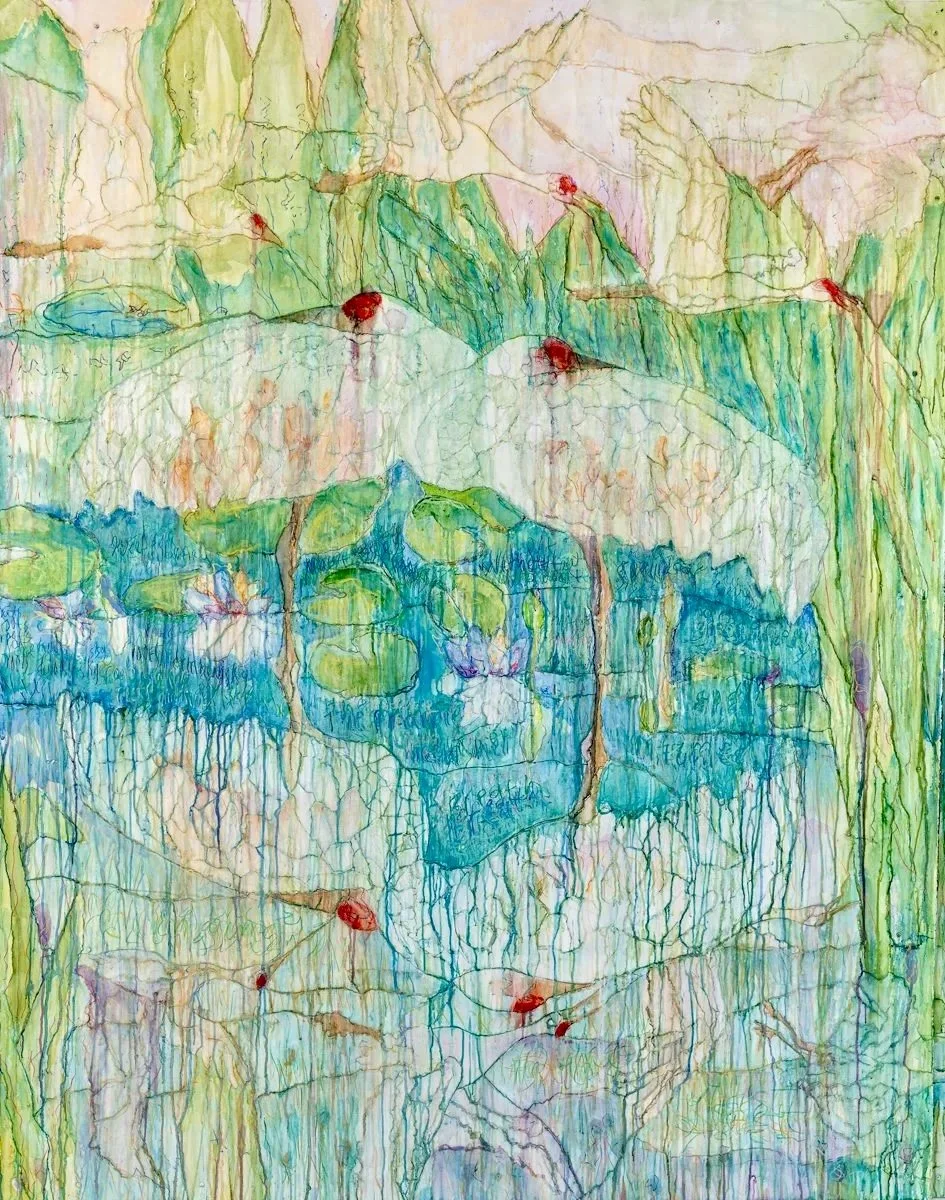
UNFOLDING HOPE — Quiet Estuary
9’ X 7” X .25”
image by Rony Canales
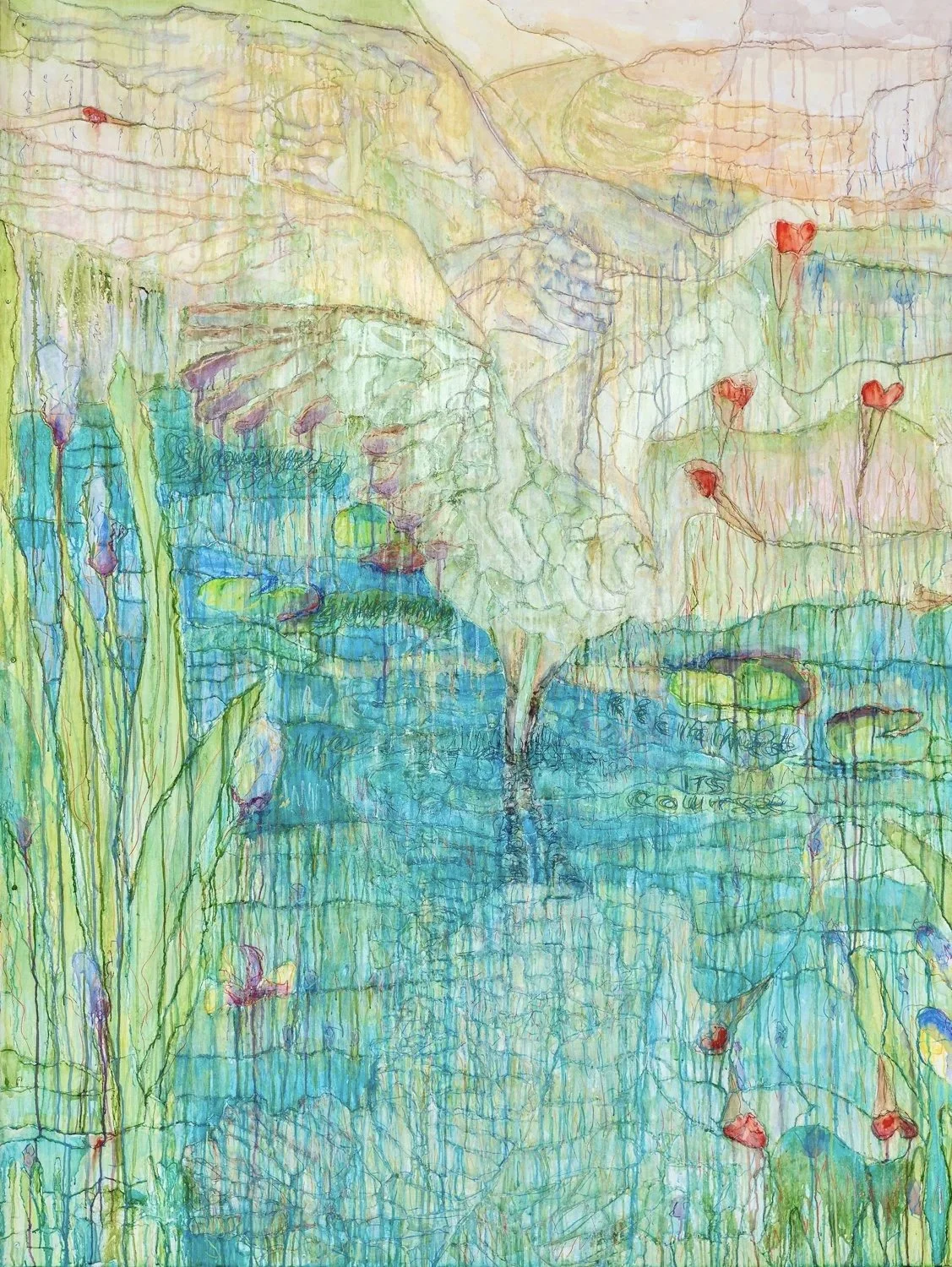
UNFOLDING HOPE - Life's Stubborn March
9’ X 7’ X .25”
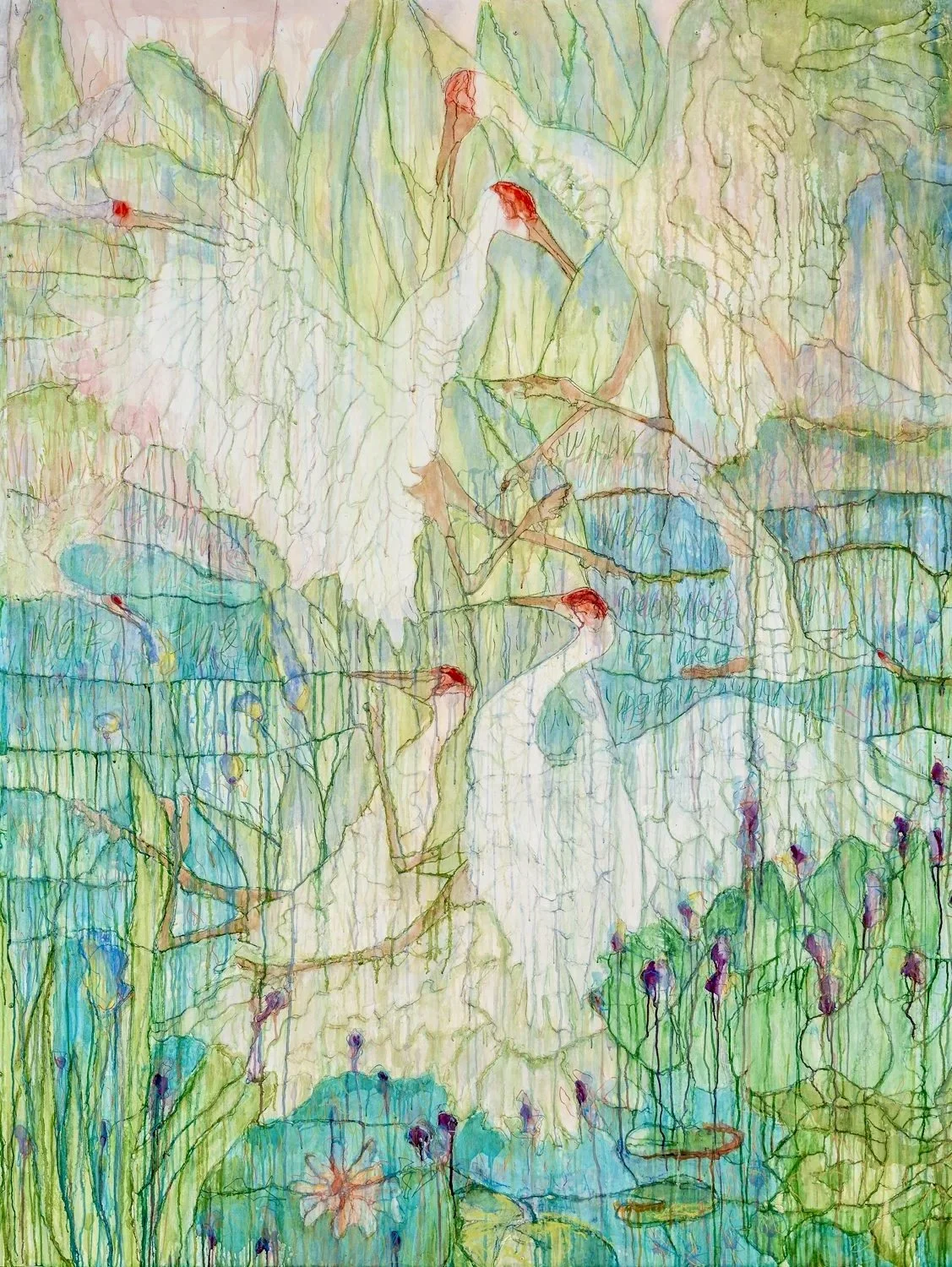
UNFOLDING Hope — Courtship Dance
9’ X 7’ X.25”
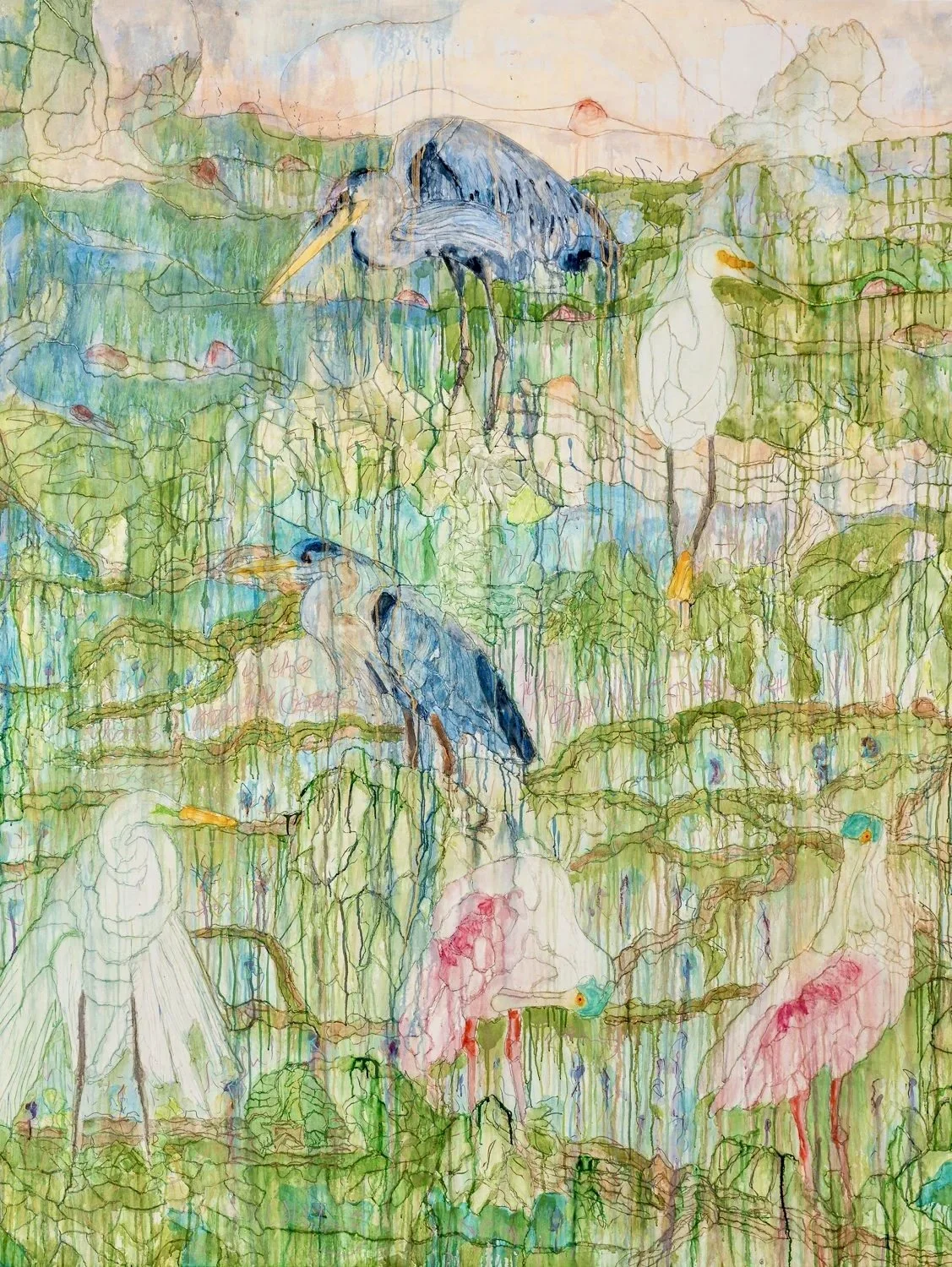
UNFOLDING HOPE — Knowledge is the Bridge
9’ X 7’ X .25”
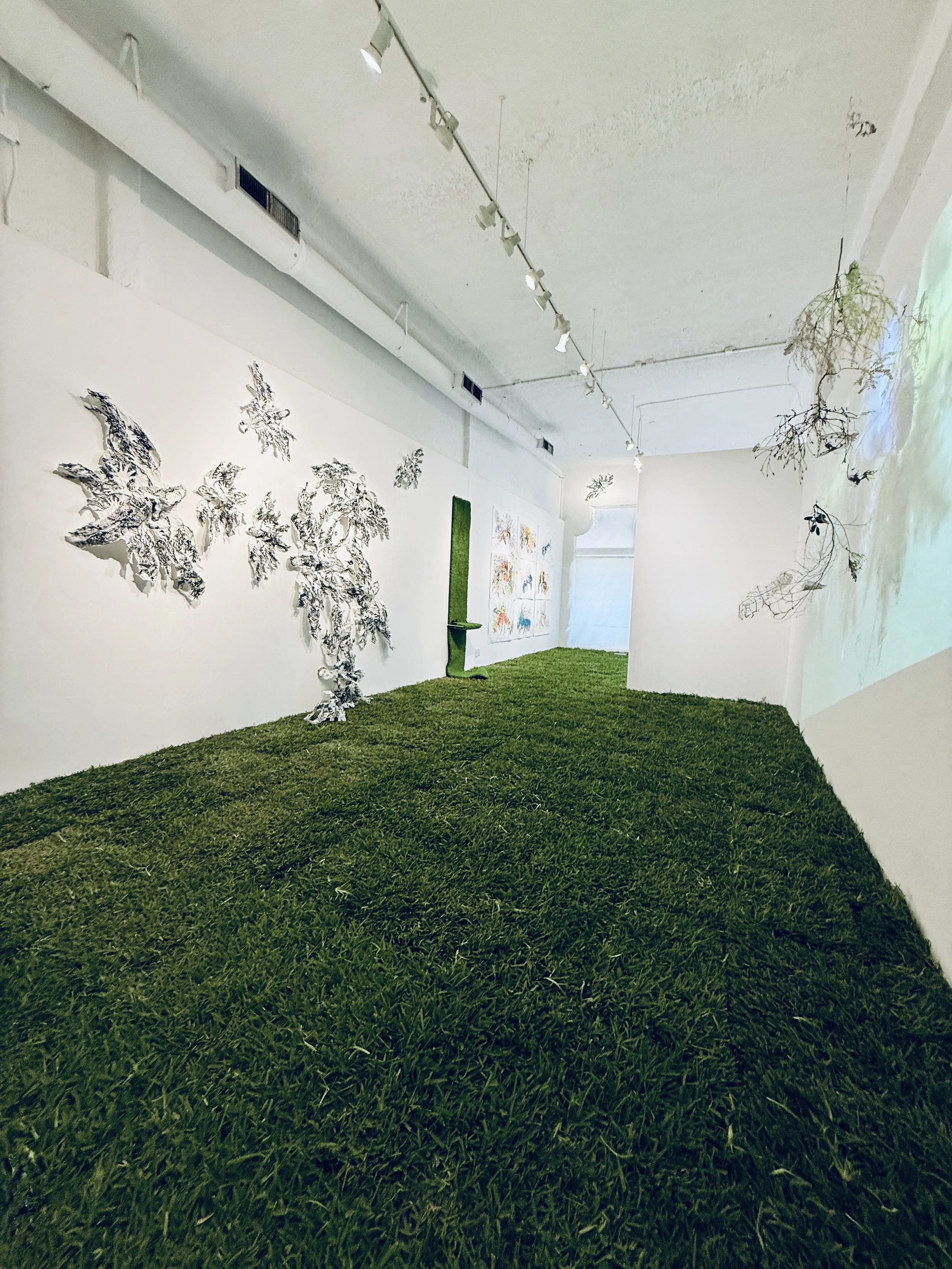
underMINE - sod
600 square feet of sod
site-specific installation in the city & the city at Throughline Art Collective.
image by feast day studios
The entire gallery floor is sod — the same chemically dependent monoculture that covers 40 million acres of the United States. The largest irrigated crop in the country. More than corn, wheat, and fruit trees combined. You are standing on it.
underMINE is a social sculpture built around what we have been conditioned not to see. The lawn uses 100 times more water than AI data centers — and we mow it on Saturdays without a second thought. The piece brings the most managed, most normalized surface in America inside, and asks you to look at it knowing what it costs.
The lawn is not the problem. What we have made it is.
The American Lawn, AI, and What We Have Been Conditioned to Unsee.
On Sod, The Poverty of the Manicured World.
Can Art Cool Thought? Reimagining the Data Center as Common Wealth
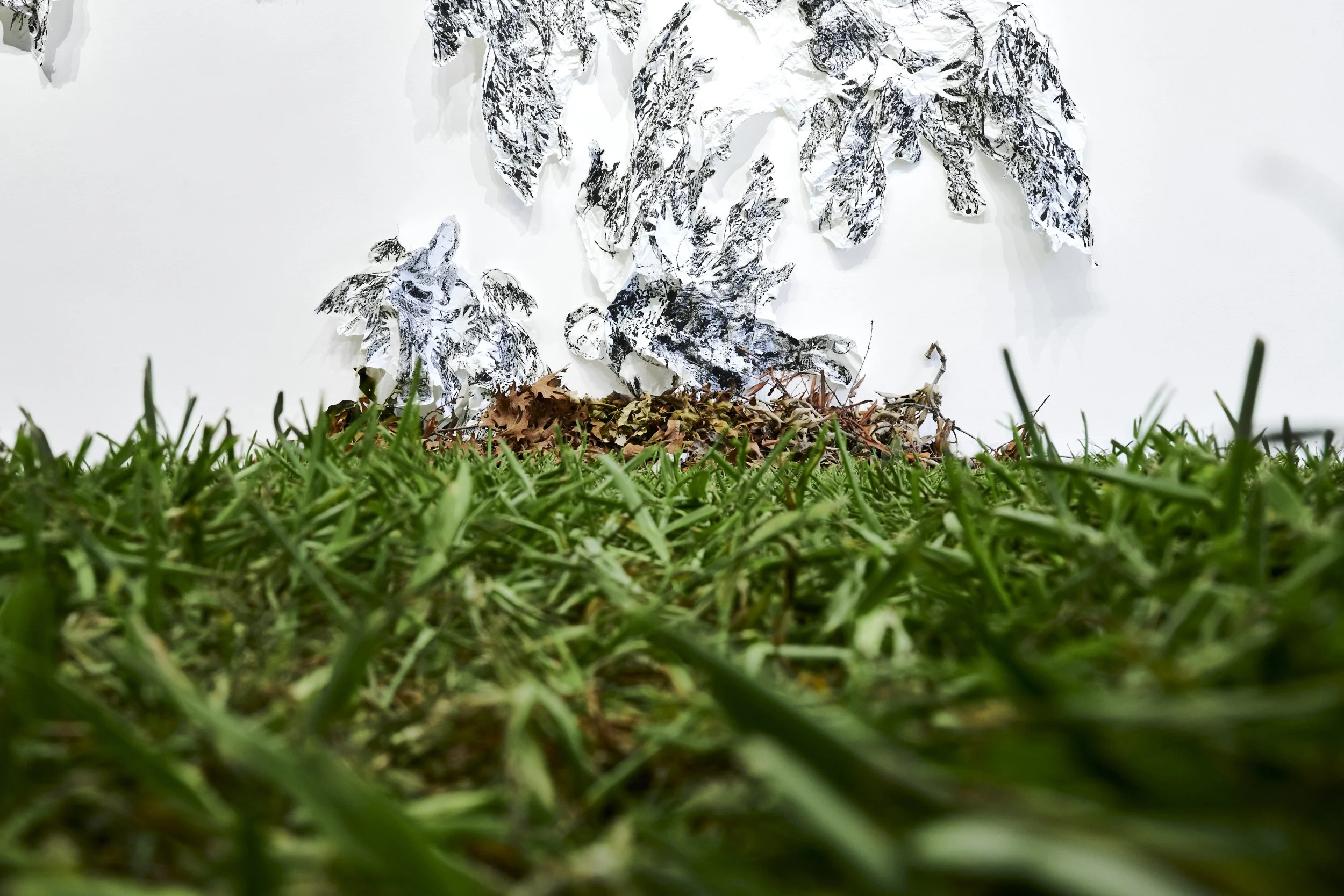
underMINE - sod - detail
image by feast day studios
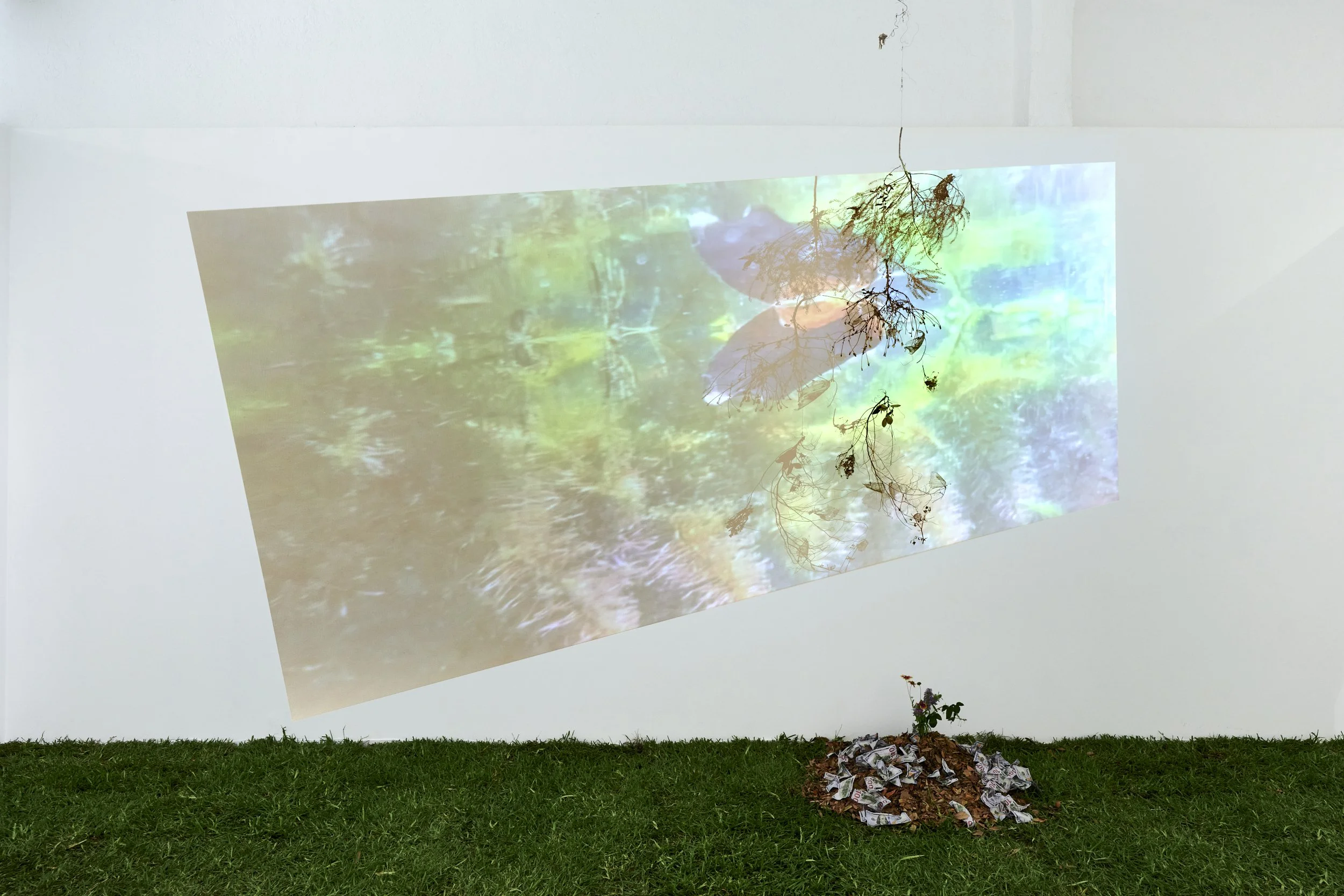
Interactions
1 channel video, decaying plants
image by feast day studios
In Interactions, video is projected at an angle — the keystone shape it throws mimics the way buildings recede into perspective. A five-foot tangle of weeds, twigs, leaves, and wire hangs on monofilament from the ceiling. Behind it, an underwater world moves across the wall. The piece turns slowly as the air in the room moves. The forms and their shadows dissolve into the water.
I filmed this underwater — the sensitive plant floating on the surface, its mirror image suspended below, and a decaying oak leaf caught in the current, turning and spinning as it drifted along the stem. As the leaf rotated, it kept becoming a moth, a butterfly, something winged and alive. The living and the dying, moving together. Indistinguishable from one another.
We imagine ourselves separate from nature. But our bodies are mostly water, inhabited by thousands of species of bacteria and viruses that make us alive. We were never apart from it. Monoculture is that delusion made into landscape — the severing of relationships between plant and insect, water and root, microbe and soil, that make a living system actually live. I have spent years making work about these relationships: the bison and the prairie, the soil and the sky, the student and the seed. But something about watching that leaf turn in the water. The living plant and the dying leaf, moving together. The life above and the life below.
The tree does not mourn the leaf. The reflection does not reach for the surface. They are one.
IMAGO
archival pigment inkjet print on Rice Paper
size varies - site specific
image by feastday studios
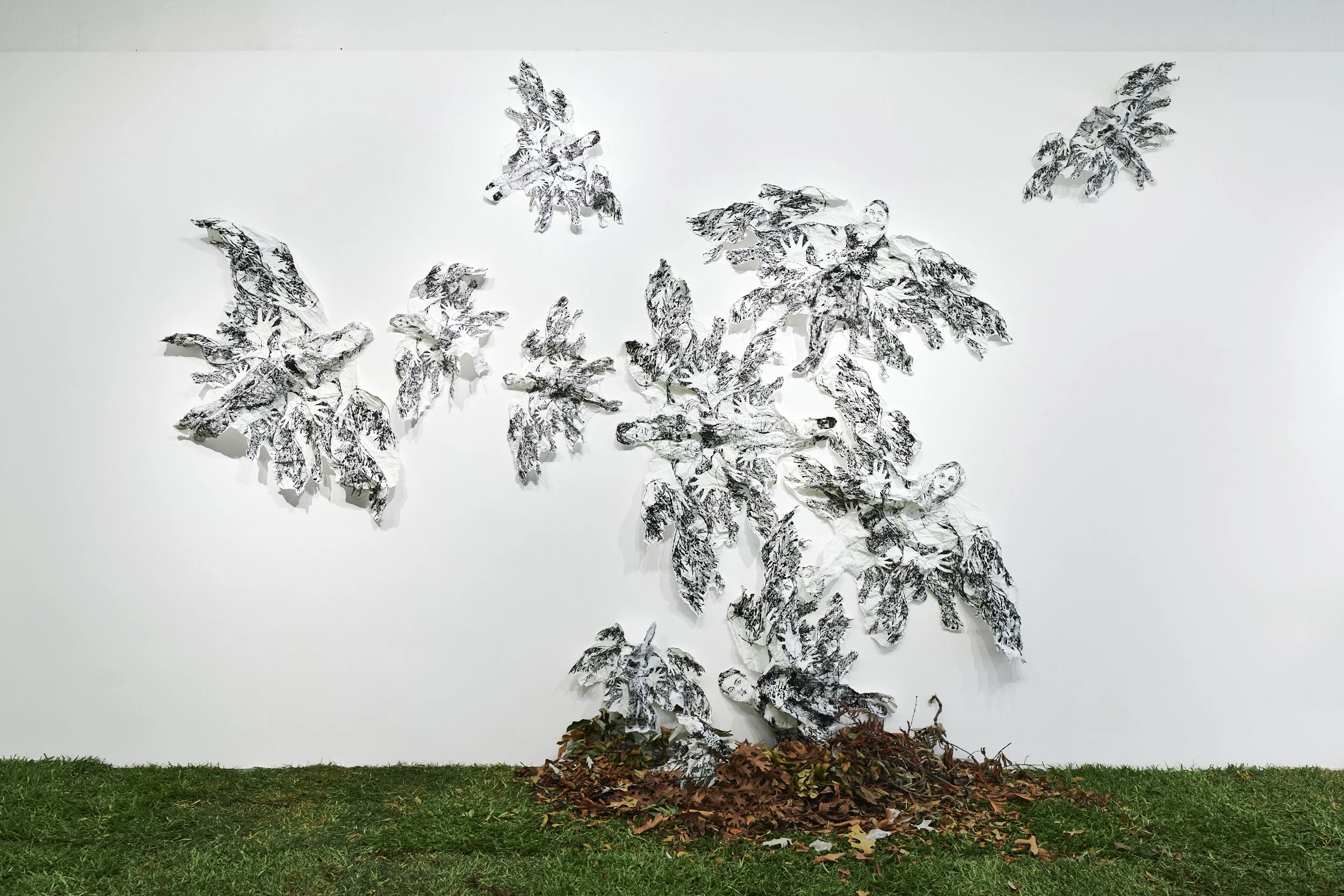
Imago takes its name from the final stage of insect metamorphosis — the form a butterfly becomes after transformation is complete. But it also means image, likeness, the thing we see when we look.
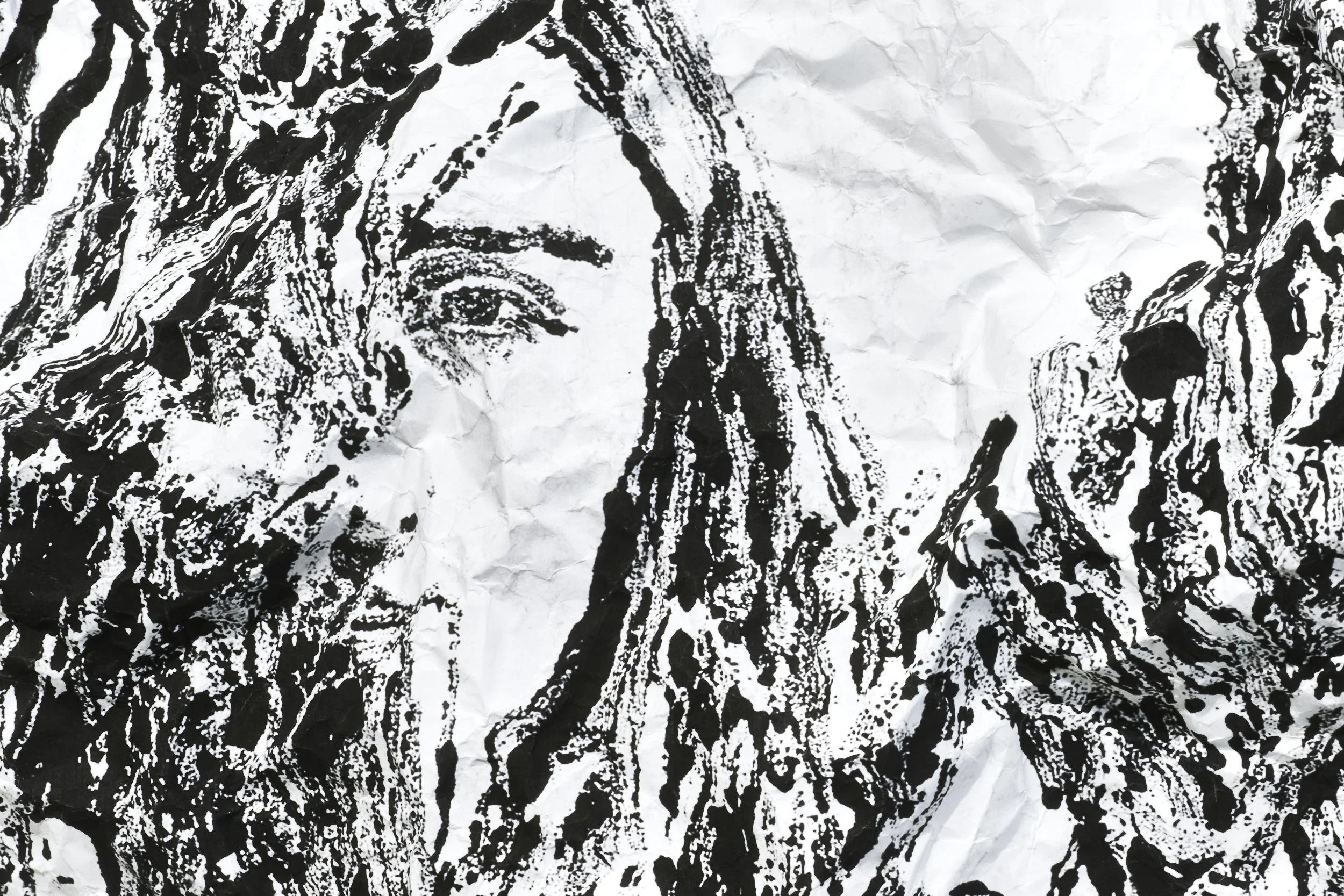
Crumpled paper unfolds from a pile of oak leaves rescued from the landfill. The 6’ pieces flutter up the wall, twining from floor to ceiling, reaching for the light — at first all branches and foliage, slowly revealing the shape of a butterfly, and finally the eyespots — a young woman’s face.
This piece began with two black-and-white watercolor monotypes from my Power of Collective Action series: a young woman’s face peering through a branch of oak leaves, and a student holding a plant. By mirroring and layering these images, the full body becomes the head, thorax and abdomen of the insect, its wings scaled in oak leaves, their branches the veins — and her eyes.
The common buckeye butterfly carries bold eyespots on all four wings — a startle display that mimics the eyes of a larger creature, drawing attacks away from the body. In Imago, her gaze serves the same purpose. Presence, attention, witness — we are their protection. Where humans choose to look, life has a chance to survive.
The human species and our relationship with the living world are undergoing a metamorphosis — and unlike the butterfly, we get to choose our final form.
IMAGO detail
Sequel: The First Growing Season
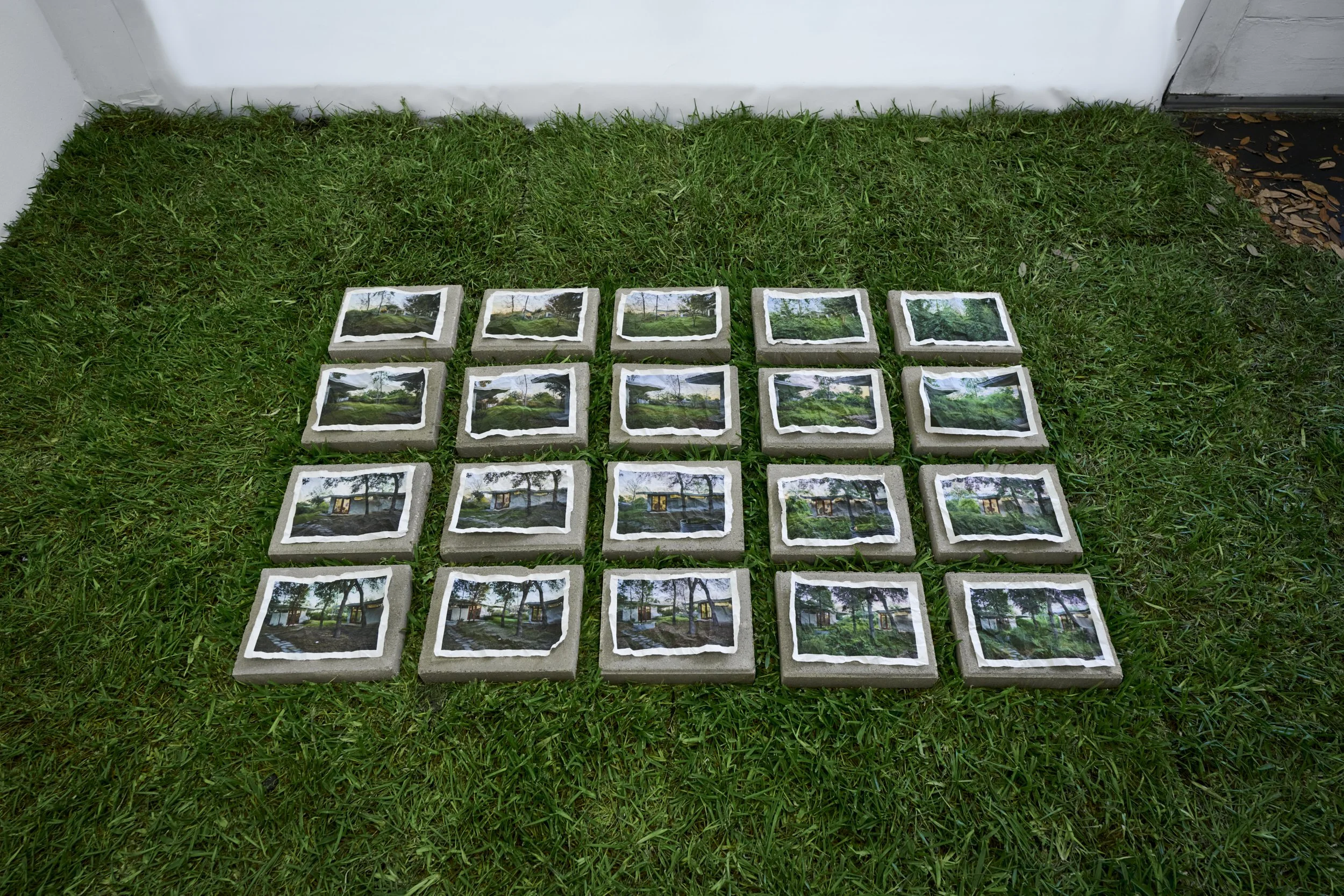
Archival pigment inkjet prints on rice paper, concrete pavers, turfgrass, indigenous soil, native plants, leaf mold
image by feast day studios
The name carries two meanings. This is the fifth in a series of living sculptures — each one a continuation of the last, each rooted in the same question: what does urban land become when we stop managing it against itself? And it is a sequel to something larger — to the colonial landscape practices that made grass a monoculture, soil a substrate, and nature a problem to be controlled. Sequel is what comes after. What repair, chosen and tended, actually looks like.
6,500 square feet in Houston’s Acres Homes neighborhood. The property is platted La Mancha. In Cervantes’ story, the windmill was never a giant — and the ordinary person who stayed steady beside the knight is the one who actually does the work. The colonial lawn is that windmill. Sequel is what grows when ordinary people, on ordinary land, choose to see it clearly and act anyway. In one growing season, this managed monoculture is on its way to becoming a living ecological habitat.
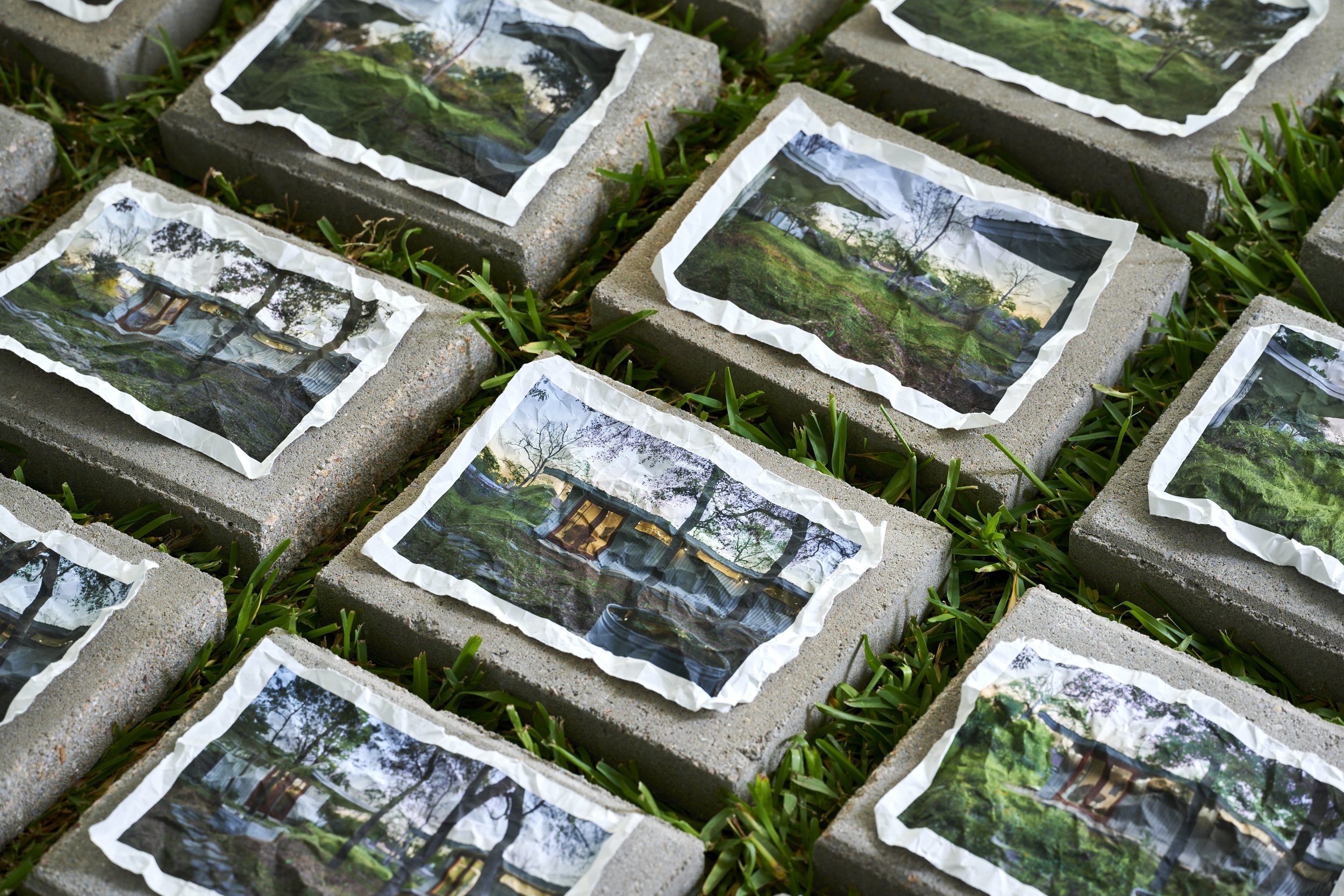
These photographs are its time-lapse: four fixed angles, four solar moments — Fall Equinox, Winter Solstice, Spring Equinox, Summer Solstice. What the land became, quarter by quarter, from the same point of witness. Printed on rice paper, crumpled by hand, placed on concrete pavers atop underMINE — the gallery floor of managed monoculture that is itself a sculpture — each sheet is unique, every wrinkle unrepeatable. Seasons move across. Vantage points descend.
The grid insists on order. The crumpled paper refuses it.
The first growing season is the beginning of a five-year record.
Sequel: The First Growing Season - detail
image by feastday studios
Quisque iaculis facilisis lacinia. Mauris euismod pellentesque tellus sit amet mollis.