To Soar, by Cindee Travis Klement / Nick Finnegan Counseling Center.
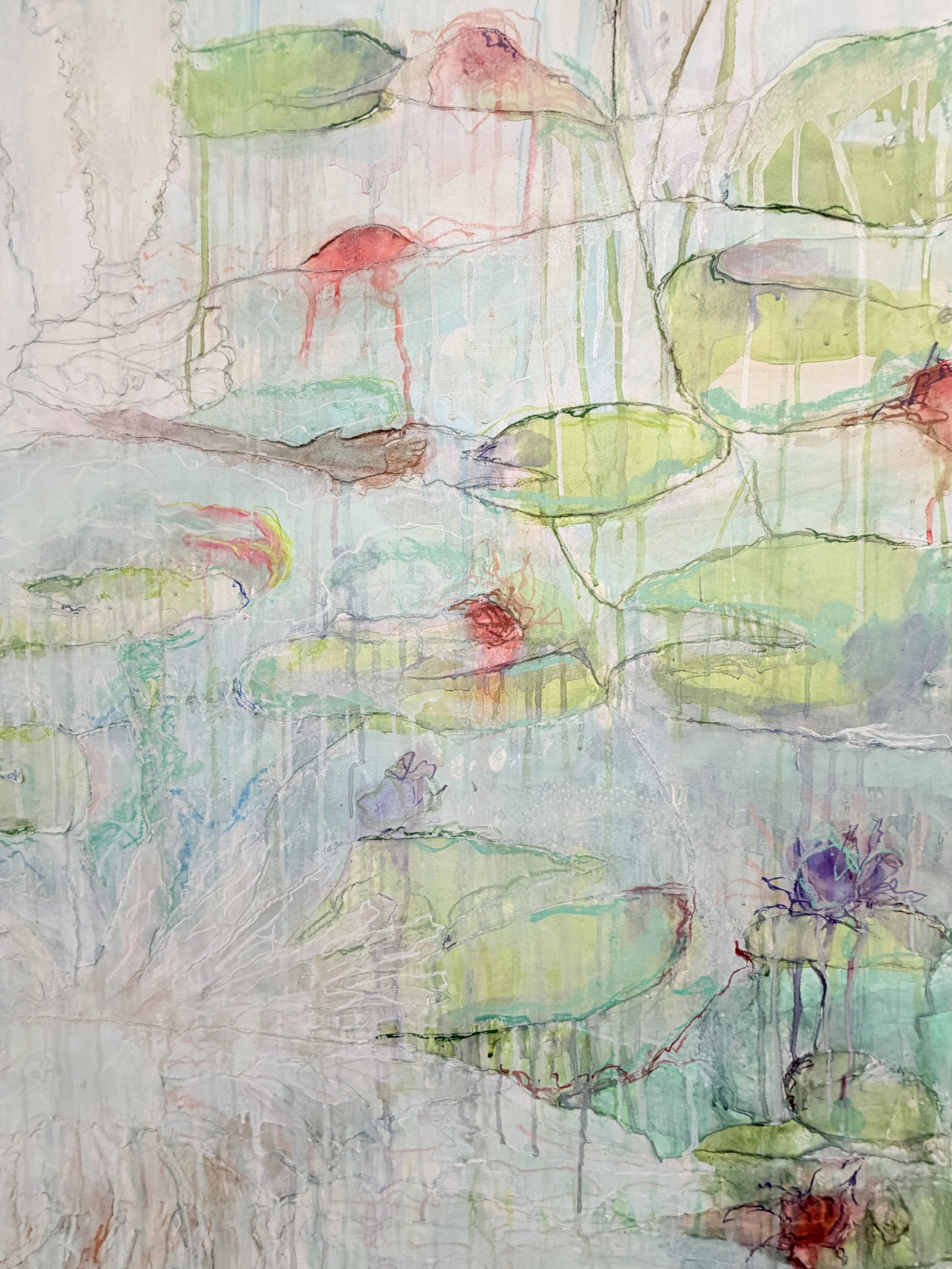
Graphite, watercolor, and pastel on torn and collaged Stonehenge paper, 8' x 8'
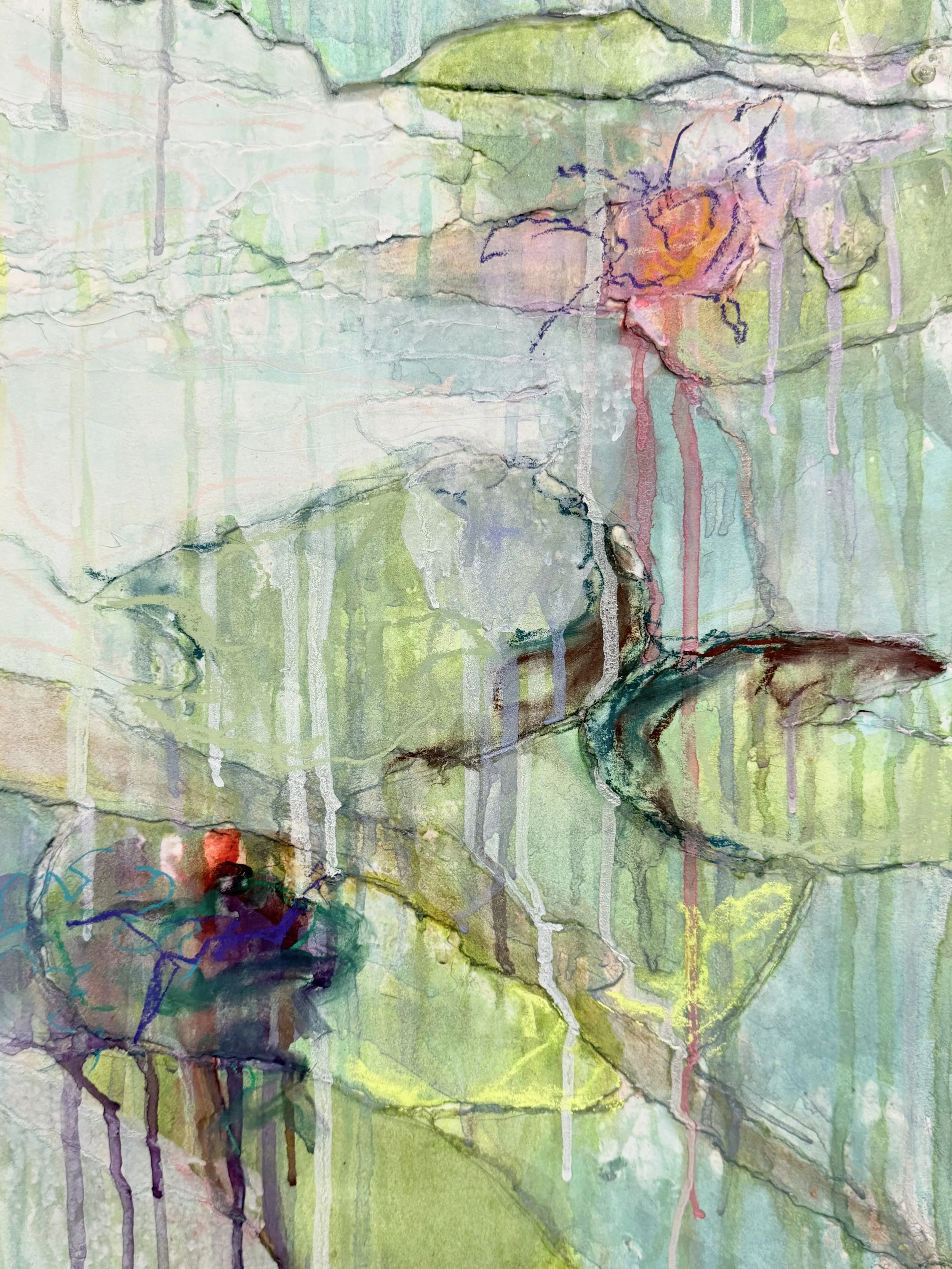
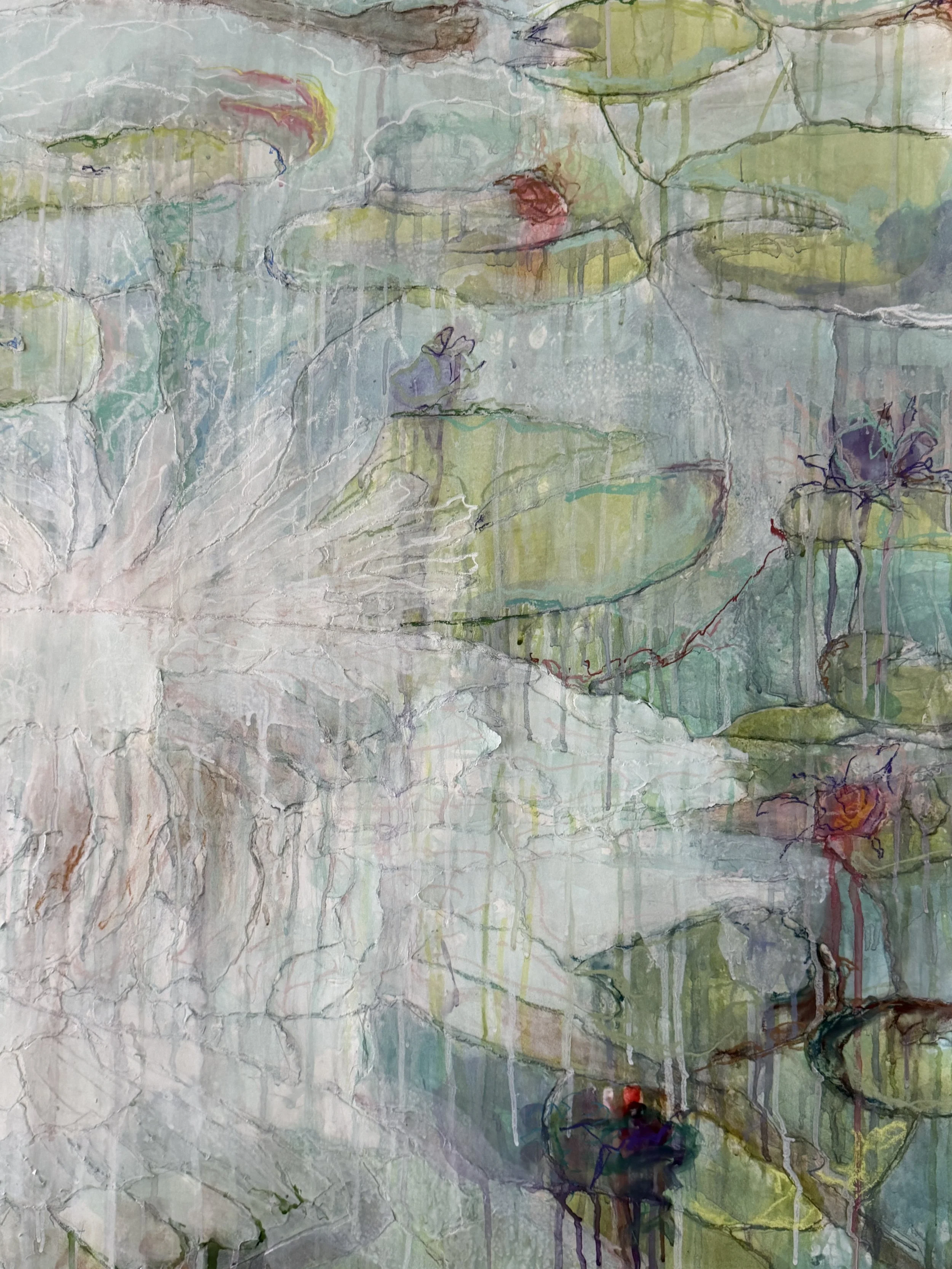
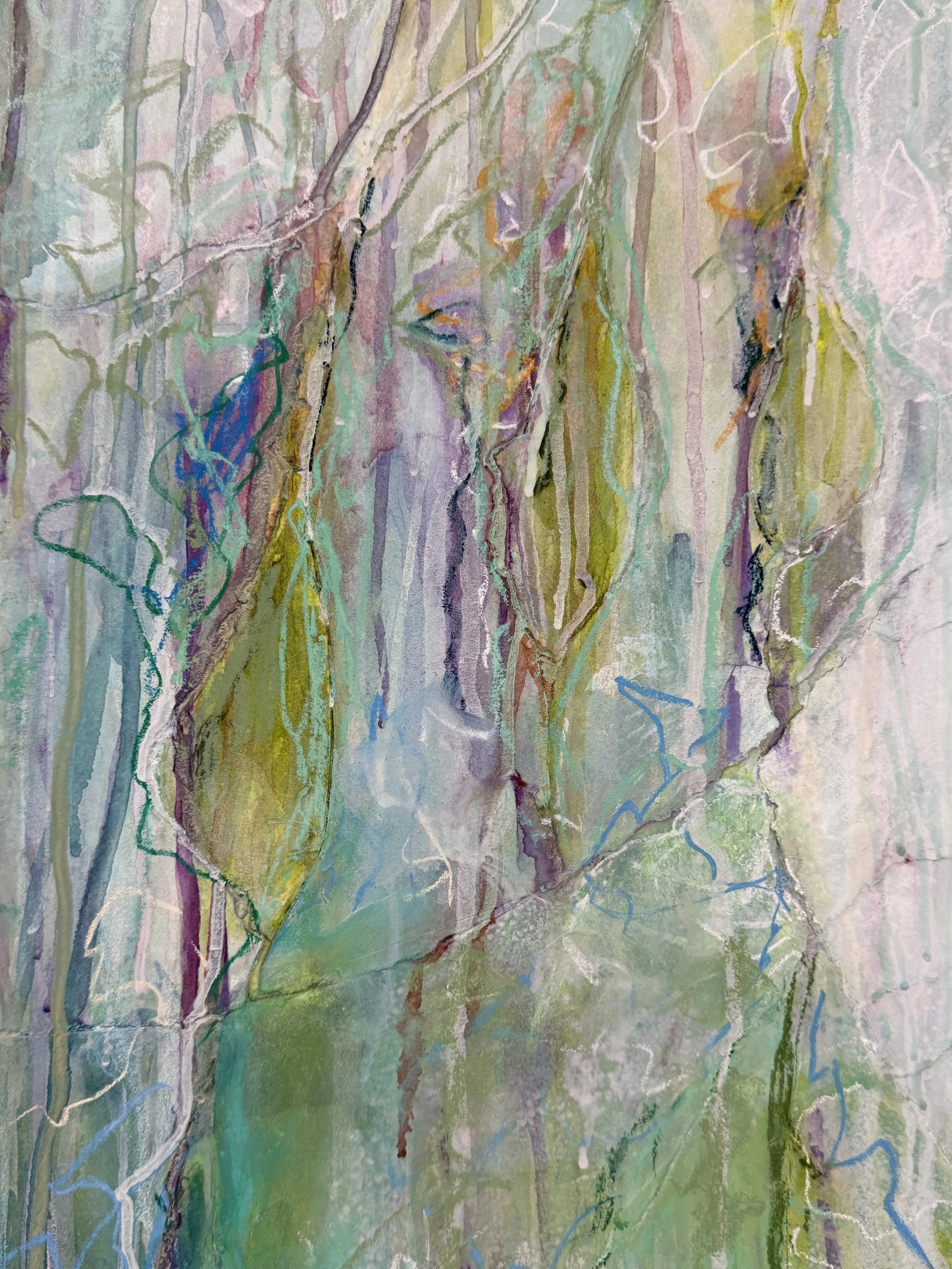
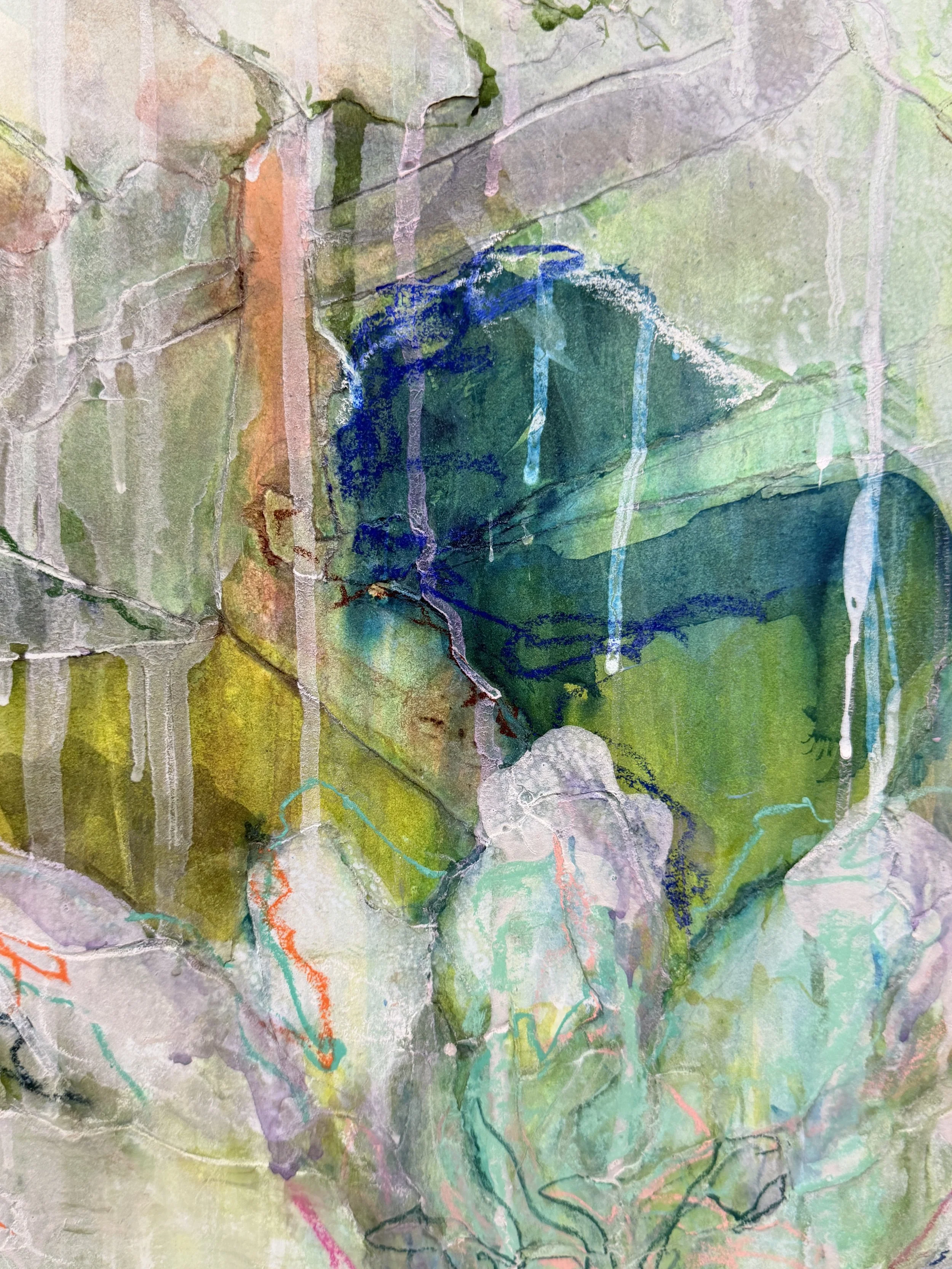
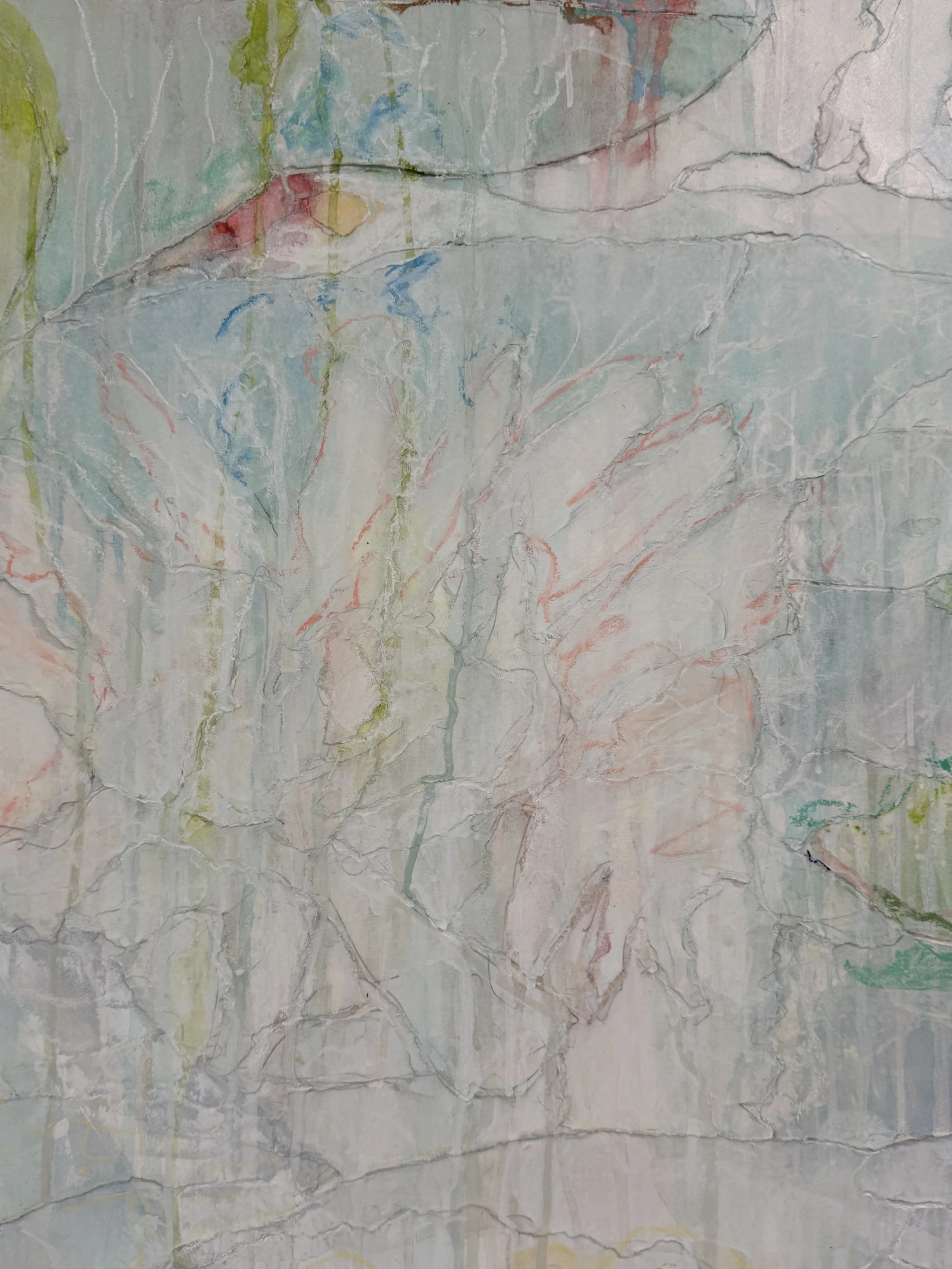
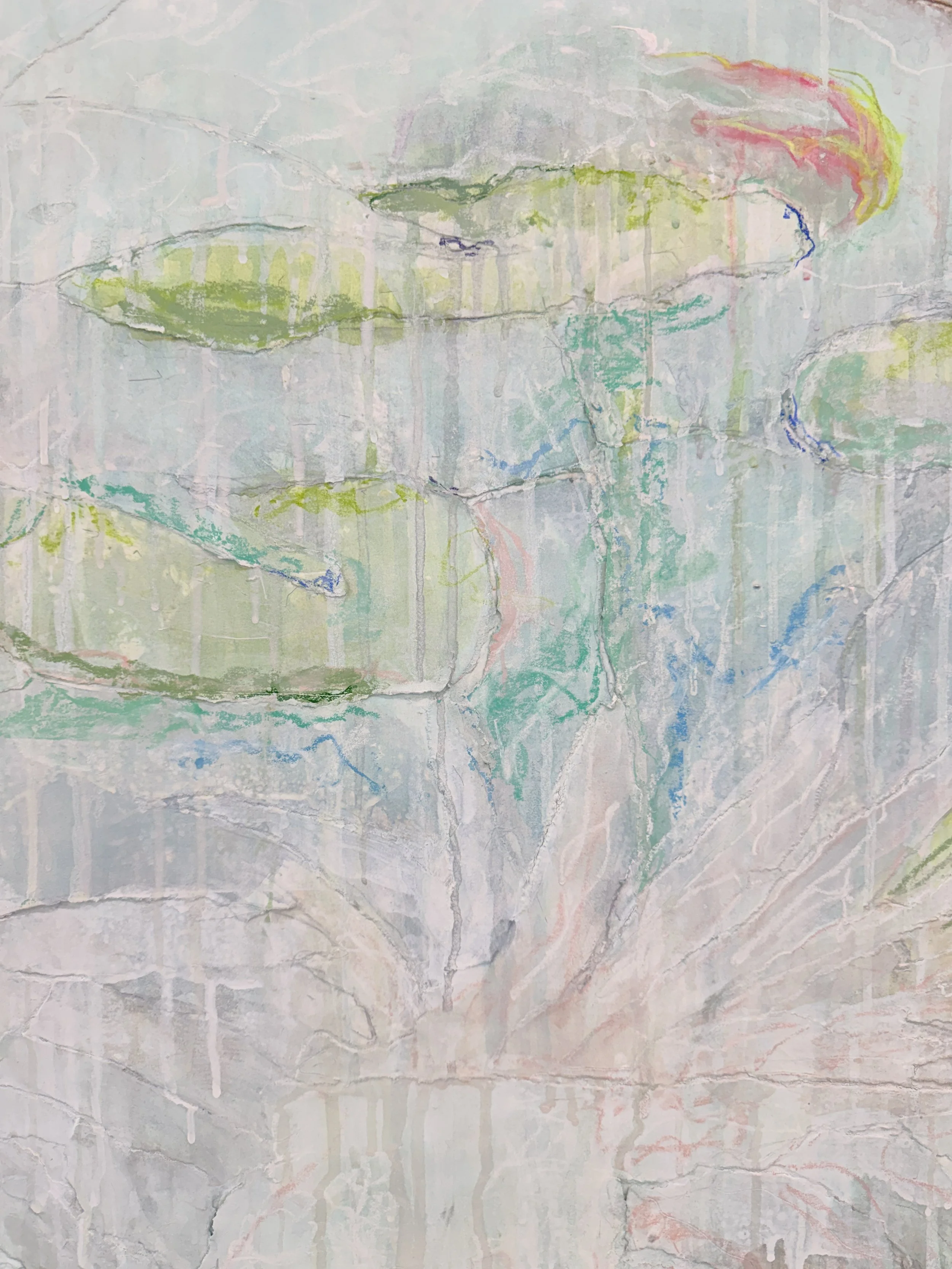
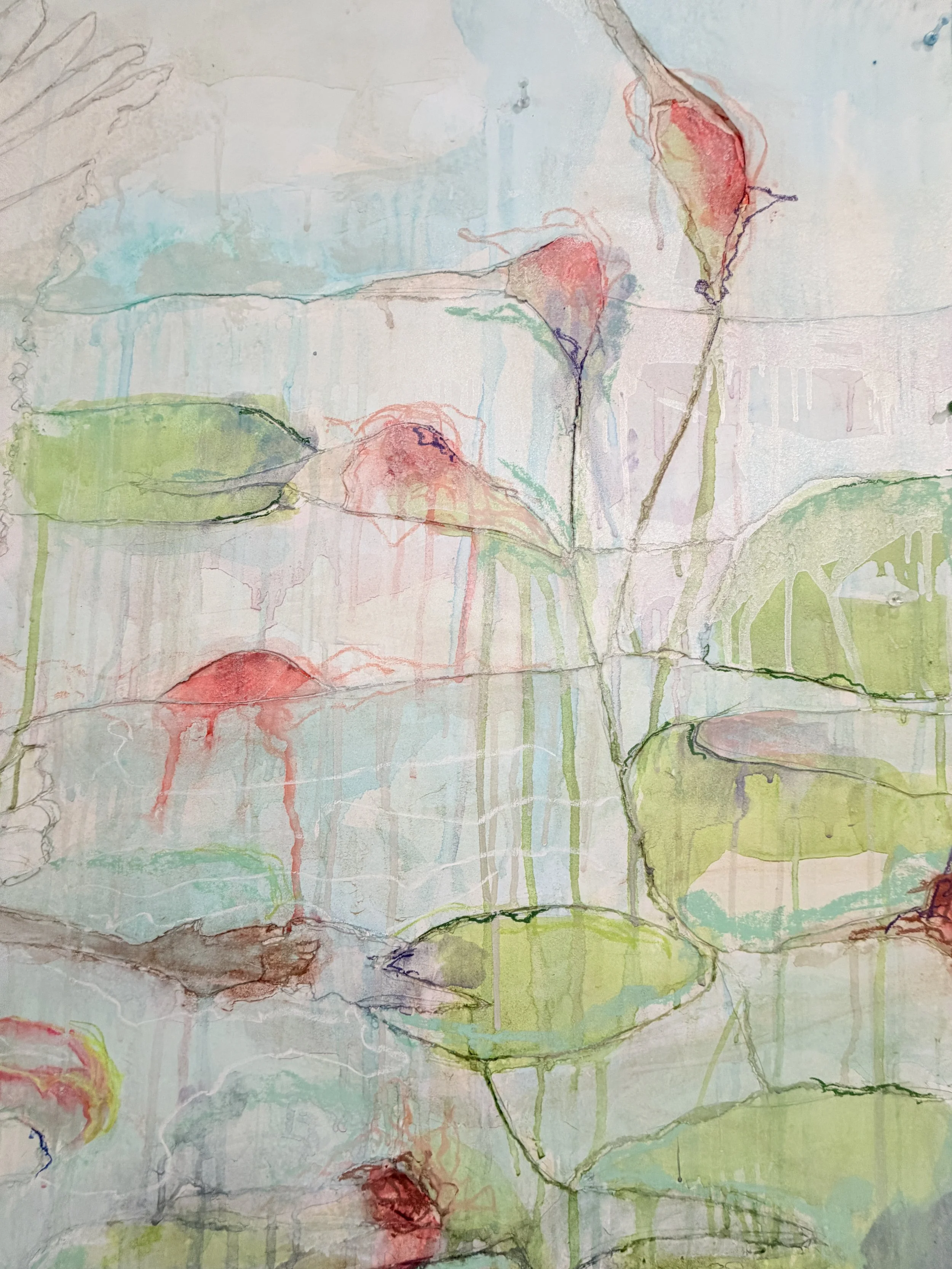
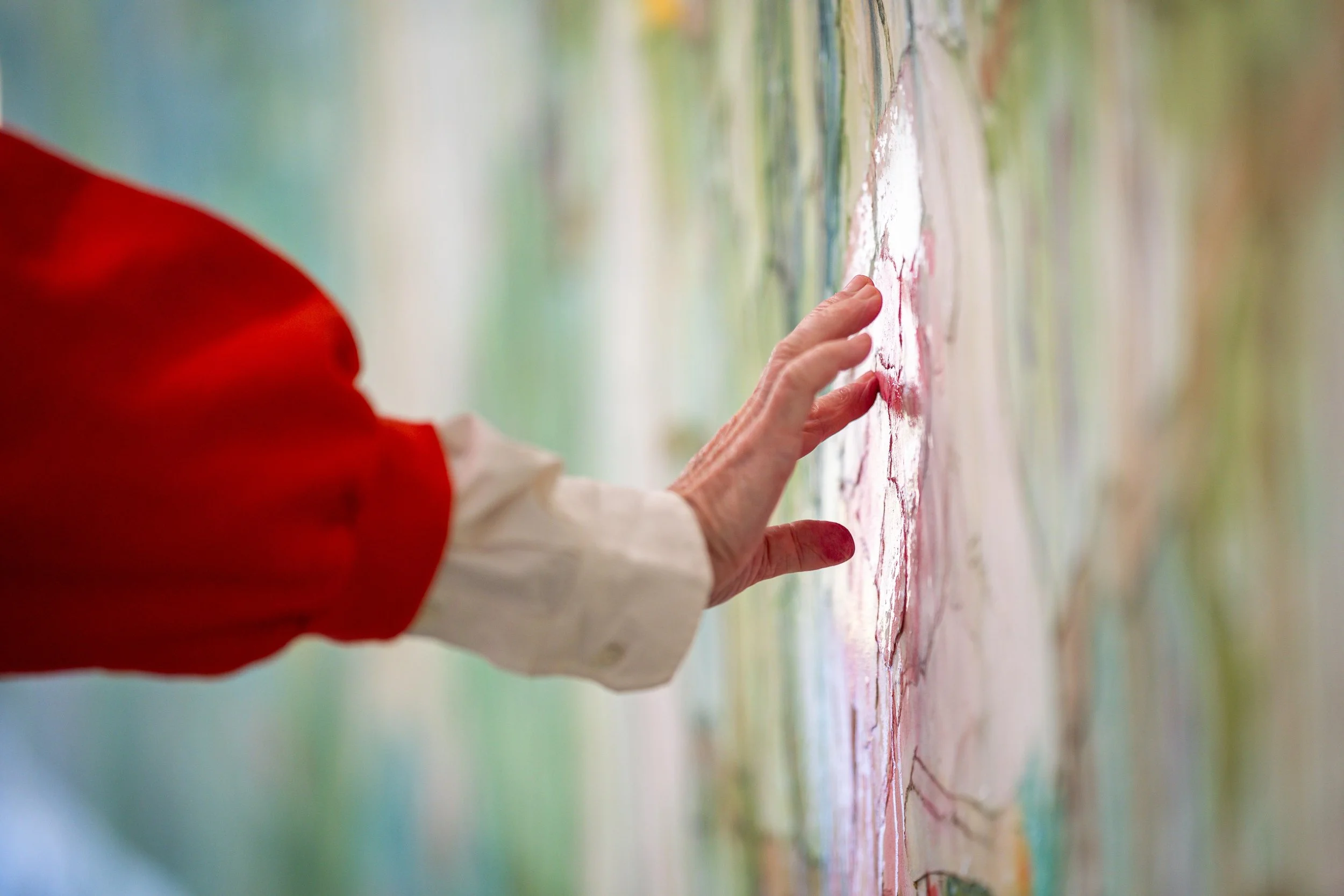
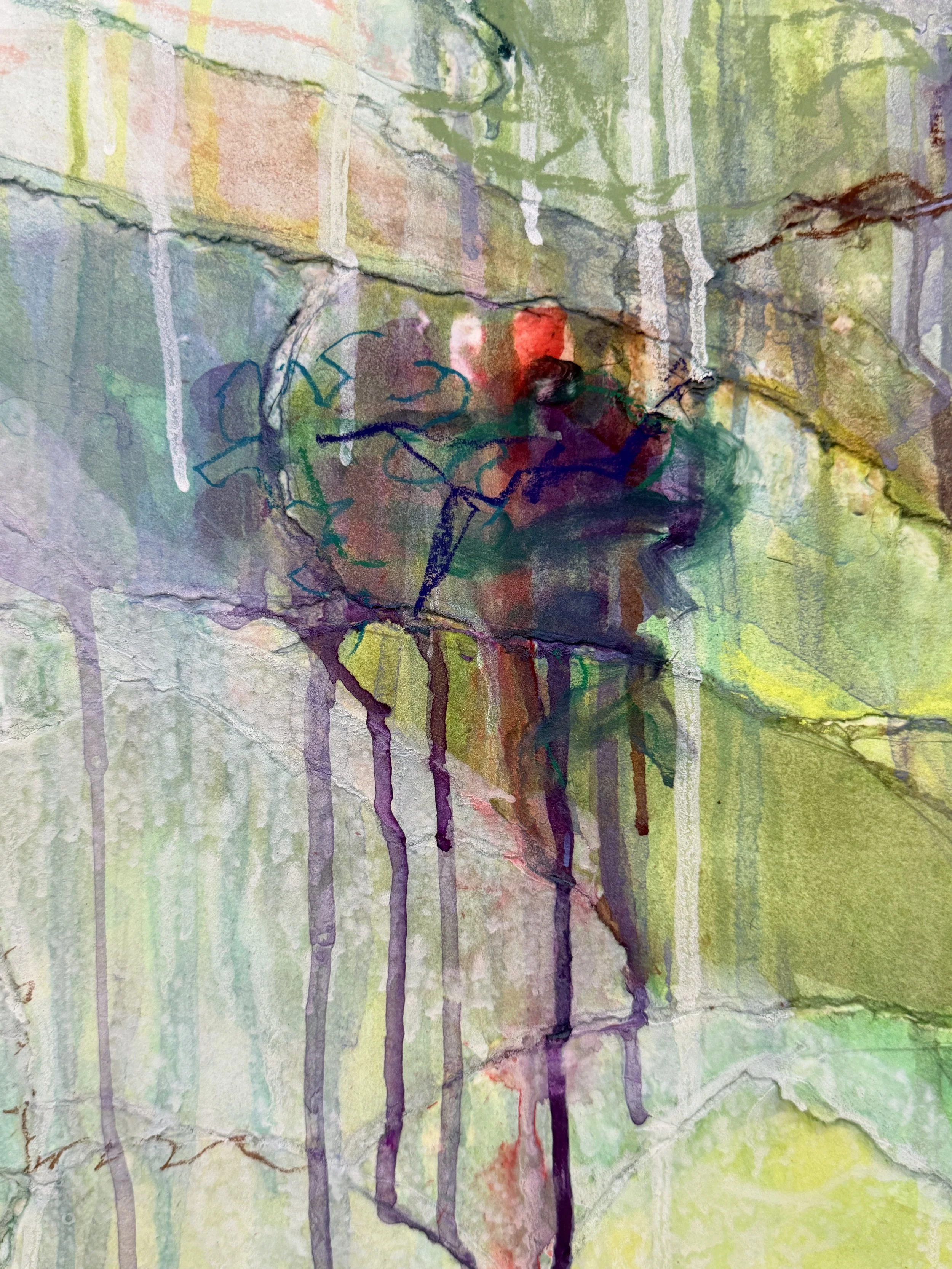
Torn paper is layered in relief across an eight-foot square, then washed with dripping color that settles into every tear and crease. Up close, there are no birds, only edges, shadow, and pooled color. Step back, and sandhill cranes lift out of a wetland. A beak becomes a seedhead. A feather becomes a petal. A wing stretches into the horizon until the whole flock catches the light as a single white bloom: the water lily, made of wing.
The lower section moves side to side, a rhythm drawn from EMDR, so the eye has to work its way across before it rises. Sandhill cranes were once down to a couple dozen breeding pairs; today they number in the tens of thousands. Made for the Nick Finnegan Counseling Center, where it hangs on the central wall, To Soar holds that story: a person and a wetland recover the same way.
Read more: To Soar — Why I Made It
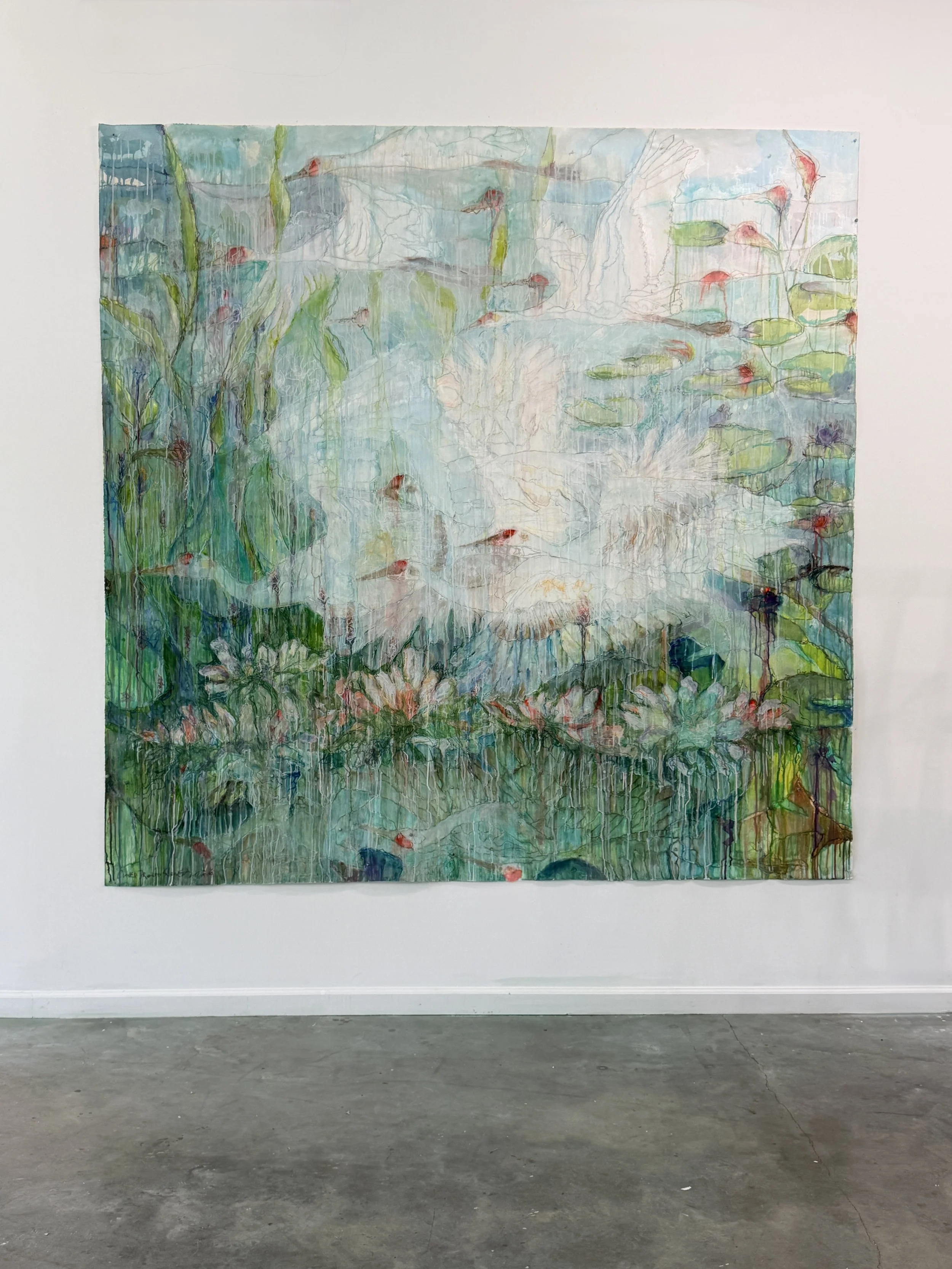
Studio shot
Graphite, watercolor, and pastel on torn and collaged Stonehenge paper
8' x 8'
When I was asked to donate a piece to the Nick Finnegan Counseling Center, I felt a spark of excitement because I've long known that everything we see and hear leaves an impression on our brains.
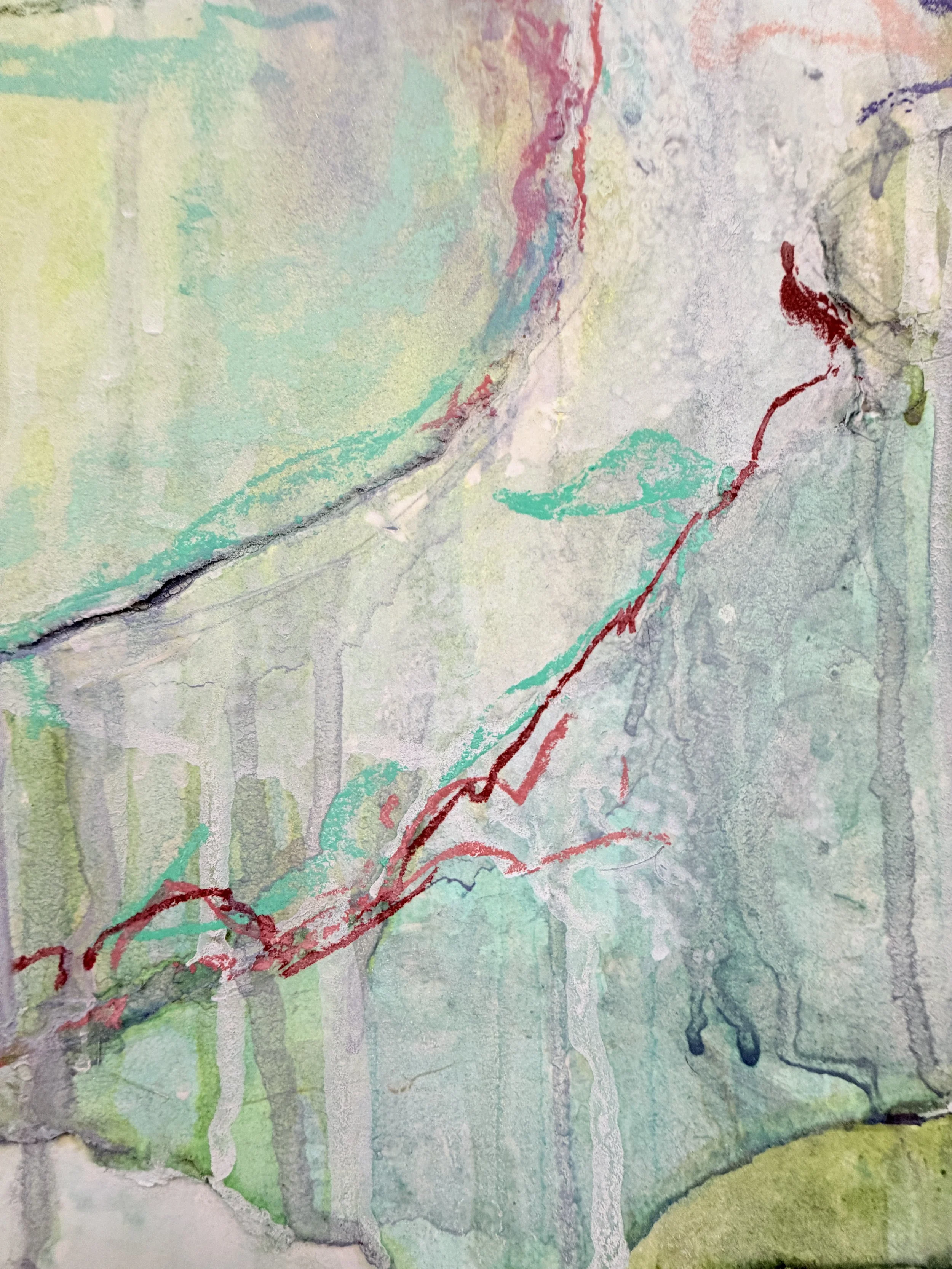
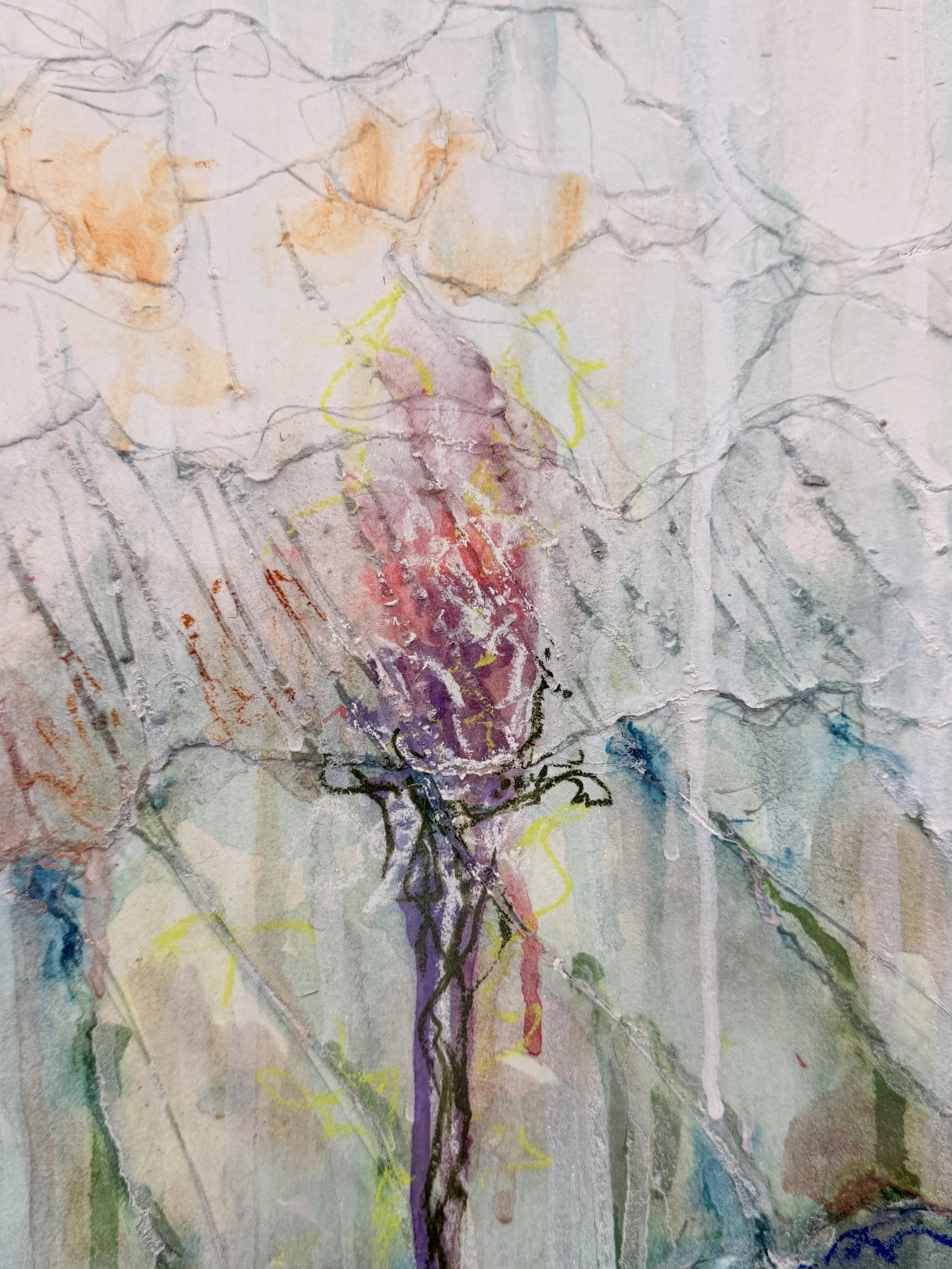
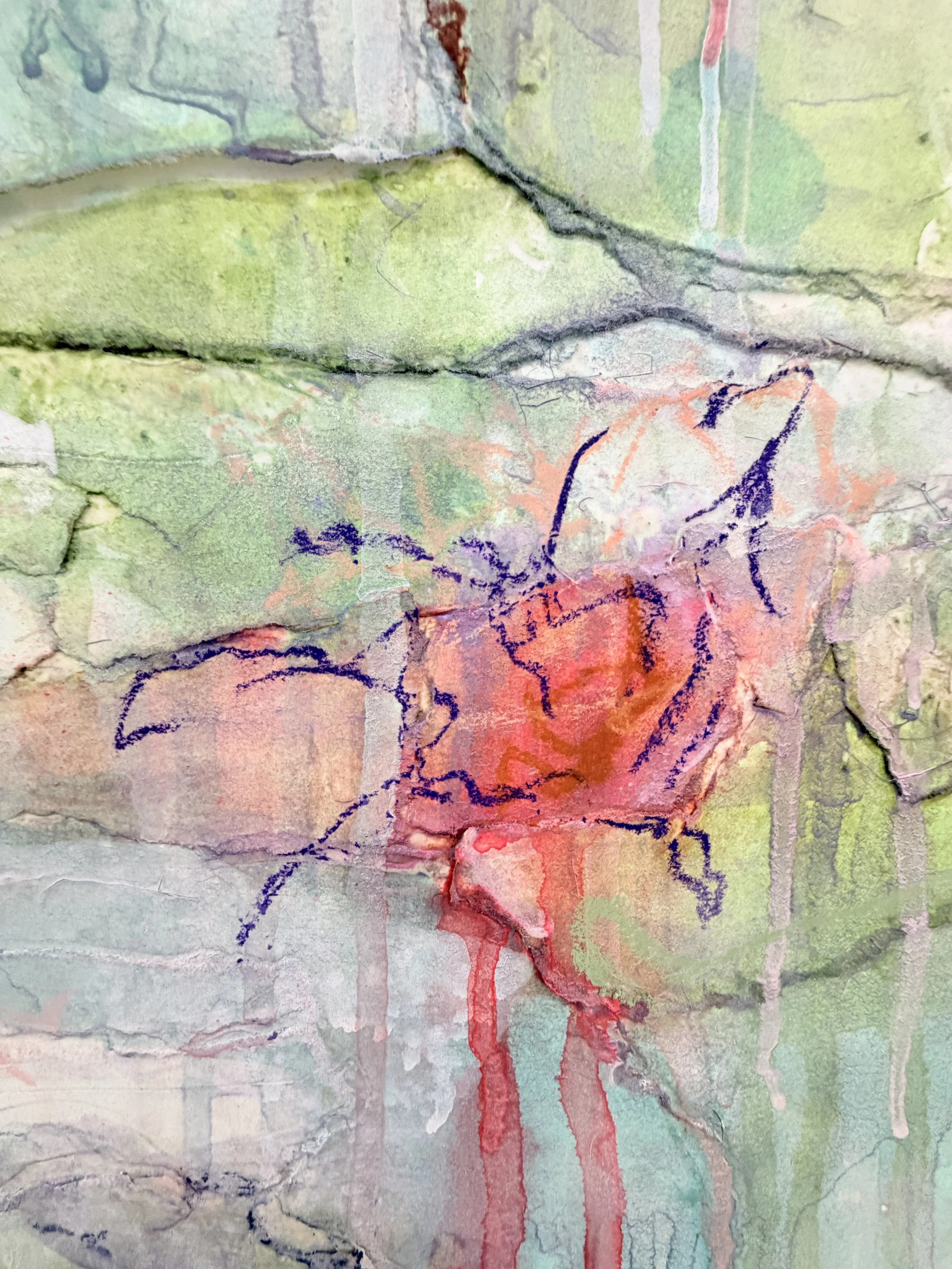
pastel mark detail
We know what hurt looks like. The black holes. The news and social media replay them again and again, changing our brains in a way that feeds the downward spirals that follow.
So I asked myself: could I make a piece that doesn't just decorate a wall, but actually changes the brain in a way that lifts the human spirit?
The counselors came out to my studio. We talked about their tools, the systems it takes to recover in a complicated world: not the hours they log, but the time they carry. The language they used was the language I use when I restore an ecosystem.
I went looking where I find healing, in the natural world. A water lily rises out of the dark muck and opens toward the light. Again and again.
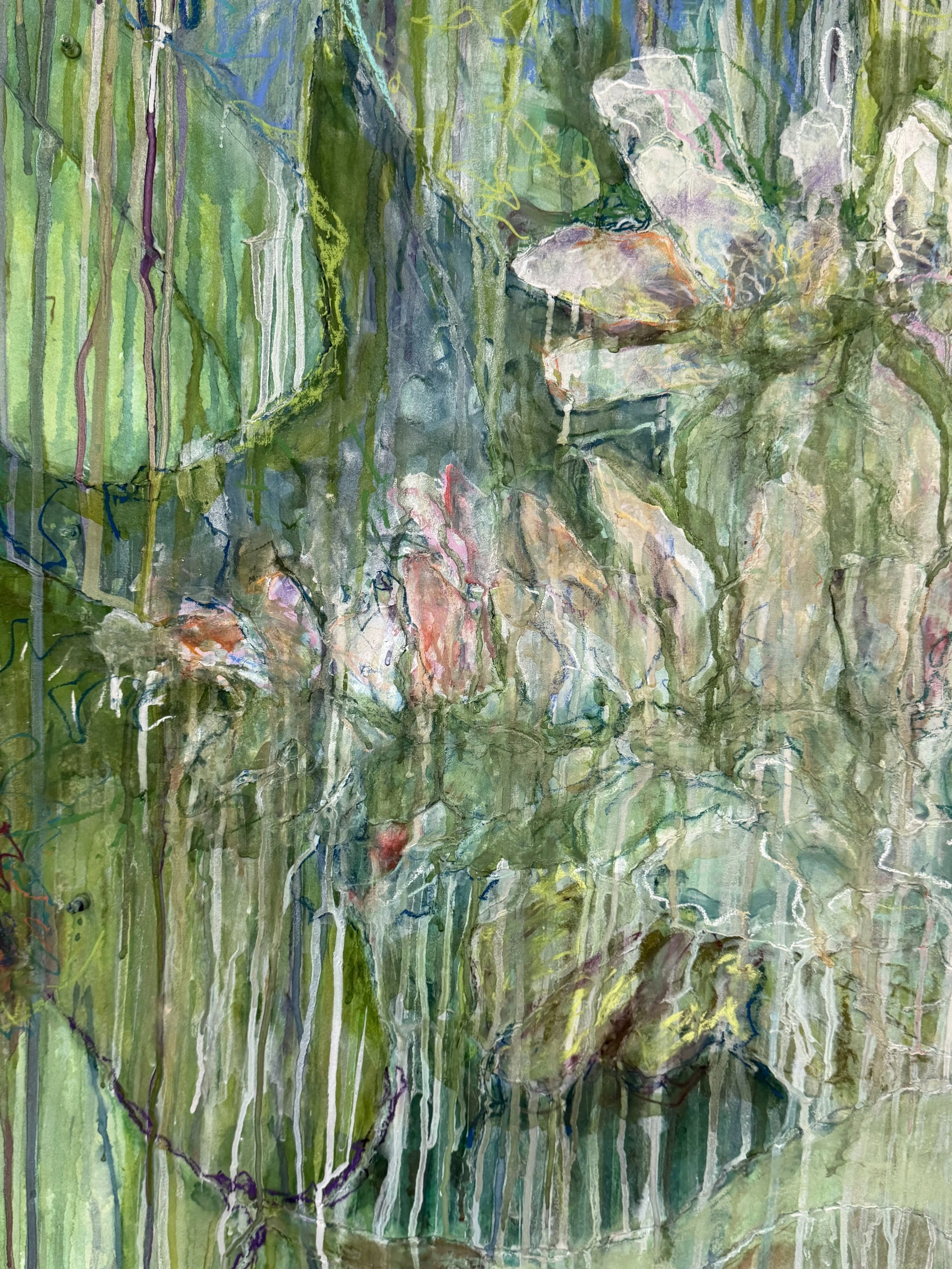
Sandhill cranes were once down to a couple dozen breeding pairs. In 1937, believing he was watching Wisconsin's cranes disappear, Aldo Leopold wrote “Marshland Elegy.” People came together and rebuilt the wetland systems. Each fall, tens of thousands of cranes rise out of the marsh, filling the skies, calling to each other, bonded for life.
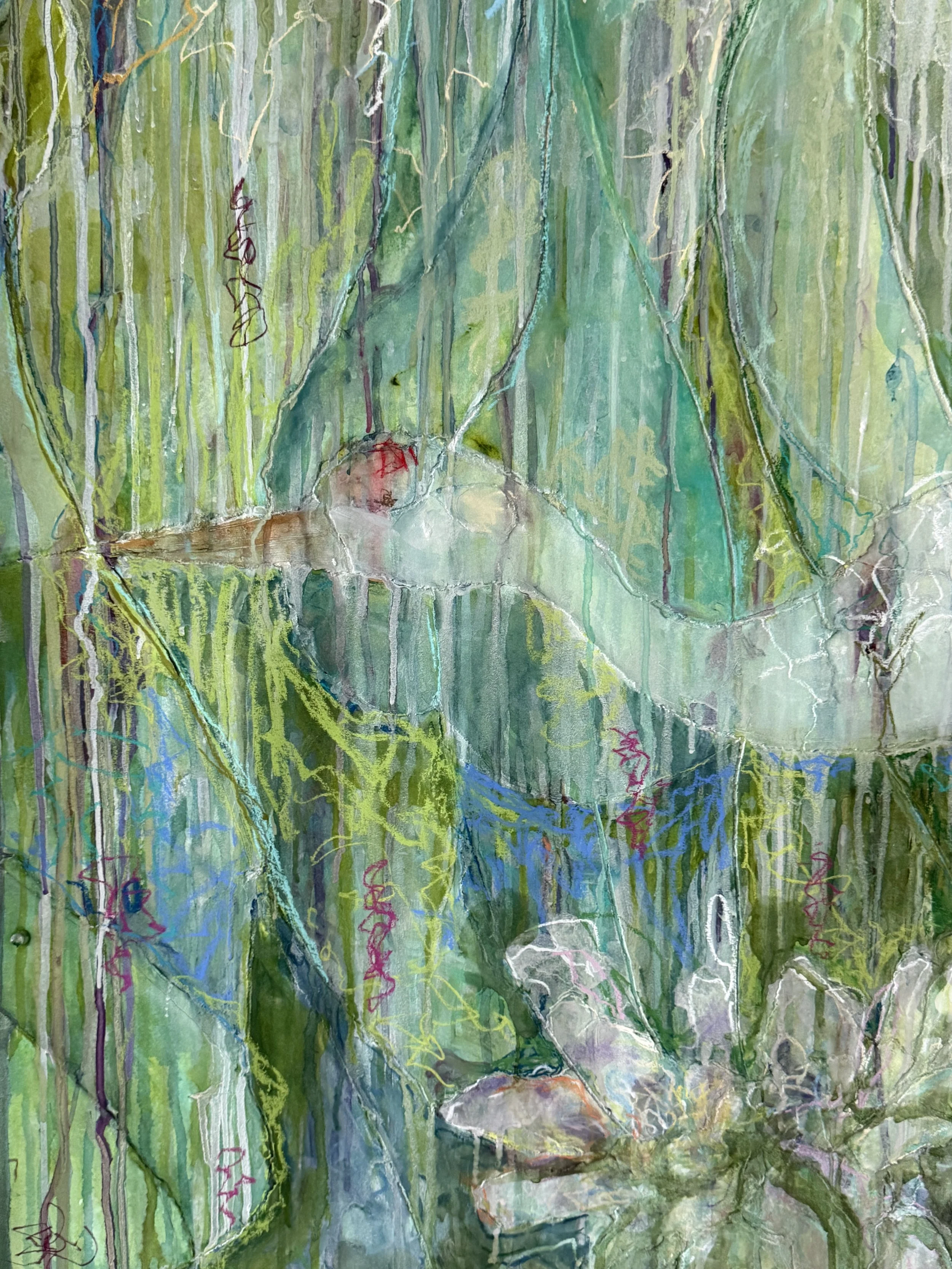
In the piece, nothing stands alone. A bird's beak becomes a seedhead. A feather becomes a petal. A wing stretches into the horizon until you can't say where the bird ends and the sky begins. Step back, and the whole flock catches the light, lifting into a single white bloom: the water lily, made of wing.
It isn't one thing. It's the systems coming together, the way recovery itself comes together. It lifts the soul.
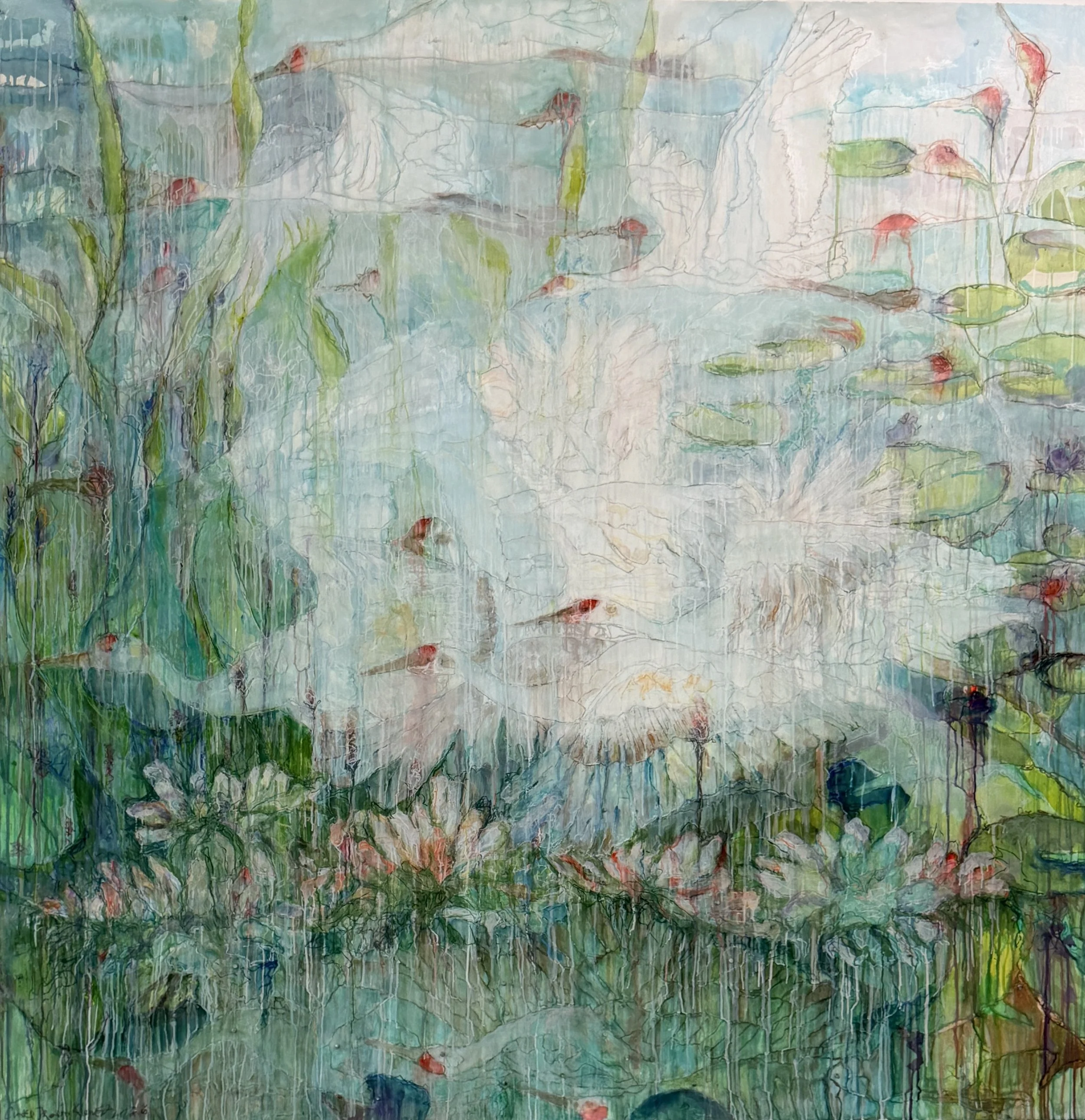
To Soar lives on the center's central wall, the first thing every family sees on their way to a session and again as they head home.
Let your eyes move across it the way they're guided to in EMDR (eye movement desensitization and reprocessing): side to side, working through what's difficult, the way our eyes once moved naturally across landscapes that were wild, messy, and alive. That's where recovery starts. Not looking away from the hurt, but moving through it.
Families will stand in front of this wall in the worst weeks of their lives. This piece helps make sure they are not standing there alone.
What follows are detail shots that are not seen in an image of a piece 8’X8’.