
We were leaving a restaurant parking lot when my friend suddenly grabbed a tree. Just reached out and held it between her palms. It had a beautiful trunk — light grey, smooth, statuesque. A maple or a birch. She said: I have to touch this tree.
I didn’t think much of it then.
The next day in Sequel I was doing what I always do — sitting, looking, listening. Letting the garden teach me. I spend most of my time focused on the ground. Living soil. Roots. Grasses. Sedges. The unglamorous, underappreciated workhorses of a living ecosystem. The coastal prairie is an upside down rainforest — its carbon and water story happens underground, not overhead. Trees get all the love because we relate to them. We are upright. We reach toward light. But the real work, in a prairie, happens below our feet.
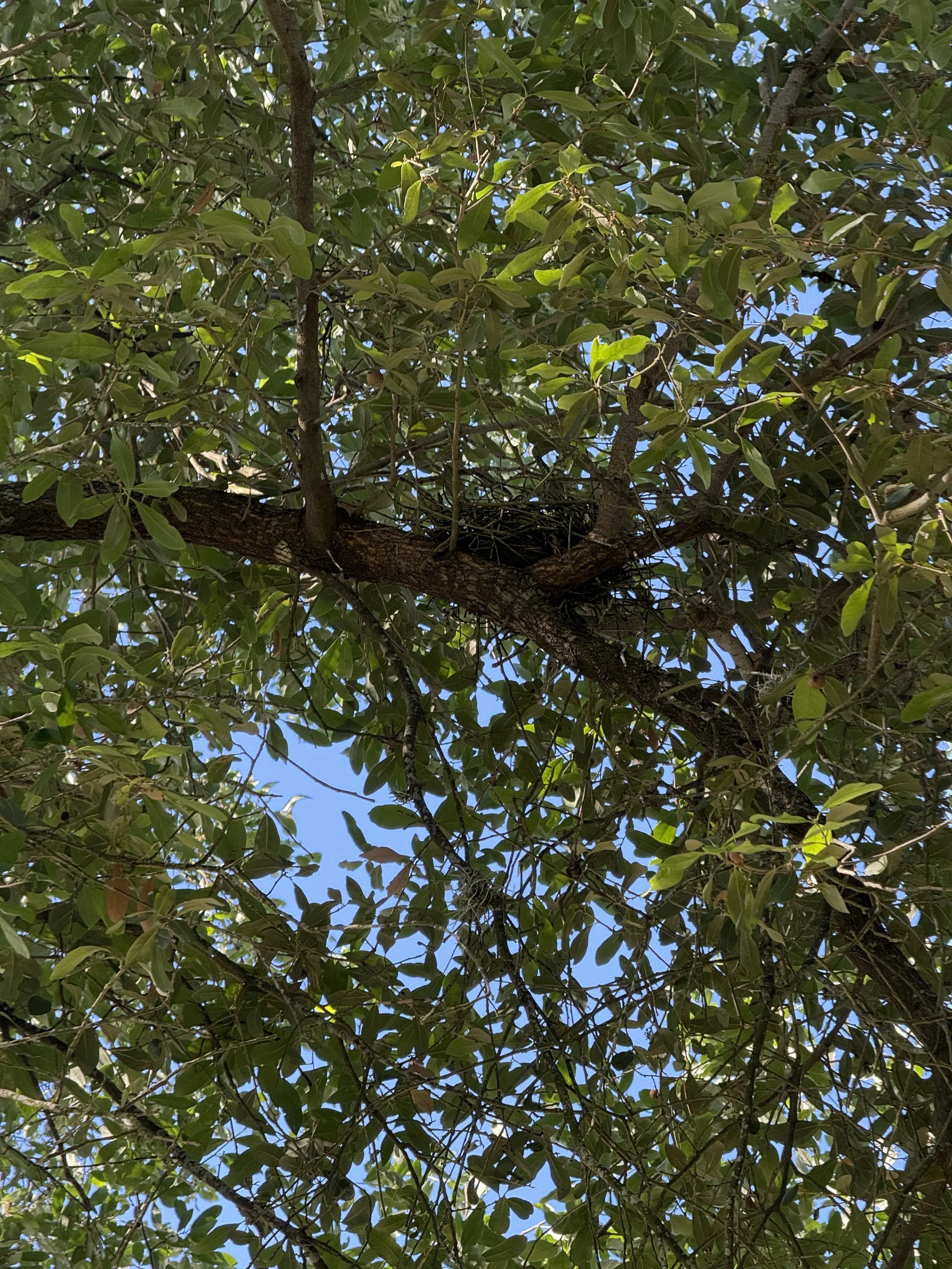
For some reason that morning I looked up.
The sky. The light. The leaves shimmering. It was beautiful. And I thought about my friend and that tree in the parking lot. And I wondered — is there science behind this? Why do we reach for trees?
So I did some research.
What I found surprised me. Trees connect with us in ways we don’t see. The ground beneath them runs with electrical charge — and so do we. Our bodies conduct it. They release compounds into the air — phytoncides — that lower our blood pressure, boost our immune function, reduce our stress hormones. The Japanese have a name for the practice of standing among them: shinrin-yoku. Forest bathing. Decades of research into why it simply works.
I feel that with the prairie too. There are books about the majestic, showy, beautiful trees — because we see ourselves in them. We are upright. We reach toward light. But maybe what connects us most deeply is quieter. Closer to the ground. The living soil beneath our feet. The roots we never see.
Nobody has written that book yet.
There was something in that moment — that particular blue through those particular branches — that felt less like looking at a tree and more like being inside something alive.
My friend already knew.
