I am renaming a ten-year-old project this month: The Peace Pigeon Project becomes Succession.
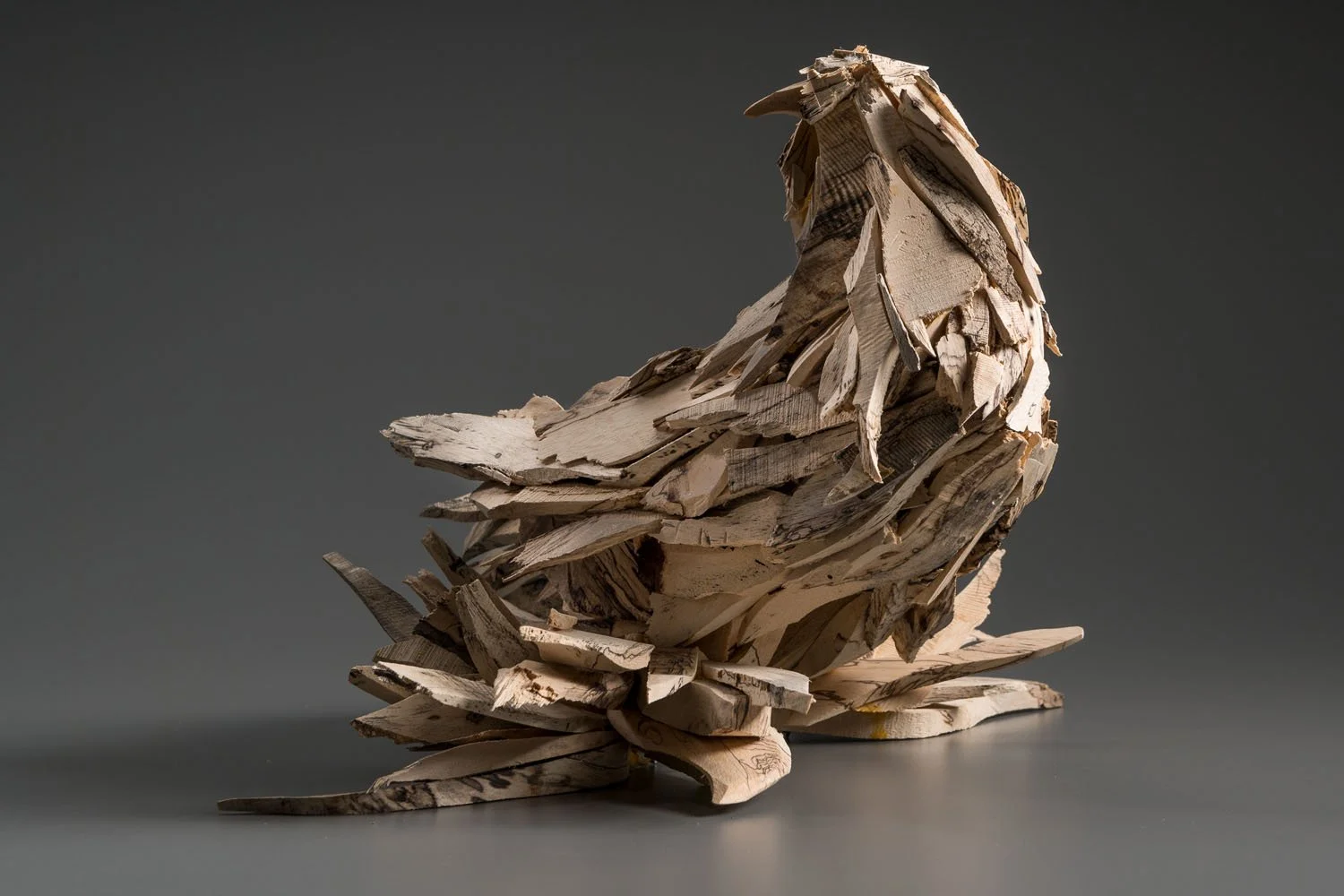
Nothing about the work itself is changing. The pieces stay exactly as they are — the bronze trumpeter, the cardboard-box pigeon, the toilet-paper-roll pigeon, the found sombrero I turned into wings and a body. What's changing is the frame around them, because the old frame was borrowed from someone else's symbolism, and it was never quite mine.
Here's the actual history. In fall 2016 I set myself a rule: one sculpture a week, a new material every time. I needed a subject stable enough to hold that discipline together, so I picked a bird — the German beak-crested trumpeter, a pigeon whose feathered feet let it balance without a pedestal. Later I learned this exact breed is the pigeon Picasso drew as his famous peace dove, a bird gifted to him by Matisse. In French and German, "pigeon" and "dove" are the same word. It's a good footnote. I kept the project named after it for ten years.
But "peace" was never the mechanism at work in that studio. What was actually happening, week after week, was disturbance and regrowth: I forced my hands through baling wire, then plaster, then root and branch, then copper tubing, then stone, and something different came out of me each time. I didn't have the vocabulary for that yet. I have it now, because the last several years of research into regenerative grazing gave it to me.
In grazing ecology, succession runs through the animal's whole body, not just the ground beneath it. A hoof breaks the soil crust; manure returns nitrogen and seeds a bloom of dung beetles and fly larvae; grazed grass regrows, shorter and denser. The flocks don’t wait for the new growth — they follow the bison directly, riding its back, working ticks and flies off its hide, then dropping to the dung pats for the insects breeding there. Cowbirds carried an older name for exactly this: buffalo birds, because the relationship was that specific, that physical. Not because the land made peace with them, but because a large grazing body is itself a habitat, and something disturbed it in a way that made more life possible. That is a more accurate description of 2016 than any dove ever was. I wasn't making peace with a pigeon. I was disrupting my own workflow on a weekly schedule and watching what came back.
There's a second thing the old title hid, and I want to name it. Every one of those birds is the same species, and no two look alike — cast in bronze, made of baling wire, built from a stranger's sombrero. That's not decoration. A population with more variation to draw on survives change better than one without it, whether that's a species or a whole landscape's worth of species, root depths, and insects. Diversity is what lets a system take a hit — drought, flood, heat — and come back afterward. My one bird wearing twenty different bodies makes that visible.
So: Succession. Same pieces, same materials, same bird in the title where it belongs now — as a footnote, not a frame.
I'm not scrubbing the old title from the record. If you search for The Peace Pigeon Project, you'll still find it, and I'll leave a note there pointing here. But going forward, this is what I call that year of work, and why.
