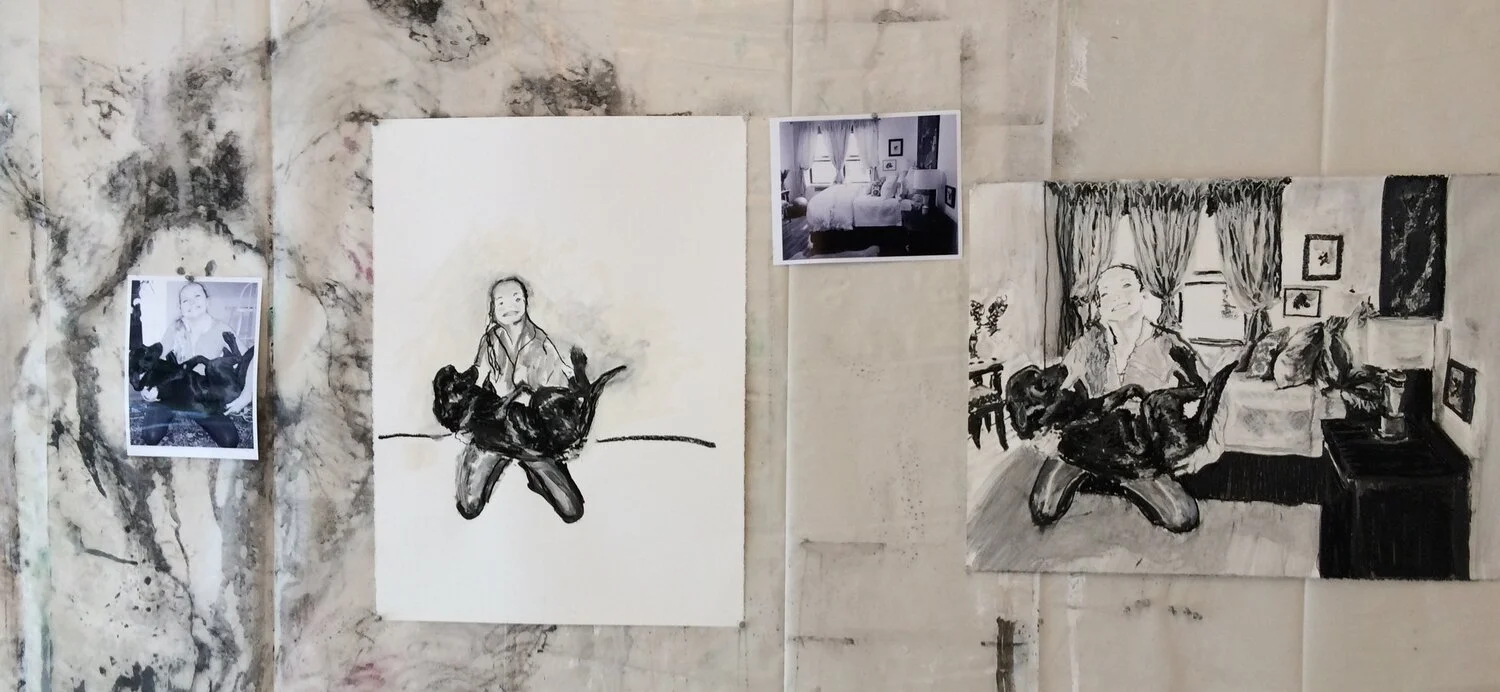
Without bees we would not have cucumbers or watermelons
Today harvest at the farmers market.
Your Custom Text Here

Without bees we would not have cucumbers or watermelons
Today harvest at the farmers market.
7 days left to rip and wrangle rusted wire cloth, then delicately stitch the wire fragments into biospheres of frail and vulnerable abstract wild bees and organic shapes. Then coat hydro stone and cast shadows, to kinetically unveil the unintended consequences of forcing natural processes into an industrial model. Then pack, transport, unpack, install for 21 days, and open........ find more locations to install......... rinse and repeat.
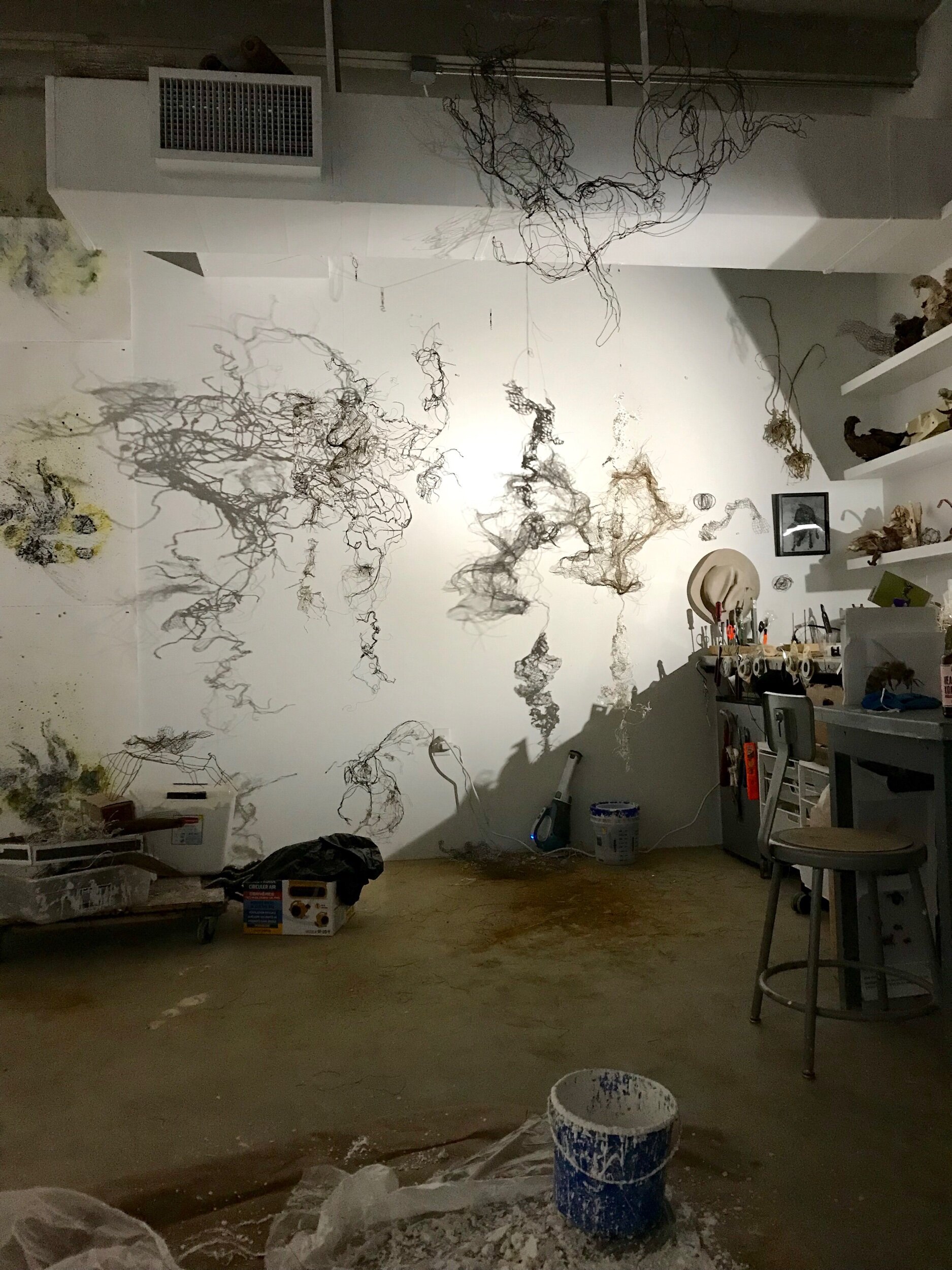
7 days left to rip and wrangle rusted wire cloth, then delicately stitch the wire fragments into biospheres of frail and vulnerable abstract wild bees and organic shapes. Then coat hydro stone and cast shadows, to kinetically unveil the unintended consequences of forcing natural processes into an industrial model. Then pack, transport, unpack, install for 21 days, and open........ find more locations to install......... rinse and repeat.

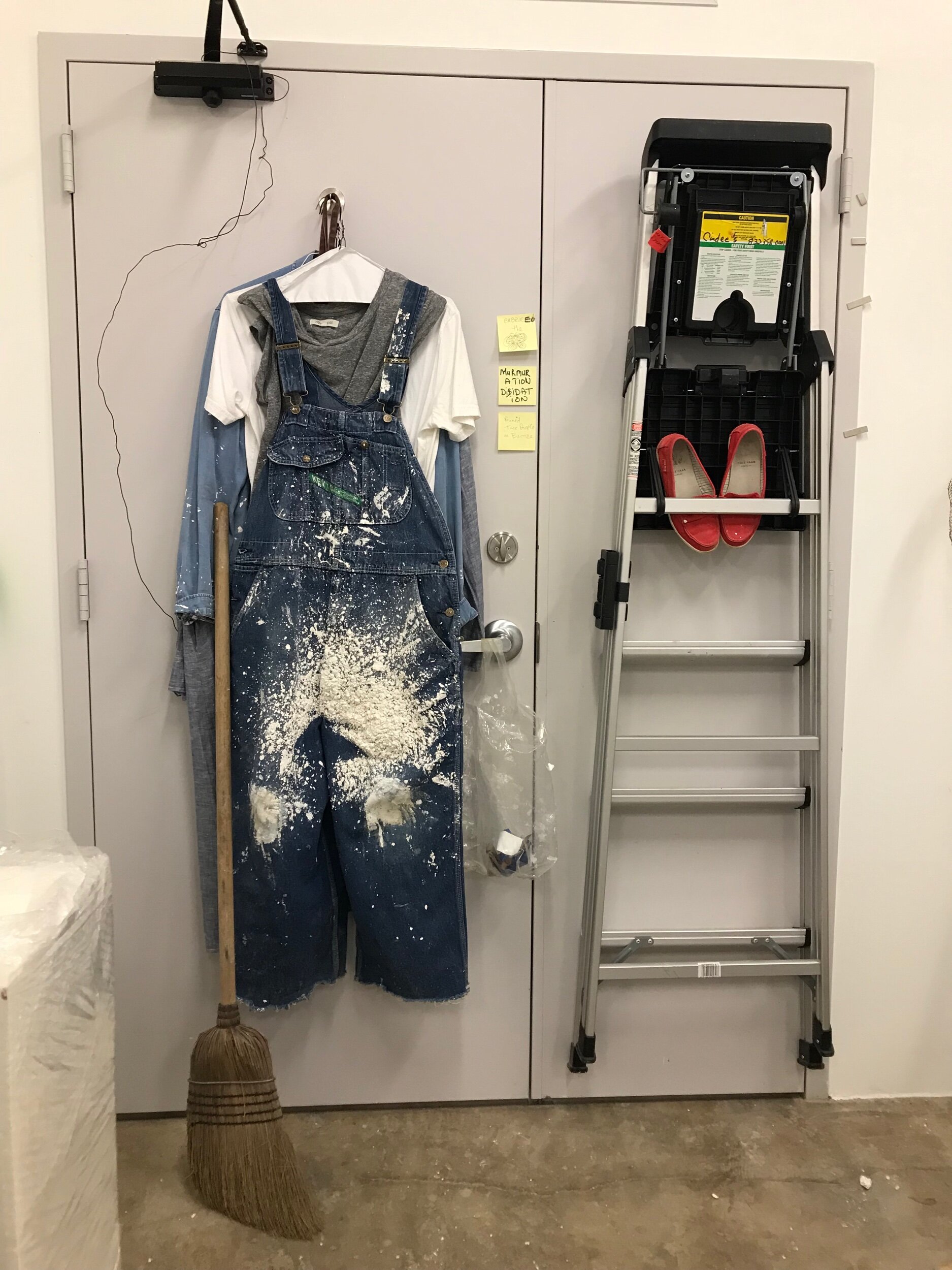
Work clothes, ladder, shoes and broom neatly organized and ready to be used.
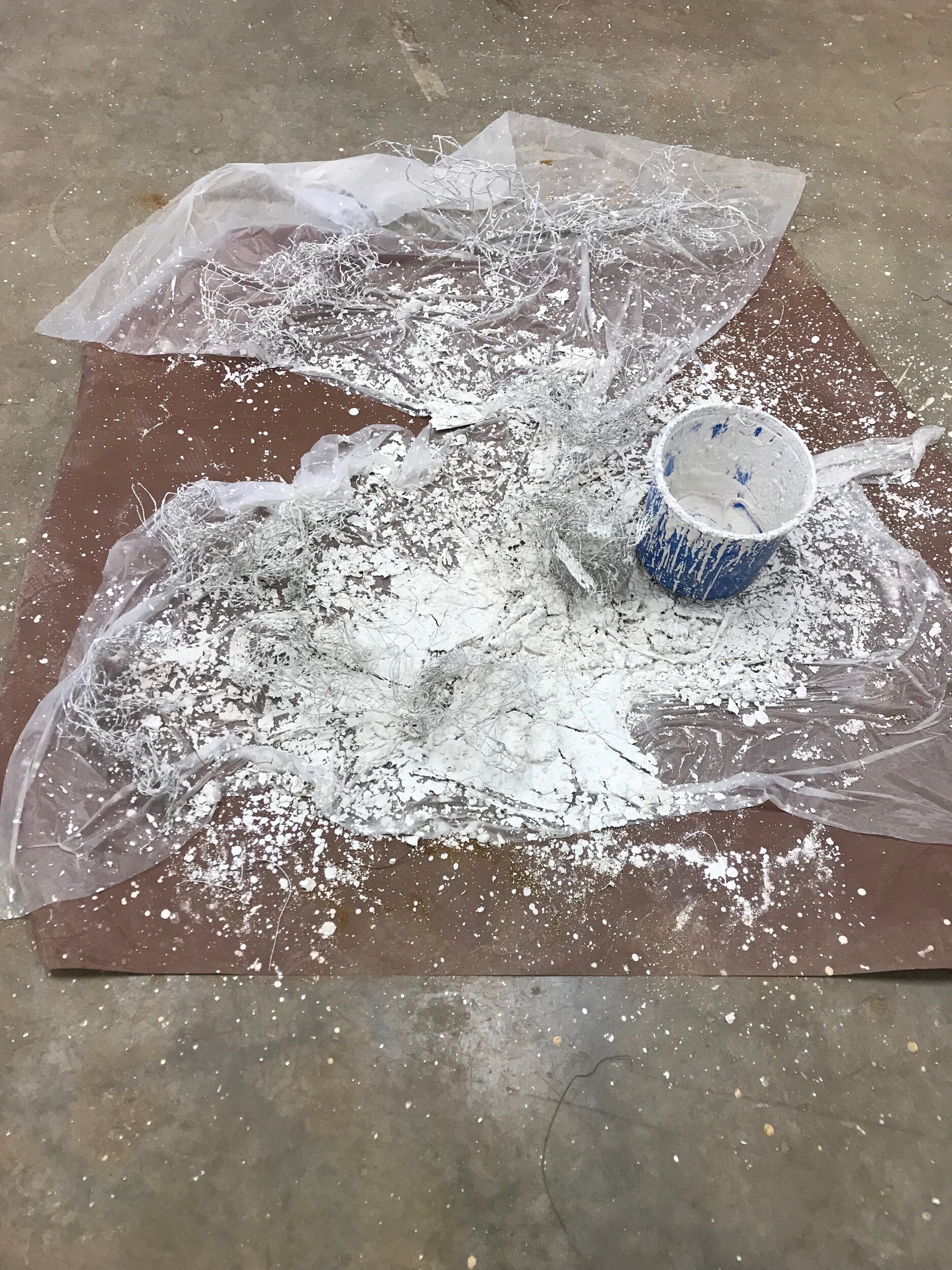
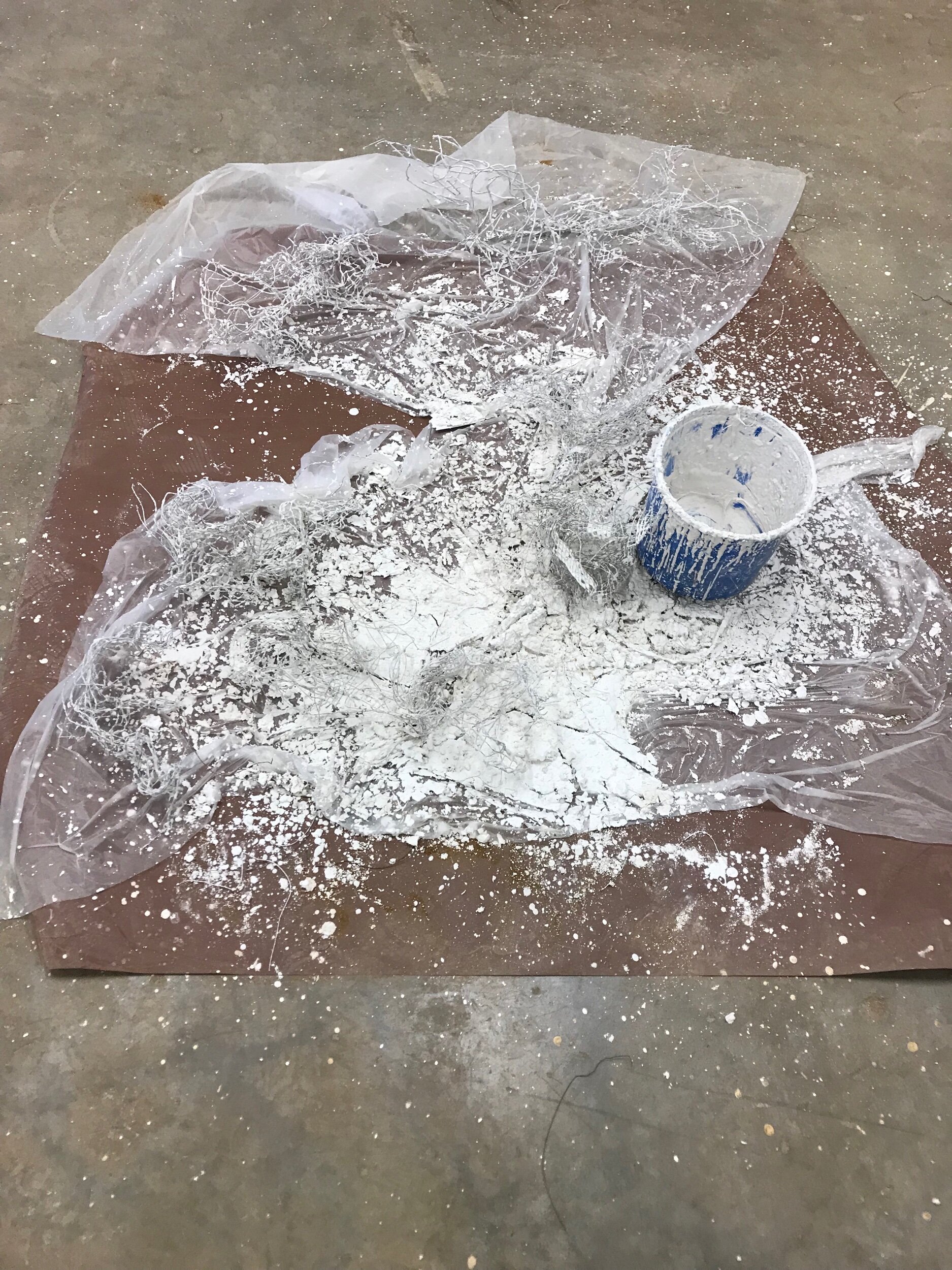
Hydro stone station ✅
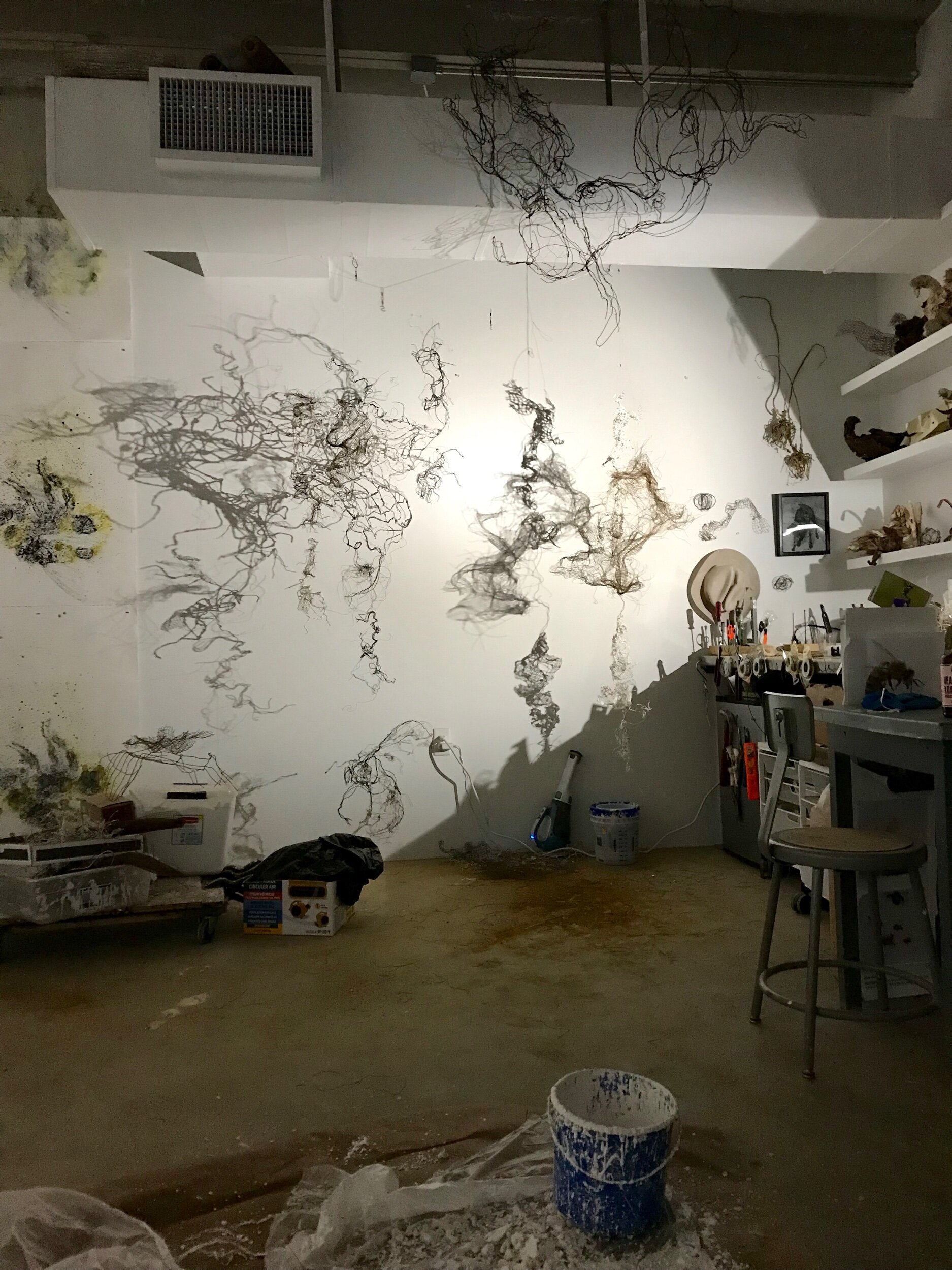
My favorite corner to rip, wrangle, and stitch wire cloth into kinetic sculptures.
One of the joys of parenthood is enjoying nature through your kids at any age. Last night, Griffin sent us this image of a monarch caterpillar that he found in Minnesota this weekend. A few years back on Thanksgiving, we went to see the monarchs. It is a site to behold and a lovely outing. They really liked Sage. Respectfully enjoying the beauty of nature has long been a great joy for our family.
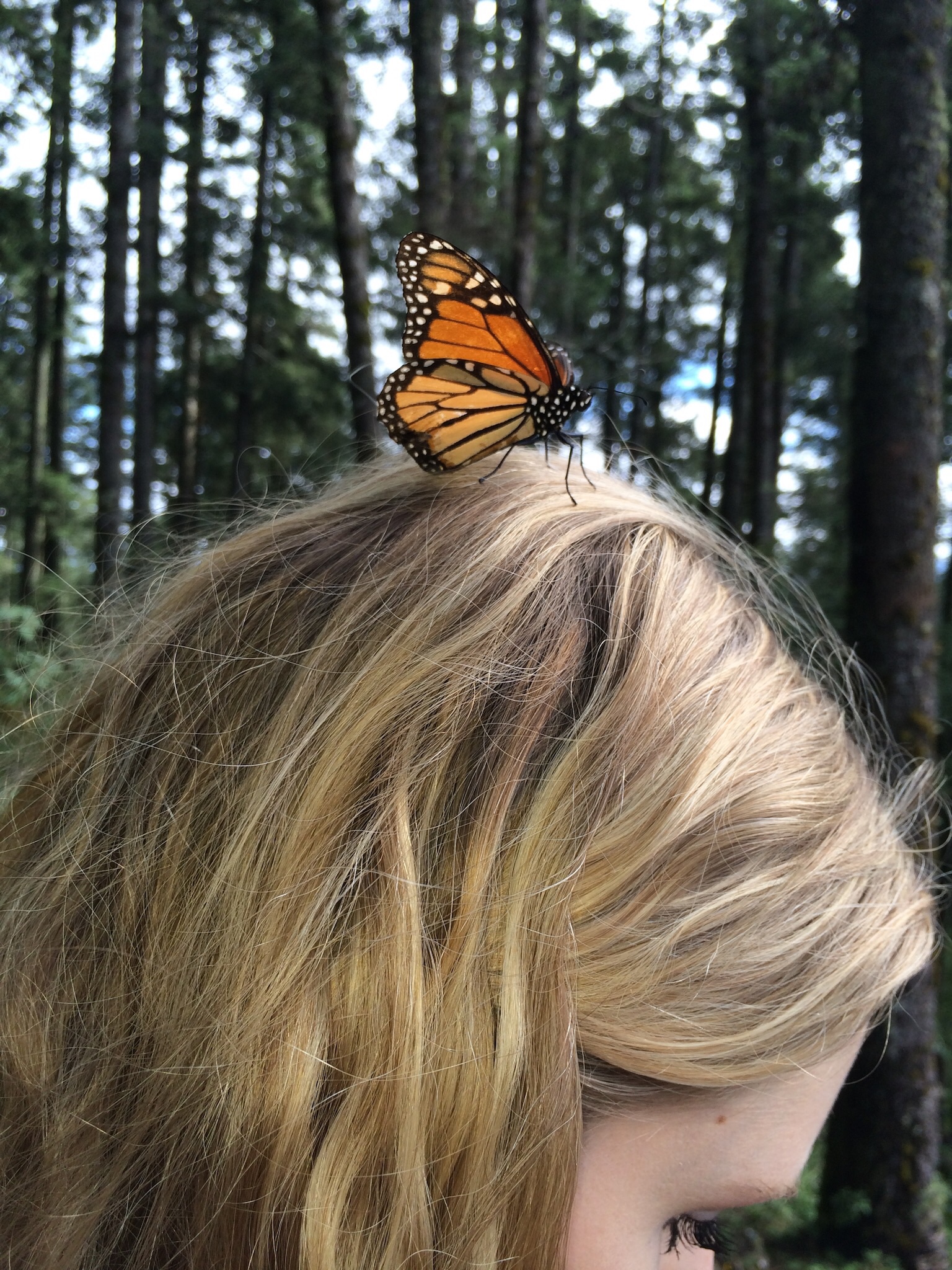
Sage provides fb a resting Place for a monarch
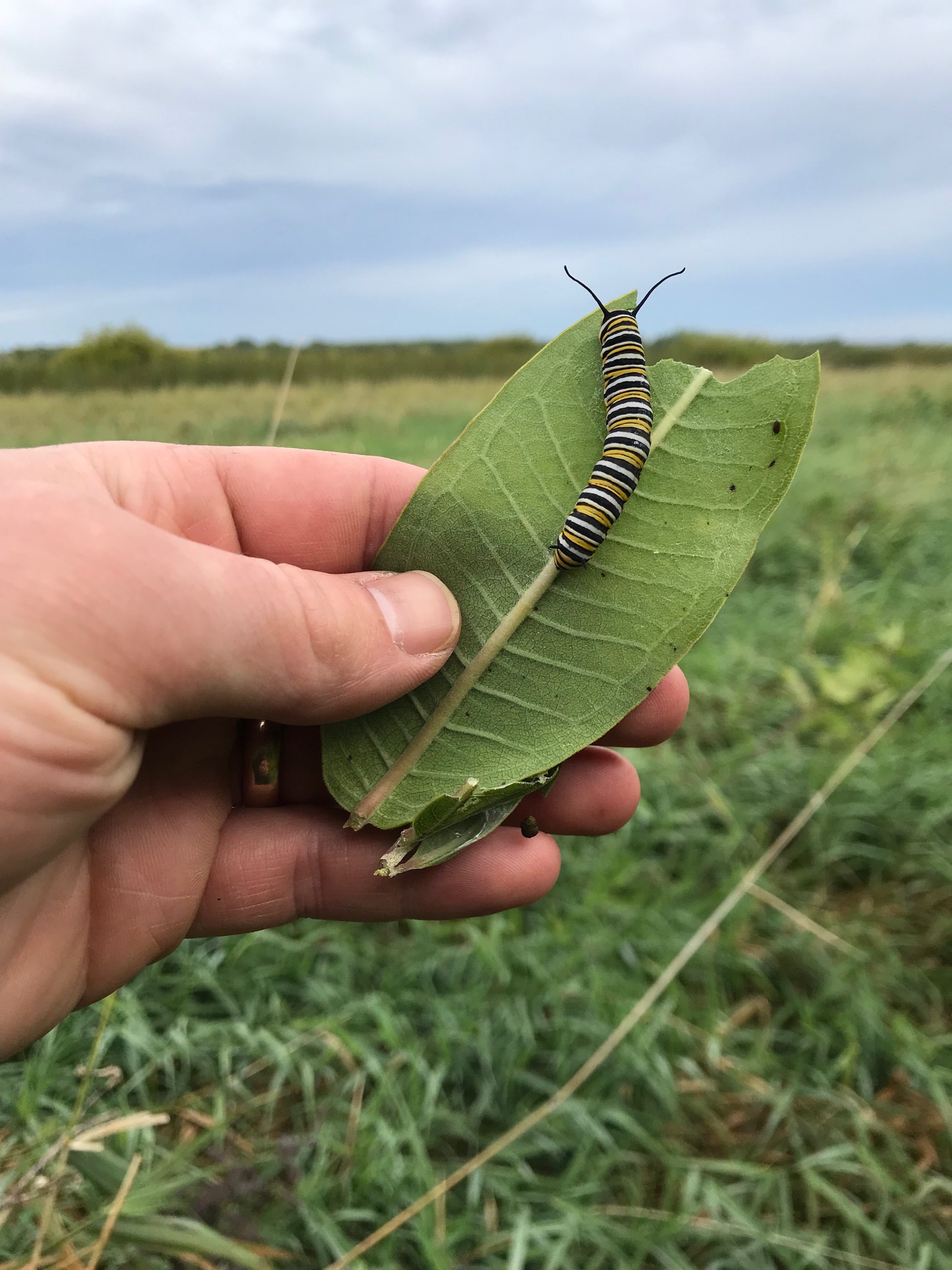
Griffin sharing a caterpillar with us from Minneapolis.
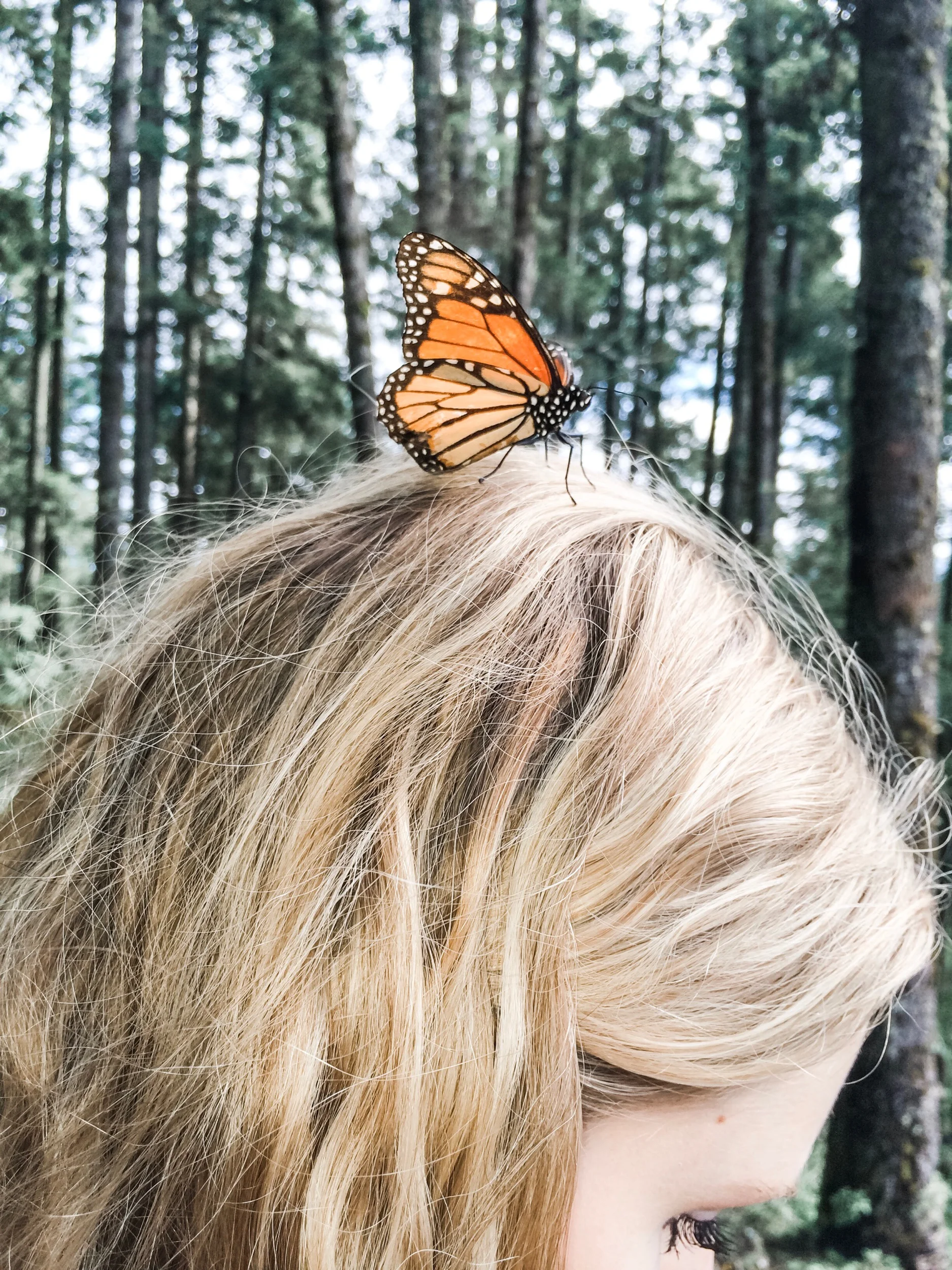
Sage providing a resting place for a monarch
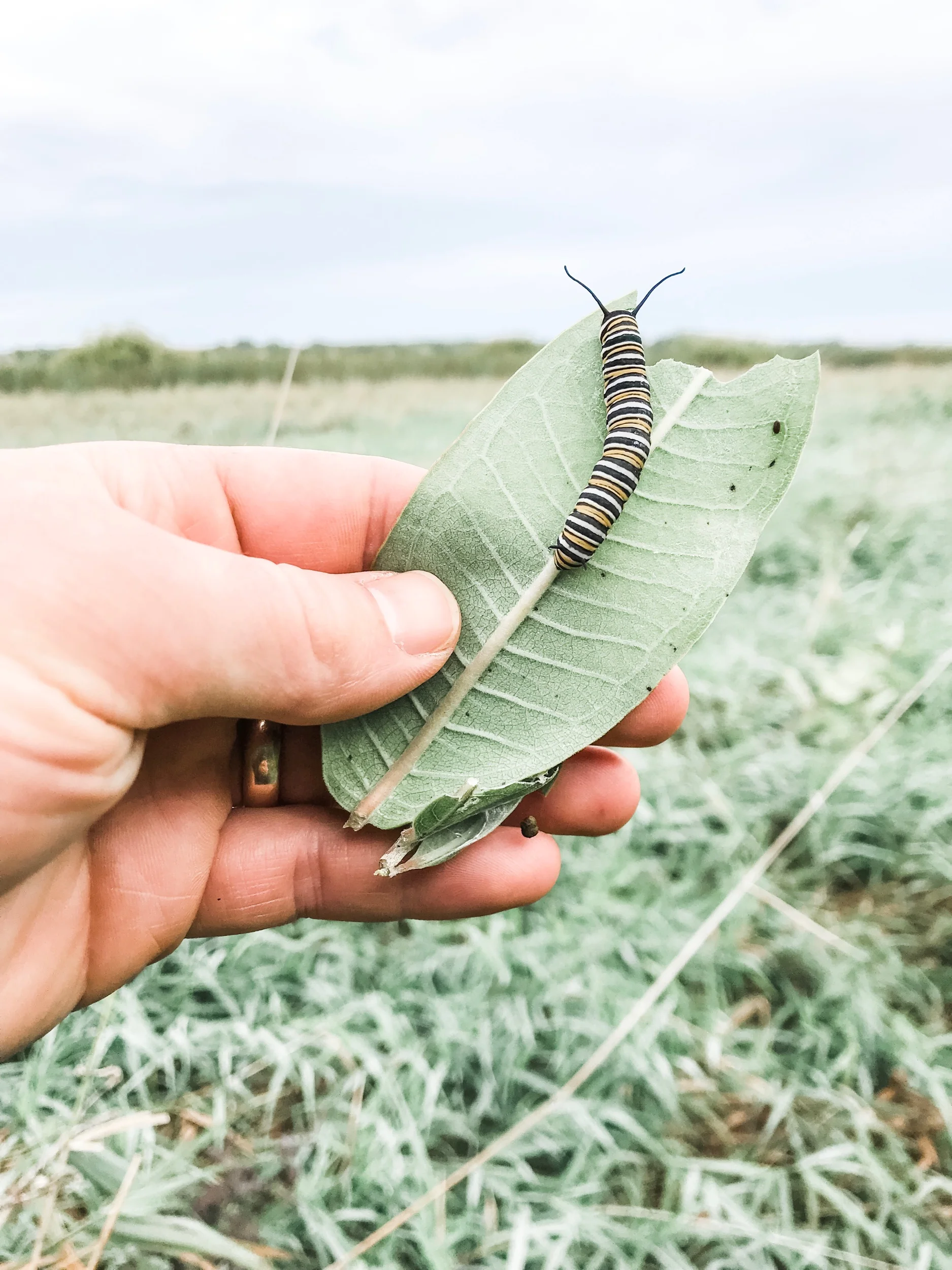
Griffin respectfully watching a caterpillar in Minneapolis
On my morning walk I saw all these giant bees humming around the grass near a tree. I was so pumped I stopped and squatted at the base of the tree and just watched them. I immediately realized they were not bees. They were really cool. I tried to video them but they were too fast.
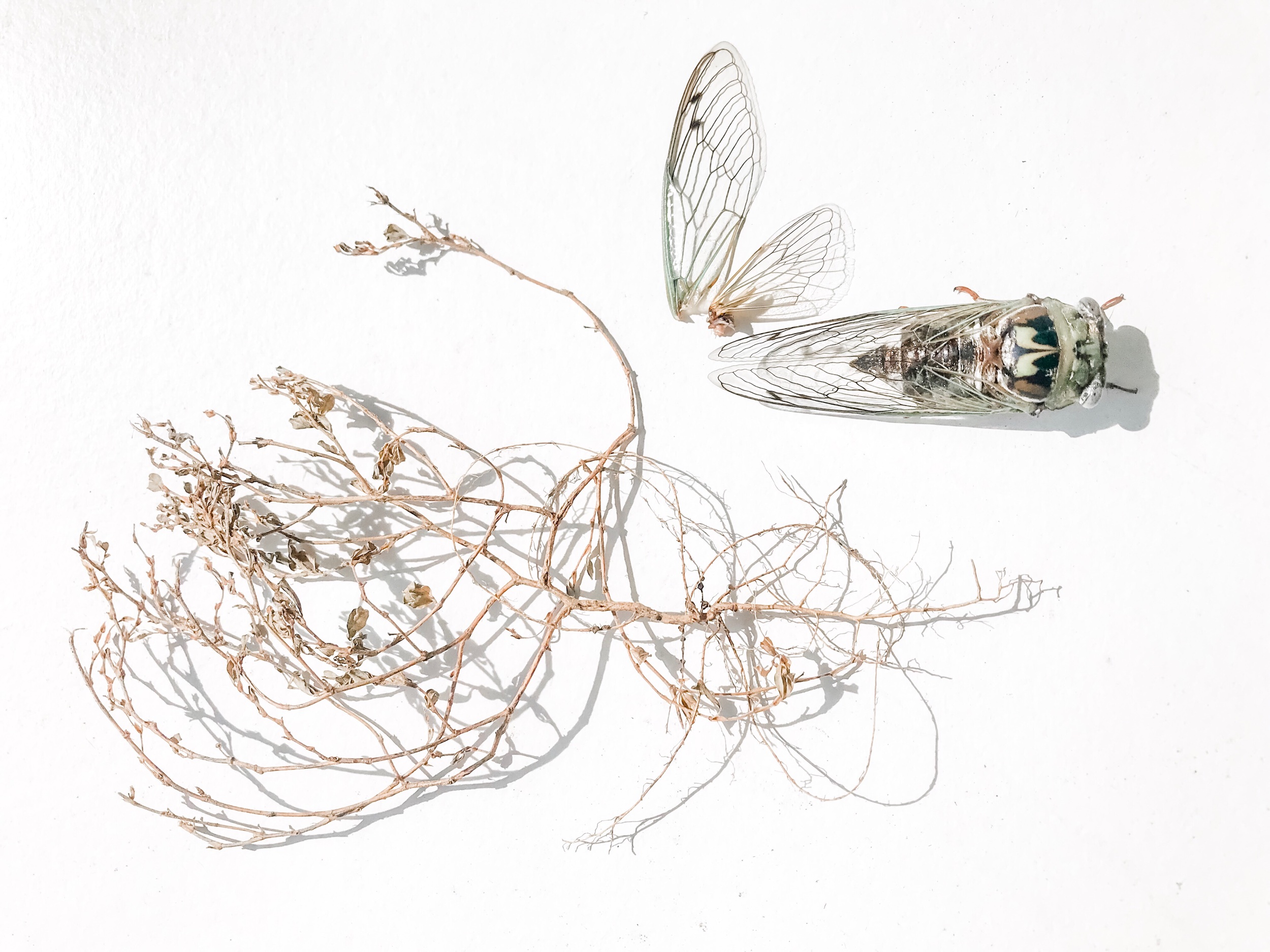
On my way home I found a beautiful cicada wing and then a gorgeous dead cicada and a lovely root.
Did I witness a cicada emergence?. The whole idea is so poetic. I feel like I should cook a special organic meal or I don’t know do something to acknowledge such a special creature.
I don’t know much about cicadas other than if you are obsessed with protecting wild bees and always keeping your eye out for them you might see a cicada. So I googled cicadas and found out how special they are.
Check them out in the link below. They are important not only as a source of protein, they prune tree and provide nutrients to tree roots, they have inspired many a song and have microscopic structures on their wings that destroy bacteria. This discovery is being used to advance medicine in the area of antibacterial cornea replacements. Who new? There is so much to learn from nature once we learn to live with it.
https://www.cicadamania.com/cicadas/what-is-the-purpose-of-cicadas/
i really want to learn learn more about their antibacterial qualities, microflora and their impact/relationship with roots and healthy soil.
I first stitched bugs in 98”.
I am spending my days making an environmental installation. For the installation I work in the dark with an Led Light making shadows. I am bending, twisting and stitching wire into wild bees. I first stitched bugs in 98”.
As I age I am amazed at how life circles back……….
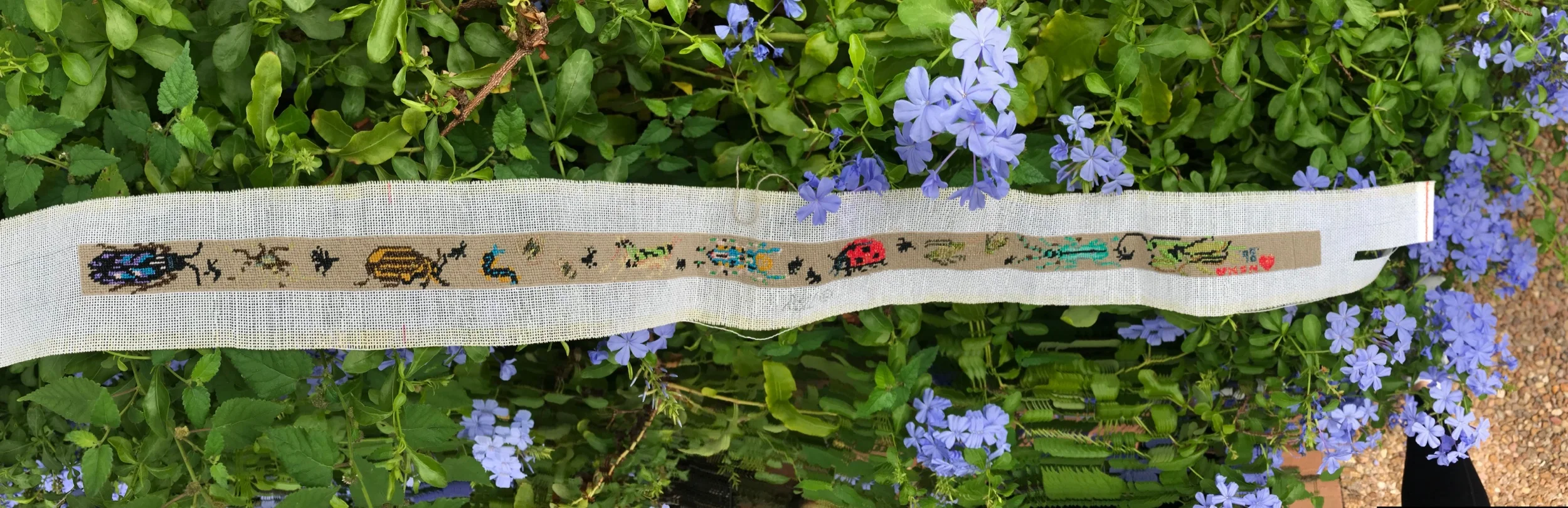
Raising kids takes a lot of patience... waiting in carpools, doctor offices, soccer lessons... stitching was my therapy. I am not naturally patient. I don’t have the patience for a microwave. Stitching Kept me a sane happy mom. I took my stitching everywhere. In '98 I stitched this simple piece to be made into a bug belt for my daughter Sage Marie, whom I affectionately called sage Marie Bumblebee. I think 'bumblebee' was printed on her soccer jersey. I have no idea why I never finished the bug belt (but I think it must be because I moved twice in '98). It all works out - with just a few more inches added to save the '♥️mom '98'.
She can wear it for ever. It is funny how life circles back!
Back to my hive.
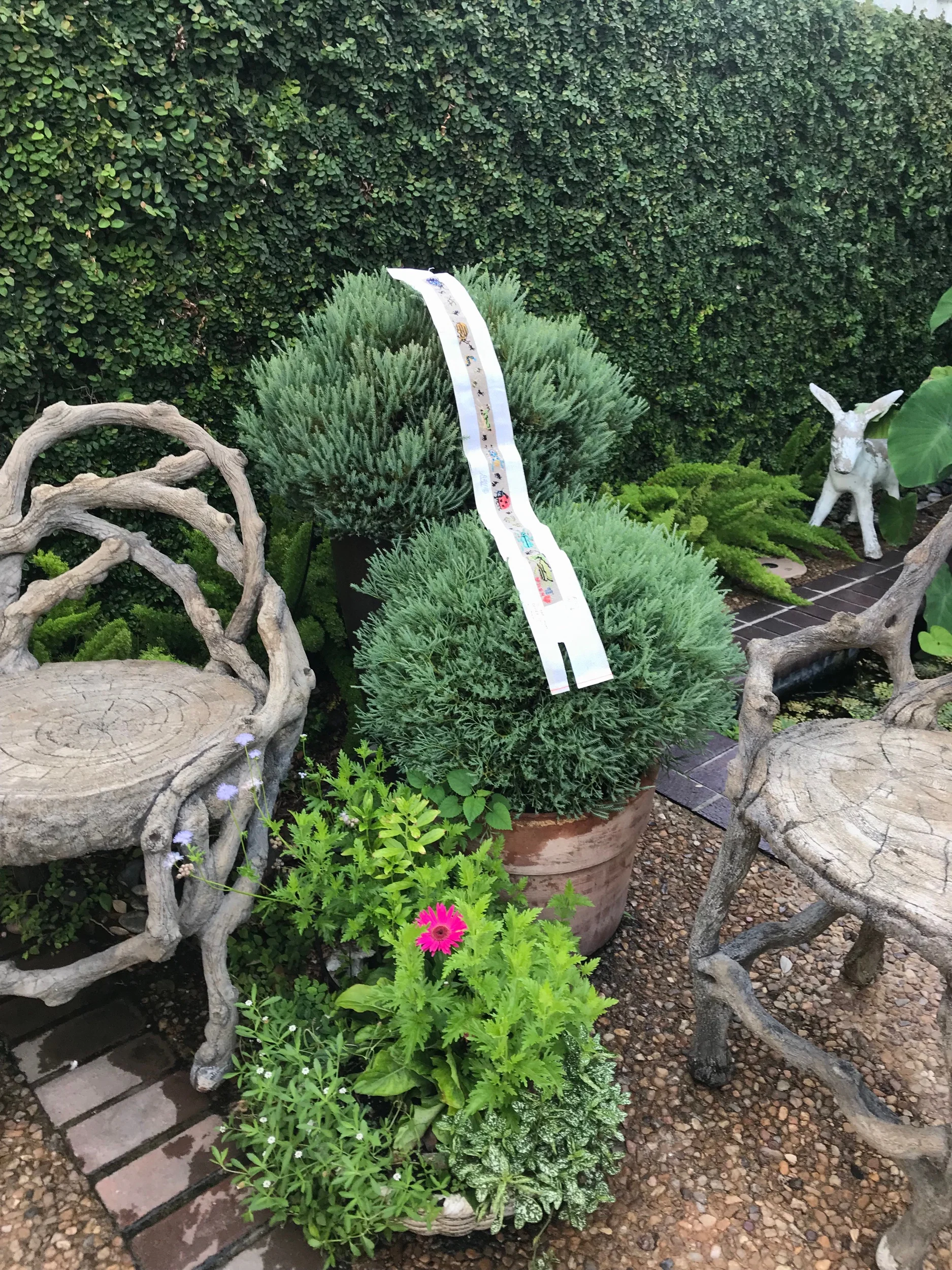
Something is crawling on the Mr. bowling ball plants.
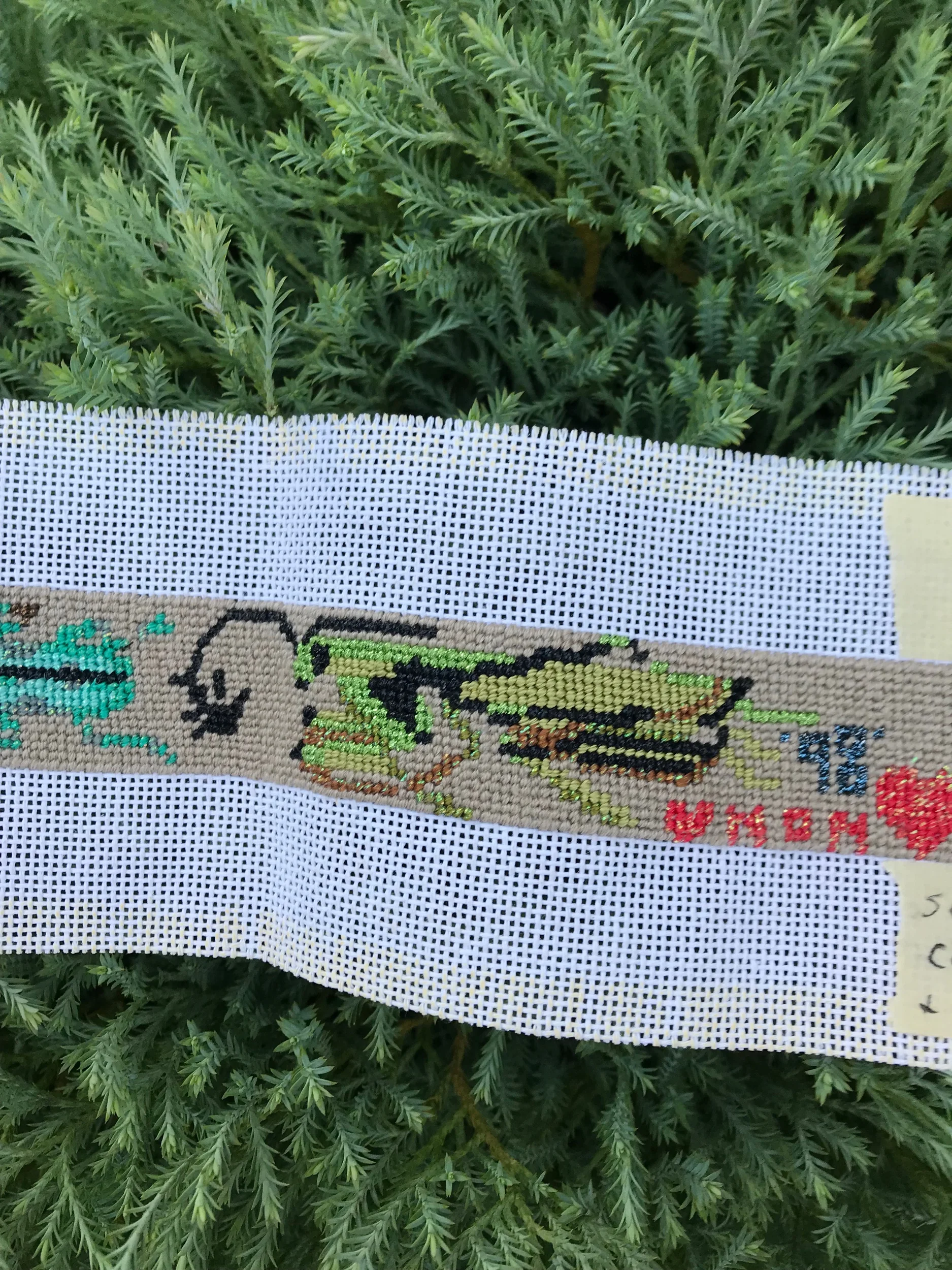
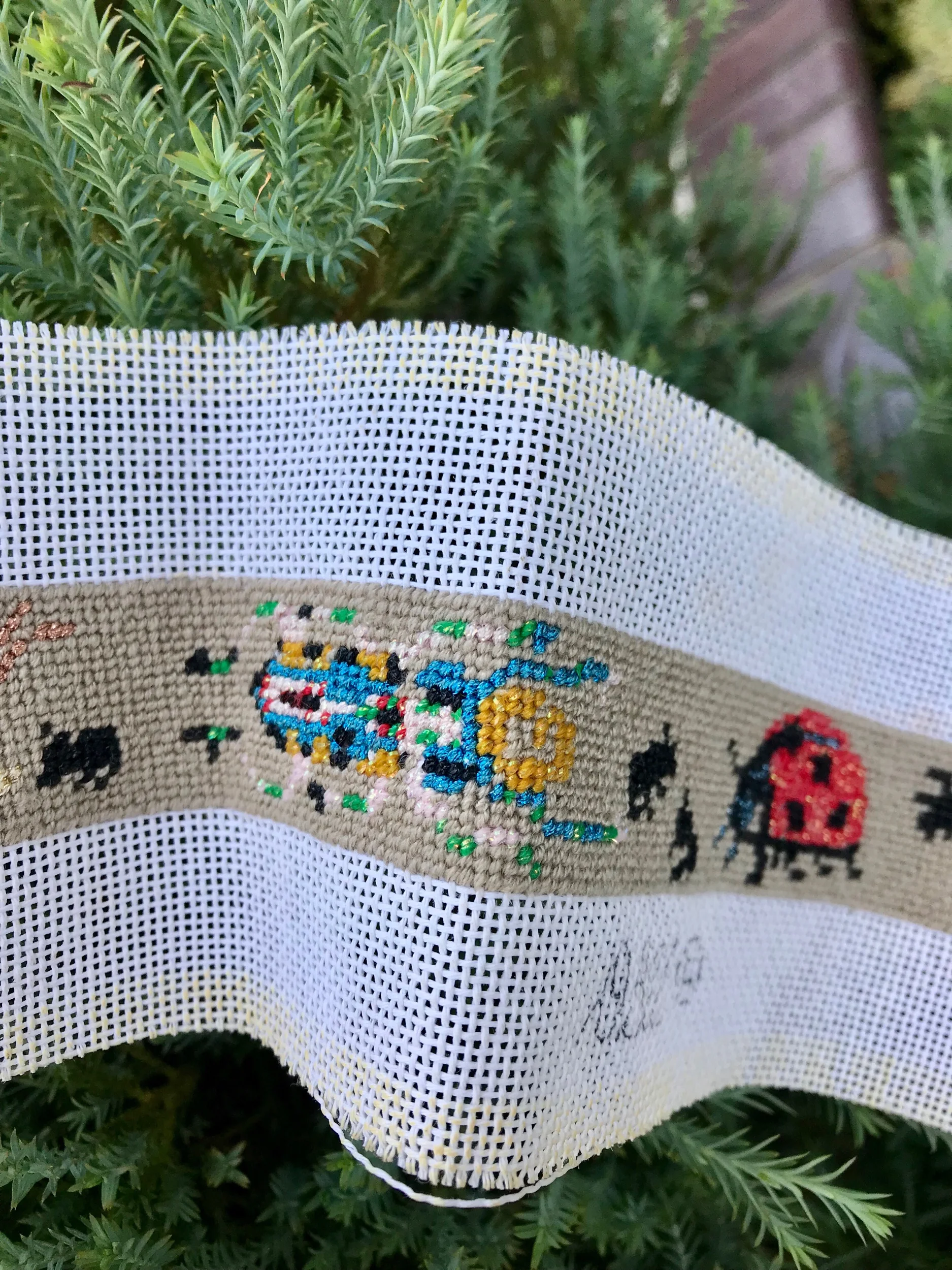
Details on ‘98 unfinished bug belt.
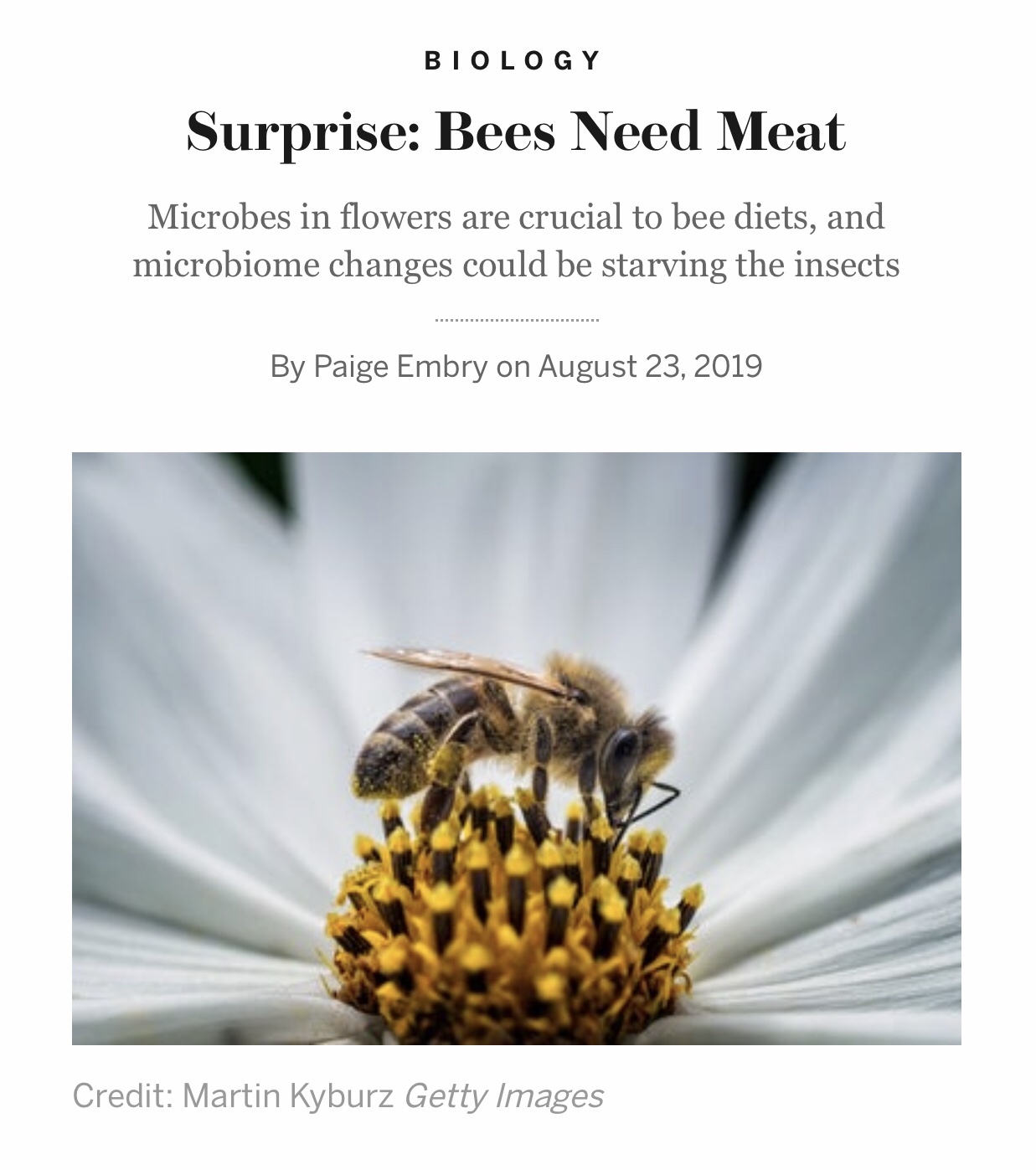
Bees eat meat, and who knew intestinal flora is protein. My bee journey has certainly taken me places I never dreamed it would take me. I love this article in Scientific American because it addresses two things that I find fascinating. Interestingly both impacted by an industrial food Sysyem. I am all in for slow, organic food.
https://www.scientificamerican.com/article/surprise-bees-need-meat/
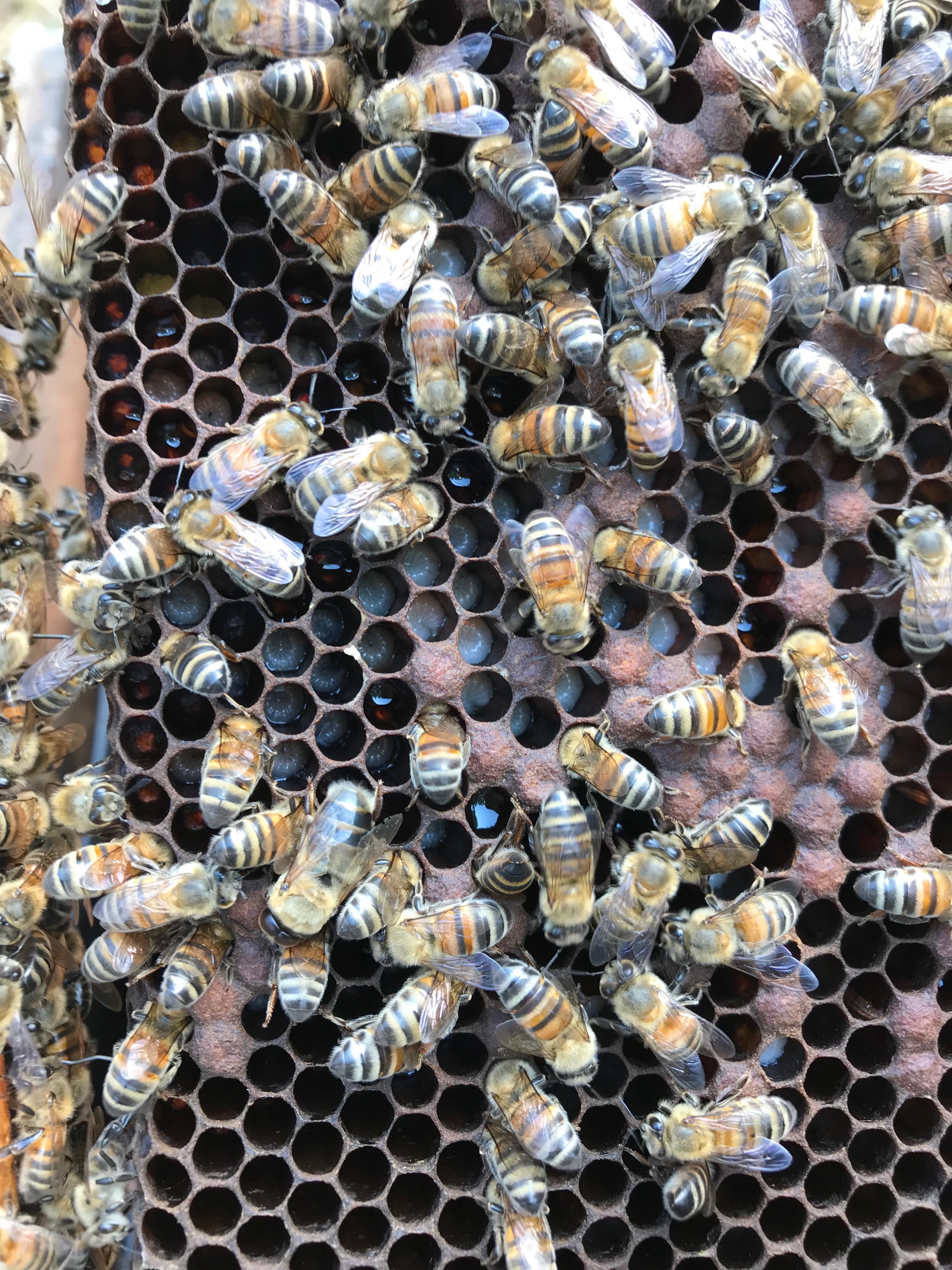
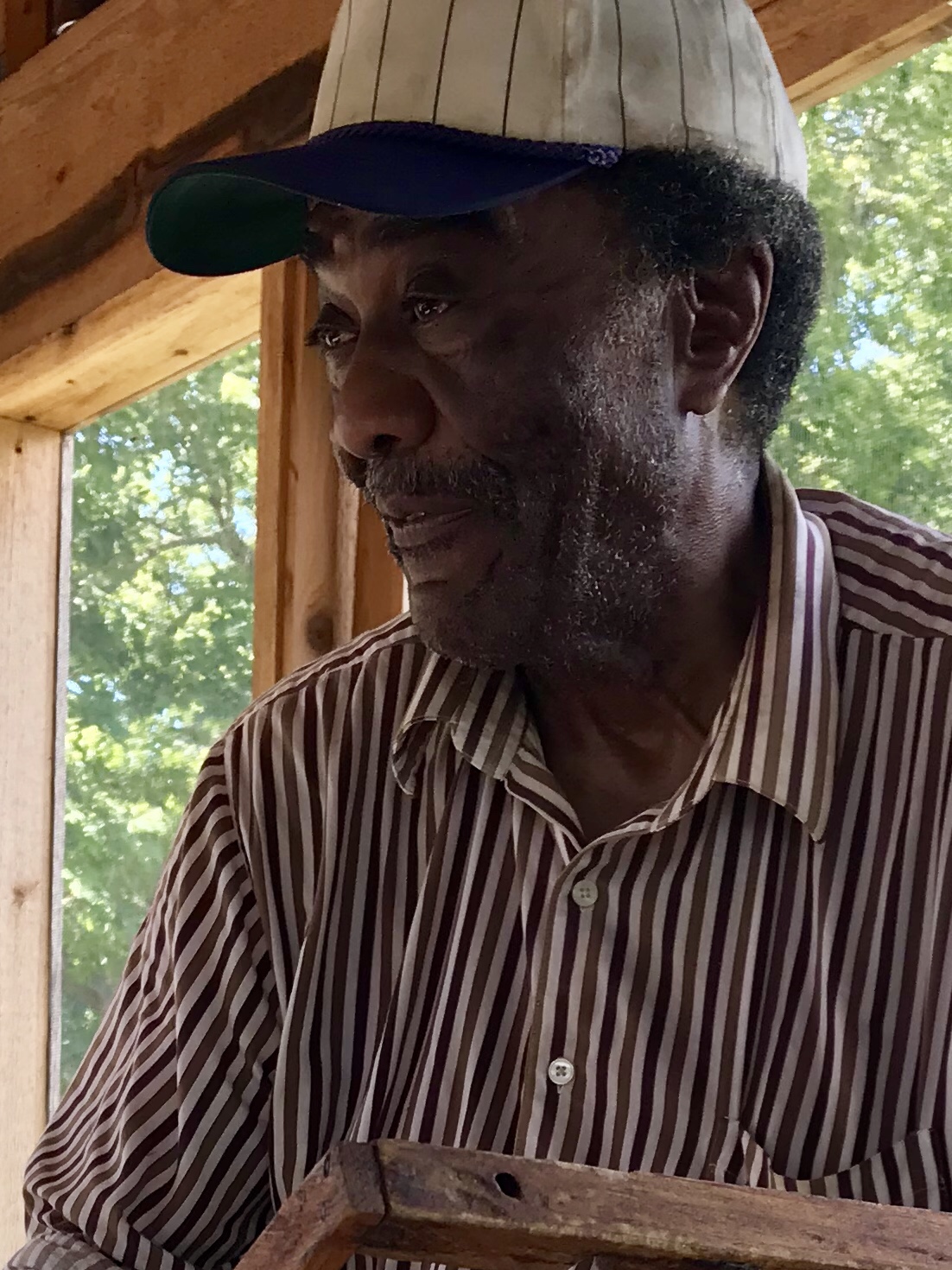
This is Roosevelt (or as Roosevelt would say, it is what is left of Roosevelt). He has been at BeeWeavers since he was 22 years old. Roosevelt is our teacher, guide and bee guru for the day.
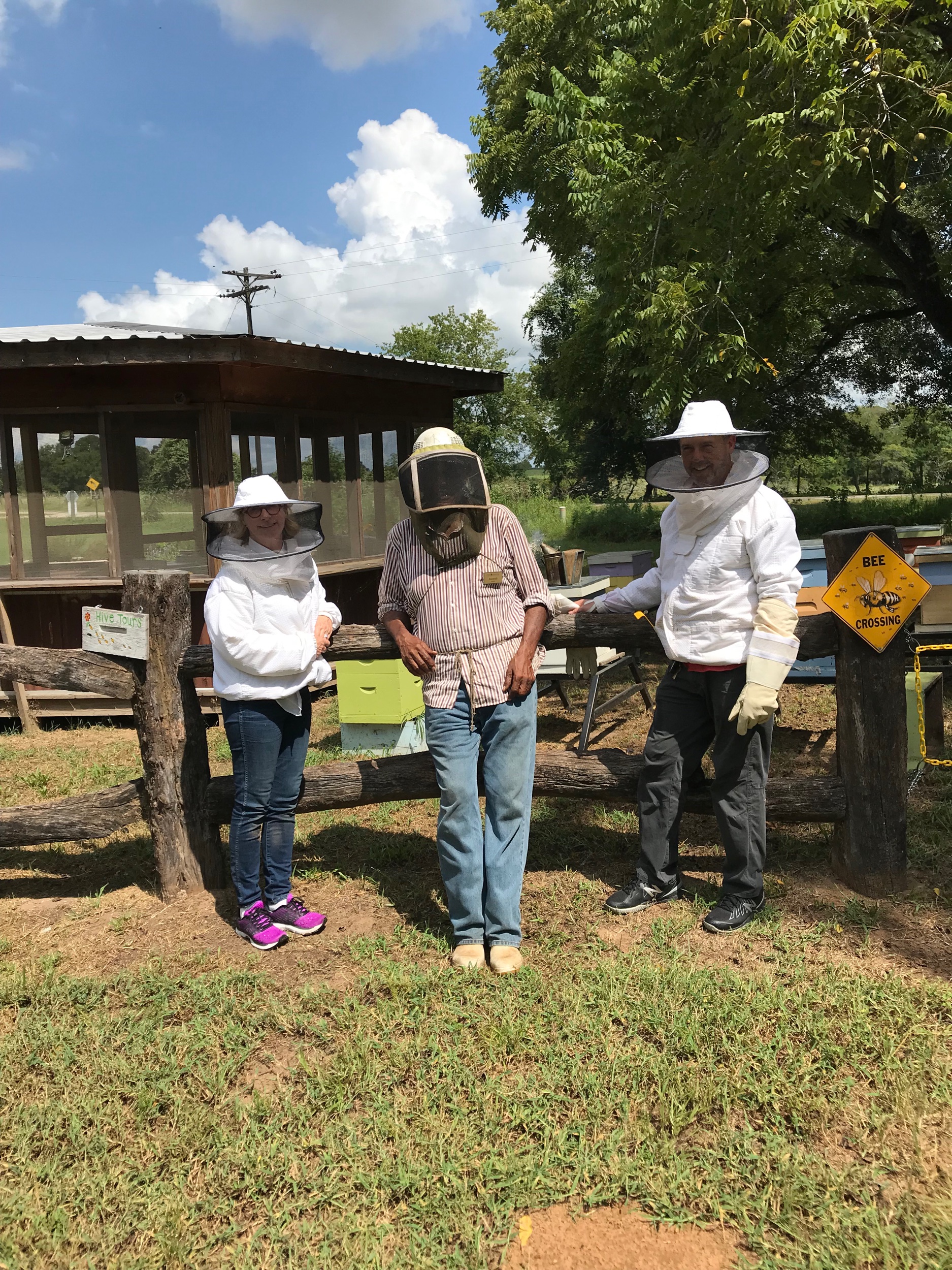
You need to wear long sleeves, loose jeans, and closed-toe shoes. They provide the bee nets/hats and jackets. We are posing in front of some bee boxes and trying to let you see the smoke can behind us. Roosevelt really wanted the smoke to show in the picture. You can’t see the smoke.
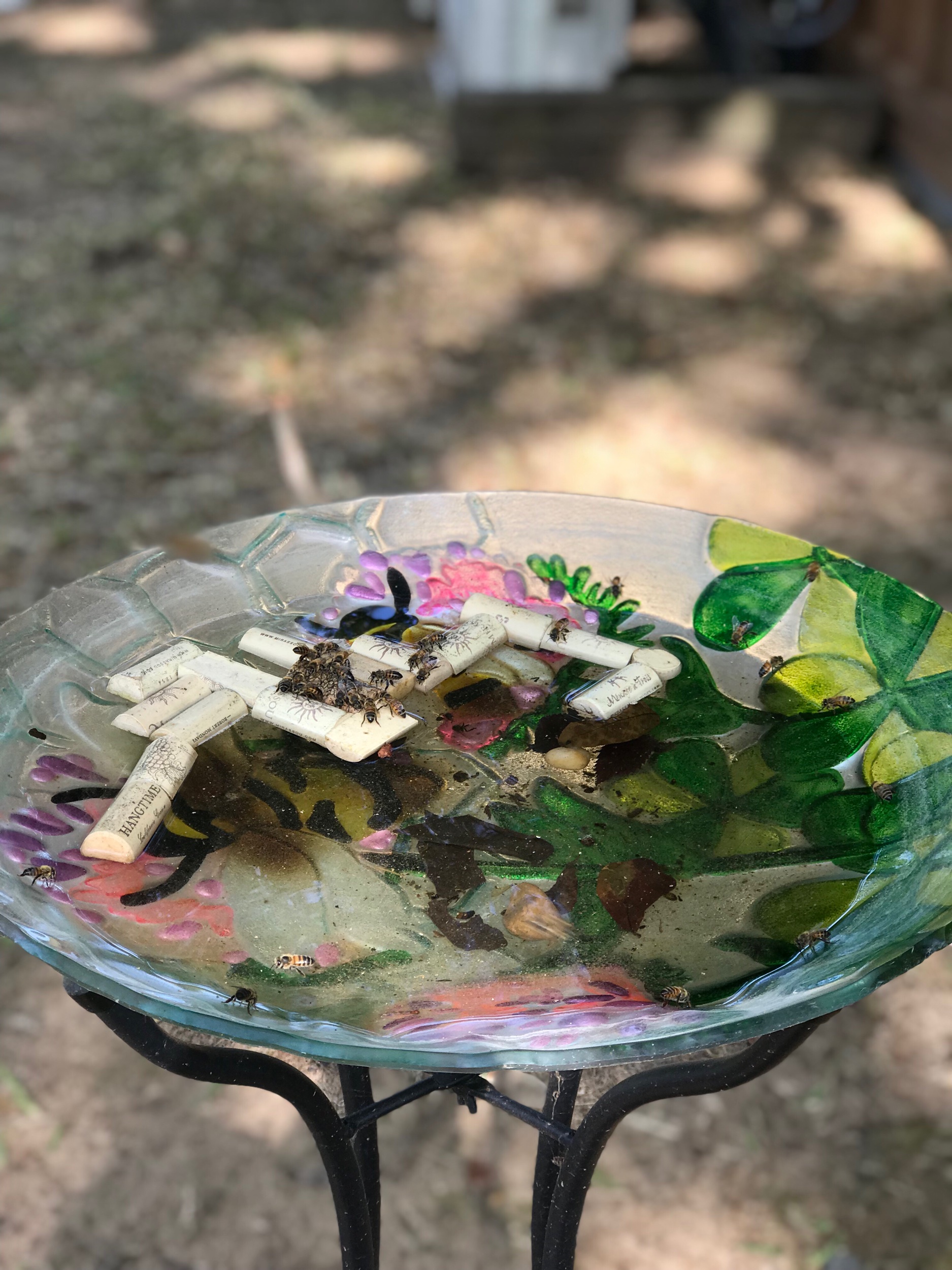
When you arrive one of the first things you see is this sweet bee bath. I have never noticed bees bathing and drinking water before.
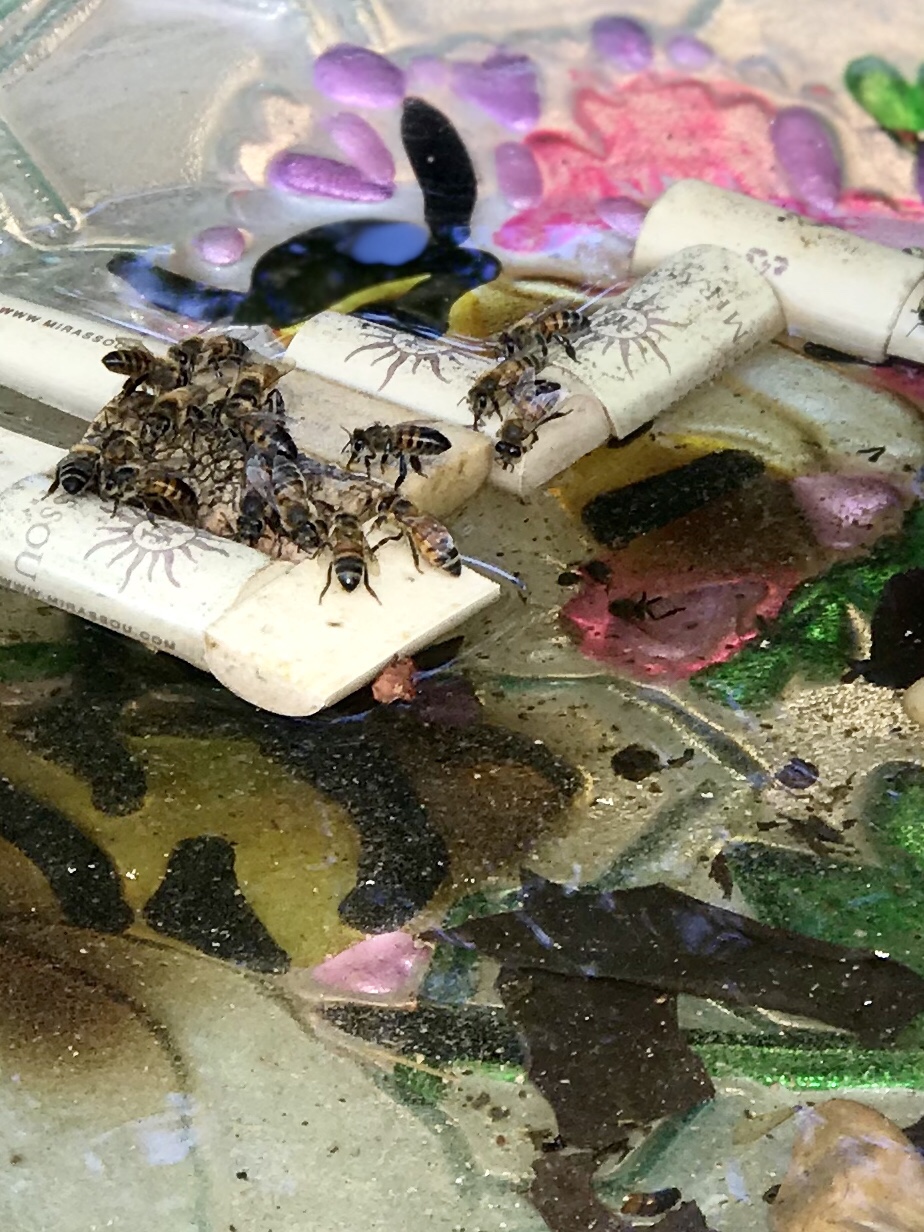
A close up of the bees in the bee bath floating on corks.

Selfie time

These are the boxes they use to show the public. I think they have thousands out and about nearby fields.
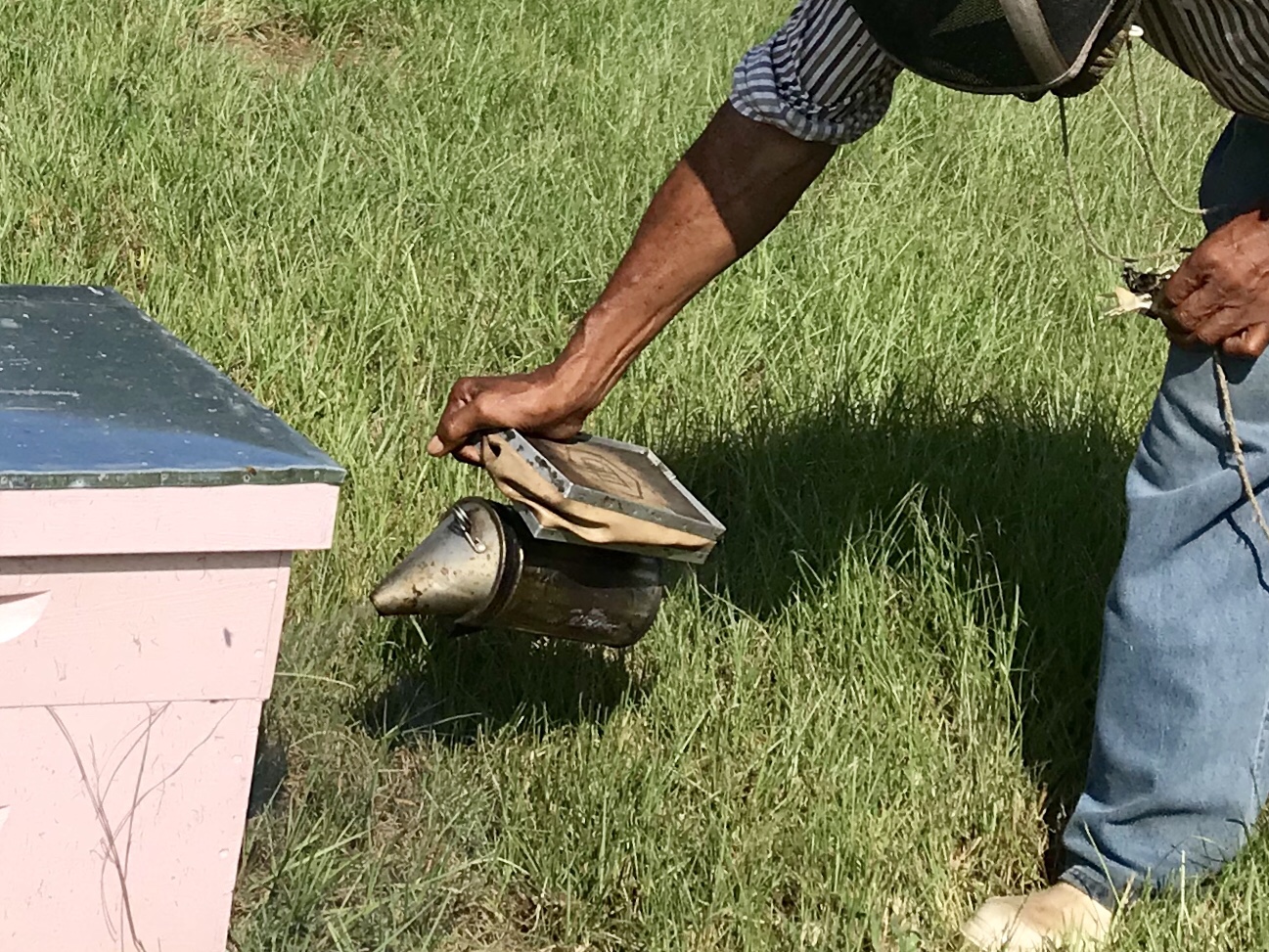
Roosevelt is smoking the honey bee boxes before we take a look Inside.. The smoke calms them down.
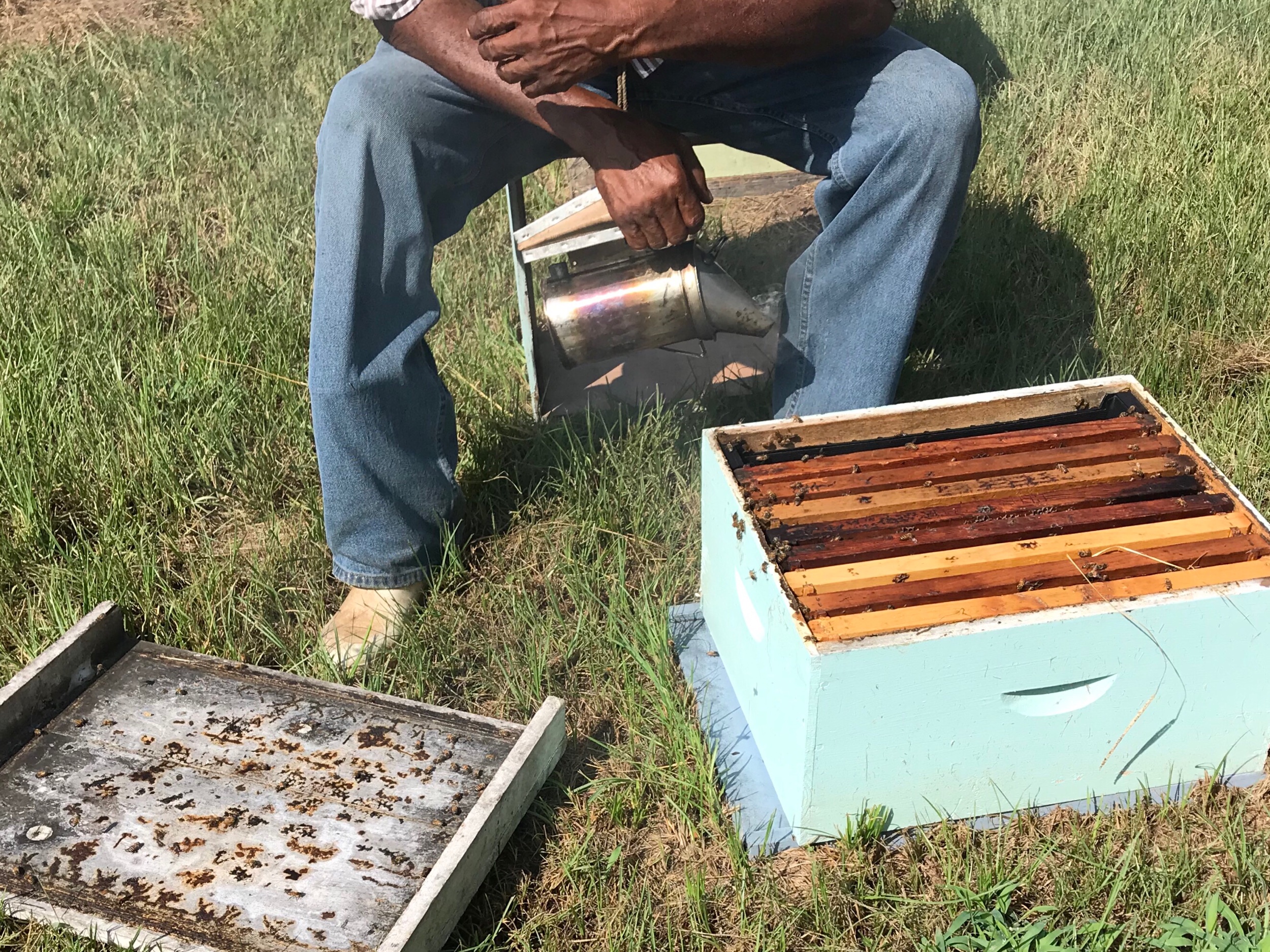
The bees were not aggressive.
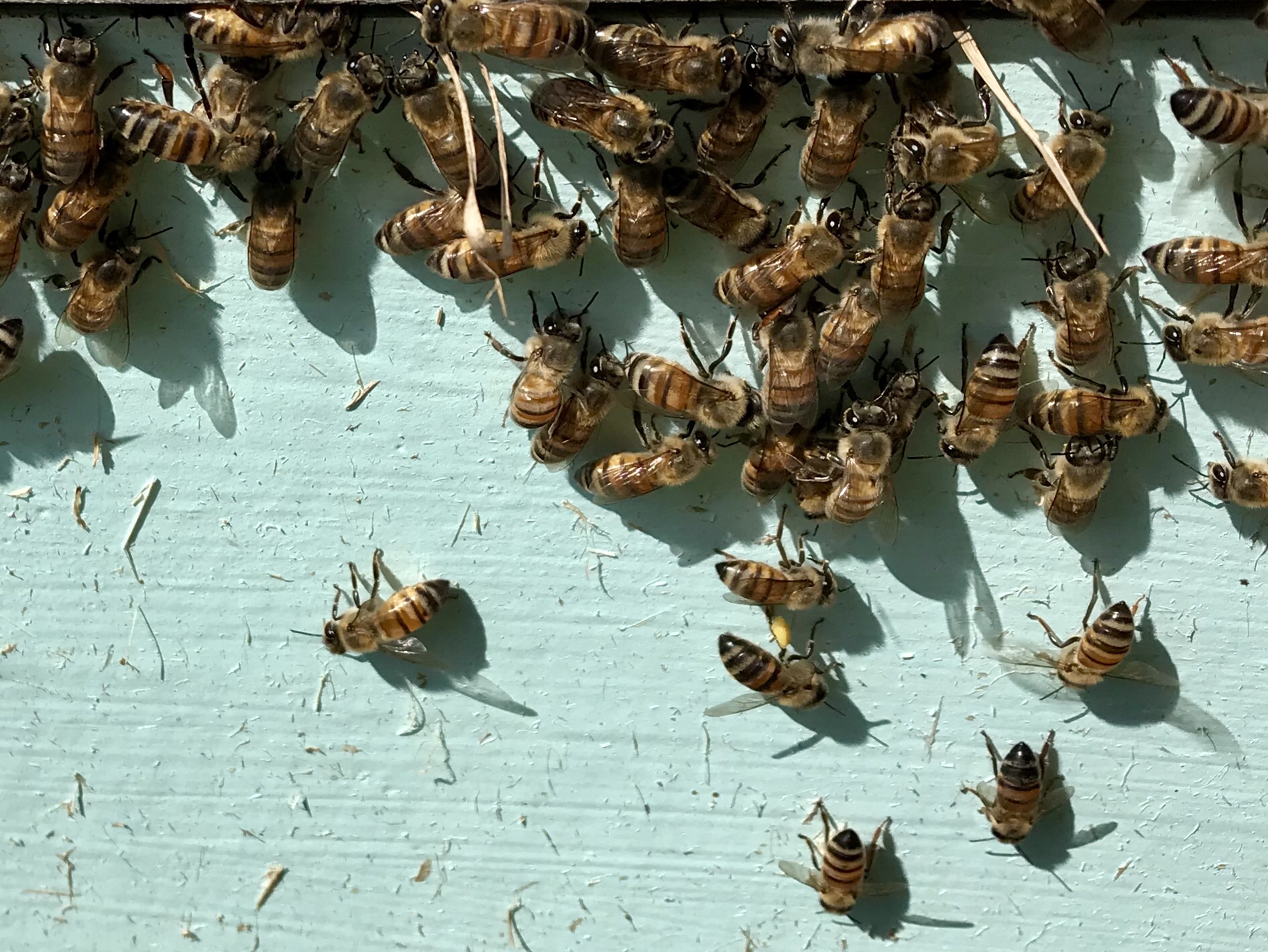
Bees on the outside of the box.
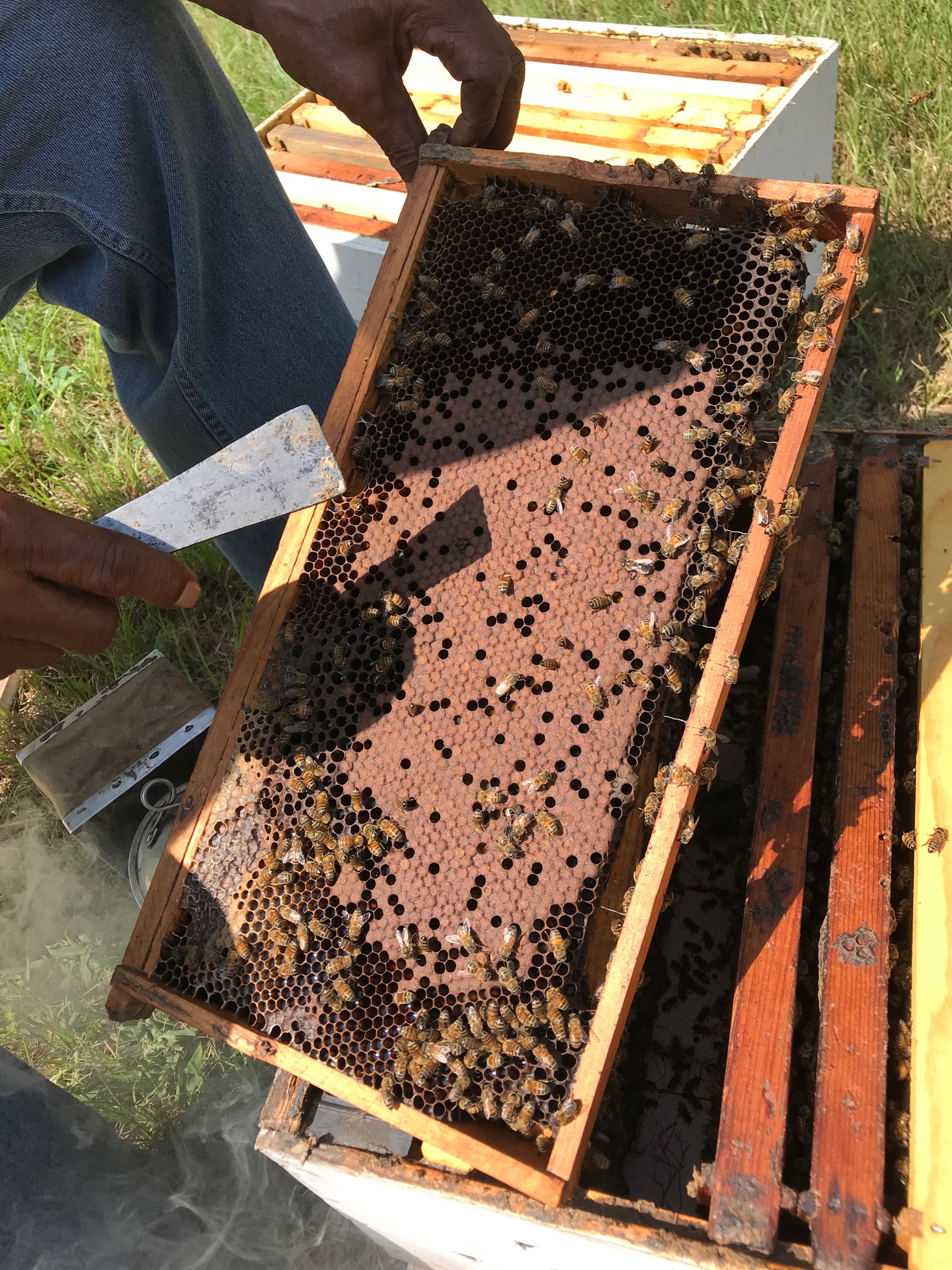
The bees carry on with their work as we inspect the first frame.
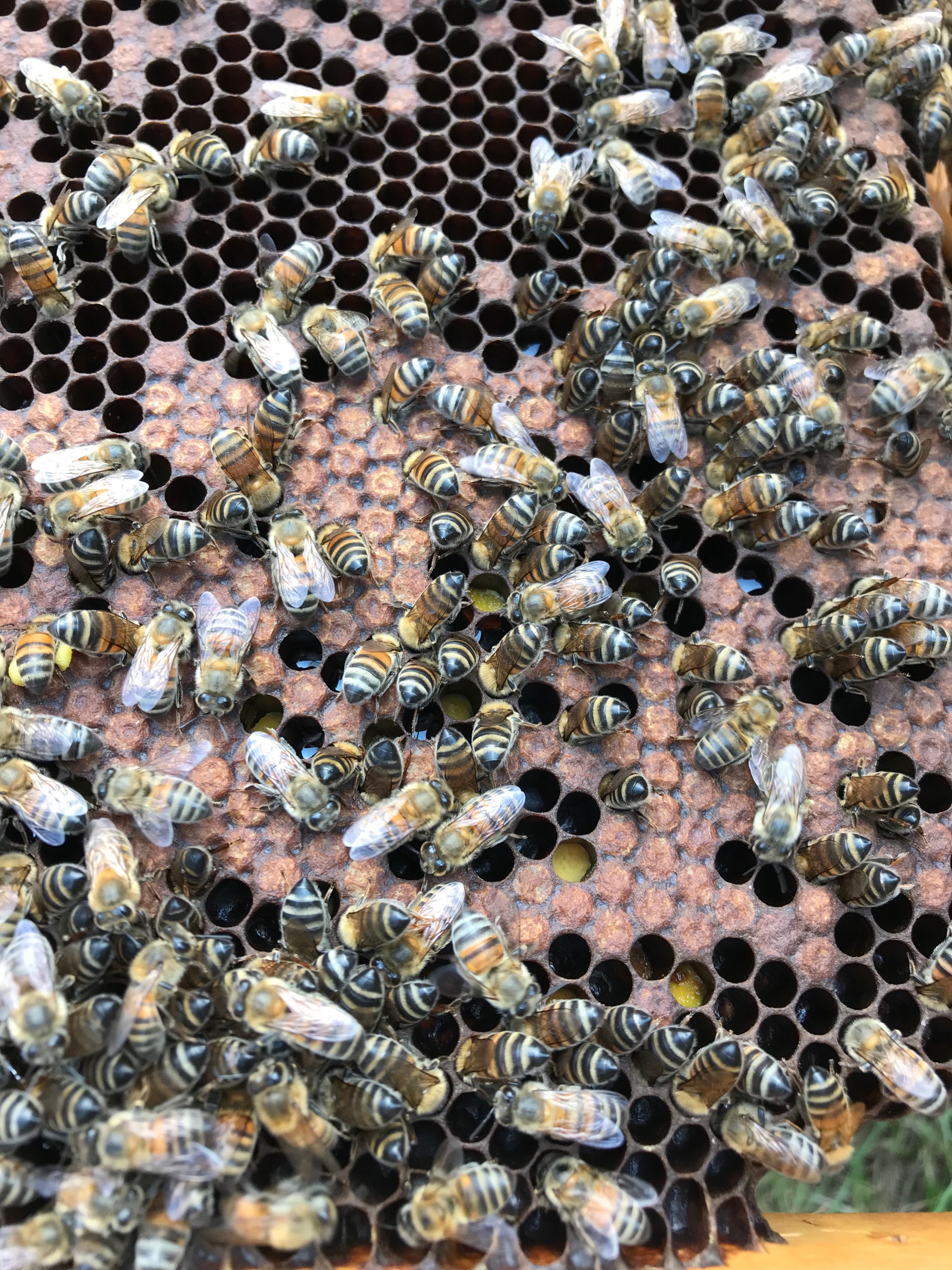
The bees secrete a brown wax from their abdomens to close the cells. The yellow in some sells is pollen and the tiny white spec is a larvae. It is all very fascinating. Some cells are empty.
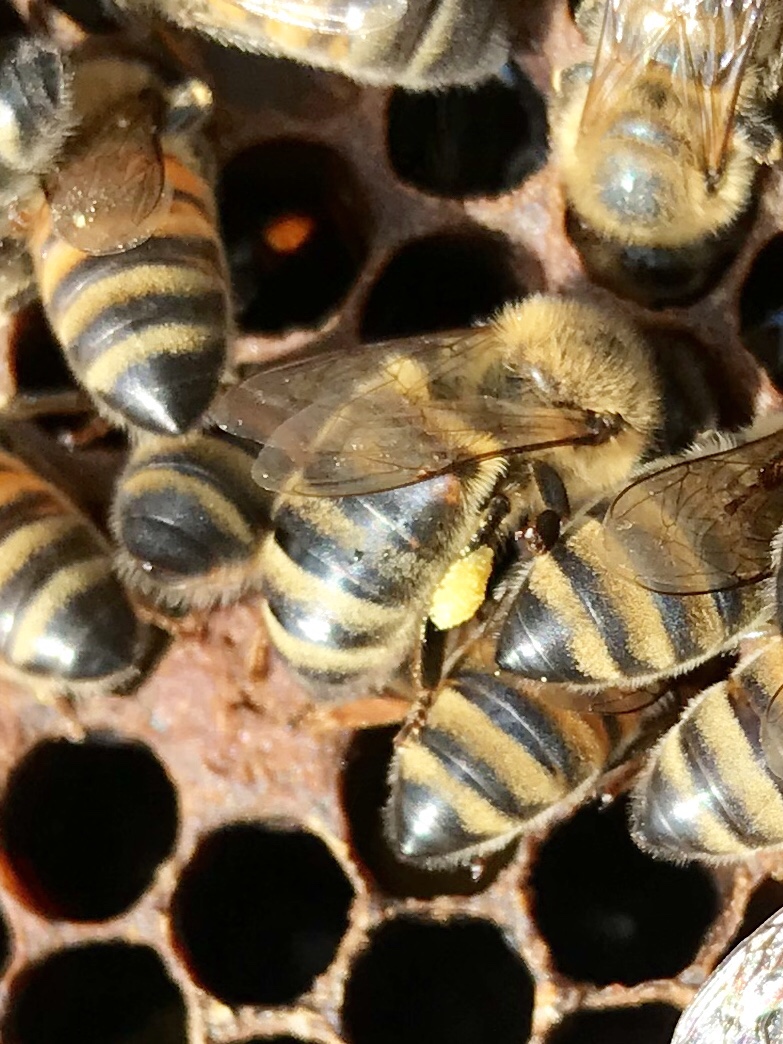
The yellow bag on this bees leg is pollen he has brought back to the hive.the pollen sticks to the long hairs on their legs.
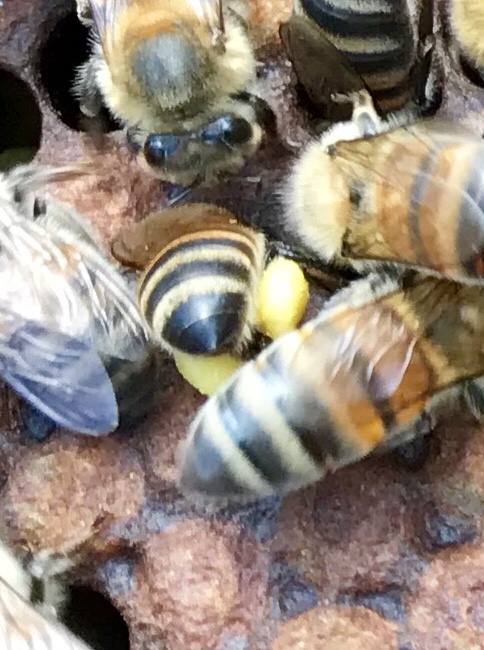
Here is a guy with 2 packs of pollen.
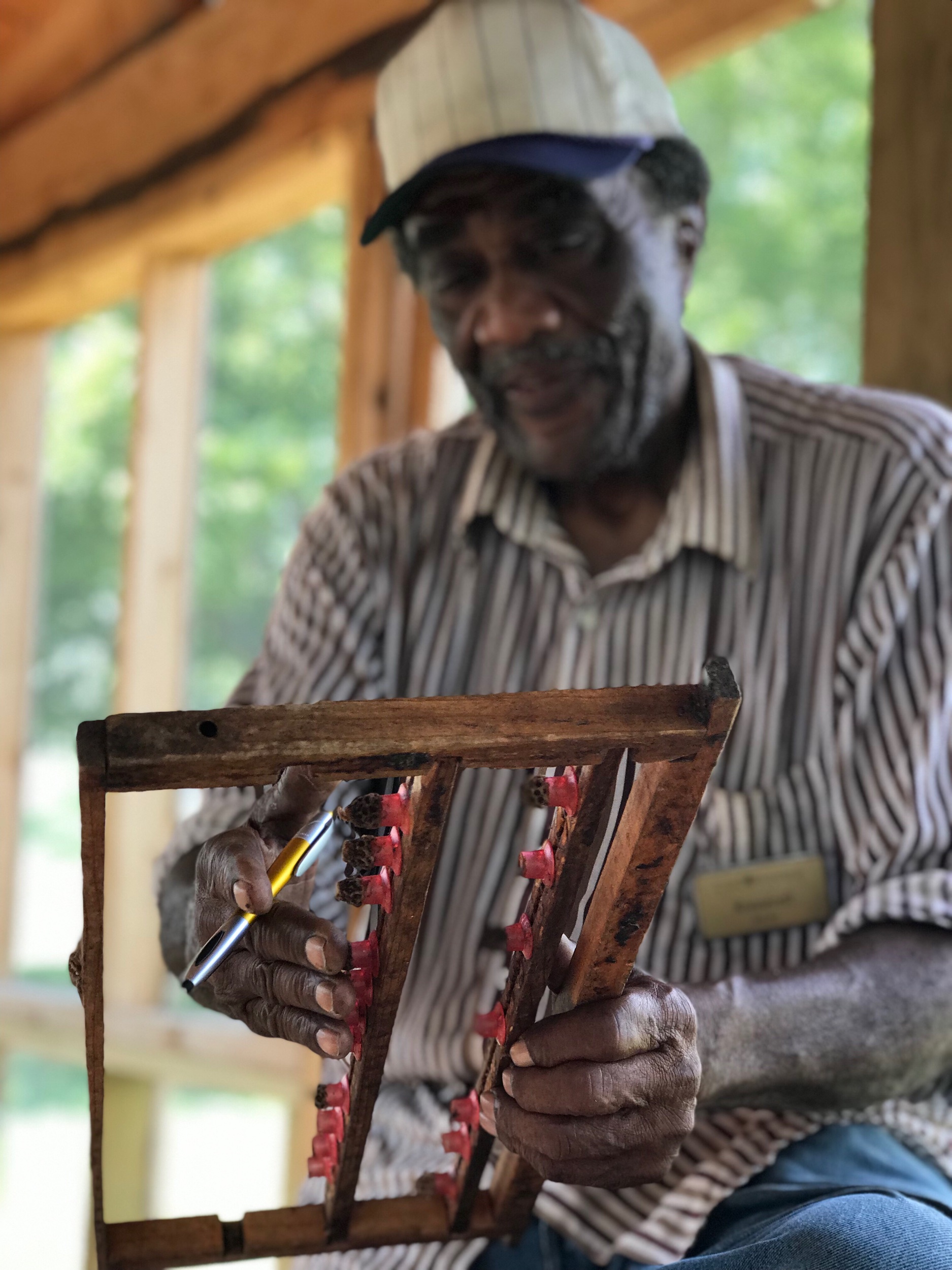
This frame is used to raise queens. They sell 500 queens a day.
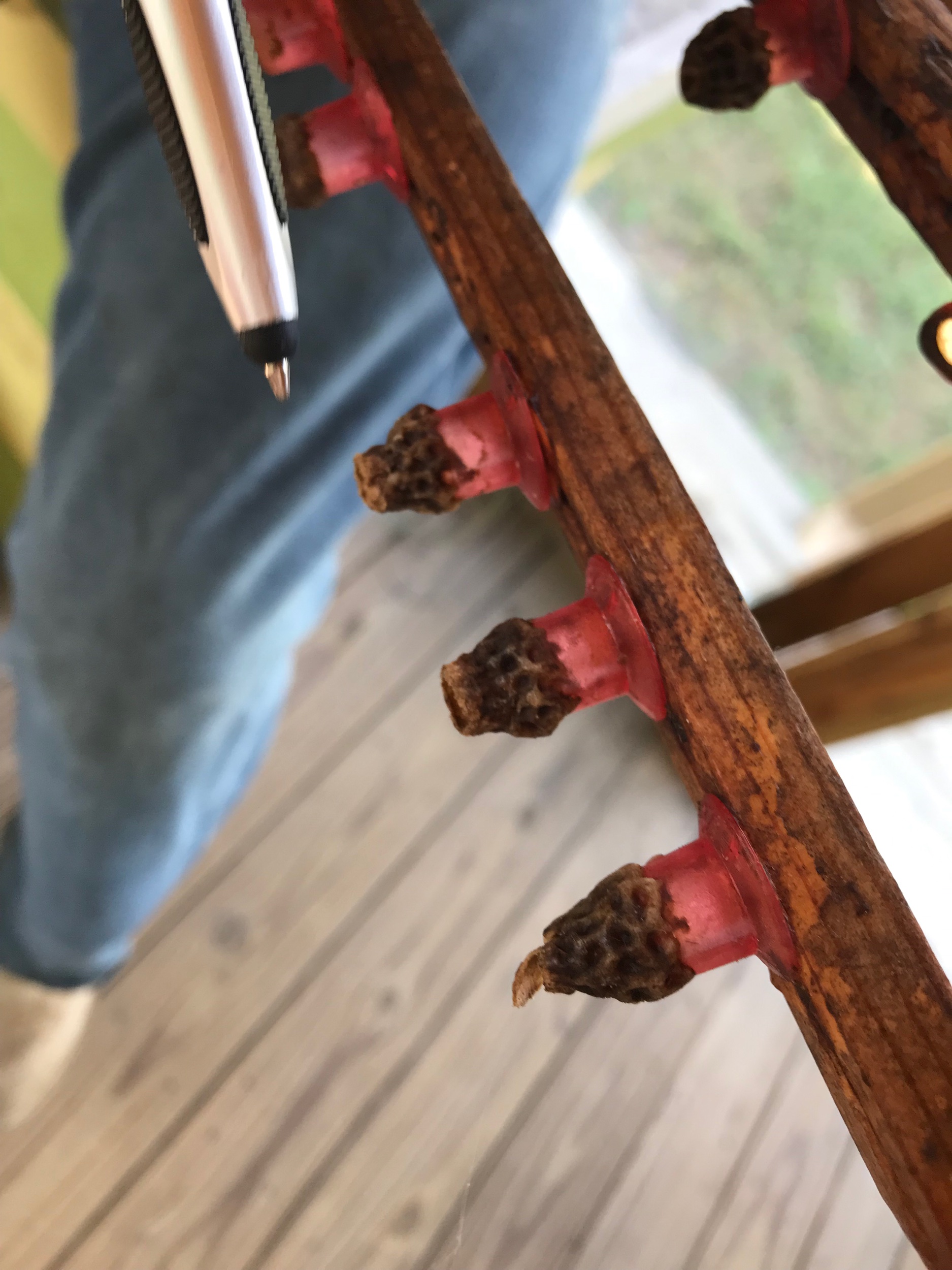
A close up of the wax cells the queens are incubated in.
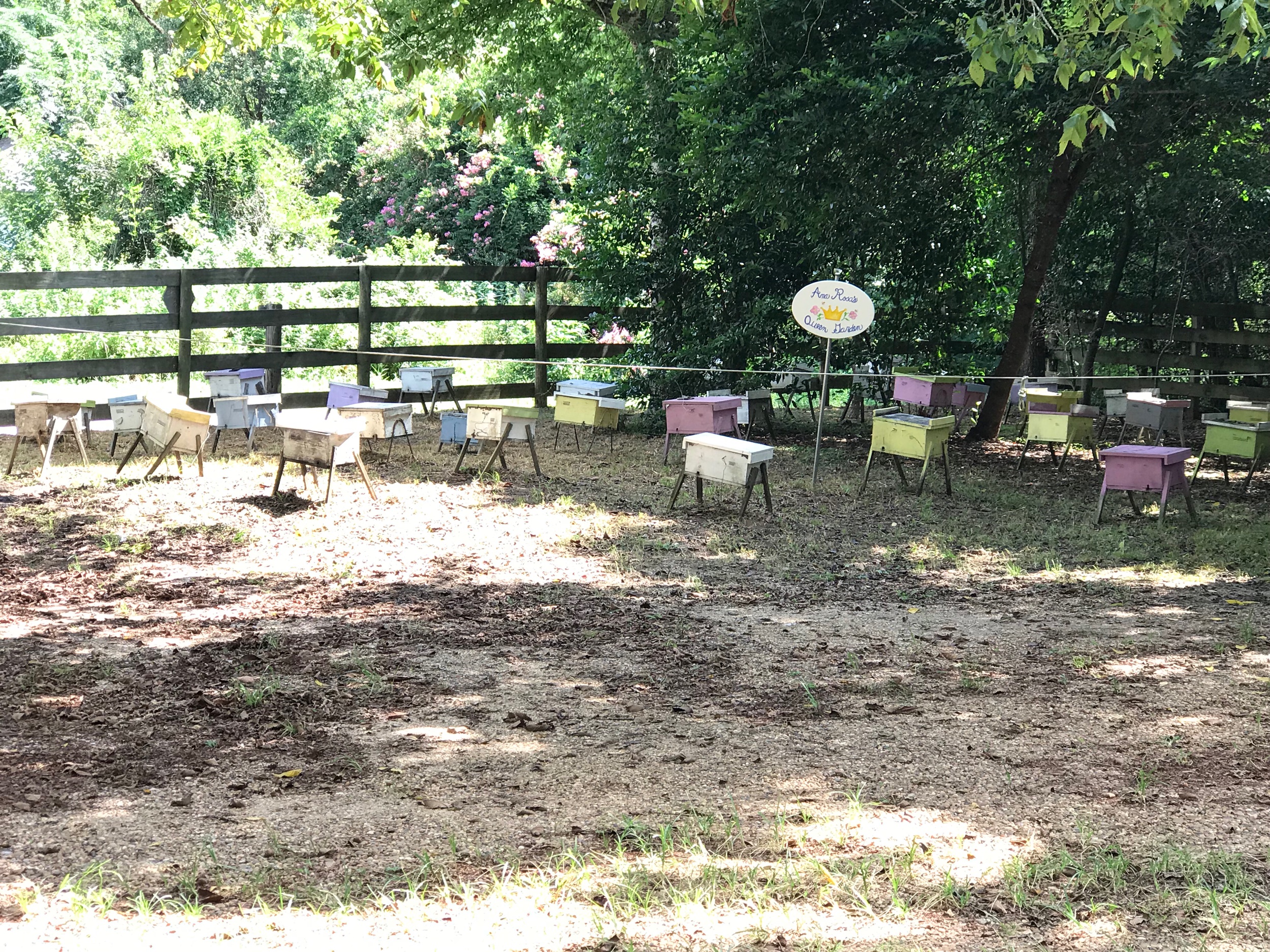
When the queen is ready to mate she is put in a boxe like these. She flies out to mate and returns to the box she came from. Beeweavers queens are not artificially inseminated. I was really glad to hear that.

If you are starting your own honeybee farm you can purchase bees instead or robbing a hive. They will arrive in a box like this. I personally prefer to support local bees.
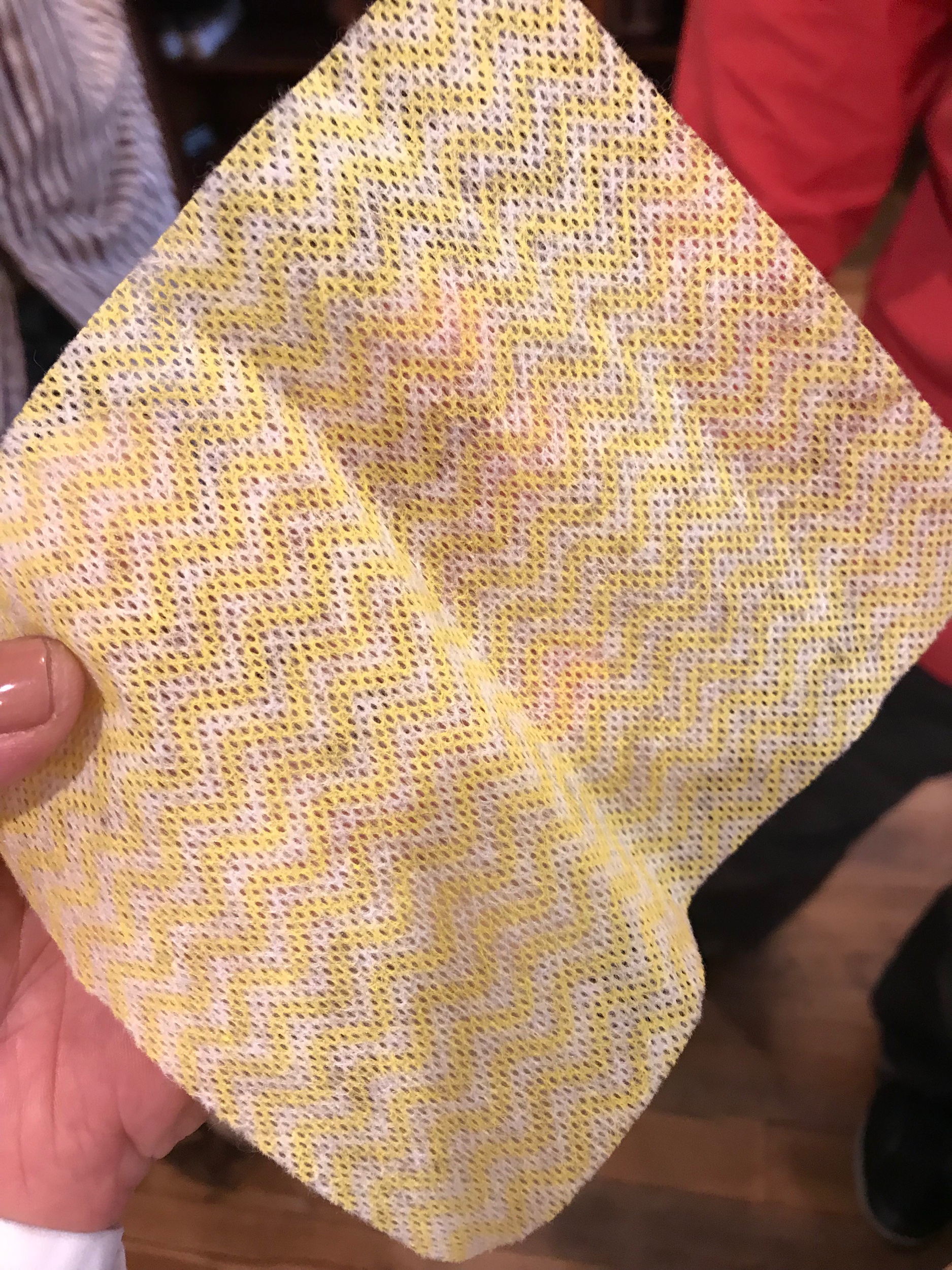
They put in the bee boxes a piece of cotton like this. The bees do not like it and they try to get it out. Their efforts fluff up the cotton and beetles get trapped in it. It is a great way to get rid of pest without pesticides.

Here is a piece of the cotton and a few trapped beetles.
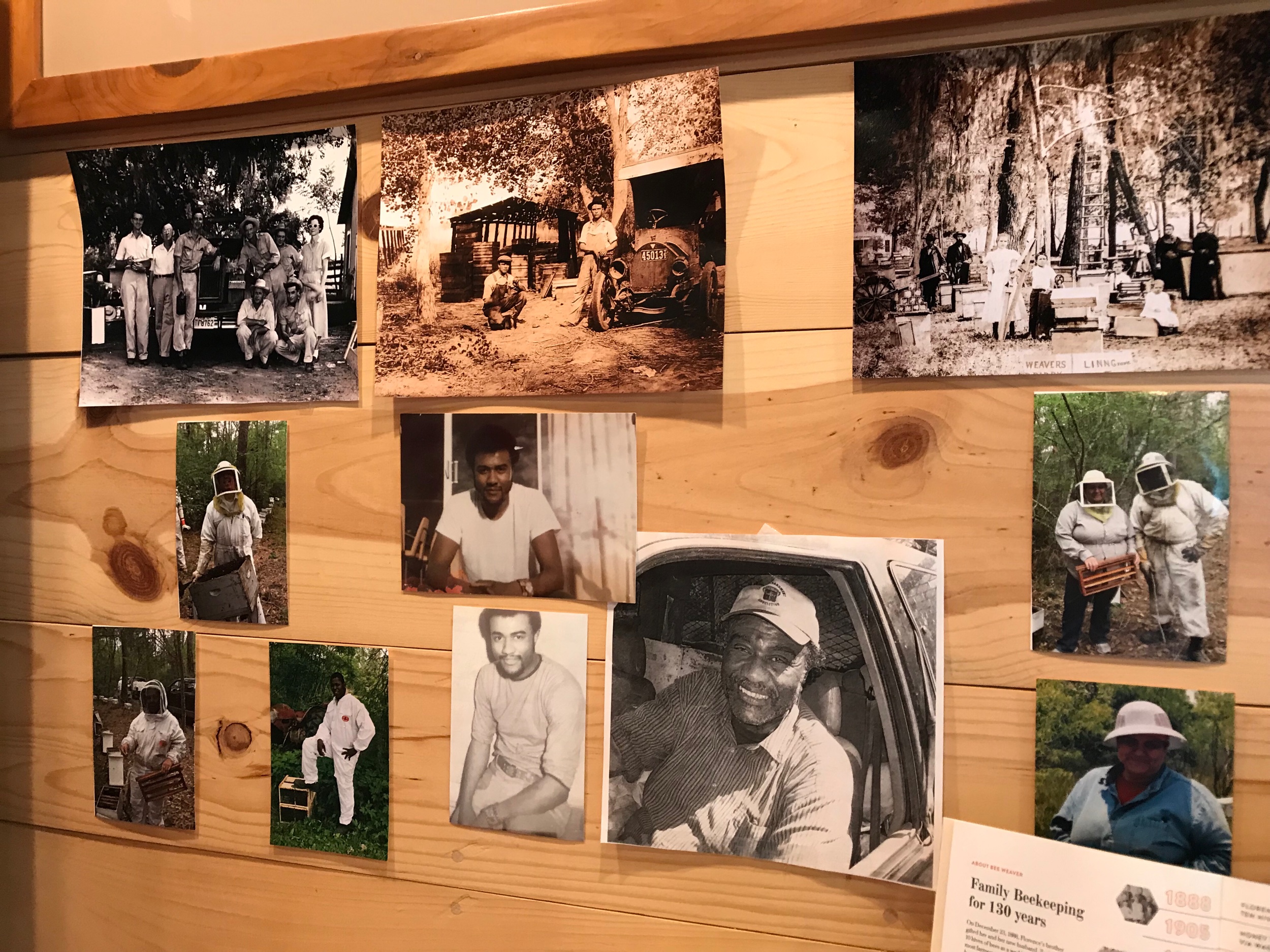
Here is Roosevelt when he first joined Beeweavers. He Was a great guide and teacher.
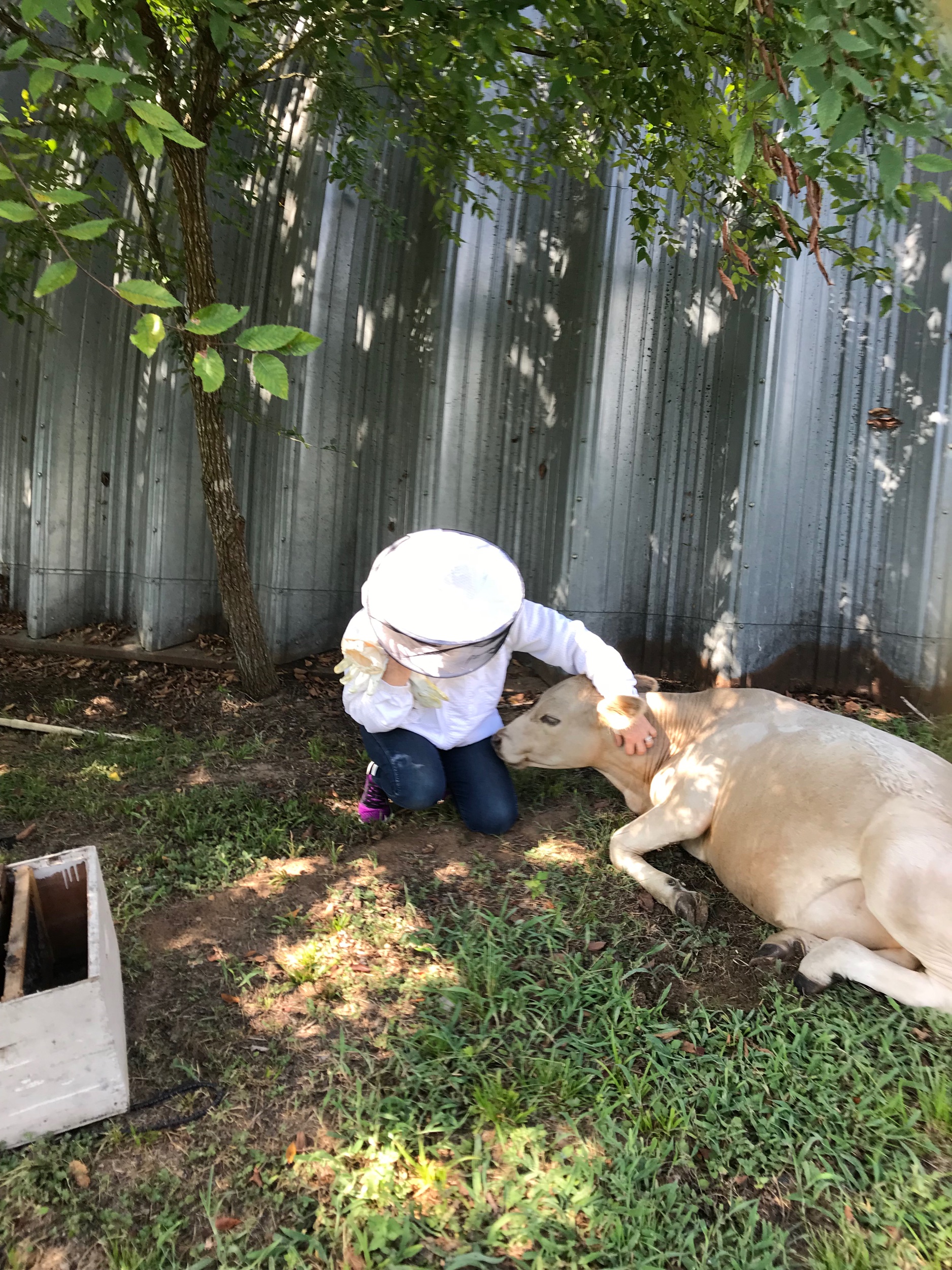
This calf was found alone on their farm, they took him in, bottle fed him and named him buzz. I am not sure if he thinks he is a bee or people. He loves to be scratched, who doesn’t?
It was a great day despite the temperature. We learned a lot about honey bees. It was good to see a commercial bee establishment that cares about chemicals, pesticides and natural selection. A birthday gift I will remember for a long time.
I ran to Southland hardware to purchase more wire cloth for my installation and spied some tomato cages. Wondering if they could add to my palette of materials I took home a few to play with.
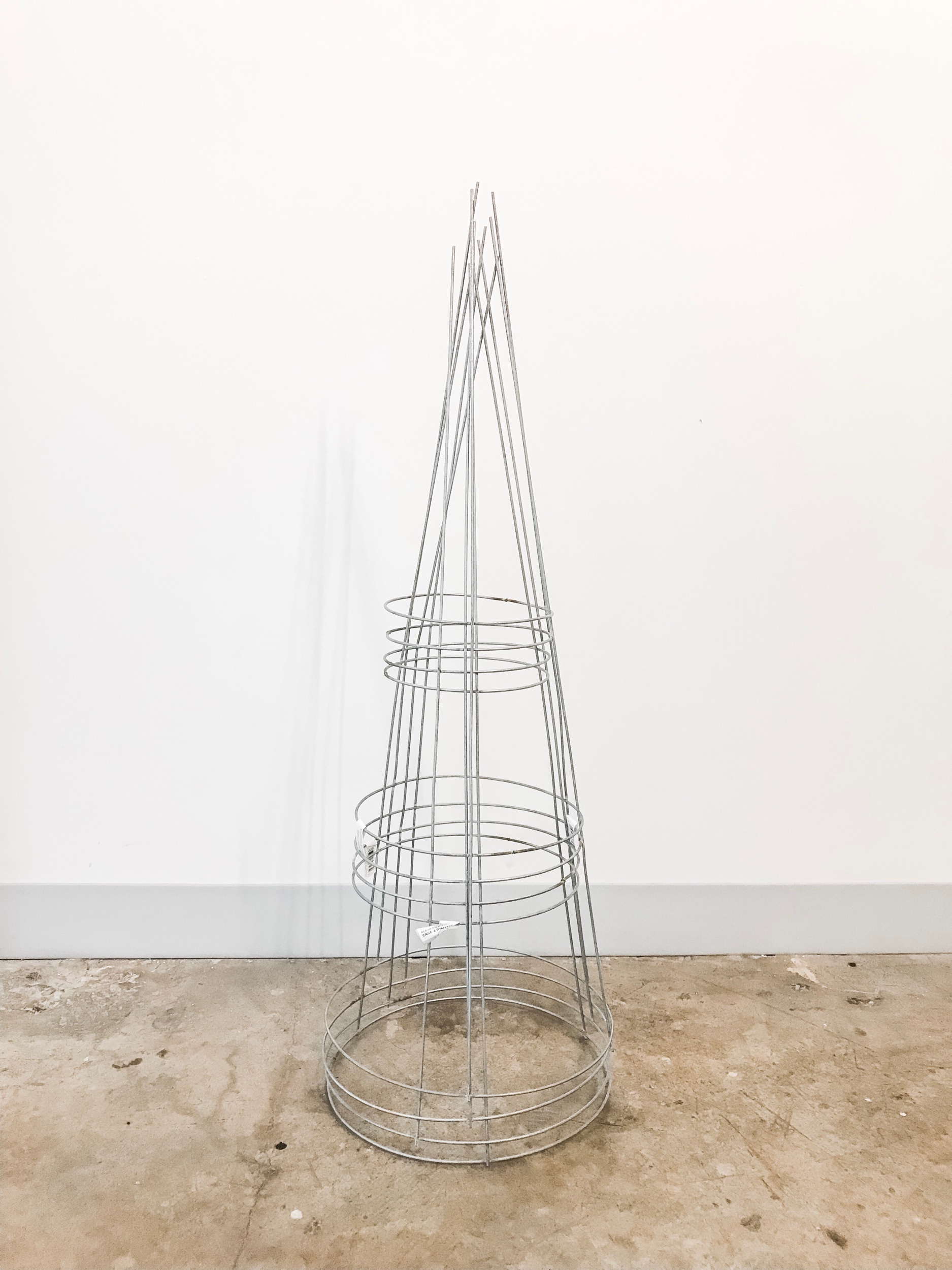
Tomato cages

Squish, squash, twist, turn, fold, pull, cut repeat
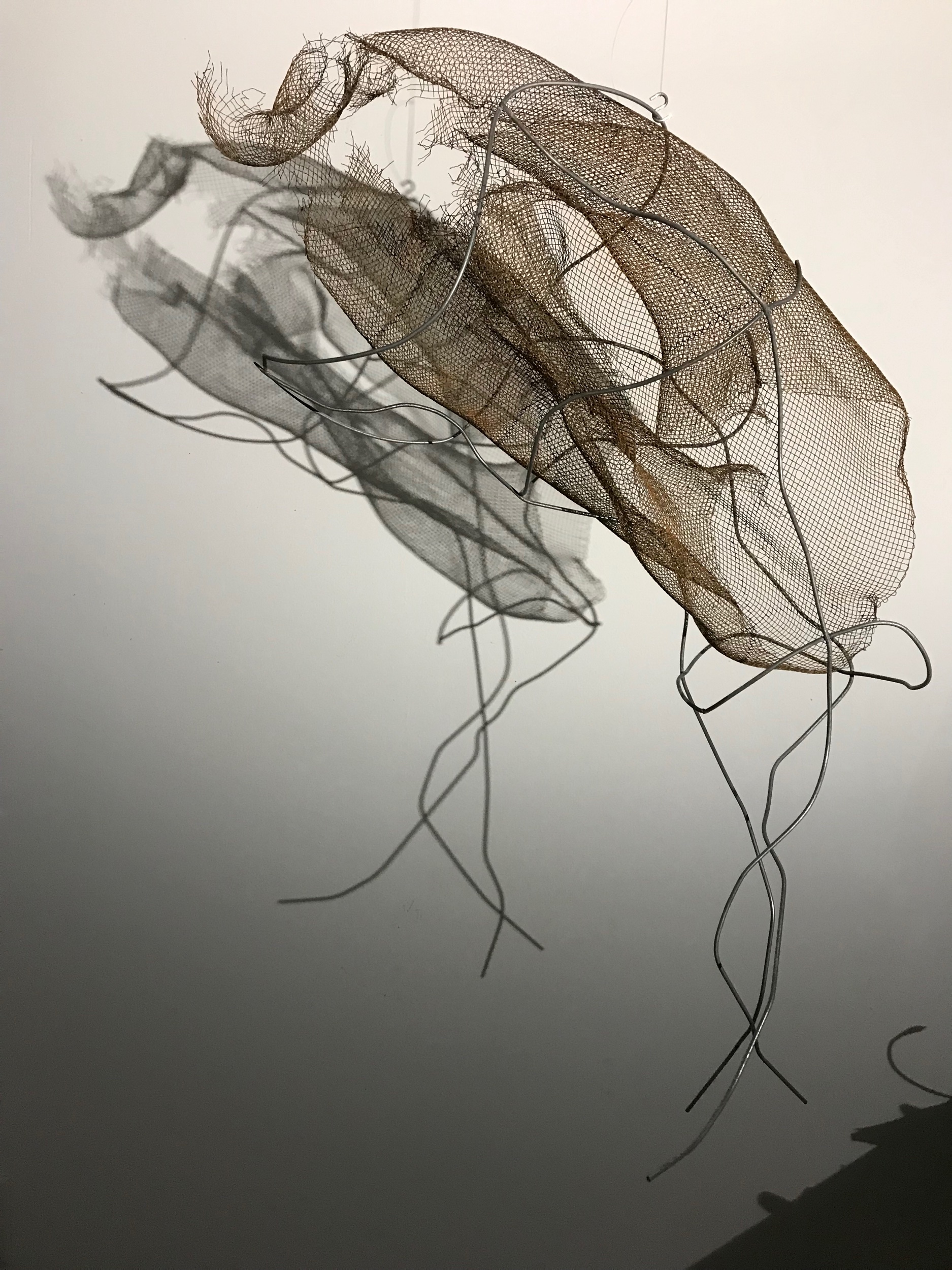
Throw on a rip of charged screen for garnish
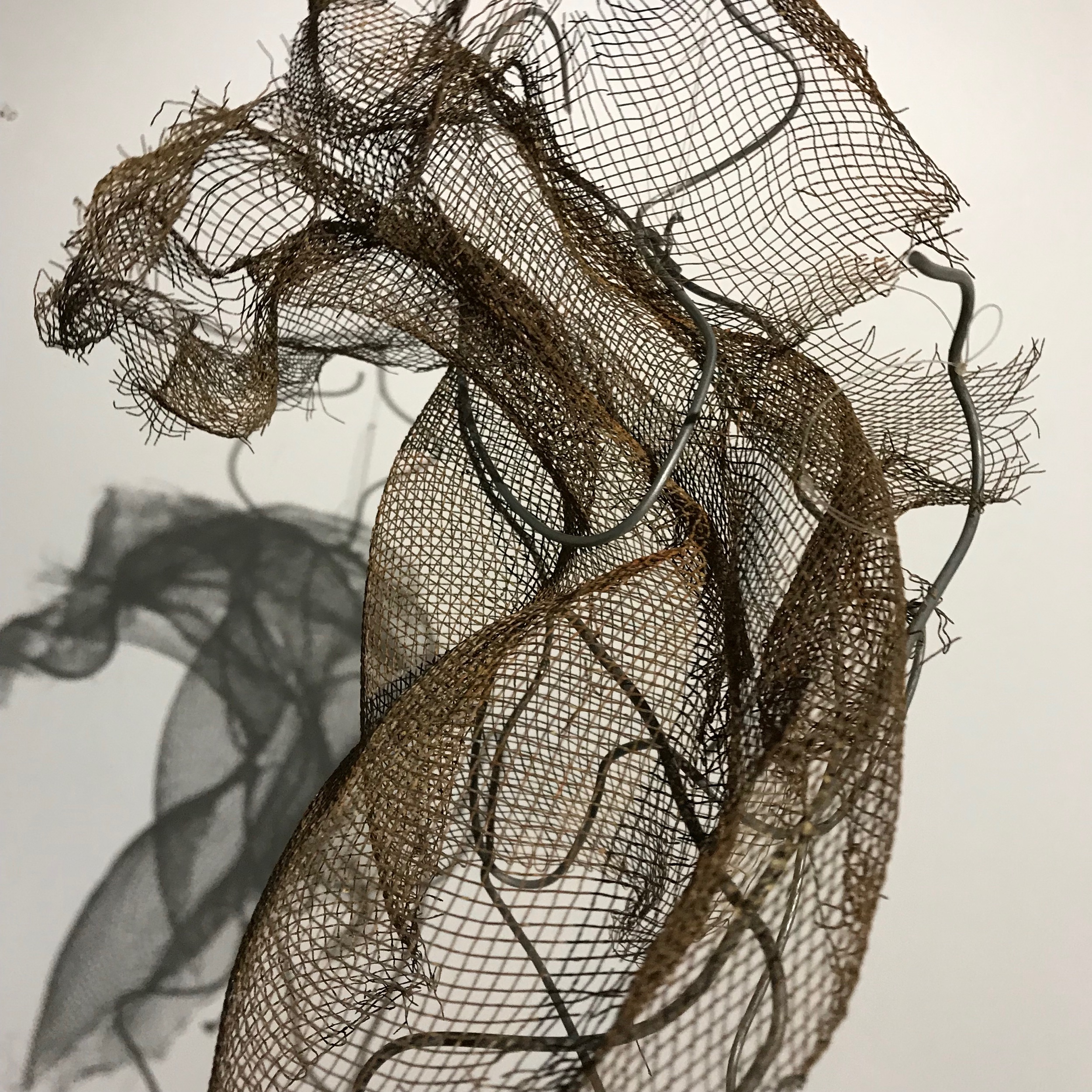
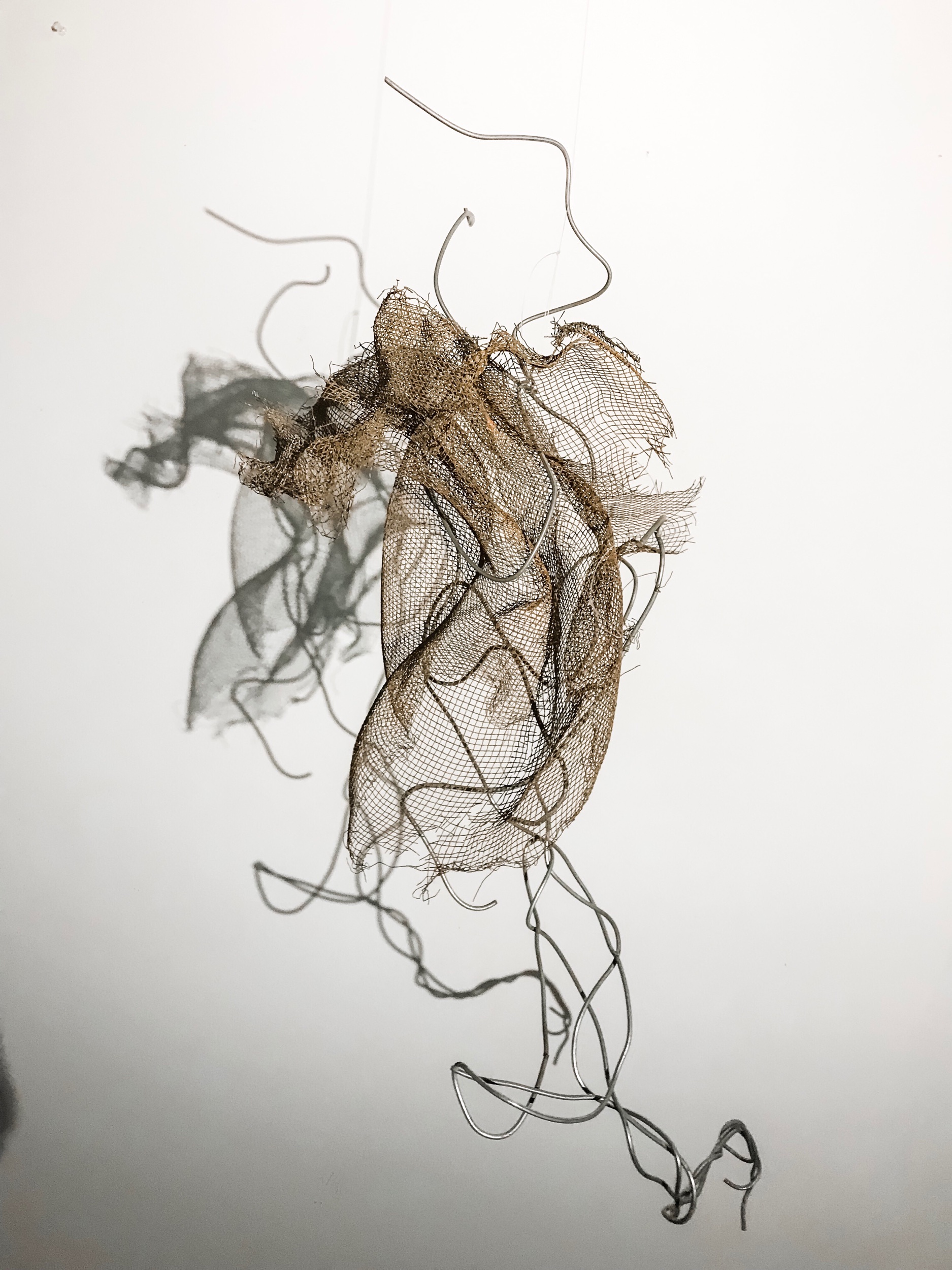
Play some more.
I ran out of time today but I feel like it might have some potential.
This is a continuation of an earlier post that documented my intuitive process to embrace and abstract the bee that was listed on the endangered species list January 11, 2017.
The posting was titled Embracing Bombus Affinis. Here is one more experiment.
In the experimental piece below I focused on the transparency of the wings.Through the wings you can see the bees hairs on the back of his abdomen. You can also see the flora in the background and through his wings. FYI- a favorite of the Rusty Patch bumble bee is blueberries. Blueberries are one of my favorites too. There is always a box of blueberries in our refrigerator. I hate the thought of my blueberries being pollinated in a lab.
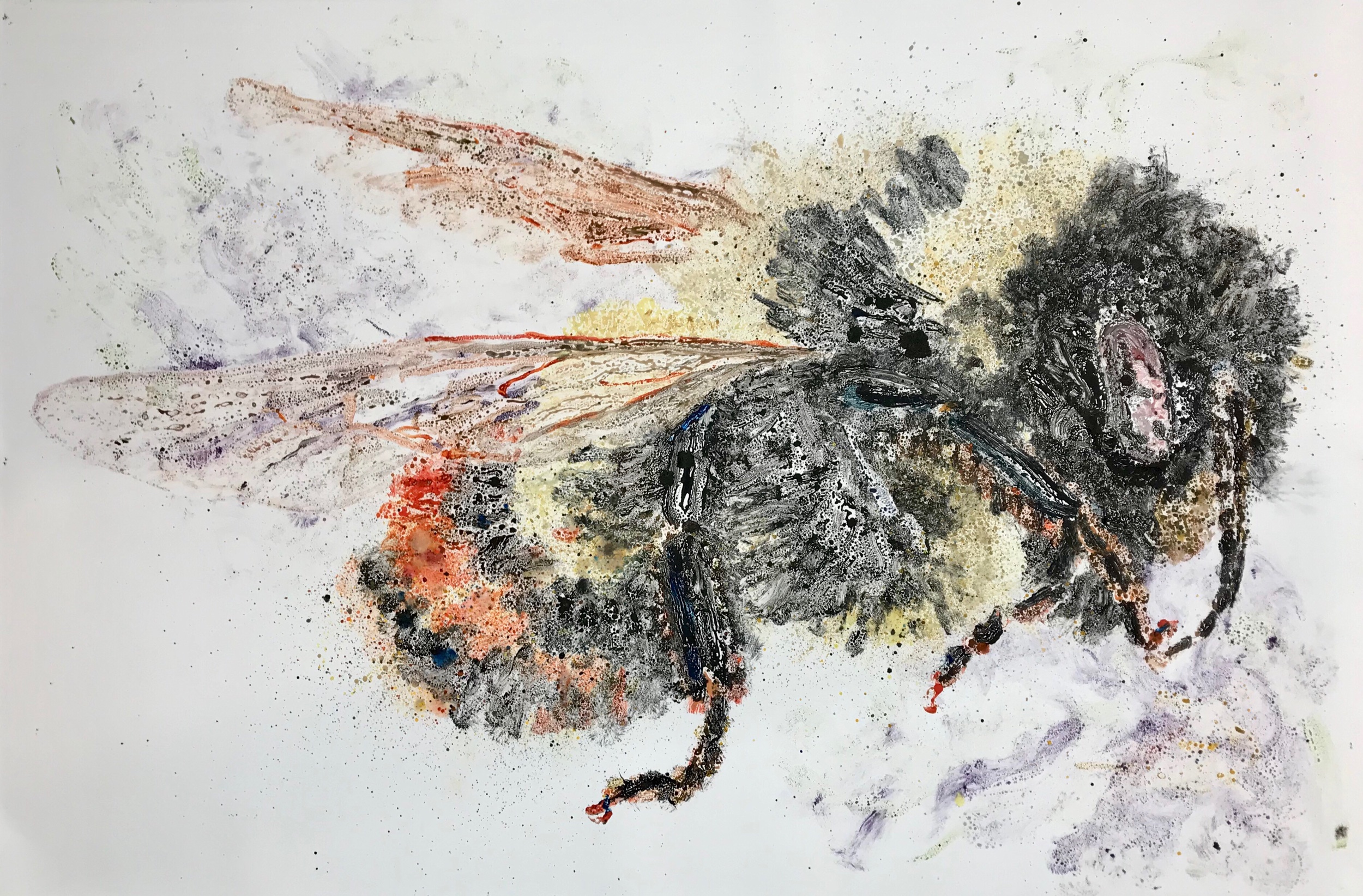
Bombus Affinis VI
30” X 44”
I am not sure if showing the transparency is necessary or if it bogs down the energy with too much information.
If you want to help insure our food remains pollinated as nature intended see below-
Limit the use of pesticides and chemical fertilizers whenever possible or avoid them entirely. Pesticides cause lethal and sublethal effects to bees and other pollinators.
https://www.fws.gov/midwest/endangered/insects/rpbb/factsheetrpbb.html
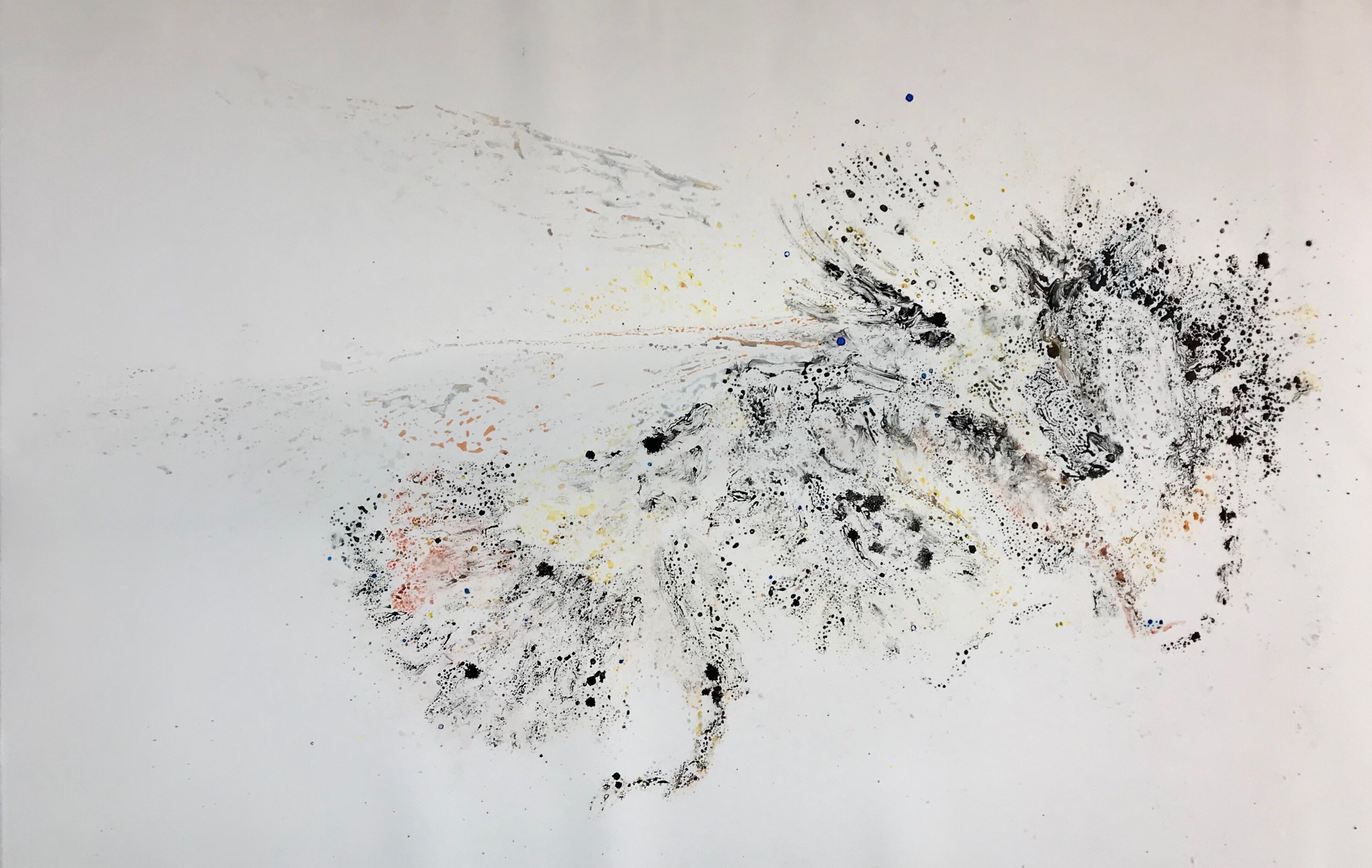
The ghost print
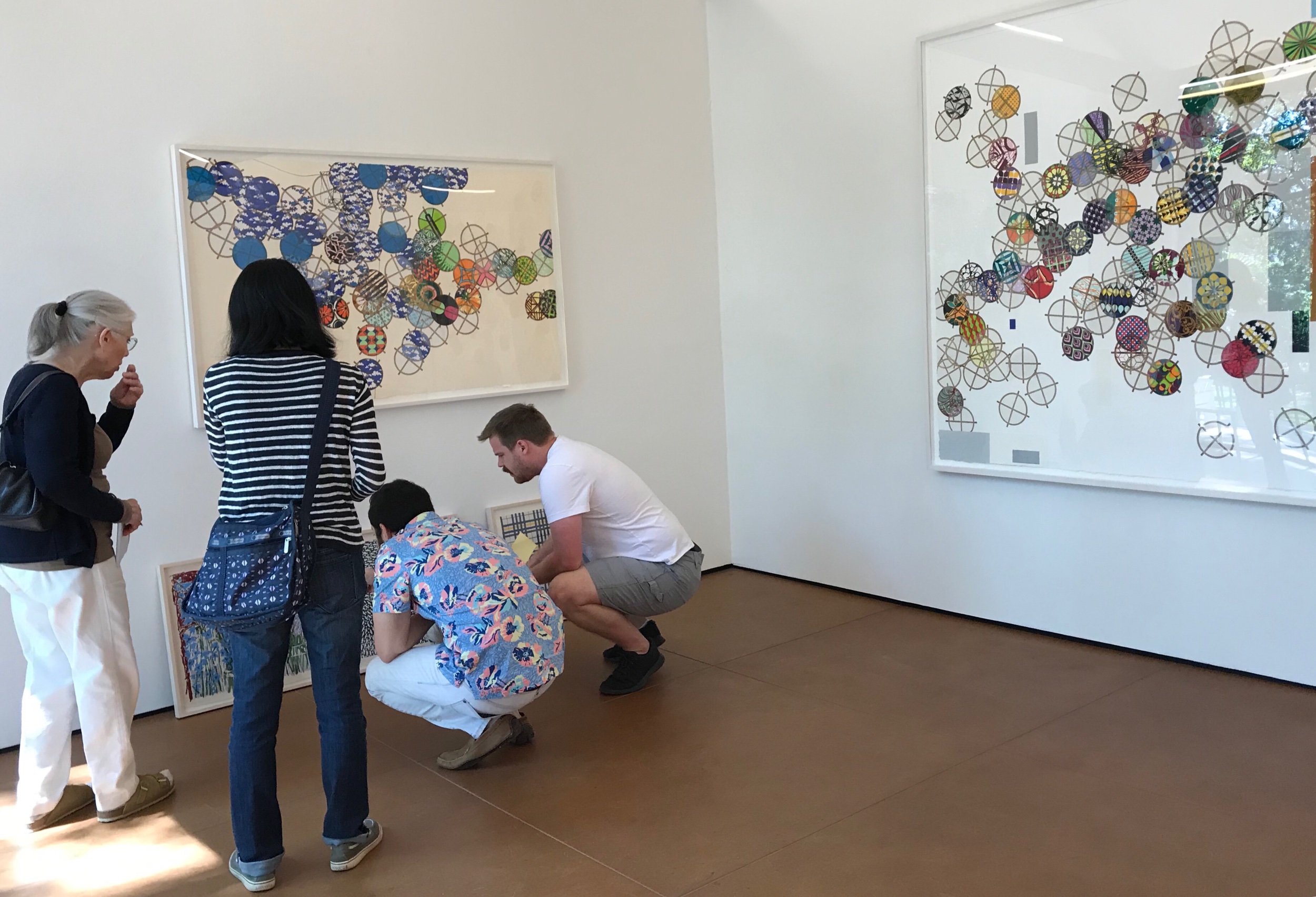
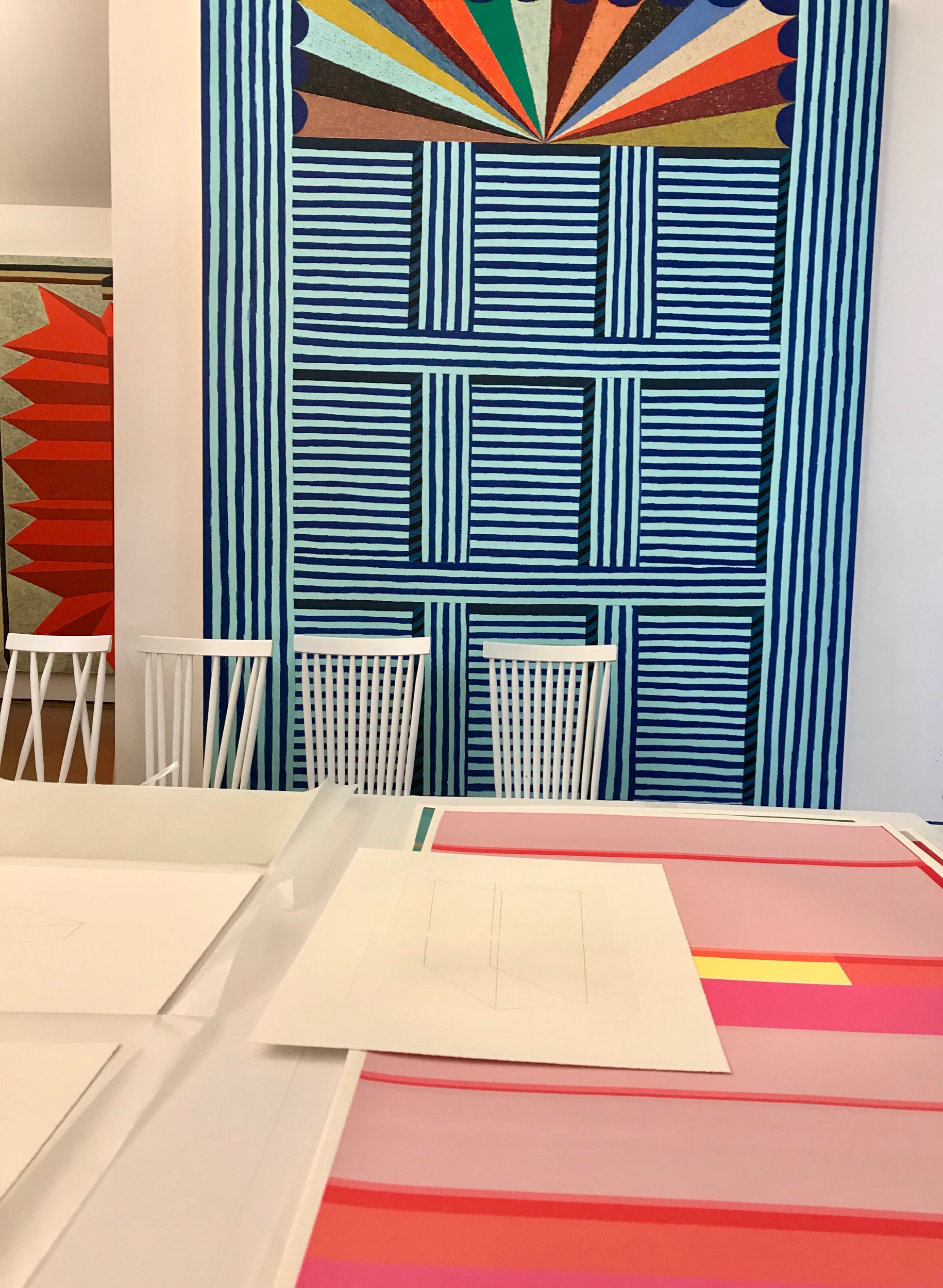
On July 24th, Alexander Squier https://www.alexandersquier.com/, the head of the the MFAH Glassell Studio School printmaking department, arranged for our printmaking class to get a private viewing of the Hiram Butler Gallery http://hirambutler.com/ print collection. It was a treat! We even got a peak at the cottage at the back of the property. Below are a few pictures from the day. All the work we looked at was exceptional and the Jacob Hashimoto wood Block prints are really something to see. Next time you go ask to see the work in the cottage. FYI- the garden is prime for a planting of pollinator plants and housing a bee condo for bumbles.
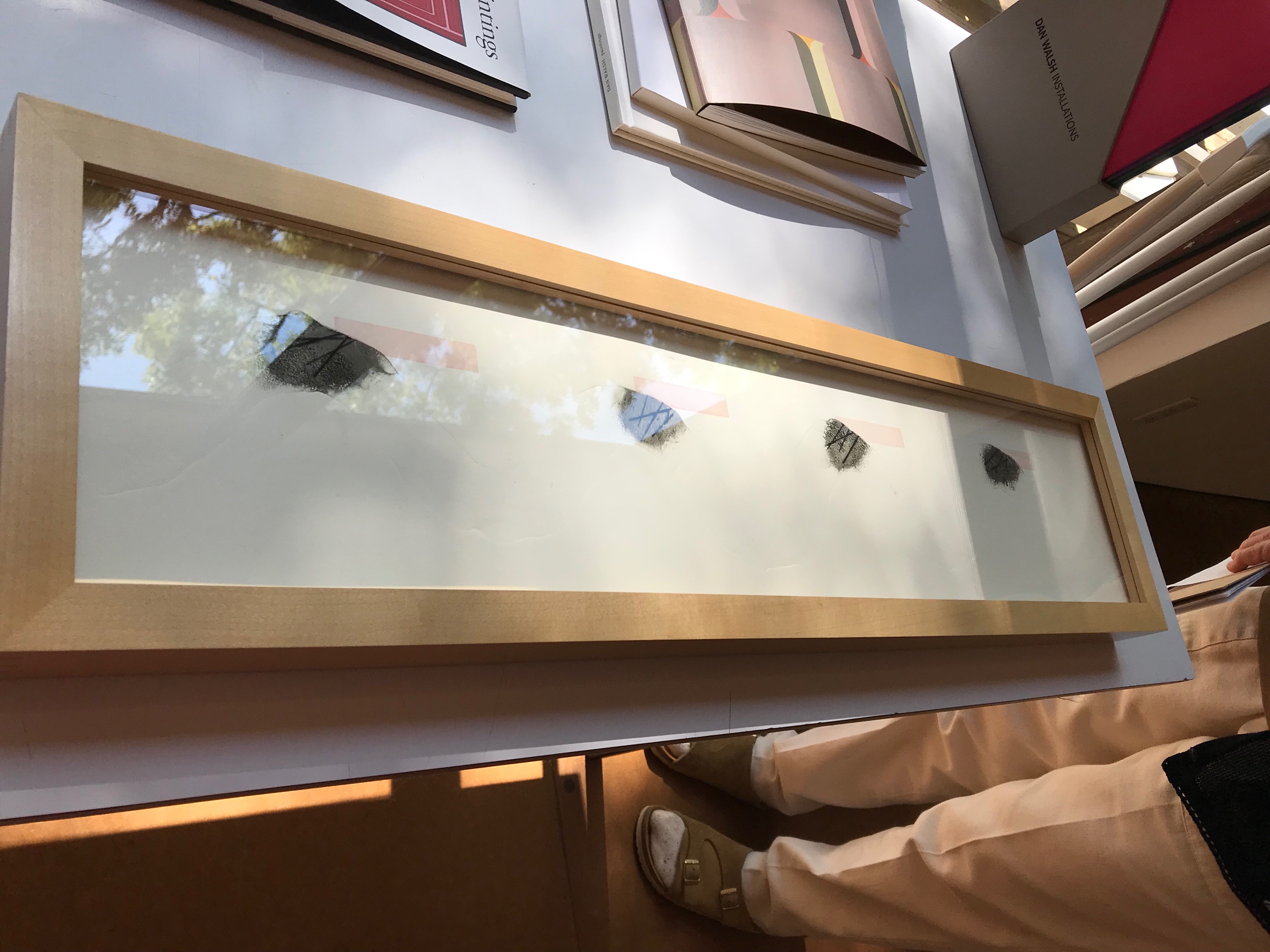
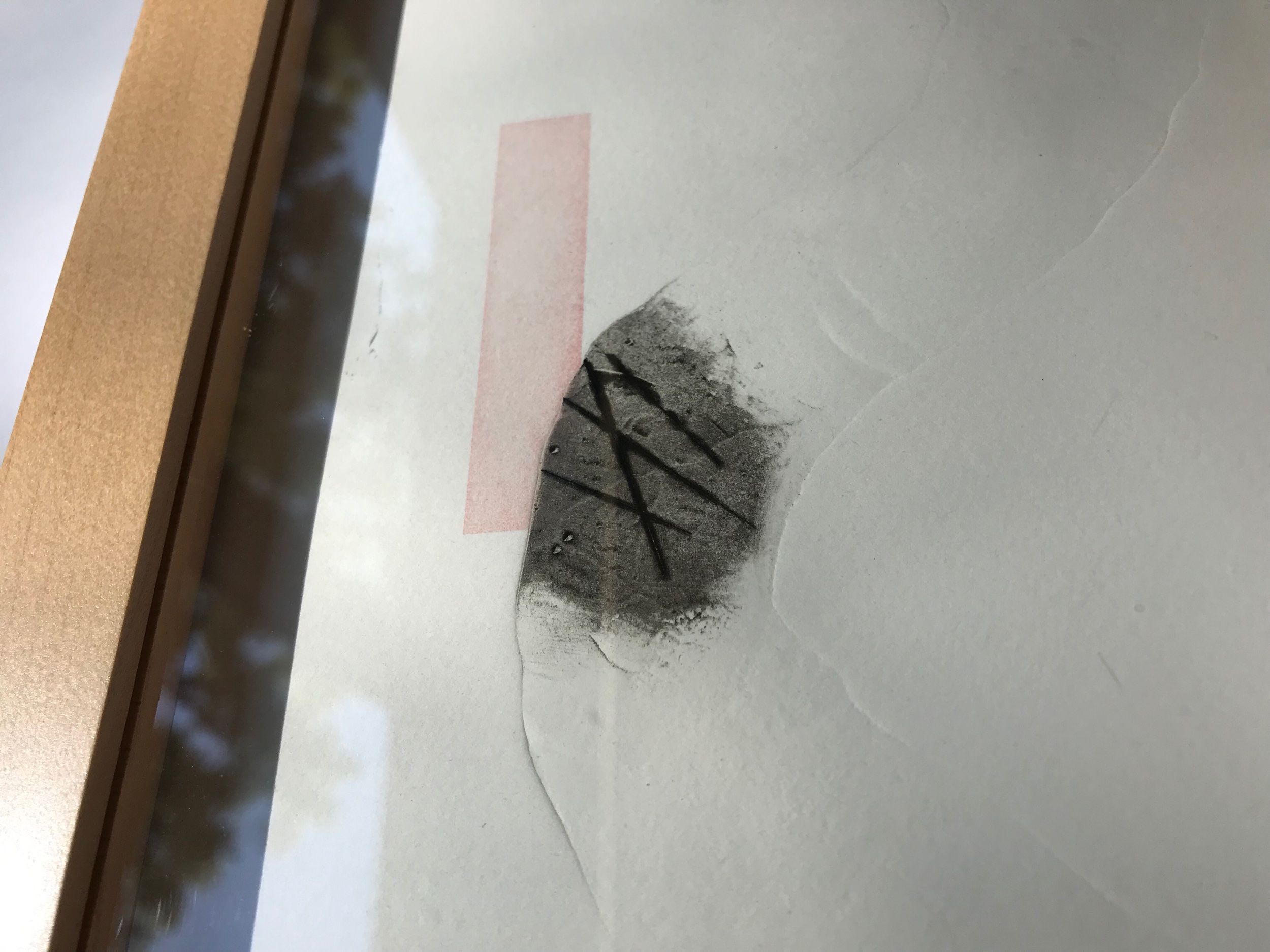
I find this tiny piece inspiring, it is giving me bee wing ideas.
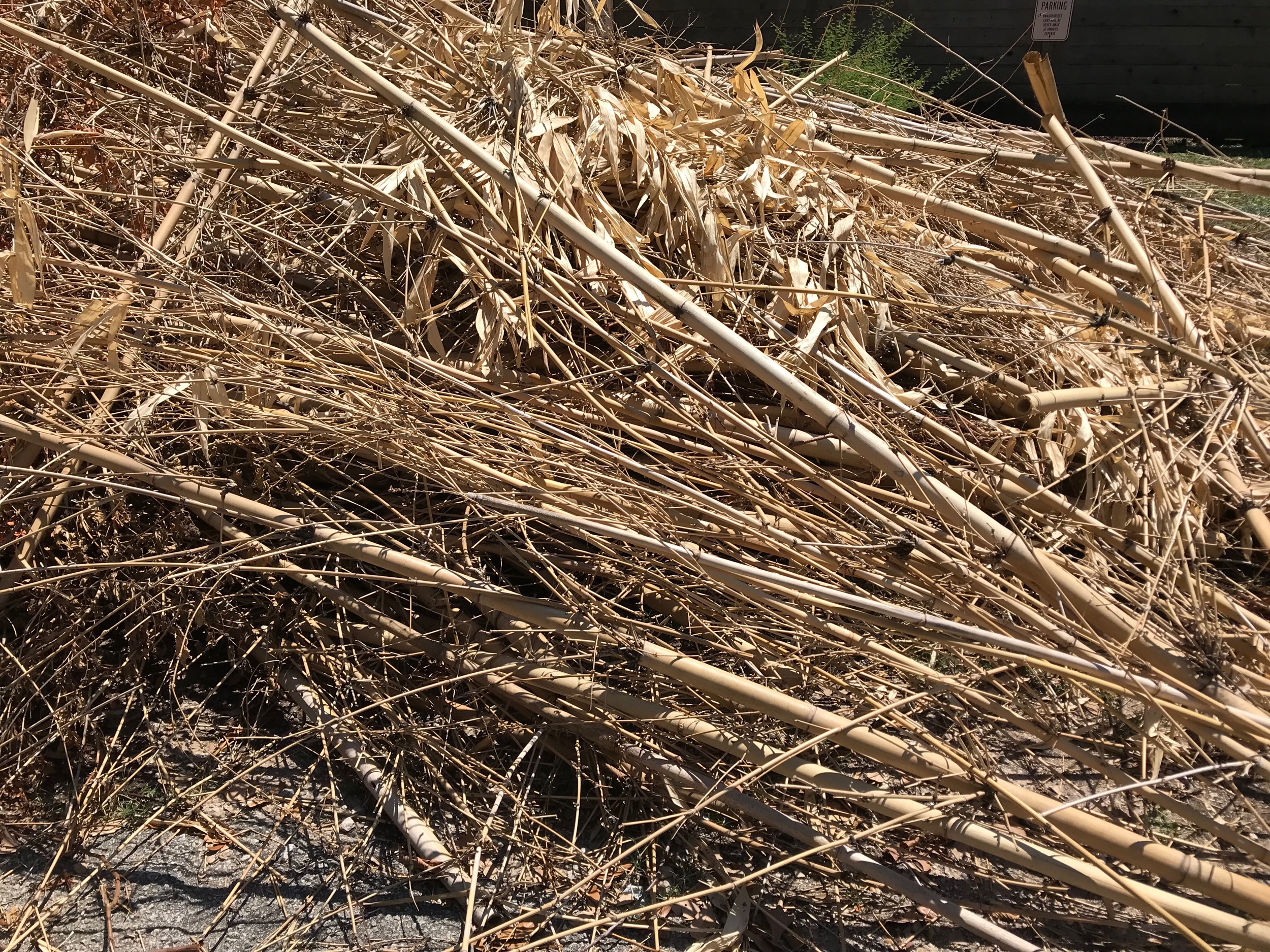
Leaving I saw this huge pile of bamboo waiting for the city of Houston’s trash collectors to pick it up. I immediately text Doug Welch to ask for permission to rob it of enough sticks to make done native bumble bee houses.

if I am lucky I can convince Curtis to take this project on. 🤞 I am hyper focused on my installation and completely buzzed to bee.
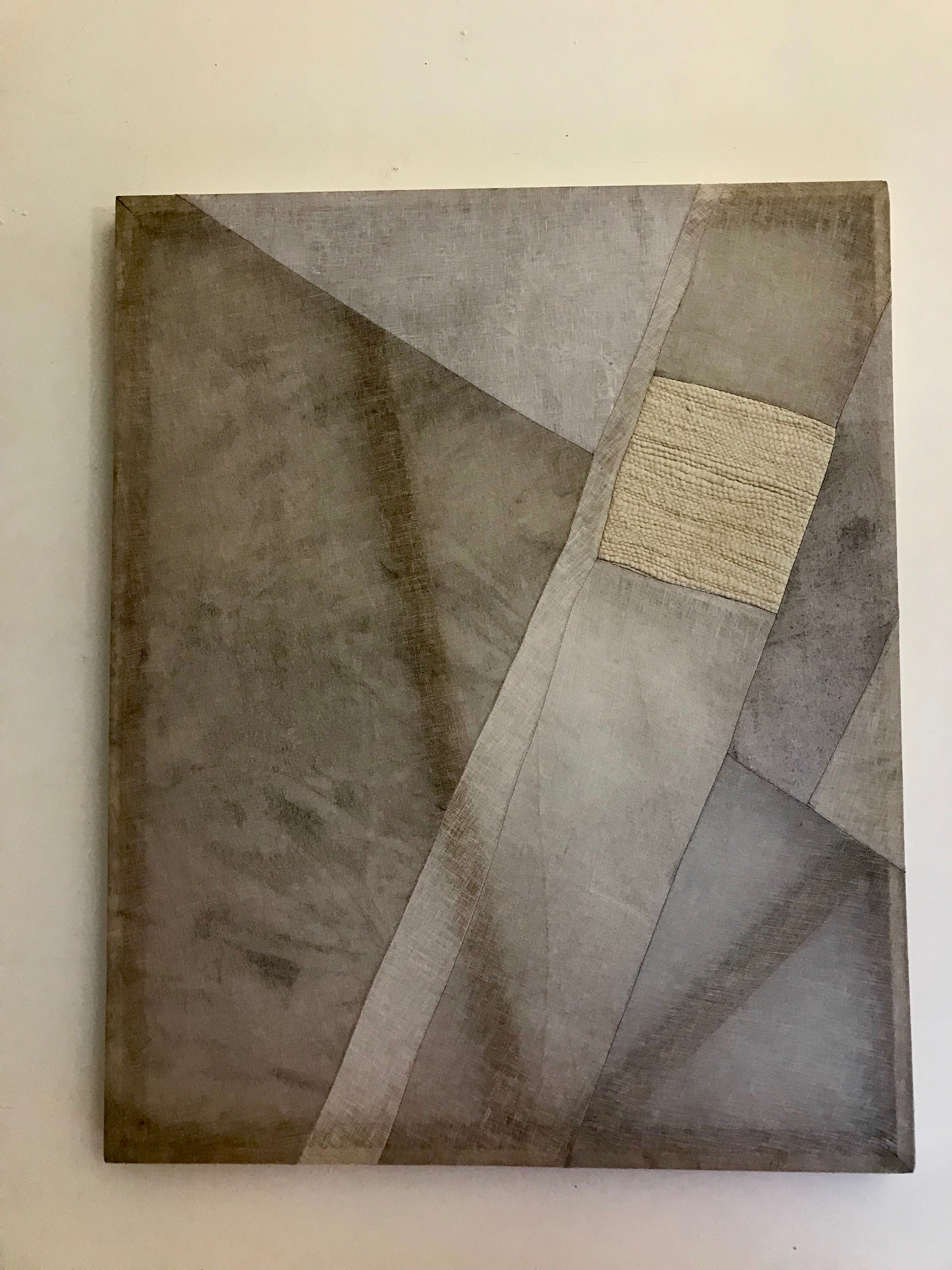
Josh Pazda was so knowledgeable about the work and so generous with his time. I am never really comfortable in a gallery but Josh is so approachable and interested in what we wanted to see, It was a great gallery experience.
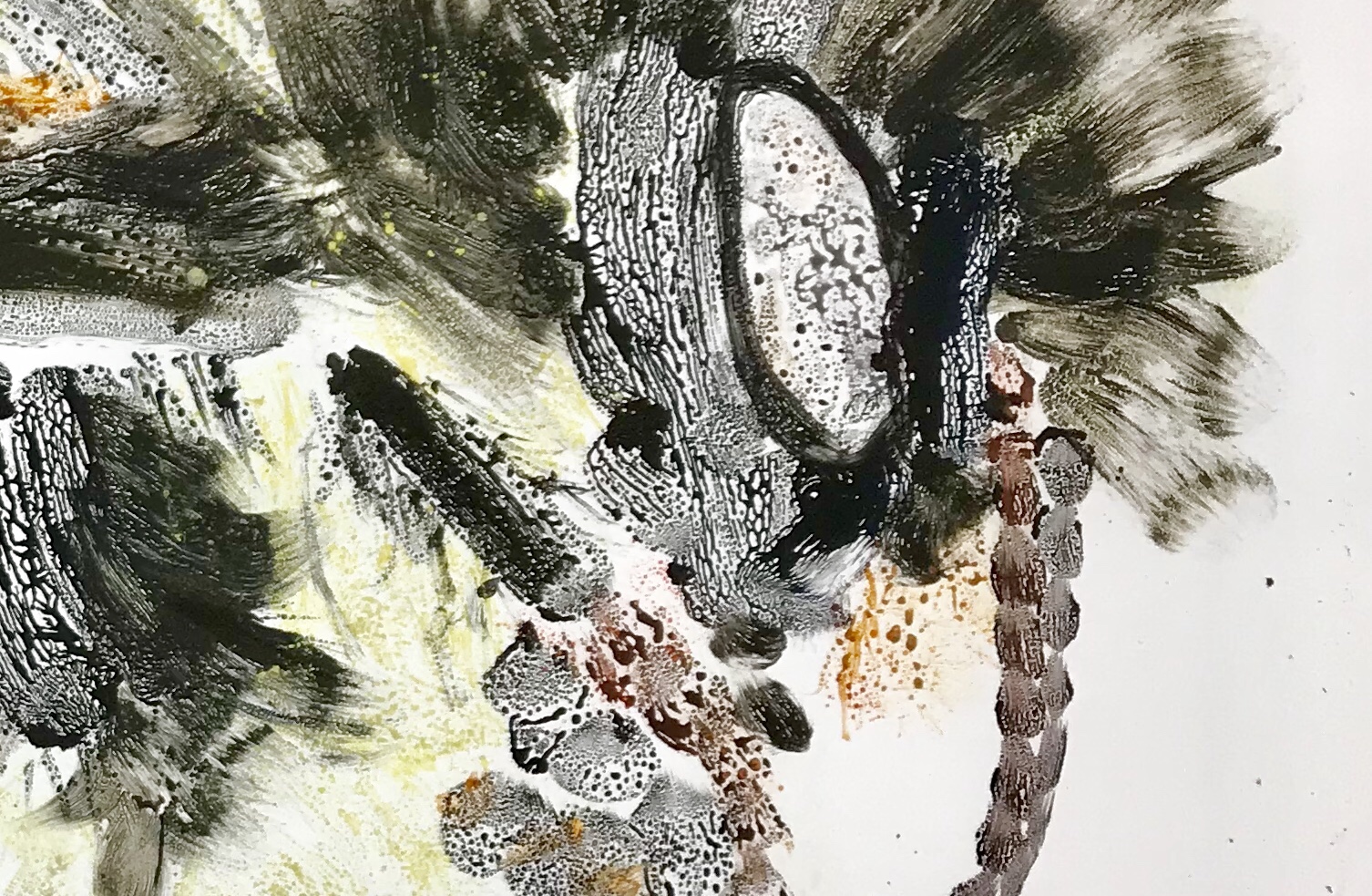
Bombus Affinis II compound eye detail.
I ran into the print making room to drop off some new paper. I took the opportunity to see how the last 6 compared to each other and how multiple bees might look together. I will do one more experiment and the plan the grouping.

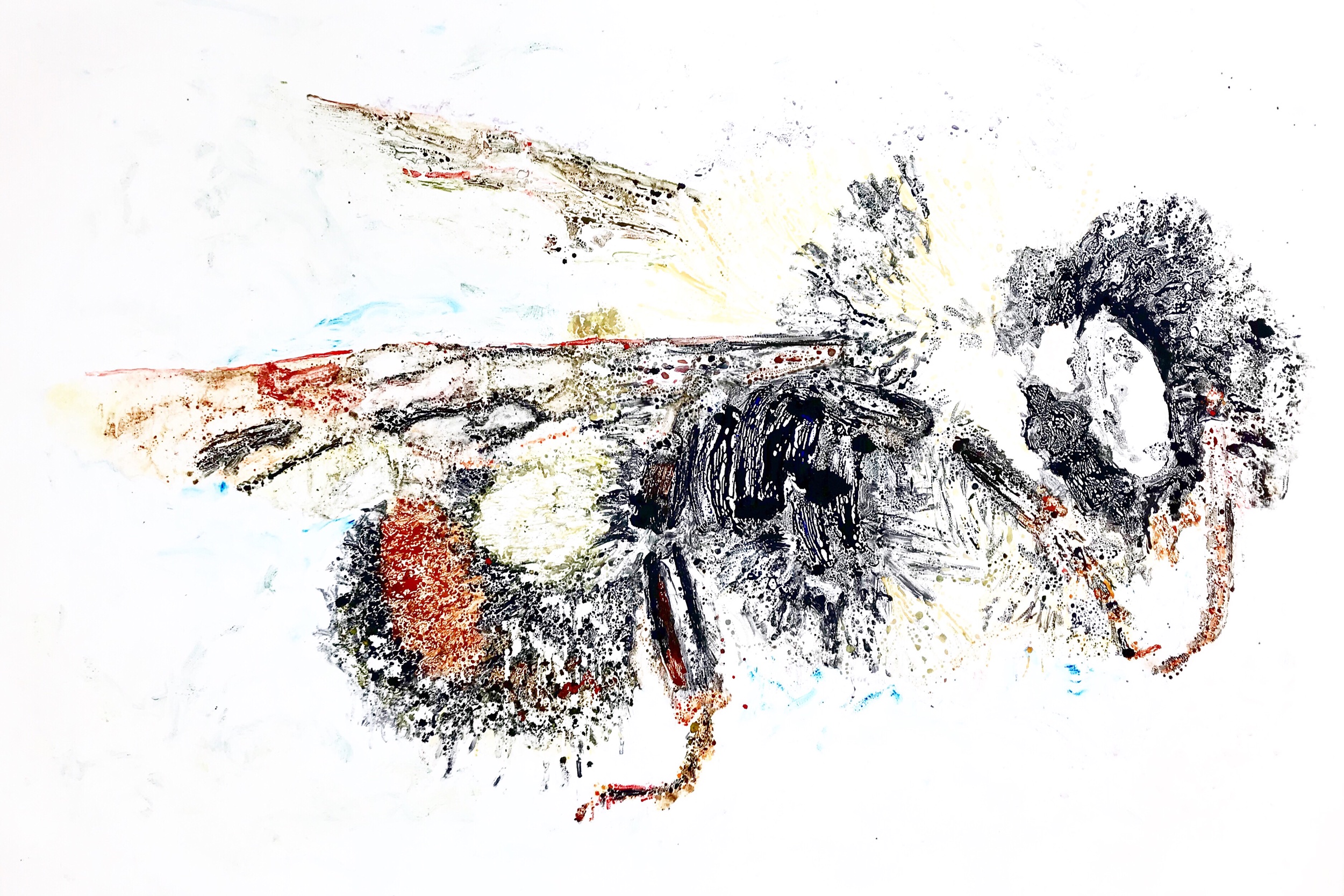
Bombus Affinis I
30” X 44” watercolor monotype
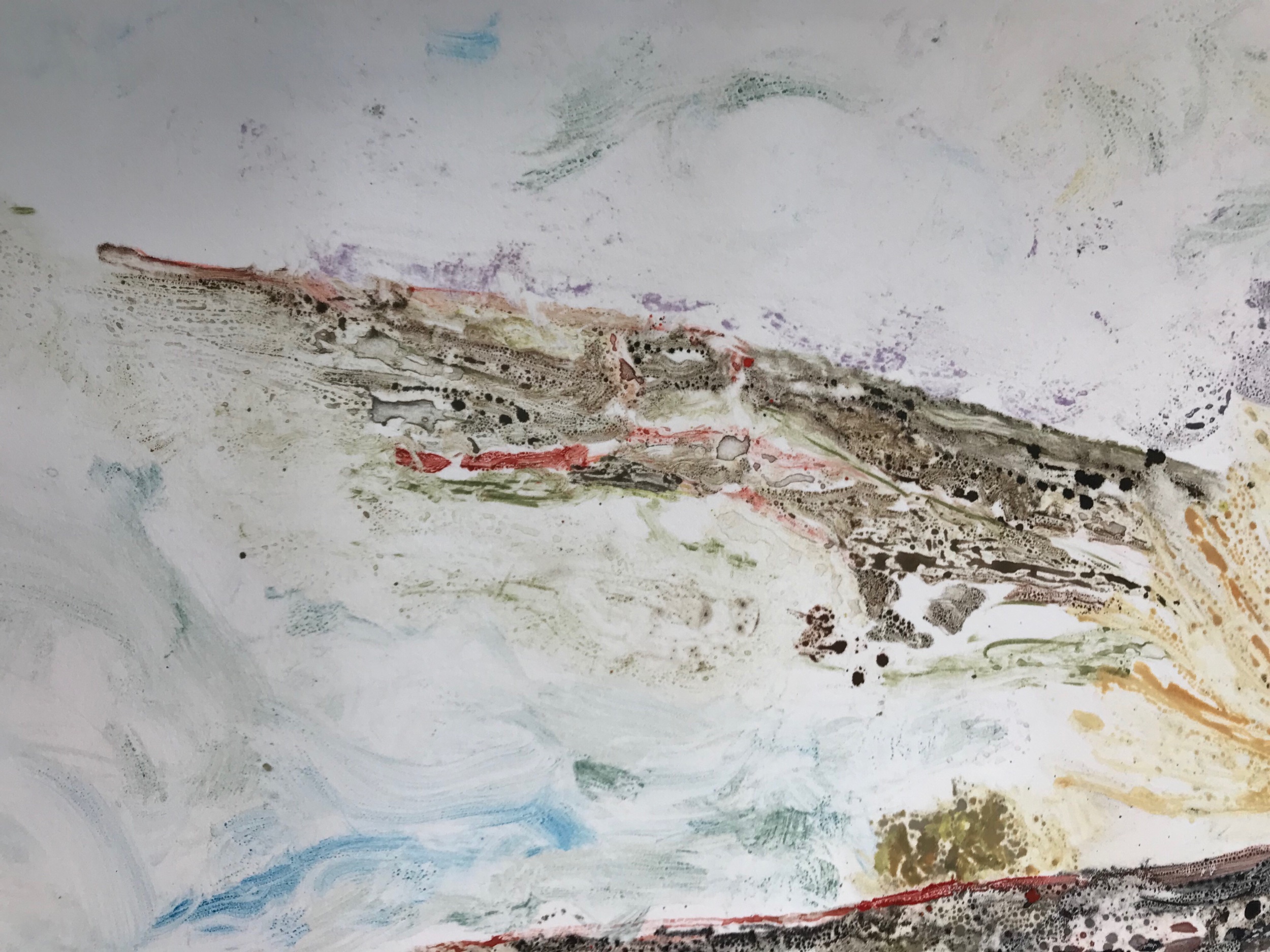
Wing detail from Bombus Affinis I
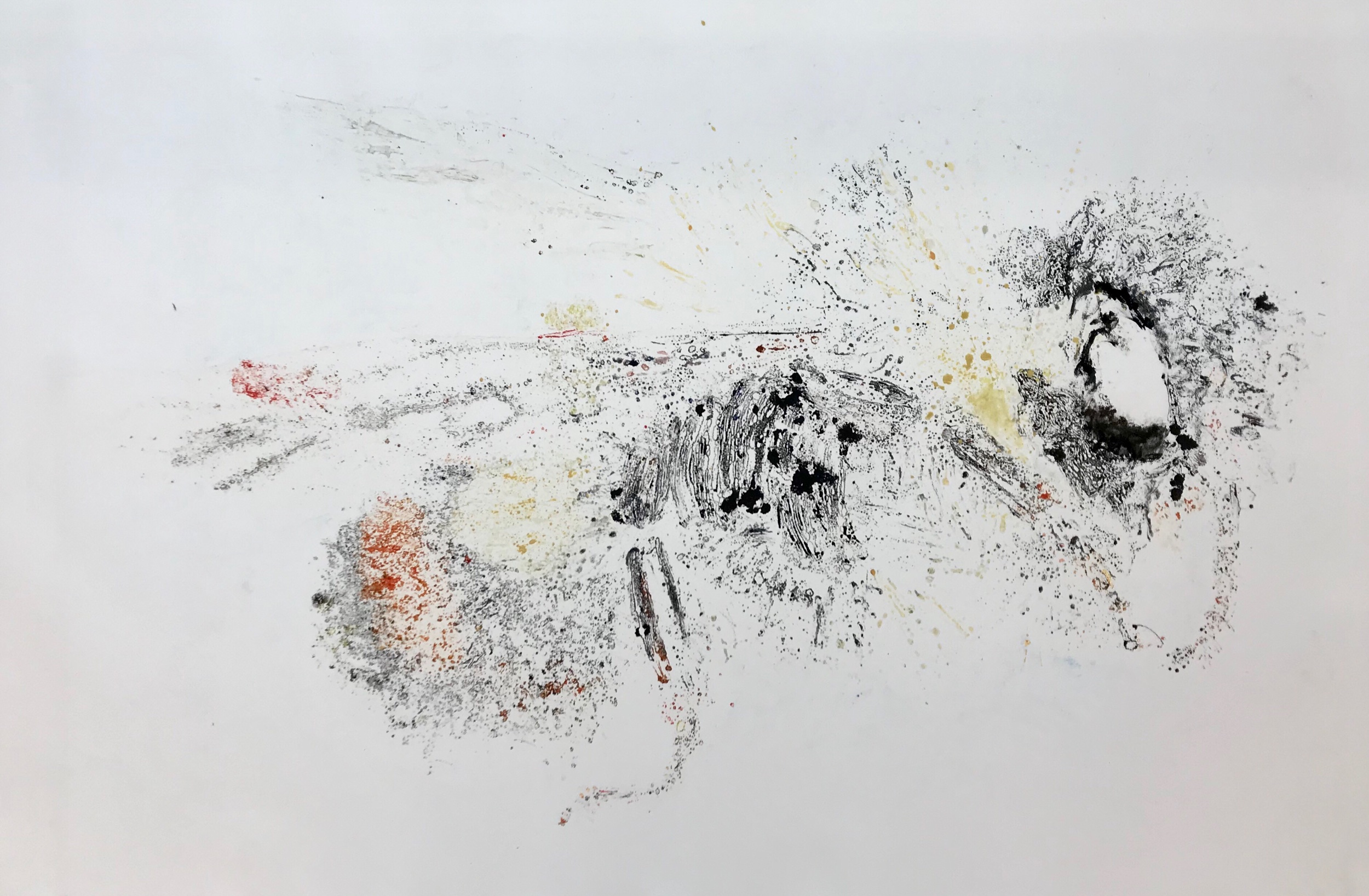
Bombus Affinis I ghost
30” X 44” watercolor monotype
Day 2-
I like the big black brush strokes, the antennae, but I do not like that both wings have the same weight. I want the back wing to be in more motion and fainter. When I look back at the work from day one, I am feeling better about parts of it. I like the wings and the last sections of his abdomen. Below are some close up shots of the parts I like of both days’ experiments.
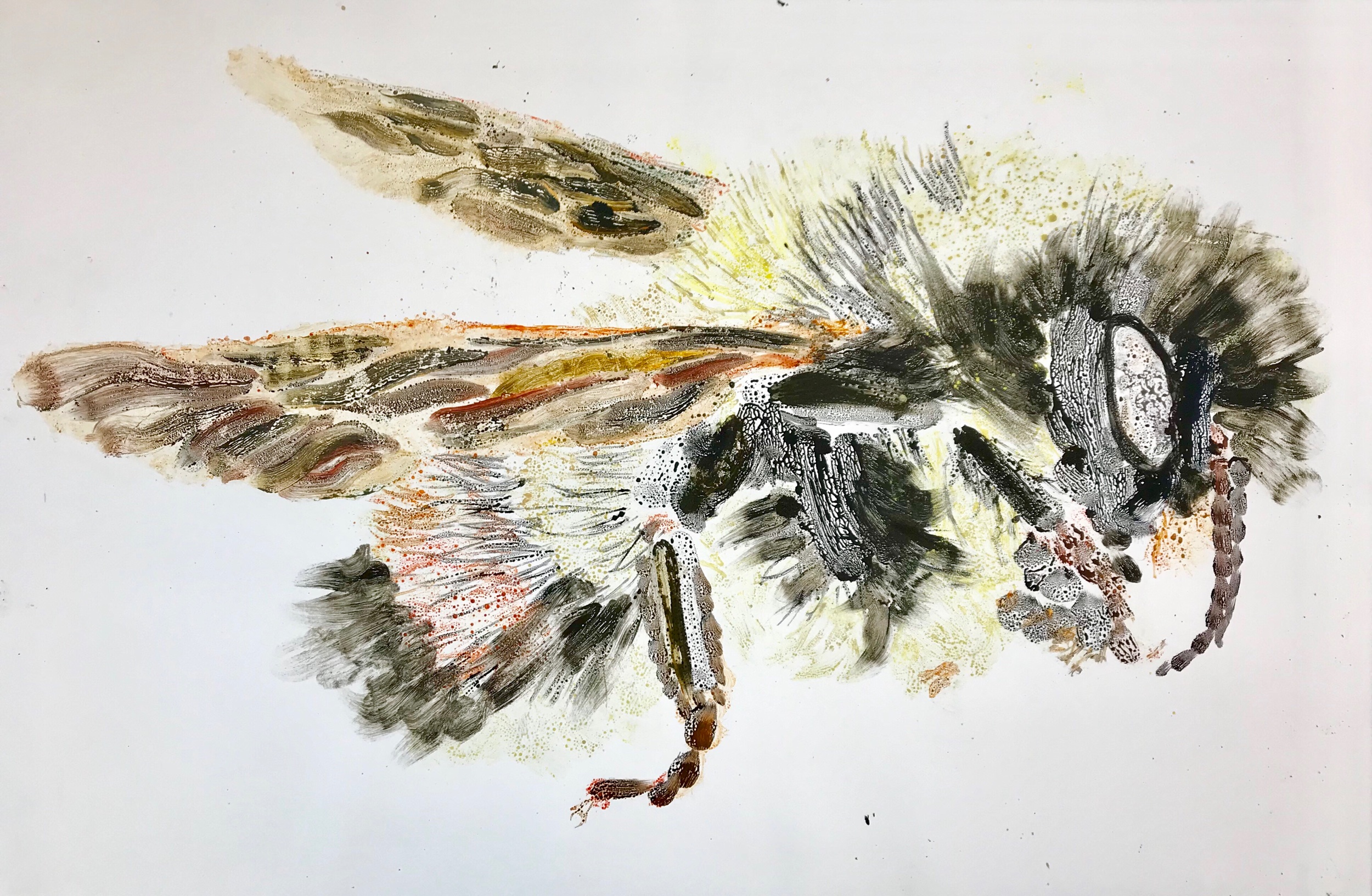
Bombus Affinis II 30” X 44” watercolor monotype
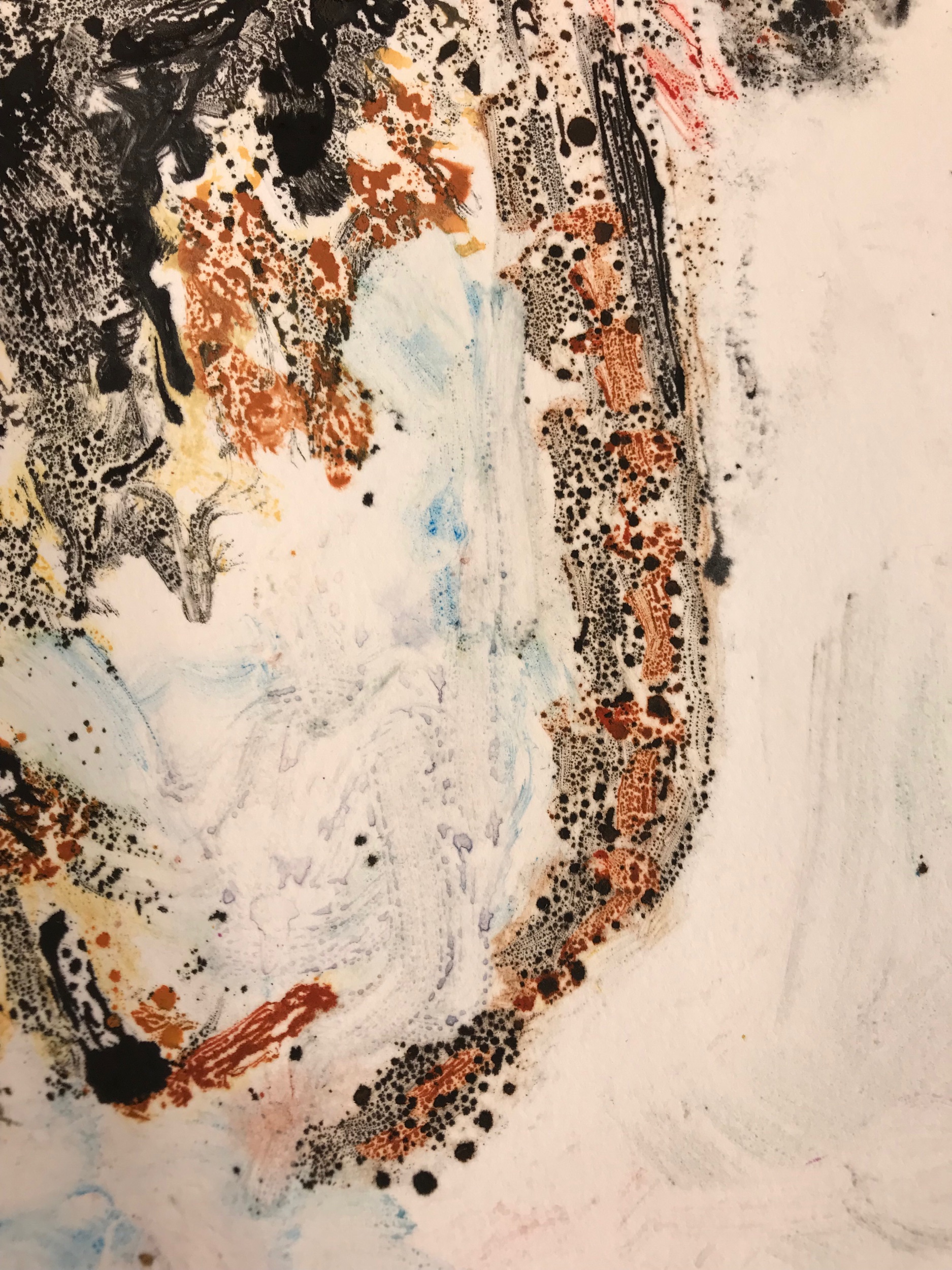
Day 2 antenna
Day 3 - layering the different processes. I am closer to what I want but I am not there yet.


Bombus Affinis III
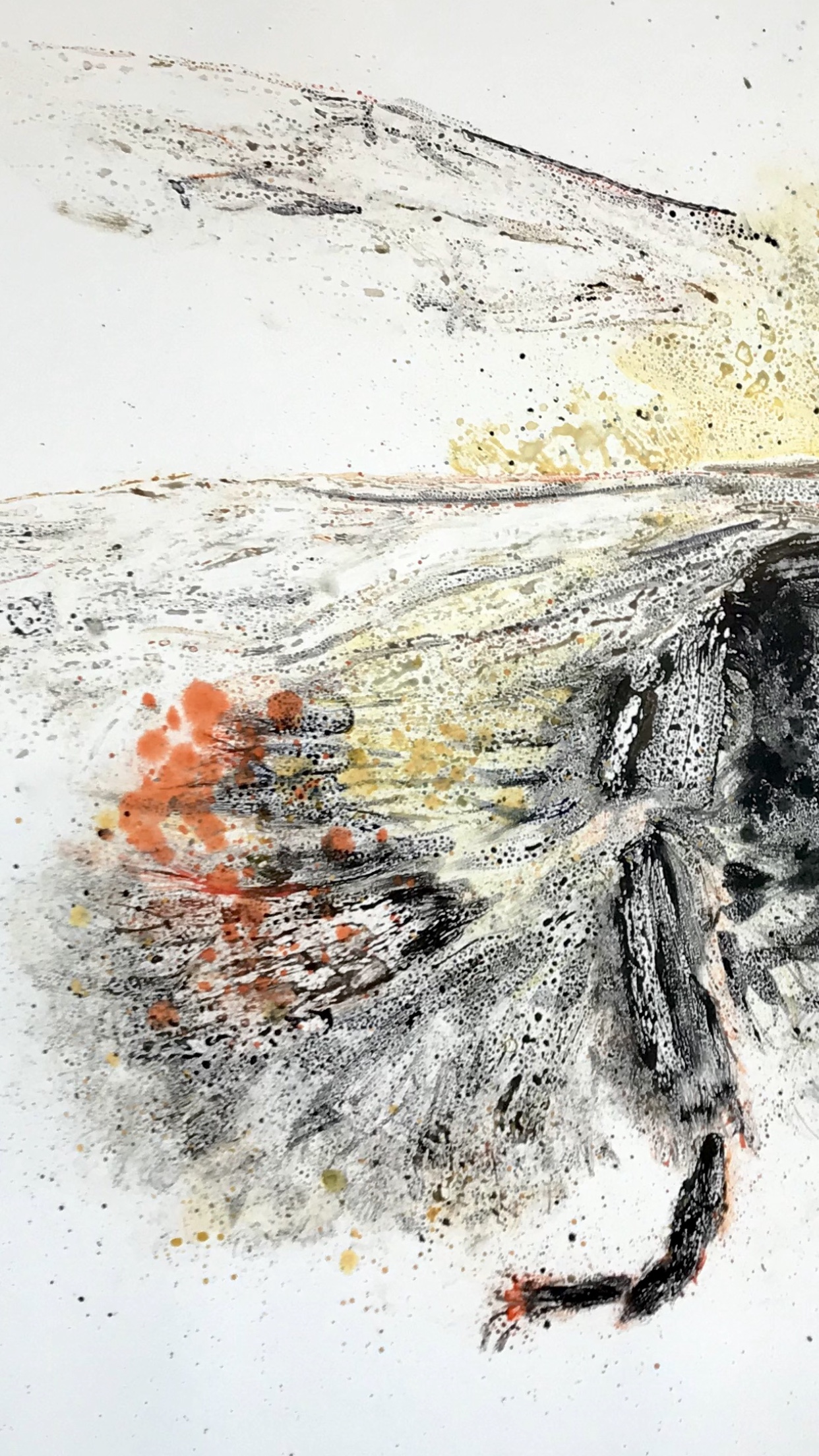
A favorite moment in Bomus Affinis III
a tail, leg and two wings
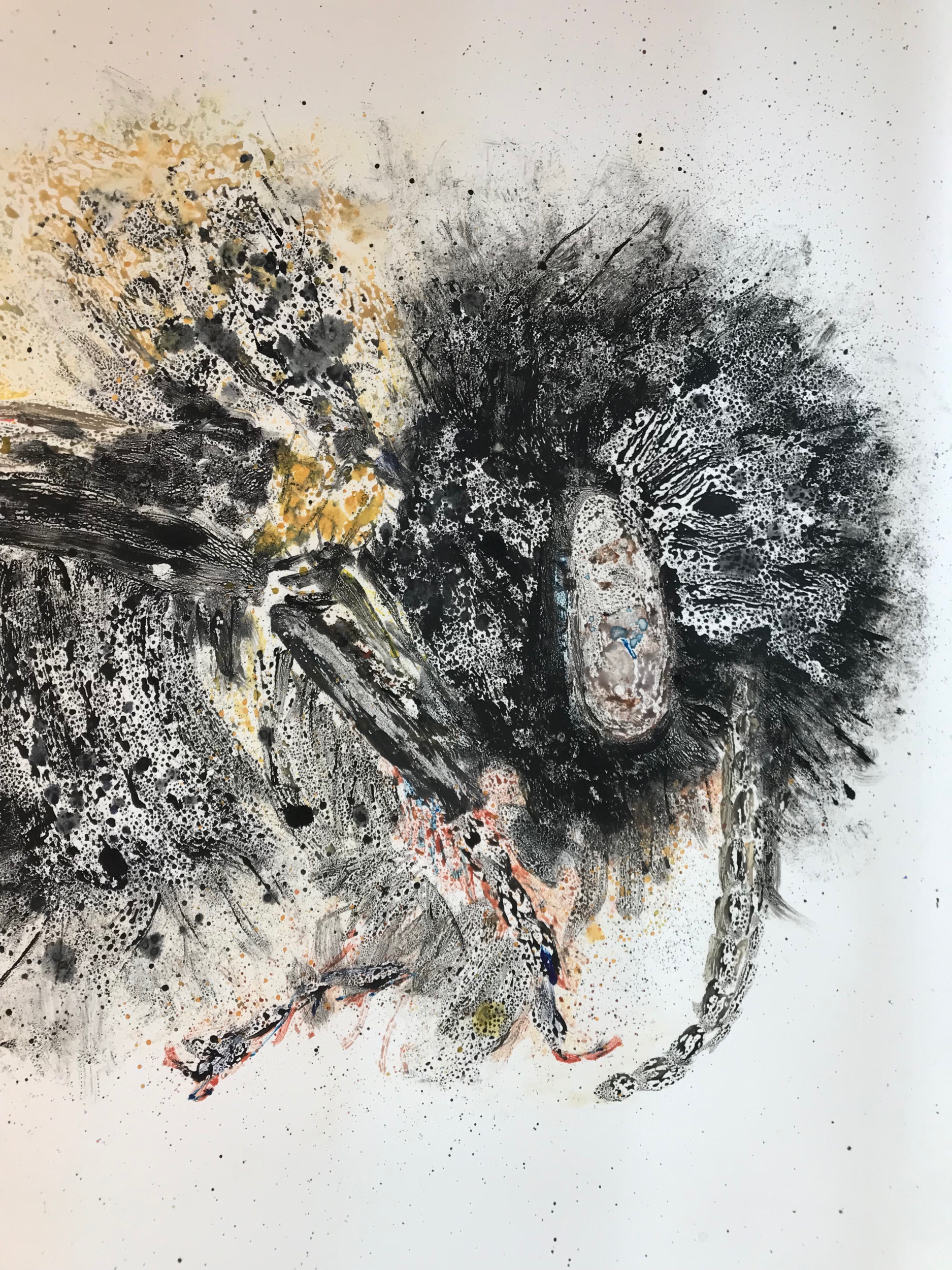
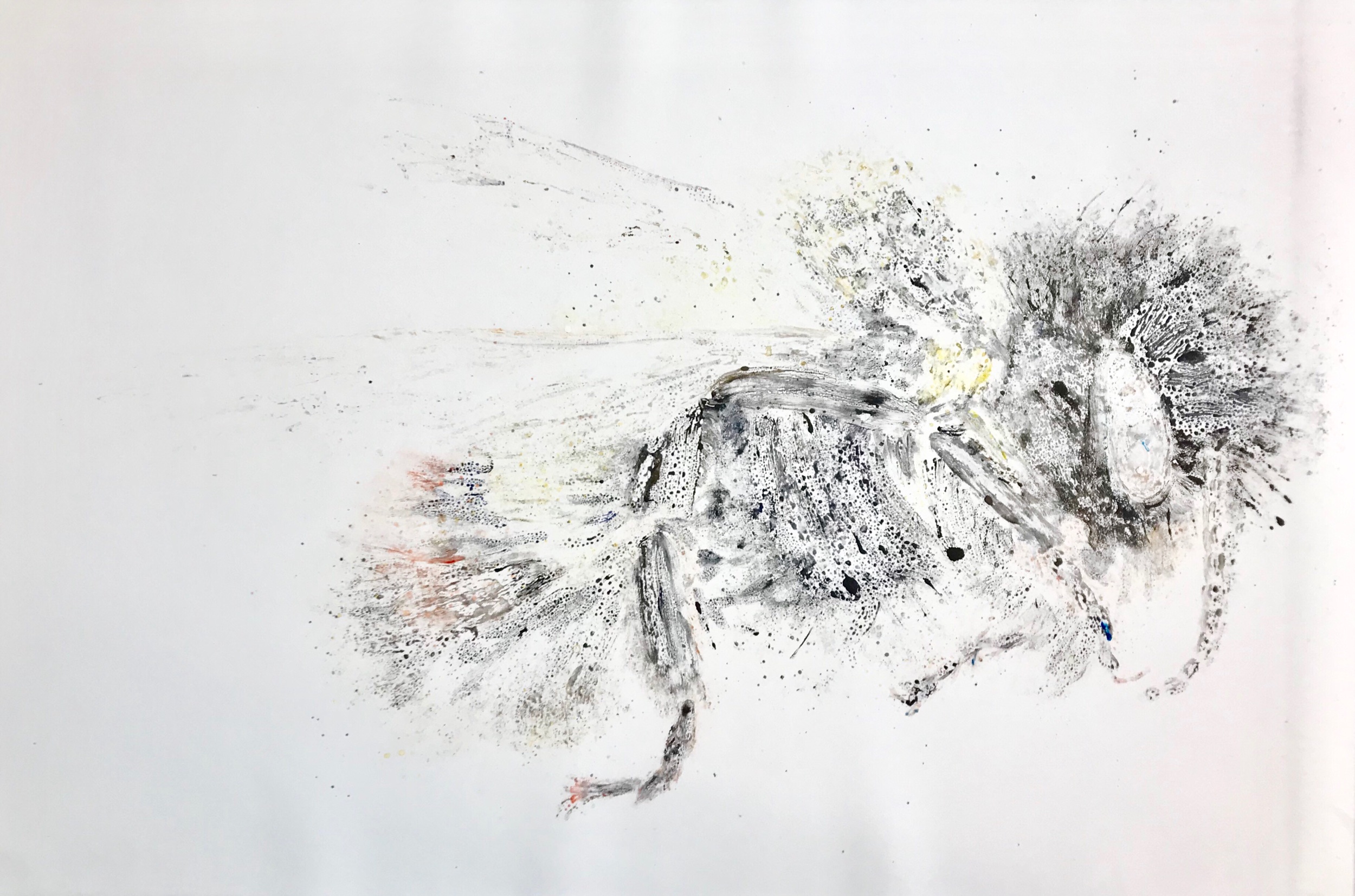
Bombus Affinis III ghost
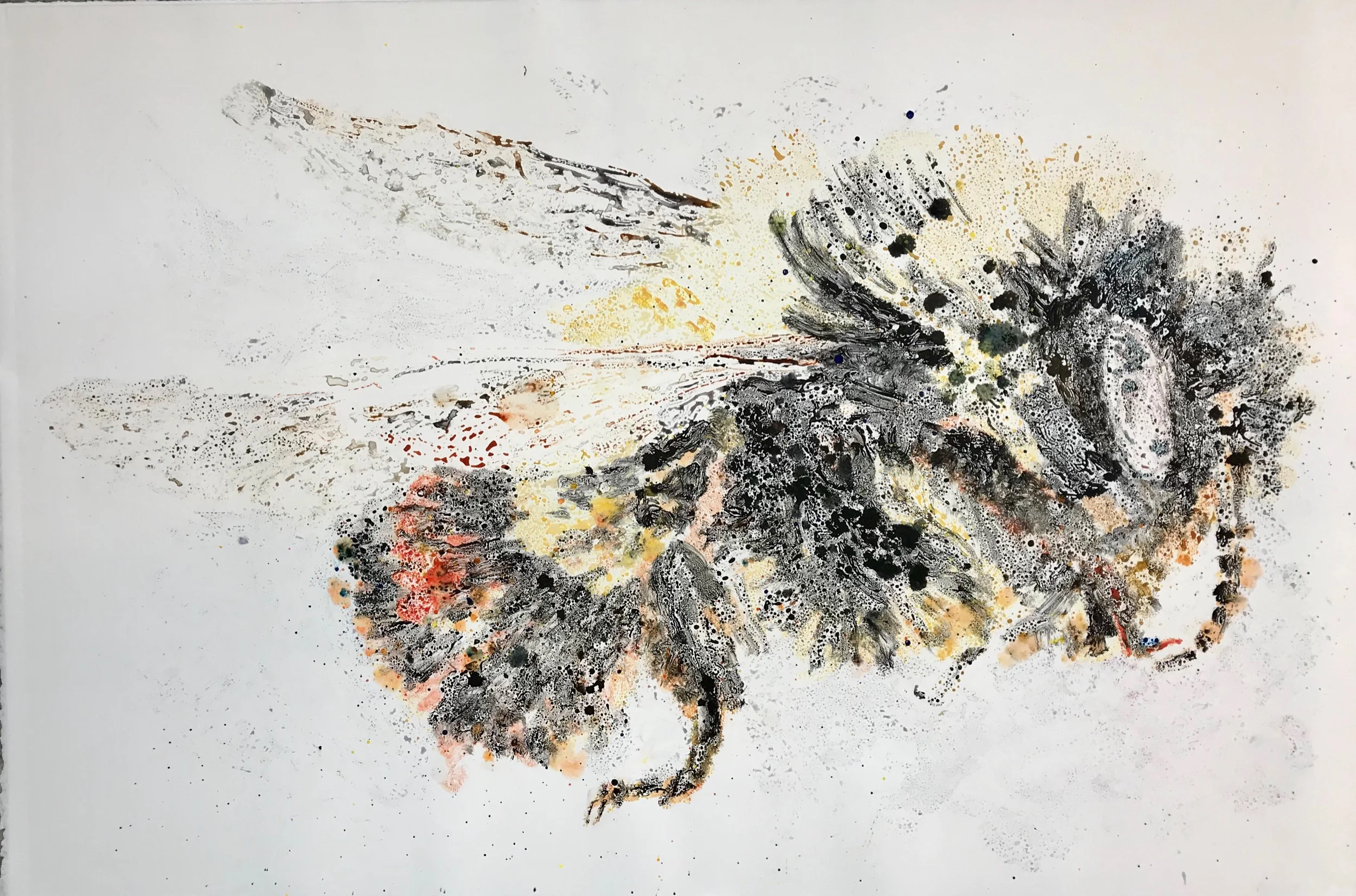
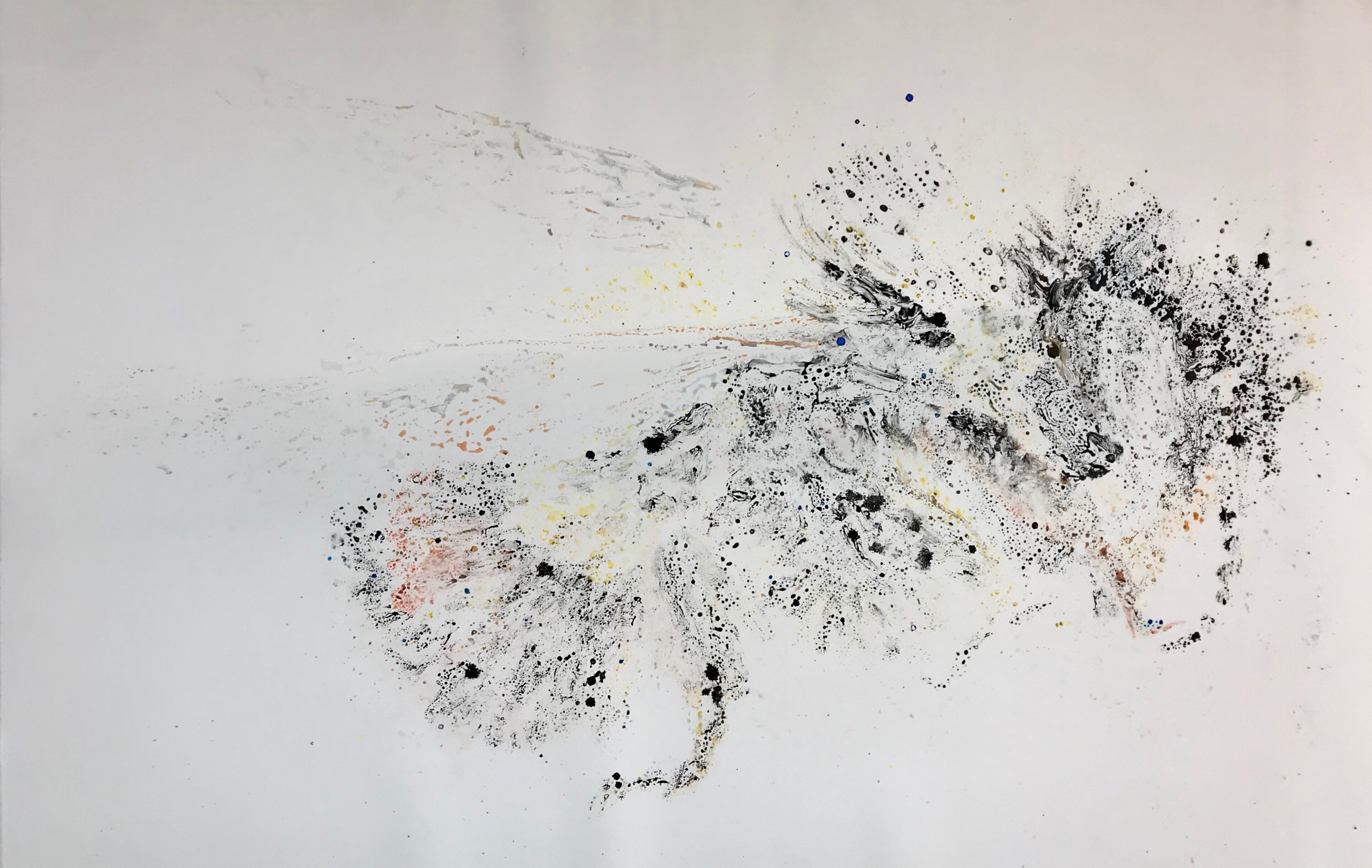
Bombus Affinis IV
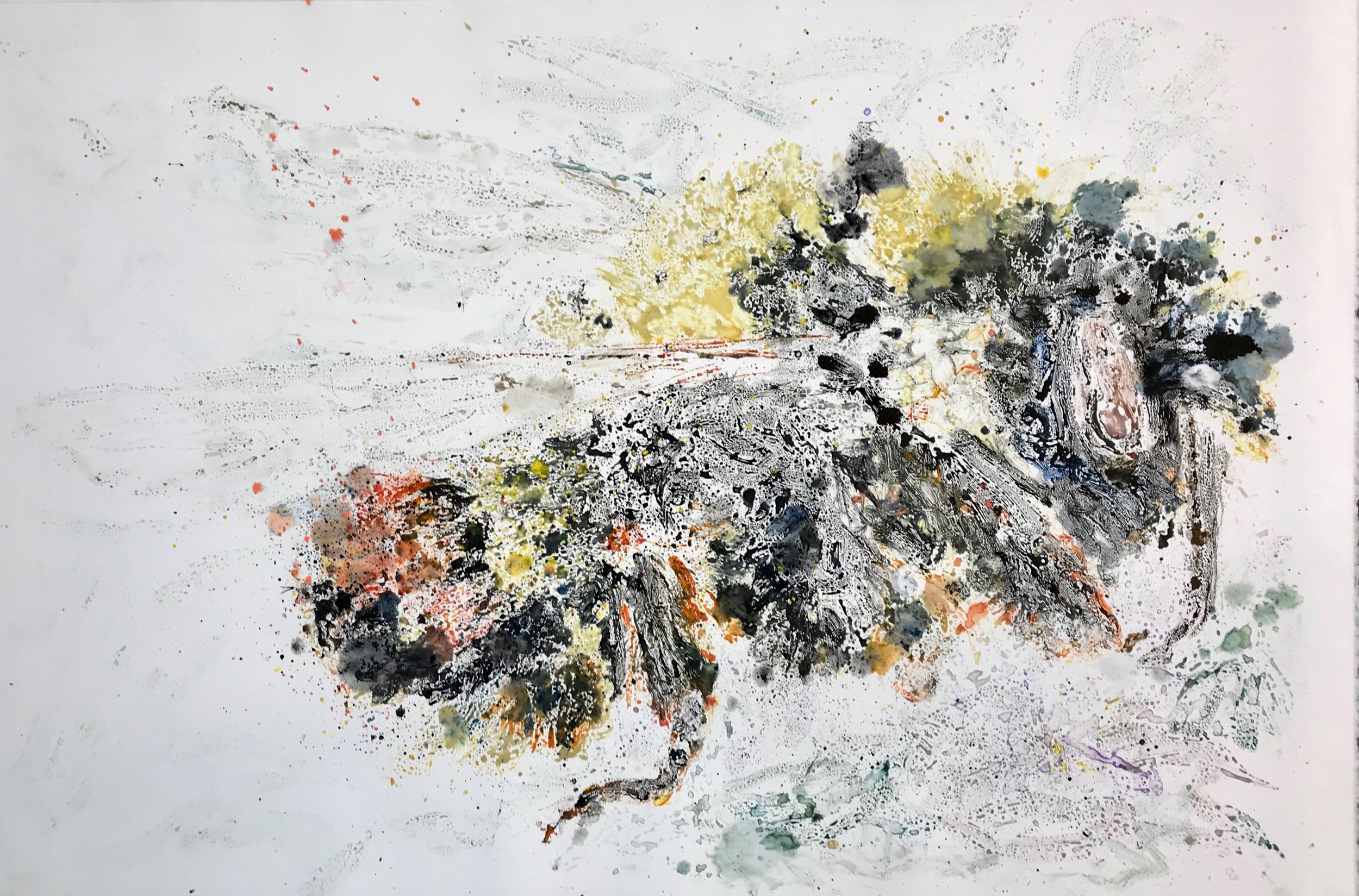
Bombus Affinis V
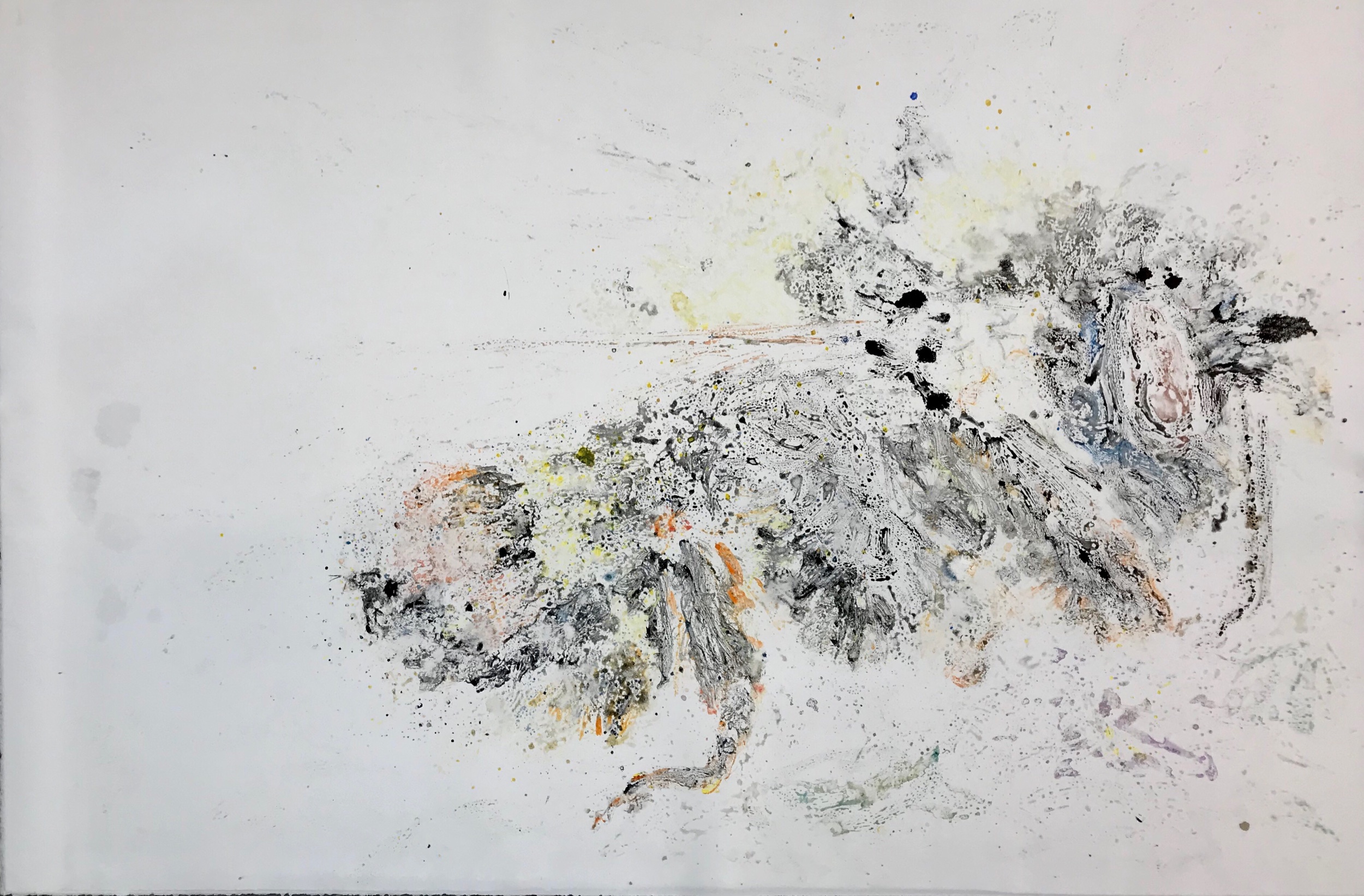
Day 4
Below are some moments I especially like. Today anyway.
Finally I am loosening up. I want an image of the bee’s energy - I want the life, movement and energy of a fuzzy pollinator even if he is endangered. I do not want a drawing of a bee.
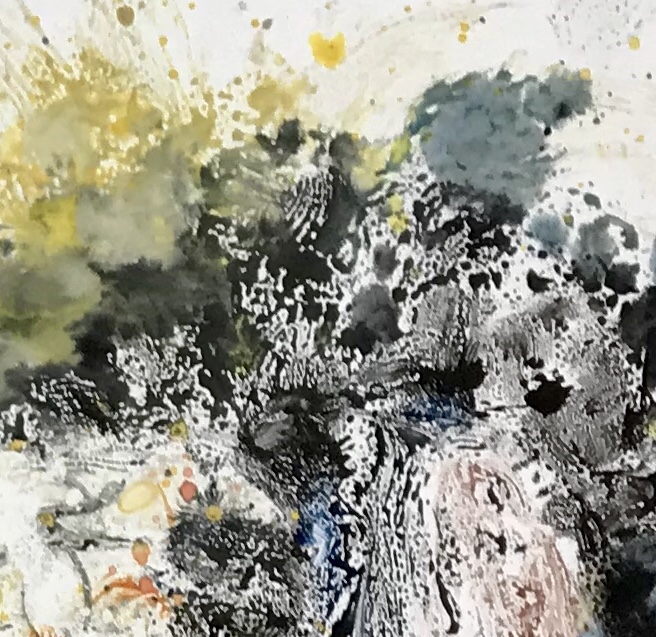
Top of Head and thorax
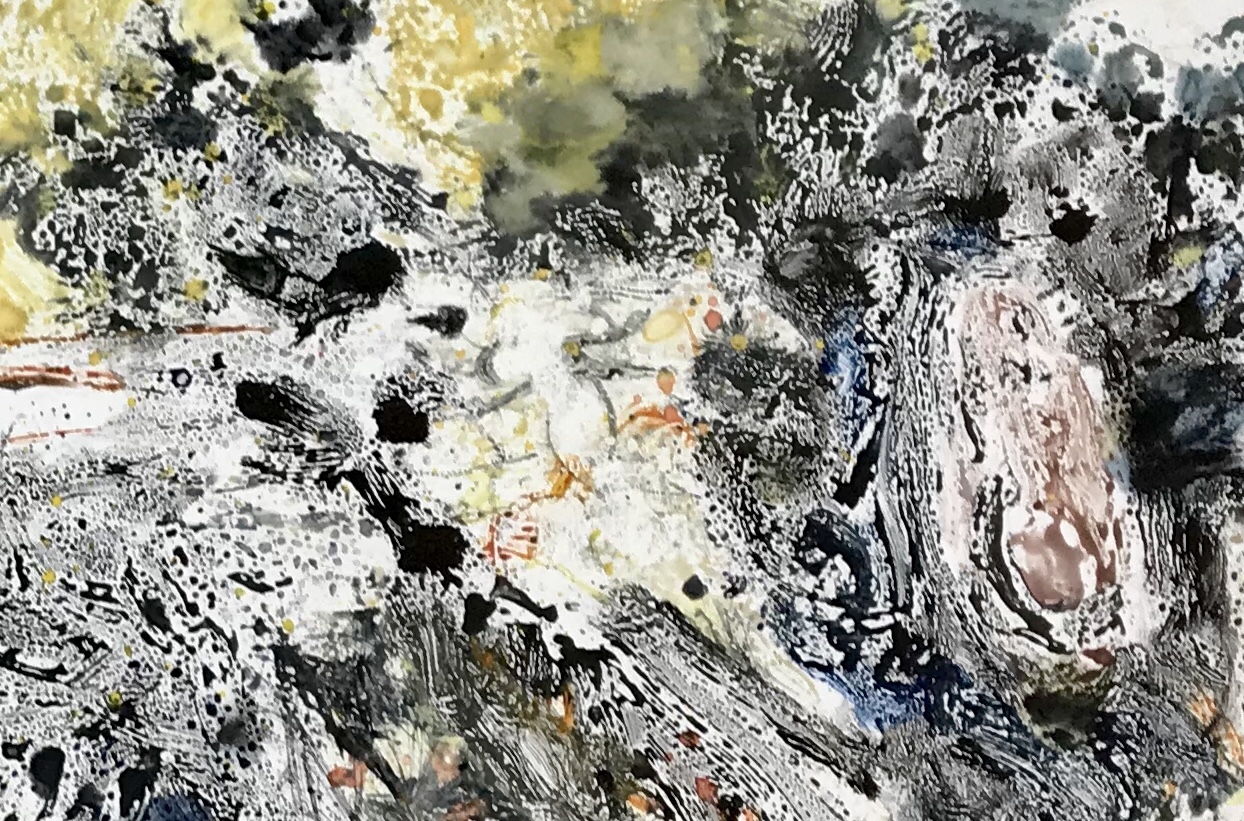
Mauvish/brown/black bee eye and thorax

The fuzzy tail and two delicate wings
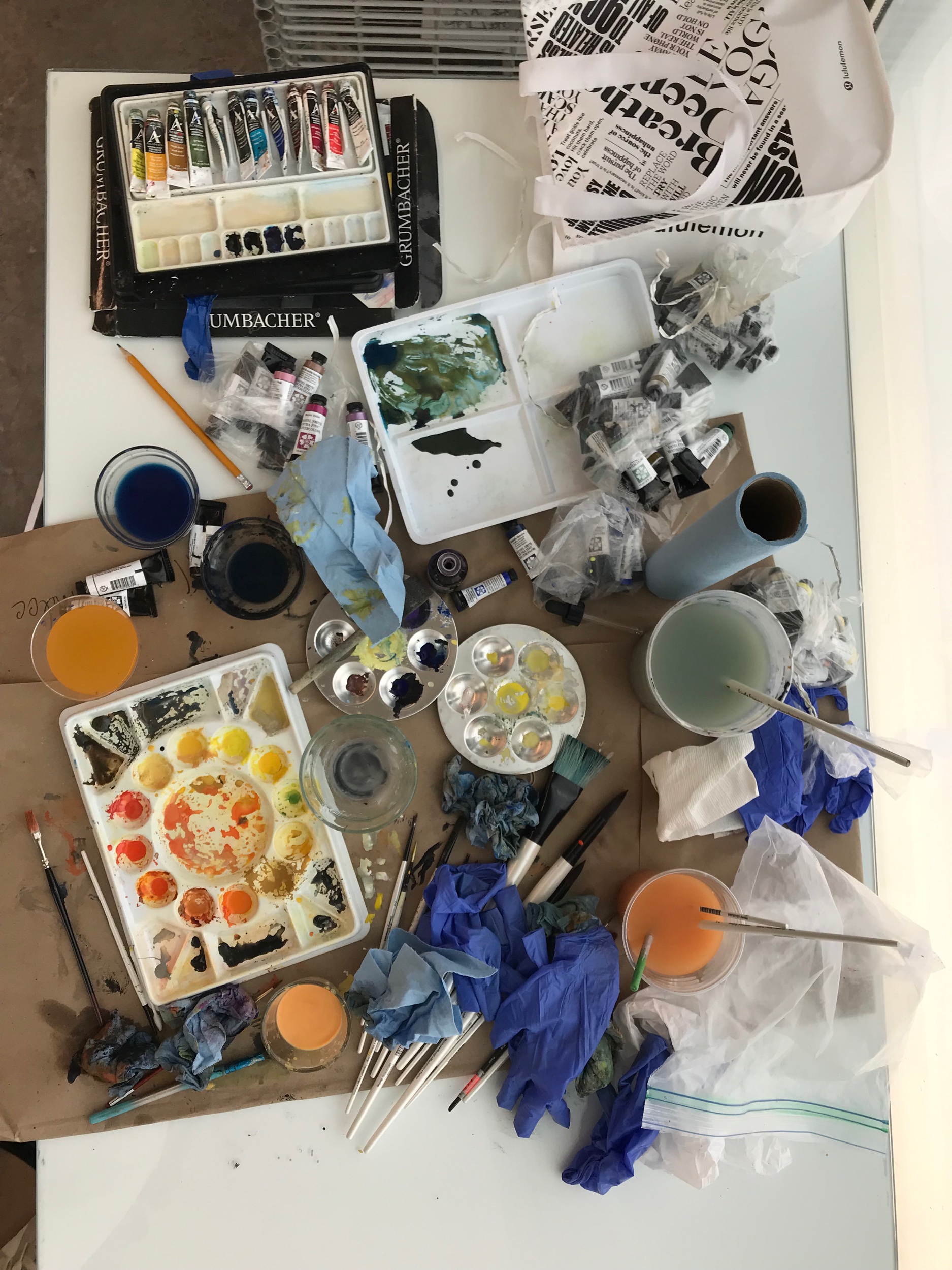
My work space
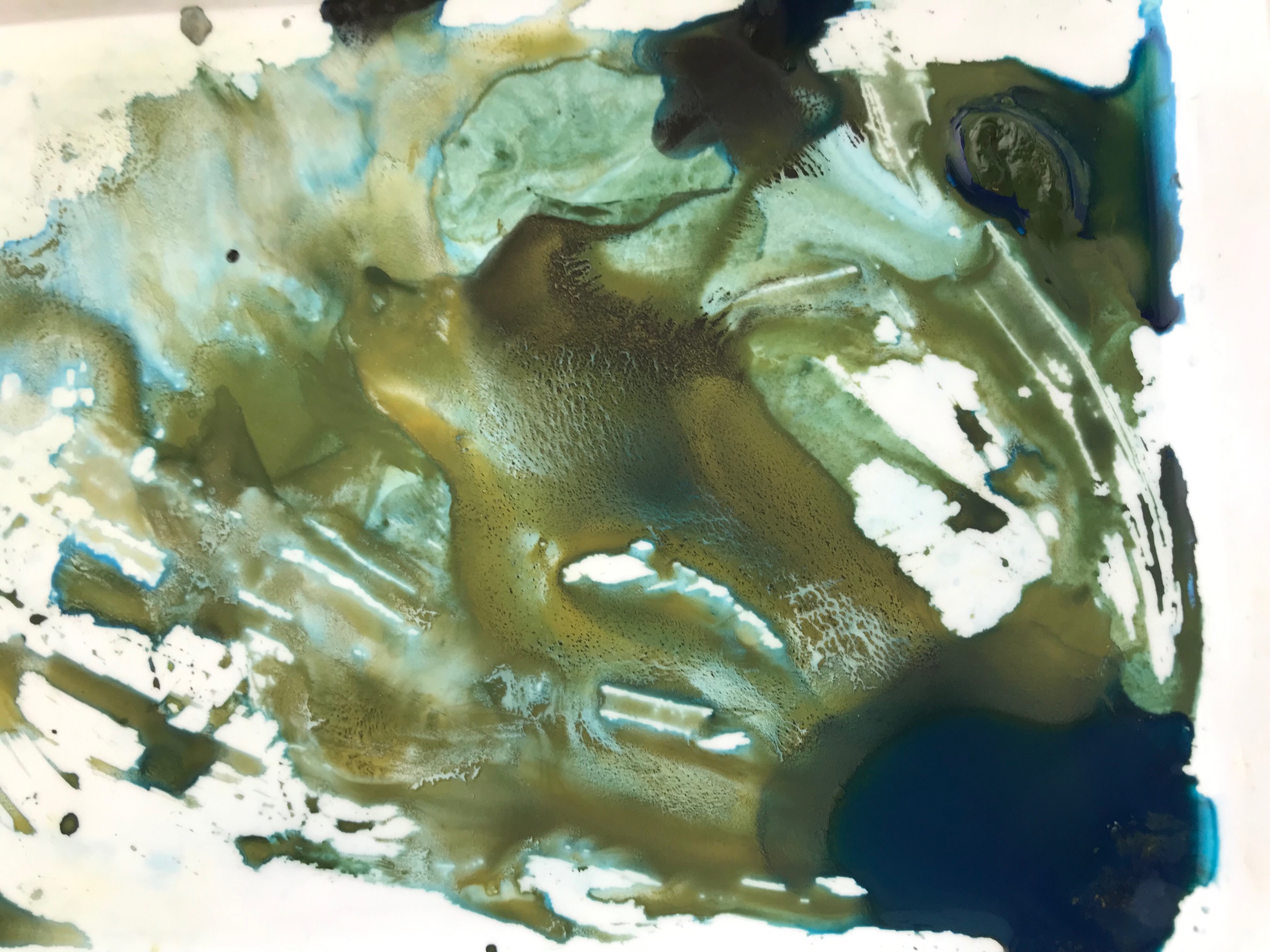
Leftover ink in the trey- Inspiration for a bee wing.
I received an email from Cynthis Franklin, she has a dead tree and is willing to donate the root to me. When Laura was a little girl, she brought home a 3” tree of an unknown species from Ikea and planted it in a pot. Twenty something years later Laura is living in NYC, and the tree is no longer flourishing. See below the root of this very interesting tree species that is still unknown.
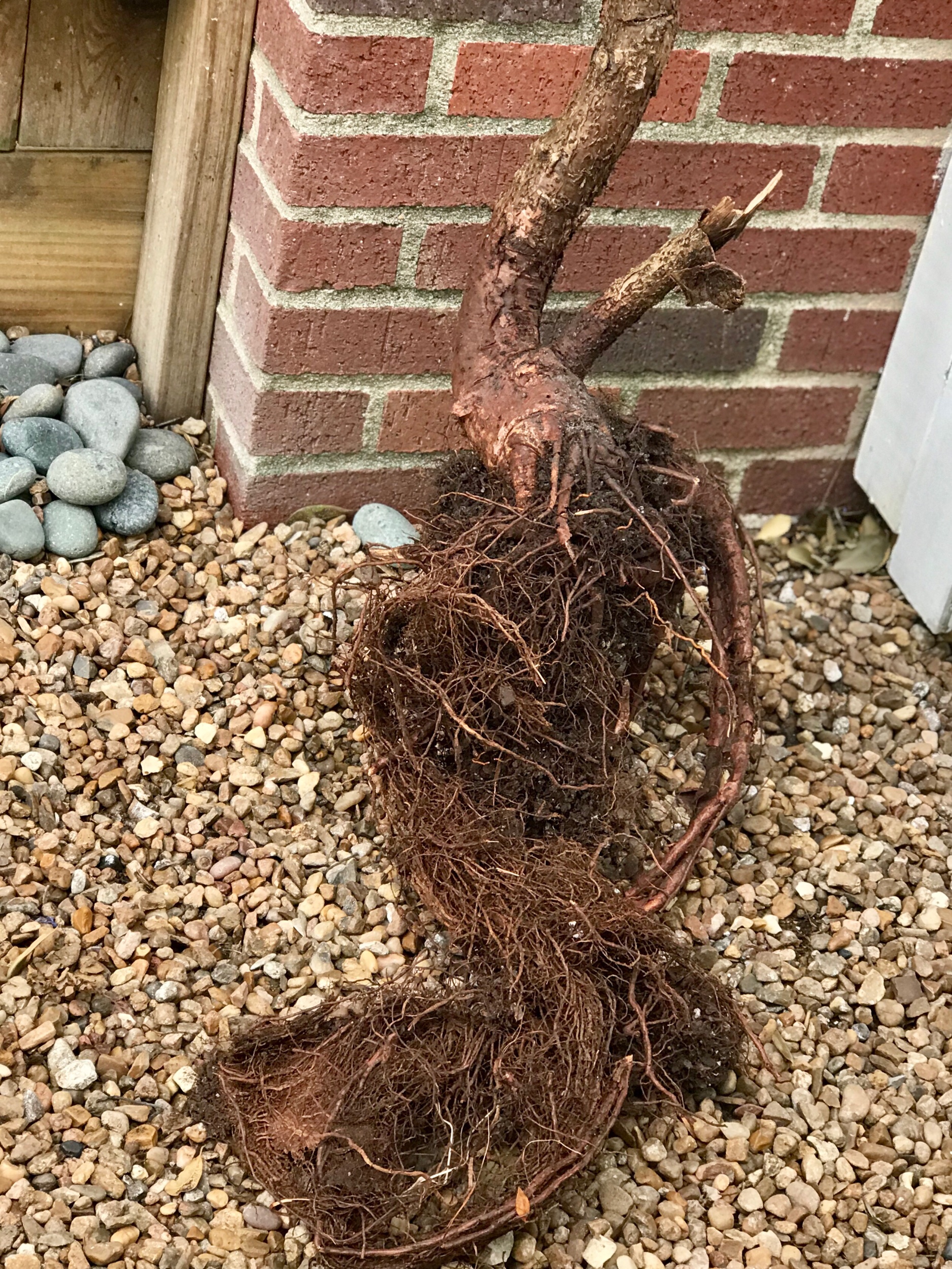
Look at these long roots.

The root after I washed off the dirt.
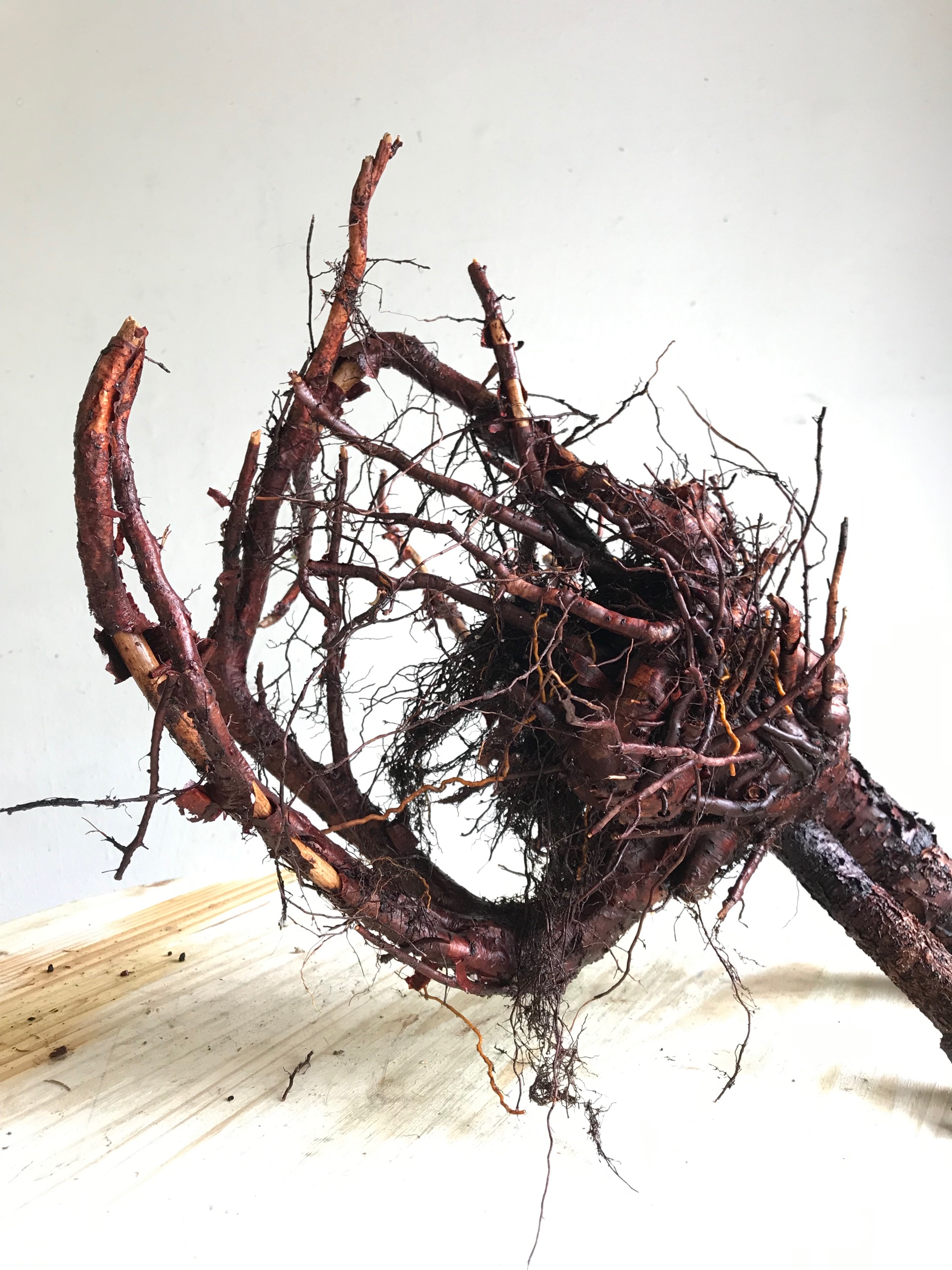
Another view
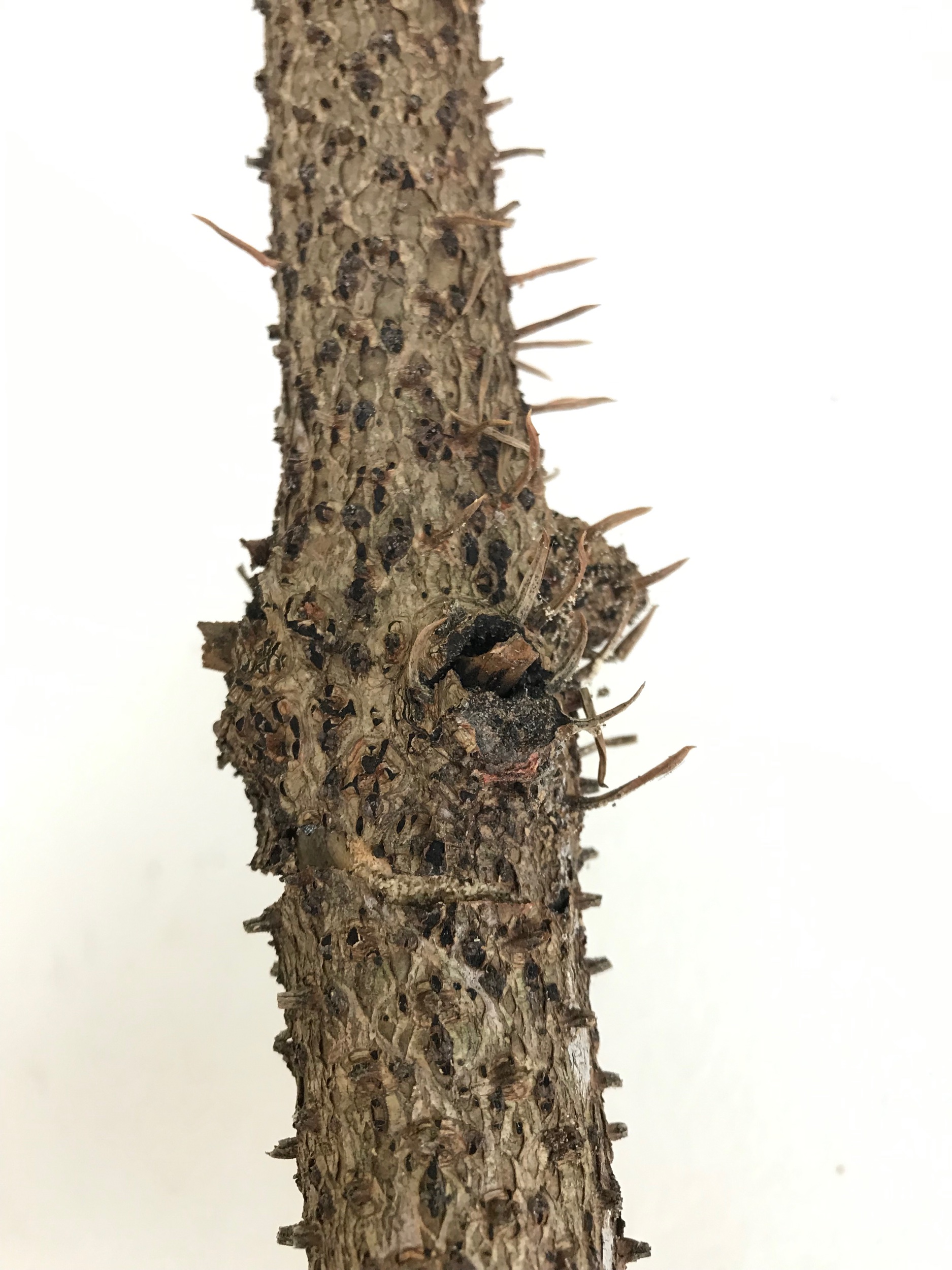
Very interesting trunk of bark with a trunk of thorns.
Sewing 🐝 #4
This piece is a conversation starter. The bee on this cap is the Bombus Affinis or commonly known as the Rusty Patch bumble bee. This bee was listed on the endangered species list in 2017. It is the first U.S. bee to be listed.
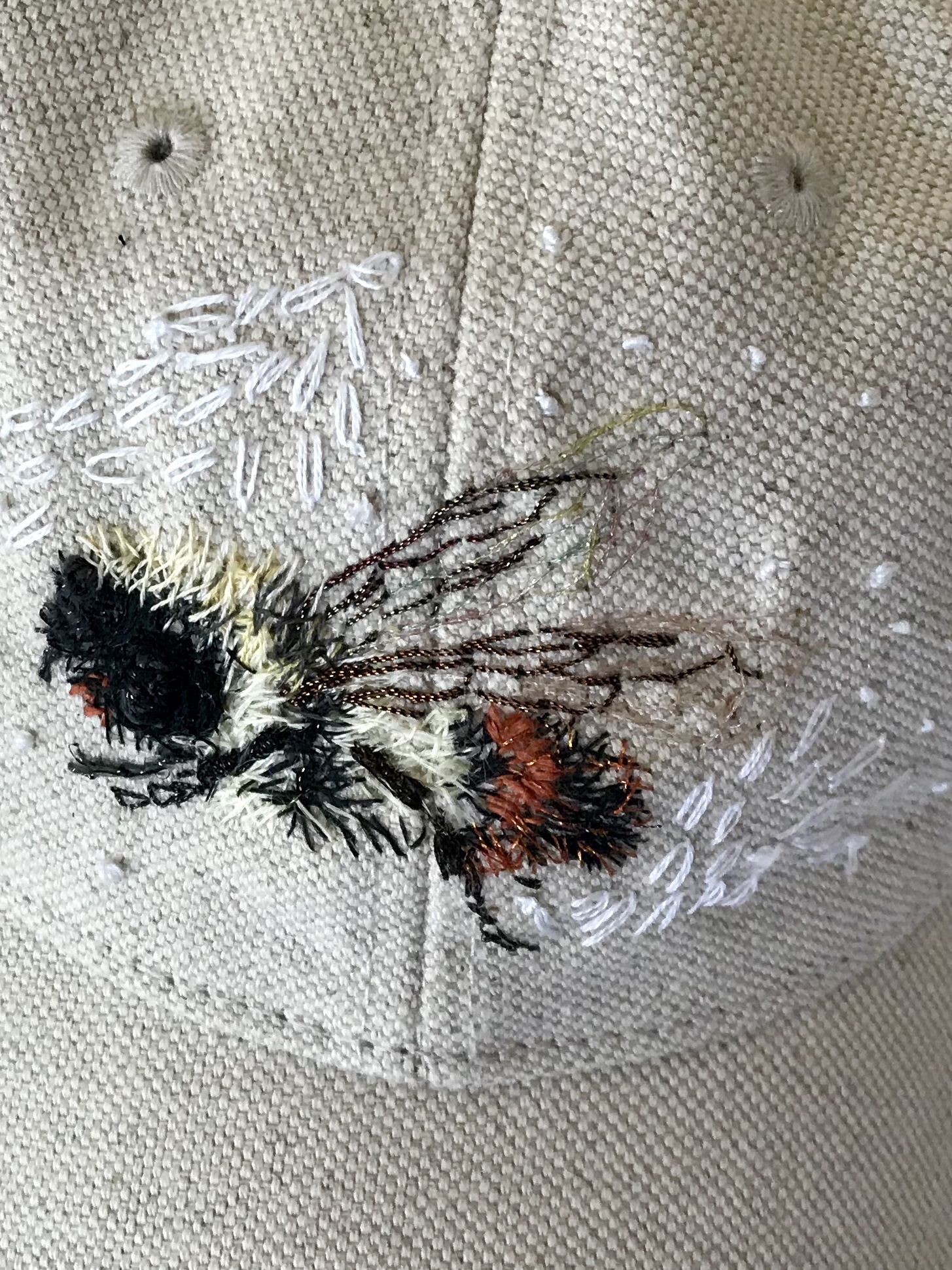
Finished piece.

No planing just winging it. It explains why that antenna is so BIG
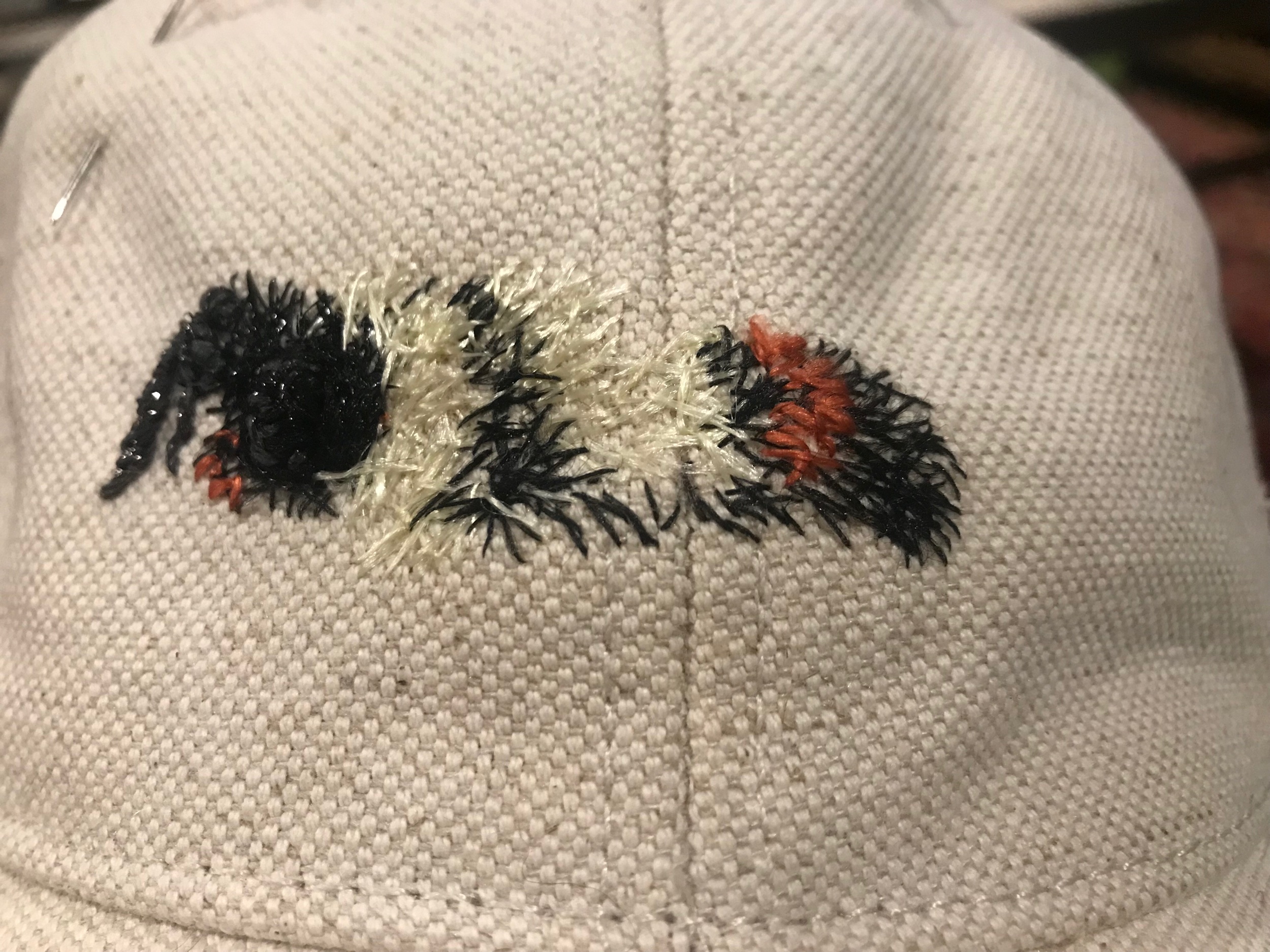
This fuzzy little body needs some wings.
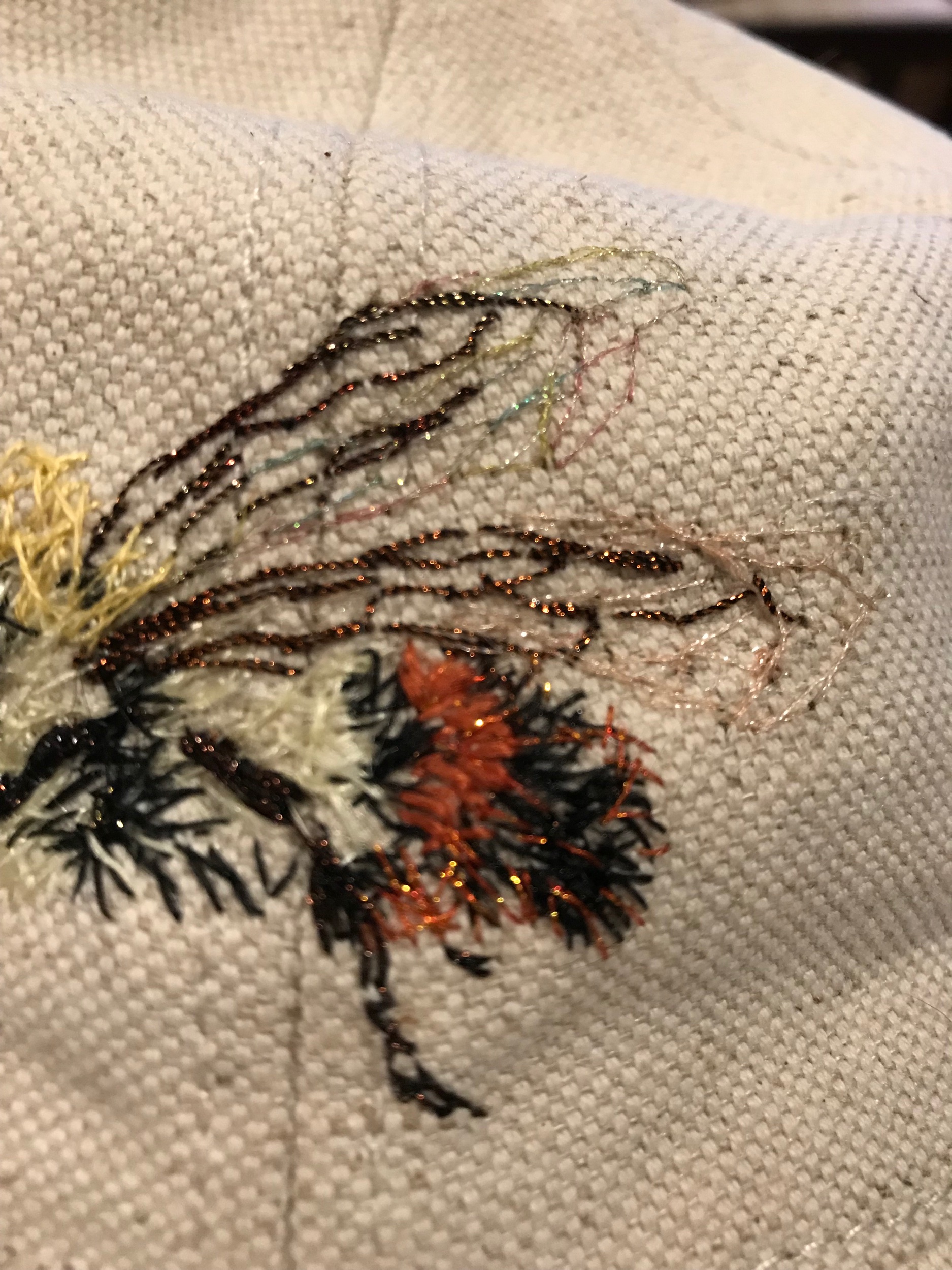
Detail of wing and legs
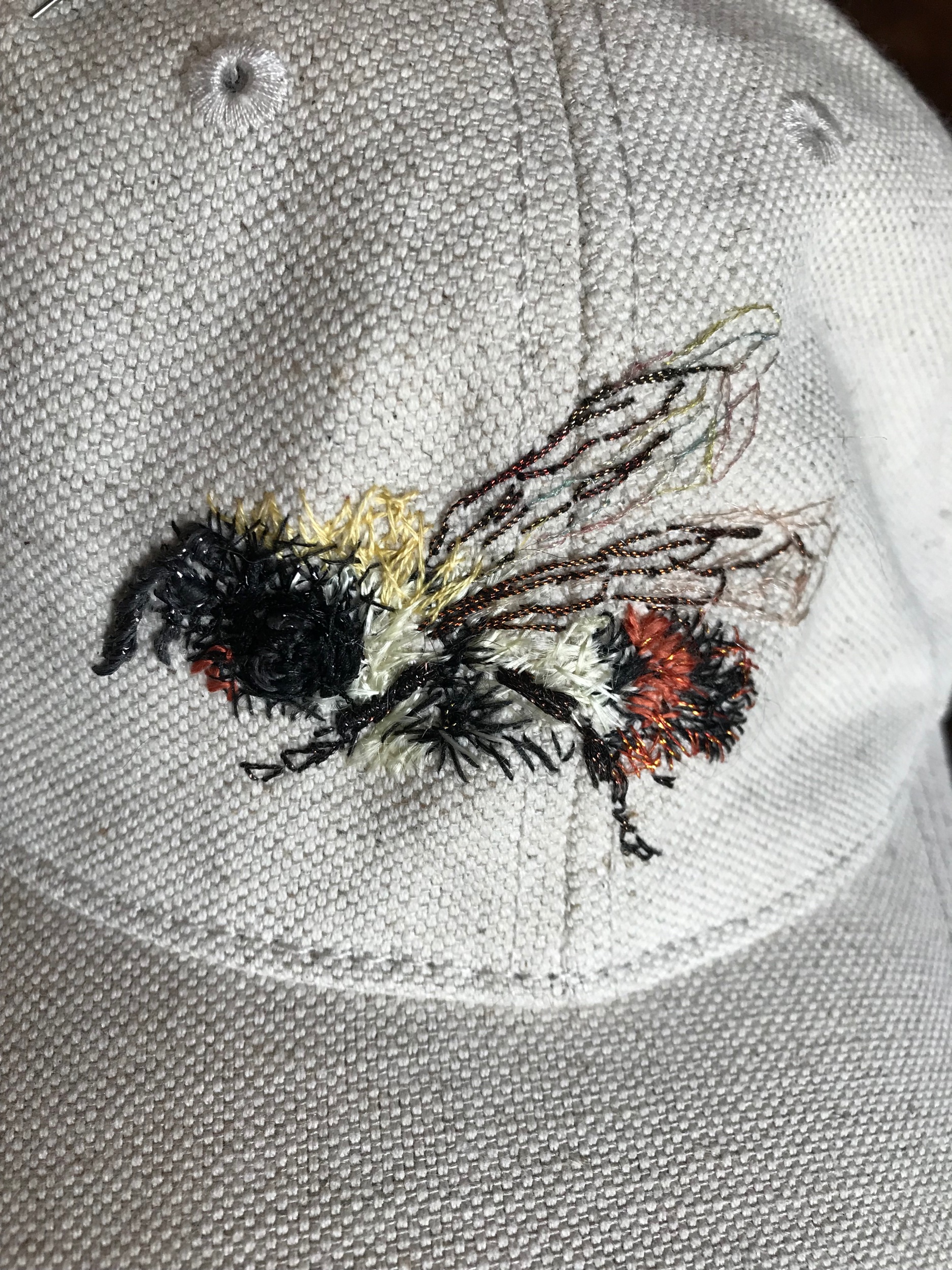
I need to delete the giant antennae.
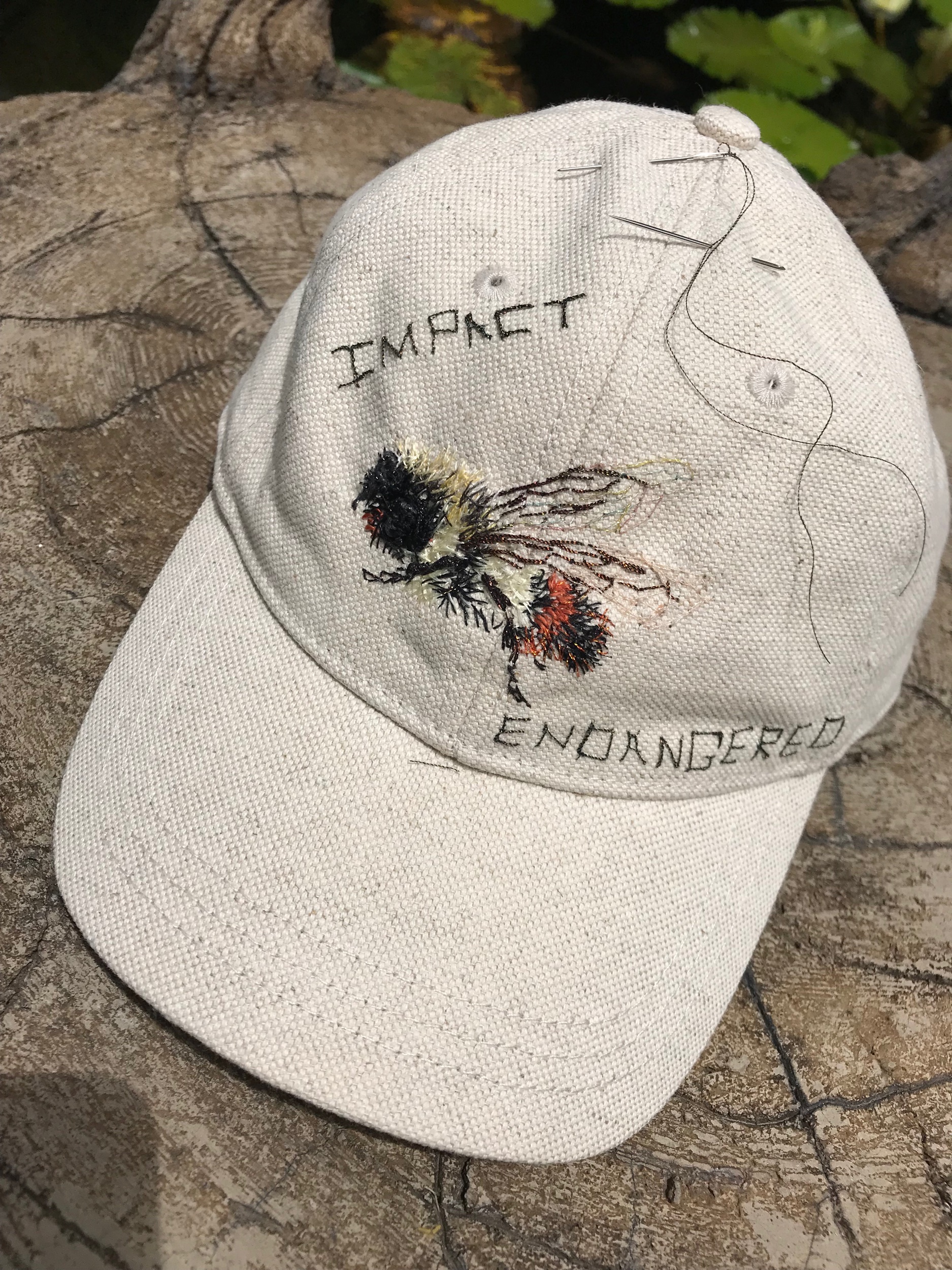
Copy added
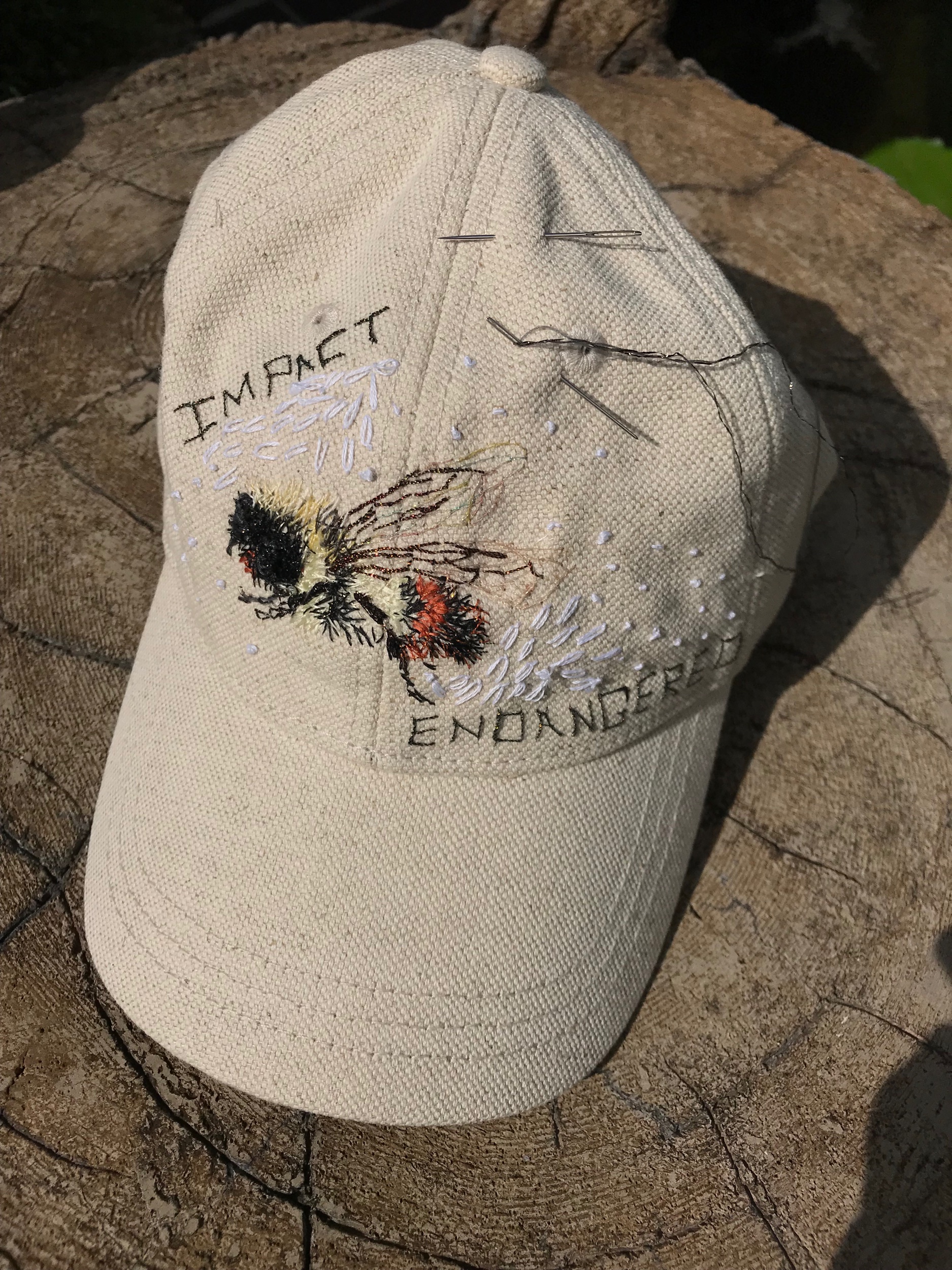
Every bee needs some pollen in the air.

After I finished and stood back I was not pleased. It was too busy, too much. Today I took out Impact. It feels better, I will live with it and maybe take out Endangered and the pollen and plant pieces.
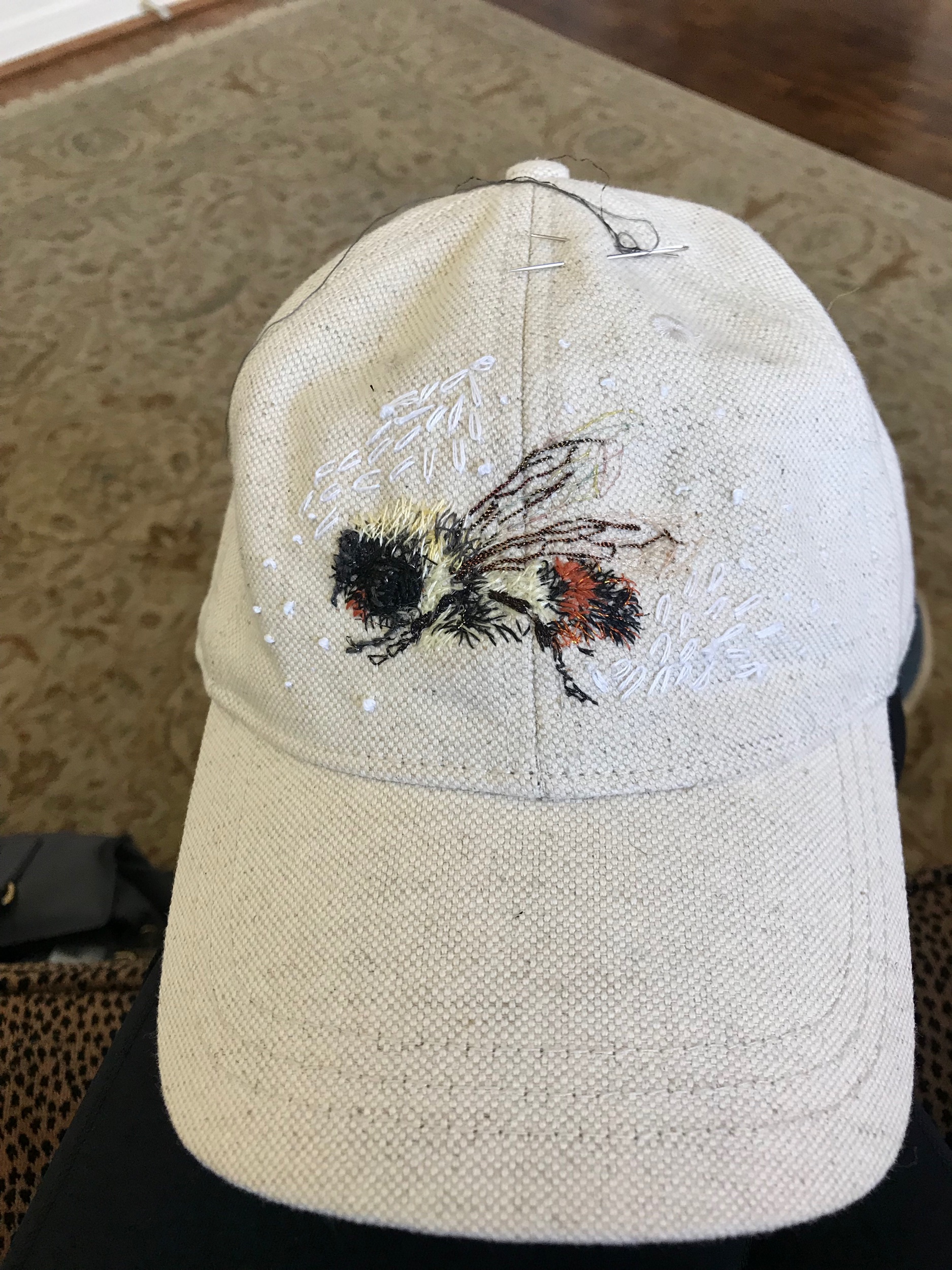
Is destitching a word?
Nine things that can help #savethebees
1. Plant a pollinator garden
2. Pull weeds or better yet go native, as many weeds and wild flowers are food for bees.
3. Do not use herbicides to kill weeds. Bees live in the ground and neonicotinoids kill microflora in bee guts, making them less tolerant to bee disease.
4. Find natural ways to combat mosquitos. Many urban beekeepers tell me their hives suffer when city mosquito trucks spray and when their neighbors install mosquito misting systems.
5. Become an urban beekeeper.
6. Buy local honey that is not mixed with corn syrup.
7. Provide a water source.
8. Buy local organic food.
9. Spread the word.
Sewing 🐝 #4
This piece is a conversation starter. The bee on this cap is the Bombus Affinis or commonly known as the Rusty Patch bumble bee. This bee was listed on the endangered species list in 2017. It is the first U.S. bee to be listed.
Finished piece.
No planing just winging it. It explains why that antenna is so BIG
This fuzzy little body needs some wings.
Detail of wing and legs
I need to delete the giant antennae.
Copy added
Every bee needs some pollen in the air.
After I finished and stood back I was not pleased. It was too busy, too much. Today I took out Impact. It feels better, I will live with it and maybe take out Endangered and the pollen and plant pieces.
Is destitching a word?
Nine things that can help #savethebees
1. Plant a pollinator garden
2. Pull weeds or better yet go native, as many weeds and wild flowers are food for bees.
3. Do not use herbicides to kill weeds. Bees live in the ground and neonicotinoids kill microflora in bee guts, making them less tolerant to bee disease.
4. Find natural ways to combat mosquitos. Many urban beekeepers tell me their hives suffer when city mosquito trucks spray and when their neighbors install mosquito misting systems.
5. Become an urban beekeeper.
6. Buy local honey that is not mixed with corn syrup.
7. Provide a water source.
8. Buy local organic food.
9. Spread the word.
Bee technique experiment
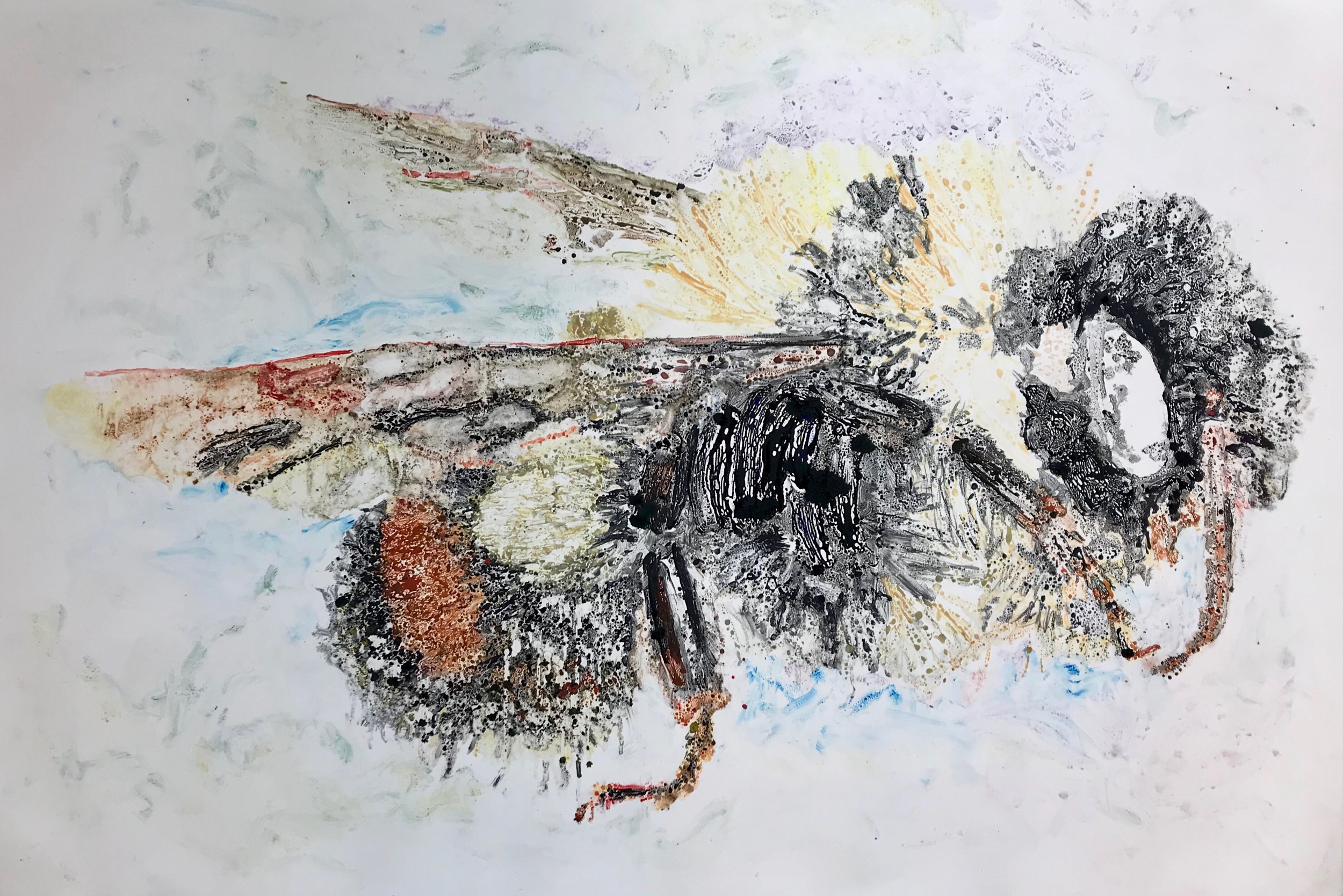
Bombus Affinis - listed on the Endangered list 2017
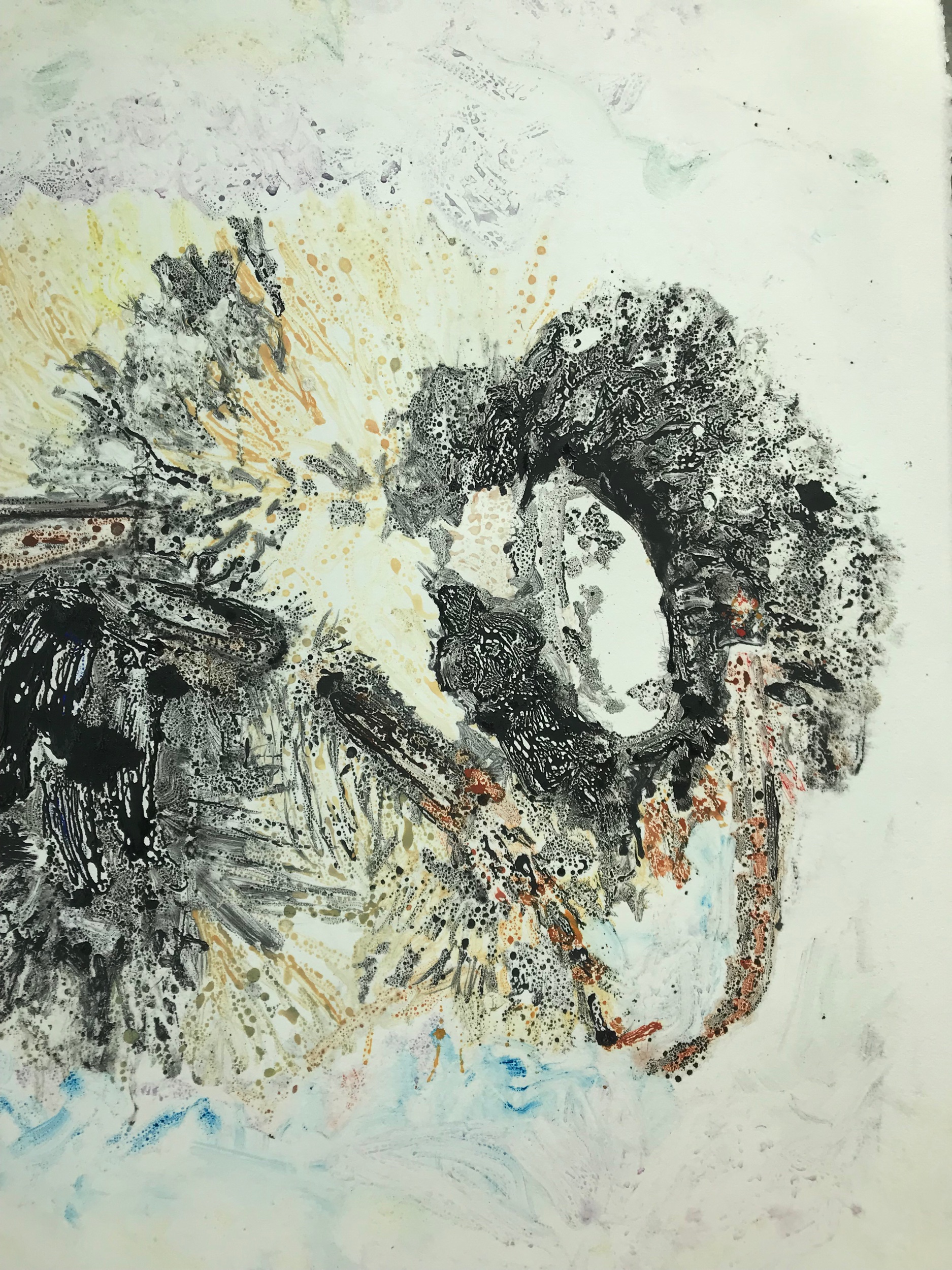
Detail of head with a big white eye, thorax antenna and leg
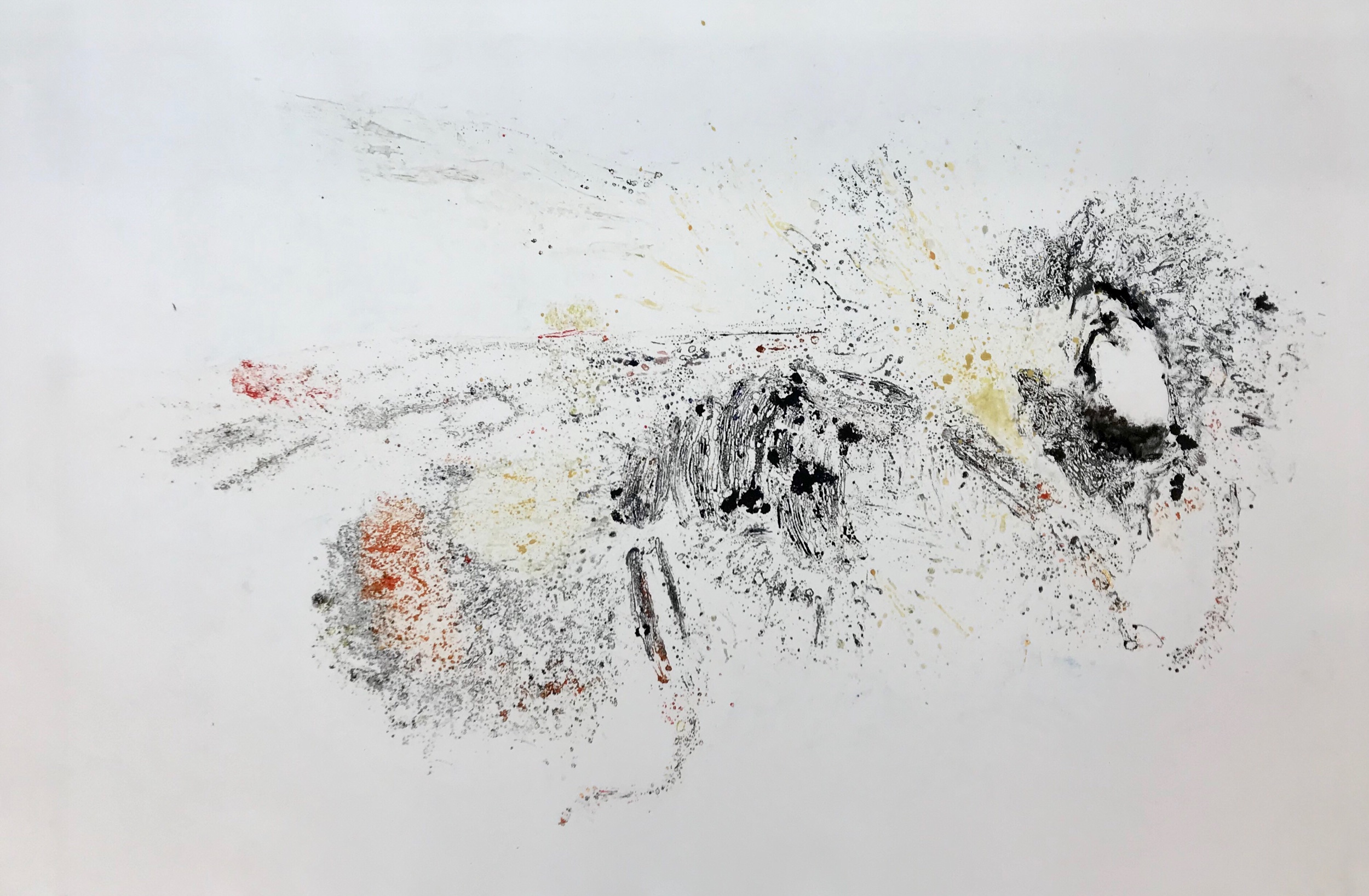
Th ghost of Bombus Affinis
One is to heavy and ones too light. That is how they look to me wet. It is too soon to judge.