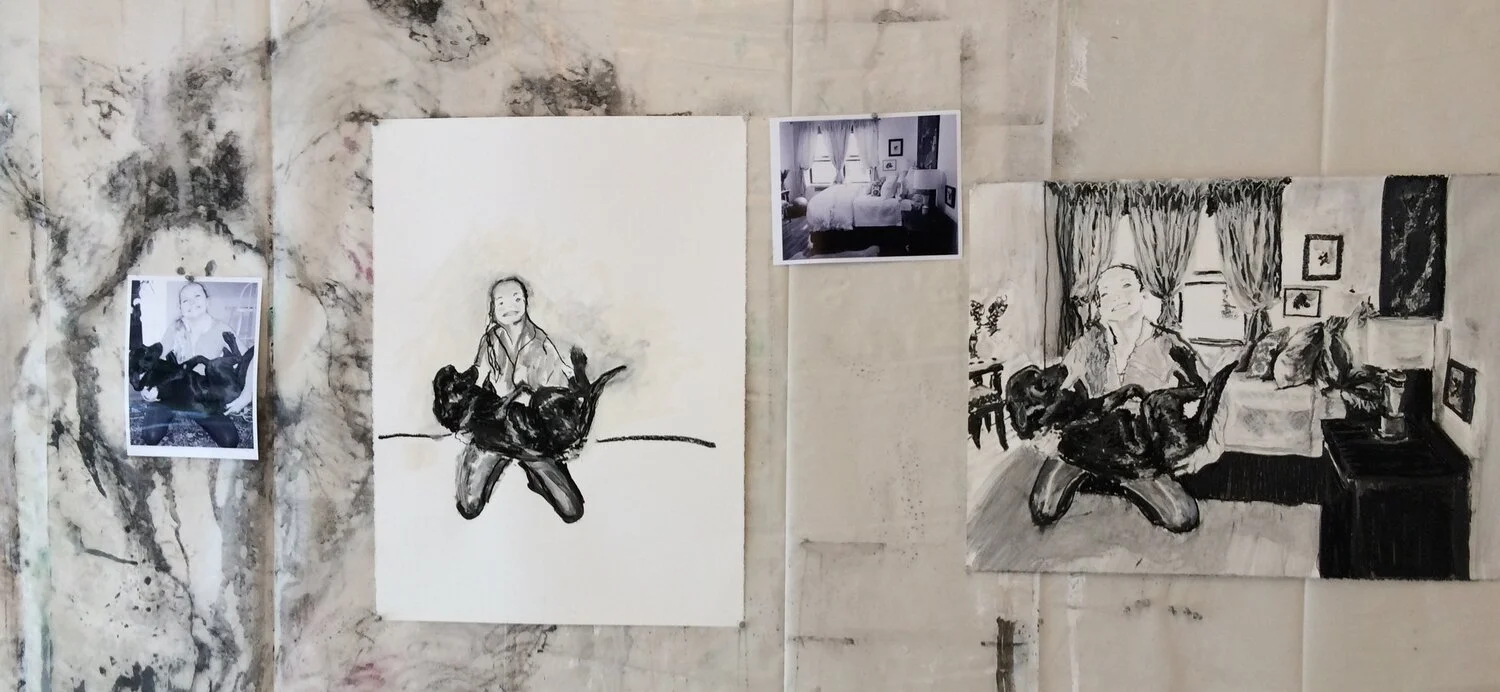
Giving the Bird- blowing the whistle
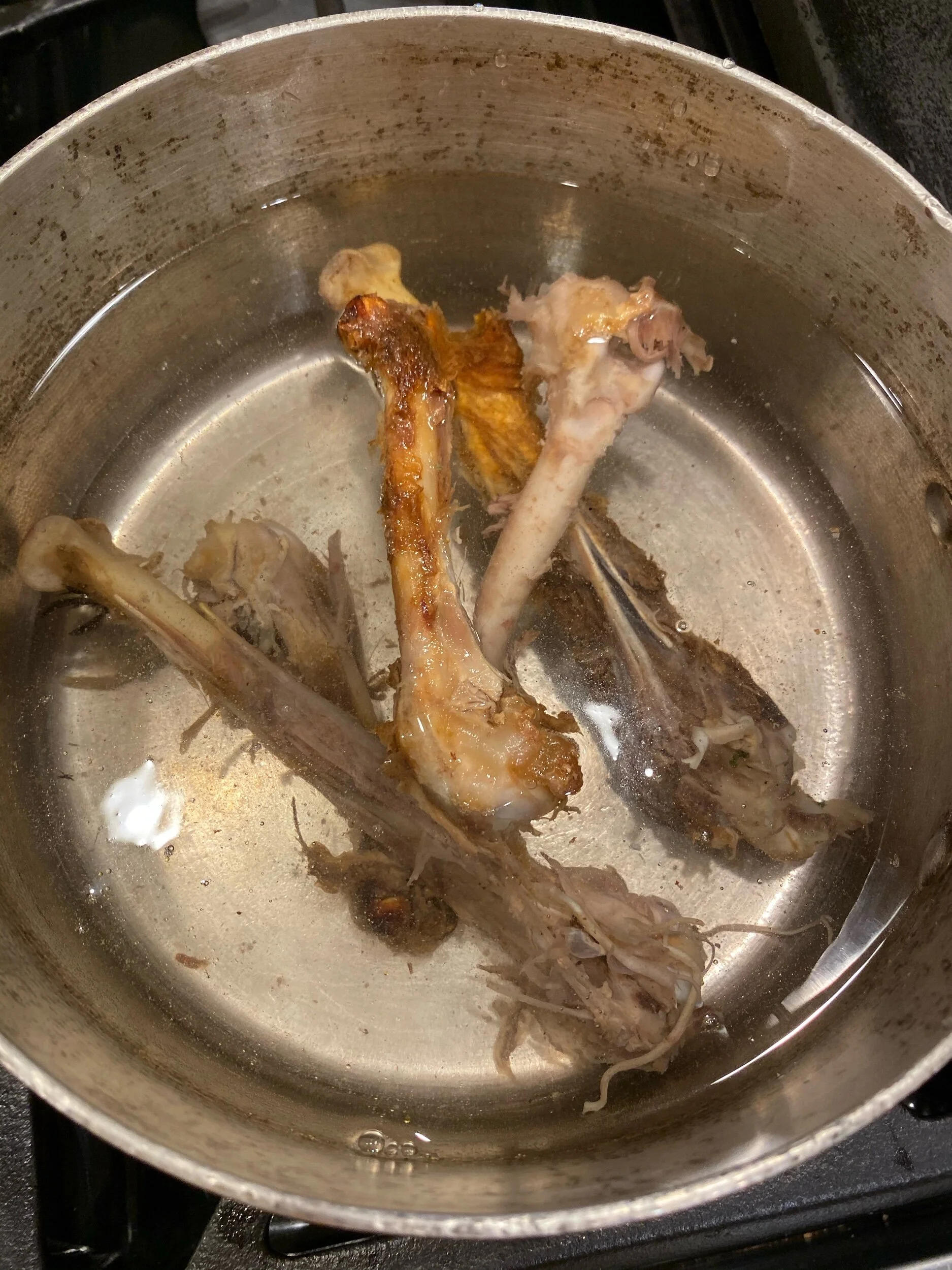
Heritage turkey legs in a pot to boil off all the meat.
Azalea Trail and wild native bees
This summer it came to my attention that the River oaks Garden Club was having a luncheon with a bee theme. I quickly reached out to their luncheon Chair and she connected me to their environmental chairman. They came to my studio and we talked about the 4,000 wild bees species and how most people only know about honey bees.
Long story short I was invited to talk about the bees at their annual Azalea trail fundraiser. They were Slammed with people. I spoke none stop on Sunday from 11-5.
In addition the environmental chairs decided to work the native bee (the endangered bees) story into their both at their garden show this spring. It is organizations and ladies like these that can save the wild bees.
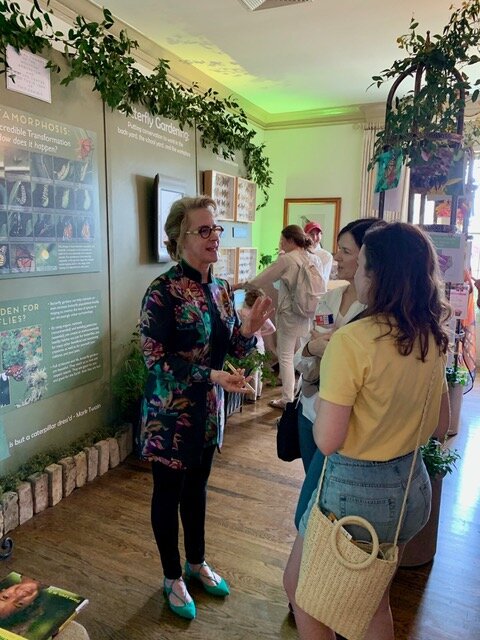
Image courtesy of Janna Webber
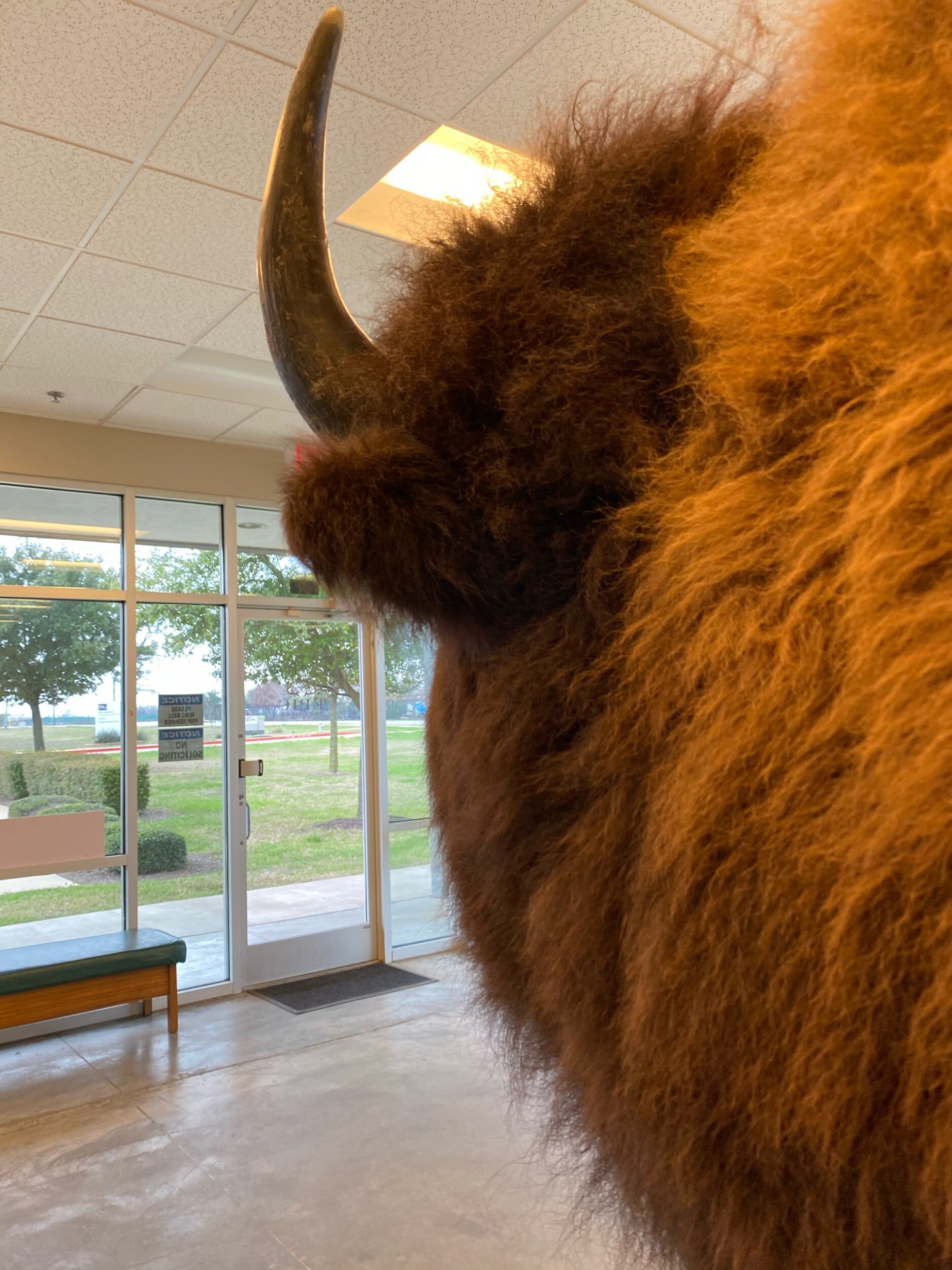
Bob the bison
Have you ever asked a Houstonian- “ why do you think Buffalo Bayou, is named Buffalo Bayou?” The aswer I get 100% of the time is - I don’t know.............. 😞 Right after they mumble “I don’t know?” you can hear the sound of a quiet cracking as my heart breaks. It is heart breaking that living in urban environments we have become disconnected to animals and nature. Thanks to EPIC bar last week I took another step in the direction that will reconnect urban populations to one of the most important natural processes on the planet. I would also like to thank Bob the Bison.


A landscape

Lumps

Vote
SUFFRAGE - March 3, 1913
Riding aside historically represents oppression of women's rights. Suffragette Inez Milholland rode astride in the 1913 ride/march on Washington. Inez was not only protesting for the right to vote, own property, to sue, but to also to ride astride.
This is my first piece of work that addresses the women’s movement. It first resonated with me purely from an aesthetic point of view, as I knew the aged leather would reproduce beautifully in bronze. What I did not realize, however, was that this sculpture would represent more than a stereotypical Texas western symbol. In my women’s movement body of art it represents the strength of Victorian women and the beginning of the women’s movement
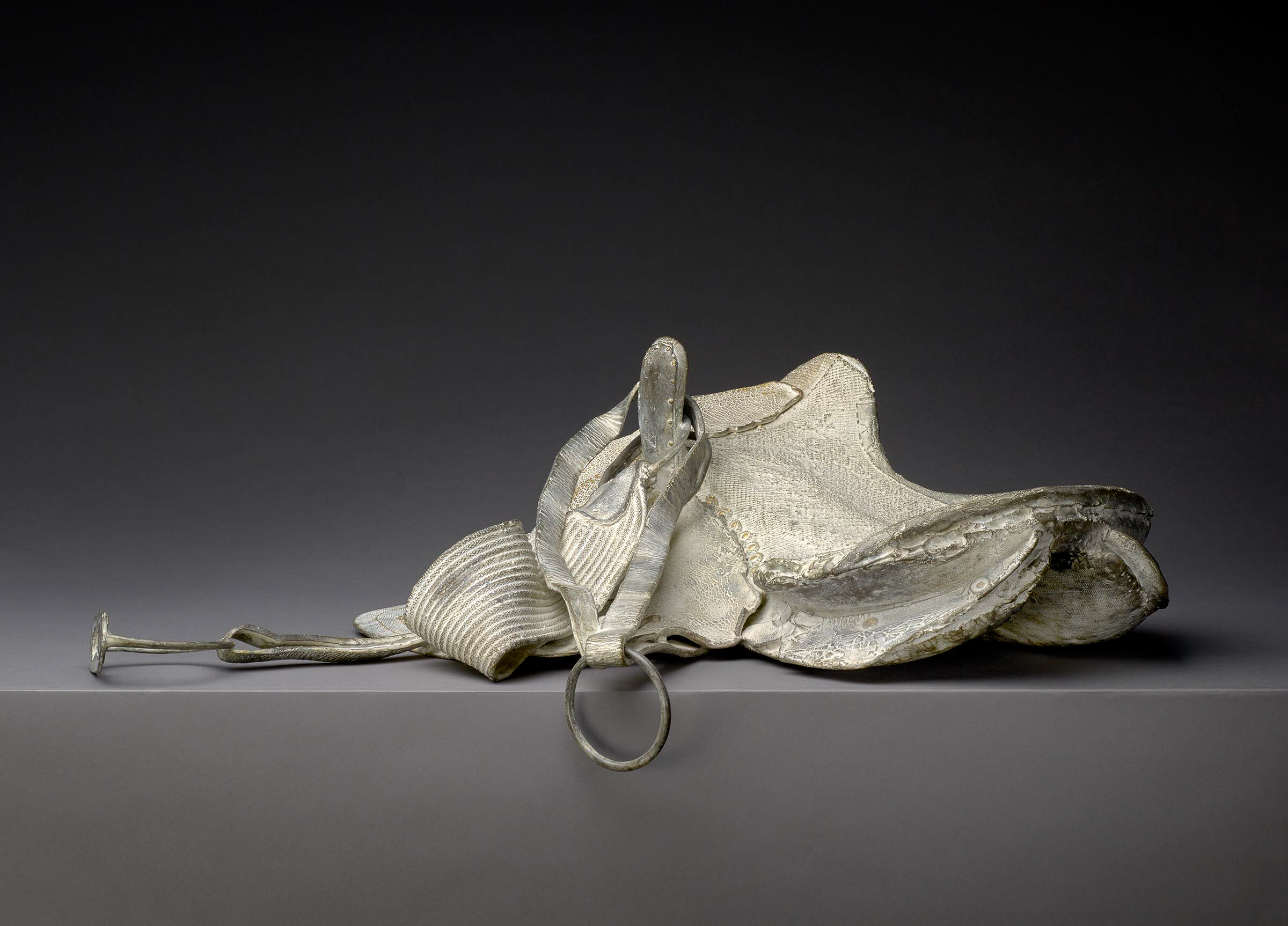
MARCH 3, 1913 - Woman Suffrage Procession -Inez Milholland
10" X 20" X 30" bronze and distressed gold leaf 2014
photo by Will Michels
Family fossil patinas
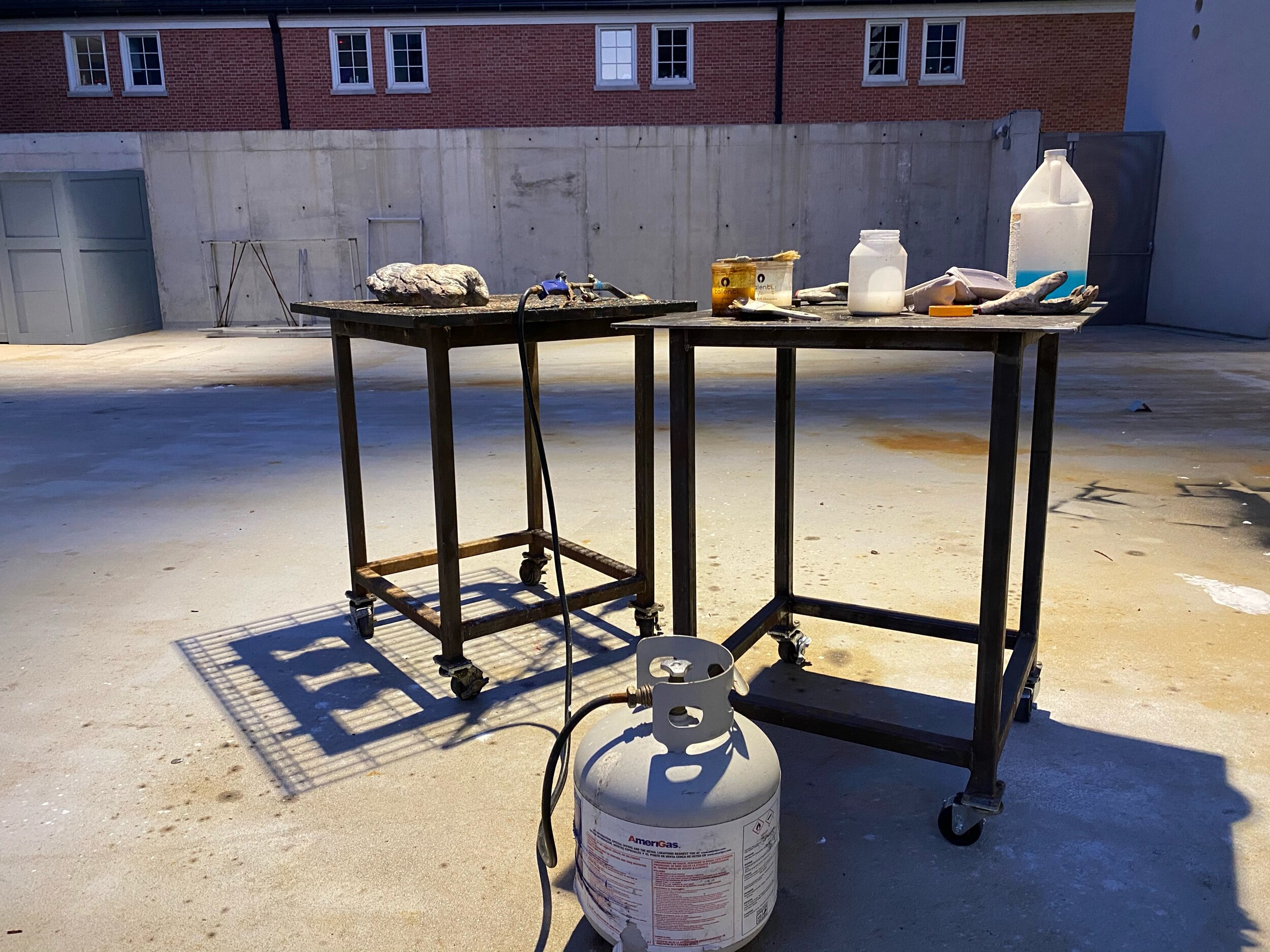
Ready set torch

One for Griffin and Alex, one for Sage and Cameron one to $$$$

Each one us individually signed

I applied a darker patina on the chipped edge.


60 calves
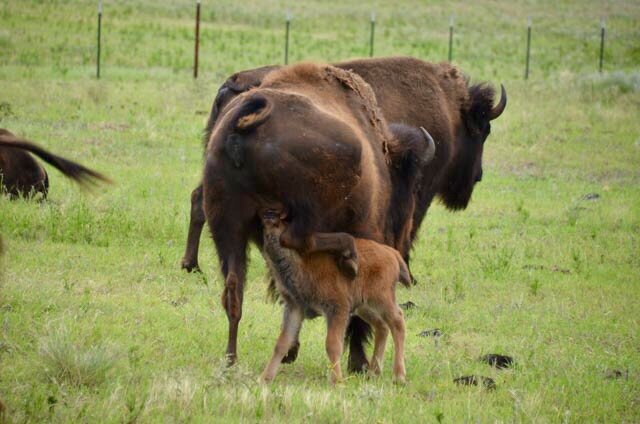
A big shout out to @roamranch They are expecting 60 calves this coming spring. This past summer during my first visit to Roam I took this photo of the momma cow awkwardly nursing her bison calf. Watching the herd with the calves was a day I will always cherish. I have never shared this touching photo, I was saving it for something extraordinary. 60 cows with calves is pretty special. I could not be happier for Katy, Taylor, Julia, and Cody. I also want to thank them for sharing bison bob the @epicbar bison with me on Tuesday. Getting close up and learning about bison and their impact in regenerating overgrazed prairie has been a long-long time dream/goal of mine. Thanks to these good people and land stewards at Roam Ranch, things are falling in place to create a new body of art that looks at regeneration agriculture. #environmentalart #bison #bioart #gass #calves #sequestercarbon #mothers #ilovebison
Falling through the bee looking glass #1
In the past years, blogging about my art practice was something I did every day. It is how I document my work. Then I started focusing on bees. At first, it was bees and the weed killer Glyphosphate.
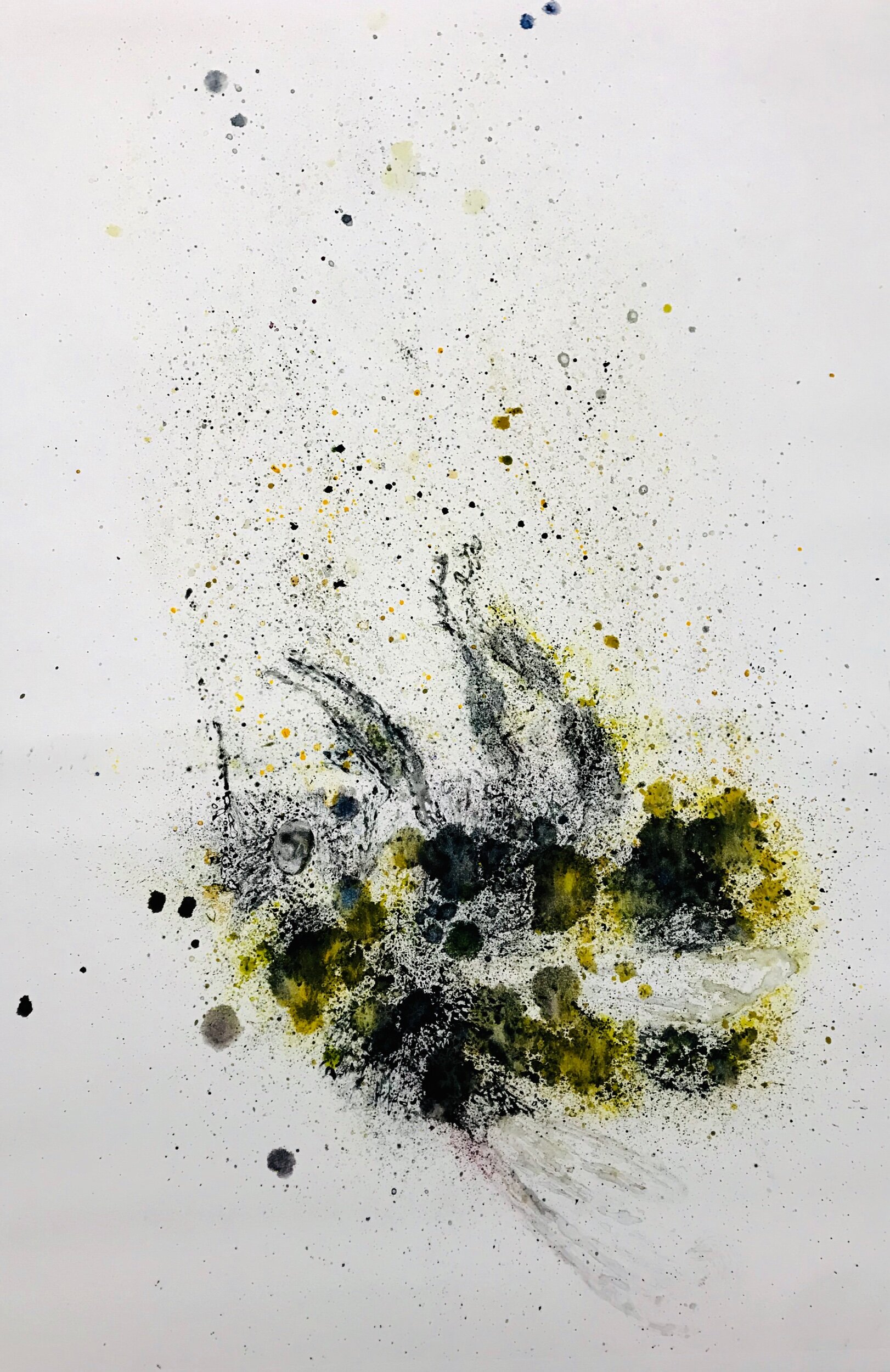

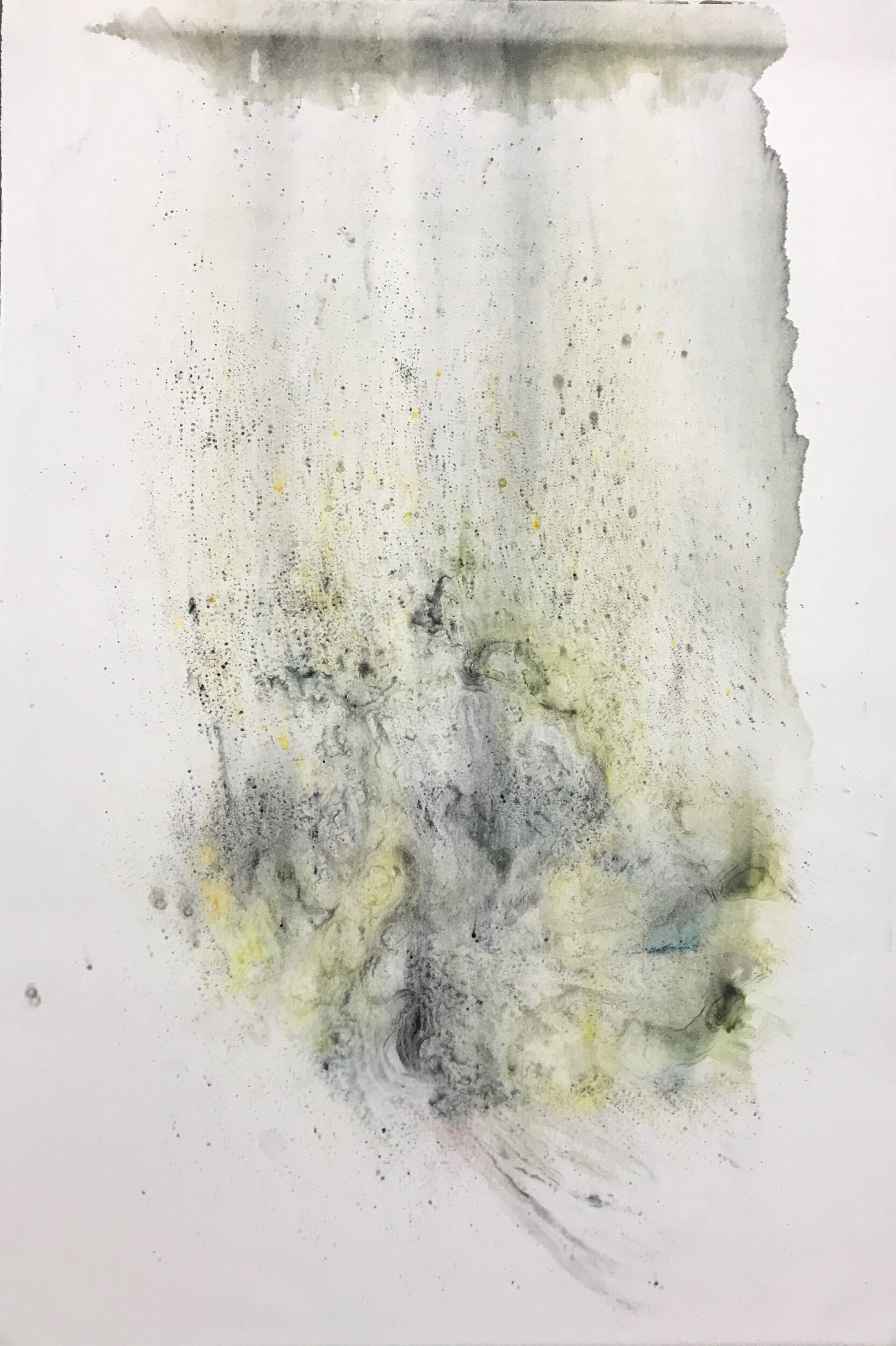
The above pieces we're done in response to learning that Glyphosphate does not kill bees but impacts their immune system. With compromised immune systems bees subcome to disease. Glyphosphate is also now well known for causing cancer. I then made a five flip lenticular from these three images.
Influences- fungi
How have I not known the magic of fungus. Where will this take me????????
Bee fossils- inspiration
Studying our past is an incredible learning tool. With that in mind, I found the below article about the oldest bee fossil.
https://www.livescience.com/amp/4255-oldest-bee-fossil-creates-buzz.html
https://tmm.utexas.edu/sites/default/files/Amber%20Activity%202019.pdf
Coincidentally I just made a mold of a fossil for personal reasons. Reading this article is inspiring some new ideas that will involve the fossil mold and bees.

Osmia Illinoensis
The flight of a green metallic bee with a hairy belly?
Yes, Osmia Illinoensis, a native leafcutter bee is metallic green (my favorite color). This solitary bee’s pollen-carrying vessel is called a scopa. It is the hairy surface of the underside of its abdomen. #bees #nativebees #wildbees #environmentalart #cindeeklementart #watercolor #nature #movement #energy #texasartist #houstonartist #womanartist #abstractart
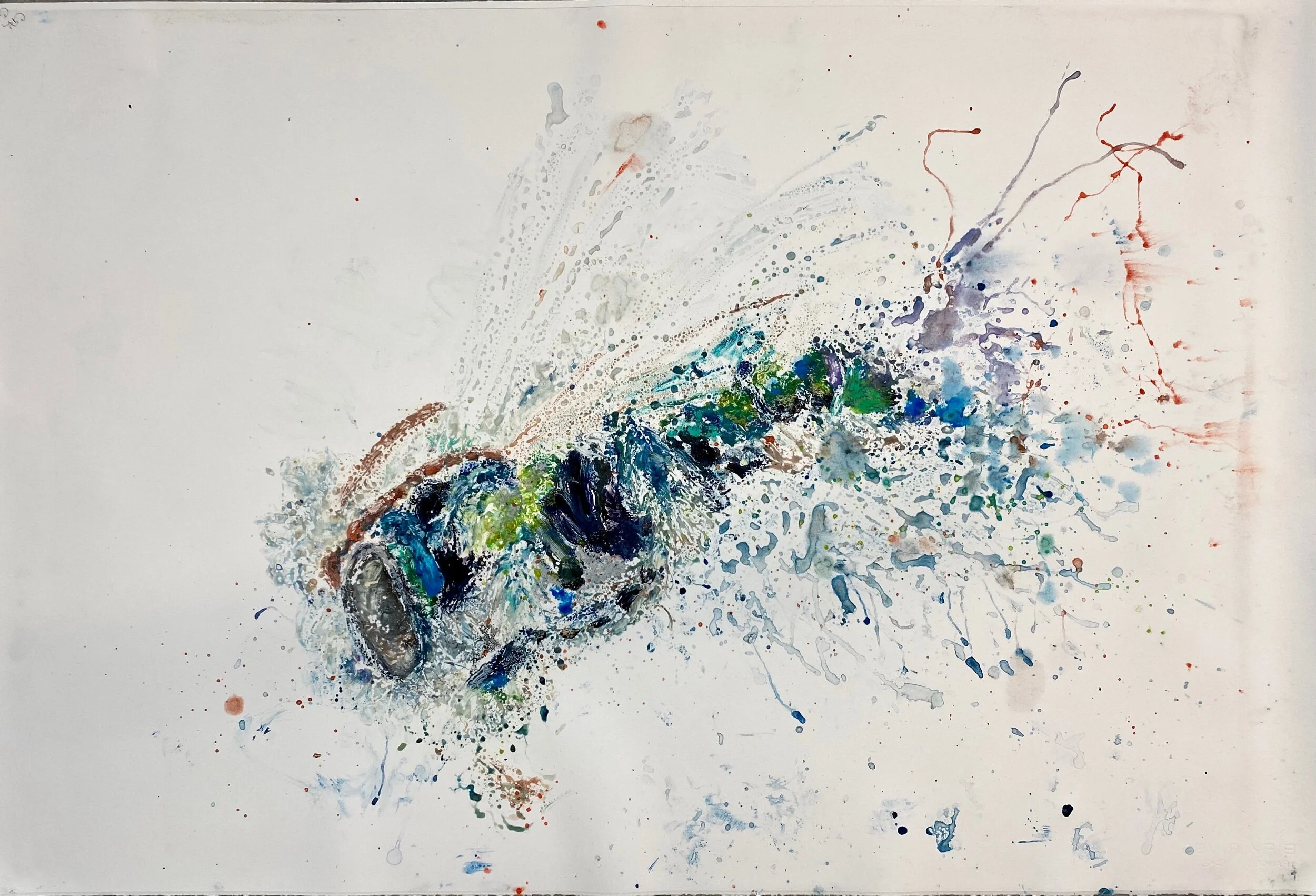
Osmia Illinoensis
Watercolor monotype
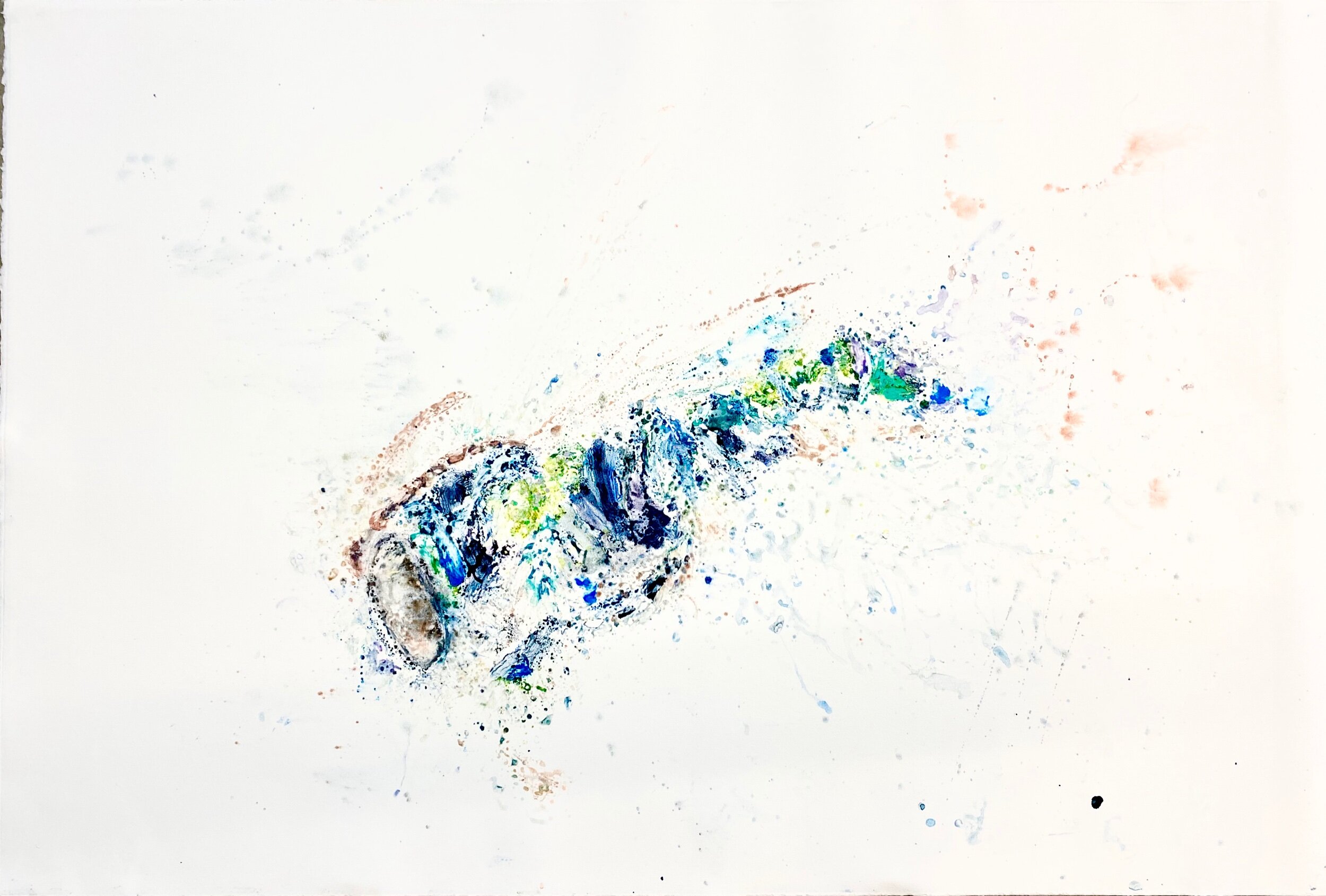
Osmia Illinoensis ghost
Watercolor monotype
Orchids are sexual tricksters
Orchids depend on bees for pollination. Male bees are drawn to the sexy flowers and attempt to mate with them. It is reported that the orchid has evolved to resemble the sexual organs of female bees. They accidentally collect pollen on their bodies, which fertilizes the next orchid they visit. ... Orchids that offer nectar or mimic food can attract a wide variety of food-seeking pollinators -- bees, wasps, flies, ants and so on……
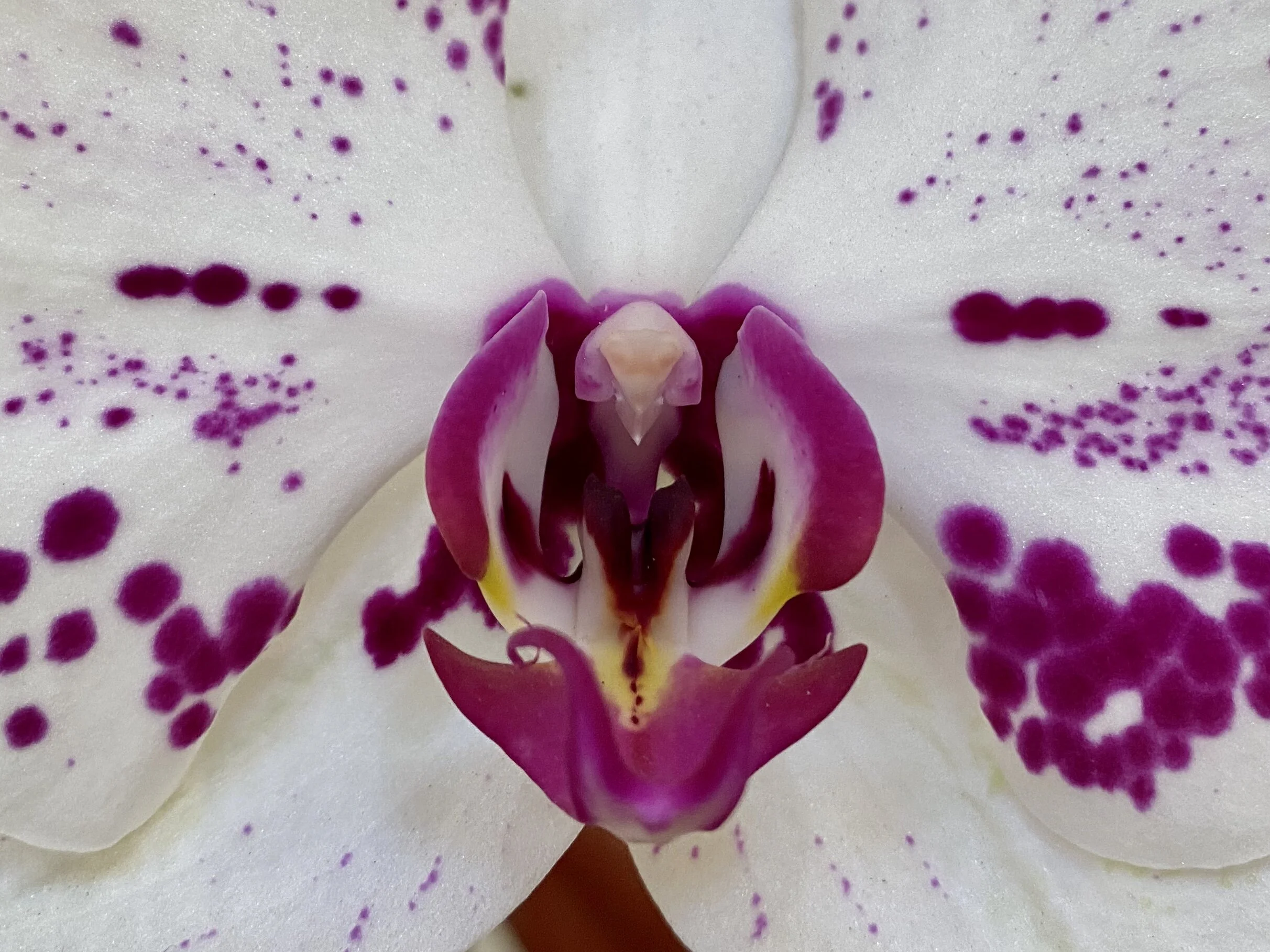
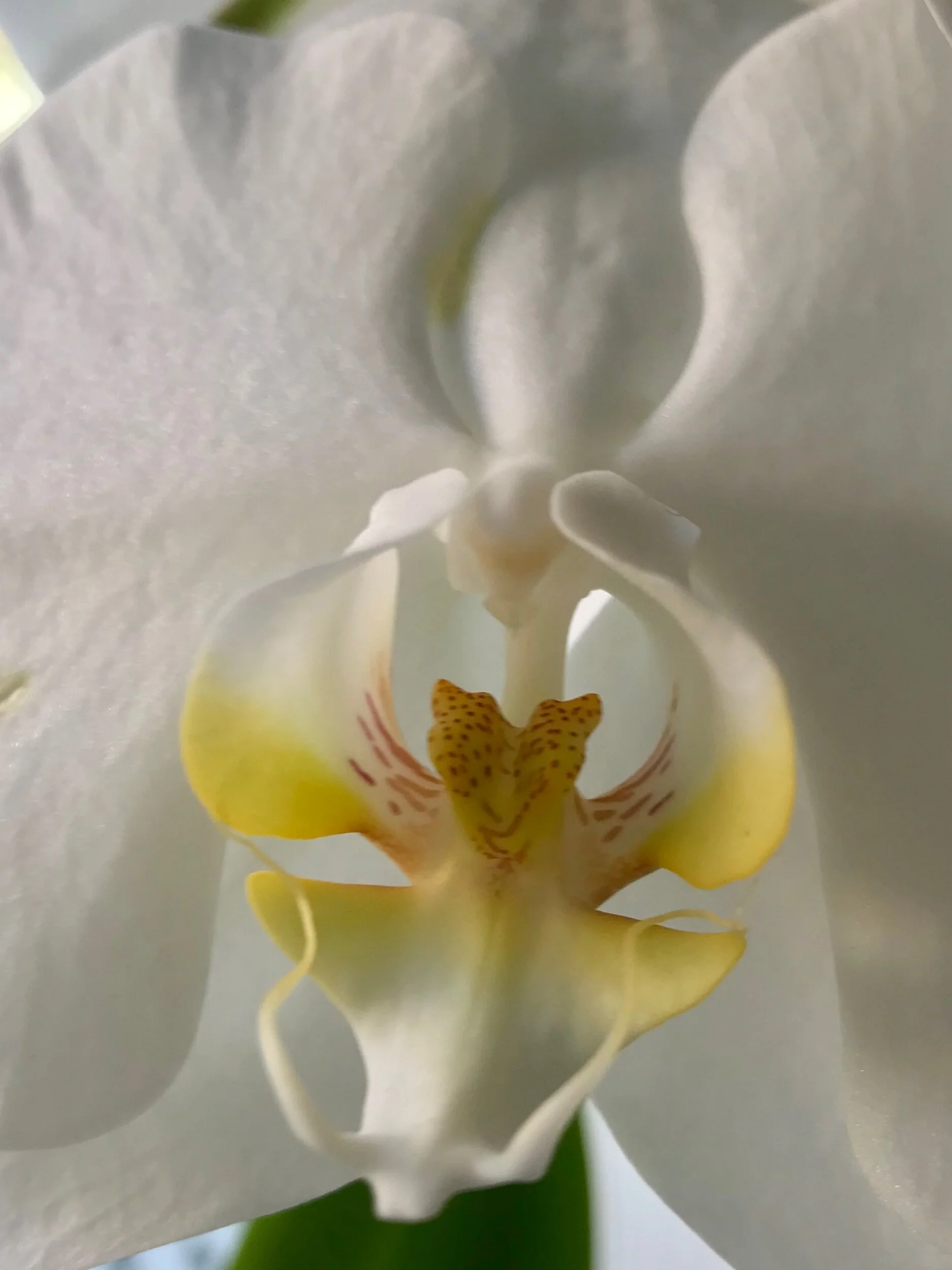
Outta Space
Yeah! Molly Glentzer for writing such a beautifully written article about “Outta Space” in the Houston Chronicle.
Osmia Texana - the berry bee
Osmia Texana - The Berry Bee This frantic bee is about as big as a housefly. If you look at one with a macro lens you can see they are a beautiful metallic blue. The underside of their abdomen is a fuzzy pollen mop. These pollen magnets are the perfect shape to collect pollen from blueberries, raspberries, strawberries, melons, and veggies, to name a few. They are not picky pollinators.
A single Texana Bee frantically visits 20,000+ blossoms per day, whereas a honey bee visits 50-1000. They are not- aggressive and non-colonizing, solitary bees.
They emerge in the spring and have an average pollinating season of 6-8 weeks, after which they die. Their offspring will hibernate over the winter and emerge the following spring.
They are found on both the central and North American continent.
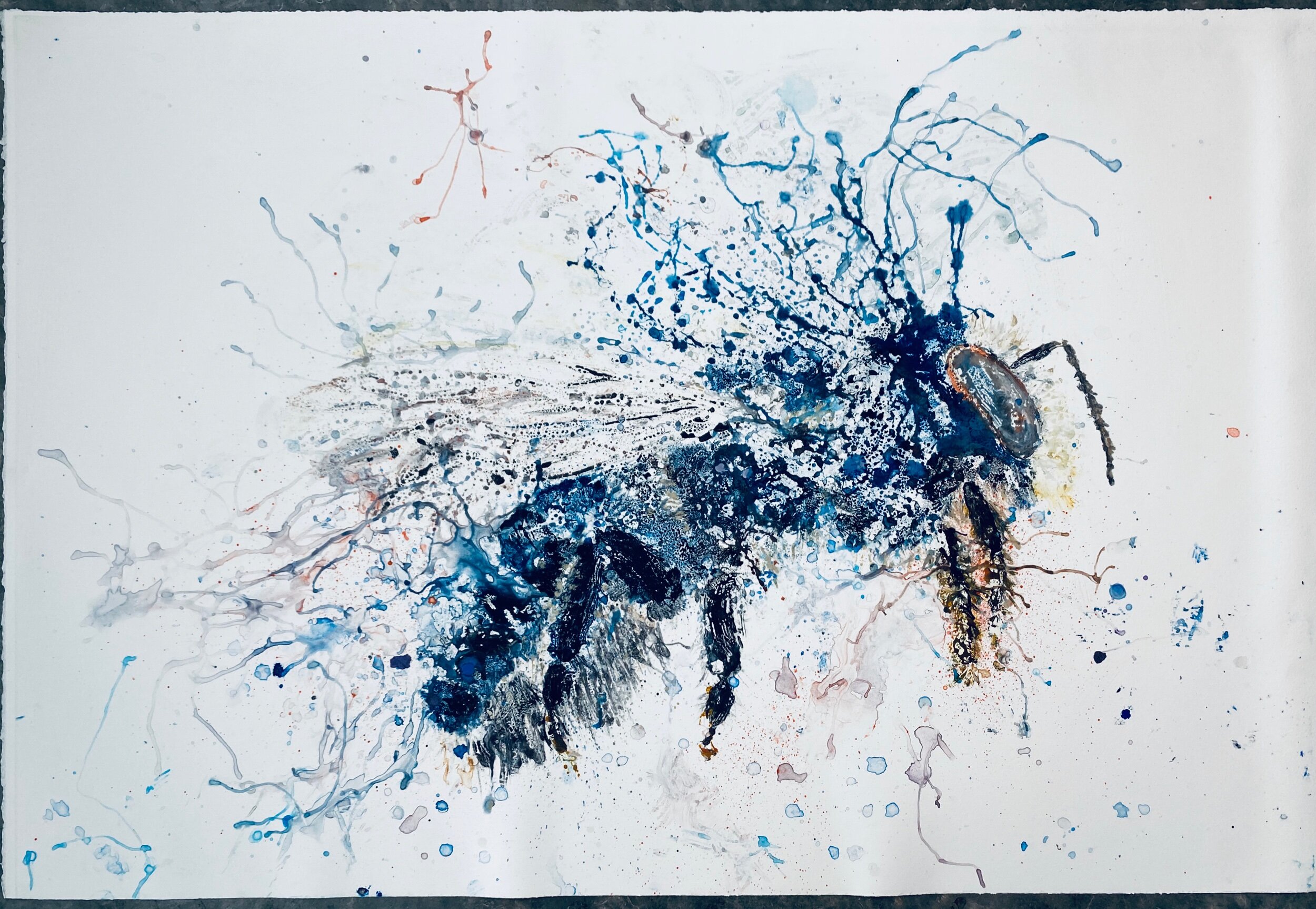
Watercolor monotype 44” X 30.”
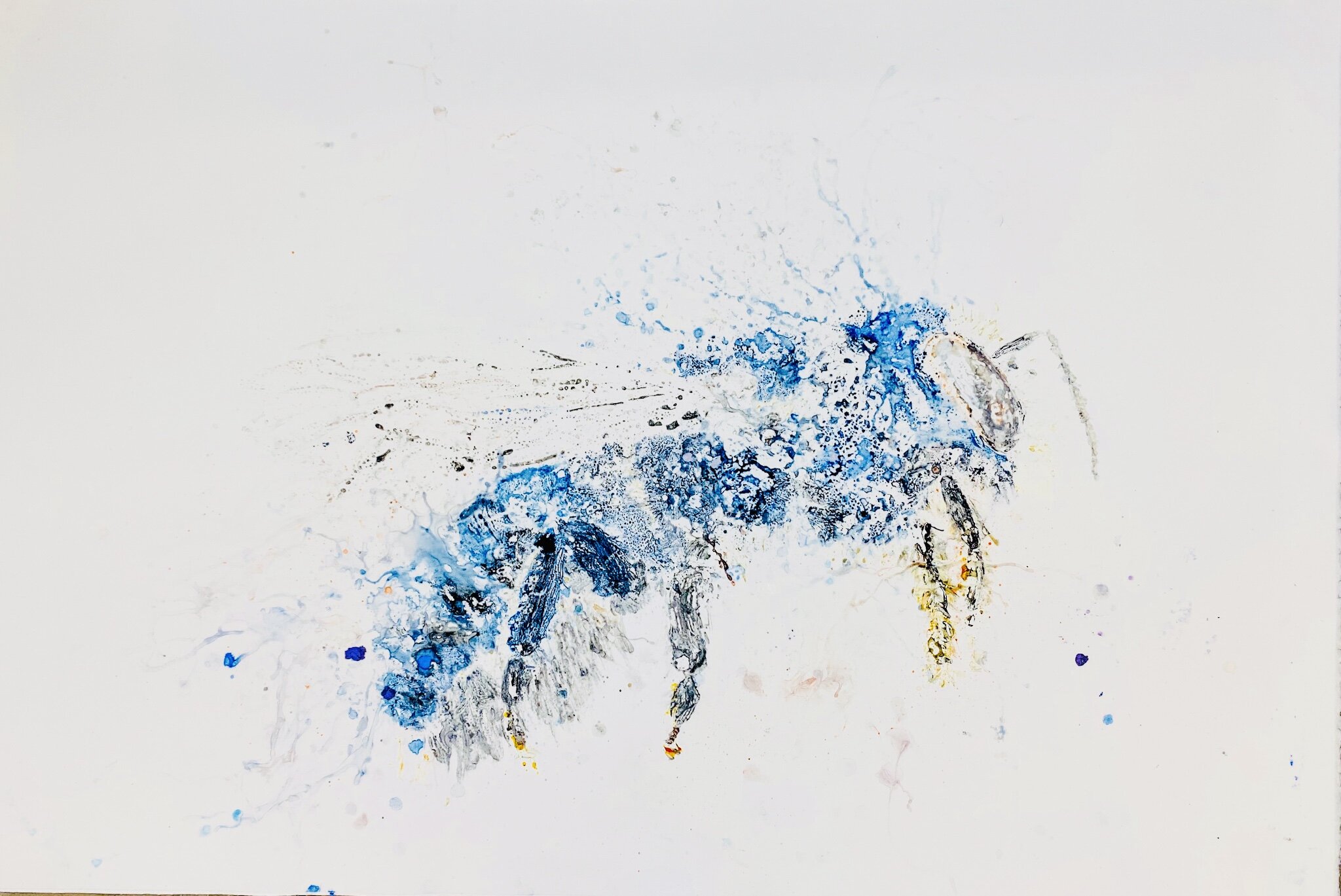
The ghost
Fruit a True Story
Fruit: a true story.
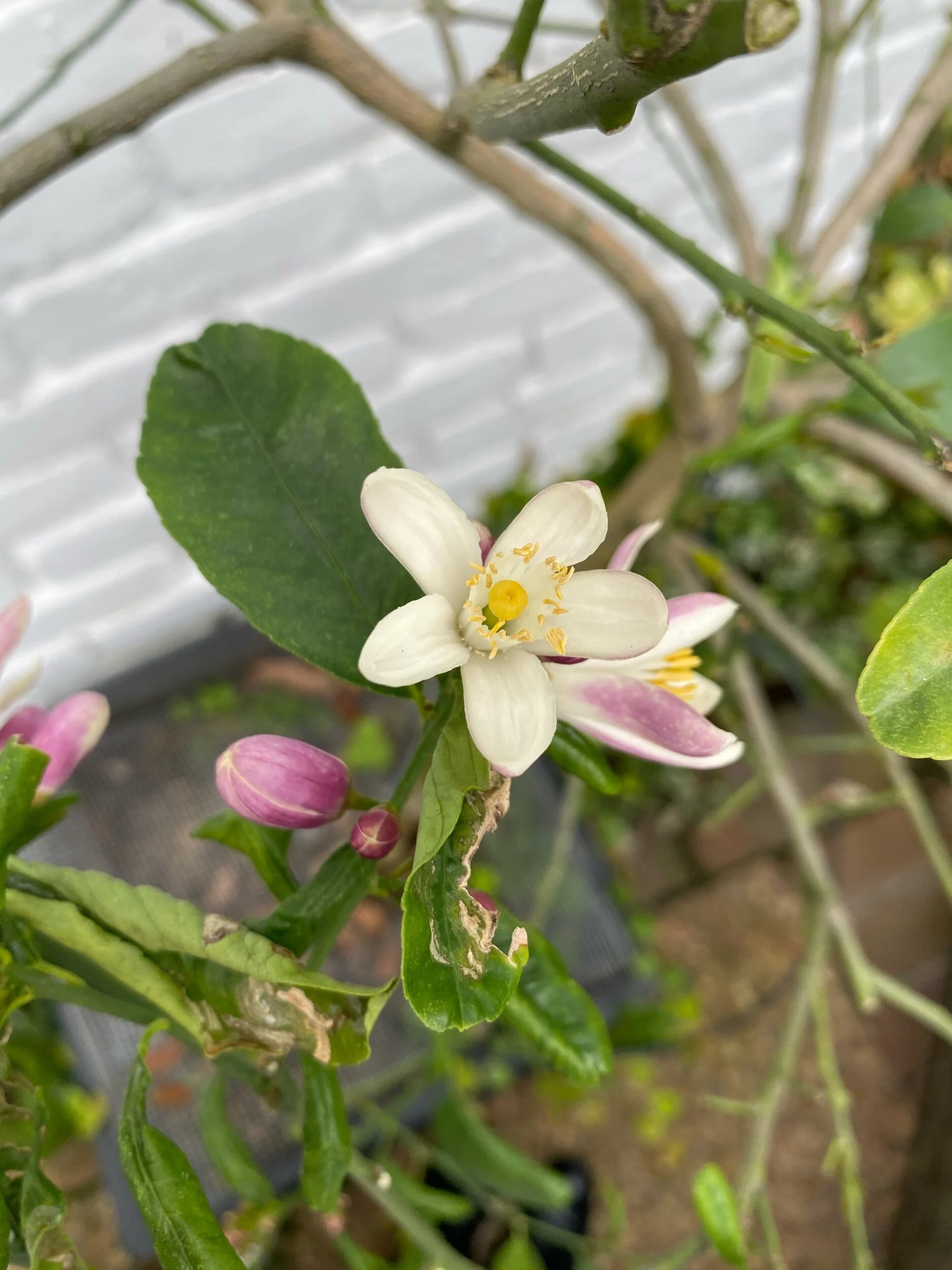
Once upon a time, early in the years seasons a petite pink bud sprouted from a knot on a crooked lemon tree branch. As the season warmed the bud blossomed into a pale flower. It’s petals delicately folded open to expose its tiny green cup full of tiny seeds. On a warm sunny morning, a fluffy wild bee flitted along and pushed its furry little head down into the flower to get some nectar. It’s tiny hairs became coated in the blooms golden pollen dust. The tiny bee went from bloom to bloom, searching for nectar, shaking off pollen from one flower cup into the next flower cup. The golden dust lightly covered the tiny seeds and they began to grow. Soon, the pink and white flower petals wilted and fell off the branch and covered the soil beneath the tree in a shower of petals, leaving a tiny closed yellow cup that looked like a small yellow knob. This knob was a new baby lemon. It grew and grew until it was a large, yellow lemon with a flower in its heart. I don’t have an apple tree so I adapted the story to my myer lemon tree. It is one of my favorites — There are 4,000 species of wild bees in the US. #savethebees
Why I do what I do
Bison and Plant Diversity
Historically Bison have played an essential roll in contributing to plant diversity across the continent. The texture of their jungly, chocolate coats are magnets for small seeds, pods, and grains. As the herds graze, a variety of seeds become implanted on the bisons gnarly coats. These seeds ride the native ruminants bareback from one grazing site to the next. They fall off the bison in random fields into the divots created by the bison’s spade-shaped hoofs. Planting the migrant seeds, each bison delivers 40lbs of composted grasses, weeds, and native plants in the form of organic waste in the fields every day. This waste acts as a mulch protecting the soil, building soil health, and new life. A life that sprouts leaves and roots that takes in more carbon than the bison create. This is just one of the ways bison and other ruminants help in reversing global warming (when allowed as nature intended). #environmentalart #bioart #bison #ruminants #globalwarming #seeds #carbonsequestering @roamranch #texasart #womanartist #regenerativeart #soilhealth #healthysoil #microflora #connectedtothesoil #environment #soilscience #healthybacteria #humanelyraised #blowingthewhistleonindustrialagriculture #regenerativeart #bioart #soil #sculpture
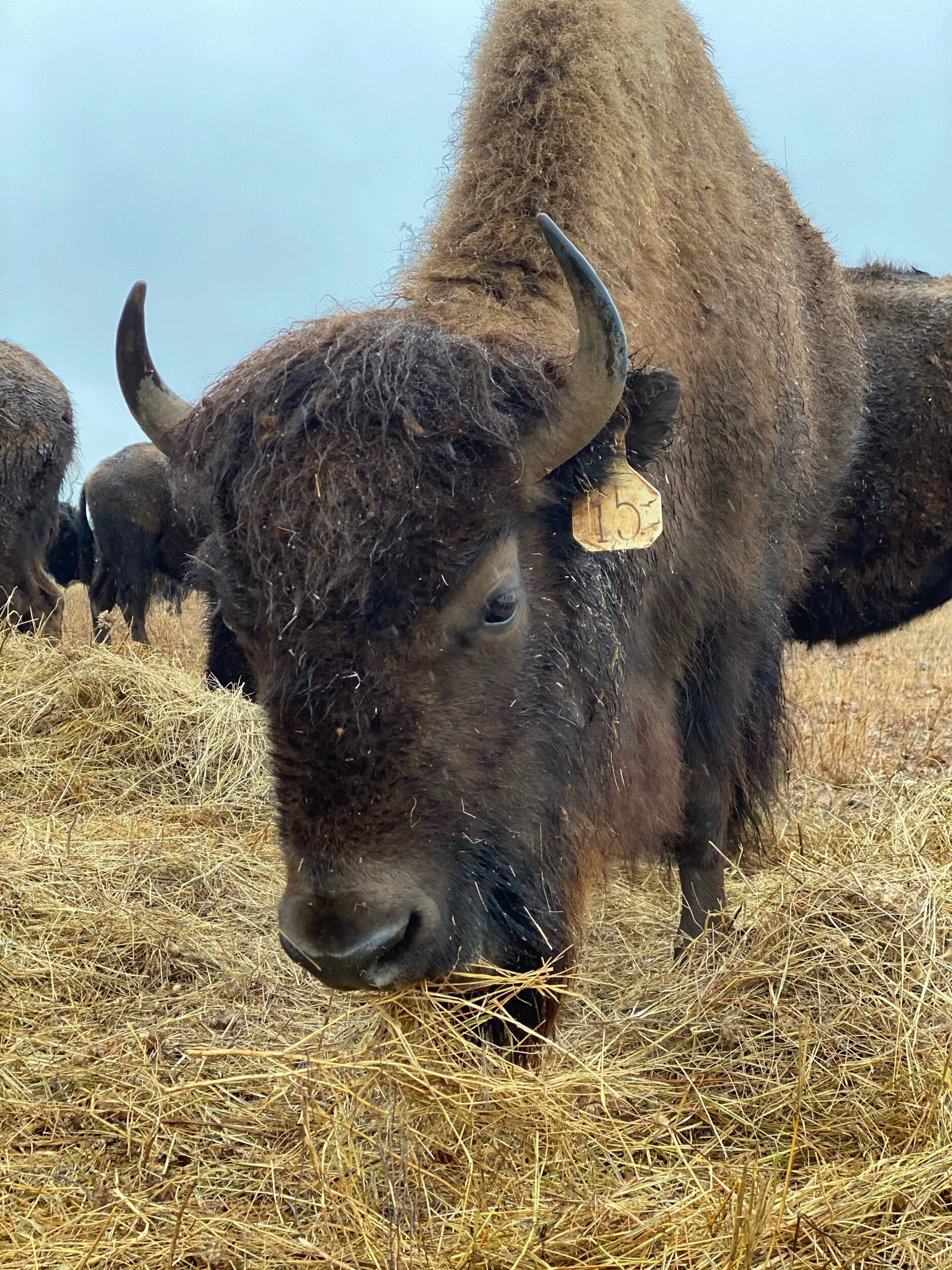
Seeds getting caught in bison coat
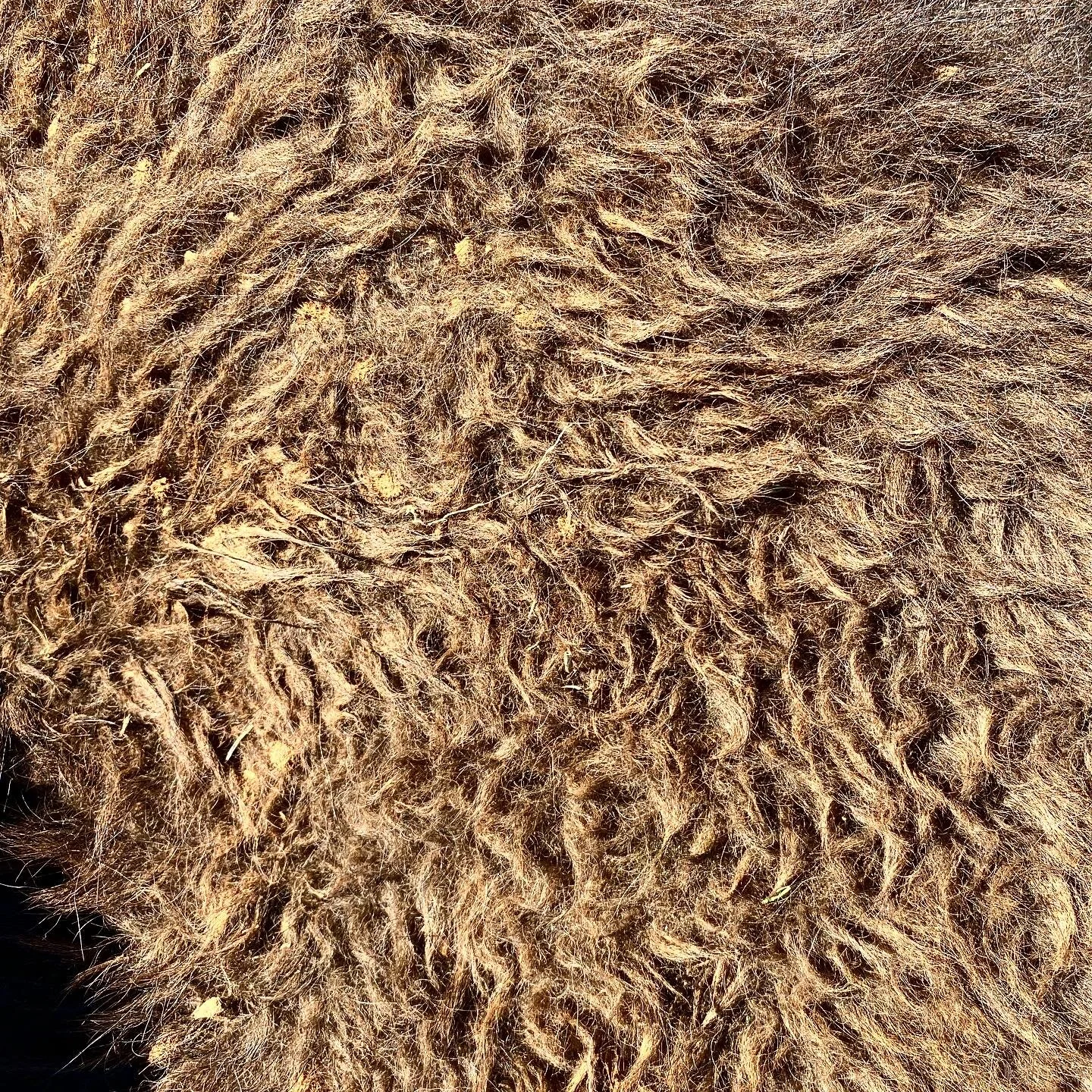
Gnarly bison matted with organic matter
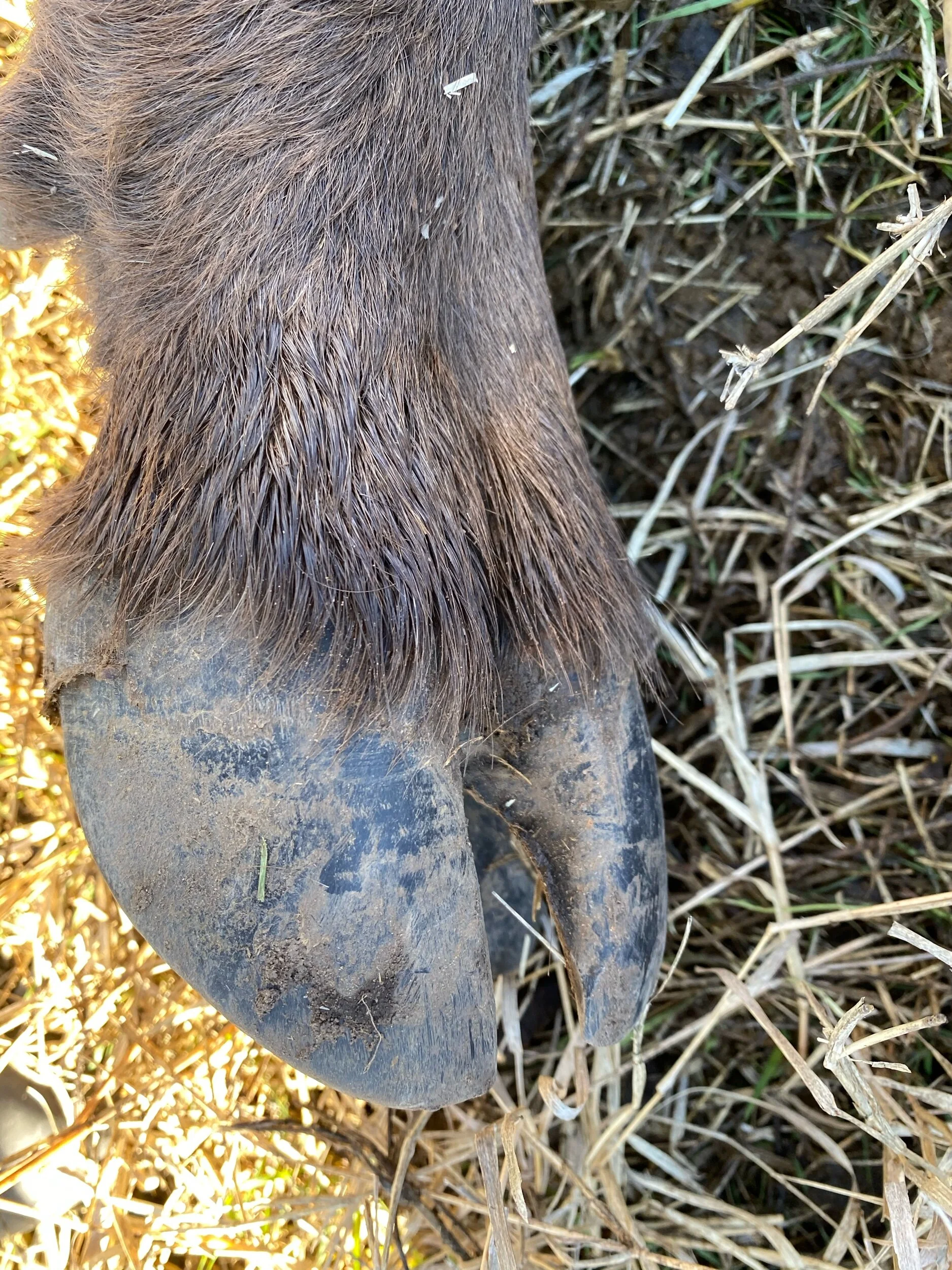
Spade shaped bison hoof
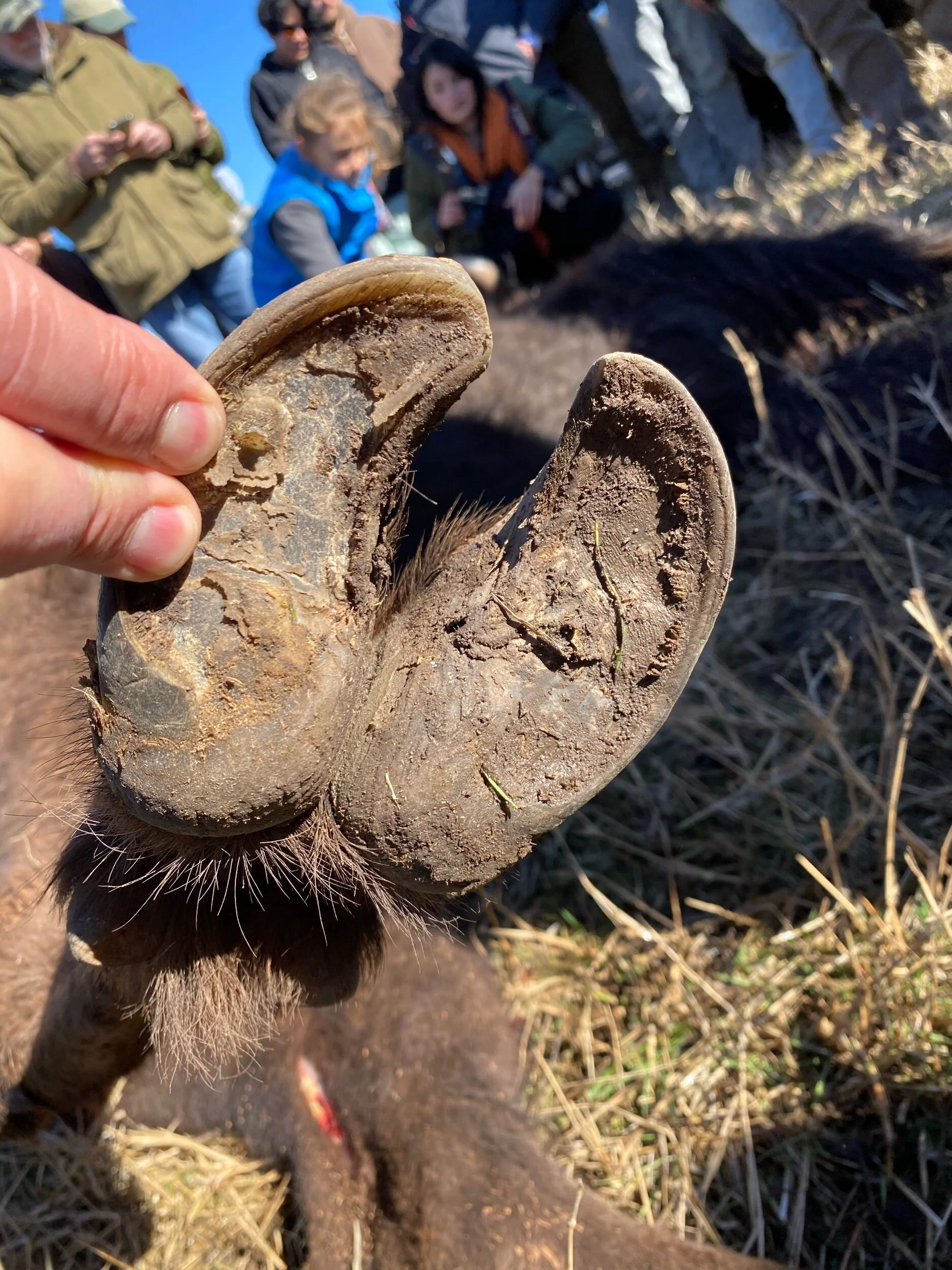
Double pronged and concave
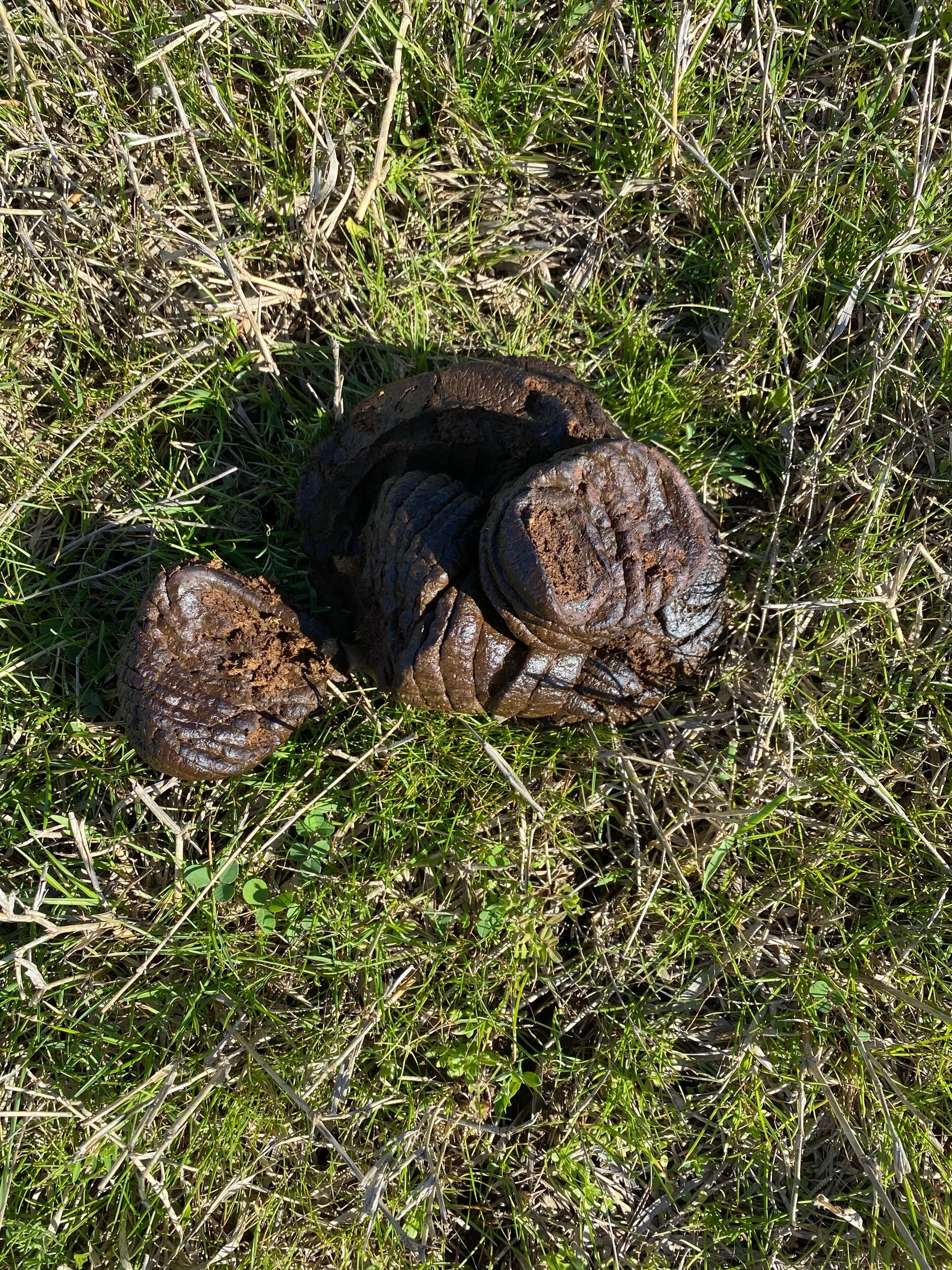
Fresh organic bison waste also known as bison chips. The chips are composted grasses, weeds and plants the bus on forage on.
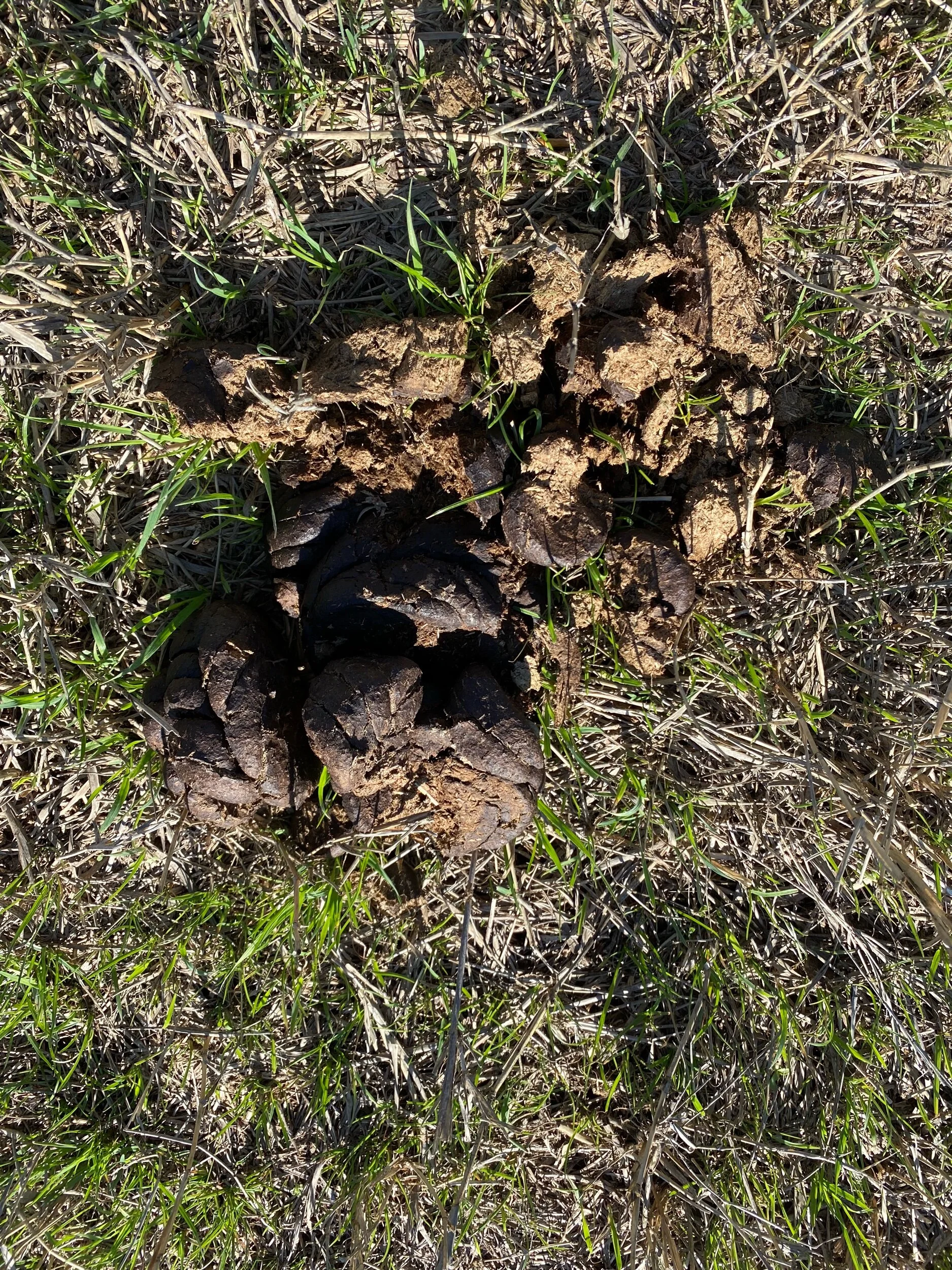
Bison chips- stepped on and worked into the soill by bison herds hooves.
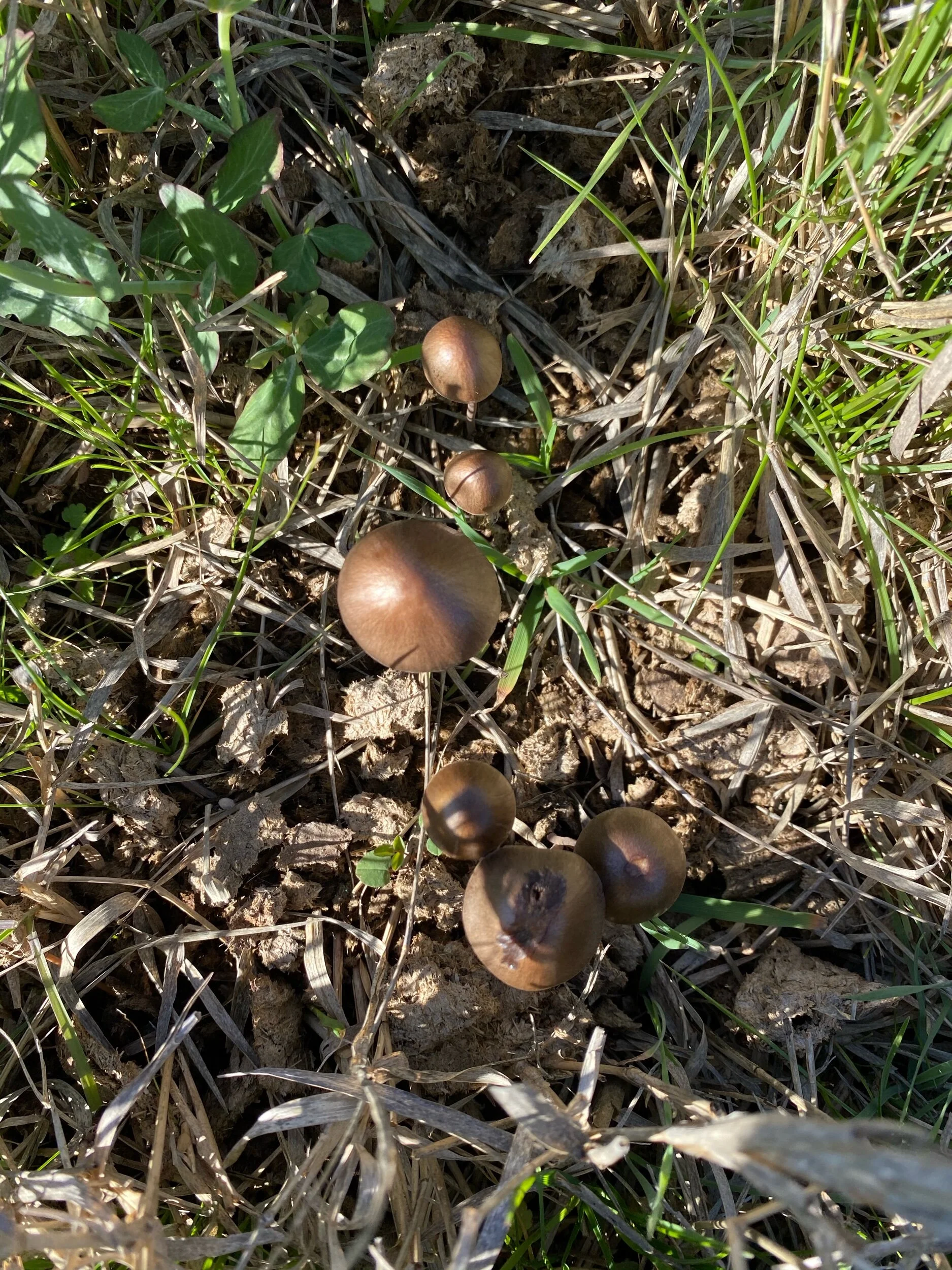
New life is starting to grow in the once overgrazed and nutrient-depleted field.
In addition to creating diversity in plant life the bison chips give nourishment to a a plethora of lifeforms in the soil.
Let it Bee
30” X 44” Lenticular in In the words of Paul Mc Cartney and the Beatles in “Let it Be” I think of Mother Mary as mother nature. Some day I would like to have a children’s choir sing “Let it Be” with my shadow piece,” World of Hum.”. But for now it is Spotify and a lenticular in my studio.
One artist’s plan to save the bee
January 10, 2017 Bombus Affinis, the Rusty patch Bumble bee was listed by the U.S. Fish and Wildlife Service on the endangered species list.
Rural areas are highly impacted by the unanticipated consequences of our industrial agriculture’s dependence on chemicals that weaken bee’s immune systems. Urban bee populations can be more diverse than in rural areas. Researchers are finding in cities such as Chicago, Berlin, Berkley, and Melbourne that have reimagined their parks, neighborhoods, city centers, vacant lots, street medians, and rooftops planted with native flowers, grasses, and fruit, and vegetables support healthy, vibrant wild native bee populations.
There are four thousand native bee species. They pollinate over three hundred times more effectively than honey bees. For example, A single female Leafcutter Bee visits 100,000 plus blossoms per day whereas a honey bee visits 50-1000. Unlike the honey bee, Native bees do not swarm, are not aggressive. Native bees are perfect for urban population centers.
Houston covers 600 square miles of land and has one of the longest growing seasons in the U.S. As it continues to sprawl across Texas, its gardens must increasingly become a refuge for native plants and animals. With 2.3 million people living in the most vital economic, cultural center of the south, we can become the most critical urban native bee habitat in the United States. Fellow Houatonians it is time to reimagine the landscape of our city. -

Bombus Affinis 30”X 44” watercolor monotype
Turkeys combat tick infestation
I was so happy to learn a new defense against ticks. Turkeys eat ticks as do possums, chickens, and guinea fowl. When I was at the Regenerate Texas meeting at Roam Ranch this weekend, I learned that raising fowl is an organic method of controlling ticks. I love all bugs except ticks. This is good news. Several years ago, I found a deer tick on my shoulder and had to take massive antibiotics.

Heritage turkey at Roam Ranch