Last time: who gets to share the water with a whooping crane.
When I left off, nothing in the sketch was connected. Every bird stood alone. It looked bad, and I was anxious. I kept reminding myself that the beauty is how everything is connected. Nothing stands alone.
So I started adding the small things.
Blue crabs first. One crab is in the juvenile's beak. connecting the crab to crane. The others became flower heads, connecting the plant life to the crabs.
A crane can consume up to 80 crabs per day.In the best winters, 80-90% of the whooping crane diet is blue crab.
Oysters. oyster shapes are scattered in with the grasses. The Galveston Bay Foundation says one oyster filters 50 gallons of water a day.
They also need old shells to settle on, so the foundation takes discarded shells from area restaurants every week and returns them to the bay after curing them for months, instead of sending them to a landfill.
The quiet turtle hiding in the grass may be helping hold the marsh together. In the sketch it is tucked beneath native grasses at the whooping crane’s feet, with its reflection below. A Texas diamondback terrapin lives exclusively in brackish water, and researchers have studied them on South Deer Island in Galveston Bay. In Texas, its main prey is plicate horn snails and fiddler crabs, and blue crabs show up in its diet too. It also eats marsh periwinkle snails, and that matters because periwinkles graze live cordgrass. On the East Coast, periwinkle grazing can convert one of the most productive grasslands in the world into a barren mudflat within 8 months, and predators, terrapins among them, keep the snails in check. One Texas thesis calls the terrapin likely a keystone predator.
And I forgot the snails. The periwinkle isn't in the sketch yet. It will go on a blade of grass near the terrapin.
There are a lot of flowing grass lines now. Water matters here. At Aransas, the health and survival of the whooping crane flock is directly related to freshwater inflows and blue crab populations. When fresh water flows into the bays, salinities drop, crabs do well, and fewer cranes die. When the flows dwindle and the water turns too salty, crab numbers fall and crane deaths rise. Up here in Houston, much of our rain runs off paved land into gutters and bayous and bypasses the wetlands. Vertical and horizontal lines run through the whole piece, the way air and water move through a diverse landscape.
Here is the sketch at this stage.
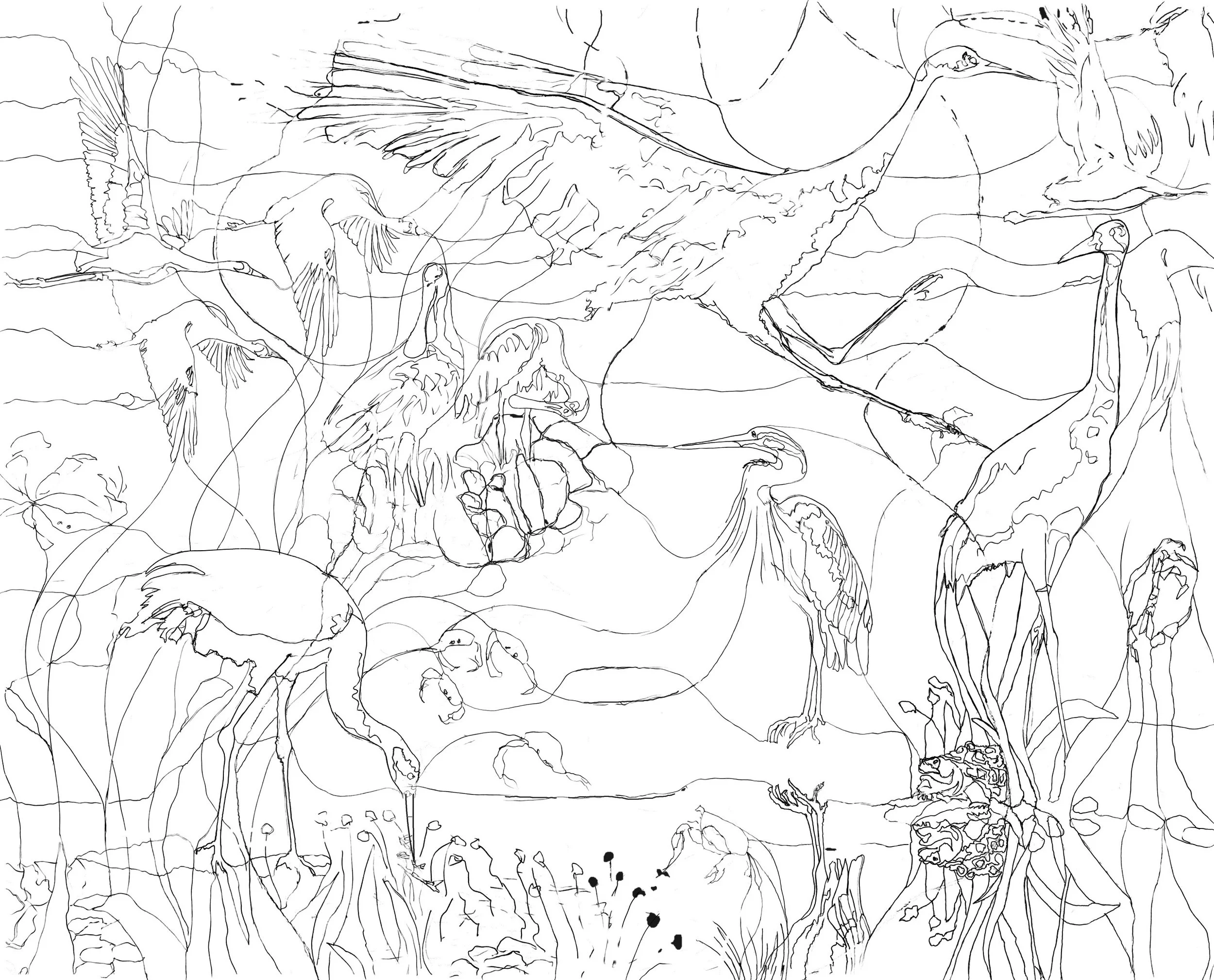
The graphite sketch, photographed in sections and assembled with AI so the lines are visible. The drawing and composition are mine.
The composition is feeling better. I like the flow of the lines on the far left. They sprout from the marsh and move with the water across the paper, then become the wind and anchor the migrating birds to both the land and the clouds. The lines and repeated patterns have a nice rhythm. I feel better about the composition.
So now I am anxious about the color.
Next I planned to play with what becomes green plant life and what becomes blue water, but on a small sketch that is not working. I picture lots of commingling of water and grasses, and that just does not fit on a small scale. Once the piece is torn and reassembled, I'll add color slowly and lightly at full size, with no draft first. When the watercolor drips, it will make lines. I'm hoping they look like cordgrass.
next time the posts is about the tearing.
