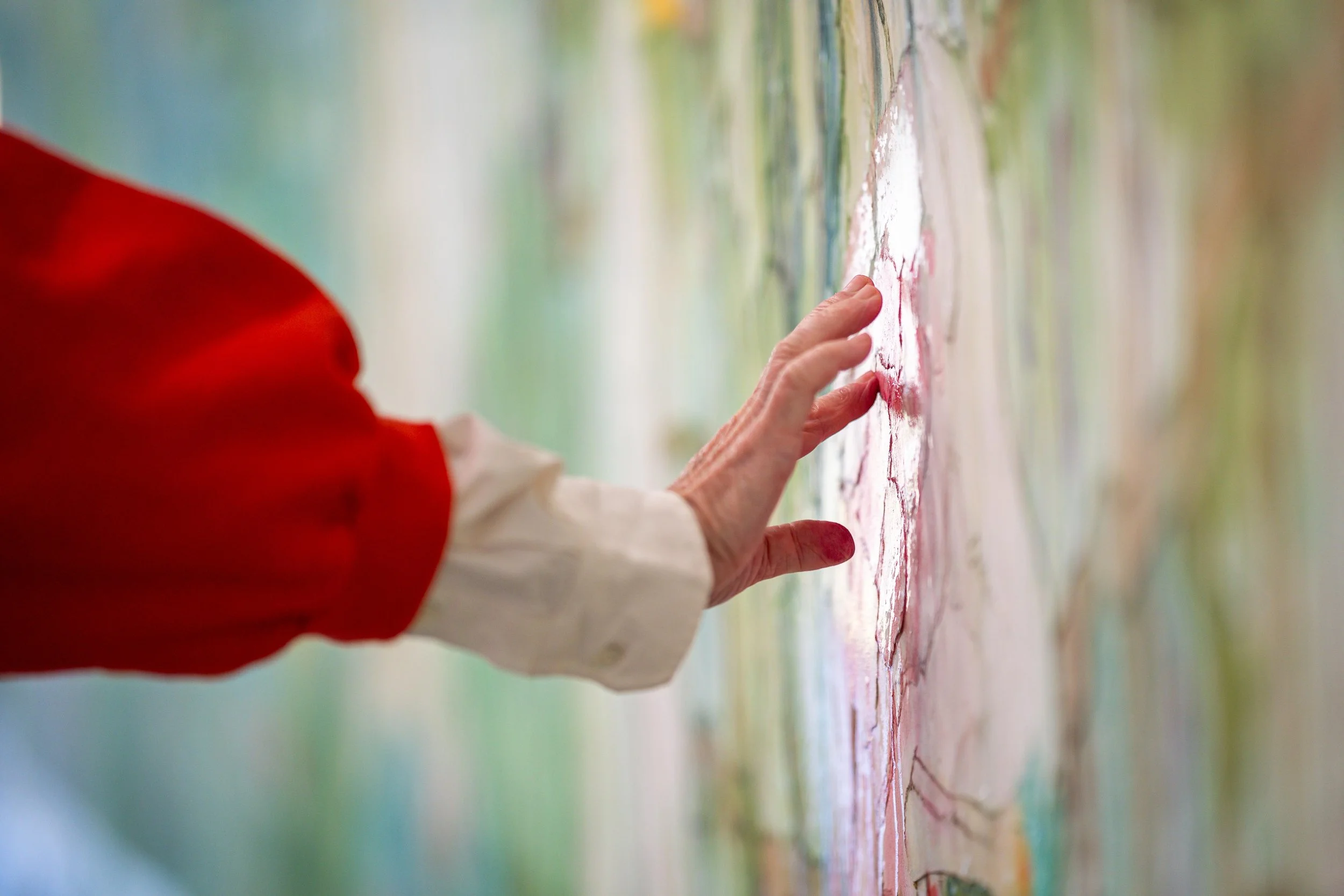
This post is late. A turkey harvest and a week of babysitting got in the way.
Last time: why the whooping crane
The whooping cranes are the reason for the piece. Choosing who stands beside them took longer.
Here is what I learned. Whooping cranes defend their winter territories as pairs and families. They also share habitat with wading birds. In aerial surveys at Aransas and Matagorda Island, great egrets overlapped almost completely with the cranes' habitat. So the water in this piece can be shared.
The cranes come first. Three of them: two parents and a juvenile. A family, because that is how they winter. The young bird stays with its parents through that first winter, until it leaves them.
Next, a great blue heron. Whistles made from great heron bones are known from the Galveston Bay area and the region around it, alongside the whooping crane whistles. The heron shares the water and the story. It is also dark blue, and the composition needs that. It is a year-round Texas resident, common on the coast in every season. It stayed when the cranes were pushed out.
Then two roseate spoonbills, preening, so you can see the bill. It is swept side to side through shallow water to feel for small fish and crustaceans. Their pink comes from the crustaceans they eat. That puts them in the same food web as the crab. They also bring warmth to the composition. Spoonbills were nearly eliminated by plume hunters in the same era, the cranes were disappearing. Today, about half of Texas's nesting spoonbills are on the upper coast.
Last, the sky. Migrating whooping cranes, many of them, overhead. They are the ones who leave and come back.
I would add more. There isn't room, even at 10 feet by 12.
I spread the birds across the paper the way I think they would space themselves in a marsh. The juvenile drifts a little from its parent. The mother keeps an eye on her colt. The father does the leaping, bowing and wing-flapping to keep his mate interested. The dance isn't only for spring. Pairs dance outside breeding season to strengthen their bond. The same movements warn other birds away and reinforce the bond, and young cranes practice them for years before they choose a mate. So the father can dance without a rival in sight. The scene is late winter on the Texas coast, and he is keeping his mate.
At this point, nothing is connected. Every bird is isolated, and the composition feels like a dysfunctional ecosystem.
I remind myself what I've learned about systems thinking. I tell myself it will come together.
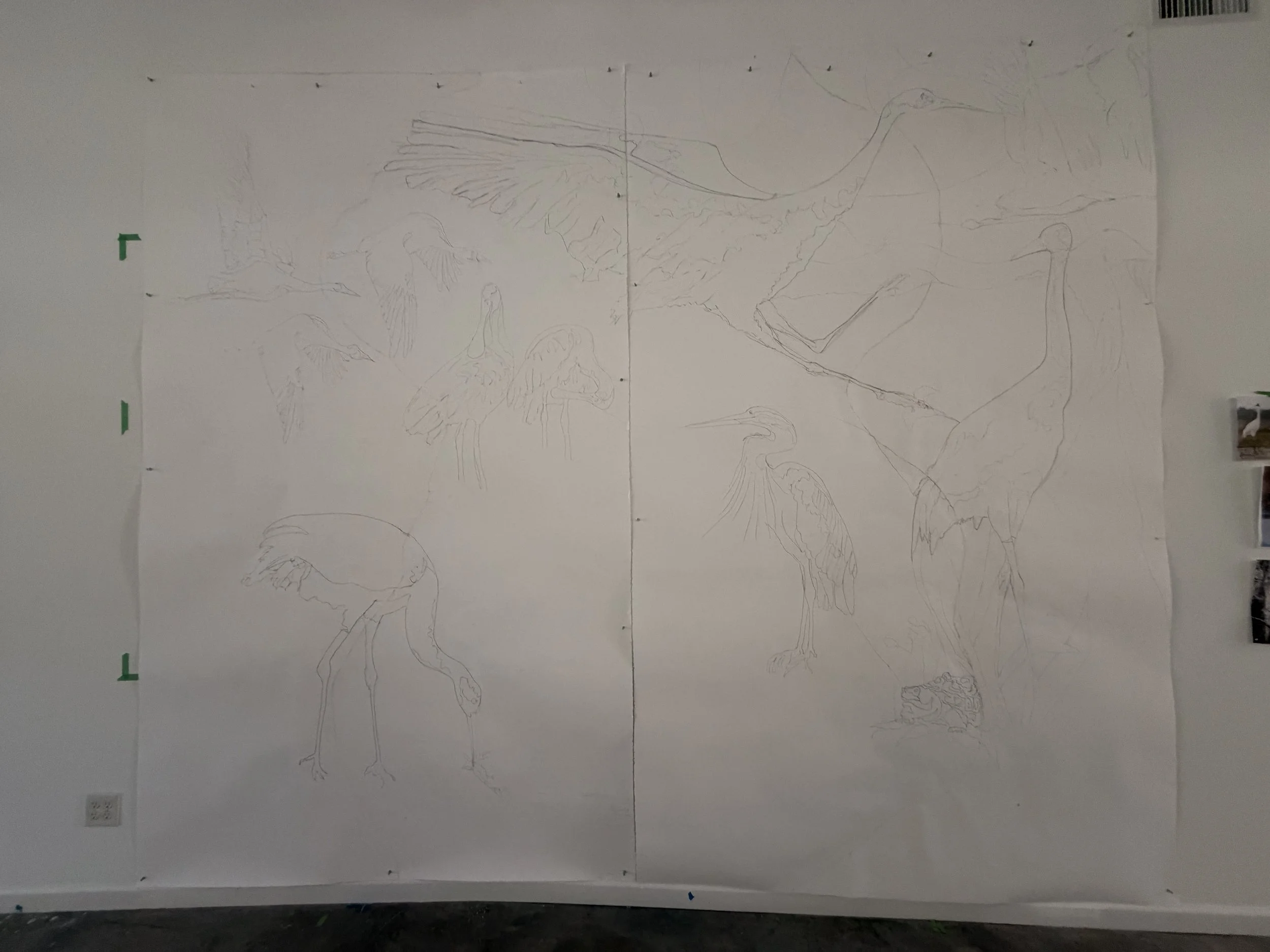
Here is the 10′ X 12′ graphite sketch at this stage. The graphite is too light to photograph in one shot, so I photographed it in sections and had AI stitch them together so the lines are visible.
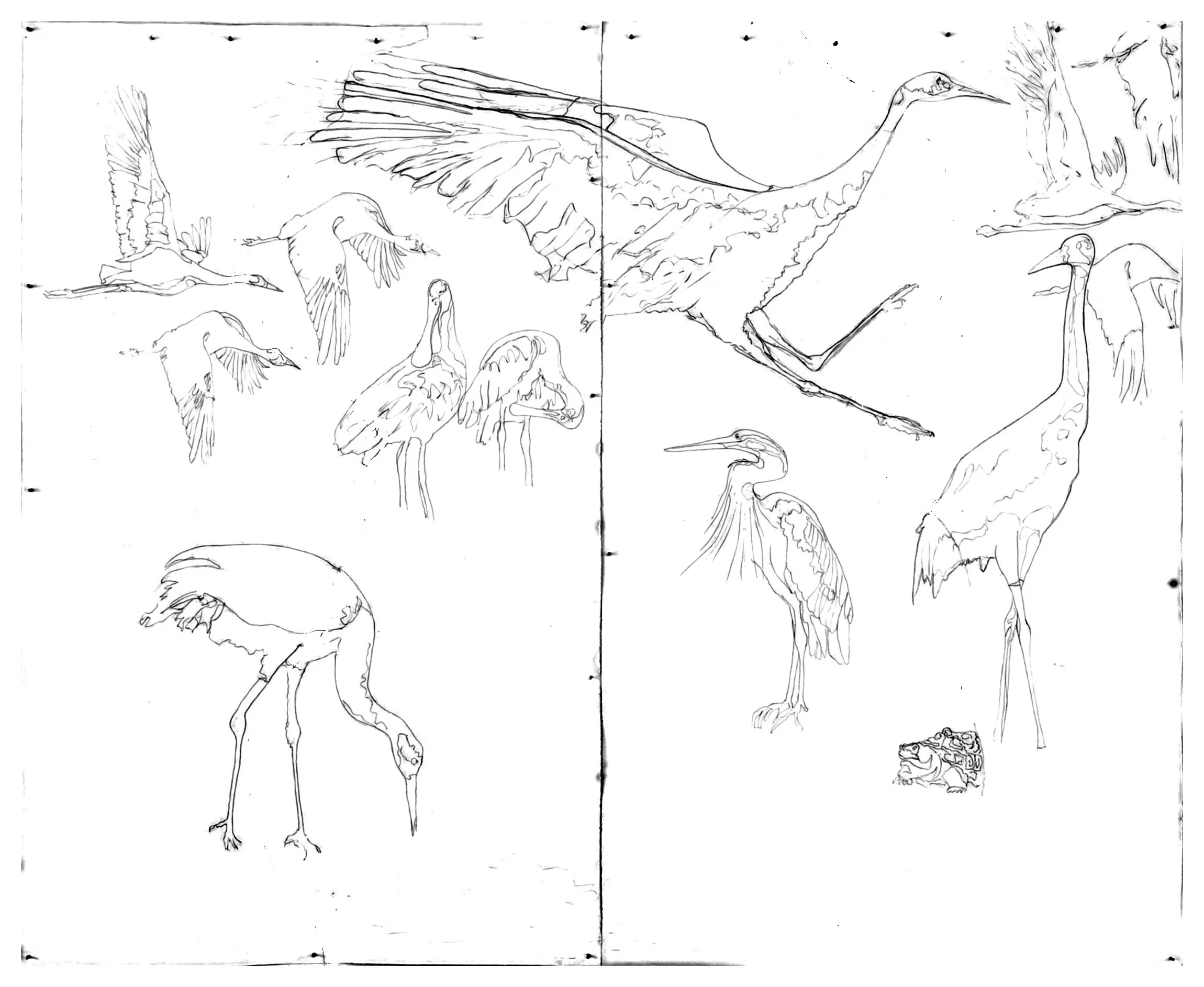
The stitched photo of the graphite sketch, with the push-pin marks and the seam between the two sheets.
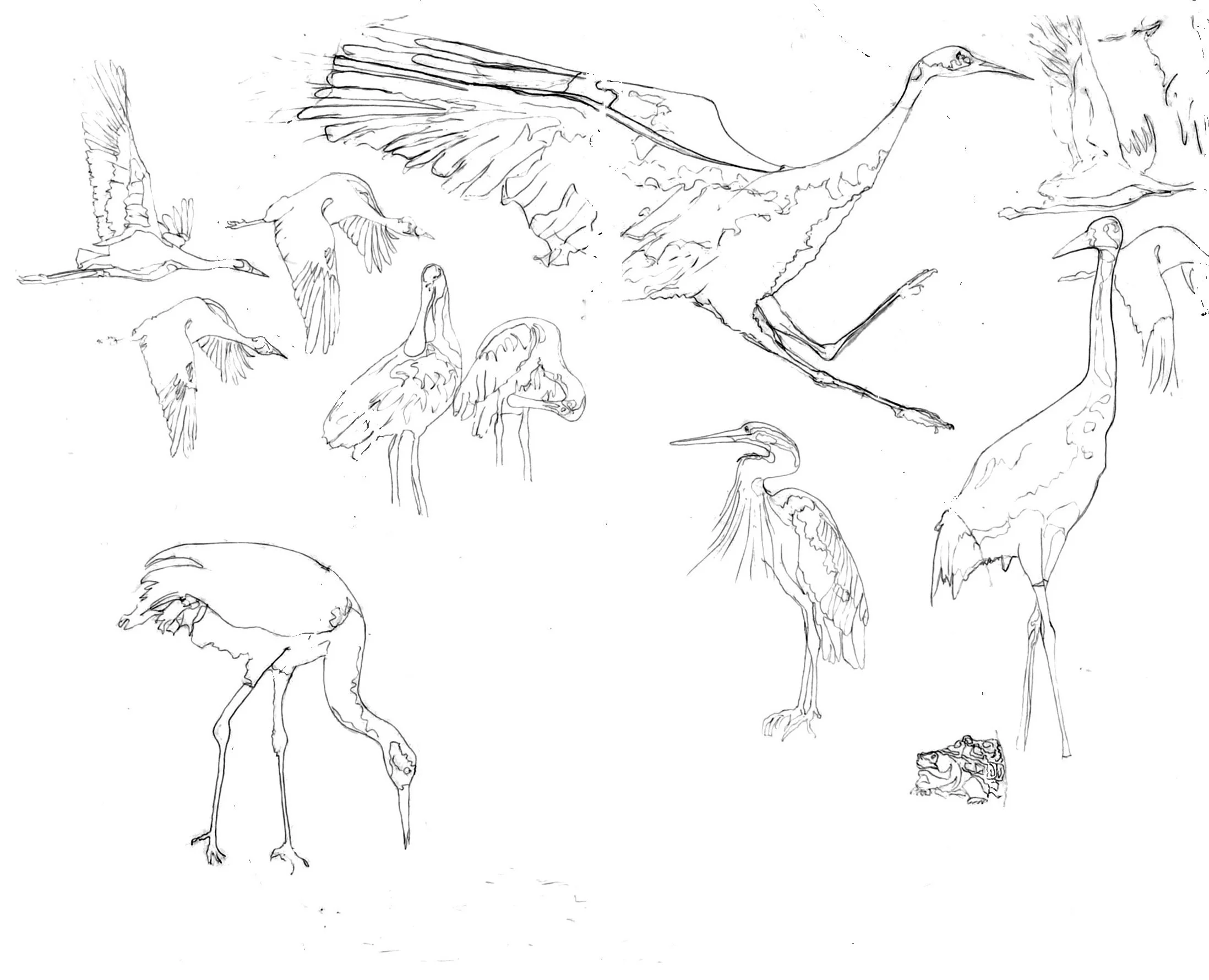
The same sketch with the push pins and the seam removed by AI. It helps me see the composition without that noise, and at a small scale. Both images are my drawing and composition.
Next week I'll post the full sketch, with the birds connected the way I think a system connects them.
