Living Sculpture · Chapter One · March 2026
What looks like a garden is never just a garden. It is a negotiation — between time and patience, between what was planted by intention and what arrived on the wind.
There is an eighty-year-old brick wall bordering the driveway at this site. For decades it has been clothed in Asian ivy — a non-native groundcover brought to American landscapes for its tidy, persistent green. It does its job beautifully. It is, in the language of horticulture, well-behaved.
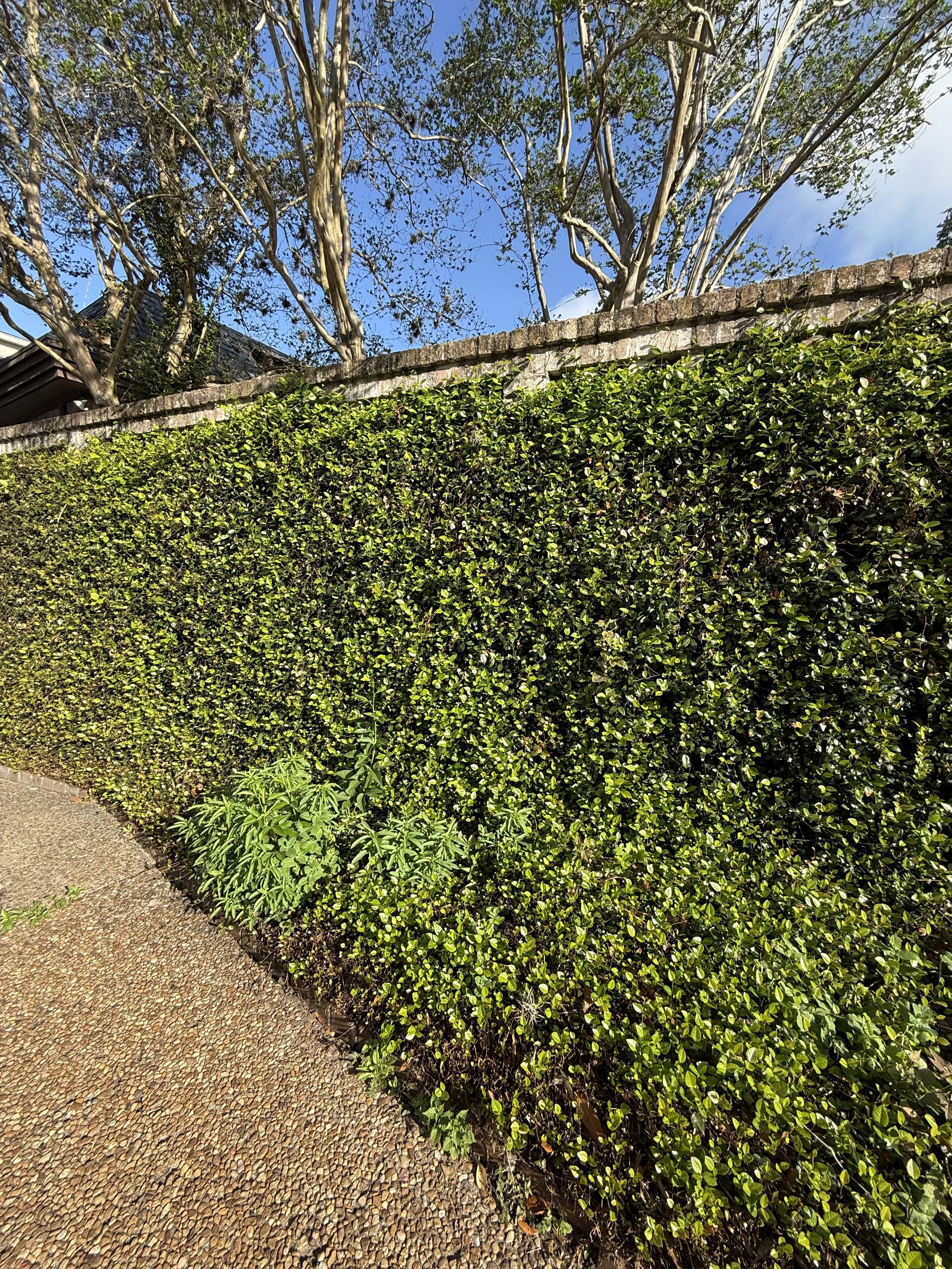
Passiflora returning — new growth reaching through the established jasmine.
But well-behaved is not the same as alive. Not in the way an ecosystem is alive — humming, interconnected, feeding the soil and the sky and the creatures that move between them.
A few years ago the work began to ask more of that wall.
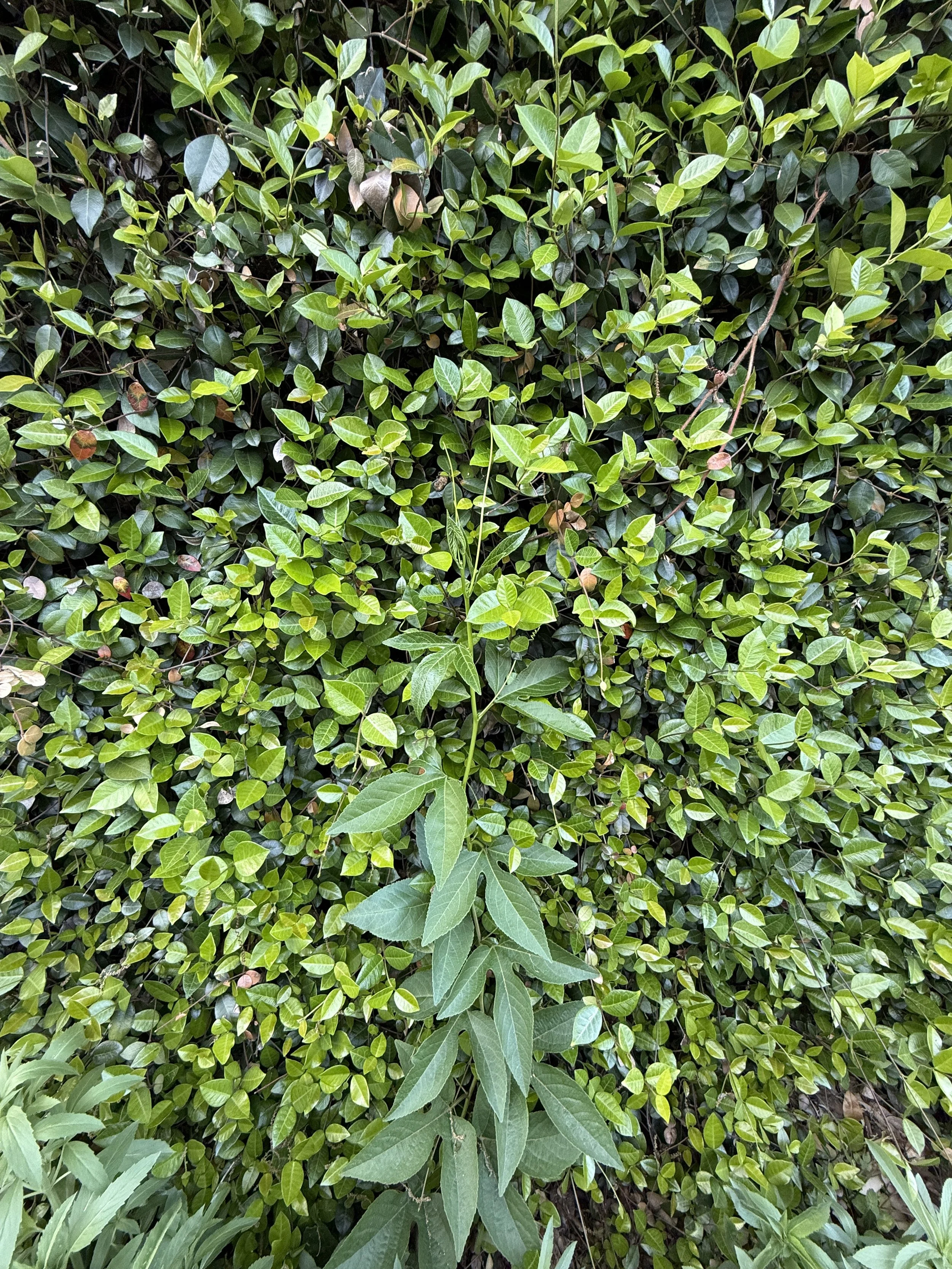
Passiflora returning — new growth reaching through the established ivy.
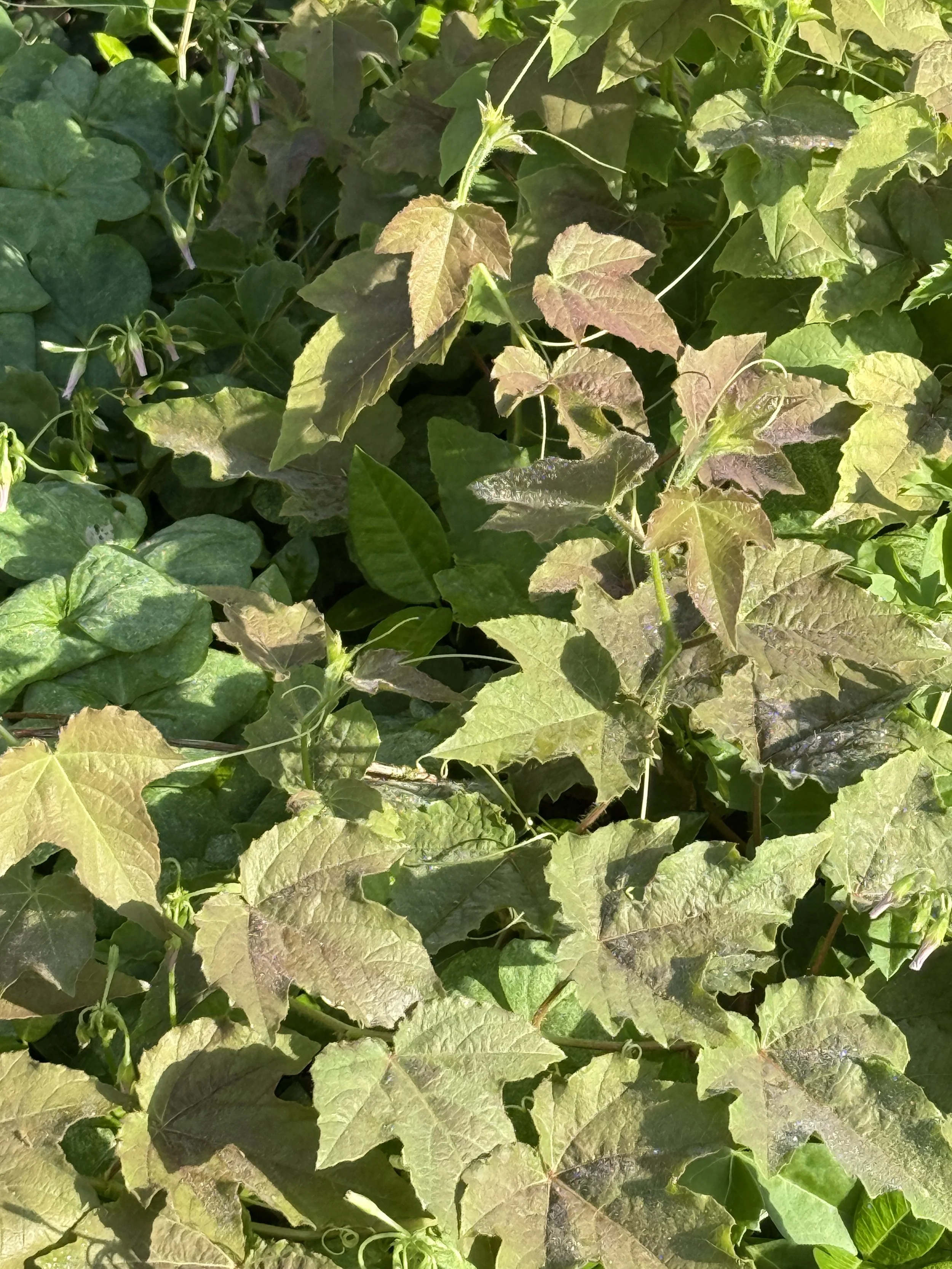
The characteristic palmate leaves of Passiflora foetida — Stinking Passionflower, unmistakable in early spring.
The conventional path would have been removal — strip the ivy, expose the bare brick, replant with natives, endure the years of awkward adolescence while the new plants found their footing. I know that story. I’ve lived it.
But stripping the ivy meant exposing bare brick for years and losing a plant that was holding the soil, filtering rain, cooling the brick. There had to be another way in.
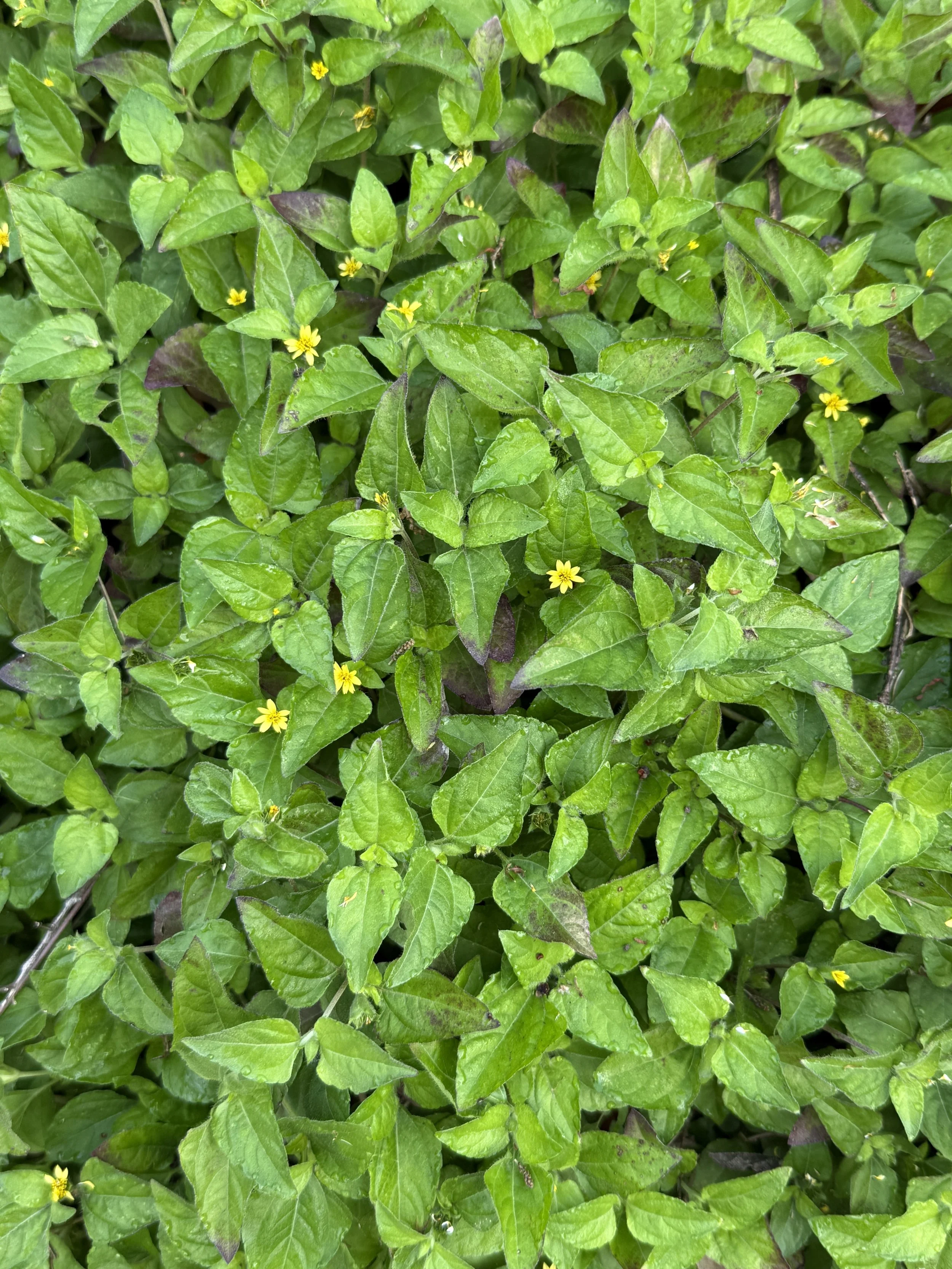
Horseherb in flower — what looks modest is quietly essential, blooming for months and feeding the smallest native bees.
So instead of replacing the ivy, the question became: what could grow through it?
Not starting over. Beginning from where things already were.
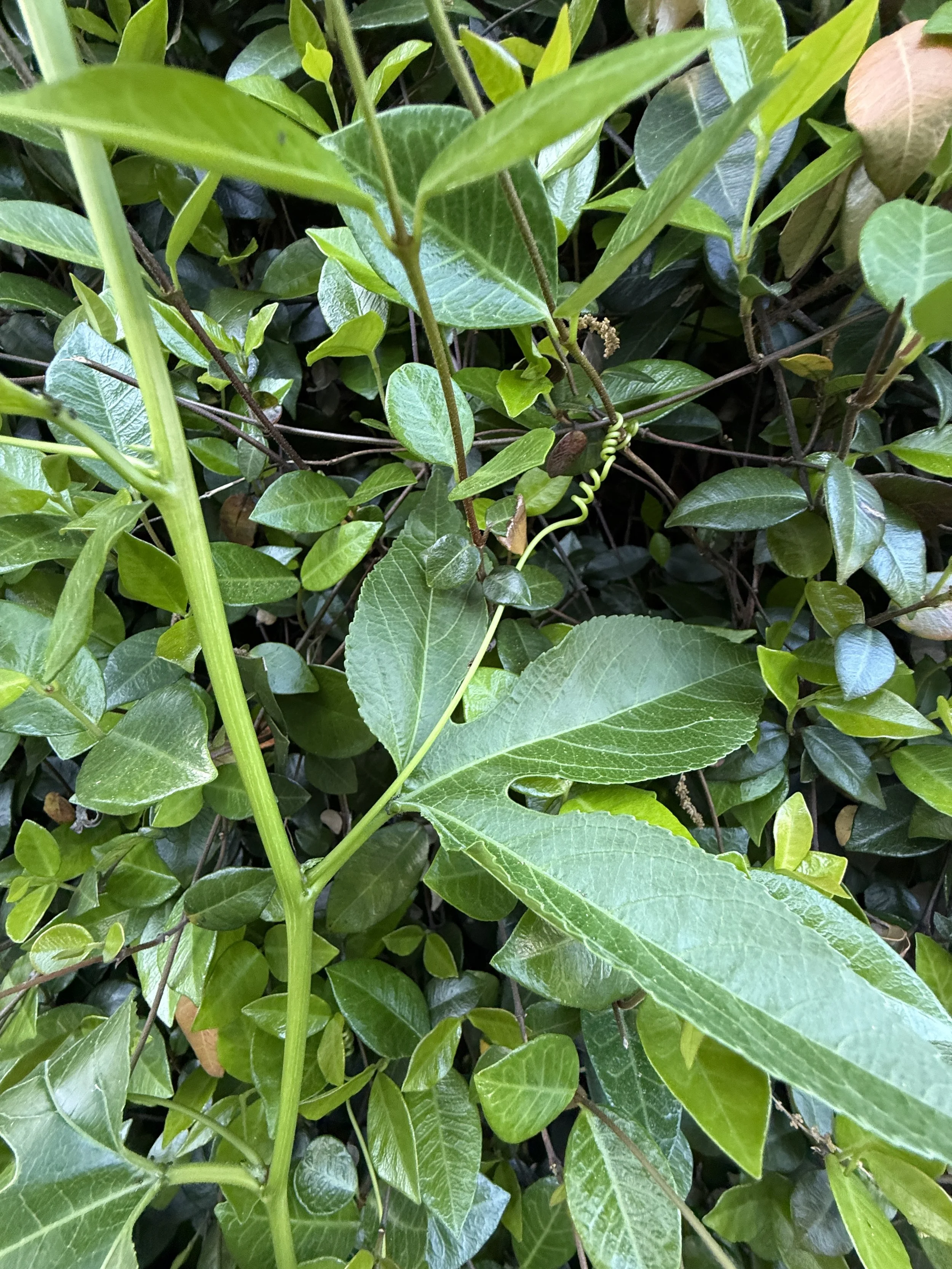
A vine threading through established hedge structure — using what was already there.
Two species of passionvine were planted directly into the base of the jasmine. Bee balm and horseherb were added in the pockets of soil at the wall’s edge. The passionvines did something elegant — they used the jasmine as a trellis. They climbed its established woody structure, threading upward without anything new to build or maintain. When the vines went dormant over winter, the ivy held the wall — green, living, intact. The non-native became, in its own way, useful.
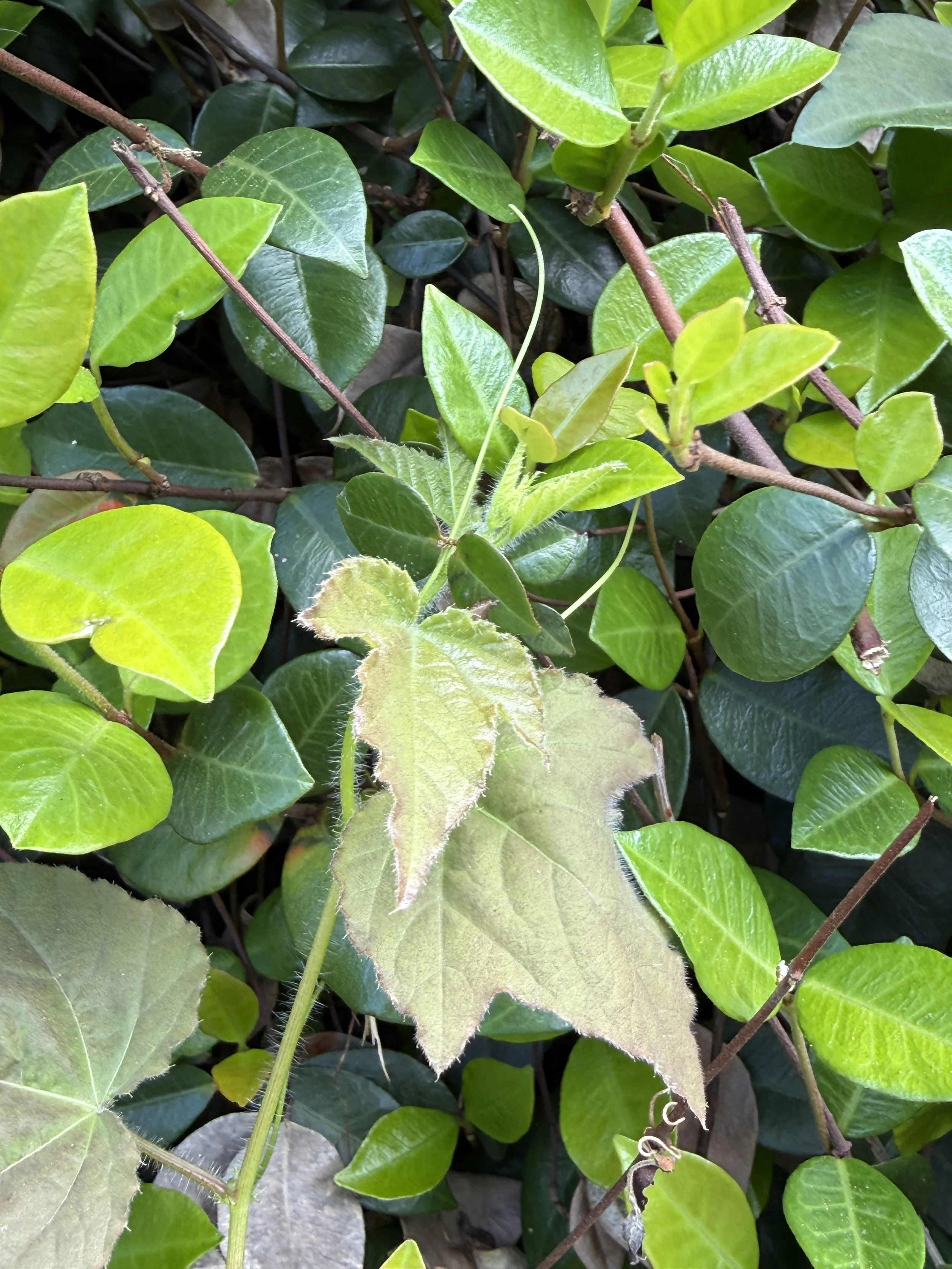
Lobed leaves in morning light — the living architecture of succession at work.
It is not only a metaphor for everything. It is practical.
The butterflies arrived. The bees found it. The wall, at eighty years old, is still becoming something.
Native ecosystems don’t clear-cut and replant. They layer. Succession is slow, relentless, generous — one organism creating conditions for the next. This project works with that logic rather than against it. Every passionvine root threading deeper beneath this wall is pulling carbon downward, slowing rainwater, building soil. The organic matter accumulating at the base filters what the sky sends down.
The ivy, by contrast, requires weekly grooming with gas-powered equipment to stay tidy. The native community asks for nothing. And gives back everything.
That is what a living sculpture does. It does not arrive finished. It moves toward something — through seasons, through years, through the patient logic of ecology working at its own pace.
And what it is working toward is deeper than anything that could have been designed.
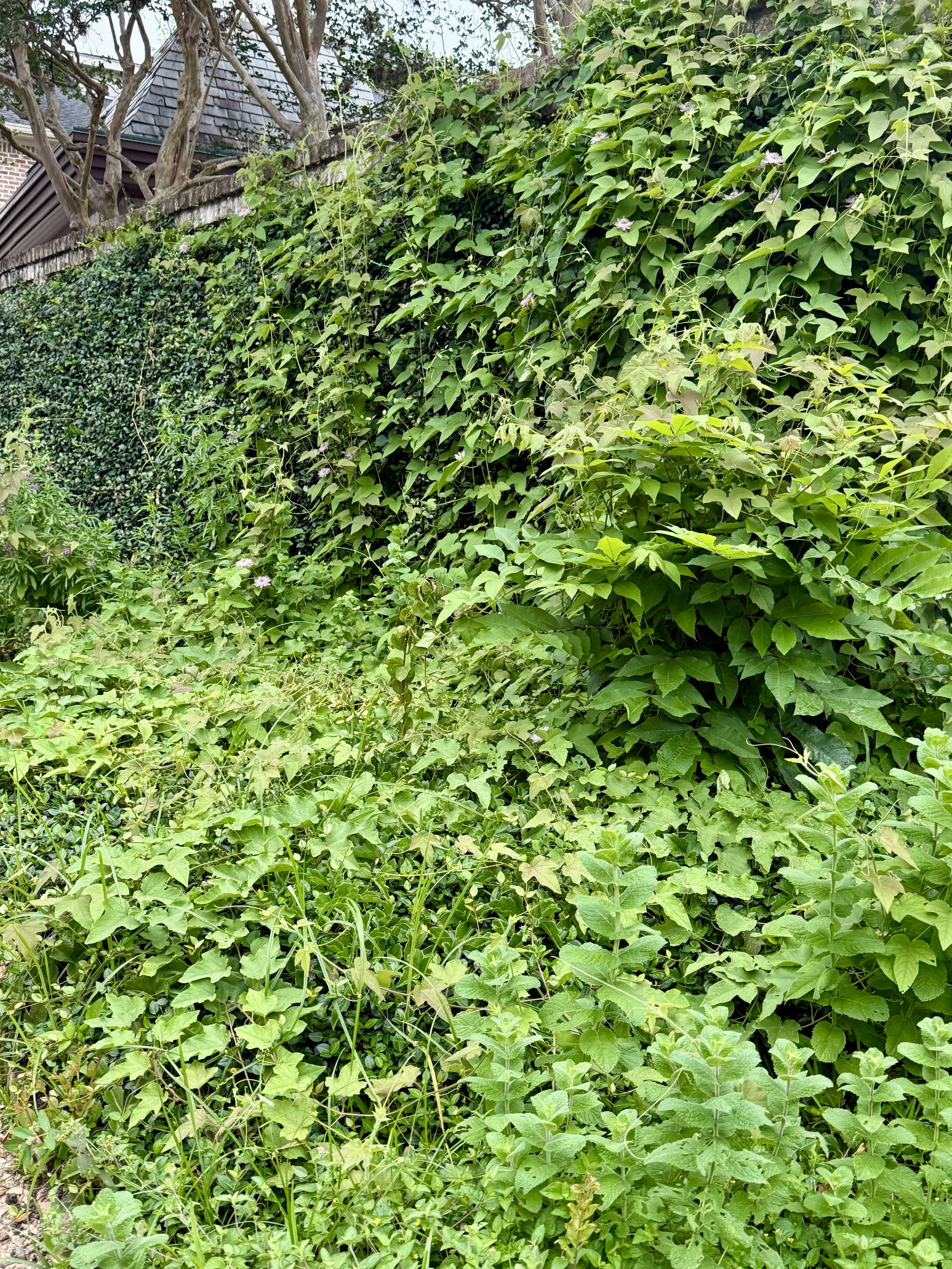
May 5th — still spring. The passionvine has taken over the near half of the wall. Look closely toward the back and you can see the darker texture of the Asian ivy still holding its ground.
July 1st— the vine has visitors.
The passionvine did not just survive the wall. It started feeding something the ivy never could.
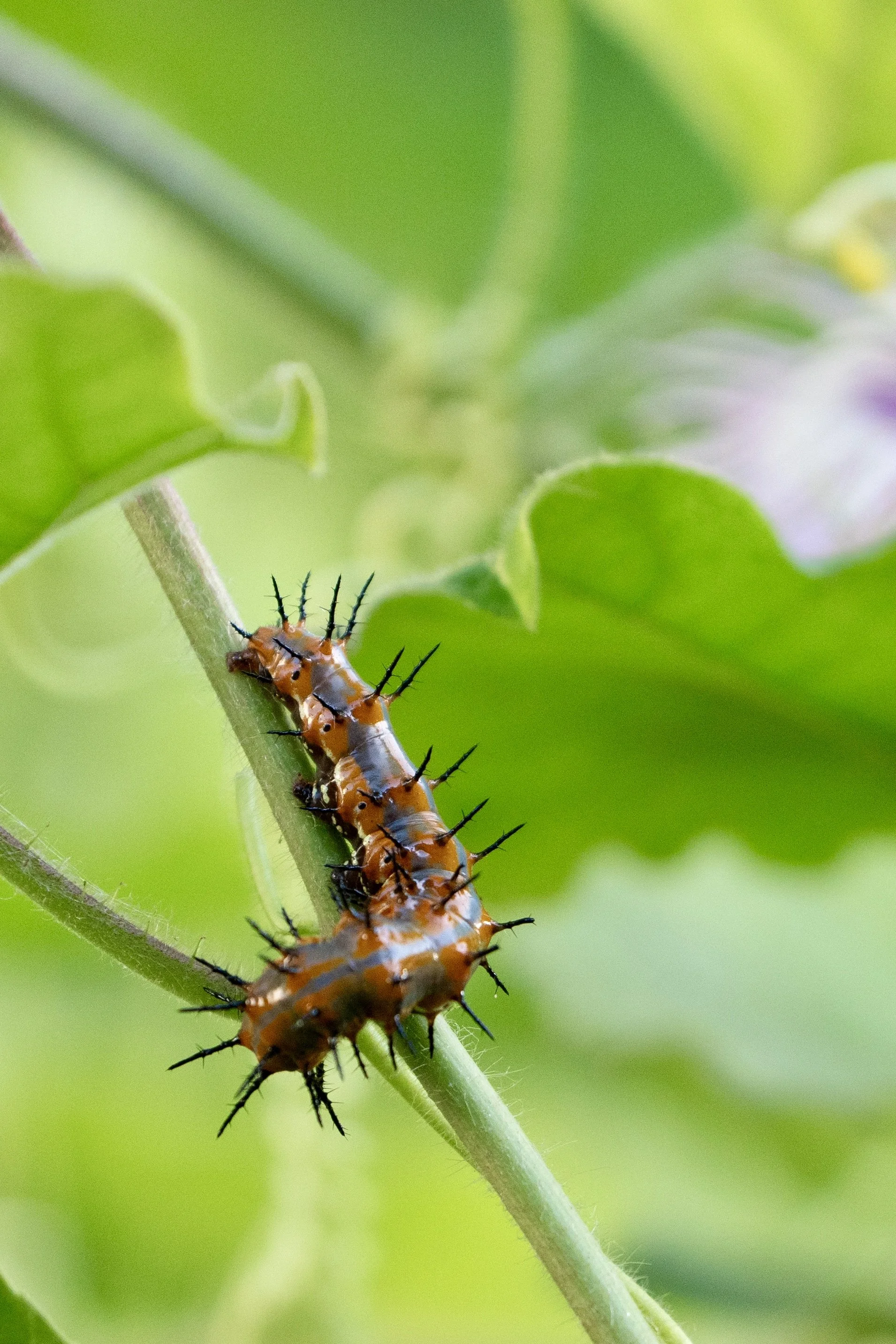
Gulf fritillary larva, Agraulis vanillae — a specialist that can eat almost nothing else.
Passiflora defends its leaves with cyanogenic compounds, built specifically to keep most herbivores out. The Gulf fritillary broke that code generations ago, and still carries the proof — the orange and black on its body is a warning, borrowed from the poison it learned to survive.
There’s a version of this story where the plant calls in wasps to kill the thing eating it, and the birds come for that. It’s a documented mechanism — in corn, in tomato — not yet confirmed in passionflower. Who funds research for non-industry questions is a question for another post.
But I don’t actually want that here. I’m not interested in a wall that defends its leaves. I’m interested in a wall that grows enough leaf to lose.
When the caterpillars strip a vine to the stem, that’s not damage. It’s the plant telling me its own size.
Plant more passion. The answer was never fewer caterpillars. It was always more Passiflora.
So far, I have never had a passion problem. I have never once thought: too many caterpillars.
