Last year I planted two American Fringe Trees — Grancy Greybeard — one on each side of the stone walking path that takes you into Sequel. They are a year old. Two feet tall. They are babies. And they are already teaching me something.
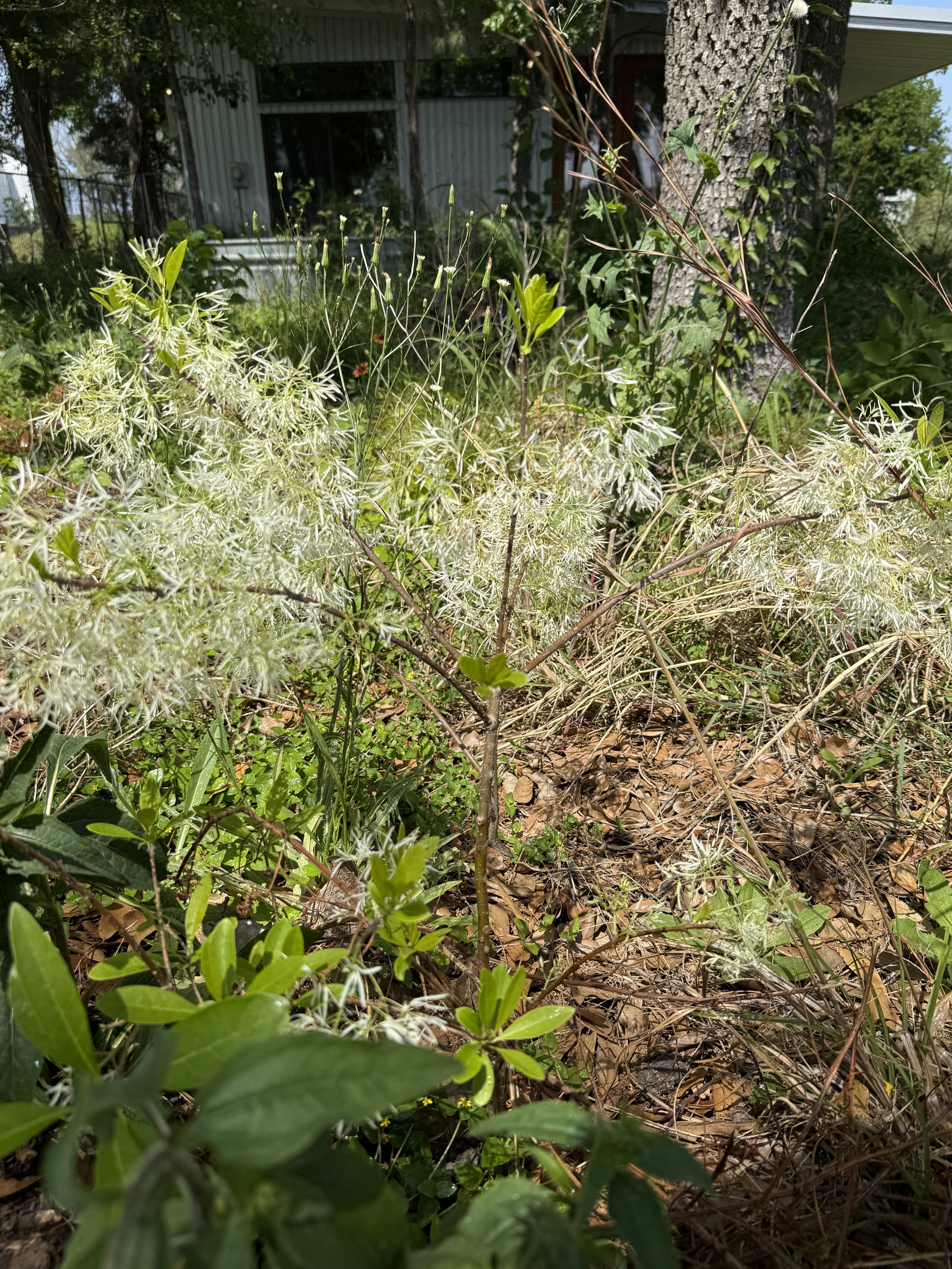
The Eastern tree is thriving. It gets full sun.
The eastern tree is thriving. It gets full sun. The western tree is the smallest — shaded by other small plants that block its access to full sun. It should eventually outgrow them.
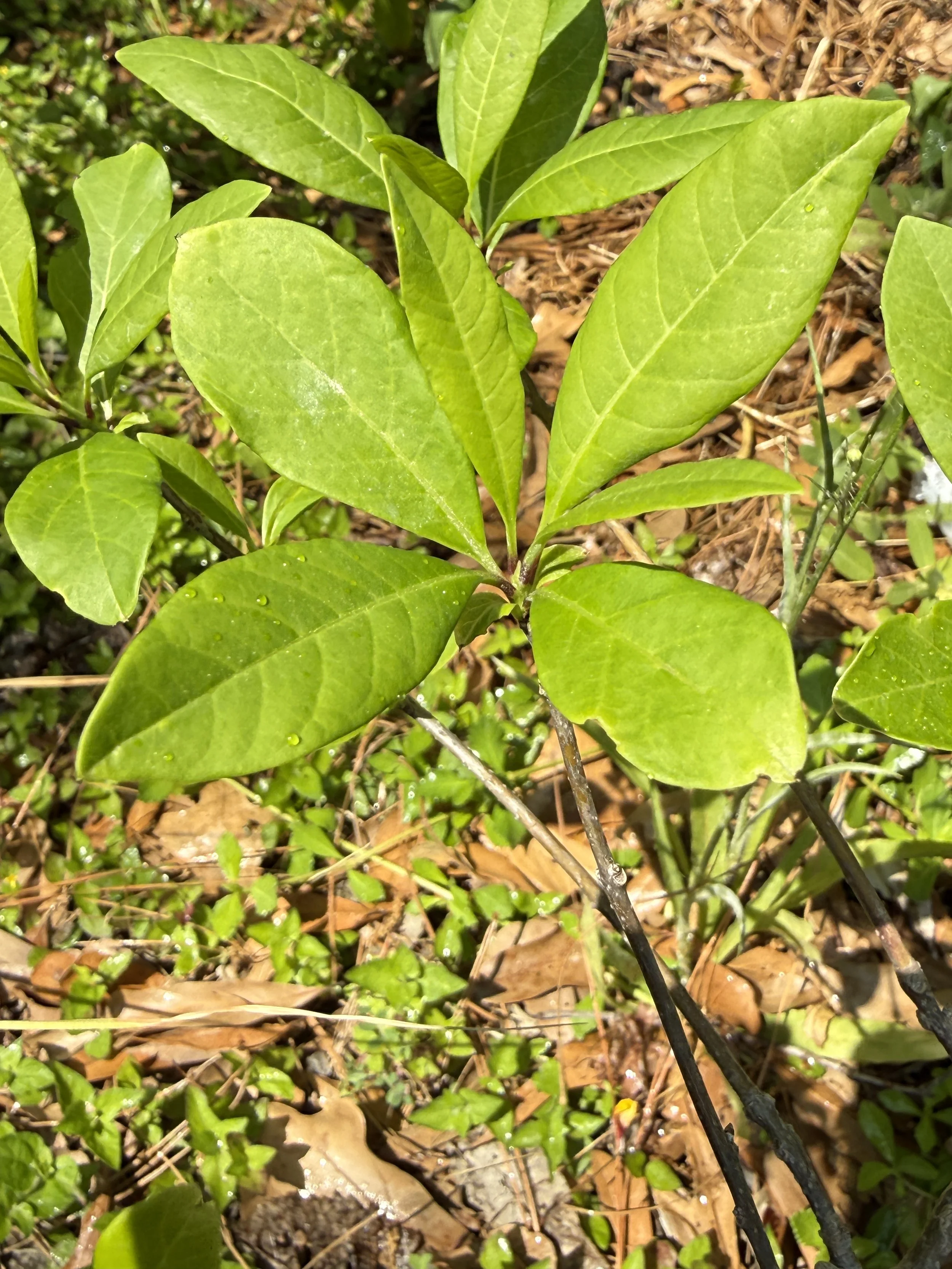
The western tree is the smallest and is shaded by other small plants that block its access to full sun. It should eventually outgrow them.
I chose them deliberately, the way I choose every element in my living sculptures. In Symbiosis at Lawndale, every plant was a decision about relationship — who would it feed, what would it host, how would it move nutrients and carbon through the system. Sequel is the same conversation, carried forward. The fringe trees at its threshold are not decorative. They are a proposition.
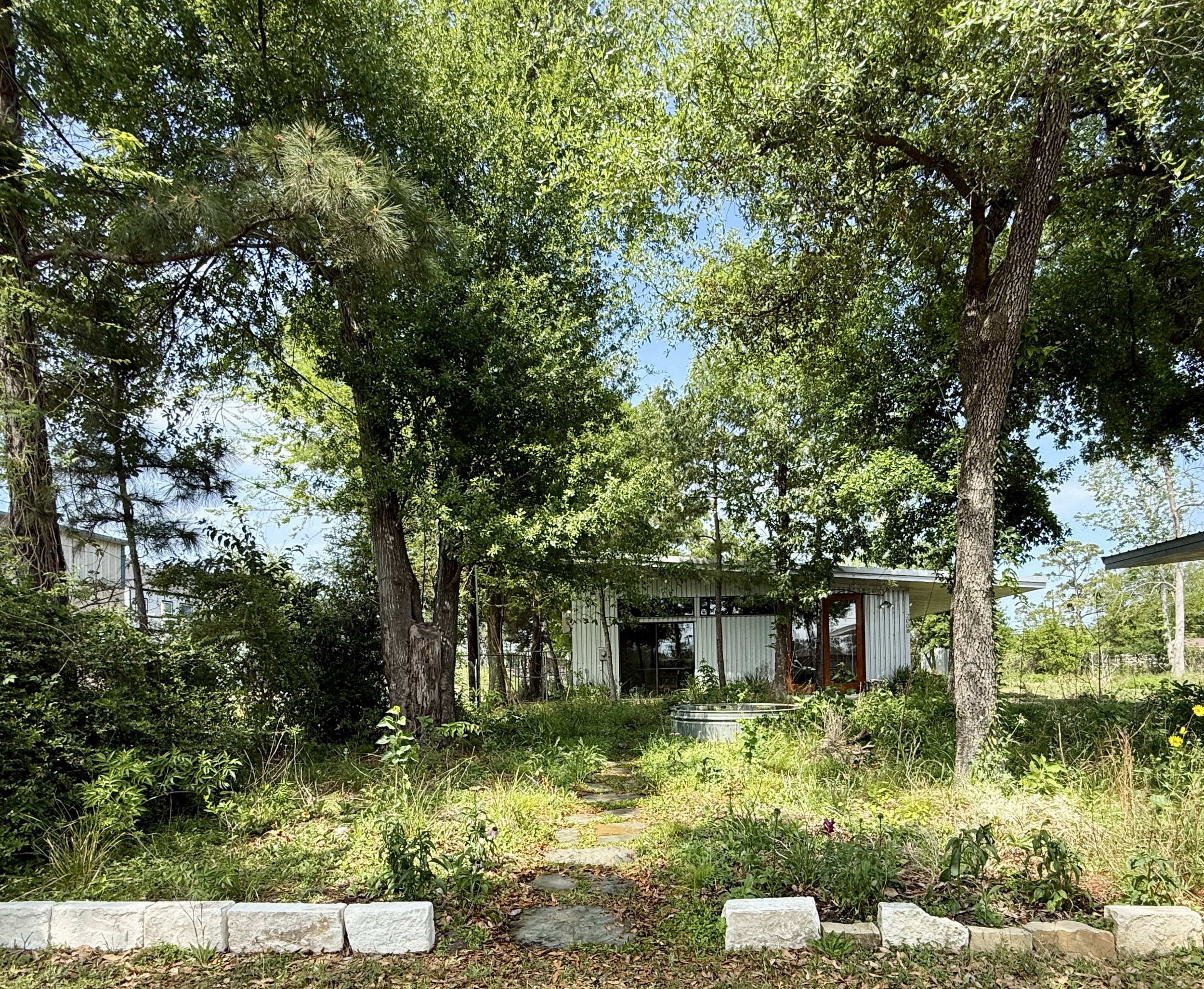
The walkway features the two one-year-old trees, barely visible, standing 10 feet away from the center.
Chionanthus virginicus grows naturally at the edges — along woody draws and stream banks, in the transitional zones where forest gives way to coastal prairie. That is exactly where I placed them: flanking the stone path, at the threshold. You pass between them to enter the work. The living sculpture begins before you know it has begun.
The fringe tree does its most important work in the margins — the places most overlooked, most degraded, most in need of rebuilding. That is where Sequel lives too.
Come April through June the white fringed blooms open — long, thread-like petals cascading like an old man’s beard in a coastal breeze. For native bees and butterflies this is a critical nectar window early in the season when little else is offering. The fringe tree is a larval host for three sphinx moth species. A host plant is not ornamental. It is food infrastructure. Female trees produce dark blue olive-like fruits in late summer — high-fat fuel for migrating songbirds. Their dense multi-stemmed structure creates cover and nesting opportunities for birds. And their roots hold the clay soil at Sequel’s entrance, moving water downward — the same function I have been studying since I first understood how roots cool this planet and absorb what Houston cannot stop flooding with.
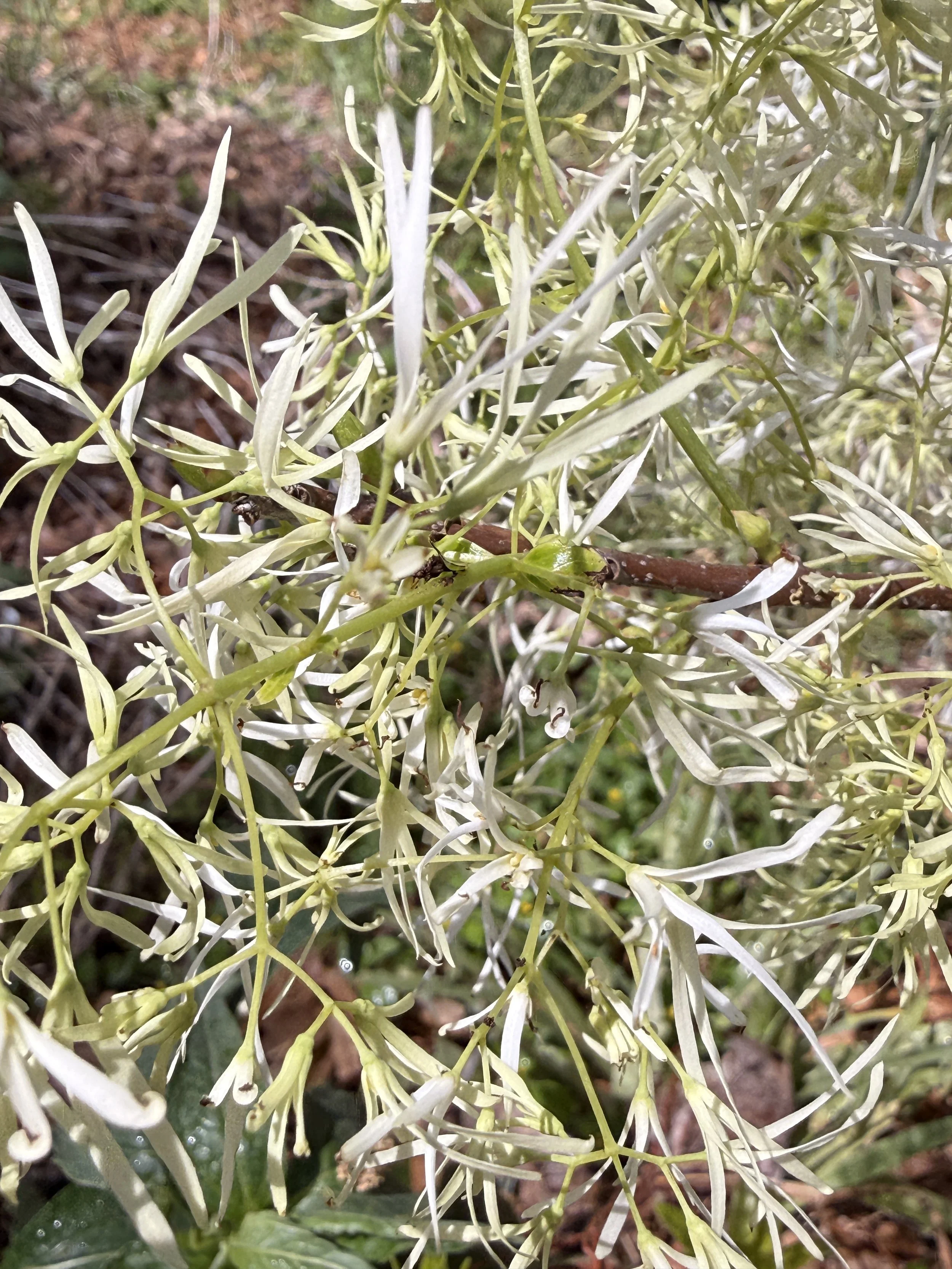
A close-up of the trees soft, airy beard.
A threshold is a sculpture.
When I carved Carbon by the Yard into Lawndale’s turf, the gesture was simple: carve a shape, let the grass grow around it. The relief emerged from contrast. What was taken away revealed what was possible.
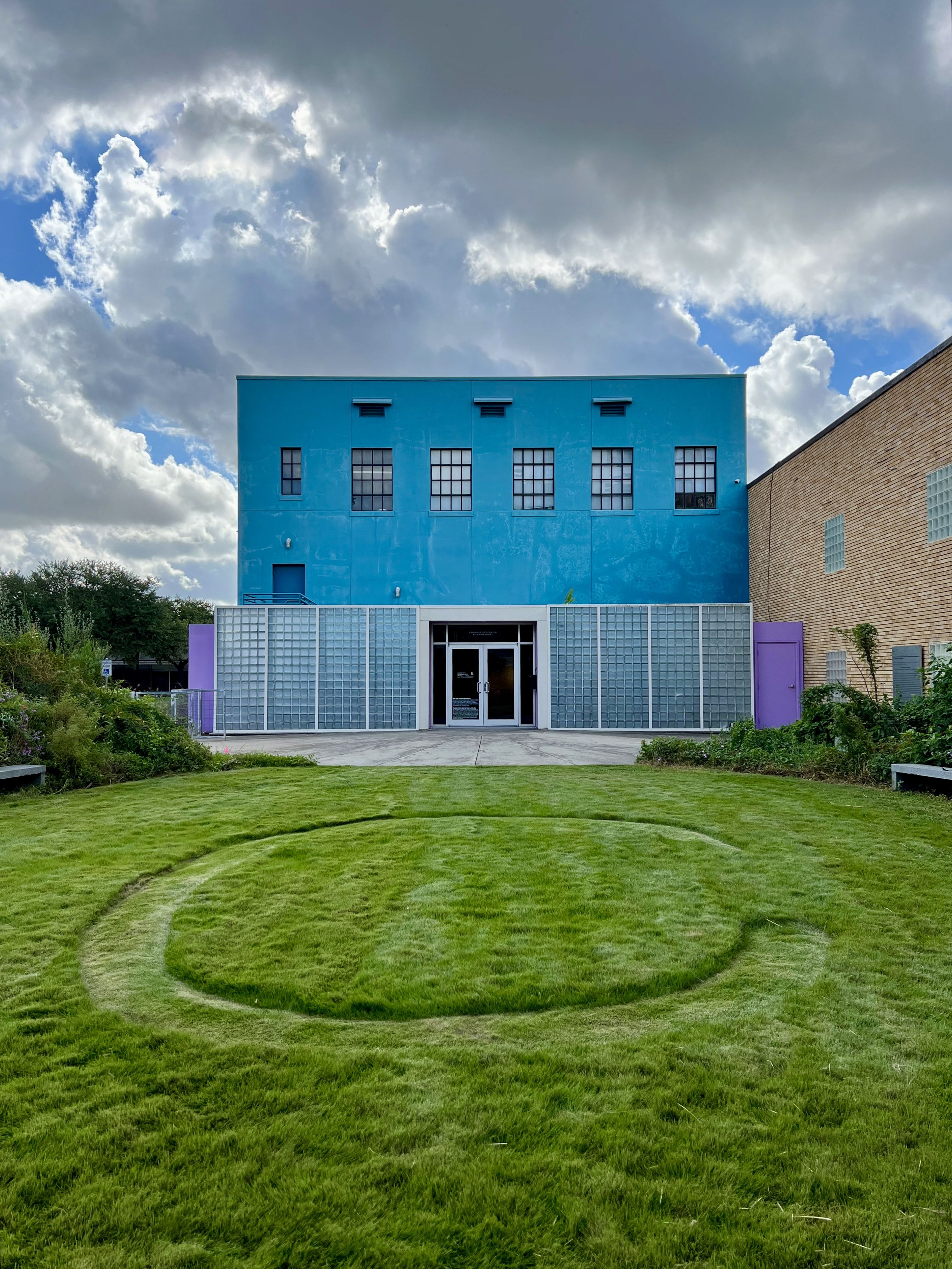
Carbon By The Yard - Lawndale 2021
The two fringe trees at Sequel’s entrance work the same way. They mark the passage from the manicured urban world outside into the living, breathing, intentionally ecological world within. They are the frame. They are also the argument — that two feet of native species, one year old, already threading itself into the insect food web, is doing more ecological work than turf and non-natives could do in a decade.
They are a year old. In twenty years they will be twenty feet tall — cascading white each April, fruiting each September, hosting moths, sheltering songbirds, holding the ground. Sequel will have grown up around them.
That is the whole conversation.
