In the mid-nineties, my husband was diagnosed with diabetes. We had both grown up in small towns, but differently. My mother was a schoolteacher — we ate whole foods, but they came from cans. My husband grew up closer to the source: farms, soil, food that still remembered where it came from. When the doctors handed us the food pyramid and told us to follow it, we were starting from different places. But we arrived at the same question together. The grains at the base, the carbohydrates they called foundation — the more we followed their guidance, the more insulin he needed. The glucose numbers didn’t lie. And slowly, reluctantly, we understood that the people giving us this advice weren’t confused. The pharmaceutical companies, the medical institutions, the government agencies propping up industrial grain and monoculture and seed patents — they knew. It was a hard thing to accept. But the numbers made it undeniable. So we stopped following and started looking for ourselves.
The questions led to farmers markets, to conversations with people who were still raising food the old way. A regenerative farmer selling grass-fed beef at a market stand told me something I didn’t expect: that grass-fed beef carries the same beneficial omega fats as wild-caught salmon. I had been eating salmon every week for years — it was what the doctors recommended, the one healthy protein we were told to trust. But it had started to feel wrong to me. How could the only truly healthy protein come from cold water fish? How would humans have survived inland, far from any ocean, for thousands of years? That question had haunted me without an answer. The farmer gave me one. The land the animal lived on was in the food. The health of the soil was in the body. Suddenly everything shifted. And there was something else: if grass-fed land proteins could replace our dependence on wild-caught fish, the pressure on the ocean lifts too. Fix agriculture on the table and you begin to fix it in the water. The systems are not separate. They never were.
That connection — between the land and what it produces and what it does inside us — changed the way I see everything. It wasn’t just about food. It was about a system. A living system that industrial civilization had interrupted, and that we were all paying for without knowing it. I wasn’t angry so much as awake. Once I saw it I couldn’t unsee it.
A few years later I came across Allan Savory’s TED talk on desertification and the role of ruminants in restoring degraded land. Savory showed how the movement of grazing animals — their consumption, their waste, their hooves breaking the crust of dry earth — was the mechanism that had built the world’s grasslands over millennia. But it wasn’t just the land they were building. Their waste alone feeds an entire chain of life: microbes, flies, dung beetles, birds, and everything up from there. Remove the animals and the whole web unravels. Return them, managed holistically, and the prairie comes back — not just the grass, but every creature that depends on it. Carbon returns to the soil. Water returns to the ground. The climate steadies.
I had been following a thread from my husband’s body to a farmer’s pasture to the roots of the coastal prairie, and I didn’t fully know it until that moment. Humans are animals. We are part of this system. We dispersed seeds and moved nutrients long before we decided we were separate from the land and above it. We are not managers of nature. We are participants in it — or we are supposed to be.
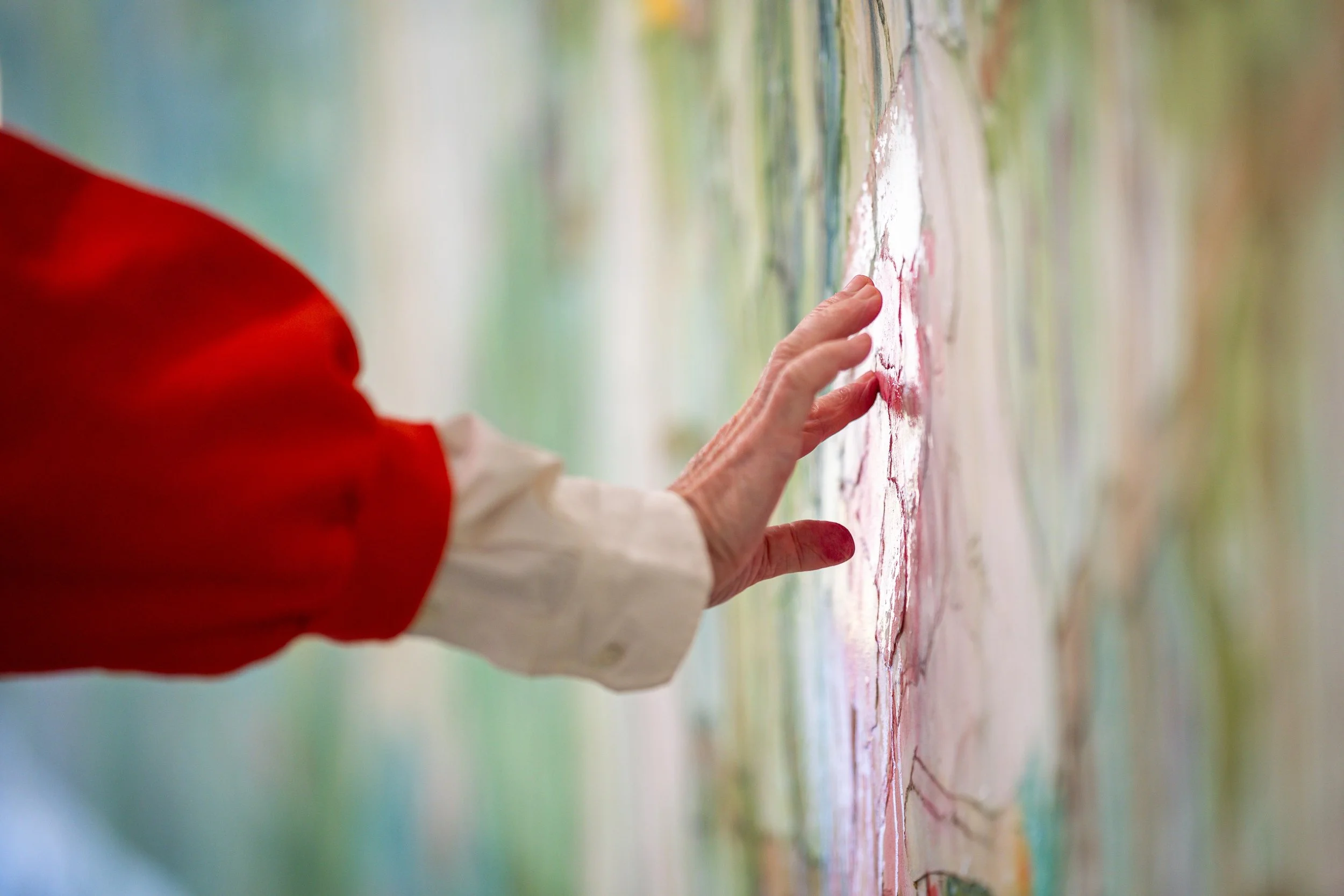
This understanding became the ground my art grows from. It led first to Endangered Knowledge: the Soul of Humus — a work about what we have forgotten and what the soil still holds. And from there, inevitably, to Symbiosis — where curiosity installed the first microbial soil, planted the first native plants, and became something you could walk through.
