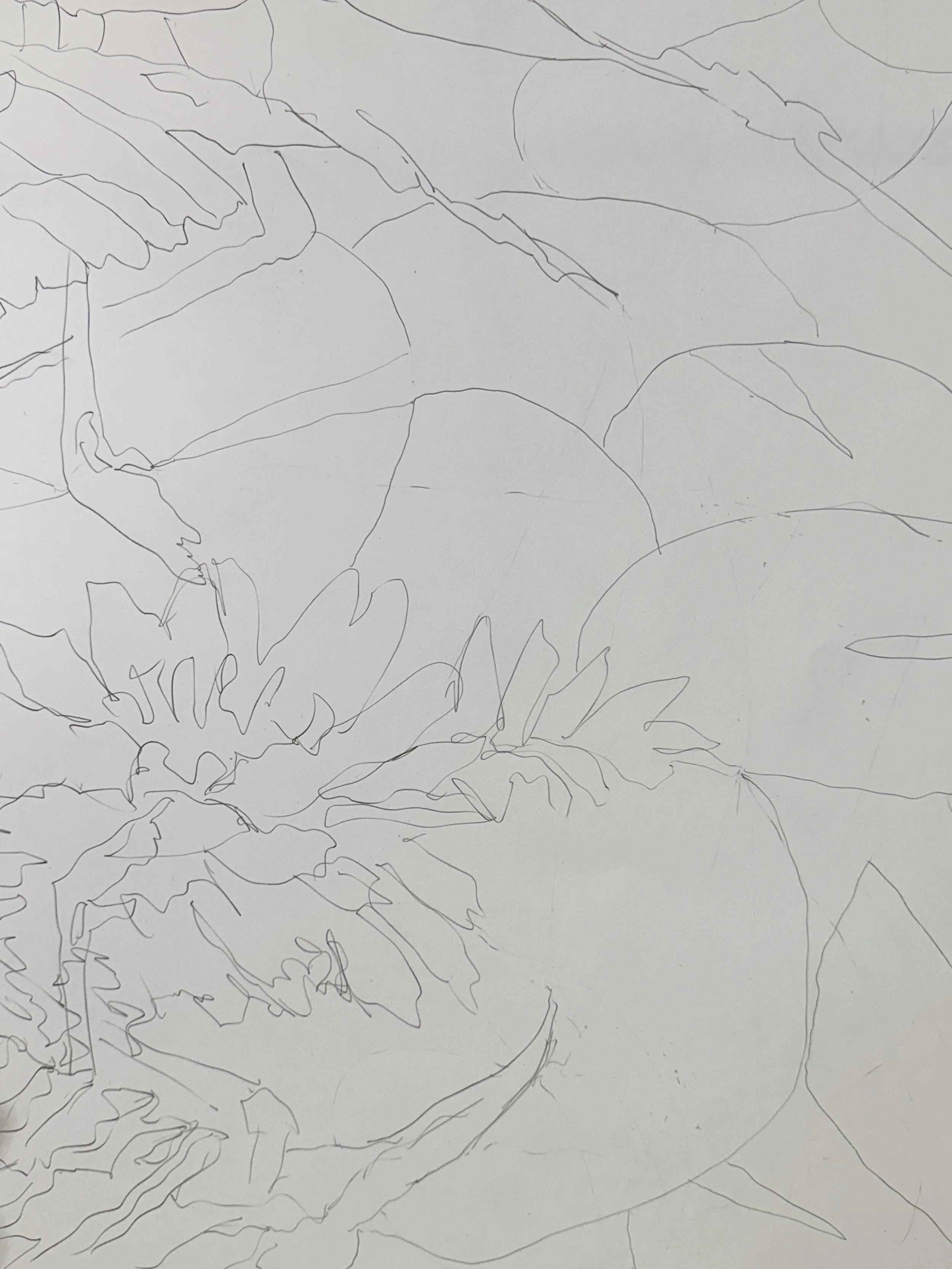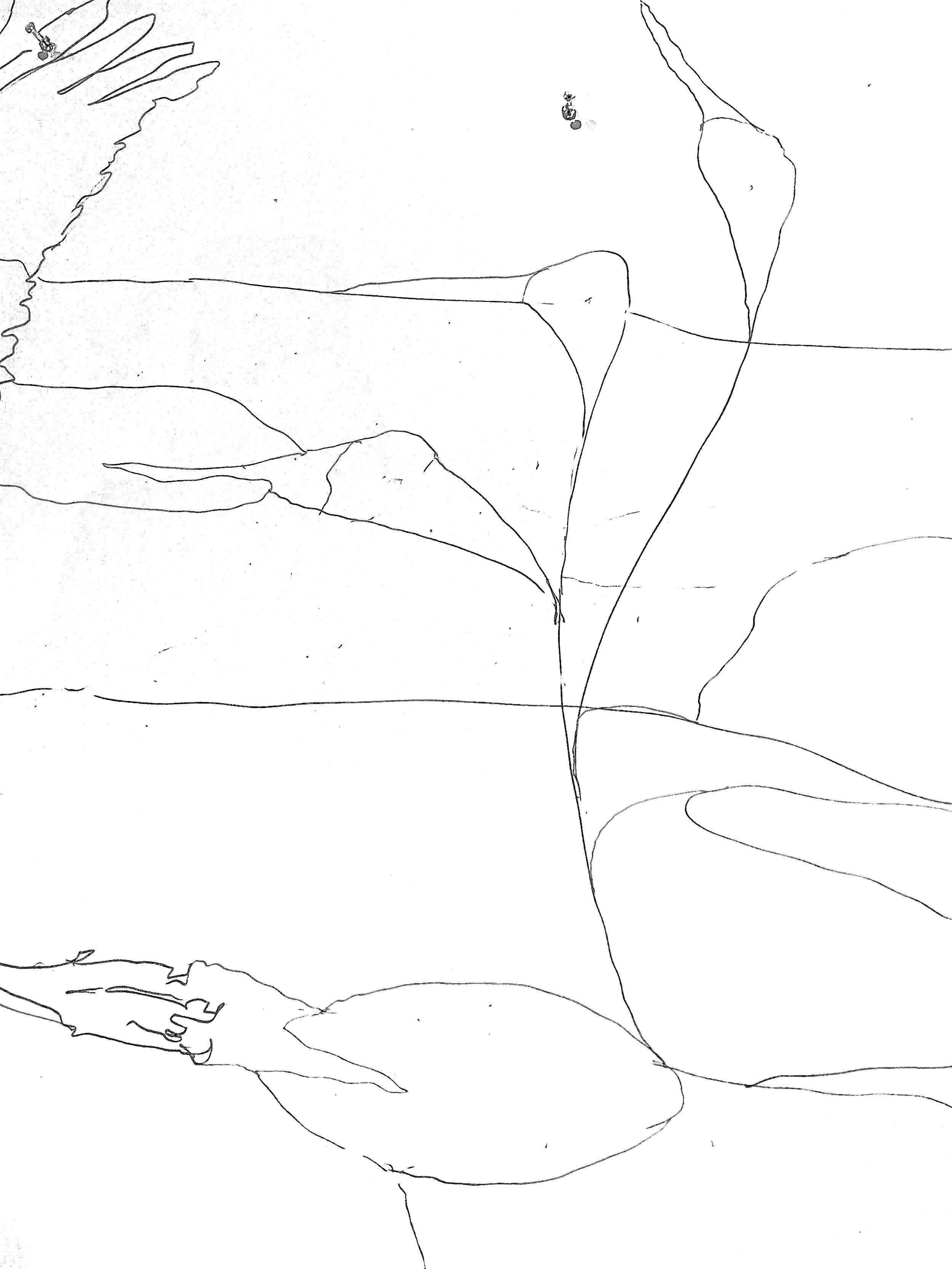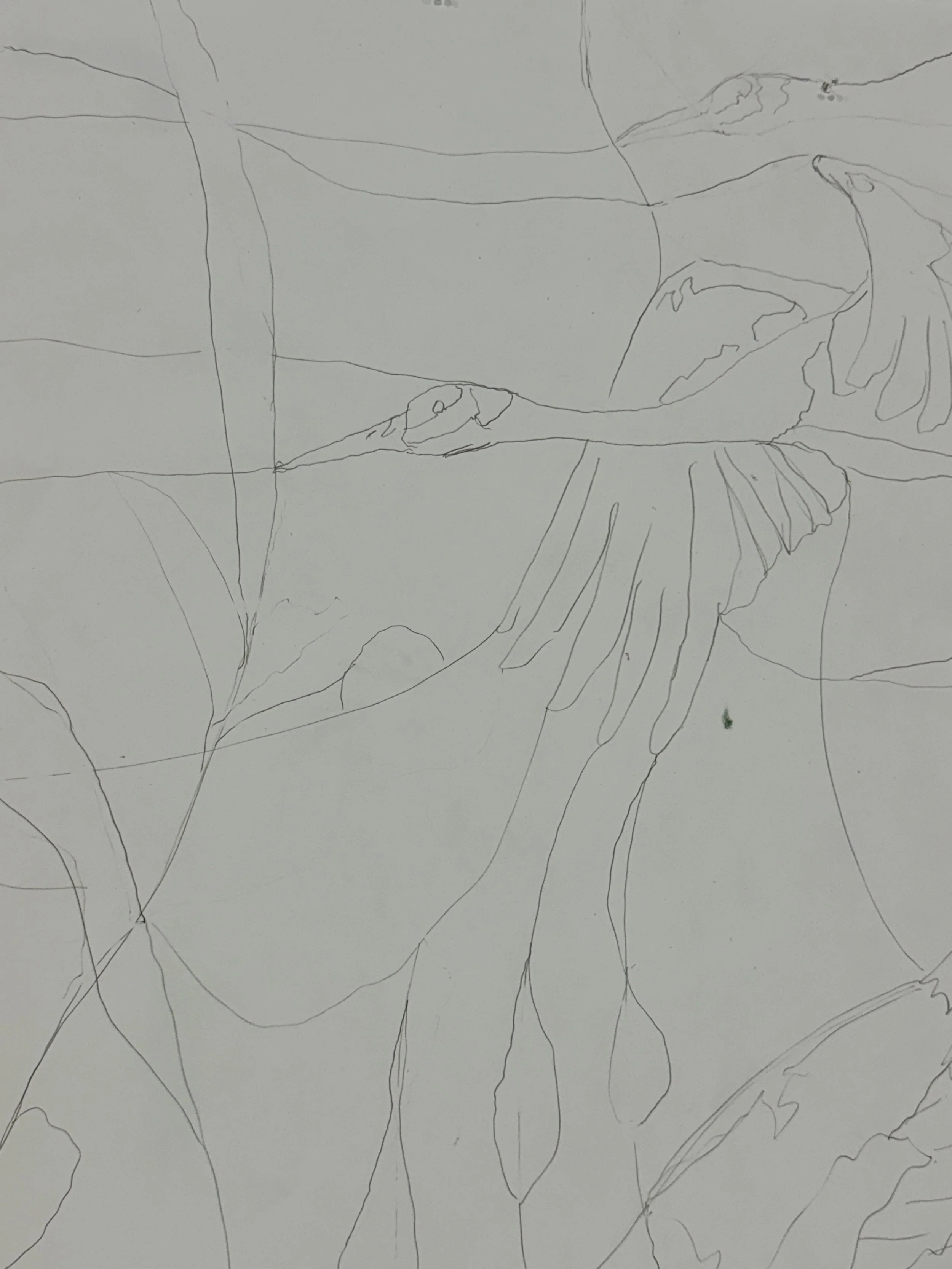
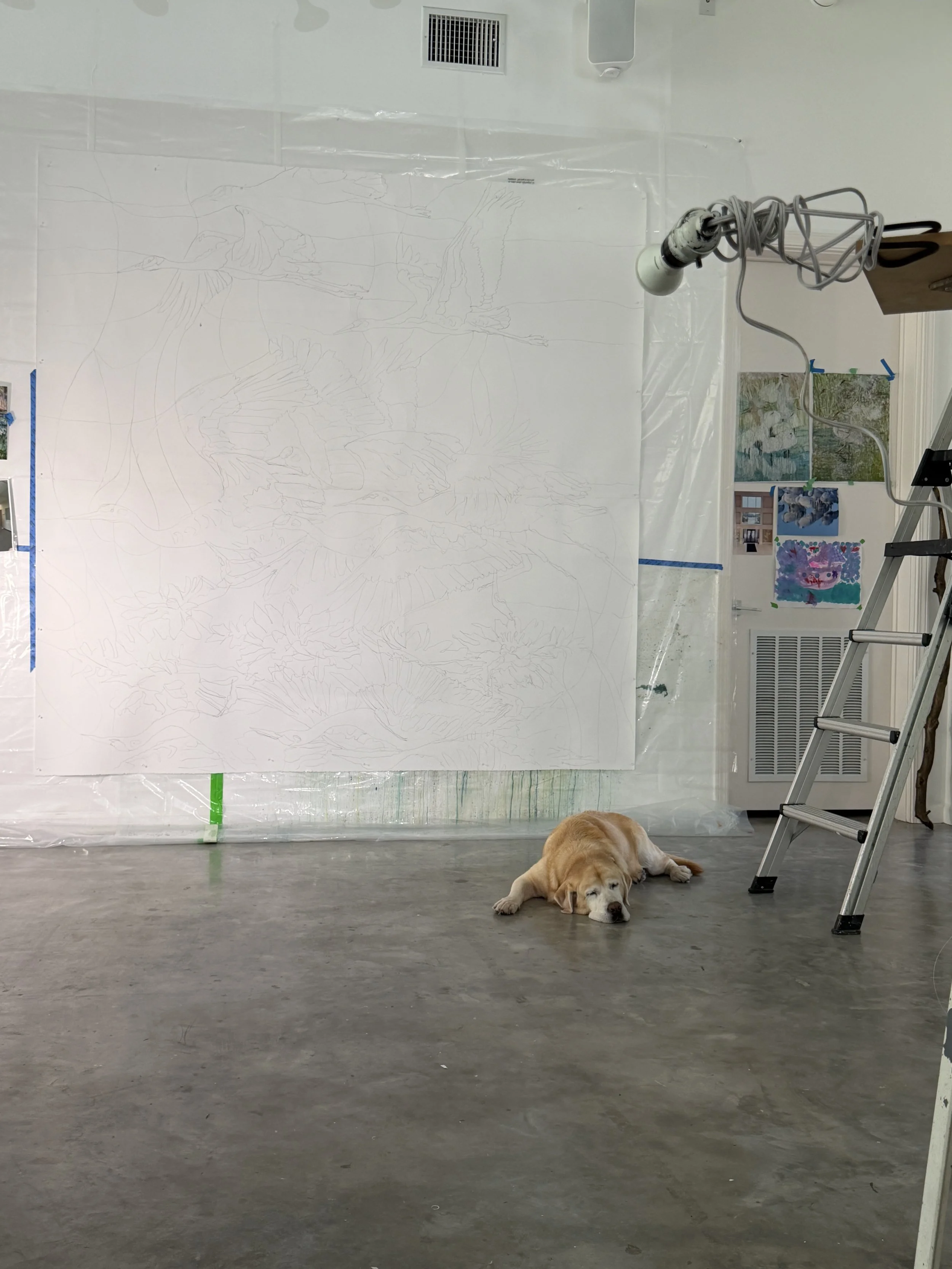
This is the drawing before the piece is a piece — hand and eye still deciding: water to wing to petal; a beak, a seed head, a cleft in a lily pad.
The edge of a feather blossoms and a blade of grass takes flight.
When I was asked to make a piece for the Nick Fennigan Counseling Center fall fundraiser, I said yes without hesitation. It’s an organization worth supporting — they counsel families affected by extreme weather, including many who lost family members in the flooding of July 4, 2025. Water and grief, water and generations, is ground I’ve been standing on for a while now. Their work matters to me on more levels than one.
So I don’t want this piece to merely decorate a hallway. I want it to hold what happens in that room — someone arriving low, in the mess of it, and finding, slowly, that they can rise. I want it to be a resource, an inspiration — something that lifts spirits the way lilies rise out of the mud every morning, the way sandhill cranes, once nearly gone themselves, still rise out of the wetlands and don’t look back at what they’re leaving.
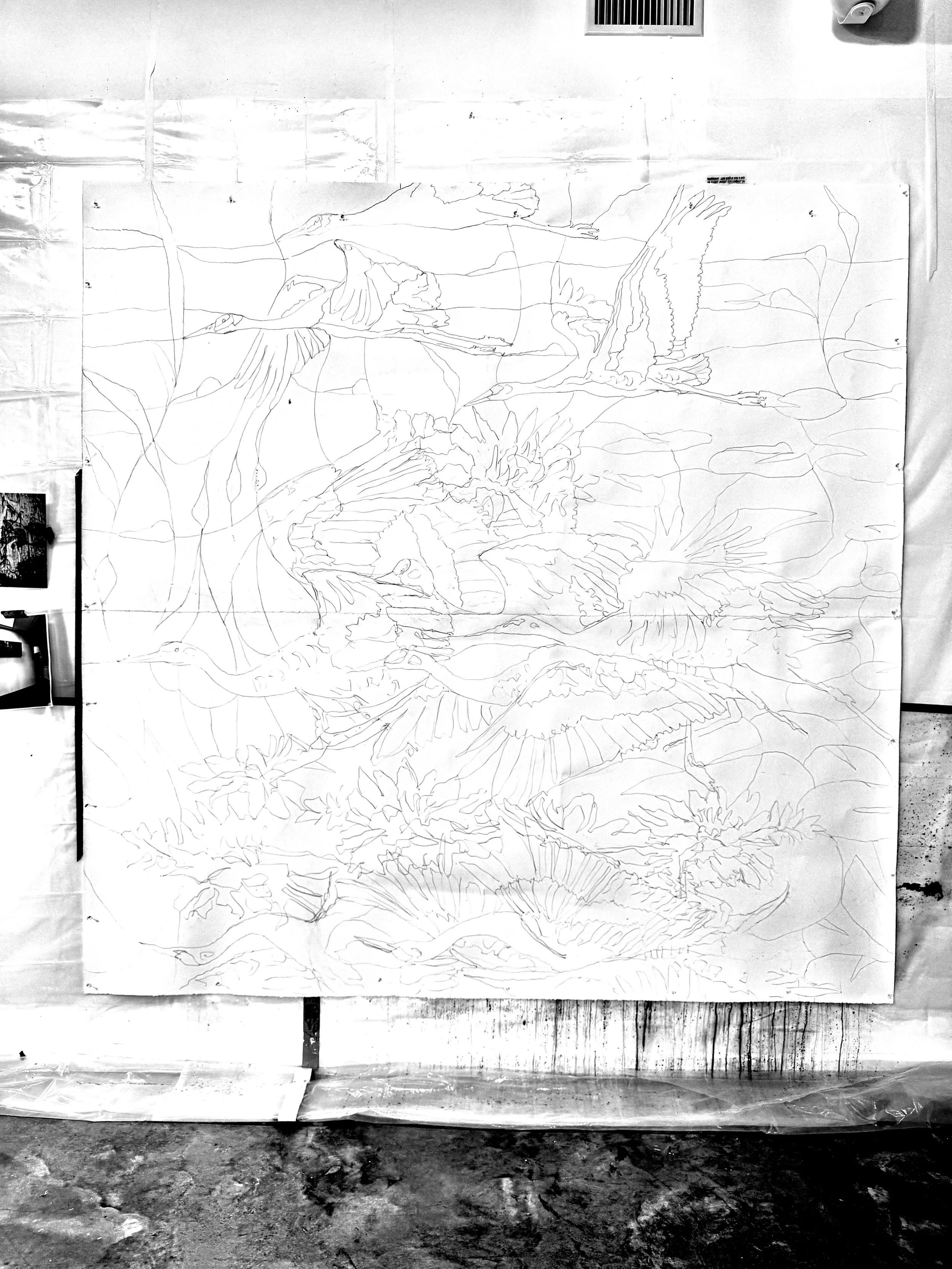
So I drew a wetland, and I drew it the way I think about first responders — which is to say, not as uniforms and sirens, but as what shows up first when a system has been wounded and starts, quietly, insisting on repair. A weed pushing through cracked asphalt is a first responder. So is a bird.
Sandhill cranes are in this piece because their comeback is one of the real ones — a species that was down to a scattering of breeding pairs, that could have gone the way of so many others, and instead climbed back. Slowly. Generation by generation, without hurry, without announcement. That feels true to what happens in a counseling room too.
The birds are drawn mid-lift — wings still tangled in the reeds and in each other, not yet clear of the water. That’s the moment I wanted: not before the flight and not after it, but the part where you’re releasing the wetland and it is letting go too. I think that’s closer to what the center’s clients are actually doing than any image of a bird already high and settled in a clean sky would be.
And underneath all of it, water lilies — because they close every night and go back down into the dark water, and every morning they open again and rise, with the sun, the going-under makes them more beautiful. They don’t rise despite the muck. The muck is where the roots are. Where they seed. Even their blooms won’t hold still — female one day, male the next, never settling into the one story a flower is supposed to tell. I wanted that in the piece without saying it out loud.
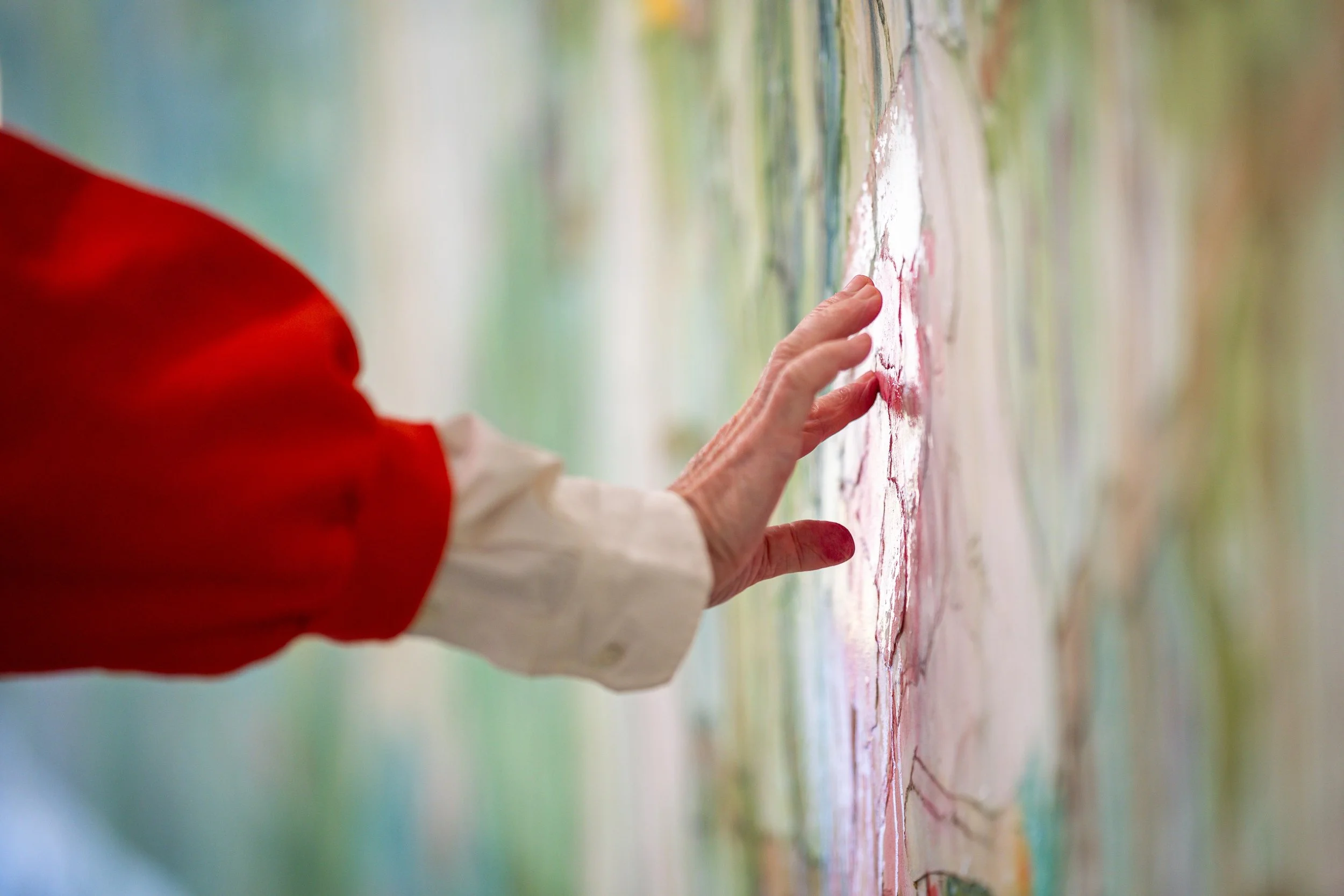
The final work will be monotone — torn paper and dripping in whites lightly tinted, the same process I used for Unfolding Hope, scaled to eight feet by eight feet. But it starts here, in pencil, working out where every petal that becomes a feather needs to sit before any color touches the paper.
More as it develops.