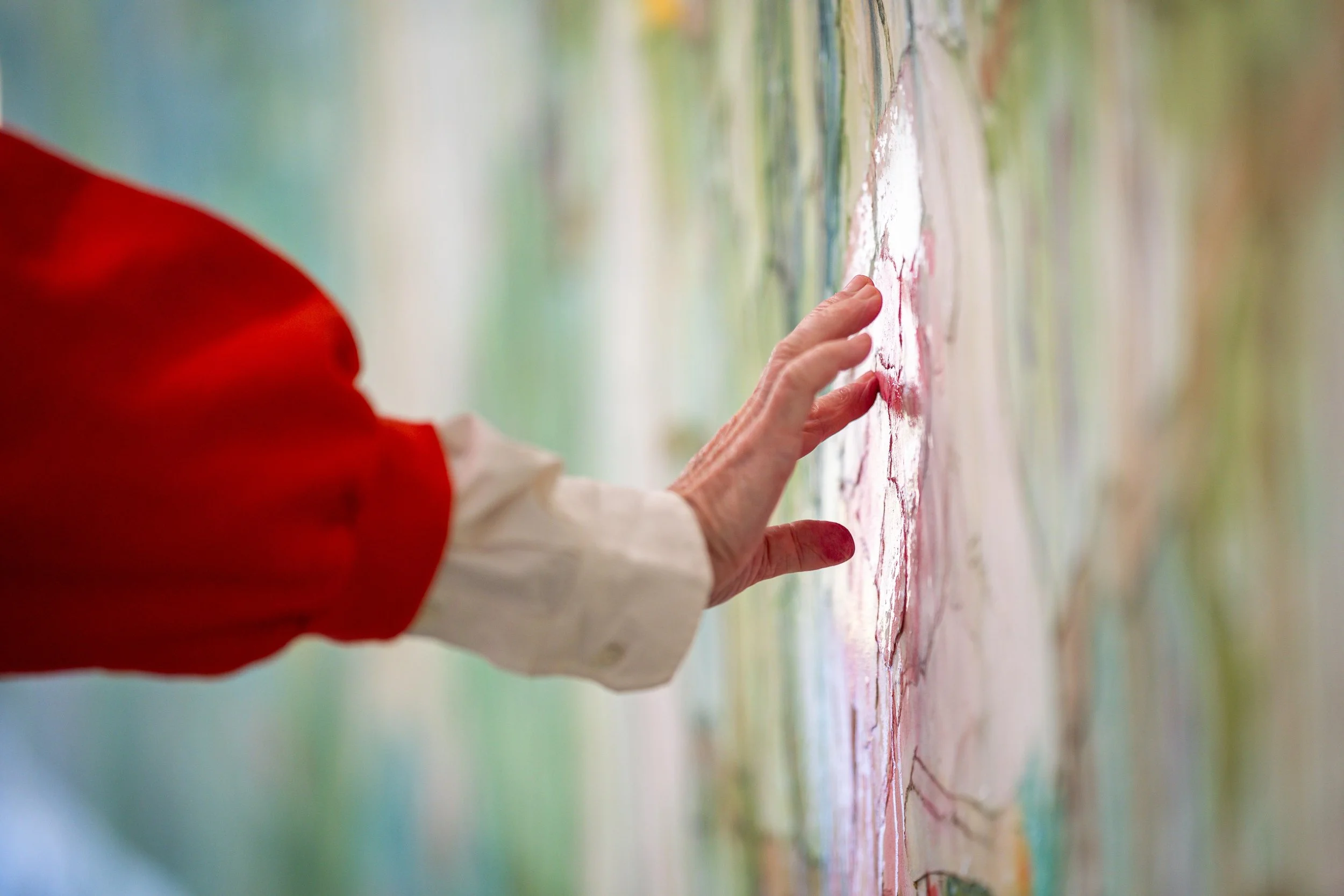
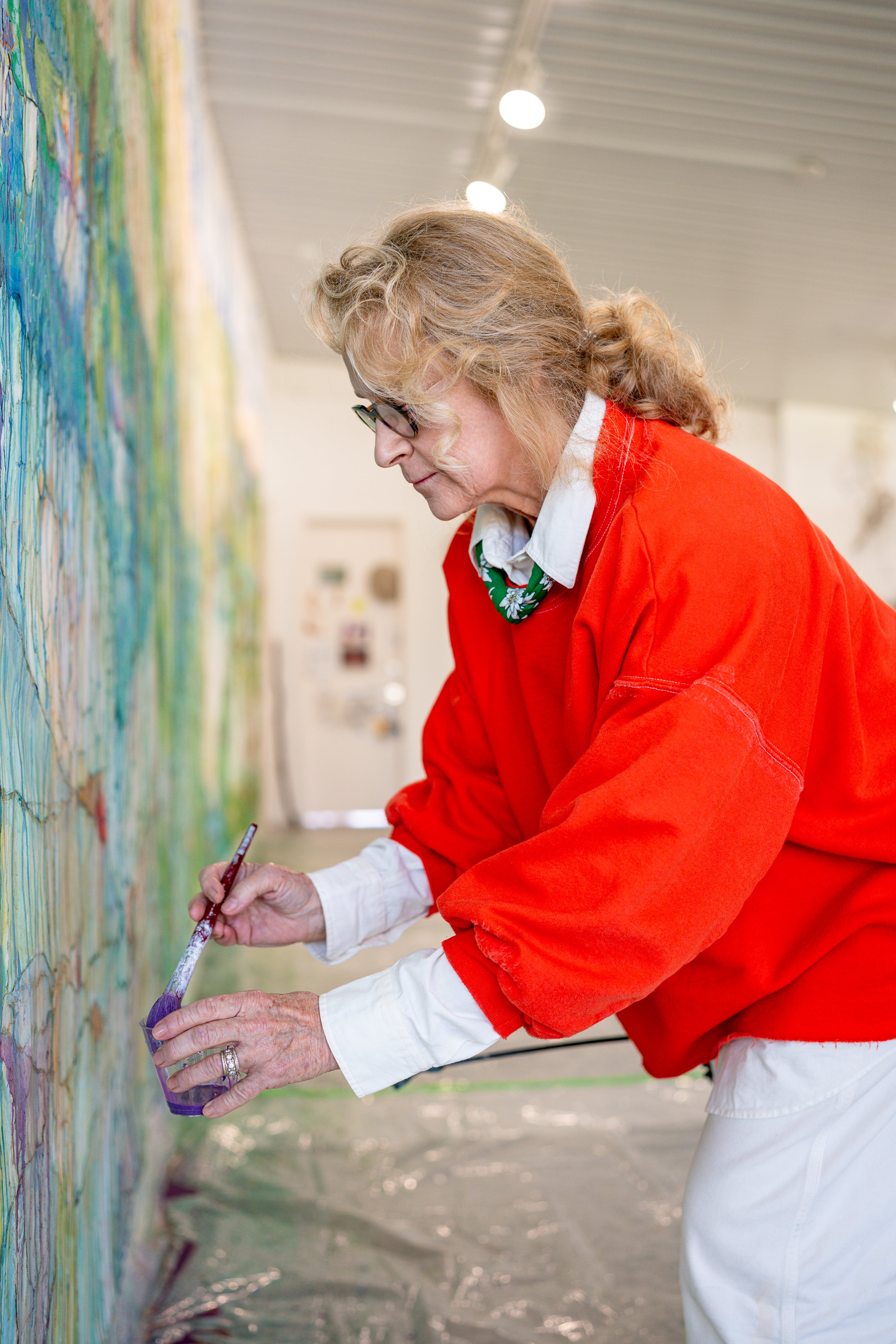
I finished Unfolding Hope last week. These photographs were made about a month ago, when I was still deep in it — crouched on the floor of the gallery, a garden sprayer in one hand and a cup of pigment in the other, watching watercolor run down nine feet of layered paper. That moment still captures the process well: I set things in motion and then pay close attention to where they go.
The Piece
Unfolding Hope is a site-specific quadriptych on paper — approximately 28 feet wide by 9 feet tall — and the piece for my solo show for the Houston Endowment Jones Artist Awards Program 2026. The four panels are: Quiet Estuary, Life's Stubborn March, Courtship Dance, and Knowledge Is The Bridge. Together they move through the story of the sandhill crane — near-extinction in the early 1900s, recovery through the Migratory Bird Treaty Act and restored wetlands, and what that recovery means for how we live now.
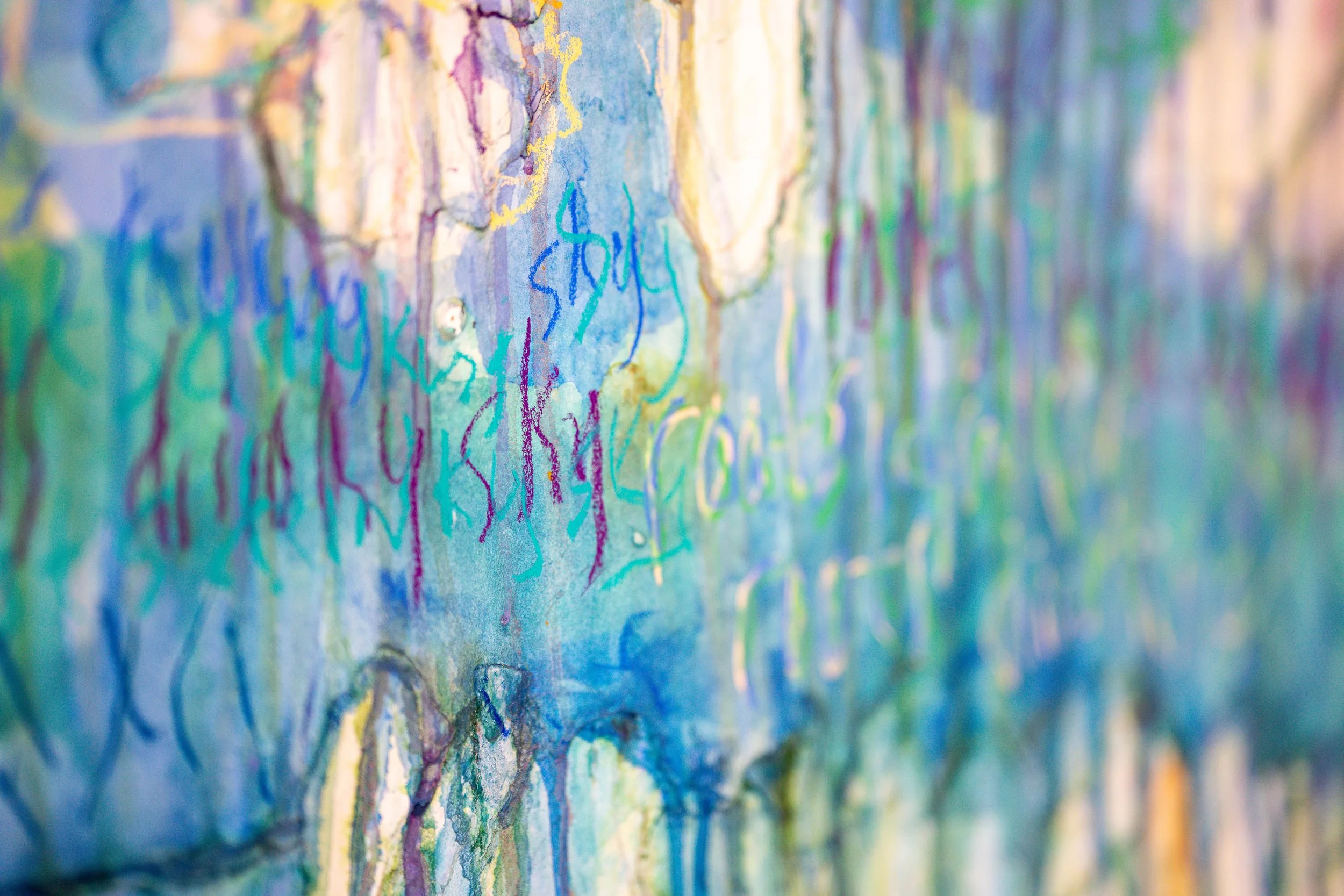
My poem, also called Unfolding Hope, is written directly onto the surface in pastel—layered over itself in multiple colors —so the words almost dissolve into the landscape. Some phrases are readable up close. From a distance, they just look like marks. That's intentional. The seed phrases scattered across all four panels include:
My Process
This is a process I developed in 2025. I start with research — studying the birds, pinning photographs to the wall, making detailed color swatches, doing pencil drawings on Stonehenge paper until I really know the forms. That research matters to me as much as the painting does. I can't draw what I haven't truly looked at.
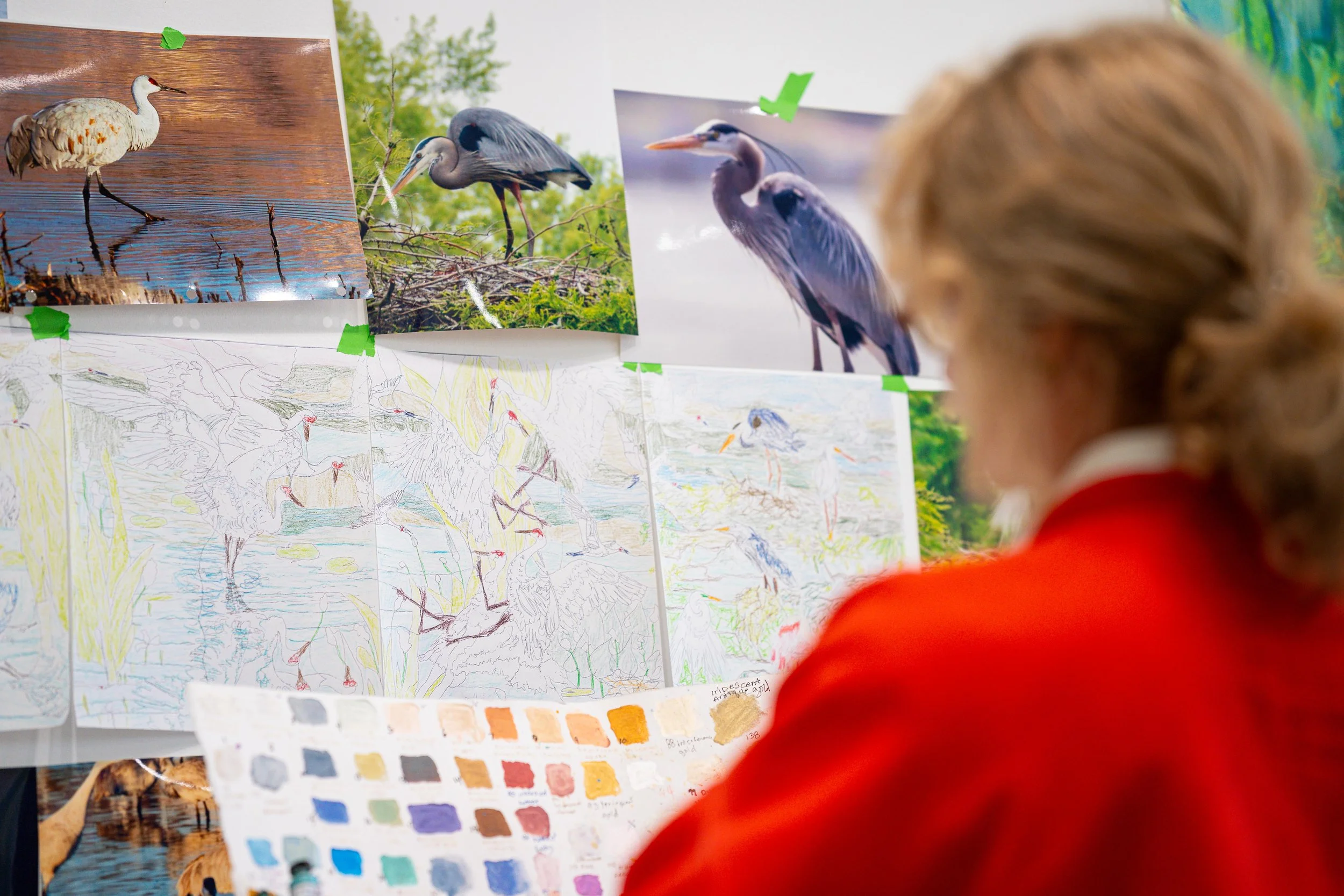
The reference photographs pinned to my wall are mostly my mother’s — Minnie Travis, who is 95 years old and still out there shooting and sending images through Dropbox. I can’t make this up. Some are mine, but honestly, hers are much much better.
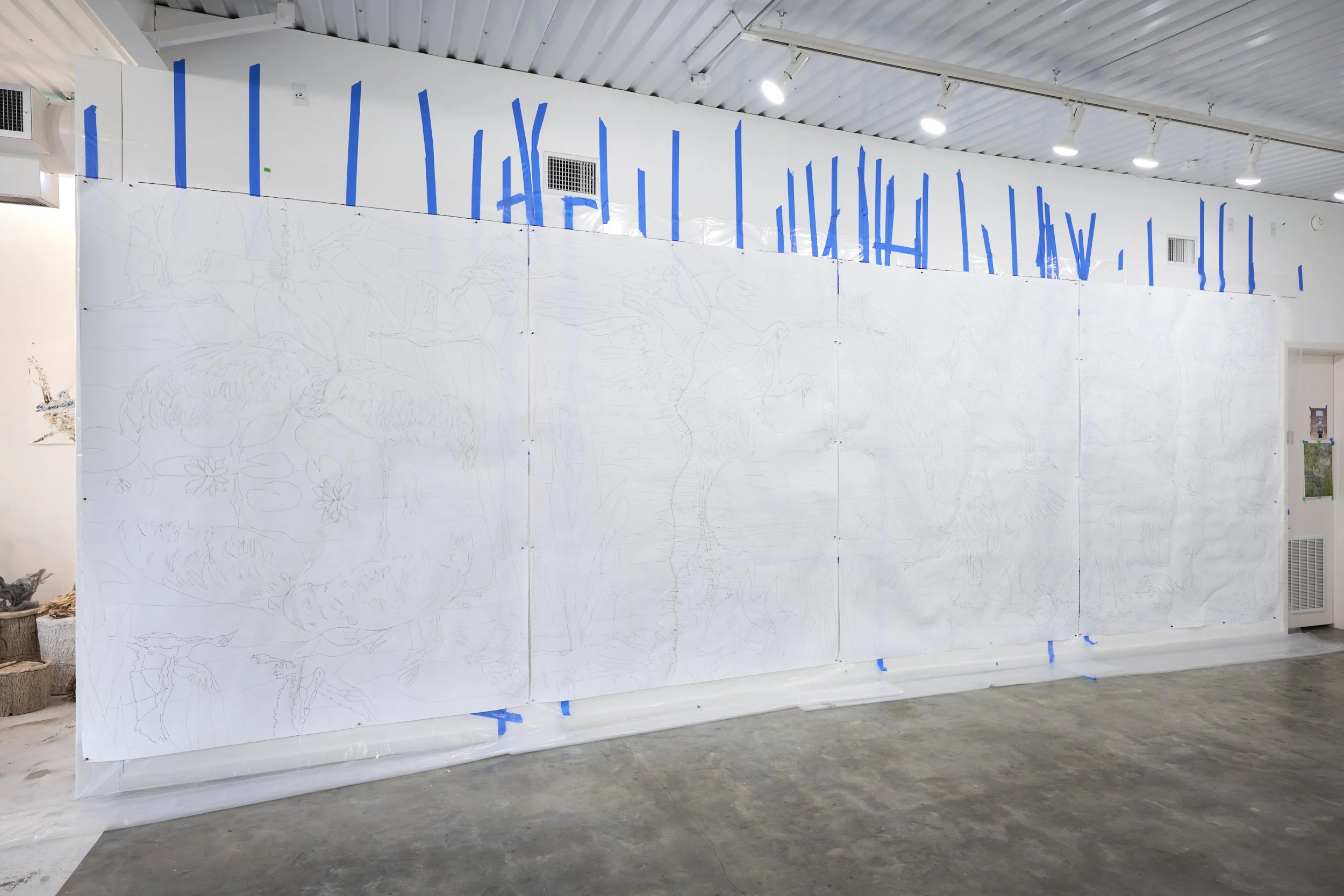
The drawings
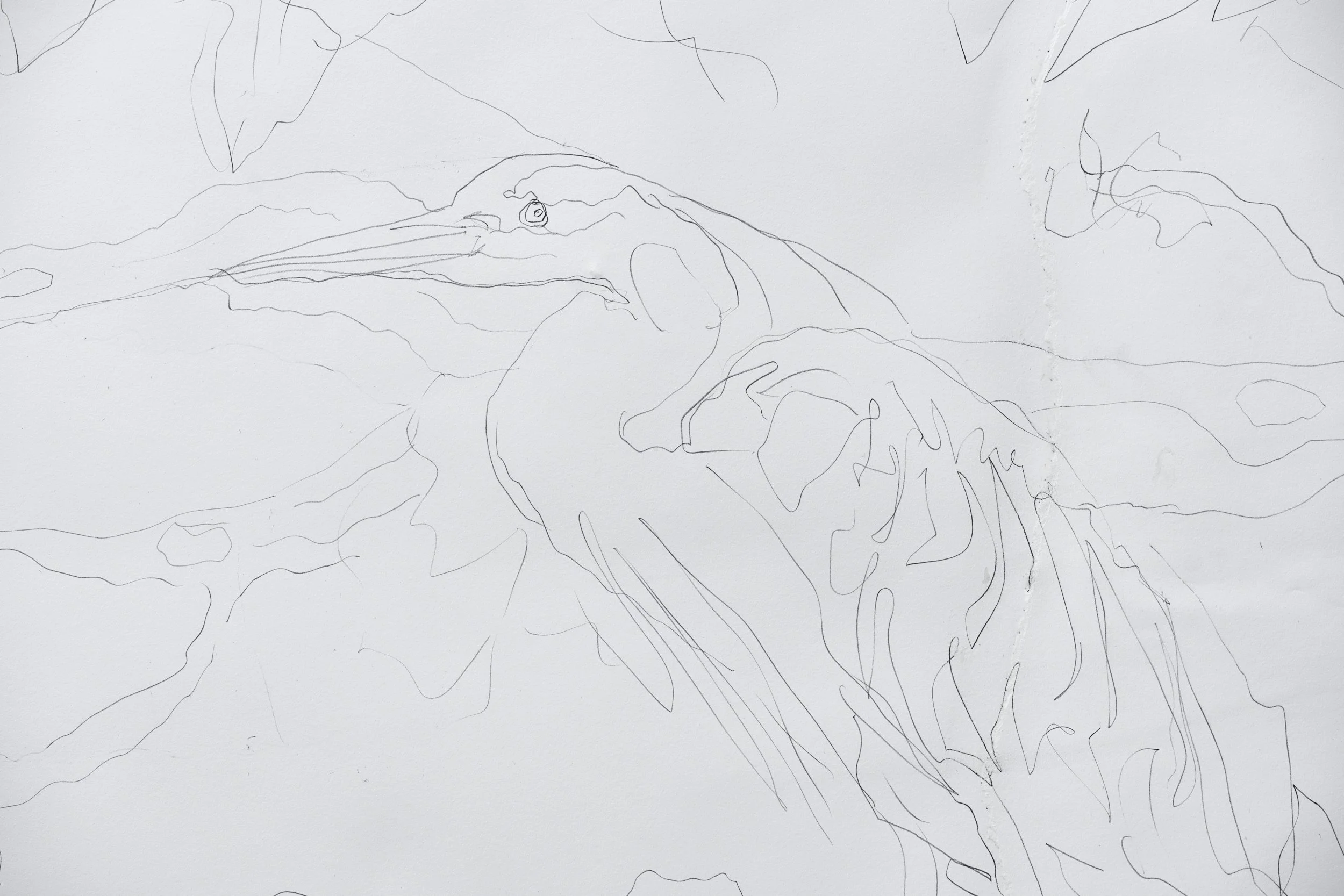
Great Blue Heron- Detail of drawing on the fourth panel Knowledge is the bridge.
Then I tear the drawings apart. Not cut — tear. I collage the torn pieces onto a fresh sheet of the same paper, which creates a layered relief. The torn edges bring energy to the composition and help the birds blend into the environment rather than sitting on top of it.
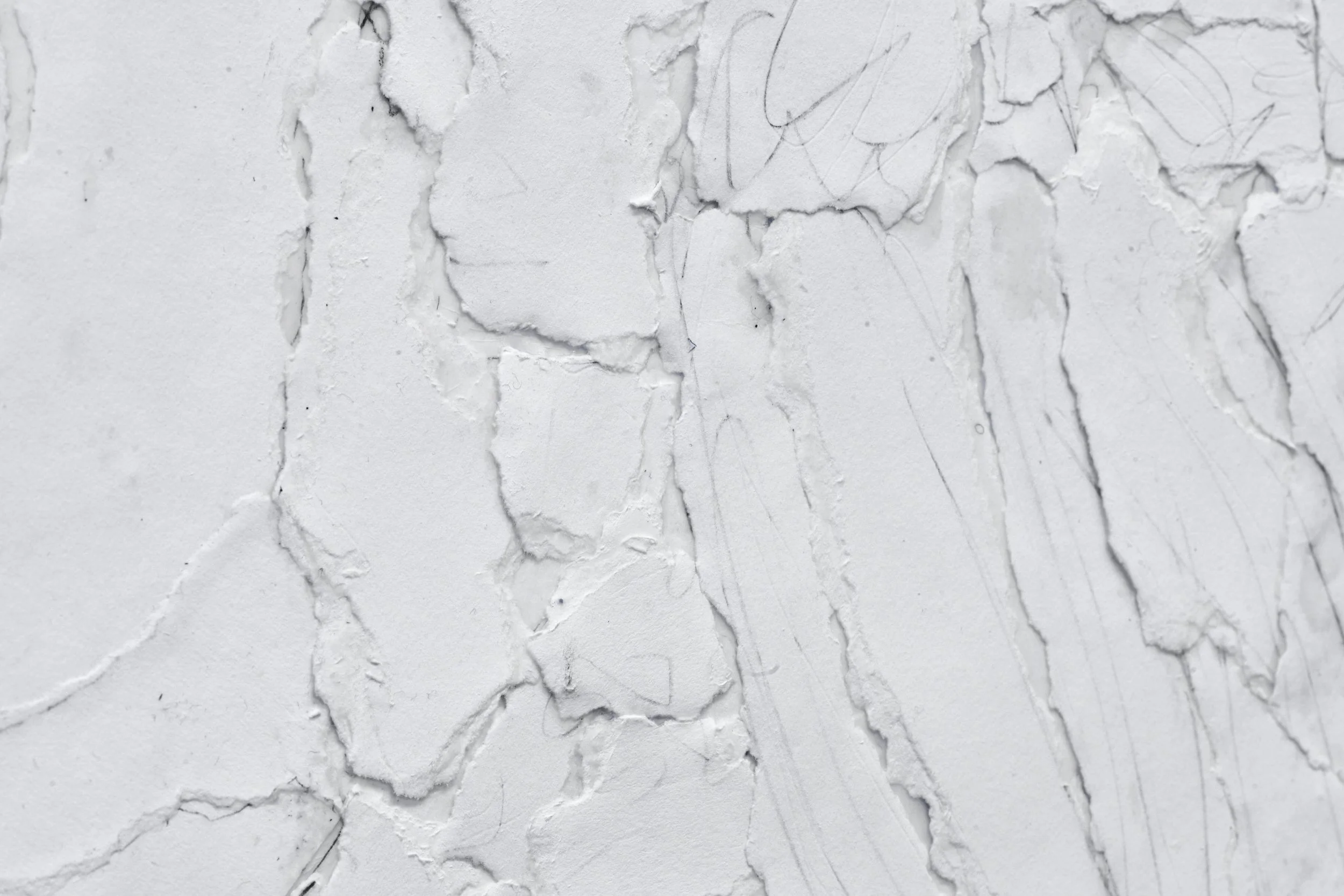
After that, the color. Big washes of watercolor and ink, then the garden sprayer to push wet paint into all the ridges and cracks in the relief. The surface ends up looking almost geological — cracked and stratified, with color pooled in the low spots. I go back in with pastels for line work and detail, spray again, repeat until it feels right.
The finished panels are three to four sheets thick. They're surprisingly durable.
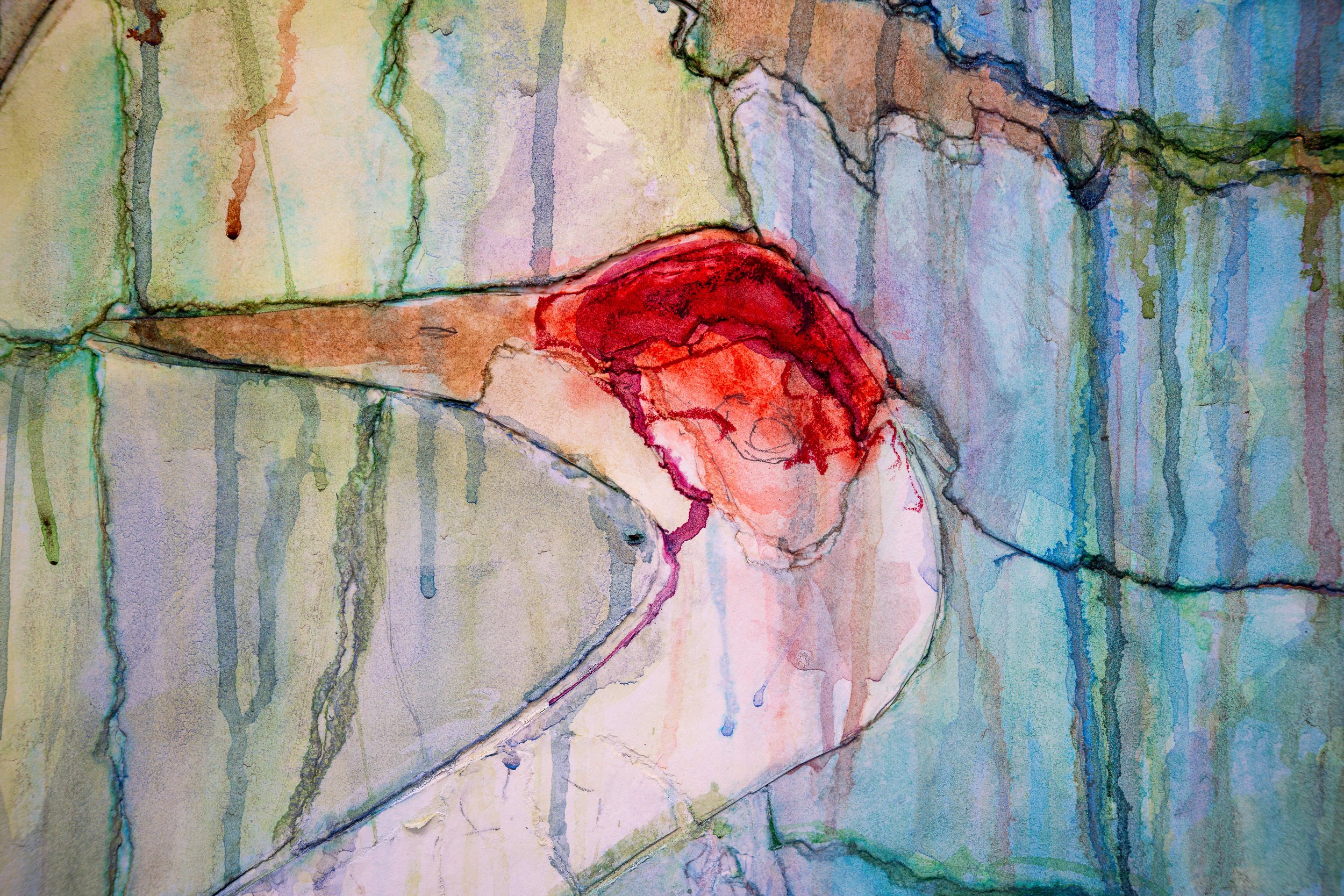
Sandhill Crane detail
Why This Bird
The sandhill crane population was down to 24 birds in parts of their range in the early 1900s. They came back — through the Migratory Bird Treaty Act, through habitat protection, through people deciding they were worth saving. That's the story I keep coming back to. Not because it's a feel-good ending, but because it actually happened. Aldo Leopold heard that prehistoric call at dawn and wrote about it as the sound of evolutionary time — deep, ancient, irreplaceable. I feel that way about the coastal prairie.
Richard Louv's line runs through all my work: we cannot protect what we don't love, can't love what we don't know, can't know what we don't see. This piece is built around that. The birds are specific, the habitat is specific, the history is specific. The more particular it is, the more it matters.
These Images
These shots were taken by Rony Canales (@ronyedin) about a month ago — I'm grateful to him and to Houston Endowment and Weingarten Art Group for their support of this work. The mural takes up the whole gallery wall.
— — —
Unfolding Hope is part of my solo show, made possible through the Houston Endowment Jones Artist Awards Program 2026.
Photography by Rony Canales (@ronyedin).
Presented in partnership with Weingarten Art Group (@weingartenartgroup).
More at www.cindeeklement.com and @cindeeklementart.
Quisque iaculis facilisis lacinia. Mauris euismod pellentesque tellus sit amet mollis.