
I ran into the print making room to drop off some new paper. I took the opportunity to see how the last 6 compared to each other and how multiple bees might look together. I will do one more experiment and the plan the grouping.

Sewing 🐝 #4 experiment for possible community project.
Sewing 🐝 #4
This piece is a conversation starter. The bee on this cap is the Bombus Affinis or commonly known as the Rusty Patch bumble bee. This bee was listed on the endangered species list in 2017. It is the first U.S. bee to be listed.
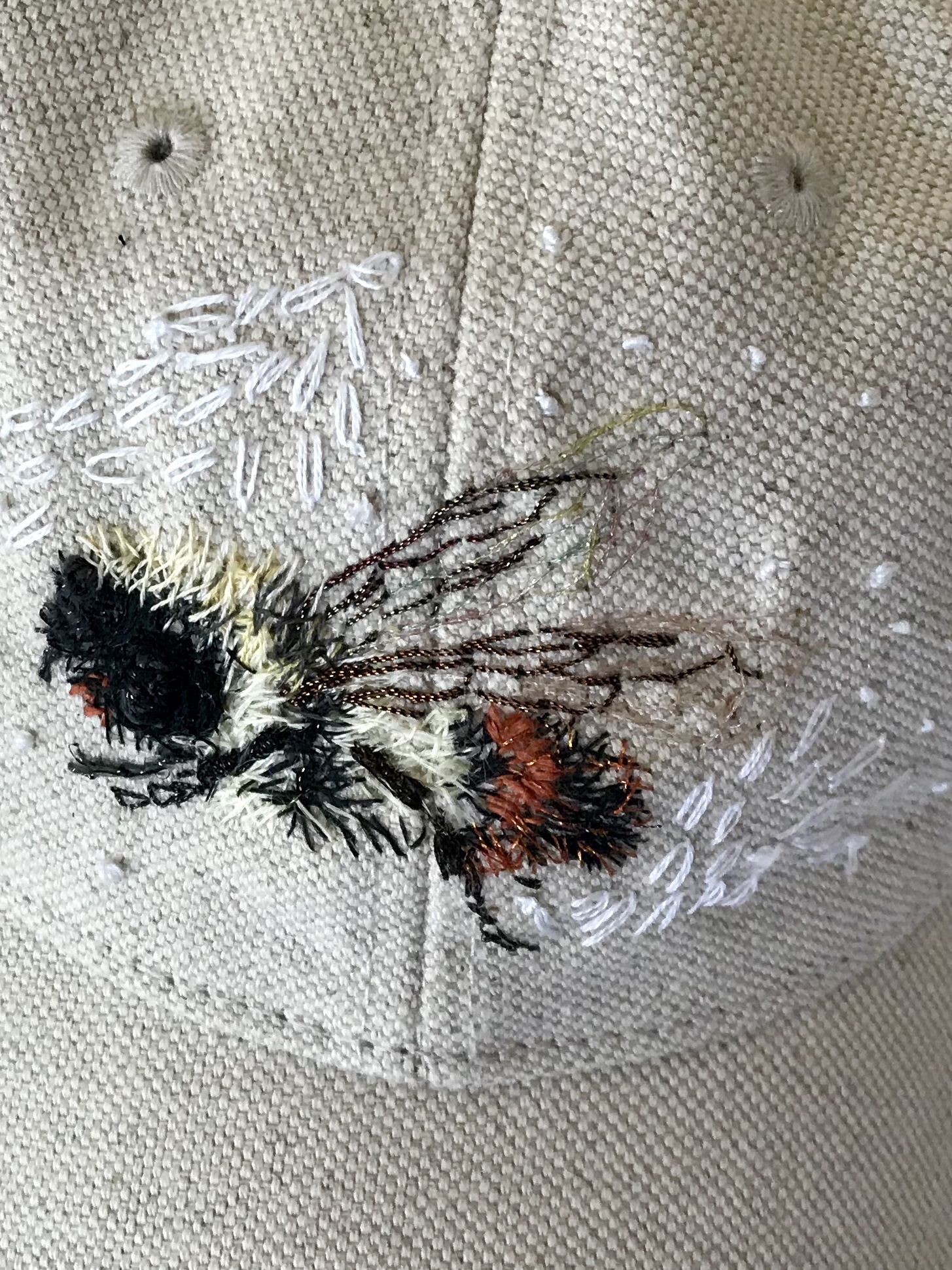
Finished piece.

No planing just winging it. It explains why that antenna is so BIG
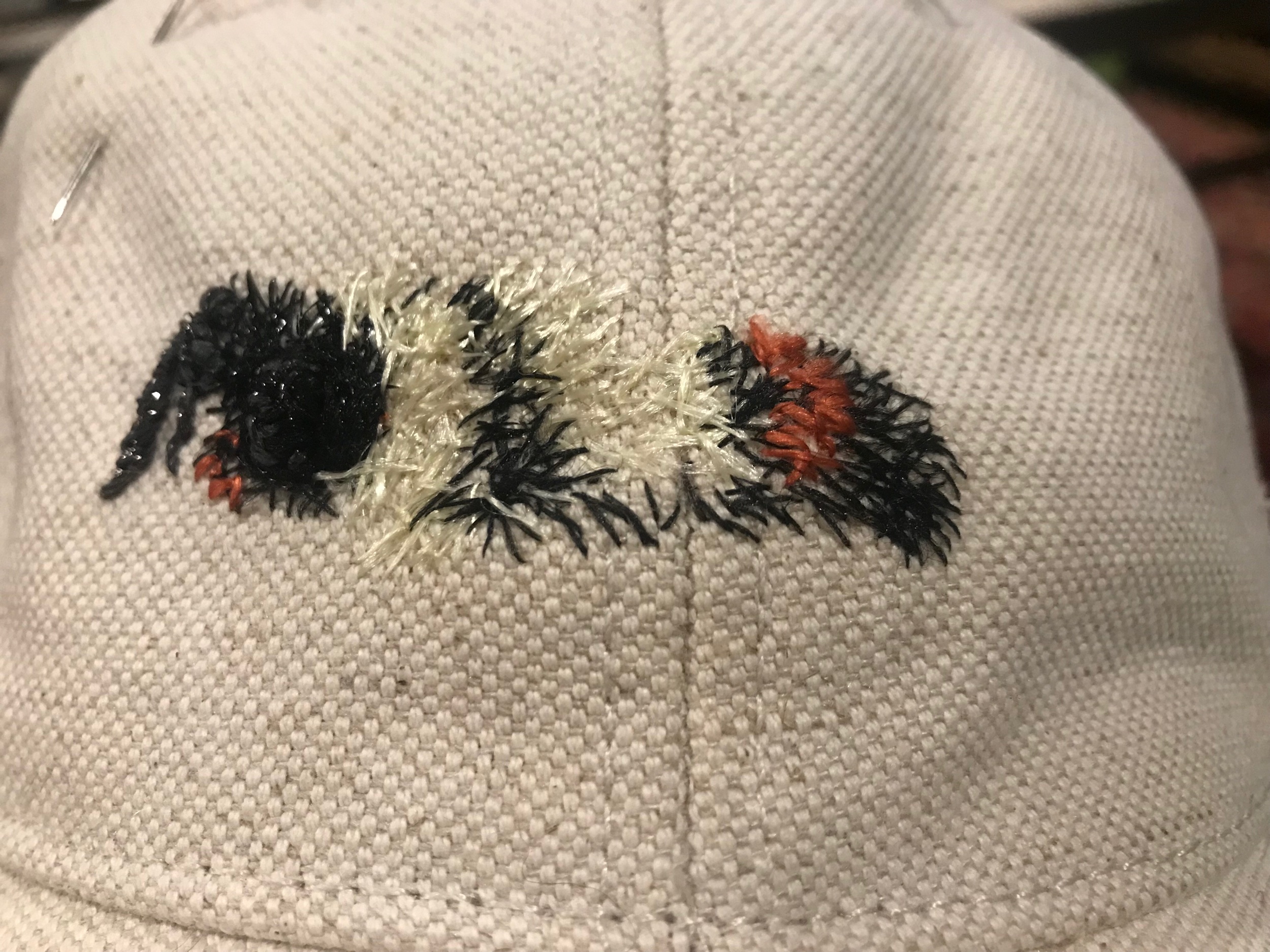
This fuzzy little body needs some wings.
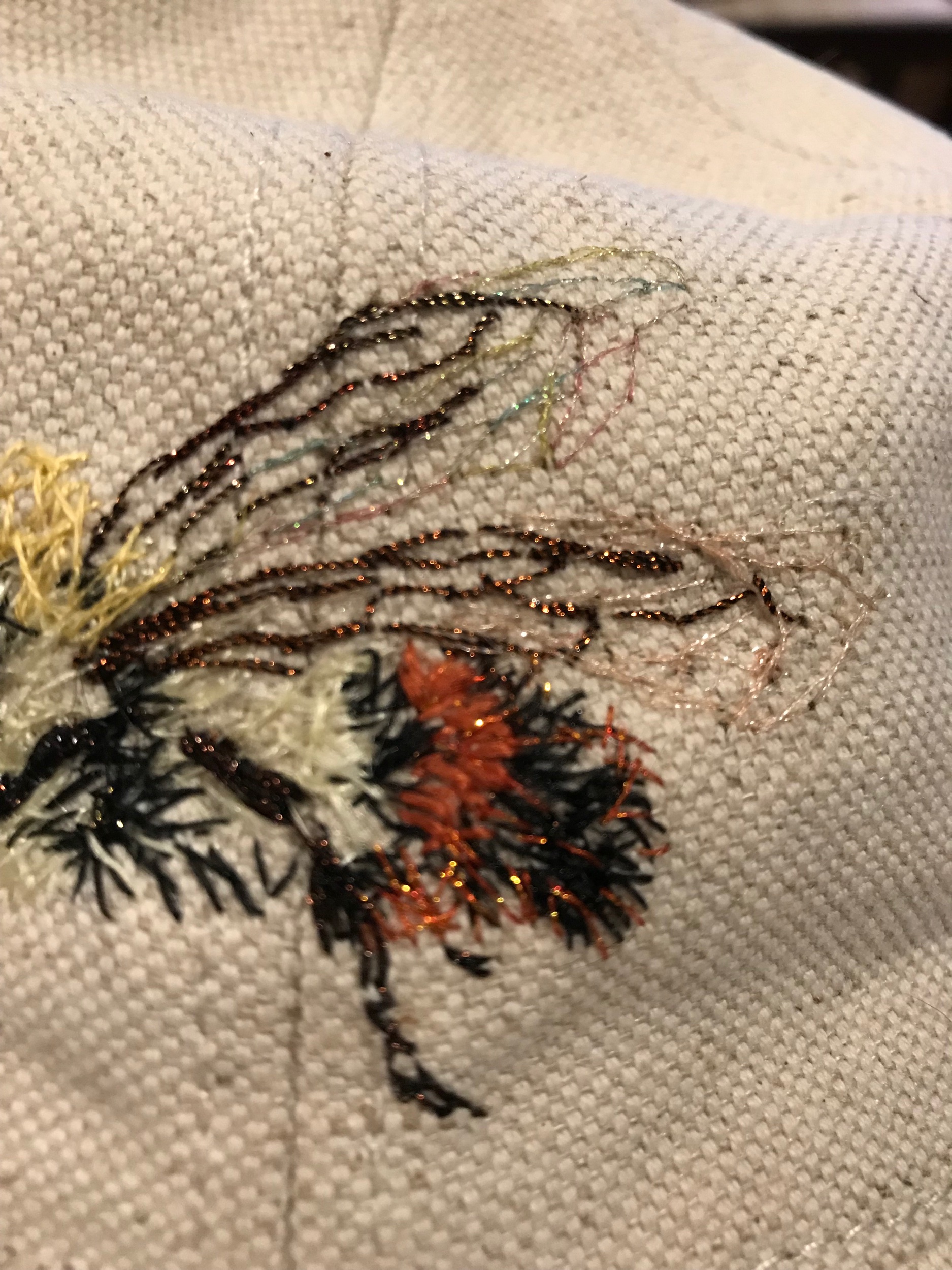
Detail of wing and legs
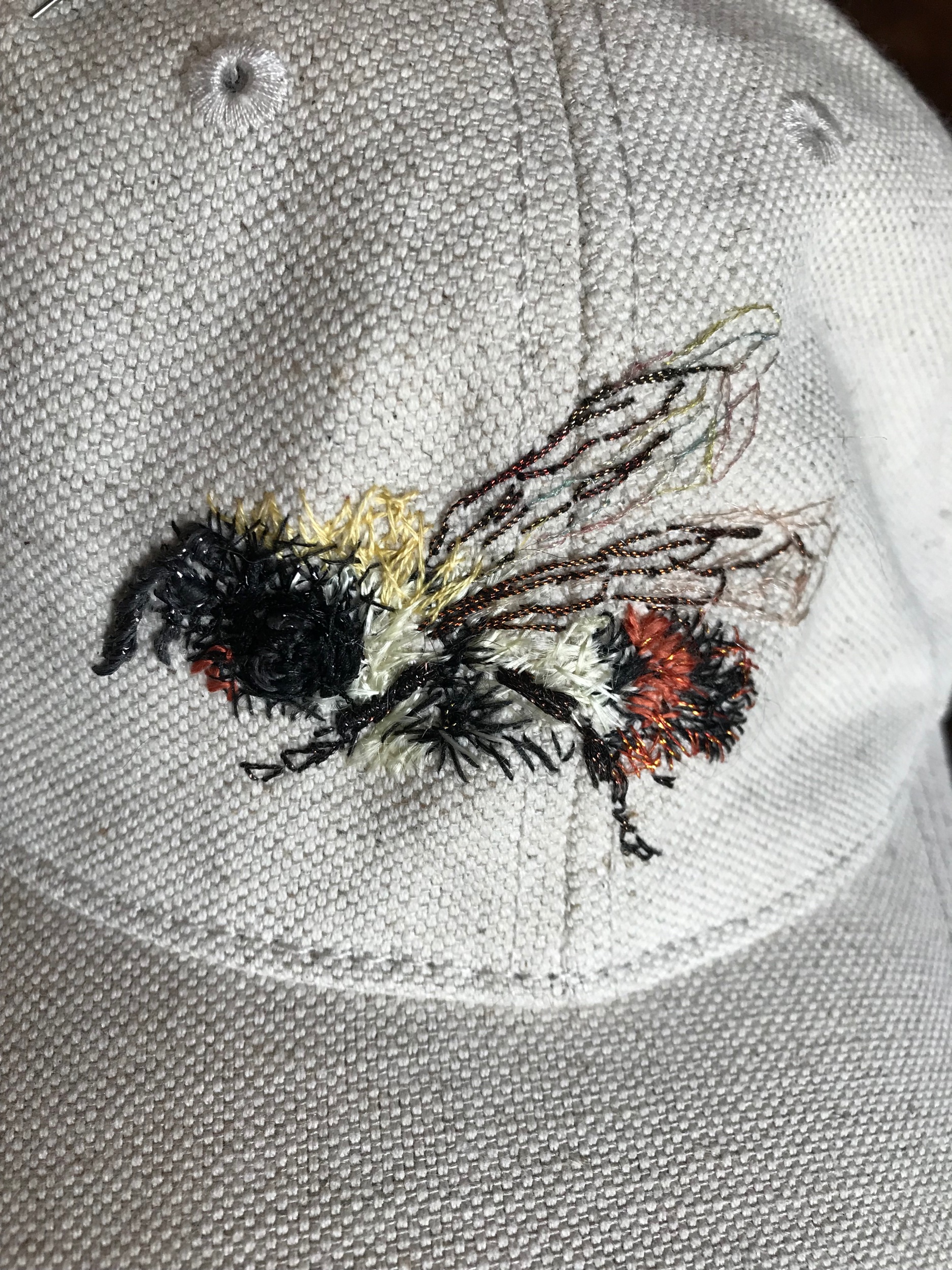
I need to delete the giant antennae.
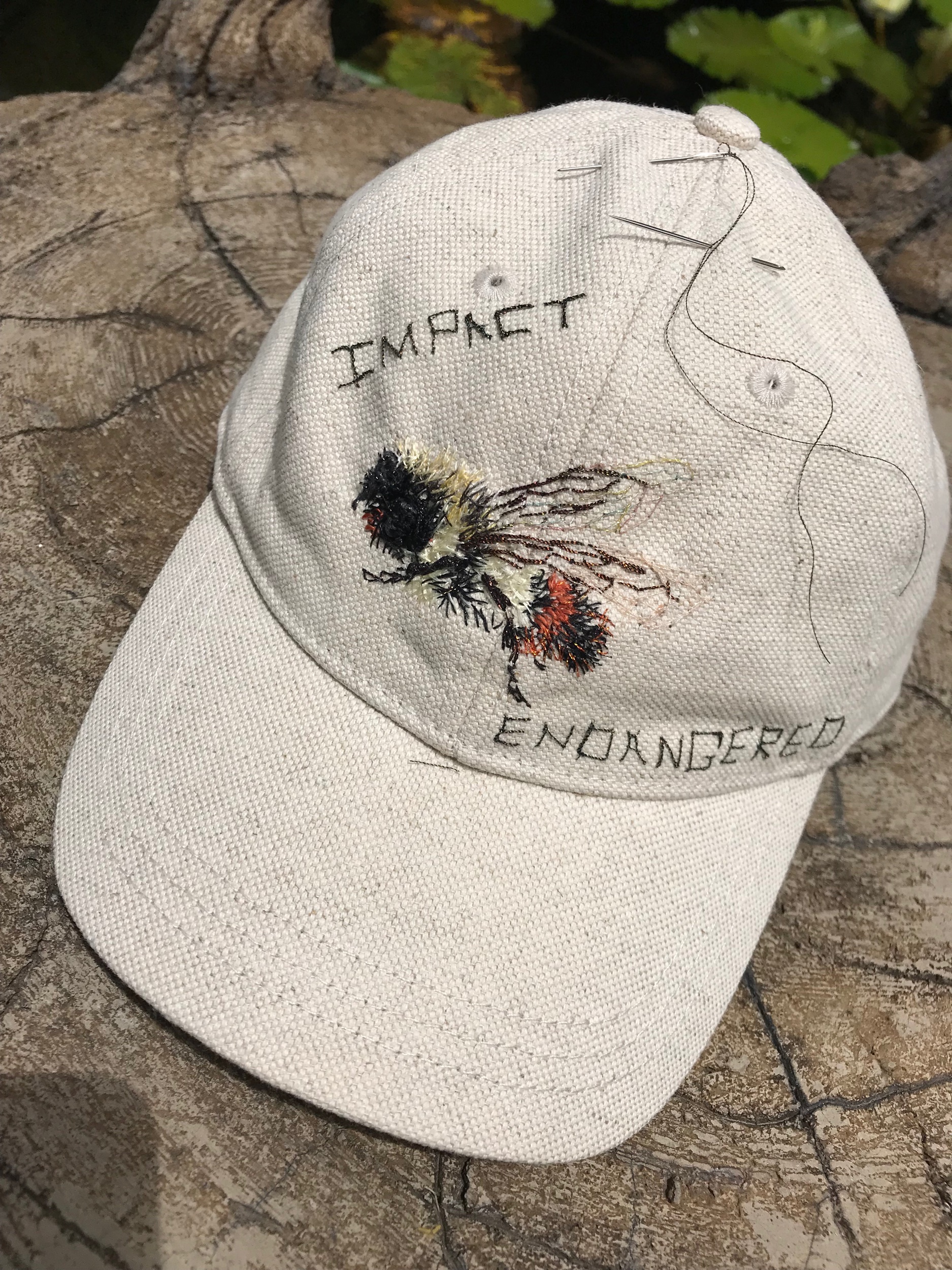
Copy added
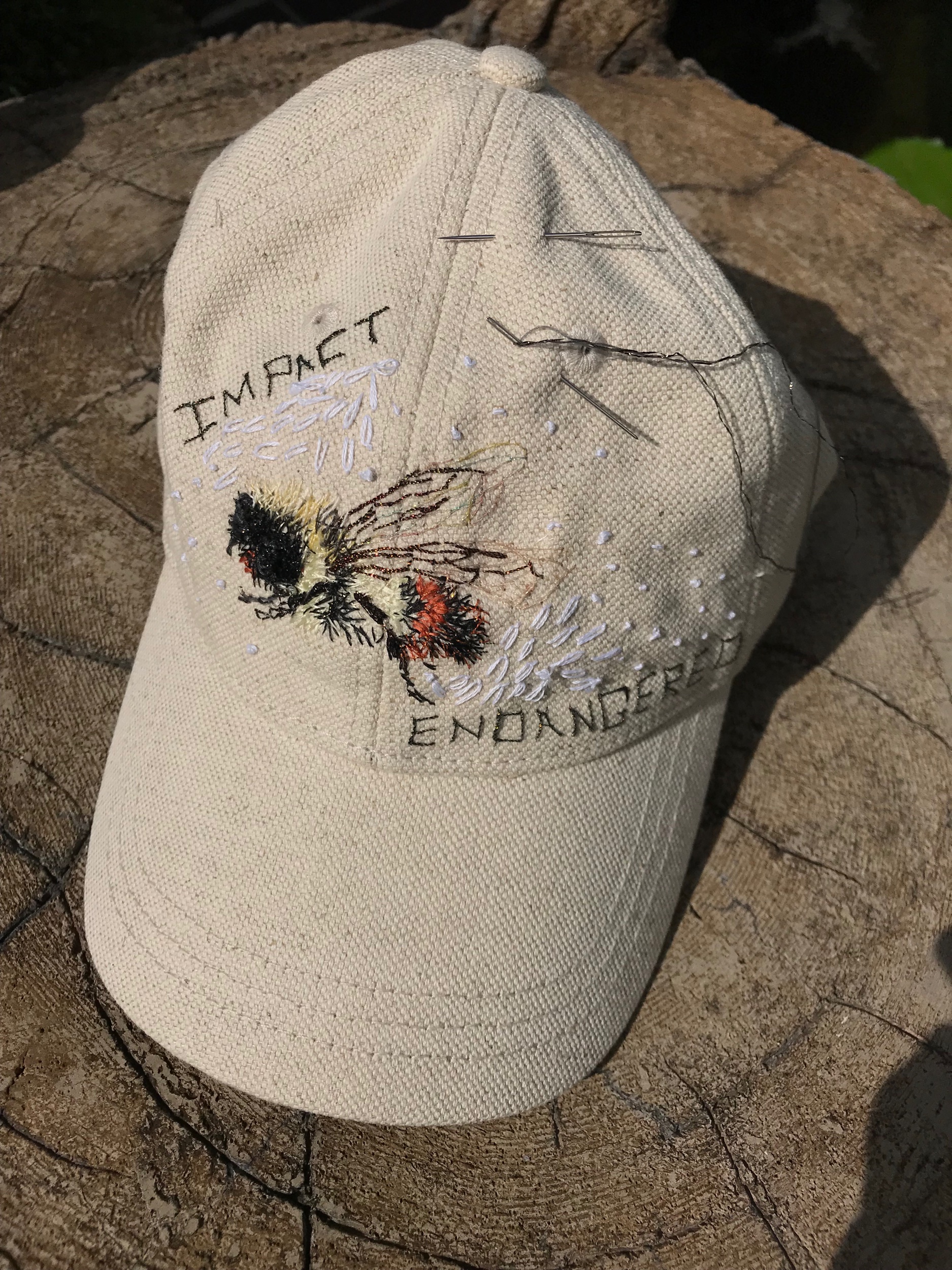
Every bee needs some pollen in the air.

After I finished and stood back I was not pleased. It was too busy, too much. Today I took out Impact. It feels better, I will live with it and maybe take out Endangered and the pollen and plant pieces.
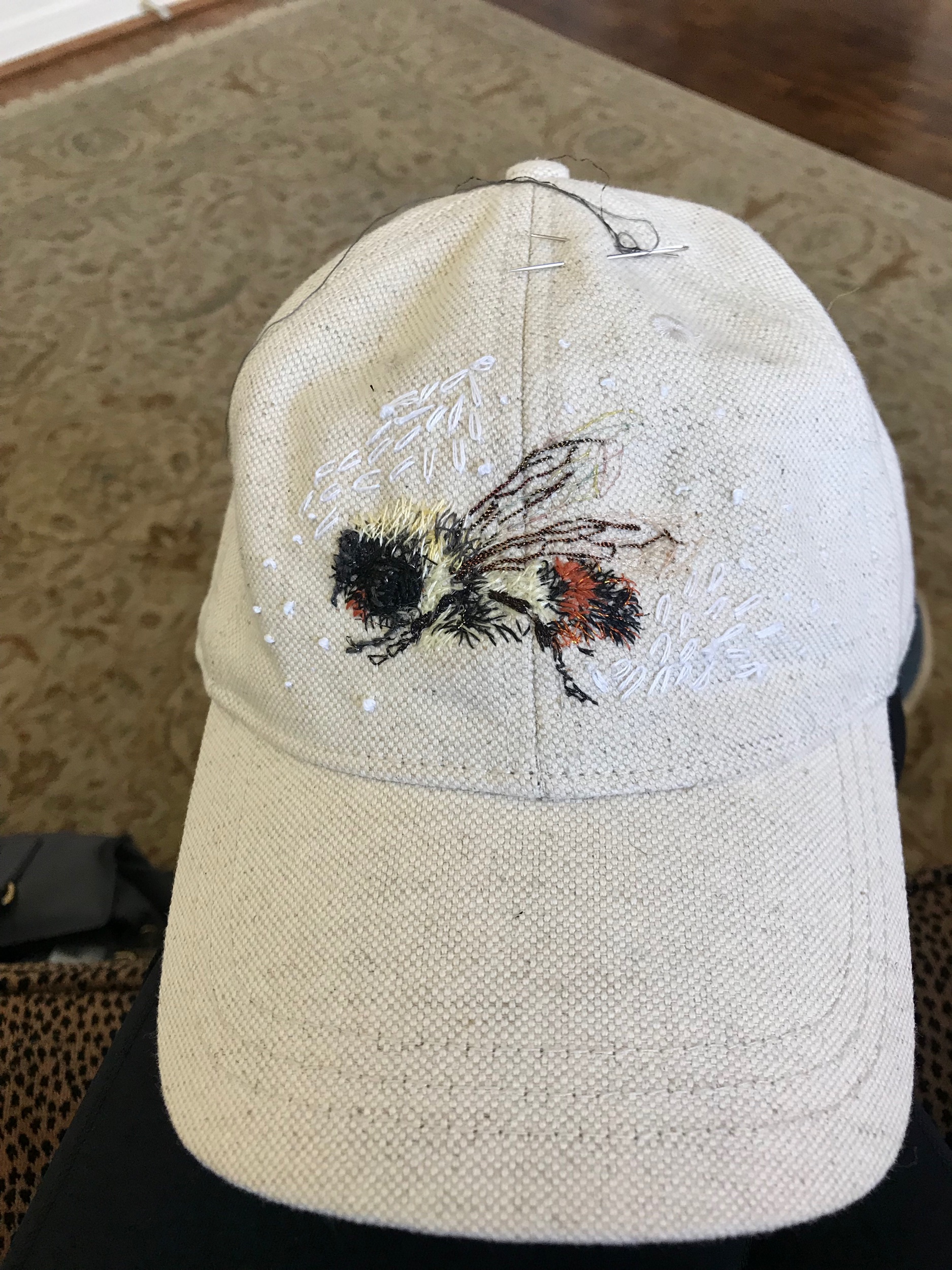
Is destitching a word?
Nine things that can help #savethebees
1. Plant a pollinator garden
2. Pull weeds or better yet go native, as many weeds and wild flowers are food for bees.
3. Do not use herbicides to kill weeds. Bees live in the ground and neonicotinoids kill microflora in bee guts, making them less tolerant to bee disease.
4. Find natural ways to combat mosquitos. Many urban beekeepers tell me their hives suffer when city mosquito trucks spray and when their neighbors install mosquito misting systems.
5. Become an urban beekeeper.
6. Buy local honey that is not mixed with corn syrup.
7. Provide a water source.
8. Buy local organic food.
9. Spread the word.
Sewing 🐝 #4 experiment for possible community project.
Sewing 🐝 #4
This piece is a conversation starter. The bee on this cap is the Bombus Affinis or commonly known as the Rusty Patch bumble bee. This bee was listed on the endangered species list in 2017. It is the first U.S. bee to be listed.
Finished piece.
No planing just winging it. It explains why that antenna is so BIG
This fuzzy little body needs some wings.
Detail of wing and legs
I need to delete the giant antennae.
Copy added
Every bee needs some pollen in the air.
After I finished and stood back I was not pleased. It was too busy, too much. Today I took out Impact. It feels better, I will live with it and maybe take out Endangered and the pollen and plant pieces.
Is destitching a word?
Nine things that can help #savethebees
1. Plant a pollinator garden
2. Pull weeds or better yet go native, as many weeds and wild flowers are food for bees.
3. Do not use herbicides to kill weeds. Bees live in the ground and neonicotinoids kill microflora in bee guts, making them less tolerant to bee disease.
4. Find natural ways to combat mosquitos. Many urban beekeepers tell me their hives suffer when city mosquito trucks spray and when their neighbors install mosquito misting systems.
5. Become an urban beekeeper.
6. Buy local honey that is not mixed with corn syrup.
7. Provide a water source.
8. Buy local organic food.
9. Spread the word.
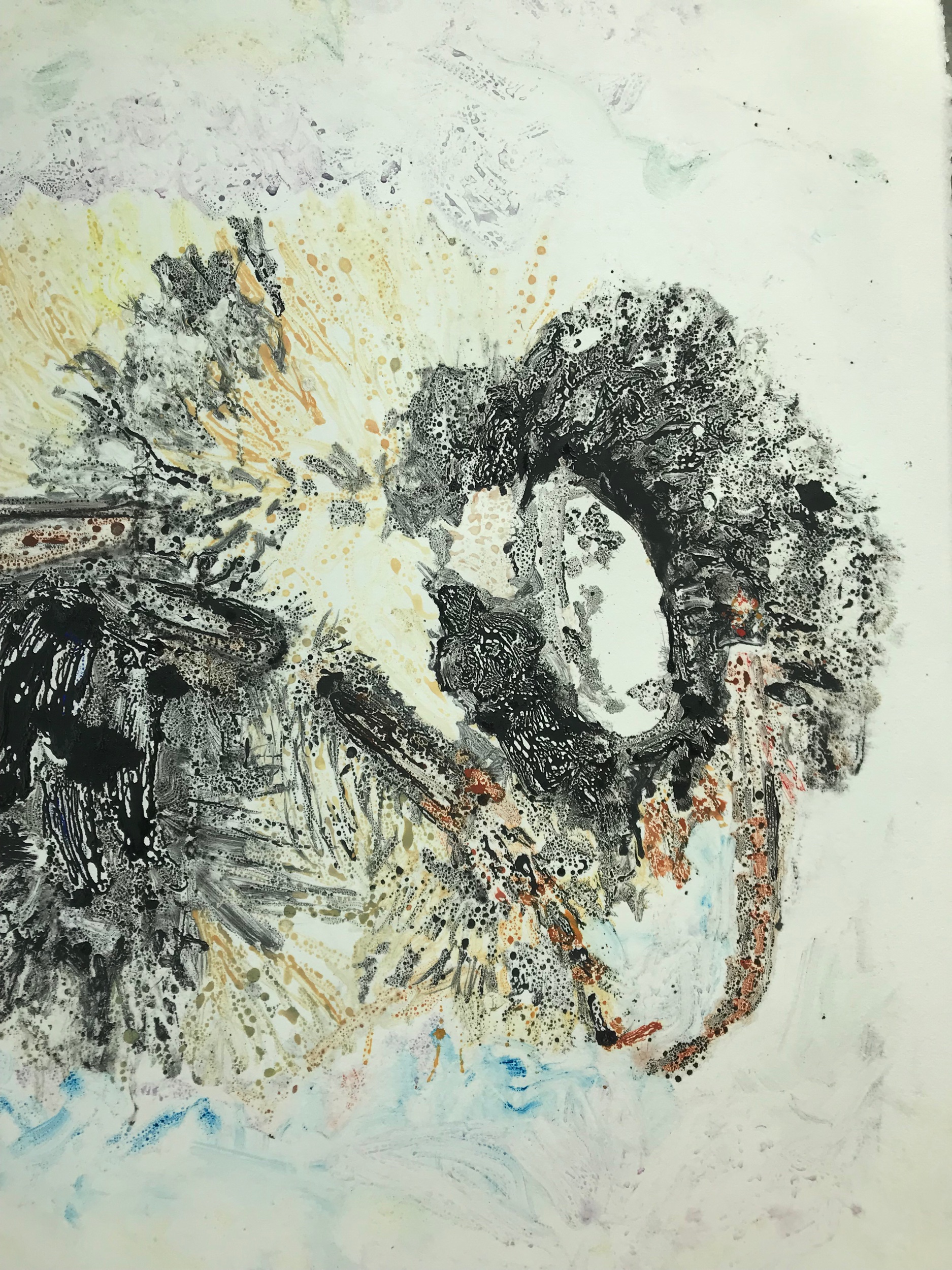
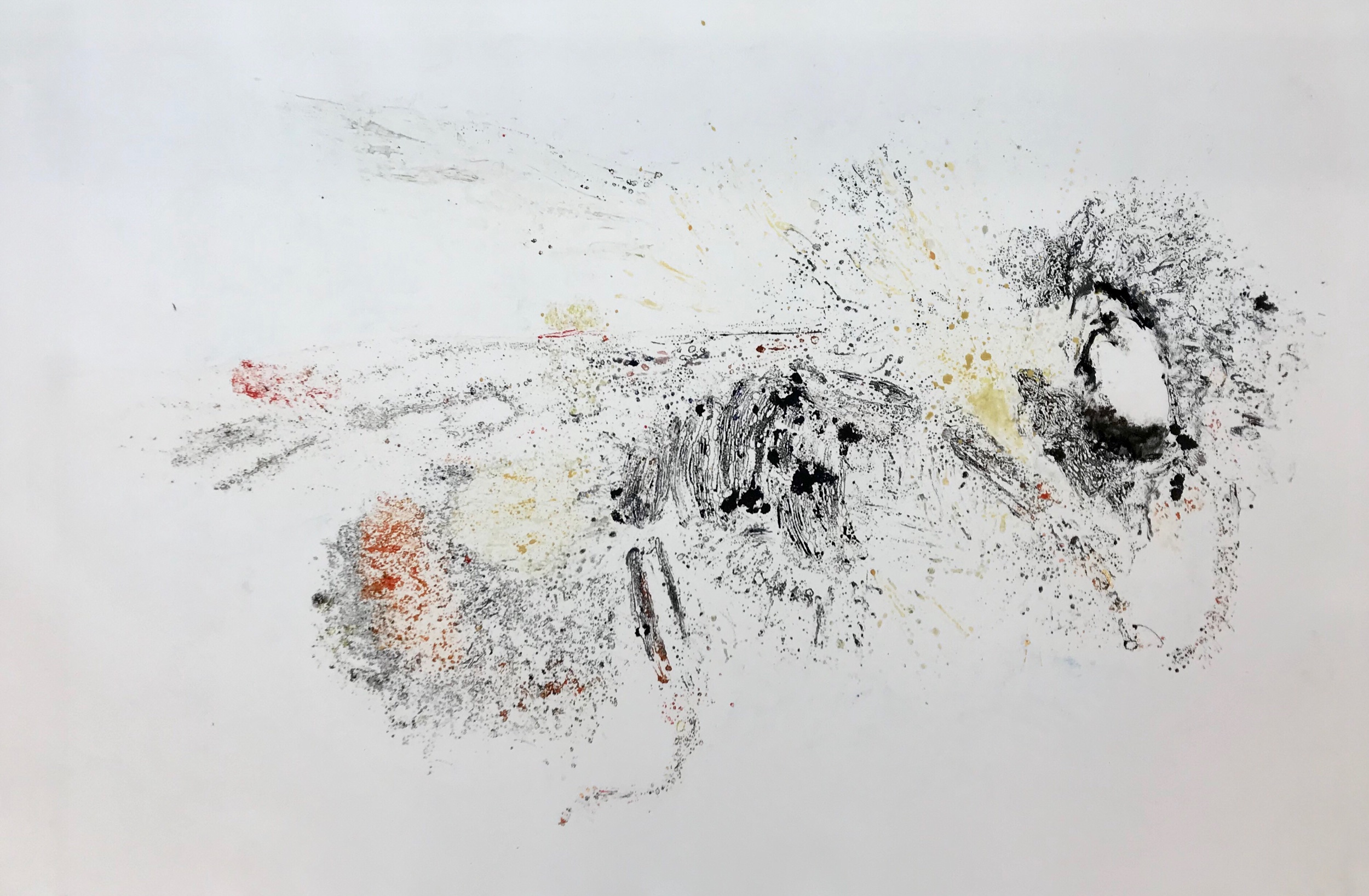
Sewing 🐝 road trip to Roam Ranch
I stitched endangered species on our road trip to Roam Ranch near Fredericksburg. My supportive husband Curtis did the driving so I could stitch.

I free stitched it and you can tell. Why make it by hand if you want it perfect, right?. It does look better than my regular handwriting but that isn’t saying much.
The trip was an incredible experience; worthy of a well thought out post just on the Ranch and the stewards of the land and animals - Taylor, Katy, Cody and Julia.
One for the home team-conservationist win, we thought.
“12 neociotinoid pesticides are pulled from the market”- Muenster Enterprise
I can home Wednesday night a few weeks ago and found a newspaper clipping sitting at my place on our kitchen island. The clipping is from the Muenster Enterprise, a weekly newspaper from my husband’s hometown Muenster, Texas. Curtis reads it every week to keep up with his many cousins. He saved me the article because it reports great news for bee lovers.

Besides 12 neonicotinoids being pulled off the shelves the EPA is now required to analyze the impact of the entire class of neonicotinoids on endangered species.
This morning in my notices I read very disappointing news about the EPA.Even after loosing lawsuits the EPA finds ways to authorize use of chemicals that harm bees. See the below link.

Glysophate
Artspace111 6th Annual Regional Juried Exhibition
Artspace 111 report the the artist that Hilde selected 59 artist out of 1300. Man! I feel lucky to be included.


Artspace111: 6th Annual Regional Juried Exhibition
As an artist, I know how important it is to get your work into exhibitions. With the Texas art scene being extremely competitive, having work accepted into a beautifully juried exhibit is an honor and privilege to be appreciated. It also takes a fair amount of luck, time and it can be costly. That said I am extremely happy that I recently got lucky, “Portrait of My Cousin” was accepted into the regional Juried exhibition at Artspace 111 in Ft. Worth. The exhibit was Juried by Hilde Nelson, the Curatorial Assistant for Contemporary Art at the Dallas Museum of Art. When there is an exhibition I am interested in before I apply I always research the juror. Hilde sounds like a very interesting curator. Here is her description as described in the call. “Her work primarily concerns contemporary art at the intersection of memory, belonging, and political visibility. She has contributed to publications and exhibitions for solo presentations of Günther Förg and Jonas Wood, as well as the recent exhibition America Will Be!: Surveying the Contemporary Landscape, an installation of the museum’s permanent contemporary collection.”
I hope to get to meet her.

PORTRAIT OF MY COUSIN
48” X 28” X 28”
steel, hydro stone, wire cloth, wire mesh, and baling wire
photo by Nash Baker
Portrait of My Cousin was inspired by a long exposure photograph of my cousin, Arkansas Symphony Concert Master Andrew Irvin, that captured time and movement as he played his violin. I applied the same concept of capturing time and movement in photography to abstract sculpture. The piece is physically very light and hangs from a piece of monofilament connected by a swivel from an acrylic hanger. With one light source the piece cast shadows onto the wall. The air movement in the room causes the sculpture to slowly turn changing the viewer’s perspective. The turning movement causes the 3D sculpture and 2D shadows to disappear into each other and reappear at a different perspective. This creates the abstraction of time, movement and sound energy as the Concert Master plays. The gentle movement can be as hypnotic as a beautifully executed sonata.
It is extremely generous of Artspace 111 to take the time and trouble to host the Annual Juried regional exhibition. :)
Pollinators live in the ground
We all see bees, hornets, and wasps in nests, but most bees and many pollinators live in the ground. That is another reason that it just makes good sense to be very selective with what additives you put on your lawn, garden or crops. I had no idea bees lived in the ground until I started my Impact body of work. Yesterday on my walk I saw this wasp fluttering around in the grass. I hope the homeowner uses inputs that will not hurt the wasp intestinal flora. Wasps are also pollinators but they are not as effective as fuzzy bumble bees.
Glyphosate #12 (working title) kinetic sculpture -
Editing bee parts and adding botanical elements.

Glyphosate #10 (working title) kinetic sculpture - another floral add
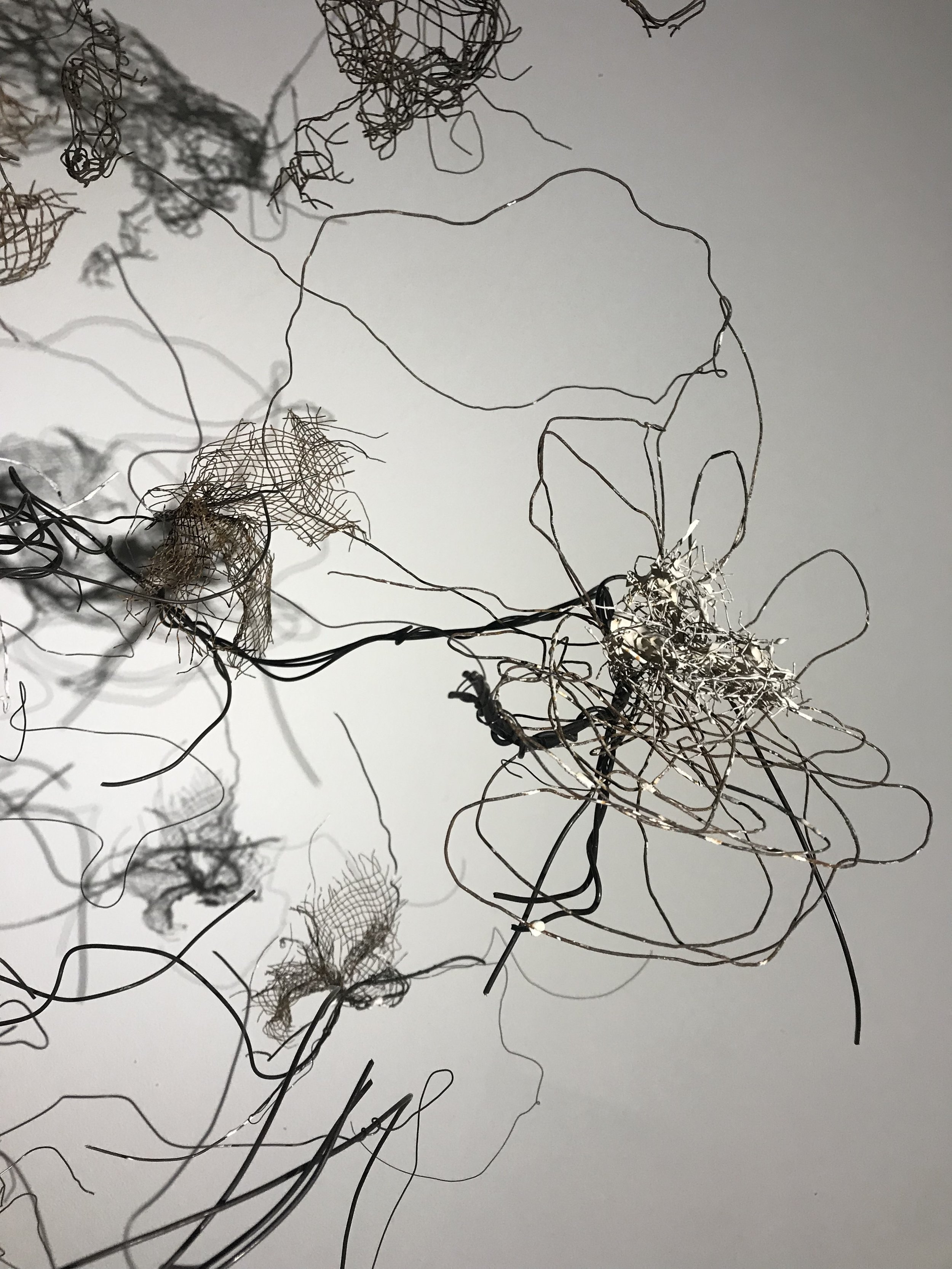

Glyphosate #7 (working title) kinetic sculpture - adding some details
In order to help the large abstract shapes read as botanical or floral shapes I have added some smaller botanical shapes and vines. I think they help.

hopefully this flower is abstracted enough but not too much.

Here is another
Glyphosate #6 (working title) kinetic sculpture - hydro stone
Regarding the title today I am loving “impact” as a title, I will discuss more on that in another post.
On this day I made abstract botanical inspired shapes out of a variety of materials. Then I whipped up some hydro stone and put a coat on the largest shape. The next day I started arranging the pieces into a kinetic composition.

botanical inspired small pieces.

the large piece covered in hydro stone

Above I am starting to connect the pieces.
Glyphosate #5 (working title) kinetic sculpture - flower and 2 bees
I have not added the legs and wings to the 2nd bee. All the bees do not need legs and wings????????
When I add the hydro stone it will be easier to discriminate between the bees and the flowers.
Below are two different compositions using the flower and the two bees.


Glyphosate #4 (working title) kinetic sculpture - a flower
checking out shapes that hopefully read as floral.

Glyphosate (working title) mobile #1 - new body of work.
This summer I will be focused on building a body of work that addresses the impact that pesticides have on the bumble bees and honey bees.
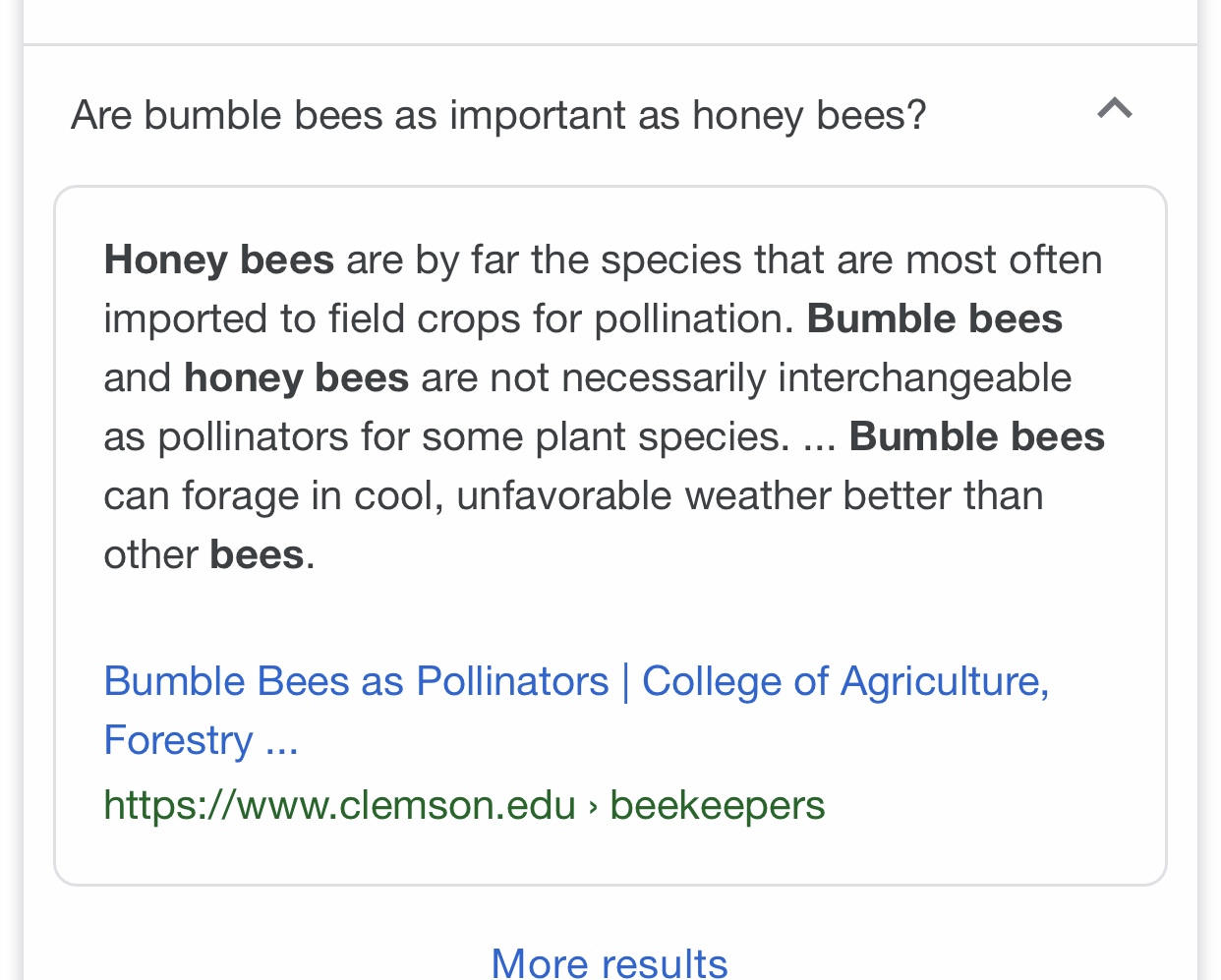
“Why conserve
rusty patched bumble bees?
As pollinators, rusty patched bumble bees contribute to our food security and the healthy functioning of our ecosystems. Bumble bees are keystone species in most ecosystems, necessary not only for native wildflower reproduction, but also for creating seeds and fruits that feed wildlife as diverse as songbirds and grizzly bears.
Bumble bees are among the most important pollinators of crops such as blueberries, cranberries, and clover and almost the only insect pollinators of tomatoes. Bumble bees are more effective pollinators than honey bees for some crops because of their ability to “buzz pollinate.” The economic value of pollination services provided by native insects (mostly bees) is estimated at $3 billion per year in the United States.”
https://www.fws.gov/midwest/endangered/insects/rpbb/factsheetrpbb.html
Below is a still image of a 4D/mobile piece I started last week.

A dead bee without legs and very big broken wings.
Here is a photo of the shadow. The sculpture is photobombing on the right.
Glyphosate (working title) mobile #2 + legs
shadow and sculpture

Glyphosate lenticular- trying to get it right
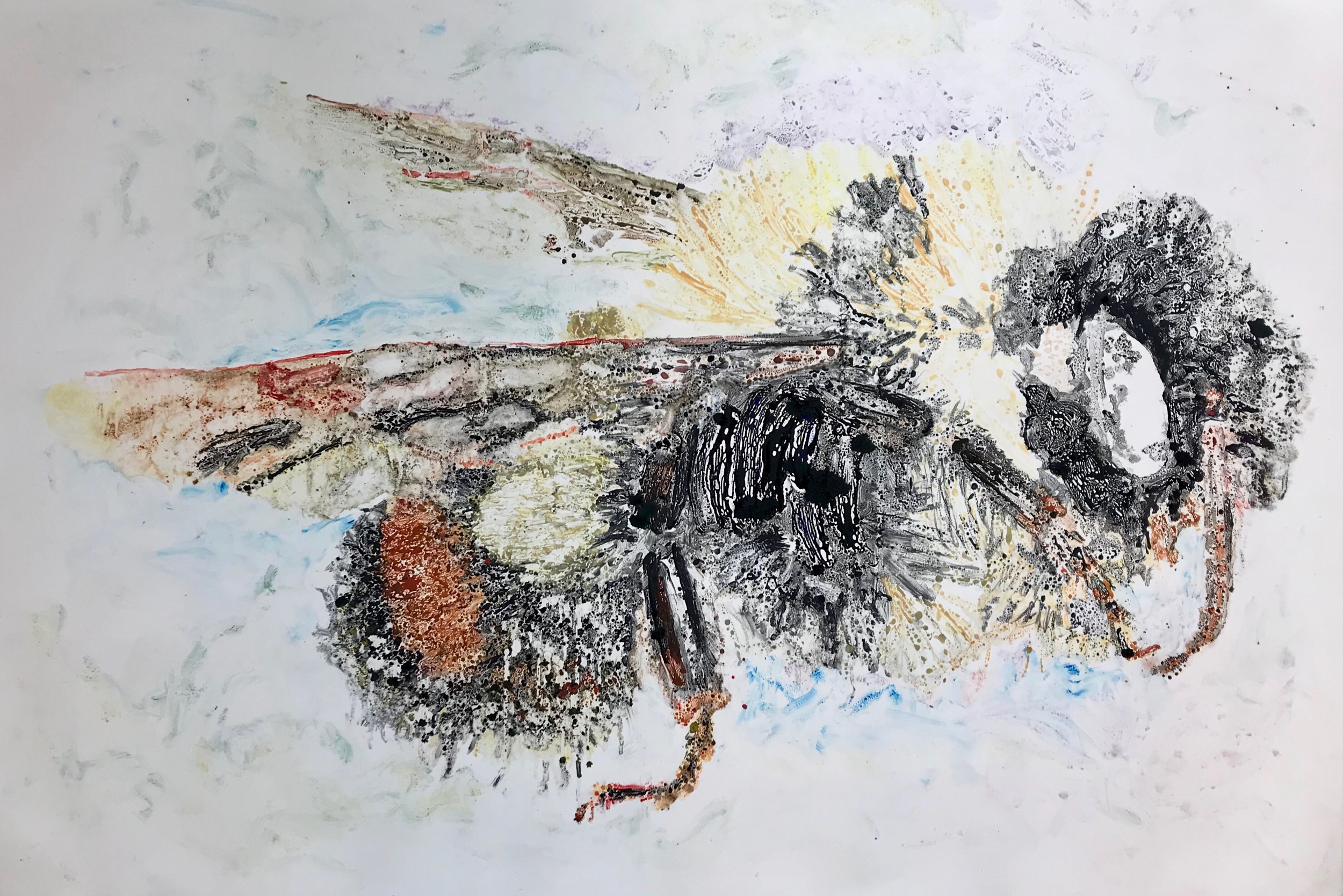
I printed a lenticular from my three mono-prints of a dead bee. I decided to loop the images. That was a mistake when it comes to creating imagery that speaks to extinction. There is no loop and no second chance. With that in mind, I am trying for proof #2 with out a loop of image number 2.

I think this will work 🐝
Glyphosate mobile - New work -
I might call this collapse and disorder.
I started a new shadow/mobile to be part of my Glyphosate series. Last week I started the wings.

Above I am started the wings with some leftover pieces from “Bringing Home The Bacon” held together with new wire.

a wing and its shadow
Before I left for the day I threw together a body to slap on the wings and see what the shadows look like.
I am considering the title “collapse and disorder” for this piece.
I will probably add some hexagon shapes to the sculpture. Which made me wonder why are honeycombs hexagon in shape. Guess what I found?
Roots #5 after the pour- patina

breaking out the handle

I coved the piece in liver of sulfur and now it is time to add the green moss.

adding the moss green patina
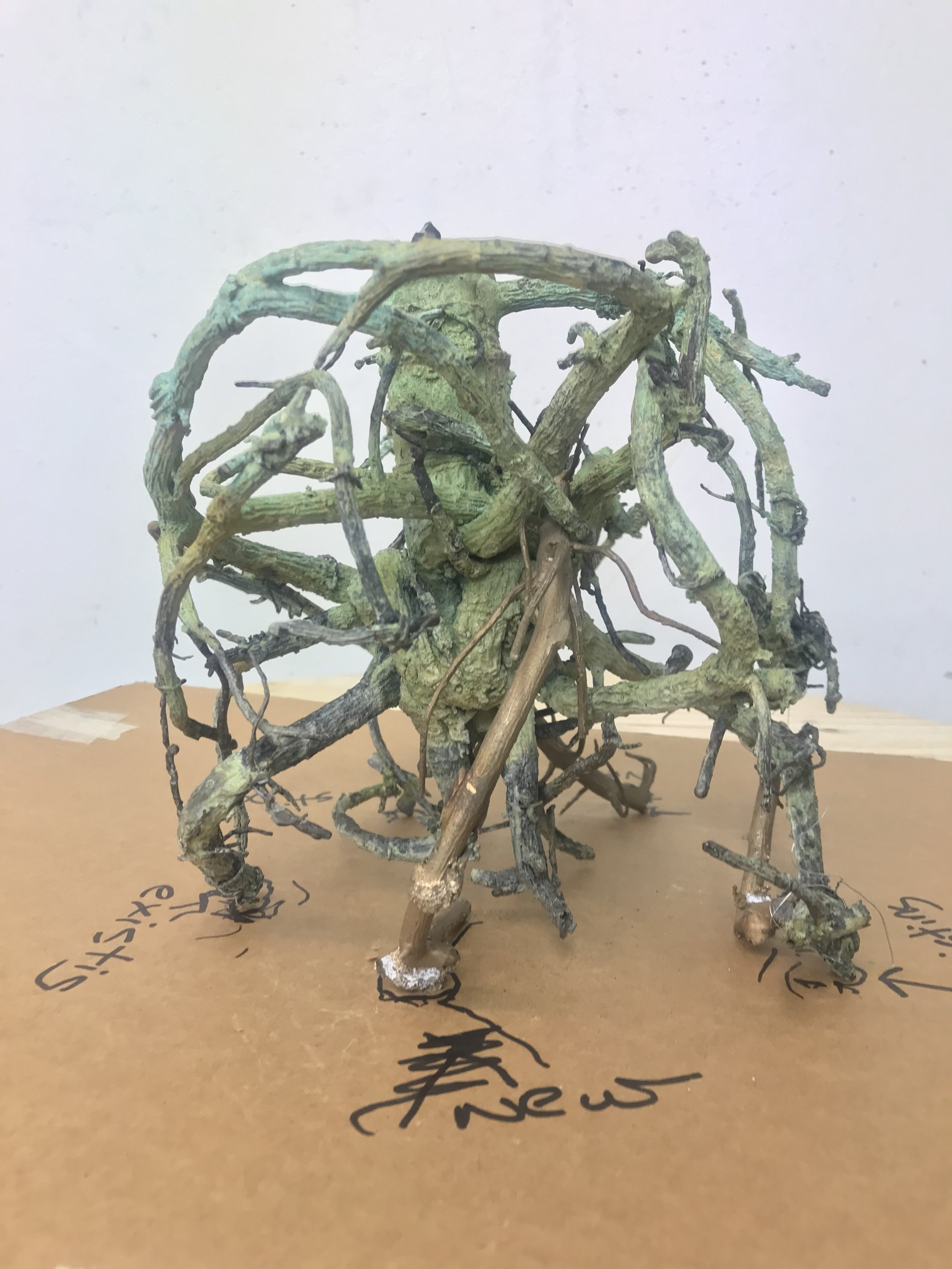
one of the three new pieces added to strengthen the support and spread the load weight.
I thought I was ready to plan the faux bois handle, but while thinking through the process, it became evident that the root pieces supporting the structure are too small. I am concerned that under the weight of the concrete, they will bend. My solution is to add new pieces that are thicker to spread out the load.

I thought that it would be simple to add the patina to the new support pieces - wrong! It looks like I charred the new pieces. When things go wrong, it can be so frustrating.

Sandblasted and ready for Patina application #2.

The patina recipe I am using.
A tip from David Delgado at Legacy fine art Foundry - After the birch wood Casey have some ferric ready and add a wash of ferric before the cupric nitrate mixture. This will help keep it green and not cupric blue.

birchwood Casey ✅

cupric nitrate

Just in time for earth day
Quisque iaculis facilisis lacinia. Mauris euismod pellentesque tellus sit amet mollis.