Before the Fence
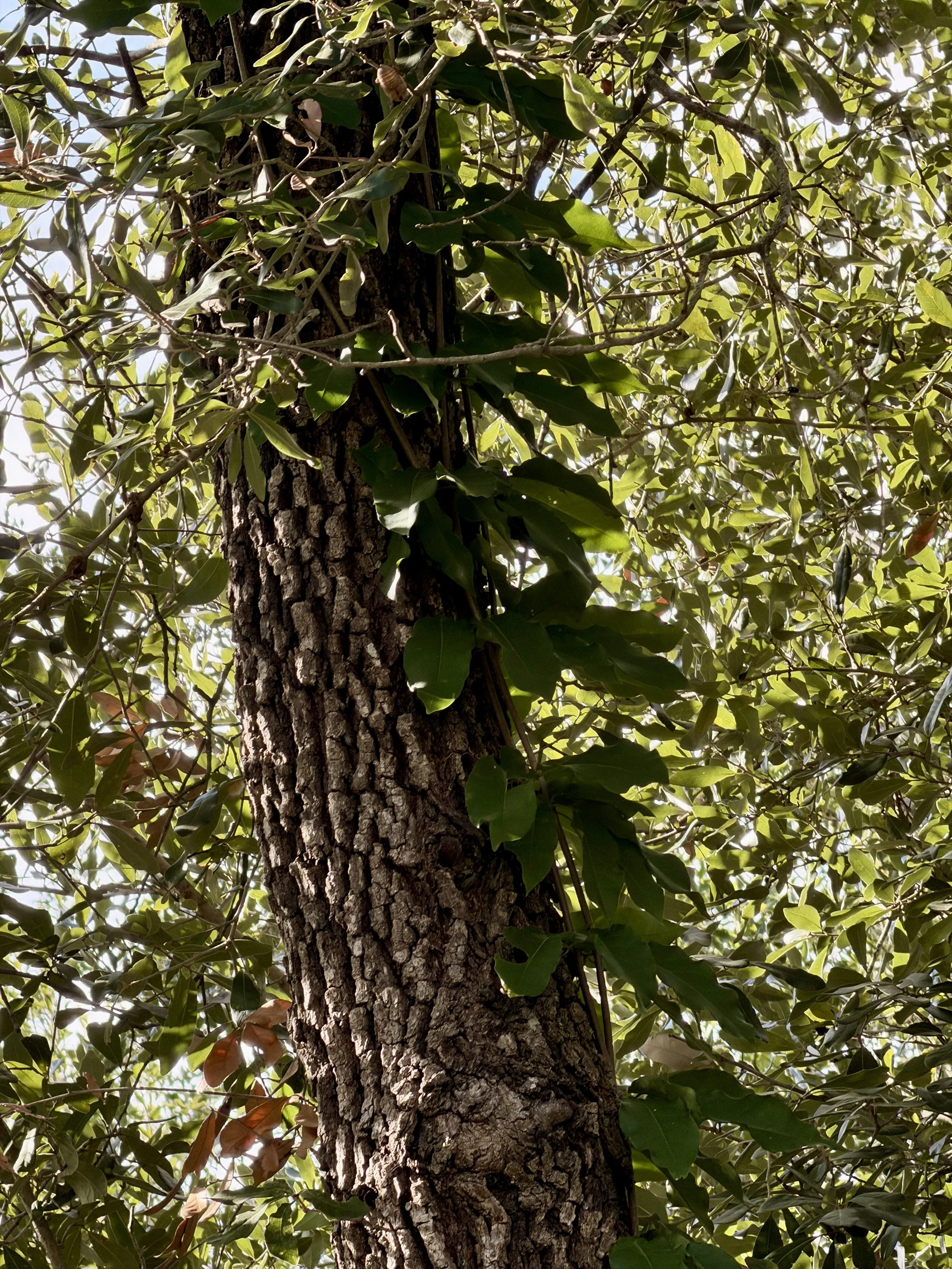
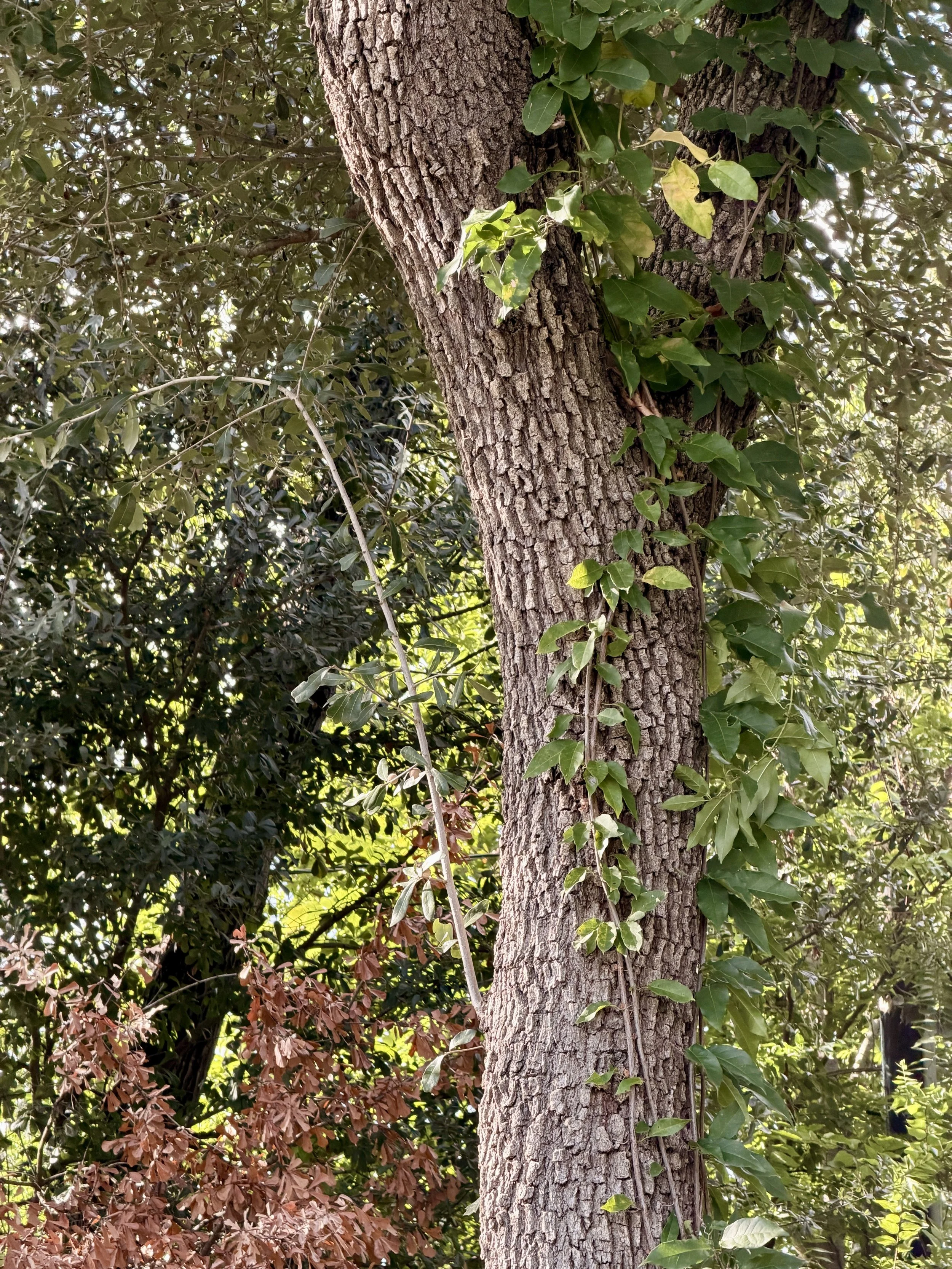
In the garden where my living sculpture Sequel grows, a Texas live oak stands with a native crossvine climbing its trunk. Almost all of us have been taught to look at that pairing and pull the vine. Not because anyone checked, but because no one asked the right questions.
So I asked a different question. Where did vines grow before we built fences?
On trees. A vine is a plant that solved the oldest problem in the forest, reaching the light, by borrowing a trunk instead of building one. What a tree spends on wood, a vine spends on length, leaves and flowers. The fence is the newcomer. We taught vines to climb chain-link, trellis and arbor, then called it trespass when they climbed what they had always climbed.
A Hand, Not a Fist
Crossvine, Bignonia capreolata, is native to the Southeast, East Texas included. Cut a stem and the pith inside shows a small cross. That is the name.
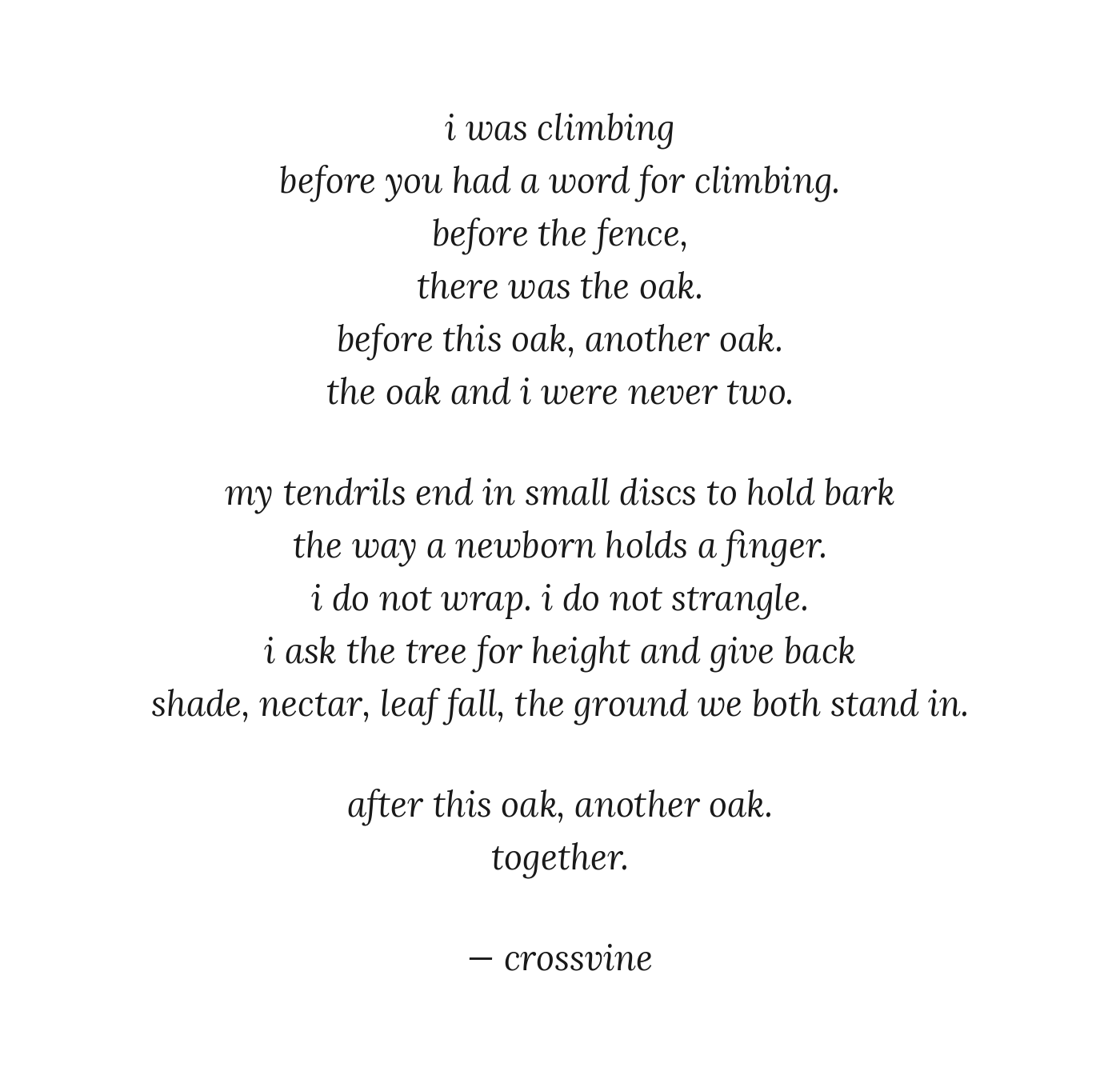
It climbs with branched tendrils that end in adhesive discs. It holds bark. It does not coil around the trunk, and it does not girdle.
Some vines do. Japanese honeysuckle and Chinese wisteria twine tight enough to choke a trunk as it grows. English ivy and cat's claw vine can smother bark and crown alike. Those I cut, to save the tree.
The question was never vine or no vine. The question is which relationship.
What the Vine Feeds
Crossvine blooms in early spring, orange-red trumpets opening just as ruby-throated hummingbirds cross the Gulf and make landfall on our coast. A bird that has flown hundreds of miles without stopping needs sugar now, not in May. Bumblebees work the same flowers.
The leaves hold on through most winters, so the vine is cover when the canopy is thinnest. It shades the oak's trunk in August. It can climb 30 to 50 feet, and in a forest, vines are the threads that tie one crown to the next: roads for squirrels, insects, lizards, anything that would rather not touch the ground.
A vine on a tree is not one plant leaning on another. It is a second story added to a house that many already live in.
Below the Ground
It is tempting to say the oak and the vine talk to each other through fungi. The truth is stranger. Live oaks partner mostly with ectomycorrhizal fungi, which sheathe the root tips. Crossvine, like most flowering plants, almost certainly partners with arbuscular fungi, which work inside root cells. Two networks, two languages, one soil.
What they share is water. Oaks are among the trees known to perform hydraulic lift: at night, deep roots draw water from wet soil below, and shallow roots leak it into the dry soil above. Plants rooted nearby drink it. In a drought, the oak may be watering the vine.
The vine pays in kind. Its shade cools the soil. Its leaves fall with the oak's and become organic matter, and organic matter is what lets soil hold water instead of shedding it. Its roots release sugars that feed microbes, and microbes glue soil into crumbs with room for rain.
The vine also drinks. That competition is real. Against a mature live oak with roots reaching far below it, it is small, and the ground holds more water with both of them in it than with either one alone.
When a Vine Does Need a Trim
The honest concern is rarely the trunk. It is the crown. A vine that reaches over the canopy adds weight and catches wind. It competes with the tree for light. A heavy vine can also hide a crack or a pocket of decay, and after a summer of extreme drought, every Houston tree deserves a careful look.
Those are real concerns, and they have a real answer that does not end in a pile of brush:
Let the vine keep the trunk and the lower limbs.
Keep it out of the outer crown with a light trim at the top.
If the tree has a real problem, cut only what that problem requires.
Removing a vine is a judgment, not a rule. The better question is always what this vine is actually doing to this tree.
One Structure
Even a tree the drought has killed is not finished. Left standing as a snag, its wood softens and opens into cavities, and an eastern screech owl may move in. The question is rarely what to remove. It is what to keep in relationship.
We look at a vine on a tree and see one thing using another. Look longer. The oak gives height. The vine gives shade, nectar and leaf fall. Water rises at night from the oak's deep roots, and soil that both of them feed holds it.
The vine is not climbing the tree. Together they are one structure, built over a longer time than our fences, and the garden is the conversation between them.