• HOME
  • portfolio
  • blog
  • About
  • MANIFESTO
  • Contact
Menu

cindee travis klement

Street Address
Houston, Texas
832-358-0001
"Recording endangered knowledge to the collective memory so it will no longer be endangered knowledge." - M. Thomashow

Your Custom Text Here

cindee travis klement

  • HOME
  • portfolio
  • blog
  • About
  • MANIFESTO
  • Contact
20260319-CindeeTravisKlement-41-2.jpg

blog

Making the Galveston Bay Piece: the journal

October 25, 2026 Cindee Klement

Week One

The Galveston Bay Foundation and I started talking about this commission in November 2025. They have waited patiently for my schedule to open up. Today I start.

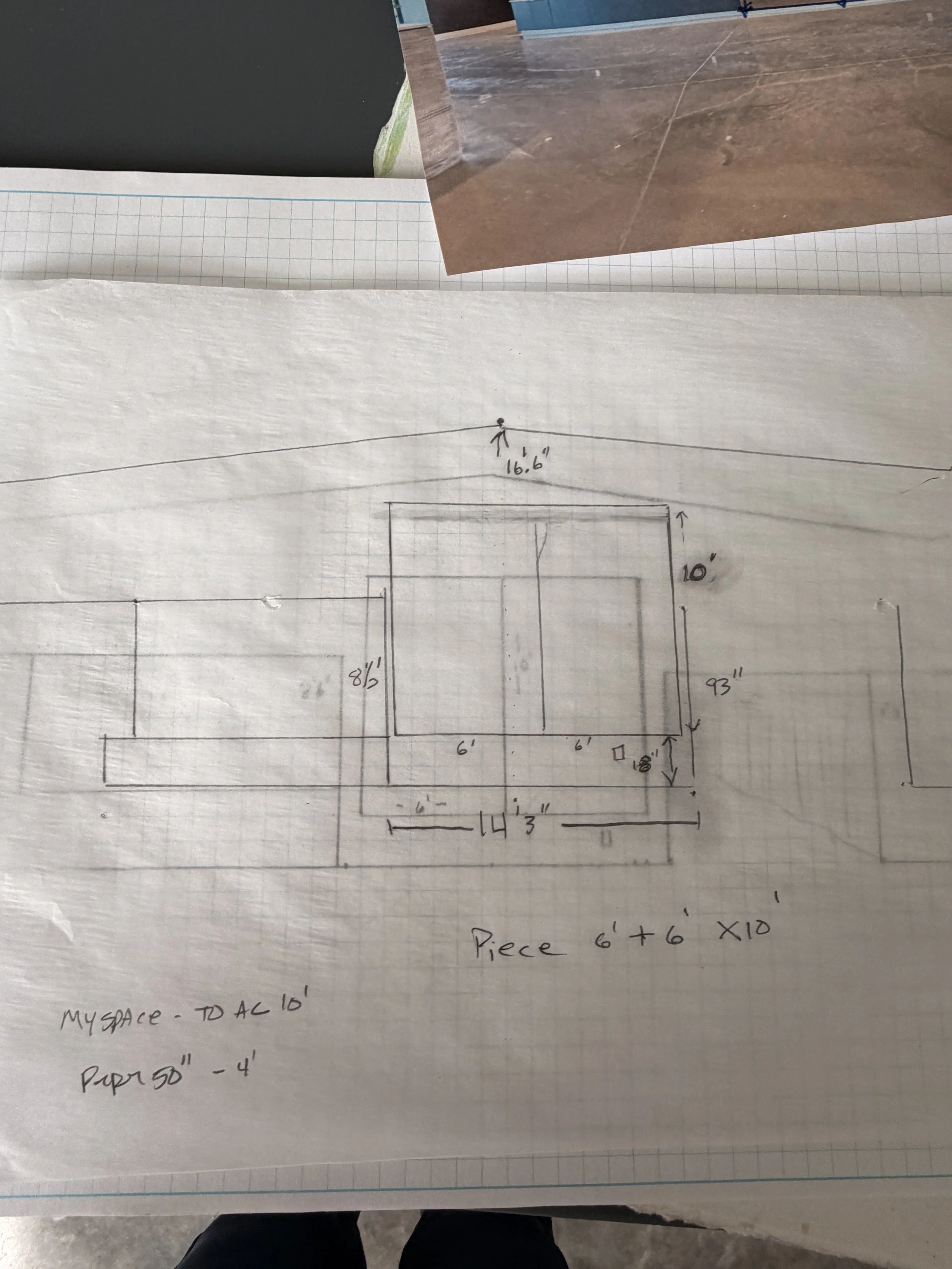
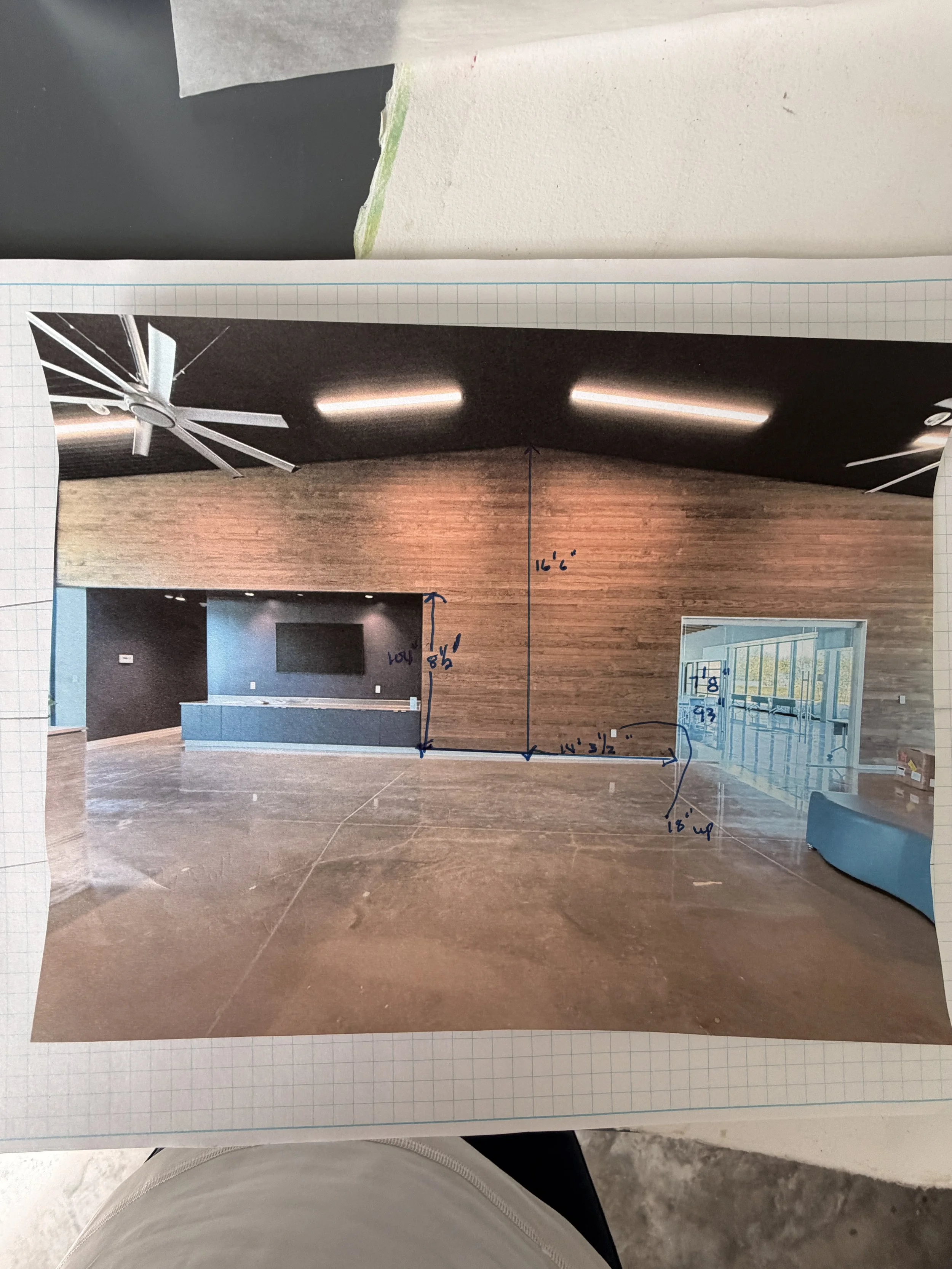
Last spring I visited their new building and took images and measurements of the wall. It is a beautiful building, and it is not symmetrical. The piece is for the big space in the middle. The peak is a little over 16 feet. The wall is a little over 14 feet wide. The surprise is that the peak doesn't sit over the center of the wall. It sits to the left.

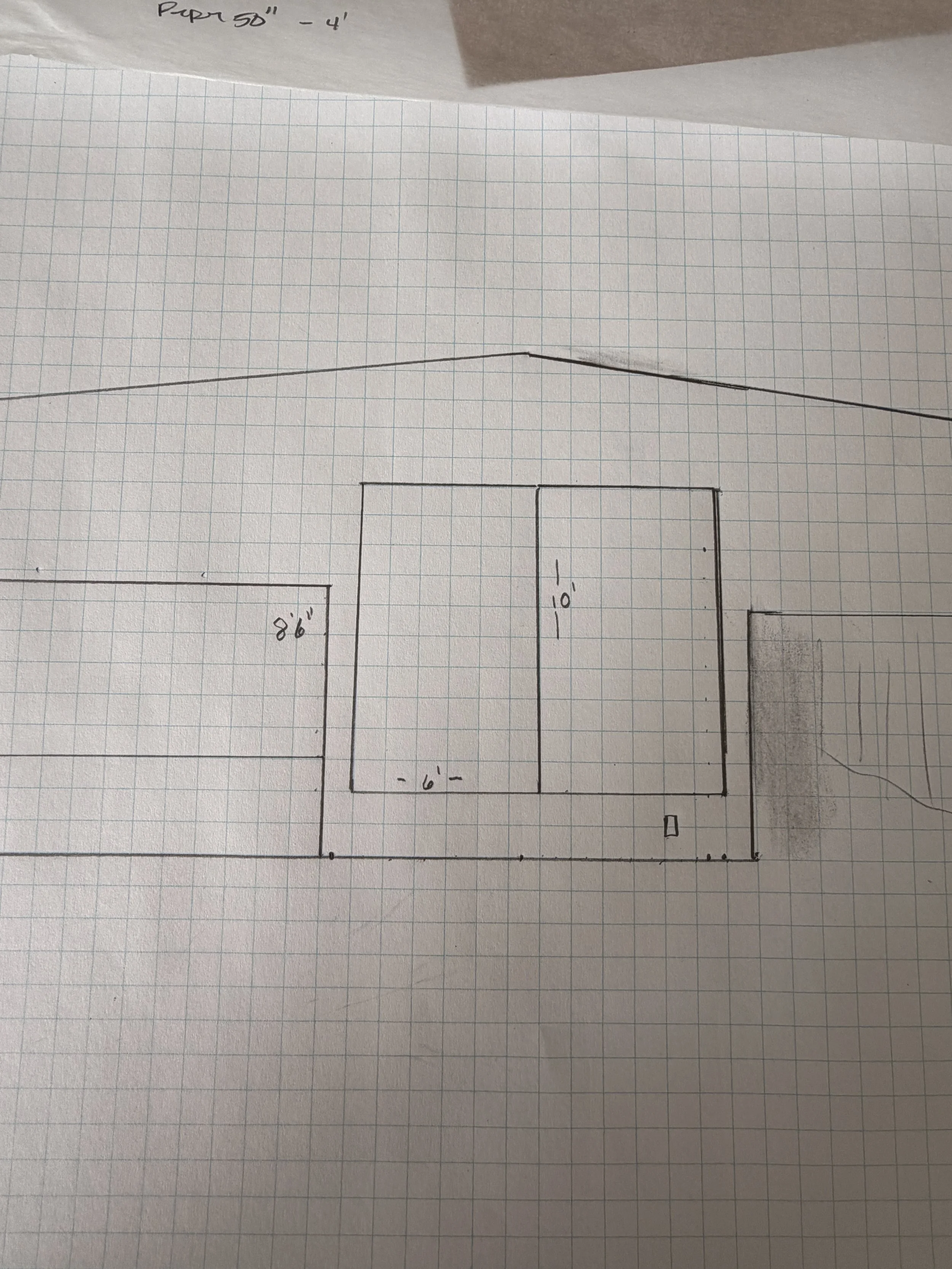
The first decision is size. I'm going with a diptych: two panels, each 6 feet wide and 10 feet tall. The piece will hang above the electrical outlet. It will not read as a diptych. The ecosystem will flow from one panel into the next.

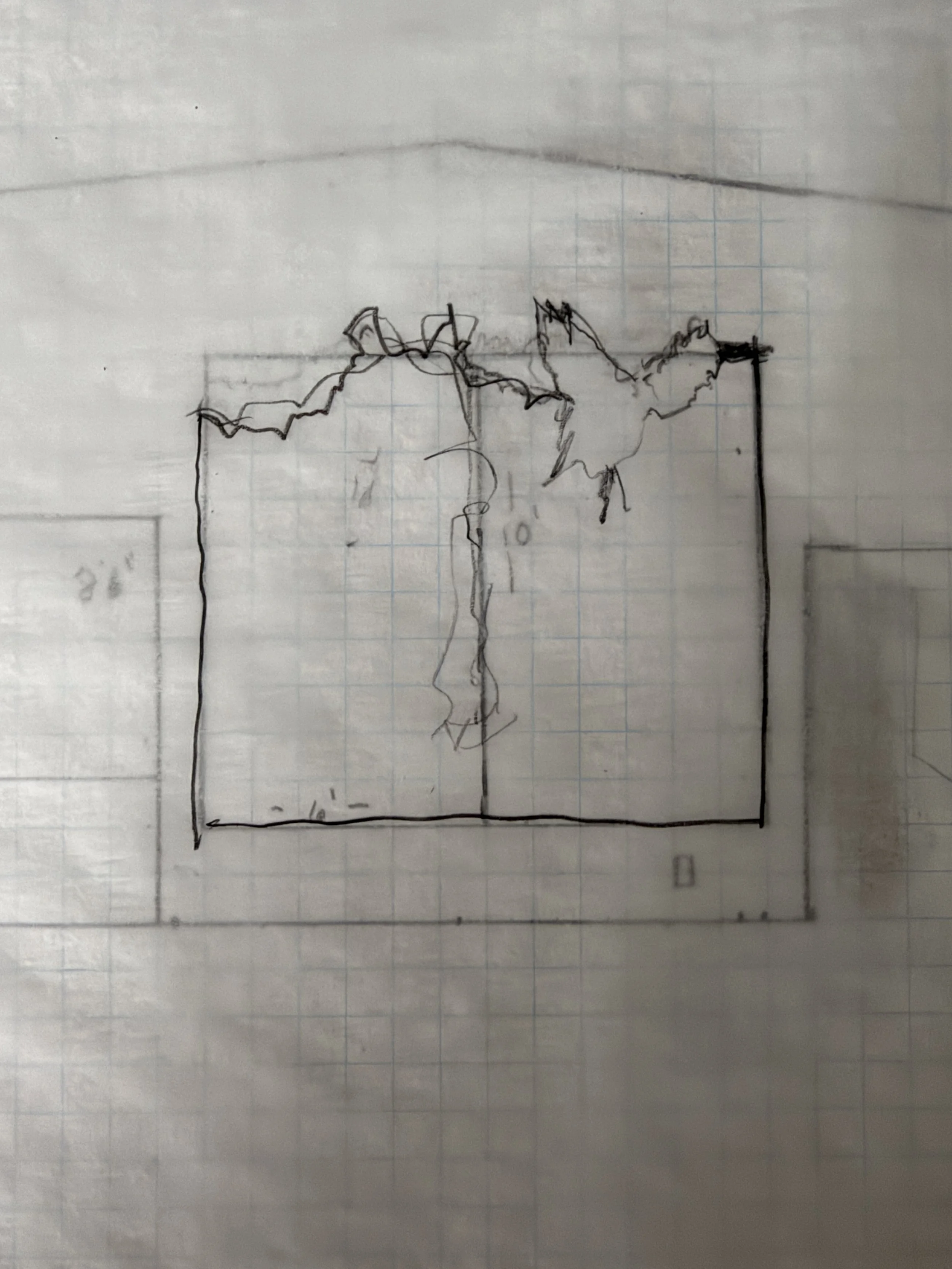
The peak feels off center to me. To balance the off-center peak, I'm making the top edge of the piece free form instead of straight. The building made the first compositional choice. I'm answering it.

Quick sketch of possible free form too.

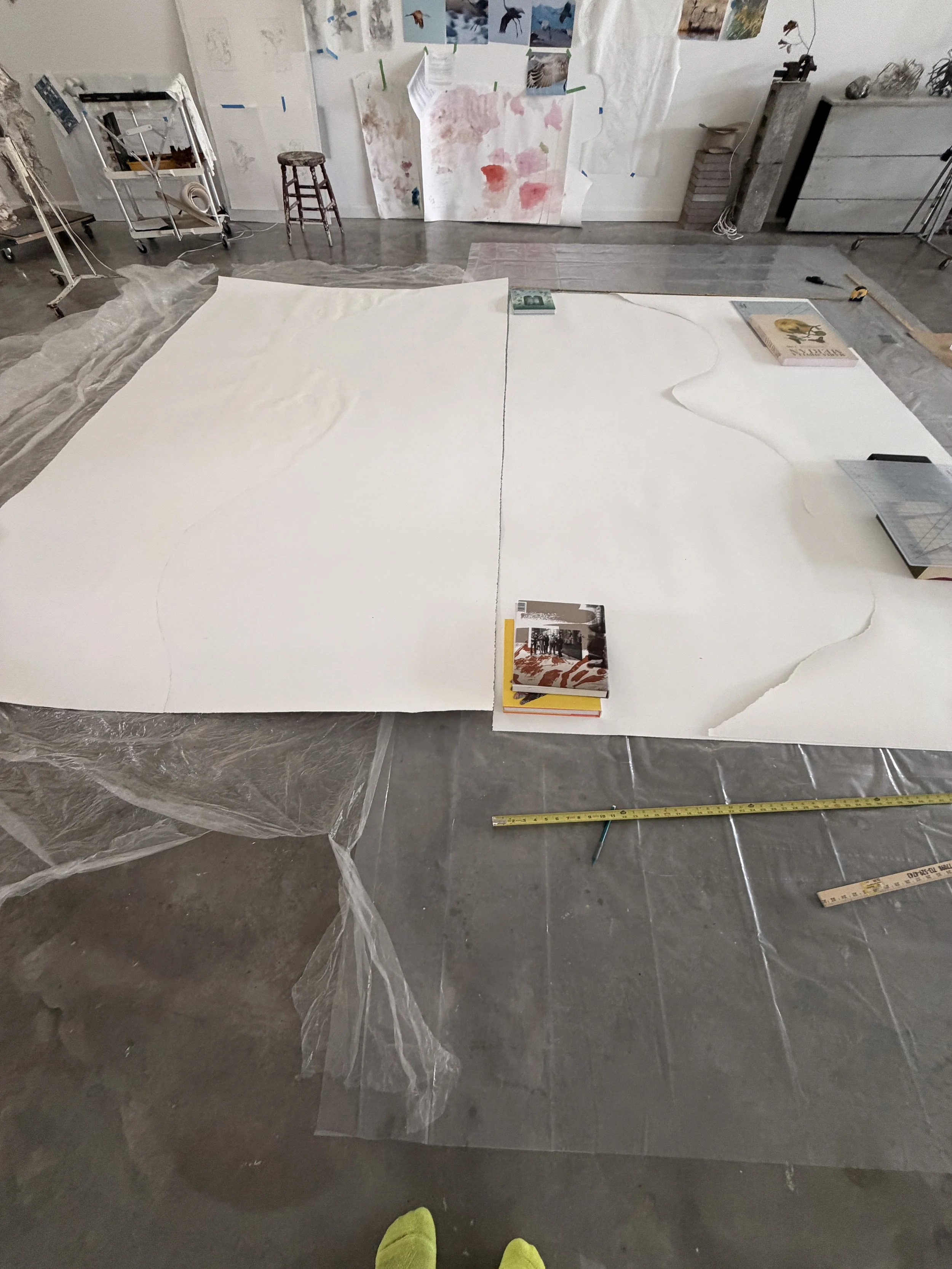
I have cut and glued the Stonehenge paper to make the panels. The paper comes in 50-inch rolls, so each panel needs a seam. I didn't want a straight glued line running down the middle of each one. So I tore the paper in soft curves and joined those edges, hoping the lines will work their way into the composition.

The first step of letting go is the first tear.

I'm curious how I will compose a piece for an organization that touches so many ecosystems. I want to tell all the stories, but the space is limited: 10 feet by 12 feet.

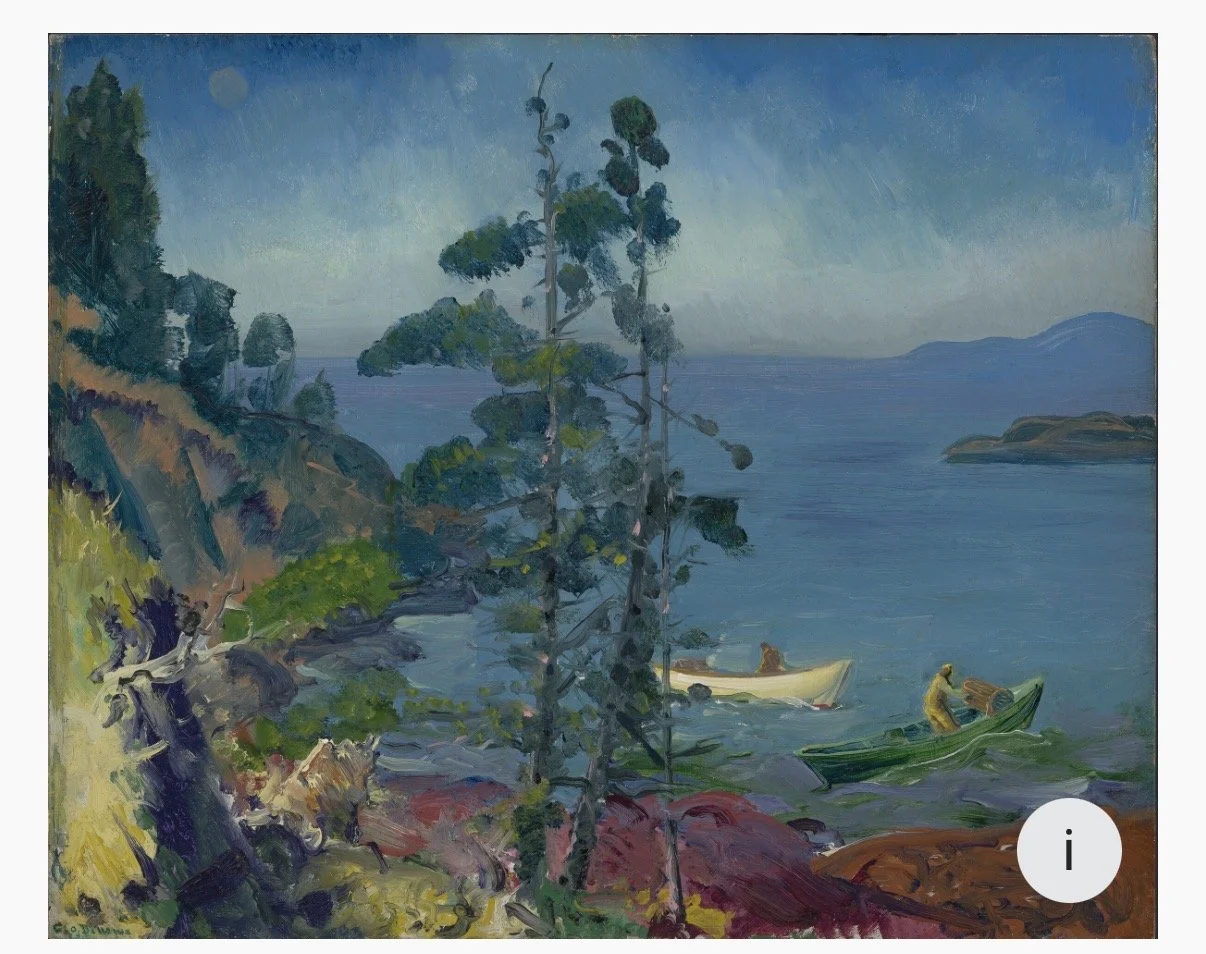
Knowing this piece was coming, I've kept my eyes peeled for interesting compositions and color combinations. One has really stuck with me: George Bellows' Evening Blue (Tending the Lobster Traps, Early Morning), 1916, oil on panel. It's in American Modernism from the Charles Butt Collection at the MFAH, which opens today and runs through January 18, 2027. It appealed to me because this piece has to do a lot of things for the foundation. I need migrating birds like sandhill cranes that come for the fields. I need the marshes. I need places for egrets, ibis, and pelicans. I need different habitats, all in one piece. Bellows holds a whole coastline in a single view: the bluff and trees up close, the water in the middle, the far shore at the back. Each layer is its own place, and they still read as one world.

Tomorrow the two panels go up on the wall. I hope these seams work out.

In art Tags Galveston bay Foundation, Cindee travis Klement, Ecoart, Shore birds, Migration, Watercolor, Relief, Work on paper
Comment

the living link - should native vines grow on trees?

October 16, 2026 Cindee Klement

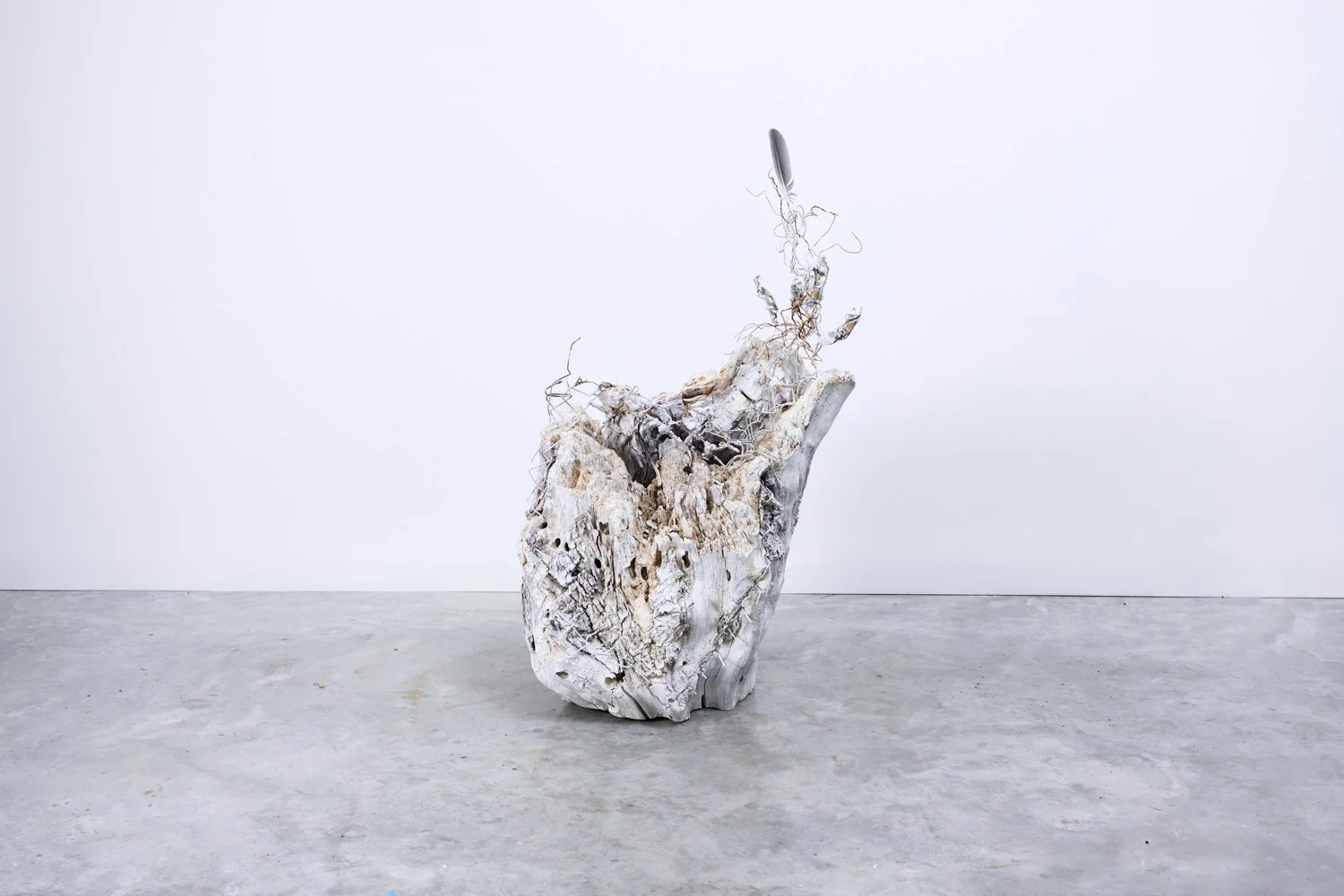
LINK

52” X 32” X 22”

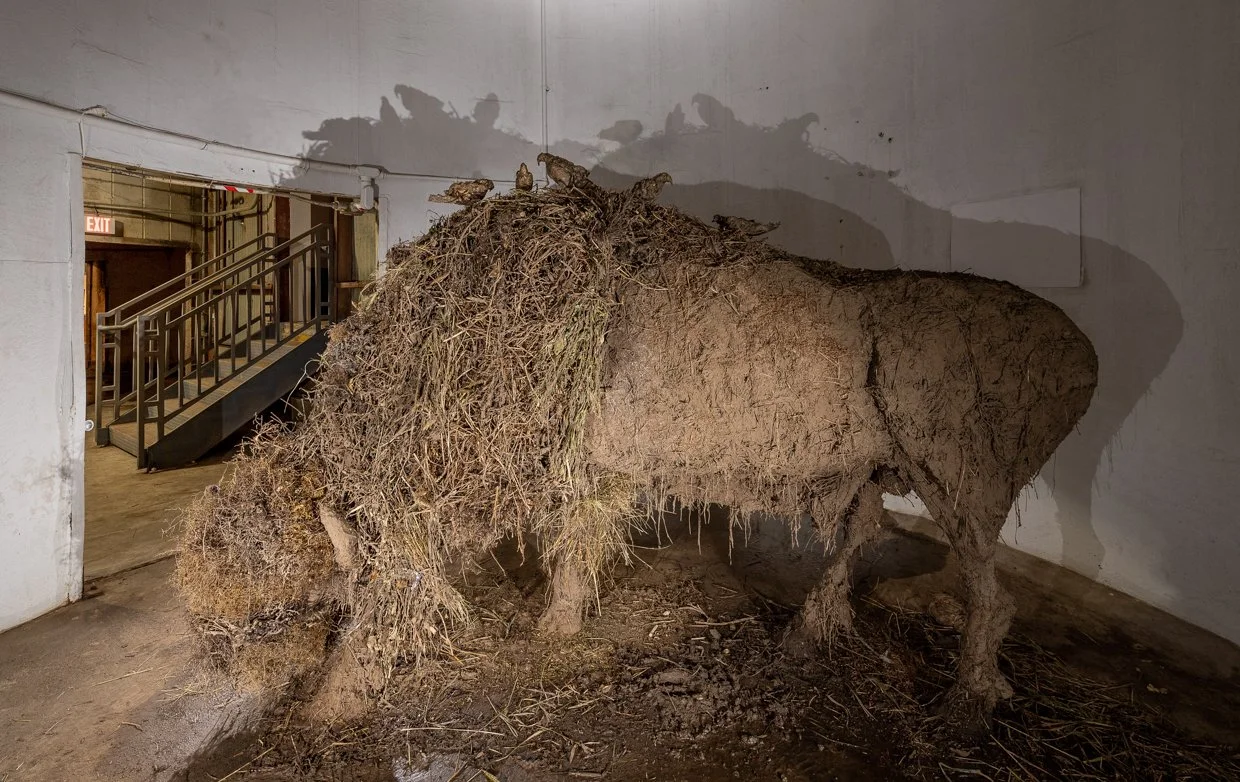
Rotting tree stump with chain-link and wire, paint, prop bills and feather.

2025

Before the Fence

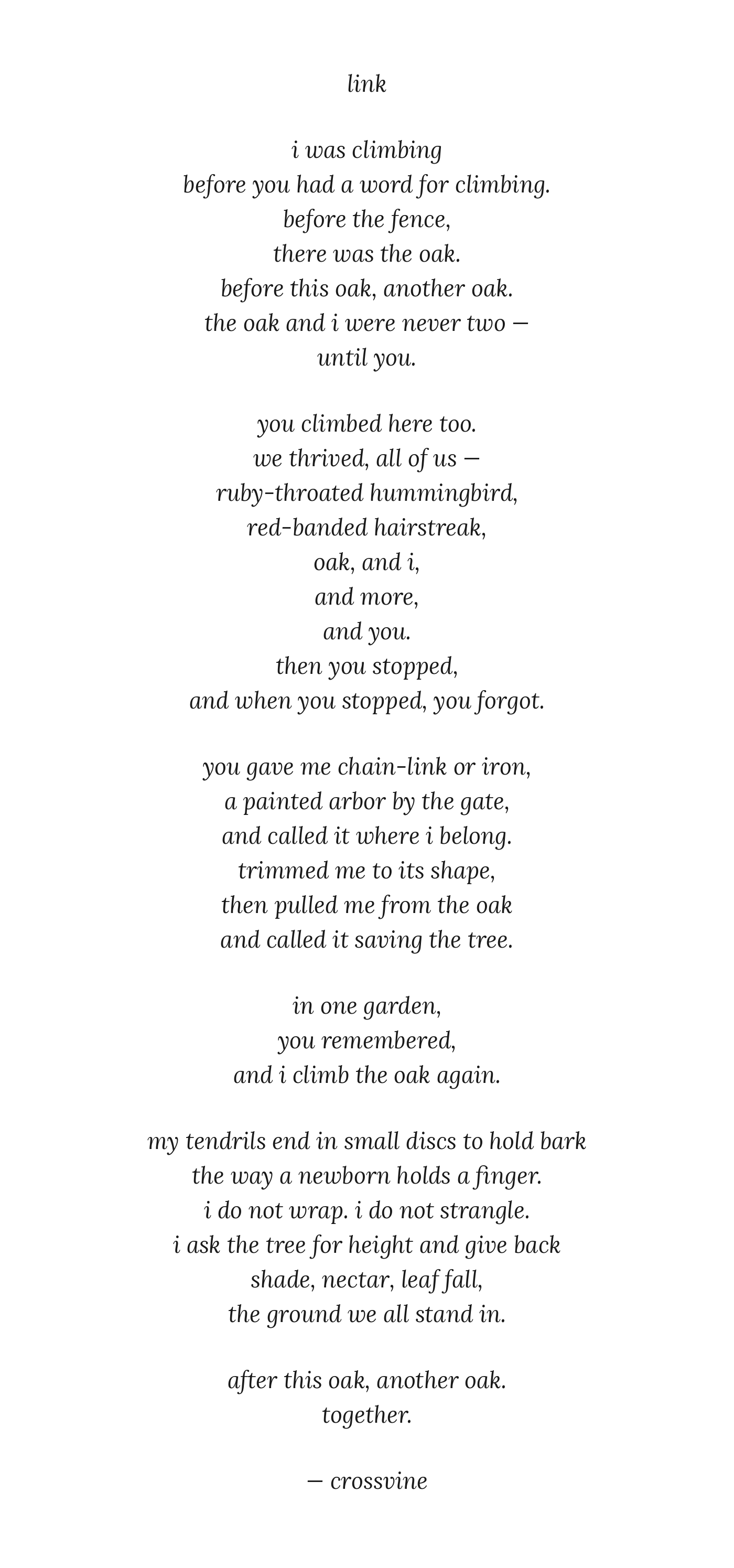
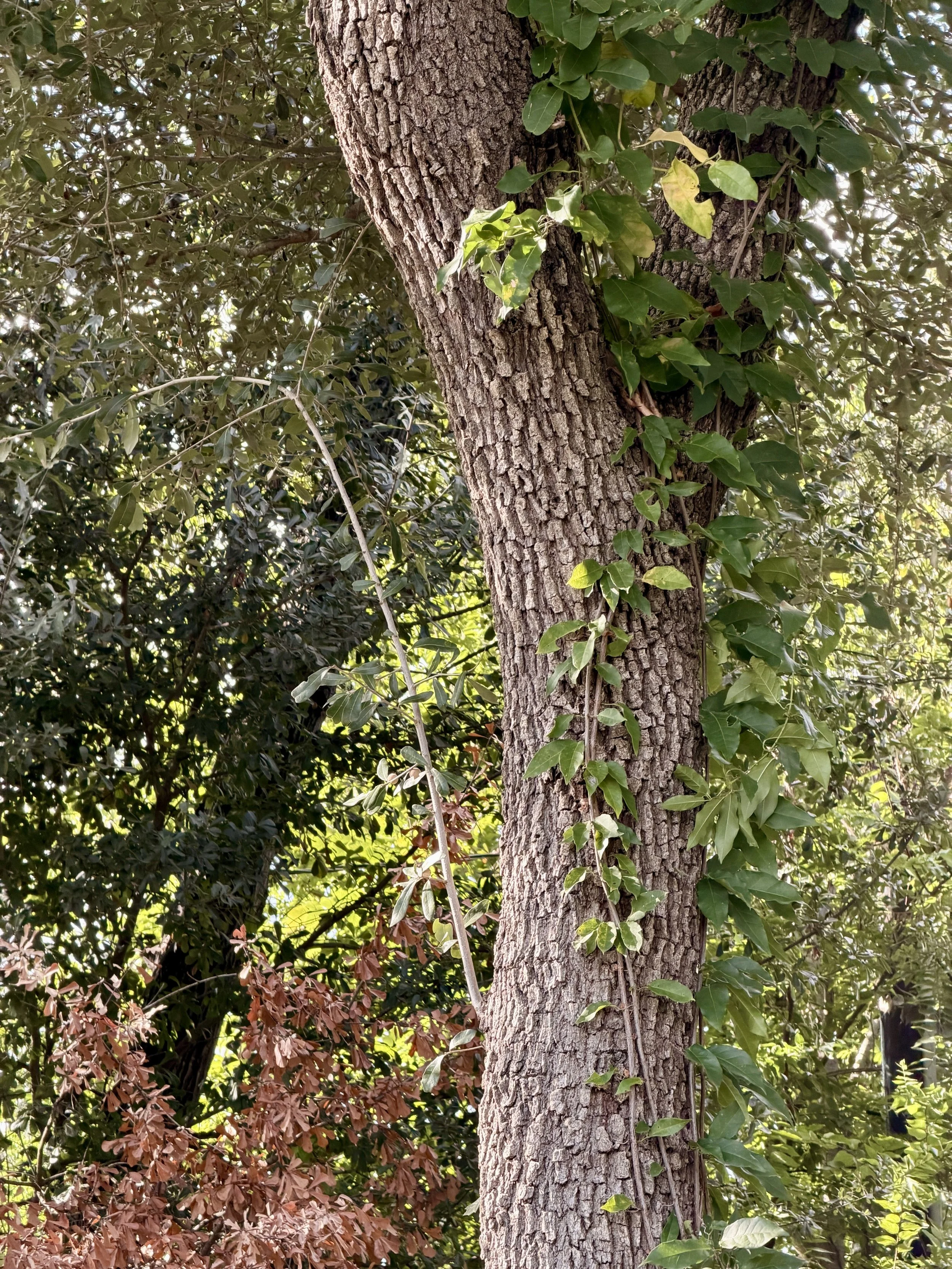
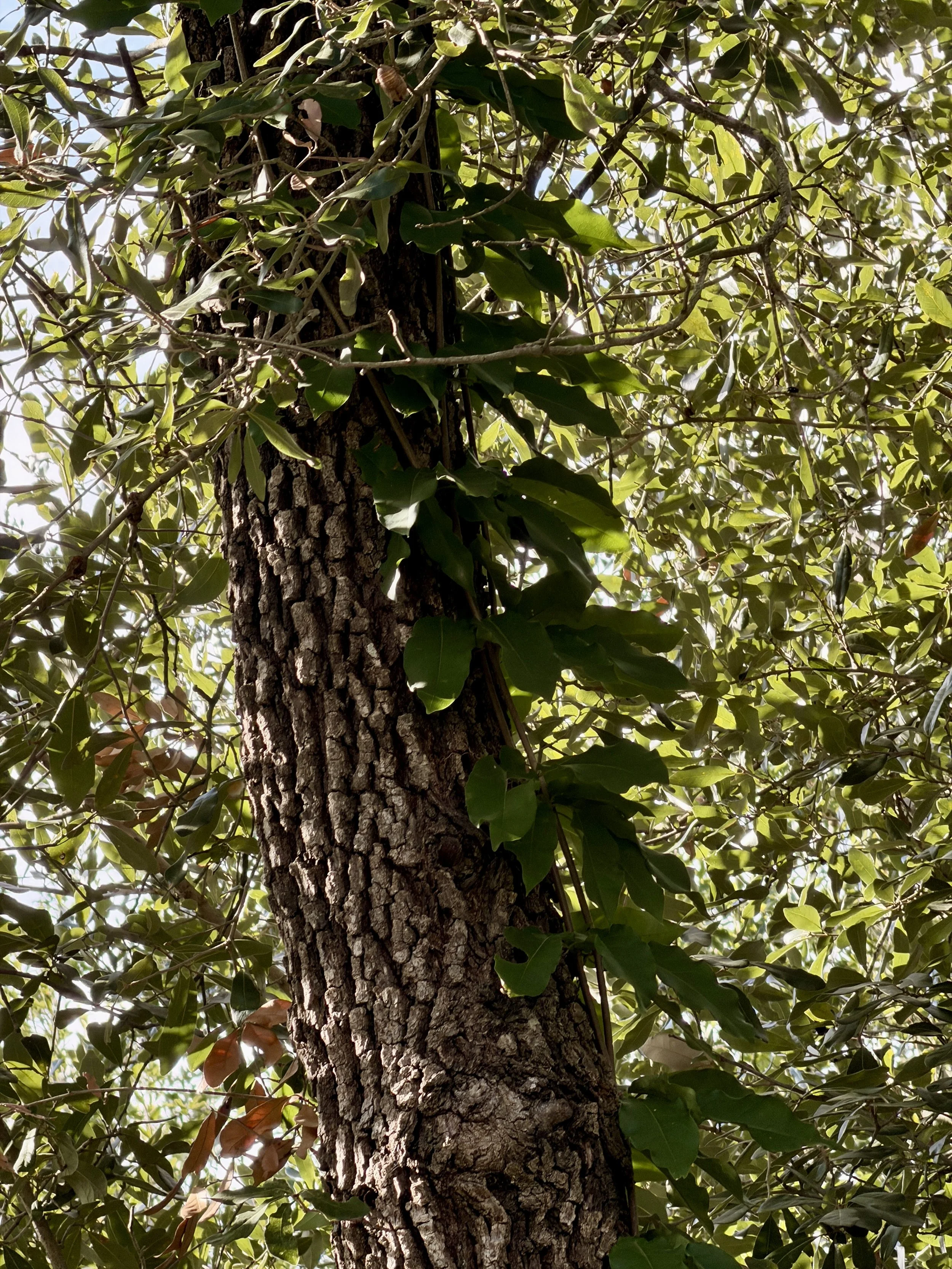
In the garden where my living sculpture Sequel grows, a Texas live oak stands with a native crossvine climbing its trunk. Almost all of us have been taught to look at that pairing and pull the vine. Not because anyone checked, but because no one asked the right questions.

So I asked a different question. Where did vines grow before we built fences?

On trees. A vine is a plant that solved the oldest problem in the forest, reaching the light, by borrowing a trunk instead of building one. What a tree spends on wood, a vine spends on length, leaves and flowers. The fence is the newcomer. We taught vines to climb chain-link, trellis and arbor, then called it trespass when they climbed what they had always climbed.

A Hand, Not a Fist

Crossvine, Bignonia capreolata, is native to the Southeast, East Texas included. Cut a stem and the pith inside shows a small cross. That is the name.

It climbs with branched tendrils that end in adhesive discs. It holds bark. It does not coil around the trunk, and it does not girdle.

Some vines do. Japanese honeysuckle and Chinese wisteria twine tight enough to choke a trunk as it grows. English ivy and cat's claw vine can smother bark and crown alike. Those I cut, to save the tree.

The question was never vine or no vine. The question is which relationship.

What the Vine Feeds

Crossvine blooms in early spring, orange-red trumpets opening just as ruby-throated hummingbirds cross the Gulf and make landfall on our coast. A bird that has flown hundreds of miles without stopping needs sugar now, not in May. Bumblebees work the same flowers.

The leaves hold on through most winters, so the vine is cover when the canopy is thinnest. It shades the oak's trunk in August. It can climb 30 to 50 feet, and in a forest, vines are the threads that tie one crown to the next: roads for squirrels, insects, lizards, anything that would rather not touch the ground.

A vine on a tree is not one plant leaning on another. It is a second story added to a house that many already live in.

Below the Ground

It is tempting to say the oak and the vine talk to each other through fungi. The truth is stranger. Live oaks partner mostly with ectomycorrhizal fungi, which sheathe the root tips. Crossvine, like most flowering plants, almost certainly partners with arbuscular fungi, which work inside root cells. Two networks, two languages, one soil.

What they share is water. Oaks are among the trees known to perform hydraulic lift: at night, deep roots draw water from wet soil below, and shallow roots leak it into the dry soil above. Plants rooted nearby drink it. In a drought, the oak may be watering the vine.

The vine pays in kind. Its shade cools the soil. Its leaves fall with the oak's and become organic matter, and organic matter is what lets soil hold water instead of shedding it. Its roots release sugars that feed microbes, and microbes glue soil into crumbs with room for rain.

The vine also drinks. That competition is real. Against a mature live oak with roots reaching far below it, it is small, and the ground holds more water with both of them in it than with either one alone.

When a Vine Does Need a Trim

The honest concern is rarely the trunk. It is the crown. A vine that reaches over the canopy adds weight and catches wind. It competes with the tree for light. A heavy vine can also hide a crack or a pocket of decay, and after a summer of extreme drought, every Houston tree deserves a careful look.

Those are real concerns, and they have a real answer that does not end in a pile of brush:

  • Let the vine keep the trunk and the lower limbs.

  • Keep it out of the outer crown with a light trim at the top.

  • If the tree has a real problem, cut only what that problem requires.

Removing a vine is a judgment, not a rule. The better question is always what this vine is actually doing to this tree.

One Structure

Even a tree the drought has killed is not finished. Left standing as a snag, its wood softens and opens into cavities, and an eastern screech owl may move in. The question is rarely what to remove. It is what to keep in relationship.

We look at a vine on a tree and see one thing using another. Look longer. The oak gives height. The vine gives shade, nectar and leaf fall. Water rises at night from the oak's deep roots, and soil that both of them feed holds it.

The vine is not climbing the tree. Together they are one structure, built over a longer time than our fences, and the garden is the conversation between them.

In art , Art blog, Art blog The a s native Tags Crossvine, Art, Eco art, Cindee travis Klement
Comment

A Word for Feeding

October 15, 2026 Cindee Klement

A Word for Feeding

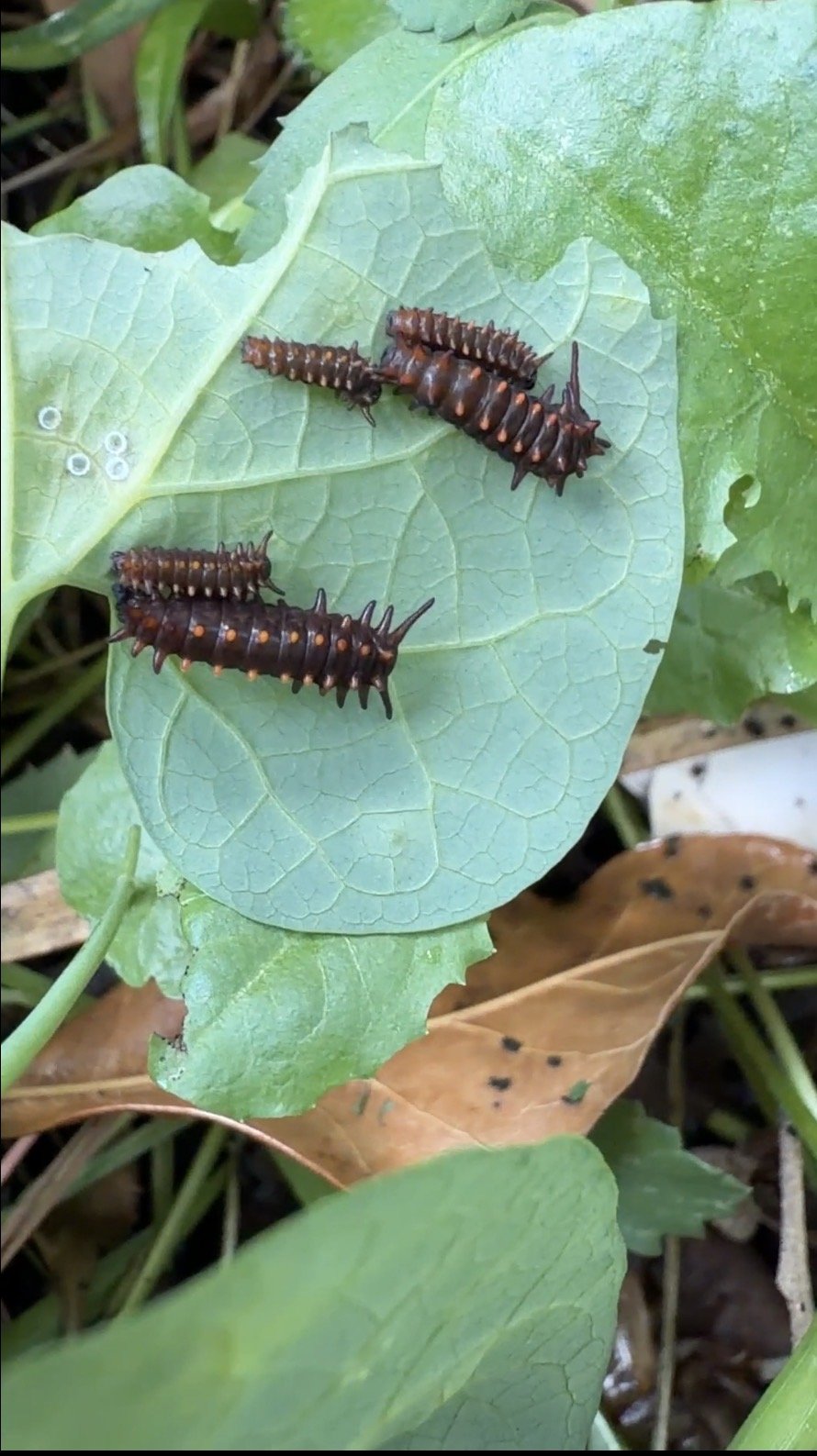
The other morning five caterpillars were eating my pipevine to the stem. The word for this, in every gardening book, is damage.

Open any seed catalog or extension-service guide and the vocabulary is the same. Insects are pests. Their presence is an infestation. What they do is damage, and what we do in return is control. We treat, we spray, we eliminate. A leaf with chewed edges is a symptom, and the garden is a defenseless patient we must defend.

It is the language of a war zone, and that is not a metaphor it is a fact.

It came with industry. After World War II, chemistry developed for the battlefield went looking for a peacetime market. DDT, which had protected soldiers from lice and mosquitoes, was sold to farmers and homeowners.

Organophosphate insecticides came out of the same research that produced nerve agents. The products arrived with the language attached.

Rachel Carson saw it in 1962: we had turned the weapons of war on the living world and called it gardening.

Sixty years later the chemicals have changed, but the words have not.

We still garden as if we were under attack.

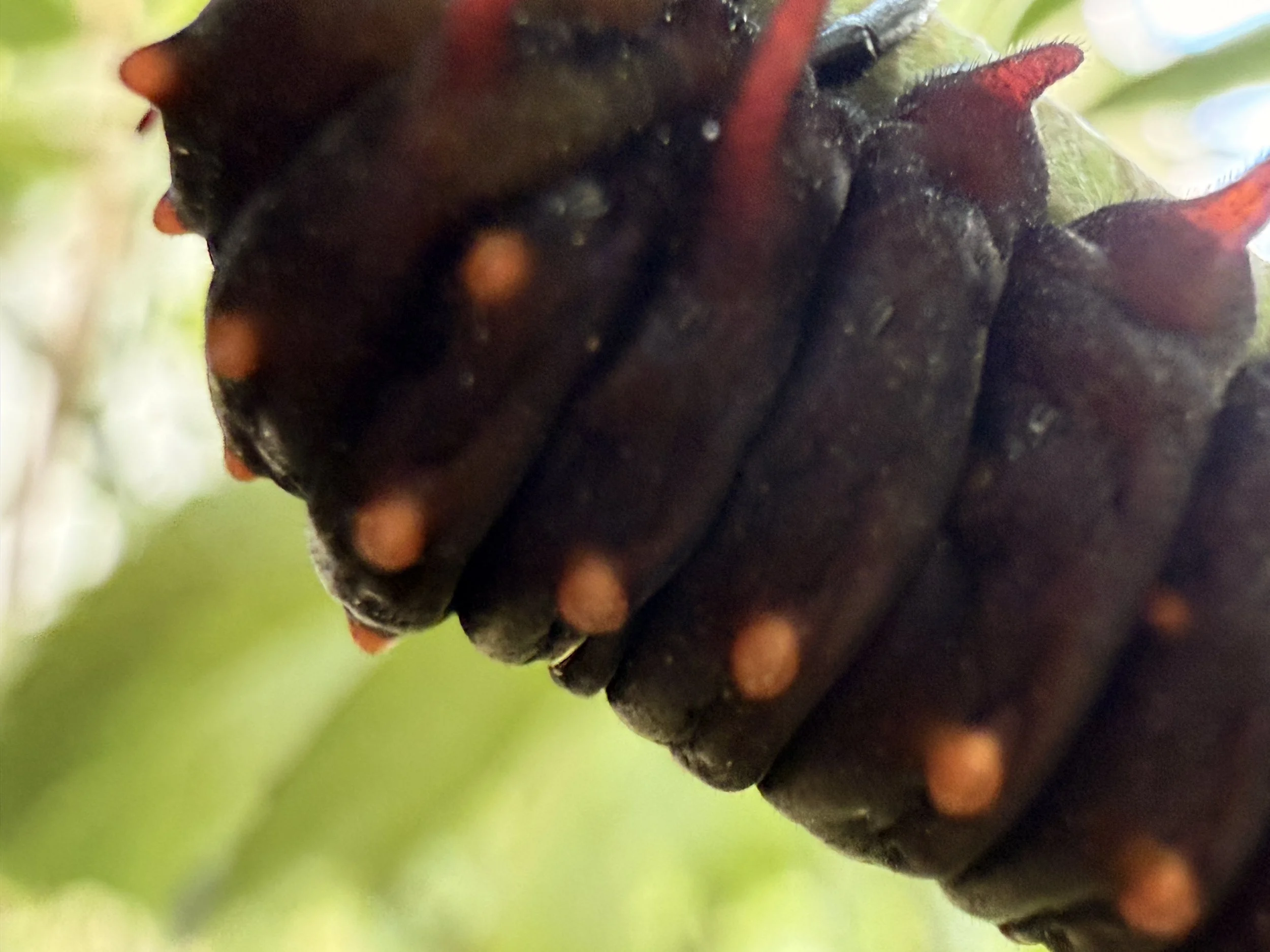
But look at what is actually happening on my vine. The pipevine swallowtail lays its eggs on almost nothing else. The caterpillars eat the leaves and, with them, the plant's aristolochic acids, a compound toxic to most animals. They don't die from it. They keep it. The poison becomes their armor, then the armor of the butterfly, then of the eggs she lays on the next vine.

Nothing here is being destroyed. Energy is being moved.

This is what animals do. It is their job. A plant takes sunlight and fixes it into sugar, into leaf, into stem. Then it waits, rooted, unable to carry what it has made anywhere at all. The caterpillar carries it. It turns leaf into body, body into wing, wing into a bird's meal or a new generation three yards away. Every bite moves the sun one step further into the world.

Ecologists call this a food web, and the term undersells it.

It is a transport system.

Animals are how the energy a plant captures gets out of the plant and into everything else: the wren, the wasp, the fox, the soil.

A garden without caterpillars is a garden where the sunlight stops at the leaf.

Seen this way, the chewed pipevine is not a casualty. It is a loading dock.

And the vine is not losing. Pipevine evolved alongside these caterpillars over a span of time we can barely imagine. It grows back. It is built to be eaten. Even the poison is part of the plan. It does not stop the flow of energy. It redirects it. What the pipevine makes mostly passes the birds by and goes to the ground: frass falls to the soil below, nitrogen returns to the roots, and the vine pushes new leaves into a richer ground.

Feeding is not the opposite of growing. It is how growing begins again.

The habit of defense runs deeper than the chemical age. It is in the word itself. Garden comes from an old Frankish word for an enclosure, a fenced space. It shares a root with yard, and with the -grad of walled cities. Even paradise began as an Old Persian word for a walled park. From the beginning, a garden was a line drawn between what we keep in and what we keep out.

But a fence was never what made a garden alive. What makes it alive is what moves through it: the swallowtail that finds the vine, the wren that finds the caterpillar, the energy that leaves the leaf and enters the world.

A garden seen in systems is not defended ground. It is an open door.

I keep returning to Darwin. In The Descent of Man, he argued that the moral sense is not handed down from above. It grows up from below, out of the same social instincts that make a ewe call for her lamb. Language works the same way. We do not invent words for things we have not lived. The vocabulary of war took root in our gardens because we came to garden at war.

A vocabulary of feeding will take root the same way, once we know the web so intimately that it shapes how we think and how we do everything. 🍃

For that vocabulary spoken aloud, listen to clutch, as told by the heritage hen.

In art, Social sculpture, Gardening, Native plants, Texas artist, Houston artist Tags cindeeklement native bees, Cindee travis Klement, Swallowtails, native plants, living sculptures
Comment

Everything Eats: What Darwin Got Wrong

October 11, 2026 Cindee Klement

Conscience is a mammal thing

A post crossed my feed this week claiming Darwin learned his ethics from the Yahgan people of Tierra del Fuego. He didn't. But half of it was true, and that half drew me in.

In The Descent of Man, published in 1871, Darwin argued that the moral sense is not handed down from above. It grows up from below, out of the same social instincts that make a ewe call for her lamb. In his words:

"Any animal whatever, endowed with well-marked social instincts, the parental and filial affections being here included, would inevitably acquire a moral sense or conscience, as soon as its intellectual powers had become as well developed, or nearly as well developed, as in man."

Conscience is a mammal thing. Care, with memory. Darwin went further. He wrote that our sympathies become more tender and more widely spread until they reach all sentient beings, and he called humanity to other animals one of the noblest virtues we have.

Then he put that wide circle of care at the top of a ladder. He called it "one of the latest moral acquisitions," a prize of civilization, with Europe standing on the highest rung.

The cloth torn into strips

Nearly forty years earlier, Darwin had met the Yahgan from the deck of the Beagle. He was not kind about them. He wrote that he "could not have believed how wide was the difference between savage and civilised man."

The crew handed a Yahgan man a piece of cloth. It was torn into strips and passed out until everyone had some. Darwin read this as the problem: "The perfect equality among the individuals composing the Fuegian tribes must for a long time retard their civilization."

A people living at the bottom of the world, in wind and sleet, on mussels and seal and whatever the sea allowed, divided a gift so no one went without. Darwin saw people waiting to be civilized. I see people whose civilization was written into the life of the shoreline.

He was looking at the ethic he would later describe as the height of moral development. He saw it in a canoe and called it backward.

He had a point. A whole cloth can become a sail or a roof, and a strip cannot. But Darwin could only imagine it kept whole by a chief, someone powerful enough to own it. He never considered a third way: keep it whole and hold it in common. I explored that idea in Can Art Cool Thought?

We are misreading too

We have our own version of Darwin's mistake, and it starts in the meat aisle.

Feedlots and broiler houses have taught a generation that eating an animal is an act of cruelty. In those places it is. Animals packed past their nature, fed what their bodies were never built to digest, ended without ceremony and shipped as parts. Their bodies sold as fuel, and depleted fuel for ours.

The feedlot is the food chain run for profit, with the relationship cut out. And when we let the industrial model stand in for the whole, we start to see every act of eating as a wound, and every predator as a villain.

Energy moves through bodies. The hawk eats the vole, the vole eats the seed, the seed grew from soil built of dung and the dead. Eating is how the planet circulates itself. Remove it and nothing stays alive.

The bison and the grass

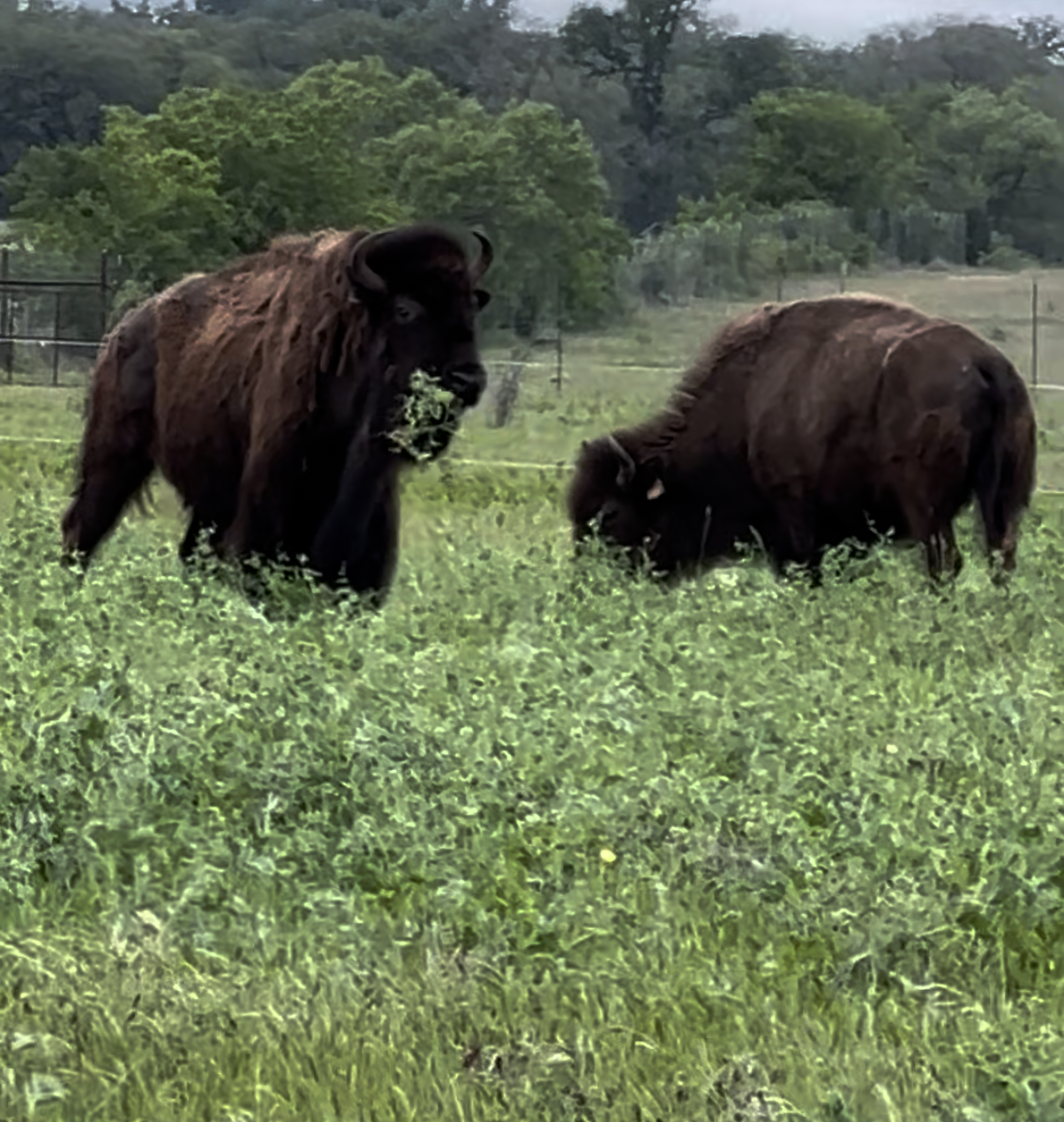
Bison grazed the tallgrass prairie into being. Prairie grasses keep their growing points low, at the crown, so a grazing mouth takes the leaf and leaves the plant. Hooves press seed into soil. Dung and urine return nitrogen. A herd moves on, and the grass comes back thicker.

The grass is not killed when the bison eats. A ruminant turns cellulose, which we cannot digest, into food we can, and the plant it ate is still alive.

The word regenerative now appears on packages of meat that are nothing of the kind. I am not defending pasture in general. A field of planted Bermuda grass grazed all year is a monoculture with cows on it. What I am describing is regenerative rotational grazing: a herd moved often across diverse native grassland, the way bison once moved ahead of wolves, with each patch given long months to recover.

Done well, it rebuilds the whole web from the bottom up. Dung beetles bury the manure and feed the soil microbes. Wildflowers and native grasses return, and the insects return with them. Grassland birds follow the insects. Hawks, owls and coyotes follow the birds and the rodents. The herd is the engine that restarts the land.

Not bison alone. Goats to take the brush the grazers leave. Sheep behind them. Turkeys and chickens following the herd for the insects and the dung. A Mardi Gras of species, each one eating something different and leaving something behind for the next.

There is a harder question. In 2003 the animal scientist Steven Davis argued that a diet including pasture-raised ruminants might kill fewer animals overall than a diet of row crops, because harvest machinery kills mice, rabbits, snakes and ground-nesting birds by the field. The philosopher Gaverick Matheny answered that, counted per calorie, a mostly plant diet still comes out ahead. The researchers have not settled it.

But both sides of that debate count the deaths at harvest. I would count what happens before it. A mouse killed by a combine is one death. A field that has been corn, and only corn, for forty years is a place where the mouse, the meadowlark, the bumblebee and the milkweed never get to live at all. Miles of single crops held up by herbicide, insecticide and synthetic nitrogen are not habitat. They are the absence of it.

The largest global study of biodiversity agrees. The 2019 global assessment by IPBES, the international biodiversity panel, named land-use change as the single largest driver of species loss on land, and agricultural expansion as its most widespread form. And much of that corn and soy goes to feed the animals in feedlots, which means the industrial plate does its damage twice.

One bison, a thousand pounds or more, raised by rotational grazing on native grassland and taken with care, can feed one person for a year or more. Many small lives, or one large one honored. That is a real choice, and the industrial system has hidden it from us.

Food grown in living soil

How food is raised changes what it carries. In 2022 the soil scientist David Montgomery and his colleagues compared crops from regenerative farms with crops from conventional farms next door. The regenerative crops averaged about a third more vitamin K, roughly 15 percent more vitamin E, and around 20 percent more phenolics, the defensive compounds plants make and we benefit from. Beef from one regenerative farm carried about three times the omega-3 of conventional beef, with a far healthier balance of fats.

The authors call the study preliminary. It confirms what I have seen in my own soil since 2007. Living soil, full of fungi and microbes, feeds plants minerals that dead soil cannot. Almost no one has grown food for nutrient density instead of yield. We do not yet know how nourishing food could be.

In 2018 researchers watched a wounded leaf send a calcium wave through the whole plant, carried by glutamate, the same molecule that fires our own nerves. That discovery became my poem glutamate. Plants sense injury, signal it, and defend themselves. Whether they feel it, no one knows. There is no clean line to stand behind. Every meal is taken from something that was answering the world.

The same soil that feeds the food also holds the water. Every one percent rise in soil organic matter lets an acre hold roughly 20,000 more gallons. Rain that once ran off hard, bare ground into ditches now soaks in, recharges the aquifer, and stays in the root zone through the dry months. Living plants pull that water back up and release it as vapor, which cools the land around them.

So a well-grazed prairie does more than feed us. It softens the flood, outlasts the drought, cools the ground. Microbe to beetle to grass to bison to hawk, and back down into water and soil again.

Nothing wasted

The Yahgan tore the cloth so no one went without. The Plains nations used nearly every part of the bison: meat, organ, hide, sinew, bone, horn. Respect and nutrition, in the same act.

A single bison liver weighs ten pounds or more, and ounce for ounce it carries several times the vitamins and minerals of a steak: B12, vitamin A, copper, folate, iron. Heart, tongue and kidney follow. The bones give gallons of broth. The industrial system sells the muscle and renders the rest into pet food and feed. It treats the most nourishing part of the animal as a byproduct.

In the city, the same ethic can grow on walls. A sunlit, south-facing building in Houston can carry pole beans, squash, maypop and mustang grape climbing warm brick, watered by rain caught off the roof. Those walls shade the building, slow the storm runoff, and feed bees and birds. A food wall is also habitat. Cities can feed us the fresh, fragile food. The prairie and the herd, the dense food. City and country, each feeding the other.

Remembering

I agree with Darwin that conscience grew out of care, and that care was shaped by survival. I part ways with him on what belongs at the top of the ladder. The ethic of taking only what is needed, wasting nothing, and honoring what feeds you was not invented by civilization. Industrial civilization is what forgot it.

Everything eats. What sets us apart is that we can see the consequences of how we eat, and choose. A hawk cannot be cruel or kind. We can be either. That choice is the human part of the system, and it is where conscience belongs.

So the way forward is a remembering. Soil built instead of spent. Herds moving across native grass. Whole animals honored. Walls heavy with beans, squash and maypop. The planet already knows how to balance life. Our work is to stop interrupting it.

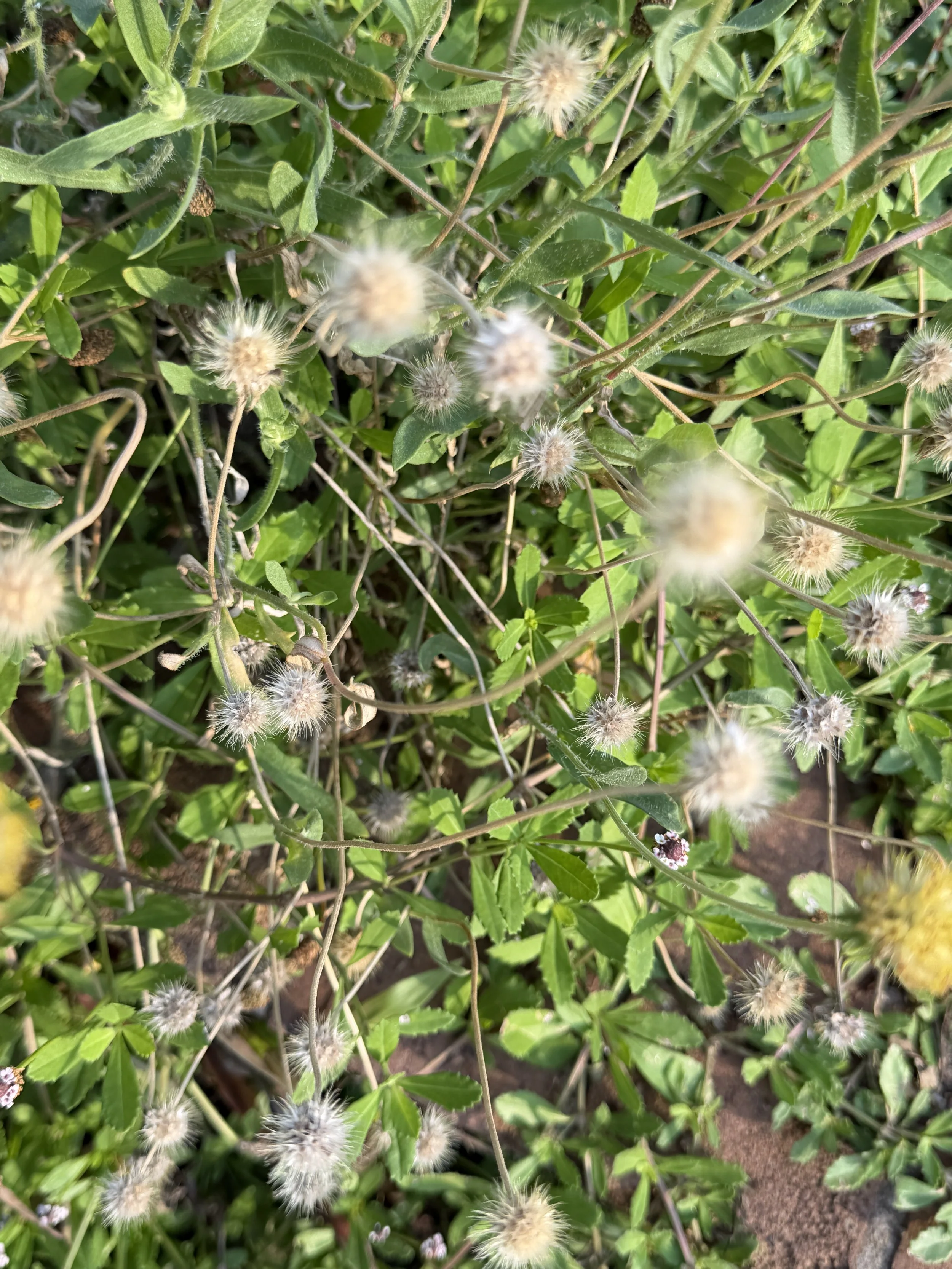
In art , Relief, Systems thinking Tags Art blog, ecoart blog, Cindee travis Klement, regenerative agriculture, rotational grazing
Comment

Why I Don't Compost

September 29, 2026 Cindee Klement

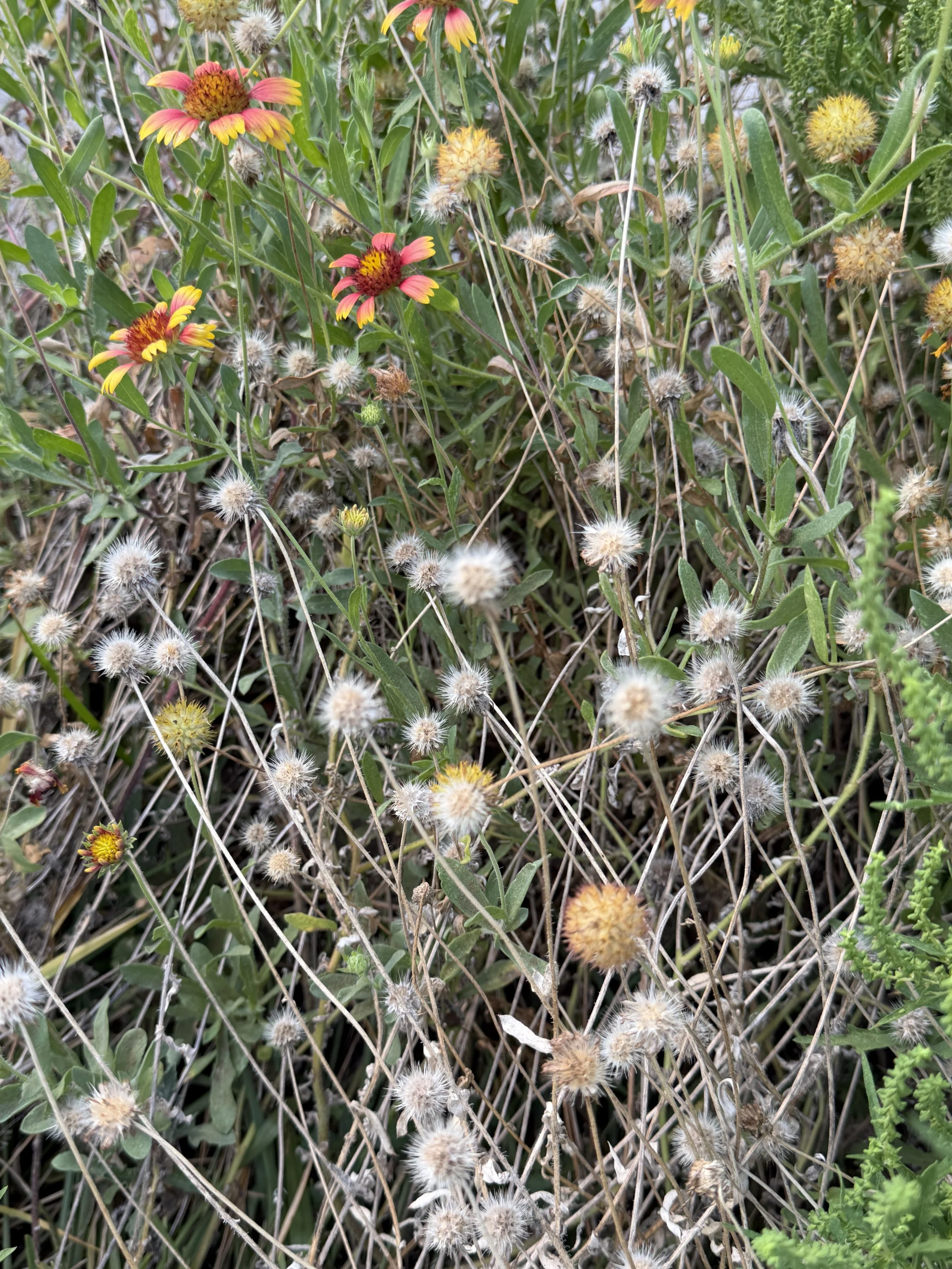
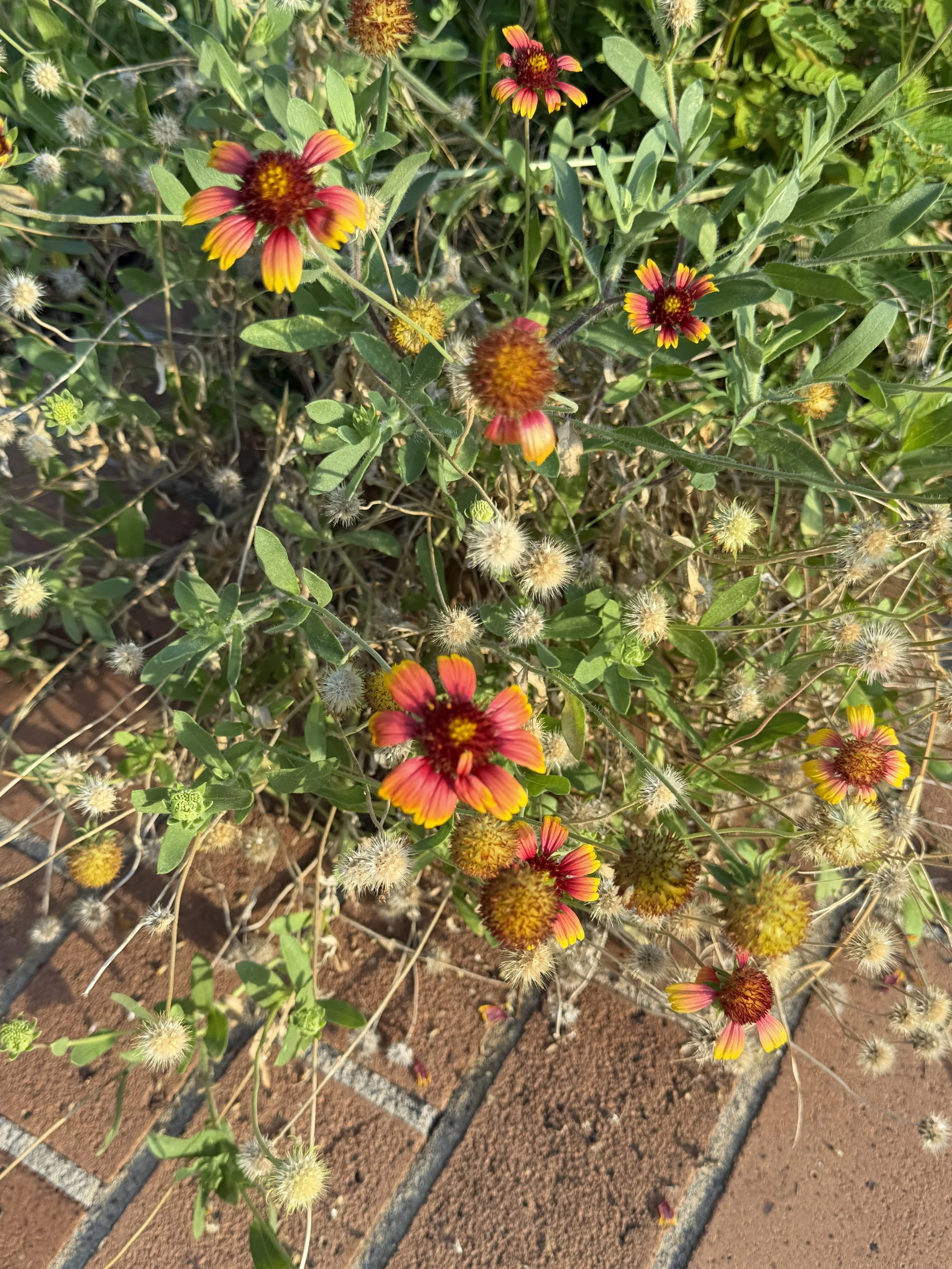
I used to believe the birds were doing the planting for me. Mostly they aren't. A cardinal cracks the seed, a goldfinch grinds it in its gizzard, and either way it becomes heat. A cardinal cracks the seed, a goldfinch grinds it in its gizzard, and either way the energy becomes heat. The nitrogen comes back down in the droppings, giving back to the soil that grew the seed. — Beautiful

The plant makes far more seed than the ground can hold, and the birds are sloppy about taking it. A sparrow tugging at a cone knocks seed into the leaf litter. A finch pulls a head apart and loses half of it to the wind. What falls comes up later, a little farther from where it started.

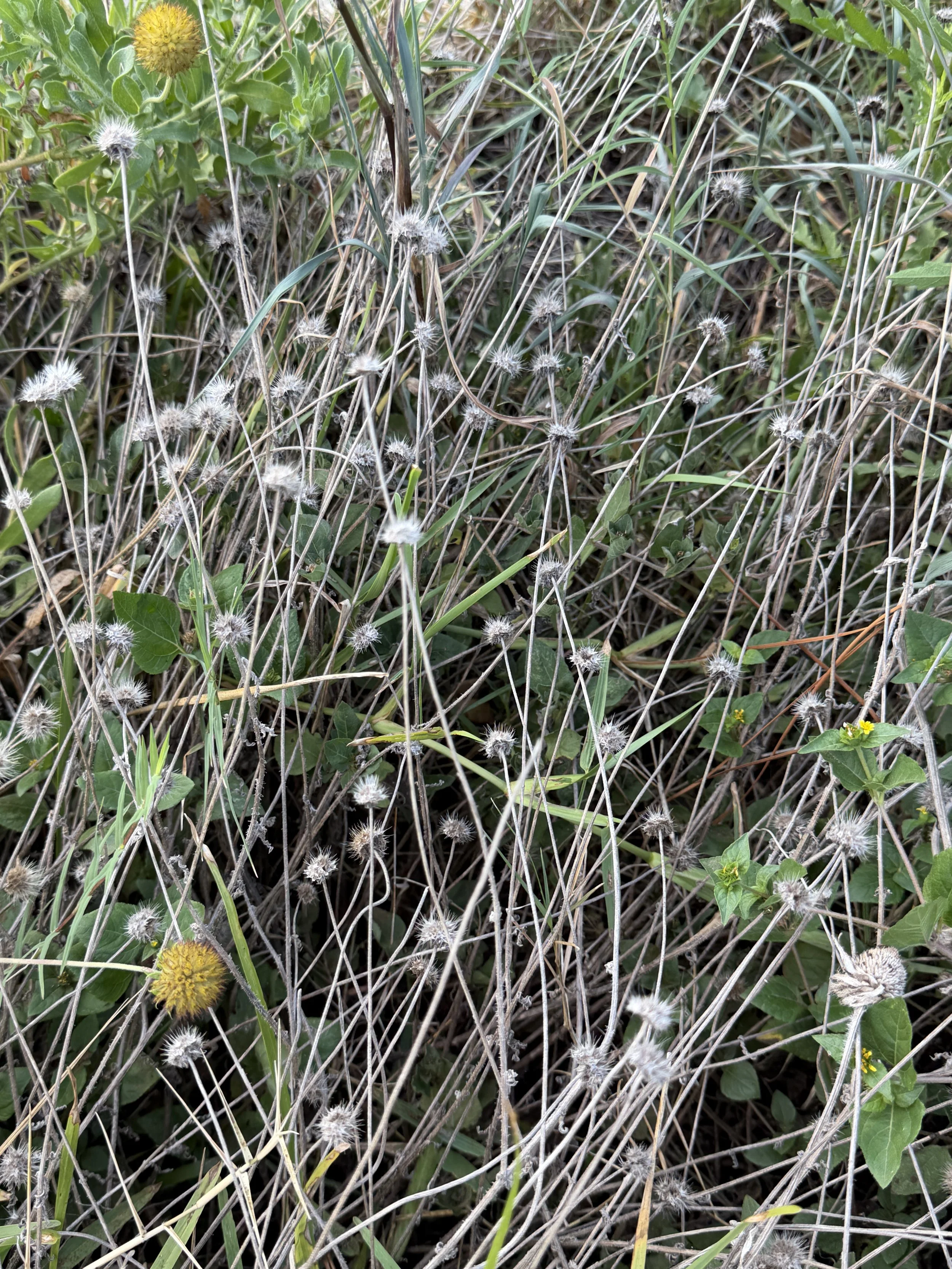
The stems are doing their own work. Small native bees lay eggs in hollow and pithy stalks, and beetle and moth larvae spend the winter inside them. Nearly all songbirds, even most of the seed eaters, raise their chicks on insects. If I cut the stems now, I'd be taking away next spring's nestling food along with So I leave the spent growth standing through winter, even as new flowers open around it. In late winter I cut the oldest gray stems to knee height and leave the stubs for the bees. The leaves stay where they fell. Whatever the birds and insects don't use composts where it falls.

So I leave the spent growth standing through winter, even as new flowers open around it. In late winter I cut the oldest gray stems to knee height and leave the stubs for the bees. The leaves stay where they fell. Whatever the birds and insects don't use composts where it falls.

In art , animal impact , Art blog, Art blog Ecoartspace blog Tags Deeper than that, living sculpture, Cindee klement, Cindee travis Klement, art, sculpture
Comment
Summary Block
This block is invalid. Please check the block settings and try again.
Featured
Aenean eu leo Quam
Aenean eu leo Quam

Quisque iaculis facilisis lacinia. Mauris euismod pellentesque tellus sit amet mollis.

Read more →

COPYRIGHT © 2014 - 2026, CINDEE TRAVIS KLEMENT LLC ALL RIGHTS RESERVED

Some writing on this site is developed in dialogue with AI editing tools.