
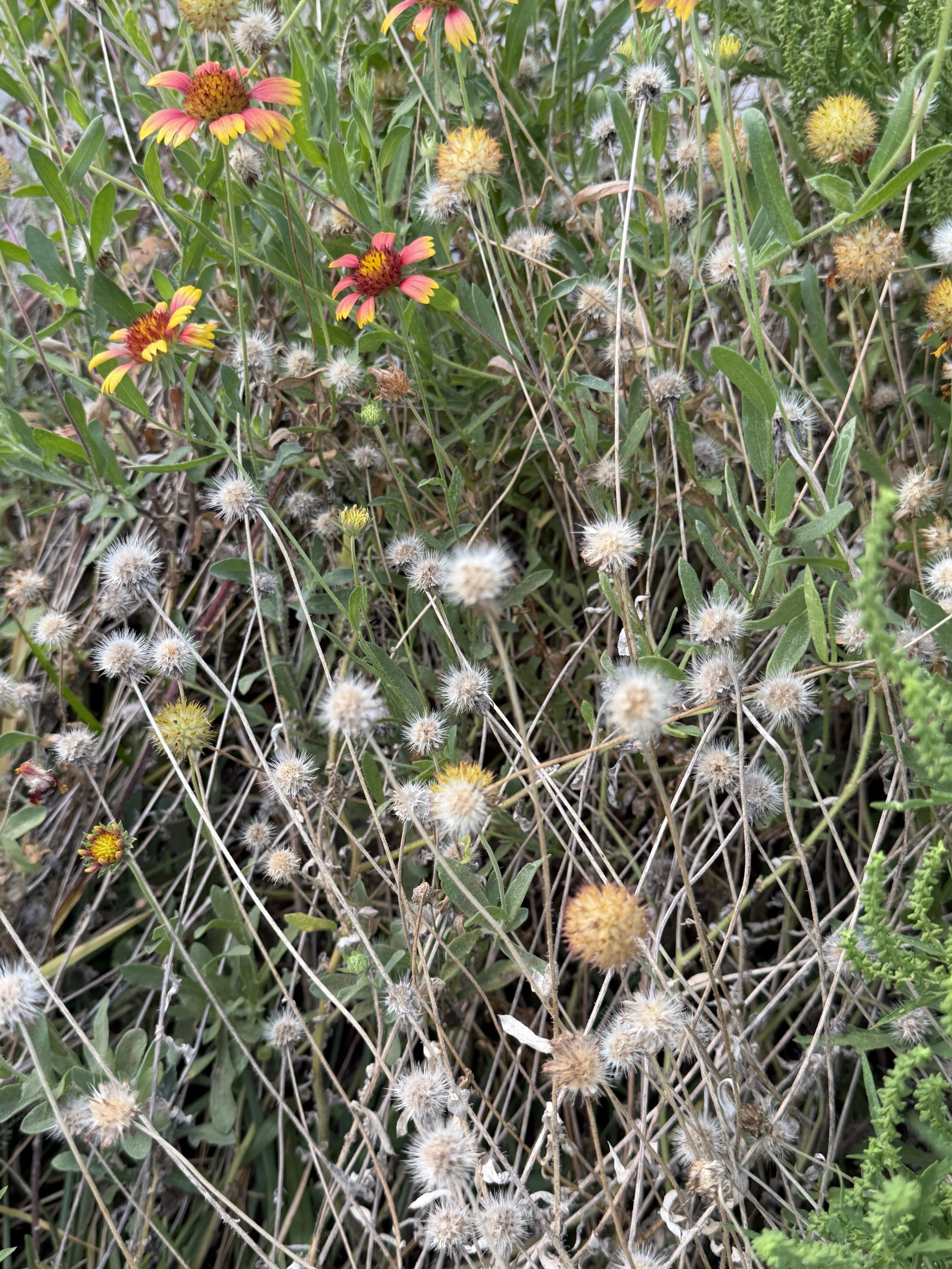
I used to believe the birds were doing the planting for me. Mostly they aren't. A cardinal cracks the seed, a goldfinch grinds it in its gizzard, and either way it becomes heat. A cardinal cracks the seed, a goldfinch grinds it in its gizzard, and either way the energy becomes heat. The nitrogen comes back down in the droppings, giving back to the soil that grew the seed. — Beautiful
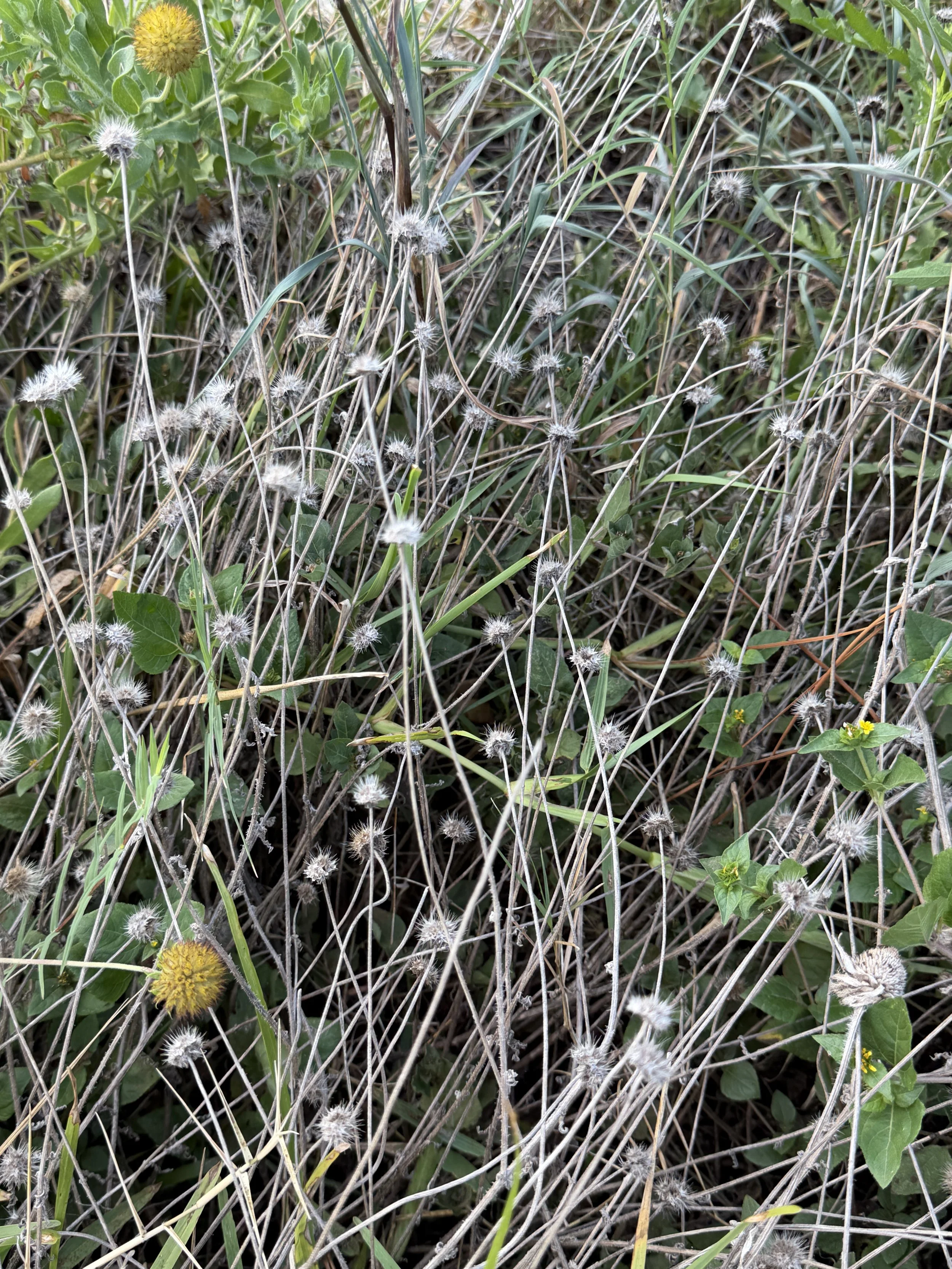
The plant makes far more seed than the ground can hold, and the birds are sloppy about taking it. A sparrow tugging at a cone knocks seed into the leaf litter. A finch pulls a head apart and loses half of it to the wind. What falls comes up later, a little farther from where it started.
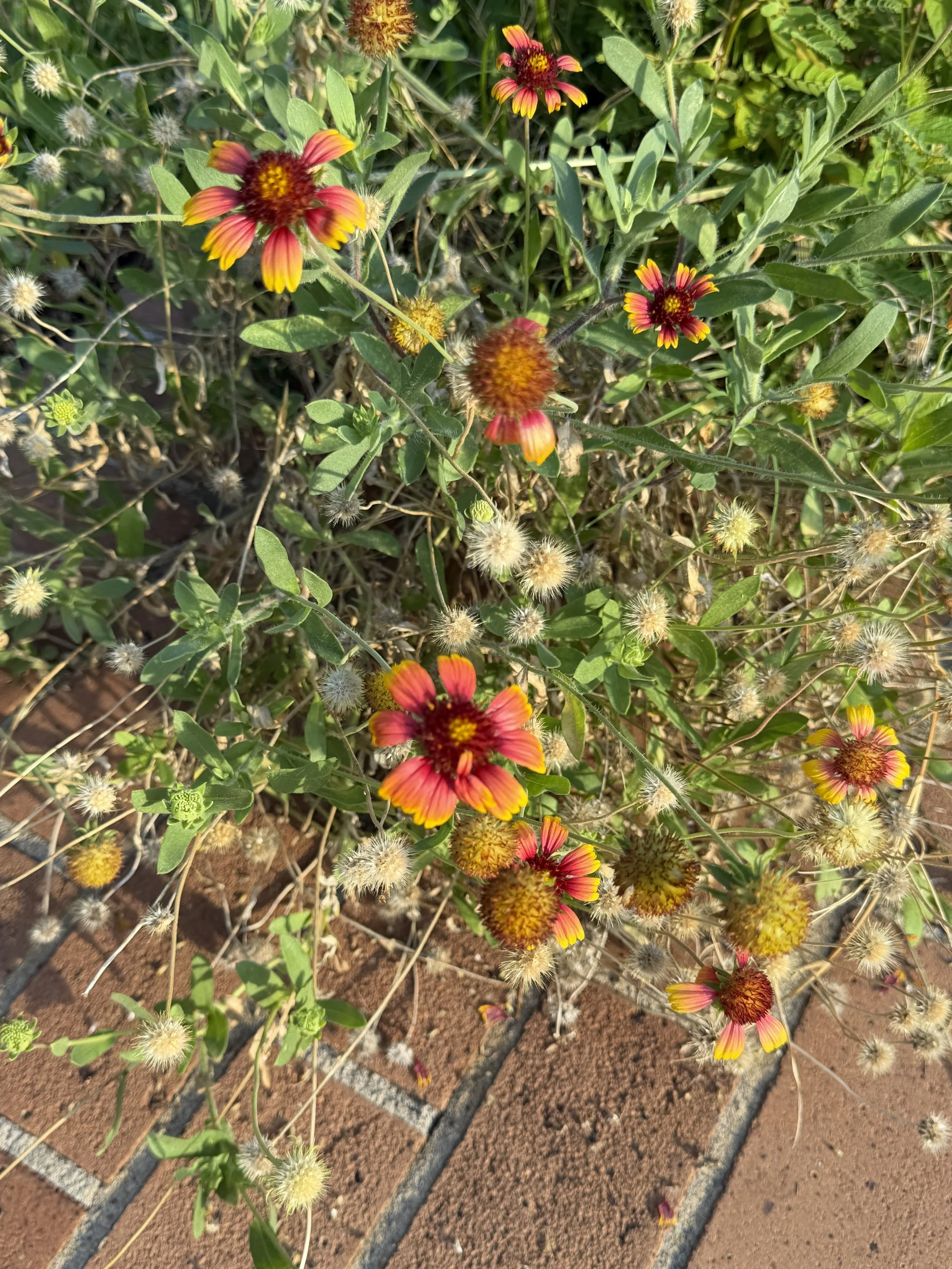
The stems are doing their own work. Small native bees lay eggs in hollow and pithy stalks, and beetle and moth larvae spend the winter inside them. Nearly all songbirds, even most of the seed eaters, raise their chicks on insects. If I cut the stems now, I'd be taking away next spring's nestling food along with So I leave the spent growth standing through winter, even as new flowers open around it. In late winter I cut the oldest gray stems to knee height and leave the stubs for the bees. The leaves stay where they fell. Whatever the birds and insects don't use composts where it falls.
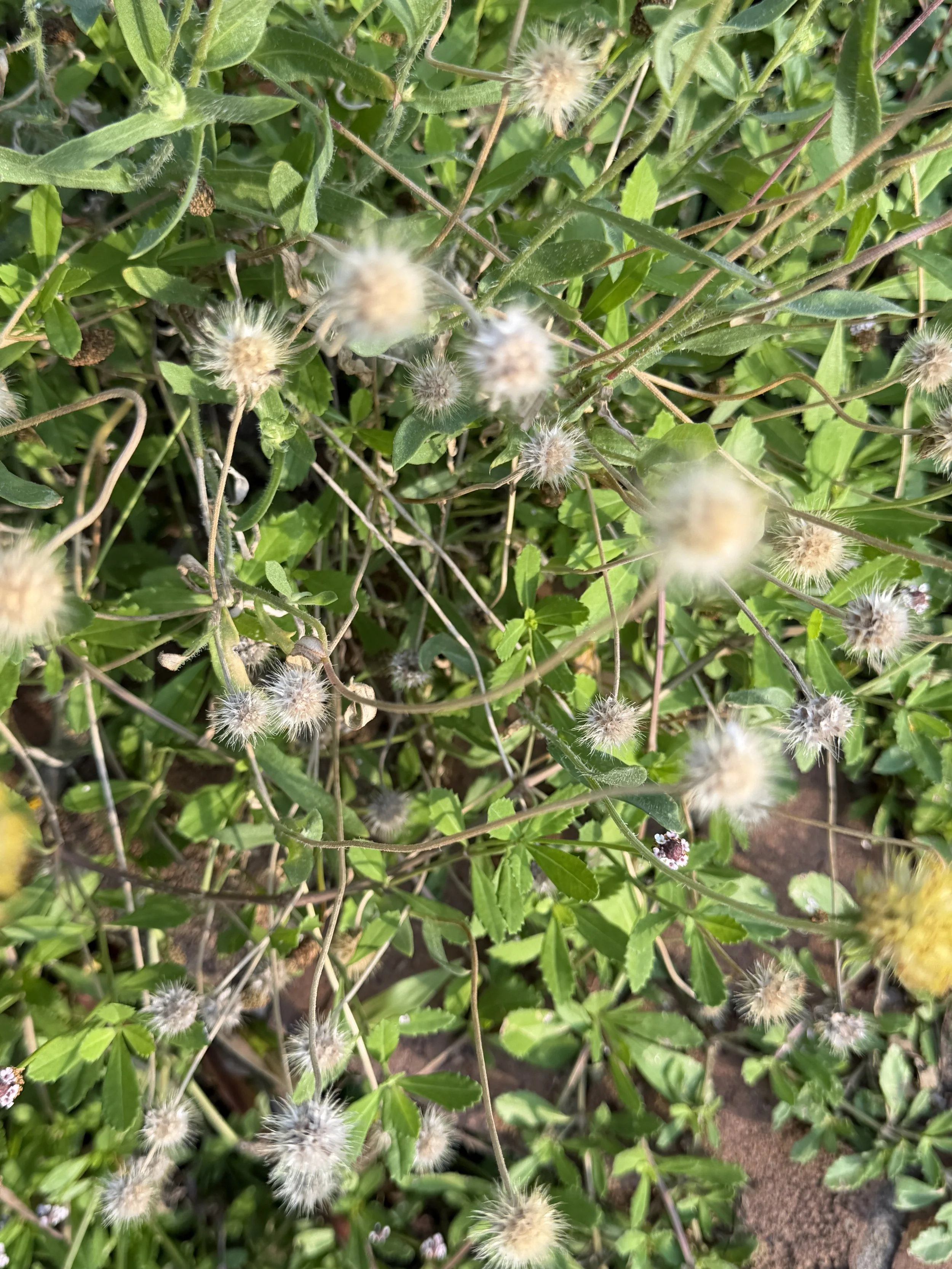
So I leave the spent growth standing through winter, even as new flowers open around it. In late winter I cut the oldest gray stems to knee height and leave the stubs for the bees. The leaves stay where they fell. Whatever the birds and insects don't use composts where it falls.
