A Word for Feeding
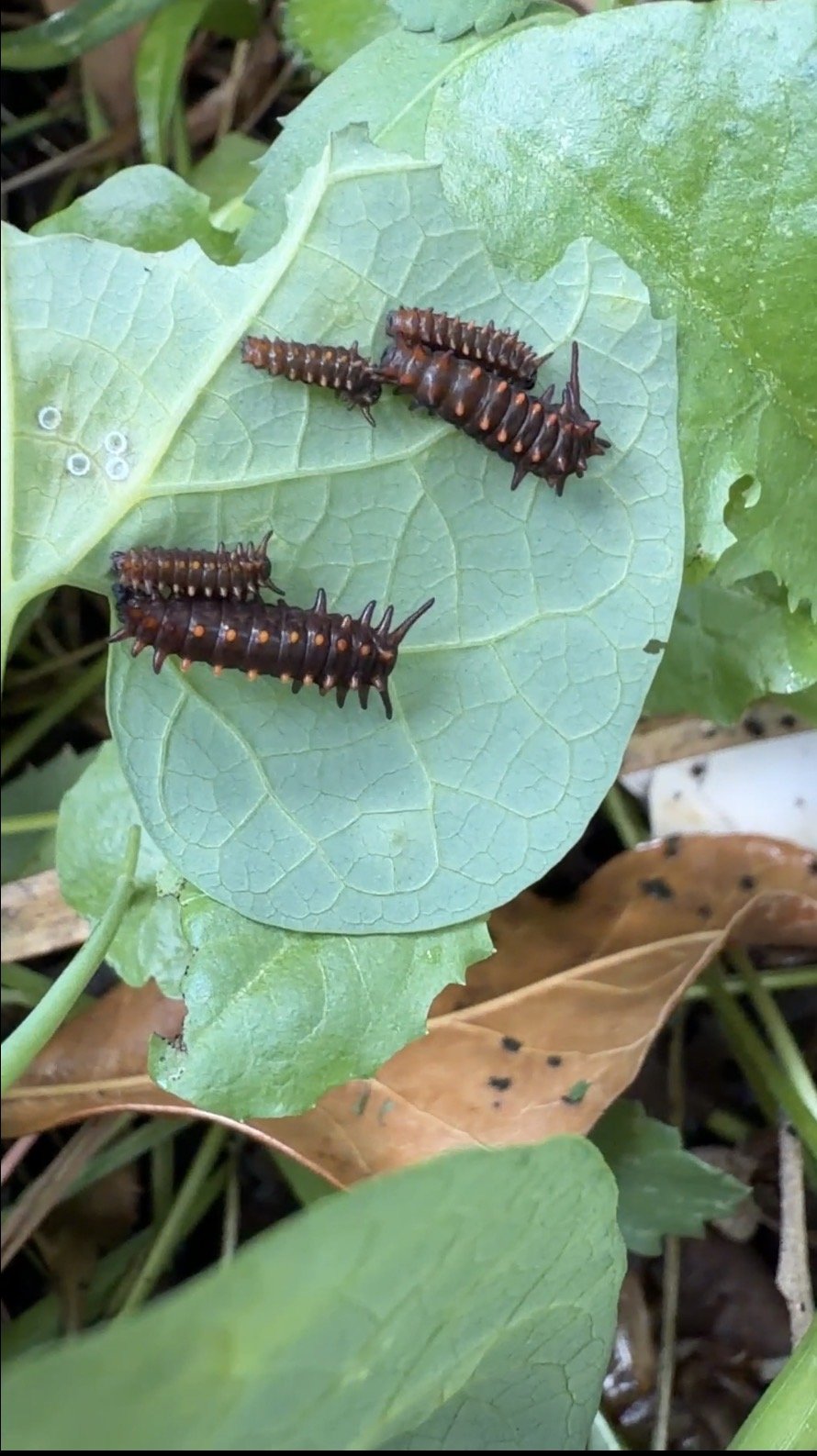
The other morning five caterpillars were eating my pipevine to the stem. The word for this, in every gardening book, is damage.
Open any seed catalog or extension-service guide and the vocabulary is the same. Insects are pests. Their presence is an infestation. What they do is damage, and what we do in return is control. We treat, we spray, we eliminate. A leaf with chewed edges is a symptom, and the garden is a defenseless patient we must defend.
It is the language of a war zone, and that is not a metaphor it is a fact.
It came with industry. After World War II, chemistry developed for the battlefield went looking for a peacetime market. DDT, which had protected soldiers from lice and mosquitoes, was sold to farmers and homeowners.
Organophosphate insecticides came out of the same research that produced nerve agents. The products arrived with the language attached.
Rachel Carson saw it in 1962: we had turned the weapons of war on the living world and called it gardening.
Sixty years later the chemicals have changed, but the words have not.
We still garden as if we were under attack.
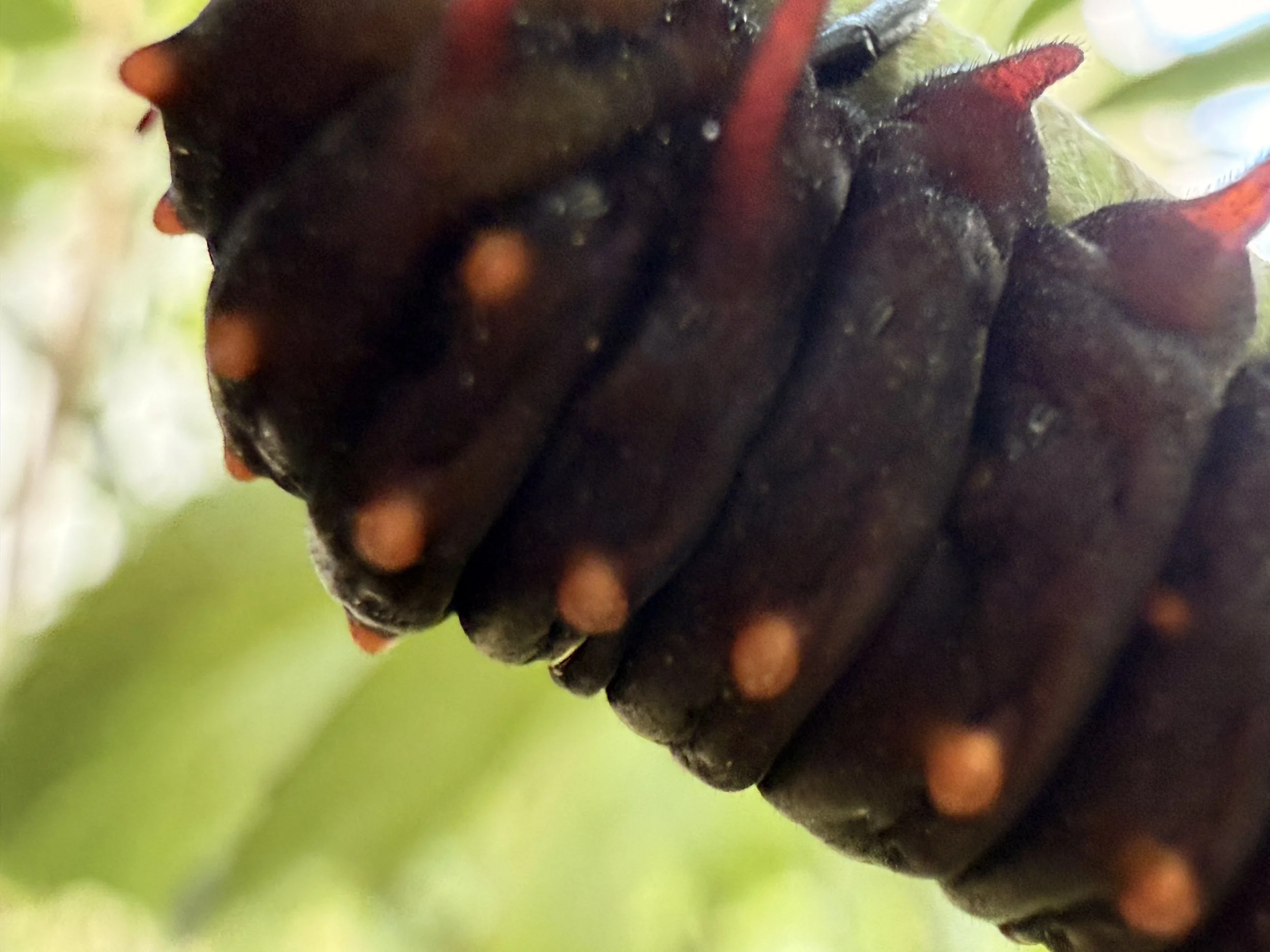
But look at what is actually happening on my vine. The pipevine swallowtail lays its eggs on almost nothing else. The caterpillars eat the leaves and, with them, the plant's aristolochic acids, a compound toxic to most animals. They don't die from it. They keep it. The poison becomes their armor, then the armor of the butterfly, then of the eggs she lays on the next vine.
Nothing here is being destroyed. Energy is being moved.
This is what animals do. It is their job. A plant takes sunlight and fixes it into sugar, into leaf, into stem. Then it waits, rooted, unable to carry what it has made anywhere at all. The caterpillar carries it. It turns leaf into body, body into wing, wing into a bird's meal or a new generation three yards away. Every bite moves the sun one step further into the world.
Ecologists call this a food web, and the term undersells it.
It is a transport system.
Animals are how the energy a plant captures gets out of the plant and into everything else: the wren, the wasp, the fox, the soil.
A garden without caterpillars is a garden where the sunlight stops at the leaf.
Seen this way, the chewed pipevine is not a casualty. It is a loading dock.
And the vine is not losing. Pipevine evolved alongside these caterpillars over a span of time we can barely imagine. It grows back. It is built to be eaten. Even the poison is part of the plan. It does not stop the flow of energy. It redirects it. What the pipevine makes mostly passes the birds by and goes to the ground: frass falls to the soil below, nitrogen returns to the roots, and the vine pushes new leaves into a richer ground.
Feeding is not the opposite of growing. It is how growing begins again.
The habit of defense runs deeper than the chemical age. It is in the word itself. Garden comes from an old Frankish word for an enclosure, a fenced space. It shares a root with yard, and with the -grad of walled cities. Even paradise began as an Old Persian word for a walled park. From the beginning, a garden was a line drawn between what we keep in and what we keep out.
But a fence was never what made a garden alive. What makes it alive is what moves through it: the swallowtail that finds the vine, the wren that finds the caterpillar, the energy that leaves the leaf and enters the world.
A garden seen in systems is not defended ground. It is an open door.
I keep returning to Darwin. In The Descent of Man, he argued that the moral sense is not handed down from above. It grows up from below, out of the same social instincts that make a ewe call for her lamb. Language works the same way. We do not invent words for things we have not lived. The vocabulary of war took root in our gardens because we came to garden at war.
A vocabulary of feeding will take root the same way, once we know the web so intimately that it shapes how we think and how we do everything. 🍃
Quisque iaculis facilisis lacinia. Mauris euismod pellentesque tellus sit amet mollis.