A PURPLE PETAL ON AN ORDINARY TUESDAY
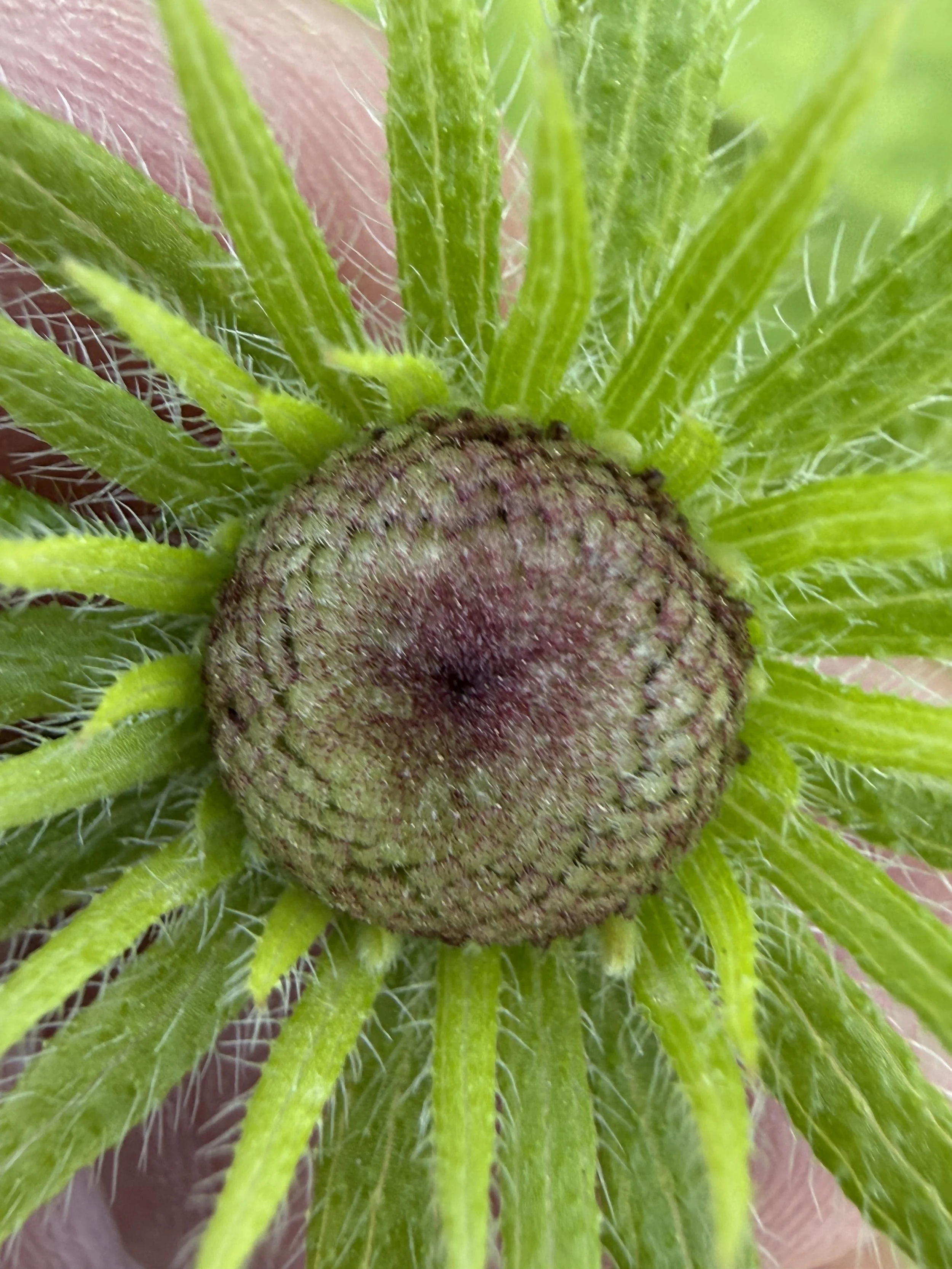
I was walking through Sequel — my living sculpture — when I noticed it. A cluster of Black-eyed Susans with buds gone deep, moody purple. My first reaction was that something was wrong. That reaction is learned. My instinct — the older, truer one — was curiosity. Just ask why. The more I looked, the more I questioned. The more I questioned, the more curious I became. I wanted to understand what was actually happening.
So I went down the rabbit hole.
Turns out, that purple color isn’t a disease. It’s not dying. It’s responding. When a Black-eyed Susan experiences stress — cold nights, too much rain, soil that can’t deliver the phosphorus it needs — it produces something called anthocyanin. A pigment. A protective chemical the plant makes just to cope.
The same pigment that colors blueberries. Red cabbage. Autumn maples.
The plant doesn’t collapse under pressure. It changes color.
And once the soil warms up, once the water drains, once the nutrients find their way through, it returns to green. It was never permanently altered. Just temporarily transformed.
Sequel keeps showing me things I didn’t plan for, didn’t design, couldn’t have predicted. A purple petal on an ordinary Tuesday is its own kind of gift.