In Defense of the Uninvited — Part II
There is a particular kind of anxiety that lives at the edge of an unmowed lawn. You can feel it from the sidewalk — the low-grade disapproval radiating off a neighbor’s glance, the HOA letter with its careful language about community standards and property values. We all know this pressure. Many of us have bent to it.
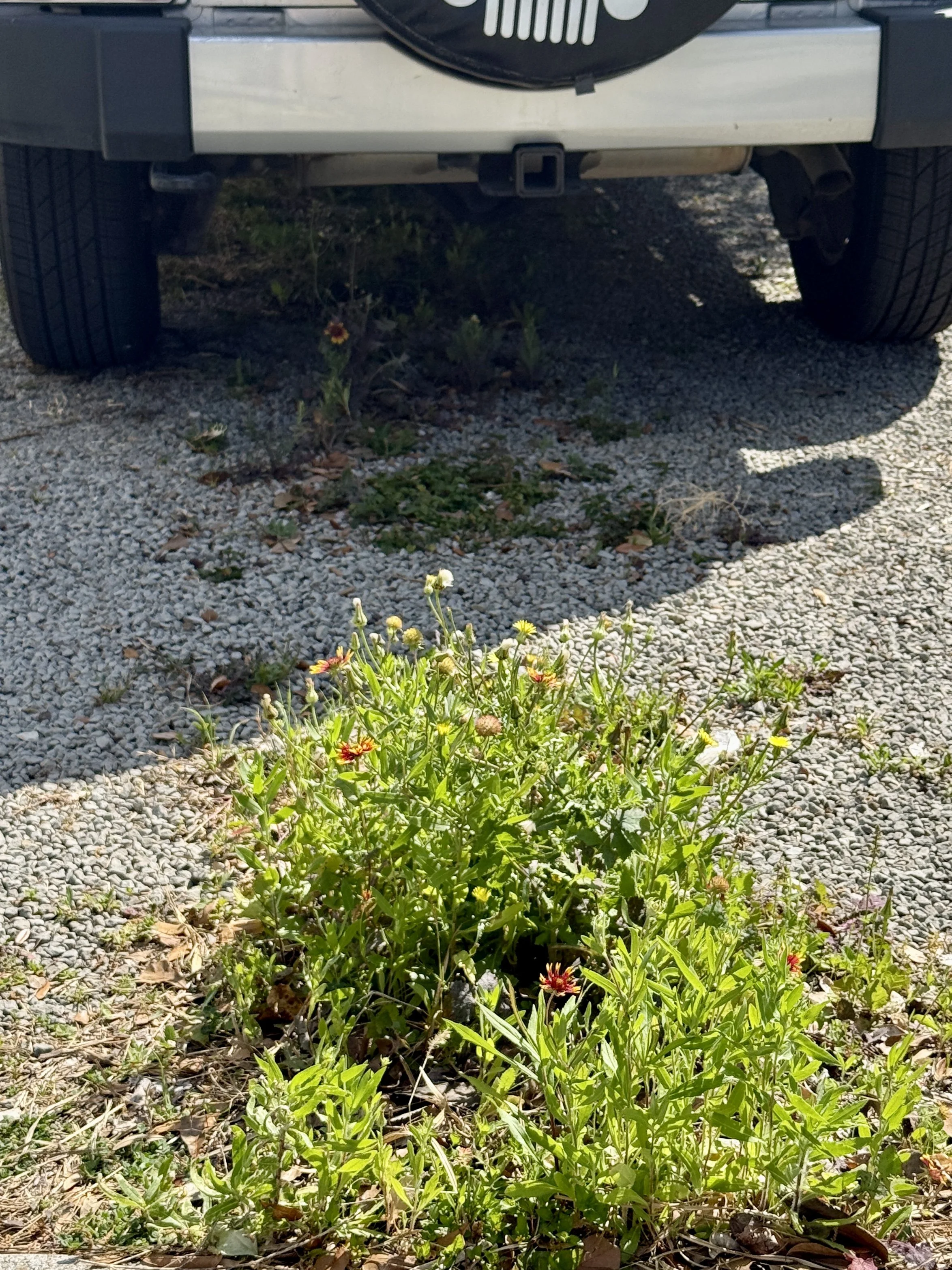
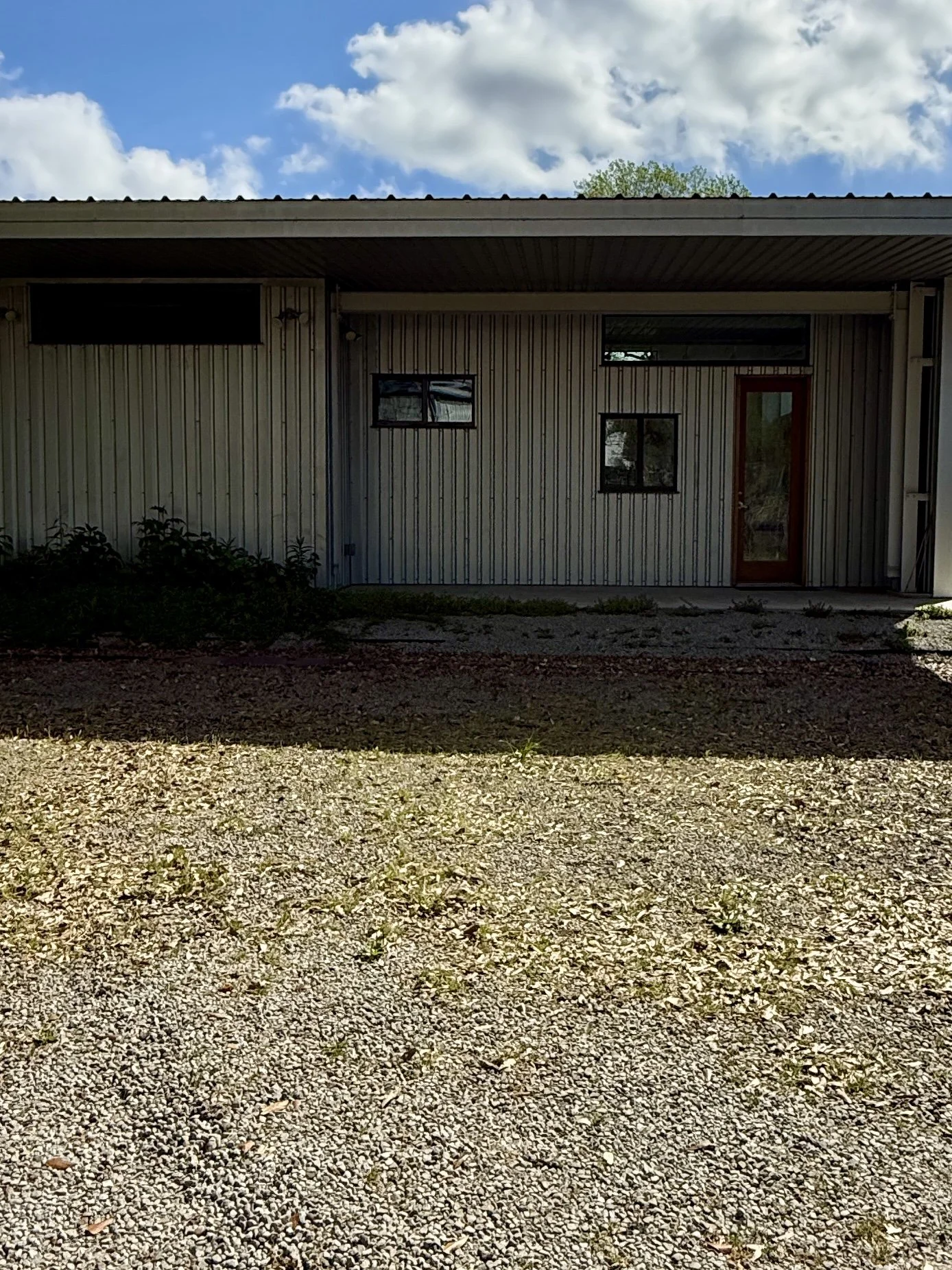
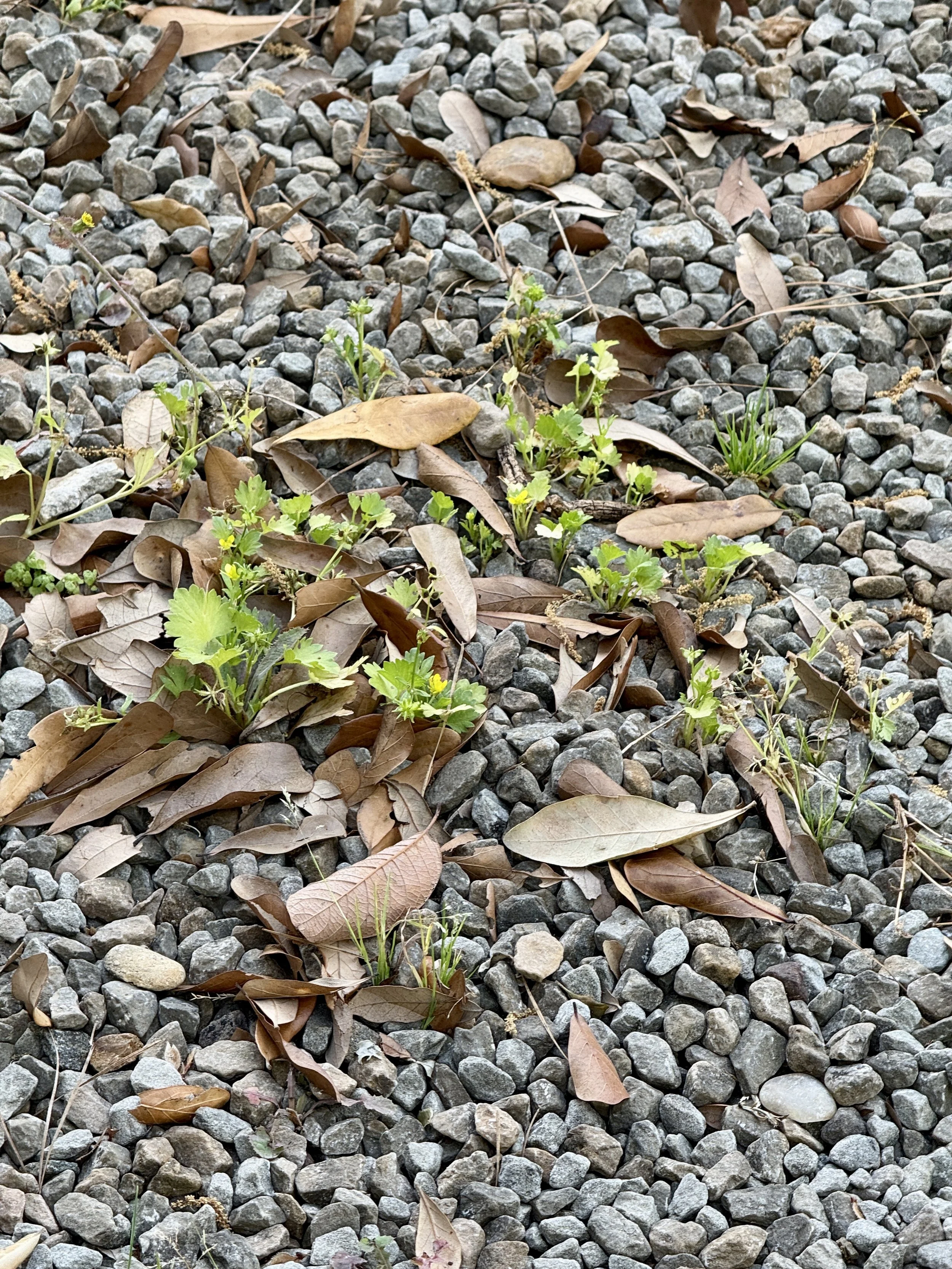
I feel it too. At my own eco-art studio, volunteer plants have started pushing up through the gravel parking lot this spring. In modern aesthetic terms, it looks unkempt. Do I groom it because that is what looks cared for to the human eye — or do I do what I preach? If I did clean it up, how? I won’t use pesticides. Pulling is more work than I can manage. I could burn them with a torch, which releases carbon — leaving the lot neat but barren. I know that option well. It’s what I did all last summer. I feel the pull of it still.
That question — how much tidiness do we owe society before we’re allowed to let something live — is exactly what this essay is about.
The ancient part of your brain that kept your ancestors alive is genuinely afraid of the tall grass. It is scanning for the snake, the bobcat, the thing with teeth. That instinct is old. It is wired in. The impulse to clear, to see, to know what’s out there — it kept people alive across tens of thousands of years. We are not wrong to have it.
But we are living in a different world now, and that old circuitry is misfiring.
Here is what the science shows: living plant systems — their moisture, their transpiration, their cooling and breathing — help move weather across the landscape. Strip those systems out and replace them with hot pavement and monoculture lawn, and you remove the very mechanisms that keep weather moving. Extreme weather increasingly gets stuck. Heat domes park over cities for days, fed not just by hot pavement but by the barren heat radiating off bare ground and fallow fields. The fires. The floods. The Guadalupe on the Fourth of July. Hurricane Harvey. We call these natural disasters — as if nature did this to us, unprovoked.
The danger is no longer the rattlesnake in the grass. The danger is the bare ground.
I know this in my body now — not just my brain. Standing in my parking lot, looking at the volunteers pushing through the gravel, I no longer see a mess. I see first responders. The plants that show up uninvited are the ones that know what the ground needs — to be covered, held, cooled, fed. They are doing the work we stopped doing when we picked up the leaf blower and the herbicide.
What would it take to shift not just individual behavior but the aesthetic itself — to make living, layered, uninvited-welcoming landscapes look like what they actually are: acts of intelligence? Acts of care?
The weeds already know what to do. The seeds are in the soil, waiting. Life is not asking permission. It is ready to come back the moment we stop yanking it out.
The question isn’t whether the land can recover. The question is whether we can — from the idea that control is the same thing as care. That bare is the same thing as clean.
The greatest threat we face isn’t what’s hiding in the weeds. It’s that we cut them all down.
