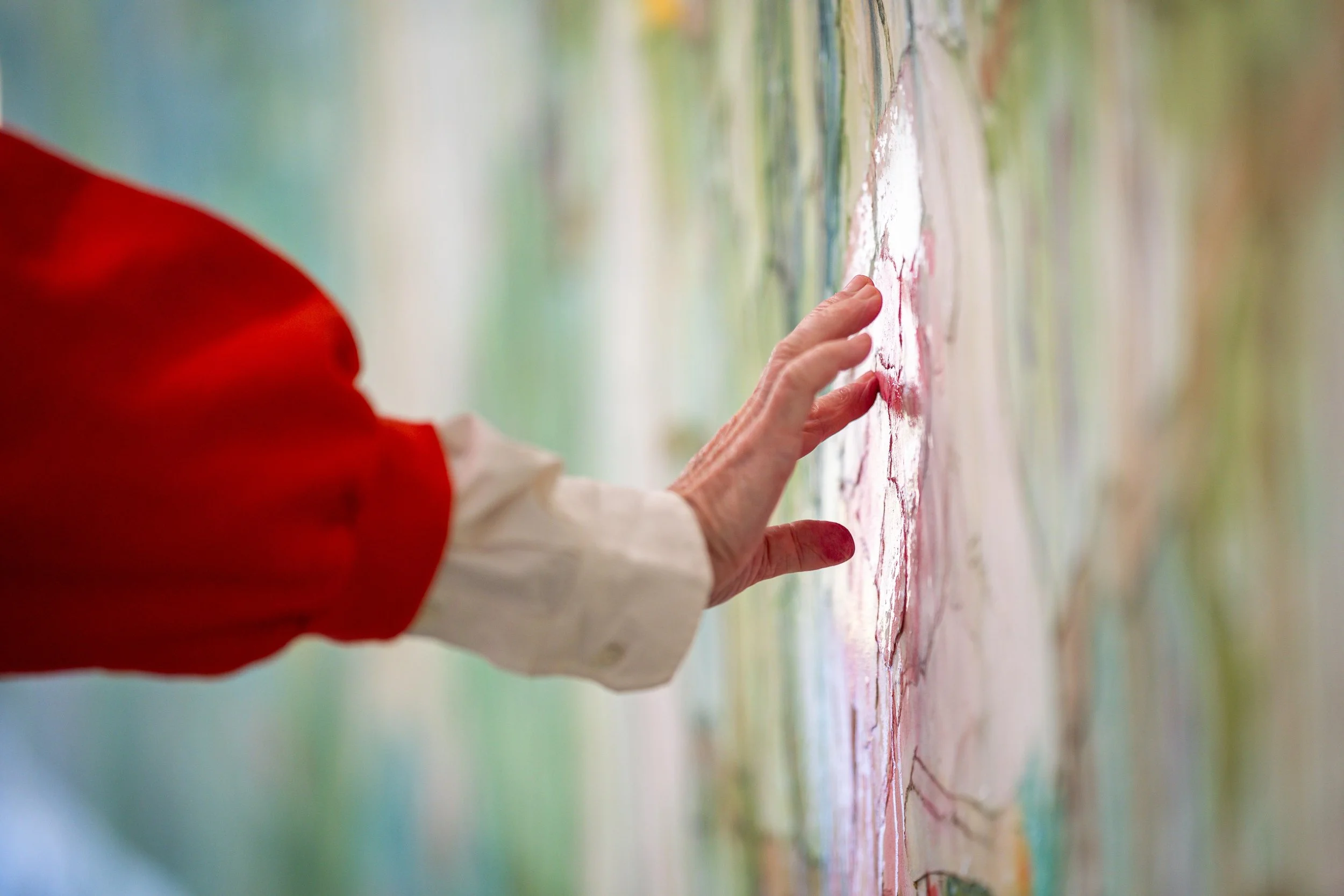
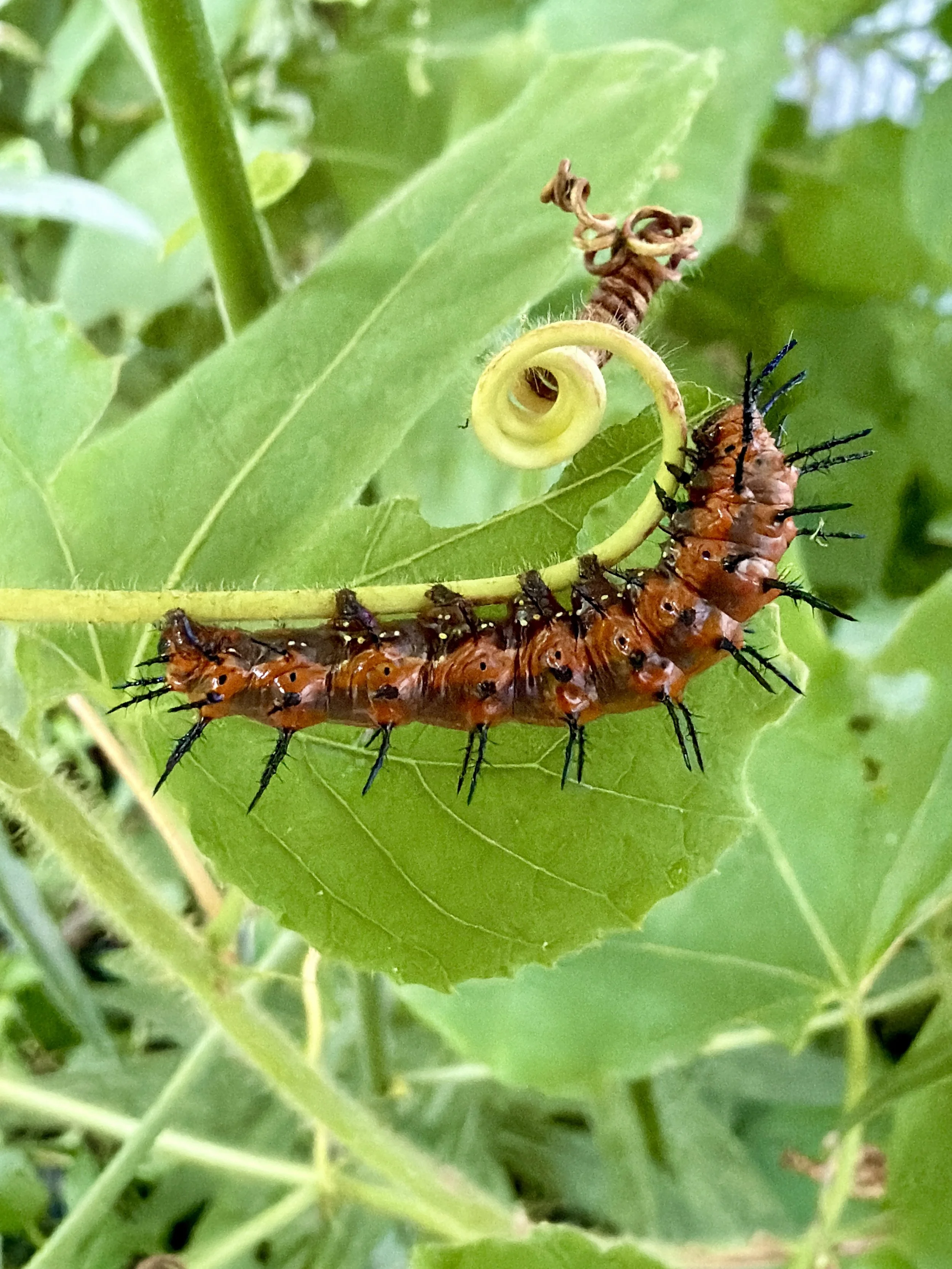
Photographed in Sequel: a passionflower tendril, coiled, and the gulf fritillary caterpillar cuddled against it — a larva that eats nothing else, on the only plant that could have grown that particular spiral.
Read moreIn Defense of the Uninvited
I think about weeds.
Not in an anxious, what-do-I-do-about-them way. More in a — wait, who decided these don’t belong here? — kind of way.
I look at these plants. Really look at them. They showed up, figured it out, and started doing the work. Nobody planted them. Nobody watered them. They just arrived, broke through whatever burning hot surface was available, and got on with it. You have to admire their spirit and determination.
We call them invasive. We call them a problem. And sometimes, they are. I am a die hard native plant enthusiast — however I have been uncomfortable with this reflex to yank out anything that wasn’t there before — particularly in cities, especially on abandoned lots and cracked pavement and post-industrial nowhere — as if those places had some pristine original state worth protecting.
They don’t. And these plants seem to know it.
Here’s what I’ve come to believe: weeds are Earth’s first responders. When the ground is left bare, tilled, stripped, burned, flooded, or just forgotten — Mother Earth sends them in. They are biologically programmed for the site’s specific conditions, temperature, moisture, daylight — speed healers. They lower soil temperatures, protect the earth’s surface, feed what lives below ground, slow rainwater, reduce erosion, sequester carbon. They show up precisely when and where they are needed most. They do not waste energy or resources.
Here’s what I’ve also noticed: the spots where something is growing — even the stuff we’re not supposed to want — are almost always healthier than the spots where we’ve cleared everything out in the name of keeping it native or neatly manicured. Bare ground isn’t neutral. It’s just… empty. It’s dead. And dead empty doesn’t really serve life.
So I’ve changed how I work. When a volunteer appears somewhere I wasn’t expecting it, I no longer yank it out in a knee-jerk response. I stop — look — think. Why was it sent in? What is it doing? Is it holding soil? Feeding something? Offering shade, cover, a landing pad? I weigh what it’s providing before I decide what to do about it.
The real question isn’t where did this come from? It’s what is it doing now that it’s here?
I’m not saying throw out the whole idea of caring about native ecosystems. I am still a die hard native plant enthusiast. I’m saying the city lot behind a parking garage is probably not the hill to die on. And the plants that moved in there — the ones in these photos — they’re working with what exists, not what existed.
There’s something I respect about that.
Just maybe they know what they are doing.
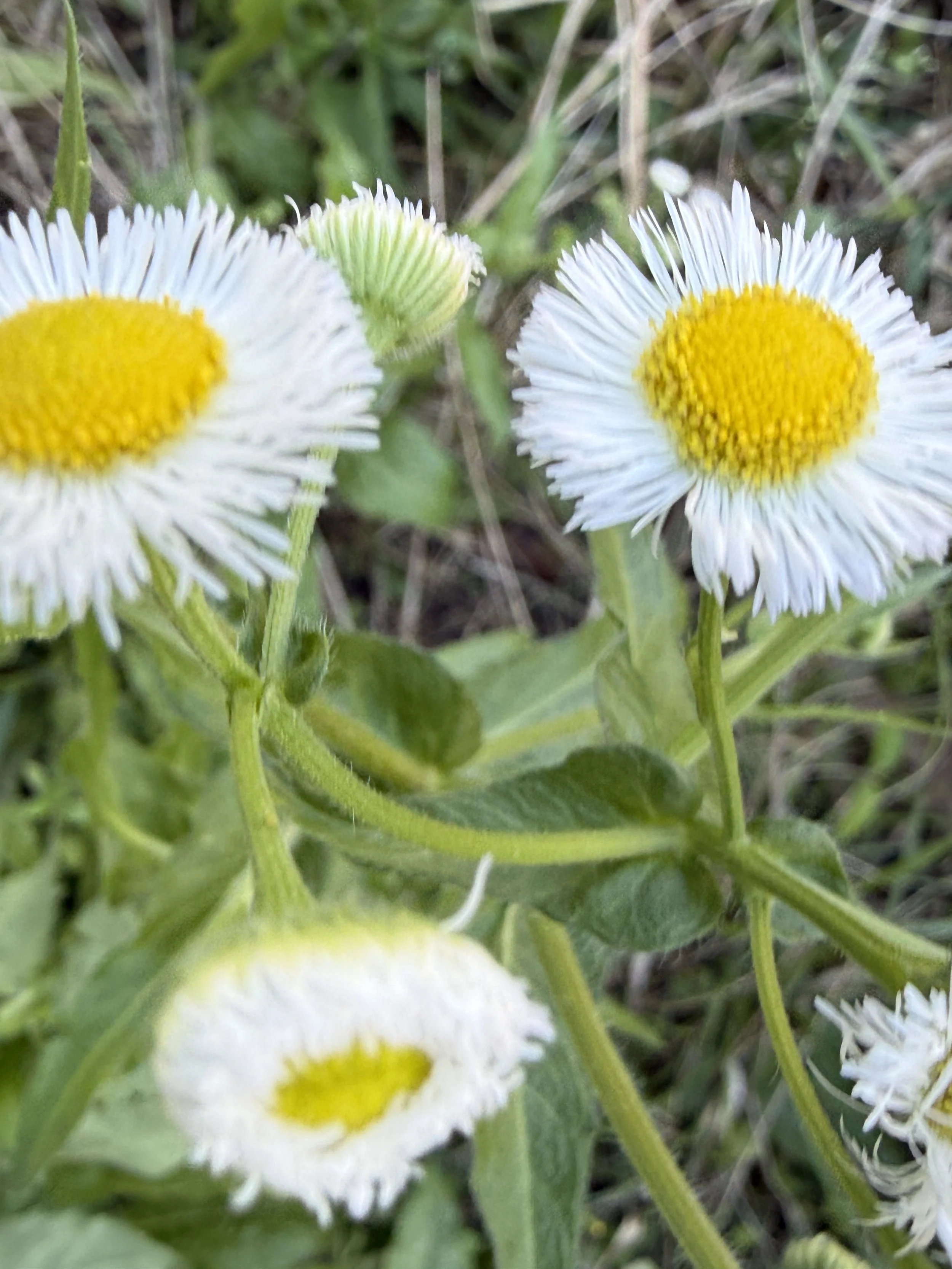
Take daisy fleabane. Erigeron annuus. Dainty and a little scraggly when alone but stunning in a bunch, shows up in places nobody planted anything intentionally. Easy to walk past. Easy to dismiss.
Here is what it’s actually doing.
It’s a pioneer species — which means it arrives first, on bare and broken ground, before almost anything else is willing to try. Disturbed soil, compacted soil, the forgotten strip between a parking lot and a fence. Fleabane doesn’t care. It moves in, stabilizes the surface, and starts feeding things. Bees, wasps, flies, small butterflies. The Lynx Flower Moth uses it as a host plant. Goldfinches pick through the seeds come fall like they’ve been waiting all season.
Nobody sent it an invitation. It just knew where it was needed.
That’s the plant in this photo. Doing exactly what I described. Showing up, figuring it out, getting on with it.
Easy to pull. I say — easy to love.
Sequel: embracing urban rewilding and humming birds

30” X 44” watercolor monotype.
Exploring the beauty and artistry of urban rewilding is a central theme in my current living sculpture installation, Sequel. A key design element of Sequel is the mutual respect and reciprocity that value nature and all its inhabitants.
True beauty is derived from a respect for the environment and an understanding that humans are part of a larger, interconnected web of life which is not determined by the manicured and organized plantings on the site.
Part of my daily art practices is noticing the small changes as the seasons unfold. As volunteer plants rise above the ground I don’t reach for a herbicide I research the plant through multiple sources. Then I search for how the plant supports the Gulf Coast Ecosystem and the needs of permanent and migrating wildlife.
With longer days we humans are starting to clean up our outdoor spaces. By traditional values an unsightly spider web on the wall would be swept away. Dandelions and other tall skinny volunteer plants would be poisoned providing neatly groomed manicured lawns.
In Sequel I consider the longer days of spring summon the migrating humming birds and they too have needs that might surprise you. Over the years through research I've discovered that these tiny avian wonders greatly benefit from less manicured environments within our cities. Unfortunately, hummingbirds, which typically grace our urban areas from mid-March to mid-May, are on the decline. However, by allowing our urban landscapes to remain a bit "messy" and imperfect, we can support their numbers.
The benefits hummingbirds gain from such environments are substantial. As they prepare for nesting, they require unique materials for constructing their nests—materials often found only in less controlled, more natural settings. I find it fascinating how hummingbirds gather spider silk, dandelion puffs, thistle down, lichens, and moss. These elements help them create nests that are functional and aesthetically exemplify nature's perfect balance. These materials provide the necessary strength and structure for nest building, a critical aspect of their survival.
I believe buzzing hummingbirds swooping in and out of Sequel would be an incredibly beautiful addition to the installation. To support hummingbirds I've come to realize there are several practical actions we can all take as urban residents:

1. Allow dandelions and thistles to grow naturally. By avoiding mowing or spraying herbicides on them, we're providing the soft materials hummingbirds need for their nests.

2. Resist the urge to sweep away spider webs. Instead, let's recognize these webs as vital resources for nest building.

3. Appreciate the natural beauty of lichens and mossesand air pkants. Removing them disrupts their essential role in the ecological landscape that hummingbirds depend on.
My journey as an eco-artist has deepened my personal connection to hummingbirds, revealing how these incredible creatures can add magic to our backyards, fostering a sense of wonder and connection to the natural world. By recognizing and valuing seemingly minor aspects of urban nature—like dandelions, spider webs, lichens, and moss—we can significantly contribute to the survival and flourishing of hummingbirds. This approach not only aids these delicate creatures but also highlights the intricate balance and resilience inherent in nature.
In balancing the aesthetics of urban landscapes with the ecological needs of hummingbirds, I envision cities that embrace natural elements rather than suppress them. This perspective encourages a harmonious coexistence between urban development and the ecological needs of wildlife, creating urban environments that are not only visually appealing but also ecologically supportive. The presence of hummingbirds in such settings becomes a testament to nature's resilience and the potential for urban spaces to contribute positively to biodiversity

Quisque iaculis facilisis lacinia. Mauris euismod pellentesque tellus sit amet mollis.