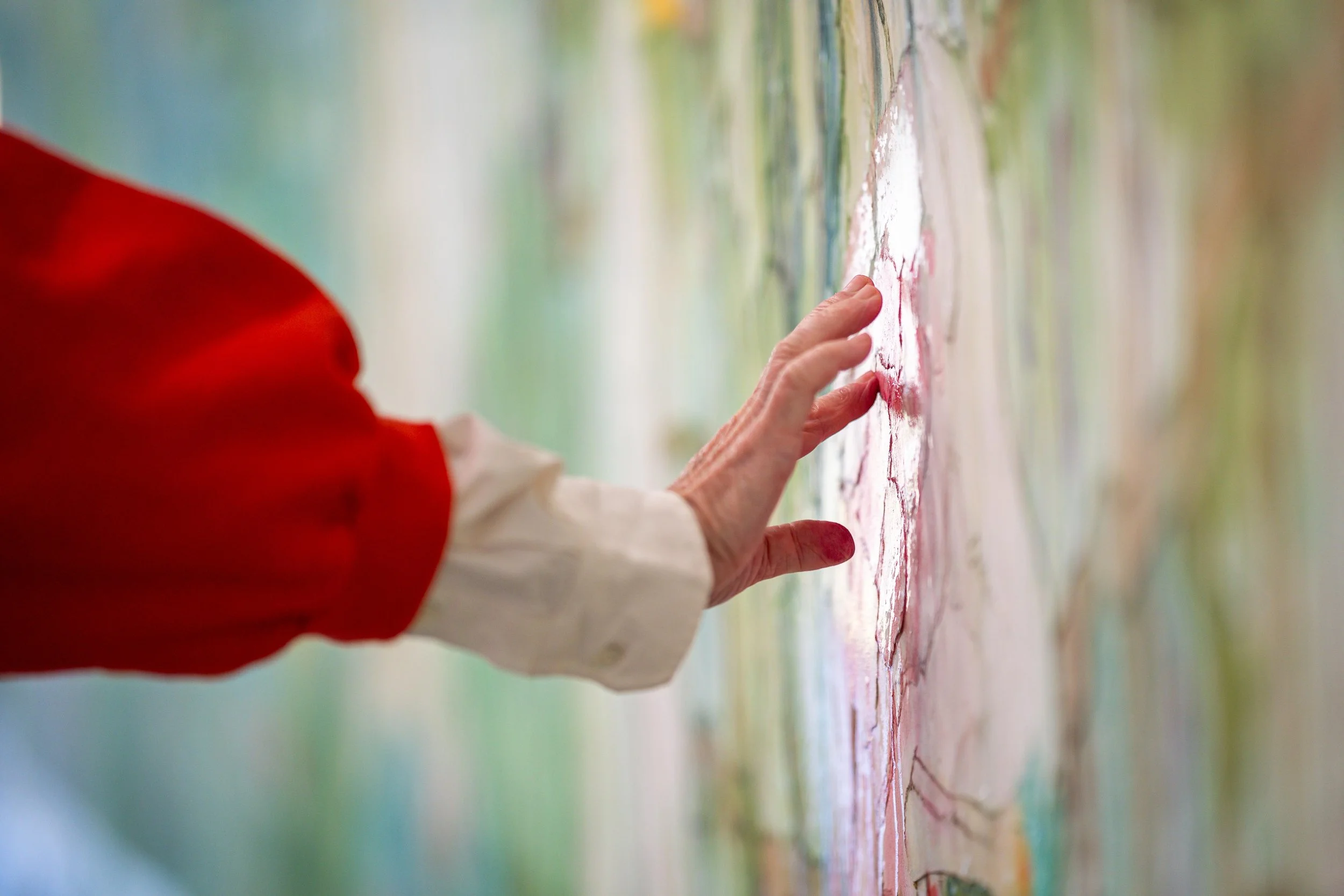
Art/computer work that has interfered with my welding but I never miss an opportunity to collect native plants. I have converted an old kayak rack into a plant drying rack. Stacking up and drying out.
Drying native grasses
Your Custom Text Here
Art/computer work that has interfered with my welding but I never miss an opportunity to collect native plants. I have converted an old kayak rack into a plant drying rack. Stacking up and drying out.
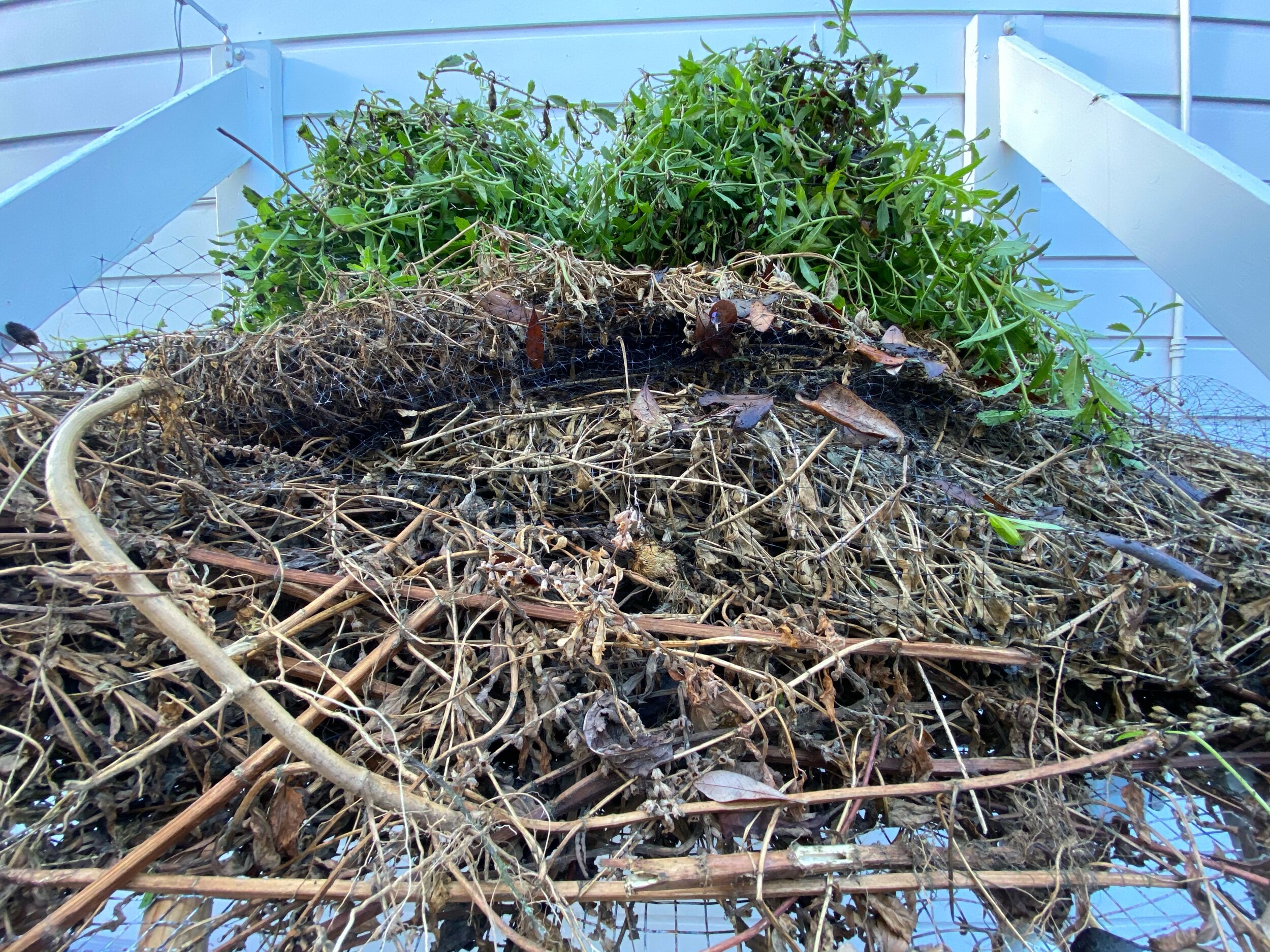
Drying native grasses
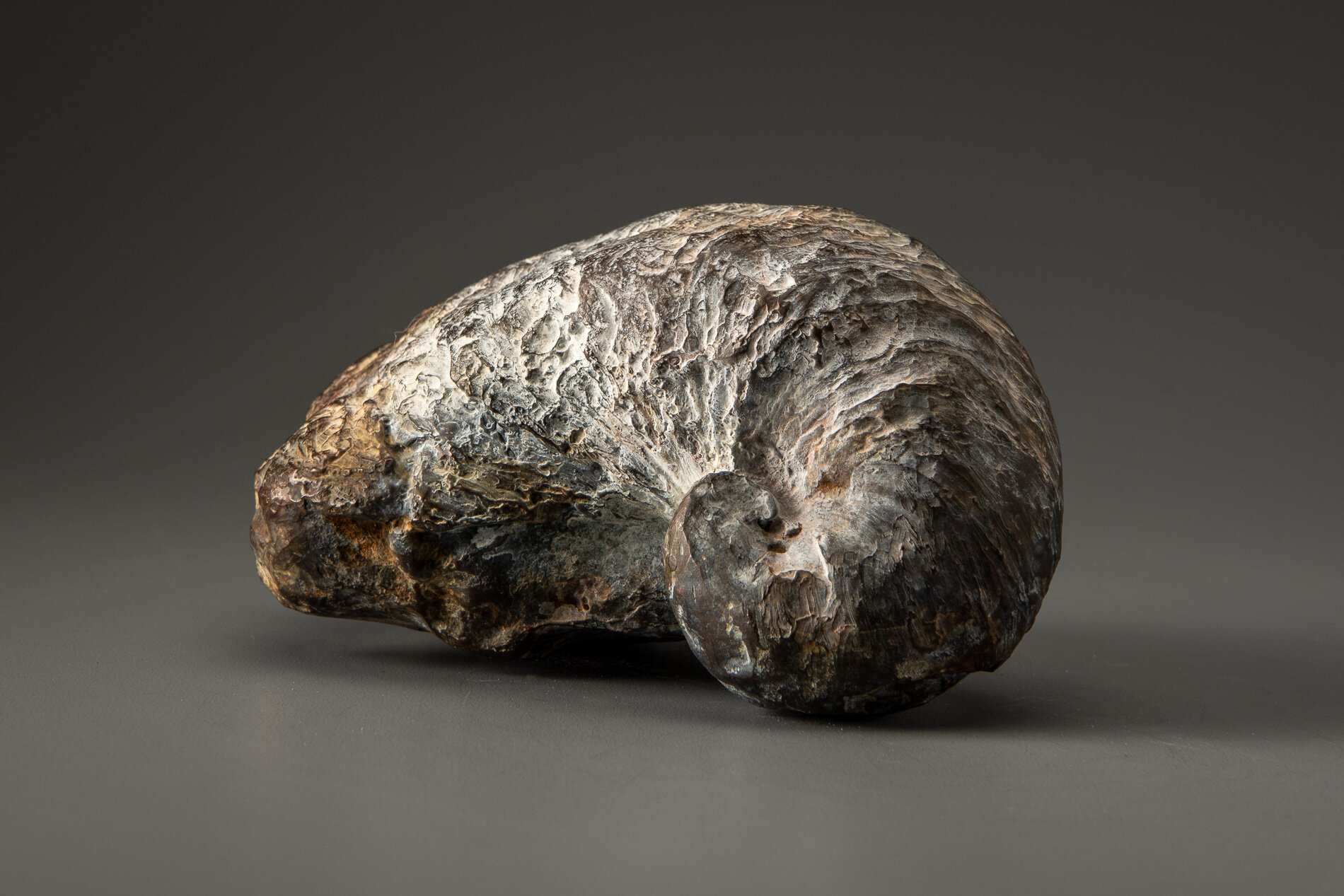
Mute Testimony.
3” X 6” X 4”
bronze
phot by Nash Baker

Stainless Steel finish changes everything 🤔 more to come
Range by David Epstein - in my mind is a must-read for any artist, creative writer, inventor, scientist moms or anyone who solves problems.
https://pepperdine-graphic.com/book-review-lessons-for-higher-education-in-david-epsteins-range/
”Everyone needs habits of mind that dance across disciplines.”
- D. Epstein

“Habits of mind that dance across disciplines-“ - D. Epstein

Today I worked on the lower part of it's cheekbones and then I added a rear jawbone.
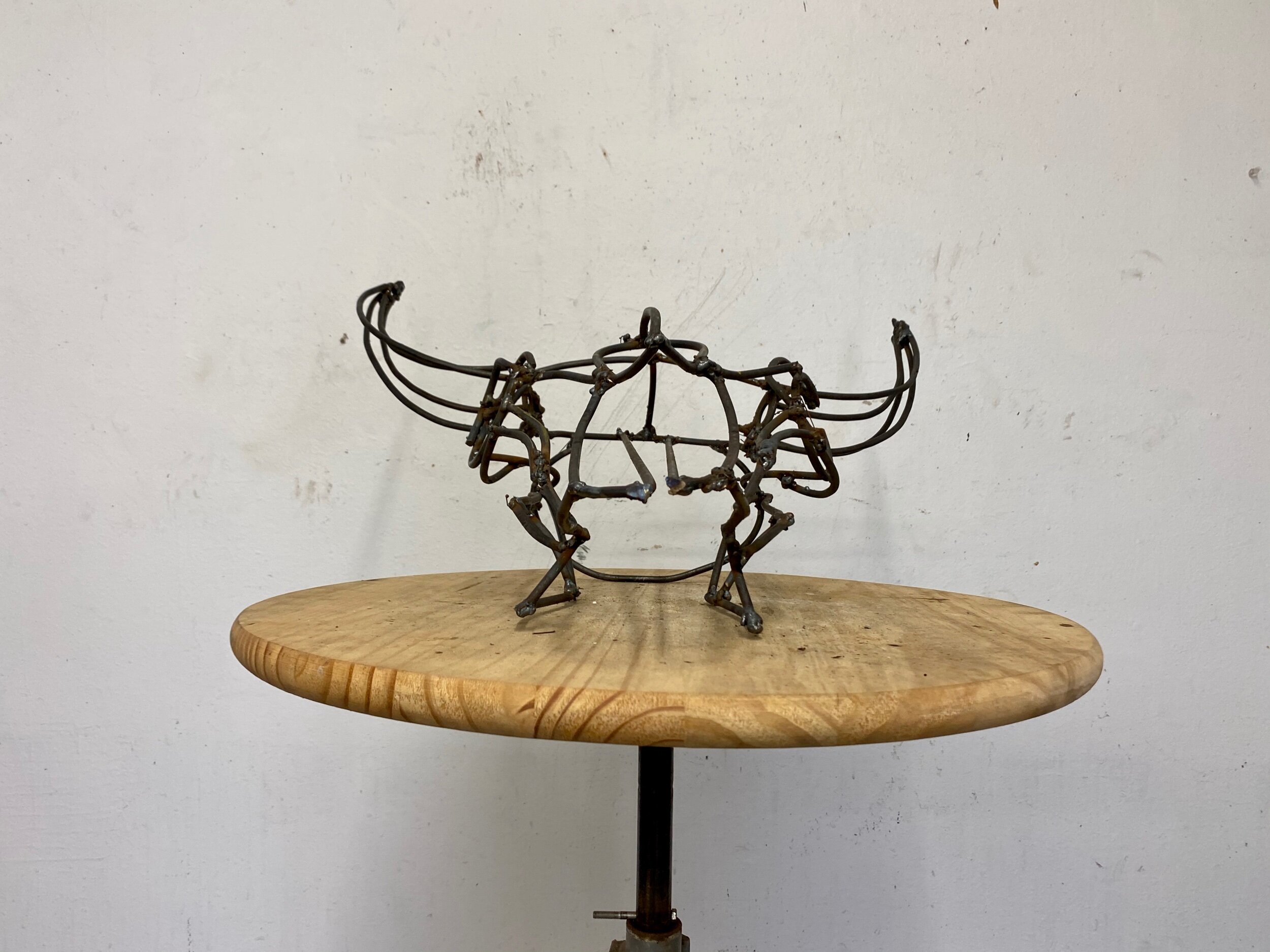
Looking up the mouth and nose of head minus the lower jaw.
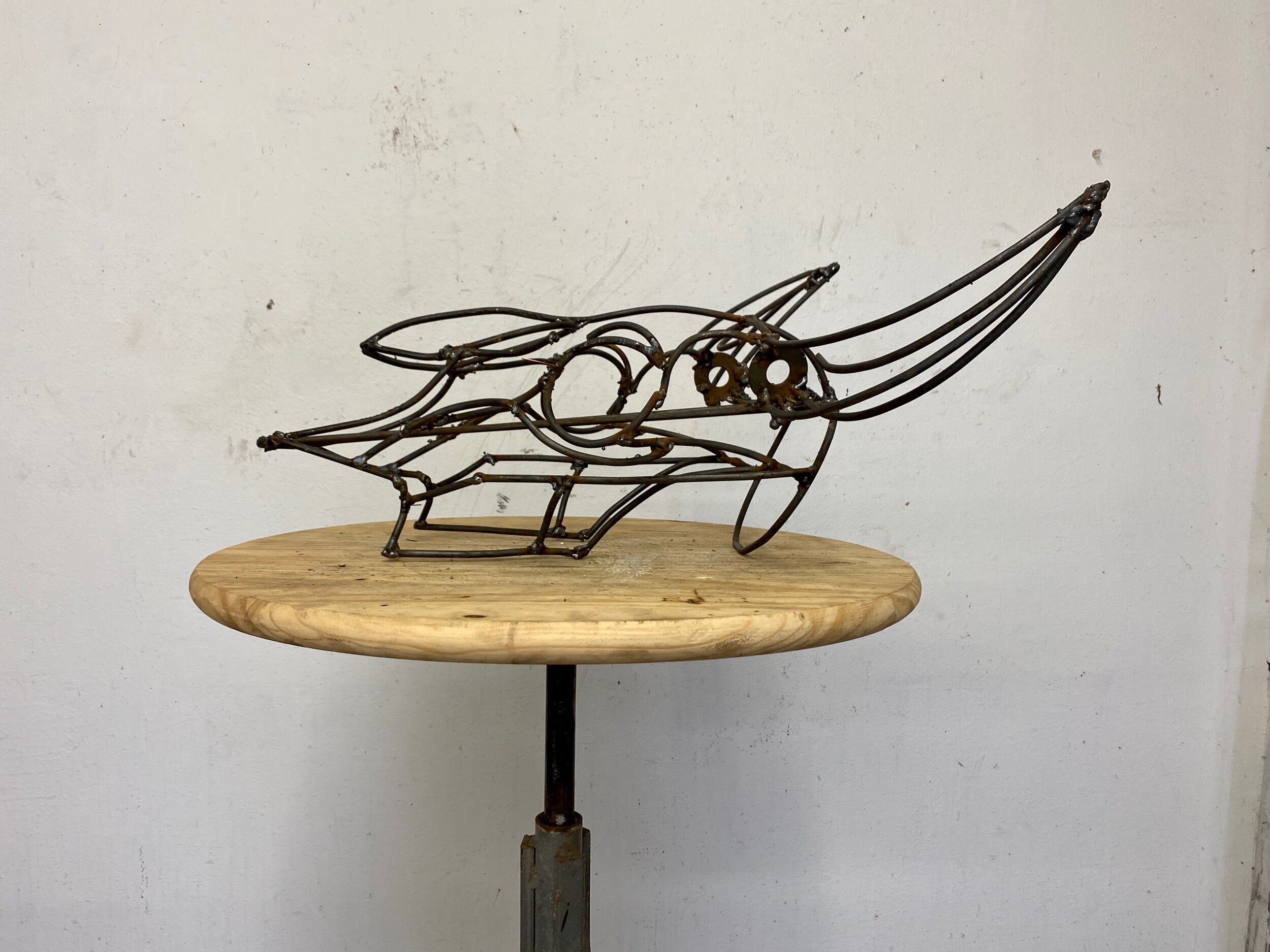
The old guys face left side

Looking through the skull
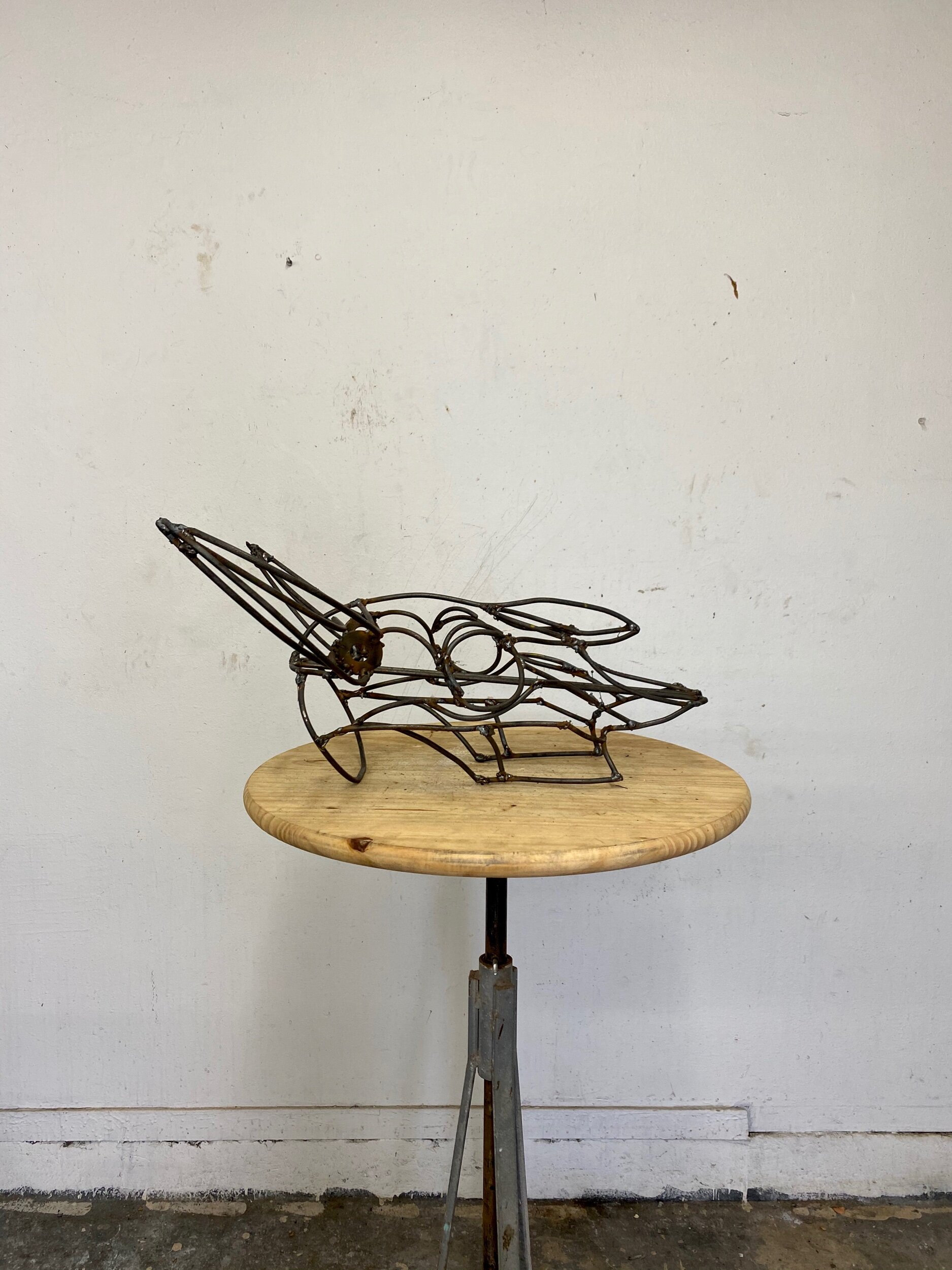
The right profile.
January 19, 2020


The ranch Anatolian livestock guard dogs greet us at the ranch entrance.
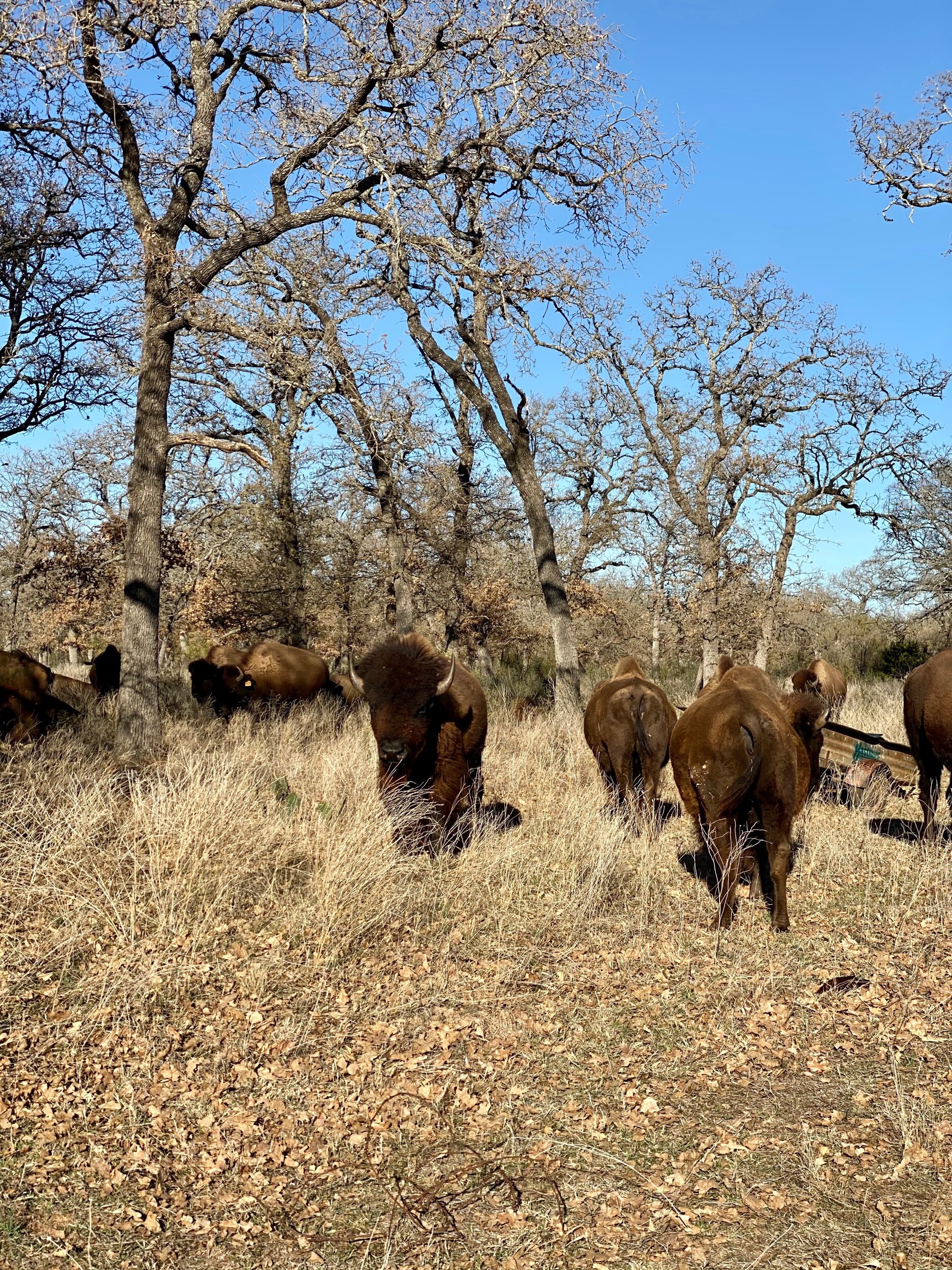
The herd including the cow to be culled having a relaxing morning grazing on Texas prairie grasses. The cow in question will not be separated from the herd, she will not be stressed and will not feel any pain. This is how you humanely harvest an animal. This is not how industrial Agriculture harvests meat.

Here is a collection of my reference material.

Bison grab a tuft of grass with their tongue, then they pinch it off by pressing it between their tongue and their front lower teeth. They do not have top front teeth. They then swallow it whole. That is the beginning of a 24-hour digestive process.

I love this image, I took it last January at Roam Ranch right before the roundup. I think this is the one they call Poppy. Poppy is very curious and friendly. She is checking me out as she catches rain drops on her tongue.

You can see the lower jaw through the upper jaw here. It is slightly off to the right of the bison. I want him chewing away and want to exaggerate the movement. I will probably bend it a little more askew this weekend.

Here the chewing lower jaw is more obvious.
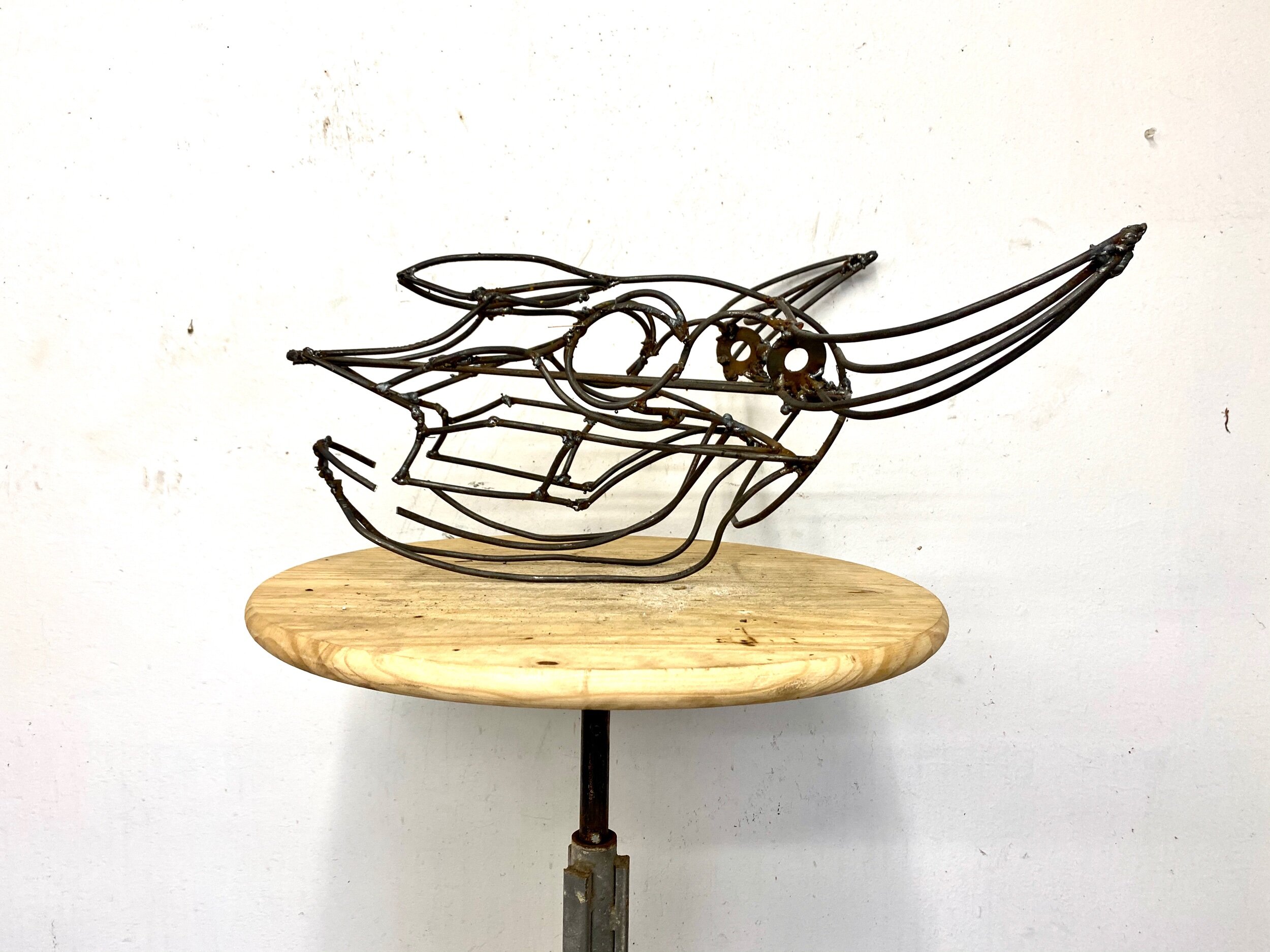

View from the rear or top down.

Friday, I am committing to writing the Lawndale proposal- rewriting and rewriting and rewriting.
I am committed to walking 10,00-15,000 steps every day. During my walks, I listen to audiobooks or podcasts on subjects that interest me. A lot of them have to do with regenerative agriculture, the history of soil, native bees, and various Environmental issues. Often I switch it up and learn about something completely new to me. The information or music I absorb during my walks is a big influence on my work.
Below is a quicky Ted Talk that I was very excited to hear today. It supports my belief that environmental change has got to come from our people in our cities.
https://podcasts.apple.com/us/podcast/ted-talks-daily/id160904630?i=1000485487124
I sent the link to city councilwoman Sally Alcorn and her assistant Hannah. Who knows. Like the piet said- make sure your reach Exceeds your grasp.

I took a screenshot of the description. It feels good to hear other people who believe what I believe.

I needed to make some new concrete sculpting tools. I cut the bristles from a dog brush and glued them to the handle from a sponge 🤞
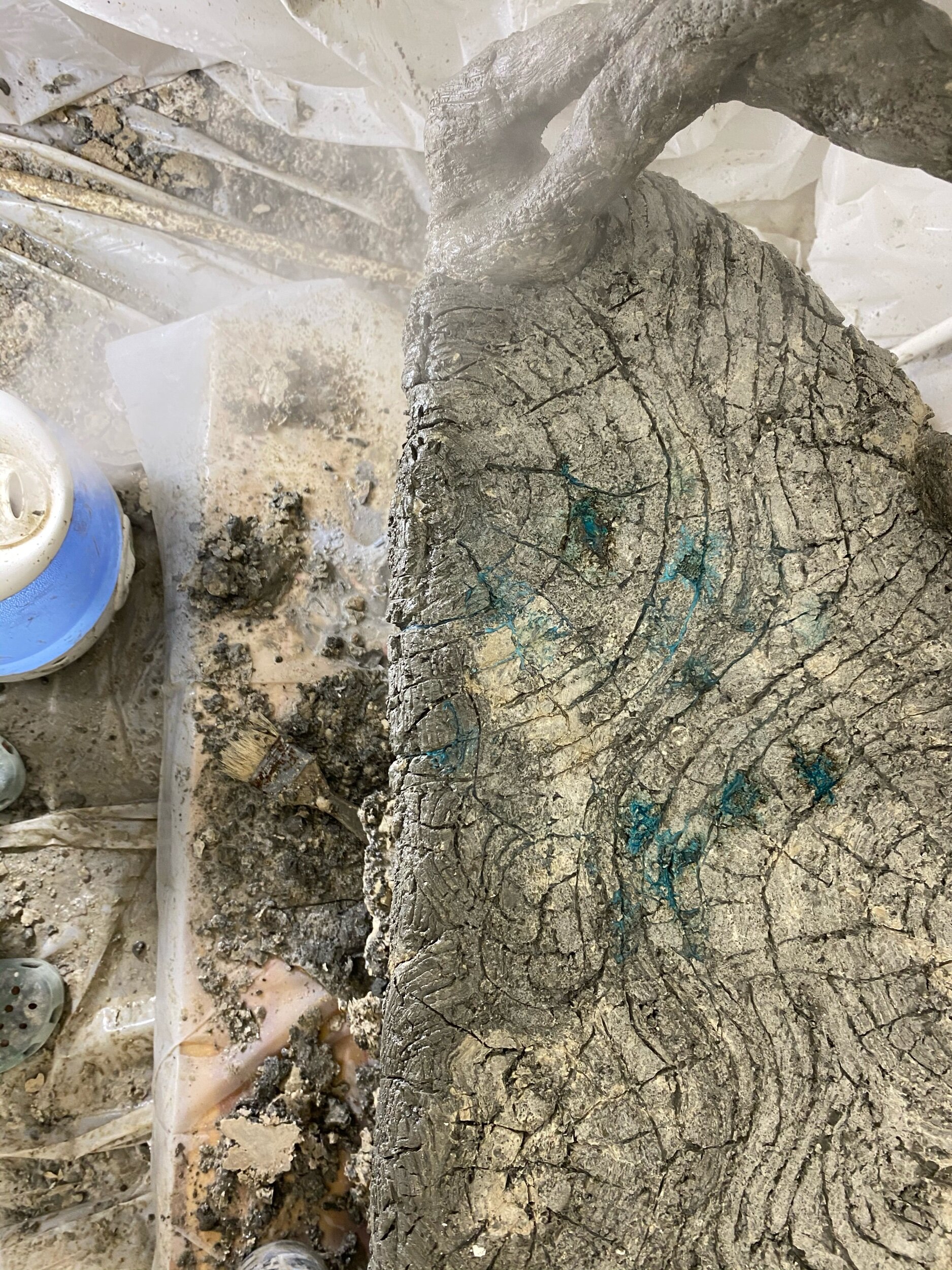
The small bronze root left a stain on the seat. Oops. I expect I can grind it out.

Work work work
I am getting close to finishing the head and upper jaw. The next step will be to create the lower jaw, then I will put the head aside and start building up the piece from the hooves.

More work on the cheekbones and connecting the horns to the eyes.

Side view of armature
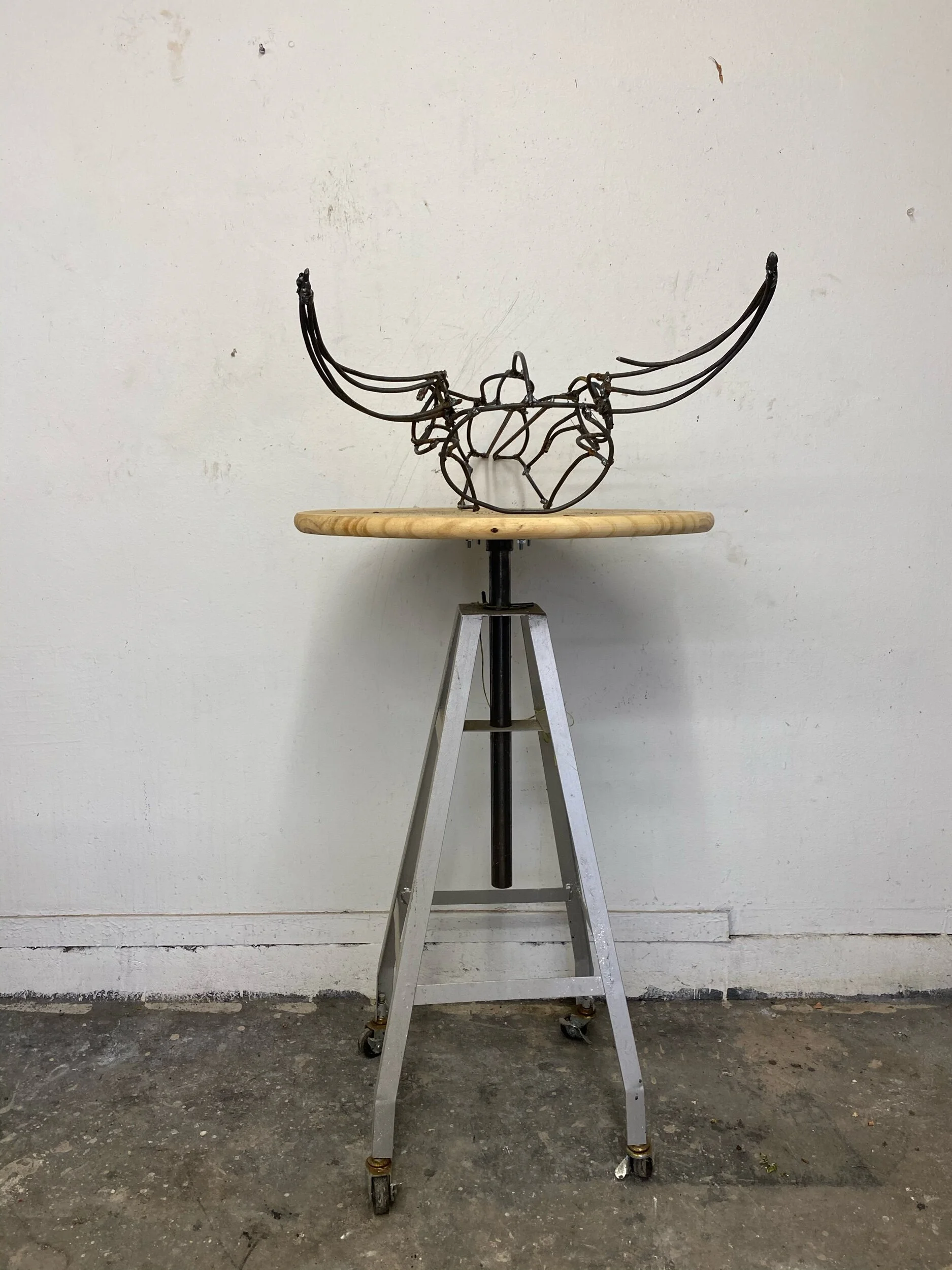
Bottom side view

Bison's left side view
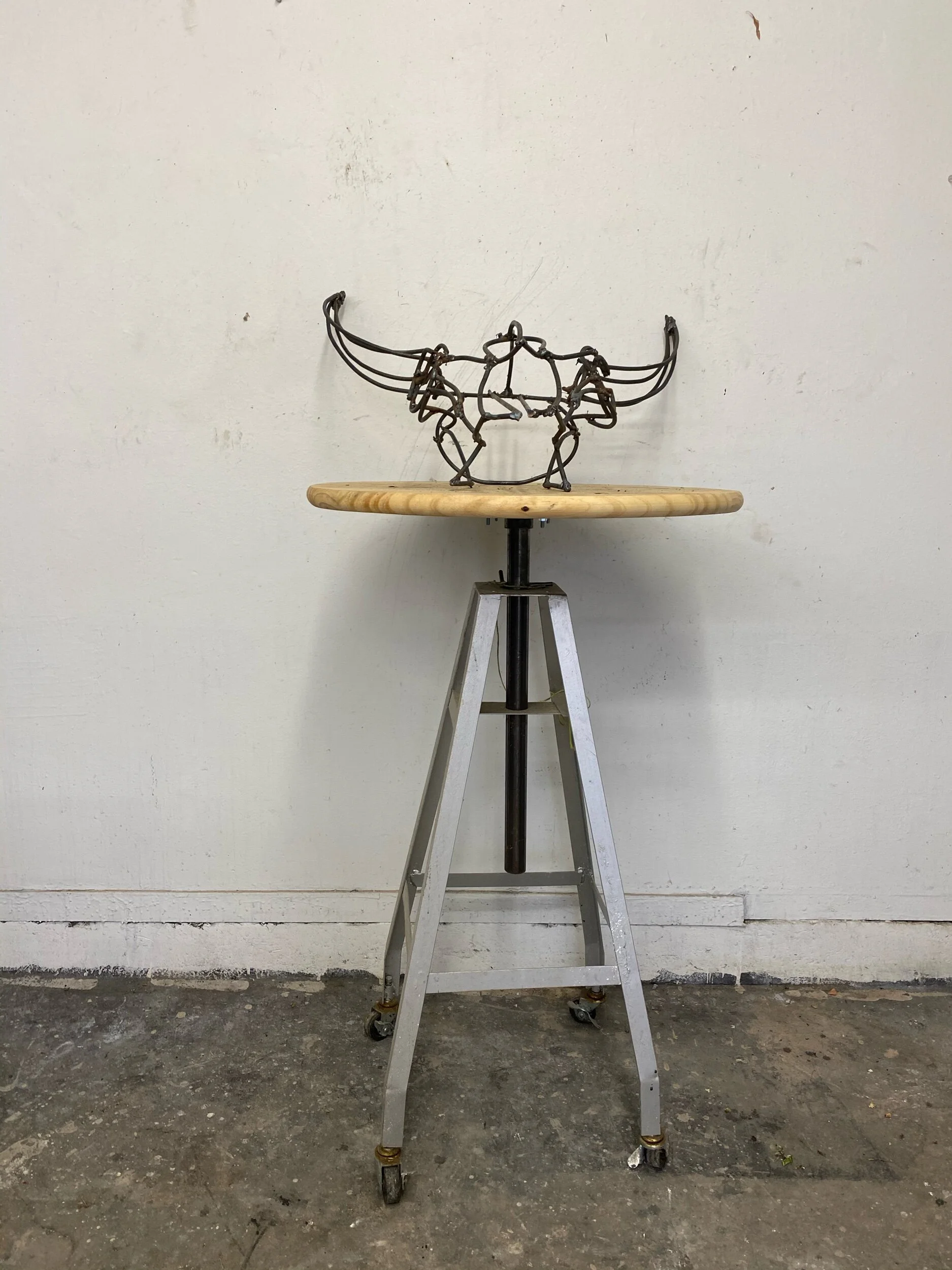
Back of head looking down
For the full story see Endangered Knowledge: The Soul of Humus #1a
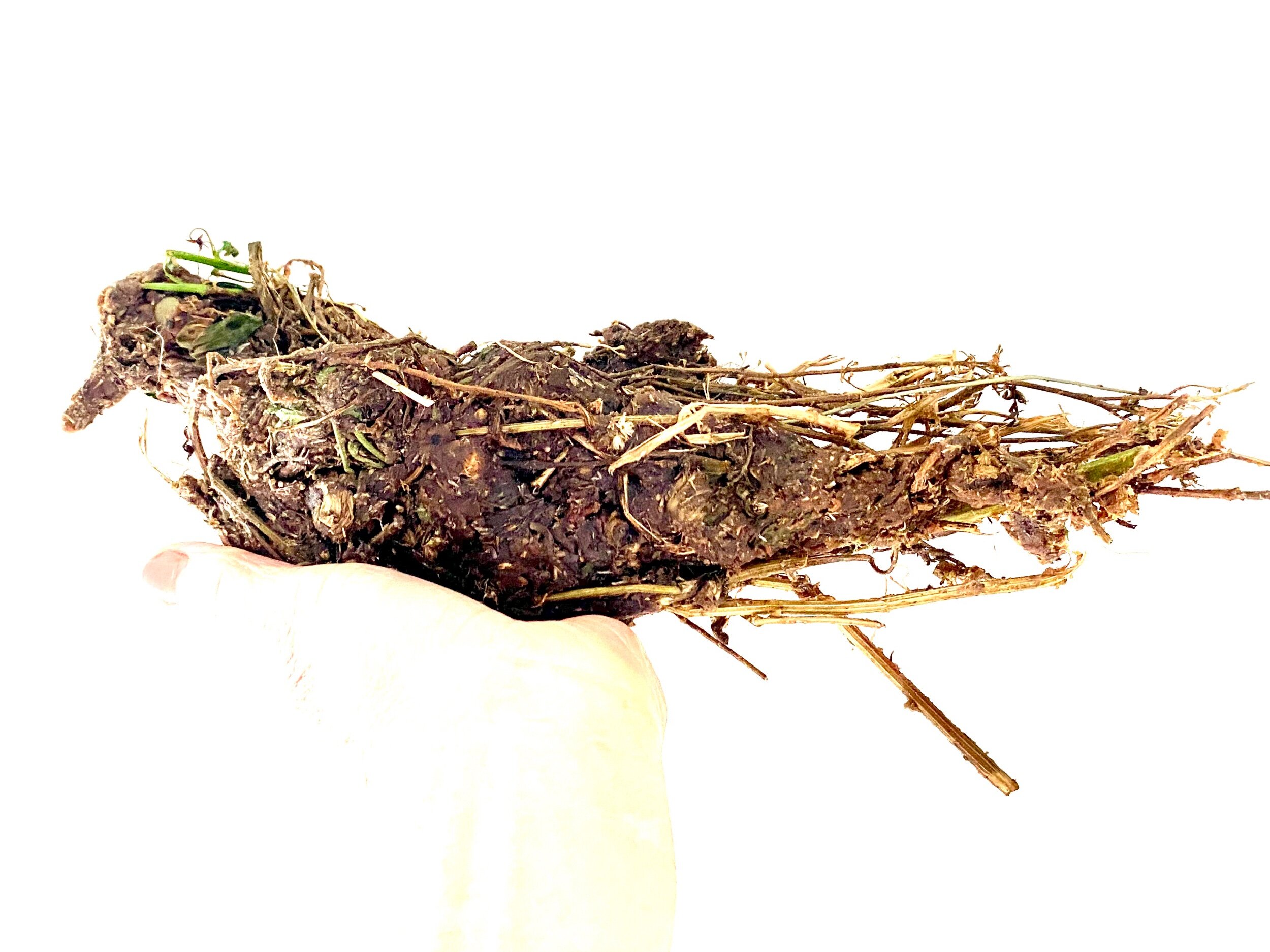


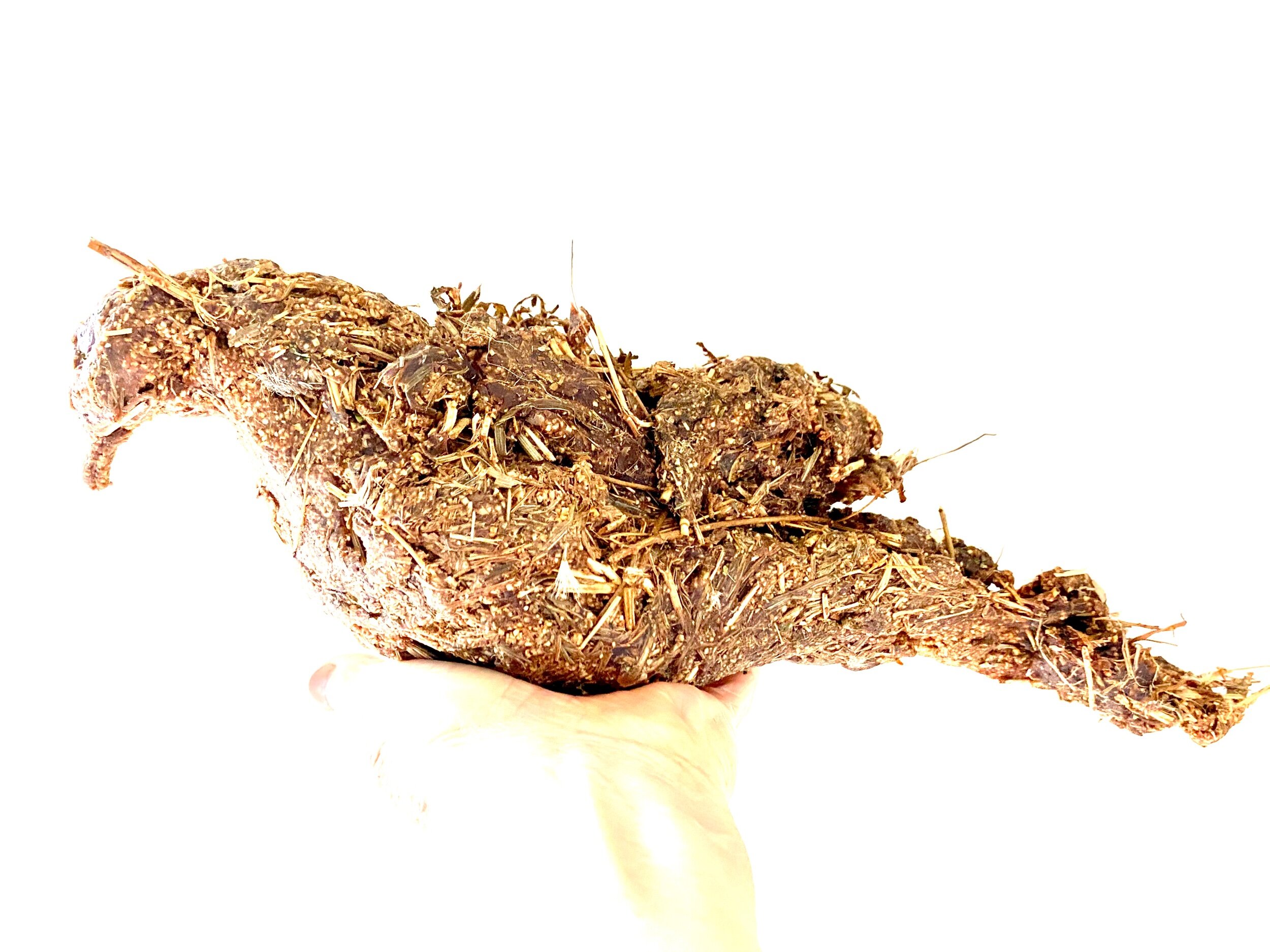
for the full story see Endangered Knowledge: The Soul of Humus

View l from the mouth
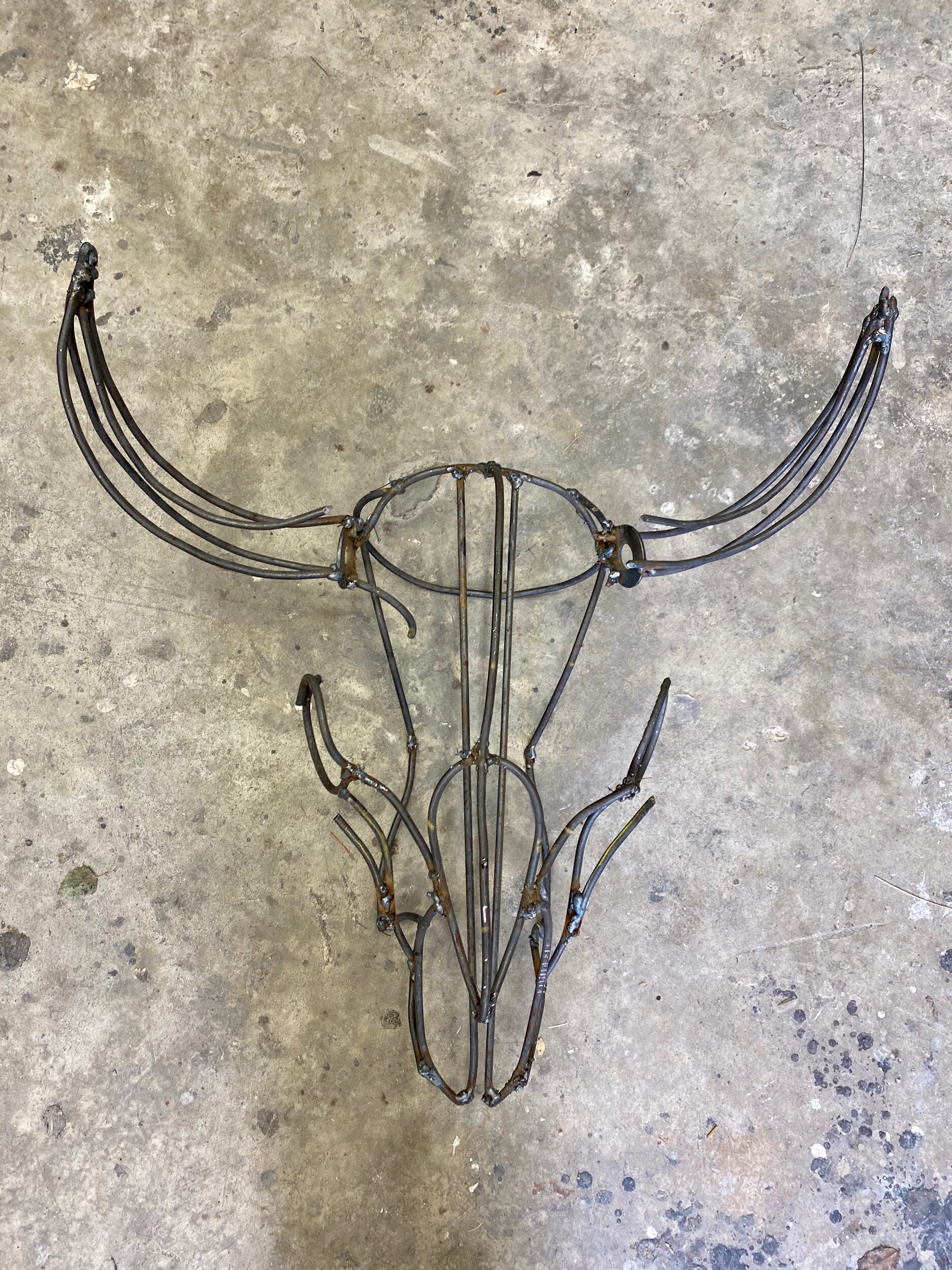
The cheekbones are added.
For the full story see Endangered Knowledge: The Soul of Humus
My favorite measuring tool when building the armature is a sewing tape measure.


For the full story see Endangered Knowledge: The Soul of Humus
The head is a lot of detail work. Bending small pieces of steel takes time and strength. It is easy to bend large pieces of steel because I can use leverage to bend it. Small parts are too short To get much lecerage. This is the first time in my life strength is an issue., I have not been doing my regular weight lifting due to COVID 19 quarantine. So I have to think of creative ways to make the shapes I need. It takes longer to figure out.

Examining this work I have decided I need to raise the left horn.
I have only welded the horn in one location. This will make it easier to correctly position the horn once the head is connected to the body. I can find them if I want, or I can cut the one weld and resend them in the correct position.

I moved the horn and added the front of the upper jaw.

I added the back of the upper jaw and two pieces to stabilize the head. The stabilizing pieces run through the center of the head, the length of the face to the back If the skull. I used the angle grinder to separate the front and left sides of the front jaw separating the two stabilizing pieces. This will make it easier to make any adjustments in the head structure when it is finished and attached to the body.
The skin and coat of the finished piece is the most crucial part if this piece. This steel armature is purely structural.
For the full story see Endangered Knowledge: The Soul of Humus
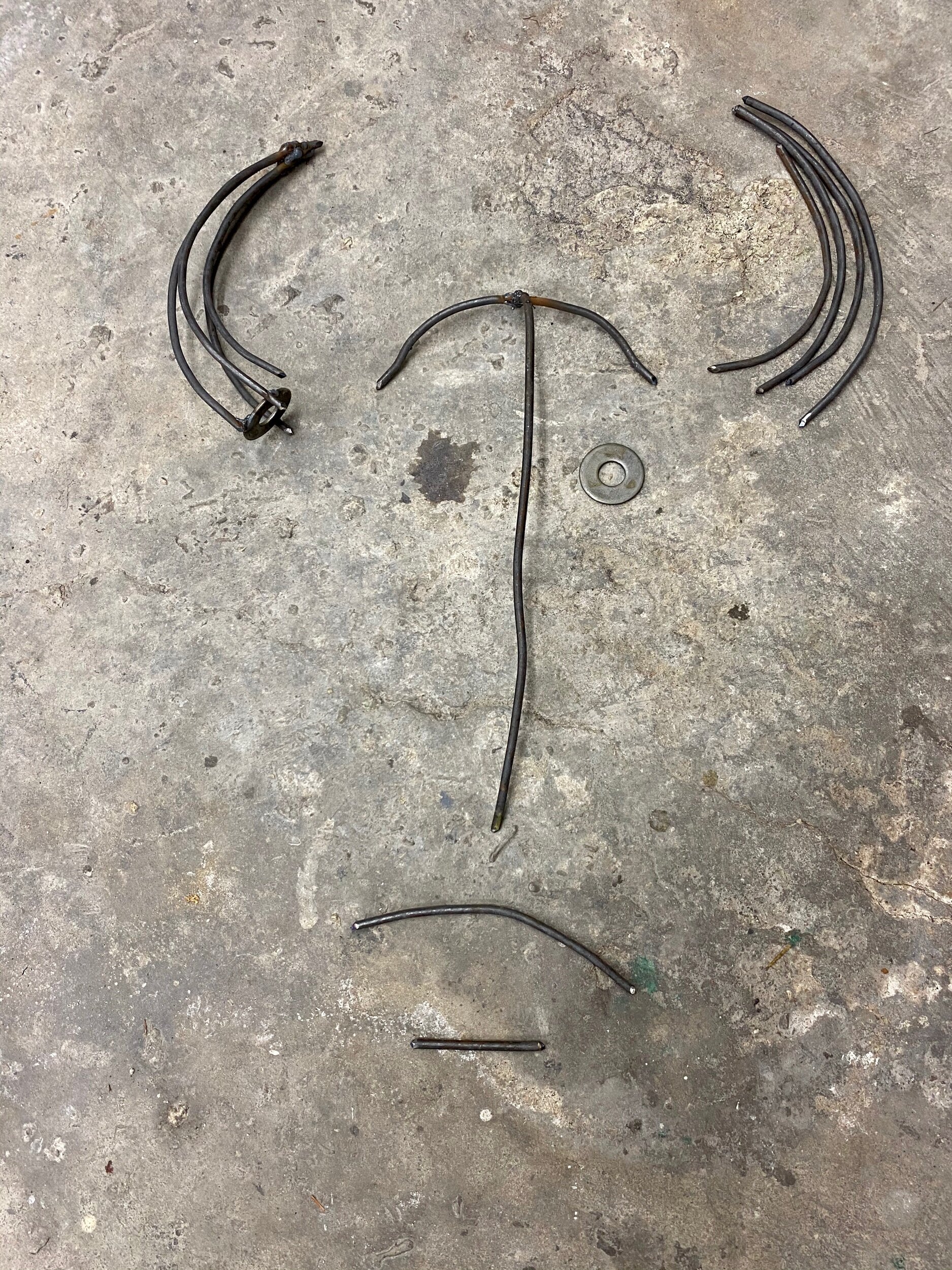
I have cut the steel for two sets of horns, the center of the face, top of the scull and part of the nisee. .
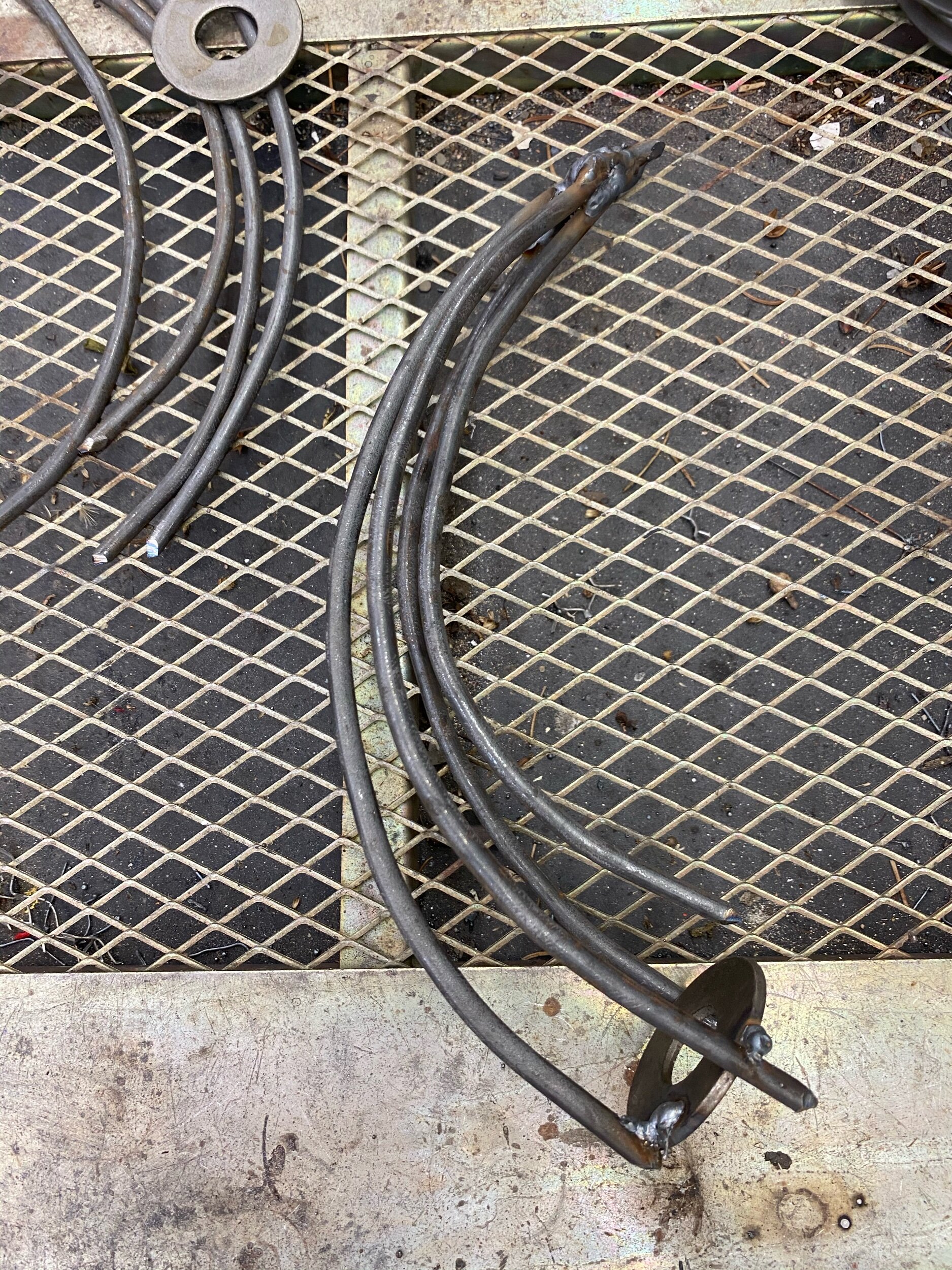
Working on the horns
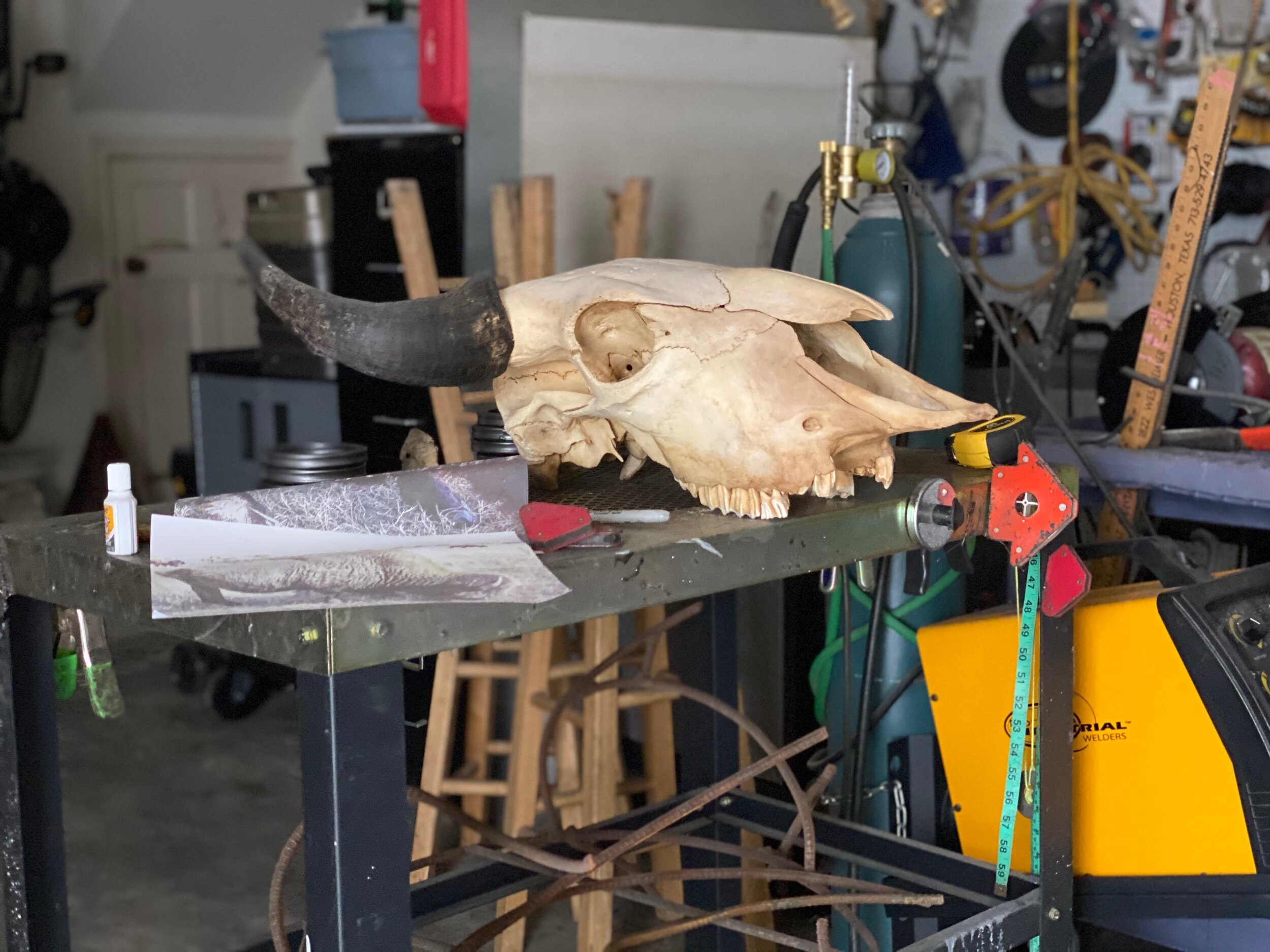
This bison skull was a Christmas present. From Griffin and Alex my son and daughter in law. They have been unbelievably supportive of my environmental works. They are the best. The skull is proving extremely helpful in figuring out how to build the head armature.
For the Full story see Endangered Knowledge: The Soul of Humus
When I start to build a new piece the first thing I do is gather and organize all the reference images and information I am going to need.
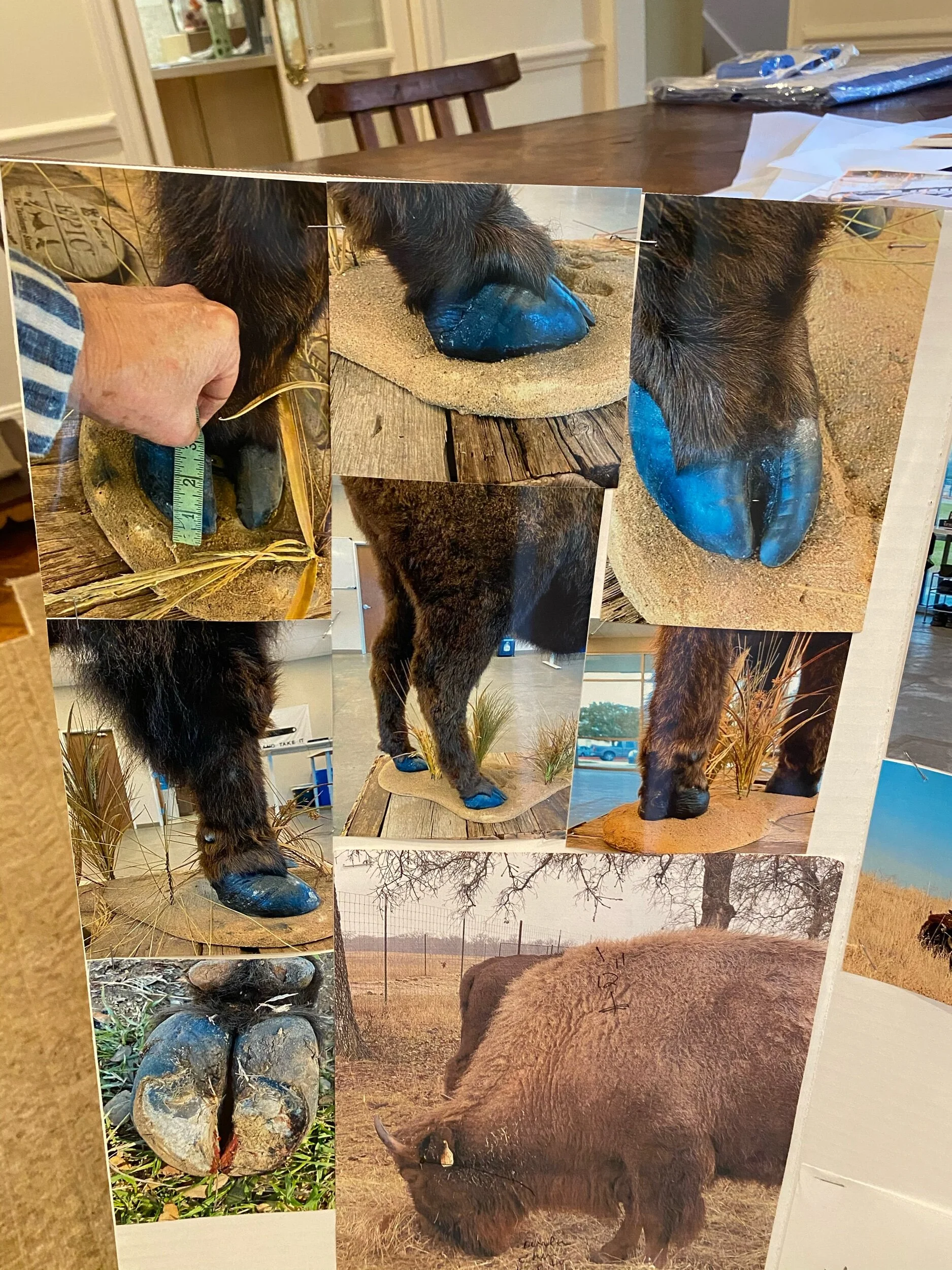
I staple all the images to a piece of cardboard. This way it us easy to see as I work. This secti n focuses on the hoofs. I am starting with the hoofs.
For the full story see Endangered Knowledge: The Soul of Humus
One of the most critical problems to solve is the placement of the hooves. They will be welded to Steel plates that act as the base. The base serves several purposes; it will make it easier to transport the piece without damaging it, it will make working on a large piece safer and less likely to fall on me. I am going to use 4 - 14” X 14” 1/4” steele plates. One for each hoove. This will give me the flexibility to adjust the placement of the hooves as the piece develops.

I am sending the hooves to Blumenthal metal and having them weld the hooves to the plates. It is tricky welding to a thin plate and not warping the plate.
Why is this important to me? Please see Endangered Knowledge: The Soul of Humus
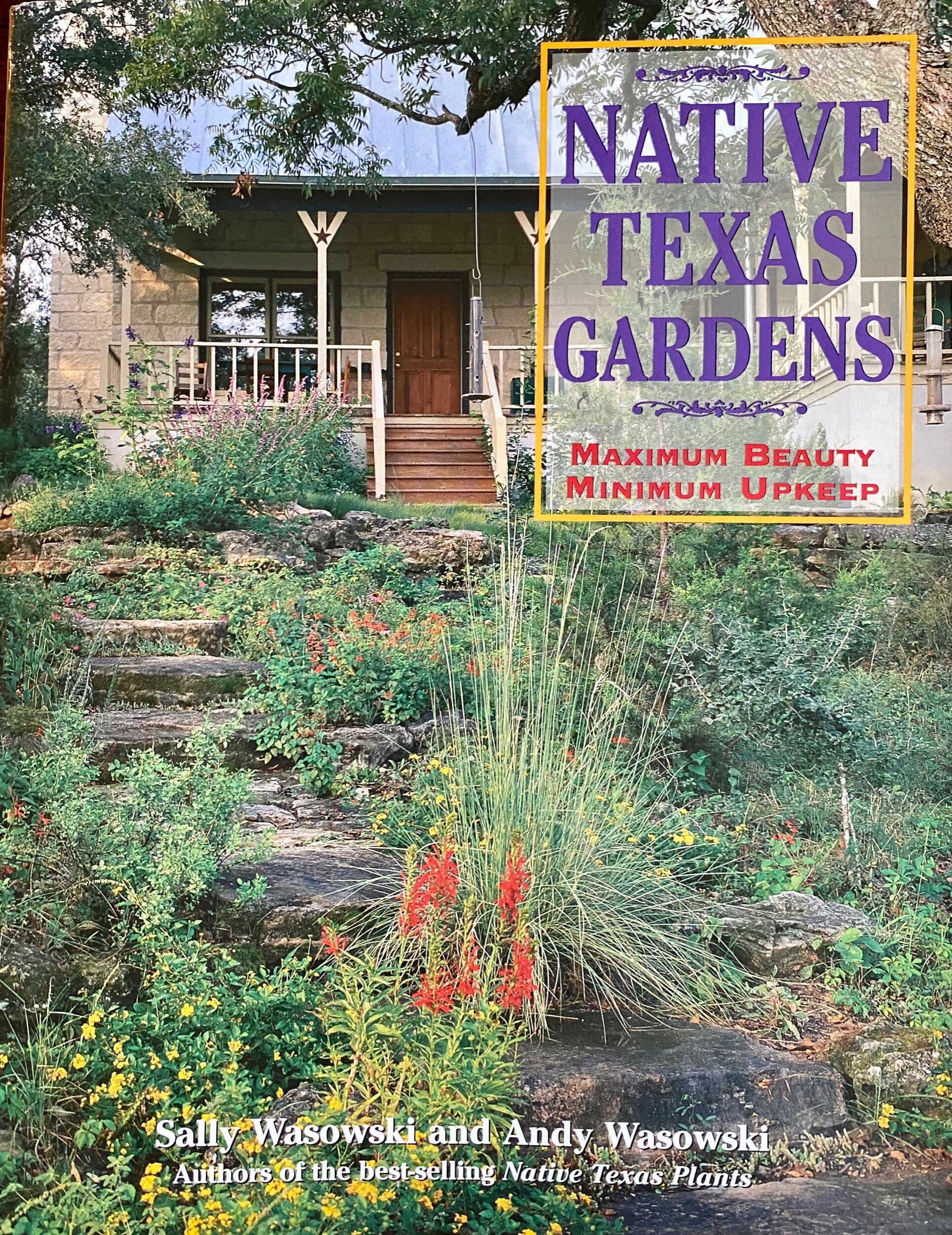
It does not stand to reason that gardens or yards in Texas, Maryland, California, Iowa, and Illinois should all be landscaped with the same selection of plants. The below image from Native Texas Gardens says it all. In a country with great diversity from coast to coast, shouldn’t the sculpture garden landscapes be embedded in plants that define the place?
It will be more interesting to see sculptures in gardens of indigenous plants, plants that define the place, terrains that have attracted its people and impacted its economy. A sculpture of a boat marooned in a desert landscape might imply global warming and the same wooden vessel docked in a sea of woody pines congers up thoughts of concervation. one thing the same boat Sculpture changes across geography. What does sculpture look like in a coastal prairie sculpture garden?
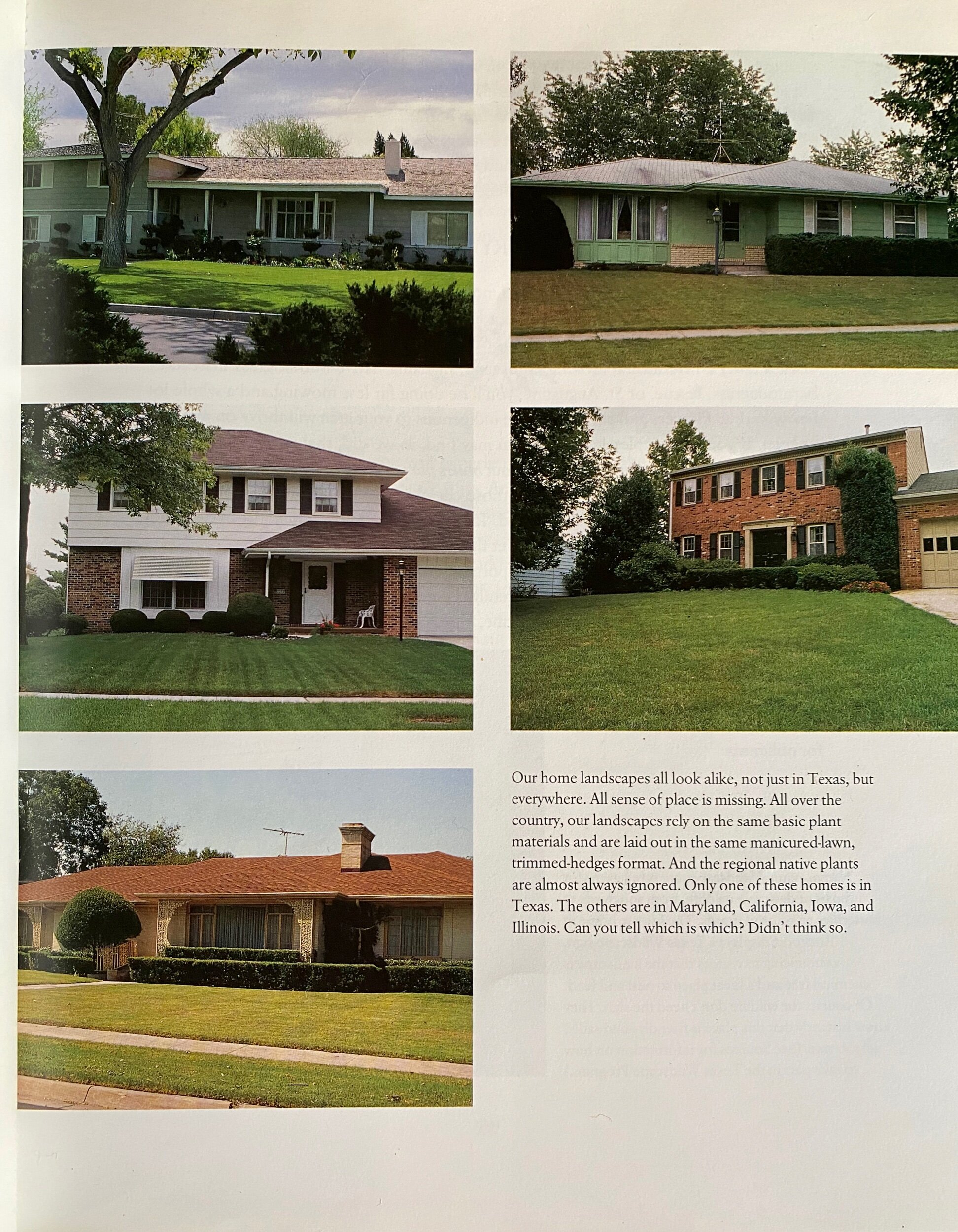
Page xviv of Native Texas Gardens, maximum beauty, minimum upkeep by Sally and Andy Wasowski.
I am spending a lot of time looking at and thinking about the bison's hoof. Bison are ungulates. Their two toed hooves are a cross between a spade and two chisels. With the weight of their massive bodies their hooves cut into the soil, churn it up, break clumps, and create pockets that hold moisture. They trample old vegetation into the ground a long with the 40 lbs of waste they create everyday. They have a two pronged tools on each leg that tills and cultivates 24/7. And then you put them in a herd and they are mother nature's industrial farmer.

Image from bob the bison used at epic food conferences
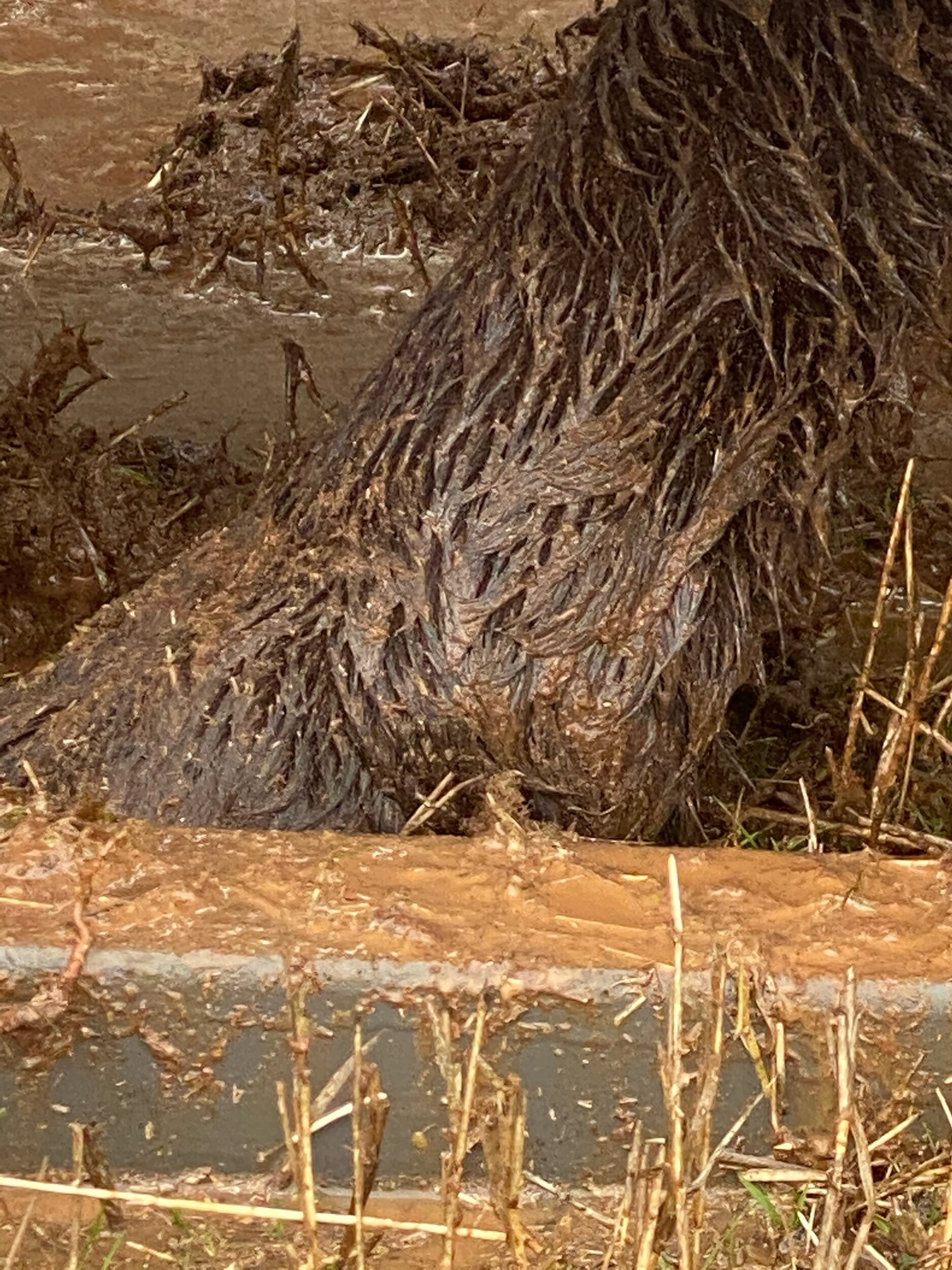
Image from under the shoot at the roundup

Image from the harvest
the back story Endangered Knowledge: The Soul of Humus
I am starting to design and build the armature (the support structure) of the piece. The structure will be supported with welded rebar and then covered in a steel lath to help hold the mud and dried native plants to the sculpture.
I begin with the hooves It takes a lot of muscle to bend a piece of rebar enough to make a complete hoof side, I will have to piece it.

I did not measure the circumference of a hoof but I do know the ankle is 12” and hoofs are bigger.

I think best in wire or a material I can shape by hand - by feel. I decided to wrestle up a wire sketch of a hoof to get me started.
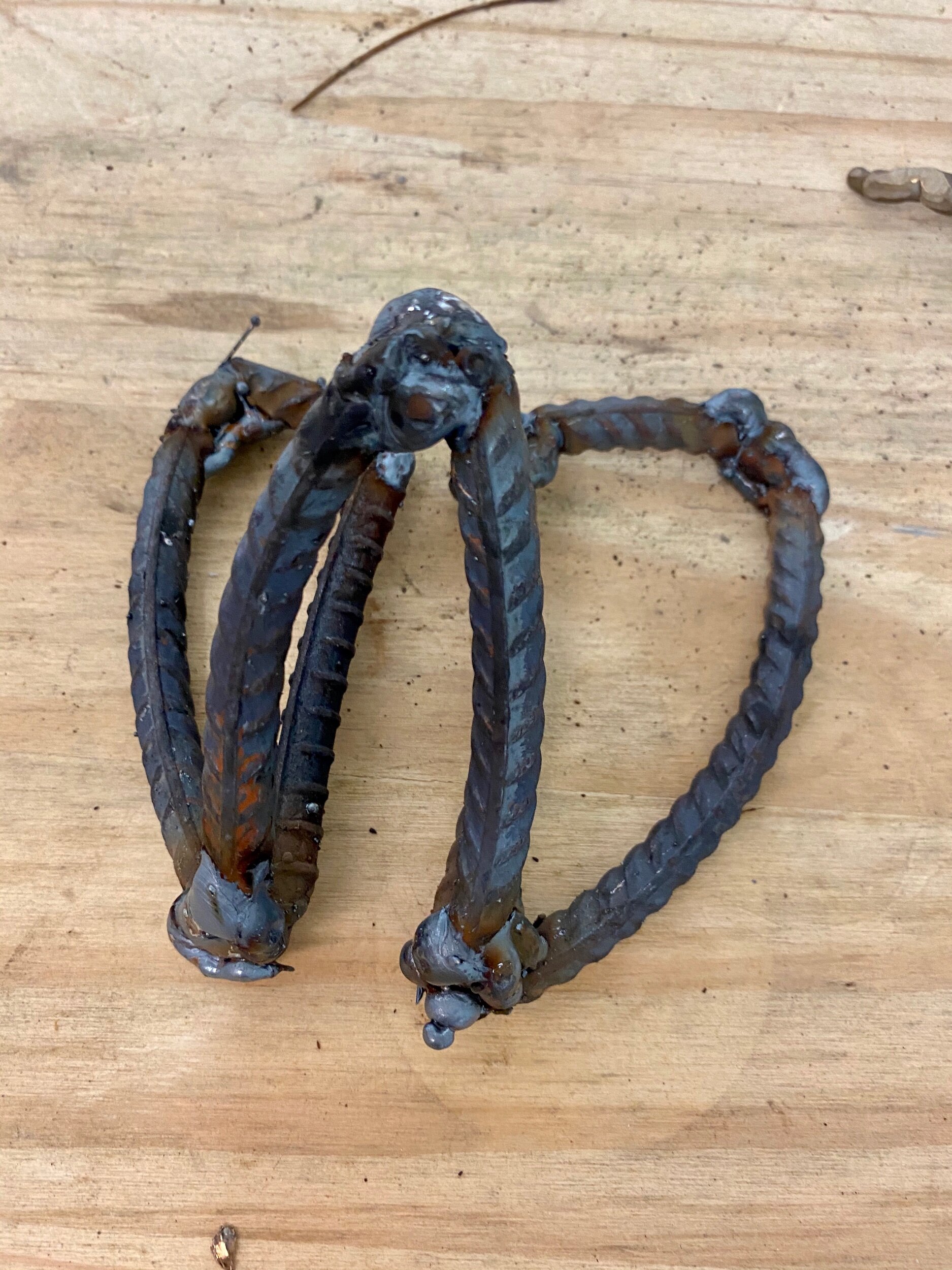
The front part of a front hoof

Front hooves started
I reached out to the Houston Arboretum describing my project and my need for native plants. They responded immediately. They are steadily cutting plants out and I made a big haul today. My studio floor is covered in drying plants. I am drying these on my patio. Curtis suggested every morning I flip them, so rodents don't decide to nest in them. I love all animals but I am not a fan of rodents nesting around my house. They offered me to raid their compost bend as I need. :)


Quisque iaculis facilisis lacinia. Mauris euismod pellentesque tellus sit amet mollis.