UnderMINE

The American Lawn, AI, and What We Have Been Conditioned to Unsee
The American lawn.

40 million acres. 2 trillion gallons of water a year. The largest irrigated crop in the country — more than corn, wheat, and fruit trees combined.

Is that a lot? What is a lot? The press tells us U.S. AI data centers consume too much — roughly 17.5 billion gallons of water in 2023.

Here is the inconvenient truth.

The lawn uses 100 times more water than AI.

Lawns at 2 trillion are good and AI at 17.5 billion is bad? Where is the logic? And water is just half of it. We mow it on Saturdays — burning 800 million gallons of gas a year. Americans spill 17 million gallons just refueling their equipment — more than was spilled by the Exxon Valdez.

In 2021 I carved the carbon symbol into 35 feet of Zoysia turfgrass at Lawndale Art Center — Carbon by the Yard — to make visible what those 800 million gallons deprive us of. In 2022 I replaced a section of that same turf with native plants, living soil, and deep roots — CARBONsink — to show what the same ground could store instead. Carbon. Water. Life.

That is how I know how ridiculously easy it is to change.

The lawn is not the problem. What we have made it into is the problem. Forty million acres of chemically dependent monoculture sitting on top of some of the most populated land in the country. Land that could be absorbing rainwater, cooling the air, sequestering carbon, feeding pollinators, restoring the biodiversity we have been losing for a century.

For every one percent increase in organic matter per acre, soil can hold an additional 20,000 gallons of water. Native plant roots reach eight to fourteen feet deep — sequestering carbon like an upside down rainforest. The coastal prairie that Houston sits on once soaked up everything the sky sent down. We replaced it with turf. Harvey showed us what that costs.

But the ecological argument, as urgent as it is, is not the most powerful thing the lawn could do.

The most powerful thing is this: lawns exist in the largest population centers in the world. They are the daily interface between modern humanity and the living world. If we change what happens on that interface — in front yards, street medians, corporate campuses, school grounds — we change how millions of people understand their relationship to the planet. That is a social transformation. The ripple effects are incalculable.

Which brings me back to AI.

The comparison between lawn water use and AI water use is not meant to let either one off the hook. It is meant to show that we are already wasting at a scale that dwarfs what we are alarmed about — and that the solution to both problems might be the same solution. AI saves us time. It makes us better. What if it also helps us see what we have been conditioned not to see?

What if the lawn became part of the answer to AI’s water problem? Native landscapes absorb and store water in the ground. Deep roots recharge aquifers. Living soil filters and holds what falls from the sky. More than 160 new AI data centers have been built across the U.S. in the past three years — many of them in water-scarce regions. A Meta data center in Newton County, Georgia uses 500,000 gallons a day — 10% of the entire county’s water supply.

What if the landscapes surrounding those data centers were living systems instead of turf? What if regenerative landscaping — on the scale of cities — could recharge the aquifers that AI is draining?

I don’t know if that is possible. But I know that the first step is to stop treating the lawn as decoration and start treating it as a living system connected to everything.

Writer and botanist Robin Wall Kimmerer observed that in the wild, the solution is often found near the problem. The remedy grows where the wound is. The lawn uses 100 times more water than AI — and the lawn is also the solution to AI’s water crisis. The same 40 million acres. The same ground. The problem and the answer occupying the same space.

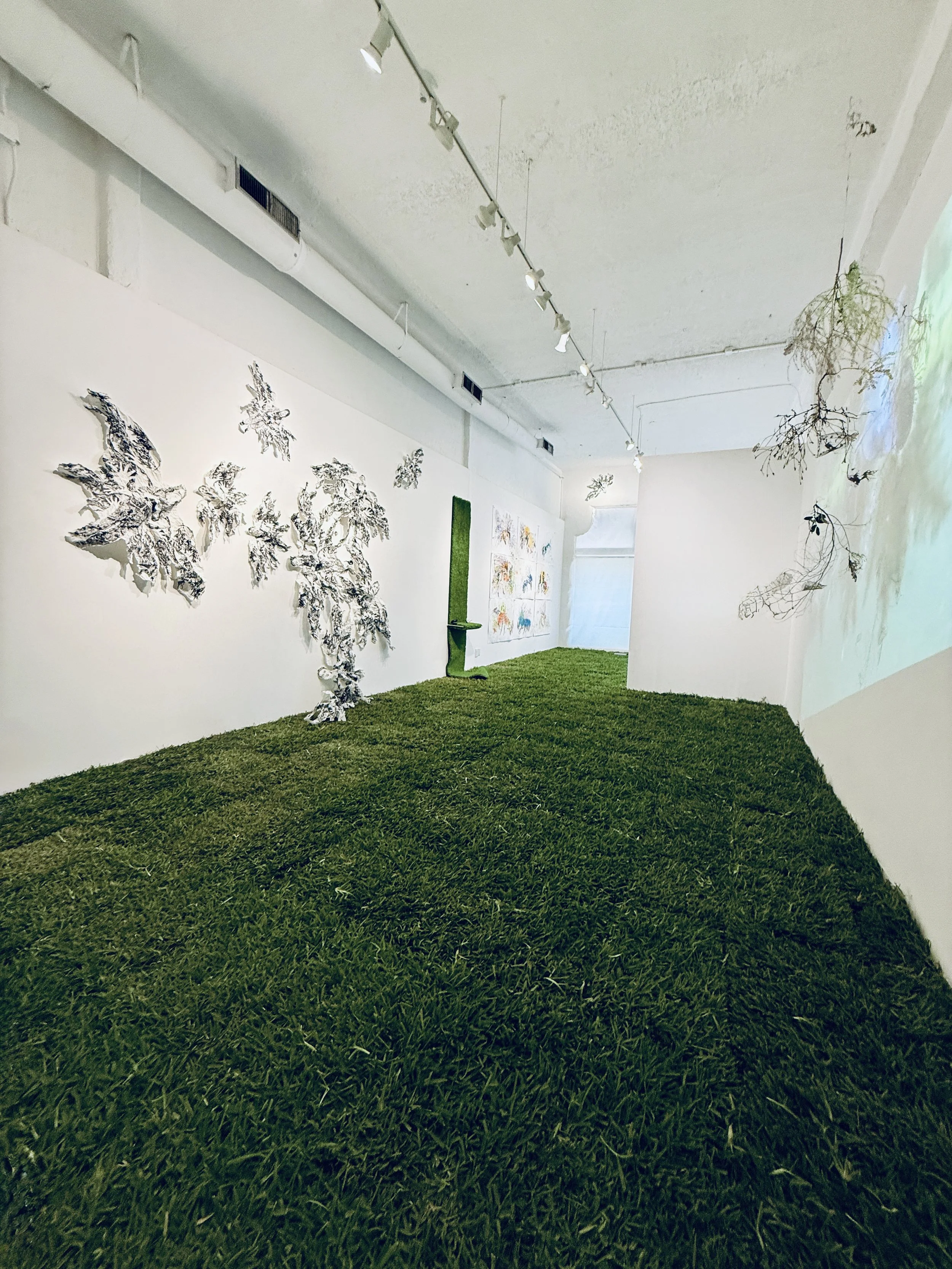
Tomorrow the gallery floor disappears under 600 square feet of sod.

I thought about attending the opening barefoot. Then I thought about the chemicals that must have been applied to grow this perfect mono-crop of sod. I won’t be barefoot on it.

That is the point. We have made the most abundant surface on the planet — 40 million acres of it — something you cannot safely stand on in your bare feet. Something that poisons the people who maintain it. Something that sheds the rain, kills the insects, and heats the ground it covers.

And we call it a lawn. We call it beautiful. We mow it on Saturdays.

underMINE is 600 square feet of that lawn, brought inside. What we have been conditioned to unsee — you walk by it every day — now you are standing on it.

Now imagine it differently.

AI changes instantly when it receives better information. Society takes forever — even when the difference is 100 times more gallons of water. However for society, baby steps are how it starts. One gallery floor. One front yard. One school ground. One corporate campus.

What if AI saves us enough time that we have time to garden? To grow our own food? To tend the land instead of manage it against itself? Think of the ripple effects of that idea.

The lawn has enormous potential.

The first step is to stop underMINEing. Start seeing.
The white pedestal?

When I started in the MFAH Glassell School block program, I needed pedestals for my smaller sculptures. I made stark white cubes as I saw in museums and galleries.

Over the years, my work has transitioned to tell a specific story. I make work to reveal the beauty in diversity, the messiness in the natural world and the connections between all living things on the planet. And most importantly, I work to inspire society to step into a rhythm that will flow with the natural world and celebrate the beauty in its messiness. My work conflicts with borders that separate, clean lines that divide and sterile objects.

The white cube pedestals are a symptom of sameness, monocultures and sterile environments, a symptom of me wanting to ” look “ like I belong and fit in. A change is an imminent.

I am leting my eyes and mind play with how objects that physically support my work should look. Work that reimagines urban landscapes to balance humanity and natural systems should not be sterile cubes. What should, - what could they be?

The images below are some thoughts I am considering. .
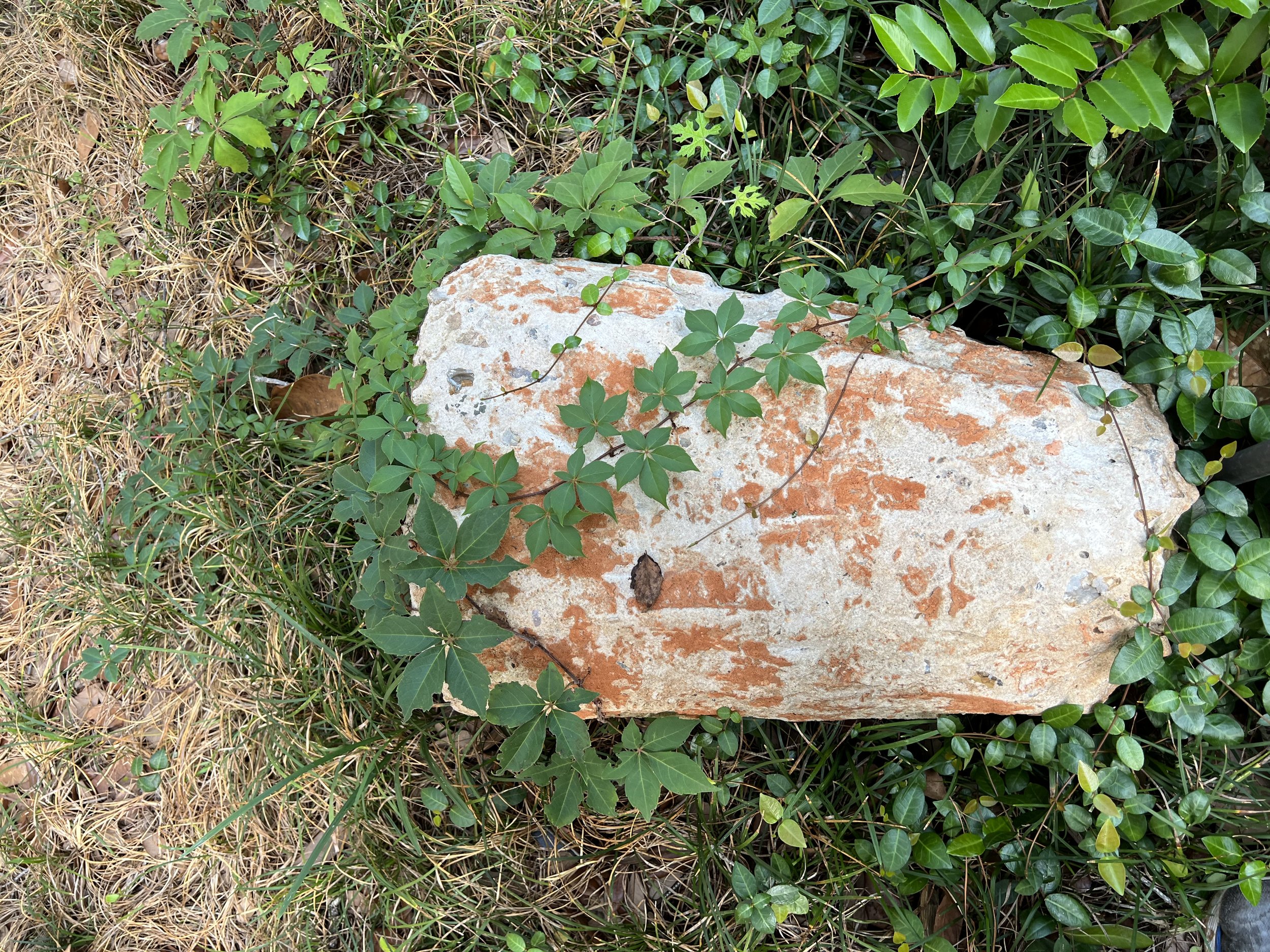
Rocks

Bricks

Stones or concrete.

Cracks

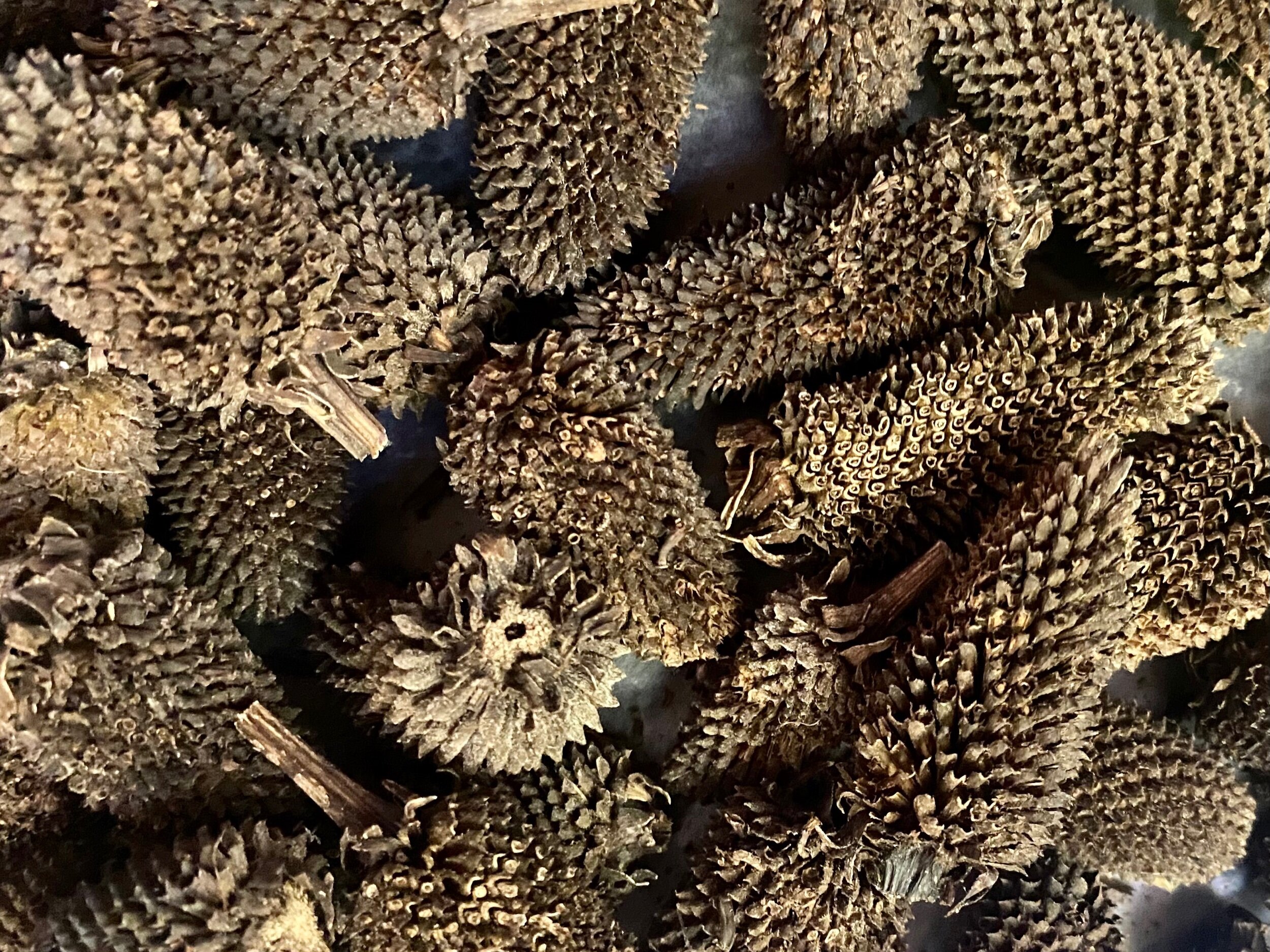
Dried plant material

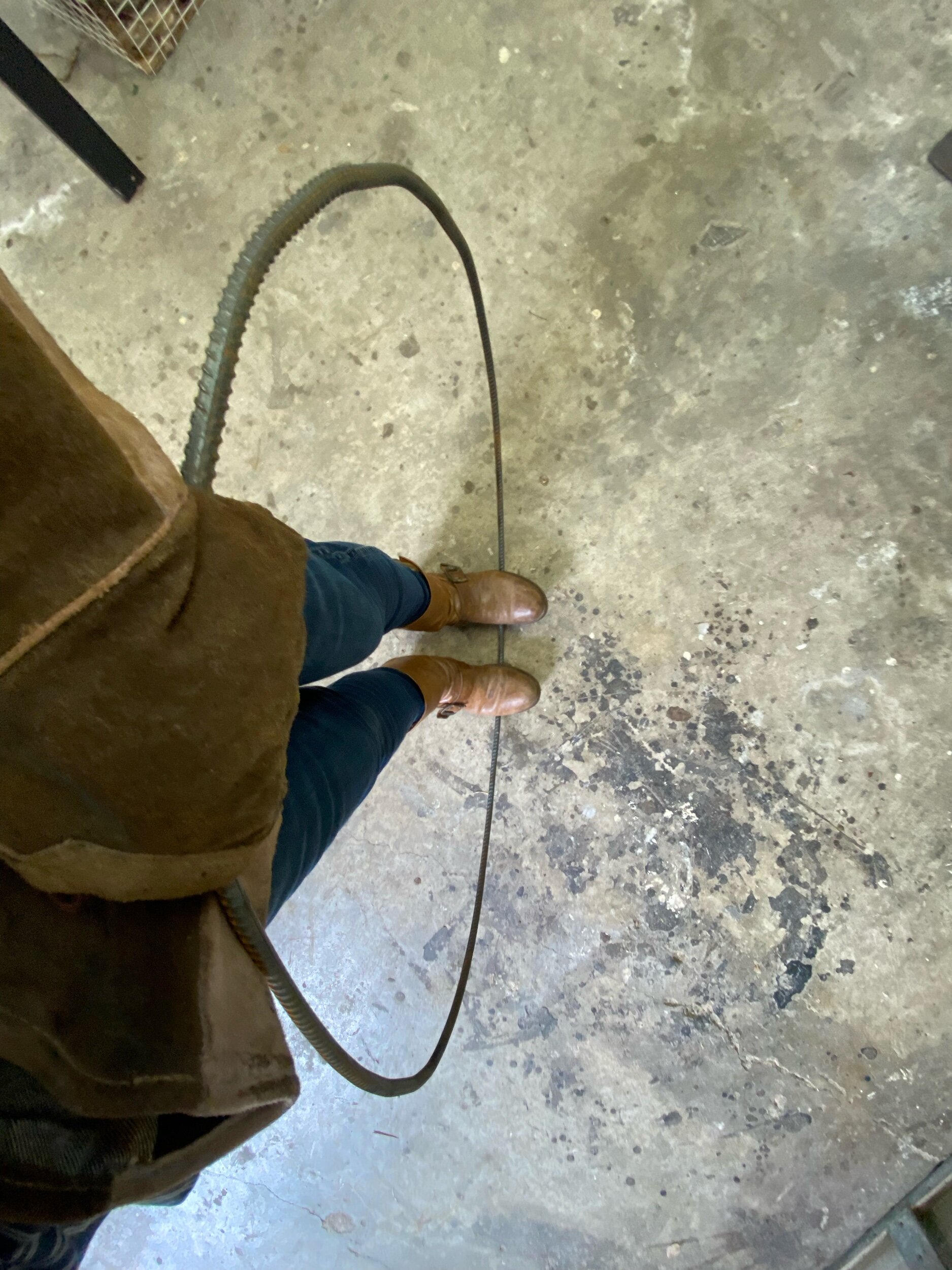
Electrical wire

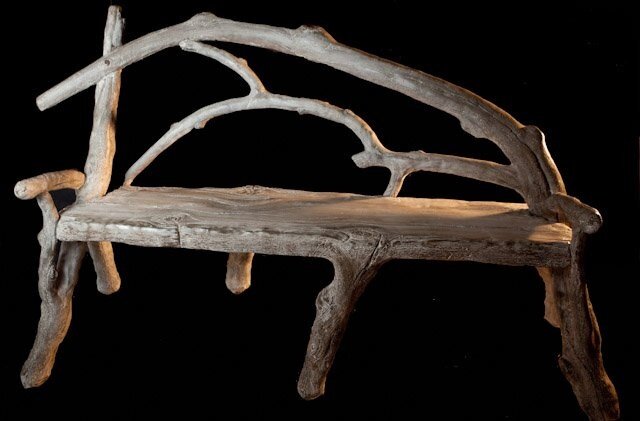
Upcycled lawn furniture.

Palm tree trunk skin

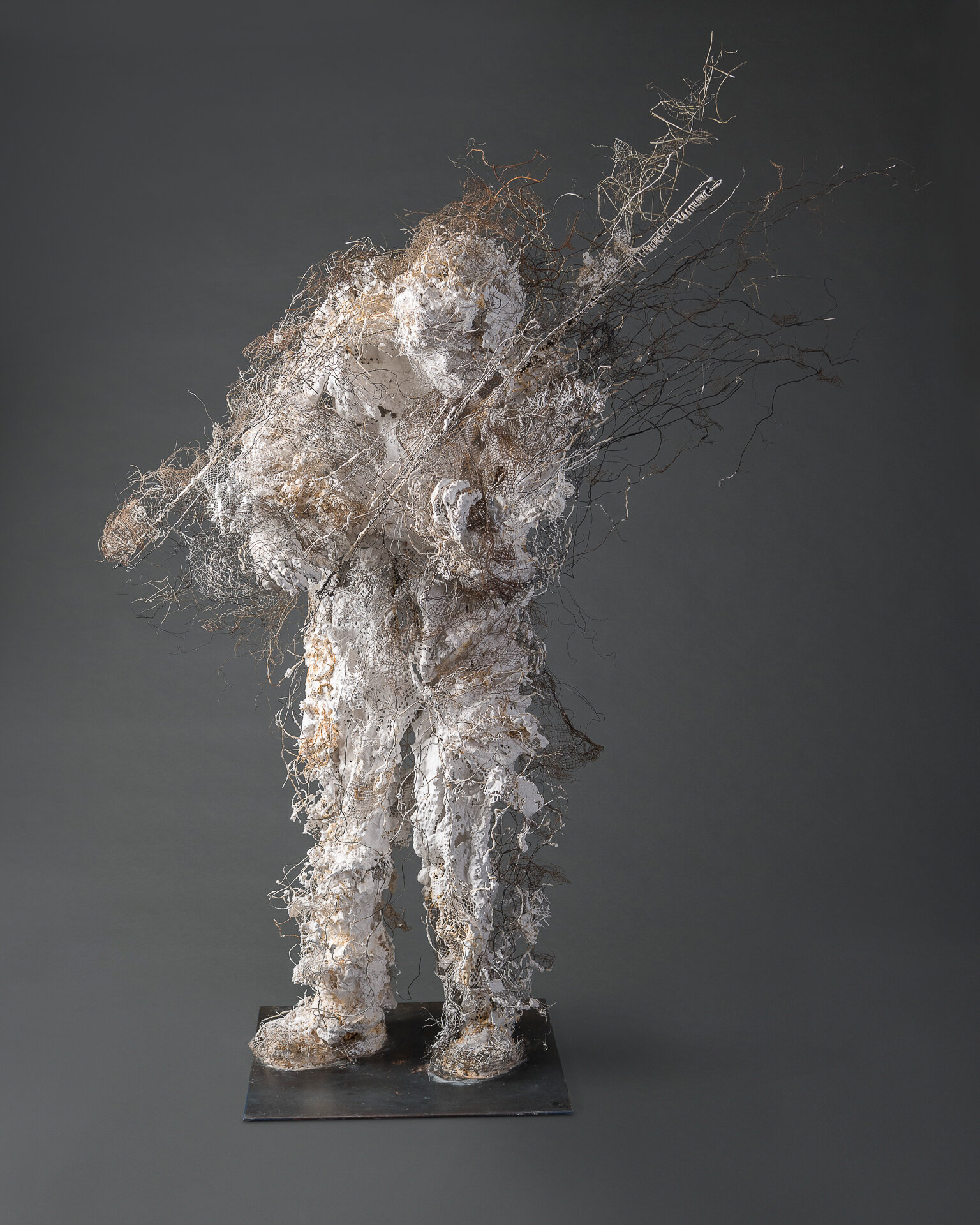
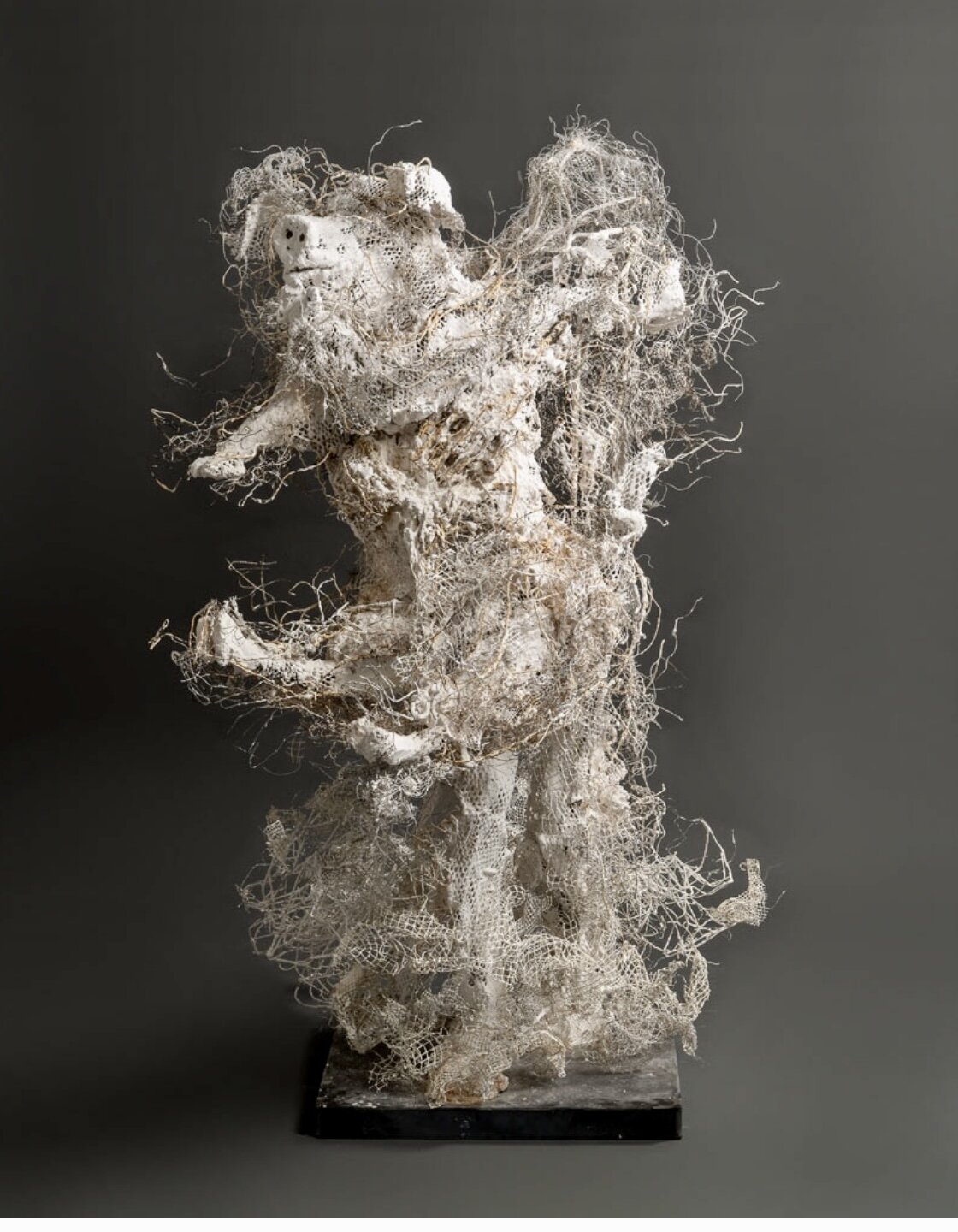
Salvaged construction site rotting root with interesting chain link necklace imbedded across her shoulders.

That Was Then This is Now.

July 2020 - the sculpture garden as it was when Stephanie and I first discussed the project.

February 2021. After the Texas freeze

May 2022 - 12 months from installation.

Symbiosis art activism update - landscape ordinance.

One of my goals as an artist is to inspire city Landscape policy change. Our cities landscape policy evolved before we had the telescopes to understand the living systems below ground. It is Necessary to update these policies that regulate or urban landscapes and utilize the power of out native landscape.

I have made great headways with discussions with city council person Sally Alcorn. She has supported my work and thoughtfully listens to what I am saying. I can see in her face and her actions that applying these regeneration agriculture principles to urban landscapes makes sense to her. She has worked in the city government for many years and understands how the machine works. She does not have landscape policy roots in her background which actually is a good thing, she does not have to unlearn. In the last few weeks, I have facilitated connecting her with two people in the native landscape world.
First Linda Knowles has led the native plant movement in Houston and Texas. She served on the cities committee for designated wildscapes and she has let the Houstin native plant society and is leading the Texas NPS. Linda is a great source of knowledge and will be a great resource for Sallie.

A few weeks ago I emailed Jaime González. Jaime is  Houston Healthy Cities Program Director of The Nature Conservancy Texas Chapter – Houston Office. Jaime is everywhere when it comes to Houston native landscape. Within 5 minutes of emailing him about “Symbiosis” he called me. He wanted to see the work. We met the following day at 8:30 am. It was not too hot yet and we had a great conversation. He was amazed at what a hot bet of wildlife can be revived in the middle of a lifeless concrete urban desert - the museum district. :(. He Specifically, positively commented that I did not leave spaces of dirt separating each plant. I could hear frustration in his voice. It is a social custom to separate species. My goal is to keep the soil covered with a minimum of 1 layer of greenery if not many layers. Hearing him approve was a relief. He also made some plant suggestions for the southwest corner. It was a beautiful corner until the lemon bee balm faded for the season.

Tuesday this week I was able to connect him with Sallie and Hannah Cobb Public Affairs Liaison Office of Council Member Sallie Alcorn City of Houston, At-Large 5. It was a great conversation and I know Jaime will assist Sallie's office with their plans.

Like Jaime, Sallie is a mover- I just received an email from her office that she is meeting with Kelli Ondracek on September 1st to discuss a native landscaping pilot program. A giant leap - this feels good.

can art active change? :) I am trying.
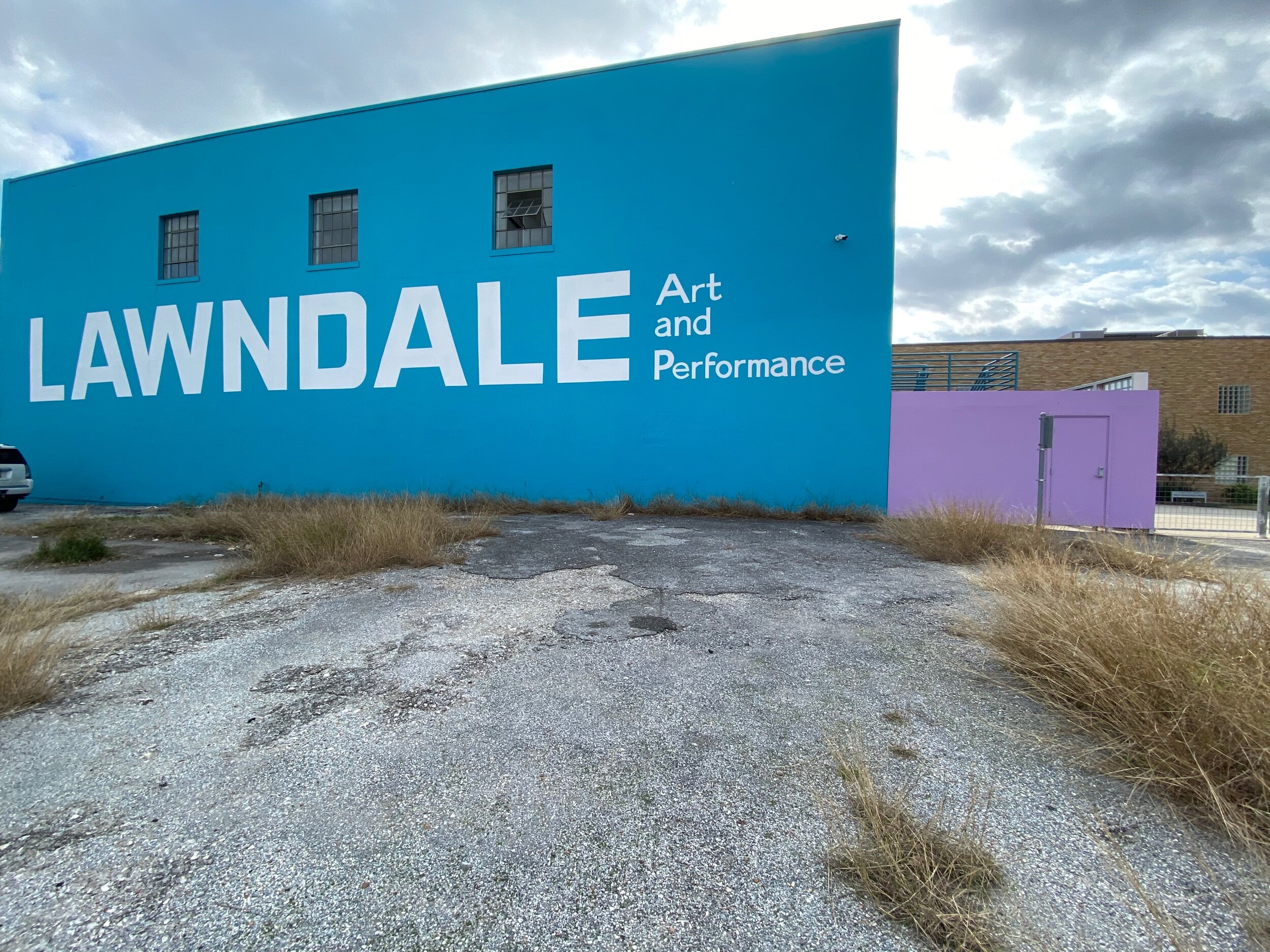
What can changing city landscape policy do? Right now this is how most vacant lots look in houston. This is the vacant lot adjacent to Lawndale. The owner regularly grooms/mows it per city policy.

What can changing city landscape policy do? Right now this is how most vacant lots look in houston. This is the vacant lot adjacent to Lawndale. The owner regularly grooms/mows it per city policy.

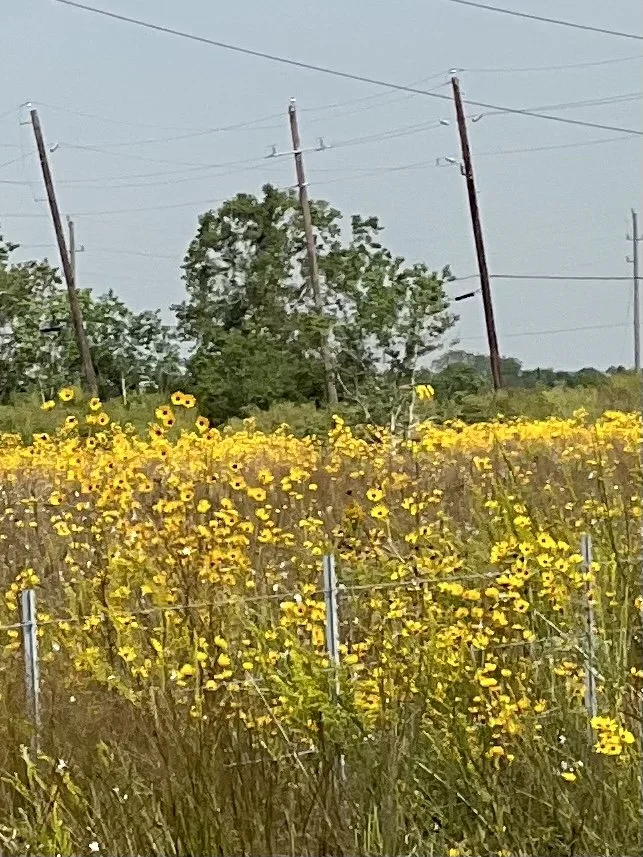
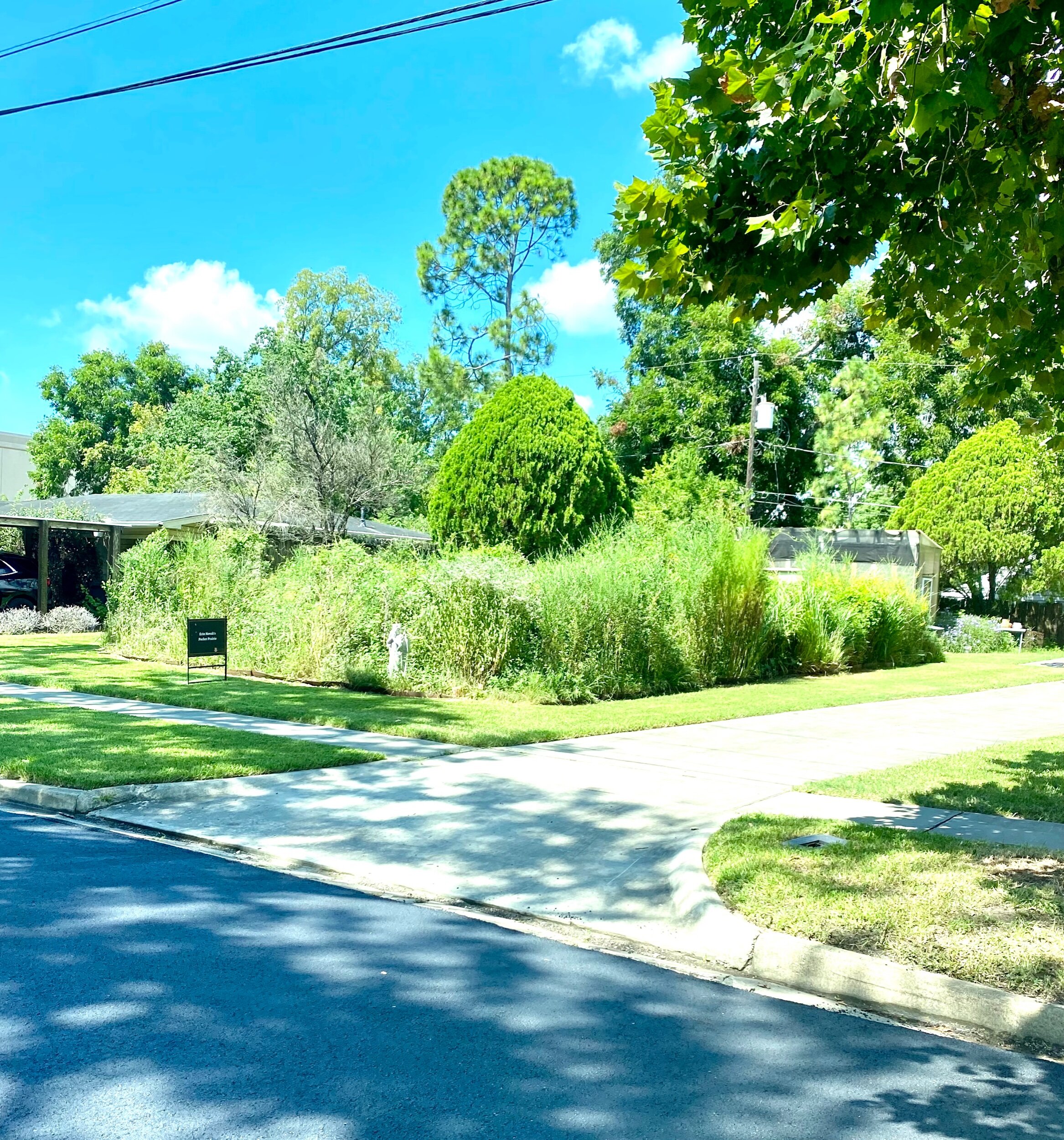
This vacant lot near university of St. Thomas is actively sequestering carbon and soaking up water cooling the planet. This is responsible urban land management.  In addition it minimizes the need for mowing. I think it would be even better with a surrounding ground cover that did not requiring mowing.

This vacant lot is actively sequestering carbon and soaking up water cooling the planet. This is responsible urban land management.

In addition it minimizes the need for mowing. I think it would be even better with a surrounding ground cover that did not requiring mowing.

Endangered Knowledge: The Soul of Humus

Progress from the last two days of work.

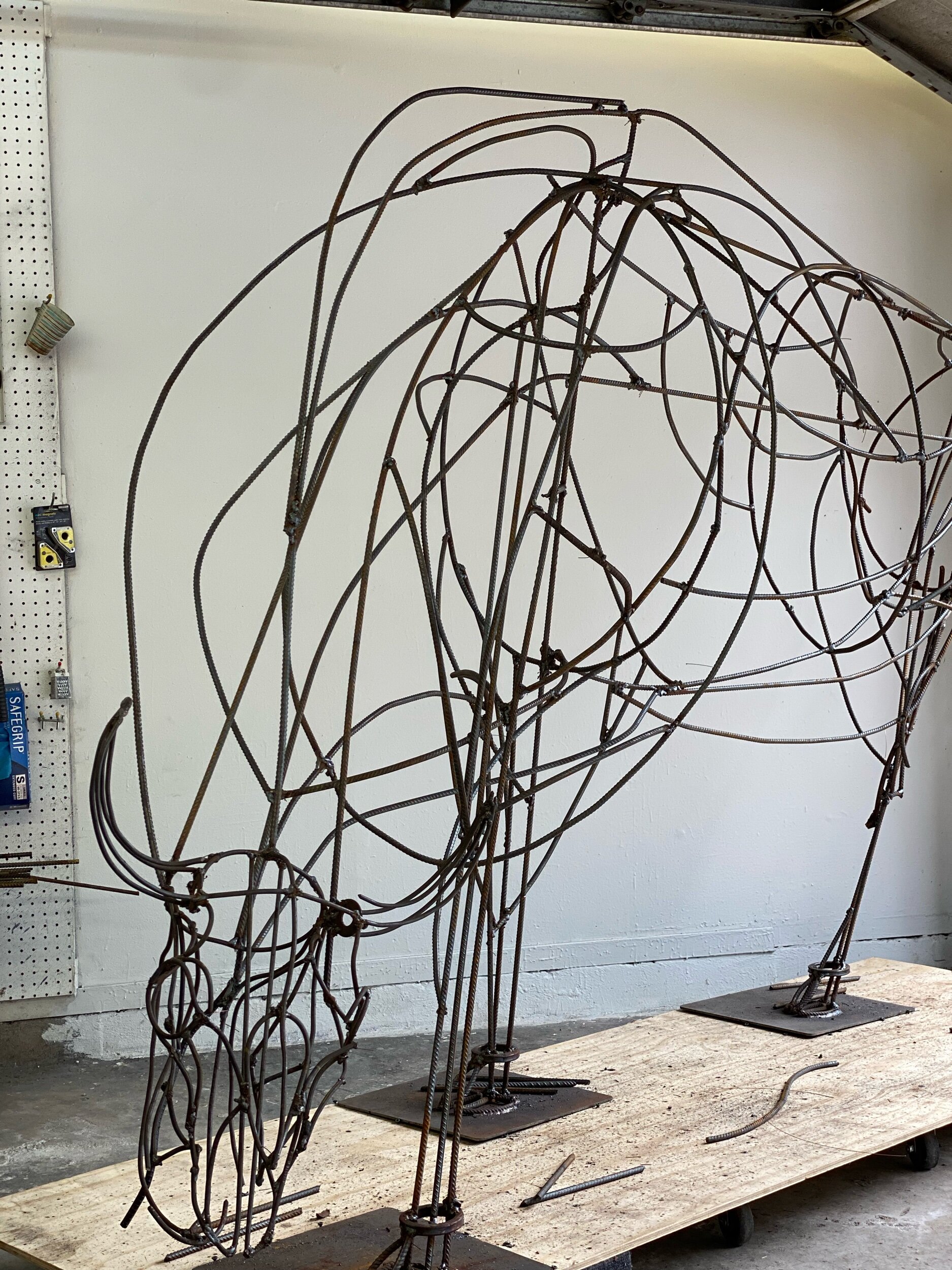
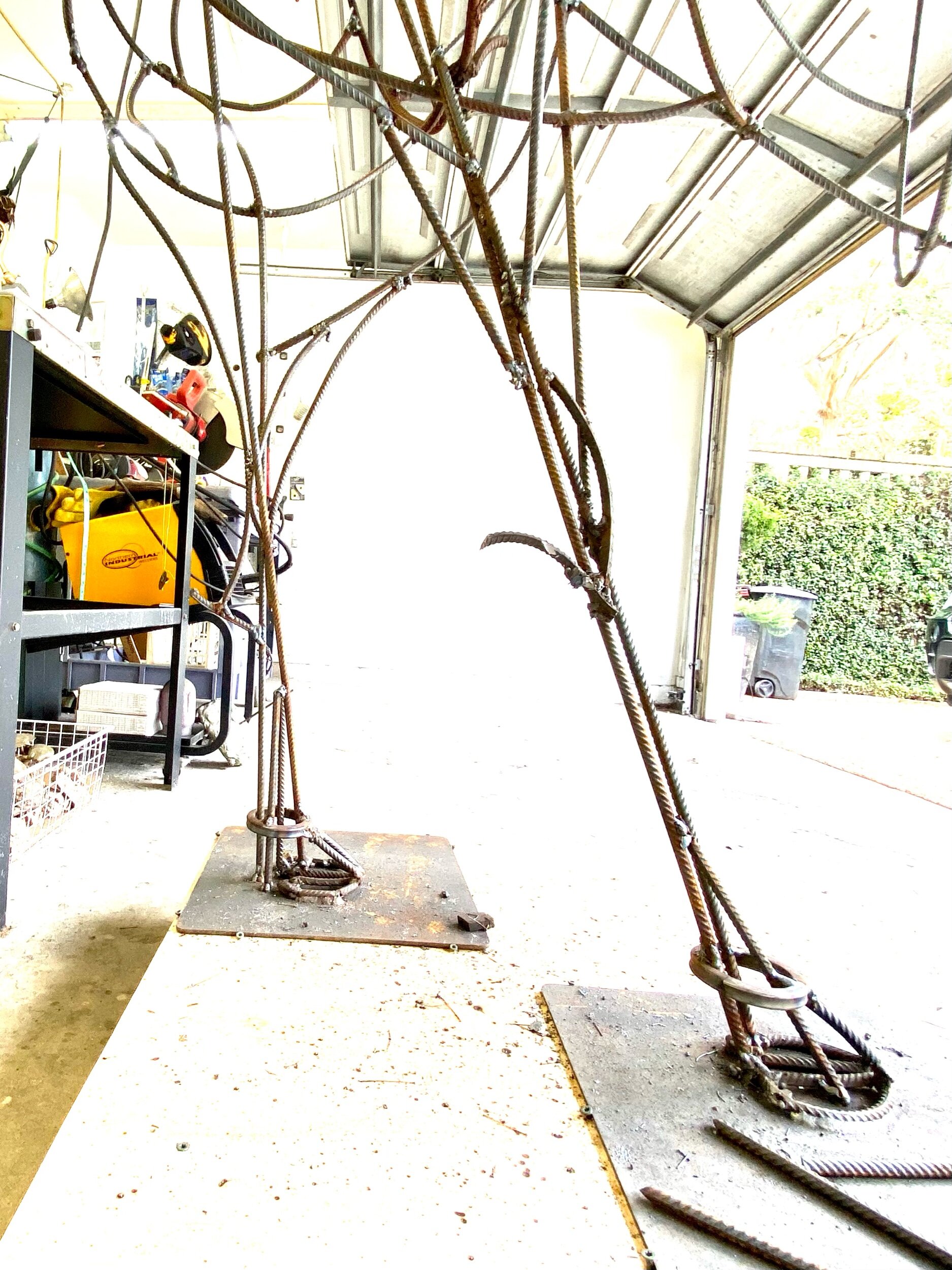
I worked on building the muscles on his neck, left leg bulk, sagged his bellie and made him a man.
Sagged bellie and  manhood

Sagged bellie and manhood

Endangered Knowledge: The Soul of Humus

Todays work- His right back haunch and leg.

Endangered Knowledge: The Soul of Humus

20’ more of rebar.

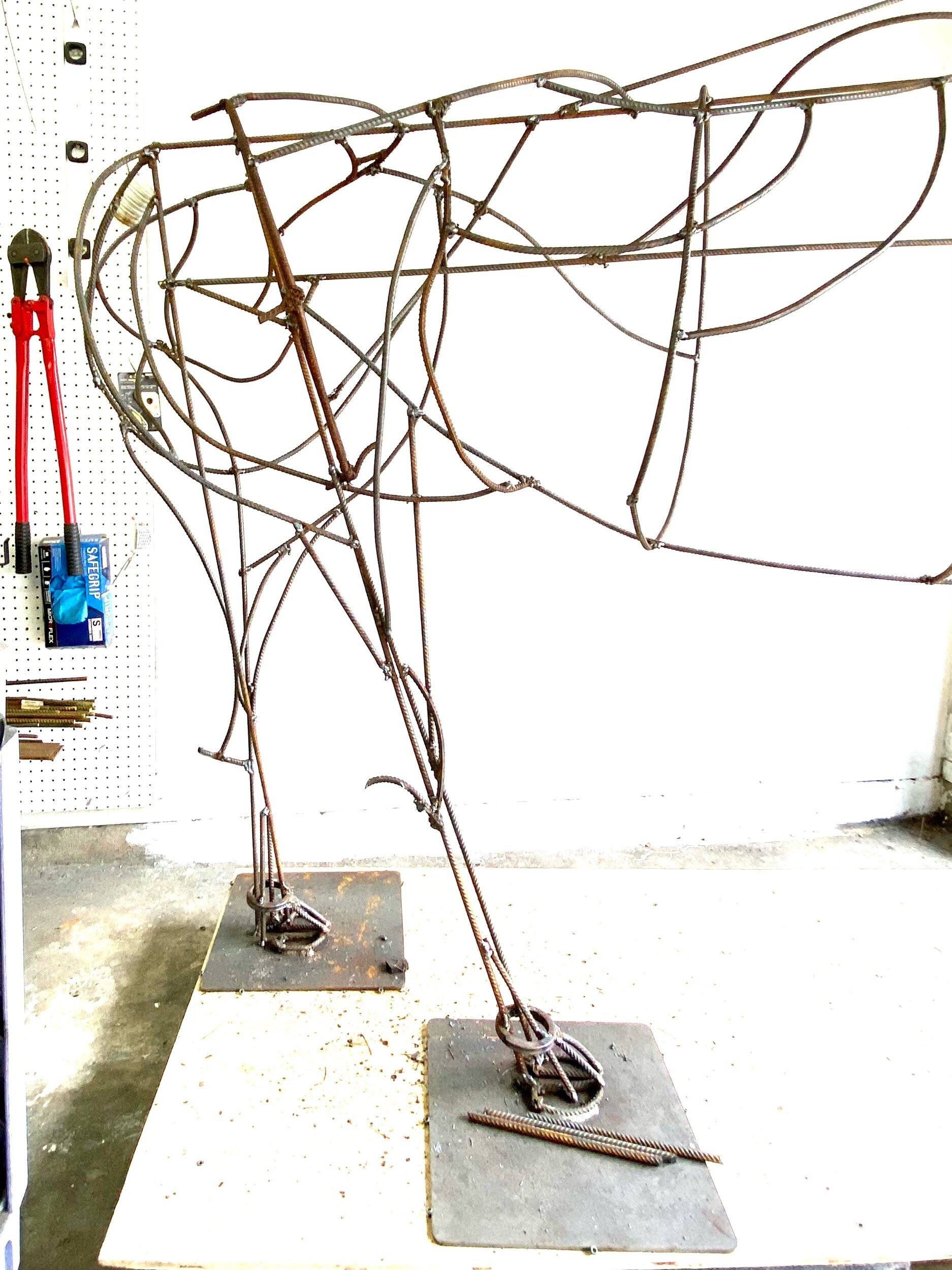
I used 20’ more of rebar today to build the hip bones up on both sides and his right side in the stomach area of his side. I worked from the hip to his shoulder.

I used 20’ more of rebar today to build the hip bones up on both sides and his right side in the stomach area of his side. I worked from the hip to his shoulder.

My work space is not large enough to get a good side photo.

My work space is not large enough to get a good side photo.

Endangered Knowledge: The Soul of Humus

Stomach, upper hip bones, and more hump.

He still looks like a hybrid giraffe bison, that is only because his muscles and fur come later.

Endangered Knowledge: The Soul of Humus

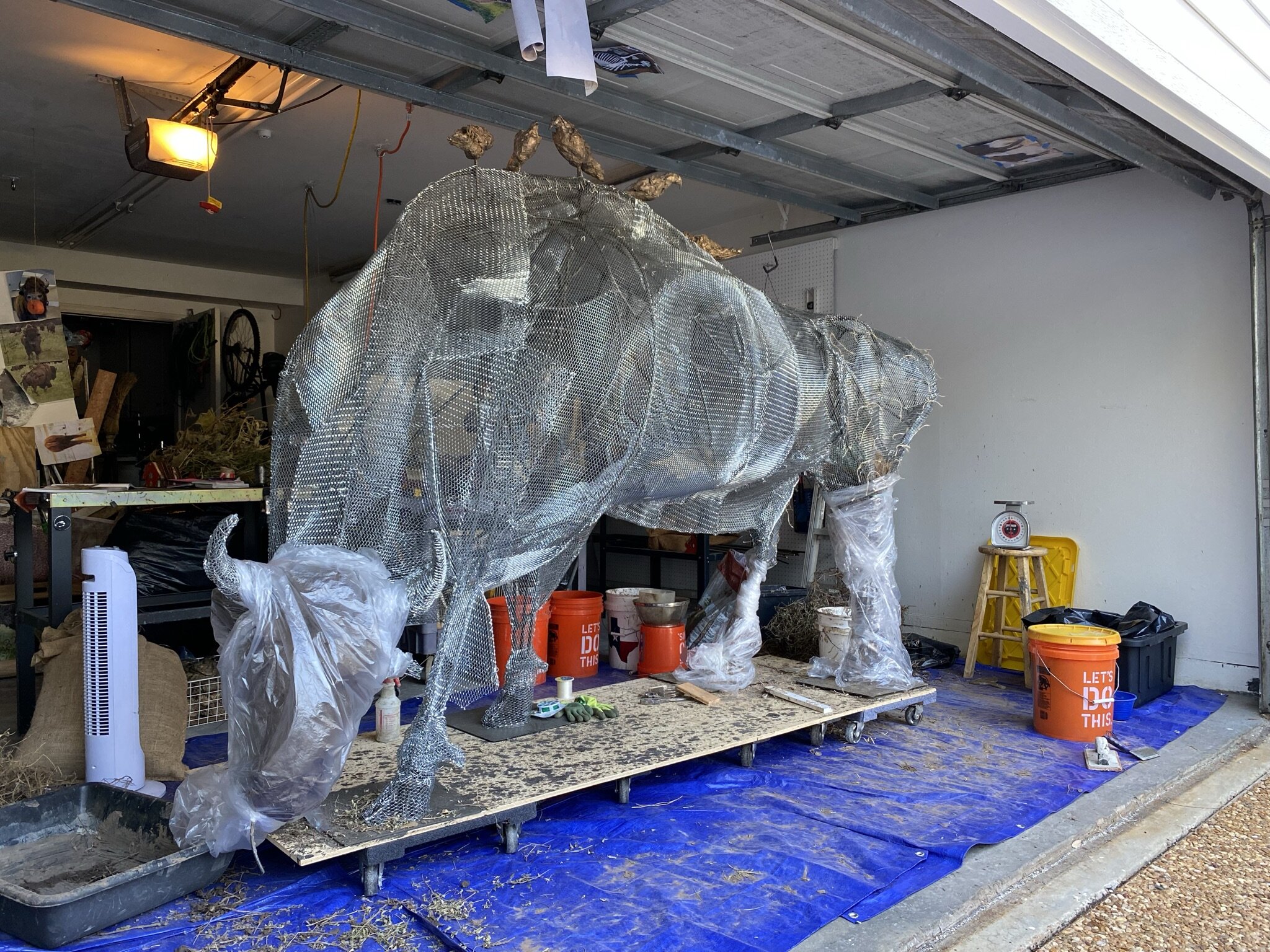
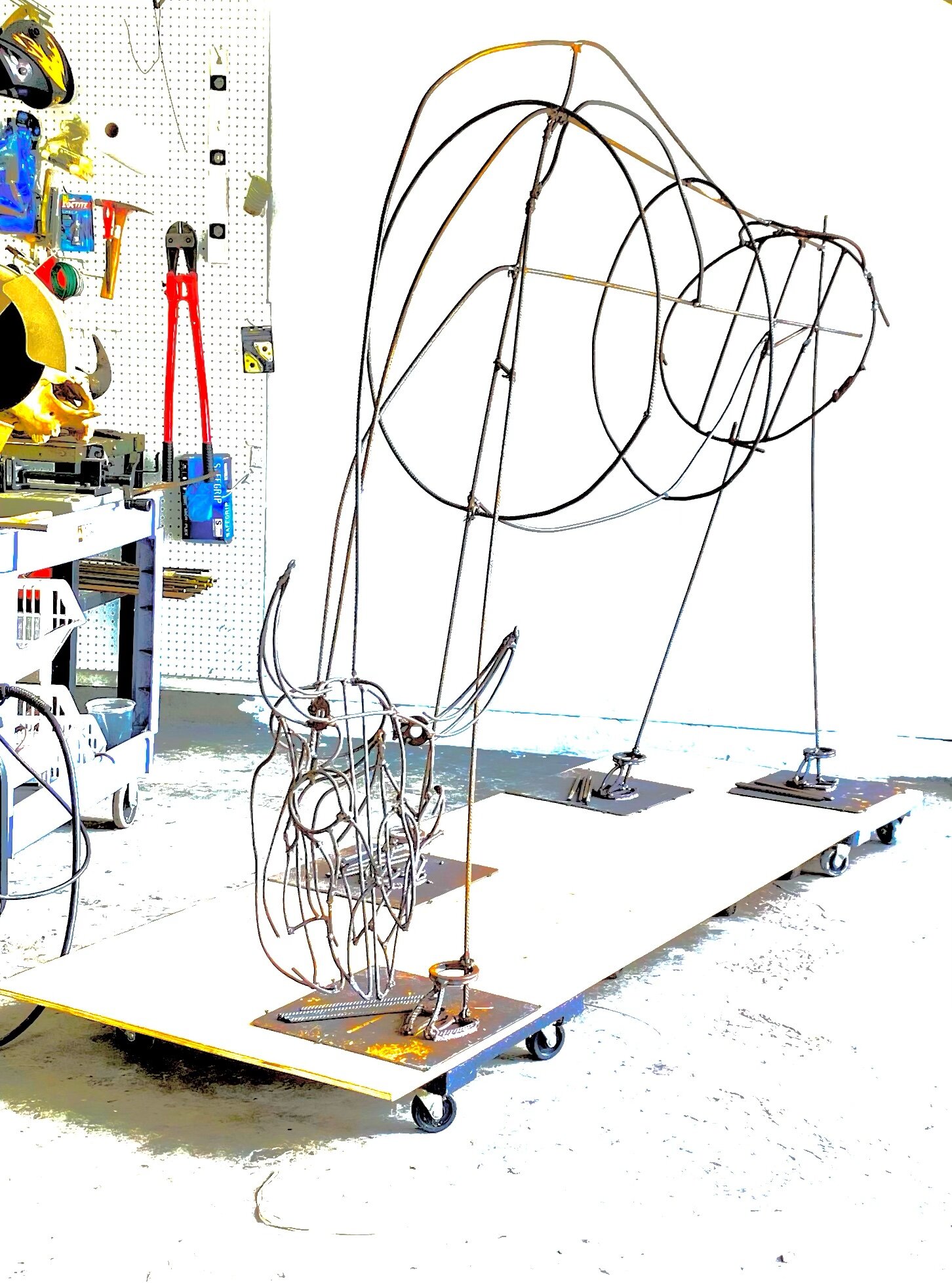
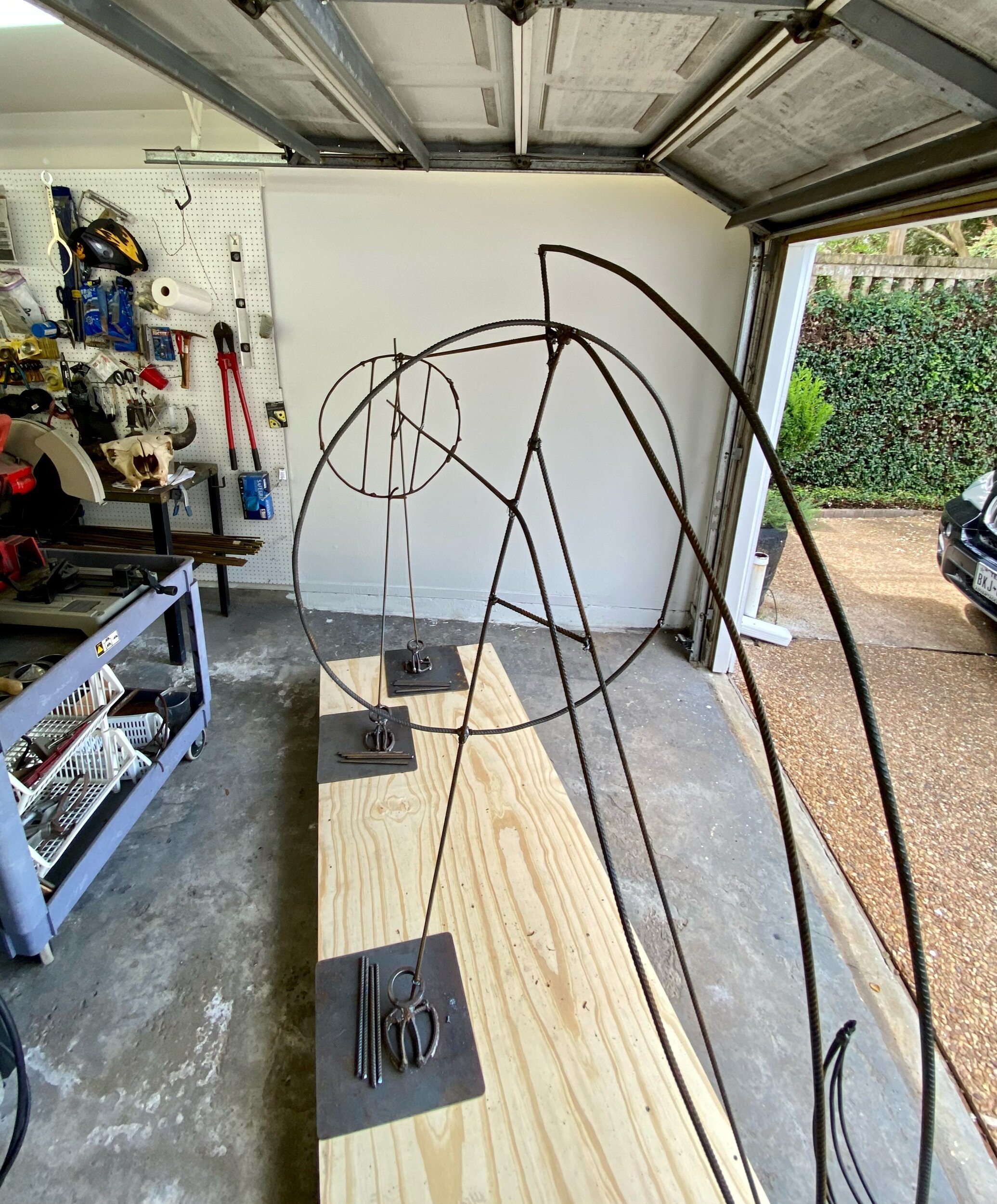
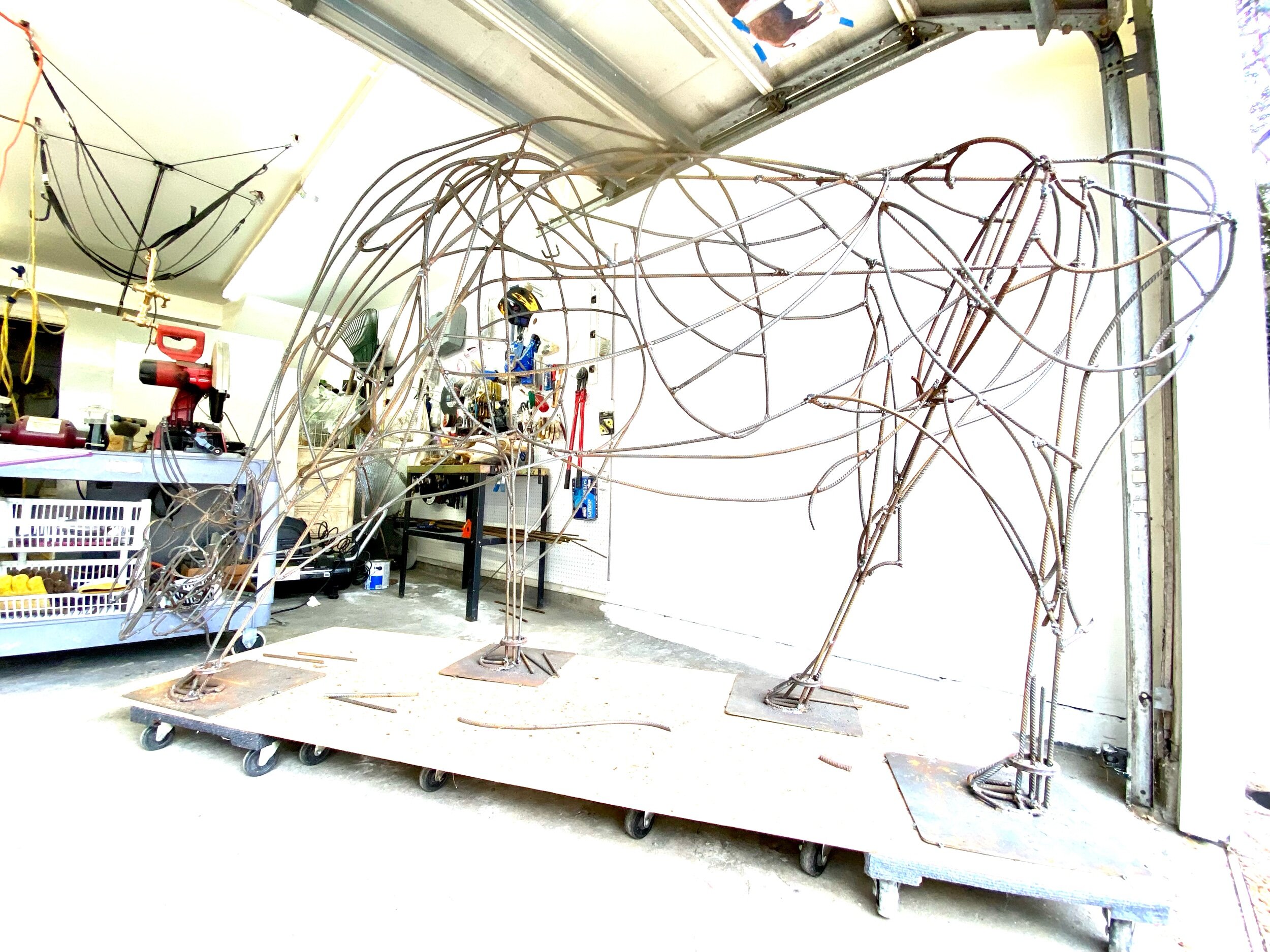
Another big day of welding..I added a big 96” circumference chest. Put the entire piece on four dollies and started his hump. Below are a few pics from todays work.

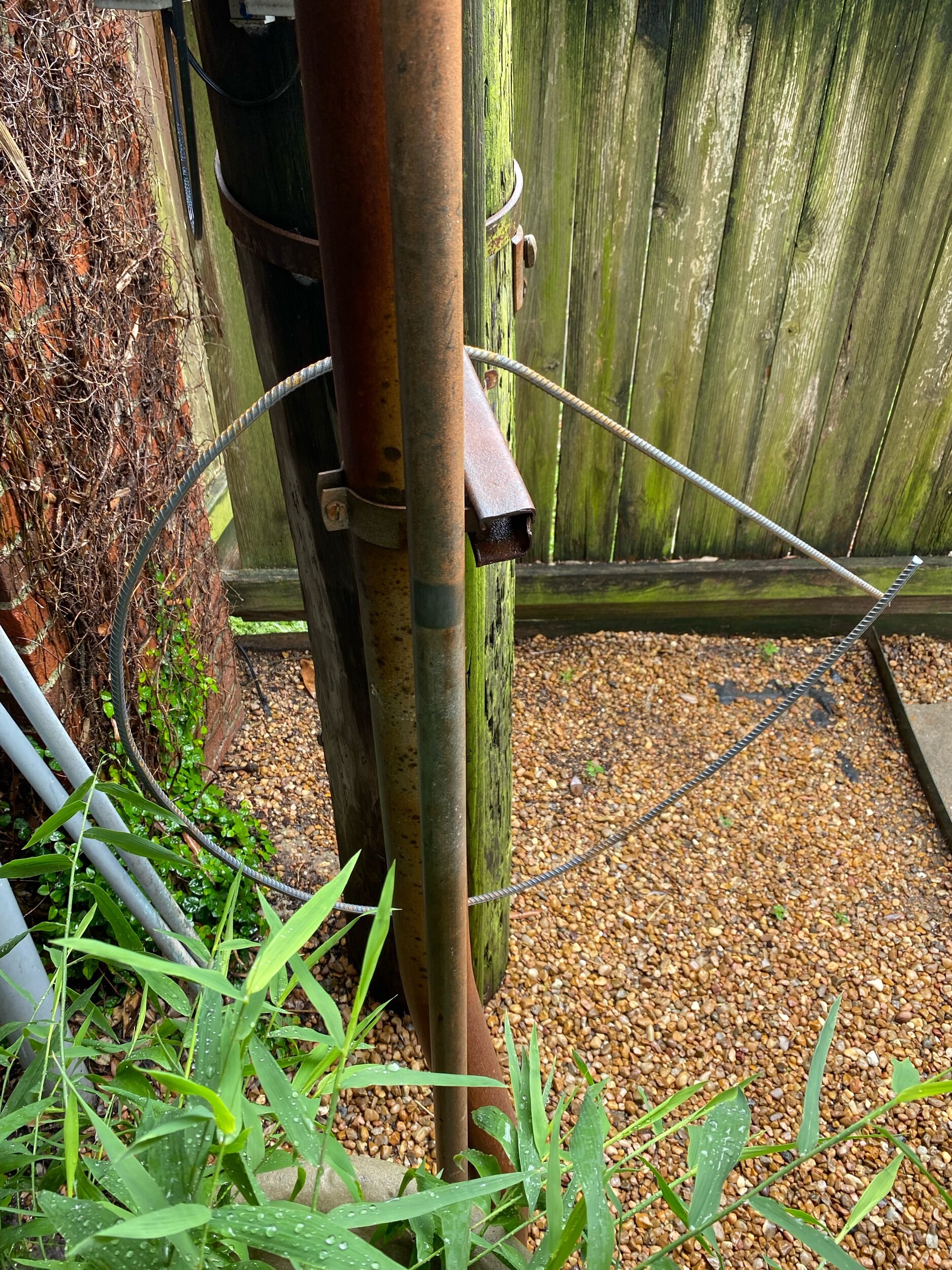
Behind my garage is a telephone pole. I use it to bend my rebar.  This is a side view where I am going to bend the piece for the chest.

Behind my garage is a telephone pole. I use it to bend my rebar. This is a side view where I am going to bend the piece for the chest.

Halfway to becoming a bison chest.

Halfway to becoming a bison chest.

Then I use my weight to even out the shape.

Then I use my weight to even out the shape.

I hang the chest over the back and decide if it is big enough.

I hang the chest over the back and decide if it is big enough.

Next I weld  the ends together .

Next I weld the ends together .

Recycling some old dollies from past work and deciding on the best plan. Balance and portability is the goal. The brown paper is the footprint of my bisons. Each leg is supported by a dollie.

Recycling some old dollies from past work and deciding on the best plan. Balance and portability is the goal. The brown paper is the footprint of my bisons. Each leg is supported by a dollie.

Thanks to Curtis for getting me the plywood and helping me mount the beast. This is just for while I work on the sculpture and for transportation. It is not part of the work.

Thanks to Curtis for getting me the plywood and helping me mount the beast. This is just for while I work on the sculpture and for transportation. It is not part of the work.

Just goofing around

Just goofing around

My garage studio assistant is taking a sun break.

My garage studio assistant is taking a sun break.

Starting to assemble the hump.

Starting to assemble the hump.

And that's a wrap.

And that's a wrap.

Endangered knowledge:The Soul of Humus

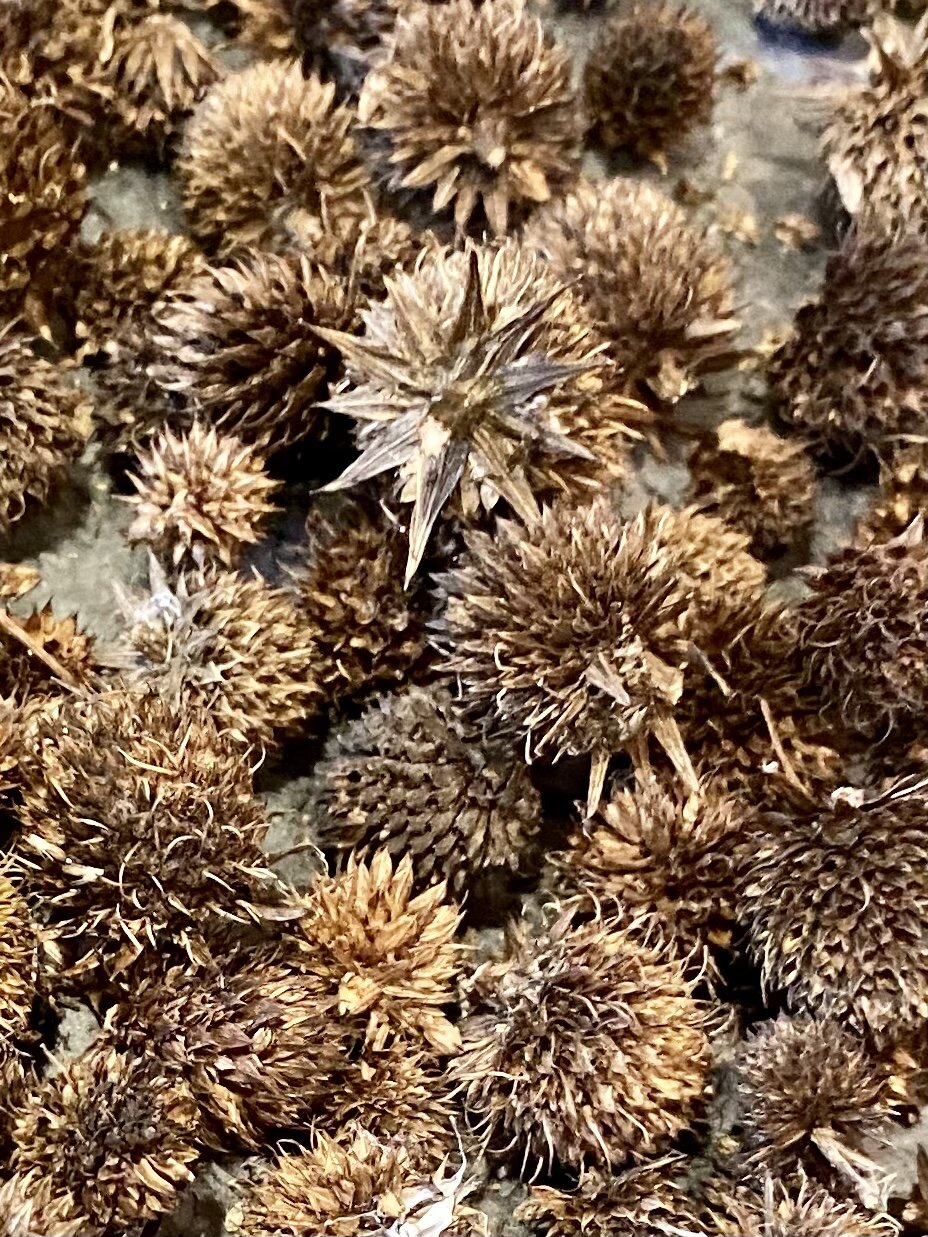
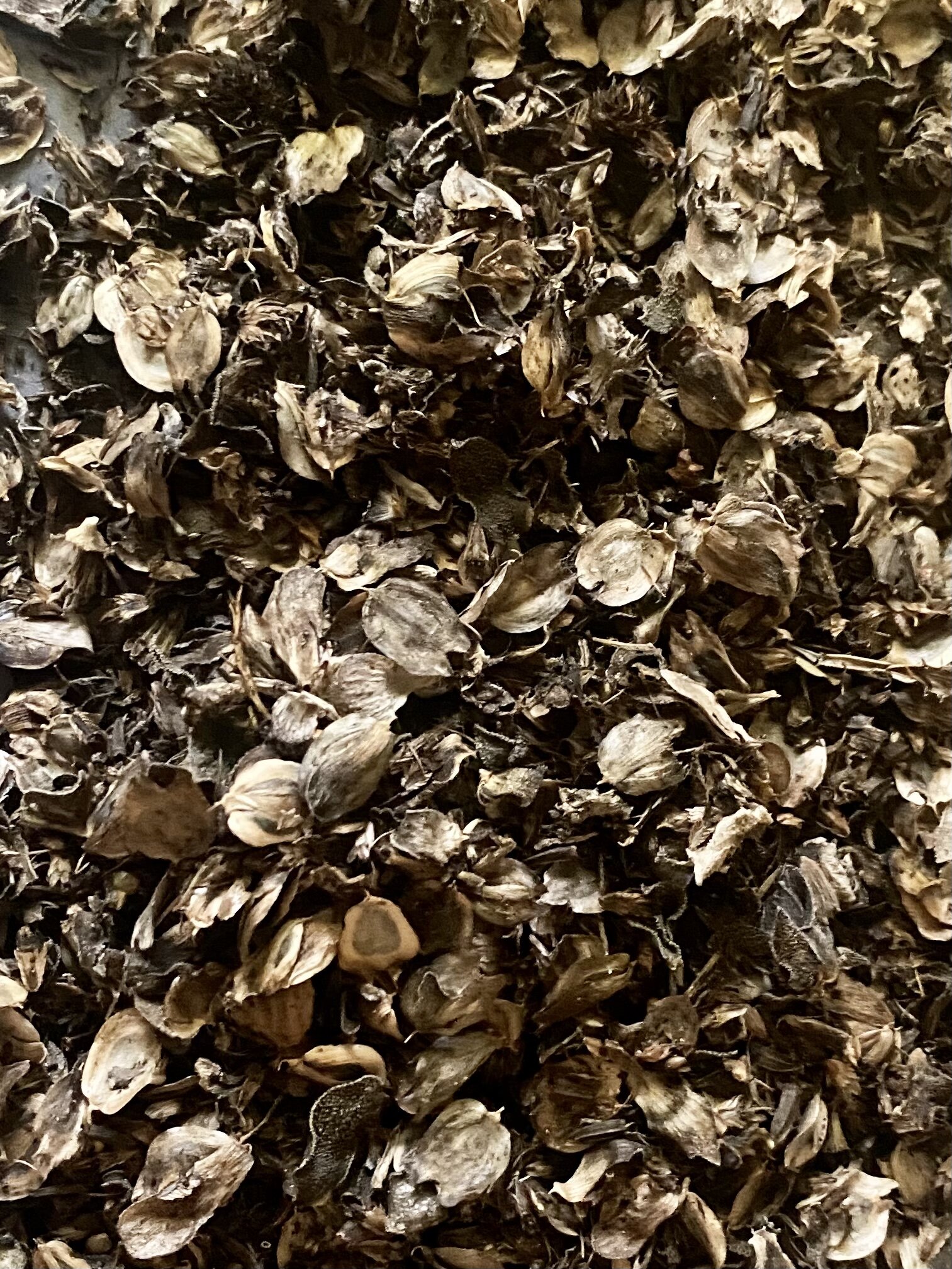
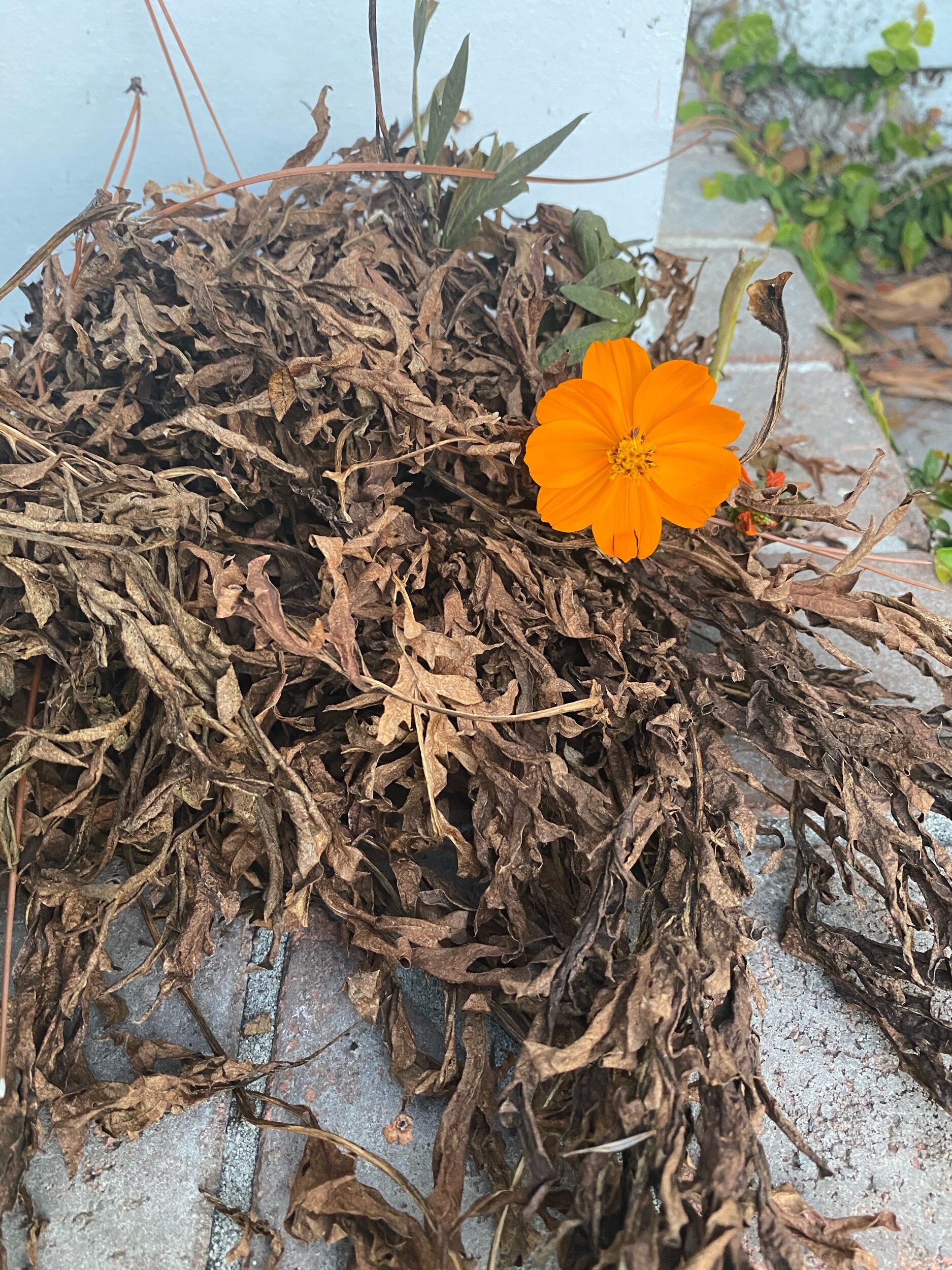
I dried some cosmos leaves to us as the coat of a sculpture that is in the works - Endangered knowledge: the Soul of Humus. The piece will be in the #sculpturemonthhouston 2021 exhibit. I started the armature during COVID for the SMH 2020 exhibit, which was postponed. The sculpture looks at the ecological history of the coastal prairie. This texture is perfect #cindeeklementart #endangeredknowledge #coastalprairie #tezasart #houstonart #bioart #environmentalart #cosmos #art #sculpture #bison

IMG_4772.jpeg

There are bees that have not been seen since the 60’s that are not listed as endangered.

The beauty of a leaf runs deep.

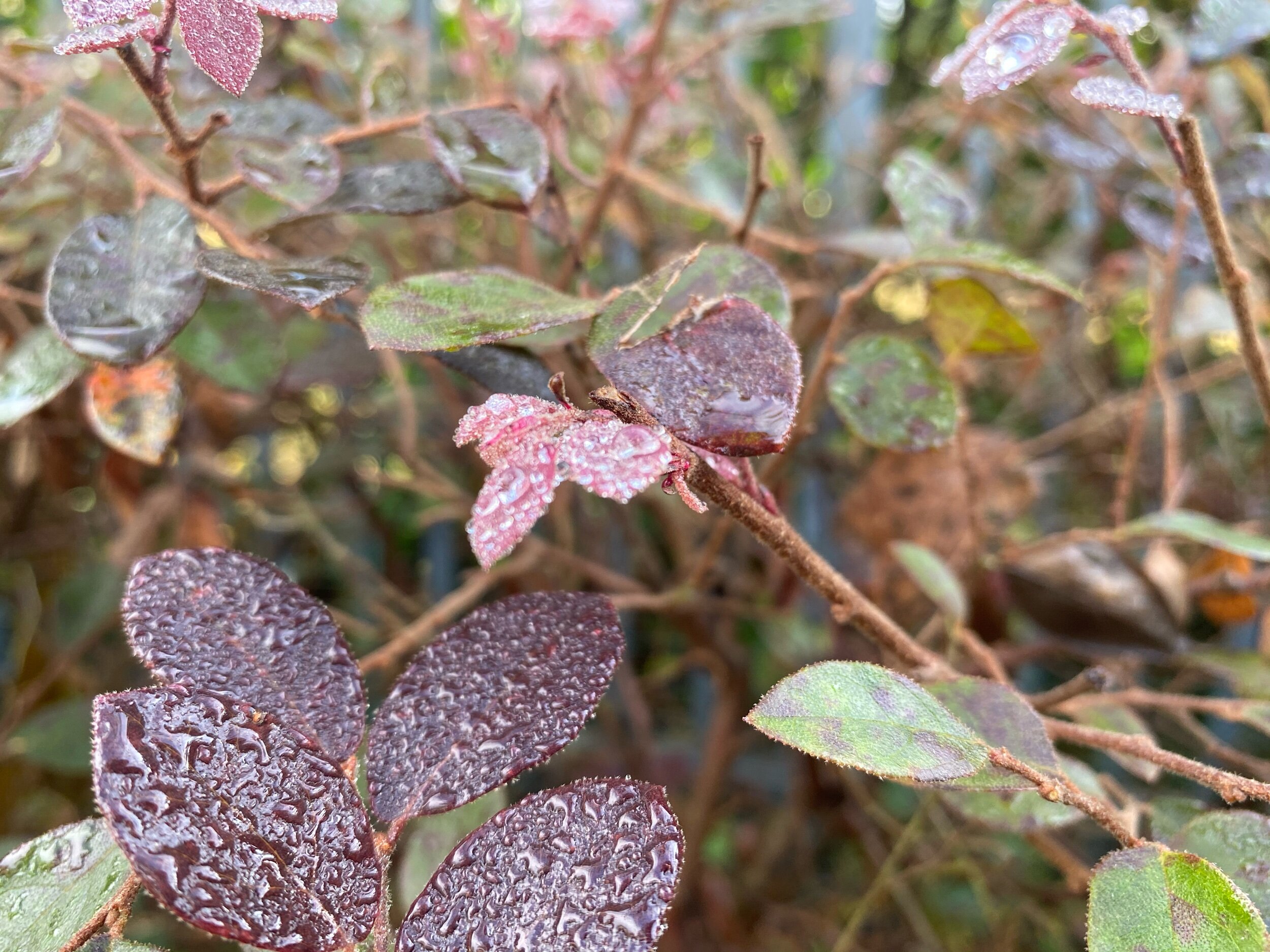
How beautiful droplets of dew or rainwater puddle on the waxy leaf surfaces? They provide the watering holes for nature’s tiniest creatures.🐞🐛🕸️🦎🐌🐸🐜🦋🐝

What do you see when you see a leaf? ☘️🌿🌱🍀

I see a unique natural system. Leaves multi-functioning as micro reservoirs, coats of armor protecting the soil, and micro floodgates slowing rainwater. 💦🌊💧

On the Coastal prairie, leaves function to protect the soil from being compacted by the pelting raindrops. If the heavy raindrops fall is not broken by layers of leaves and organic matter, the tiny cavities in living soil collapse, and rainwater moves horizontally across our landscape instead of into the tiny reservoirs in the soil. We need these small cavities to allow water to penetrate deep into the soil. Leaves also slow rain droplets giving the soil time to transport the rain to its deepest roots. Once the rain is in the ground cooling our planet leaves protect the soil from the heat of the day. This multilayered ground cover gives rain more time to trickle into the aquifer. Purifying our water and cooling our planet. How amazing are leaves? As an artist my how we see urban landscapes

My work records endangered knowledge to the collective memory and reimagines urban landscapes to holistically balance the needs of humanity and wildlife.

In Symbiosis I am stretching my practice and creating a living piece of site-specific art activism that will reimagine a 53.5’ X 48’ traditional urban landscape/sculpture garden and answer the question: how do we holistically restore an ecological balance in Houston? Symbiosis is a collaboration with Lawndale Art Center’s community, neighbors, urban wildlife, and the coastal prairies carbon cycle. #symbiosis #lawndaleartcenter #urbanlandscapes #artadia #coastalprairie #water #leaves #conservation art #bioart #nature #contemporaryart #modernart #artactivism #cindeeklementart #texasart #houstonart

IMG_4037.jpeg
IMG_4028.jpeg

Symbiosis- fluffy bluestem

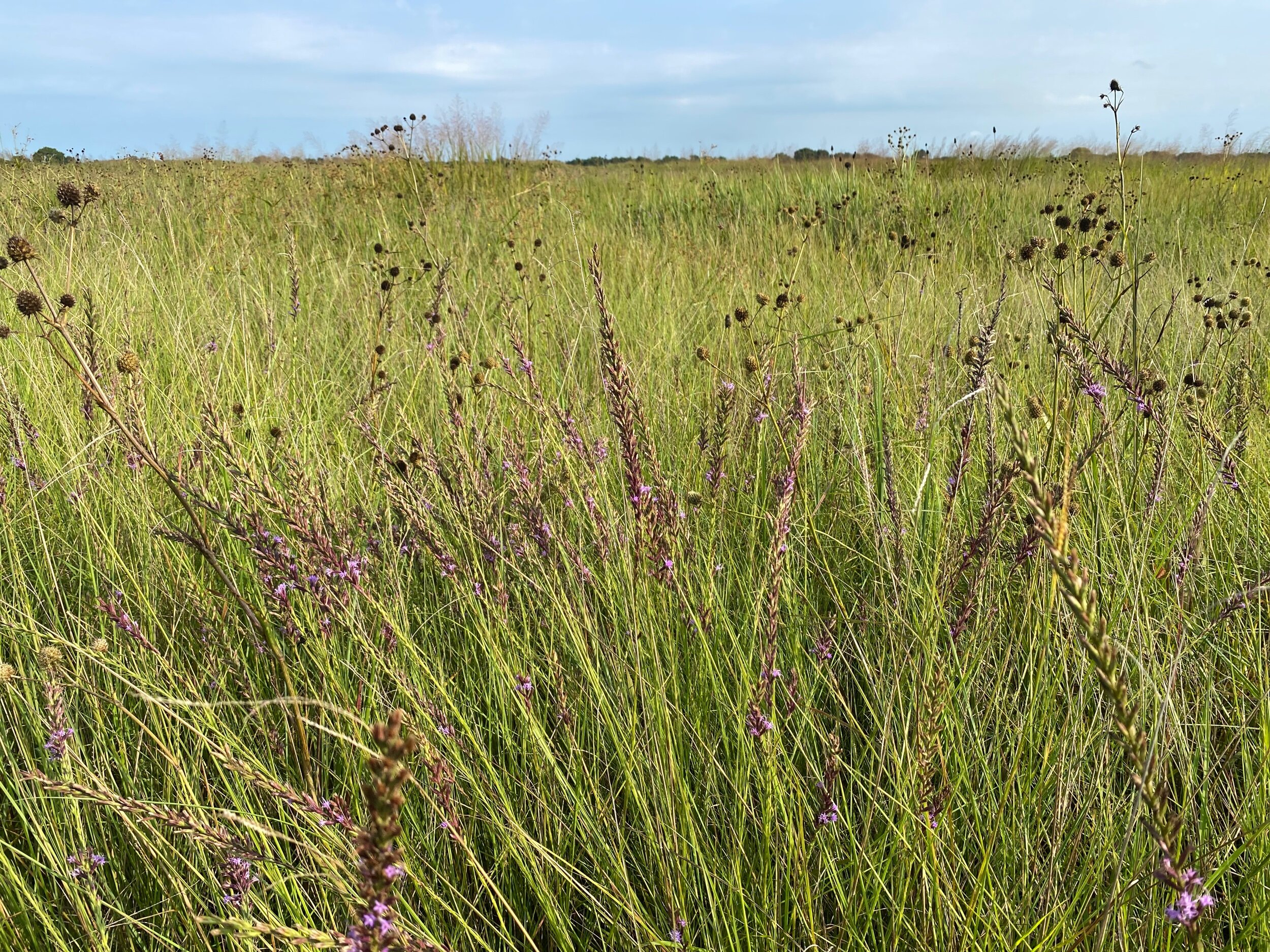
Through art, I am finding new ways to see Houston’s urban landscapes. The bushy bluestem is a coastal prairie native and a volunteer at Lawndale art center, the location of my 2021 site-specific sculpture installation.

For creating movement and living soil, bushy bluestem is a fabulous material to consider. At this point, I do not know if it will make the cut of materials for the sculpture; however, it does have some attractive characteristics as a material for living soil, and aesthetically I think it is beautiful. The spikelets of silky feathers curl out of a sphere of fine hairs. It is tall and graceful, peering five feet off the ground. In my mind, I can see a cluster of them suited in costumes of golden cotton candy swaying across the stage of coastal prairie under the spotlight of our earth's closest star. Their rhythm succumbs to the breeze that sweeps off the coast. They create the perfect; kitchen of seeds for birds and small mammals, cozy nesting materials for birds, winter food for prairie chickens, field sparrows, and juncos. I can hear a symphony of songbirds serenading the morning as butterflies flit, and flingle and native bees start their day. With close inspection and a little luck, you may even discover a Skipper or Satyr larvae starting a new life amongst their stems. #symbiosis #cindeeklementart #livingsoil #sitespecificart #texasart #bushybluestem #houstonart #texassculpture #contemporaryart #nativebees #bees #wildlife #livingsoil

Changing how we see urban landscapes in Houston.

Changing how we see urban landscapes in Houston.

IMG_4161.jpeg

Armadillos and termites

Termites - to quote @gjklement,” termites are the ultimate grazers” last week, after we harvested our turkeys @roamranch, we went on a hike along the pastures to Indian Cave Creek. Along the way, we saw an abundance of armadillos eating termites. This trip was my 6th trip to the ranch and the first time to see any armadillos on the property, much less numerous armadillos or notice any termites. It is a sign the soil is regenerating - it is a good thing. Armadillos play an essential role in the Texas landscape both in agricultural settings and in urban population centers. They eat Termites keeping them in check. The termites are essential in building functioning ecosystems. As an art activist, I want to change the way we see nature. #regenerativeagriculture #regenerativeart #cindeeklementart #bioart #cobservationart #artactivist #texasartist #houstonartist #womansculptor #art #sculpture

Why Houston is in the perfect position to save the bee

Rural areas are highly impacted by the unanticipated consequences of our industrial agriculture’s dependence on chemicals that weaken bee’s immune systems. Urban bee populations can be more diverse than in rural areas. Researchers are finding in cities such as Chicago, Berlin, Berkley, and Melbourne that have reimagined their parks, neighborhoods, city centers, vacant lots, street medians, and rooftops planted with native flowers, grasses, and fruit, and vegetables support healthy, vibrant wild native bee populations.

In the US, there are four thousand native bee species. They pollinate over three hundred times more effectively than honey bees. For example, A single female Leafcutter Bee visits 100,000 plus blossoms per day whereas a honey bee visits 50-1000.

Unlike the honey bee, Native bees do not swarm, are not aggressive. Native bees are perfect for urban population centers.

Houston covers 600 square miles of land and has one of the longest growing seasons in the U.S. As it continues to sprawl across Texas, its gardens must increasingly become a refuge for native plants and animals. With 2.3 million people living in the most vital economic, cultural center of the south, we can become the most critical urban native bee habitat in the United States.

I have spent the last year and a half studying the bee situation as it pertains to my art and my interest in regenerative agriculture. I am determined to take this knowledge and save the bee in urban settings.

With Houston's land size, population, and location in the Sunbelt like it or not-we are impacting the bee population.

ADDITIONAL LINKS

If Cuba can create urban gardens to feed its poor can you imagine what we can do

Minnesota Will Pay Homeowners to Replace Lawns with Bee-Friendly Wildflowers, Clover and Native Grasses.

Prairies absorbing water

The loss of biodiversity reduces the capacity of ecosystems to provide the multiple services on which humans depend.

Why flowering meadows are better than lawns

Urban soil health: A city-wide survey of chemical and biological properties of urban agriculture soils

IMG_3843.png

Symbiosis building soil life.

How do you build soil health without having the luxury of animal impact. It is one thing to build soil health on a bison farm. The microbes in the the the bison, turkey, pig and chicken dung builds the life in the soil. In the sculpture garden at Lawndale I am going to use LEAF MOLD COMPOST. This product is produced primarily from recycled leaves, with a little grass and horse manure mixed in, a touch of fruits and vegetables. After a long slow compost it will be rich in beneficial microbes. It will help save water and promote healthy soil. I was going to wait until early spring before we replanted the garden. However, Sunday Lawndale is having it's Sunday brunch fund raiser. And this is in the day if Covid 19 so the event is outside. I noticed that the heavy rains of late have compacted several areas in the beds and washed away some soil. It will be an opportunity to to talk about living soil,

I spent time researching different types of compost and mulch. Natures Way Resources compost native plants, is locally owned and located in the Houston area. The owner is a soil scientist. I had a long conversation with him today and he really knows living soil. I can't wait to see life return to the garden.

Here you can see how the soil is wearing away without having plants/roots hold it down. You can also see how the rain hitting it had compacted the ground. When the soil becomes compacted it stops absorbing water. .

Here you can see how the soil is wearing away without having plants/roots hold it down. You can also see how the rain hitting it had compacted the ground. When the soil becomes compacted it stops absorbing water. .

IMG_3810.jpeg
IMG_3812.jpeg
The goods

The goods

The tools

The tools

IMG_3836.jpeg