From Dusk to Dawn- Four works on paper

Written in 2025. Posted late —

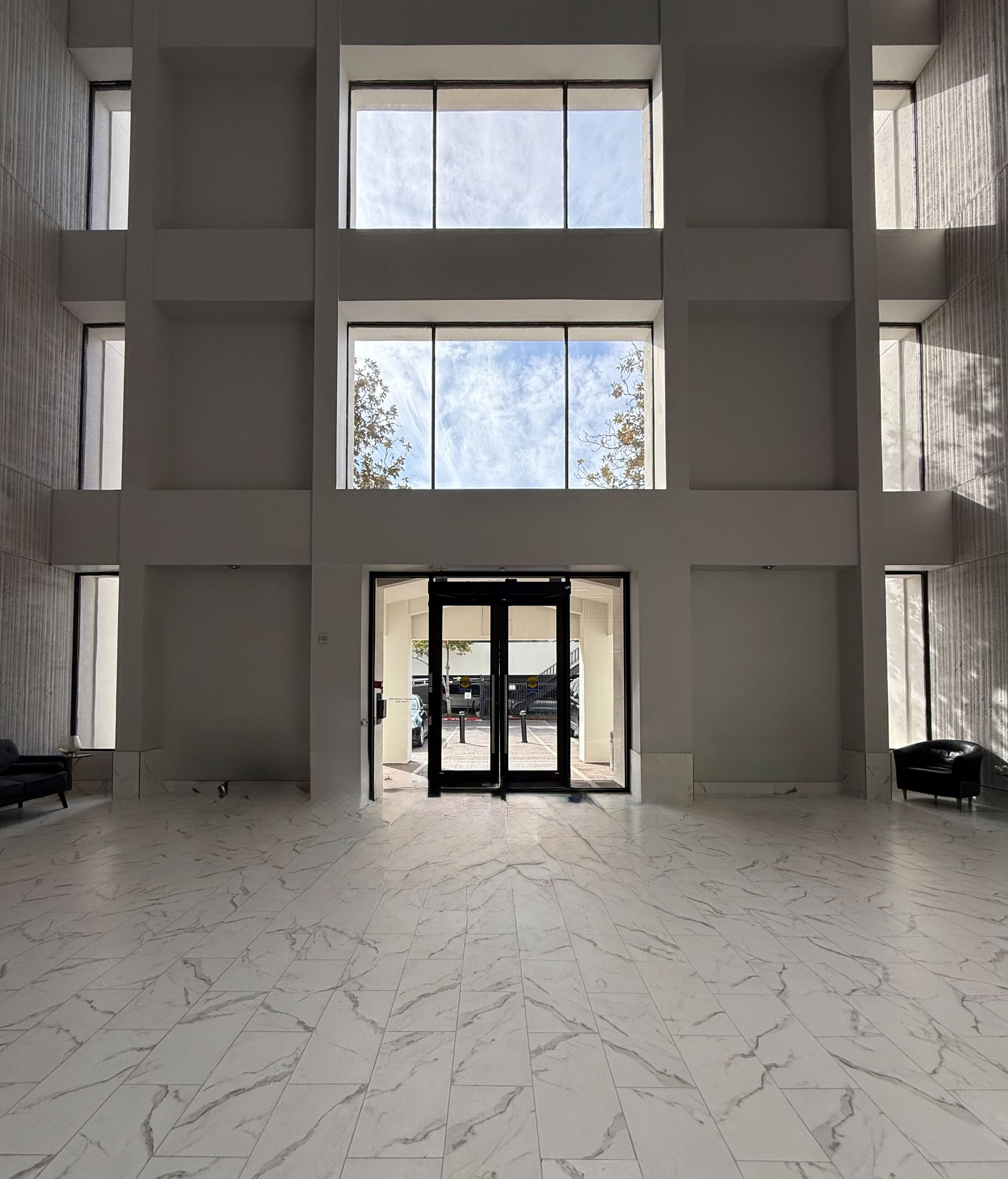
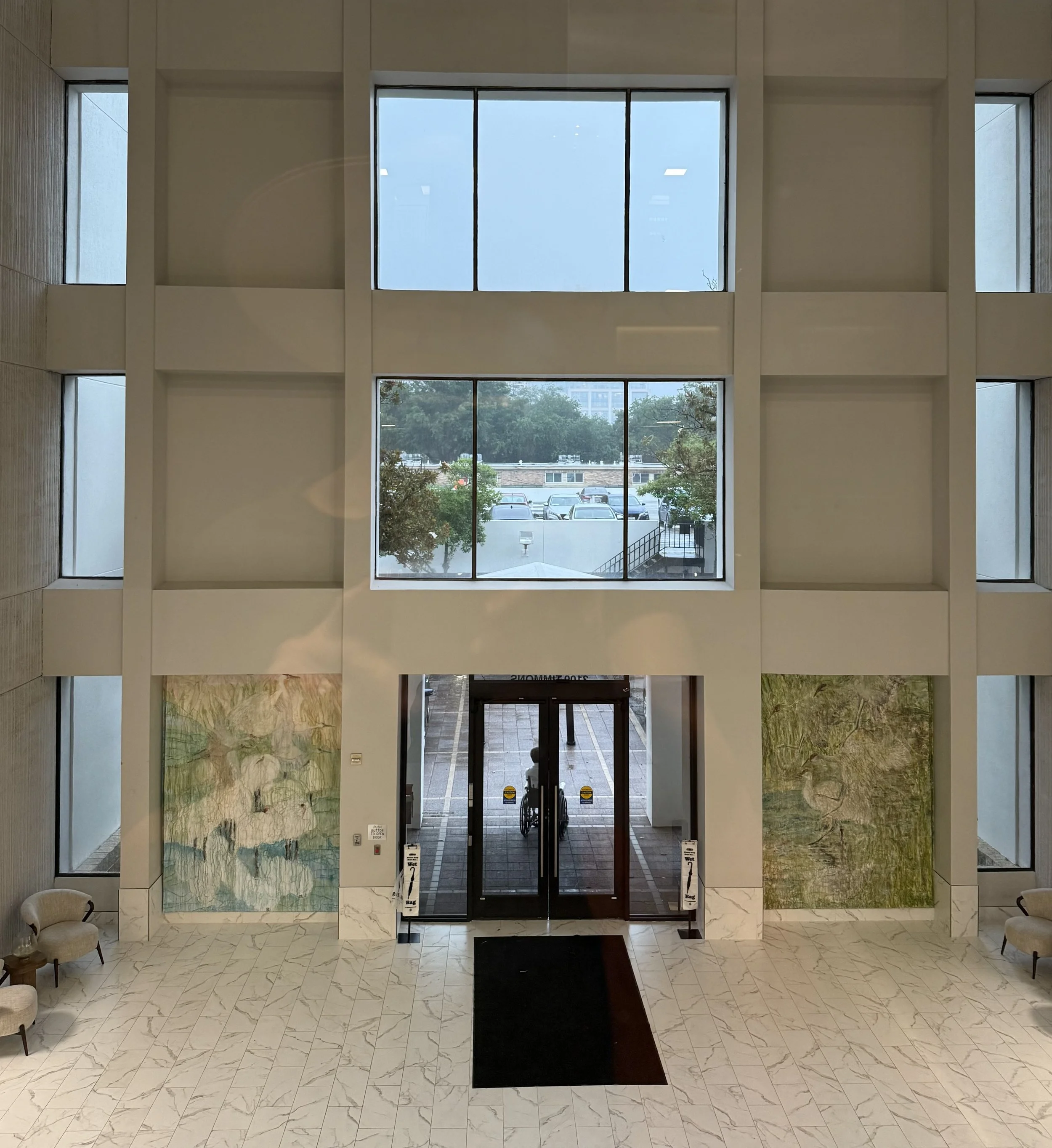
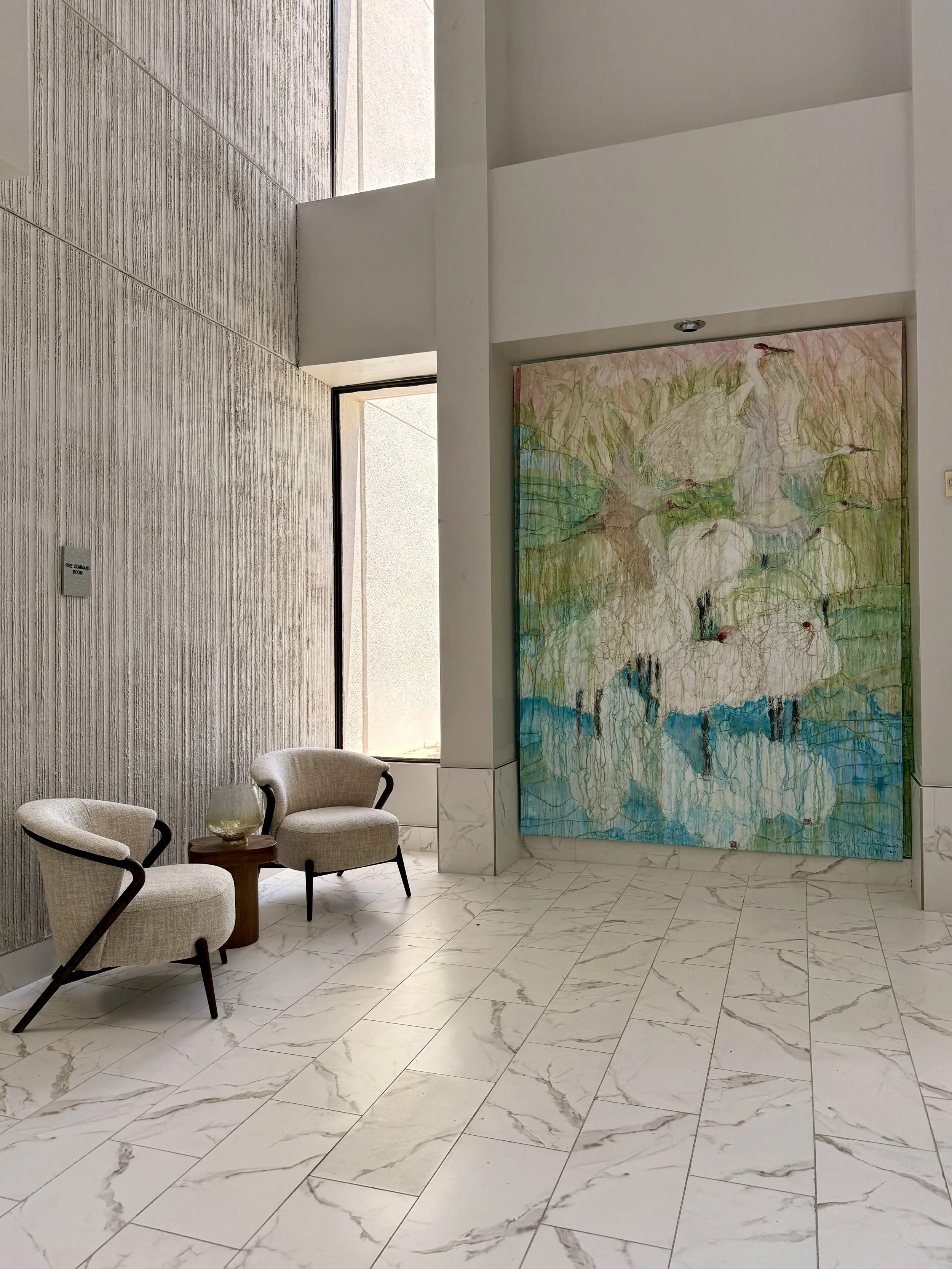
I was contacted to create two small artworks for an office building in Houston getting an updated look — 3100 Timmons Lane.

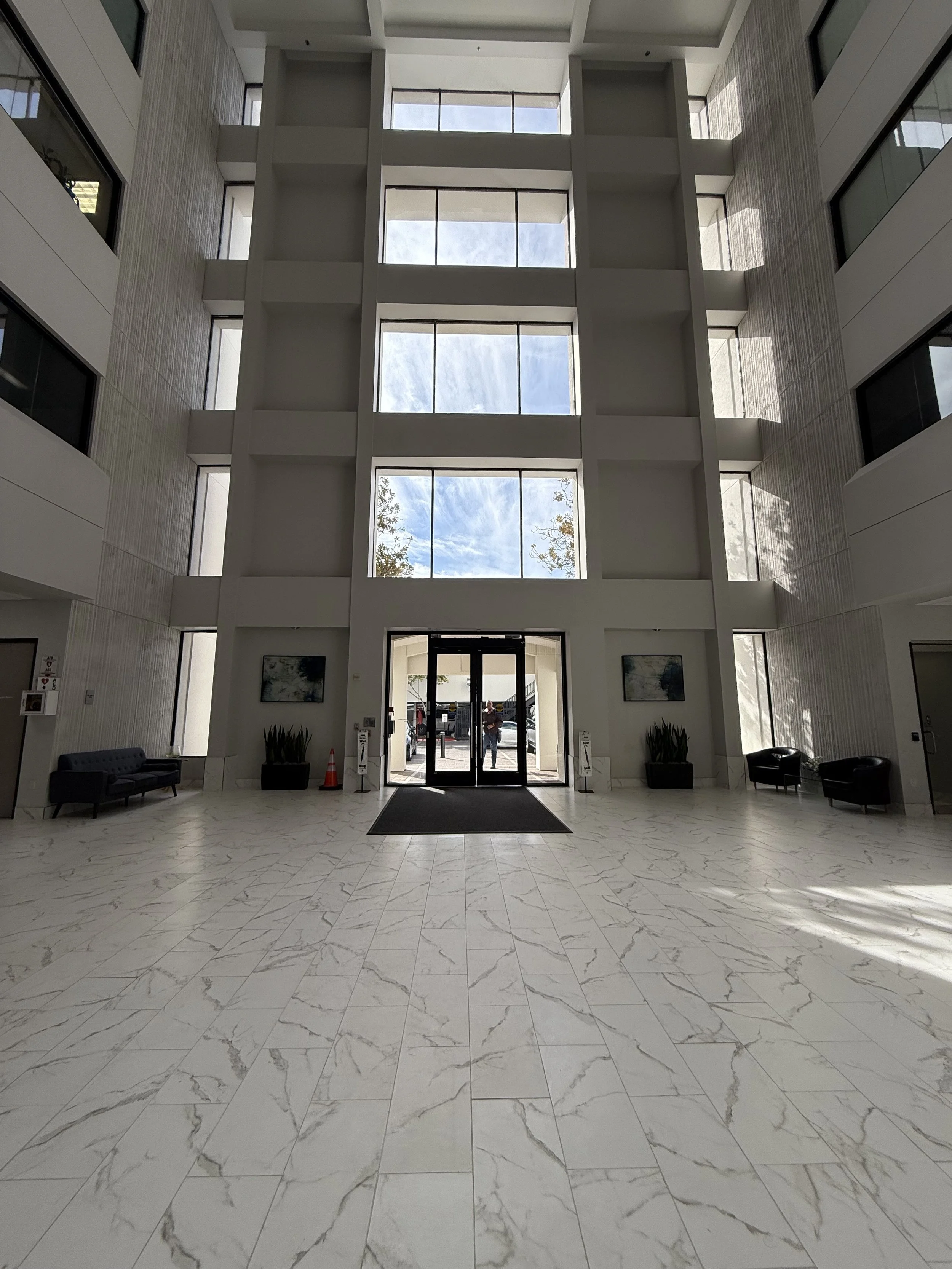
When I saw the space I saw an opportunity. An audience coming and going nine to five with no connection to the natural world right outside their door. A five-story lobby with open wall space and nothing to draw your eye there.

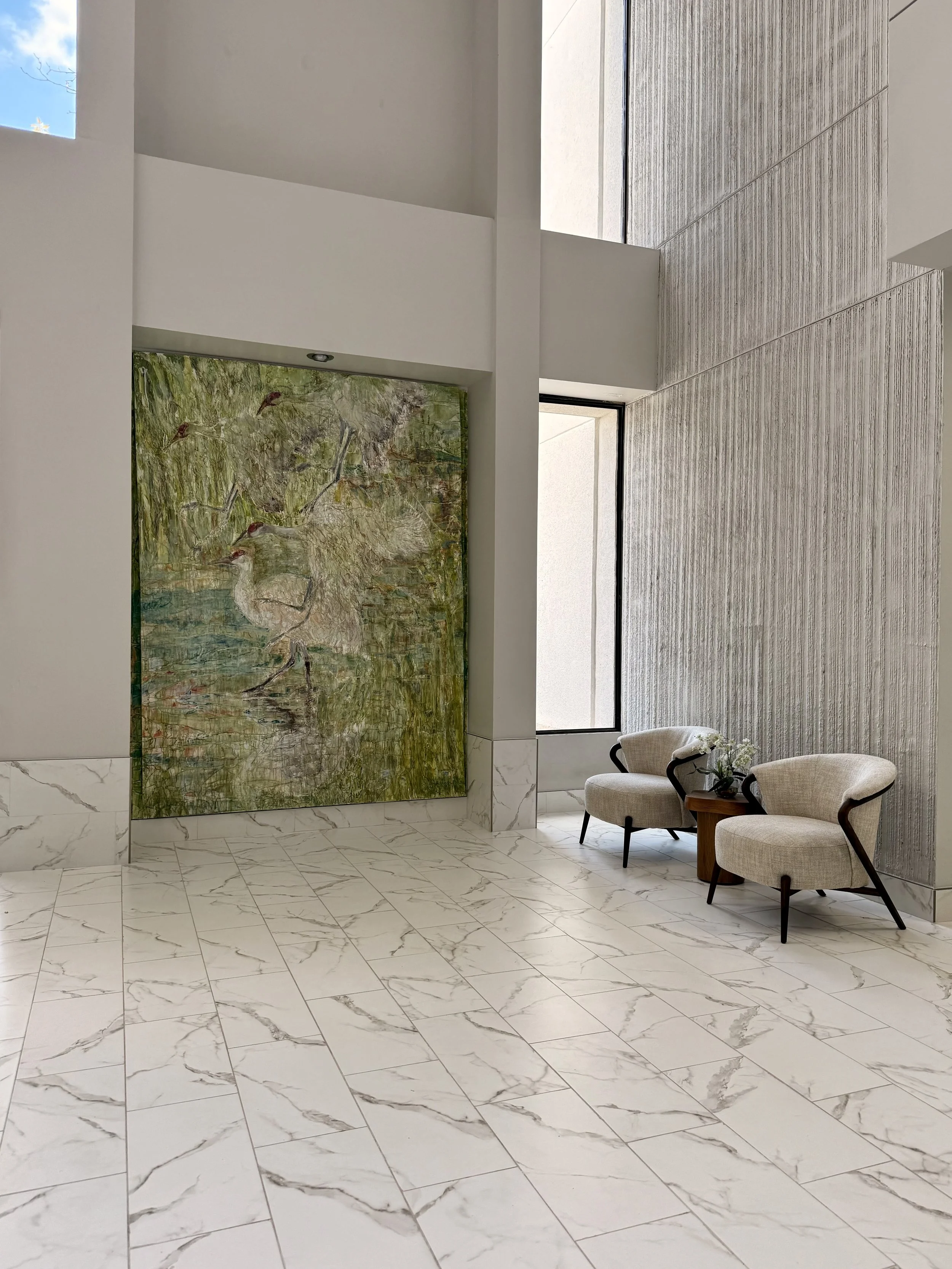
I proposed something bigger than what was asked. Two works, two stories tall — Sandhill cranes in a wetland on the first floor, Roseate spoonbills in the trees on the second. Two successful conservation stories, stacked one above the other, in a building full of people who might never otherwise encounter them.

The developer said yes.

3100 Timmons Lane
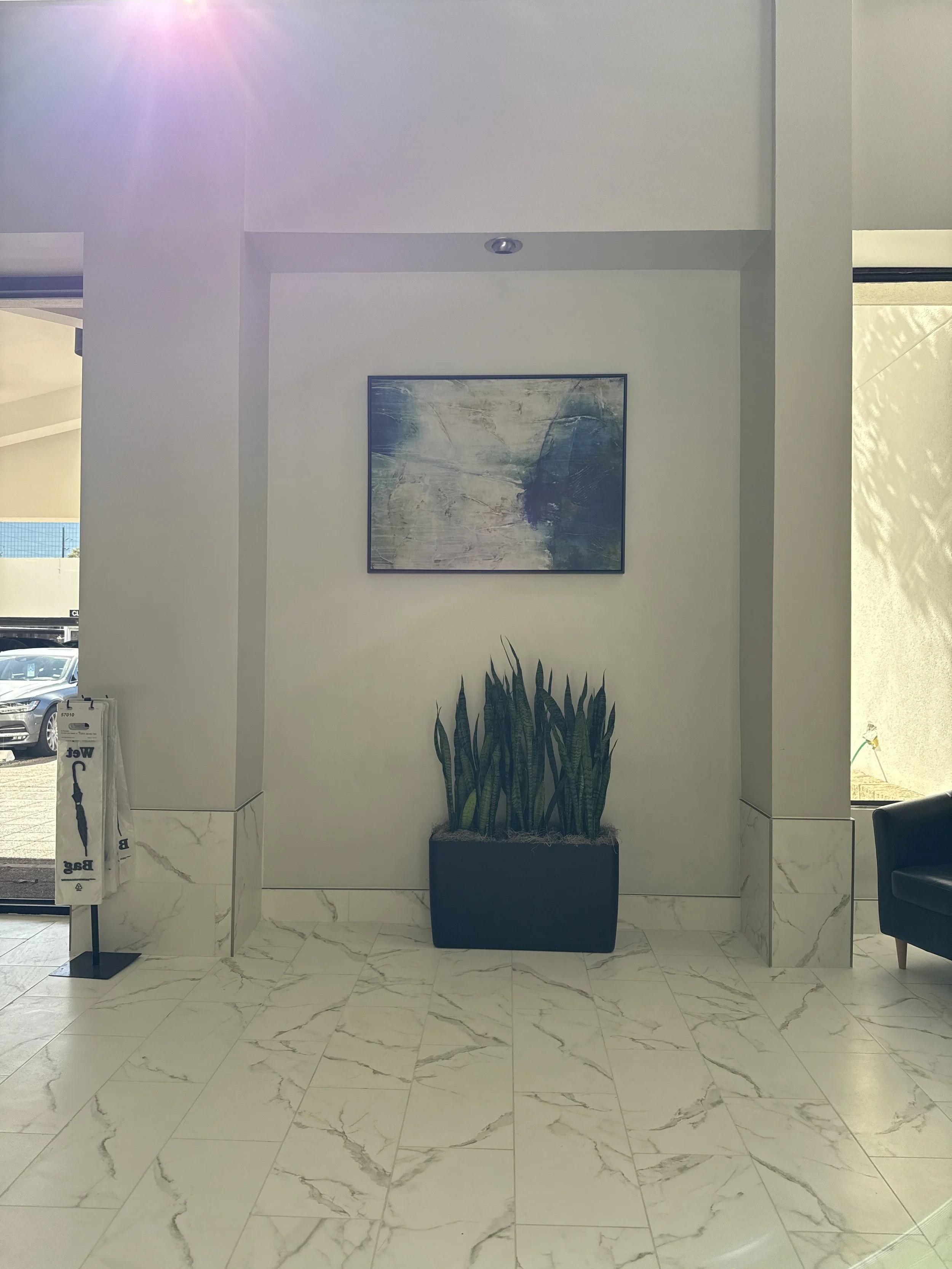
One of the 7’ X 9’ recessed spaces for artwork.
But before any of that — I had to figure out how to make them.

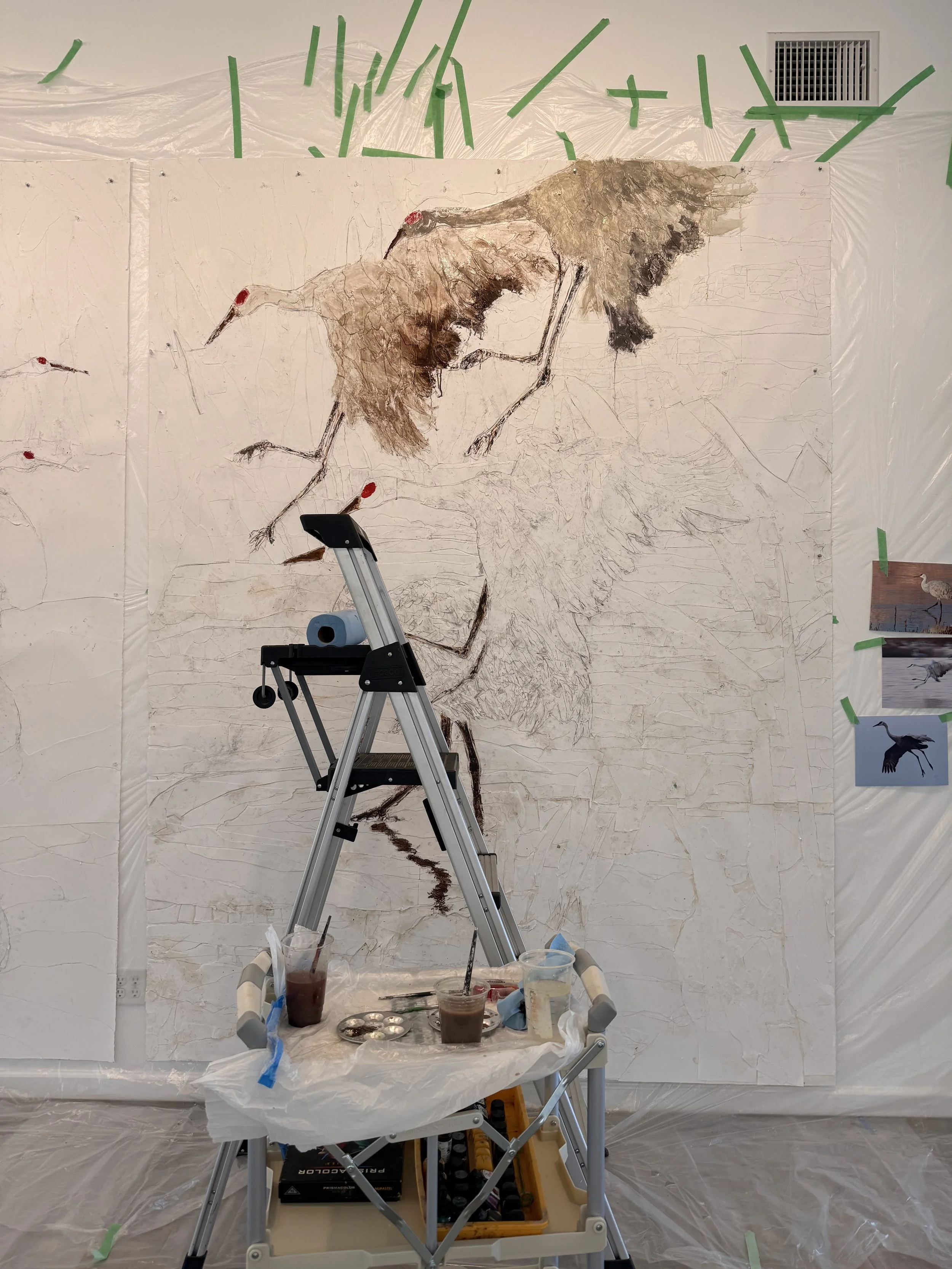
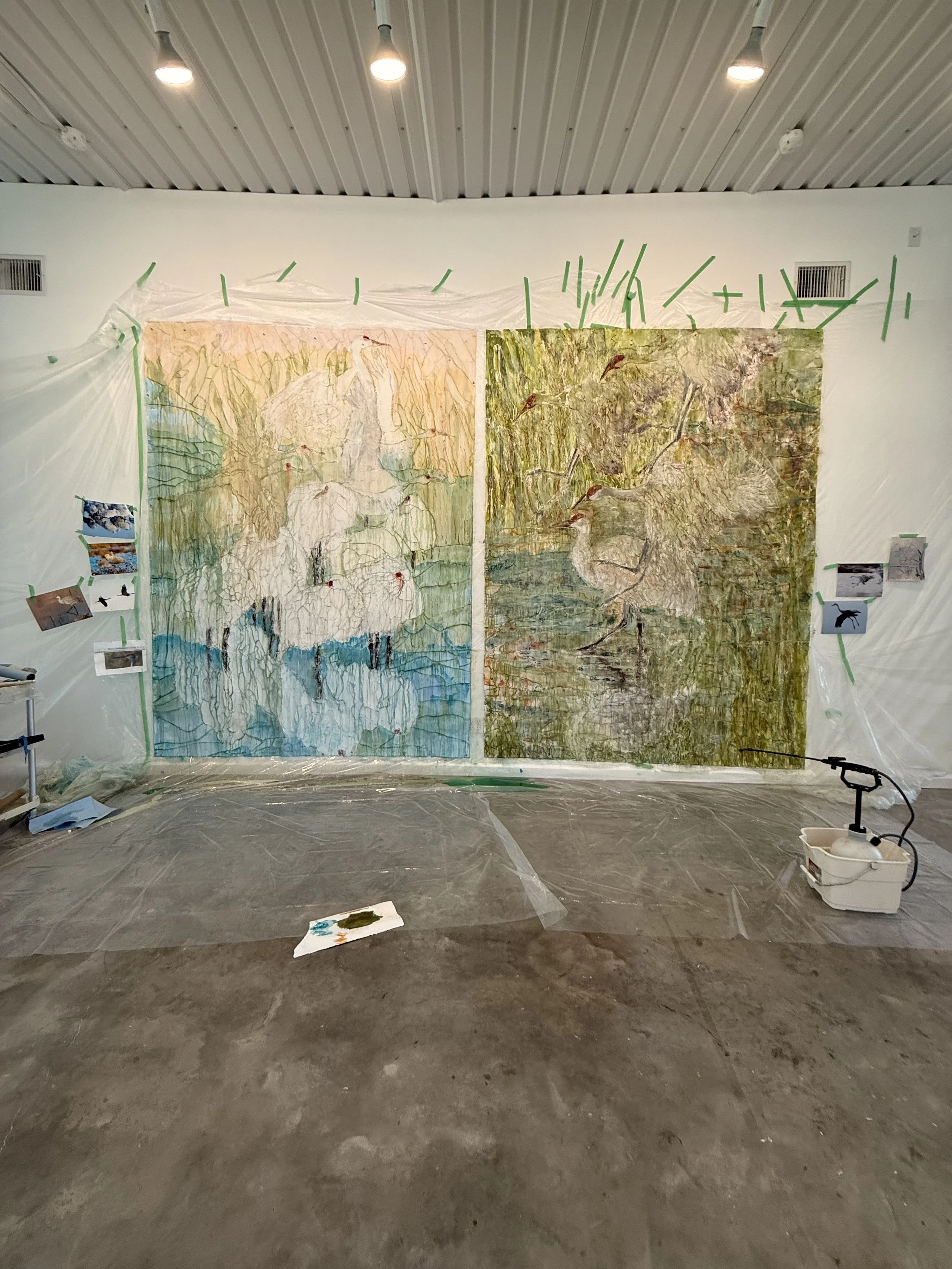
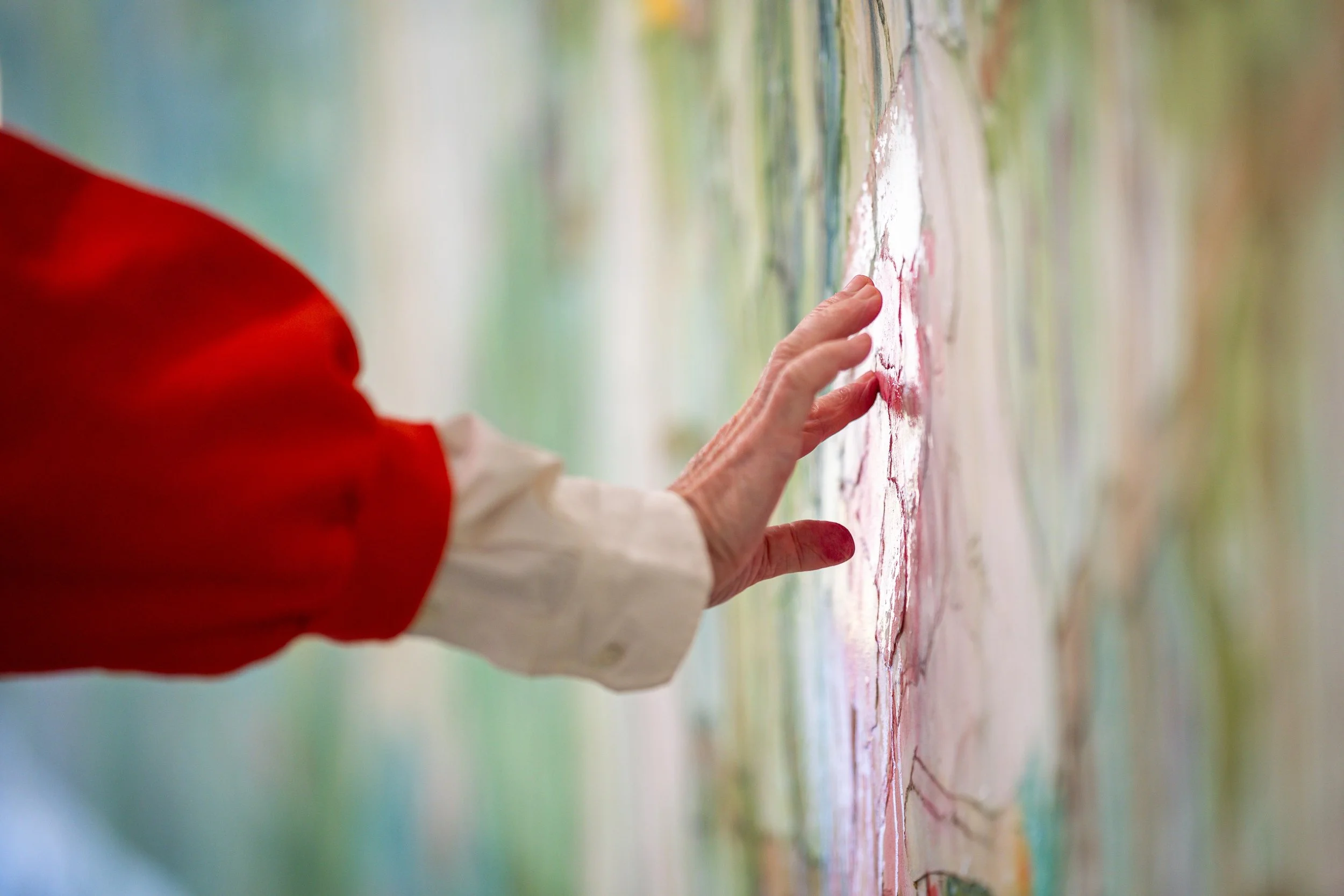
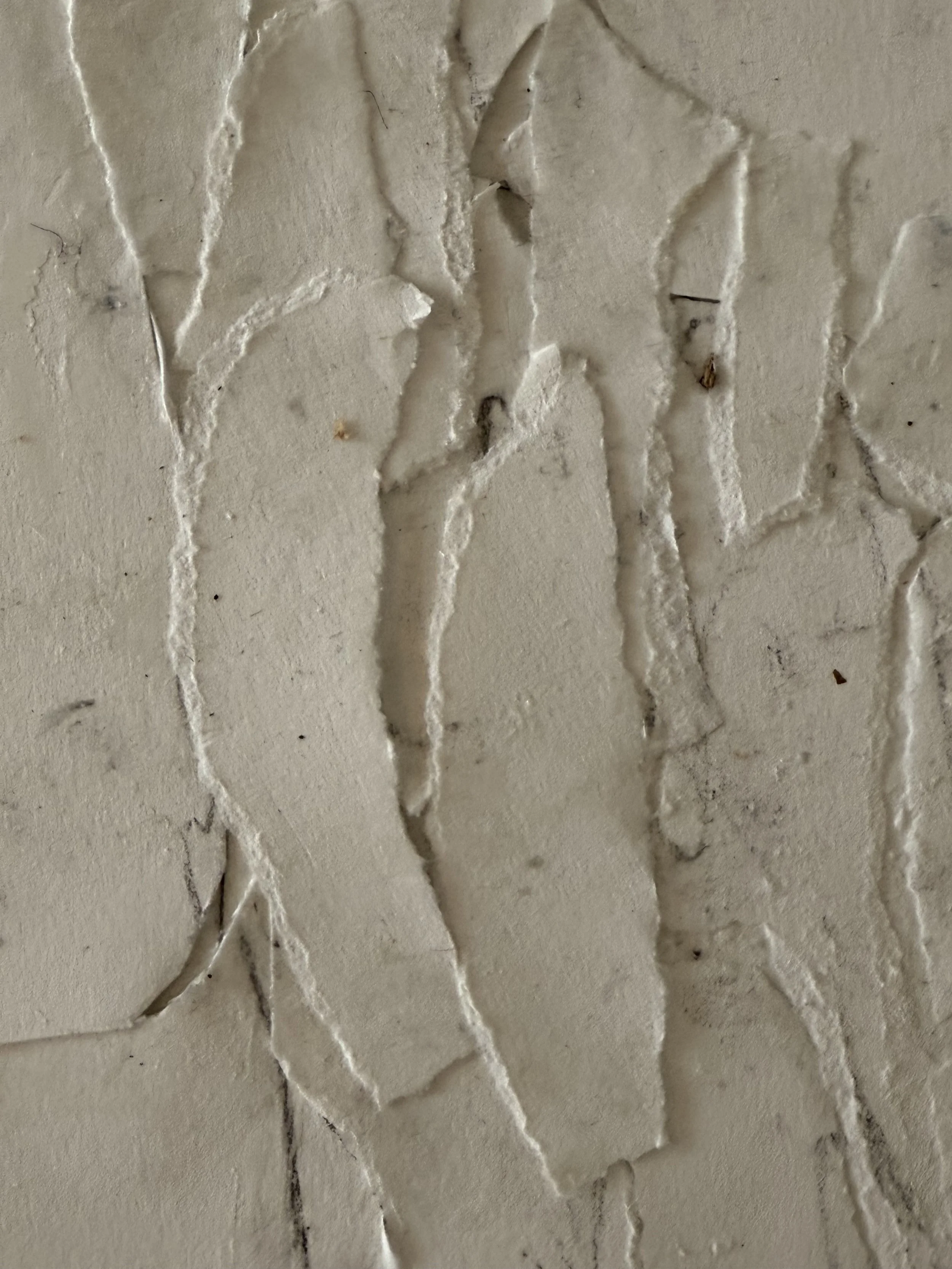
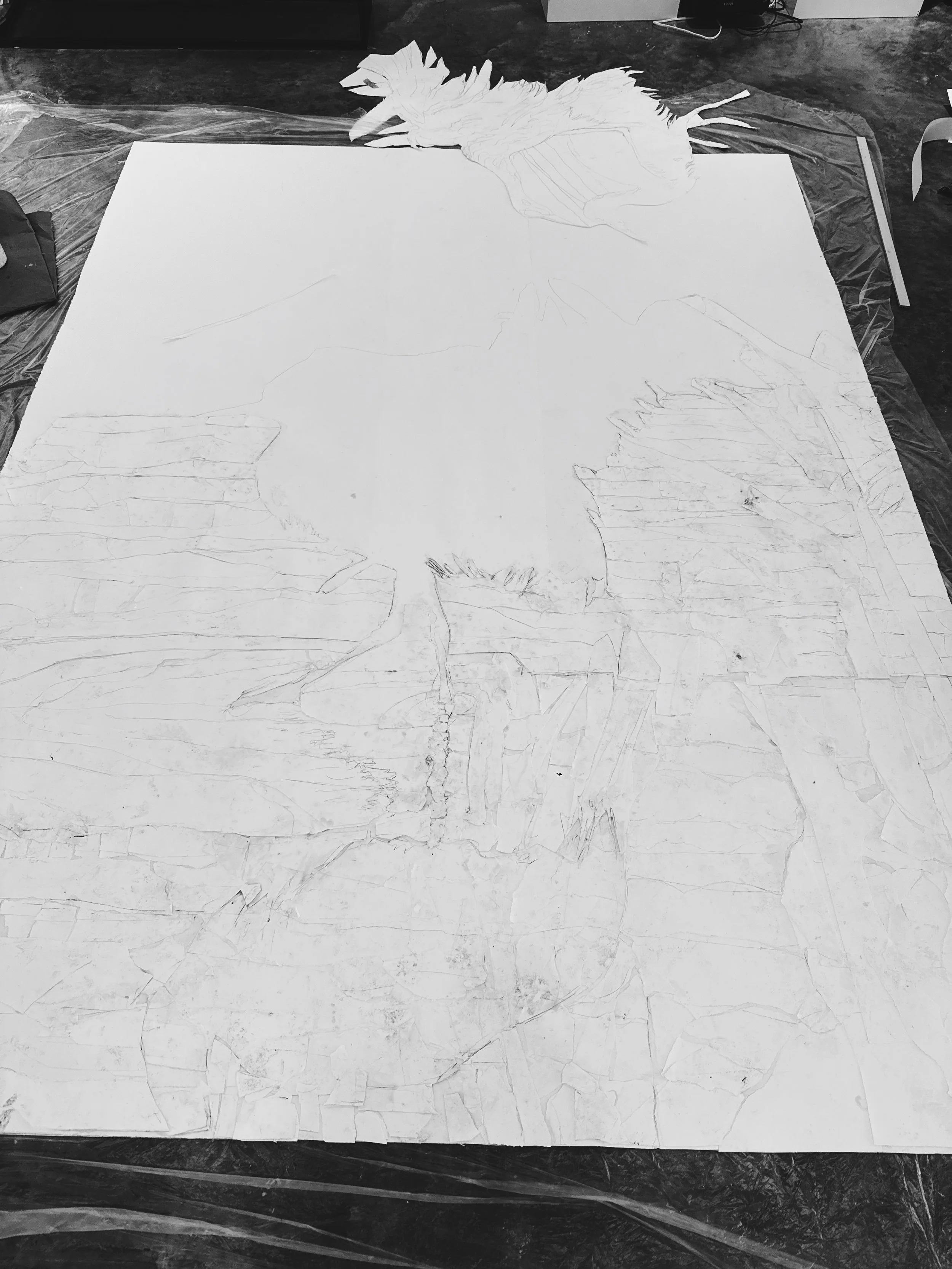
This commission was the first time I worked with a process that has since become central to my practice. I start with a drawing. Then I tear it apart — deconstructing the image into shapes. I reassemble those shapes on a second sheet of paper, building a relief. Once the relief is built I brush on large swaths of watercolor, then use a garden sprayer to manipulate the color — letting it run into the crevasses of the relief, redrawing the image through movement and gravity. Then pastels for the detail marks. The drawing finds itself again, but changed. Looser. More alive.

That process led directly to Unfolding Hope — the body of work I created for the Houston Endowment Jones Artist Award. But it started here, in a studio sketch for an office building on Timmons Lane, trying to figure out how to put a Sandhill crane in a five-story lobby.
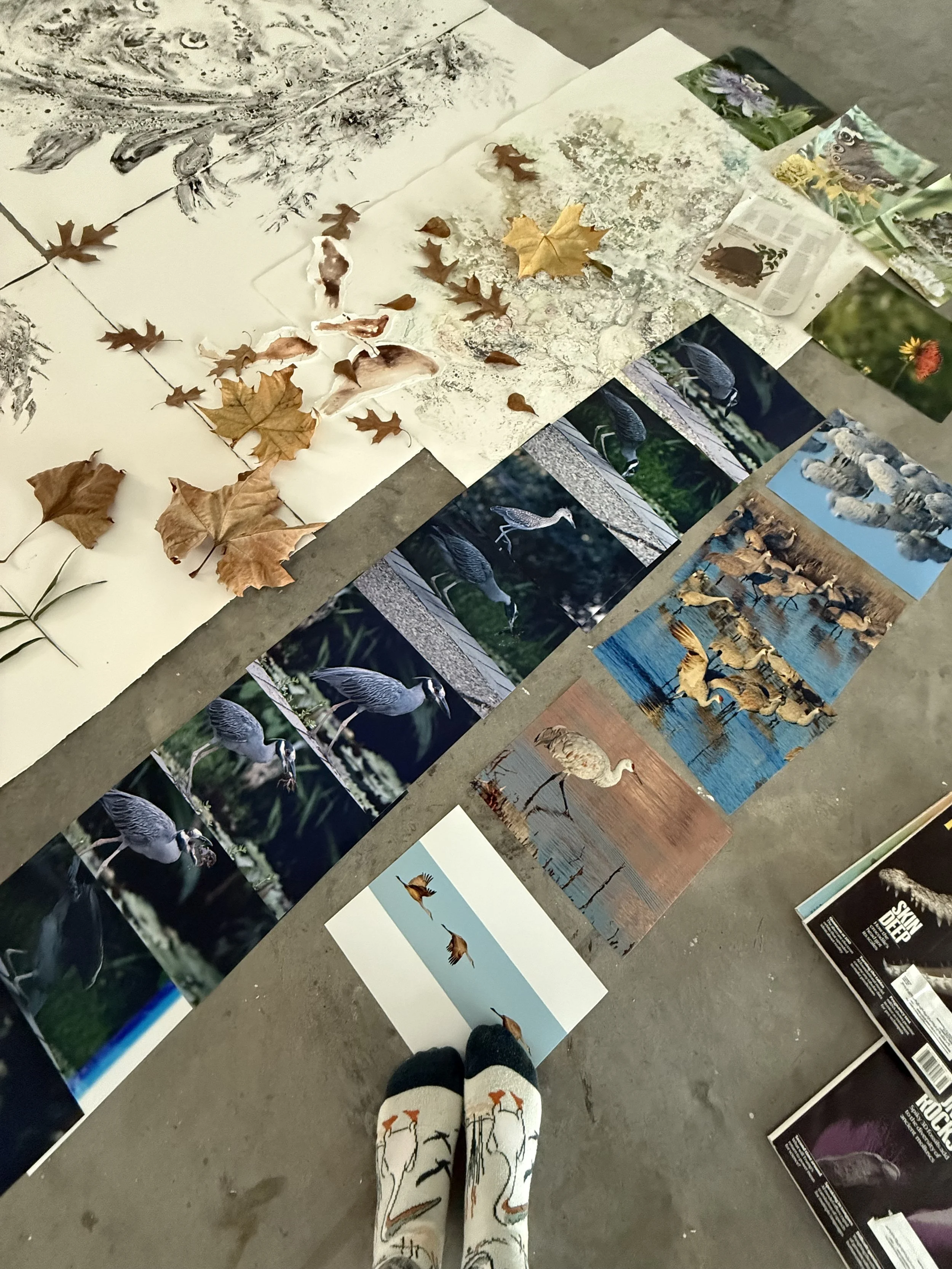
My presentation to the developer.
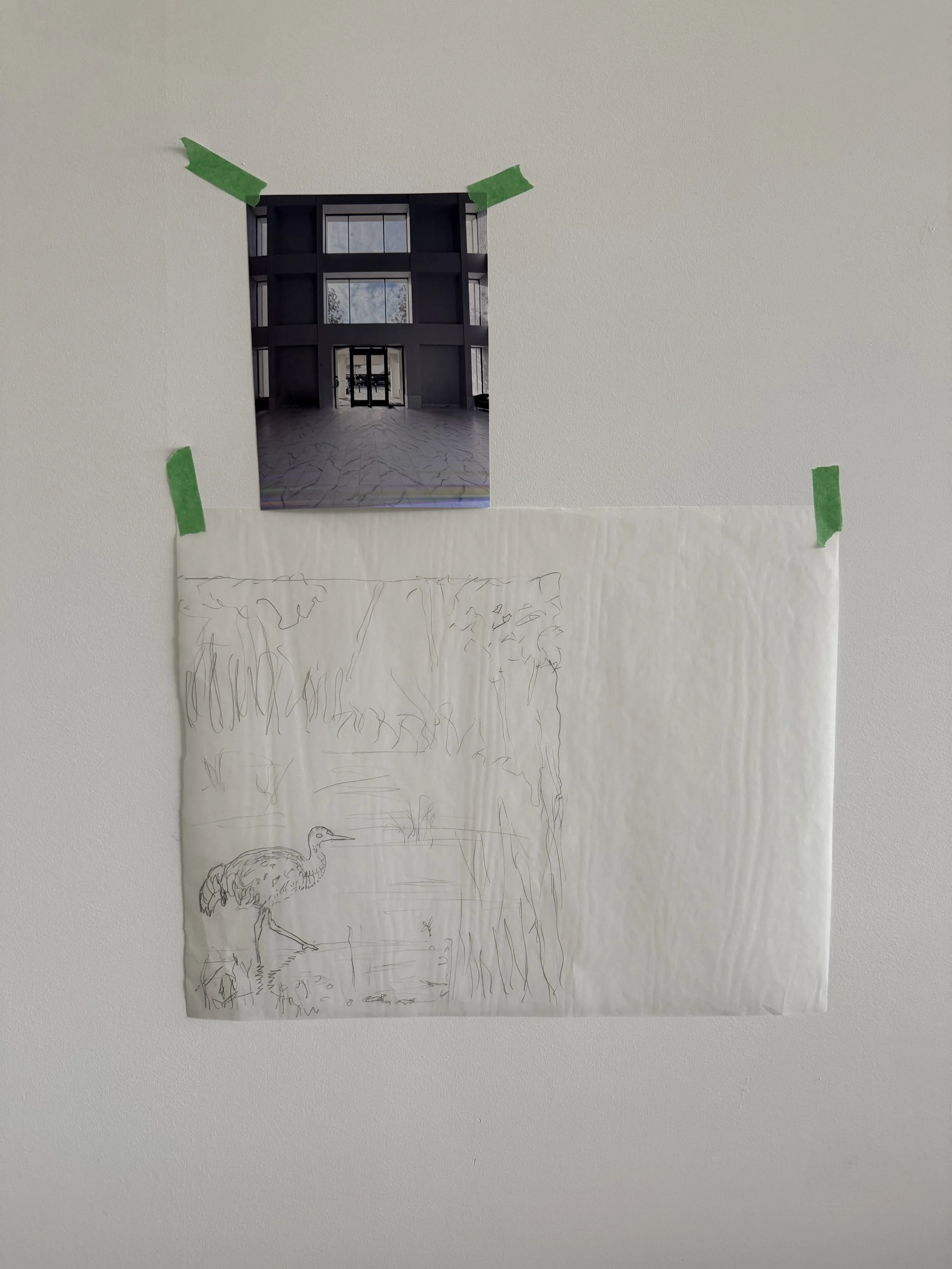
A early sketch
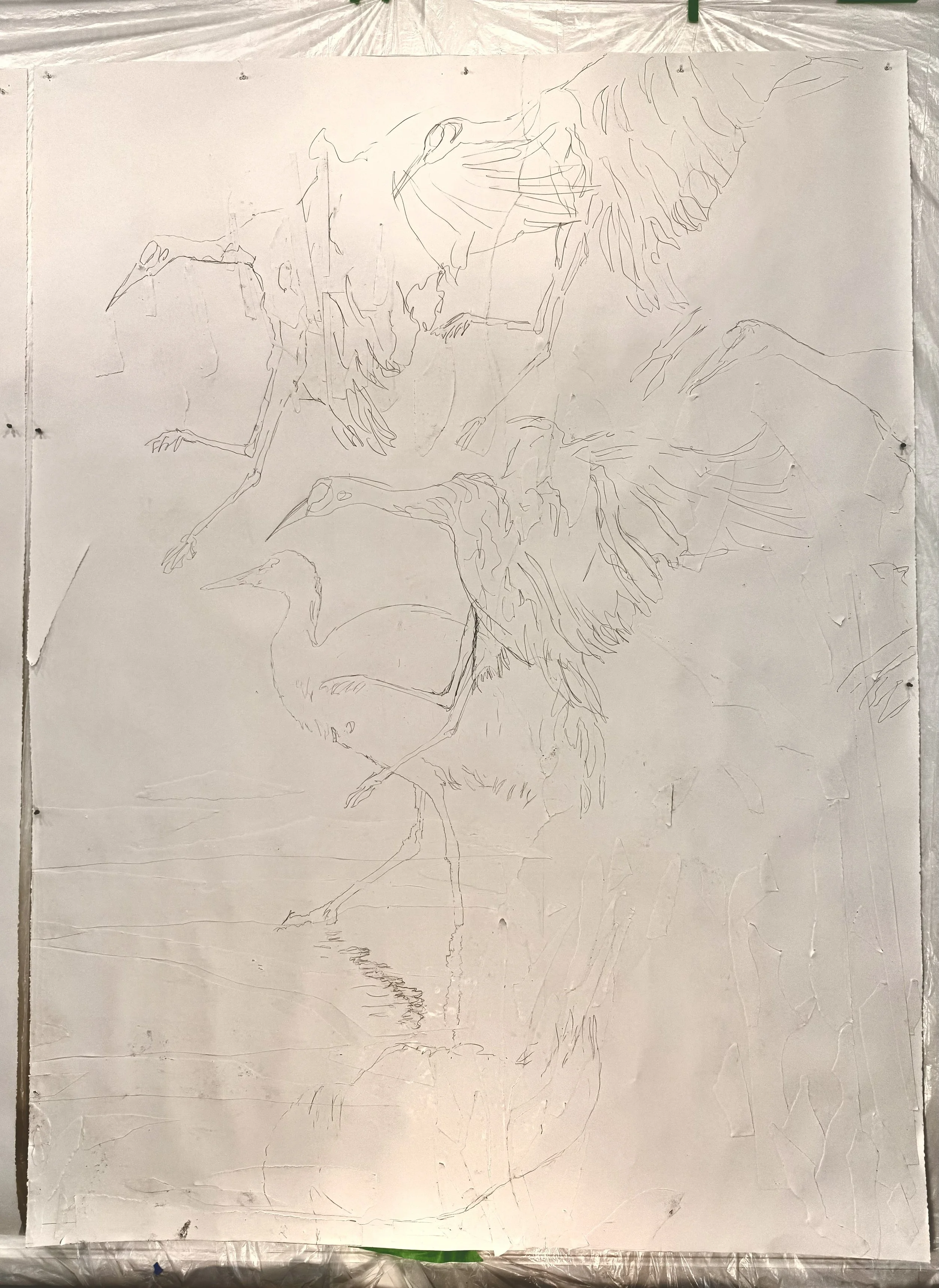
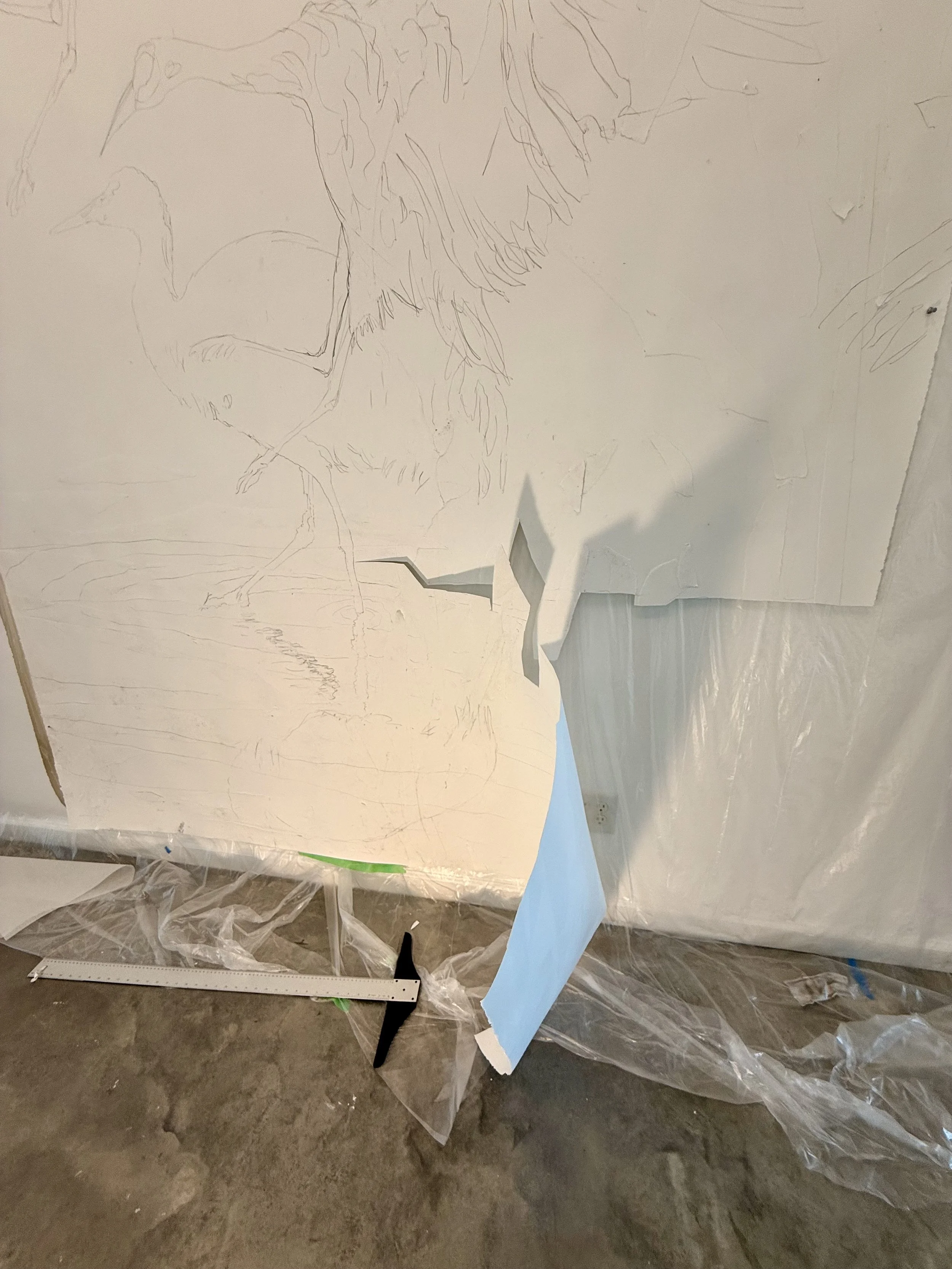
The next step involved deconstructing the drawing by tearing it into various shapes. After that, I can create a relief by reassembling these shapes on a second sheet of paper..
Why Sandhill cranes?

In the early 1900s relentless hunting pushed them to the brink of extinction. Only 12 mating pairs remained. What brought them back was wetland restoration and habitat protection — initiated by hunters who understood what they were losing. Today Sandhill cranes are the most plentiful crane species in the world.

That is the story I wanted in that lobby. Not a decorative bird. A comeback. Evidence that when humans choose to act as conservationists, the results can be staggering.

The Sandhill cranes are installed. The Roseate spoonbills are finished and in storage until the upper levels are repainted.

When the cranes went up the developer told me something I didn’t expect — the building became a community. Tenants were talking to each other about the birds. He leased his largest spaces the next month.

That is what I hoped for. Not decoration. A reminder — for people who spend their days inside — that nature matters and we feel its pull even through art.

The two finished pieces — Sunrise: Sandhill Cranes and Sundown: Sandhill Cranes — can be seen in my 2025 portfolio. Come see them. Better yet — come to the studio

Then comes the color.
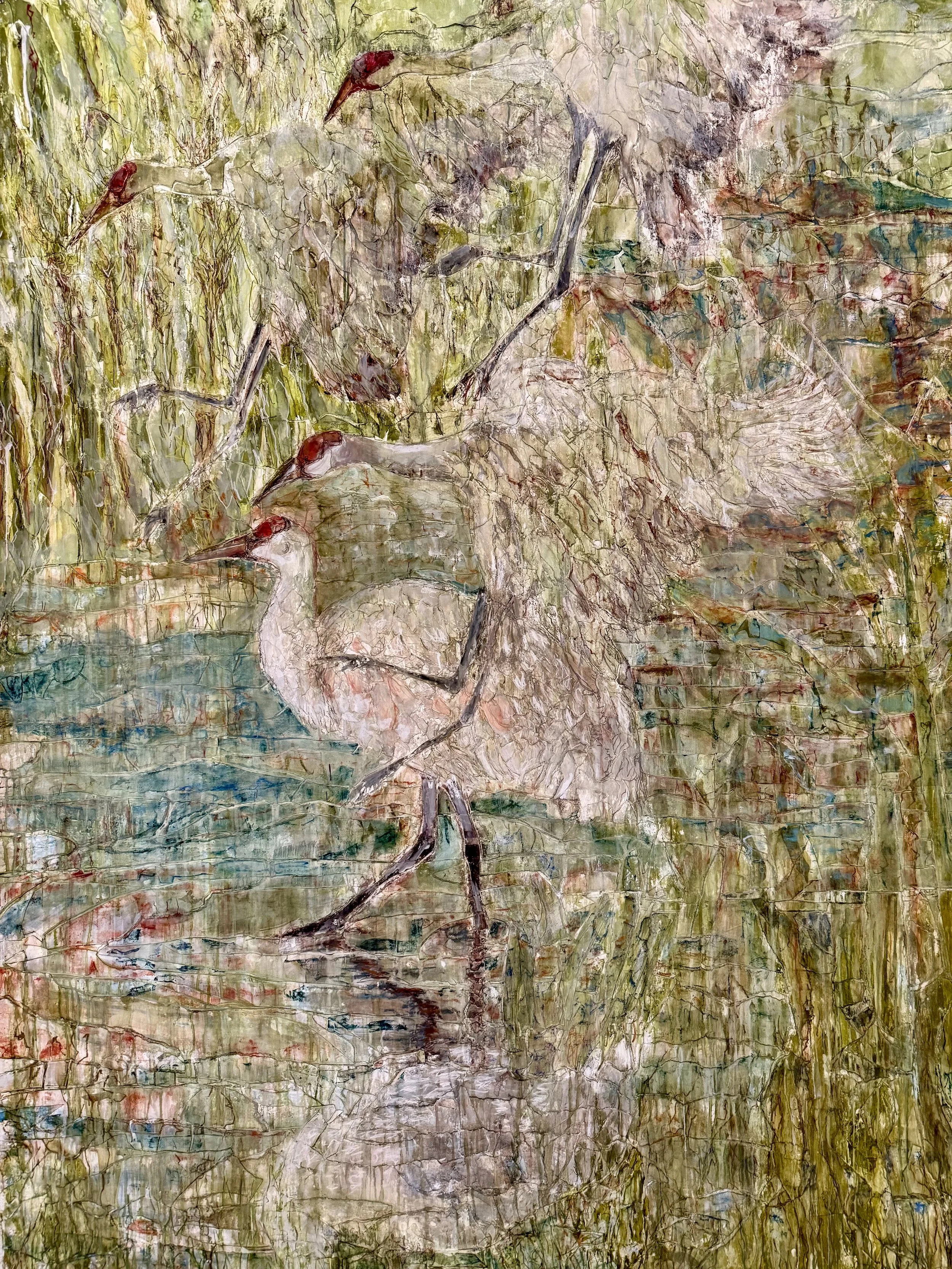
SUNDOWN CRANES

7” X 9”4”

watercolor, pastels, ink on collaged Stonehenge paper.

Image by R. Wells
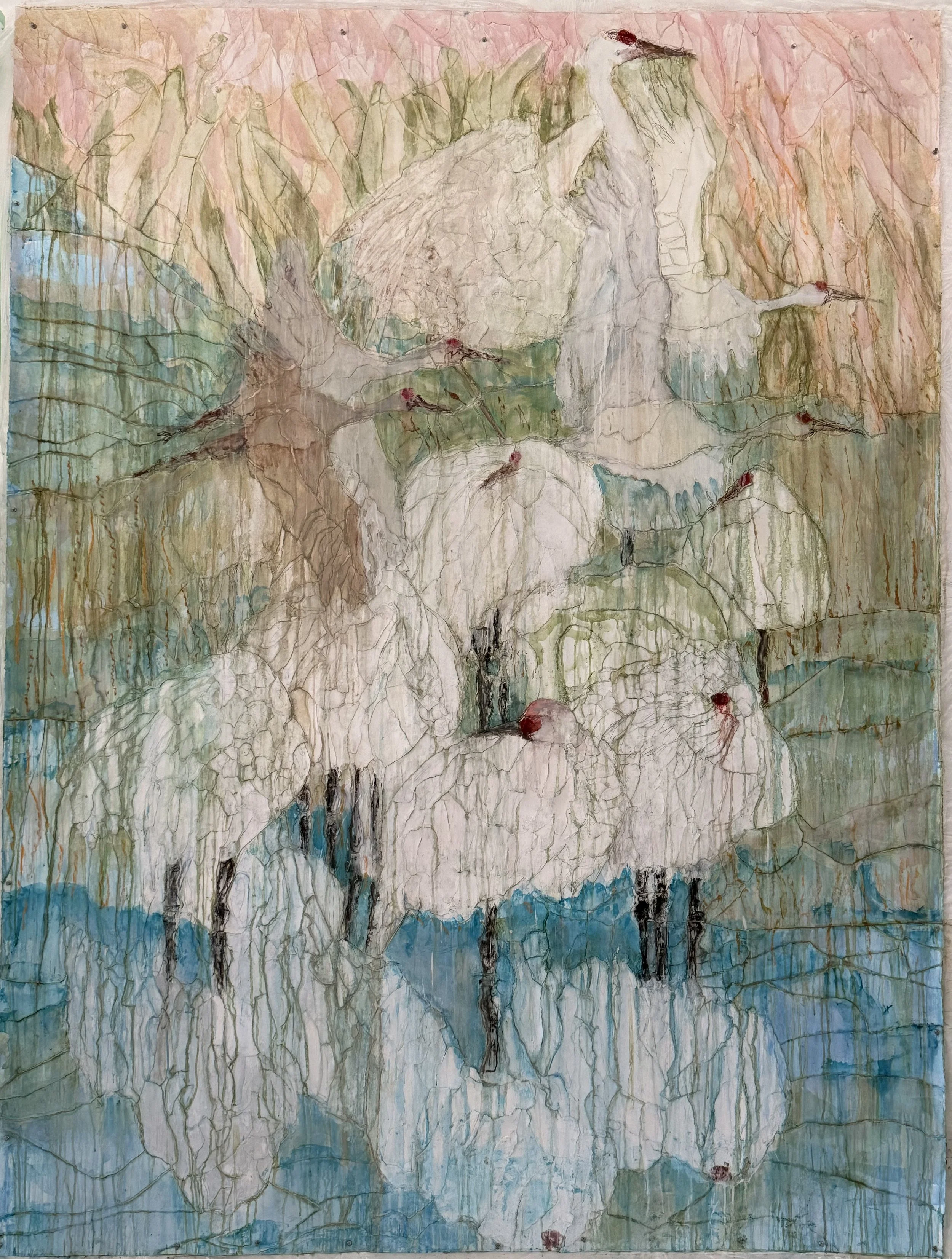
SUNRISE CRANES

7” X 9”4”

watercolor, pastels, ink on collaged Stonehenge paper.

Image by R. Wells
Passionate for Pre-K

This post will serve as a journal for the work.

“My four-year-old daughter saw her first butterfly and was terrified.”

— Lawndale Art Center patron, 2022

This remark, shared during my Symbiosis artist talk at the Lawndale Art Center, stopped me cold. Imagining a generation untouched by the gentleness and fragility of wings — this is a sorrow too heavy to bear and do nothing.

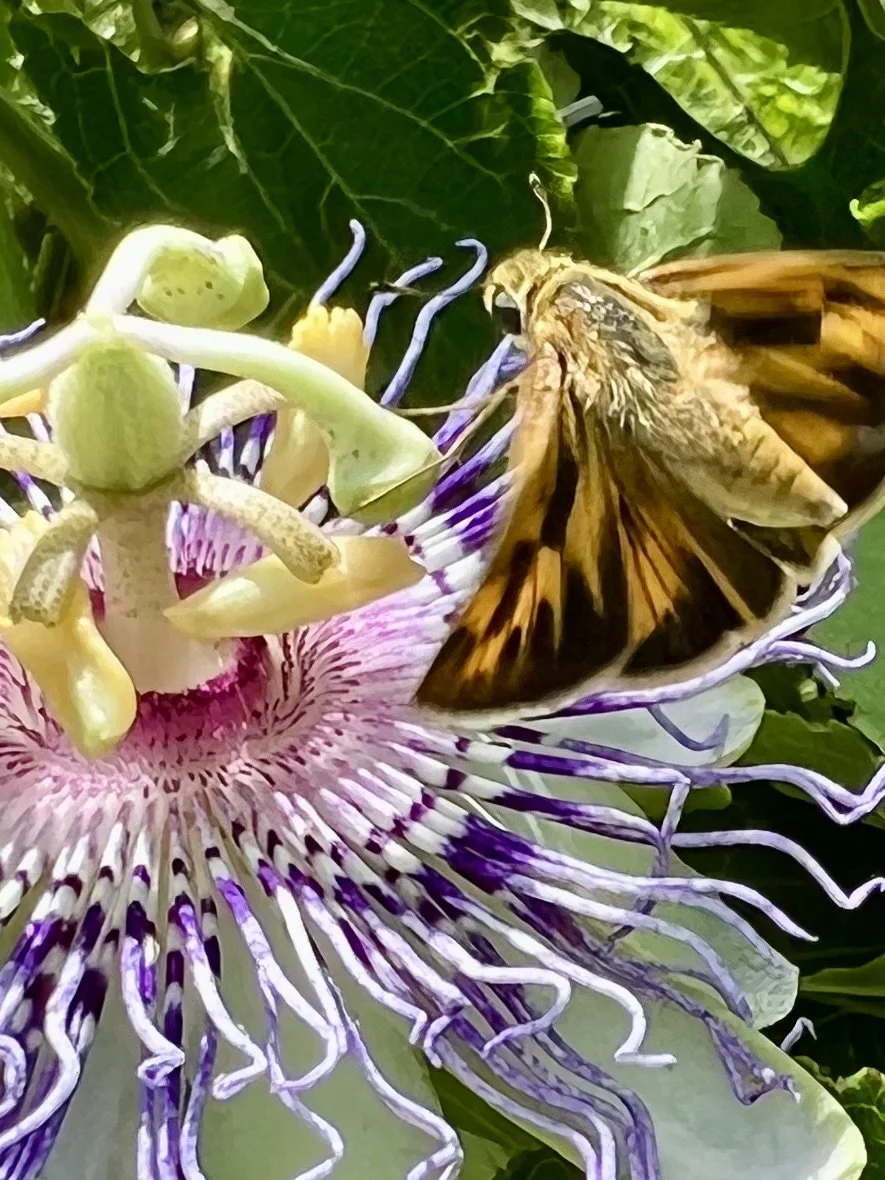
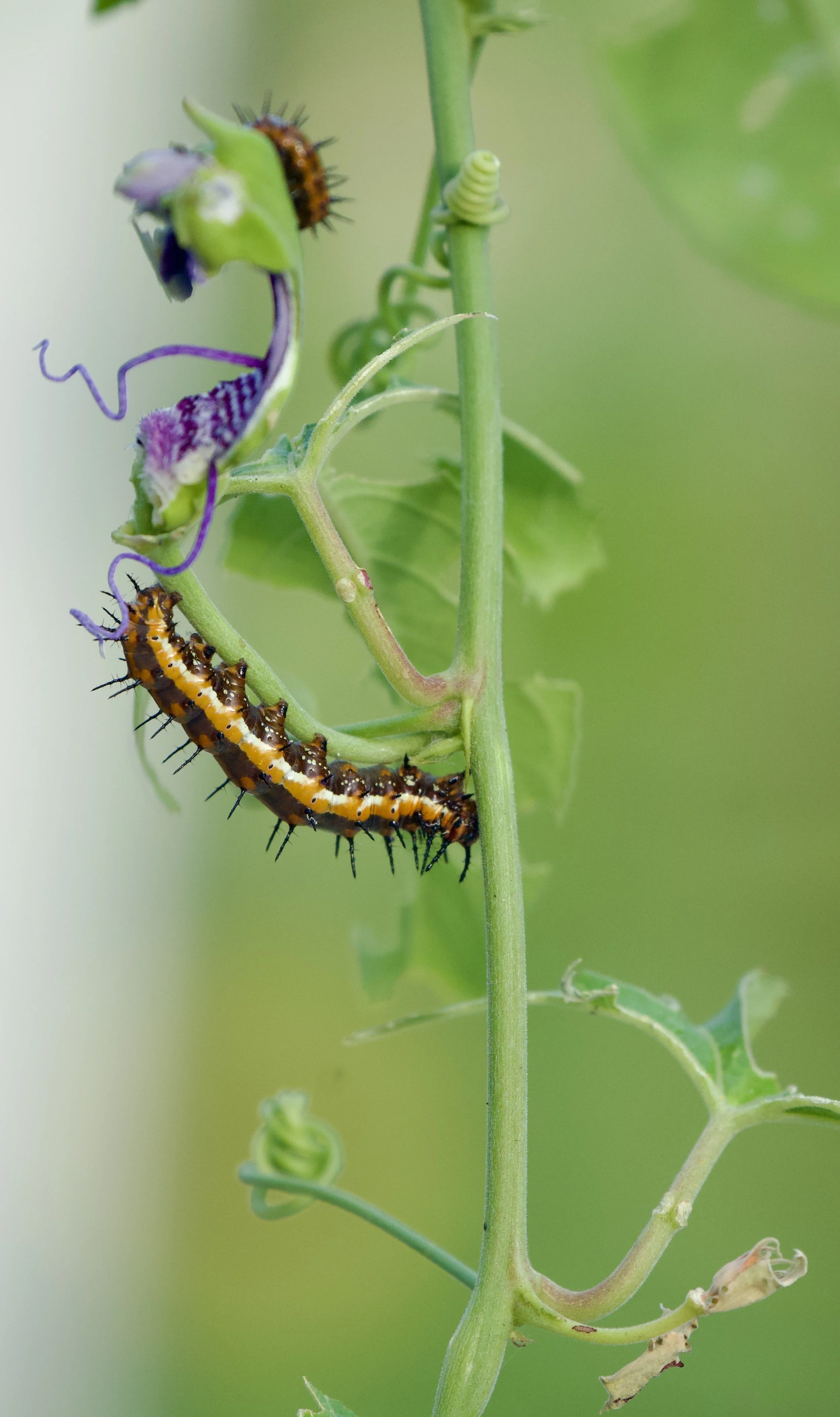
Wildlife plays a vital role in early childhood brain development. At the very least, let each school day begin with a procession past living poetry: vines sculpted in fragrant blossoms of lemon honey, trembling with the promise of caterpillars, alive with the fragile ballet of butterflies. Each child deserves to develop in the company of nature’s intelligence.

With small acts of passion, this is within reach.

DESCRIPTION

Passionate for Pre–K is a living social sculpture installed in the fall of 2025 on the chain-link fences surrounding the playground at Clemente Martinez Elementary School in Houston, Texas. I sourced approximately 90 Texas native vines from my three living sculptures: Symbiosis at the Lawndale Art Center, Deeper Than That at a private residence, and Sequel, located next to my art studio in Acres Homes. Passion vines are highlighted in the mix. Sourcing from multiple locations supports the DNA diversity of the ecosystem. Hope Stone and landscape architect Caroline Craddock coordinated this installation with the school administration.

THE PROCESS

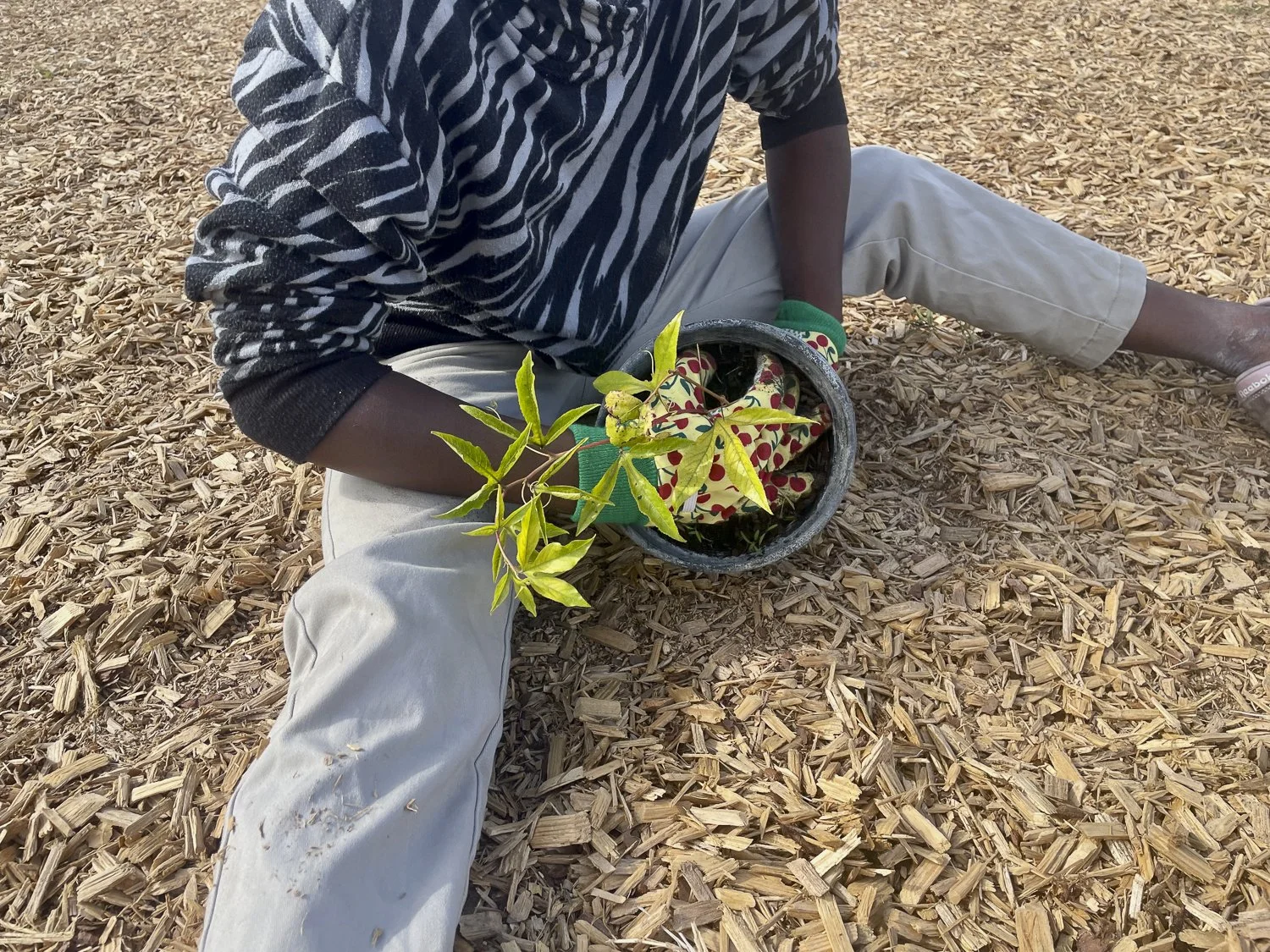
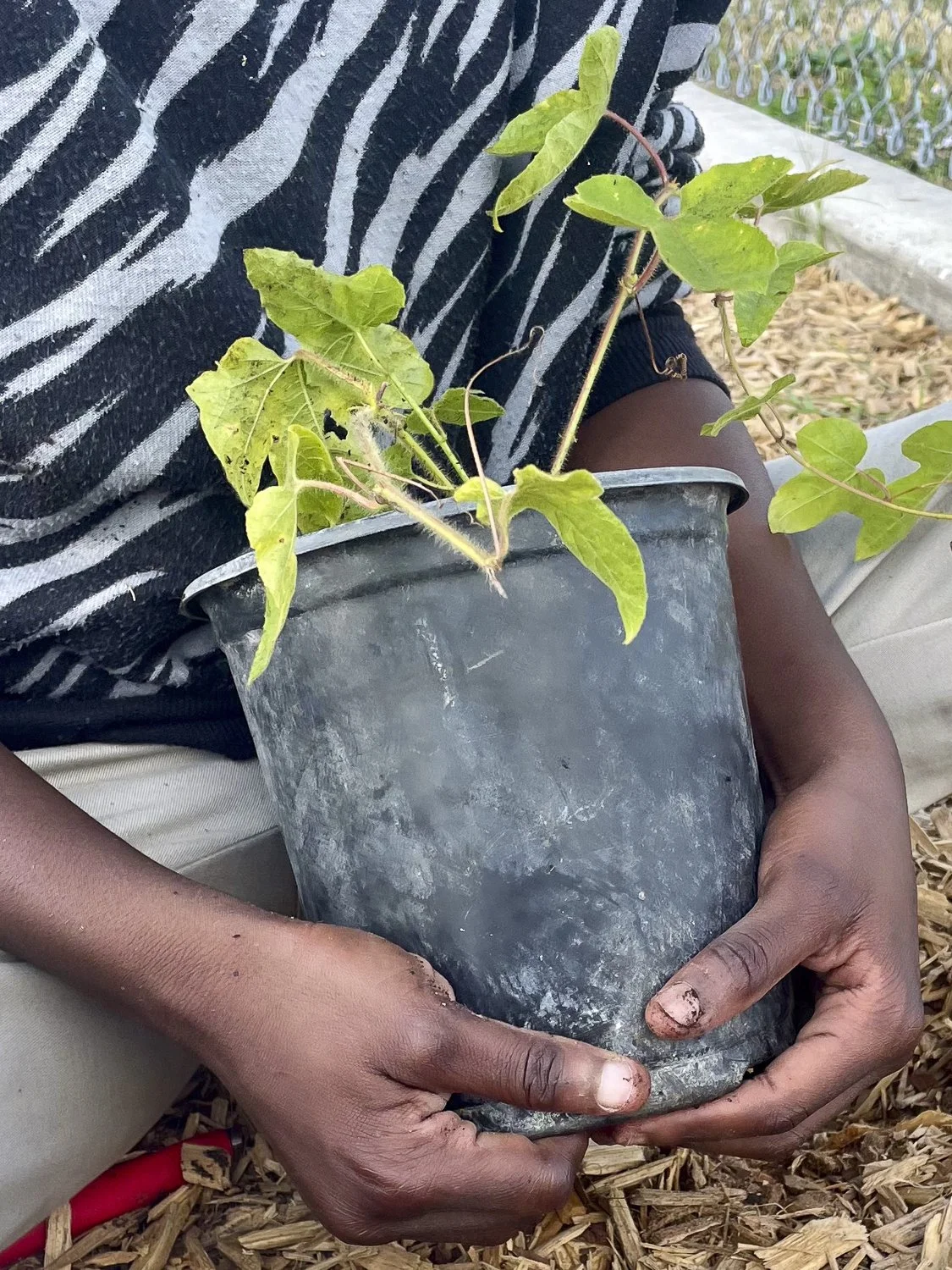
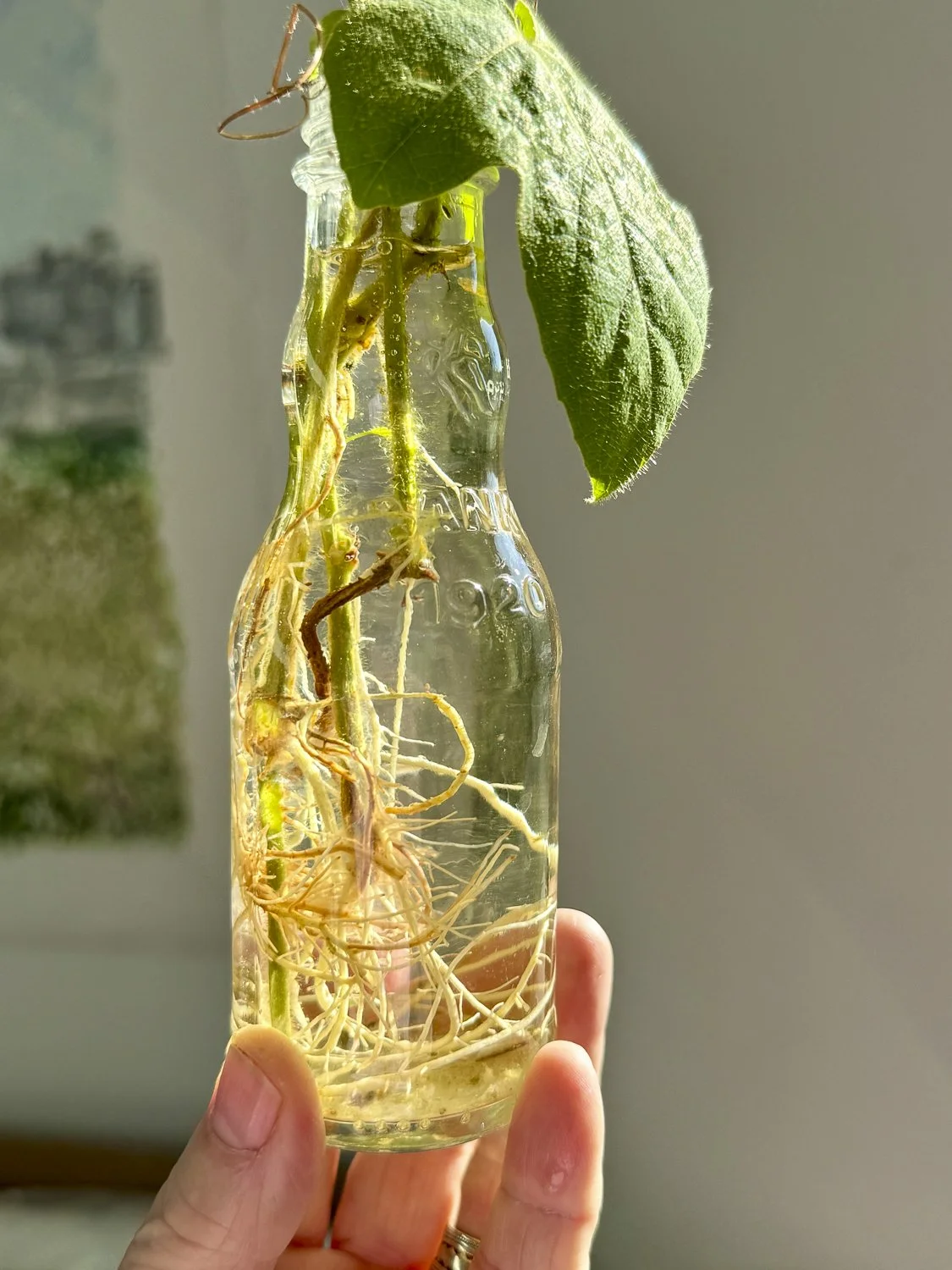
Taking tender 10-inch vine cuttings, using root stimulator and native leaf mold to propagate the plants. I selected 90 plants of different species to support a variety of wildlife and accommodate different growing seasons. The school community assisted with the planting in early October.

LONG-TERM GOAL

As ecological knowledge from Symbiosis has taken root in Deeper Than That, which has grown into Sequel, the hope is that Passionate for Pre–K will act as a catalyst. Annually, new tendrils — carefully propagated — will be gifted from Clemente Martinez Elementary School to neighboring schools, allowing the spirit of regeneration to spread from playground to playground, blossoming into a living legacy of wonder and natural intelligence.

PLANT LIST

May pop, Passiflora incarnata

Stinking passion vine, Passiflora foetida

Various proven passion vine hybrids

Trumpet honeysuckle, Lonicera sempervirens

Hairy clustervine, Jacquemontia tamnifolia

Muscadine grape, Vitis rotundifolia

American wisteria, Wisteria frutescens

Crossvine, Bignonia capreolata

Carolina jessamine, Gelsemium sempervirens

COLLABORATION

Passionate for Pre–K is a collaboration with Hope Stone, Caroline Craddock, and the Clemente Martinez Elementary School community. This would not exist without them, or without the incredible volunteers who gave their time and hands to this work.

NOVEMBER 2025 UPDATE — SETBACK & RESILIENCE

During phase two, a fifth-grade class carefully planted the remaining plants for the installation. The following week, the eager students returned to check on their plantings — and found devastation. A child left unattended in the play area had pulled up plant after plant, leaving only 7 of the original 90 still alive.

This is heartbreaking and frustrating — but it highlights exactly how important this project is. The lessons a garden teaches about social responsibility, care, and wonder are fundamental. I will not let one act derail it. Every child has the right to be inspired by nature.

I am propagating new cuttings. We plant again in the spring.

Special thanks to Caroline Craddock for capturing these moments in photographs.

—special thanks to Caroline Craddick for capturing these moments in photos.

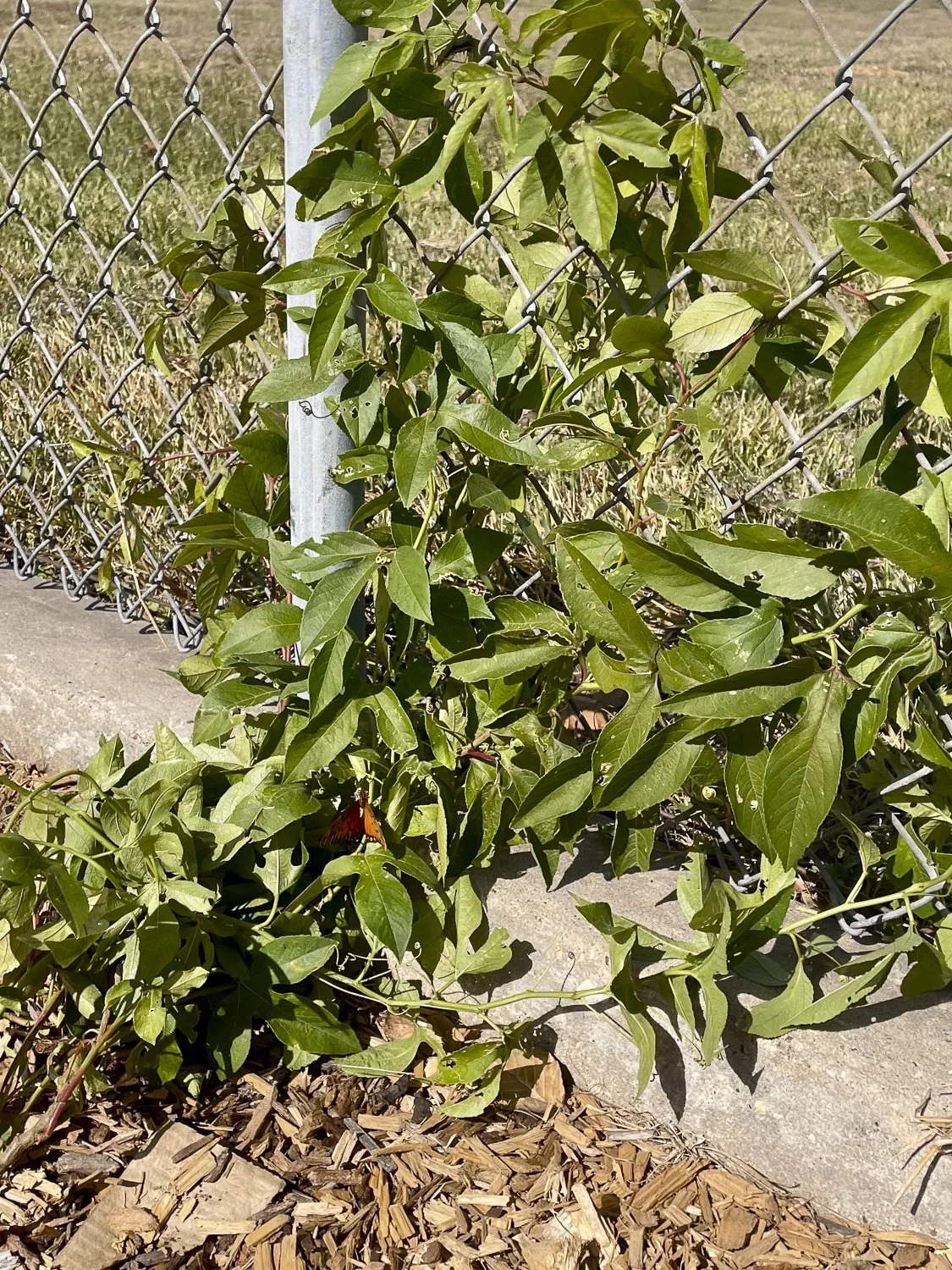
One of the plants from the previous planting that was part of the vandalism. Notice the gulf Fritillary butterfly hiding in the shadow.

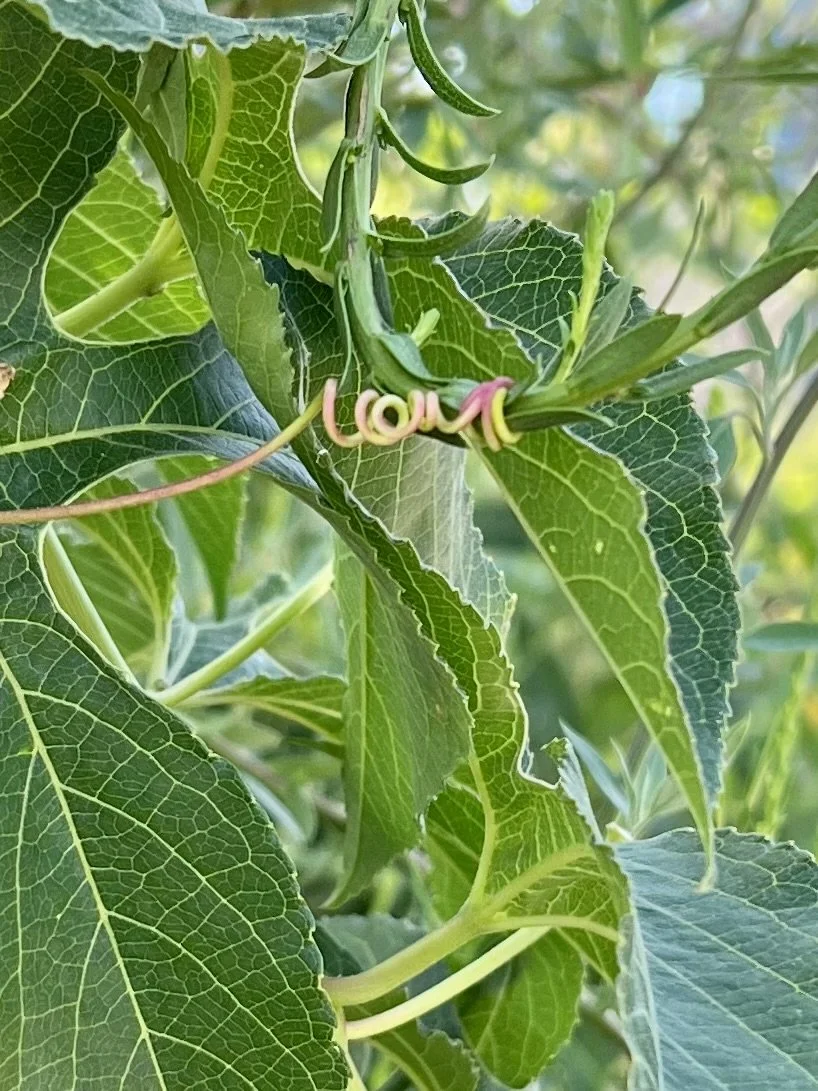
propagating a passion vine in water.

The Stinky Passion flower’s scientific name is Passiflora foetida. It is also known as Fetid Passion Flower, Love-in-a-mist, Wild Maracuja, and running pop.

It has sticky, feathery, leafy bracts that surround the flower and fruit. When an insect tries to eat the fruit, it gets caught in the sticky bracts and dies. The plant then secretes a digestive enzyme and absorbs the nutrients.

Generational Amnesia and Regeneration.

My husband Curtis and I drove to Christoval, Texas for a public hummingbird tagging event. I had been to a private tagging before, but this one was different. The public was invited in. Children were there.

Biologists carefully capture tiny hummingbirds to collect vital information — sex, age, length, weight. After gathering the data, a skilled volunteer carefully cradles each delicate bird in the palm of an observer’s hand.

The tiny creature briefly pauses. You hold your breath. You feel an almost mechanical vibration, like a toy stuck in the “on” position — the rhythm of its heartbeat. Then, in an instant, it is back into the wild.

It wasn’t until I looked at my photos afterward that I saw it — a trusted volunteer placing the bird in a child’s hand. The transfer of knowledge, right there in the frame. A tiny beating heart. A child holding their breath.

That moment — the exchange of a tiny life from seasoned hands to smooth palms — is a living metaphor for what it means to nurture the passing of knowledge and care across generations. It is the story of regeneration.

This is what generational amnesia looks like in reverse.

Generational amnesia — also called shifting baseline syndrome — describes how each generation views the environment they inherit as the normal standard, even if it is significantly more degraded than that of previous generations. We absorb the world we are born into. We mistake it for the world as it is.

In the 1980s in Houston, our garden was filled with hummingbirds. Their vibrant presence shaped our daily conversations, our sense of place, our sense of wonder. They were part of our love story. Curtis proposed and hummingbirds were there. We miss them.

Today’s children in Houston have likely never seen one in a garden. They have no baseline for what’s missing. And that is the whole loss — not just the hummingbirds, but the memory of them.

Breaking this cycle requires hands willing to reach out and moments prepared to receive. It demands nurturing curiosity, empathy, and attention in children and adults alike. It calls for the deliberate passing on of more than just facts — but also the emotions and experiences that bind us to the world beyond ourselves.

The hummingbird’s pause in the palm of a stranger’s hand is brief. But it is enough. This is how we pass down the endangered knowledge of our natural history now — not around a campfire, not through a grandmother’s photo album, but in a field in Christoval, Texas, with a tiny beating heart in your hand and a trusted volunteer saying: this existed. Pay attention


.

Bombus melanopygus - Black tailed bumble bee.

How the bumble bee got its stripes https://www.eurekalert.org/news-releases/600078

Bombus melanopygu, a captivating bumblebee species that I recently began studying for my body of work, “Rumblings”. As an artist, my process begins with thorough research, delving into the intriguing world of each unique species. Despite the limited information available, I find myself captivated by Bombus melanopygus and its enchanting research qualities.

Incredible breakthroughs have been made by researchers in understanding the color differences within bumblebee species. A recent study, conducted by experts at Penn State, has revealed the presence of a specific gene that drives these variations in color patterns. This discovery not only sheds light on the astonishing diversity among bumblebees, but also provides insights into the evolution of mimicry, where individuals adopt similar color patterns within a given area. The gene resides in a highly conserved region of the genome, which serves as the blueprint for segmentation. This groundbreaking research was published in the renowned journal Proceedings of the National Academy of Sciences on April 29, 2019. -

Heat Dome

“What I propose, therefore, is very simple: it is nothing more than to think what we are doing.”

-Hannah Arendt, The Human Condition

Heat Dome

Watercolor monotype

30" X44"

Bare ground, concrete, asphalt, and astroturf emit 4X radiant heat. Great masses of radiant heat create heat domes. Heat domes prohibit weather from moving across the land. In contrast, surfaces covered in thick layers of plants indigenous to the region store water in the soil. When the day warms, the plants transpire, releasing bacteria with the moisture to form clouds that provide shade and then rain. We each need to carry our ecological weight. We can start by considering new ways to surface our city scapes to cool the planet.

Heat Dome ghost

A Turn of Events: My Dream Installation on hold.

This summer, I was presented with an incredible opportunity. A curator asked me to propose my dream installation, a chance to showcase something meaningful. The site owner was willing to support and fund the work.

After much contemplation, I decided on a proposal that filled me with passion and urgency. However, last week, it all came to a halt.

I am sincerely grateful for the curator’s interest in my work and the site owner’s support. Their initial inquiry inspired this proposal, and I cannot thank them enough for that. I believe that everything happens for a reason, I have an idea and I am hopeful that I will find the project a site and funding.

First a little background. While at Indiana University, I became aware that integrating ecological recovery with natural systems is a new academic direction and numerous educational institutions are interested in this area. After all, universities and school systems are the largest landowners in any city and having research students involved would be a great asset. Transforming the proposed installation into an art/environmental science installation would significantly enhance the social sculpture’s reach and benefit a university and society.

Below is my proposal.

Introduction-

Global warming, food security, drought/flooding, wildlife habitats, economic instability, and health – these problems are not new to humankind. The archeology of ancient civilizations has recorded connections between the longevity of civilizations and the health of their soil. The United Nations reported in 2014 that the world's topsoil would only last 60 more growing seasons. Soil scientists around the globe agree that solutions to these issues are rooted in our treatment of soil—the skin that covers our planet. 

In a moment of global uncertainty, I ask myself, what materials and forms would I use to create the greatest impact on society and the environment? As I think of ancient civilizations' architecture, art, and spiritual practices, pillars and vessels played an important role in shaping their understanding of the world. Much of my previous work has been about conservation issues, looking specifically at Earth’s natural systems of bees, at waterways, at bison, at native plants, at recovery from Hurricane Harvey, and now at the underground systems of Earth. And so, I would use roots as my material and pillars as my vessel.
standingGROUND

In standingGROUND, I propose a four-stage installation of 5’-10’ tall pillars of various shapes grown from the roots of long-rooted prairie plants.

These pillars will be created by stacking various shapes of clay vessels commonly purchased from home and garden stores. The vessels with the bottoms removed will be stacked and centered on a steel pole cemented in the earth with a small footing for stability. The pots will be filled with a leaf-mold compost and seeded with native grasses and plants known for their root depth. They are to be nurtured and watered for approximately twelve months or until the plants are rootbound in the clay pillars. The clay will then be delicately broken away and the above-ground plant material removed, leaving freestanding pillars of delicately intertwined roots bound in the shapes of the stacked vessels. The root pillars will stand erect on the hidden steel posts.

Drawing inspiration from the rhizomatic root structures of native grasses that give structure to Earht’s underground life, these sculptures, woven by natural systems, standing above ground, will bridge the gap between sky, earth, water, and modern humanity. These pillars offer a glimpse into the intricate workings of an underground prairie ecosystem, the upside-down rainforest for carbon sequestration of North America.

Four Stages

The first phase of standingGROUND will focus on the sculptural aesthetics of the work. I will carefully build the pillars composed of ready-mades to be strong sculptural elements on their own. Once a site is selected, I will choose a paint color that harmonizes with the surroundings and emphasizes the sculptural qualities of the pillars. Lighting will play a crucial role in showcasing the sculptures in relation to their environment. I will paint the pots before the installation, touch them up, and paint the joints afterward. Information on the site will discuss the ecological and social aspects not yet revealed.

The second phase will be to install the pillars into an immersive experience. The towering yet human-like pillars will be positioned strategically to create an intimate and inviting space for viewers. Within this space, a stone or stump will be placed as a reflective seat, provoking thoughts on how our actions impact climate and biodiversity and how humanity can find harmony within natural systems.

The third phase of standingGROUND is when I physically chisel the ceramic vessels away to reveal the social sculpture aspect, the delicate white lace-like intertwined roots bound in the shapes of the stacked ready-mades bridging the gap between sky, earth, water, and humanity.

The fourth phase encapsulates the cycle of life, decay, and regeneration. This crucial phase is essential for ensuring life on Earth. The root sculptures will gradually erode and disintegrate when exposed to the elements. Once the installation has reached the end of its visual lifespan, I will carefully remove the root sculptures. The poles and footings will be relocated from the site. This stripping away of the remnants will leave behind a cavity in the ground previously occupied by the footings. Remarkably, this void will serve as a space where the roots can be placed to rest-regenerate and give birth to new life.

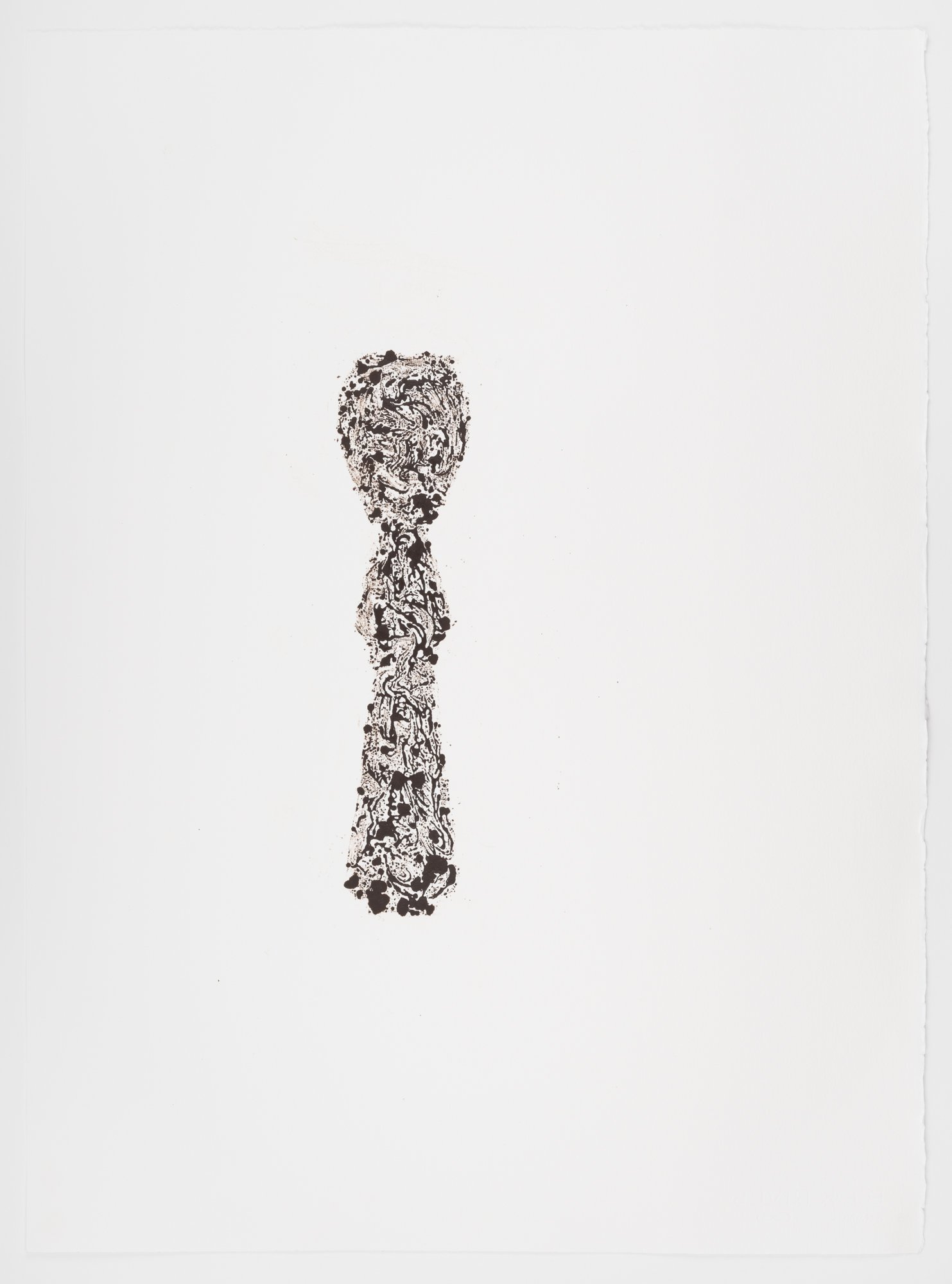
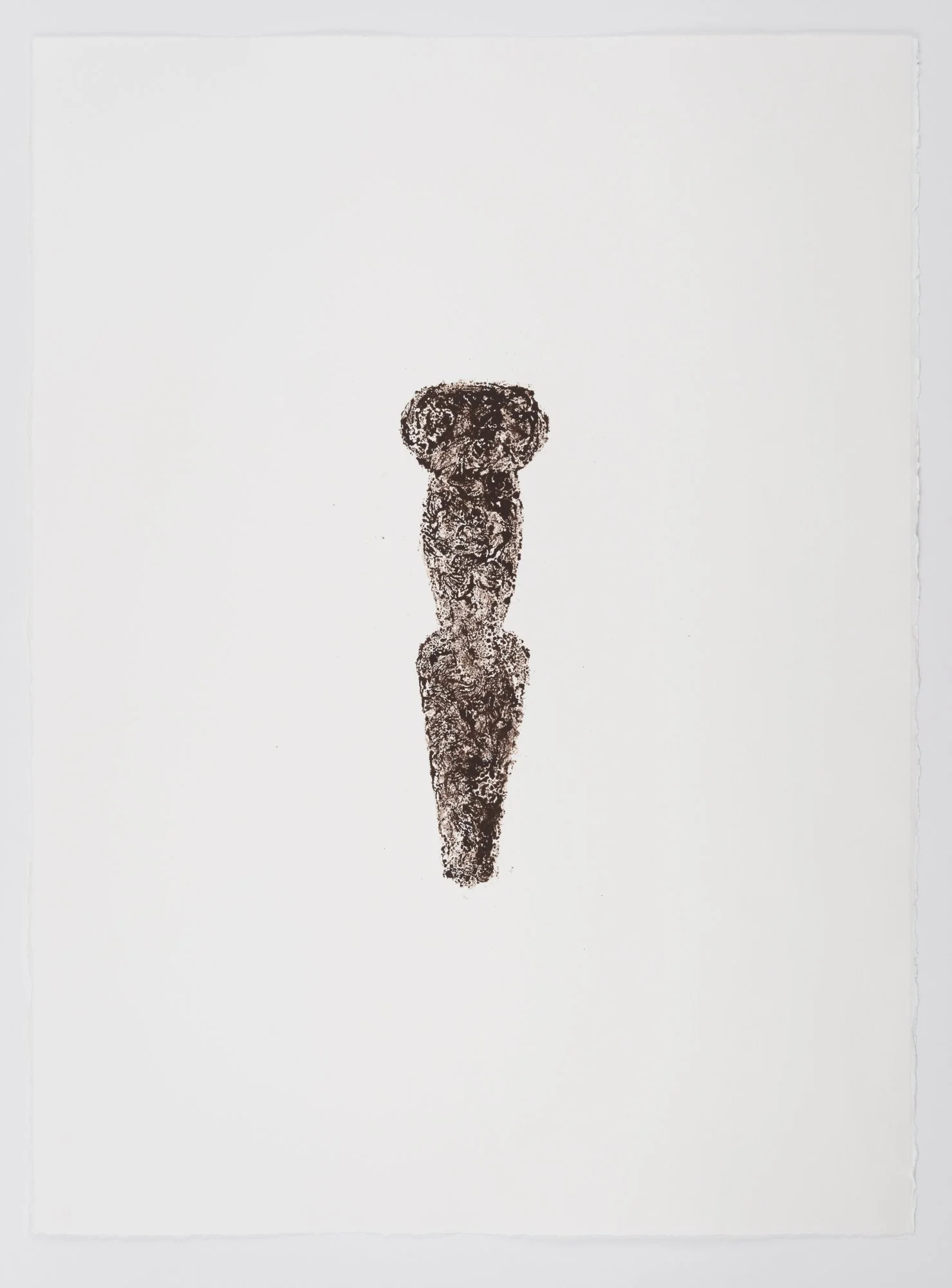
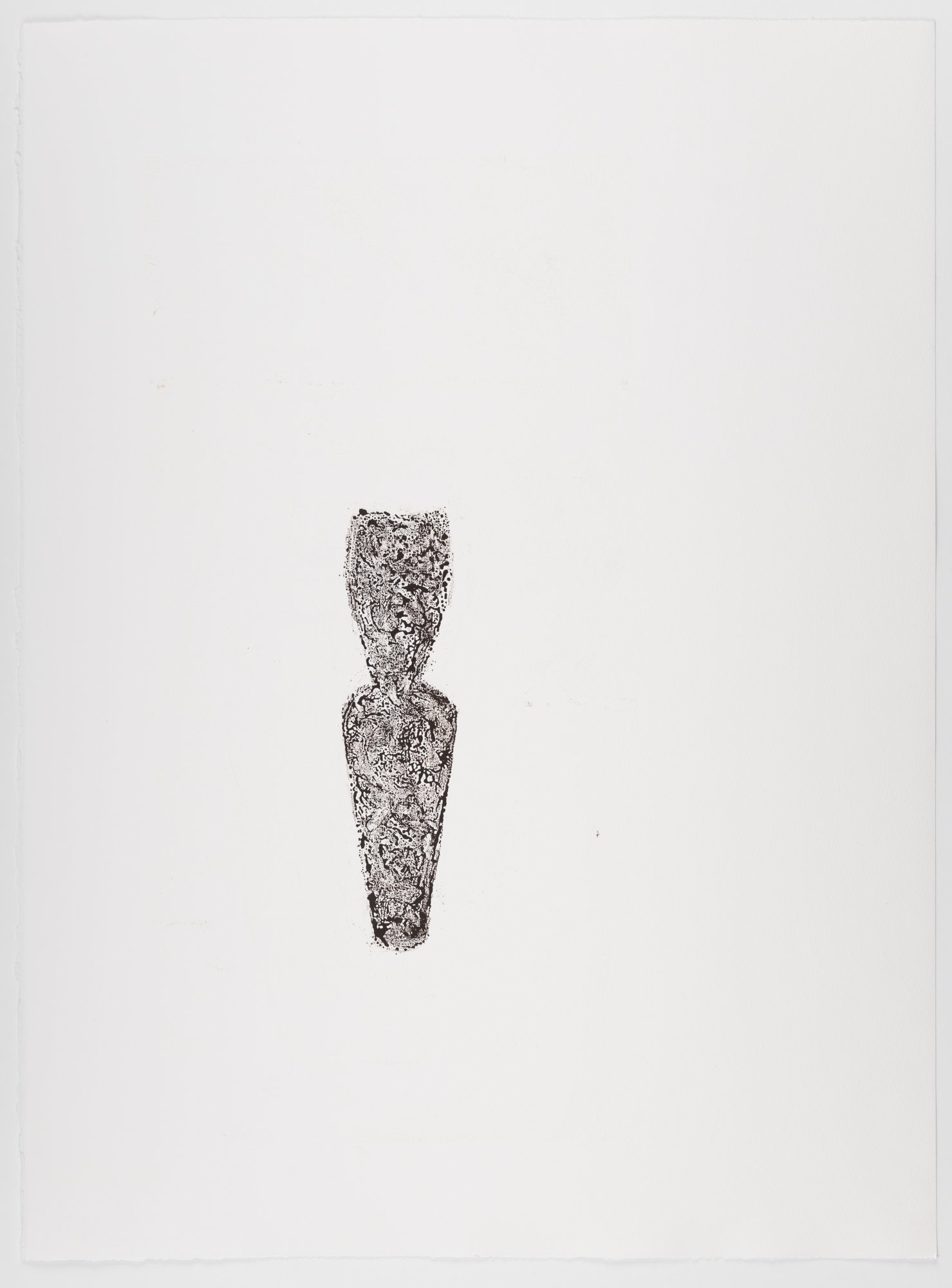
I started experimenting with the shapes in their root form last week. I initially created six sketches in the form of watercolor monotypes. Then, I researched more pot shapes with larger mouths and created four more in round 2. The images of these sketches are below. I will continue experimenting with these shapes as I work on a site.

standingGROUND II

Watercolor monotype

30” X22”

StandingGROUND VI

Watercolor monotype

30” X22”

standingGROUND round 2 #1

Watercolor monotype

30” X22”

standingGROUND IV

Watercolor monotype

30” X22”

StandingGROUND round 2 #4

Watercolor monotype

30” X22”

StandingGROUND round 2 #3

Watercolor monotype

30” X22”

StandingGROUND round 2 #2

Watercolor monotype

30” X22”

standingGROUND V

Watercolor monotype

30” X22”

standingGROUND III

Watercolor monotype

30” X22”

standingGROUND I

Watercolor monotype

30” X22”

To Leave

The ephemeral beauty of nature lies not just in living organisms but also in their inevitable decay.

This morning, while examining “deeper than that” a private living sculpture art installation featuring indigenous plants, I was struck by the fading loveliness of the Rosinweed leaves as they withered. Contemplating the homophones “leaf”, “leave” and “leaves”, I pondered how societies historically understood the ecological value of allowing foliage to persist even after senescence. Is that why we call these objects a verb?

Leaves that have left a plant continue to nourish the soil and its microbial inhabitants even in death. Their decaying forms hold moisture, shade the living organisms in the ground, and provide nutrients as they return to earth, building a balanced ecology that sustains urban landscapes. They are an important material natures uses in its engineering of the water table.

Though a single leaf may seem a small, ephemeral thing, in aggregate and over time, the leaves left behind establish and uphold the very foundations of life.

Their decay is not an end but rather a beginning - a quiet, essential recycling of energy and matter that allows new growth to emerge.

In both the noun and the verb there are layers of beauty, and layers of ecological purpose, in the leaves left to molder where they fall. An ecosystem thrives on this gift of decay, using the ephemeral to fuel the eternal. Such is the profound, poignant cycle that the installation’s Rosinweed specimens, even as they bend and brown, help perpetuate. Out of seeming loss, abundance; out of death, life.

Leave your leaves and be grateful for their beauty as nouns and as verbs.

Living Llabyrinth- Building the grid

Building a Large Grid for Installing a Labyrinth: My Process. One reason I write these blog posts is to record my process. The other is to share information.

Constructing a labyrinth grid of this magnitude may seem like a daunting task. And it is for me. With the right strategy, it can be accomplished efficiently. As I embarked on this venture, I took the time to experiment and optimize my methods. Here's a breakdown of the process that was the most efficient.

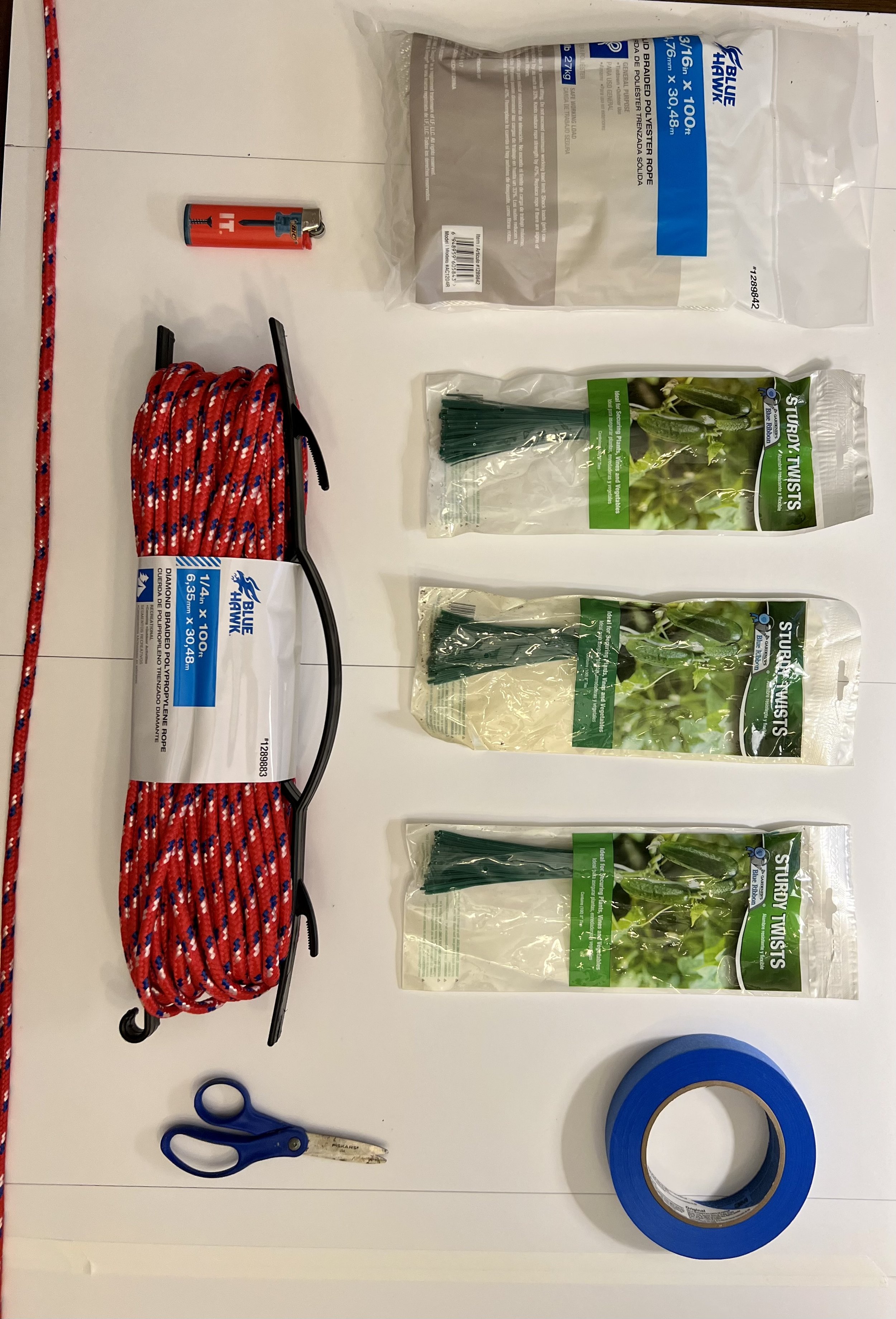
To begin, gather the necessary materials: X-axis cords measuring 53 at 54' and Y-axis cords measuring 33 at 88' lengths. Keep in mind that the cords come in 100-foot lengths.

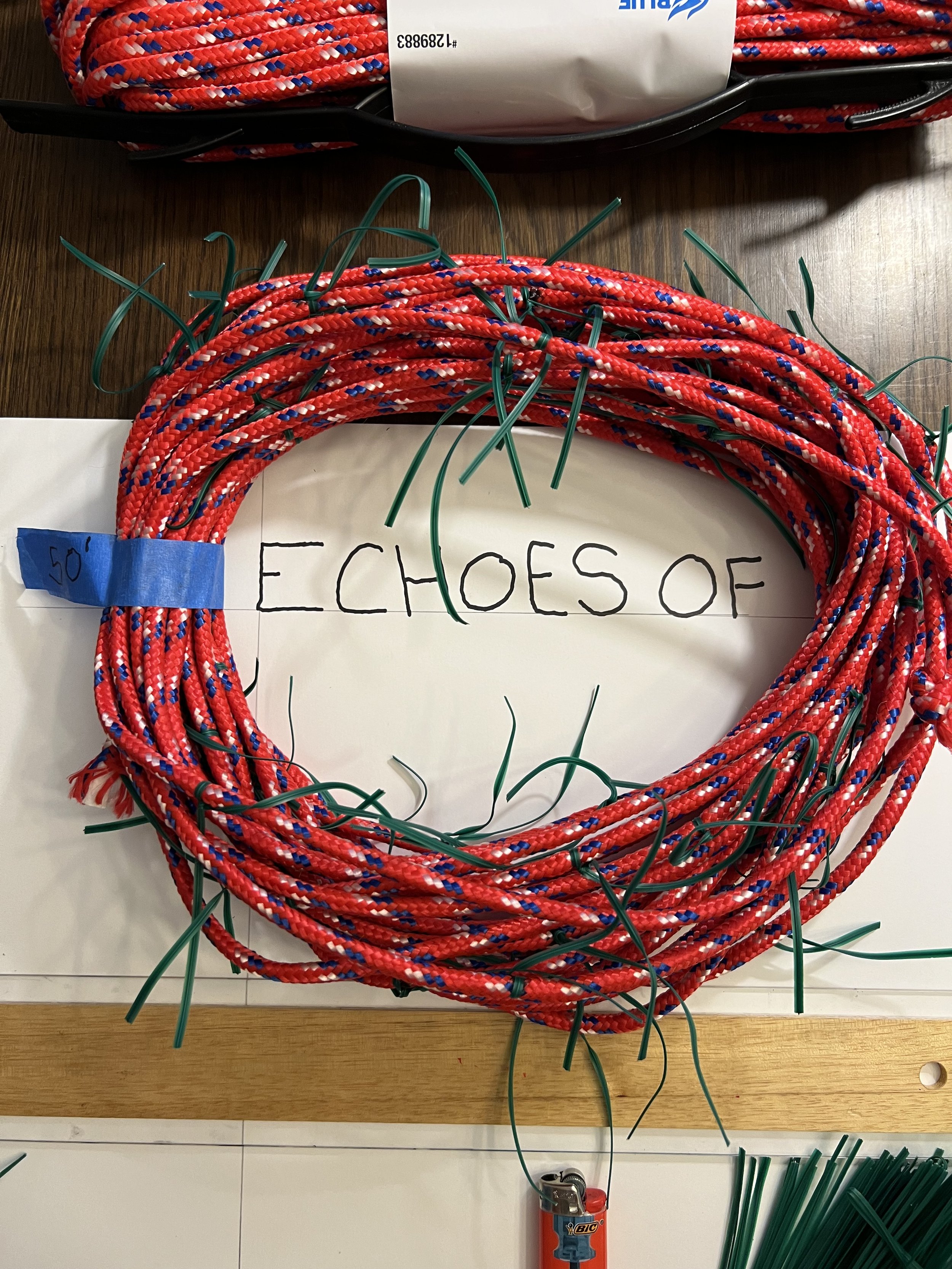
I wish I had of planned at 50’ by 100’ bison. The lighter is for singing the ends so they will not ravel. The tape is for tapeing the measured and twist-tied ropes for the installation.

I am making each cord that is a multiple of 5 a white cord. I think this will helpful the day of the installation.

1. X-axis cords: Start by unwinding the hundred-foot cord carefully, ensuring it doesn't become tangled. Here's a handy tip: tie a knot at one end and secure a twist tie next to it. Place the knotted end in a doorway and shut the door on it. This will hold it in place. Then, stick your arm through the middle of the looped cord and slowly unwind it, walking away from the door until it's completely straight.

2. Measure and cut the cord, leaving a few inches to knot and singe the ends to prevent unraveling. Tie another twist tie at the 54' mark. This will serve as the reference cord for measuring all other X-axis cords. Keep this cord secured in the door.

3. Take the leftover cord singe the end and knot it and tightly tie a twist tie inside the knot. Shut in the door with the reference length cord. Measure it against the reference cord and splice it with a piece of the next 100' wound-up cord to measure the 54' length accurately. Now you have a cord to start marking the grid on.

To mark the grid on the first cord—

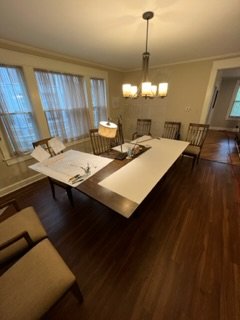
The dining has been my studio work space. First I covered the 8’ table in a thick paper to protect it. Next I marked every 20” from end to end.

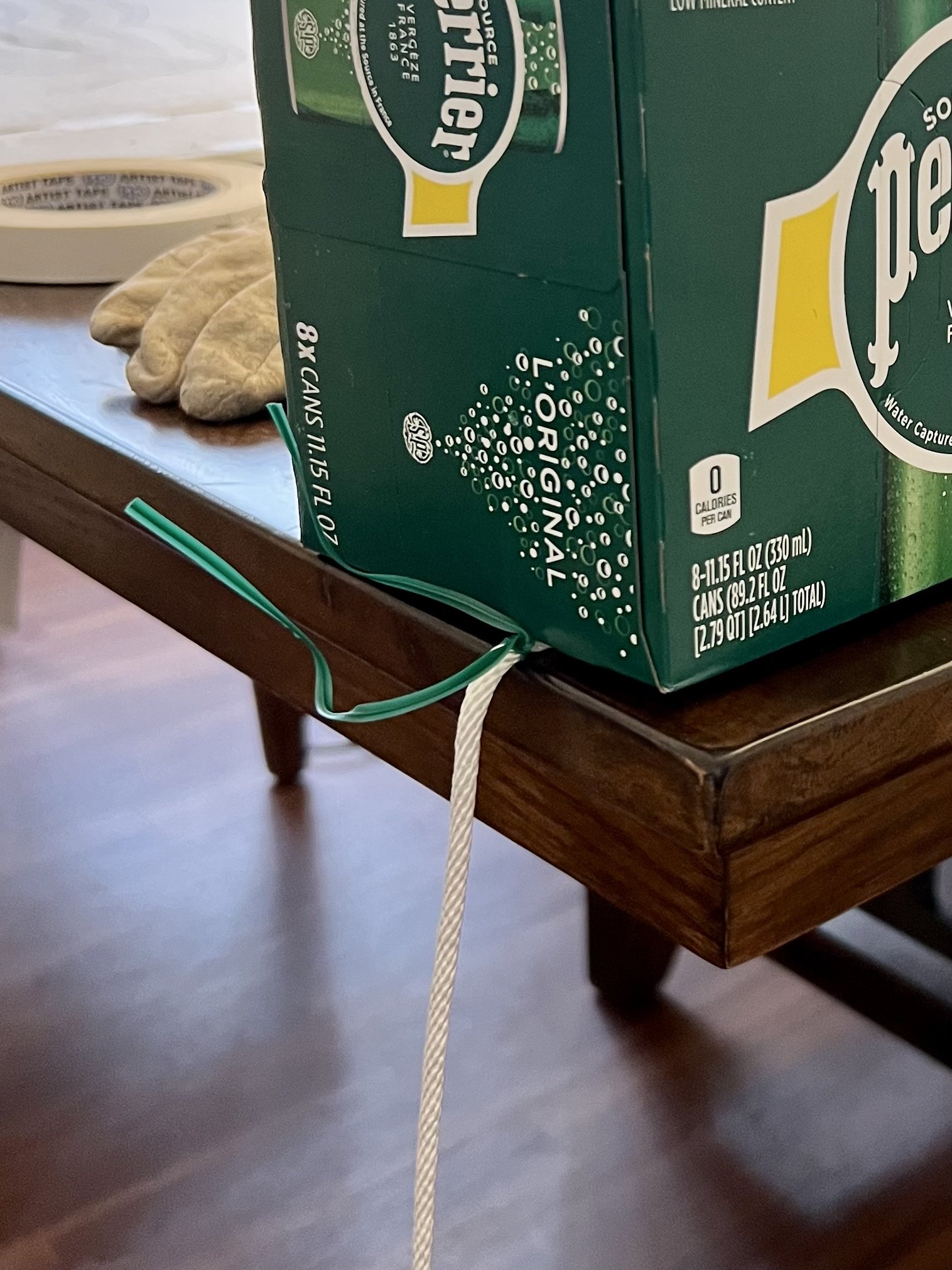
4. Prepare a long table by placing sheets of paper and securing them to the table so they will not slip. Measure and mark on the paper every 20". Lay the cord on the marked paper. To ensure stability, anchor the cord with a heavy object like a case of water.

I used a case of water to weigh down the cords.

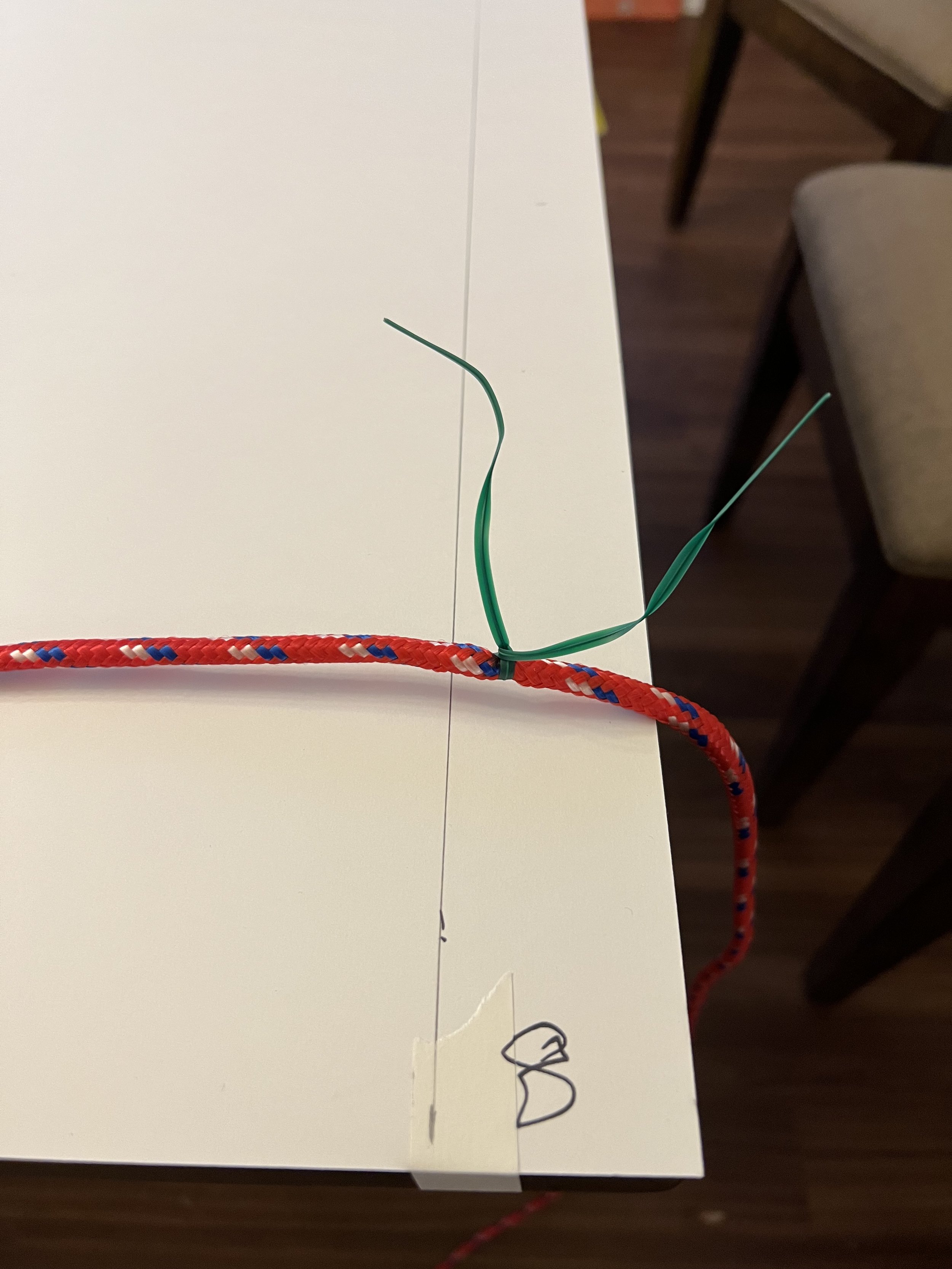
Starting from the first knot, and twist tie secure each twist tie tightly along the edge of the table at the 20' marks. Continue tying twist ties until you reach the end of the 54' mark. You may have a little excess cord hanging after the last tie.

The 8’ mark of the table length and the last twist tie. I leave a few inches at the end just in case.

The first piece with every 20” tightly tied with a twisties.

5. Carefully wind up the cord, tape it securely, and mark it as X-axis 54'.

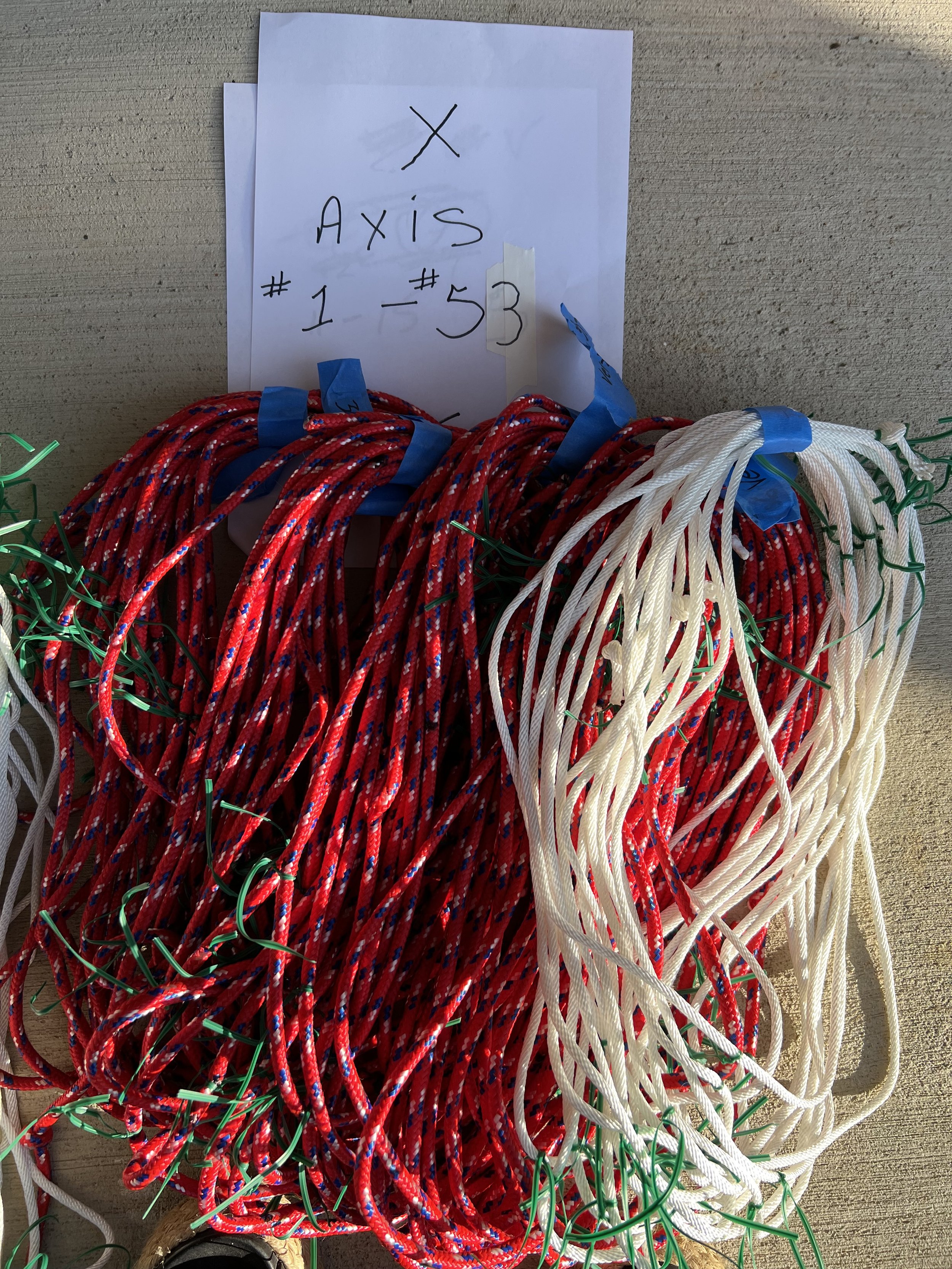
The first grouping of five- 4 red and the 5th white.

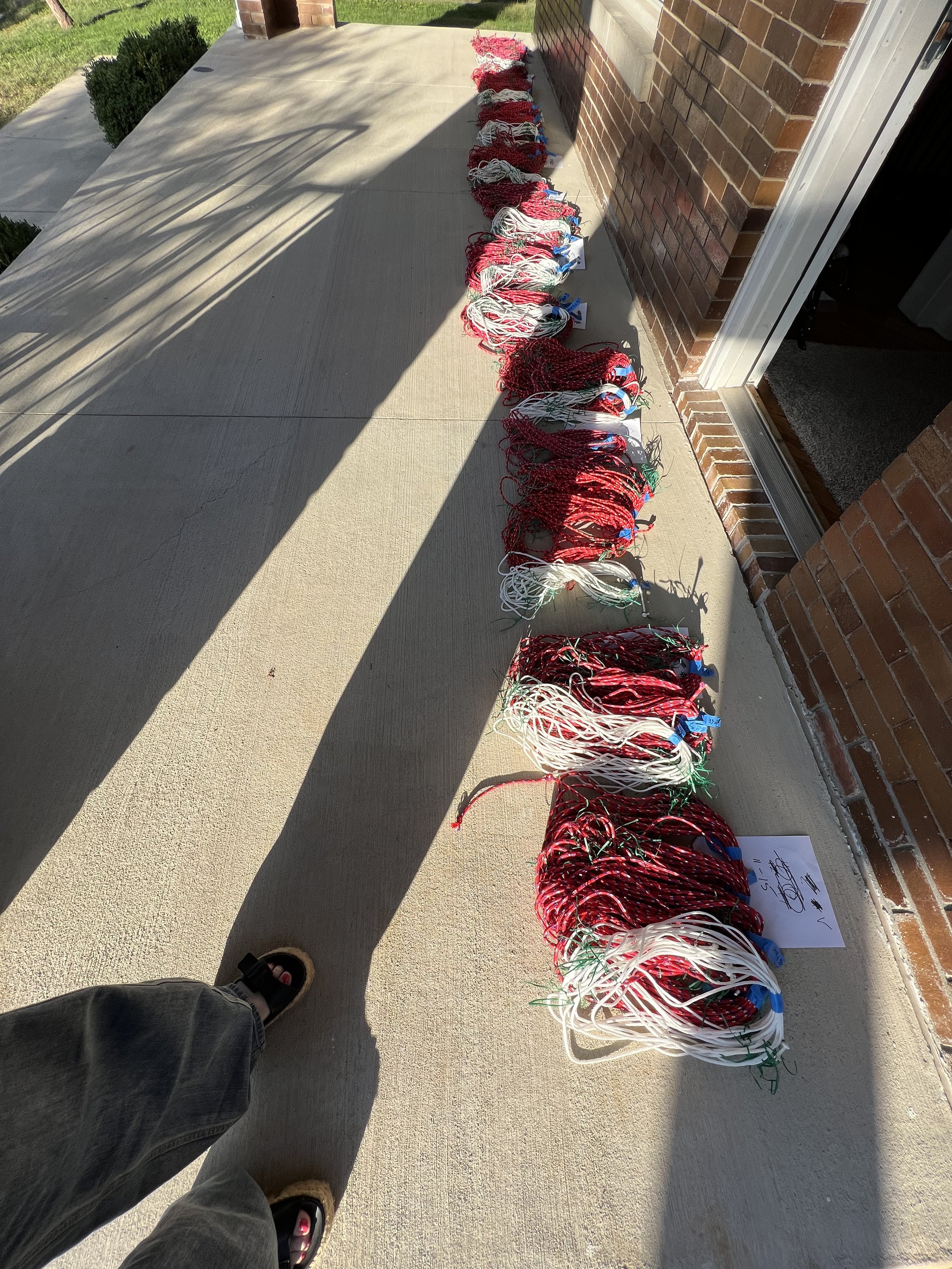
53 pieces - completed.

6. Finally, organize the cords by making four red and one white, keeping them grouped together.

IU - The labyrinth design - How will it be installed?

Once the grid is installed, the next step is to think about how to divide the work so that groups of student and volunteers can install my vision. .

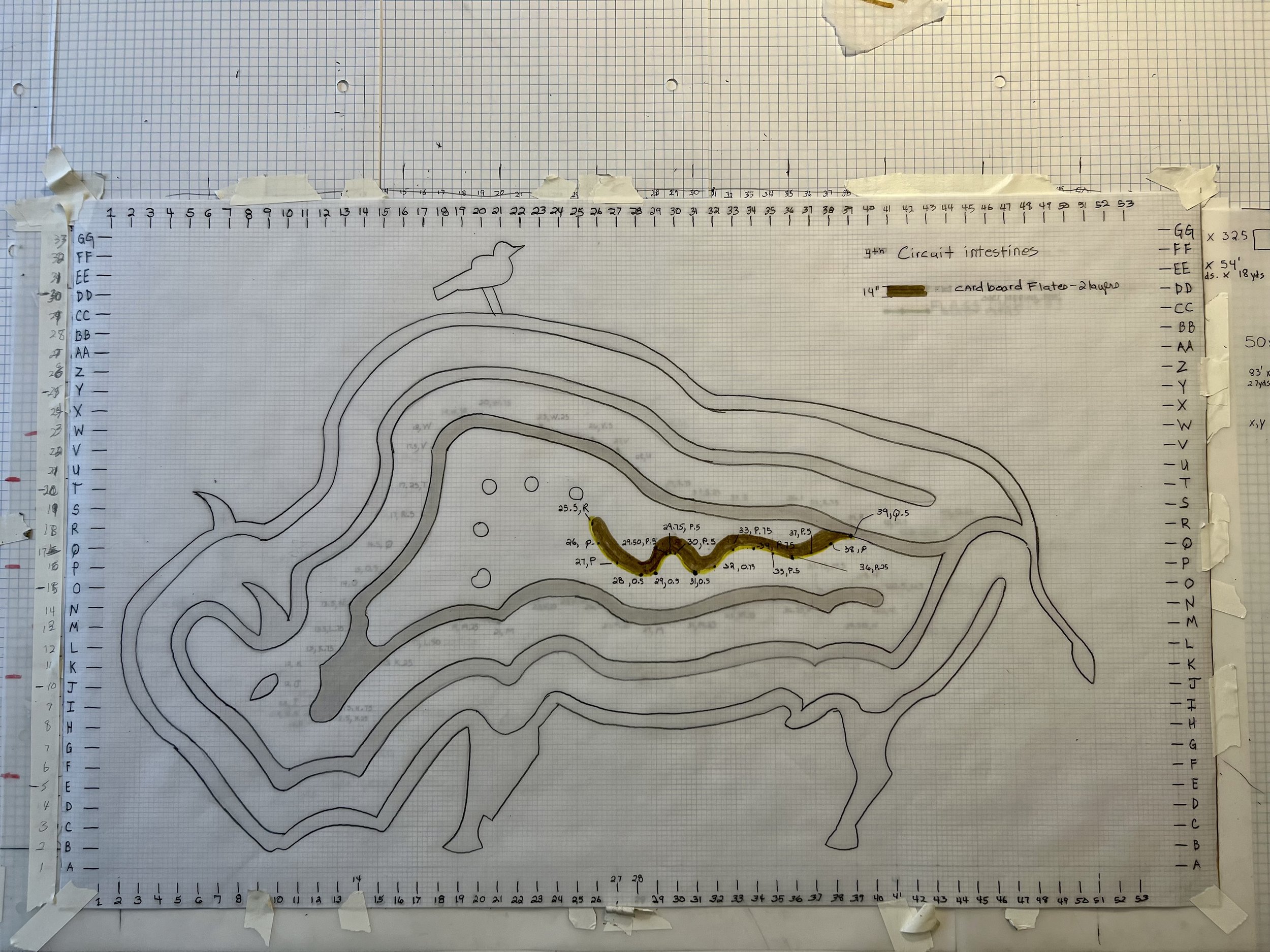
Two options seem viable. The first idea is by marking the (X, Y) coordinates for each circuit of planting on individual pages. The other idea is by verticle rows.

Below I have marked the coordinates of the circuits. As I mark the coordinates I am not sure this is the way. I may need to break it down to smaller sections.

I can continue to consider how to breakdown the jobs as I begin building the grid.

IU - How do you build a labyrinth? From 8”X 10” to 83’ × 54’

How to go from an 8” X 10” paper to a field, Is the question ruminating in the back of my mind every day.

Unfortunately Bloomington is in between art supply stores. As a result I could not buy locally any paper larger than 8” X 10” . While I waited for an order to come in I pieced together 8 - 8” X 10” pages and scaled it up 2X.

Here I started thinking about how to take the design from

When I scaled it up 2X I started seeing that I could take it to any size I wanted by using (X, Y) coordinates. I am using a 20” scale.

8- 8” X 10” paper to a make a 18” X 30” sketch.

How I could get a 83' × 54’ rectangular grid with right angles on a field was a big concern.

An idea came to me when I toured the charming Wylie House, a fascinating piece of history nestled just off campus. This historic gem, built in 1835, was once the cherished home of Andrew Wylie, the inaugural president of Indiana University.

The Wylie House master bedroom.

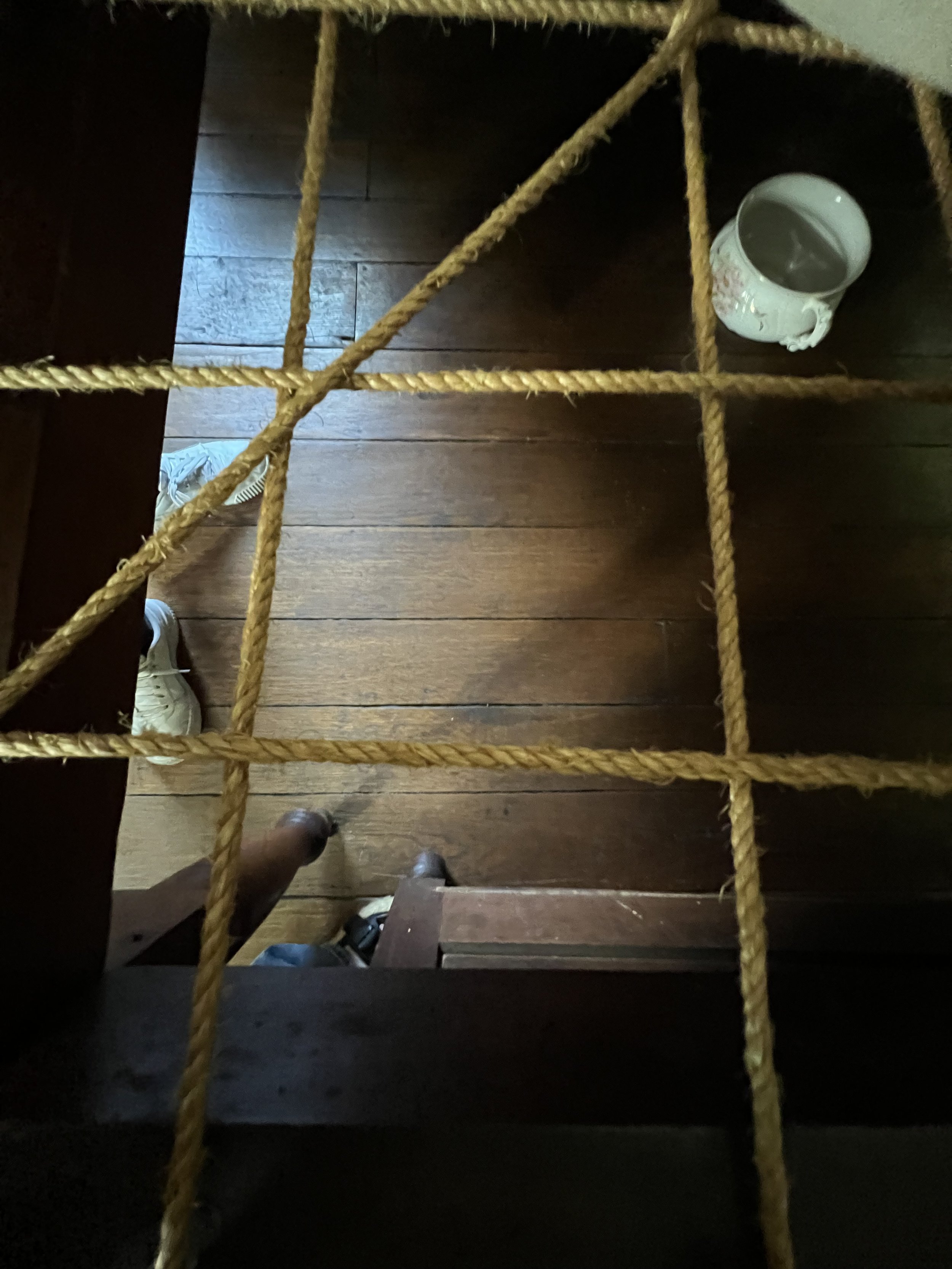
During my visit, the knowledgeable docent unveiled a captivating detail - the simple rope framework that upheld the mattress.

The antique bed’s rope framework that supports the mattress. What looks like a cup is the chamber pot.

A rope grid might be the answer to getting a proper rectangle With right-angled corners and grid onto a field.

This visual solidified my strategy for bringing the labyrinth design from paper to reality in an open field. The framework I need is 83’ × 54’ the vertical and horizontal ropes that cross every 20”. We can twist tie the coordinates together making the rectangle form.

The National Wildlife Federation - feature

Partnering with communities, schools, governments, and organizations across the country, the National Wildlife Federation is leading the charge for conservation.

Through their tireless commitment to protecting and restoring habitats, they have managed to breathe new life into endangered species like eagles, deer, elk, bighorn sheep, and whales.

I am deeply proud to have my work featured in the prestigious fall edition of the National Wildlife Federation magazine. It is a true honor to be recognized alongside such incredible conservation efforts.

IU - How do you draw a labyrinth?

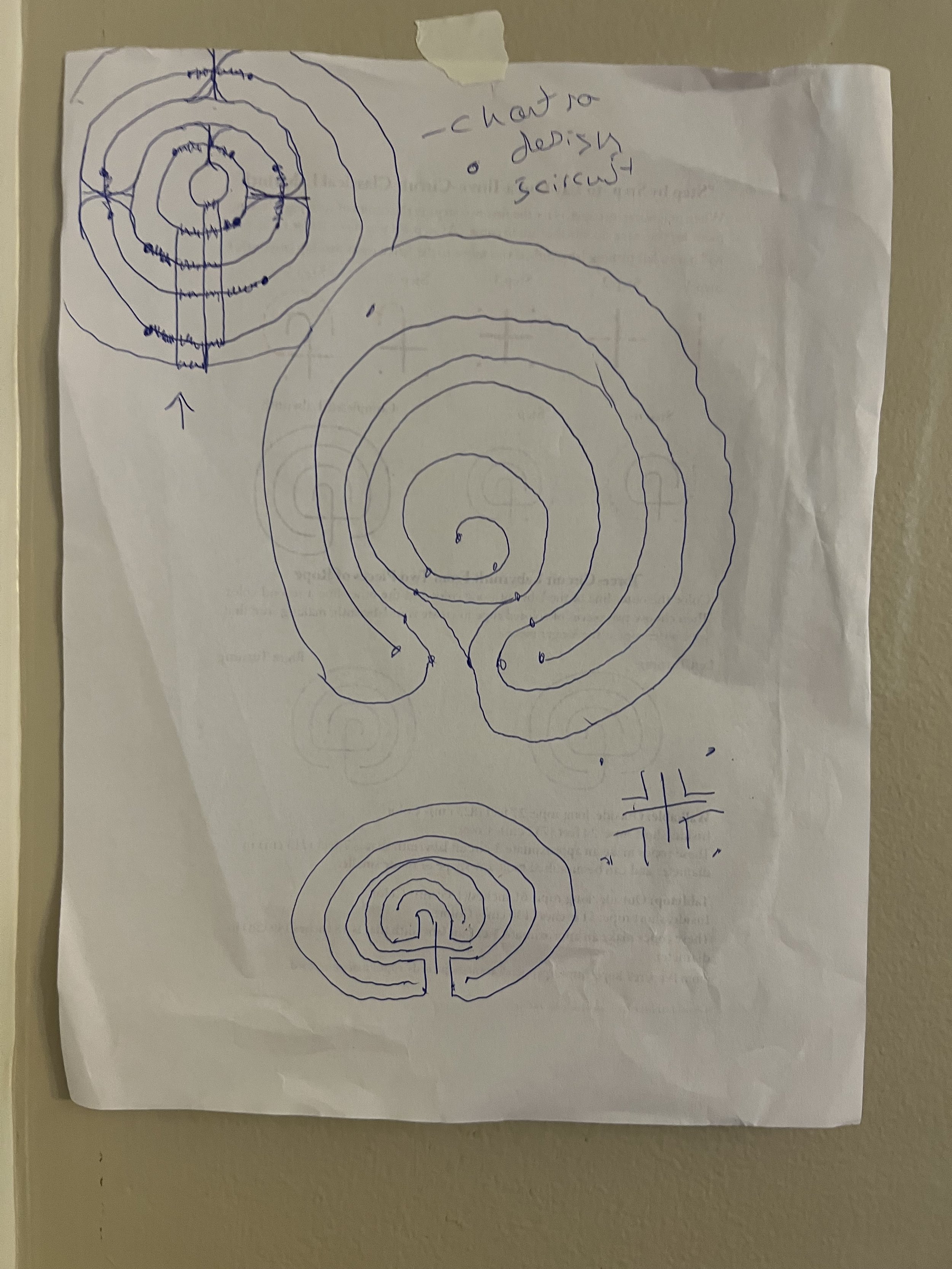
During the first week of my residency at IU when I wasn’t exploring the city, University, art, museums, ecology, architecture, and landscapes I was experimenting with labyrinth designs.

Some sketches of three different types of kabyrintgs.

This design starts with a simple cross. I need to keep this simple.

Turning the cross/square labyrinth upside down I decided to attempted a seed labyrinth. I think a design less feminine will be better.

Peck + Scratch

Peck + Scratch Installation

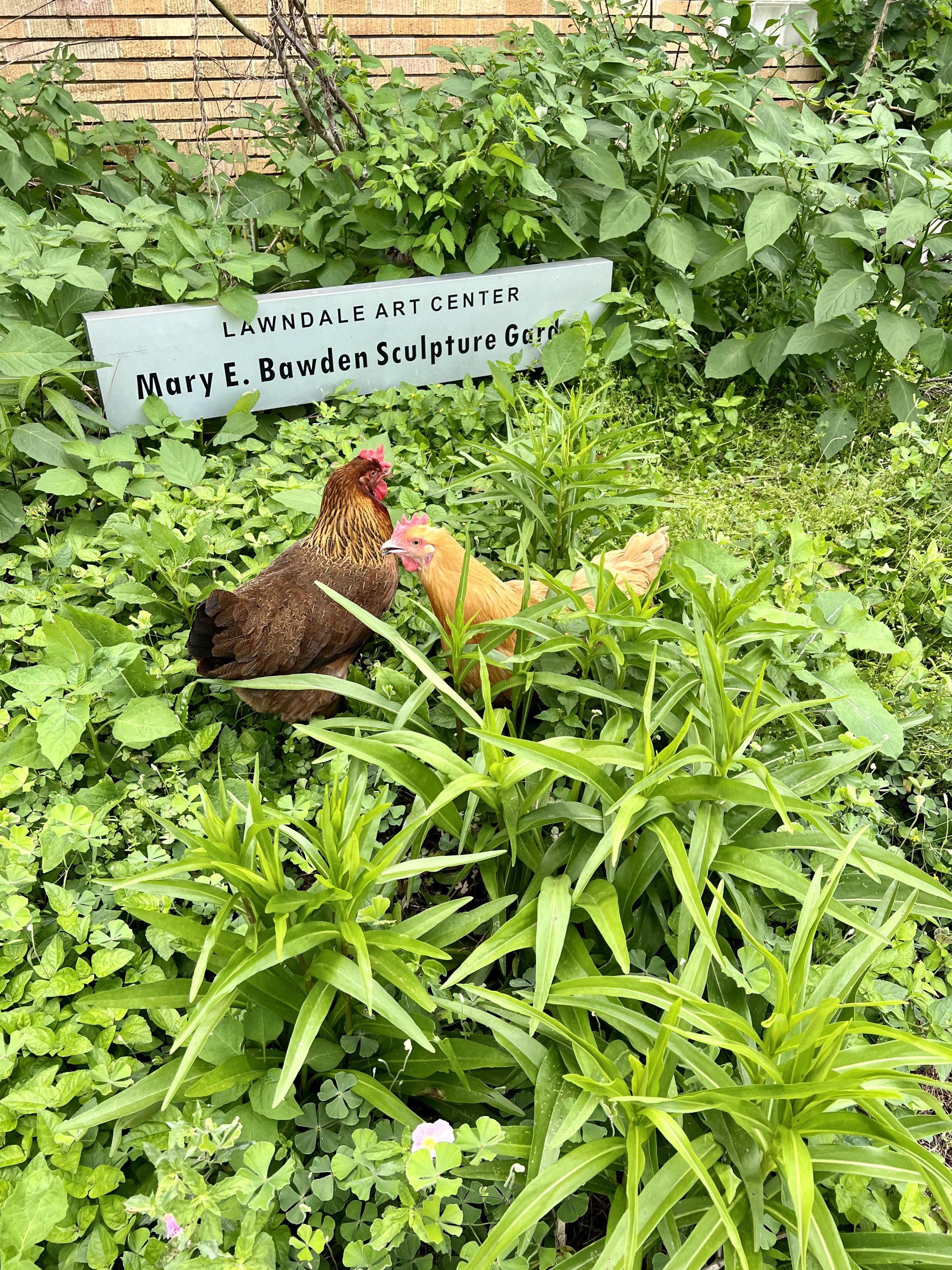
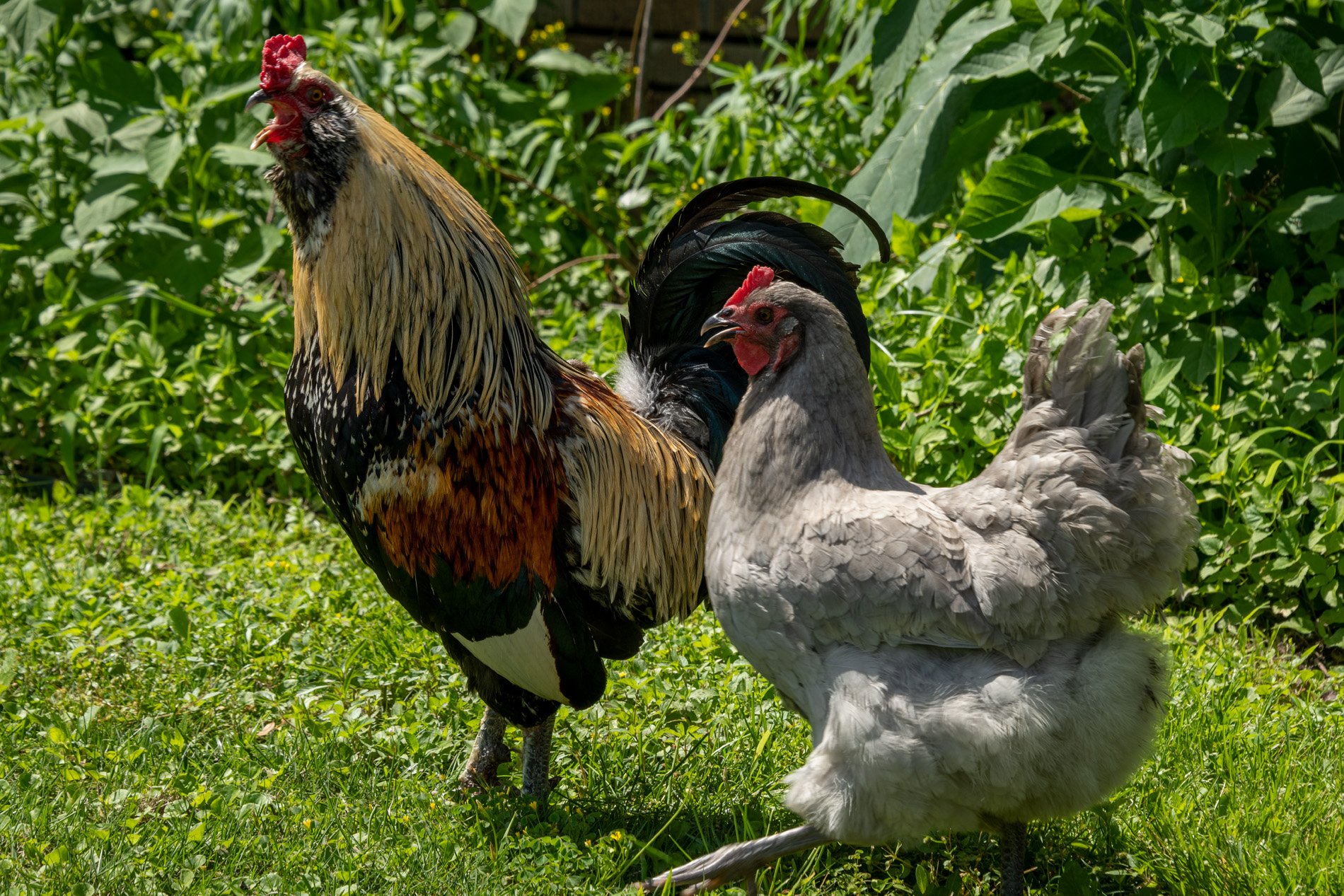
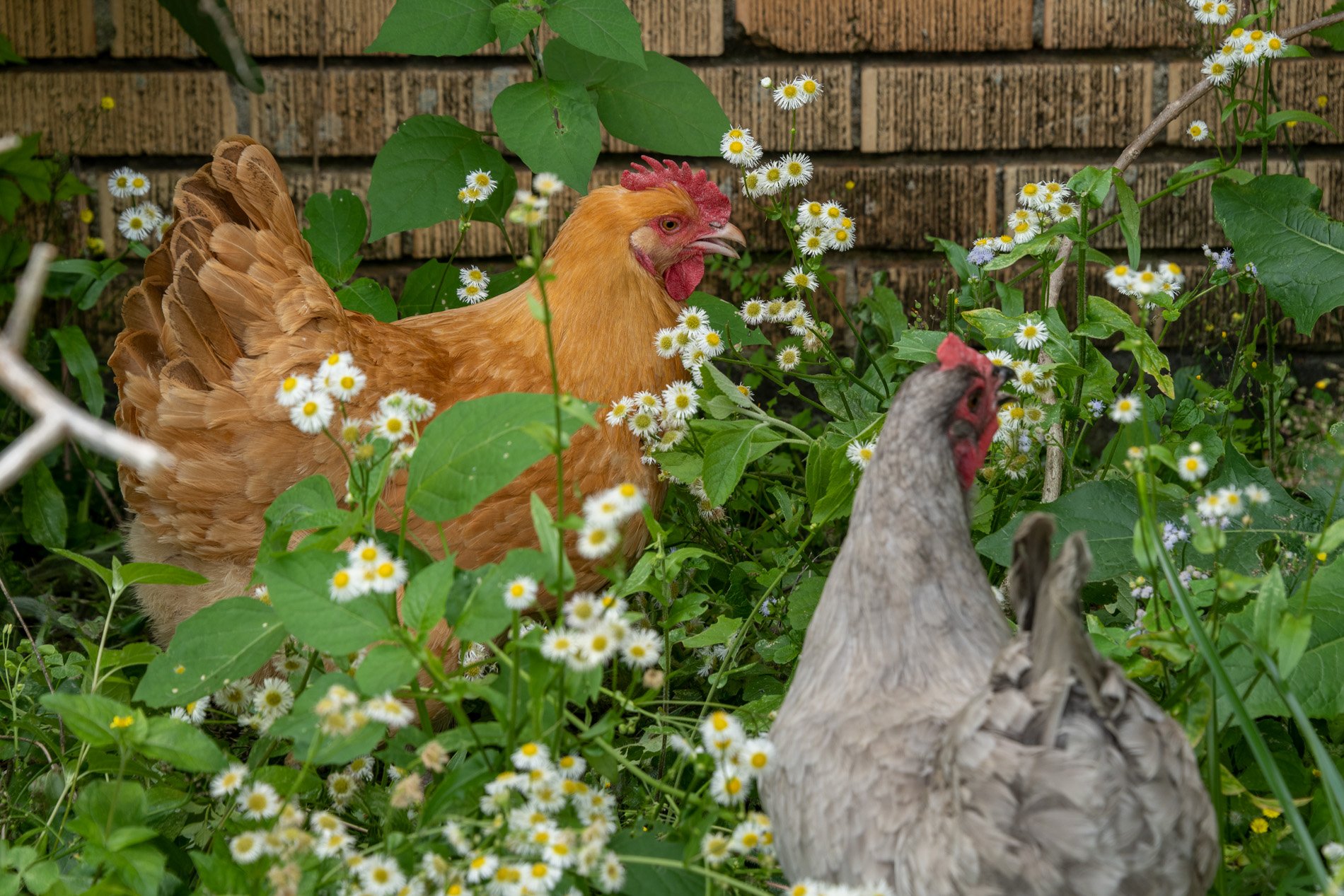
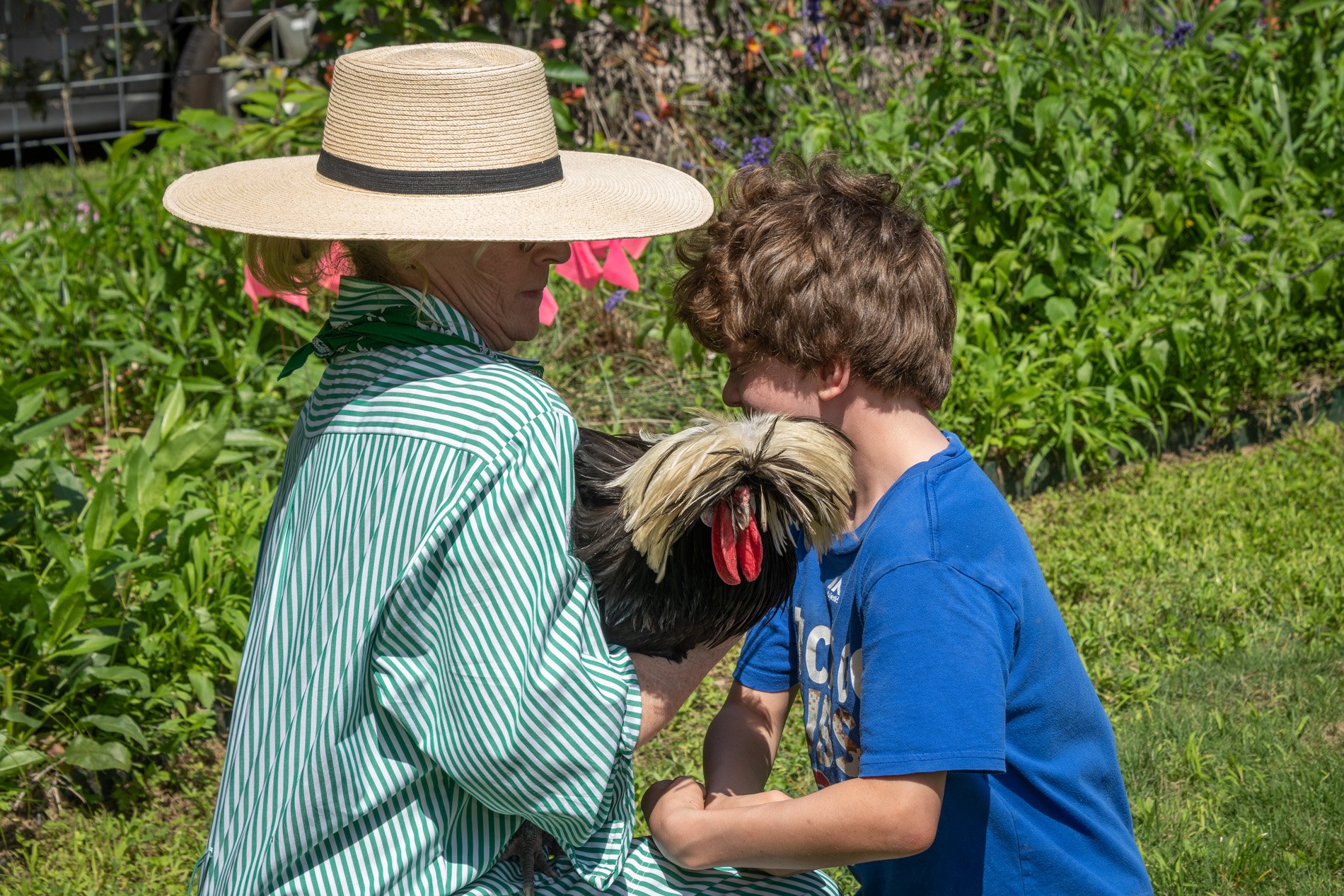
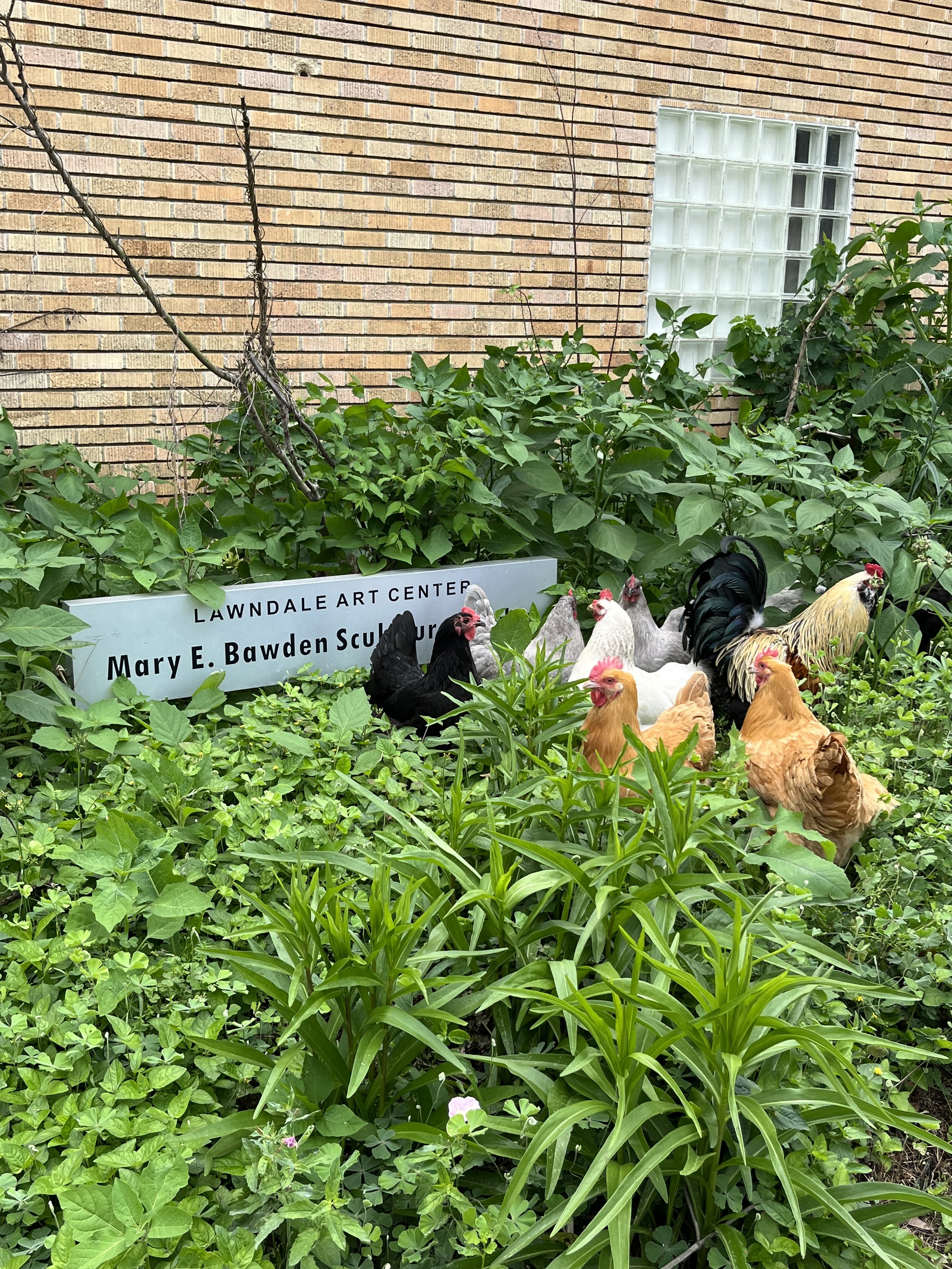
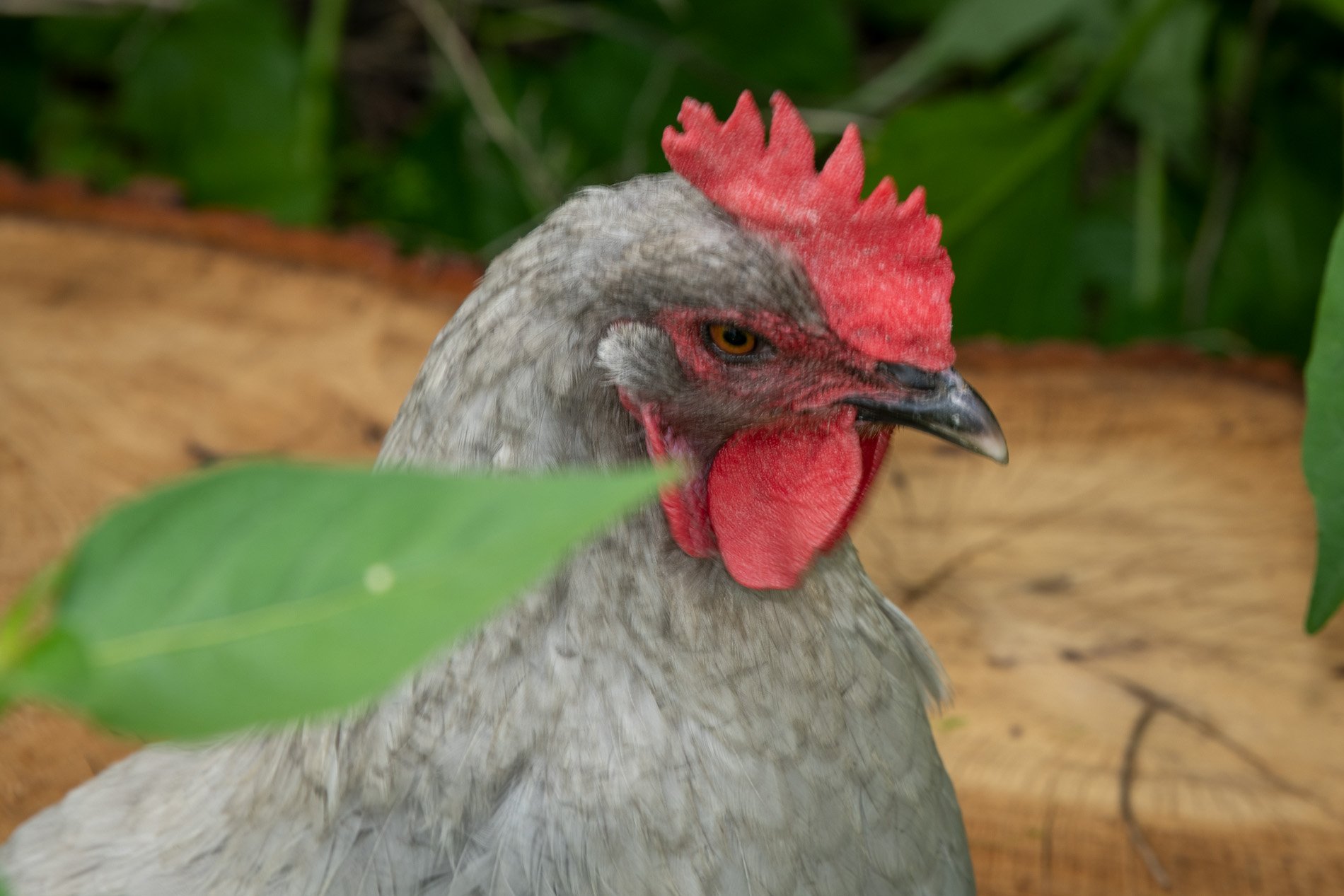
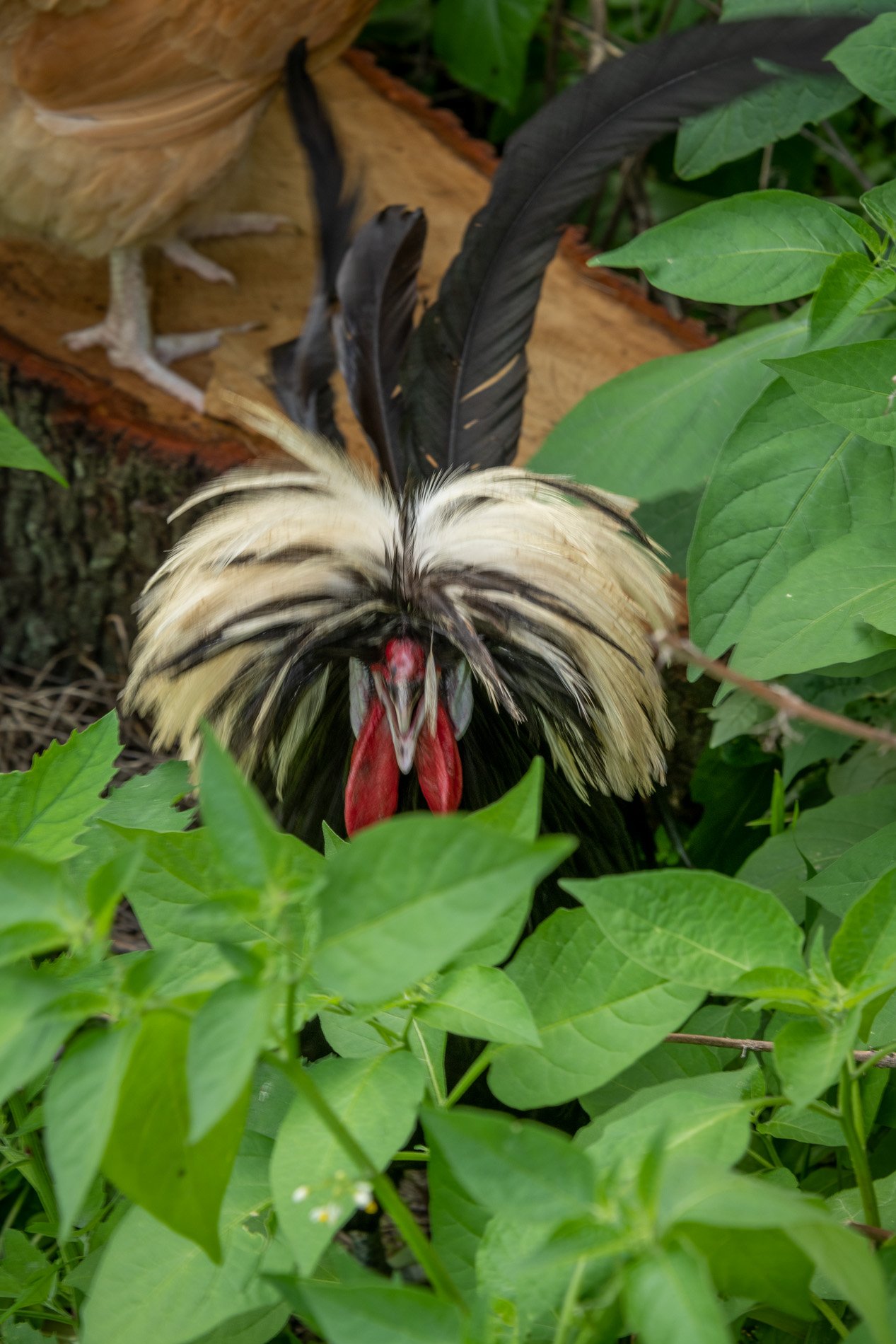
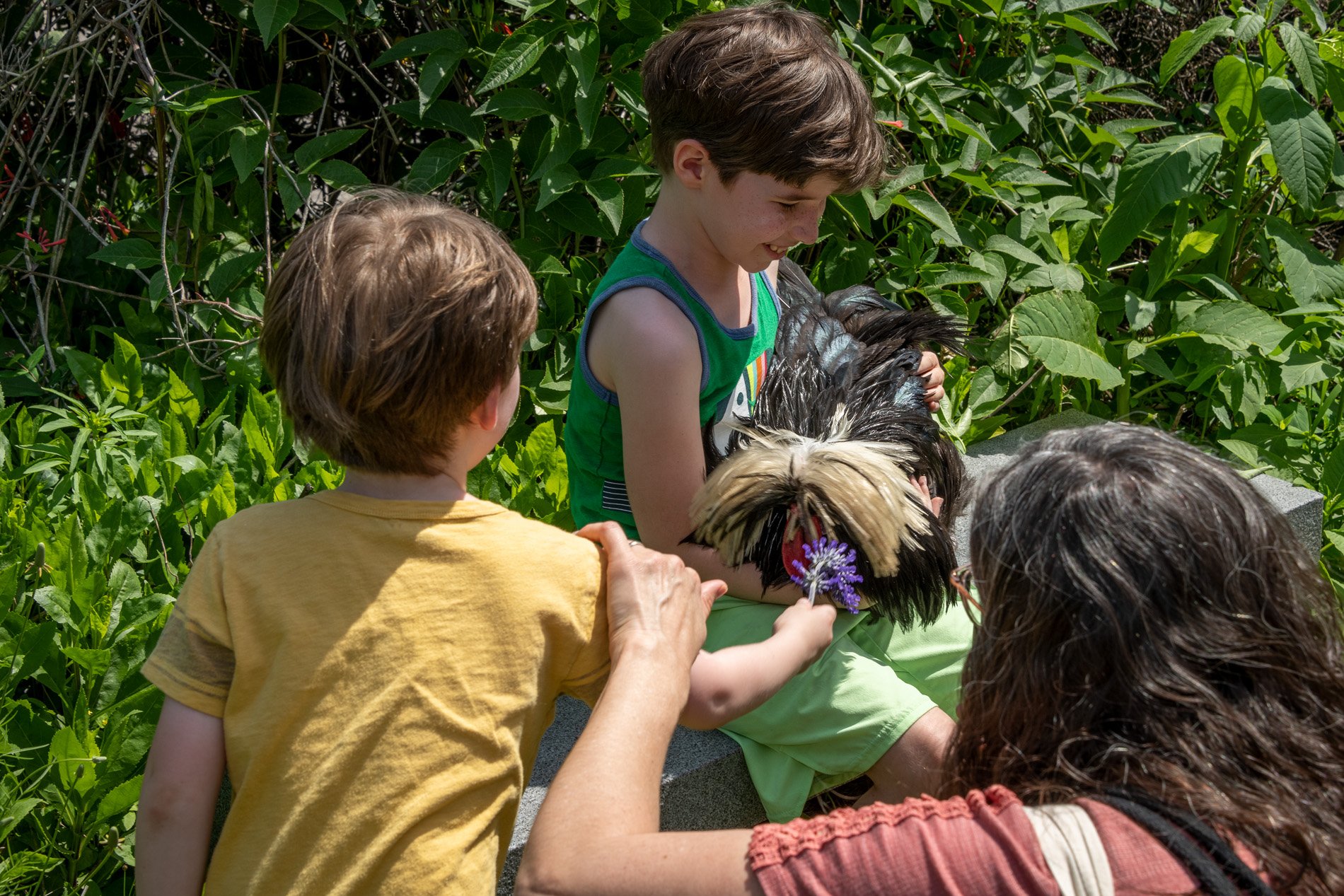
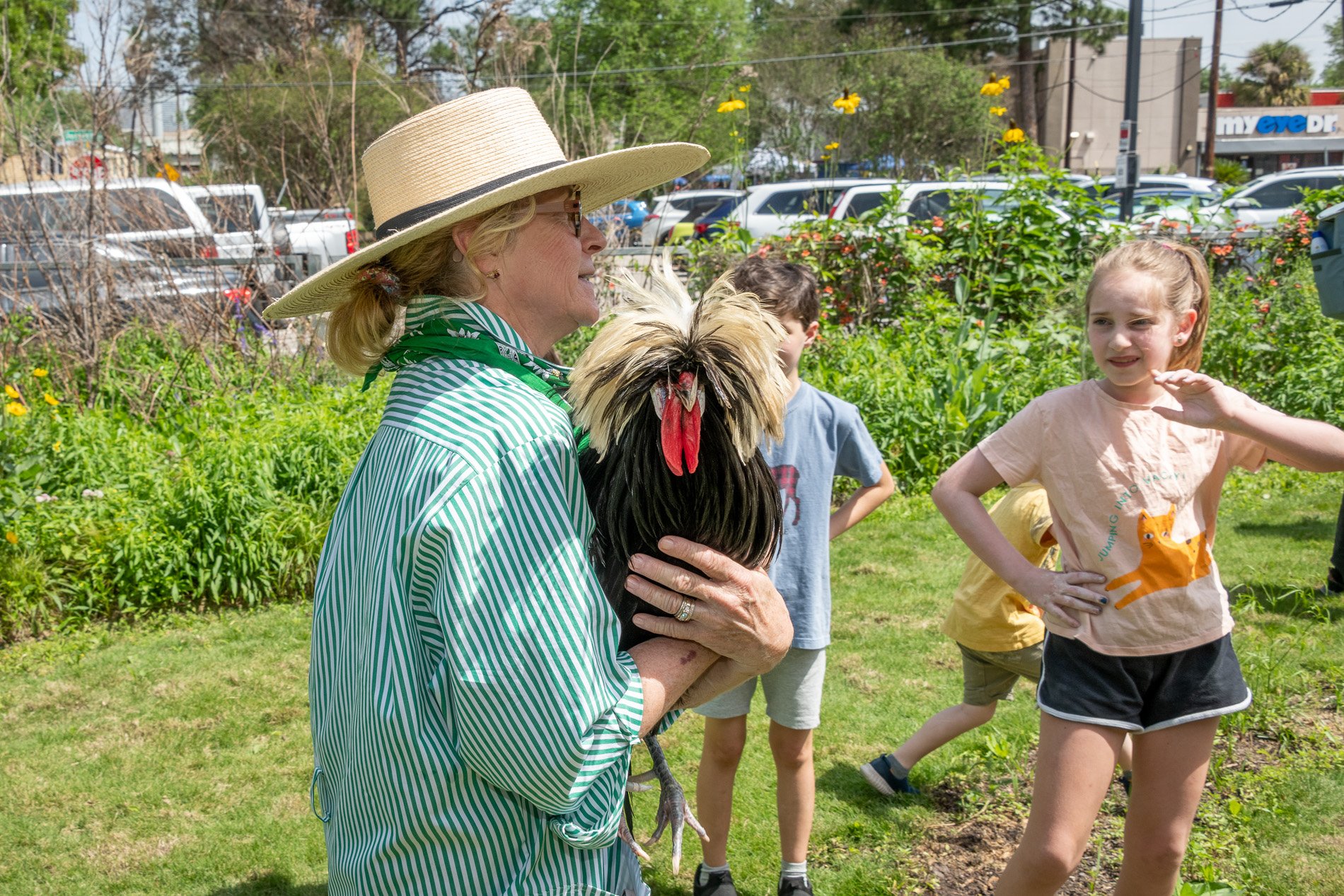
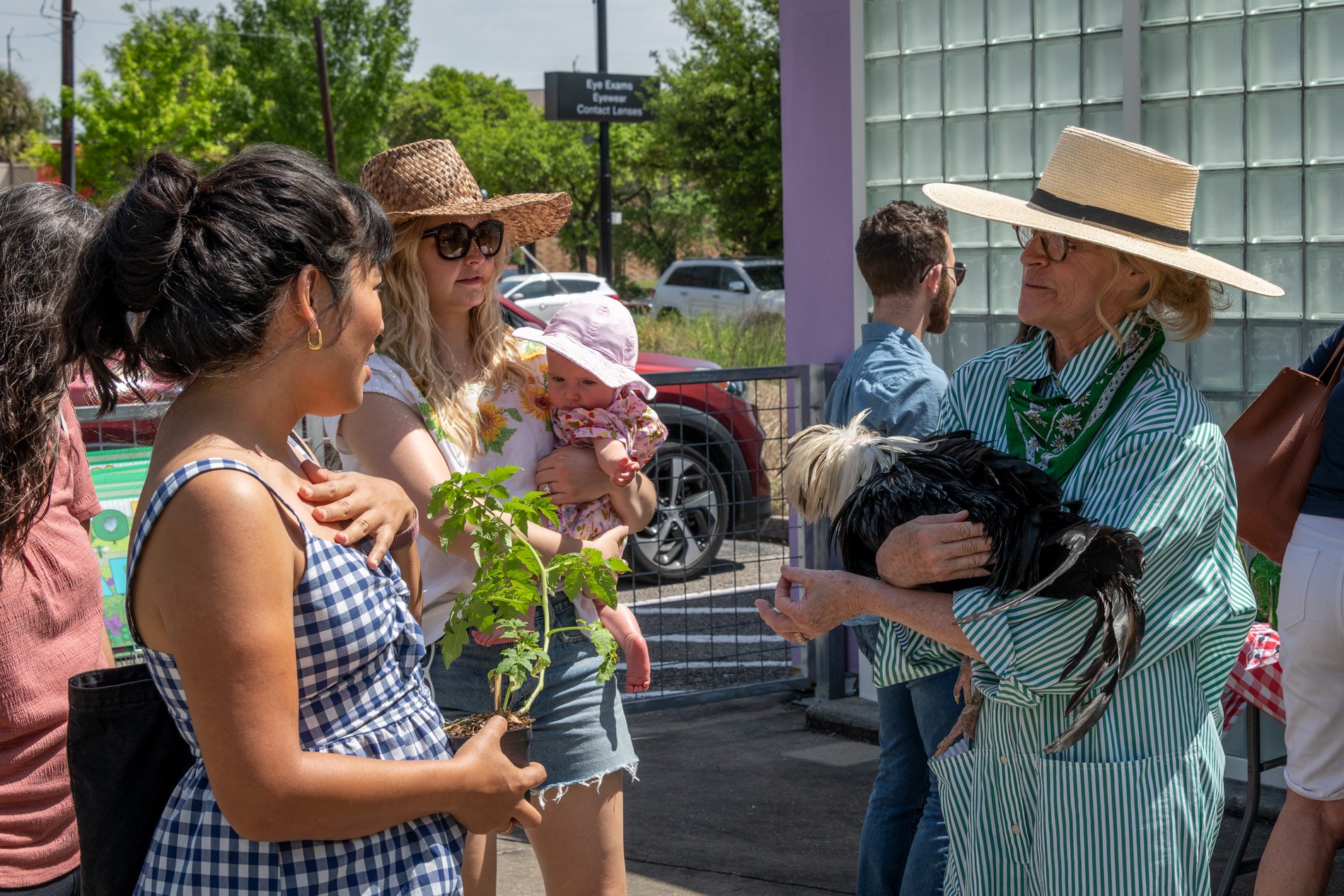
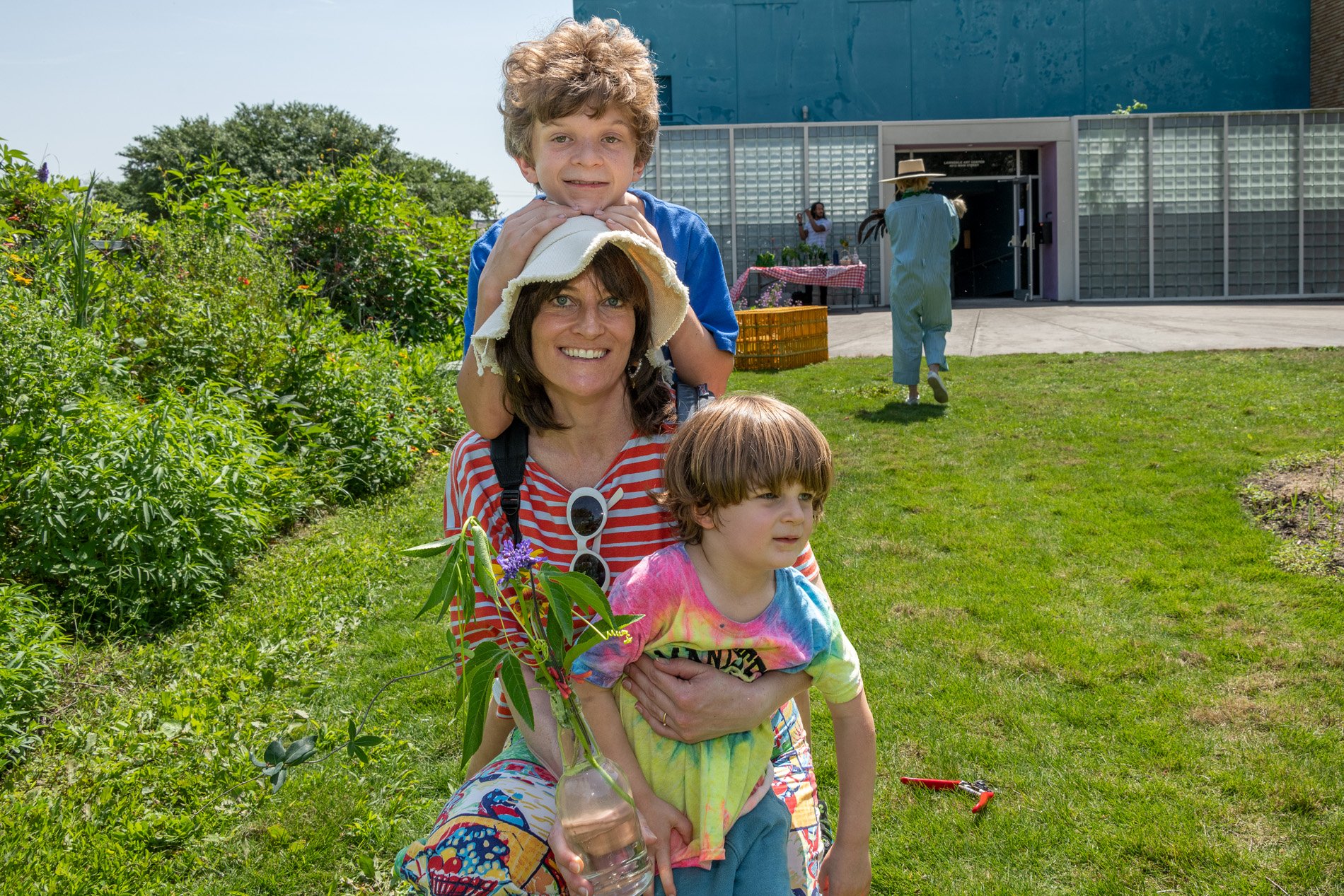
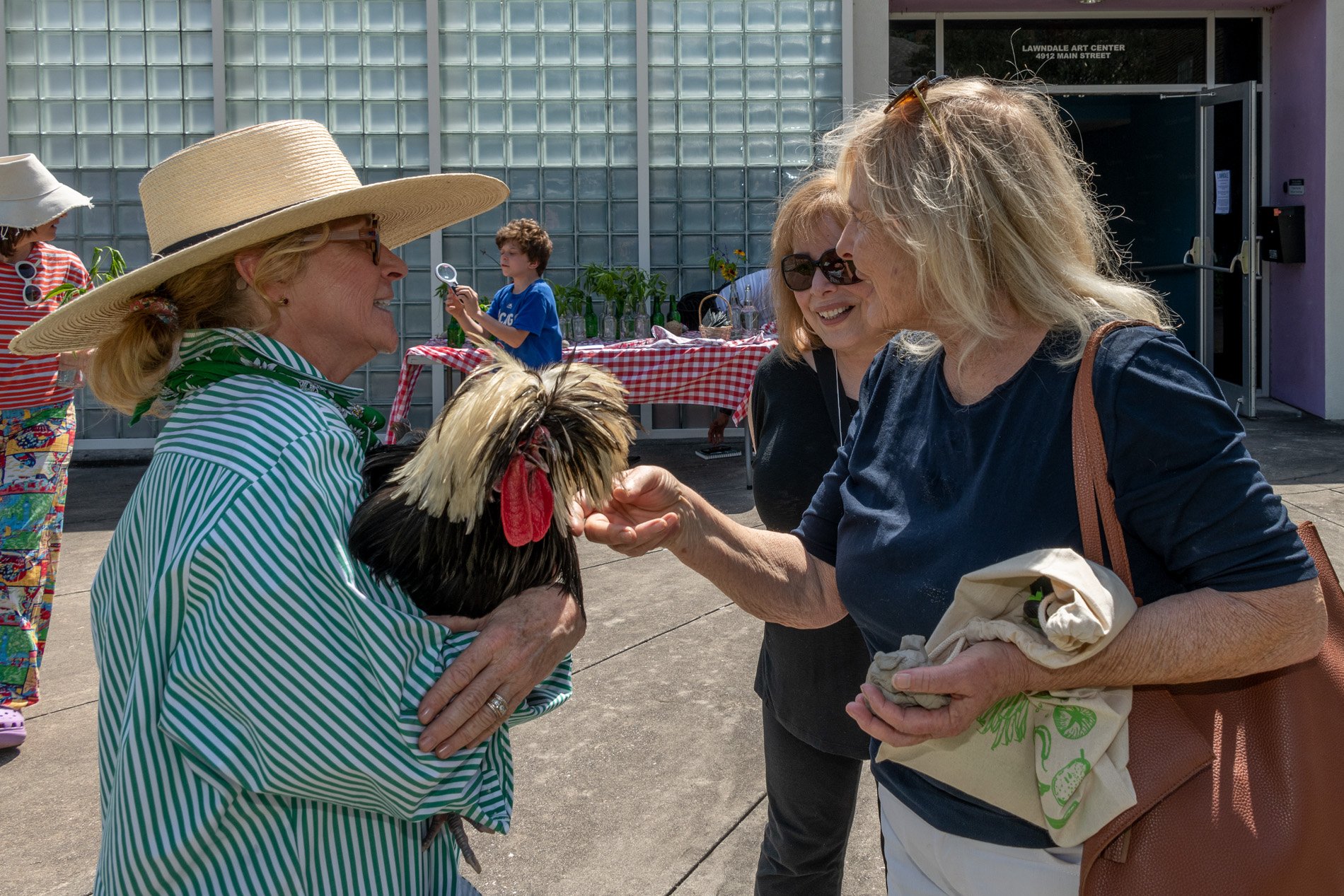
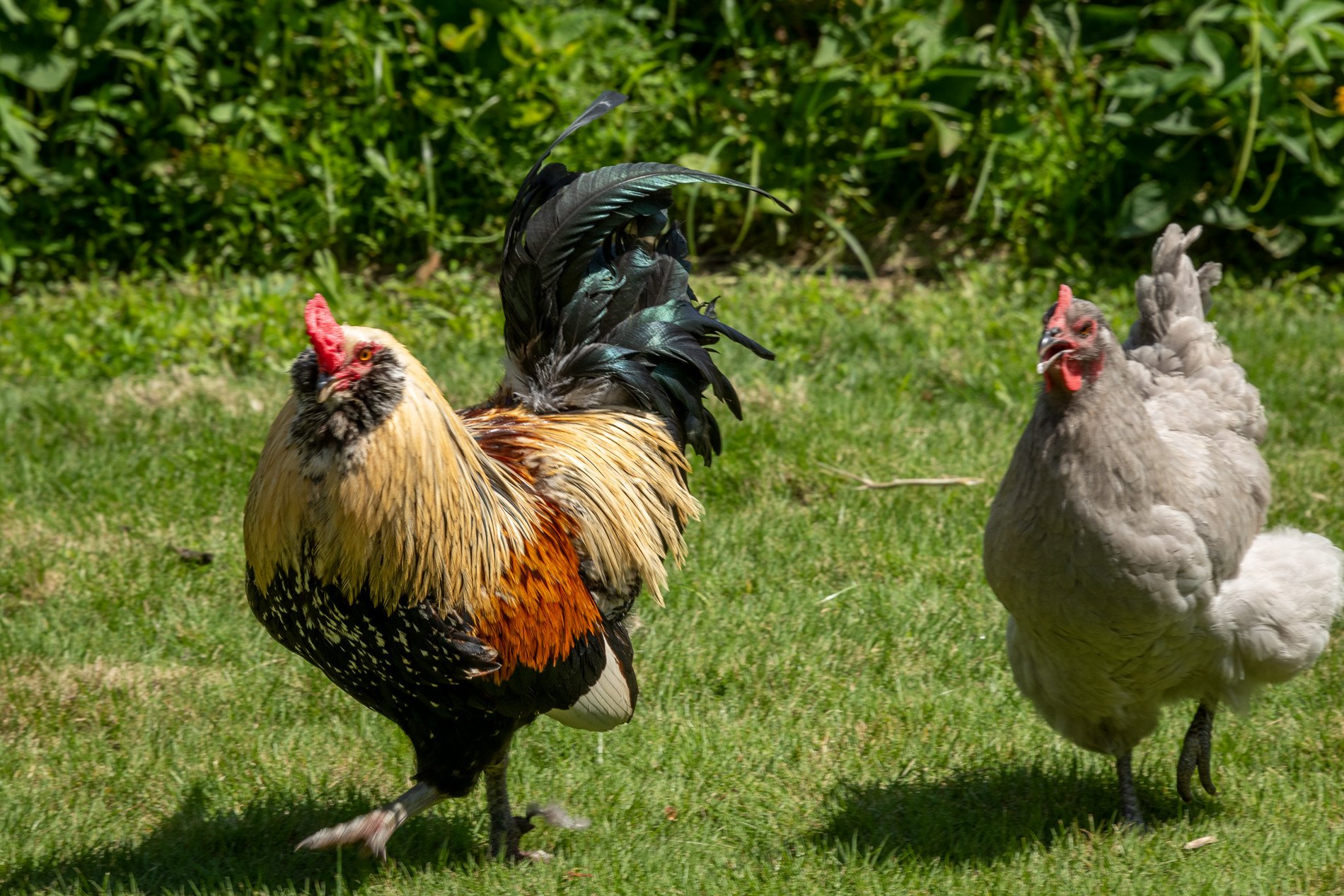
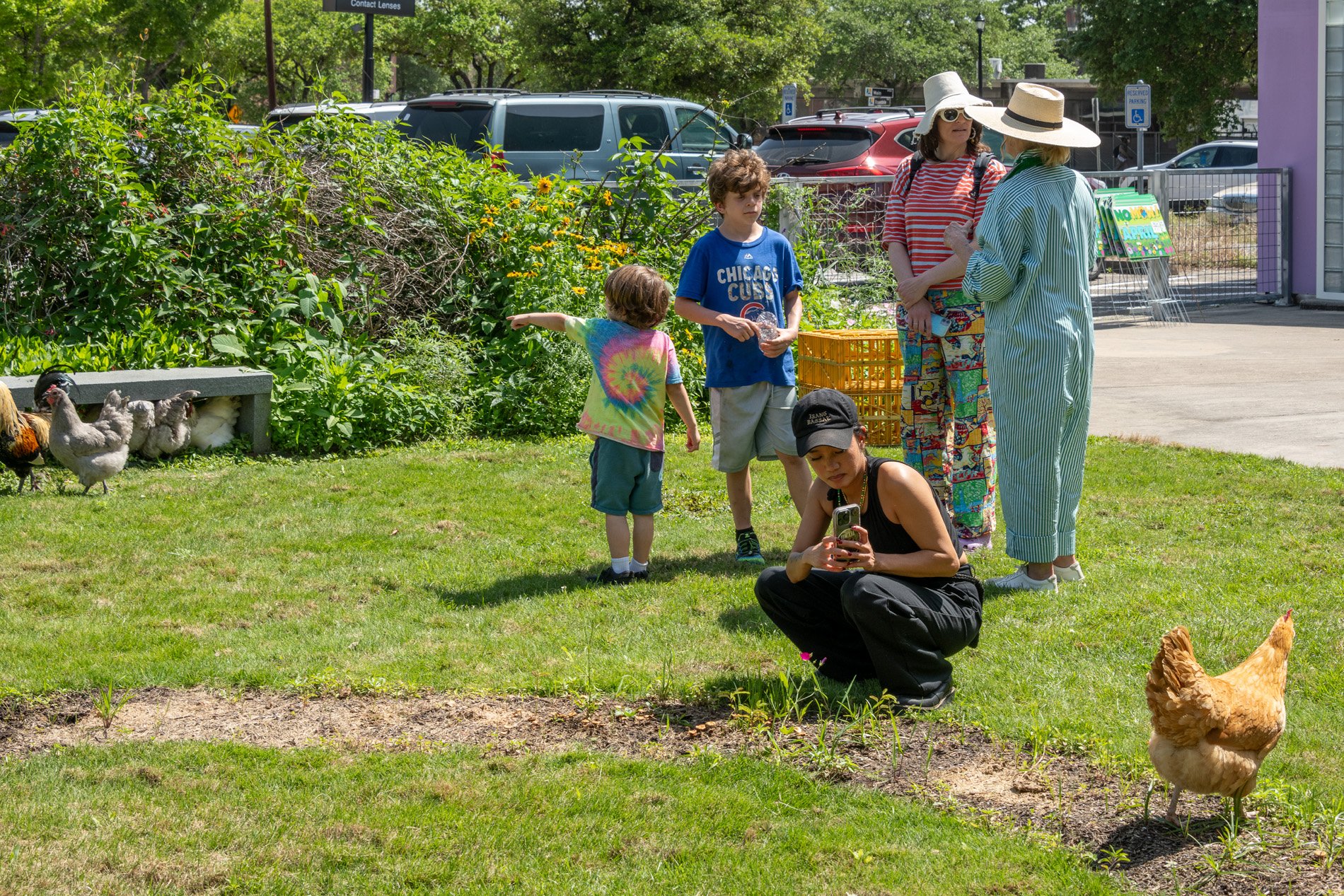
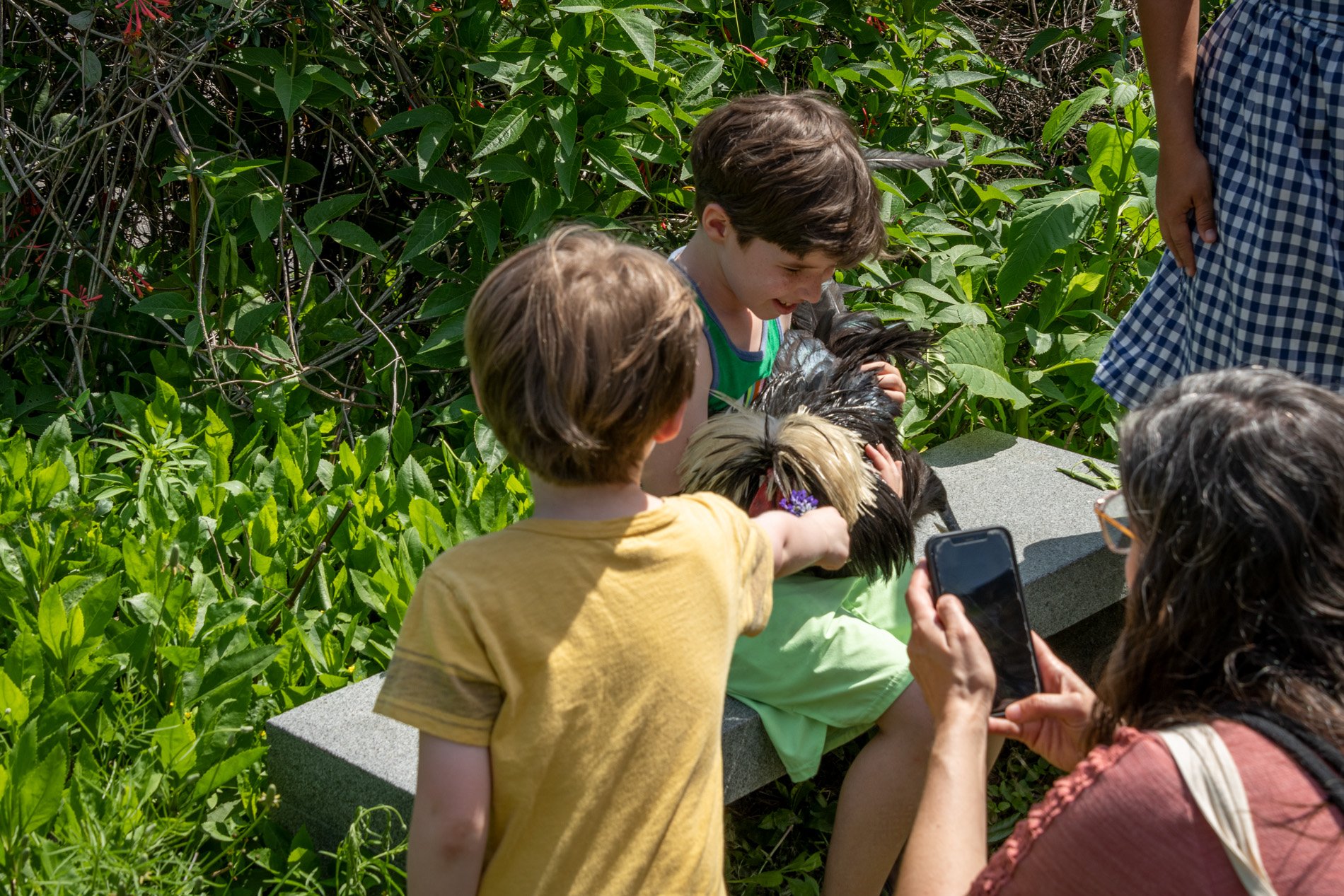
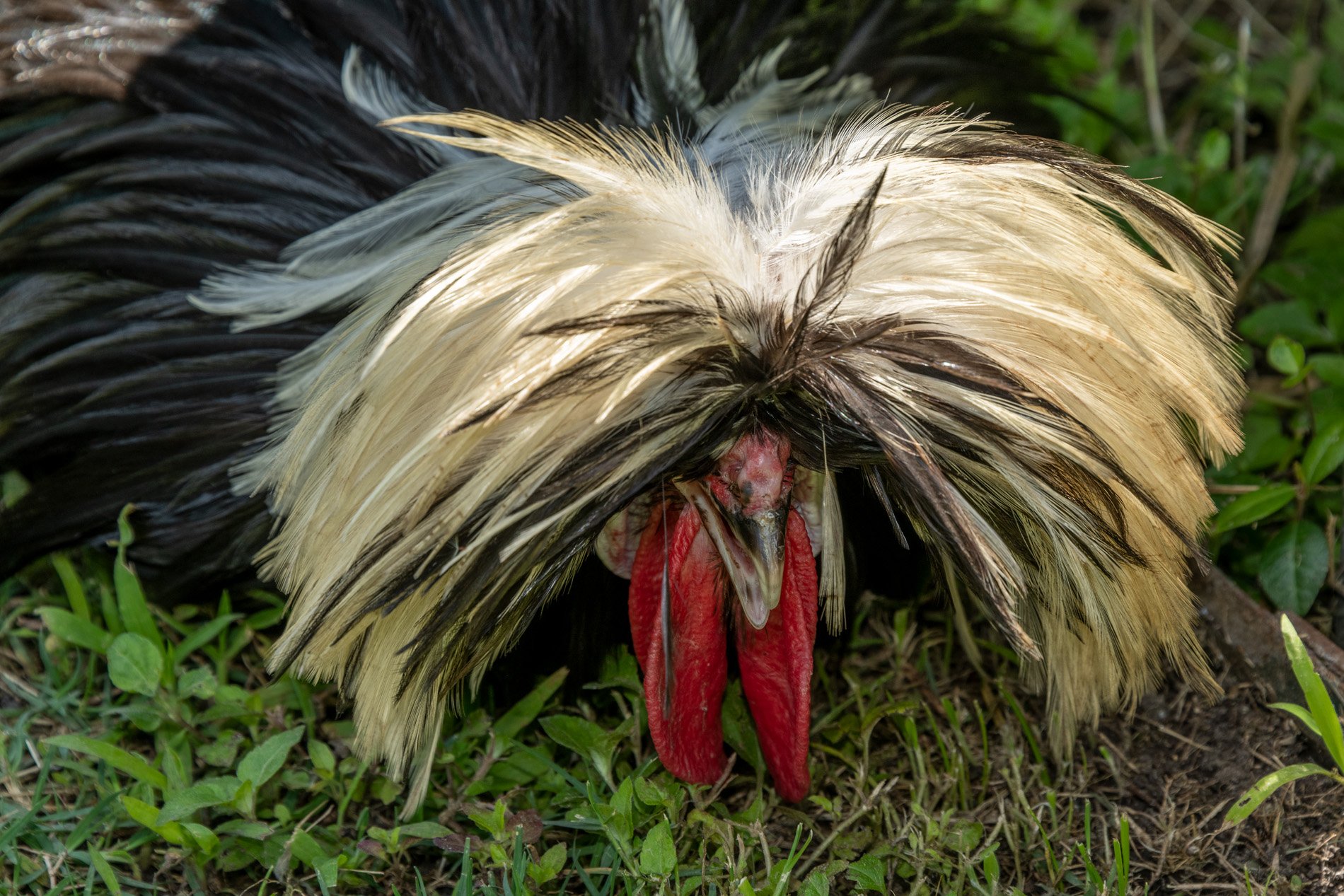
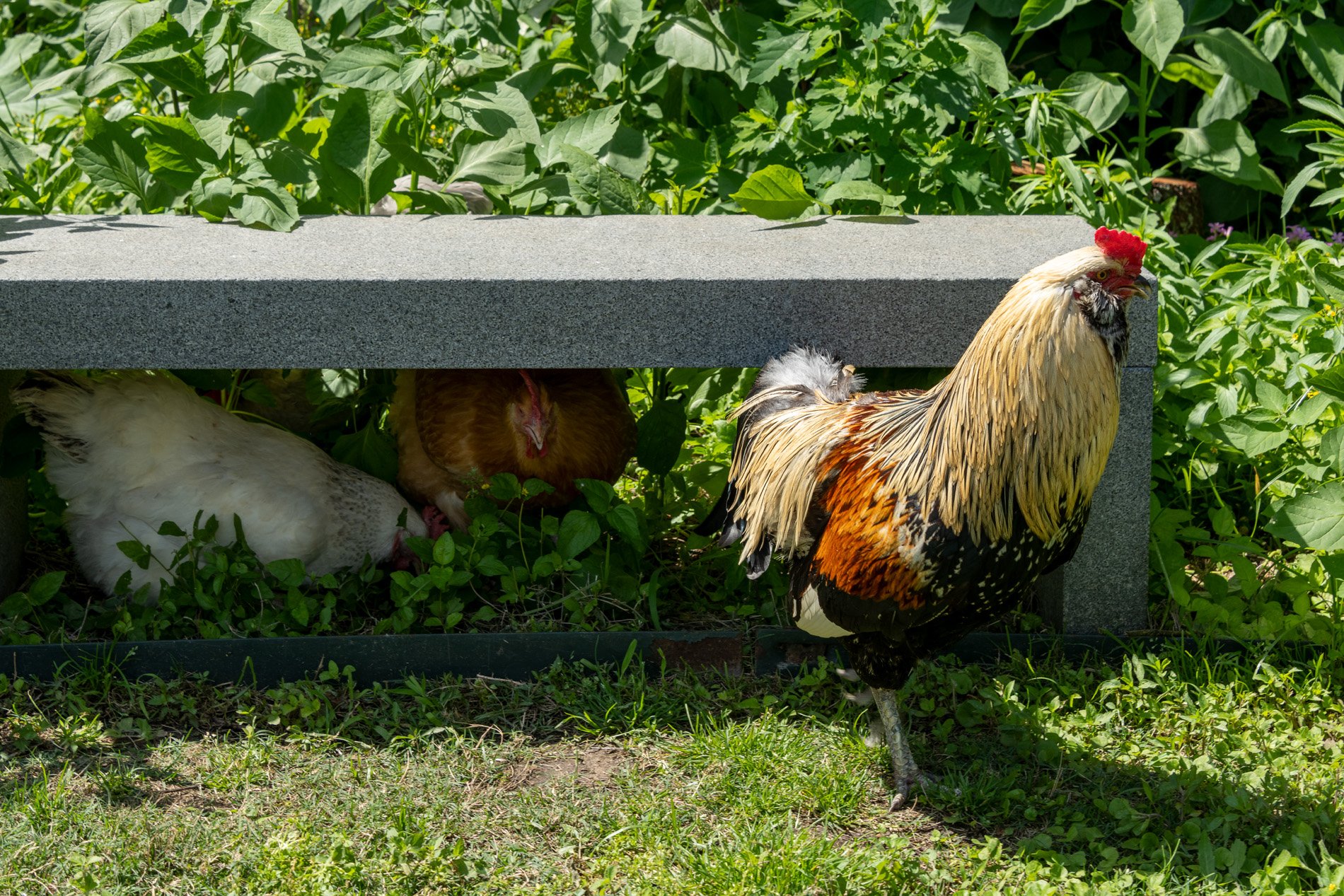
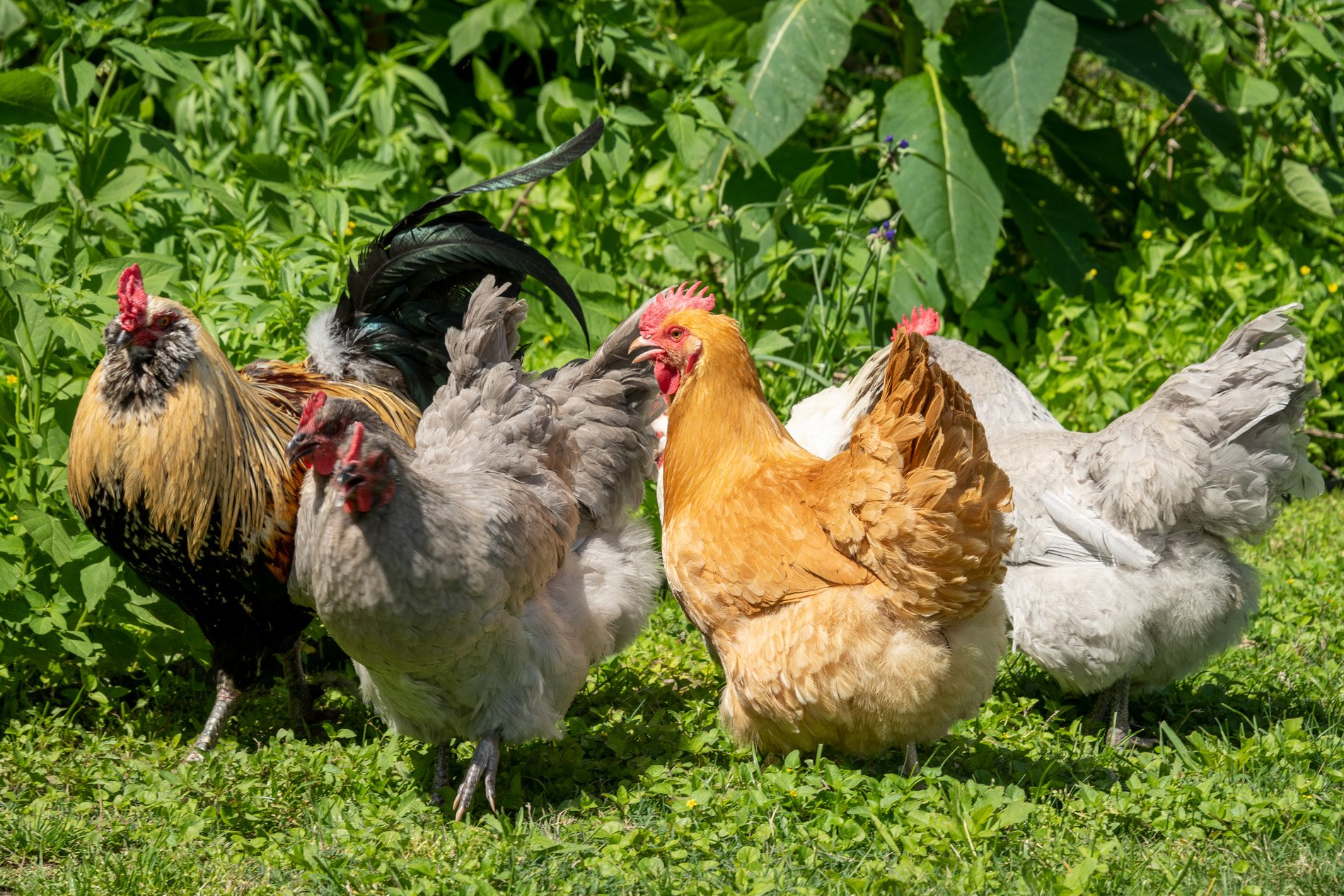
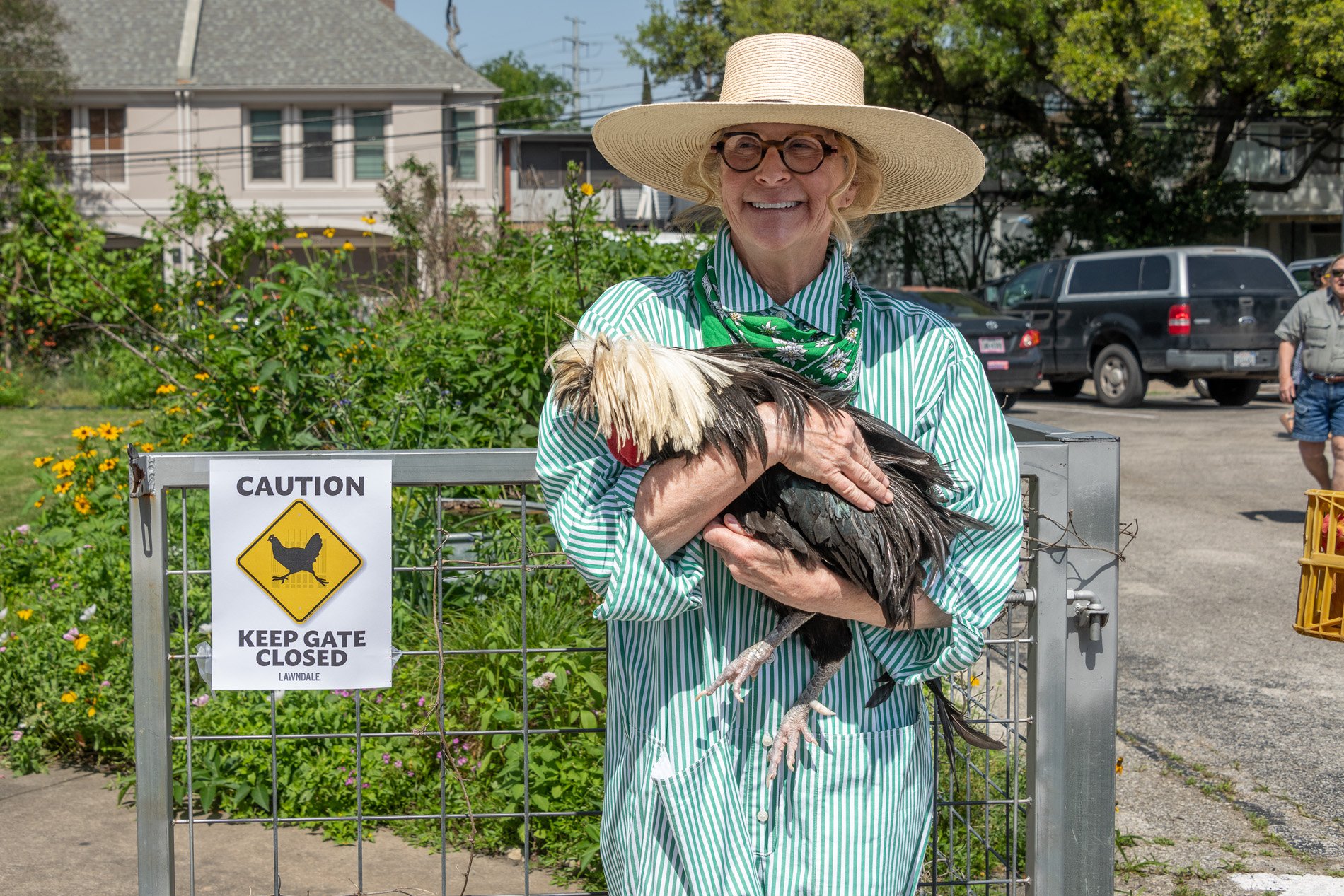
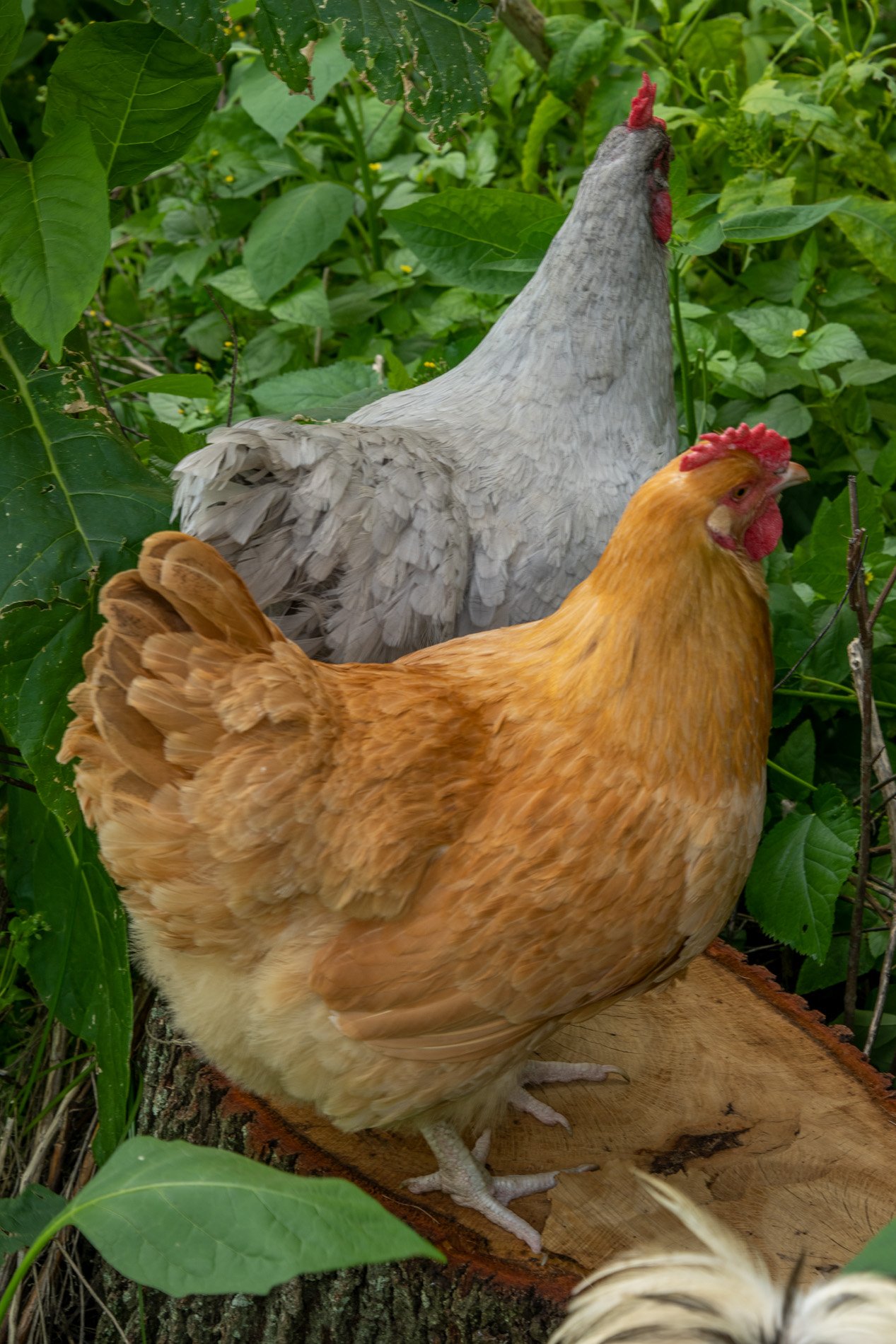
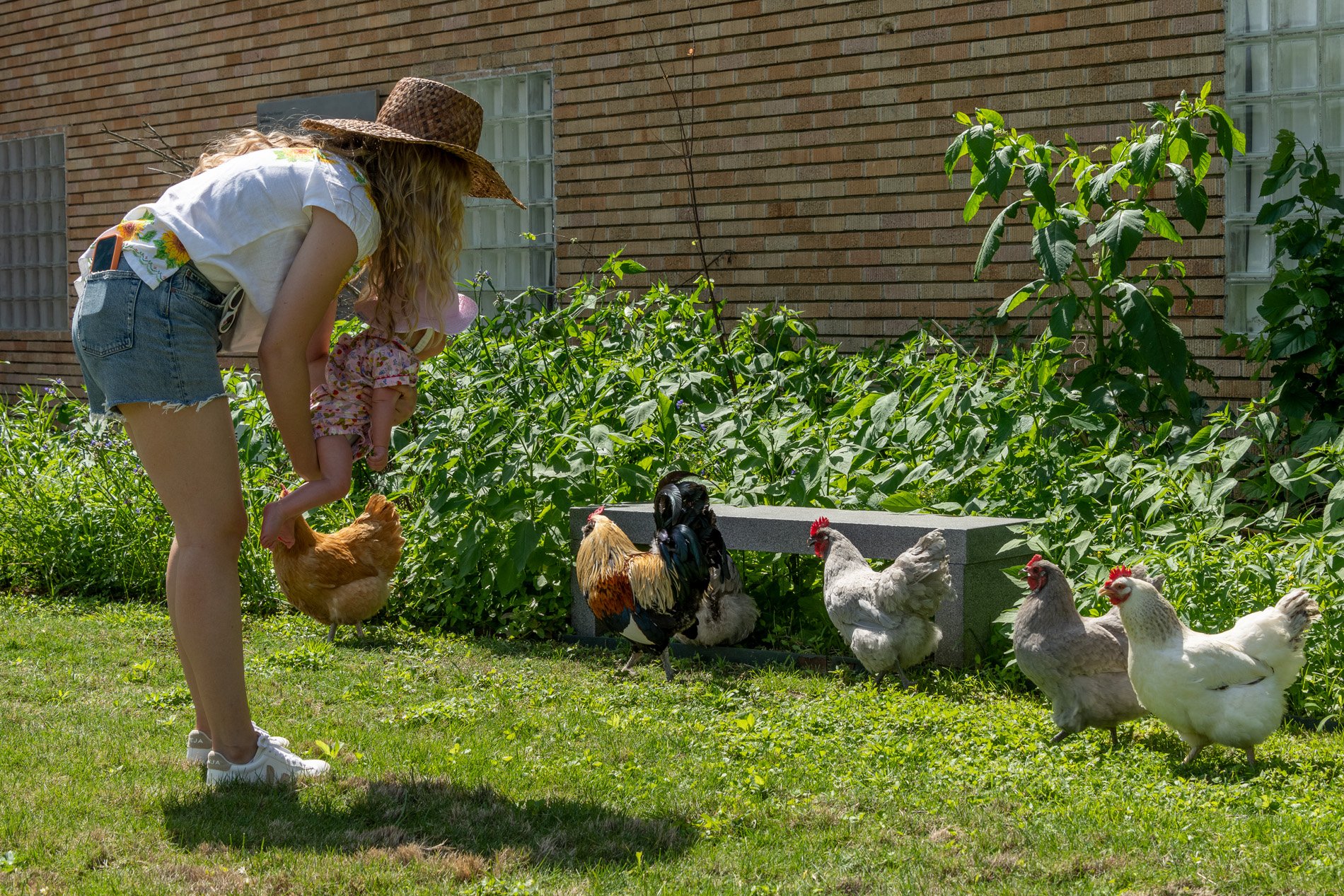
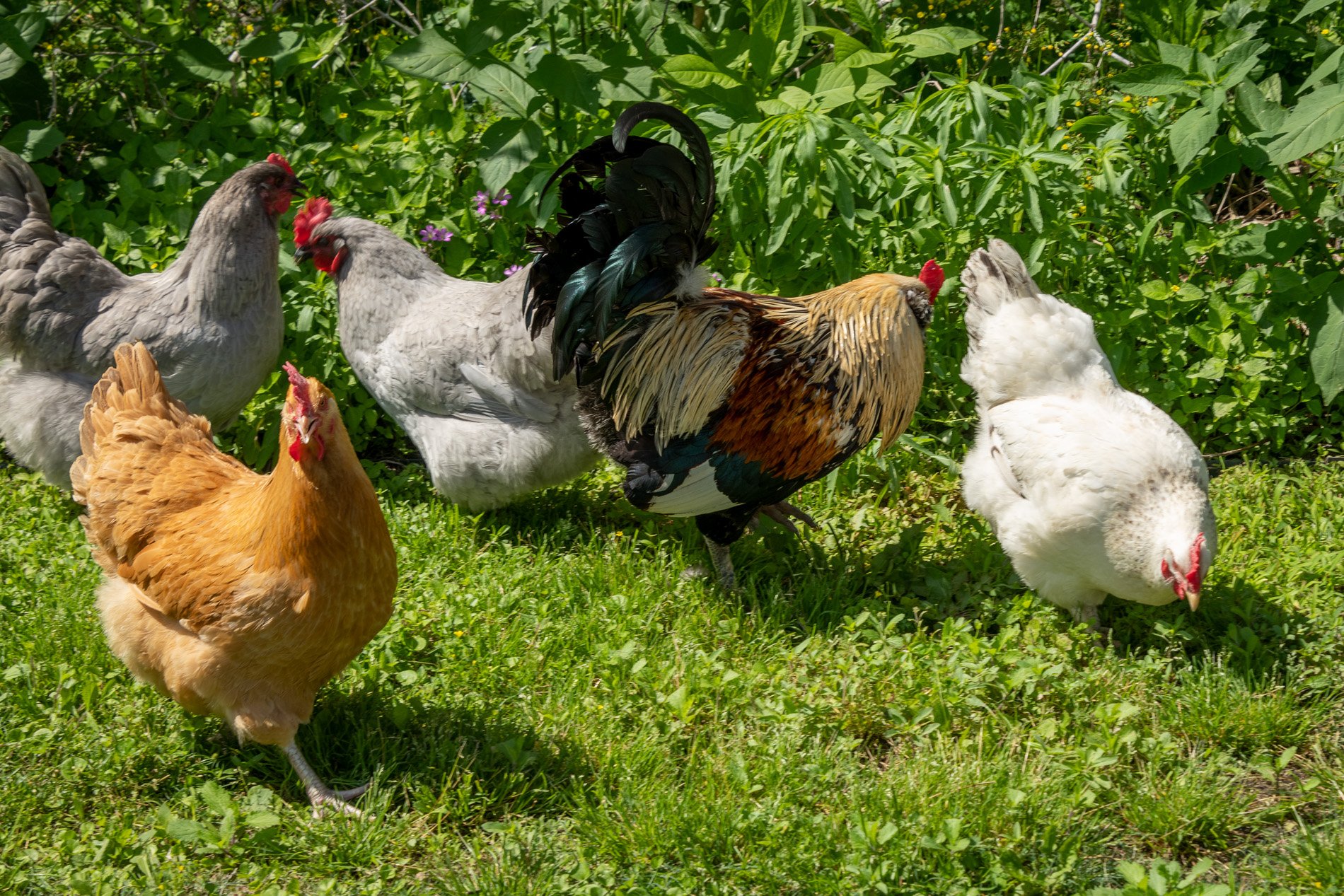
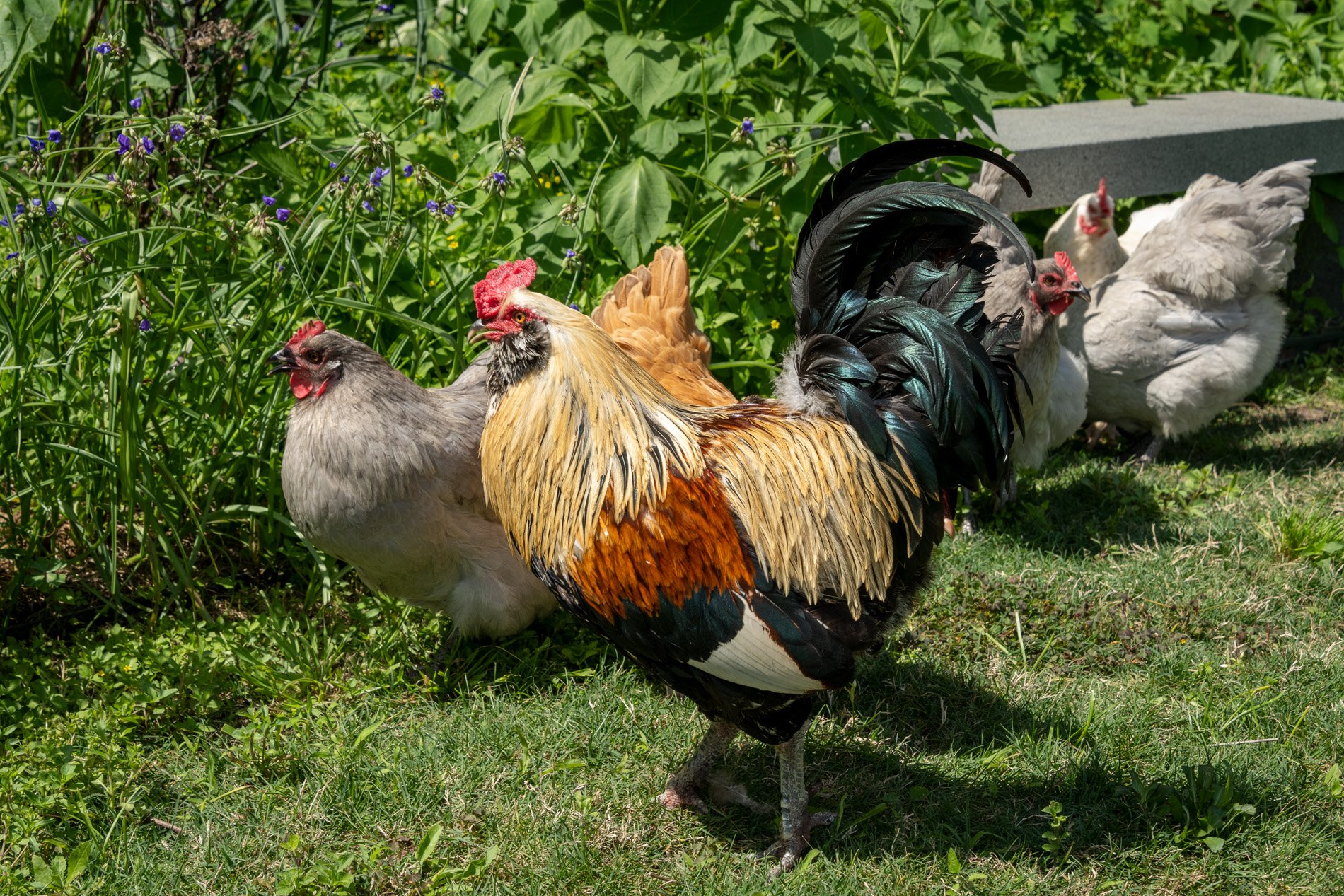
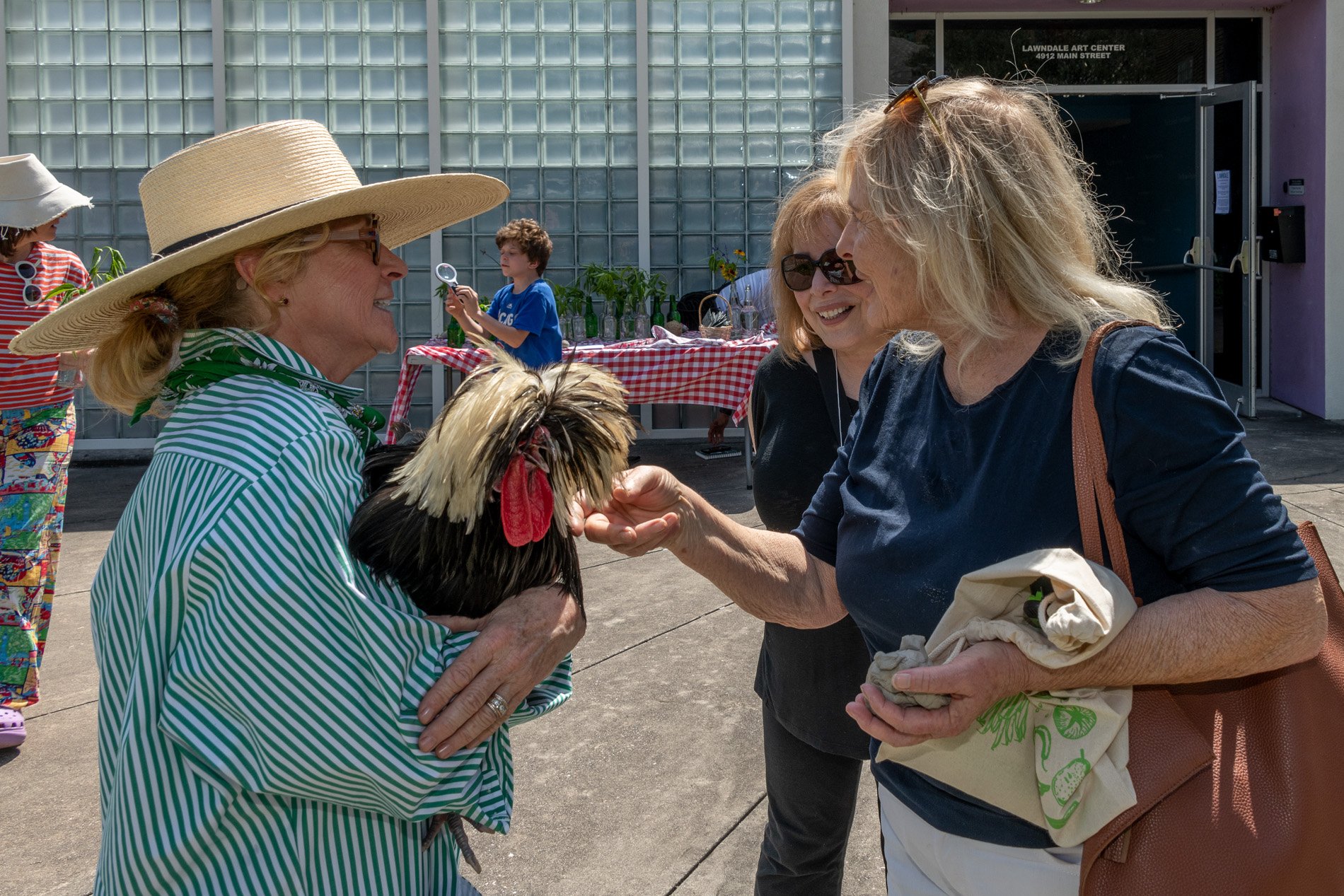
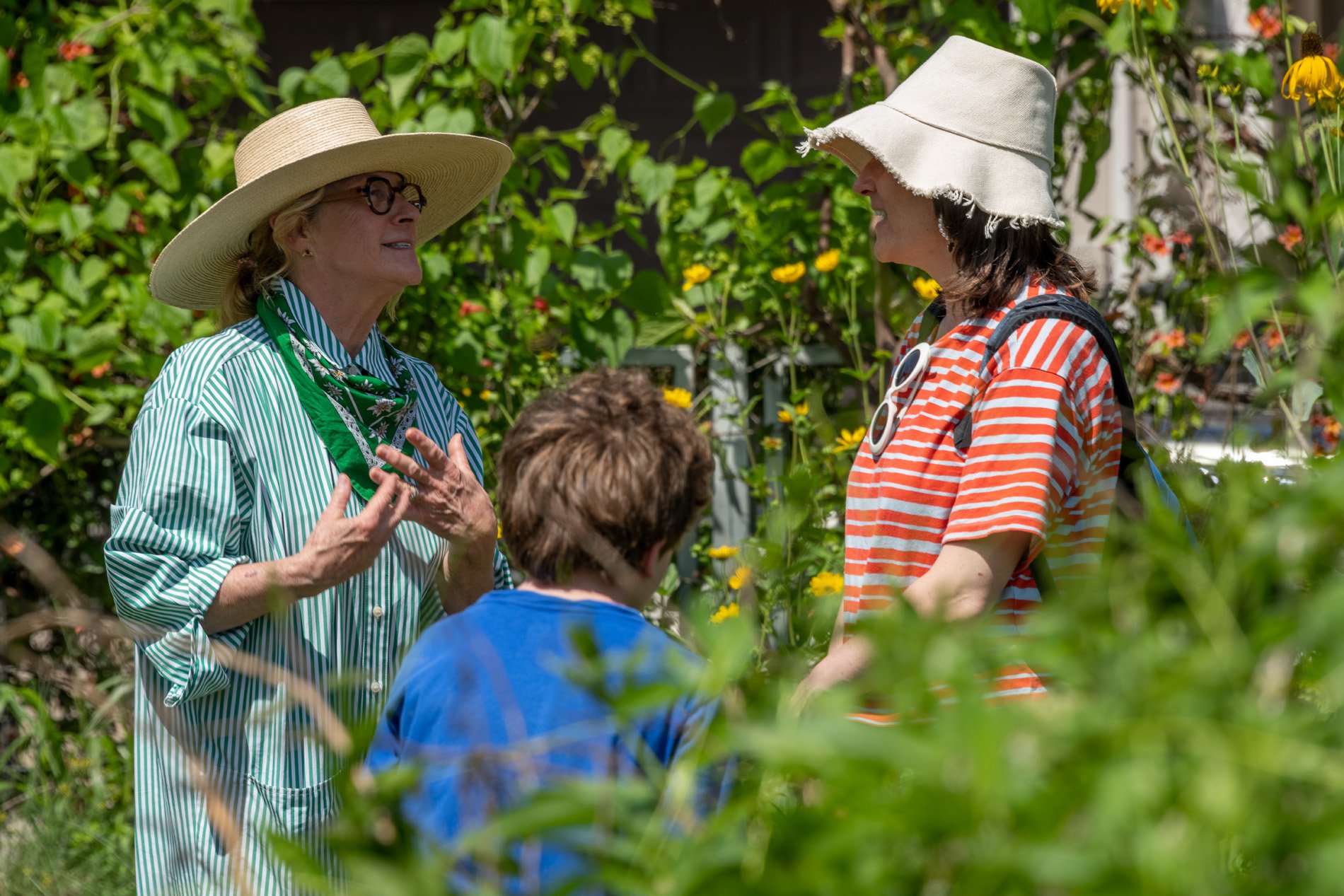
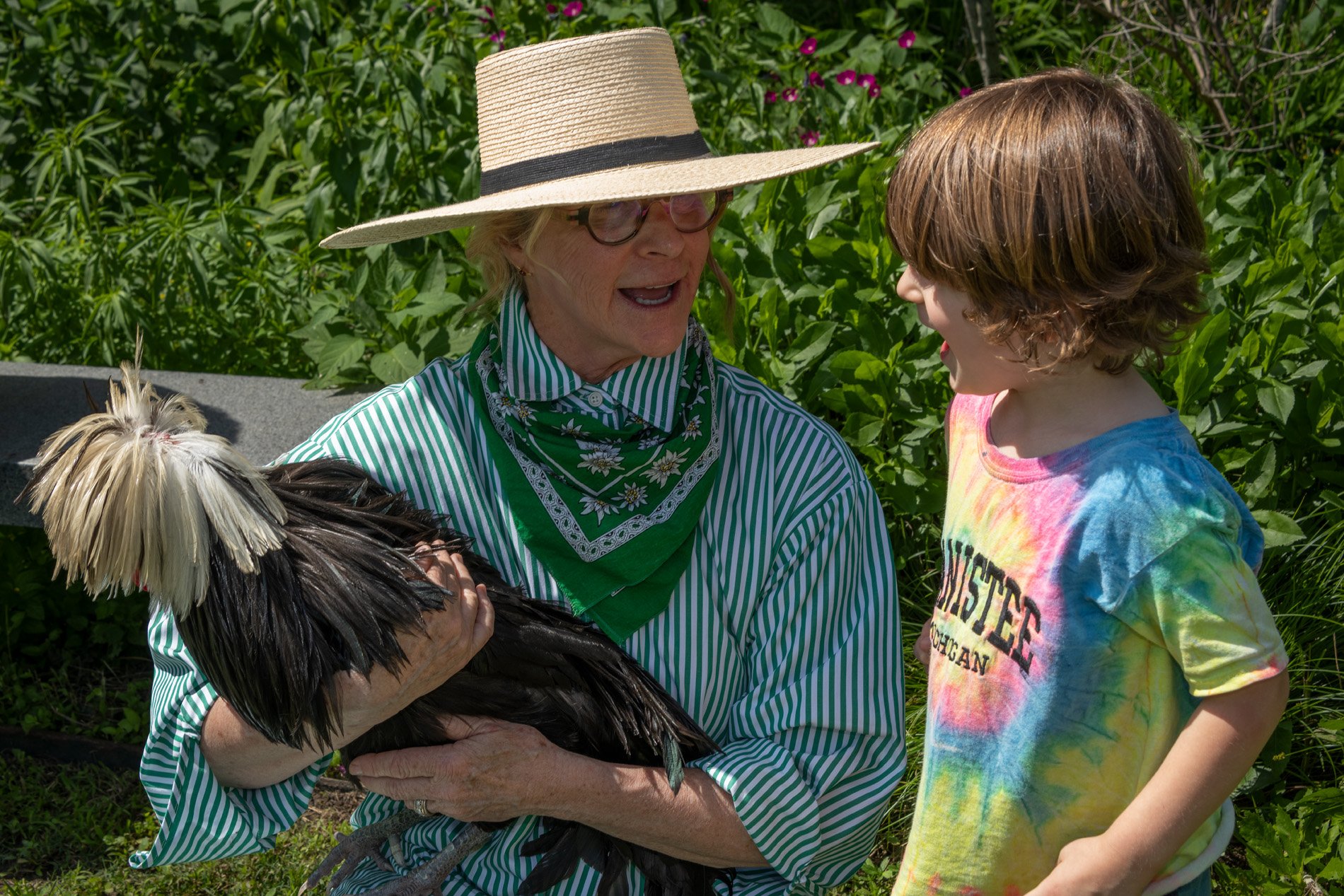
Eight chickens and two roosters were installed in Symbiosis, April 1, 2023, from 11:00-5:00

 There's more than eggs when it comes to urban chickens. Peck and Scratch is a throwback to when every family had a symbiotic relationship with these quirky feathered friends. It was common knowledge that chickens are miraculous energy transformers; they effortlessly clean up weeds and bugs from living soil while providing families with a more sustainable and cost-effective alternative to chemical pesticides and herbicides. Plus, their waste is invaluable - it replenishes the soil with much-needed nutrients for plants to thrive. In addition, the protein-packed eggs they lay contain all the amino acids necessary for promoting brain health for early childhood development.

By offering a cozy environment, refreshing water, and a lush habitat, we're showing gratitude towards our curious and joyful friends and providing them a safe home away from potential harm. Instead of supporting factory farms, our chickens deserve to thrive in an ecosystem filled with living soil and all the essential components they need to lead happy, healthy lives.

It's time to think outside the (takeout) box and invest in the power of urban chickens.