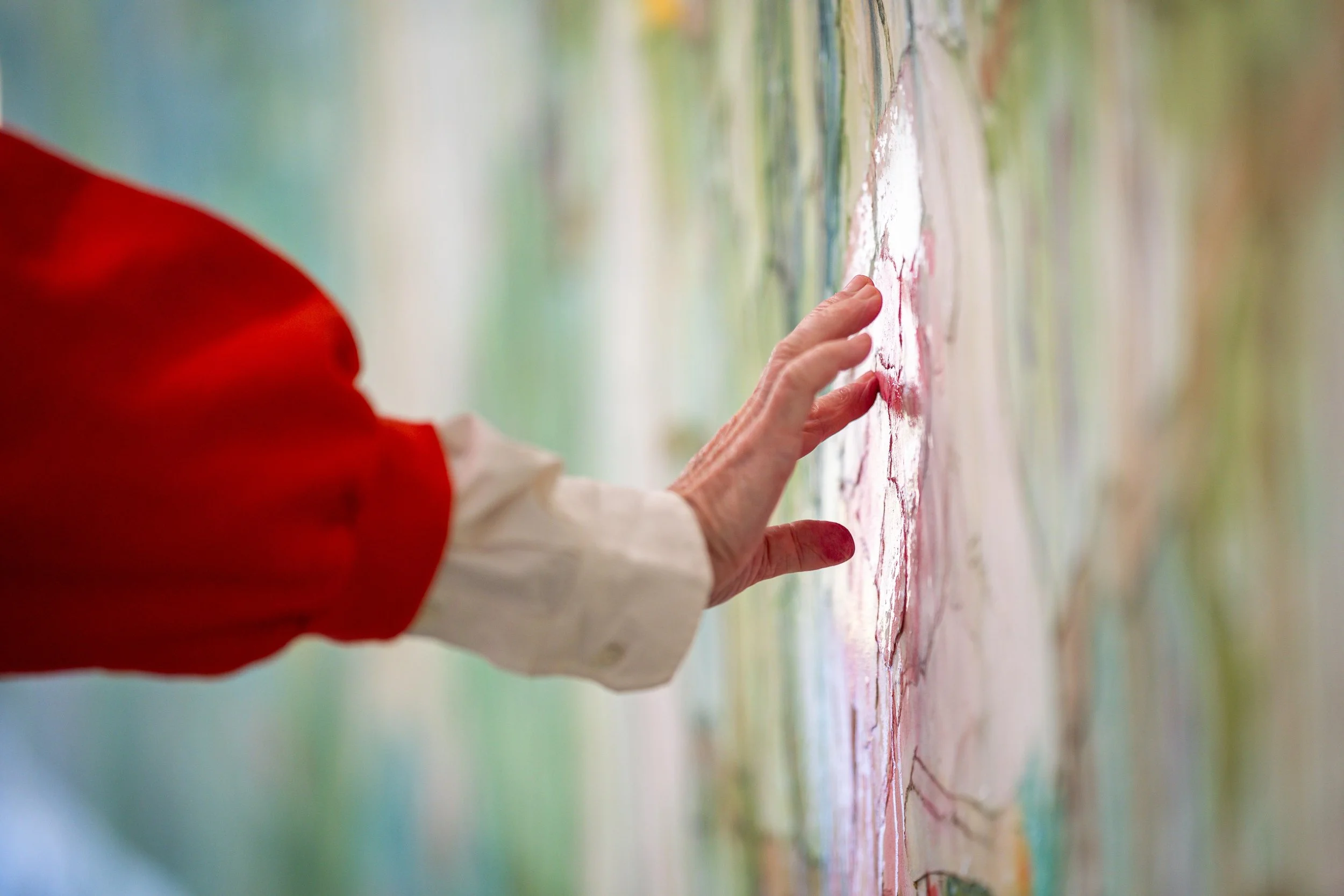
Tuesday, counselors from the Nick Fennigan Counseling Center came to my studio to talk about the piece I’m making for their auction. One of them mentioned, almost in passing, that she treats trauma with EMDR — Eye Movement Desensitization and Reprocessing. I knew its basic shape: the eyes move back and forth, left to right, while the patient holds a difficult memory in mind, and something about that motion helps the nervous system file it away as past instead of present. She’s spent years training to do this skillfully, with people in real pain. It works.
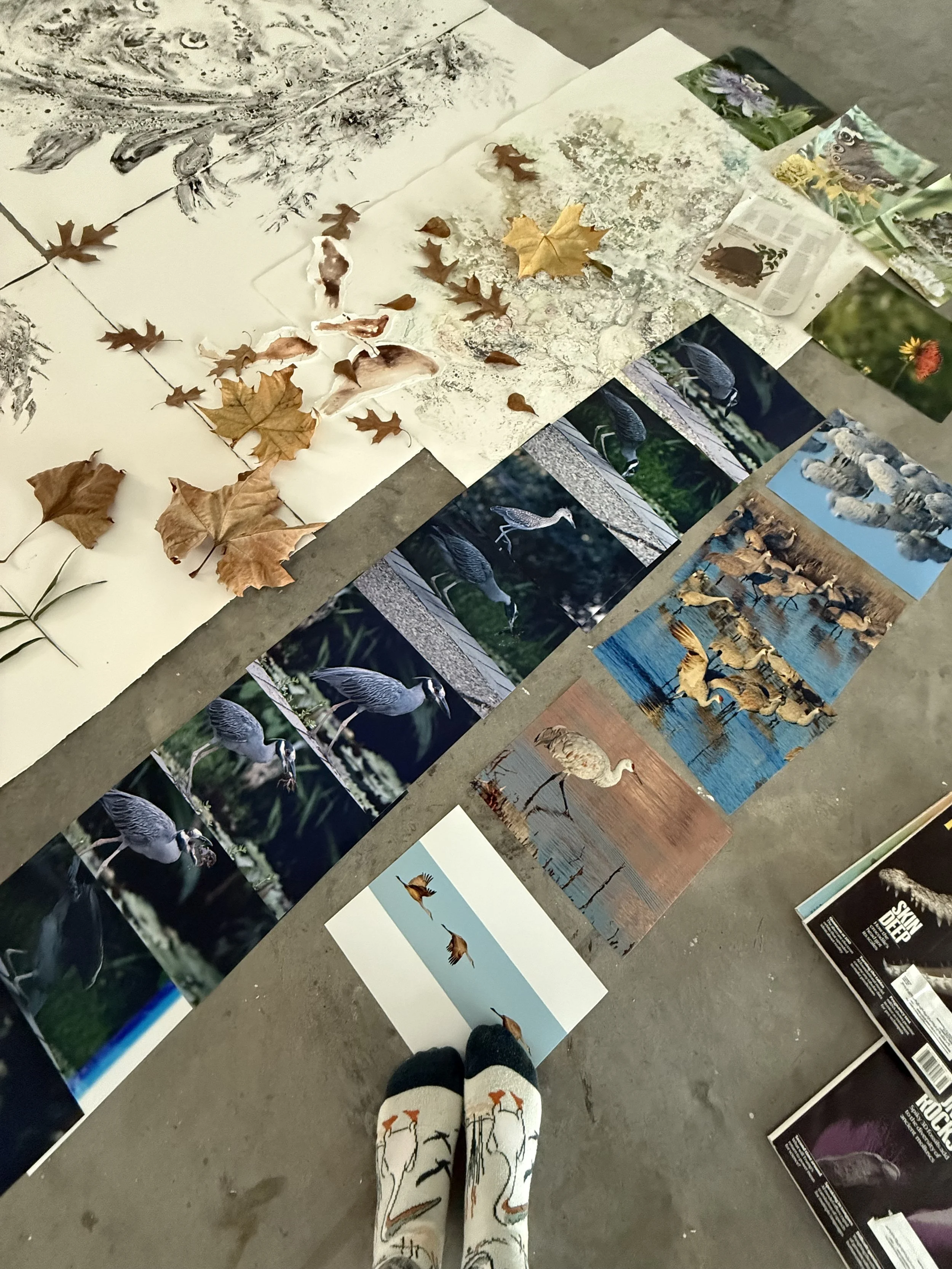
I went home. I walked through the gate, and before I’d registered doing it, my eyes were already moving across the pond — left, right — searching for a glimpse of the bullfrogs, hoping to catch one, checking the reeds for the night heron the lilies pads for the frogs. I do this in my gardens too, every time, without deciding to: scanning for new growth, for bees and butterflies, for whatever is crawling, climbing, or slithering through on its way somewhere else. I have never called it a technique. It is instinct — there was a day it was survival. Maybe it still is. I learned it from the pond, and the garden taught it to me again. I am sure I did it in the desert.
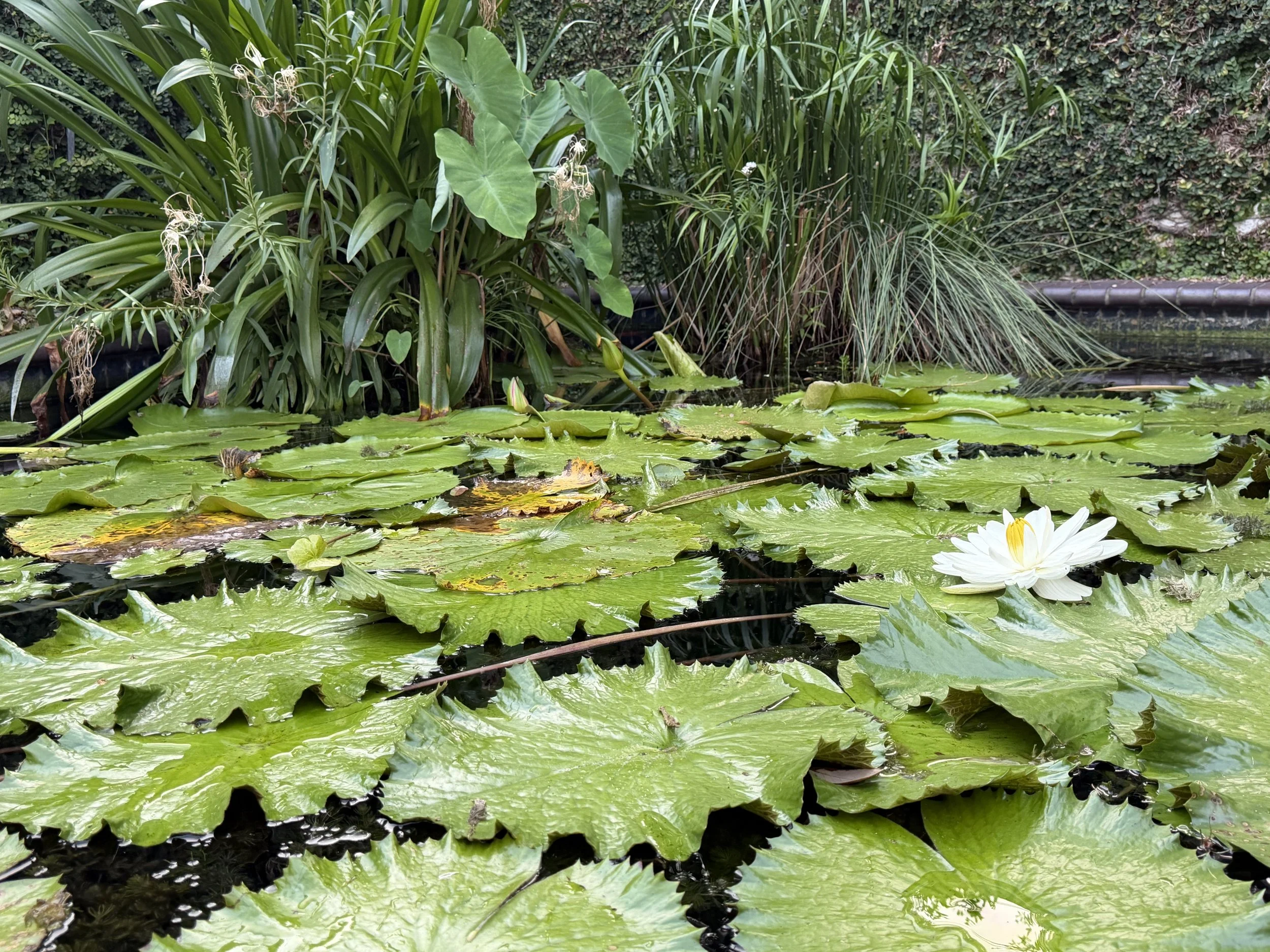
the pond.
Researchers looking for a mechanism behind EMDR’s eye movements identified the orienting response. In the 1990s, MacCulloch and Feldman proposed a Pavlovian-Darwinian account of it: an organism that couldn’t orient toward threat and opportunity in its environment didn’t survive to reproduce. The lateral, searching sweep of the eyes across living terrain is old behavioral software — older than language, older than any office a person might sit in to heal.
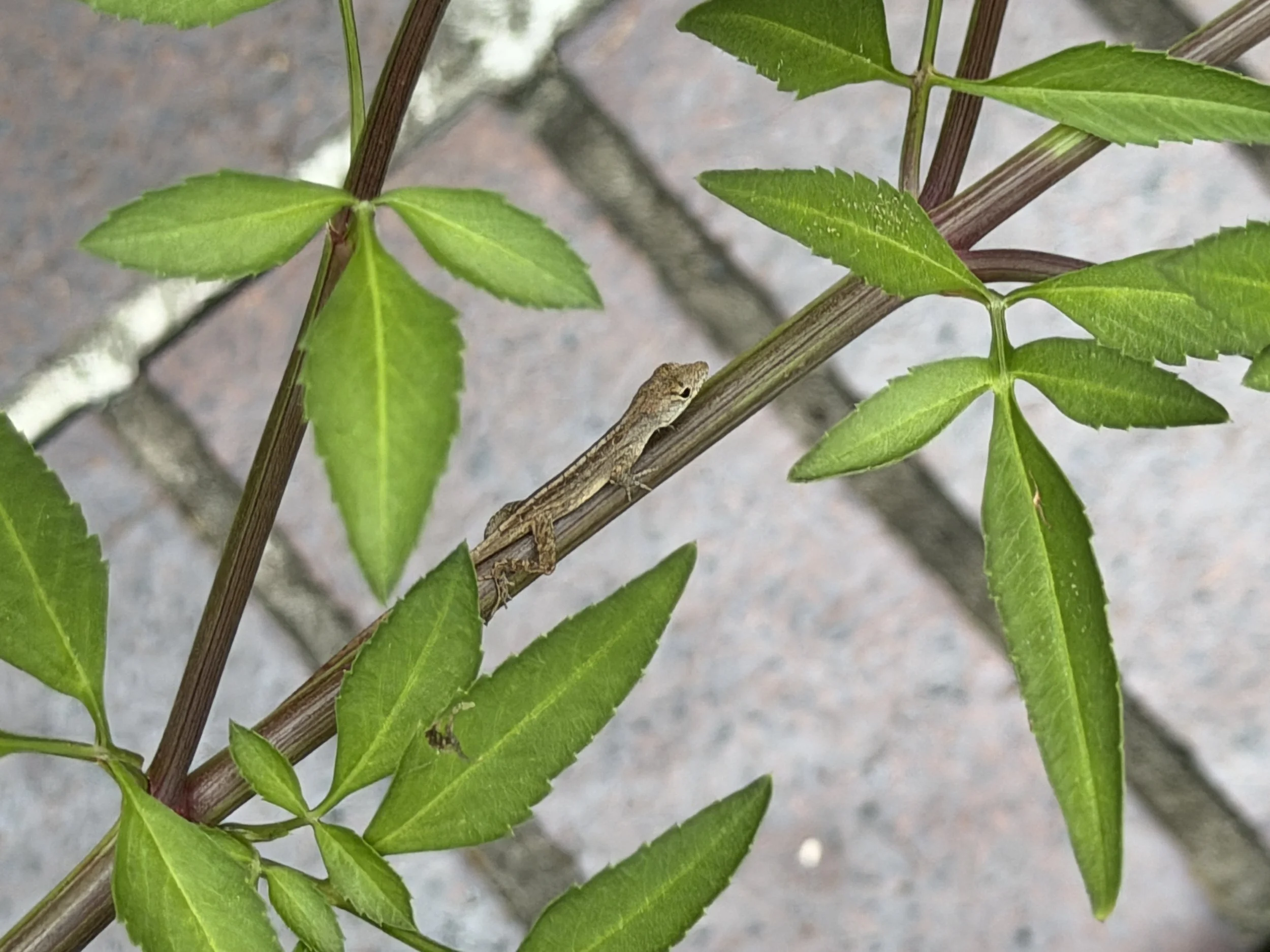
scanning for bullfrogs i spied the tiniest delightful being.
What the therapist is doing, I think, is more than administering a technique. She’s giving a nervous system access to a mode of perception it evolved for and hasn’t had steady work for in a long time — the same mode the pond and the garden still gift me. Before we managed our landscapes, every walk outside was scanning: where is danger, where is food, what just moved. Vigilance and wonder ran on the same current. The heron was a threat-check and a gift in the same glance.
Then came glass, mowed lawns, screens, art hung in a fixed row at eye height — interiors that ask nothing of the eye because nothing there can hurt or feed you. The old sweep didn’t disappear. It just ran out of terrain to practice on.
So maybe what the therapist restores in the room, the garden restores outside it. Not competing methods — the same reflex, given two different kinds of ground to work on. The bees and the bullfrogs aren’t incidental to what happens to me out there. They’re the terrain that makes the scanning necessary again.
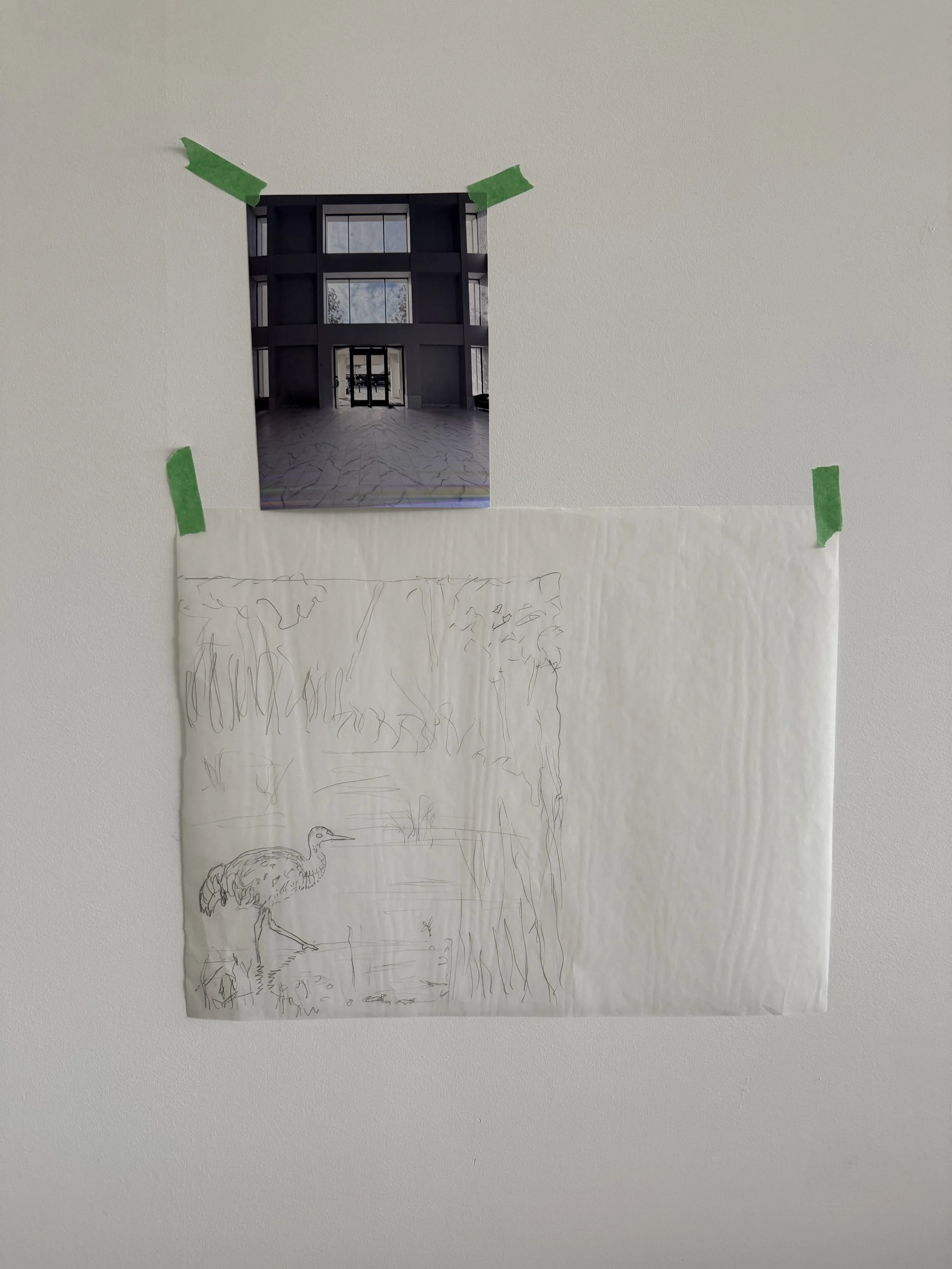
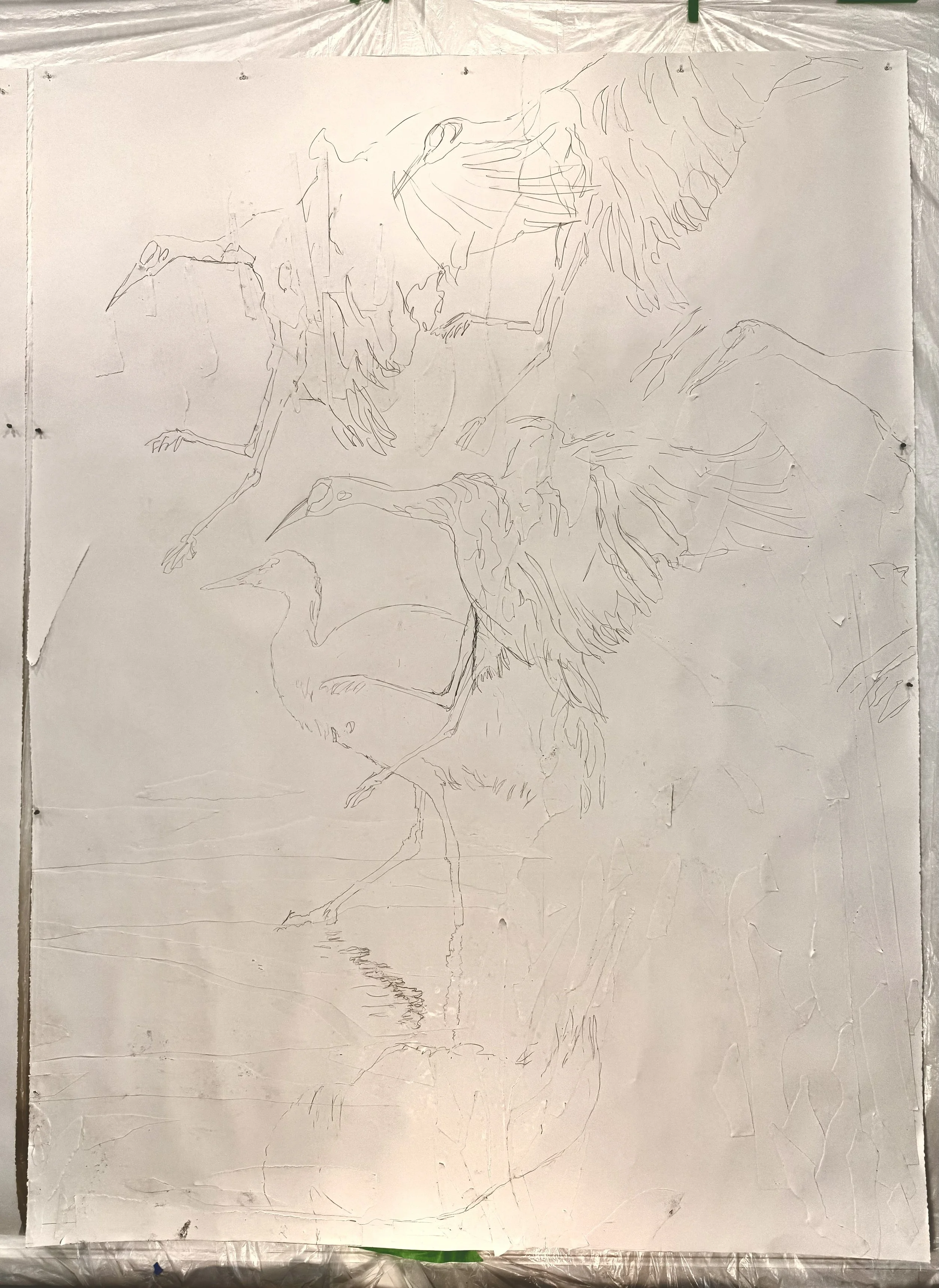
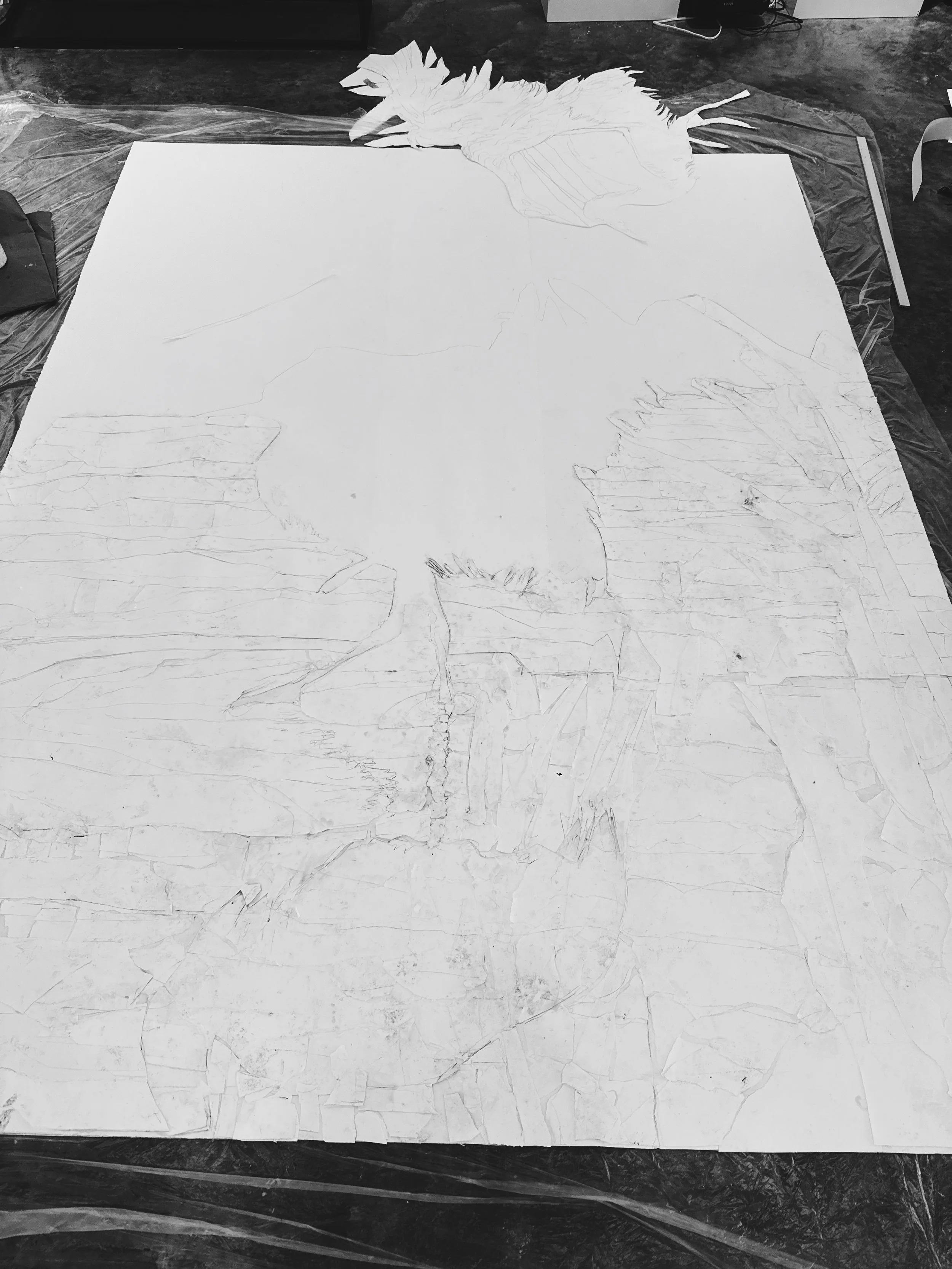
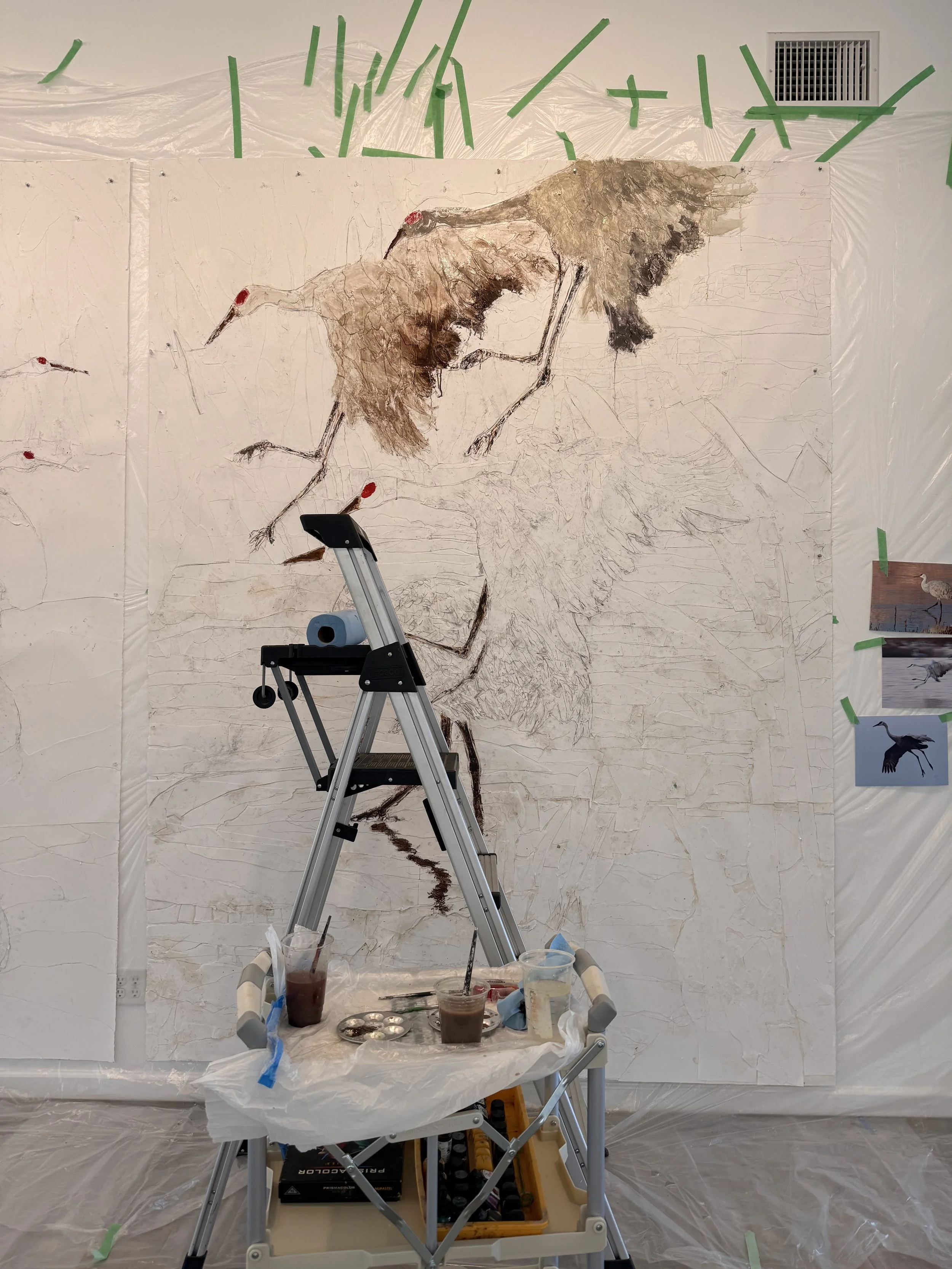
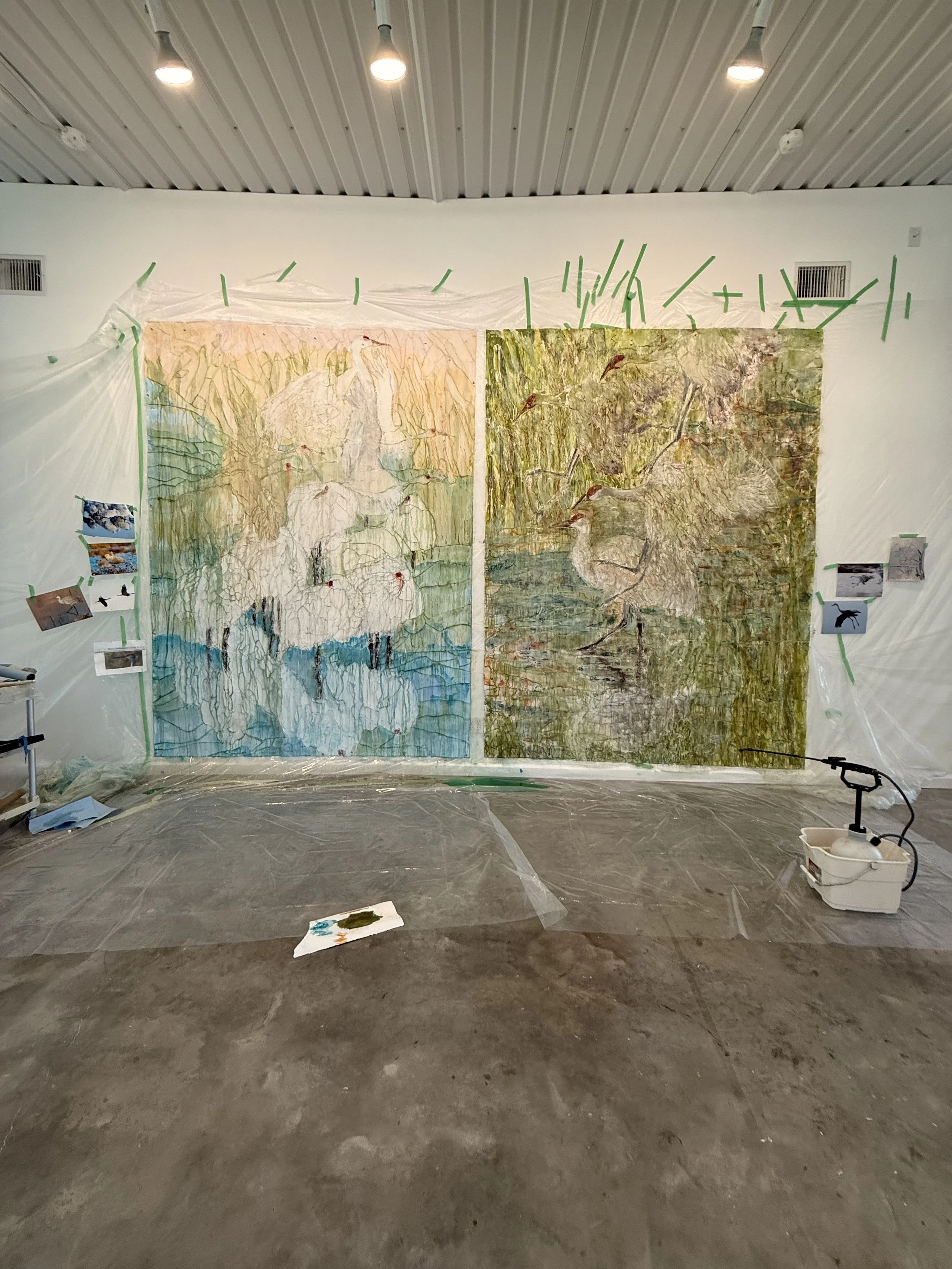
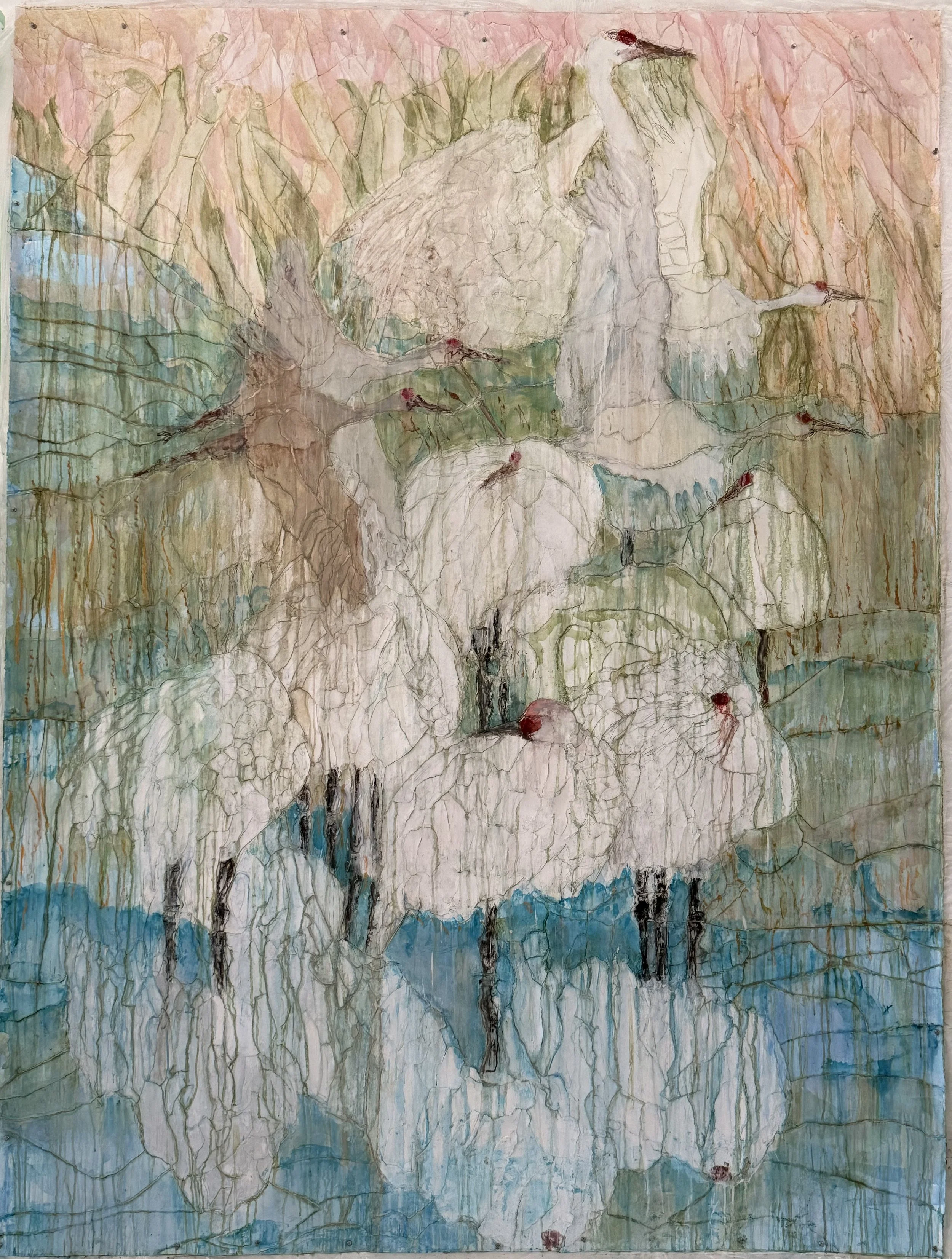
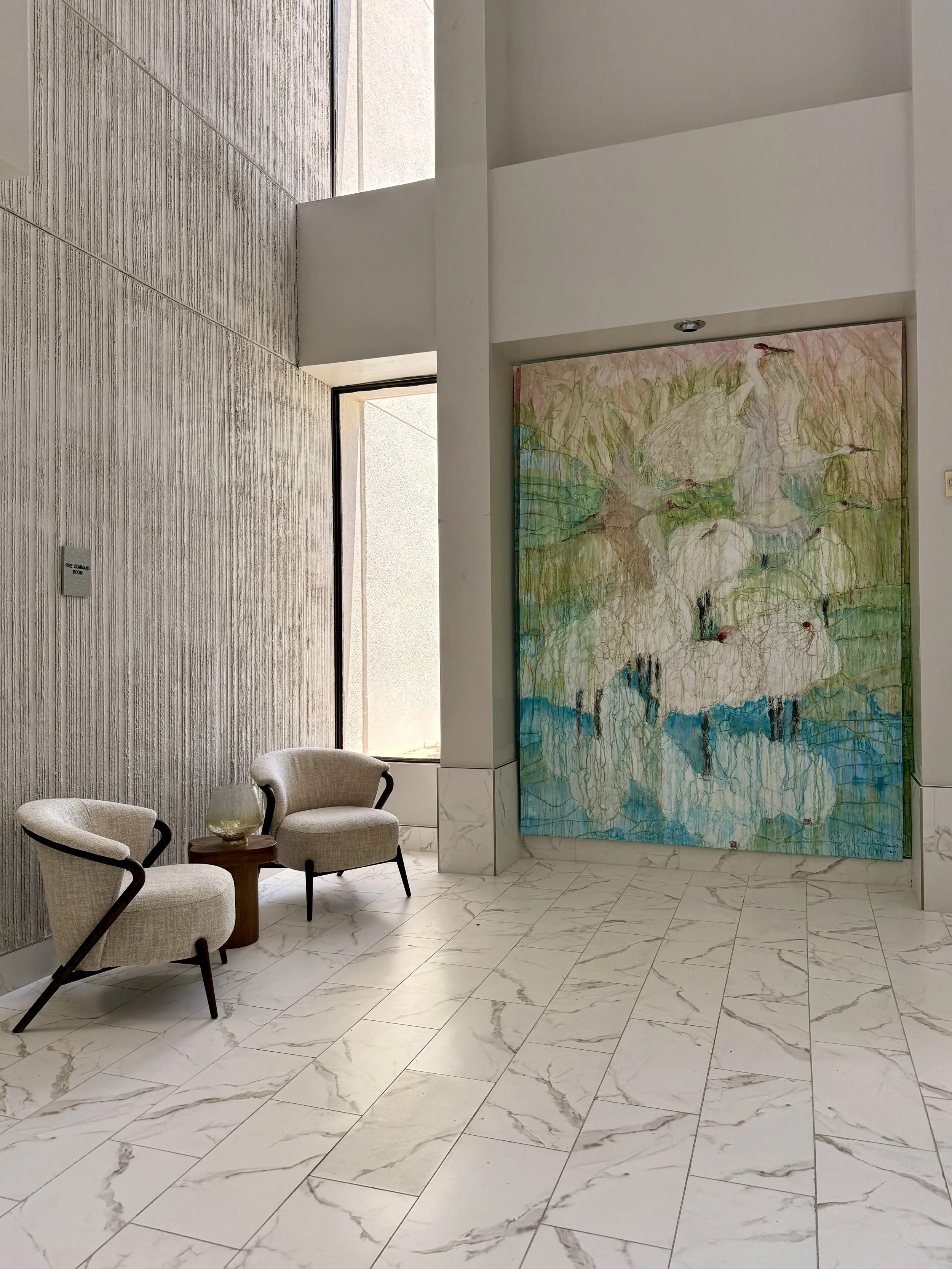
The piece I’m making for the center’s auction will ask something similar of whoever stands in front of it. The lower part holds a strong side-to-side movement — the eye has to work there, back and forth, before anything resolves. Then the movement lifts up out of that messiness and soars. I built that in on purpose. I keep making the eye do the one thing it’s always known how to do.
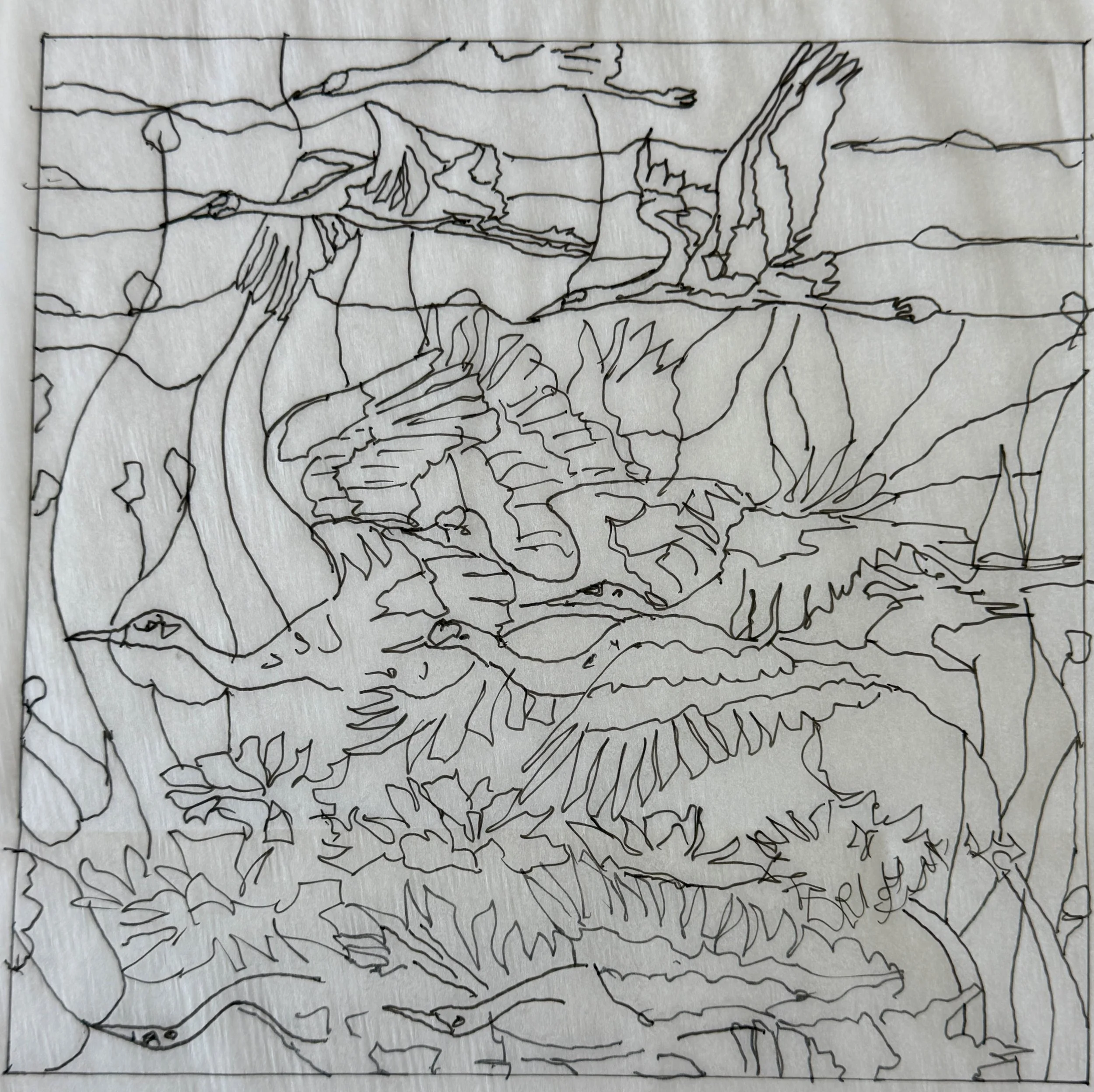
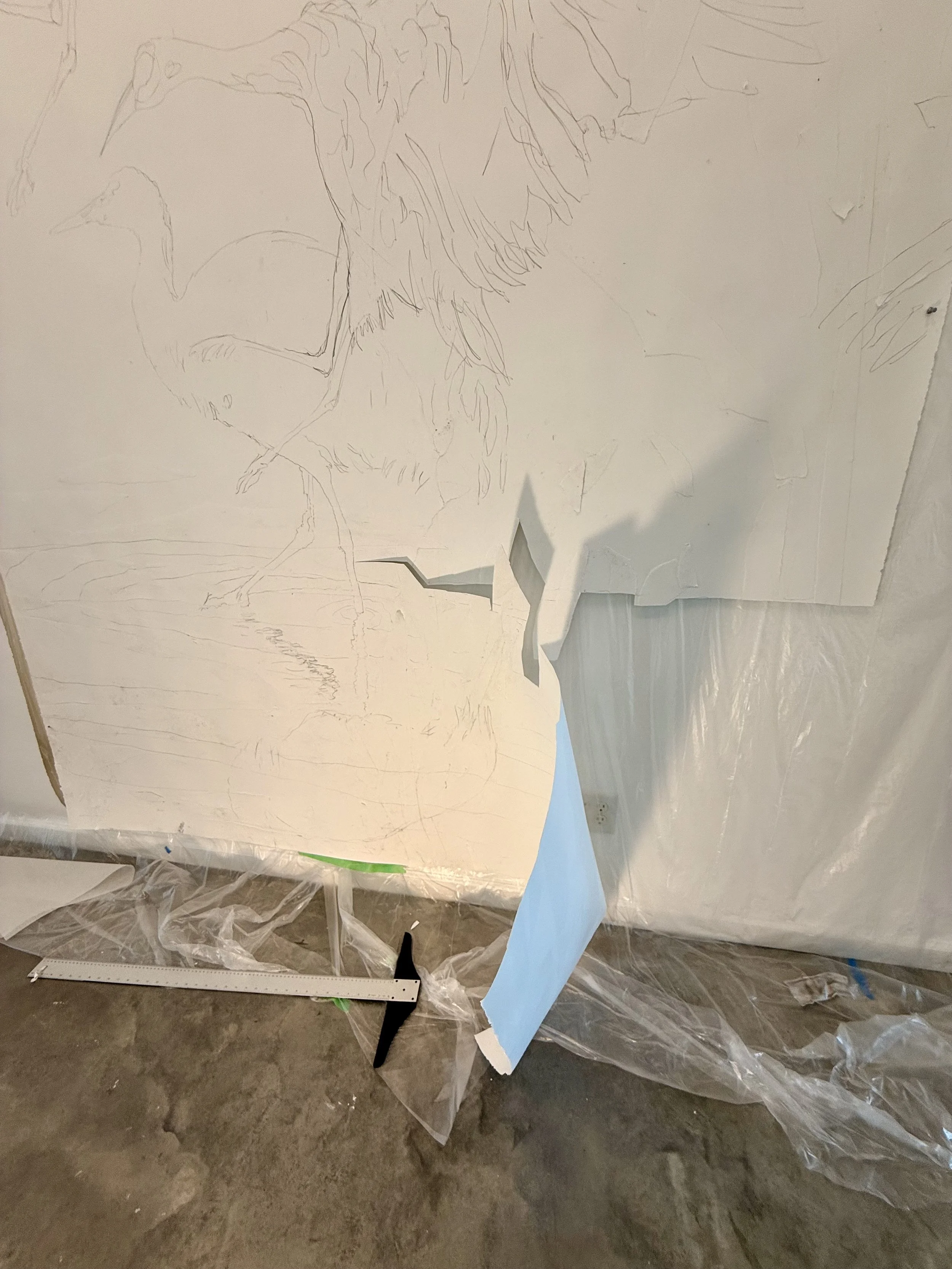
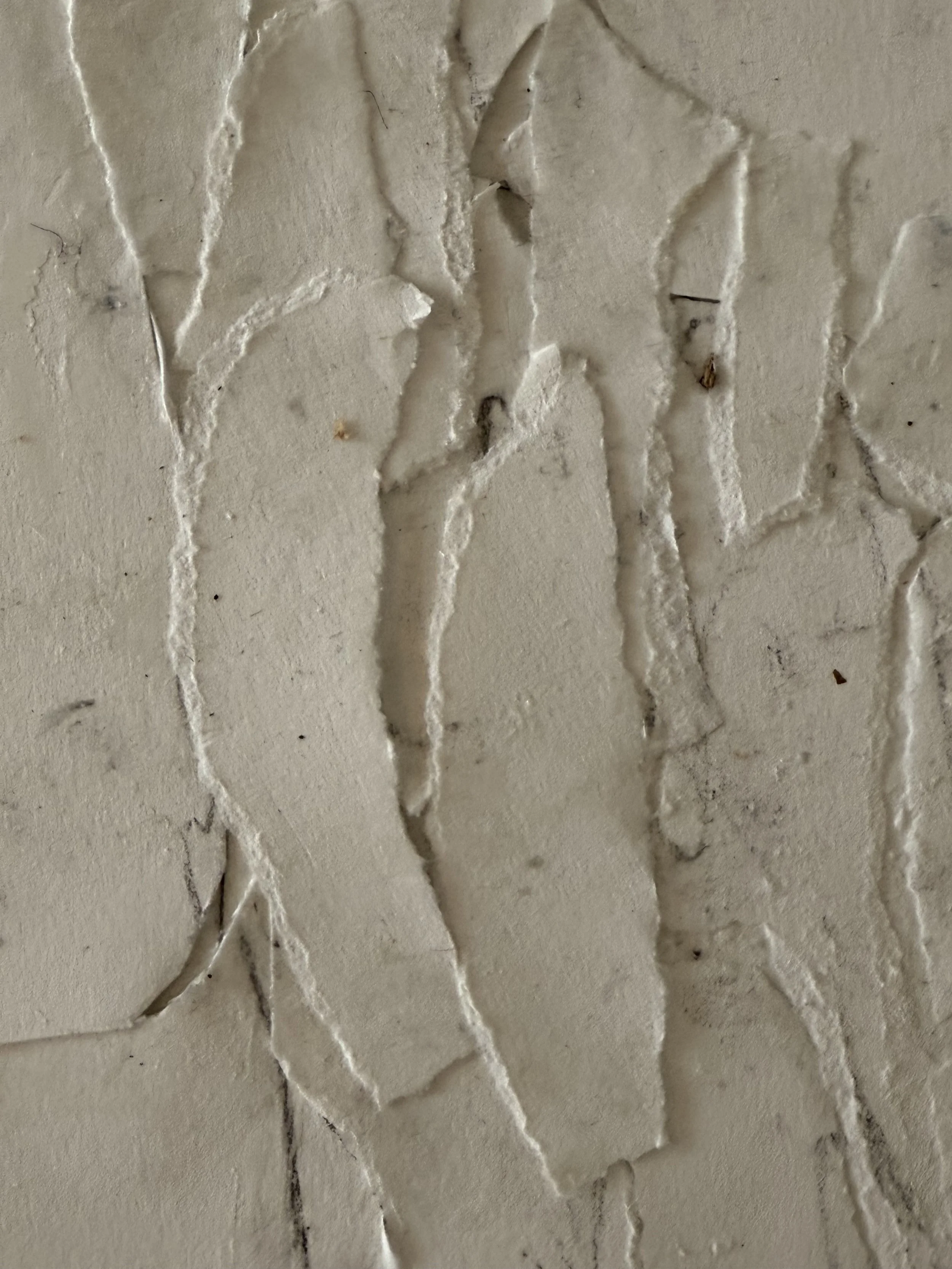
Above is an image of the piece in progress for the auction. The pencil drawing is too light to see. I have printed the image and drawn over the marker lines to sit with the composition. I may erase the whole thing later.
More on this piece later.
I don’t have a tidy close for this one. Just this: I’m going to keep scanning the pond and the garden. And I’m aware how much luck is folded into having either — that for so many people, the only terrain left to scan is a room with a chair, and a hand moving side to side, because no pond or garden is theirs to practice on.
Further reading: The Role of Eye Movement Desensitization and Reprocessing (EMDR) Therapy in Medicine.
Quisque iaculis facilisis lacinia. Mauris euismod pellentesque tellus sit amet mollis.