Symbiosis — DIY (the images for this post are under construction, stay tuned)

Symbiosis — DIY Steps

Change can happen at lightning speed when innovation is coupled with imitation. Here are the steps I took feel free to imitate them.

I became familiar with the six principles of Holistic Regenerative agriculture through the Savory Institute, Roam Ranch and was recently featured in the film Kiss the Ground. I wanted to make a difference and regenerate depleted land, too. However, a bison ranch is not in my future. It occurred to me that changing how we landscape Houston could make an ecological impact. Lawndale Art Center offered me the opportunity to install an environmental sculpture in the garden. They had just re-landscaped the sculpture garden with a traditional garden, so I did not expect them to accept my proposal. However, Lawndale is committed to artists that explore aesthetic, critical and social issues of our times. Symbiosis is a catalyst to invite the public to change Houstons’s environmental impact. Applying these principles to Houston’s greater urban landscape will significantly impact climate and extreme weather conditions. Houstonians—or anyone—can do this. Climate change is a DIY project.

Below I describe these principles as I applied them to Symbiosis.

See how others across the world have used the same principles I used below.


6 PRINCIPLES of HOLISTIC REGENERATIVE AGRICULTURE AND SYMBIOSIS


Installing this site-specific installation, I incorporated the same principles used to regenerate depleted soils worldwide.   

Holistic management BALANCE —Symbiotic

I keep in mind that the garden is a microsystem that must contribute to and function in the greater ecosystem of the western hemisphere’s continents and waters. In Symbiosis, I balance the needs of the; art institution, urban wildlife, donors, exhibiting artists, the surrounding community, and volunteers.

Holistic management — balancing the needs to run the art center, the neighboring community and urban wildlife/landscape.

Integrating livestock to build soil microbesGroundWORK

 Living soil does not come from synthetic inputs. Instead, it comes from decaying matter that completes the circle of life. Mimicking this process in an urban environment is a crucial step. Without it, there is no life. In the natural world, grazing livestock such as bison, cows, sheep, goats, or chickens provides the decaying matter through their waste, stomping it in the ground and eating and damaging vegetation.

In Symbiosis, I mimic this process by installing a native leaf compost with animal waste components. It is full of beneficial microbes, free of dangerous synthetic chemicals, toxic dyes, and sewage. The heat from composting kills the pathogens. It is safe for children and pets. Because this step is critical, I turned it into a community performance art event. — GroundWORK

Intergrading animal — GroundWORK

Native moldy leaf compost was installed during the GroundWORK event on behalf of RoXoR gin a sponsor of Lawndale’s spring 2021 fundraiser event.

 Eliminating tillage  — CarbonSINK

 While we work to reduce greenhouse gas emissions, it is more critical to sink the Carbon in the atmosphere back into the soil. Carbon is stabile in the roots and microorganisms of plants in the ground. When soil is disturbed, Carbon is exposed to oxygen and transformed into carbon dioxide, which warms the planet. Conversely, organisms can establish communities that feed off the soil's organic matter when the earth is undisturbed. As soil organic matter improves, so does the soil’s internal structure.

A healthy soil biome is vital for suppressing plant diseases and cycling nutrients among plants, eliminating the need for synthetic inputs whose production increases our carbon footprint.

 In Symbiosis, I am building a CarbonSINK by not turning the soil over before planting, keeping the soil structure intact as much as possible, and implementing “Chop and Drop” composting when plants go dormant.  Symbiosis builds soil biology and increases soil structure, increasing the soil's ability to absorb Carbon and water, reducing runoff, soil erosion, flooding, and preventing pollution from entering nearby bayous. 

Eliminating tillage — CarbonSINK

After a freeze in 2022, the red salvia above ground suffered. I carefully chopped all the dead materials and dropped them in the garden. I always leave the roots in the ground and 6” - 10” of stems for solitary native bees to nest in.

Maximizing crop/plant biodiversity, — ReCover

 We do not know what we have lost until we recover it.

With this thought, I researched native plants and what roles they have played in the Houston area ecosystem. Identified in the Coastal Prairie are more than 1,000 plus plant species. I have not relied on hybrids/variants of species or plants considered beneficial. Instead, I selected 36 species known as indigenous to the area. Native plants have supported over 4,000 native bees, 1,107 bird species, 750 species of butterflies, 200 skippers, and 11,000 months, and 4,000 wasps.

Symbiosis is to recover and support as many of these species as possible for all four seasons. In addition to supporting wildlife, I sought out plants that helped control ground erosion and water absorption.  — Plant it and they will come—

Maximizing Biodiversity — ReCover

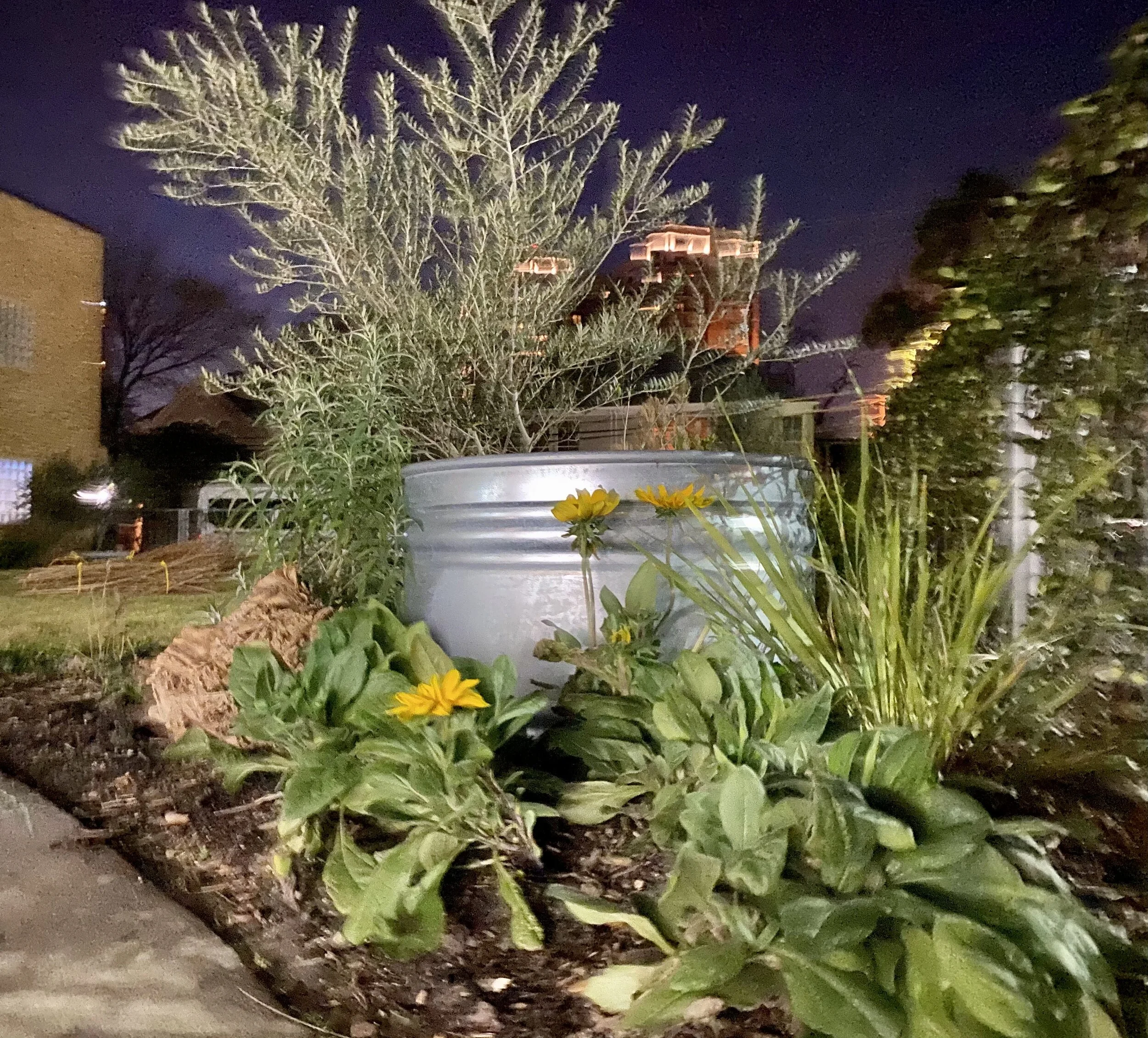
Hyla cinerea , there are five true tree frogs in Texas. They climb grass and require a permanent water feature, a trough pond will do. I first saw tree frogs in the garden in September 2021 on a bushy Bluestem. I have since seen them on the Mealy blue sage. I have never seen a 2.5” tree frog in Houston before. I hope we can recover a few for every yard.

Plant material selections:  Salvia Lyrata, Calyptocarpus vialis, Phyla nodiflora, Bouteloua gracilis, Carex peredentata, Tradescantia occidentalis, Calyophus brerland, Oenothera speciosa, Rudbeckia hirta, Ratibida columnifera, Monarda citriodora, Echinacea purpurea, Schizachyrium scoparium, Salvia coccinea, Gaillardia pulchella, Symphyotrichum patens, Salvia, Farinacea, Chasmanthium lati, Silphium gracile, Verbena xutha, Salvia azurea, Eryngium yuccifolium, Solidago sempervirens, Capsicum annuum, Callicarpa  Americana, Symphoricarpos orbiculatus.

Grasses:  Andropogon gerardii Vitman, Schizachyrium scoparium, Chasmanthium latifolium, Carex texensis

VINES: Lonicera sempervirens L, Gelsemium sempervirens, Wisteria frutescens, begonia capreolata, Passiflora incarnata

Keeping the soil covered — Skin =  CarbonSINK + GroundWATER  =  GlobalCOOLING

—Skin, Like human skin the palnet’s skin provides many services necessary for good health.

The Earth’s skin is green. “The Earth is a living organism, composed of millions of species and billions of organisms—bacteria, algae, microscopic insects, earthworms, beetles, ants, mites, fungi and more—representing the greatest concentration of biomass anywhere on the planet. Microbes, which make up only one-half of one percent of the total soil mass, are the yeasts, algae, protozoa, bacteria, nematodes, and fungi that process organic matter into rich, dark, stable humus in the soil."  There are more soil microorganisms in a teaspoon of healthy soil than there are people on the Earth! The living organisms in the soil receive their food and shelter from plants' biological processes and physical structure.

In Symbiosis protecting the surface of the work with green skin is an easy decision for me. The quality of the skin is intimately tied to cooling the planet through Carbon and groundwater.

Keeping the soil covered — Skin

 —CarbonSINK

I installed the plant material in a manner that mimics how seeds drift in the wind and are carried by animals in their coats or deposited in their waste — resulting in multilayered vertical, horizontal, and diagonal jigsaw puzzles of leaf shapes. These shapes have evolved over thousands of years, woven together to maximize every ray of sunlight. The living material will grow into a three-dimensional solar panel from 6" to  6' tall, sequestering Carbon out of the air and storing it in the living soil. I did not leave the ground bare around each species as is popular in traditional urban landscapes.

CarbonSINK — utilizing a variety of plant shapes to maximize carbon capture.

— GroundWater

Living organisms need oxygen. When rain hits the unprotected ground, the micro spaces that allow air to penetrate the soil collapse and the living organisms die from lack of oxygen. I selected thirty-six species of plants to include various leaf sizes and shapes, stem heights, bloom sizes, and surface textures. As the plants mature, they become a multitiered water slide of twists and turns, slowing rainwater, trickling it to the ground. This allows the Earth to respond like a sponge soaking up the precipitation and channeling it through the root systems and air pockets as freshwater to the aquifer for future generations. Slowing rainwater can mitigate flooding that has become the norm in Houston. 

— GlobalCOOLING: Soil soaked in water like a sponge and covered in plants that move, as a gentle breeze blows off the Gulf of Mexico, conditions and cools the air and the earth as it is warmed by the sun. In contrast moving cool rainwater across hot surfaces such as turf grass, artificial turf or concrete landscape, warms the water, picks up chemicals and dumps the urban solar-heated water full of toxic chemicals into the ocean. 

GroundWater and GlobalCOOLING — multiple layers of plants slow rainwater, giving the ground time to soak it up, purify and store it in the aquifer.


Maintaining living roots year-round — FoodWEB — GlobalCOOLING

Living roots in the soil are vital for feeding the bacteria and fungi that provide food for the creatures further up the chain. Living roots keep mycorrhizal fungi alive and healthy. These symbionts are vital for nourishing plants and provide convenient fertilizer and water. Maintaining living roots in the ground feeds organisms, providing year-round carbonSINK and GlobalCOOLING.


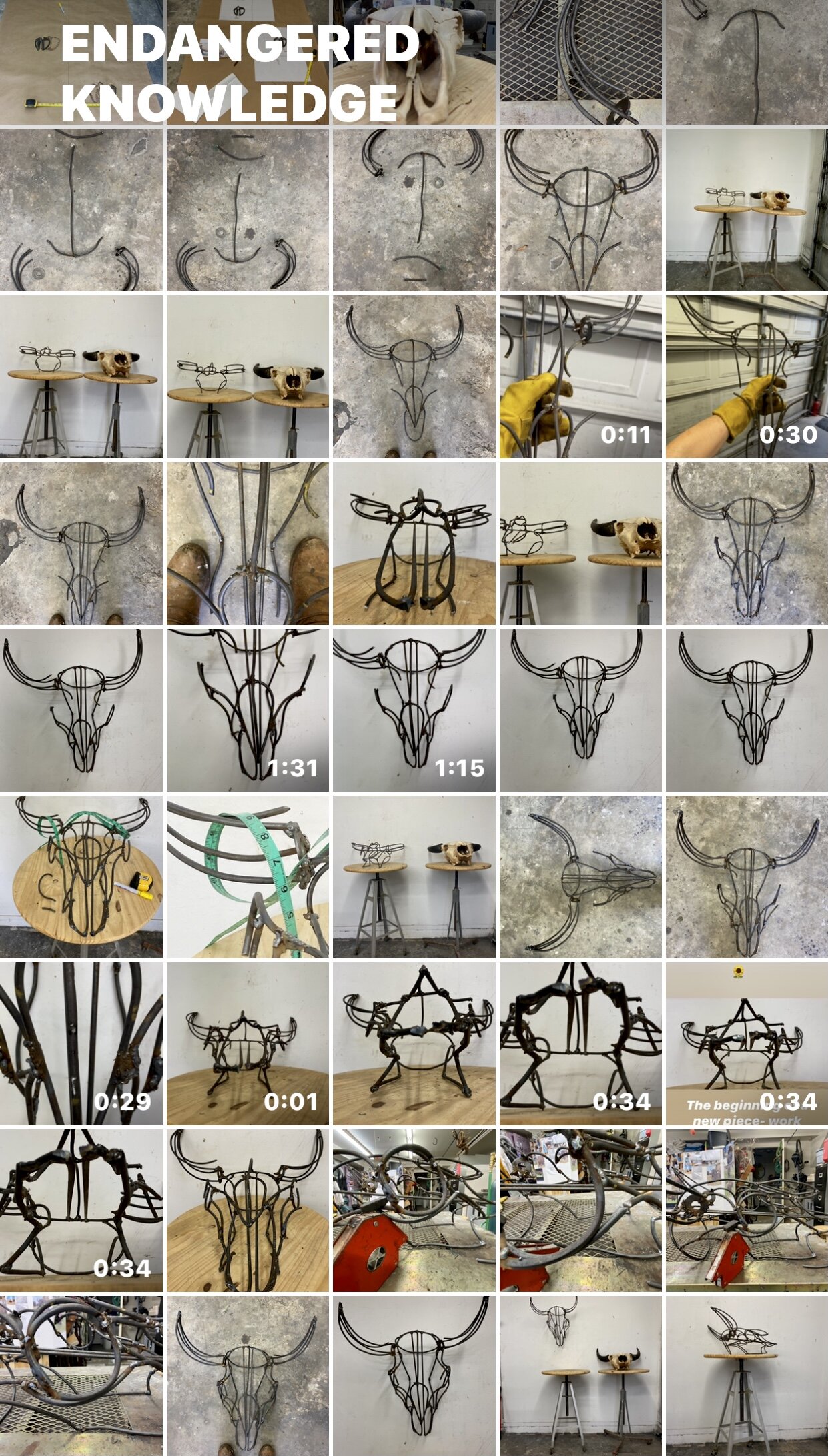
Endangered knowledge: the Soul of Humus.

SMH fall of 2020 was canceled due to Covid 19 last July of 2020. I put a halt on welding my piece and focused on planning “Symbiosis.” “Symbiosis” is installed the Big Show is opened which provided a tremendous amount of traffic. I will still check on it every day, but I will spend most of my day building my piece for SMH 2021. Today I started where I left off. Below are images from last year's work and blog posts.

When I stopped in 2020 I had the hooves on steel plate bases and new where I wanted them to bare the weight.

When I stopped in 2020 I had the hooves on steel plate bases and new where I wanted them to bare the weight.

Today I cut the rebar to form the lover part of the legs and grinded the tips. Tomorrow I weld.

Today I cut the rebar to form the lover part of the legs and grinded the tips. Tomorrow I weld.

Some of my notes from measuring Epics Bob the bison January of 2020.

Some of my notes from measuring Epics Bob the bison January of 2020.

My bison will be in motion not standing still.

The skull and upper jaw.

The skull and upper jaw.

And lower jaw

And lower jaw

4  pieces of rebar cut for each leg will provide the structure of the lower legs.

4 pieces of rebar cut for each leg will provide the structure of the lower legs.

Endangered knowledge:The Soul of Humus

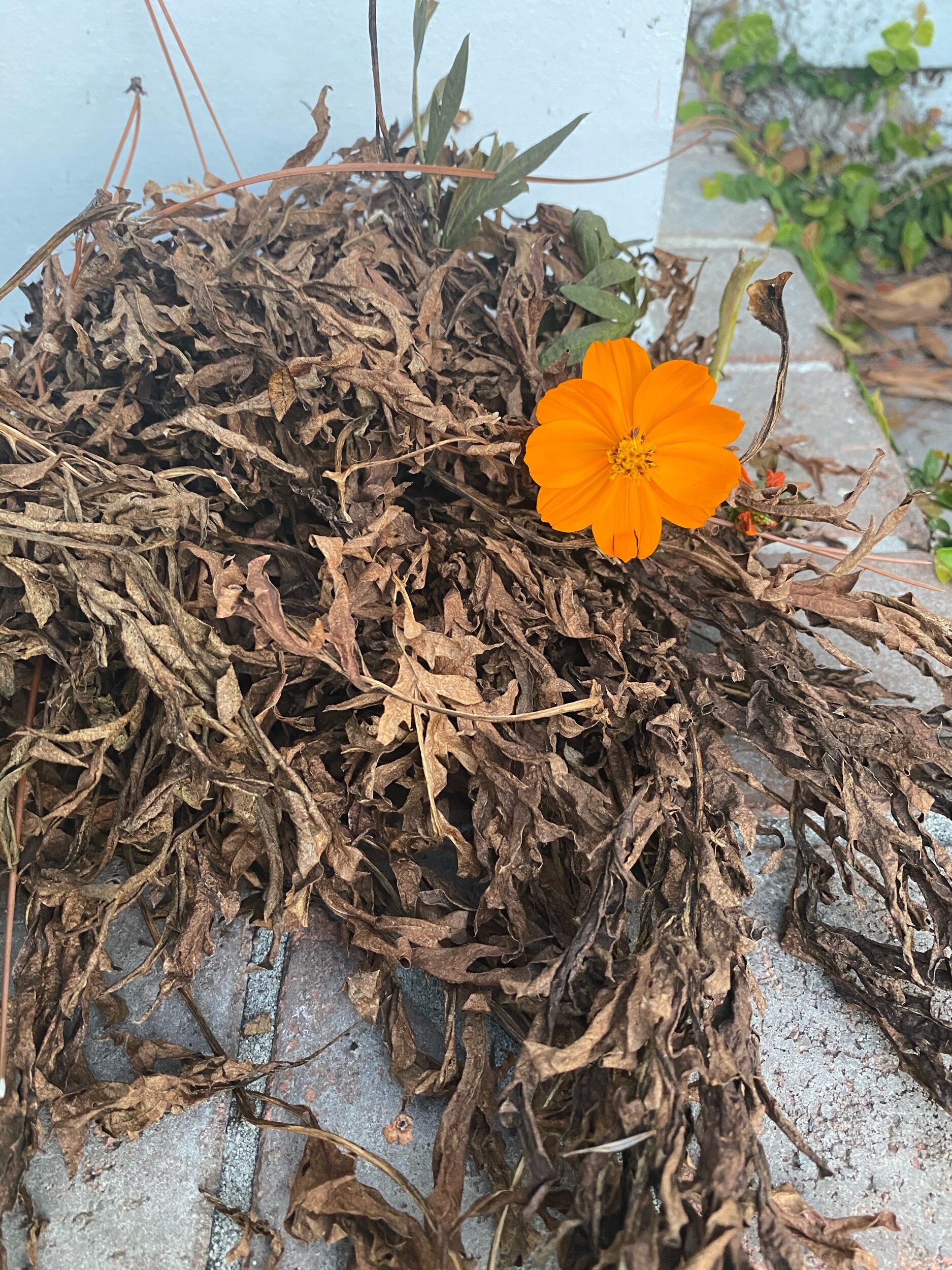
I dried some cosmos leaves to us as the coat of a sculpture that is in the works - Endangered knowledge: the Soul of Humus. The piece will be in the #sculpturemonthhouston 2021 exhibit. I started the armature during COVID for the SMH 2020 exhibit, which was postponed. The sculpture looks at the ecological history of the coastal prairie. This texture is perfect #cindeeklementart #endangeredknowledge #coastalprairie #tezasart #houstonart #bioart #environmentalart #cosmos #art #sculpture #bison

IMG_4772.jpeg

Spontaneity and art - a good thing, we will see

I started my day at 6:30 am, pasting images of work into a word document for a curator/art consultant. A necessary task that I was thrilled to do- however, mind-numbing, to say the least. By 12:30 crossed eyed I took the dogs on a walk. When I came across this. My mind numbing was instantly healed with inspirational thoughts.

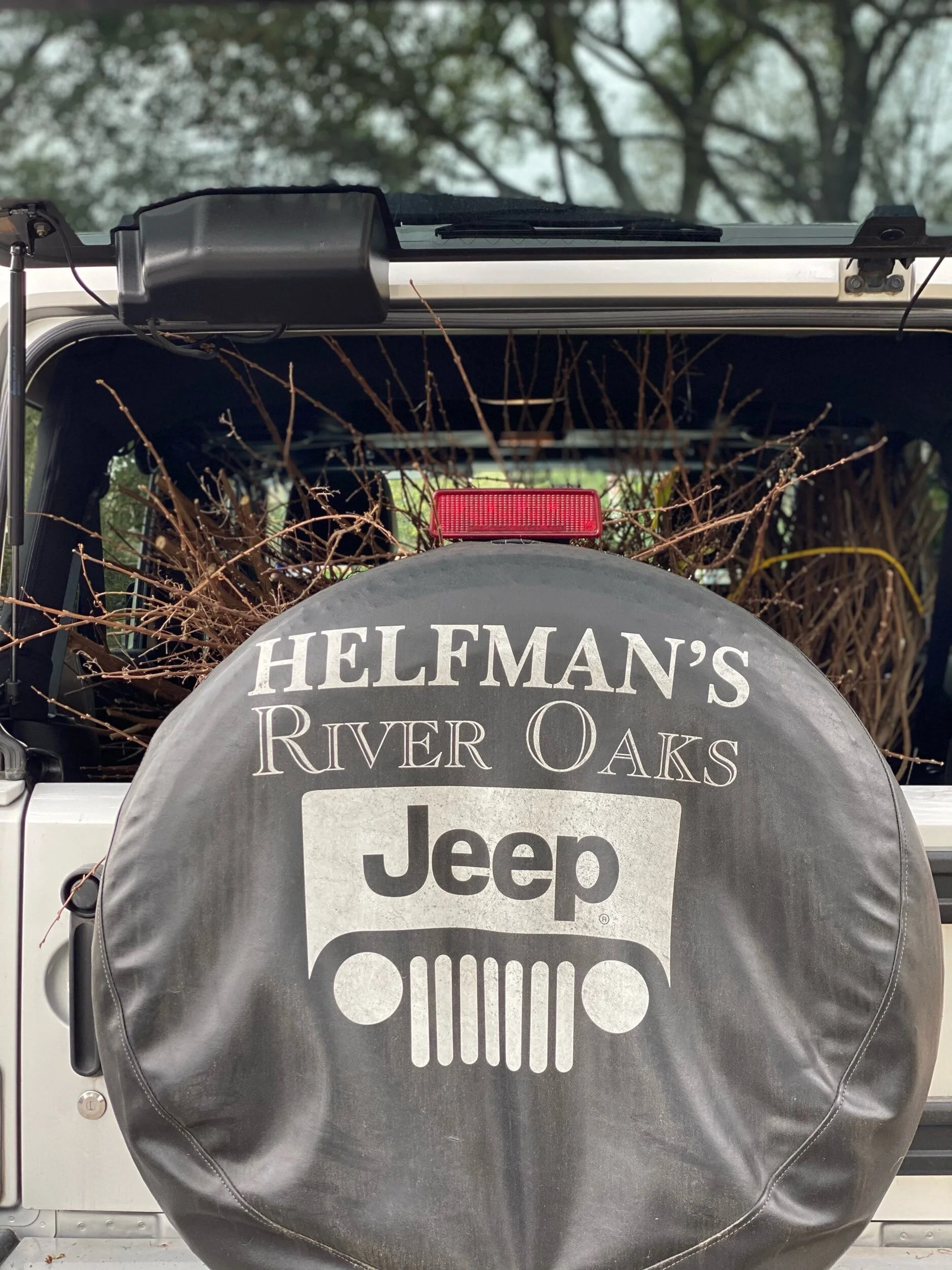
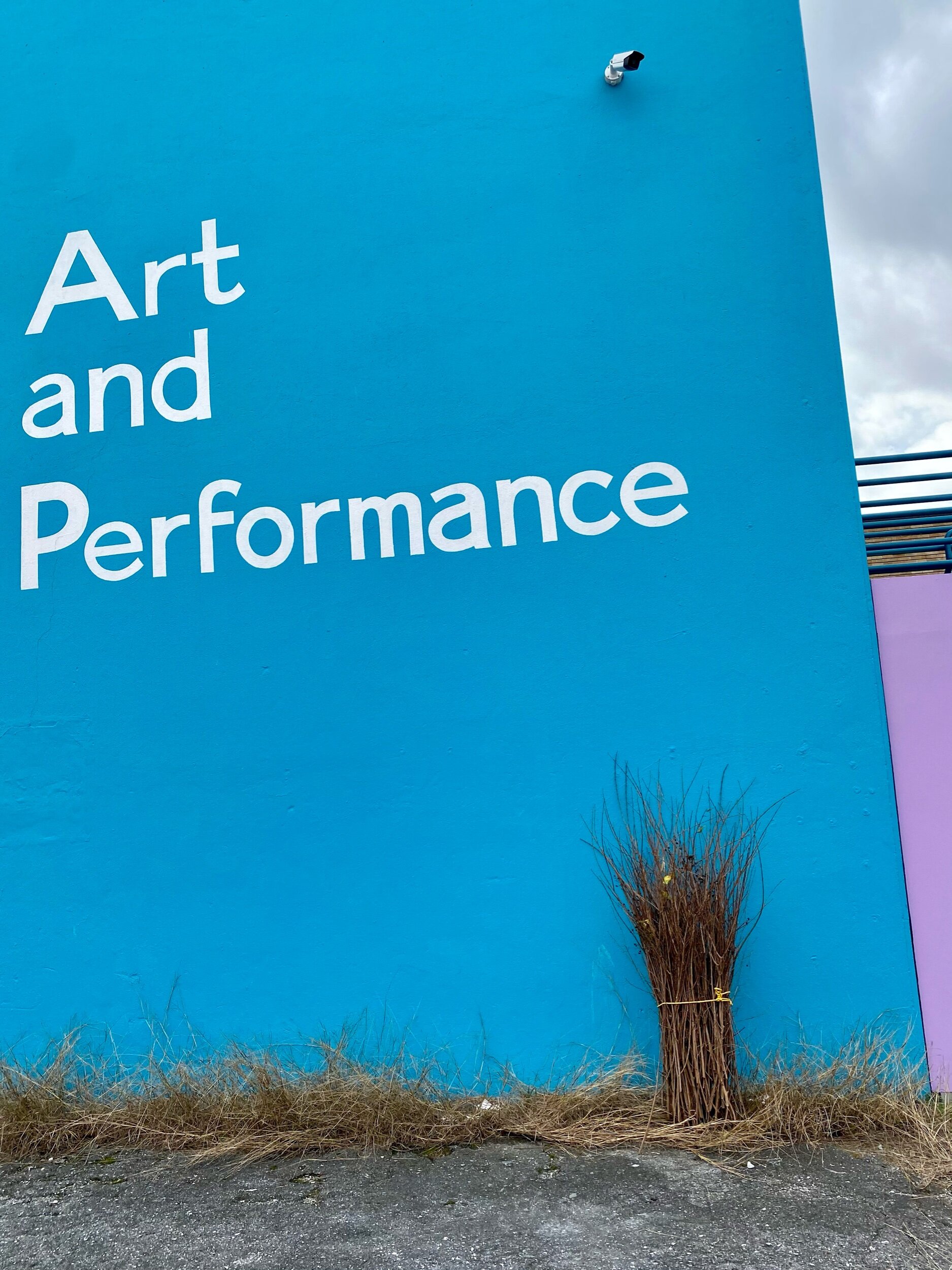
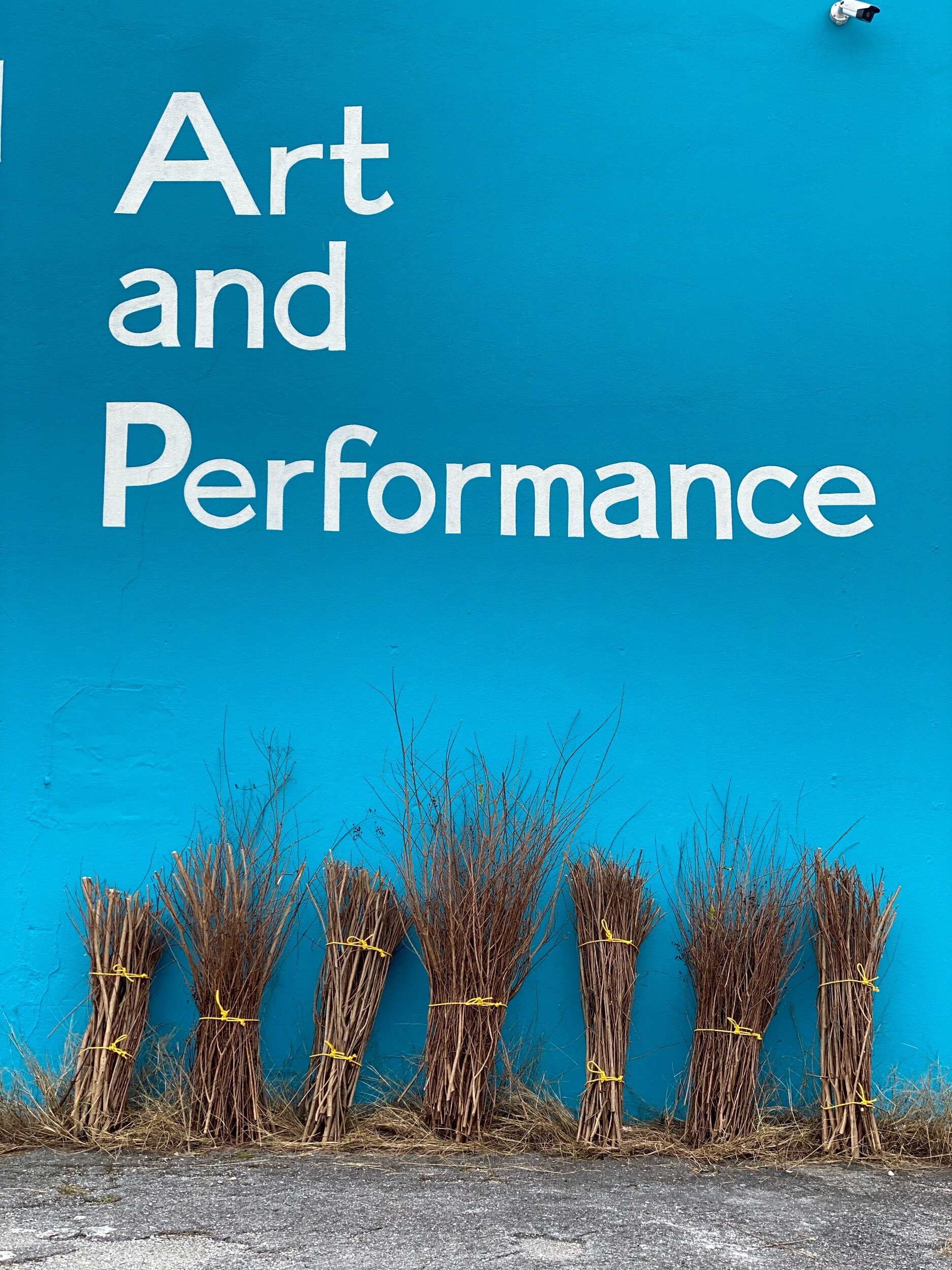
Seven immaculately bundled trimmings from a neighbors Crape, Myrtle. Crape murdered or not I- the trees were in the backyard, could not see them.

Seven immaculately bundled trimmings from a neighbors Crape, Myrtle. Crape murdered or not I- the trees were in the backyard, could not see them.

My trimmings from a site-specific installation @Lawndale Center for the Arts.  Symbiosis

My trimmings from a site-specific installation @Lawndale Center for the Arts. Symbiosis

The image above is from last week at Lawndale (a post in am tardy with) My trimmings are wild and unruly. I am using them on social media to make a point - to change how we landscape- to landscape with habitat for wildlife in mind.

My neighbor's bundles of limbs are in sharp contrast to mine. They are an example of how controlling urban green spaces have become, the tidiness that is expected In our yards.

I am so tempted——— Such a great opportunity to turn these found object organic materials, perfectly assembled tied up with yellow cords into gorilla art. The colors will look amazing at Lawndale. It is not part of my work on Symbiosis to install anything I want. 🤔 The entire dog walk I was haunted by the bundles and their yellow cords. I am not comfortable installing gorilla art but I am excited with the idea and I know Lawndale won’t have me arrested like other institutions might if I randomly installed objects in their sculpture garden, right?

I have always challenged myself to take on the art that scares me the most- to embrace the butterflies as my son tells me. You don’t know until you try. - jump

I went to the door, I was hoping no one was home, Abby was a new neighbor and I introduced myself. - she moved in during Covid. We had a nice chat and she welcomed me to take her piles.

It took two trips

It took two trips

😁 when I bring new materials to Lawndale, I like to photograph them on this turquoise wall- documenting my materials. And I have to say! I love the colors - the Textures. I declare this installation number 1. Untitled.

😁 when I bring new materials to Lawndale, I like to photograph them on this turquoise wall- documenting my materials. And I have to say! I love the colors - the Textures.

I declare this installation number 1. Untitled.

This technically is not Lawndale property, the wall is theirs, but the lot is unfortunately not owned by the institution. The lot is vacant. I get all the bundles out so I can pick up load number 2.

Installation number 2

Installation number 2

Installation number 3 The yellow ties make my heart sing, that rich brown against the turquoise, and the golden grass softening the base, I am in heaven. I see ballerinas chins up, lined up to take their bows center stage.  I had one left.

Installation number 3

The yellow ties make my heart sing, that rich brown against the turquoise, and the golden grass softening the base, I am in heaven. I see ballerinas chins up, lined up to take their bows center stage. I had one left.

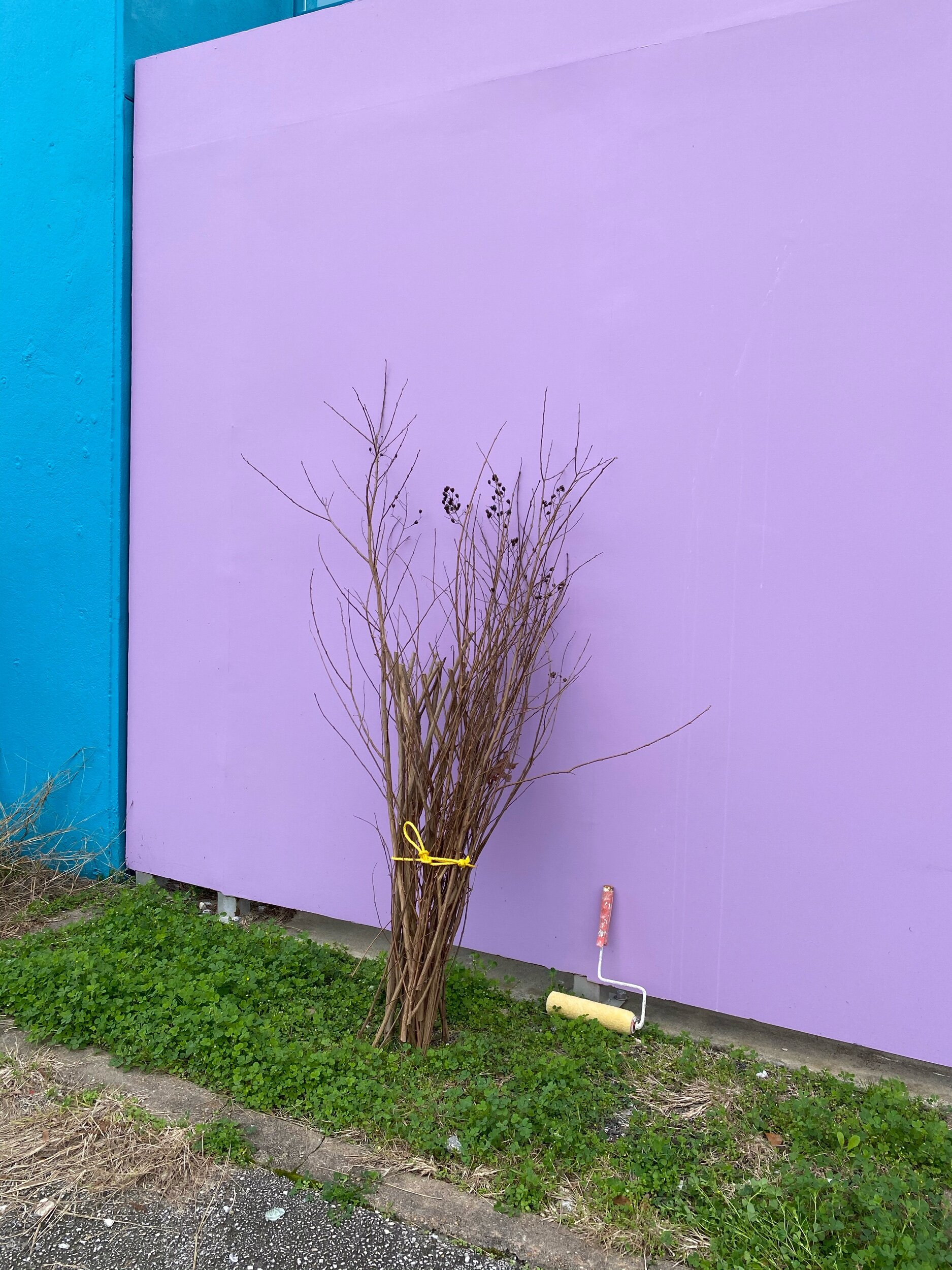
A painter from last week left their yellow roller- waste not want not. The clippings Are rich on the violet too.

A painter from last week left their yellow roller- waste not want not. The clippings Are rich on the violet too.

Sometimes I feel guilty that I love my work so much.

Sometimes I feel guilty that I love my work so much.

There are bees that have not been seen since the 60’s that are not listed as endangered.

The bee that pollinates tomatoes is not the honeybee.

Summary from sciencedaily.com

The yield and quality of many crops benefit from pollination, but it isn't just honey bees that do this work: bumble bees also have a role. A team has used innovative molecular biological methods and traditional microscopy to investigate the pollen collecting behavior of honey bees and bumble bees in agricultural landscapes. It turns out bumble bees take much more pollen from different plant species than honey bees to satisfy their need for protein.

bumble bees are superior pollinators of tomatoes than the honey bee. The southern carpenter bee also pollinate tomatoes.

IMG_9496.jpeg
IMG_9498.jpeg
IMG_9500.jpeg

Lawndale Art Center - symbiosis

Lawndale - Symbiosis - extractive

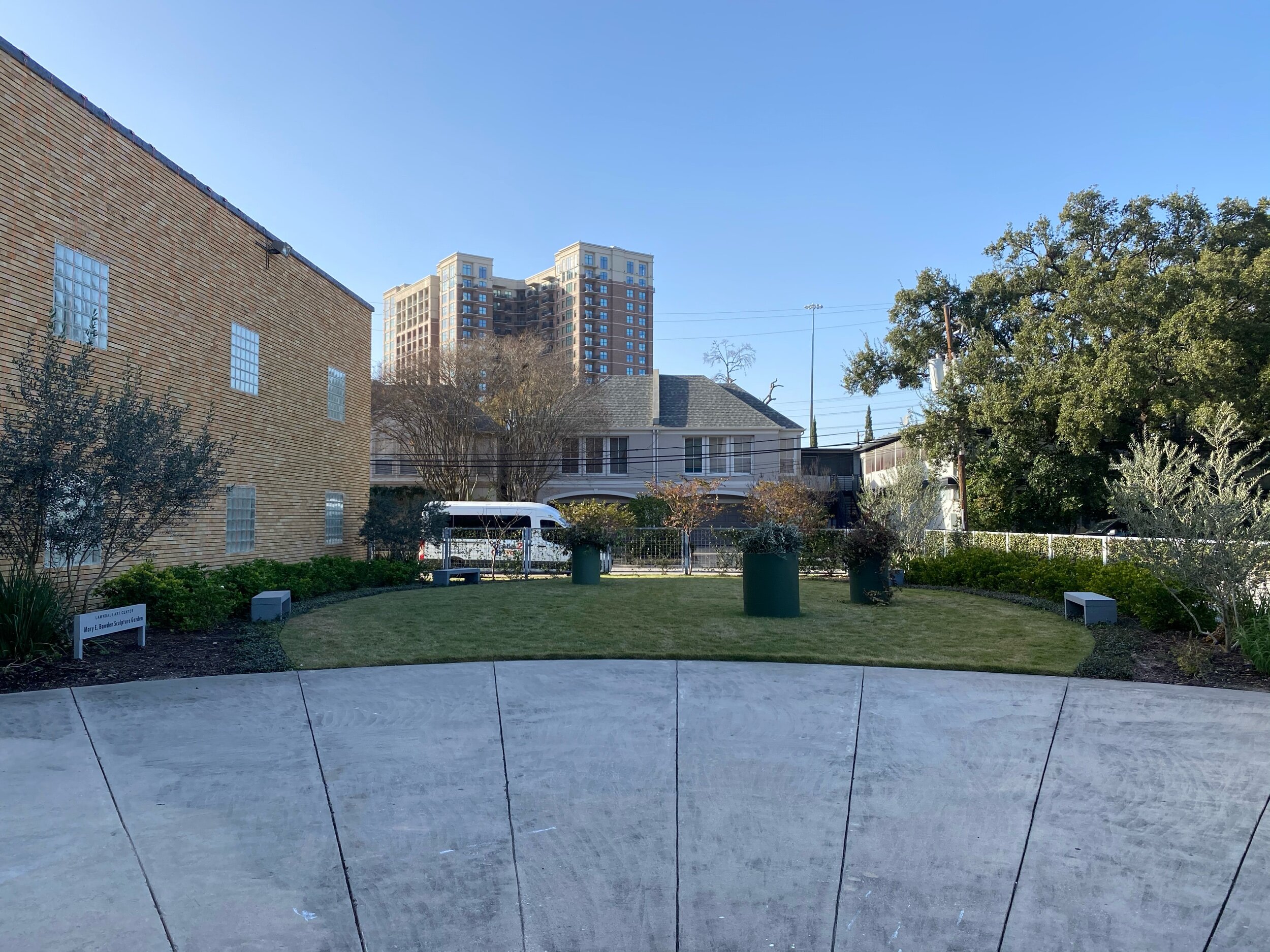
In Symbiosis I am stretching my practice and creating a living piece of site-specific art activism that will reimagine a 53.5’ X 48’ traditional urban landscape/sculpture garden and answer the question: how do we holistically restore an ecological balance in Houston? Symbiosis is a collaboration with Lawndale Art Center’s community, neighbors, urban wildlife, and the coastal prairies carbon cycle.

The west border of the garden has five 1 1/2 year old Crepe Myrtle’s a tree famous for murder. The murder refers to badly pruning the tree- down to the knuckles. I was not having these Crape Myrtle’s murdered. Today I used a extractive method of sculpting and clipped- nipped - and cut the existing branches. I shaped the branches/armature of the two end trees.

A sculpture garden has the four seasons of the year and a sculpture garden has the additional change of exhibitions. The pedestals from the last exhibit were still in the garden. 🤔perfect way to highlight the beauty in the wild- the imperfect- the not immaculate urban landscape.

FYI- crepe Myrtle’s are not native however they are a cherished gift to the Art Center. As an optimistic art activist I look at the project holistically to include the desires of the Art Centers board.

When I work in wire, or steele if I cut too much I can always weld it back it add more wire they are forgiving materials. When I clip a branch it is gone- no second chance. .

#artactivism #cindeeklementart #symbiosis #lawndaleartcenter #nativeplants #coastalprairie #sculpture

Create Myrtle cuttings wildly place on a pedestal.

Create Myrtle cuttings wildly place on a pedestal.

IMG_5226.jpeg
North West Crepe Myrtle after pruning.

North West Crepe Myrtle after pruning.

Cuttings from two Crepe Myrtle's and the olive trees from a few weeks ago.

Cuttings from two Crepe Myrtle's and the olive trees from a few weeks ago.

South end Crepe Myrtle

South end Crepe Myrtle

The Gift of Crepe Myrtles part 1 — Ready-Mades, Assemblage

Found object — Lagerstromia indica

Size varies 70"– 93" X 49' X 4'

Two of the five Crepe Myrtles on the northwest corner,  before I started sculpting Symbiosis, —  summer of 2020. The first thing I did was release the stakes supporting the trees. Just like humans trees become strong from movement, thickening their …

Two of the five Crepe Myrtles on the northwest corner, before I started sculpting Symbiosis, — summer of 2020.

The first thing I did was release the stakes supporting the trees. Just like humans trees become strong from movement, thickening their trunks and stimulating root growth.

The Crepe Myrtles were generously donated to the garden before I started sculpting Symbiosis. Donations are the lifeblood of Lawndale — it is crucial I not clip off that support. Planted in a row on the Travis street side, the treasured trees are the west border of the space next to the fence; they are a significant element of the work, objets trouvés, ready-mades. They anchor, frame and end the assemblage. They are stage left from the parking lot. Many of their characteristics will change every year; they are moving targets, living found objects. I will use them to create the above-ground kinetic components of the sculpture.

detail of the found objects

detail of the found objects

They are stage left from the parking lot. summer of 2020

They are stage left from the parking lot. summer of 2020

There is a symmetry in Symbiosis that balances the needs of the Lawndale Art Center's artists, exhibitions, neighbors, urban wildlife, and the soundscape of urban sculpture gardens. As I prune the Crepe Myrtles, I have to weigh the impact of these elements with every extraction; most features are not physically part of the garden but are part of the whole. Like all sculptures, they have components you can't see; the armature supports everything and the welds that give strength.

The Crepe Myrtles are planted in a row on Travis Street, at the far west end of the garden.

The Crepe Myrtles are planted in a row on Travis Street, at the far west end of the garden.

panorama of crepe myrtles from patio .jpg

This work requires considerable online research and quiet observations: listening, seeing, and questioning; I continue to learn and observe what wildlife these Lawndale treasures will benefit, symbiotically balancing the needs of the living organism in the heart of the arts district on the Coastal Prairie. What would the arts be without the influence of the natural world?

I took this image through the Crepe Myrtles at the Fall 2020 opening. There was plenty of room for social distancing. It was the first COVID event for Lawndale and for me.

I took this image through the Crepe Myrtles at the Fall 2020 opening. There was plenty of room for social distancing. It was the first COVID event for Lawndale and for me.

Lawndale’s Symbiosis - constant research

Symbiosis is a long term art installation. A piece of dirt in the middle of a large US city, an ecosystem that serves the local art community. Through pairing my intuitive sculptural practice, and natural history research I am sculpting the garden into an ecosystem that balances the needs of the Homo sapien art community and the urban natural world. I spend much of my time filtering through biologist research, inspirational documentaries and interviews of individuals that are leading the way. New Year’s Day I listened to a remarkable podcast an interview of Nora Bateson who is an award-winning filmmaker, writer and educator, The podcast was taped before the pandemic. She knows what she is talking about. Here are two quotes from the podcast that gave me pause and reminded me how grateful I am for my opportunity to make a difference through Symbiosis at Lawndale

“ In my little fantasy there is a great big pause button, and we can say hold everything, let’s regroup, let's turn this titanic around”

“One way or another the systems that we are within are going to change.”

A very enlightening podcast regarding how change and regeneration happens. It is haunting to consider this came out before the Covid 19 quarantine of 2020. Everything Nora talks about addresses the things I am thinking about. She is most definitely an influencer. I will continue to follow and monitor her work.

You can find the interview at The Regenarration podcast on Soundcloud Solve Everything at once.

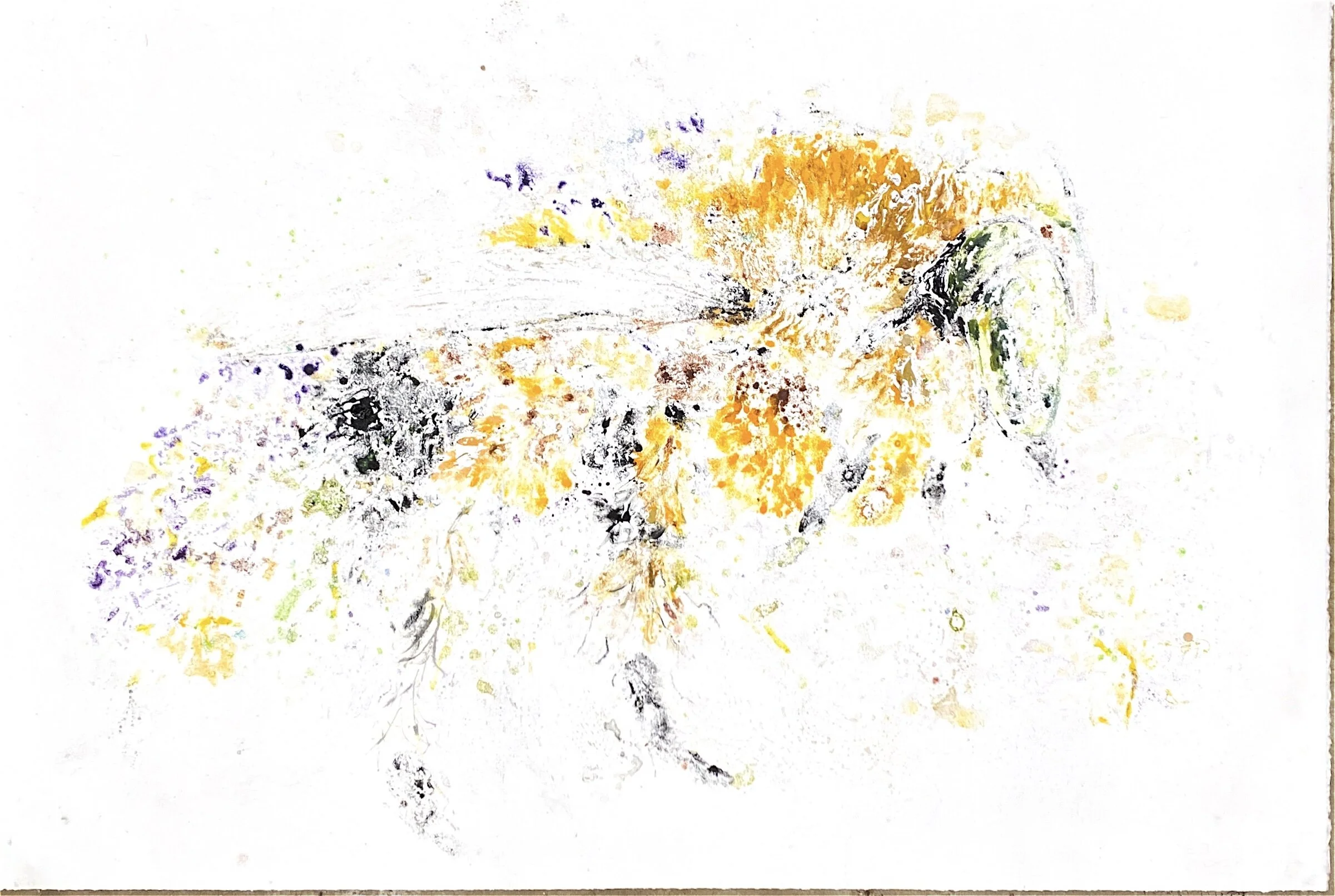
Checking on the garden I found a moth that was still alive laying in the Pond. I rescued him and laid him out to dry.

Checking on the garden I found a moth that was still alive laying in the Pond. I rescued him and laid him out to dry.

Lawndale symbiosis - milkweed and monarchs

I have read that a few migratory monarchs spend the winter in the Houston area and join a small resident population of monarchs. I have also read that it is essential to choose native milkweed as opposed to tropical. Tropical milkweed—doesn’t die back in the winter as native milkweed does. When a place to lay their eggs year-round is available, many monarchs don’t bother making the trip to Mexico.. I saw this caterpillar on my morning walk. It was seriously munching on the milkweed. Milkweed is the only plant that provides the nourishment that will transform the caterpillar into a monarch butterfly. It is important to plant only none-hybrid native milkweed. Texas milkweed will be included in my 2021 Lawndale Art Center Sculpture garden piece Symbiosis. In Symbiosis, I am stretching my practice and creating a living piece of site-specific art activism that will reimagine a 53.5’ X 48’ traditional urban landscape/sculpture garden and answer the question: how do we holistically restore an ecological balance in Houston? Symbols is a collaboration with Lawndale Art Center’s community, neighbors, urban wildlife, and the coastal prairies' carbon cycle. For more details see this link.

#carboncycle #cindeeklementart #texasart #houstonart #contemporaryart #modernart #caterpillar #monarch #milkweed #nativeplants #migration #energy #movement

#lawndaleartcenter #symbiosis #artactivism

IMG_4731.png
The day after the caterpillar sighting.

The day after the caterpillar sighting.

The beauty of a leaf runs deep.

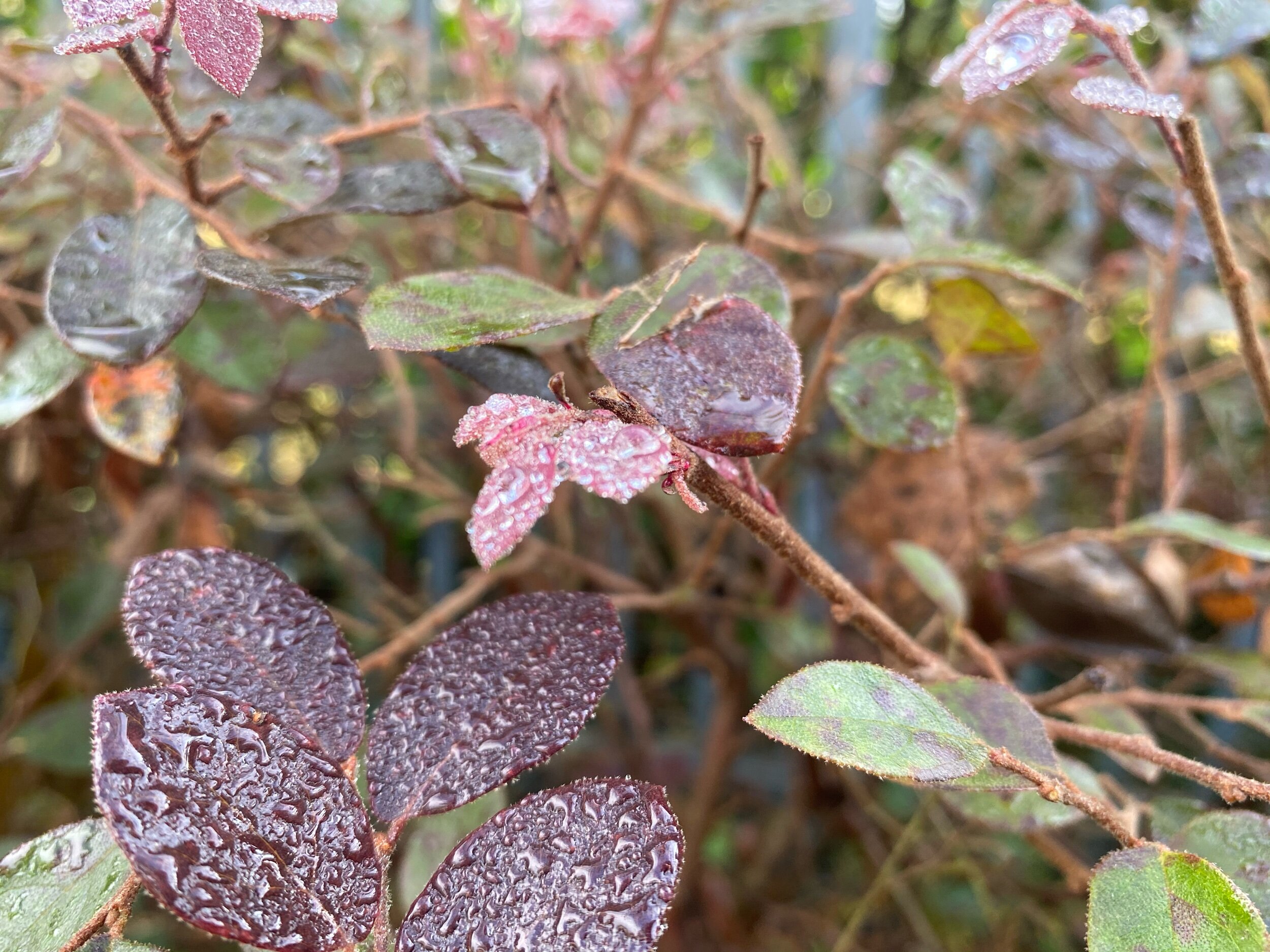
How beautiful droplets of dew or rainwater puddle on the waxy leaf surfaces? They provide the watering holes for nature’s tiniest creatures.🐞🐛🕸️🦎🐌🐸🐜🦋🐝

What do you see when you see a leaf? ☘️🌿🌱🍀

I see a unique natural system. Leaves multi-functioning as micro reservoirs, coats of armor protecting the soil, and micro floodgates slowing rainwater. 💦🌊💧

On the Coastal prairie, leaves function to protect the soil from being compacted by the pelting raindrops. If the heavy raindrops fall is not broken by layers of leaves and organic matter, the tiny cavities in living soil collapse, and rainwater moves horizontally across our landscape instead of into the tiny reservoirs in the soil. We need these small cavities to allow water to penetrate deep into the soil. Leaves also slow rain droplets giving the soil time to transport the rain to its deepest roots. Once the rain is in the ground cooling our planet leaves protect the soil from the heat of the day. This multilayered ground cover gives rain more time to trickle into the aquifer. Purifying our water and cooling our planet. How amazing are leaves? As an artist my how we see urban landscapes

My work records endangered knowledge to the collective memory and reimagines urban landscapes to holistically balance the needs of humanity and wildlife.

In Symbiosis I am stretching my practice and creating a living piece of site-specific art activism that will reimagine a 53.5’ X 48’ traditional urban landscape/sculpture garden and answer the question: how do we holistically restore an ecological balance in Houston? Symbiosis is a collaboration with Lawndale Art Center’s community, neighbors, urban wildlife, and the coastal prairies carbon cycle. #symbiosis #lawndaleartcenter #urbanlandscapes #artadia #coastalprairie #water #leaves #conservation art #bioart #nature #contemporaryart #modernart #artactivism #cindeeklementart #texasart #houstonart

IMG_4037.jpeg
IMG_4028.jpeg

Symbiosis - Living environment affects the microbiota and health of both dogs and their owners

Every morning I start my day reading an email from Sciencedaily.com. I read the environmental and health-related research news, scanning for articles that relate to my environmental/conservation sculptures and monoprints. The article Living environment affects the microbiota and health of both dogs and their owners Is an exciting read for me. My World of Hum kinetic sculpture was inspired by the impact pesticides have on native bee microflora and one aspect of my current work in progress Symbiosis at Lawndale addresses soil microbes in the sculpture garden.

Visitors are relaxing in the garden during a performance piece at the fall opening event.

Visitors are relaxing in the garden during a performance piece at the fall opening event.

Dogs are a large part of urban living and, surprisingly, at Lawndale Art Center. Every other day I stop by Lawndale to study the garden, looking for any changes in the soil, leaves, vines, pond water, and look and listen for any wildlife. Often I run into neighbors of Lawndale with small dogs that visit the garden. Stephanie, her four-year-old daughter, and King Charles Spaniel also spend time together enjoying the outdoors in the garden. Sometimes on Sundays, I bring my labrador Tobi with me. It is hard to judge the impact of urban landscapes on those who visit these green spaces with their pets. Living soil unquestionably has an impact on our microbiomes and our pets as well as supports urban wildlife. One of the most interesting books on the subject of our microbiome is I Contain Multitudes by Ed Yong. Dogs

IMG_4188.jpeg

Basically everything we do impacts our microbiomes. In order to build a healthy immune system a key element in any environment is diversity. My sculpture Symbiosis will be have a positive affect on the microbiota and health of both dogs and their owners who spend time in the garden.

Symbiosis- fluffy bluestem

Through art, I am finding new ways to see Houston’s urban landscapes. The bushy bluestem is a coastal prairie native and a volunteer at Lawndale art center, the location of my 2021 site-specific sculpture installation.

For creating movement and living soil, bushy bluestem is a fabulous material to consider. At this point, I do not know if it will make the cut of materials for the sculpture; however, it does have some attractive characteristics as a material for living soil, and aesthetically I think it is beautiful. The spikelets of silky feathers curl out of a sphere of fine hairs. It is tall and graceful, peering five feet off the ground. In my mind, I can see a cluster of them suited in costumes of golden cotton candy swaying across the stage of coastal prairie under the spotlight of our earth's closest star. Their rhythm succumbs to the breeze that sweeps off the coast. They create the perfect; kitchen of seeds for birds and small mammals, cozy nesting materials for birds, winter food for prairie chickens, field sparrows, and juncos. I can hear a symphony of songbirds serenading the morning as butterflies flit, and flingle and native bees start their day. With close inspection and a little luck, you may even discover a Skipper or Satyr larvae starting a new life amongst their stems. #symbiosis #cindeeklementart #livingsoil #sitespecificart #texasart #bushybluestem #houstonart #texassculpture #contemporaryart #nativebees #bees #wildlife #livingsoil

Changing how we see urban landscapes in Houston.

Changing how we see urban landscapes in Houston.

IMG_4161.jpeg

Grasslands vs. trees

When it comes to the environment in the 21st century grasslands beat trees when it comes to carbon sequestration. Our planet is a living breathing organism, impacted by our actions, always changing. I believe It is important that we constantly observe and evaluate how it changes as humans developed and expand across it.

Trees are a thing of beauty but they store carbon above ground in their trunks and limbs.when they catch on fire the trunks and limbs release their carbon into the atmosphere. Grasslands storing carbon underground release little carbon when they catch on fire. In addition the grasslands are a giant sponge soaking up water that prevents dryness and fires.

With the forest fires we have suffered world wide it is time to plant more grasslands and turn these areas suffer ending from droughts into giant sponges for soaking up water and carbon. When the ground is moist then we can can start adding back trees.

IMG_3828.jpeg
Drying coastal prairie native grass in my studio.

Drying coastal prairie native grass in my studio.

I felt like Sally Fields

I feel like Sally Fields at the end of her A Awards acceptance speech- anyone my ages remembers how funny that was. I always think of Sall F. When I think of being grateful when I get any positive feed back for my art.

This has to be my most liked Instagram post. That should tell me something. I guess I will be officially finding a way to combine Rumblings and the World of Hum. 🤔🤠🐝

IMG_9140.jpeg

ROOT TO WATER

”Root To Water” 24” X 12” X 12” irrigation wheel and root found objects.

“How fleeting are the wishes and efforts of man! how short his time! and consequently how poor will his products be, compared with those accumulated by Nature during whole geological periods.” 

​​​—Charles Darwin, Origin of the Species 


Root to Water offers hope. The root, placed with the root system up, takes on anthropomorphic characteristics, as the wide spread irrigation wheel’s legs are firmly grounded, the humanized root’s bent over posture and downward pointing arm are alive with discovery, the root’s hair like tendrils are actively rewiring its human anthropomorphic brain. This rewiring is happening across the globe, in the most desolate of landscapes citizen conservationists are studying natural law and finding solutions to their man-made problems.


In Root to Water, the irrigation wheel symbolizes mechanistic systems. The root in its natural state represents ecological systems. With this duo, I propose that modern civilization has reached an advanced stage of industrialization. In order to progress to the next stage of civilization we must heed Darwin’s observation, and answer the question how do we pair mechanical innovation with the systems that have functioned through “whole geological periods.” I placed the root above the wheel supporting Darwin’s view of natural systems superiority to human innovation.


Repurposing two tools from agronomy, Root to Water shifts how we see mechanical systems versus naturally occurring systems. In this sculpture, a modern innovation—a rusting, decorative, human-made irrigation wheel—serves as a pedestal for an organic found object that often goes unseen: a root system. With this pairing, I exhibit man’s historical struggle to transition to an agricultural-based society utilizing human-made innovations that extract natural resources instead of harnessing existing ecological systems that regenerate resources.


Communities across the planet are experiencing extreme cases of natural disasters. Houston has experienced three 500-year floods in three years. The U.S. Army Corps of Engineers completed the Buffalo Bayou and Tributaries Resiliency Study, proposing options for controlling flood waters costing up to $12 billion. The report does not include conveyance options that are local nature-based cost effective solutions.


A growing number of conservationists are using natural systems, specifically roots, as a tool for water transportation, carbon sequestration and as a means to cool the planet. Meanwhile, industrial agricultural produces products that are depleting the organic matter, releasing carbon from the soil, and contributing to global warming. As evidence consider, “Each 1 percent increase in soil organic matter helps soil hold 20,000 gallons more water per acre.”  In contrast, industrial methods strip the soil (releasing carbon), use petroleum-based inputs to enrich the soil and kill pests. Root to Water elevates roots as a natural system that transports water, minerals and carbon; stabilizes soil; and is instrumental in cooling Earth’s surface—a live-able solution for global warming.


My research-based art looks at the natural history of living soil and how it can be used to restore natural resources that is not commonly understood. I champion natural solutions to environmental issues with a focus on urban landscapes. Root to Water is part of my Endangered Knowledge work, a body of work in progress.


“Though the problems of the world are increasingly complex, the solutions remain embarrassingly simple.” 

​​​​​​​​​​​—Bill Mollison


Further Reading

-Judith D. Schwartz, The Reindeer ChroniclesWater in Plain Site, and Cows Will Save the Planet

-Kiss the Ground, Directed by Joshua and Rebecca Tickell, with WoodyHarrelson

-Organic Matter Can Improve Your Soil's Water Holding Capacity

-The Loess Plateau was the, most highly erodible soil on earth”

IMG_3774.jpeg

Talking roots.

How roots talk to each other. My focus is coastal prairie roots, but I expect roots of grass communicate as tree roots communicate. We gave only begun to learn from roots.

IMG_3752.jpeg

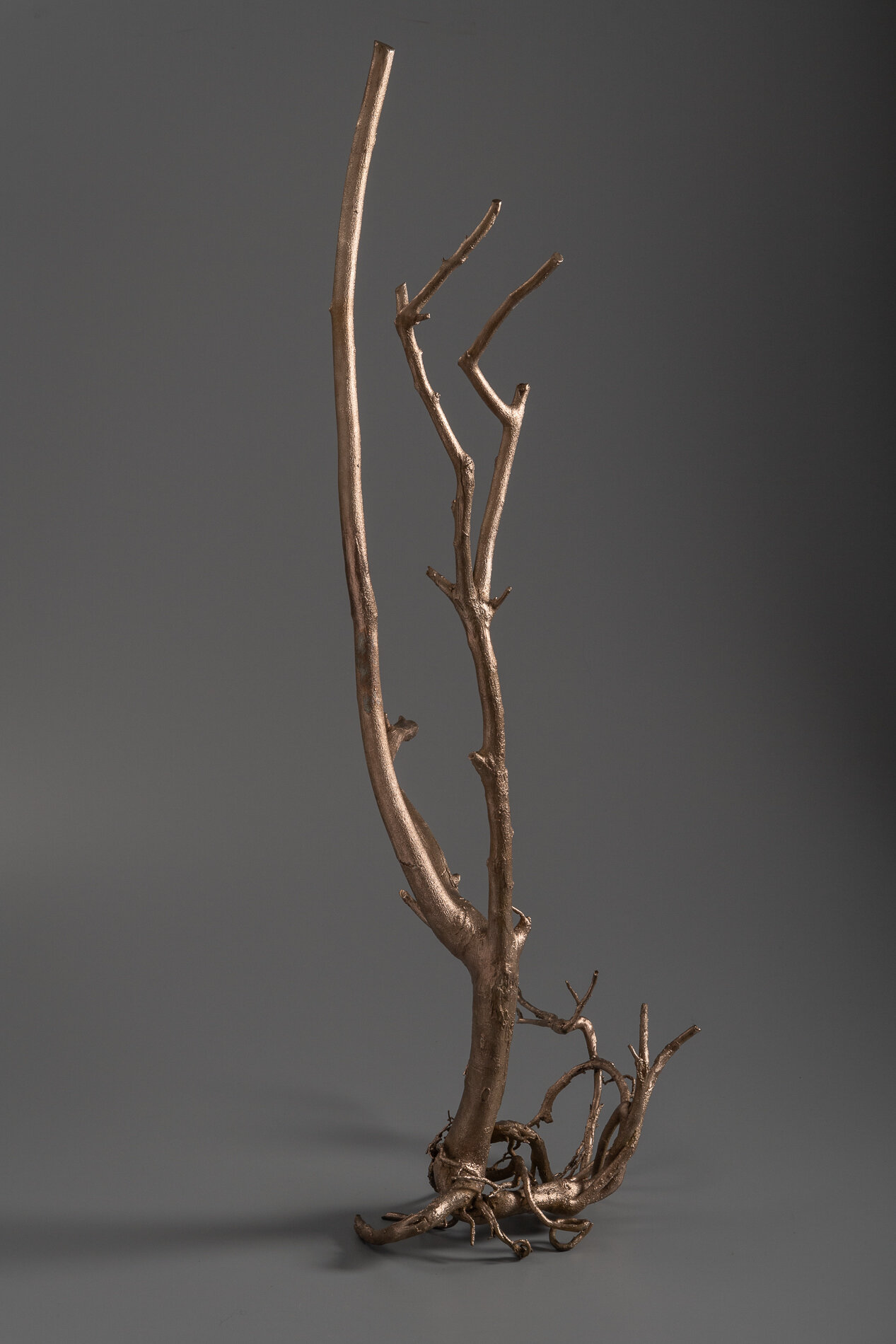
SUBTERRANEOUS SECRETS IV

36” X 8” X 8”

bronze

photo by @nashb Baker

Since the beginning of time, the human spirits' imaginations have been magnetically allured beyond the earth's geomagnetic field, inventing robots, orbiters, landers, and rovers to explore outer space, searching for celestial organisms — fruitlessly.

Secretly between 100 million and 500 billion microbes per teaspoon are living a subterranean life underneath our feet. Living soil is the root of our existence; it is essential to life on Earth. For several years, I have researched grass-fed food production, attended soil conferences, and visited regenerative ranches. (my favorite is @roamranch) Research in these fields reveal how to fight desertification and reverse climate change through regenerative agriculture practices. Interestingly, this natural history of living soil, how it evolved with roots, fungus, plants, food, and animals, carbon and their essential roles within microbial communities in human health, is not common knowledge. Subterraneous Secrets excavates this crucial tool in storing carbon. My work finds new ways to reimagine urban landscapes and records natural history to the collective memory so that it will no longer be endangered knowledge #roamranch #cindeeklementart #bioart #conservationart #environmentalart #root #bronze #bronzesculpture #pesticidefree #texasart #texasartist #houstonart #houstonartist #houstonsculpture #nature #naturalsystems

Armadillos and termites

Termites - to quote @gjklement,” termites are the ultimate grazers” last week, after we harvested our turkeys @roamranch, we went on a hike along the pastures to Indian Cave Creek. Along the way, we saw an abundance of armadillos eating termites. This trip was my 6th trip to the ranch and the first time to see any armadillos on the property, much less numerous armadillos or notice any termites. It is a sign the soil is regenerating - it is a good thing. Armadillos play an essential role in the Texas landscape both in agricultural settings and in urban population centers. They eat Termites keeping them in check. The termites are essential in building functioning ecosystems. As an art activist, I want to change the way we see nature. #regenerativeagriculture #regenerativeart #cindeeklementart #bioart #cobservationart #artactivist #texasartist #houstonartist #womansculptor #art #sculpture