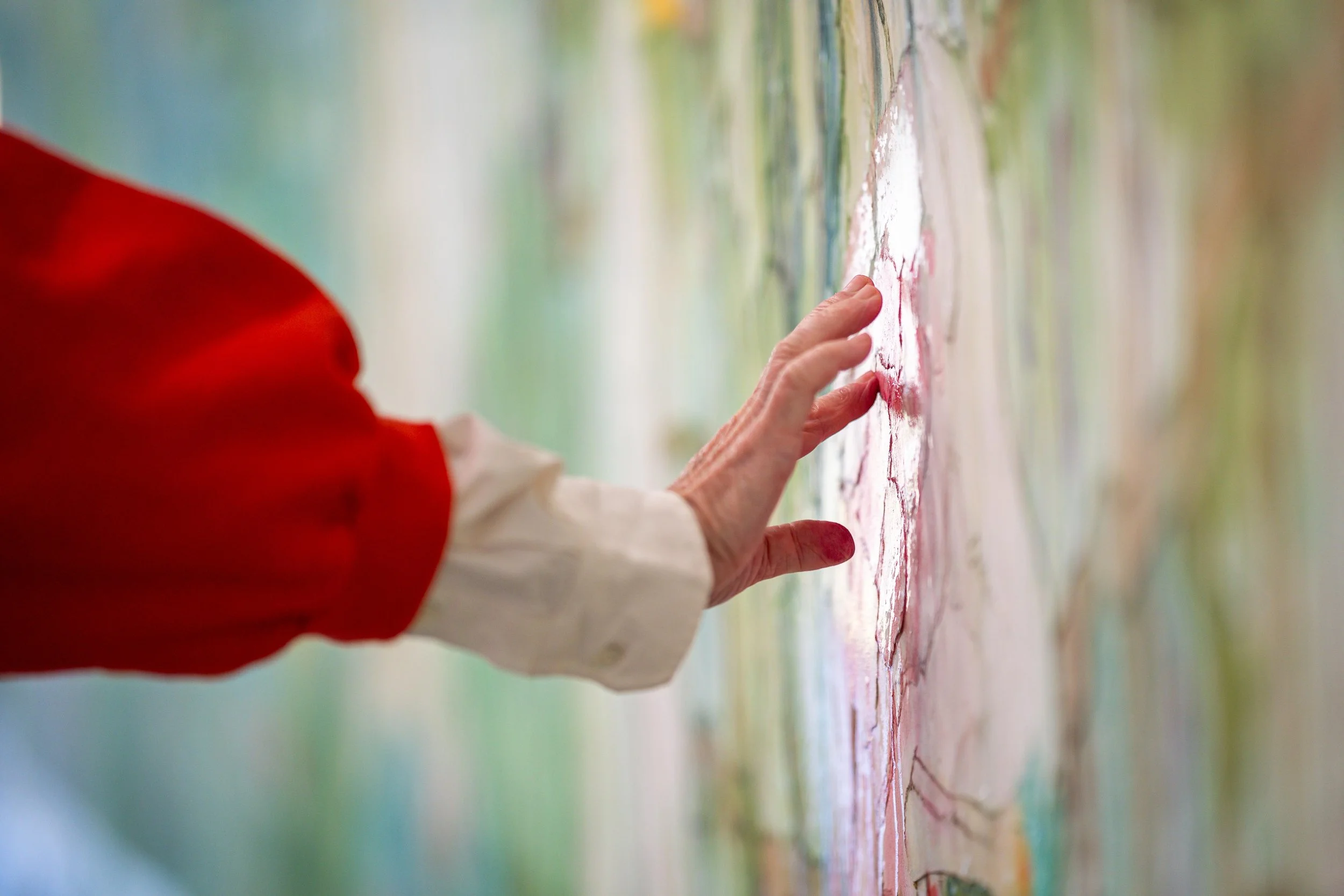
When I study the areas of the work that visibly support the most wildlife in Symbiosis I often think of the the most notable works of Pollock. I am presently reading The Extended Mind by A.M. Paul. In the chapter on thinking in natural spaces she wrote. - “Nature changed Pollocks thinking - gently tempering his raging in-tensity- and it also changed his art. In New York, Pollock worked at an easel, painting intricate, involved designs. In Springs, where he worked in a converted barn full of light and views of nature, he began spreading his canvases on the floor and pouring or flinging paint from above. Art critics view this period of Pollocks life as the high point of his career, the years when he produced "drip painting" masterpieces like Shimmering Substance (1946) and Autumn Rhythm” the extended Mind by A.M. Paul. I often see Pollockness in “Symbiosis”. This images especially reminds me of his Autumn Rhythm. In “symbiosis” it is winter shelter. This scarlet sage was damaged after the freeze.
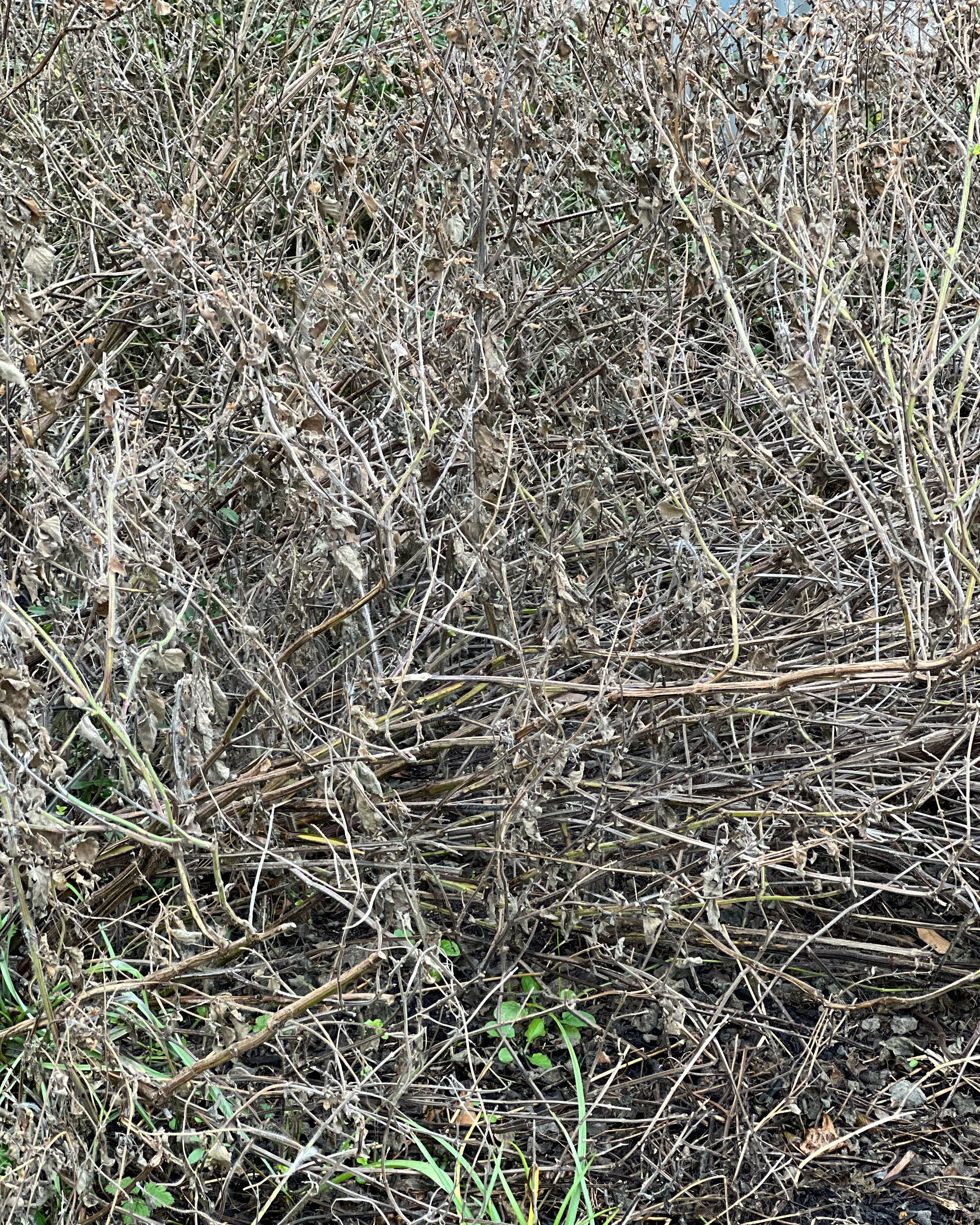
Symbiosis - dead plants
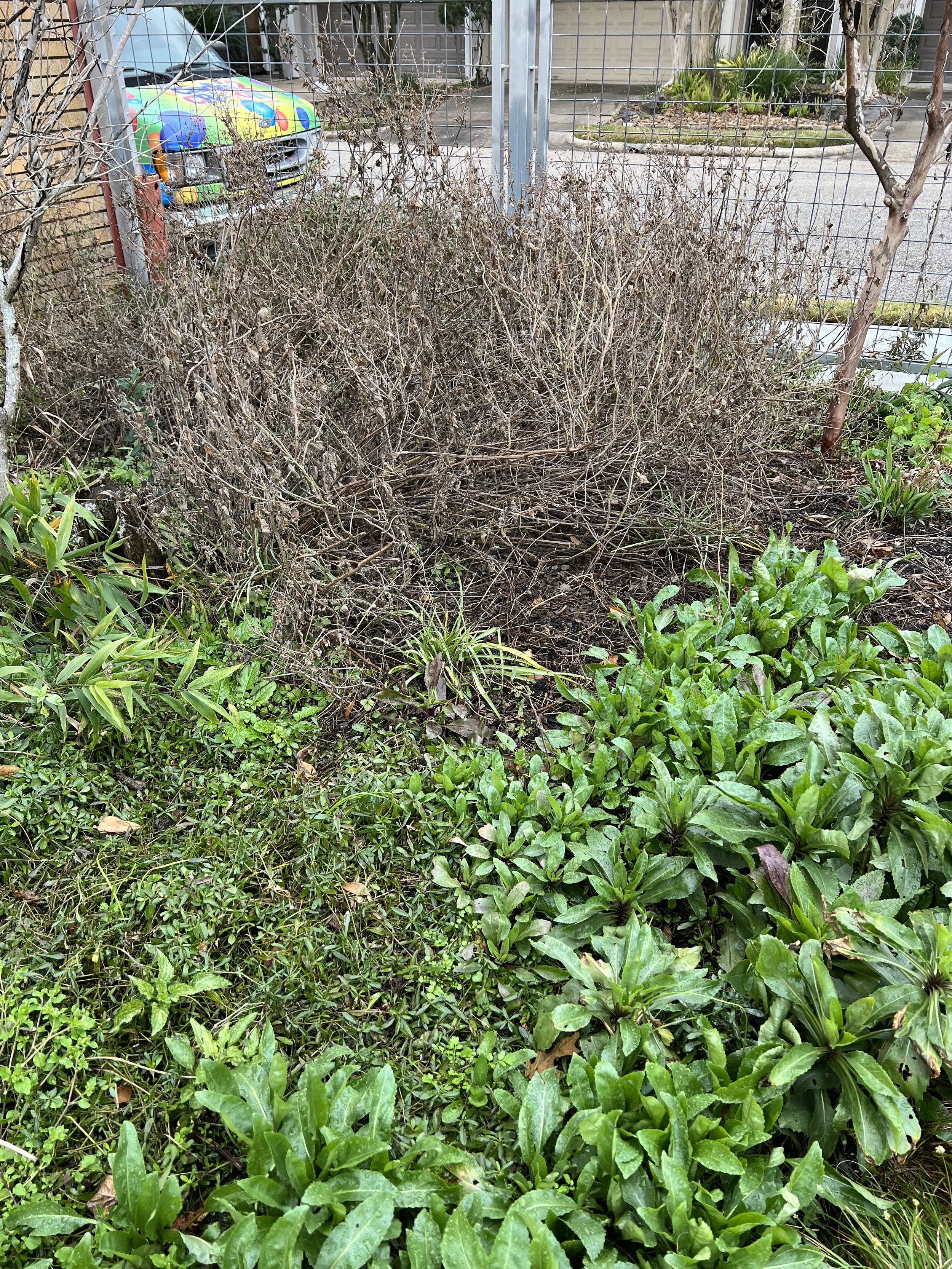
The February freeze left its mark in the garden. Above ground, the Scarlet salvia, Salvia coccinea, was left in the form of crispy brown twigs and leaves. Below ground, the roots were protected by the moisture and living organisms in the soil. The beauty of a perennial is the roots are weather tough and will sprout new life this spring.
In our present culture, these dead limbs would be removed from the site immediately. They remove these dead plants when the weather is still harsh, leaving the ground bare the life that lives in and on it vulnerable. In Symbiosis, these bronze arched stems, and their bi-petaled crumpled leaves are sheltered from downpours, wind, and predators. I leave them. Their leaves and stems may not be a beautiful green, drawing energy from sunlight and water from the earth producing sugar to boost growth and oxygen released into the air. They absorb heat, warm, and protect the ground and living organisms. When March winds come, their seeds fly to new gardens and bare spots ground. When our weather warms, I will chop these dried elements to return to dust. They will become sustenance for bacteria, nematodes, fungi, and earthworms. In life and death, the plants are valuable in landscapes.
Endangered Knowledge: The Soul of Humus — the next paddock and long term plan.
Cindee Travis Klement
Endangered Knowledge: The Soul of Humus
Long Term Proposal - sponsorship and site selection
Sponsorship from the energy industry can mutually benefit from my long-term plan.
How can this work be valuable to the energy industry?
I read in the Houston Chronicle that oil firms wrestle with public image. And, I have read that these same companies are starting to look at agriculture to regenerate the planet and return carbon to our soil for future generations. So, sponsoring my carbons sequestering figurative sculpture can be a tool to build a positive public image, support the environment through educating the public with the natural history it represents, and support the arts and female artists.
What is my long-term vision for the piece?
I believe that we cannot fix our environmental issues if we as a society do not understand how our environment works. Therefore, I made Endangered Knowledge: The Soul of Humus an educational, ecological work for now and for civilizations to come. My vision is to exhibit the work in a high-traffic location on Houston's Buffalo Bayou with the Energy city skyline behind it. The tension of the great bison created out of the indigenous earth and organic material placed against the glass skyline of the energy city will permanently record this endangered knowledge to the citizens and visitors of the coastal prairies collective memory. It will plant the seeds to holistically balance the needs of humanity and wildlife in urban landscapes. I will be a reminder of our collective responsibility of sequestering carbon, soaking up rainwater, and cooling the planet, extending our time on the earth. For the piece to stand the weather, it will be cast in bronze.
How can this sculpture be valuable to the Buffalo Bayou Partnership and the city of Houston?
In the early 2000s, I chaired my daughter's high school environmental social service project. I organized a clean-up on Buffalo bayou for the 16-year-olds. We were pretty new to Houston, and I was curious about Buffalo Bayou's name. After some research, I learned the last bison herd was seen just after the Alamo. A few years later, I discovered the connection between grazing herds, soil health, food production, sequestering carbon, and soaking up rainwater. All these things are crucial to human existence, yet it is unknown by most of the population. Buffalo Bayou is Houston's most significant natural resource, a natural landmark. It is the site my environmental sculpture can have the most important environmental impact. Below is an image of the site I envision for the piece.
What will it cost?
Over the last eight years, I have built a relationship with Legacy Fine Arts Foundry, a minority woman-owned foundry. We have worked out a process to direct cast organic material into bronze. I can show you samples in my studio. The work will not look like a bronze monument it will be a work of art. The process is similar to that of Joe Havel and Linda Ridgeway but adapted to my organic materials. This piece will take the process of direct casting to a whole new level. I project the project will come in between $150,000 - $260,000. That would include a production cost of roughly $100,000., transportation, engineering fees, site preparation, lighting, installation, insurance, artist, consultant fees, etc. Much of the cost is dependent on the site.

The image above is the type of skyline I envision in the background of the proposed installation. The old male bison would be grazing on low-growing native prairie grasses. A few feet behind him, visitors would see cast bronze dung, mushrooms, birds, and dung beetles. The work would not need the granite pedestal as pictured. There are also some suitable sites on Memorial.
Water + Air + Citizens- social sculpture

Water + Air + Citizens
February 19th, 2022, at 2:00 pm
—social sculpture—
Reshaping soil in Houston: Public policy, Design industry, and Art
Lawndale Art Center's Mary E. Bawden Sculpture Garden
Dear friends and family,
Lawndale and I invite you to a public conversation with Sallie Alcorn (Houston City Councilmember), Maggie Tsang (2021-2023 Wortham Fellow at Rice School of Architecture, Managing Principal, Co-Founder of Dept.), Isaac Stein (Design Principal and Co-Founder of Dept.), and myself (exhibiting artist).
I have organized a social sculpture event, a conversation that will explore Houston's landscape practices and ecologies. Together, the speakers and I will consider the diverse ways that Houstonians can positively impact the local environment, looking closely at the design and development of medians, yards, gardens, lots, parks, and blocks.


Image - Symbiosis, Spotted Horsemint, a volunteer Texas native plant, and a Texas native wild bee. The bee is a Two-spotted Longhorn Bee, Melissodes bimaculatus one of the threatened 400 native bee species of Texas.
Altamira- video Endangered Knowledge: Soul of humus -
courtesy of Sculoture month.
Endangered Knowledge:The Soul of Humus - Bluenest beef
A few years ago I went o a soil conference in Solado, Texas. Through that conference I was referred to Russ Conser.
In November I had a meeting with Russ Conser of Bluenest beef to show him and his wife the bison Sculpture. The next week he wrote the below post on his blog.
“Two weeks ago, I sent you an email about migrating bison and birds and how they might help us rediscover how the health of people and planet and planet were intrinsically connected. It was a story of how the soils of both my birthplace and my current home were created by a symbiotic relationship between lush and diverse prairies and the bison that roamed them. My friend Dan wrote a book that went on for many thousands of words, and I could have gone on for pages elaborating myself, but in response to that email, I got one of those ‘pictures that says a thousand words.’
You see, one of our customers, Cindee Klement, sent me photos of her new sculpture project that told this same story profoundly with no words at all. See her here, with her latest project “Endangered Knowledge: The Soul of Humus”:
Last Thursday, I went for a visit to see it myself in a trip that left me speechless. I learned that Cindee grew up on an arid but irrigated farm in far west Texas. She had heard unbelievable stories of the grasses that were there long before her birth in a land that is now desert. Today, she is a fellow Houstonian who lives along the banks of our primary waterway, Buffalo Bayou, and realized that that was a name of deep significance to our lost heritage whose meaning had been forgotten.
Having been inspired the story of grazing animals that collaborated with prairie grasses to originally create our region’s life-giving carbon-storing soils, she decided to create an epic work of art that flips that script – creating a bison out of soil and the grasses that made them.
Underneath is a structure of welded and woven steel, but the dirt, and grass and roots are all you see. The majestic beast’s hide is made of clay, its coat of diverse grasses, and the hair on its face of fine fibrous roots. The birds on its back, which were inspired by a visit Cindee made to a regenerative bison ranch, are made of bronze, as is the manure left along the trail to its present ‘grazing’ site. This creates a somewhat surreal visual dynamic between the daunting mass of the clay and grass beast and the import of the life cycling all around it.
Here it is in full as best as I could capture it in a single image:
The body is large and powerful - the eyes almost haunting. You can almost feel him contemplating the meaning of his next bite in gratitude to the soil and grass emerging from it. I am struck by how no words, no factoid, nor no chart my scientific mind could ever produce might compete with this work of art. Cindee’s story makes it compelling, but the art truly speaks for itself. It’s powerful. It’s epic.
The sculpture is currently on display in an old concrete grain silo along the train tracks that parallel the bayou named after its ancestors. Just a mile or so downstream, lies the point on the bayou where nearly 200 years ago the Allen Brother’s founded what became the city of Houston. But for at least another 11,000 years before that, the indigenous people who lived here hunted bison along that same bayou using the waterway itself as part of the hunt. Cindee’s sculpture strikes as something that is at once a fitting metaphor for our region’s history - a former wetland prairie now a hub of industry and technology covered by sprawling concrete, and also a forward looking ecological ‘golem’ – a creature created literally of the place to (hopefully) serve the purpose of the place.
Cindee wants her sculpture to be a message to the future – a message of reimagining how we humans might live respectfully and productively within and as a part of this coastal prairie ecosystem. But its literal future is still uncertain. Cindee is considering options to transform the original sculpture into bronze for permanent outdoor exhibition. Personally, I would like to see it on display as part of this project where many people might see and hear the message on a day in the park, thus putting this sculpture worth more than a thousand words in a place where the people can rediscover and remember forever this “Endangered Knowledge.”
You can learn more about the sculpture and Cindee’s other work on her web site. For those in (or soon passing through) this region, the sculpture will be on display through December 4, 2021 at the “Sawyer Yards” Art Studio as part of an exhibit appropriately titled “Altamira: The Primal Urge to Create.”
Russ Conser
Blue Nest Beef Co-Founder & CEO
Weed Out

As geologists and environmentalists battle, “are we in the Holocene epoch or have we made our mark on Earth and entered a new geological period, the Anthropocene?”, I ponder weeds.
The term weed, in the Holocene, is a plant that sticks out in a monoculture. From a bipedal primate’s perspective, a weed isn’t like all the surrounding plants: we undervalue it—because it “looks” different. From a human who spells her name Cindee with two ee’s, I have to say I am attracted to weeds and not just because of the ees. Since my first installation in Symbiosis, on February 14, 2021, I have thought a lot about the word, verb, and the thing weed, asking myself so many questions and finding answers in this urban garden.
In nature and in Symbiosis, I observe weeds and now see them as Earth’s first responders to large or small ecological disasters. Weeds are seeds, roots, stems, leaves, berries, and blooms—organic matter. Weeds are vegetative volunteers in the ecological services division of Earth; they provide emergency services for its living organisms above and below ground. Hear me out — when the Earth’s green skin is left bare, tilled, stripped, eroded, poisoned, burned, flooded, neglected, or disturbed by natural or human occurrences, Mother Earth cherry-picks from embryos sleeping in the soil her first responders—our weeds-seeds. Like our own“compounded prescriptions,” seeds are biologically programmed for the site’s specific ecological condition—temperature, moisture, and daylight—to grow fast and spread quickly; they are speed healers. As they mature, I see emergency room physicians administering oxygen masks for underground organisms, protective bandages for the Earth’s epidermis, and poison antidotes. Their organic matter lowers the Earth’stemperatures, thereby keeping soil and its living microorganisms alive. And they provide shelter, food, and nectar for the site’s microorganisms, wildlife, and humans. These ecological first responders are full-service providers, slowing rainwater, reducing soil erosion, replenishing the aquifer, cooling the planet, sequestering carbon, and stabilizing it in the ground for those debating geological periods to come.
From a sculptural perspective, if the shape, texture, or color of a volunteer first responder “weed” does not satisfy my artistic vision, I no longer yank it out of the ground in a knee-jerk response. I stop—look—think, why was it sent in? I take a holistic approach. I weigh the service it is providing our above and below ground micro-ecosystem, the armature that supports the life of the sculpture. I then consider what human adjustments I might implement to holistically balance these roles nature’s first responders are providing to achieve my artistic vision, supporting my sculpture. I consider the needs of other species from the bacteria, fungi, nematodes, and insects to the small mammals, birds, and humans whose life work supports my work. I know that the small systems have to be right for the global systems to run smoothly and I see that too much is at risk to resort to pesticides. I create ways that weeds’ delicately shaped blooms can work in my living land art.
From a practical standpoint, weeds are convenient, cost-effective tools in my human-made nature scape, a catalyst for environmental change, Symbiosis. So, while intellectuals debate the ages, I get out of weeds way, pull over to the right and let the weeds do their job.
In Wikipedia, weed is “of unknown origin.” Ironically, weeds are of unknown origins in most landscapes. So I break down the word weed into three parts.
We – all of us, me, you and I.
ee – In the English language, double e’s are a tool to
denote one connected.
ed – denotes verb, performs an action.
Holocene or Anthropocene? In this age of uncertainty, if humans “weed out” weeding, can all species win the battle? — I wonder…
Additional Weed Readings
WEEDS Control Without Poisons, by Charles Walters.
WHEN WEEDS TALK, by Jay, L. McCaman — includes charts with the functions of each species.
I purchased my copies on Acres USA.

Wood-sorrel exhibits nyctinasty, likely helping the plant conserve energy. It forms a taproot and is upright when young, but as it grows, its long, multibranched stems eventually flop over and trail out along the ground for as much as two feet, extending rootlets from nodes along the stem. This root is beneficial in breaking up the clay. Sorrels contain oxalates, a naturally occurring molecules that bind with calcium. If your soil needs calcium, keep the wood-sorrel.
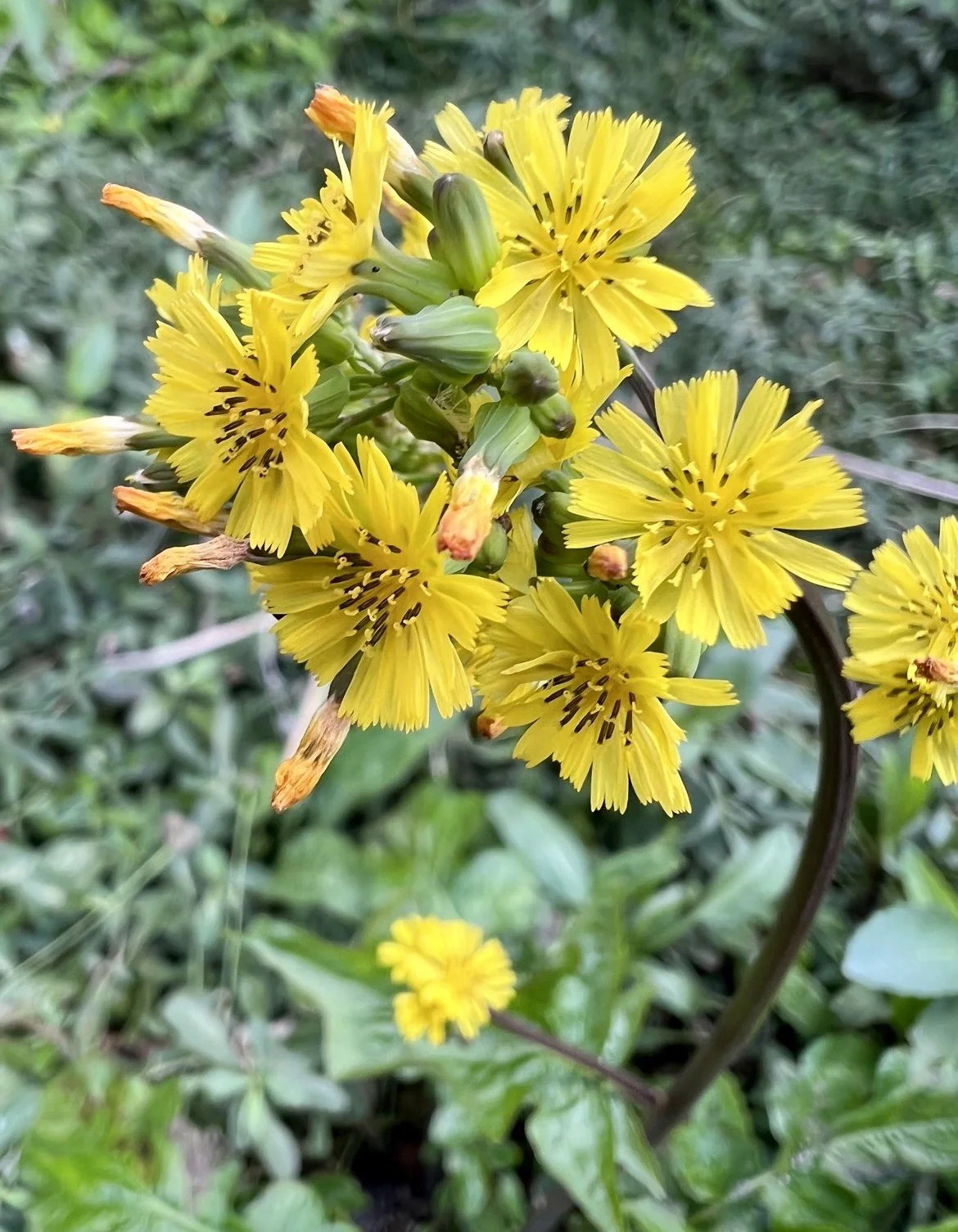
Youngia japonica a member of the aster family and related to the dandelions. Dandelions Taraxacum officinale shows up when soil is low in calcium and compacted. The local bees, butterflies, birds, and I enjoy the blooms while the dandelion roots break up the clay. Their leaves are loaded with antioxidants and used by herbalists for many health issues.

I believe the above plant to be Cudweed. Cudweed is host for the American painted lady butterfly.

Why we shouldn’t rag on ragweed? The seeds of ragweed are rich in fatty oils. Fats are not only Ebut also is for fattening up birds and small mammals such as Eastern Cottontail, Meadow Vole, grasshoppers which eat the leaves, Dark-eyed Junco, Brown-headed Cowbird, Northern Bobwhite, Purple Finch, Mourning Dove, American Goldfinch, and the Red-bellied Woodpeckers to get them through the lean winter months.
It is an ancient grain for humans and ragweed is a valuable food source for the caterpillars of many butterflies and moths including the striking wavy-lined emerald and the uniquely adapted bird dropping moths. The seeds of ragweed are rich in fatty oils. Birds and small mammals readily consume ragweed seeds to help fatten up for the lean months to come.
I will use this post to document my experiences with weeds.
Documenting the art of creating living soil. SOILED — Tighty-Whities 2021
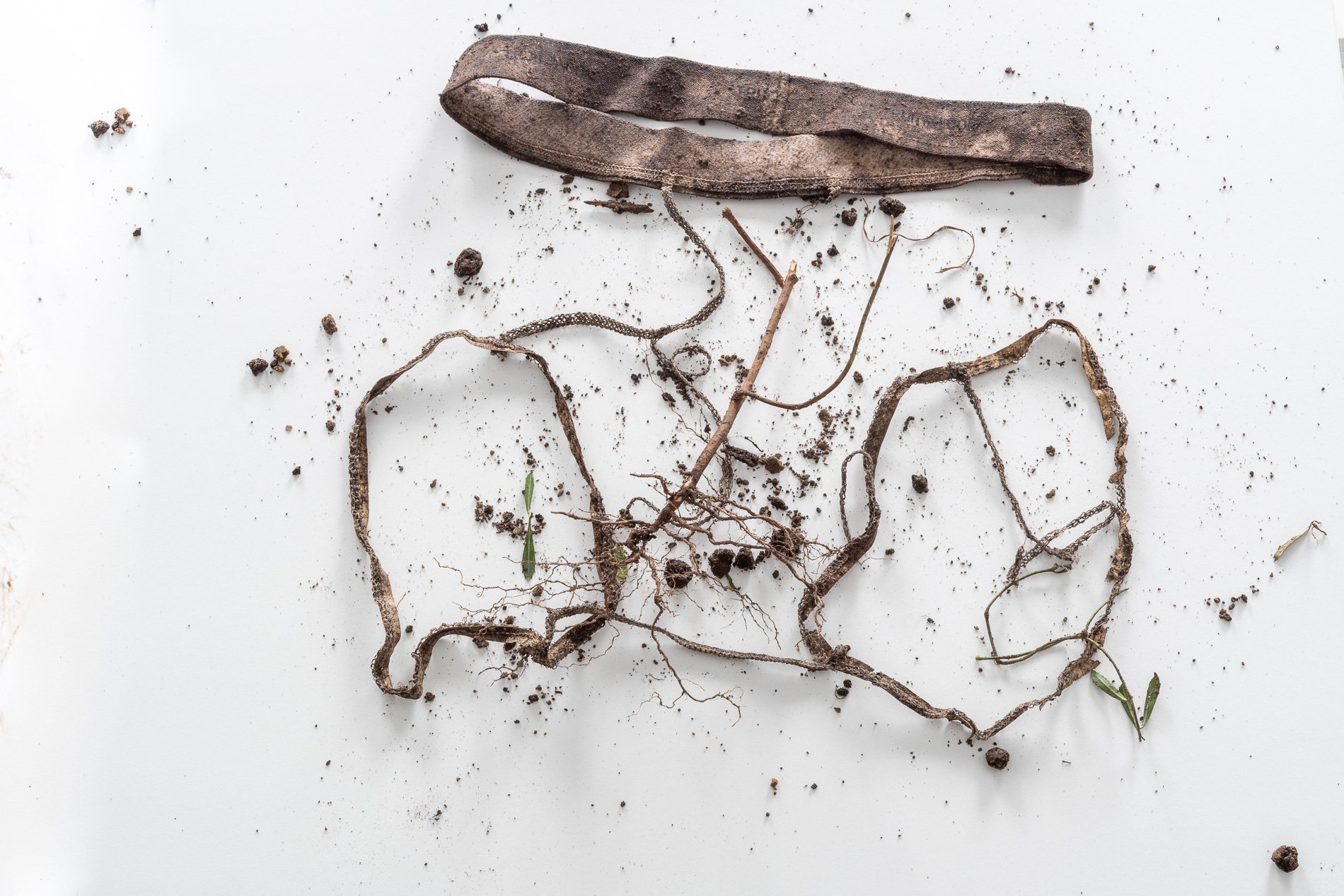
SOILED — Tighty-Whities 2021
Photograph by N. Baker
How do you document art that lives beneath our feet? Creating art beneath the Earth’s surface I am finding new ways to document the work and it's movement. This photograph is the result. Let me explain. To test soil for fungi that recycle wood and live on dead material soil, scientists buried cotton fabric. In Symbiosis, to document the Saprophytic fungi, I planted new, washed men's medium cotton briefs. This photograph demonstrates the results. In 2022 I will recreate the piece and grow the tighty-whities in a vertical column. This change will document that living soil, the diversity of microbes is built from the top down. In contrast, when my father farmed in the 50s and 60s, the farm bureau that advised him told him to invest in a new plow to dig deeper to access the richest soil.
The purpose of my work is to change how we see landscape. It isn’t just about creating beautiful gardens. Landscape can store carbon and soak up rainwater to cool the planet. It is the cheapest and fastest way to get our planet back on track.

Digging up the briefs I immediately knew I had made a mistake. I left them In the garden’s soil too long. Still, I dug them out with tender care. The petroleum-based elastic band was entwined with a plant root. The root took the elastic leg 6” deeper into the earth than I planted it. I left the elastic and the root as I found them. Laid them on a board and took them immediately to Nash’s photography studio to document the work.
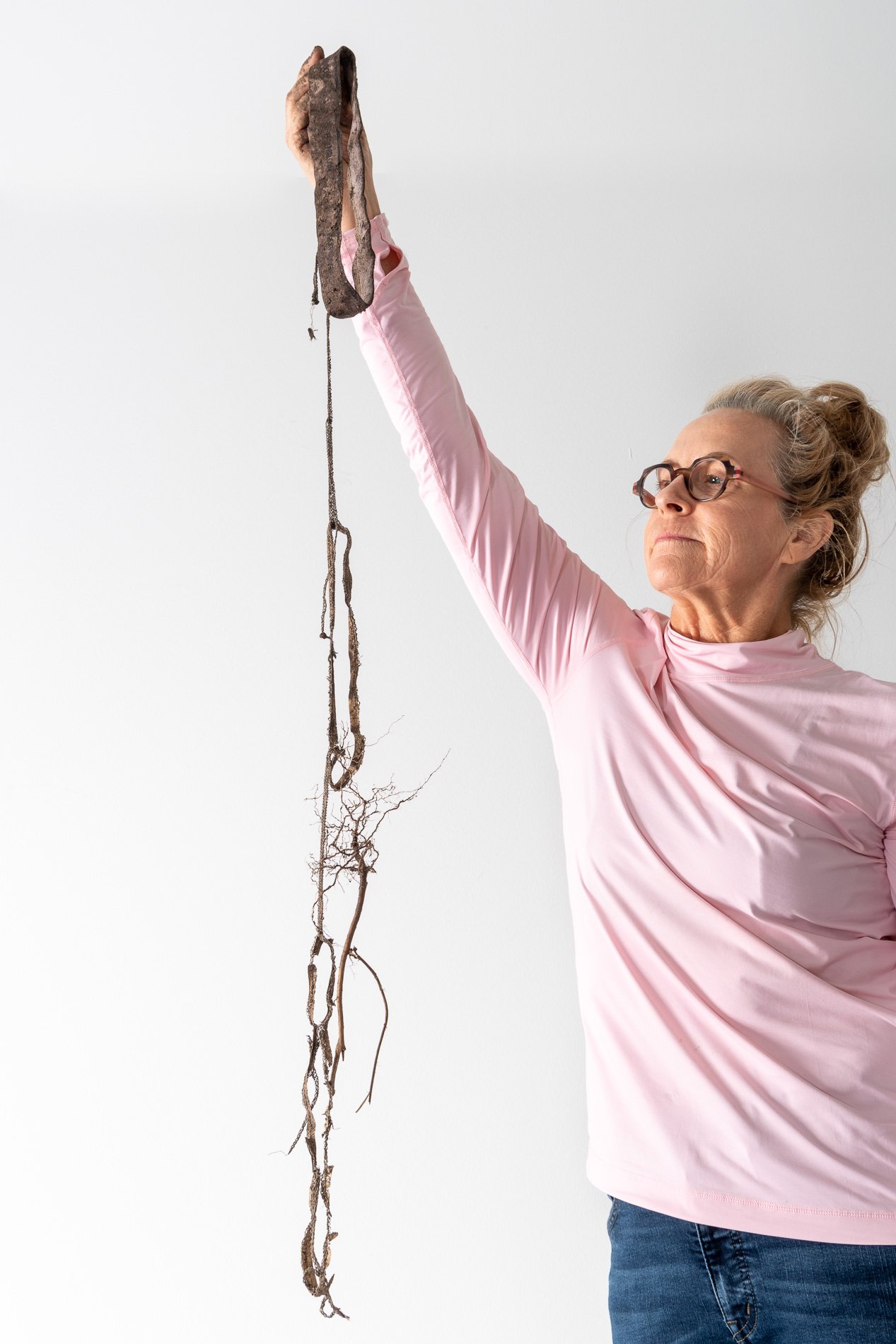
First, I delicately untangled the elastic. The cotton had completely decayed. The elastic was not biodegradable.

Seeing that the briefs were still intact minus the cotton and plus the root I started reassembling the briefs and the added appendage.

In art many times you have to listen to the materials.

the Lipan Apache, bison and Nature Conservancy
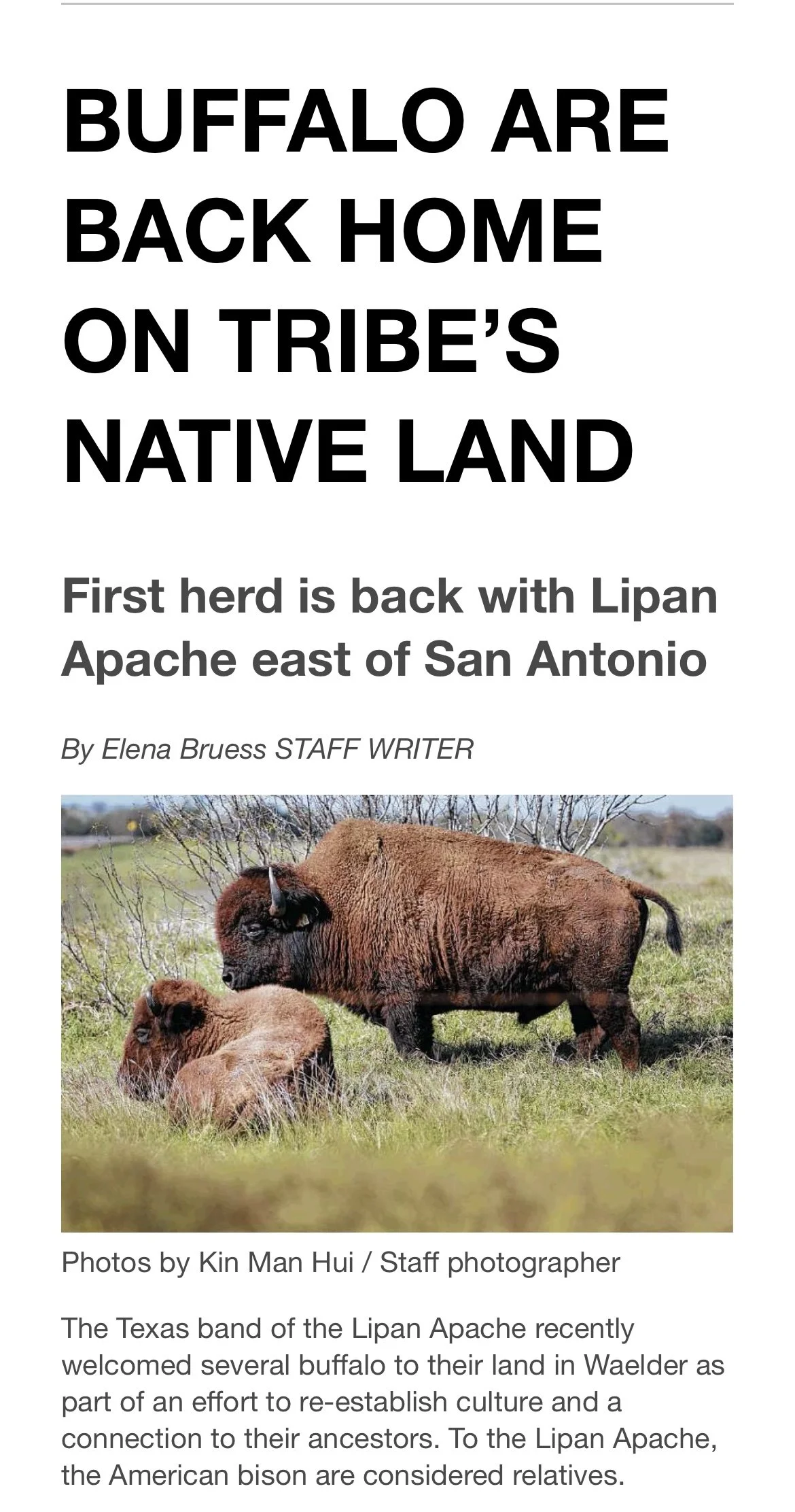
In El Paso, where I spent most of my life, the native American tribes had a strong presence in the community. They were responsive and easy to contact. When I started Symbiosis, I reached out to the only tribe I could find Through emails and calls. No one responded. I was hoping to learn more about native plants. The American Indians have a reputation of having a strong connection to nature and bison. Since the native Americans from the Coastal prairie were not able to respond to my requests regarding Symbiosis, I did not try again regarding Endangered Knowledge:The Soul if Humus. It was an intense year working on two huge works, I did not have a moment to think about the relationship between the native Americans and the bison. It was a year of treading water. This article from the Houston Chronicle paints a gorgeous picture of the connection of the Native Americans from the San Antonio area the Lipan Apaches. I would love to meet them, I have reached out. Stay tuned.
“On Russian short stories, criticism, and how art won't heal us... (but gardens might?)” - Laura August
I highly recommend the entire article. I melt when I read Laura’s work. This piece has a nice moment for my work near the end a him his in the title. “On Russian short stories, criticism, and how art won't heal us... (but gardens might?)” - Laura August
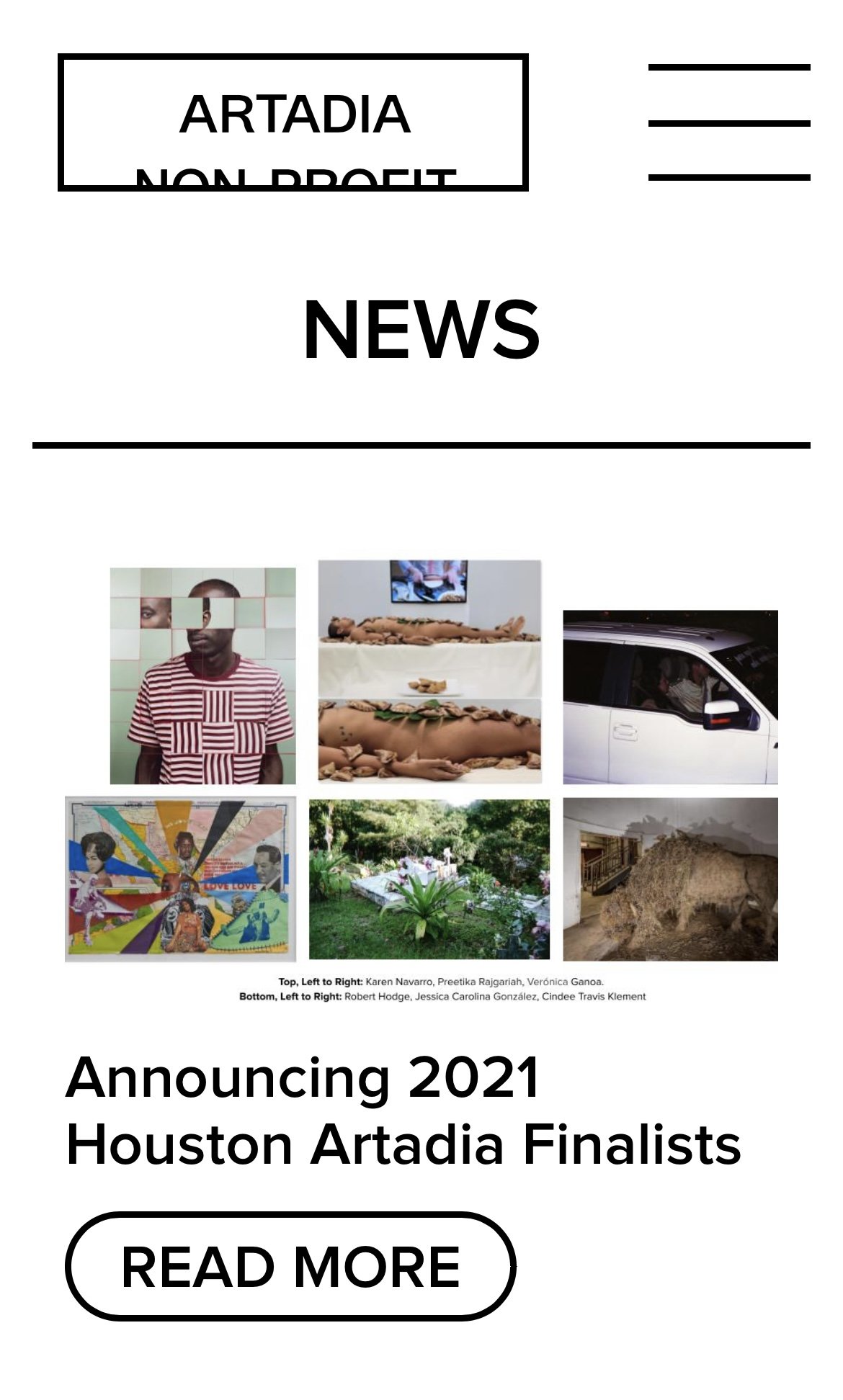
Artadia 2021 Finalist
In early November I was notified that I was one of 6 artists in the Houston are selected by Artadia’s curators. It is hard to describe the feeling of having my work recognized by such an esteem organization.
See the full article here.
It never hurts to get a Glasstire shout out. In art every moment of support is a BIG moment. Many thanks to Glasstire for acknowledging my efforts and accomplishments.


Art critic - Laura August

A renowned art critic posted about my work on Instagram. Aflood of emotions swept over me. I am so honored, happy, Giddy with joy. So cooool
I have long respected and followed the work of Laura August. She was in Houston this fall and posted about my land art @lawndsleartcenter. It felt amazing to to be seen.
Below is her post.
“piedrinita When I first met Cindee Klement, I suggested her vision might be too expansive and hopeful for this particular world, this particular time, in which I am too often burrowing down into despair. But Cindee has been working for years now to research and make work that promotes widespread urban soil regeneration and carbon reduction through site specific sculpture and installation. I've also learned a lot in those years: that is, never doubt Cindee Klement and her enormous vision and persistence! Today I got a special tour of her project, Symbiosis, at Lawndale. I'm so impressed by her drive and determination, and this project is so beautiful. This urban prairie-started in April!-is buzzing and humming with life, and layers upon layers of native plants are reclaiming the soil. You should go see it. #lawndalesymbiosis
@cindeeklementart
@lawndaleartcenter
Symbiosis- scientific research that support the living sculpture.
“All is not doom and gloom, though, according to Dr Rodger. Many plants are long-lived, opening a window of opportunity to restore pollinators before plant extinctions occur from lack of pollinators.”- First global estimate of importance of pollinators for seed production in plants

Symbiosis
4.5 cubic yards of compost ( living organic material), 200 plus Texas Native plants installed to support the return of Houston’s urban wildlife.
Summer 2021
Image by Nash Baker
Symbiosis - squirrels
I have not seen squirrels in the sculpture. I recently read in Science Daily, Personality matters, even for squirrels. The article is interesting as it is a window into the natural world. I expect these characteristics are valid in most species. I also found the availability of a perch important in creating a sculpture that supports urban wildlife. I have placed stumps in the garden

Squirrel study
Charcoal and ink

Squirrel study
Charcoal and ink

Squirrel movement study
Charcoal and ink
Symbiosis- invasive species

Hairy Crabweed Fatoua villosa is the only invasive species I have discovered in Symbiosis.
It gives me confidence in my landscape philosopies when I read research publications that support my observations of “Symbiosis.”
In July, Houston received an extraordinary amount of rain. That is when I discovered an invasion of Fatoua villos. Aware of the harmful effects of invasive species such as kudzu, I panicked. I went into industrial irradiacation gear. After two days of pulling the hairy-plant-beast from the beds, I noticed many of the native plants were suffering from too much water. I also noticed the native plants in the beds that I had not pulled we're not struggling. I stopped the pulling of the species. That is when I adopted a weed or invasive species management philosophy. Now I carefully observe how each species is impacting the naticve plants, the wildlife and the visual impact of the sculpture. Below is an article from Science Daily that supports my observation.
“The paper's implications suggest that faced with declining fisheries, threatened reef ecosystems, and changing climatic and oceanic conditions, the value of ecosystem services provided by some invasive species, e.g., mangroves, may outweigh their negative effects. Therefore, the decision-making process involved in managing some invasive species warrants more careful consideration of both costs and benefits provided to the ecosystem.
"In a static world, invasive species are bad because they disrupt ecosystems," Granek said. "But we're living in a world where the environment is changing. The climate is changing. The oceans are changing. That changes the calculus of how bad some invasive species are to the habitats they've been introduced into."
Carbon by the Yard - a weekly update
Carbon by the Yard
Zoysia Turfgrass relief
35' X 48'
Embedded within the installation Symbiosis, Carbon by the Yard is a temporary, living sculpture in the shape of the Carbon element symbol, C. The work consists of carving a 16 x 14-foot shape into the existing grass, and allowing the Zoysia grass to grow tall around it. A simple gesture, the letter brings attention to the role lawn-grass plays in climate change. In 2020, the Environmental Protection Agency estimated that grass uses up about a third of all public water: in the US, this translates to 9 billion gallons of water every day. Our mowers consume 200 million gallons of gas. The U.S. Environmental Protection Agency estimates that, gas-powered lawn mowers produce 11 times as much pollution as a new car hour for hour. And, manicured lawns provide no livable habitats for pollinators or the other plants and animals necessary to maintain a healthy ecosystem. With Carbon by the Yard, artist-environmentalist Cindee Klement brings attention to the ways in which our daily decisions can help to reduce our carbon footprints.
Reducing nitrate leaching losses from turfgrass fertilization of residential lawns

The sketch for Lawndale approval
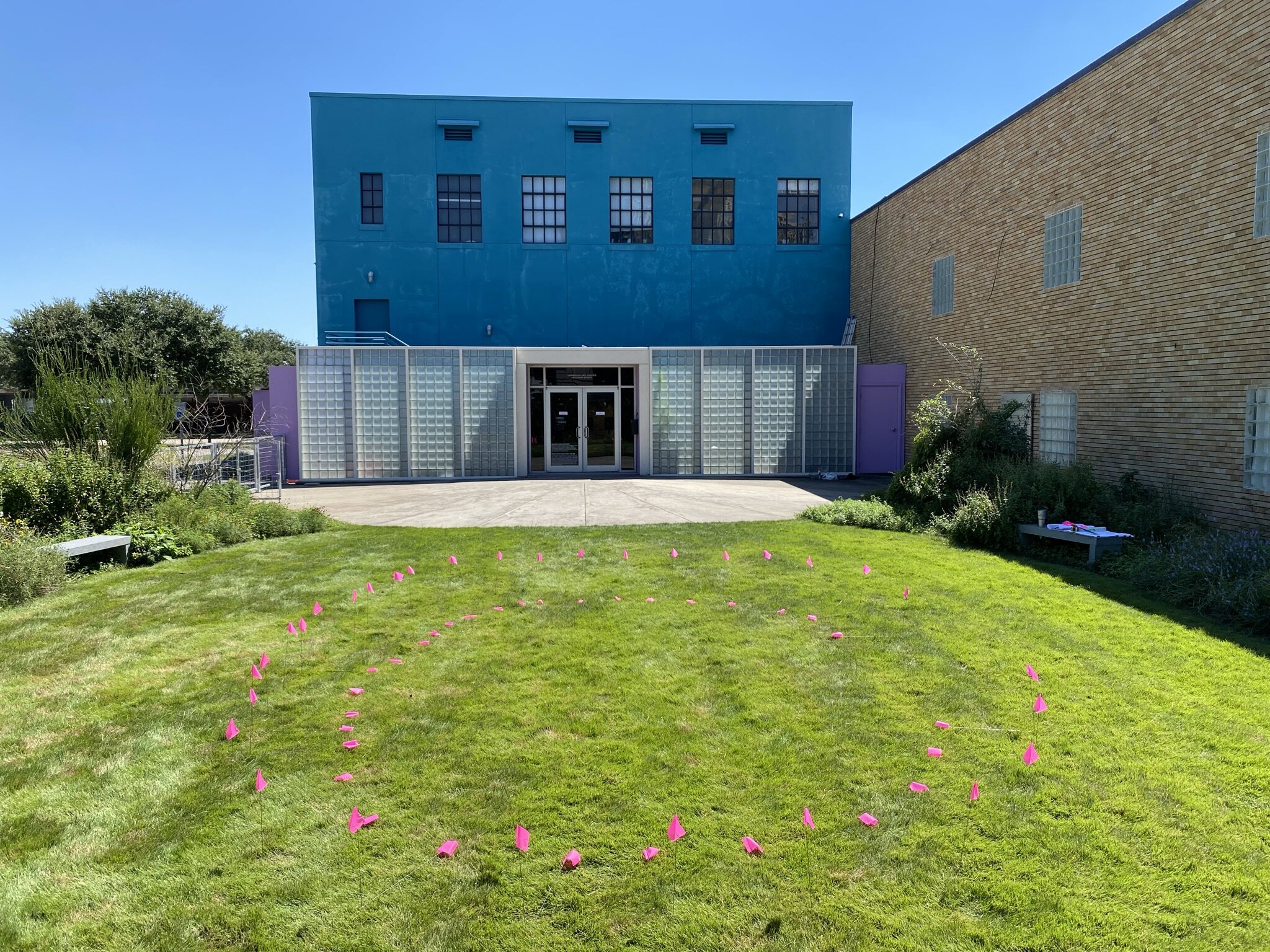
September 23, 2021
I sketched the C into the space with flags. Moving and adjusting them until I had the shape C right and in the right place.

Next I marked the C with a water base paint used to mark fields.

The C marked in water based paint.

October24th- The first cutting.
The yard maintenance company used their regular mower. The CO2, cost, time, and noise pollution of the gass lawn mower was not worth the result.

I was afraid that the following week the lawn maintenance company would not be able to see the relief enough to remow it. I remarked the C with the flags.
The second cutting was rained out.
I will update this blog post through out the process.

October 8th - week three cutting #2

October 18th - Week 4 cutting #3

October 22 - week 5 cutting #4
After 4 cuttings the C is now beginning srand out.

November 1- week 6 cutting #5

November 7- week #7cutting #6

November 12th, week #8 cutting #7

November 19th, week #9 cutting #8
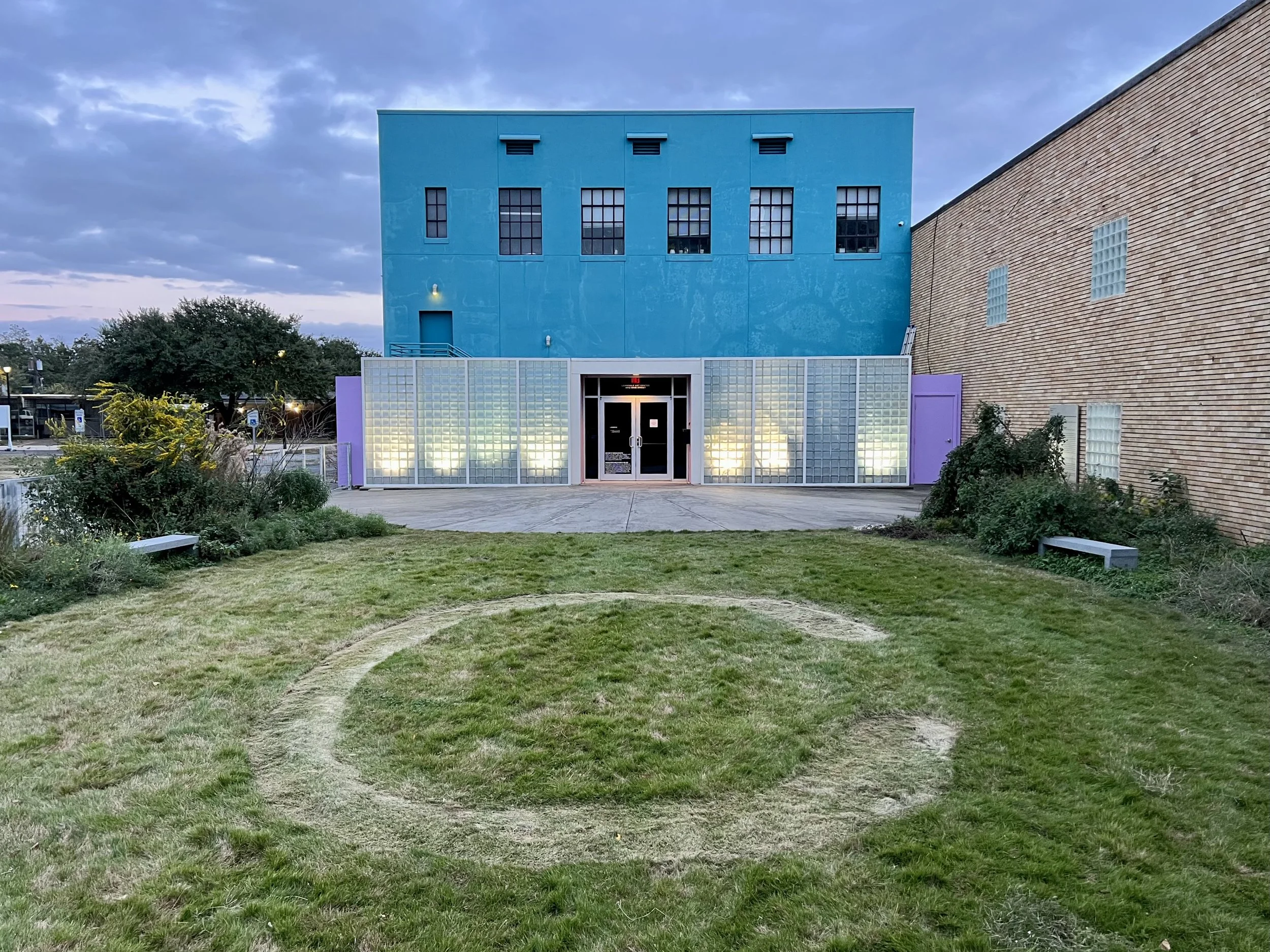
November 26th, week #10 cutting #9

December 3rd, week #11 cutting #10

December 24th, week #14 cutting #13

January 9, week #16 cutting #15
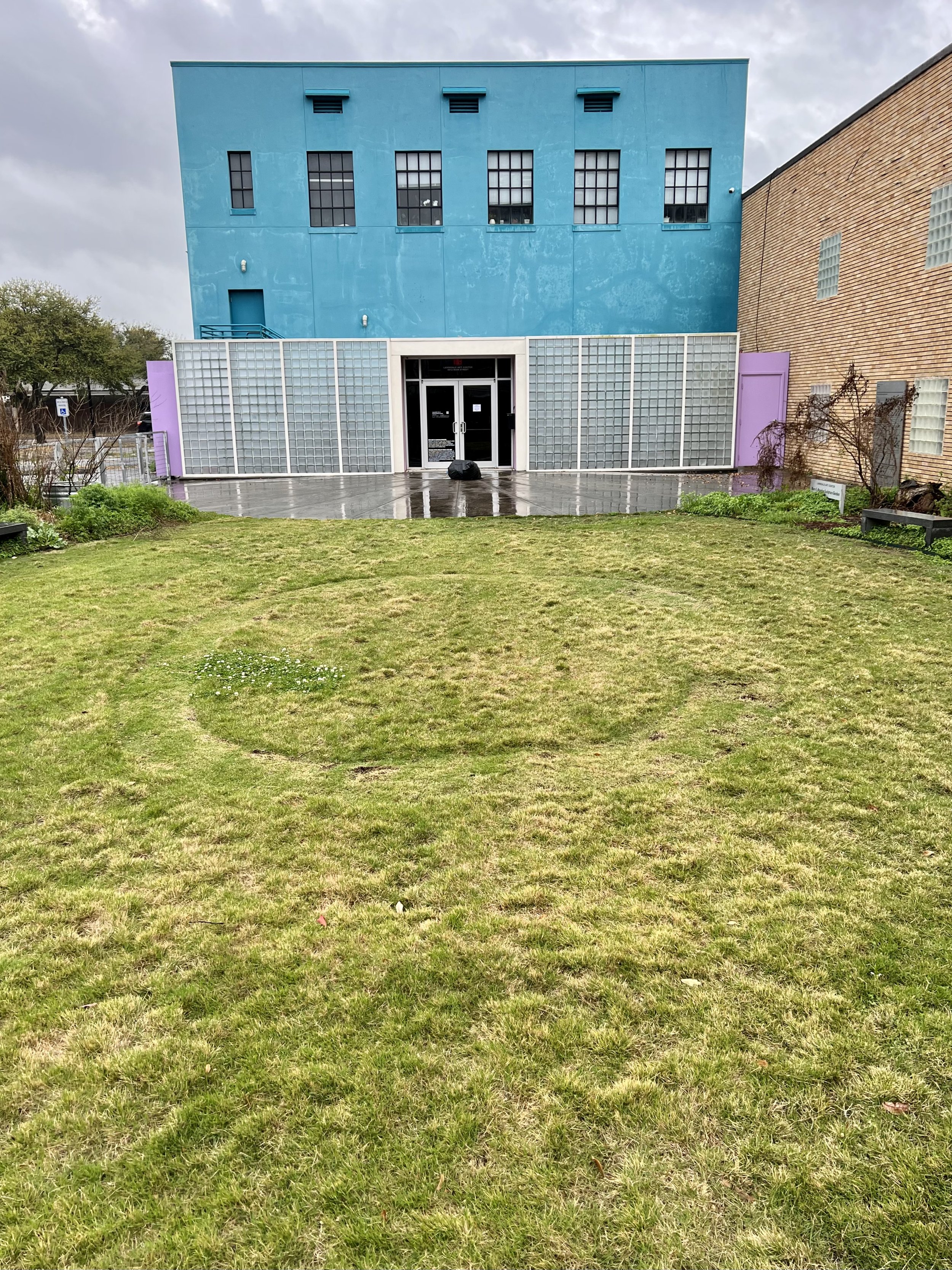
March 30 - this would have been week 29……. Unfortunately, it is not.
I noticed the grass was growing exceptionally slow. Long story short Lawndale’s lawn maintenance company was mowing on a high setting.
I am starting over on counting weeks of emissions saved.

April 10th, week 1, not cutting the yard #1

Spring 2022

August 2022
Symbiosis - where are the birds?
For several weeks I have noticed the neighborhood birds are not stopping into Symbiosis. I have asked the neighbors and they have noticed the birds were absent too. Today an article came out in the Houston chronicle, Songbirds Take a Break.
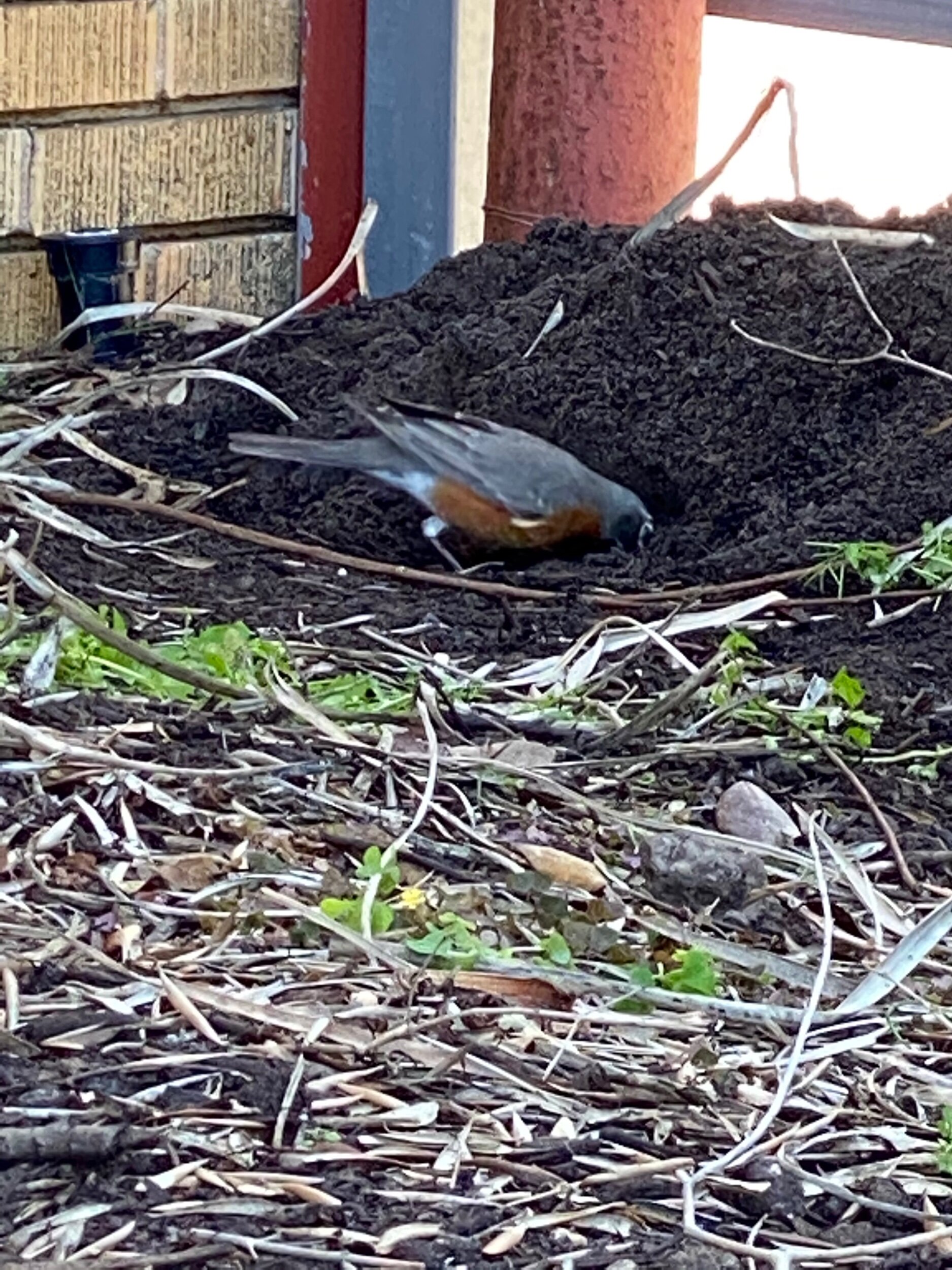
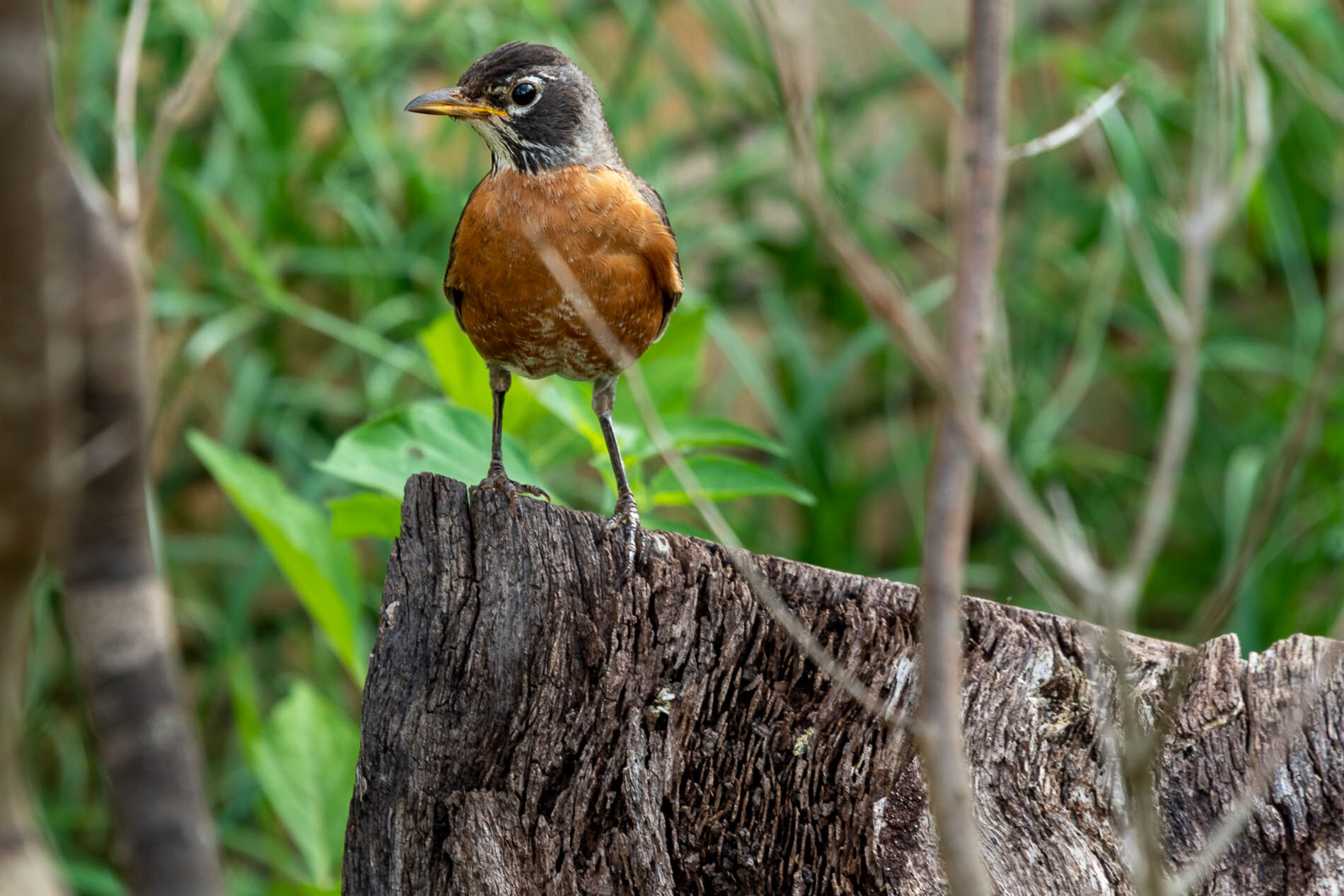
March 19th - first bird in garden. An Amerucan red robin foraging for insects, bugs, protein or seeds, poking it's beak into the newly installed living compost.

March 31, 2021 robin hunting for grubs as I install the American beautyberry.
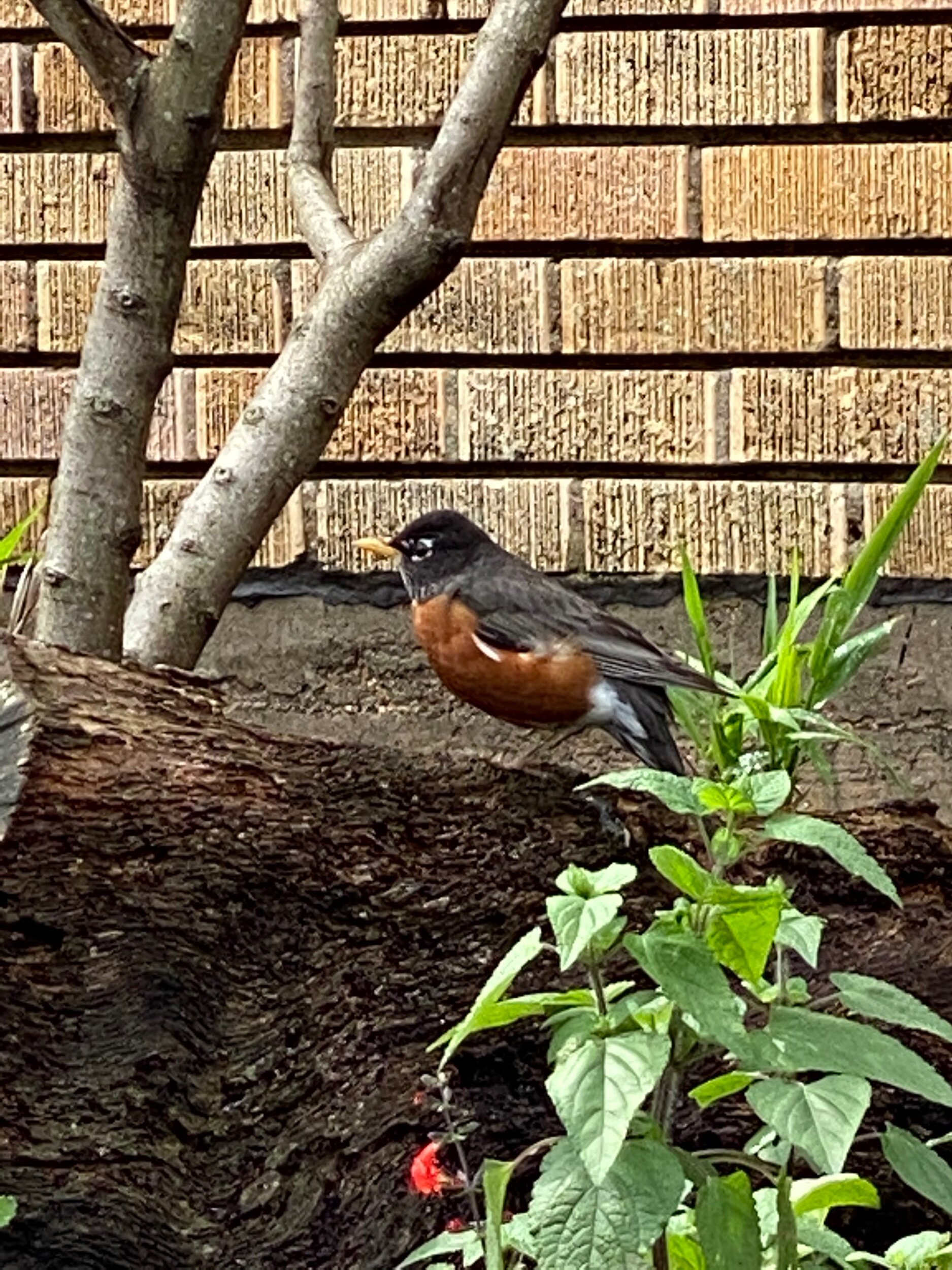
April 9, 2021 robin on the oak stump. I installed rotting native tree stumps to give the birds a camouflaged lookout and hideout.
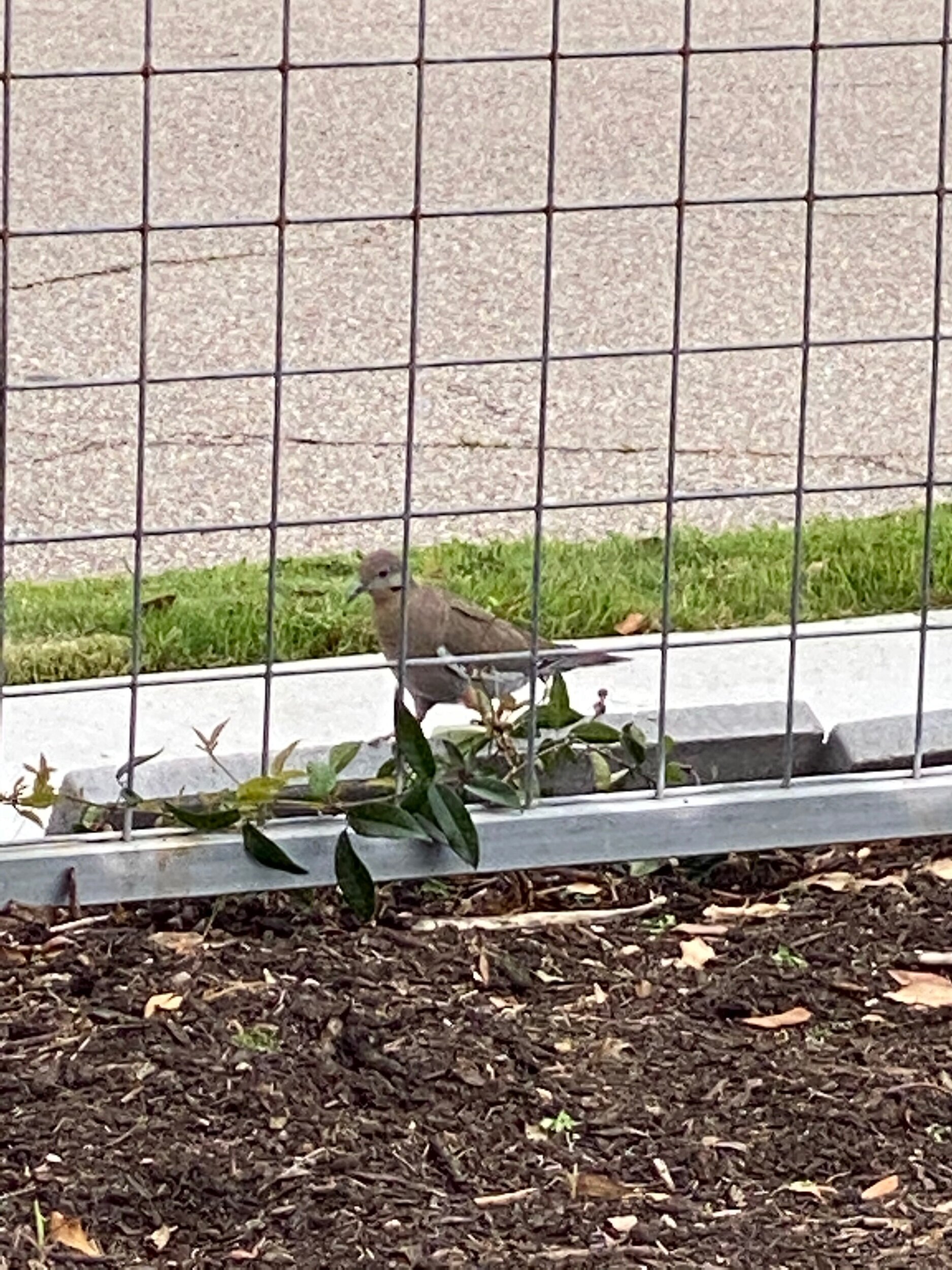
April 9, 2021 dove
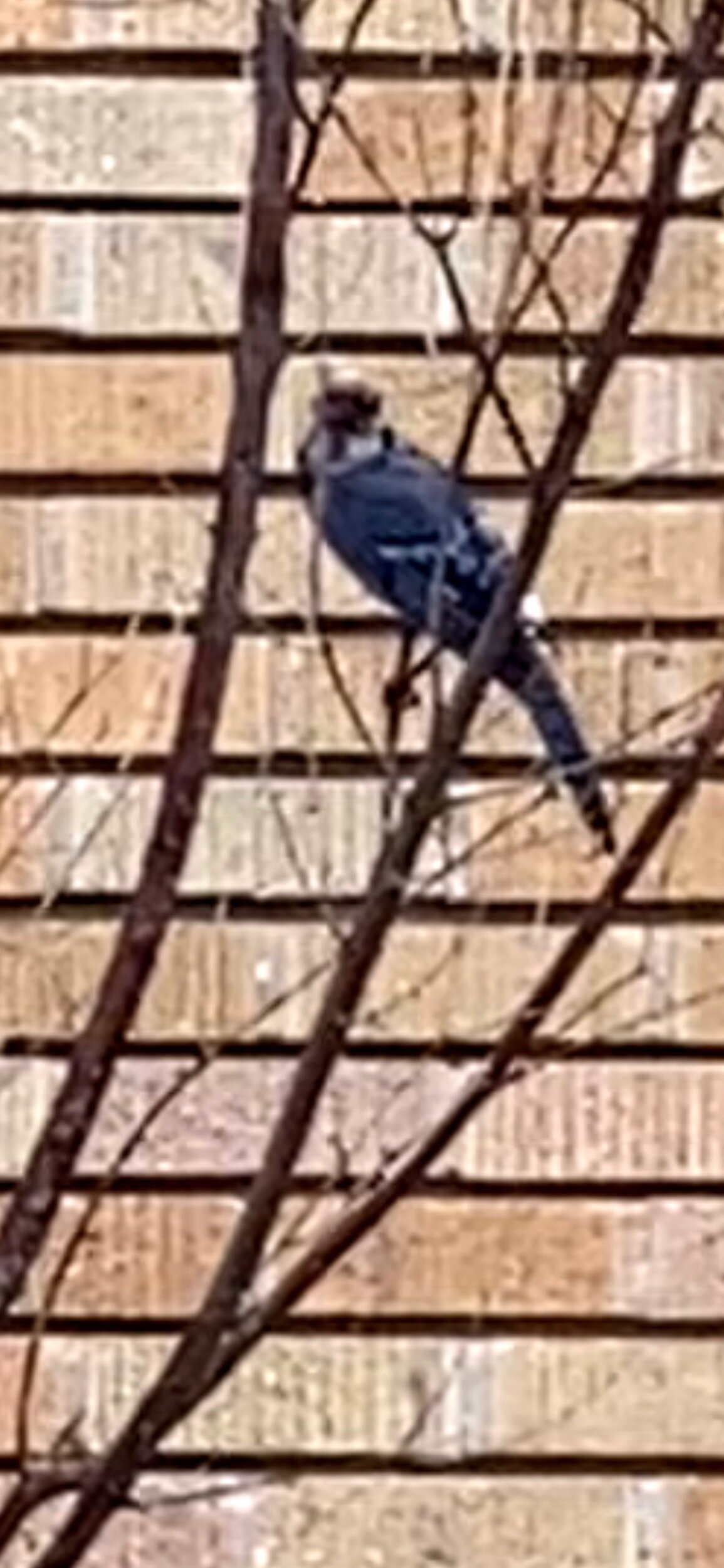
May 22, 2021,
blue jay
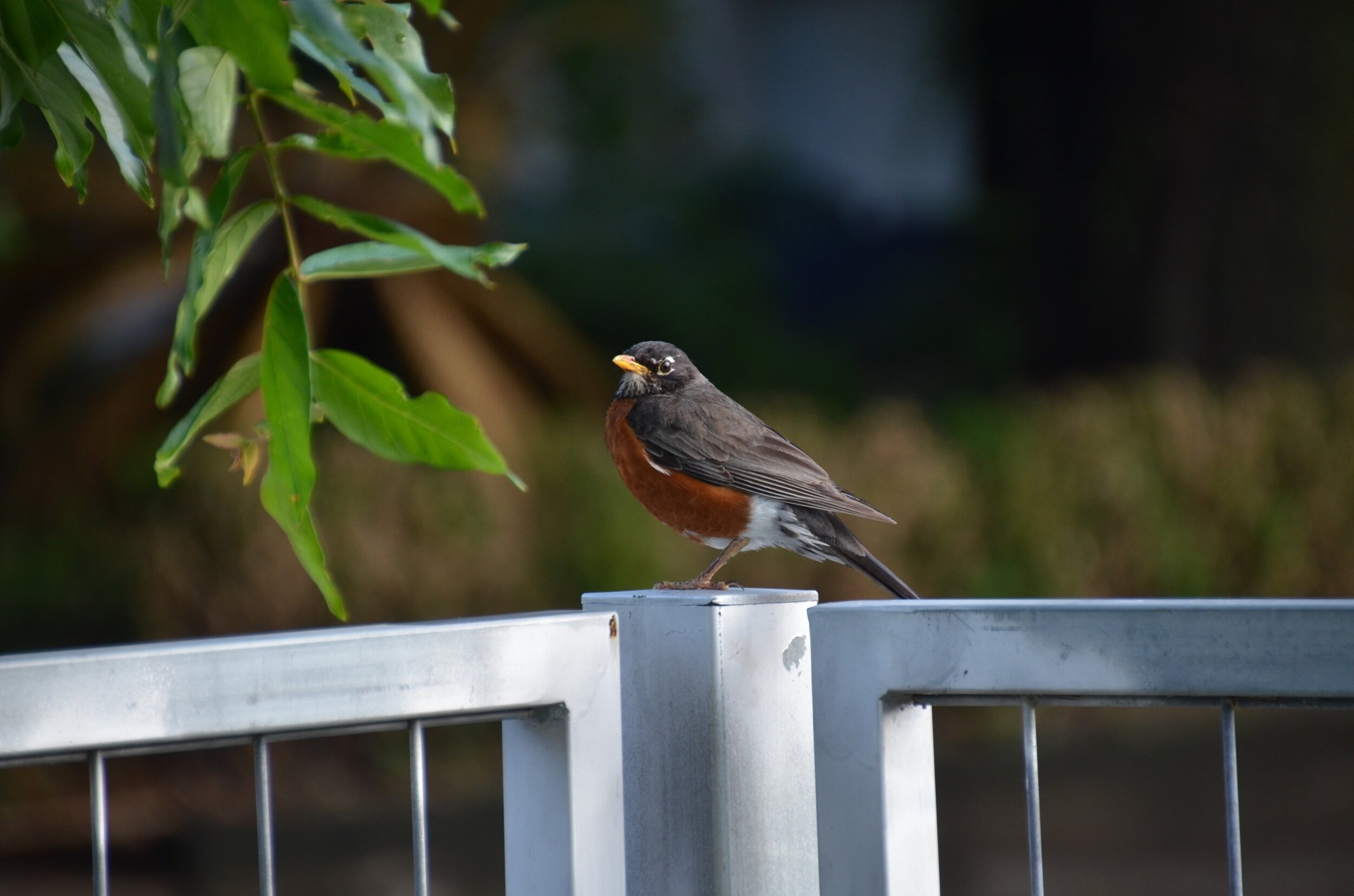
May 1, 2021 American red robin

June 19, 2021
June 22, 2021
You never know where the next email will take you.
I opened this today. I am honored and look forward to how this will unfold.

Endangered Knowledge: The Soul of Humus
9/9/21
Thursday after a long day of work my hands ached. That evening my right thumb palm was sore and barely pink. I noticed a tiny puncture wound. It hurt all night, keeping me from sleeping. The following day I called a hand surgeon Dr. Mark Henry. I had an infection and the puncture wound had already closed. It needed to be surgically cleaned out. The wound was left open and cleaned again Monday and Thursday.
I will not be able to work on the piece for 3 weeks. My adult son Griffin offered to fly in to town and be my hands to finish.
Below is my garage studio as I left it.

Endangered Knowledge: The Soul of Humus
I was right on schedule. A week ago, I started applying the finished surface material, the fun part. Long story short, I received a tiny puncture wound at the base of my thumb at some point. That night I noticed a tender spot on my thumb. The next day it was very pink and ached down to my Wrist. The Puncture had sealed in an infection. I will have my third surgical cleaning today. I am told I will not be able to use my hand for a total of 3 weeks.
In order to get the piece finished in time for the opening, my son offered to fly in next weekend and be my hands.

TIny puncture, slight swelling, aching and tenderness.


Quisque iaculis facilisis lacinia. Mauris euismod pellentesque tellus sit amet mollis.