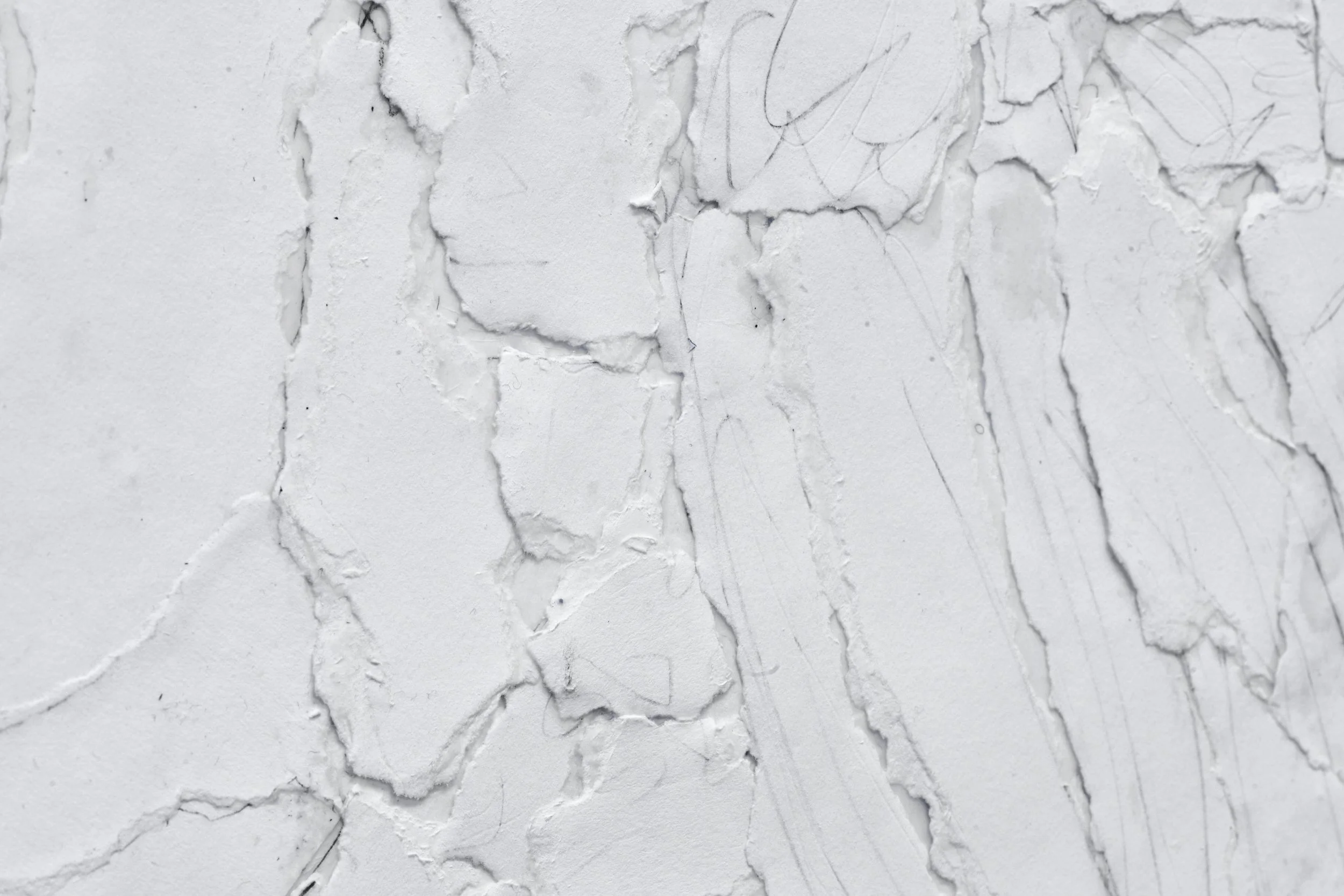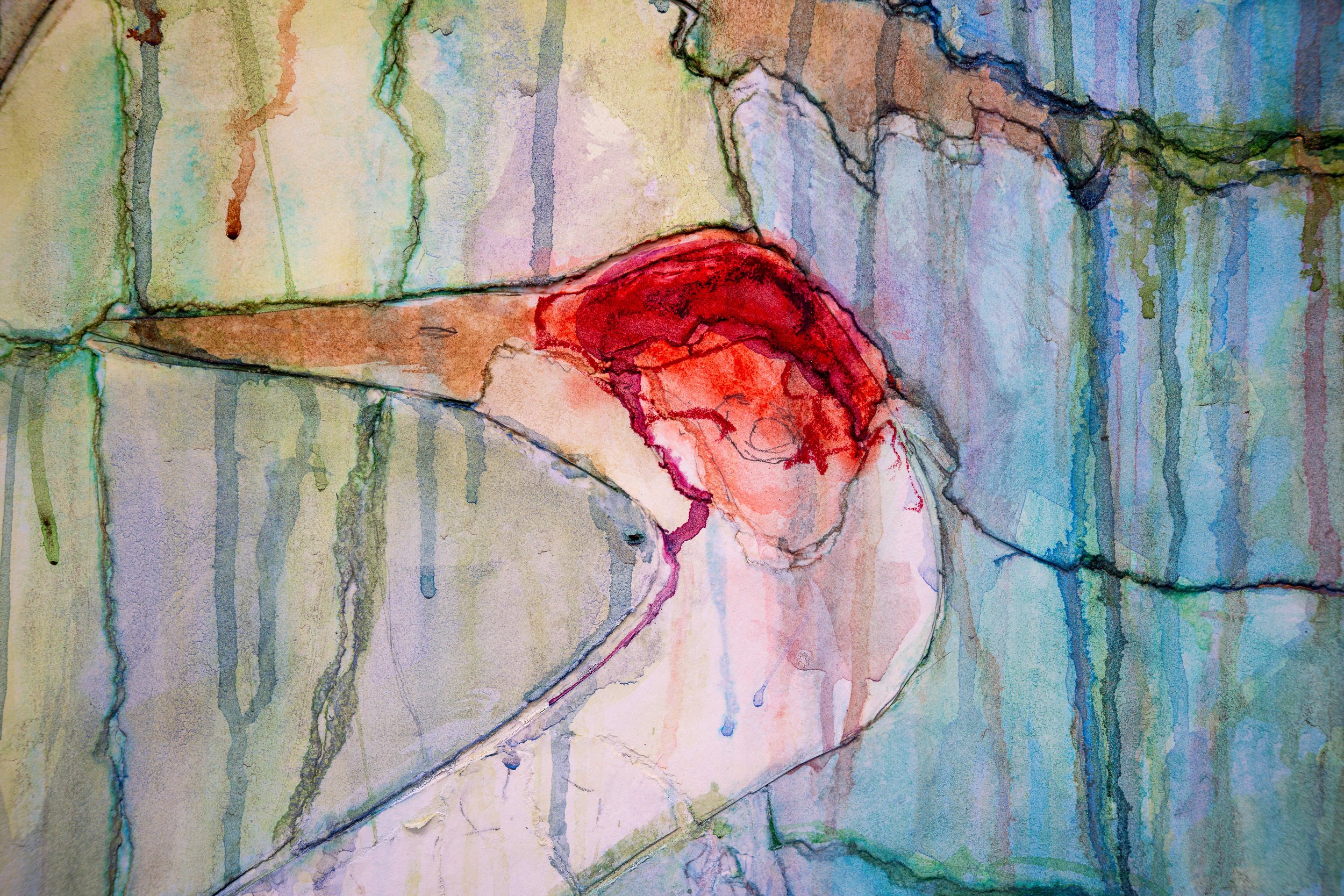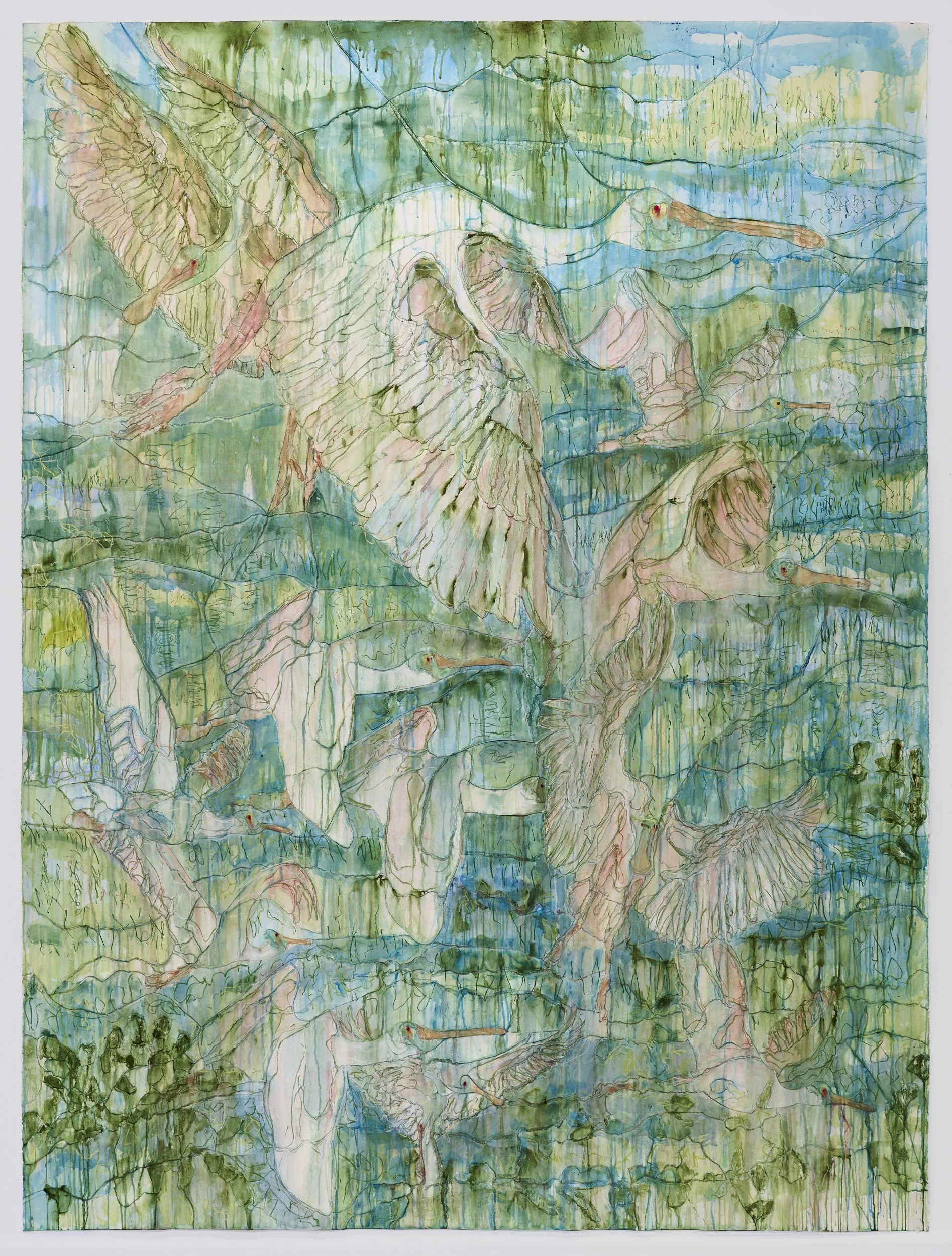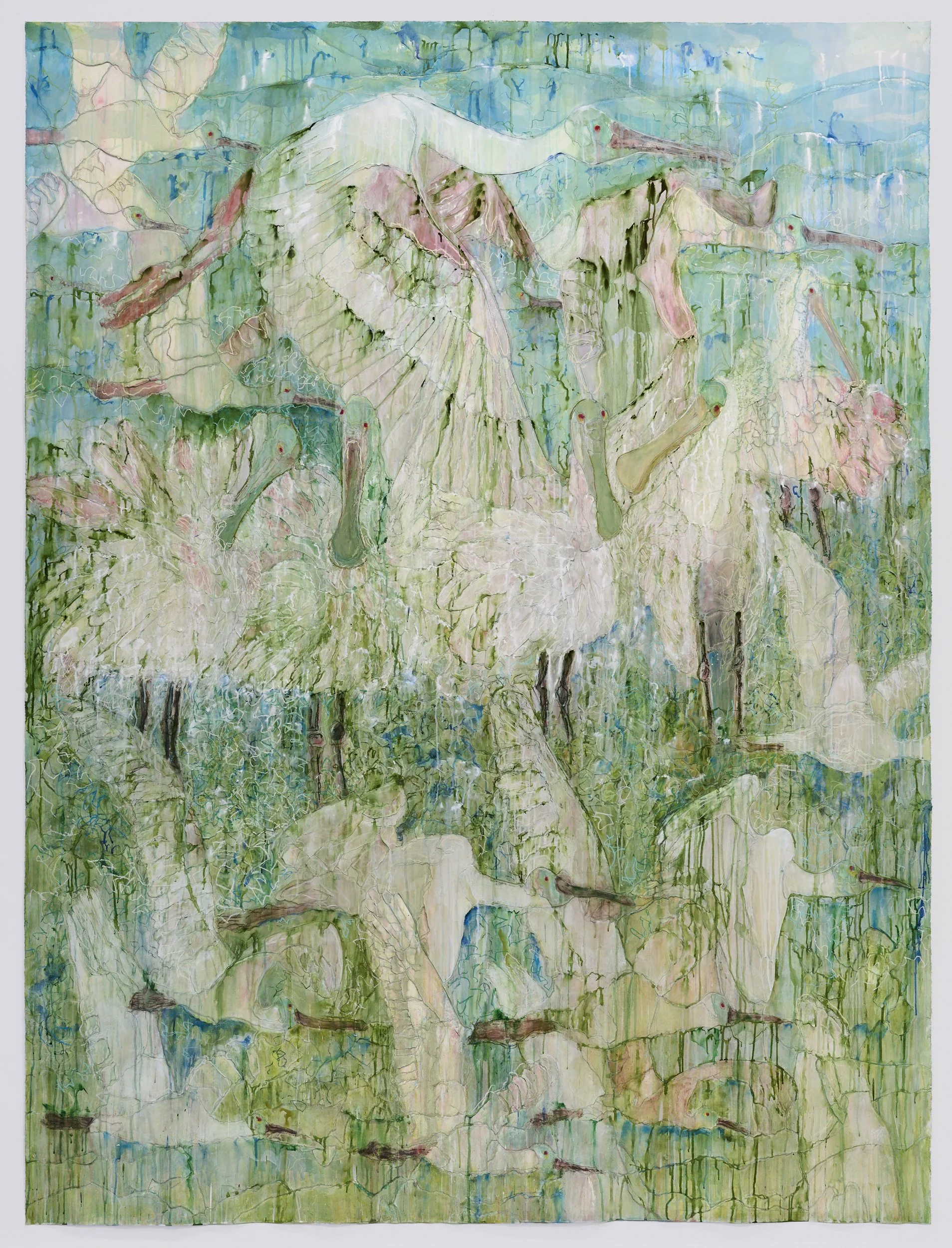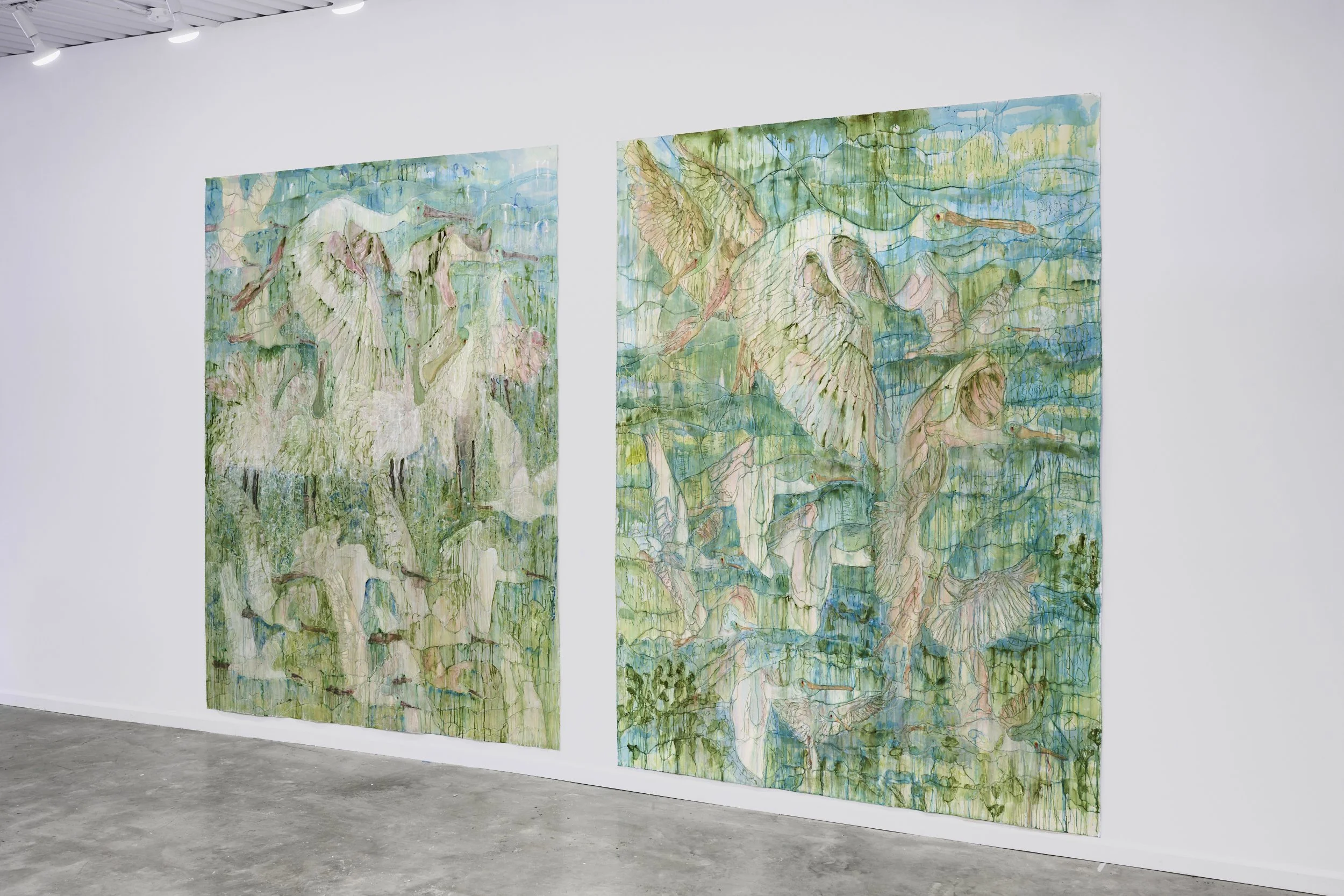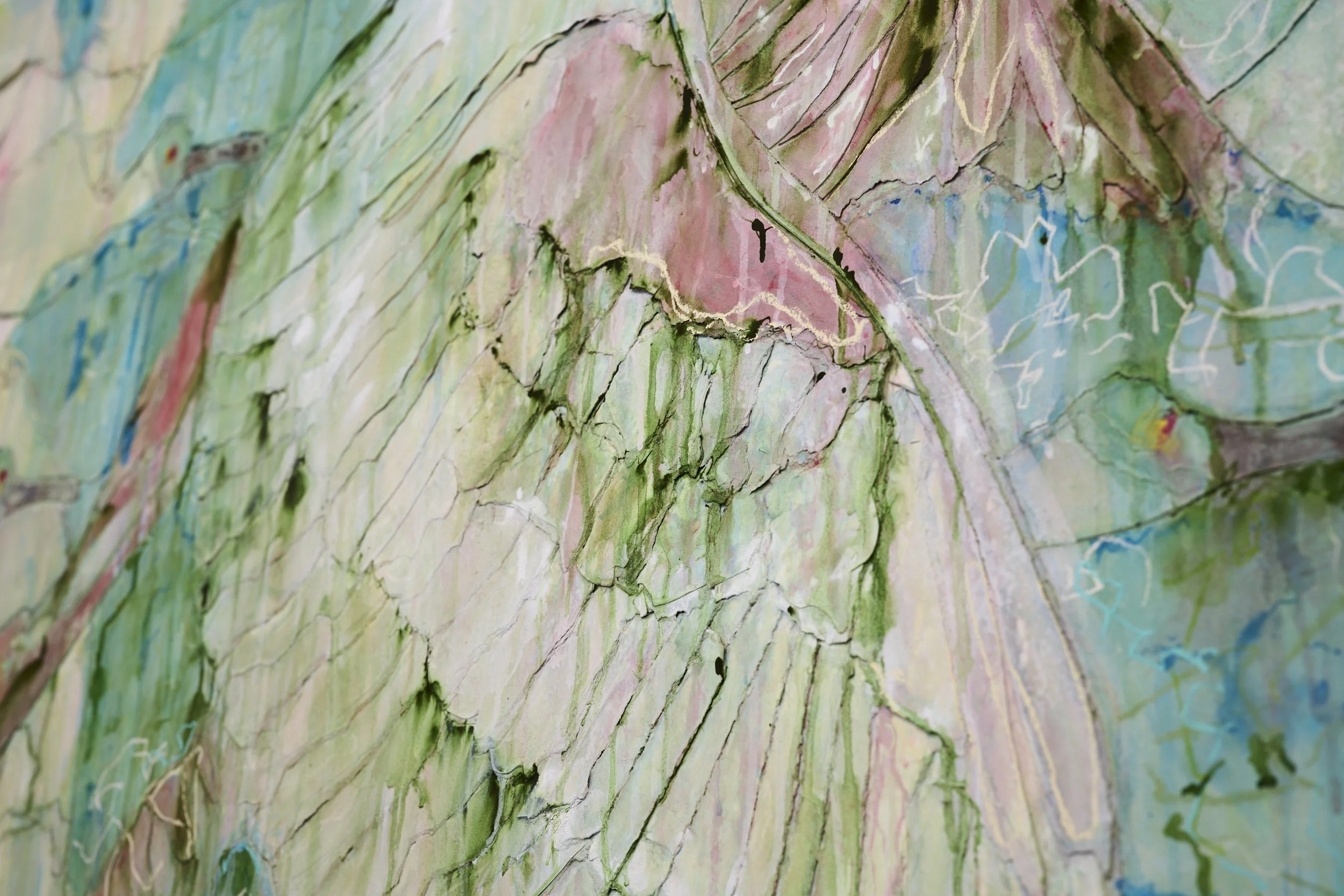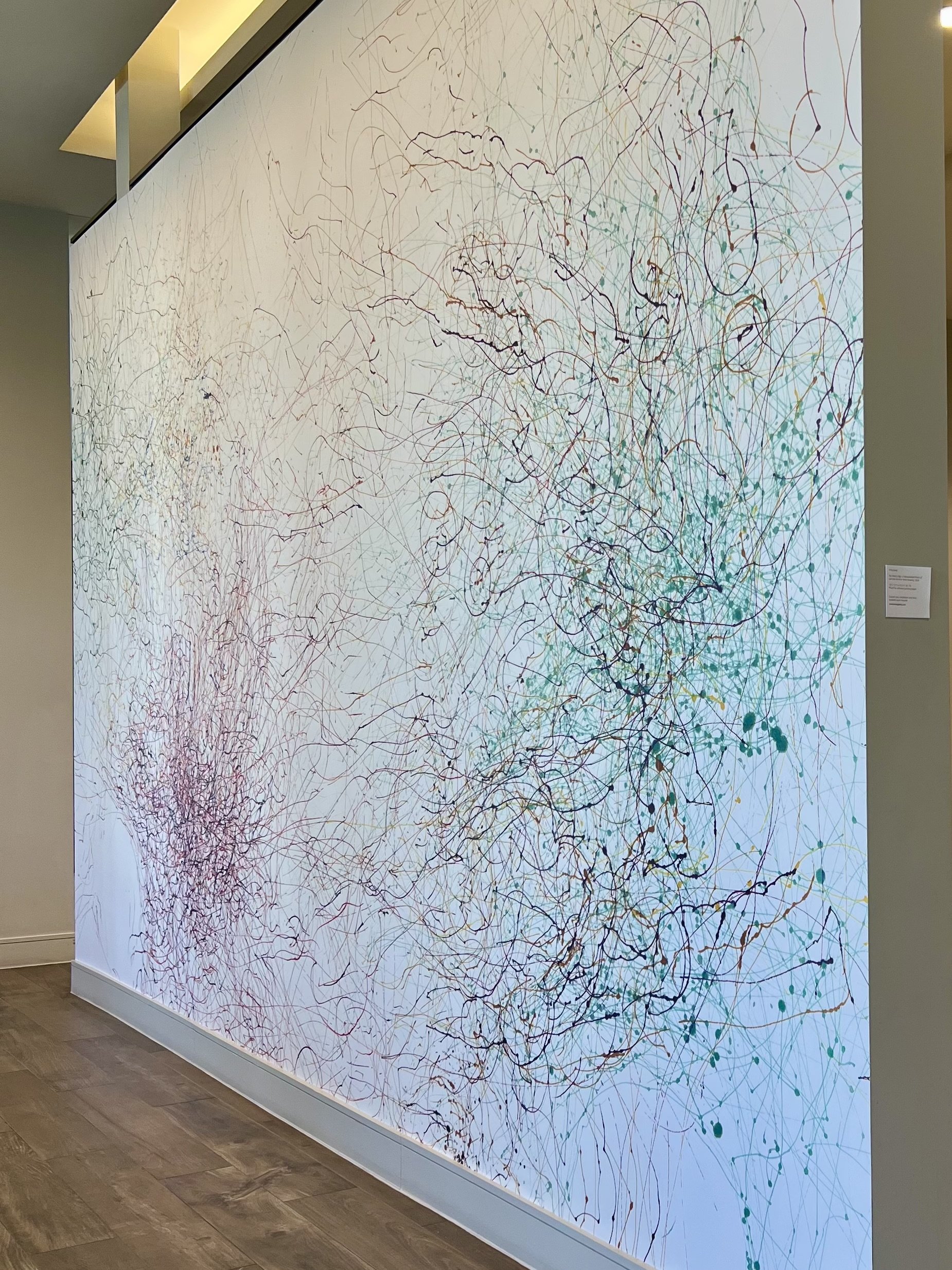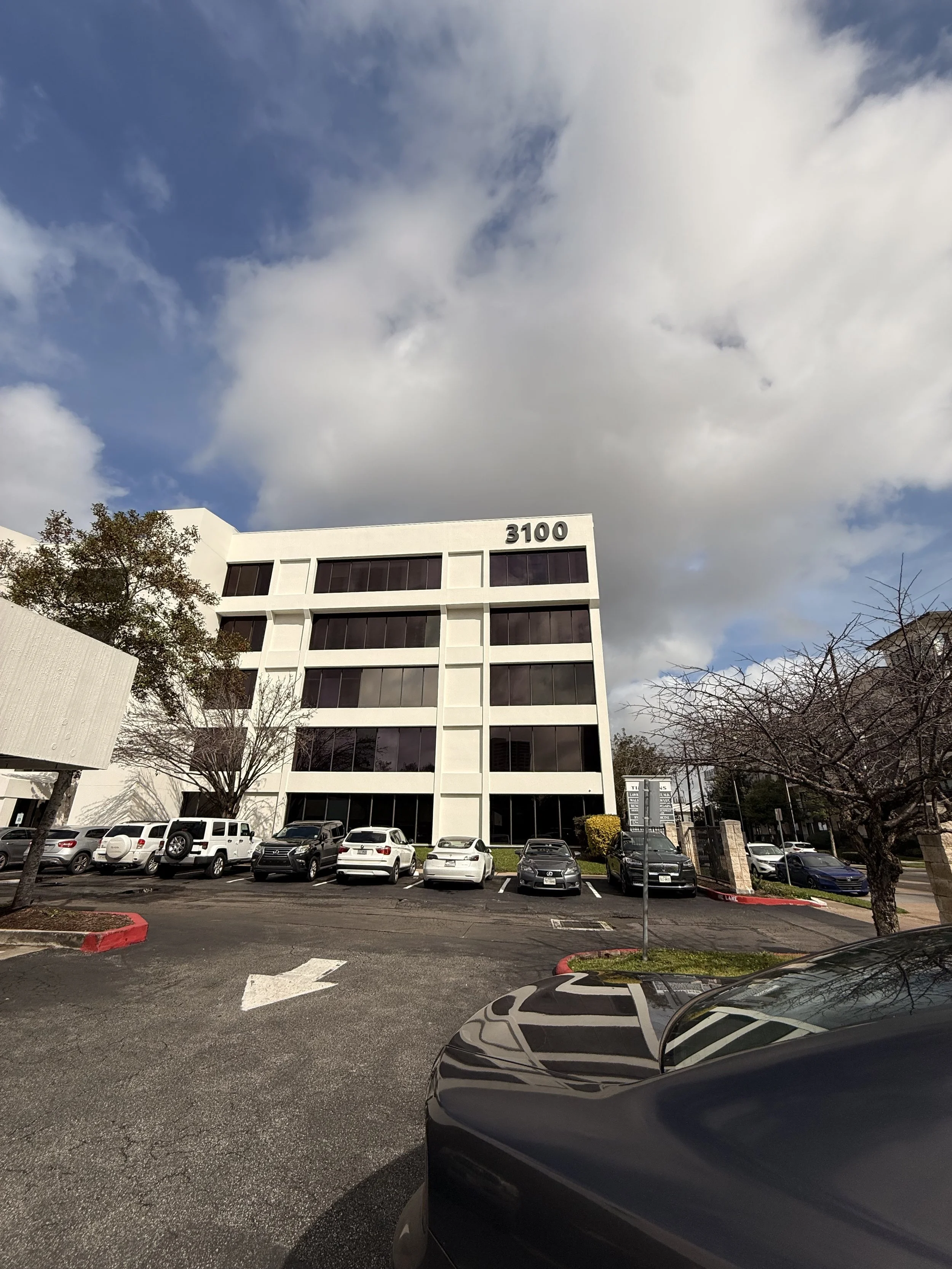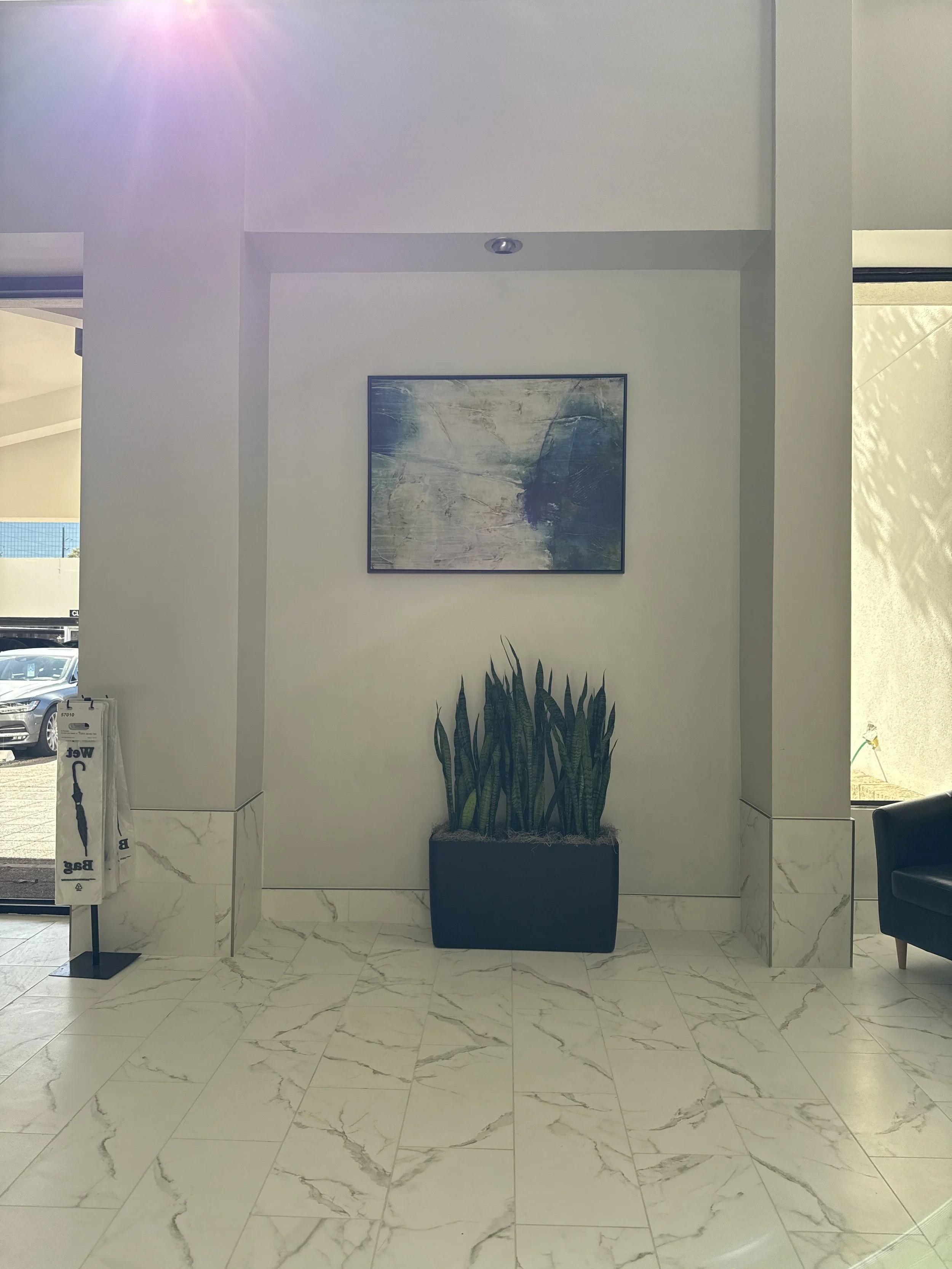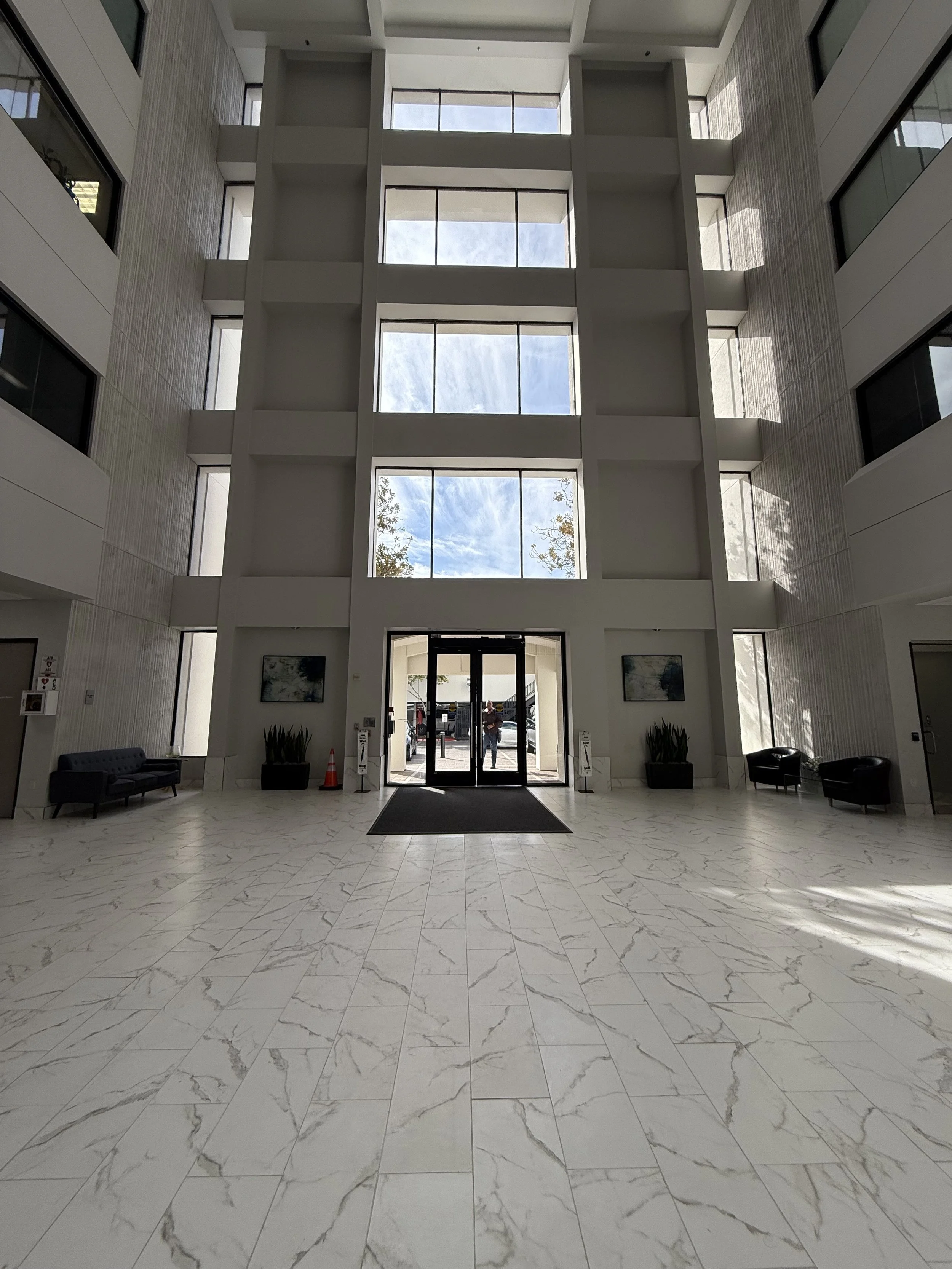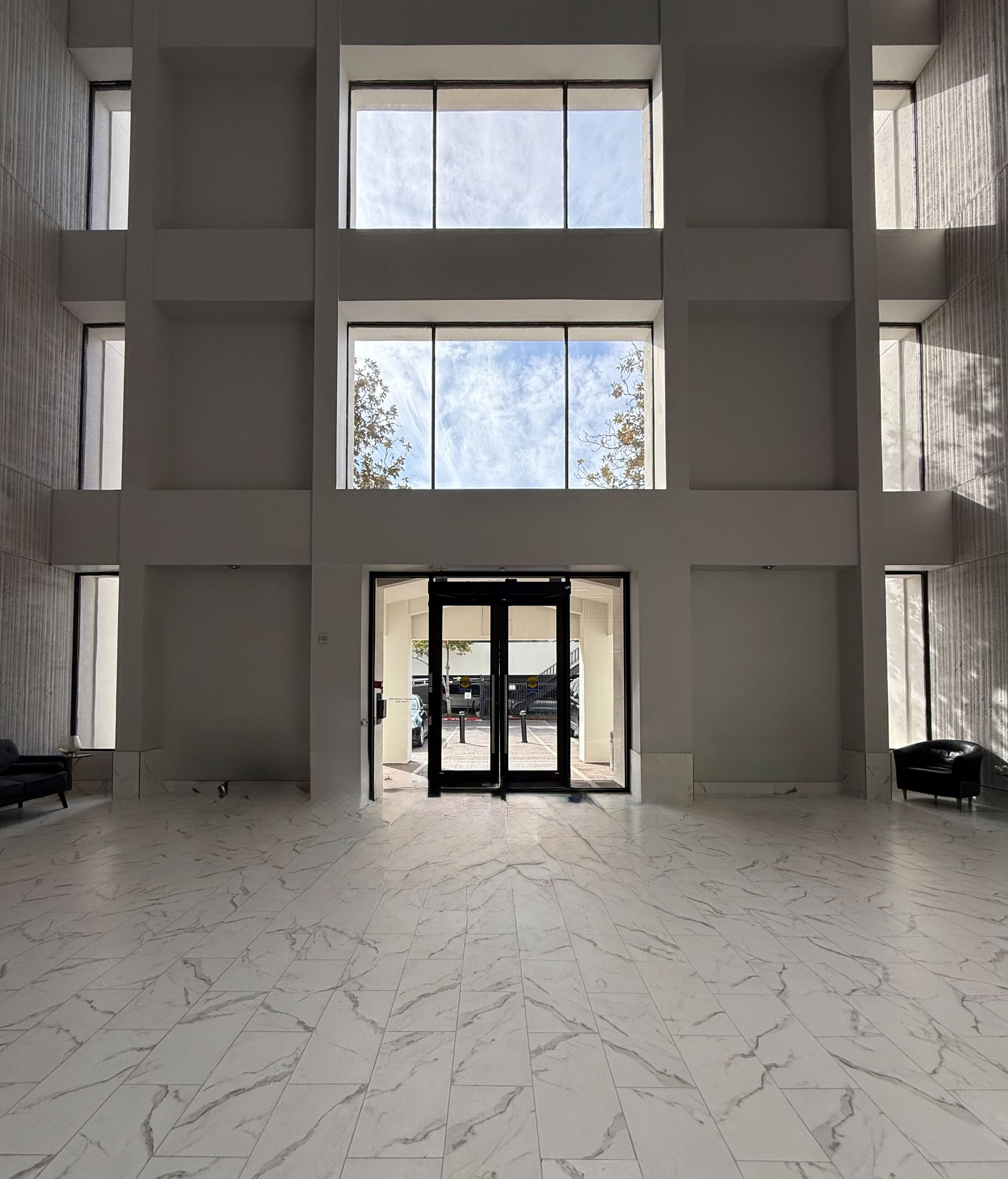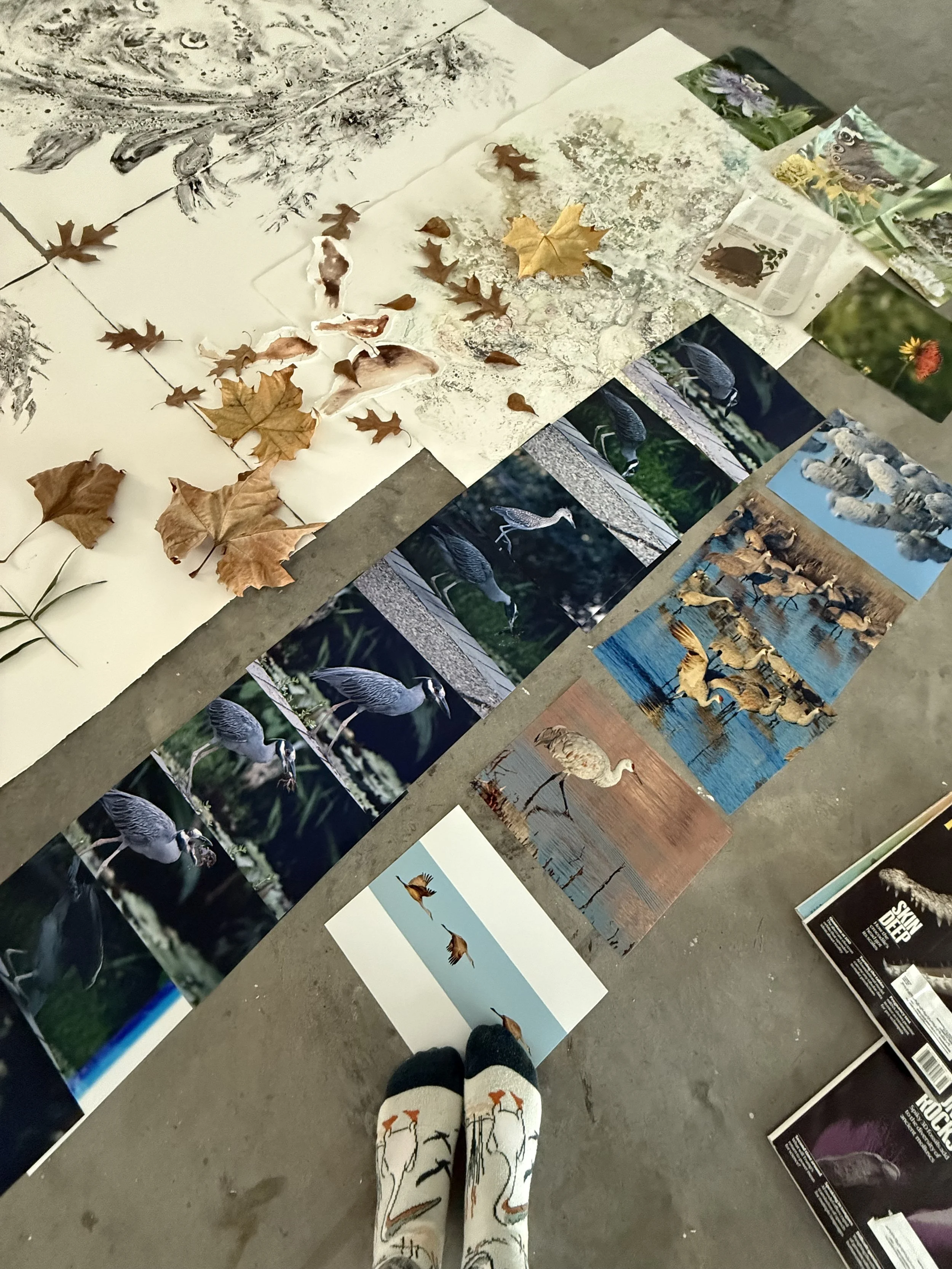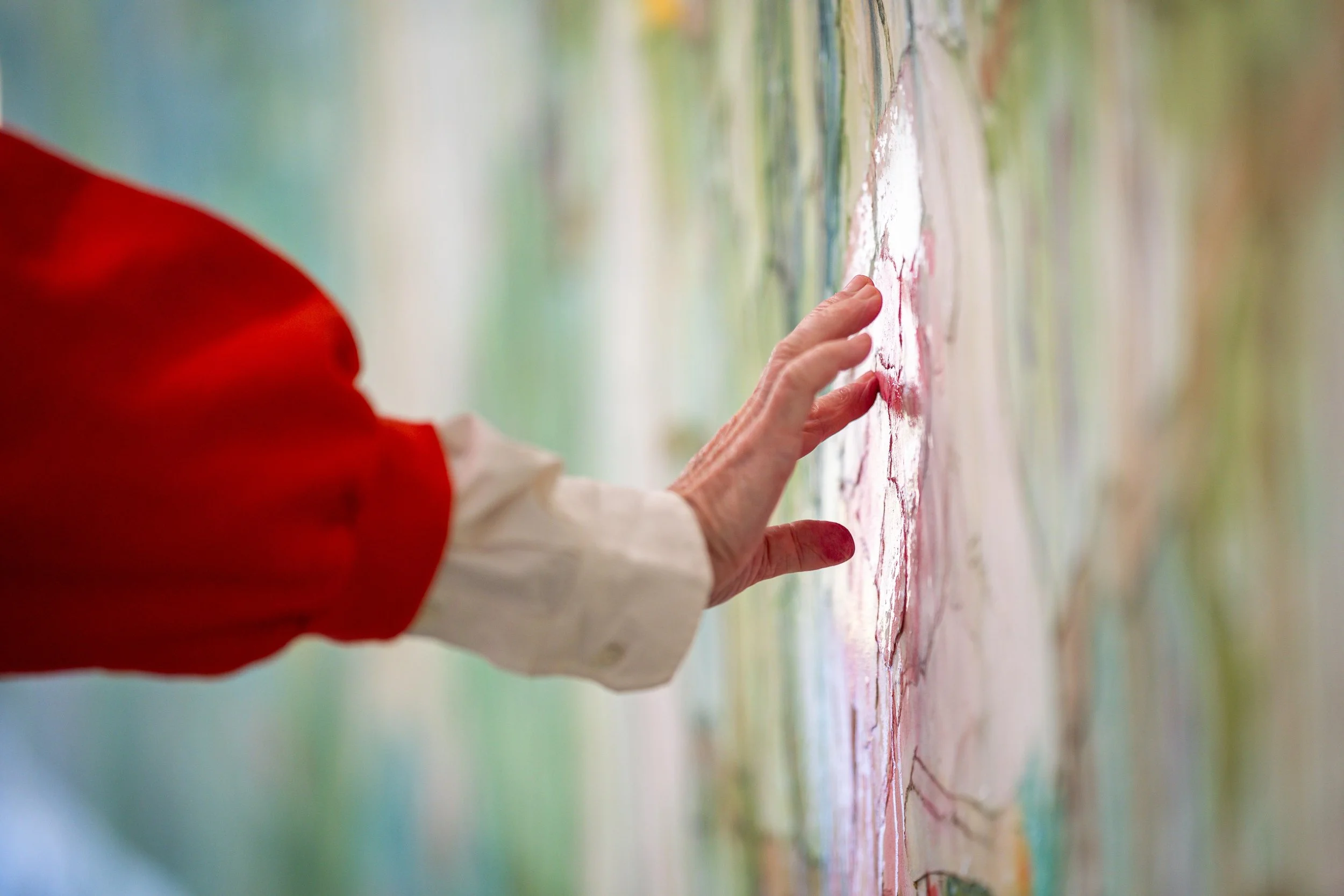
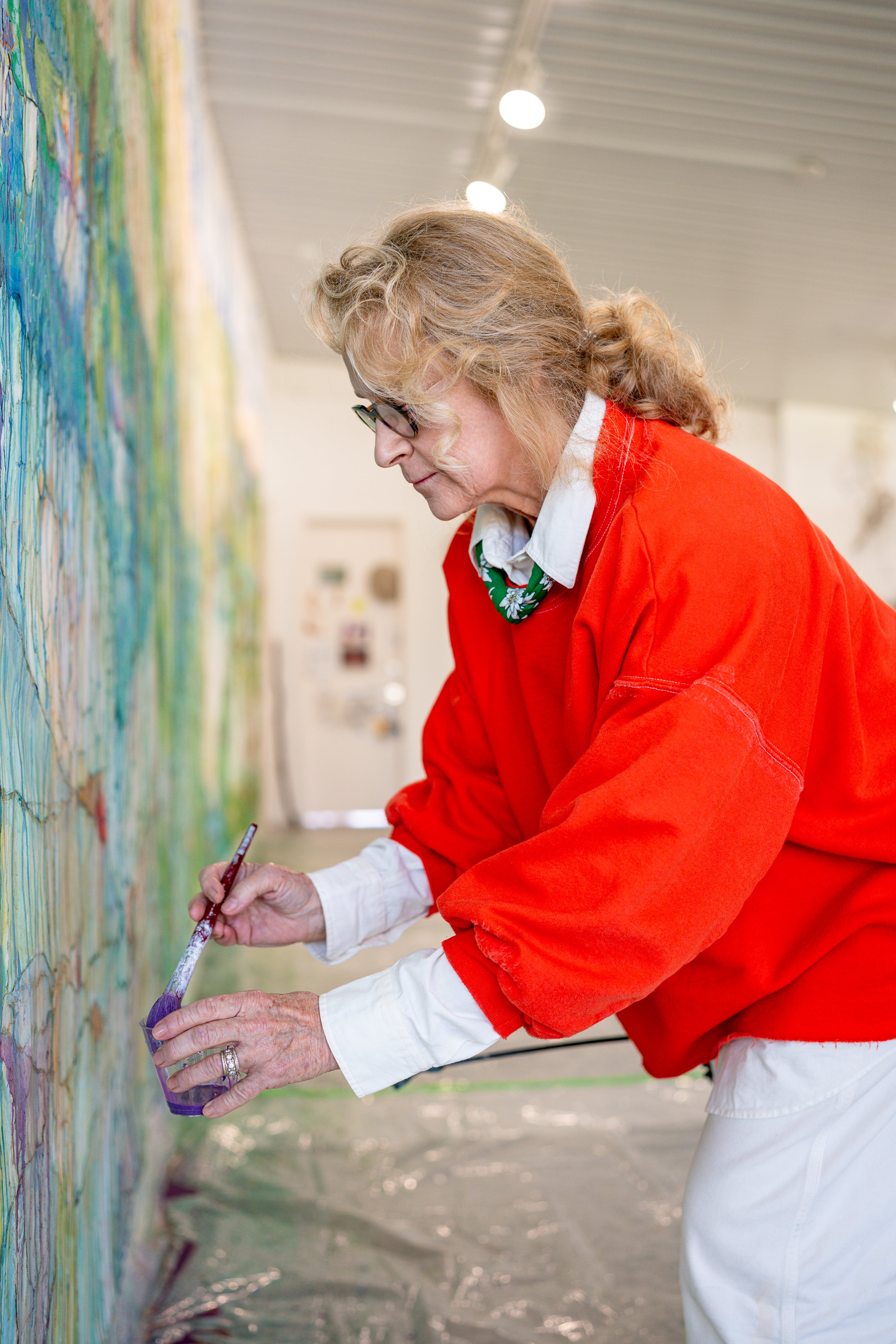
SUNRISE — ROSEATE SPOONBILLS The Timmons building second floor.

Written in 2025. Posted late —

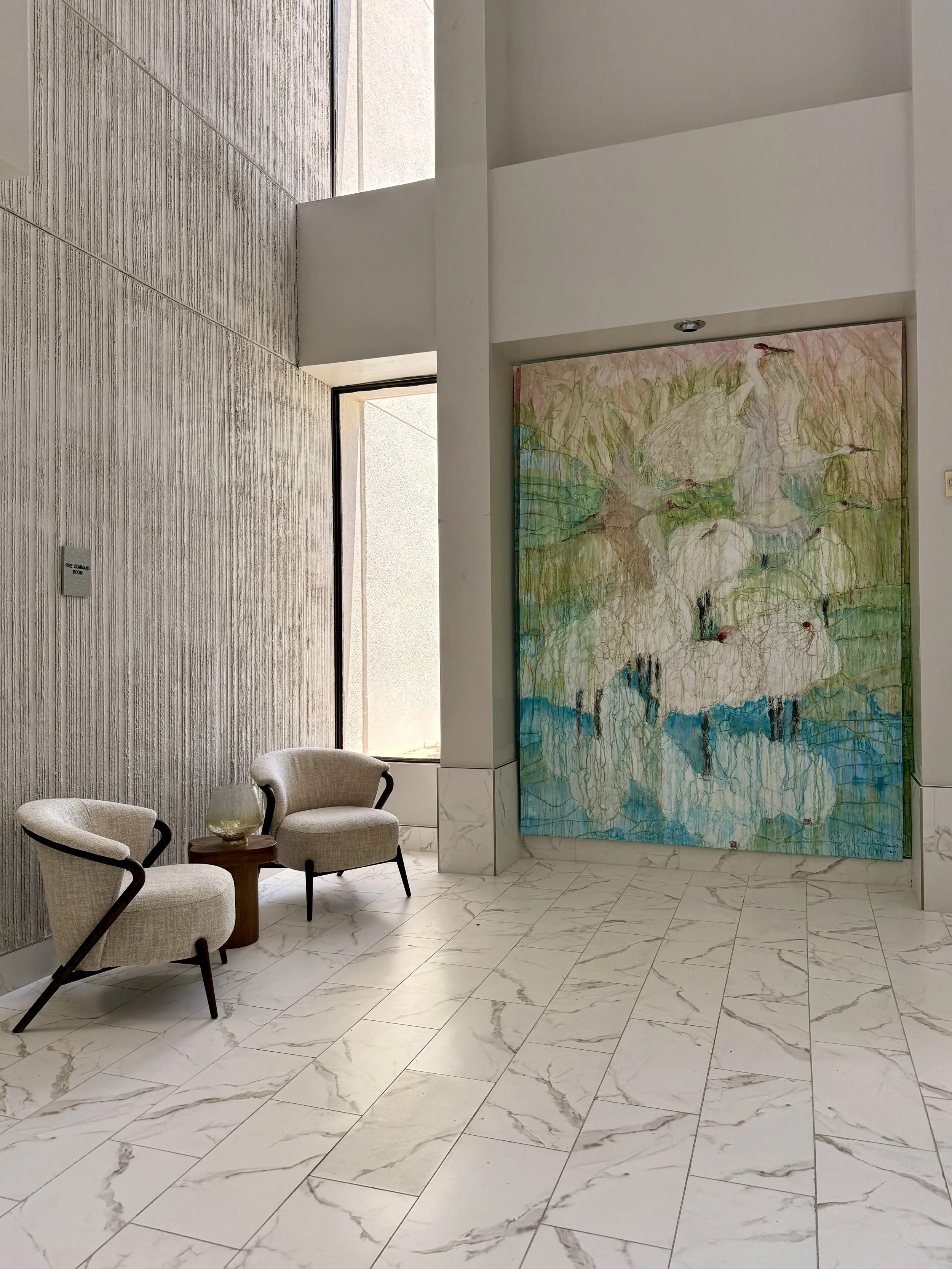
SUNDOWN - ROSEATE SPOONBILLS

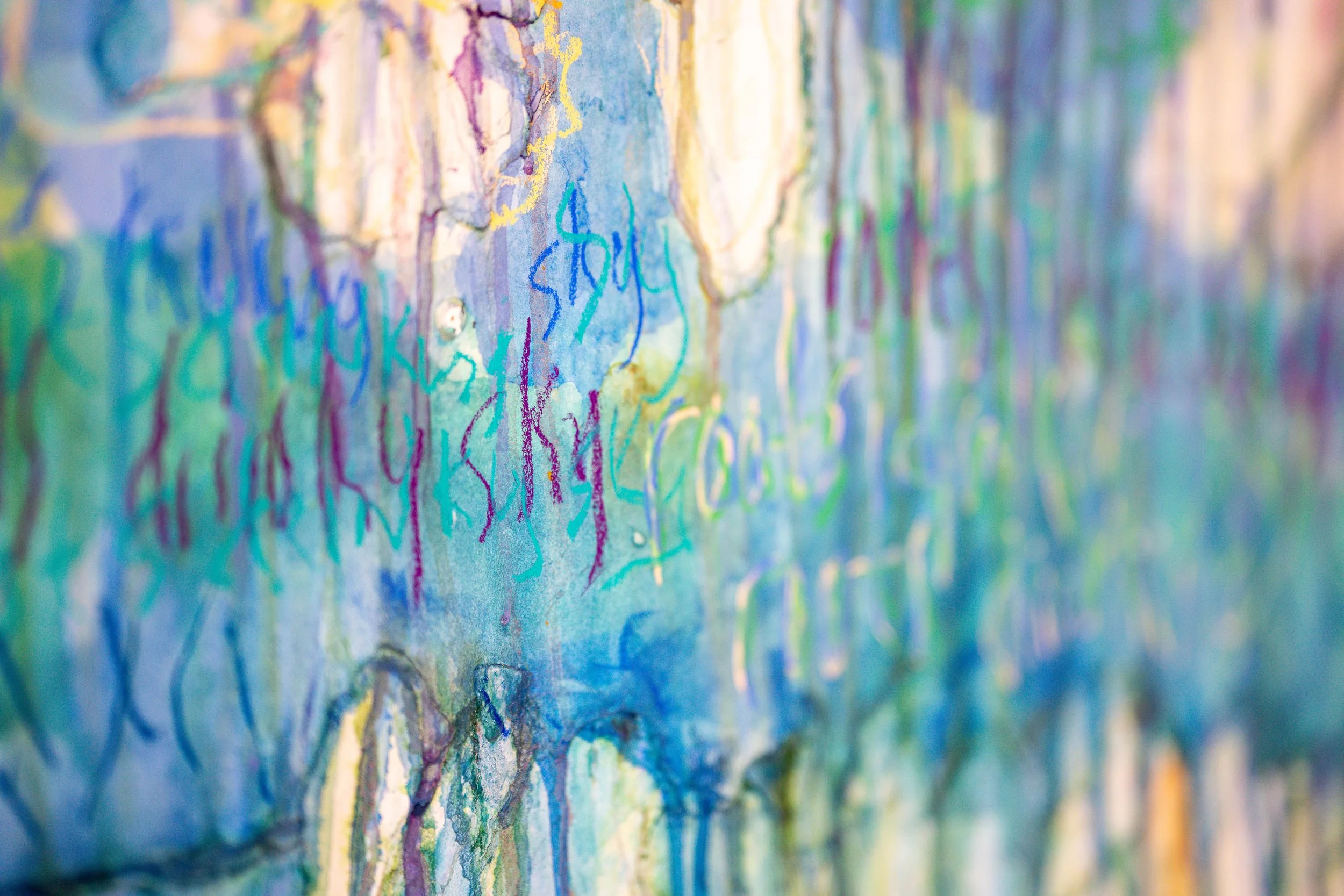
7’ x 9’4” — watercolor, pastels, and ink on collaged Stonehenge paper

Image by Jake Eshelman

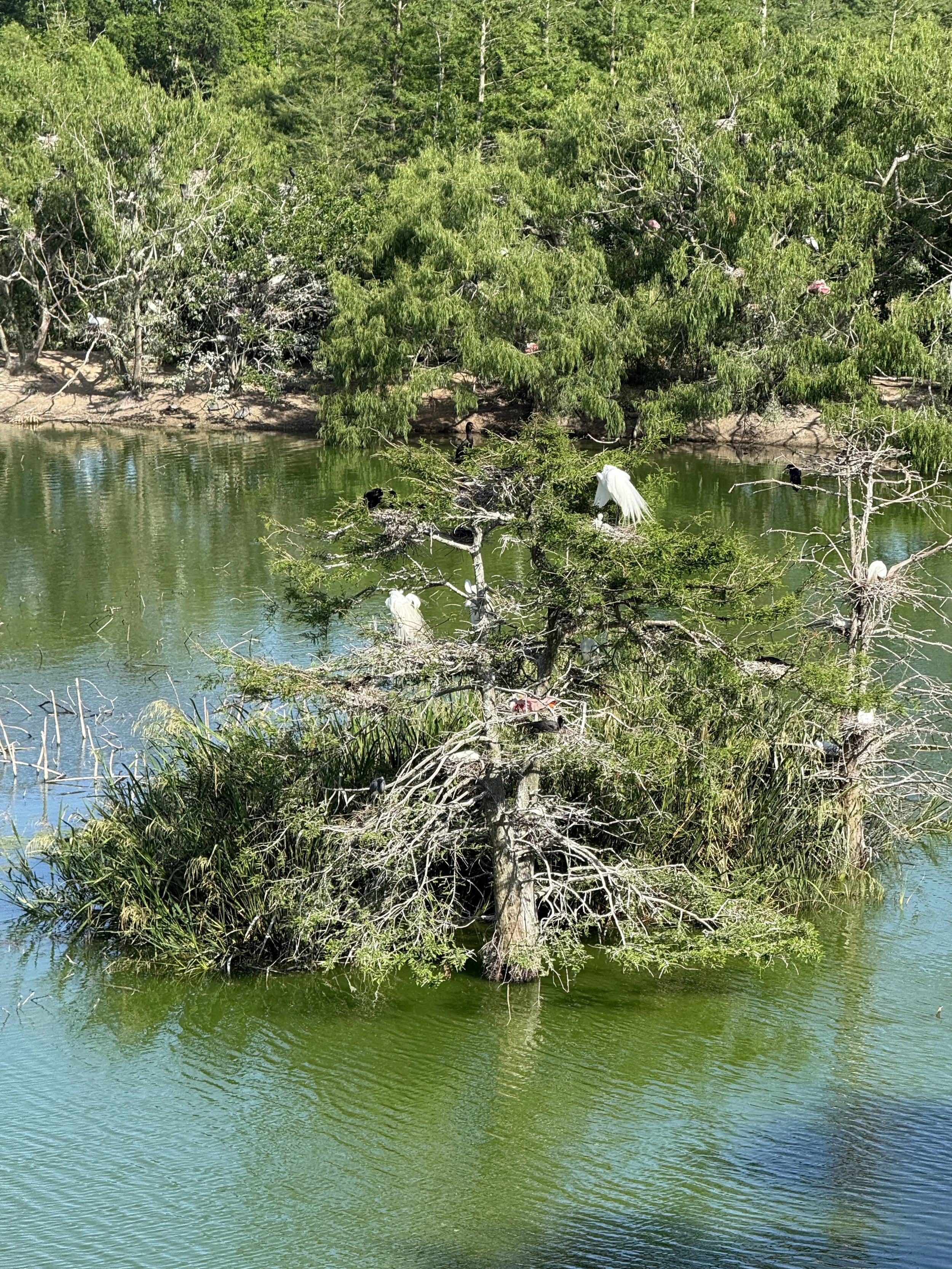
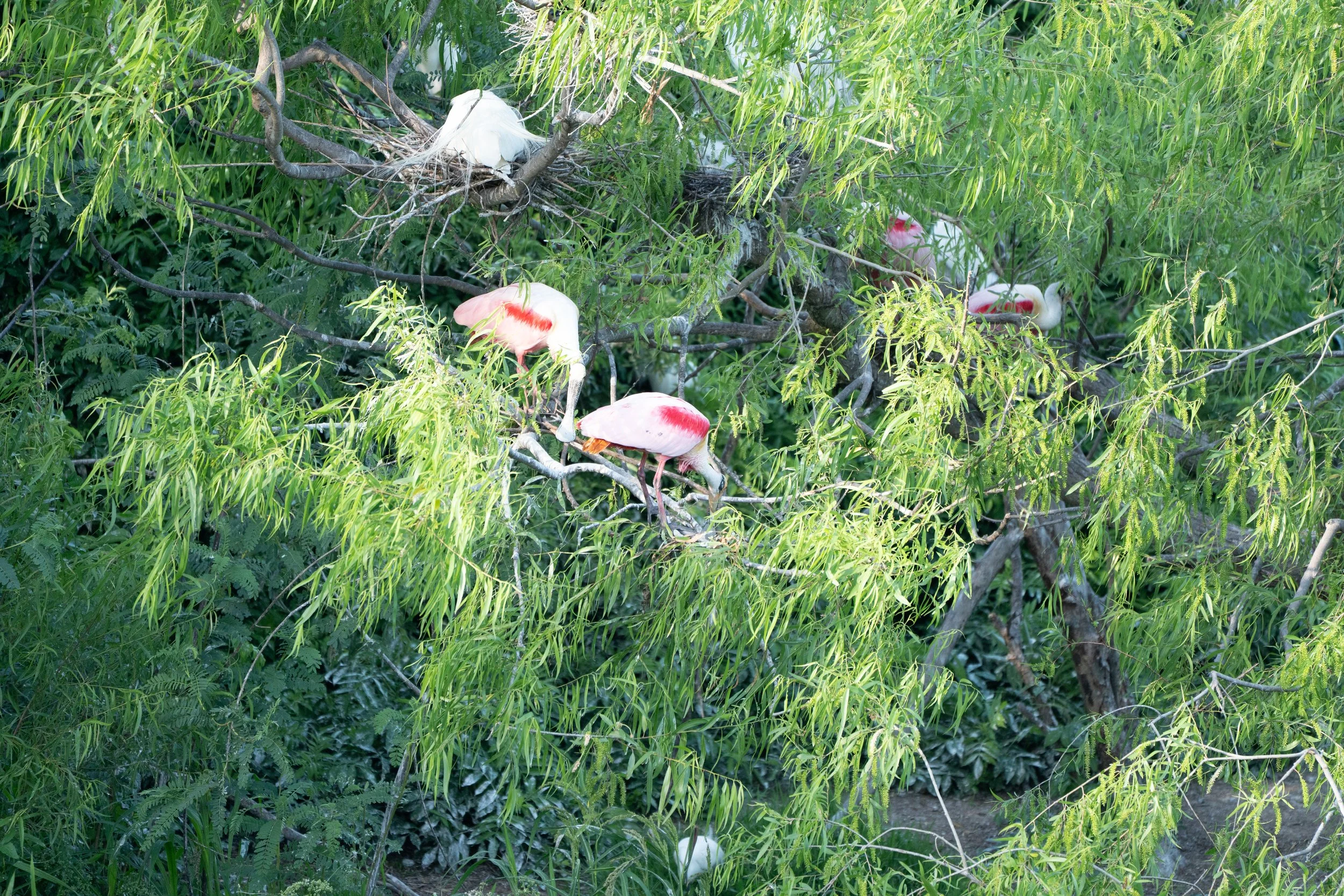
At the turn of the century, women’s fashion nearly caused the extinction of the Roseate Spoonbill. Feathers for hats. By 1895 the spoonbill no longer bred in Texas.

In 1923 the National Audubon Society began leasing a chain of islands along the Texas coast. Slowly, the birds came back. Today approximately 3,000 pairs nest along the Texas coast.

That is the story in this piece. Not a decorative bird. A bird that almost wasn’t here — and is.

The Roseate Spoonbills are finished and in storage until the upper levels at 3100 Timmons Lane are repainted. When they go up they will join the Sandhill Cranes already installed on the first floor.

Two comeback stories. One building. An audience of nine to five.

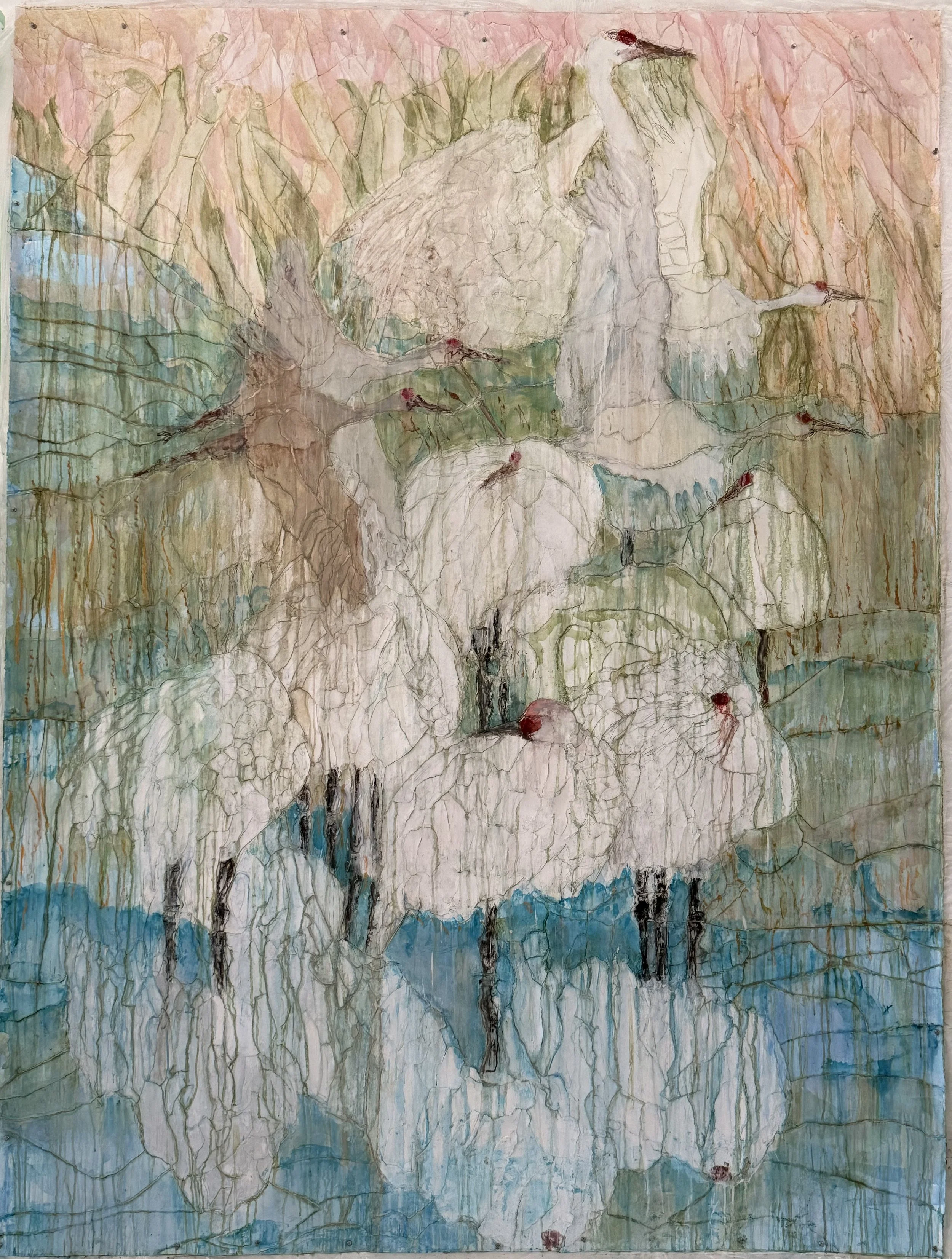
SUNRISE - ROSEATE SPOONBILLS

7’ x 9’4” — watercolor, pastels, and ink on collaged Stonehenge paper

Image by Jake Eshelman

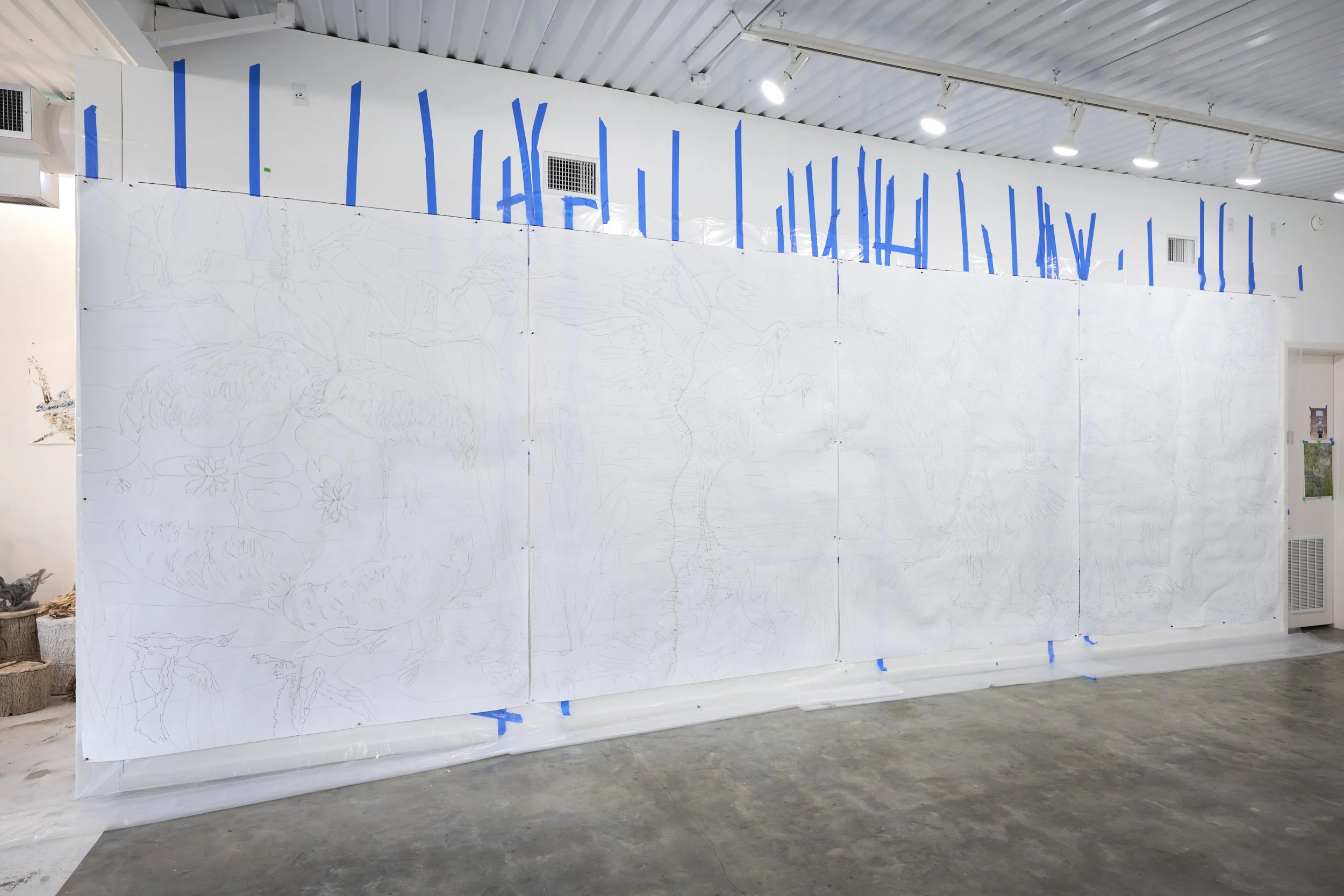
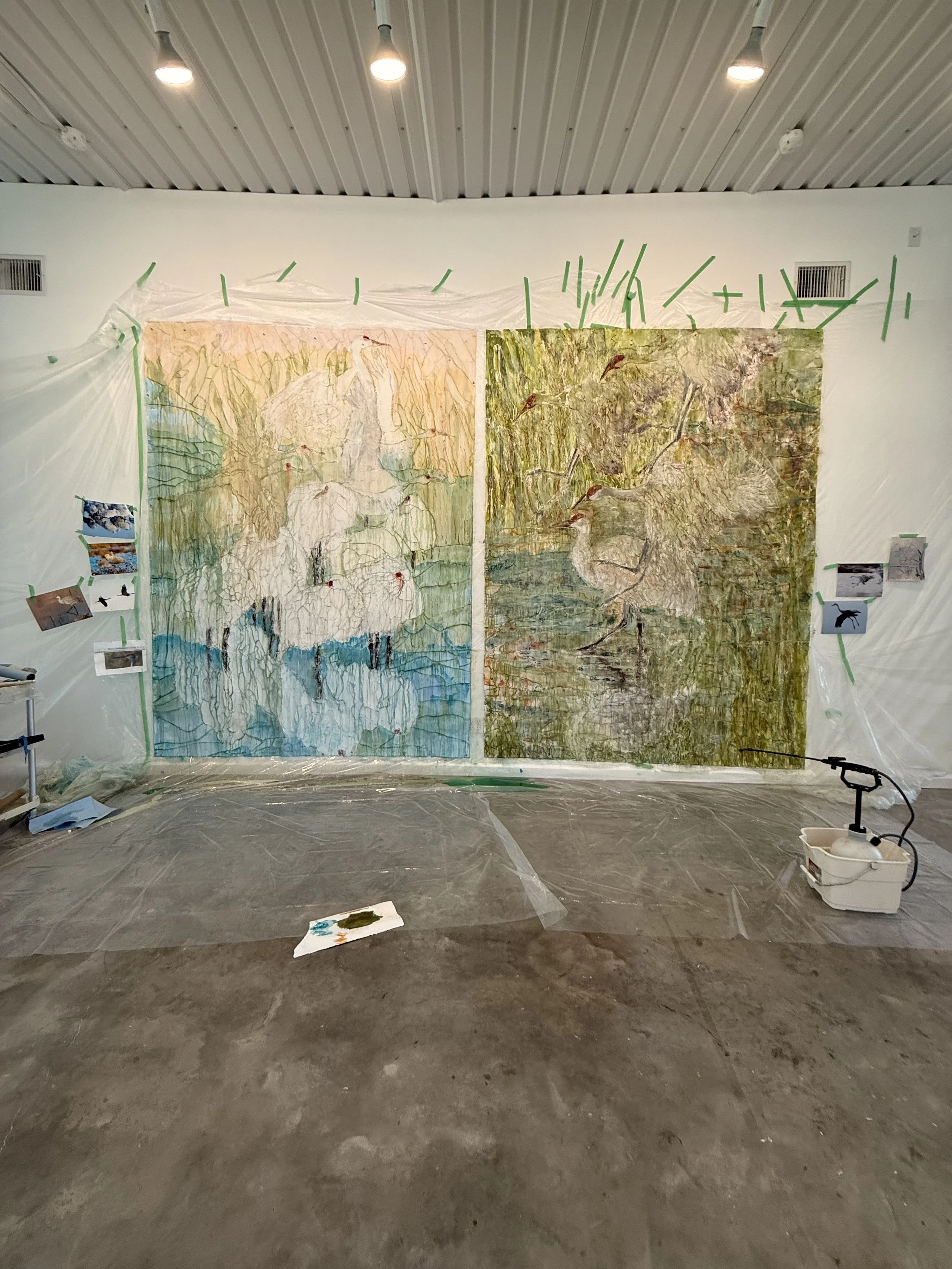
In my studio

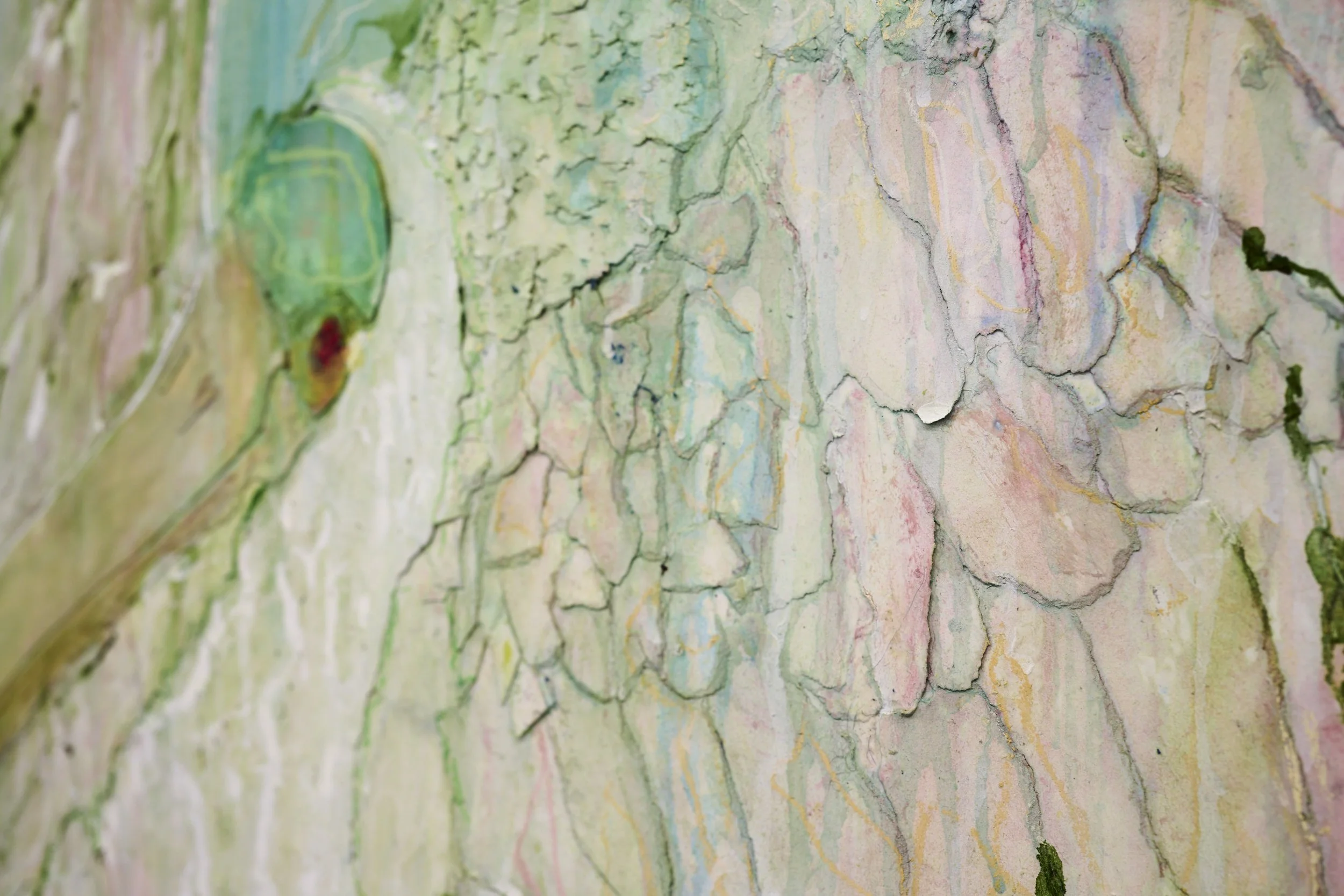
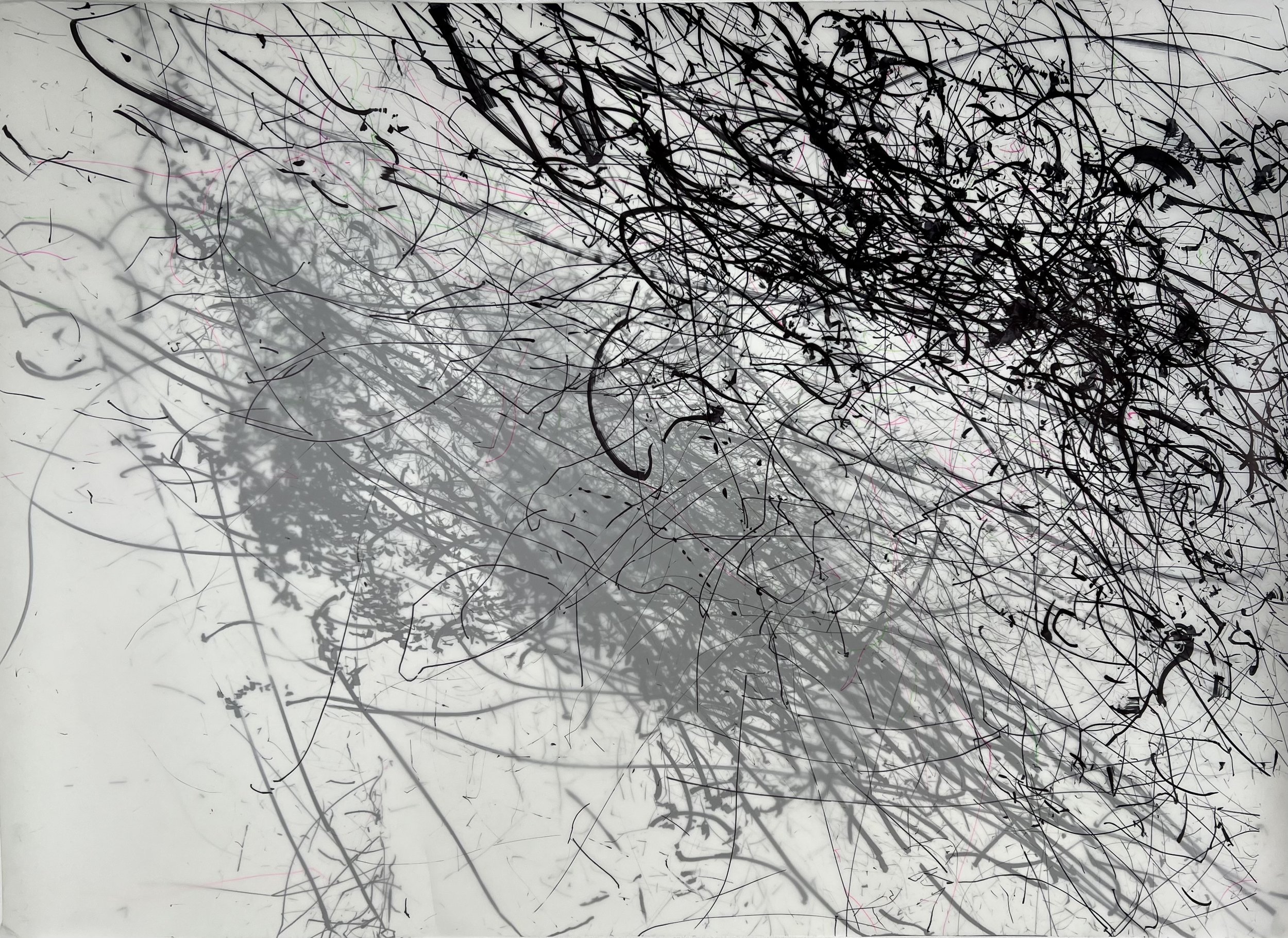
Detail of sunrise piece

It Takes a Village to Reshape a World

On gratitude, collaboration, and the first growing season of Sequel.

 It takes a village to raise a child. It takes a village to reshape society. This is something I have come to know — through the making of four living sculptures and now Sequel, my fifth, and through the extraordinary people who have shown up to witness it grow.

“What does urban land become when we stop managing it against itself?”

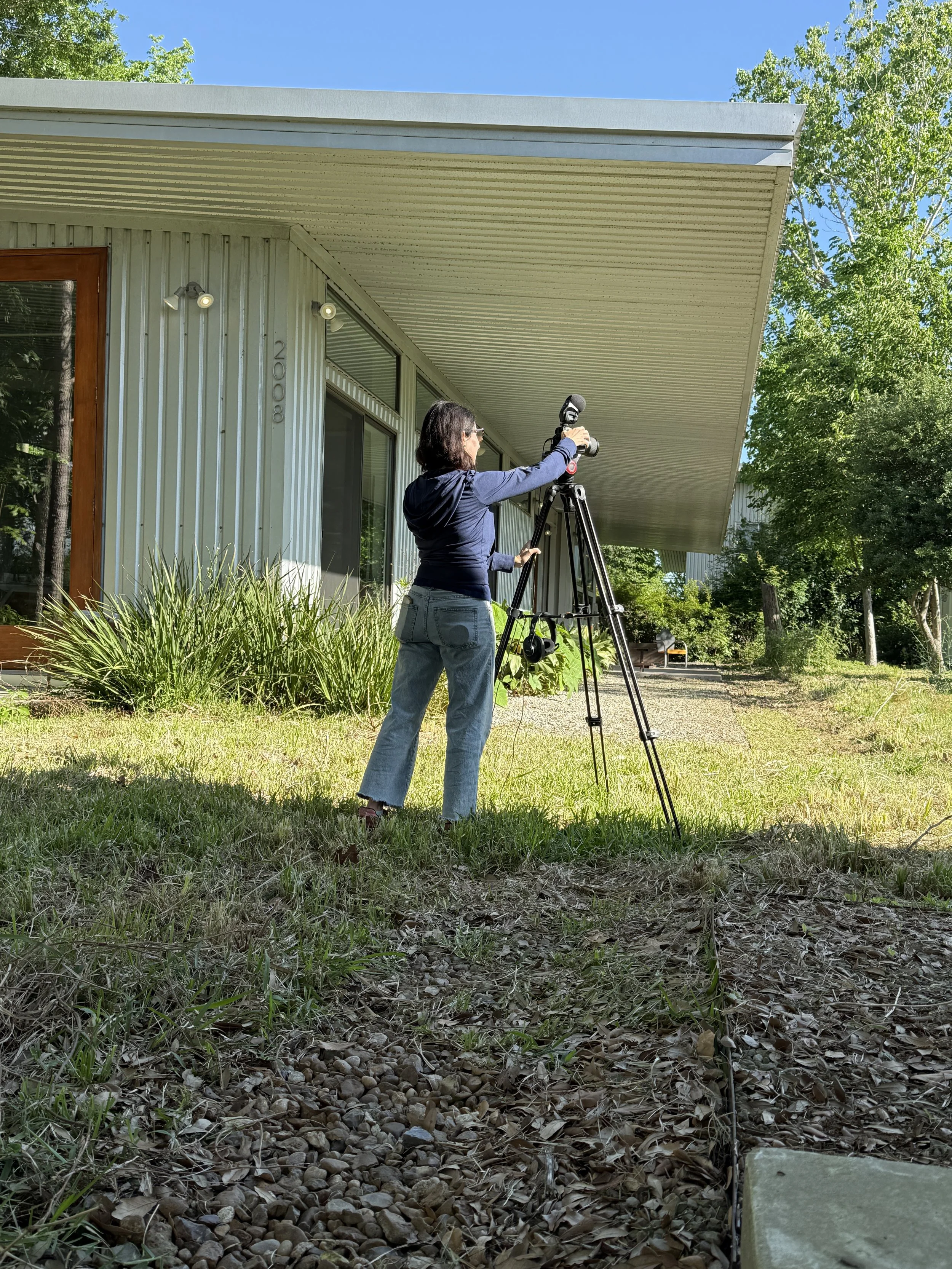
Among them are Bea Bellorin https://www.beatrizbellorin.com/ — artist, videographer, and mom — and Jake Eshelman https://jakeeshelman.com/ — photographer, co-owner of Feast Day Studio, and professional artist. Two people with full, demanding lives who still show up, every solstice, every equinox, with their tripods and their patience — and document the change.

The name Sequel carries two meanings, braided together. This is the fifth in a series of living sculptures — each one a continuation of the last, each rooted in the same question at its heart. And it is a sequel to something larger: to the colonial landscape practices that made grass a monoculture, soil a substrate, and nature a problem to be controlled.
Sequel is what comes after. What repair — chosen and tended — actually looks like.

I am incredibly grateful, and incredibly excited. Soon I will reveal the video from the first growing season — the one Bea has been quietly building, frame by frame, across four visits and four thresholds of light. I cannot wait for you to see what she has seen.

Jake’s photo documentation will also be exhibited as part of a piece in my upcoming two-person show at Throughline Art Collective in May — more on that piece in a future post.

None of this work happens alone. Thank you, Bea and Jake. Thank you to everyone who has walked through this space, asked questions, shared seeds, or simply let the wildness be.

The village is the work. The work is the village.

One Year Old, Two Feet Tall and Already Working.

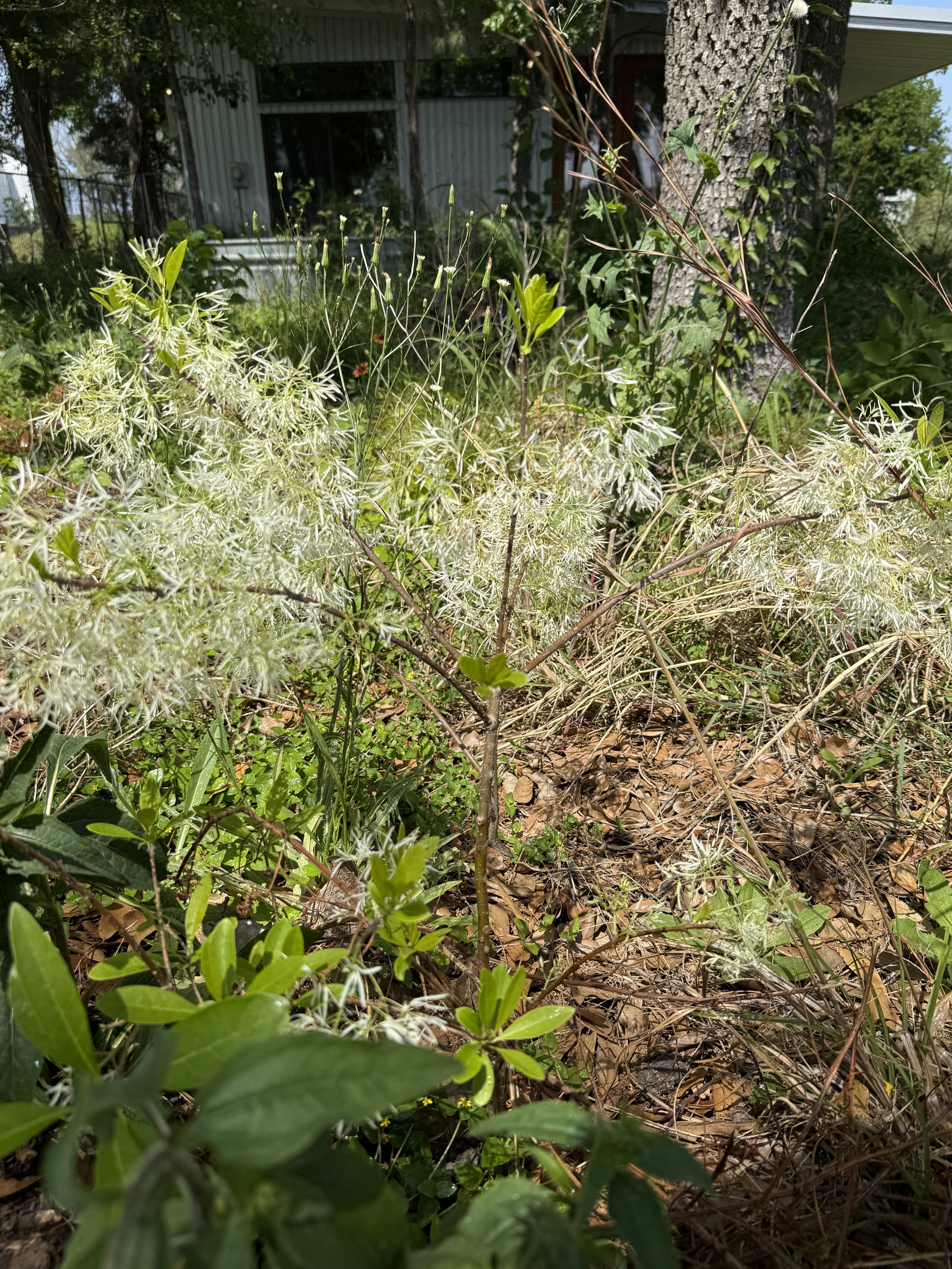
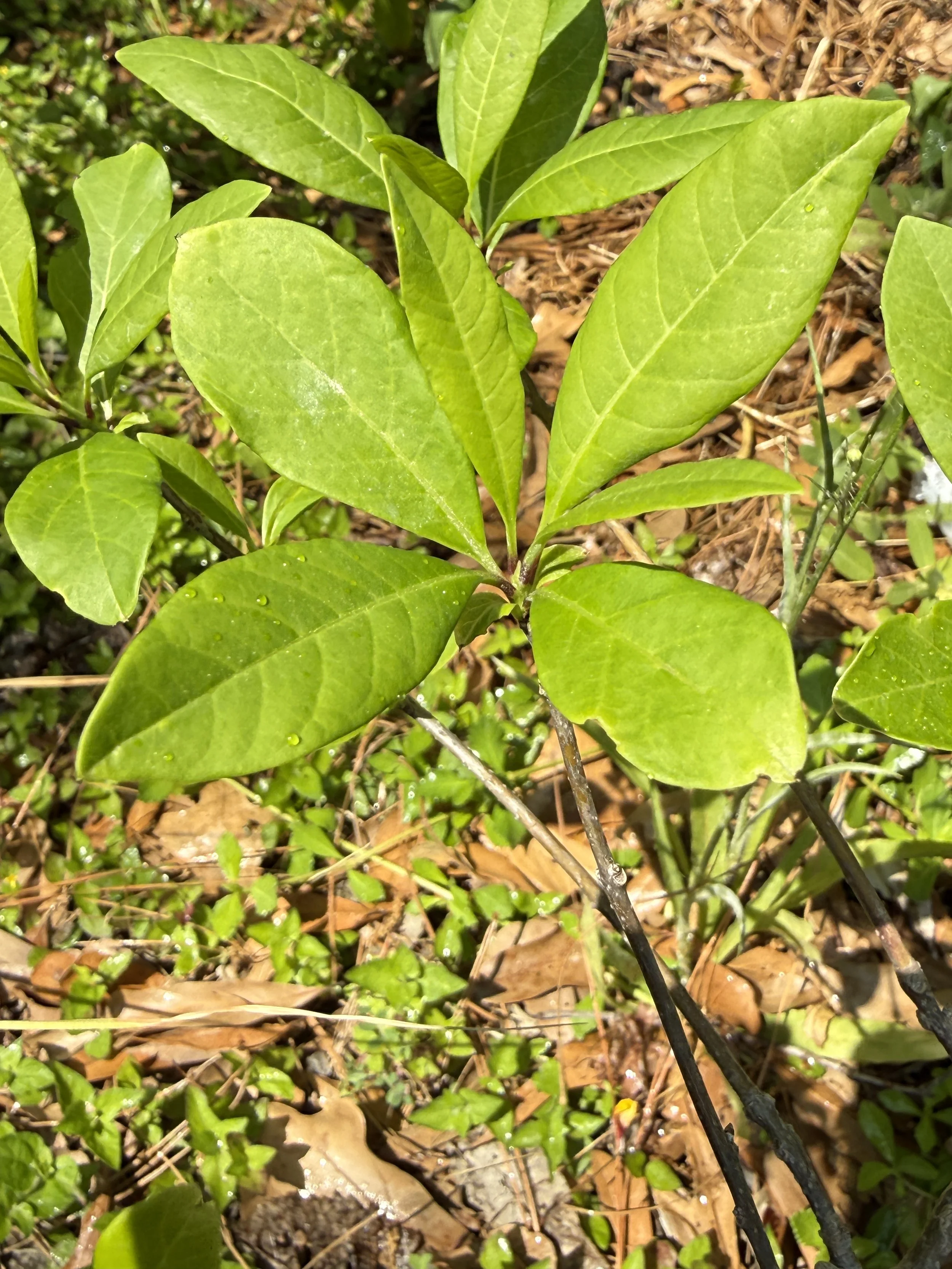
Last year I planted two American Fringe Trees — Grancy Greybeard — one on each side of the stone walking path that takes you into Sequel. They are a year old. Two feet tall. They are babies. And they are already teaching me something.

The Eastern tree is thriving. It gets full sun.

The eastern tree is thriving. It gets full sun. The western tree is the smallest — shaded by other small plants that block its access to full sun. It should eventually outgrow them.

The western tree is the smallest and is shaded by other small plants that block its access to full sun. It should eventually outgrow them.

I chose them deliberately, the way I choose every element in my living sculptures. In Symbiosis at Lawndale, every plant was a decision about relationship — who would it feed, what would it host, how would it move nutrients and carbon through the system. Sequel is the same conversation, carried forward. The fringe trees at its threshold are not decorative. They are a proposition.

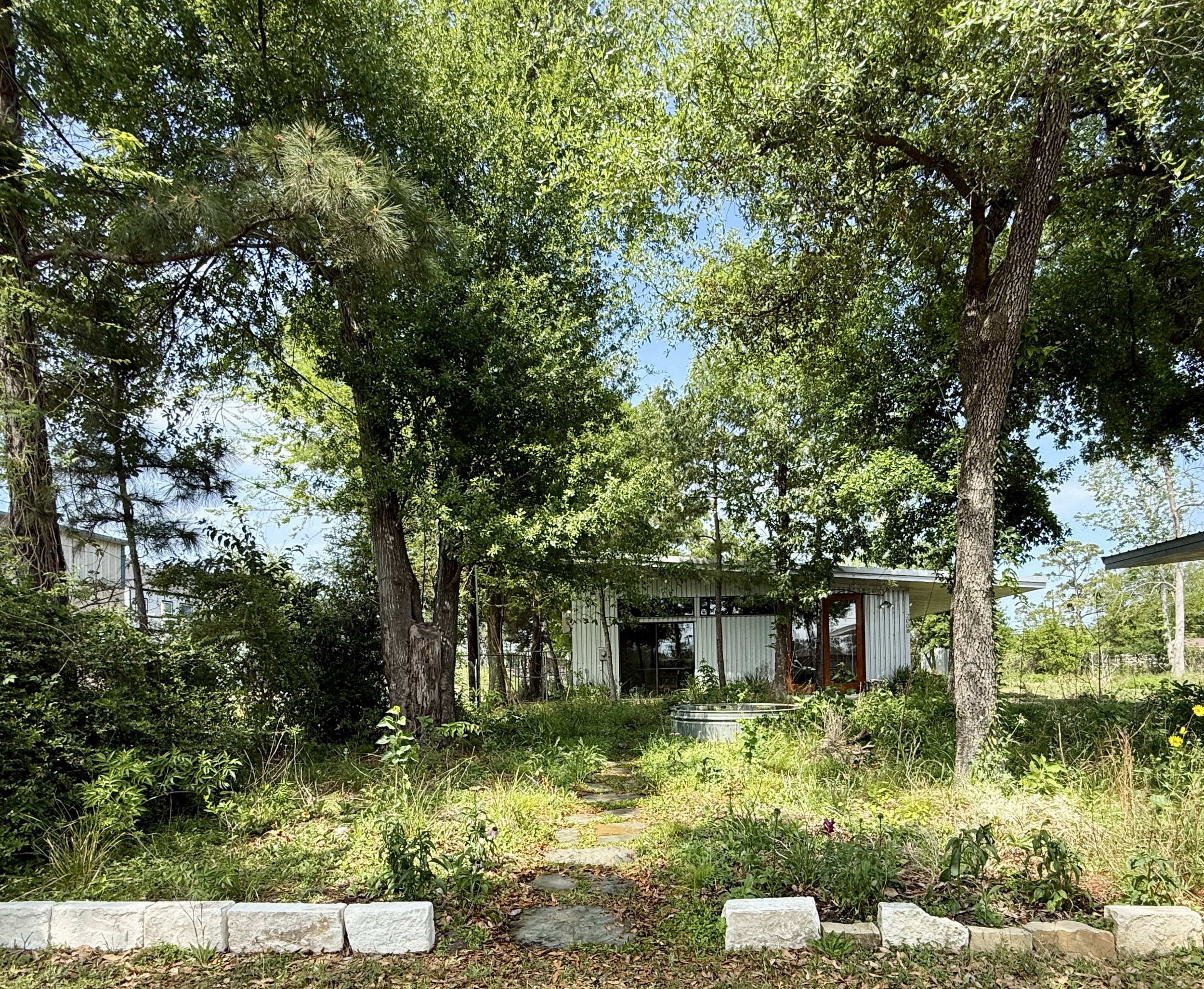
The walkway features the two one-year-old trees, barely visible, standing 10 feet away from the center.

Chionanthus virginicus grows naturally at the edges — along woody draws and stream banks, in the transitional zones where forest gives way to coastal prairie. That is exactly where I placed them: flanking the stone path, at the threshold. You pass between them to enter the work. The living sculpture begins before you know it has begun.

The fringe tree does its most important work in the margins — the places most overlooked, most degraded, most in need of rebuilding. That is where Sequel lives too.

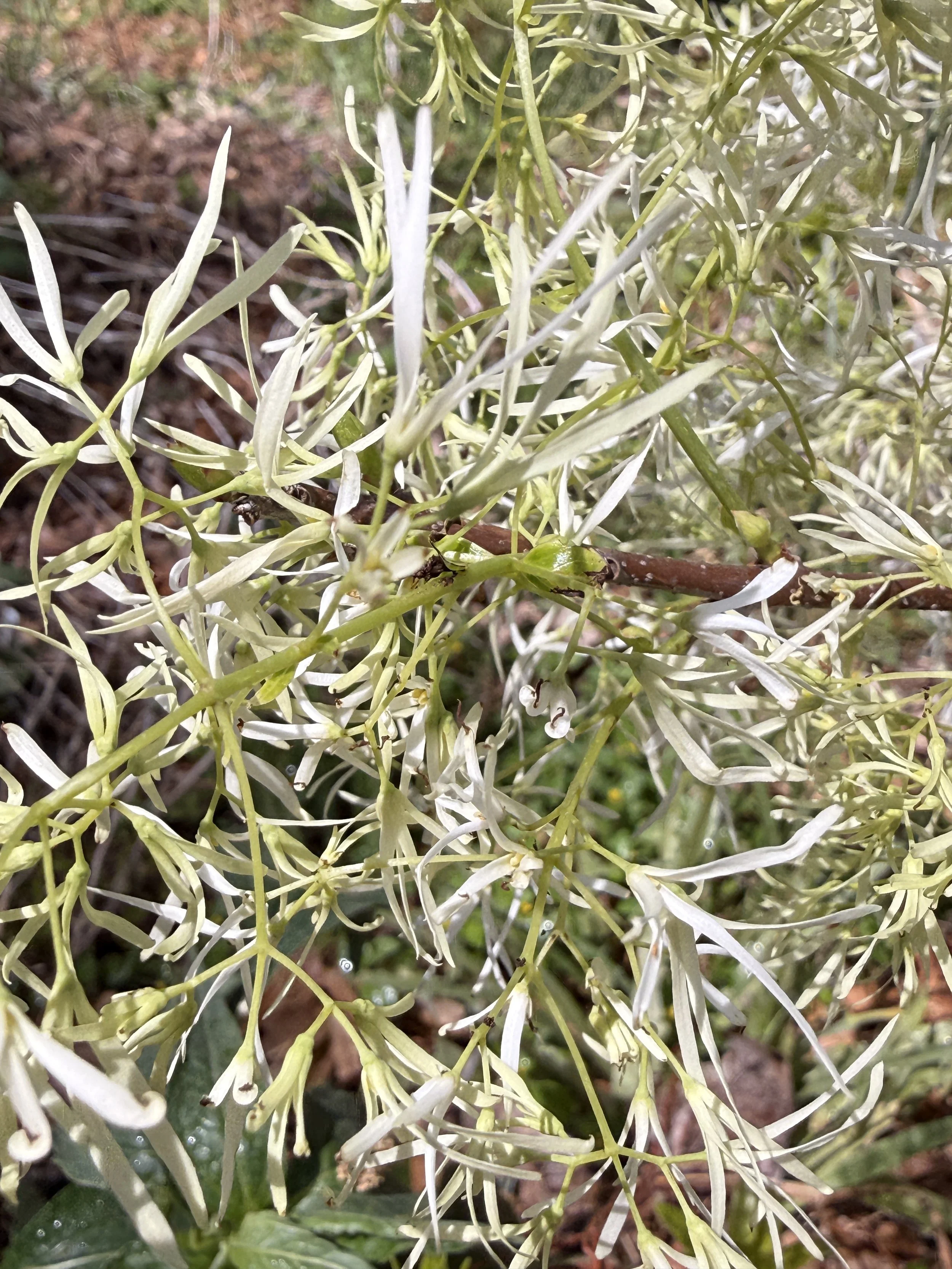
Come April through June the white fringed blooms open — long, thread-like petals cascading like an old man’s beard in a coastal breeze. For native bees and butterflies this is a critical nectar window early in the season when little else is offering. The fringe tree is a larval host for three sphinx moth species. A host plant is not ornamental. It is food infrastructure. Female trees produce dark blue olive-like fruits in late summer — high-fat fuel for migrating songbirds. Their dense multi-stemmed structure creates cover and nesting opportunities for birds. And their roots hold the clay soil at Sequel’s entrance, moving water downward — the same function I have been studying since I first understood how roots cool this planet and absorb what Houston cannot stop flooding with.

A close-up of the trees soft, airy beard.

A threshold is a sculpture.

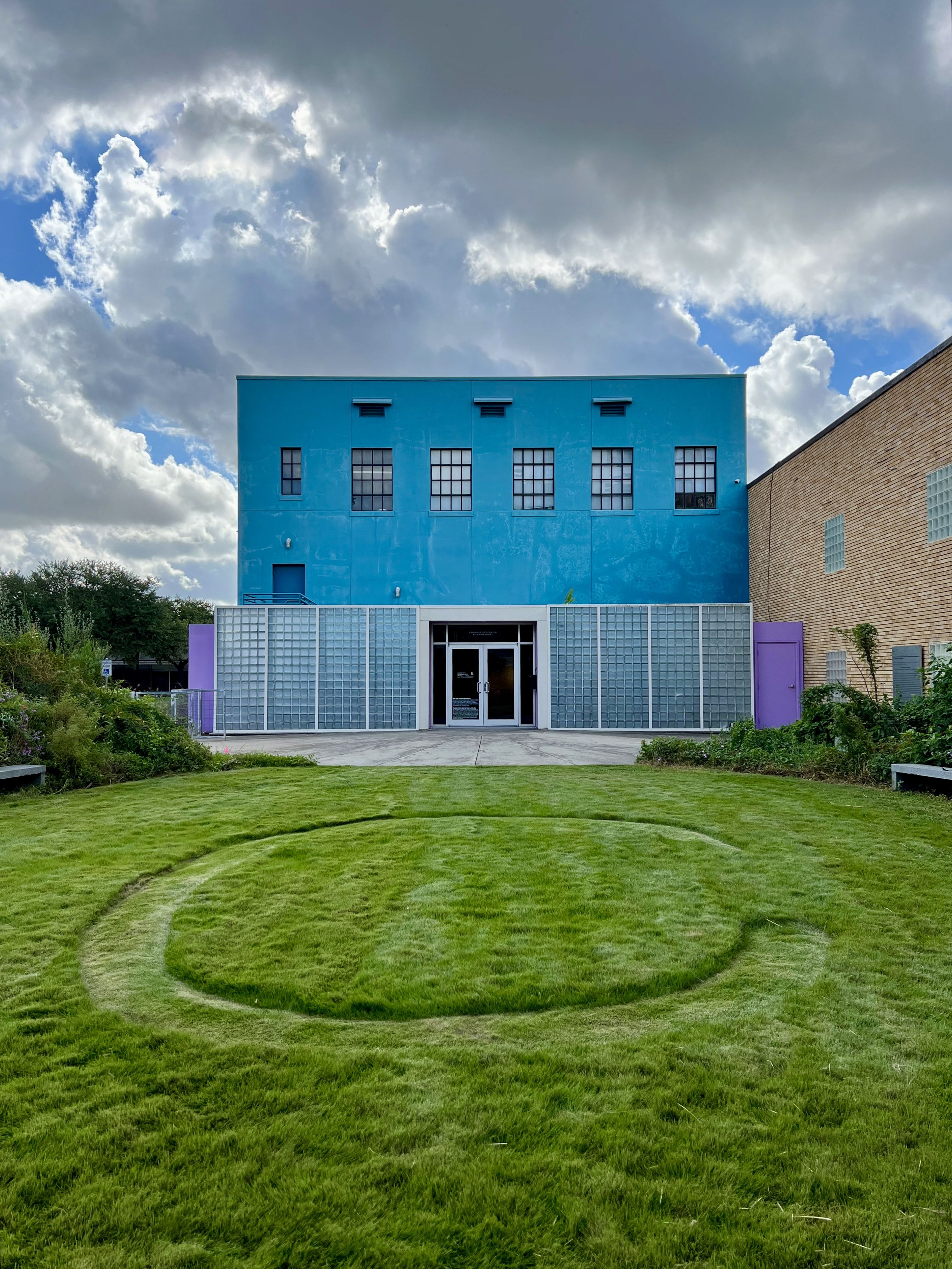
When I carved Carbon by the Yard into Lawndale’s turf, the gesture was simple: carve a shape, let the grass grow around it. The relief emerged from contrast. What was taken away revealed what was possible.

Carbon By The Yard - Lawndale 2021

The two fringe trees at Sequel’s entrance work the same way. They mark the passage from the manicured urban world outside into the living, breathing, intentionally ecological world within. They are the frame. They are also the argument — that two feet of native species, one year old, already threading itself into the insect food web, is doing more ecological work than turf and non-natives could do in a decade.

They are a year old. In twenty years they will be twenty feet tall — cascading white each April, fruiting each September, hosting moths, sheltering songbirds, holding the ground. Sequel will have grown up around them.

That is the whole conversation.

Deeper Than That

Living Sculpture · Chapter One · March 2026

What looks like a garden is never just a garden. It is a negotiation — between time and patience, between what was planted by intention and what arrived on the wind.

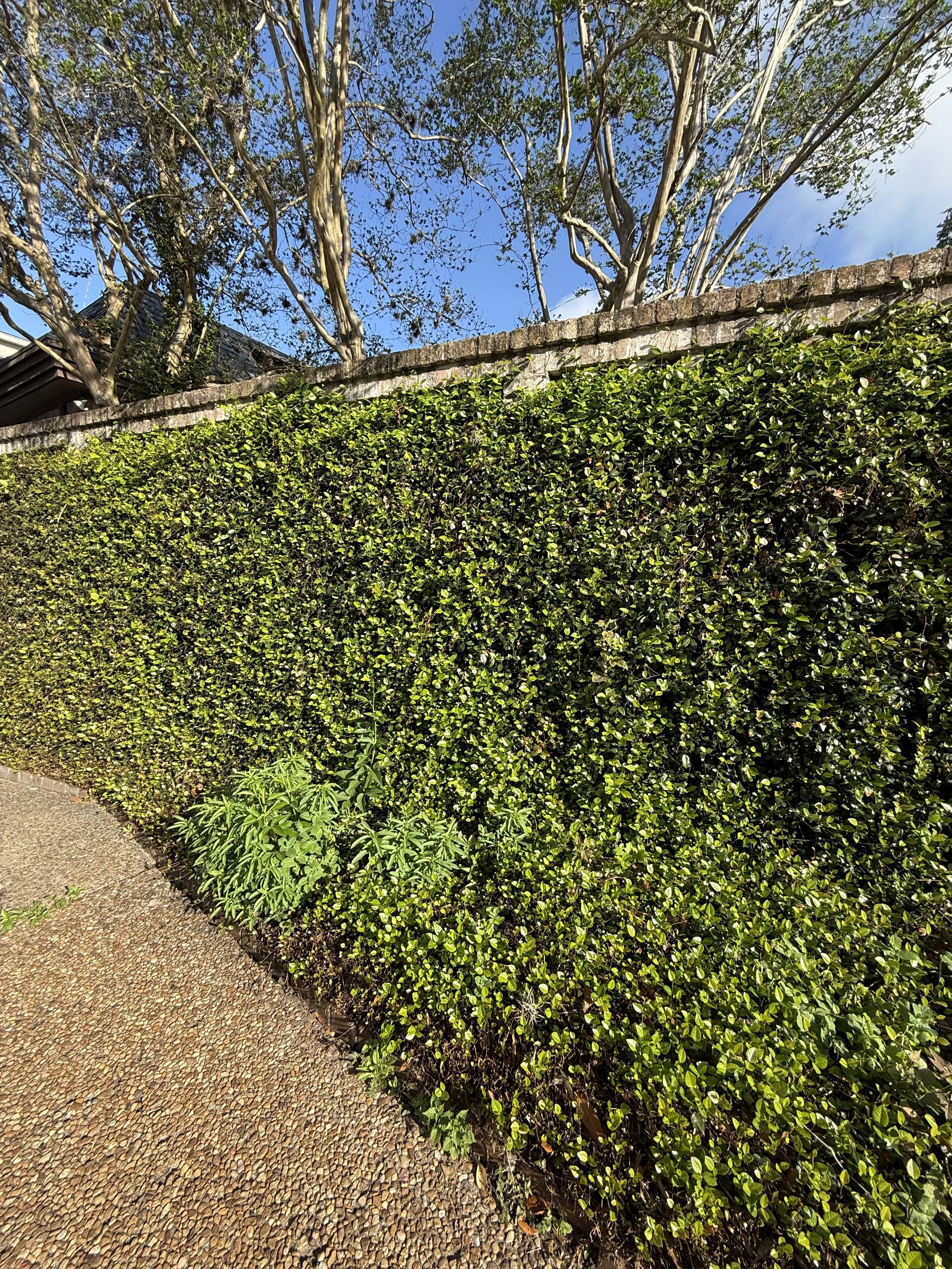
There is an eighty-year-old brick wall bordering the driveway at this site. For decades it has been clothed in Asian ivy — a non-native groundcover brought to American landscapes for its tidy, persistent green. It does its job beautifully. It is, in the language of horticulture, well-behaved.

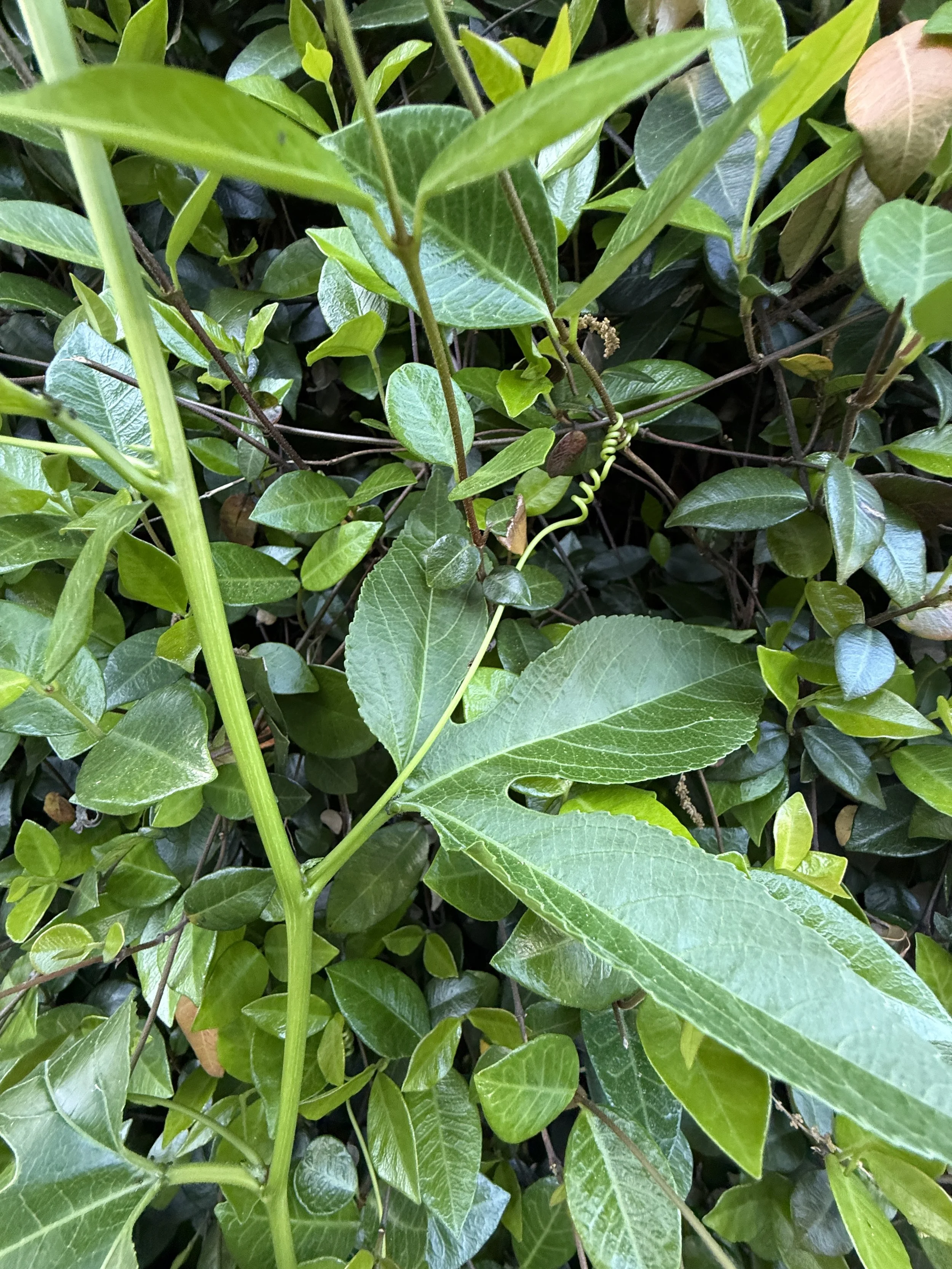
Passiflora returning — new growth reaching through the established jasmine.

But well-behaved is not the same as alive. Not in the way an ecosystem is alive — humming, interconnected, feeding the soil and the sky and the creatures that move between them.

A few years ago the work began to ask more of that wall.

Passiflora returning — new growth reaching through the established ivy.

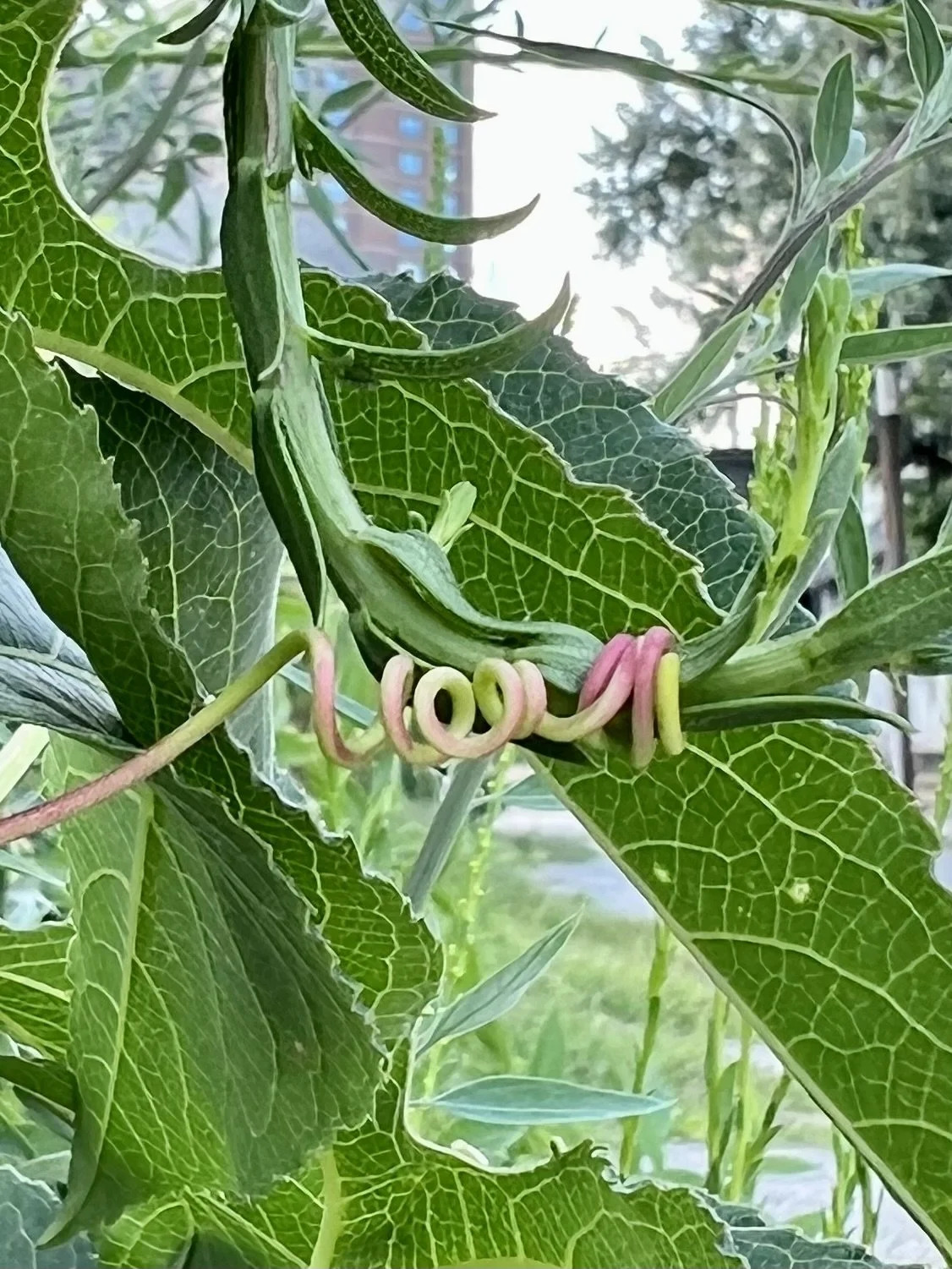
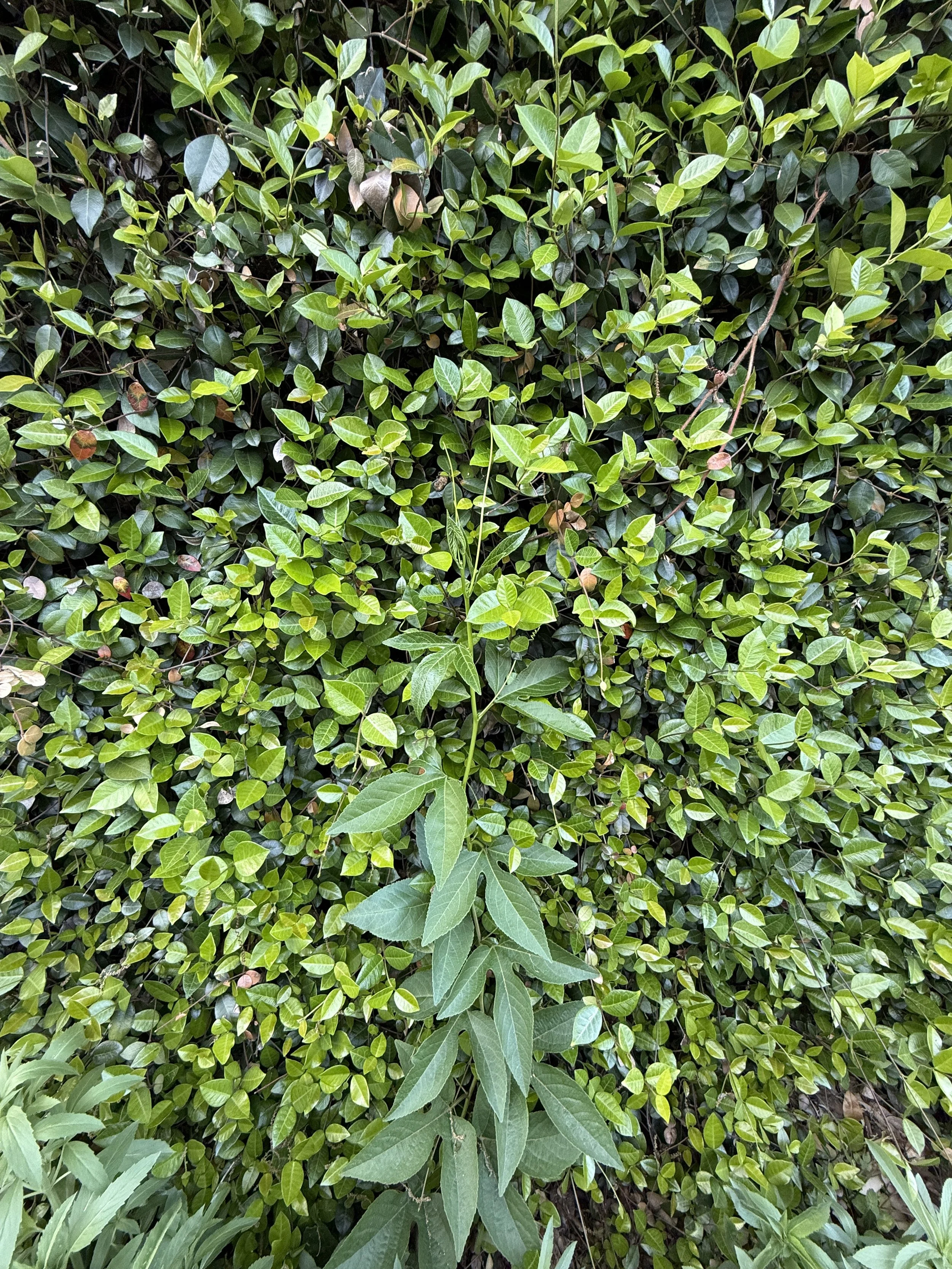
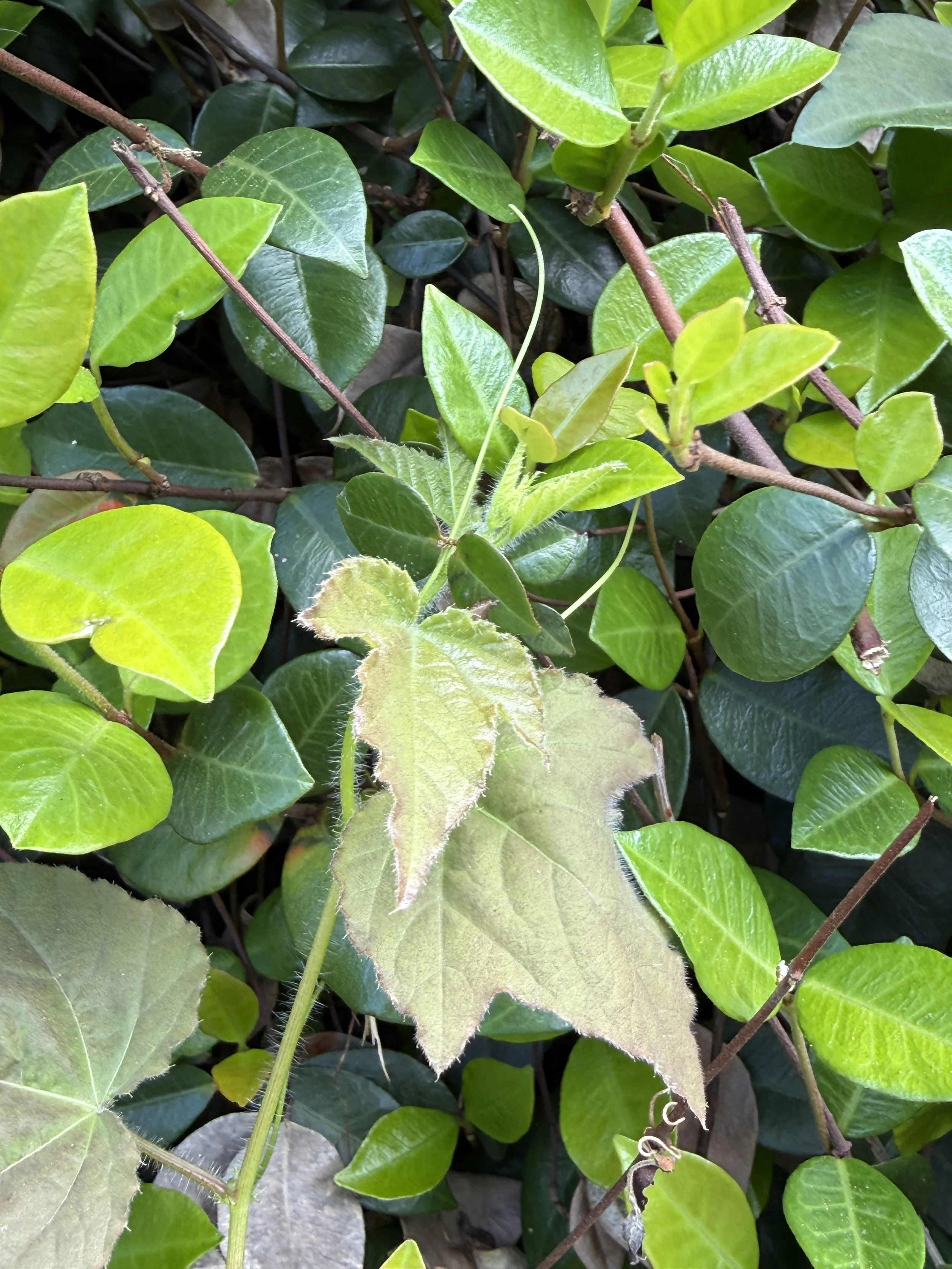
The characteristic palmate leaves of Passiflora foetida — Stinking Passionflower, unmistakable in early spring.

The conventional path would have been removal — strip the ivy, expose the bare brick, replant with natives, endure the years of awkward adolescence while the new plants found their footing. I know that story. I’ve lived it.

But stripping the ivy meant exposing bare brick for years and losing a plant that was holding the soil, filtering rain, cooling the brick. There had to be another way in.

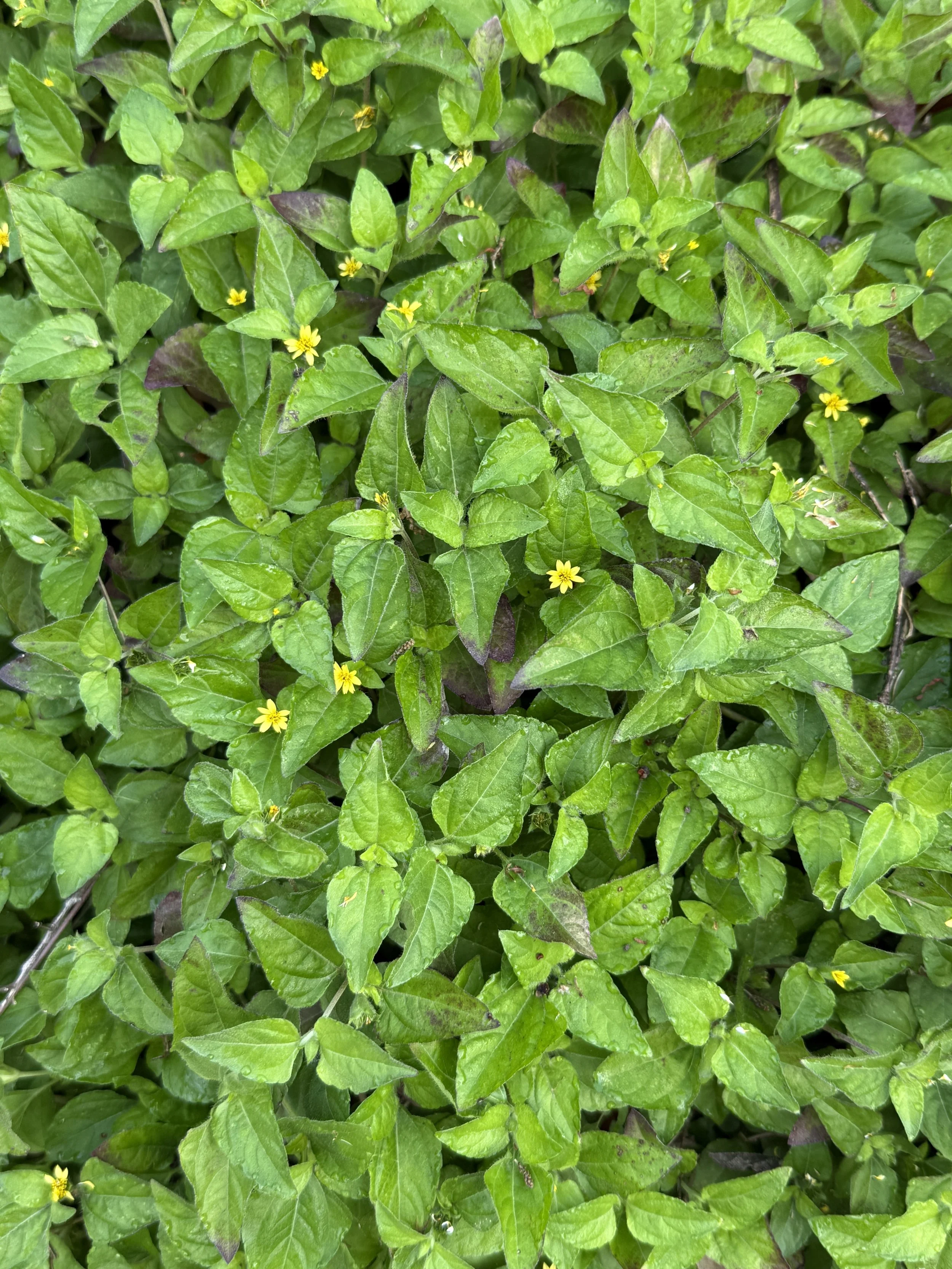
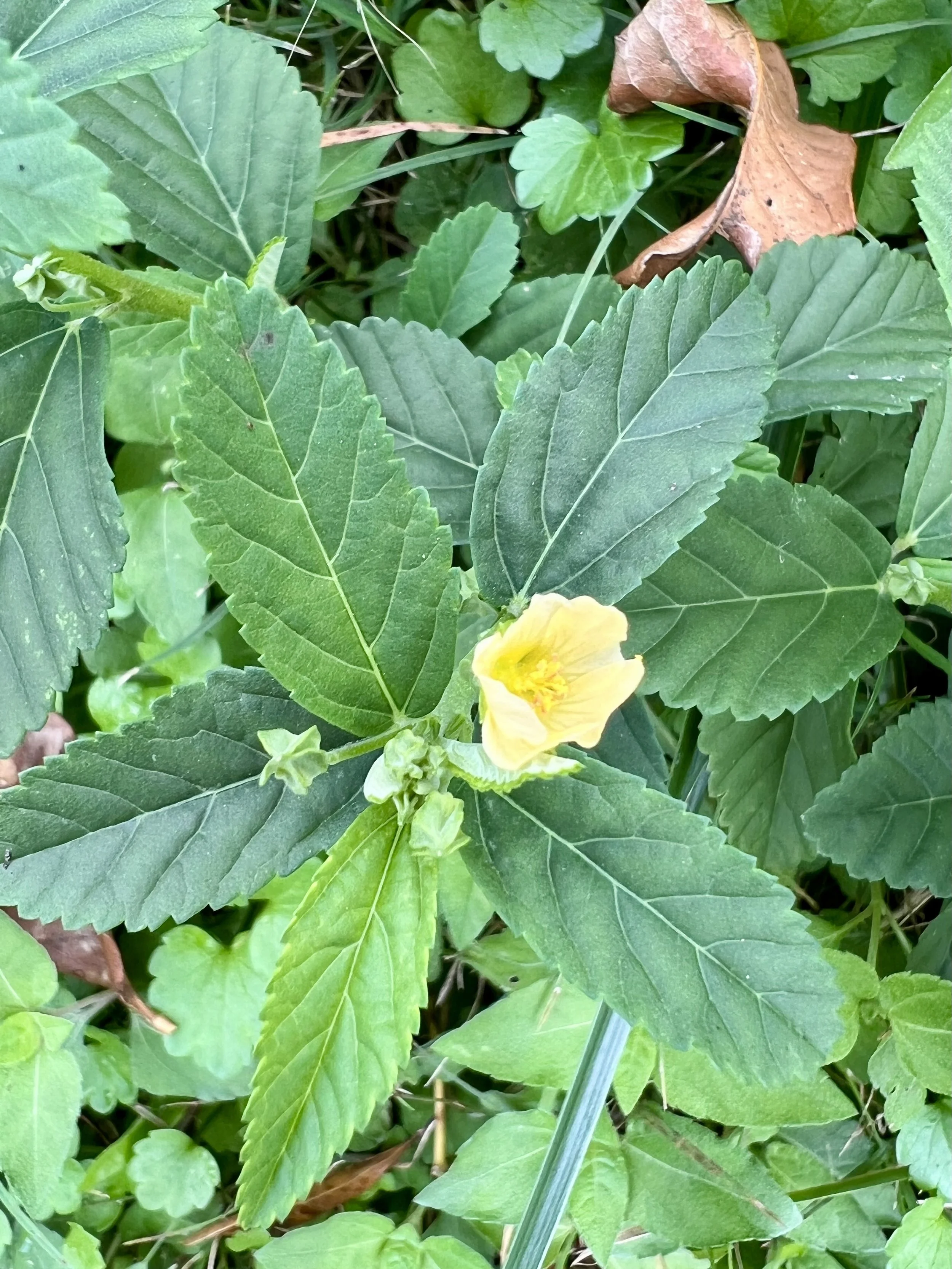
Horseherb in flower — what looks modest is quietly essential, blooming for months and feeding the smallest native bees.

So instead of replacing the ivy, the question became: what could grow through it?

Not starting over. Beginning from where things already were.

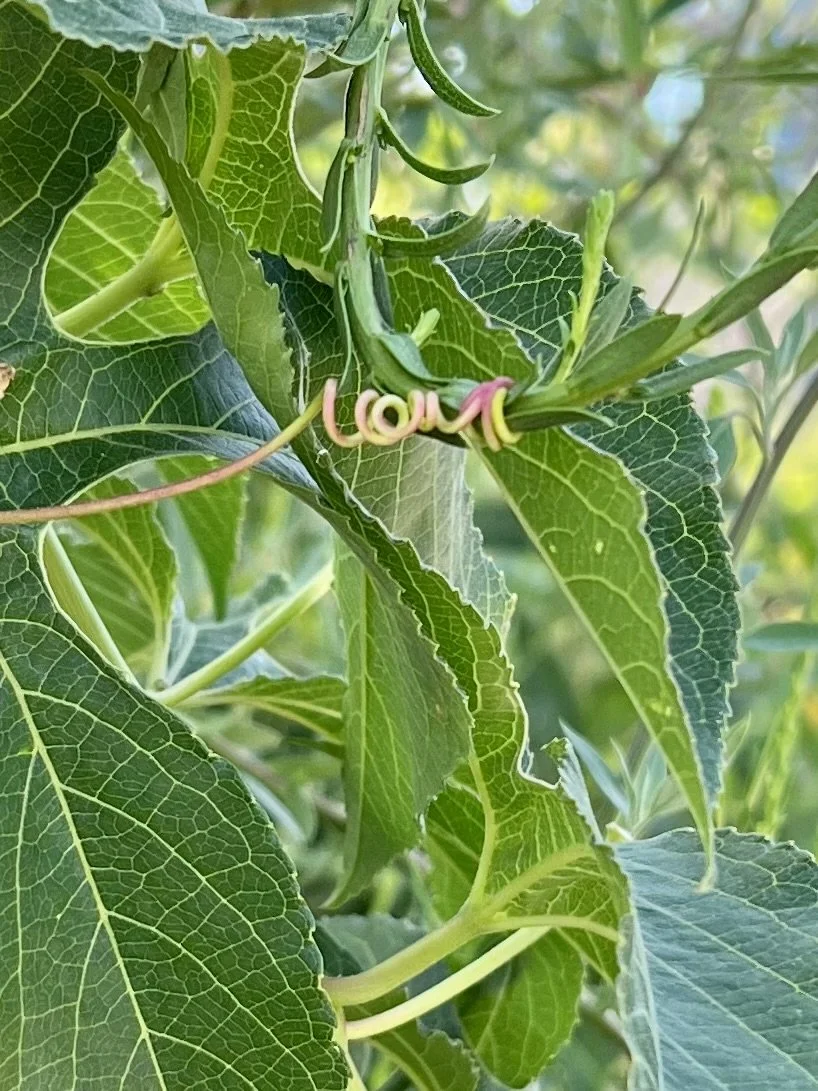
A vine threading through established hedge structure — using what was already there.

Two species of passionvine were planted directly into the base of the jasmine. Bee balm and horseherb were added in the pockets of soil at the wall’s edge. The passionvines did something elegant — they used the jasmine as a trellis. They climbed its established woody structure, threading upward without anything new to build or maintain. When the vines went dormant over winter, the ivy held the wall — green, living, intact. The non-native became, in its own way, useful.

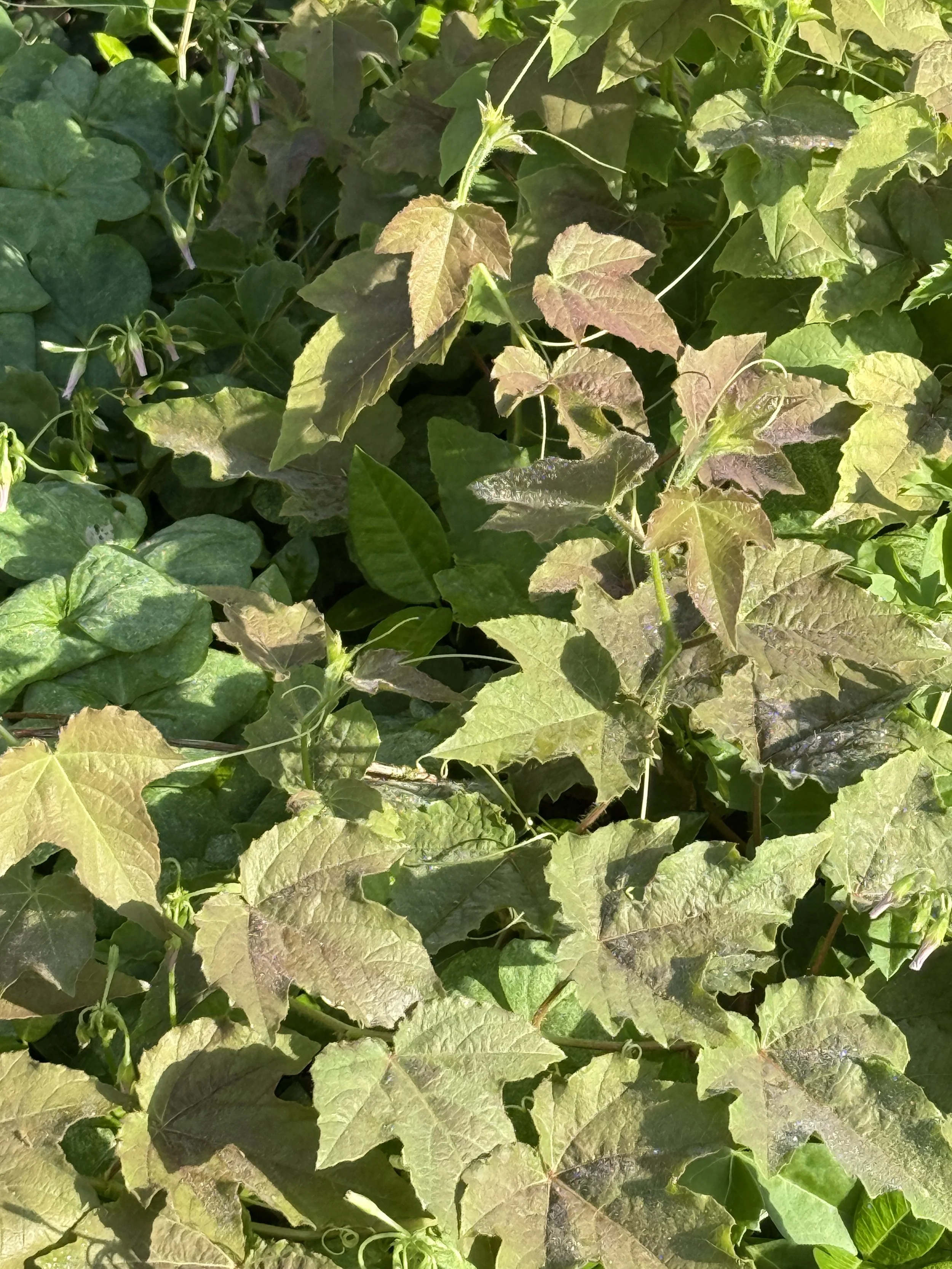
Lobed leaves in morning light — the living architecture of succession at work.

It is not only a metaphor for everything. It is practical.

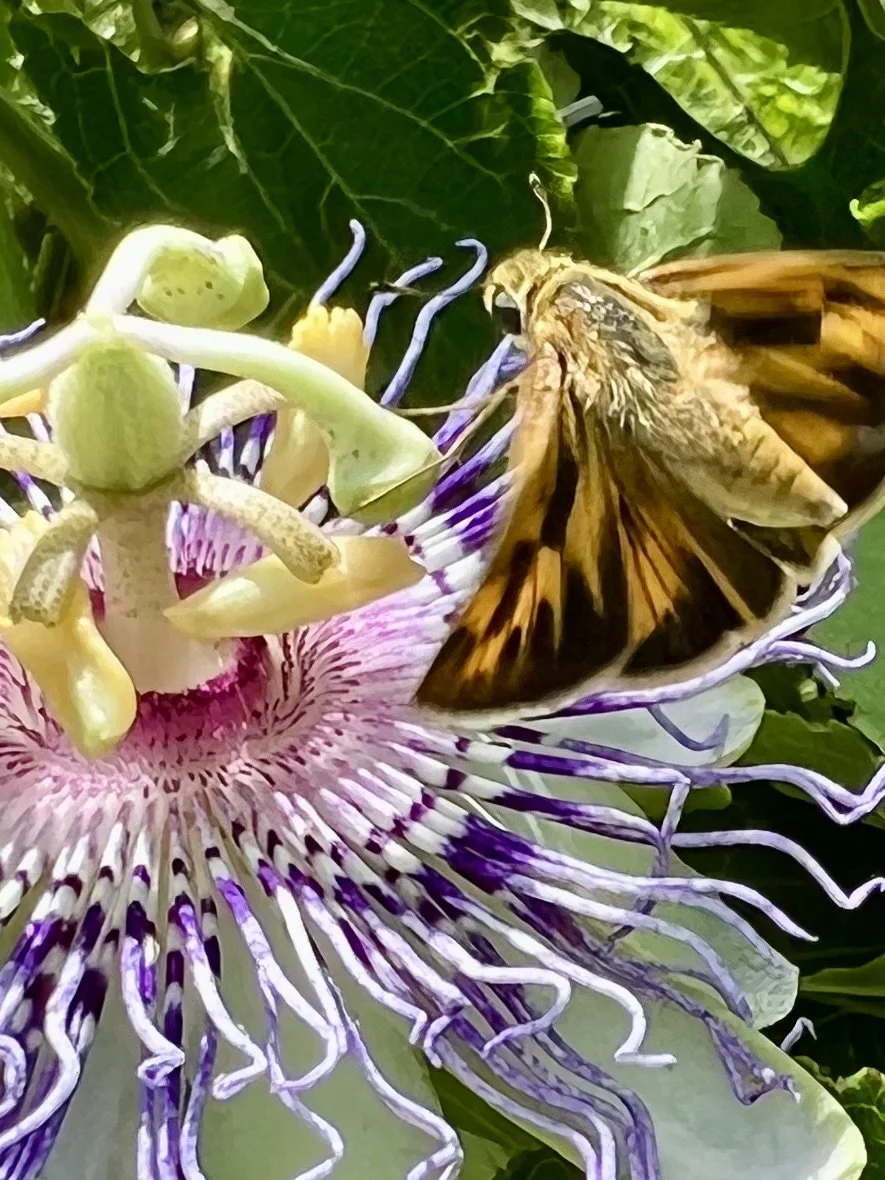
The butterflies arrived. The bees found it. The wall, at eighty years old, is still becoming something.

Native ecosystems don’t clear-cut and replant. They layer. Succession is slow, relentless, generous — one organism creating conditions for the next. This project works with that logic rather than against it. Every passionvine root threading deeper beneath this wall is pulling carbon downward, slowing rainwater, building soil. The organic matter accumulating at the base filters what the sky sends down.

The ivy, by contrast, requires weekly grooming with gas-powered equipment to stay tidy. The native community asks for nothing. And gives back everything.

That is what a living sculpture does. It does not arrive finished. It moves toward something — through seasons, through years, through the patient logic of ecology working at its own pace.

And what it is working toward is deeper than anything that could have been designed.

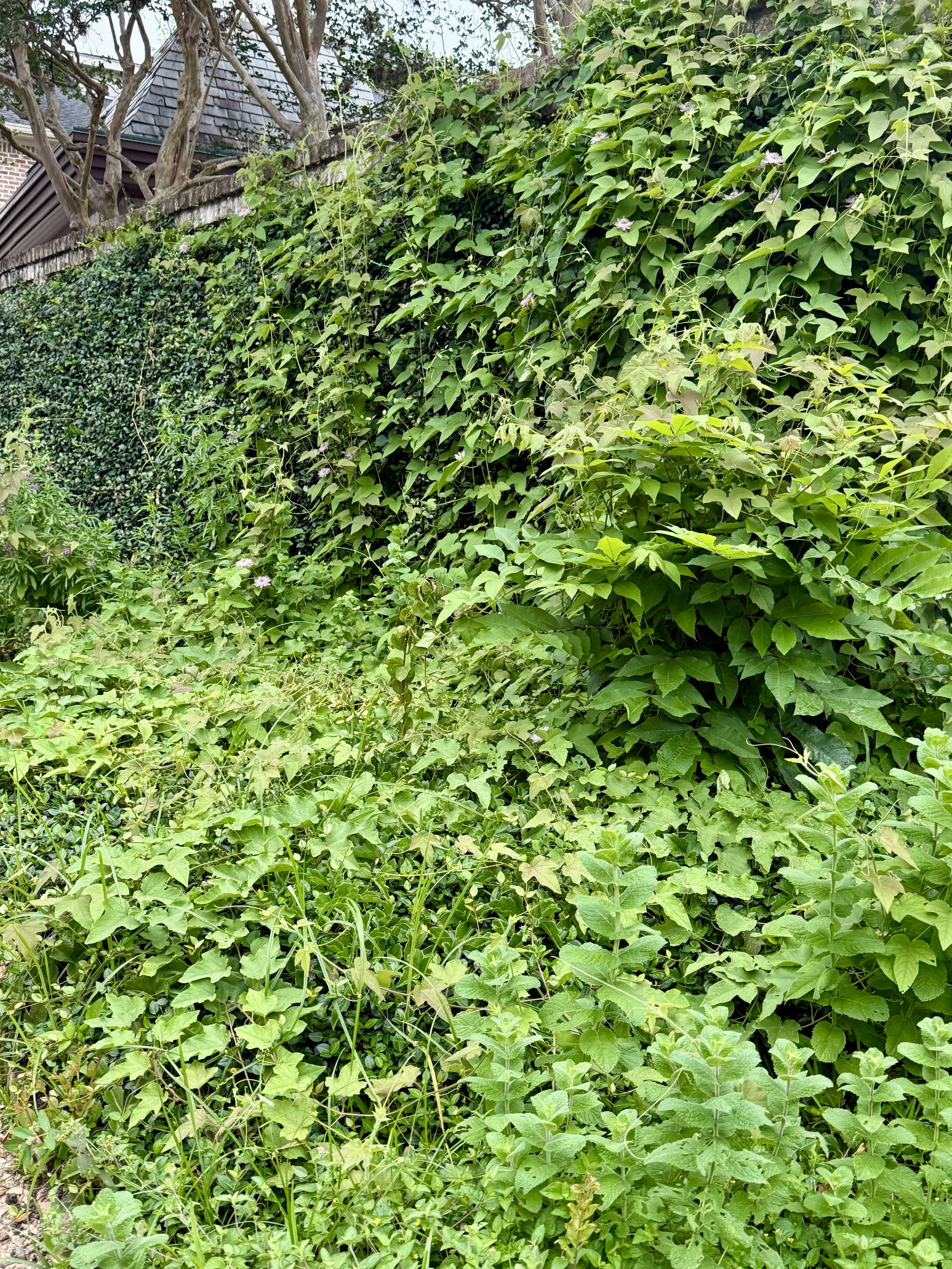
May 5th — still spring. The passionvine has taken over the near half of the wall. Look closely toward the back and you can see the darker texture of the Asian ivy still holding its ground.

THE DAY THE WIND DREW

An Introduction

Some invitations arrive like weather — unexpected, and carrying something with them.

When Holly Josey reached out asking if I would curate her exhibition for FotoFest, I said yes before I fully understood why. That is, I think, the only honest way to say yes. You feel the pull of something before you can name it. You trust the tug.

What I did know was this: my own work has long been in conversation with the natural world. Gust, a body of work I’ve been developing for years, is rooted in wind — in its invisibility, its insistence, the way it shapes everything it touches without ever being seen directly. So when Holly described pens suspended from tree branches, left to draw whatever the wind drew, something in me recognized it immediately. Not as a concept. As a kinship.

We began with a studio visit. She laid out everything — paintings, photographs, the tender evidence of a practice built on deep looking. What unfolded over those hours was something I’ve come to treasure in the work of curating: the slow revelation of an artist’s inner world. Holly’s relationship with the natural world isn’t borrowed or decorative. It is structural. It holds everything up.

Getting to know a new artist who listens this carefully to nature — who is willing to hand the pen to the wind and mean it — lifts something in me. It reminds me why I make work, why I say yes, why paying close attention is never wasted.

Saying yes, I’ve learned, is its own form of letting go.

THE DAY THE WIND DREW

Curator’s Statement

There are two questions underneath all of these works — what does it mean to let go? And what does nature already know? Holly Josey answers these questions with open hands.

Holly Josey’s exhibition The Day the Wind Drew began with a simple act: pens suspended from tree branches, left to move however the wind moved them. Over hours and days, the marks accumulated — not chosen, not corrected, just received. The original work is intimate — 84 inches, on paper — but the wind is not intimate. It is vast, so the wind’s drawing was photographed and printed at monumental scale, filling a 10.5 by 18-foot wall. What remains is a kind of frozen breath, a single moment pulled from an endless series of compositions.

As a curator who works as both an eco-artist and a citizen scientist, I am drawn to what is happening in this work on a deeper level. We are living in a moment when it is dawning on us — slowly, and not without resistance — that the natural world’s intelligence has been unfolding since long before we arrived. The wind has its own logic. The tree has its own memory. Natural systems have been perceiving, connecting, and evolving for far longer than we have. To make art with them, rather than simply from or of them, feels urgent right now. It feels necessary.

It calls to mind something Marcel Duchamp understood a long time ago — that an artist does not have to be the one holding the brush at the final stroke. When his large glass work was damaged in transit, shattering into a web of cracks, Duchamp did not mourn it. He called it finally finished. The accident had completed it. Earlier still, he had let threads fall from a height and fixed their landing exactly as they landed — chance crystallized into form. He was making room for the world to collaborate.

Josey does the same, only her collaborators are alive. The tree. The wind. Time itself. These are not abstractions — they are presences in the room with you as you look. The erratic lines on her paper are evidence of a relationship, a conversation carried on without words between the viewer and the elements. This is what any artist or citizen scientist recognizes: that watching carefully, without forcing a conclusion, is itself a form of knowledge. That the most beautiful things happen at the fringes, in the borders, in the unexpected moments when you let go.

This is what connects everything in this exhibition. Not a style, not a medium, but a willingness to not know exactly what will happen — and to begin anyway. To stay open to risk. To let the work breathe. To learn, as natural systems have always learned, by paying close attention to what the world is already doing.

Cindee Travis Klement

www.cindeeklement.com

From Dusk to Dawn- Four works on paper

Written in 2025. Posted late —

I was contacted to create two small artworks for an office building in Houston getting an updated look — 3100 Timmons Lane.

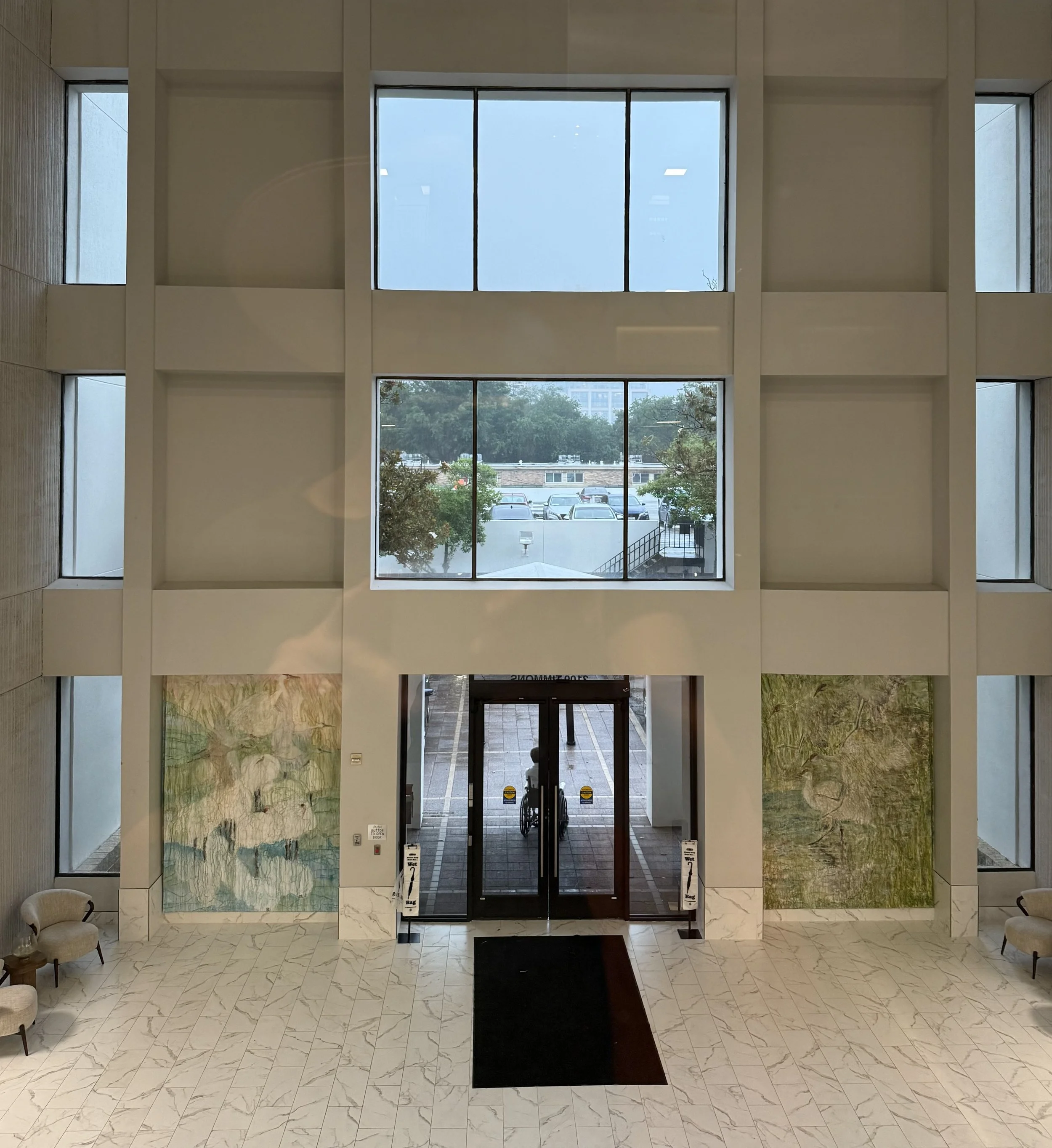
When I saw the space I saw an opportunity. An audience coming and going nine to five with no connection to the natural world right outside their door. A five-story lobby with open wall space and nothing to draw your eye there.

I proposed something bigger than what was asked. Two works, two stories tall — Sandhill cranes in a wetland on the first floor, Roseate spoonbills in the trees on the second. Two successful conservation stories, stacked one above the other, in a building full of people who might never otherwise encounter them.

The developer said yes.

3100 Timmons Lane

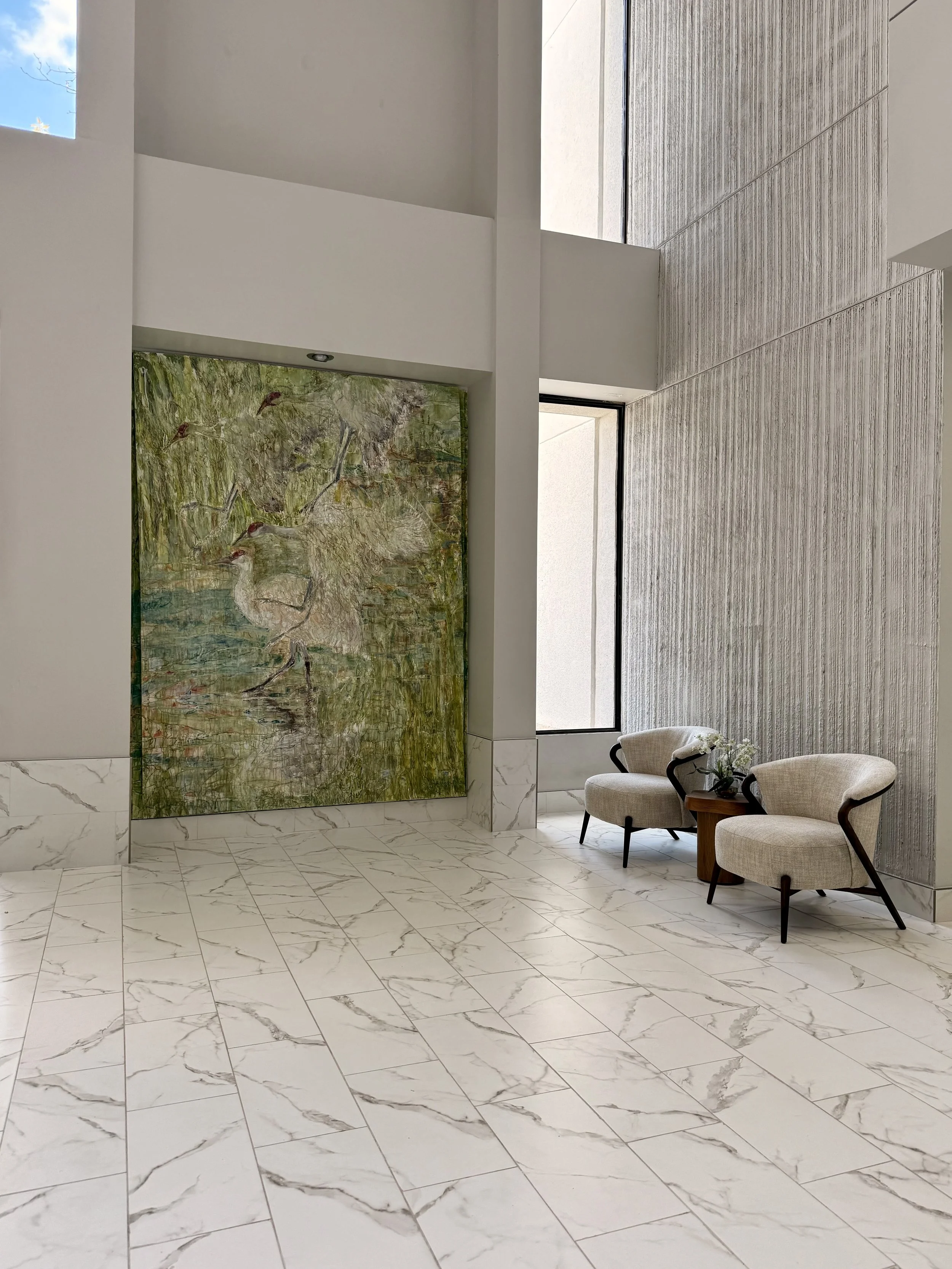
One of the 7’ X 9’ recessed spaces for artwork.

But before any of that — I had to figure out how to make them.

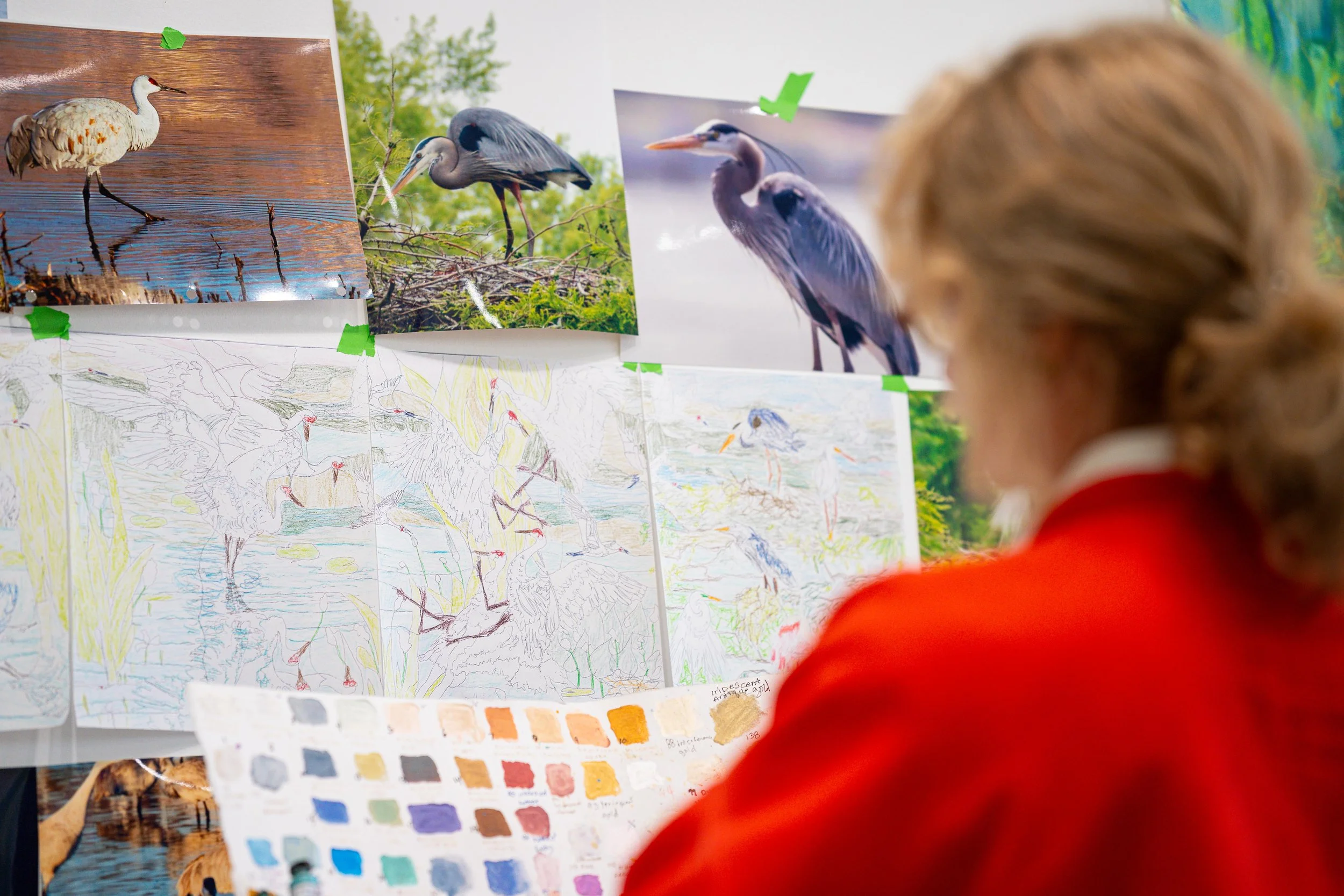
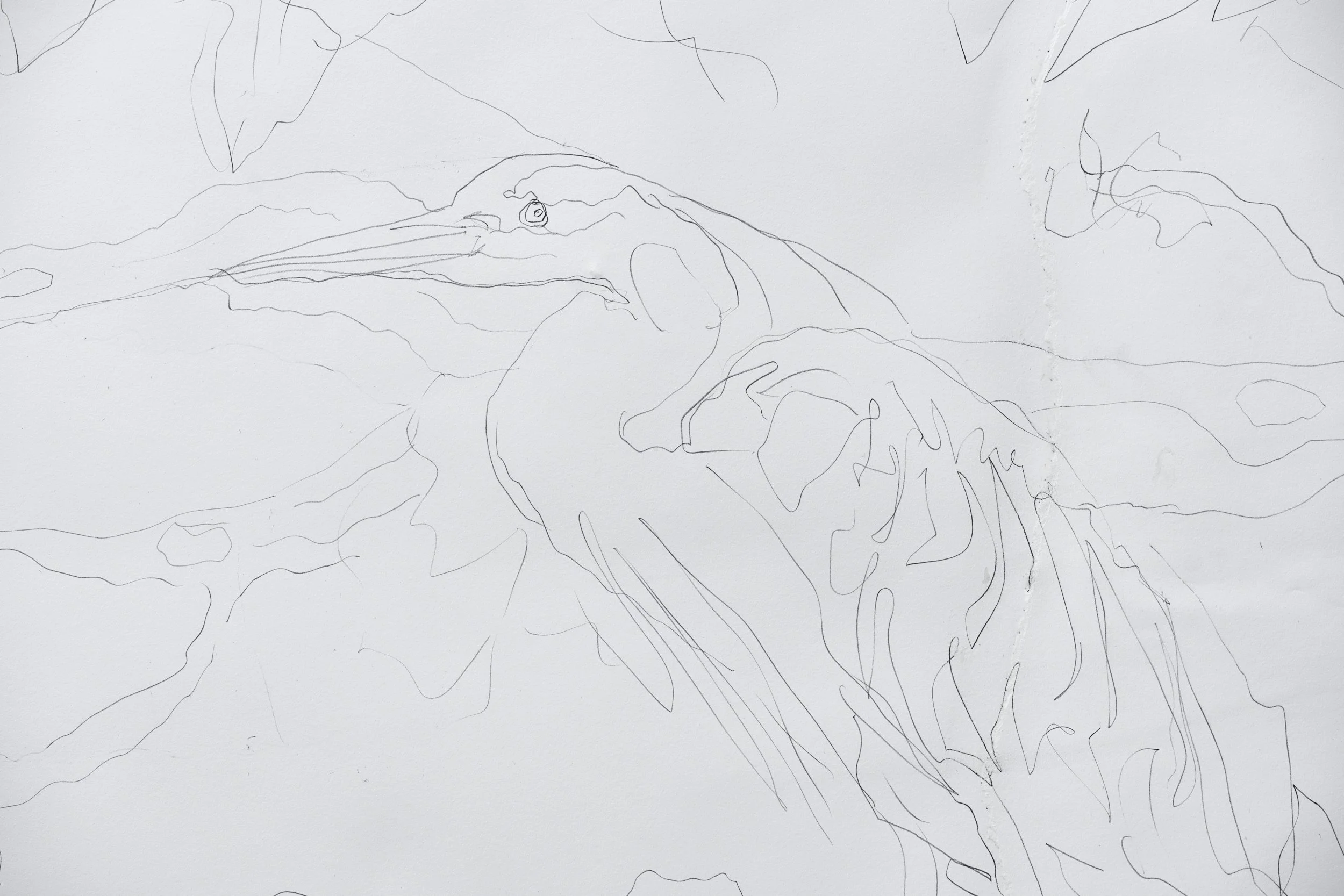
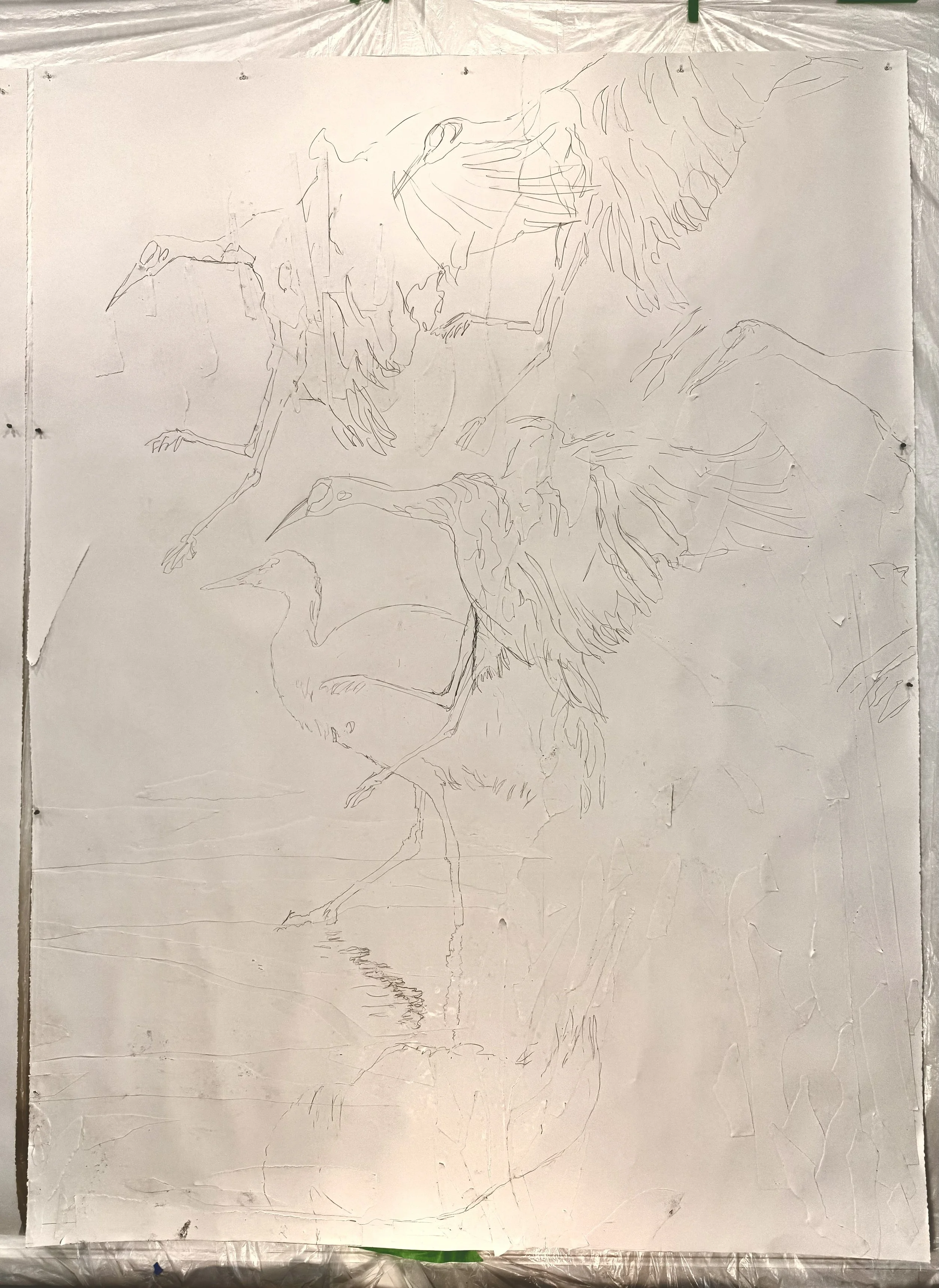
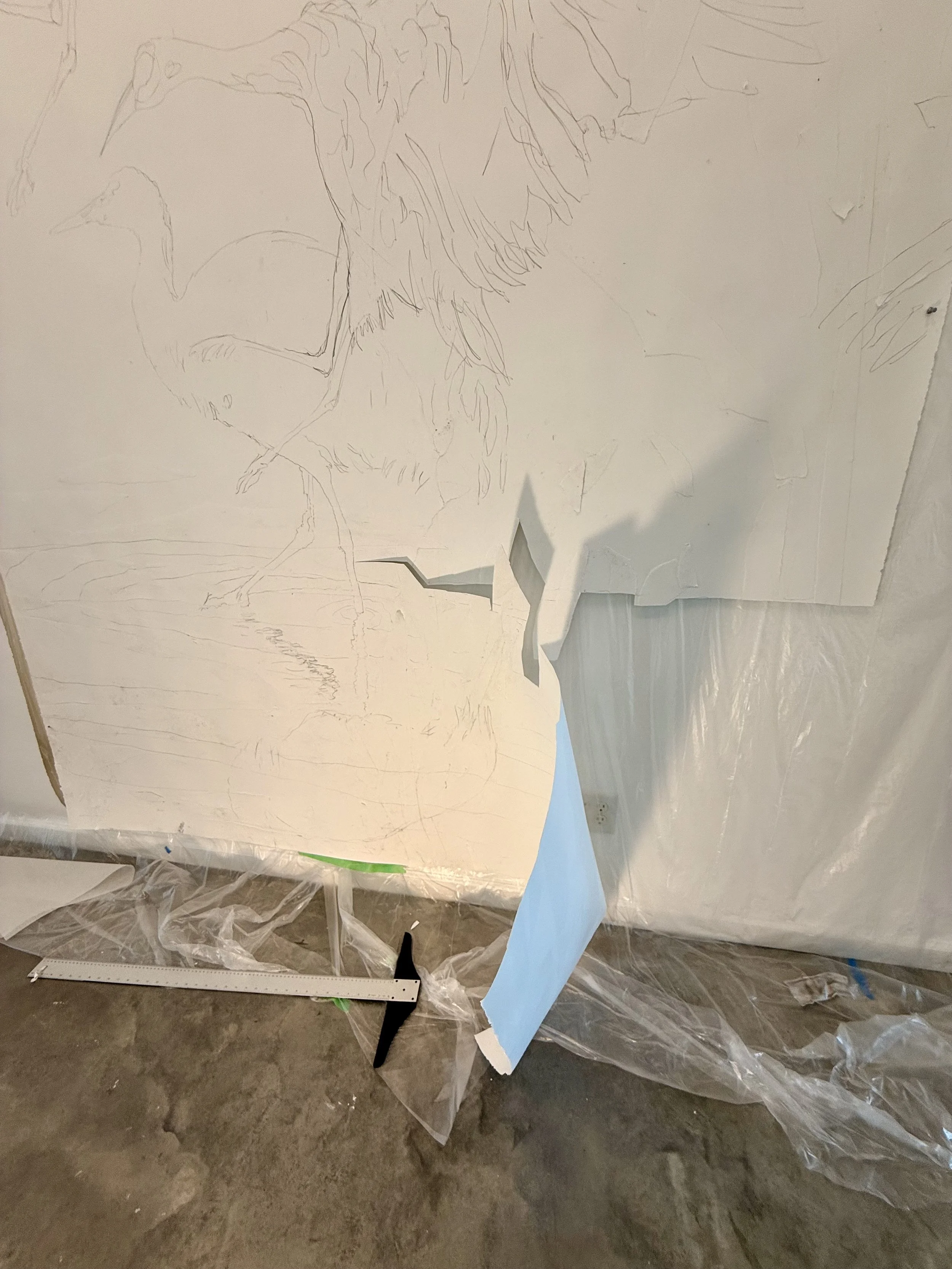
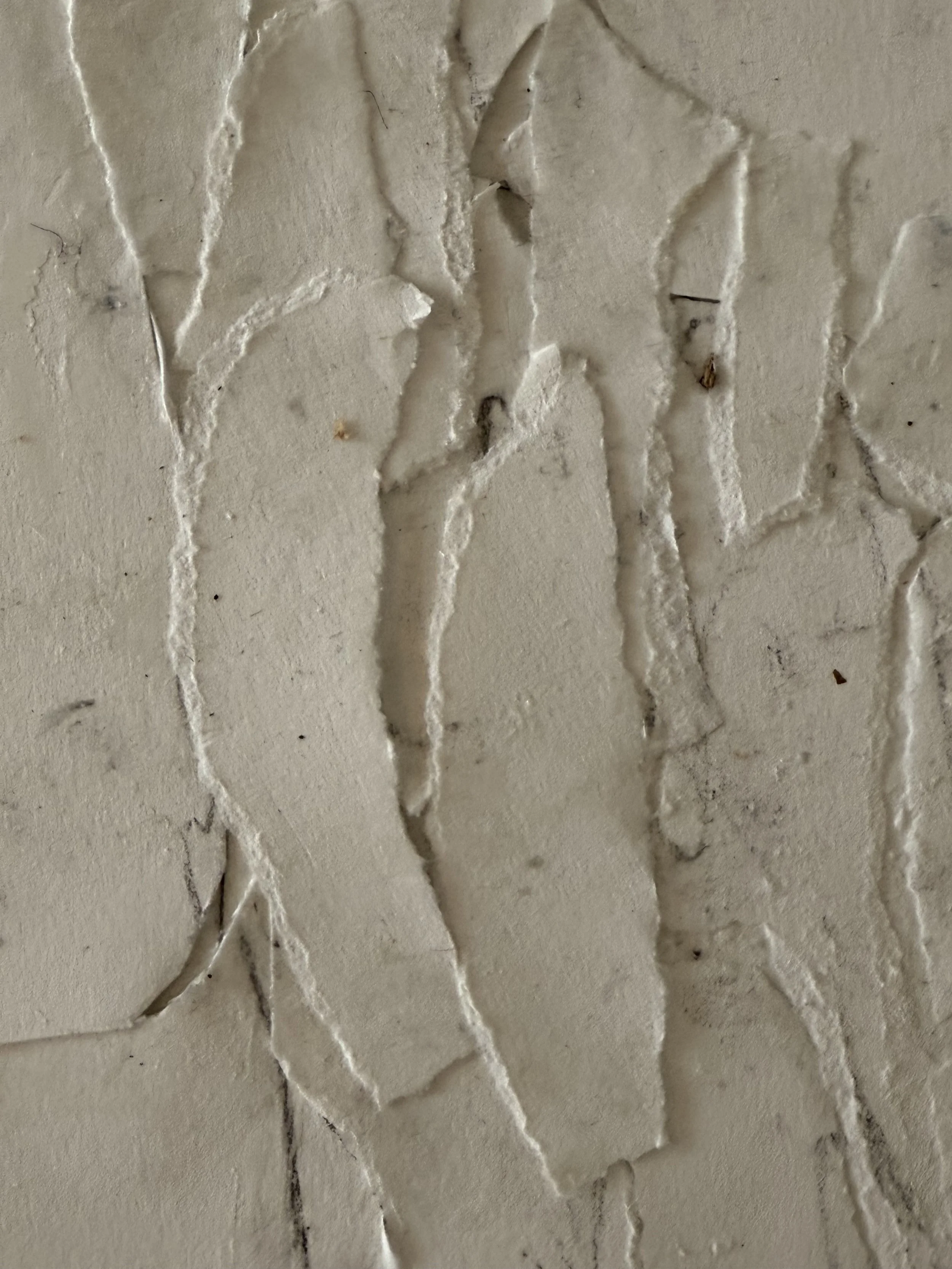
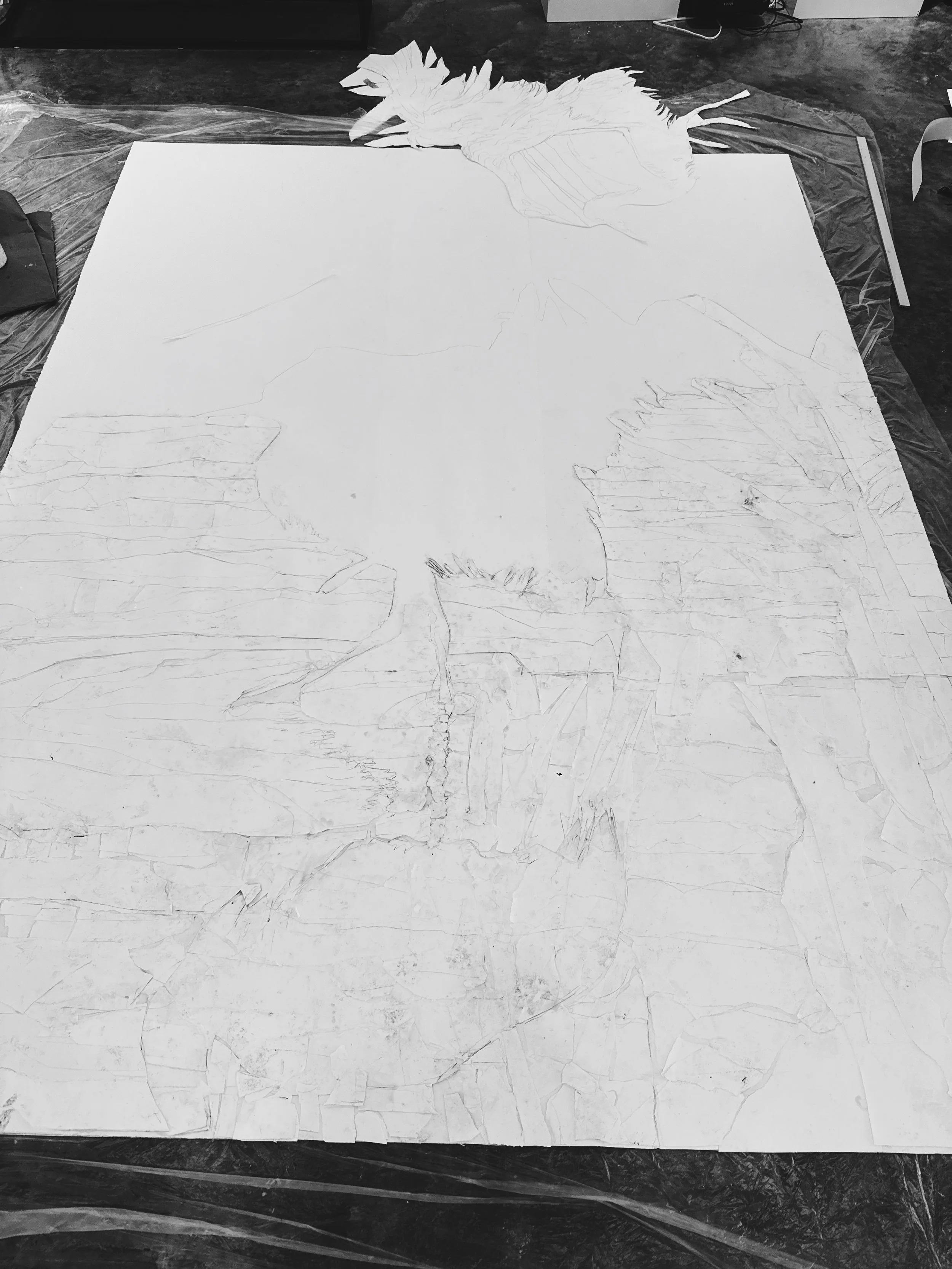
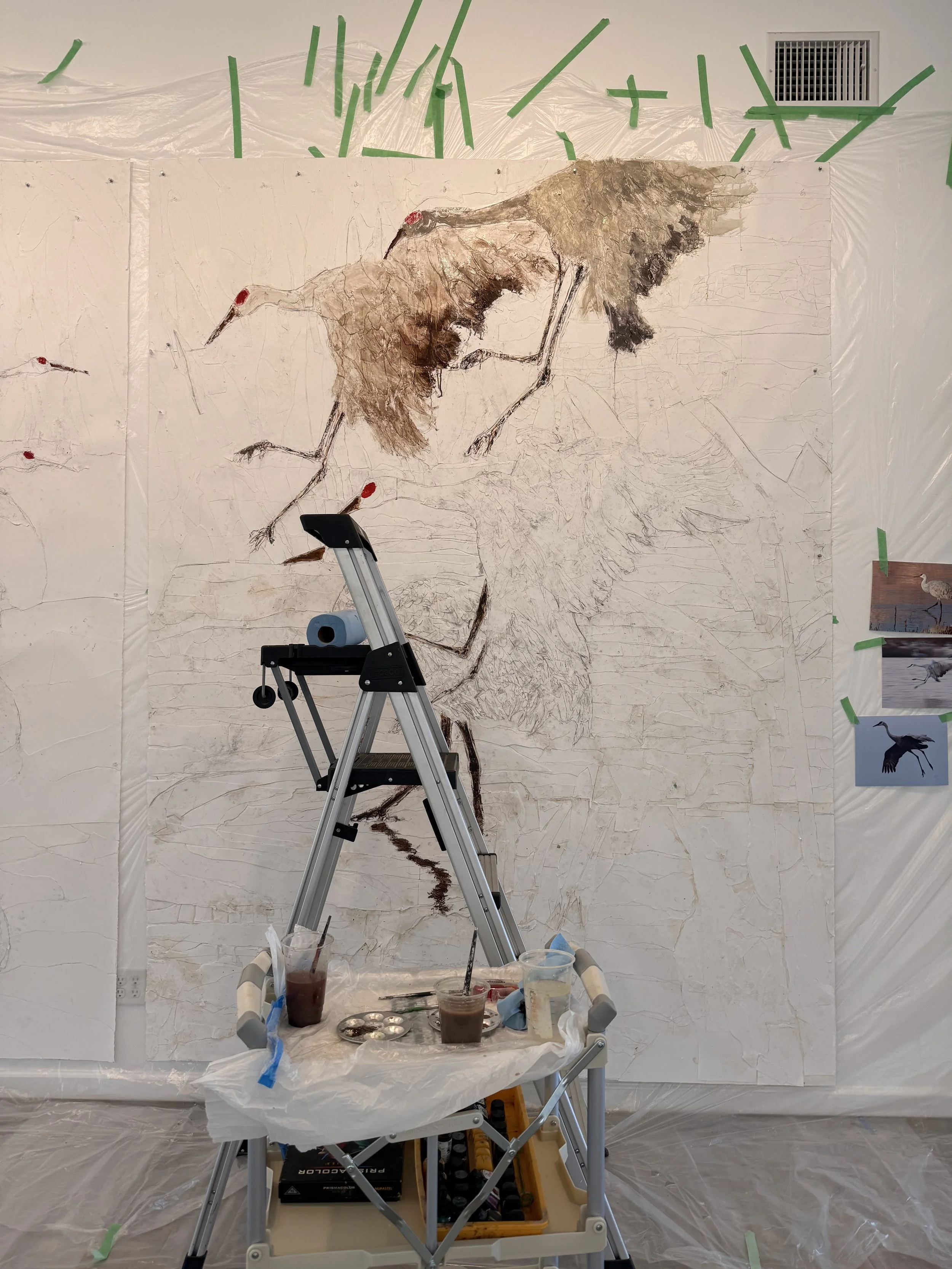
This commission was the first time I worked with a process that has since become central to my practice. I start with a drawing. Then I tear it apart — deconstructing the image into shapes. I reassemble those shapes on a second sheet of paper, building a relief. Once the relief is built I brush on large swaths of watercolor, then use a garden sprayer to manipulate the color — letting it run into the crevasses of the relief, redrawing the image through movement and gravity. Then pastels for the detail marks. The drawing finds itself again, but changed. Looser. More alive.

That process led directly to Unfolding Hope — the body of work I created for the Houston Endowment Jones Artist Award. But it started here, in a studio sketch for an office building on Timmons Lane, trying to figure out how to put a Sandhill crane in a five-story lobby.

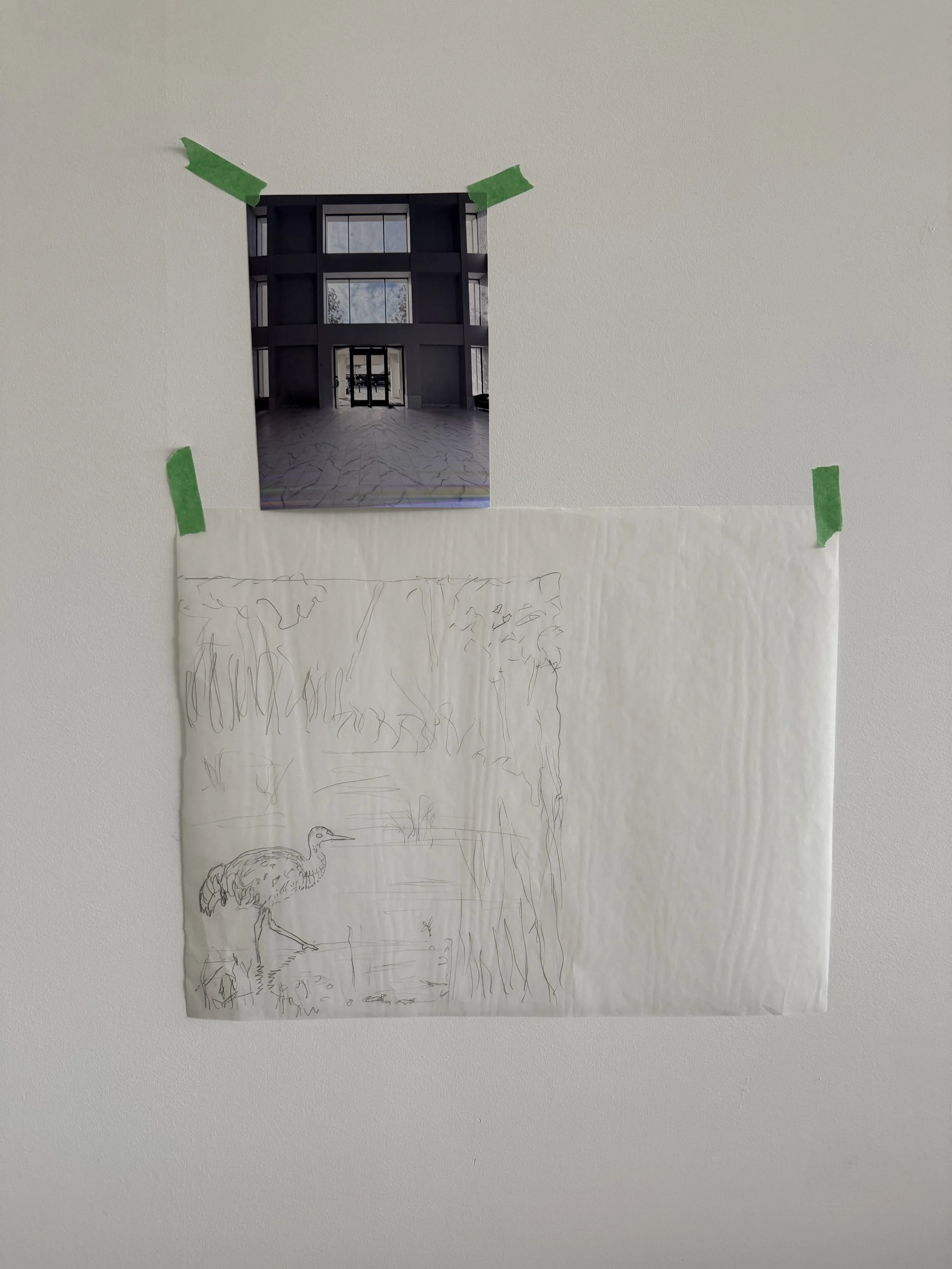
My presentation to the developer.

A early sketch

The next step involved deconstructing the drawing by tearing it into various shapes. After that, I can create a relief by reassembling these shapes on a second sheet of paper..

Why Sandhill cranes?

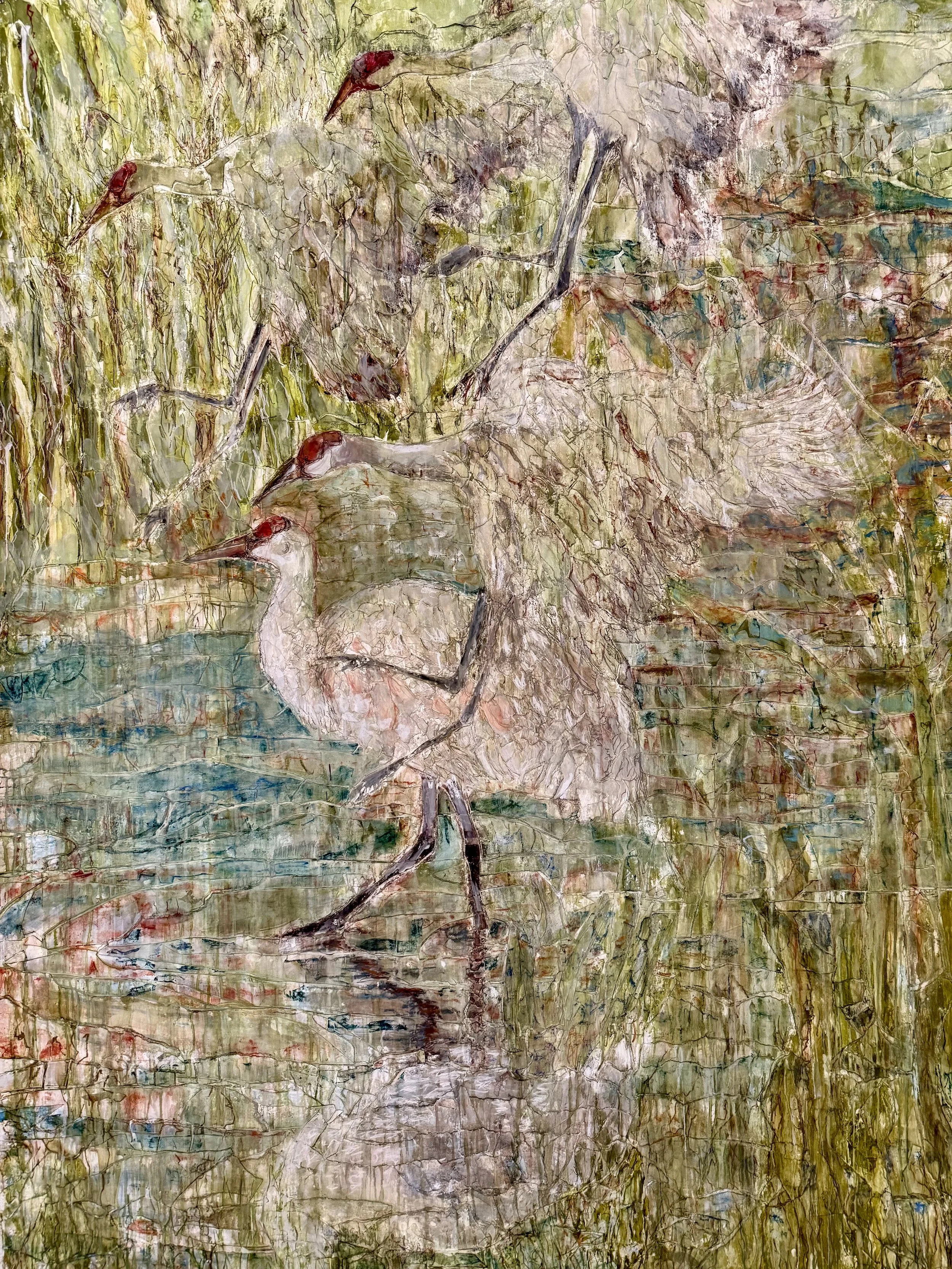
In the early 1900s relentless hunting pushed them to the brink of extinction. Only 12 mating pairs remained. What brought them back was wetland restoration and habitat protection — initiated by hunters who understood what they were losing. Today Sandhill cranes are the most plentiful crane species in the world.

That is the story I wanted in that lobby. Not a decorative bird. A comeback. Evidence that when humans choose to act as conservationists, the results can be staggering.

The Sandhill cranes are installed. The Roseate spoonbills are finished and in storage until the upper levels are repainted.

When the cranes went up the developer told me something I didn’t expect — the building became a community. Tenants were talking to each other about the birds. He leased his largest spaces the next month.

That is what I hoped for. Not decoration. A reminder — for people who spend their days inside — that nature matters and we feel its pull even through art.
The two finished pieces — Sunrise: Sandhill Cranes and Sundown: Sandhill Cranes — can be seen in my 2025 portfolio. Come see them. Better yet — come to the studio

Then comes the color.

SUNDOWN CRANES

7” X 9”4”

watercolor, pastels, ink on collaged Stonehenge paper.

Image by R. Wells

SUNRISE CRANES

7” X 9”4”

watercolor, pastels, ink on collaged Stonehenge paper.

Image by R. Wells

The Tyranny of Tidy

In Defense of the Uninvited — Part II

There is a particular kind of anxiety that lives at the edge of an unmowed lawn. You can feel it from the sidewalk — the low-grade disapproval radiating off a neighbor’s glance, the HOA letter with its careful language about community standards and property values. We all know this pressure. Many of us have bent to it.
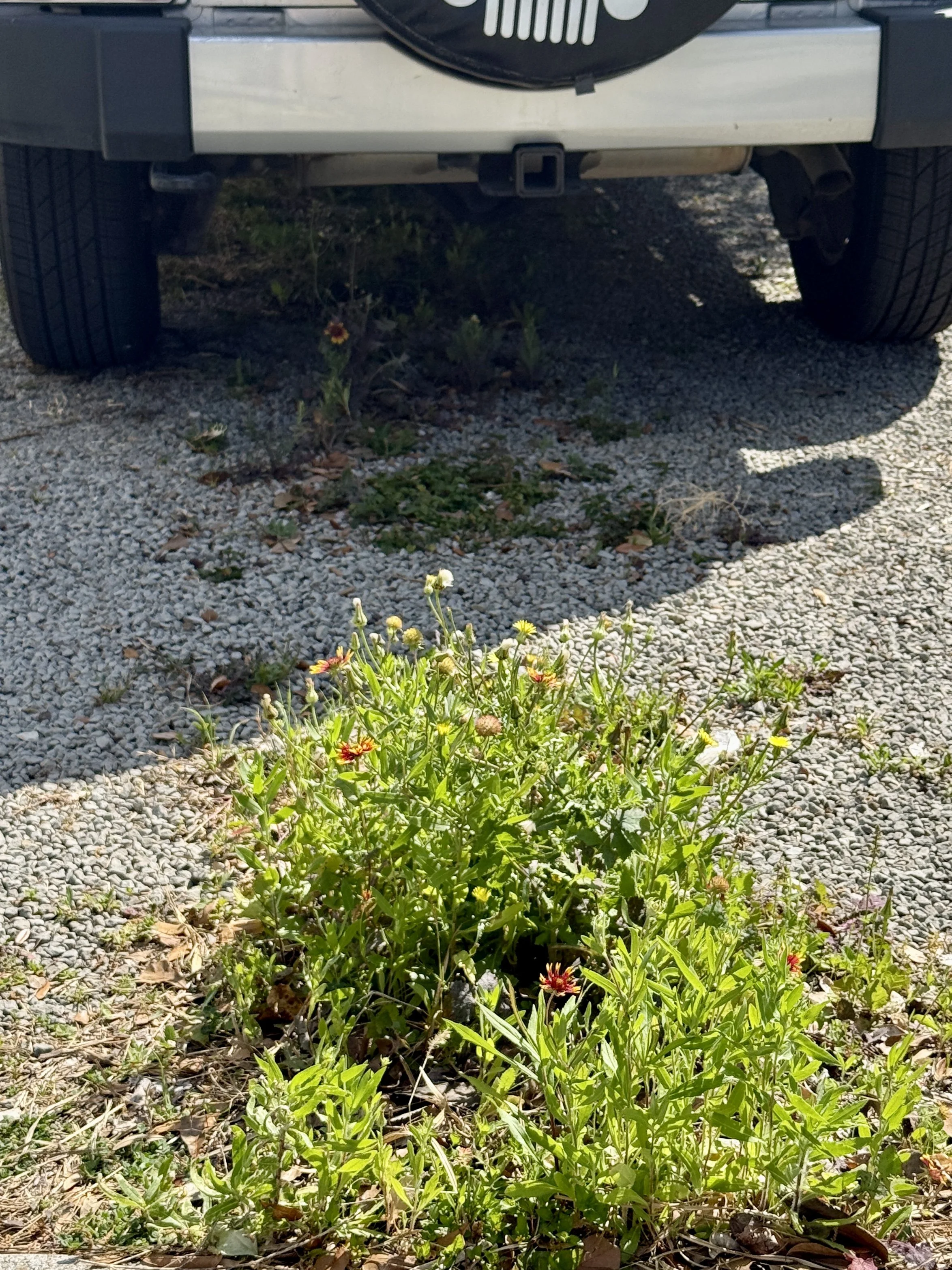
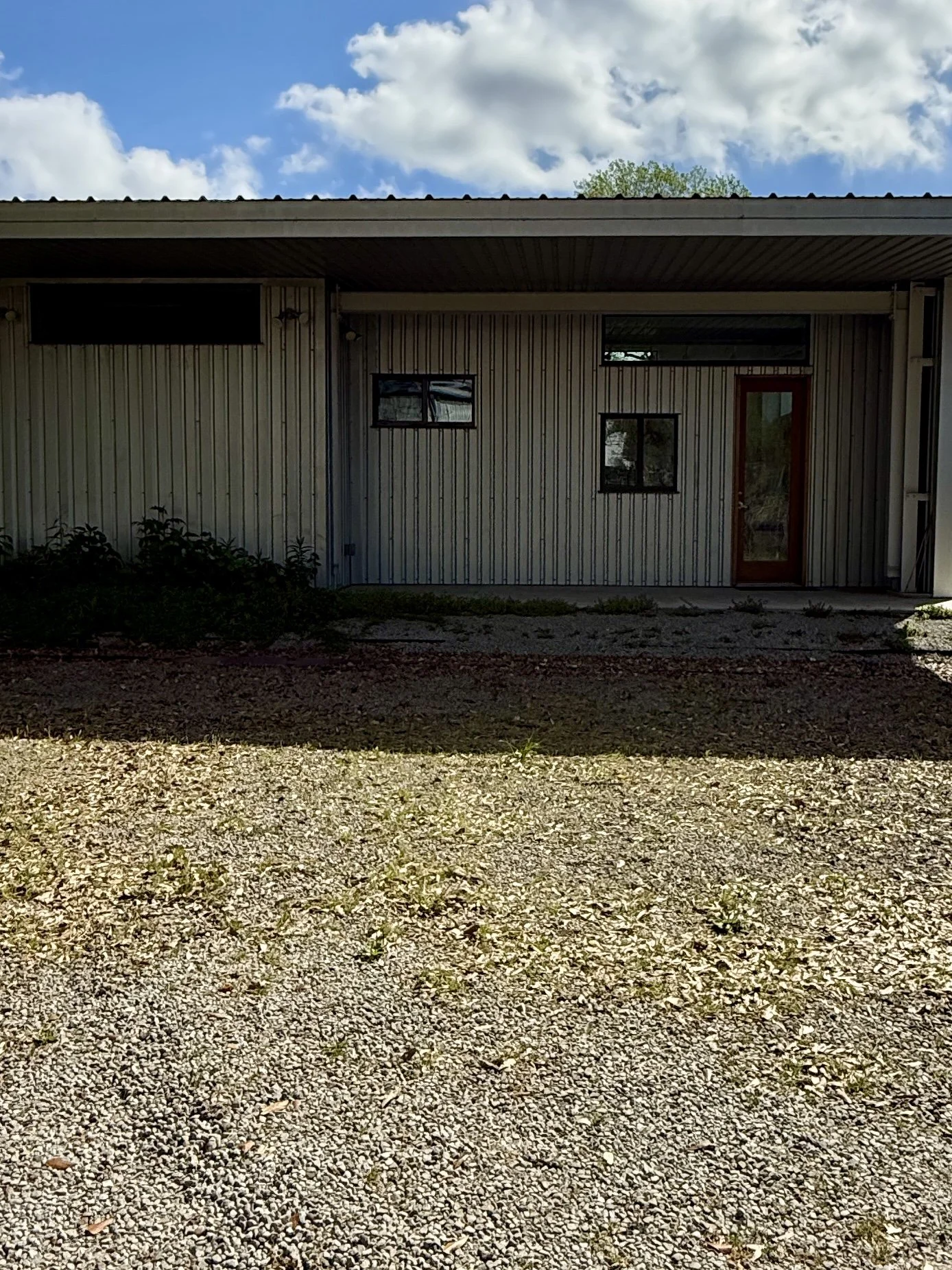
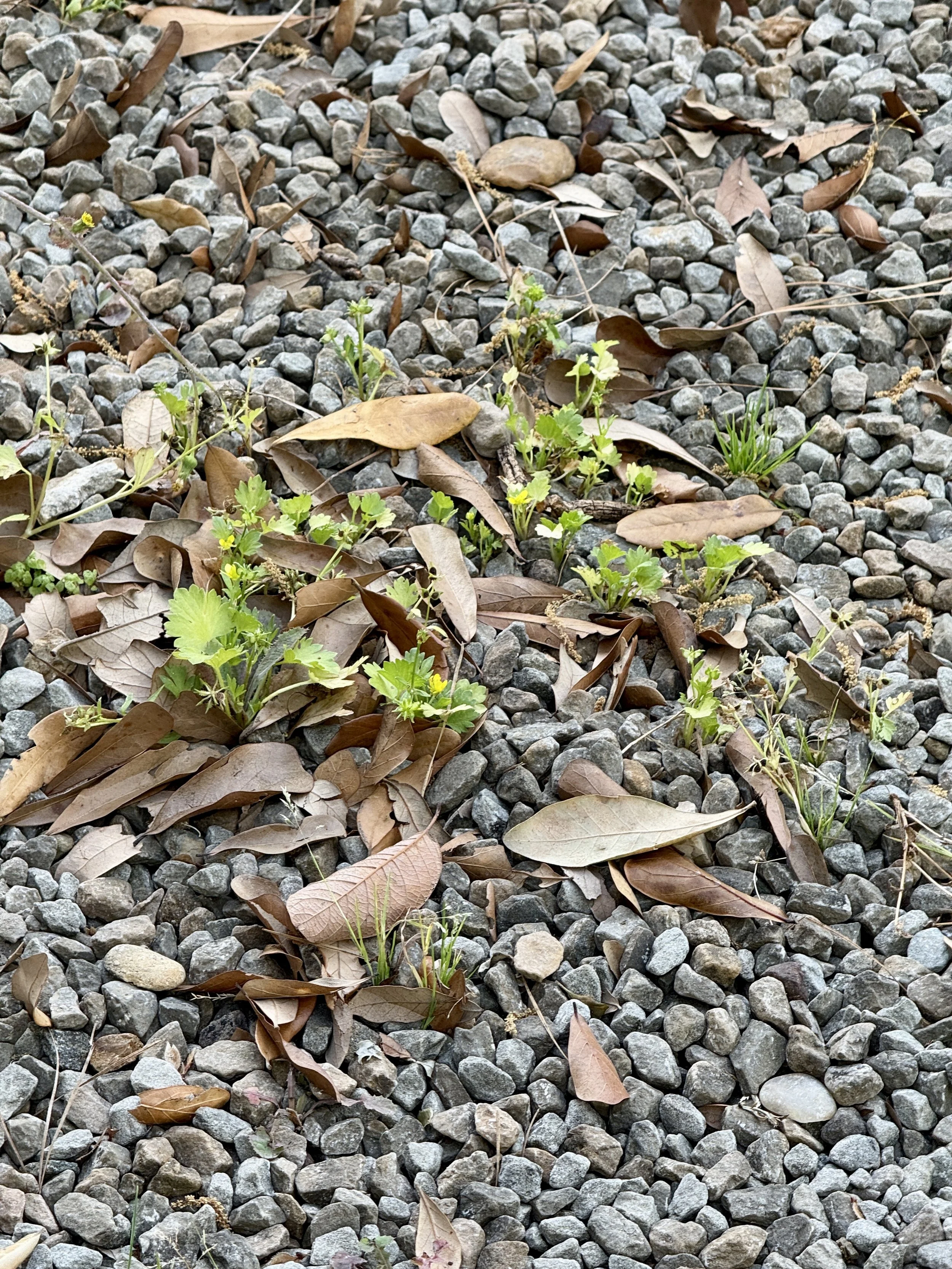
I feel it too. At my own eco-art studio, volunteer plants have started pushing up through the gravel parking lot this spring. In modern aesthetic terms, it looks unkempt. Do I groom it because that is what looks cared for to the human eye — or do I do what I preach? If I did clean it up, how? I won’t use pesticides. Pulling is more work than I can manage. I could burn them with a torch, which releases carbon — leaving the lot neat but barren. I know that option well. It’s what I did all last summer. I feel the pull of it still.
That question — how much tidiness do we owe society before we’re allowed to let something live — is exactly what this essay is about.

The ancient part of your brain that kept your ancestors alive is genuinely afraid of the tall grass. It is scanning for the snake, the bobcat, the thing with teeth. That instinct is old. It is wired in. The impulse to clear, to see, to know what’s out there — it kept people alive across tens of thousands of years. We are not wrong to have it.

But we are living in a different world now, and that old circuitry is misfiring.

Here is what the science shows: living plant systems — their moisture, their transpiration, their cooling and breathing — help move weather across the landscape. Strip those systems out and replace them with hot pavement and monoculture lawn, and you remove the very mechanisms that keep weather moving. Extreme weather increasingly gets stuck. Heat domes park over cities for days, fed not just by hot pavement but by the barren heat radiating off bare ground and fallow fields. The fires. The floods. The Guadalupe on the Fourth of July. Hurricane Harvey. We call these natural disasters — as if nature did this to us, unprovoked.

The danger is no longer the rattlesnake in the grass. The danger is the bare ground.

I know this in my body now — not just my brain. Standing in my parking lot, looking at the volunteers pushing through the gravel, I no longer see a mess. I see first responders. The plants that show up uninvited are the ones that know what the ground needs — to be covered, held, cooled, fed. They are doing the work we stopped doing when we picked up the leaf blower and the herbicide.

What would it take to shift not just individual behavior but the aesthetic itself — to make living, layered, uninvited-welcoming landscapes look like what they actually are: acts of intelligence? Acts of care?

The weeds already know what to do. The seeds are in the soil, waiting. Life is not asking permission. It is ready to come back the moment we stop yanking it out.

The question isn’t whether the land can recover. The question is whether we can — from the idea that control is the same thing as care. That bare is the same thing as clean.

The greatest threat we face isn’t what’s hiding in the weeds. It’s that we cut them all down.

What a Purple Black-Eyed Susan in Sequel Taught Me About Resilience.

What a Purple Black-Eyed Susan in Sequel Taught Me About Resilience

I was walking through Sequel — my living sculpture — when I noticed it. A cluster of Black-eyed Susans with leaves gone deep, moody purple. My first instinct was something’s wrong. But the more I looked, the more I wanted to understand what was actually happening.

So I went down the rabbit hole.

Turns out, that purple color isn’t a disease. It’s not dying. It’s responding. When a Black-eyed Susan experiences stress — cold nights, too much rain, soil that can’t deliver the phosphorus it needs — it produces something called anthocyanin. A pigment. A protective chemical the plant makes just to cope.

The same pigment that colors blueberries. Red cabbage. Autumn maples.

The plant doesn’t collapse under pressure. It changes color.

I’ve been sitting with that ever since.

So much of what we call “damage” in nature is actually adaptation. The purple leaf isn’t broken — it’s communicating. It’s shifting its internal chemistry in response to its environment, doing what it needs to survive. And the wild thing is, once the soil warms up, once the water drains, once the nutrients find their way through — it can return to green. It was never permanently altered. Just temporarily transformed.

This is exactly why I built Sequel. Not to display nature at its most polished, but to live inside its full cycle — the struggle, the adaptation, the quiet recovery. Sequel keeps showing me things I didn’t plan for, didn’t design, couldn’t have predicted. A purple leaf on an ordinary Tuesday is its own kind of gift.

As an eco-artist, I want my work to carry this story. Not the version of nature that’s always blooming, always golden-hour perfect. But the version that goes purple when it’s cold. That shows the struggle on the outside. That adapts without pretending.

There’s a honesty in that I deeply respect.

If you ever spot a Black-eyed Susan going purple, give it a moment before you panic. Check the drainage. Watch the temperature. Maybe add a little bone meal if the soil’s been wet and cold. But also — just notice it. Let it remind you that stress responses aren’t failures. Sometimes they’re exactly what survival looks like.

Sequel keeps teaching me that. One plant at a time.

— 🌿

In Defense of the Uninvited

I think about weeds.

Not in an anxious, what-do-I-do-about-them way. More in a — wait, who decided these don’t belong here? — kind of way.

I look at these plants. Really look at them. They showed up, figured it out, and started doing the work. Nobody planted them. Nobody watered them. They just arrived, broke through whatever burning hot surface was available, and got on with it. You have to admire their spirit and determination.

We call them invasive. We call them a problem. And sometimes, they are. I am a die hard native plant enthusiast — however I have been uncomfortable with this reflex to yank out anything that wasn’t there before — particularly in cities, especially on abandoned lots and cracked pavement and post-industrial nowhere — as if those places had some pristine original state worth protecting.

They don’t. And these plants seem to know it.

Here’s what I’ve come to believe: weeds are Earth’s first responders. When the ground is left bare, tilled, stripped, burned, flooded, or just forgotten — Mother Earth sends them in. They are biologically programmed for the site’s specific conditions, temperature, moisture, daylight — speed healers. They lower soil temperatures, protect the earth’s surface, feed what lives below ground, slow rainwater, reduce erosion, sequester carbon. They show up precisely when and where they are needed most. They do not waste energy or resources.

Here’s what I’ve also noticed: the spots where something is growing — even the stuff we’re not supposed to want — are almost always healthier than the spots where we’ve cleared everything out in the name of keeping it native or neatly manicured. Bare ground isn’t neutral. It’s just… empty. It’s dead. And dead empty doesn’t really serve life.

So I’ve changed how I work. When a volunteer appears somewhere I wasn’t expecting it, I no longer yank it out in a knee-jerk response. I stop — look — think. Why was it sent in? What is it doing? Is it holding soil? Feeding something? Offering shade, cover, a landing pad? I weigh what it’s providing before I decide what to do about it.

The real question isn’t where did this come from? It’s what is it doing now that it’s here?

I’m not saying throw out the whole idea of caring about native ecosystems. I am still a die hard native plant enthusiast. I’m saying the city lot behind a parking garage is probably not the hill to die on. And the plants that moved in there — the ones in these photos — they’re working with what exists, not what existed.

There’s something I respect about that.

Just maybe they know what they are doing.

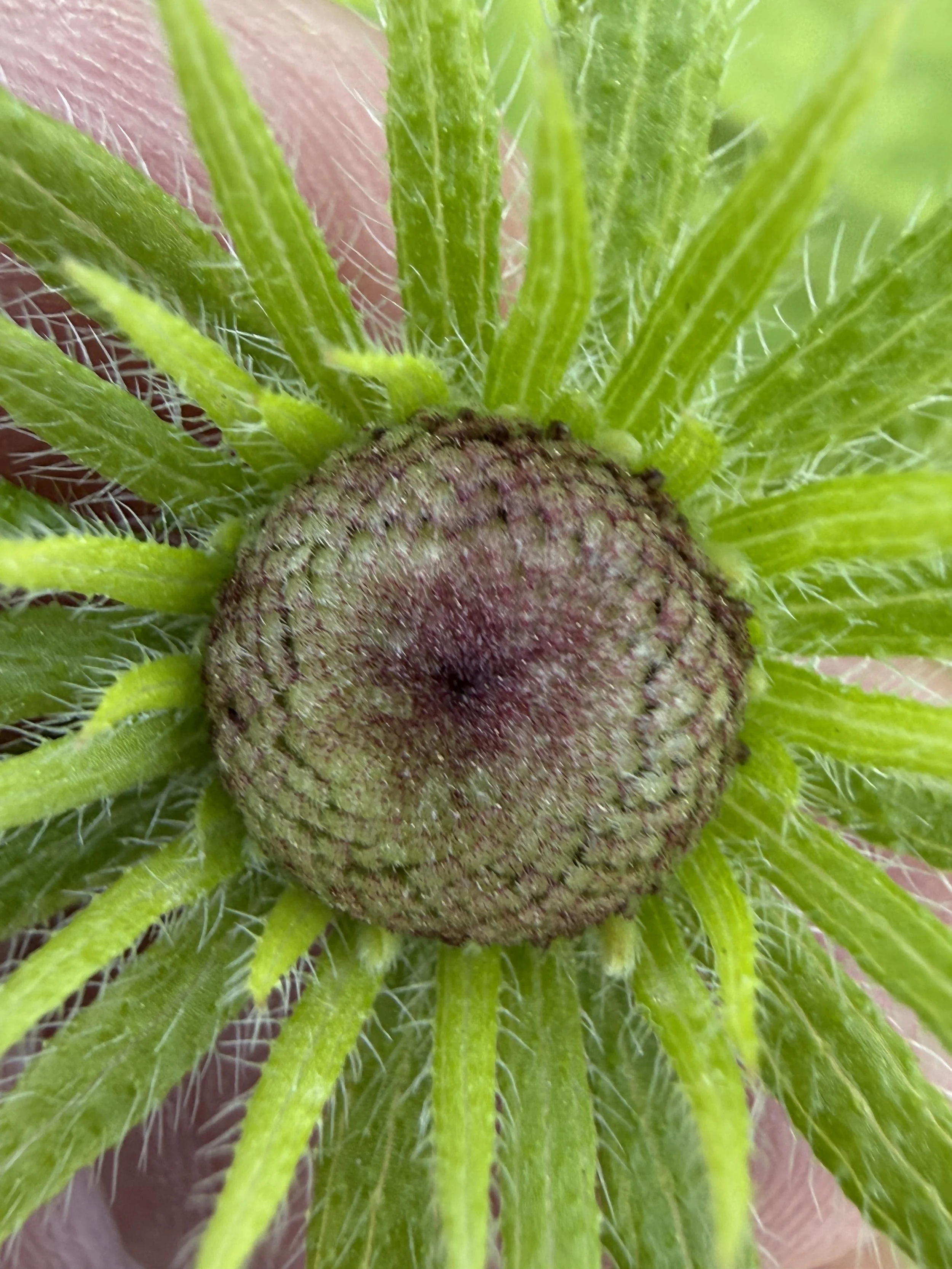
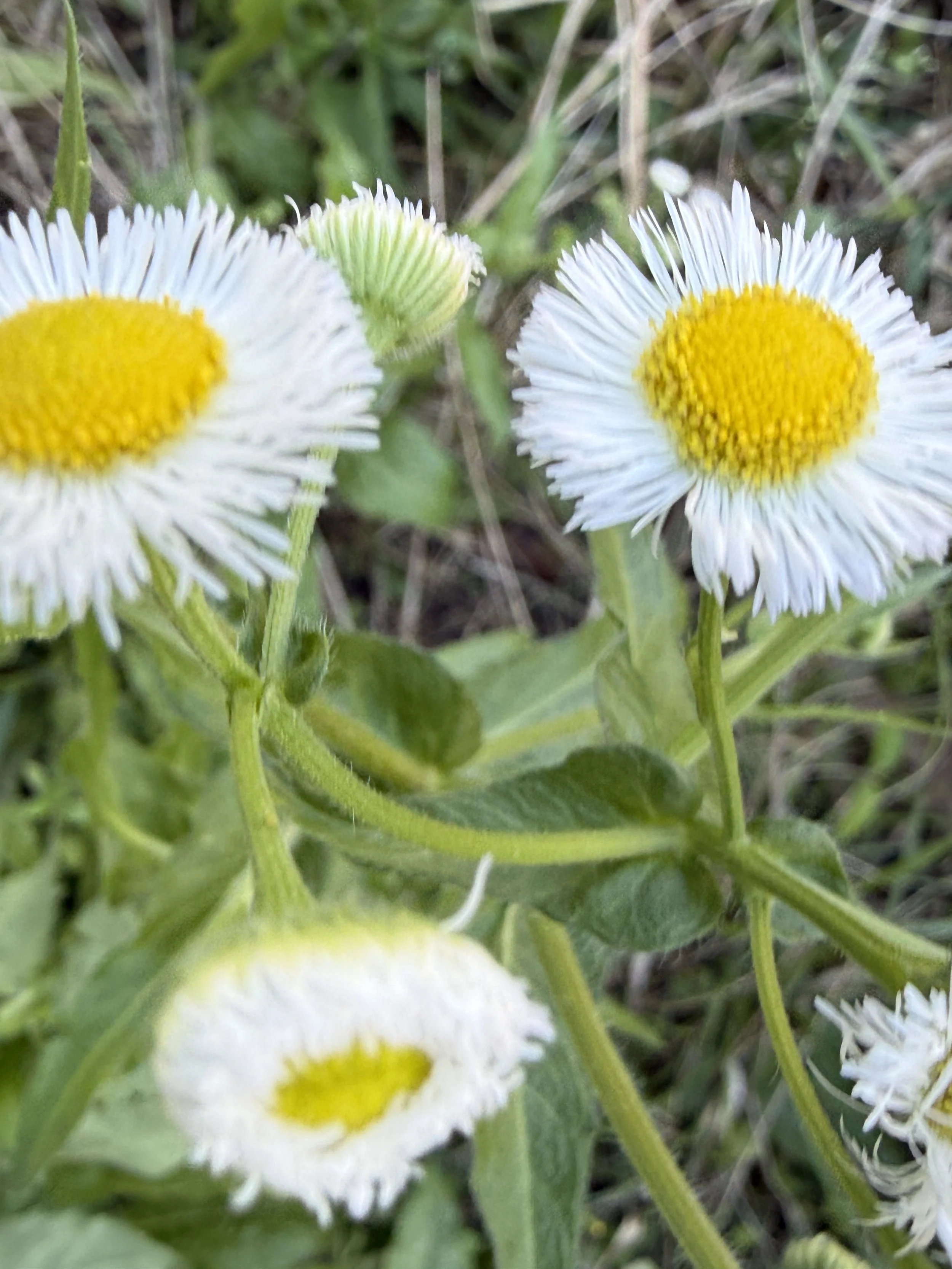
Take daisy fleabane. Erigeron annuus. Dainty and a little scraggly when alone but stunning in a bunch, shows up in places nobody planted anything intentionally. Easy to walk past. Easy to dismiss.

Here is what it’s actually doing.

It’s a pioneer species — which means it arrives first, on bare and broken ground, before almost anything else is willing to try. Disturbed soil, compacted soil, the forgotten strip between a parking lot and a fence. Fleabane doesn’t care. It moves in, stabilizes the surface, and starts feeding things. Bees, wasps, flies, small butterflies. The Lynx Flower Moth uses it as a host plant. Goldfinches pick through the seeds come fall like they’ve been waiting all season.

Nobody sent it an invitation. It just knew where it was needed.

That’s the plant in this photo. Doing exactly what I described. Showing up, figuring it out, getting on with it.

Easy to pull. I say — easy to love.

Rooted in the Shallows

PONTEDERIA CORDATA  ·  AN OBSESSION

I have fallen completely under the spell of pickerelweed.

Pontederia cordata — the name alone sounds like a spell. It rises from muddy shallows and still backwaters, its glossy, heart-shaped leaves catching light like polished jade, its violet-blue flower spikes reaching upward through summer and into fall with an unhurried, unshakeable confidence. It does not fight the current. It simply rises.

"This is what hope looks like in plant form — rooted in muck, growing toward light, feeding everything around it."

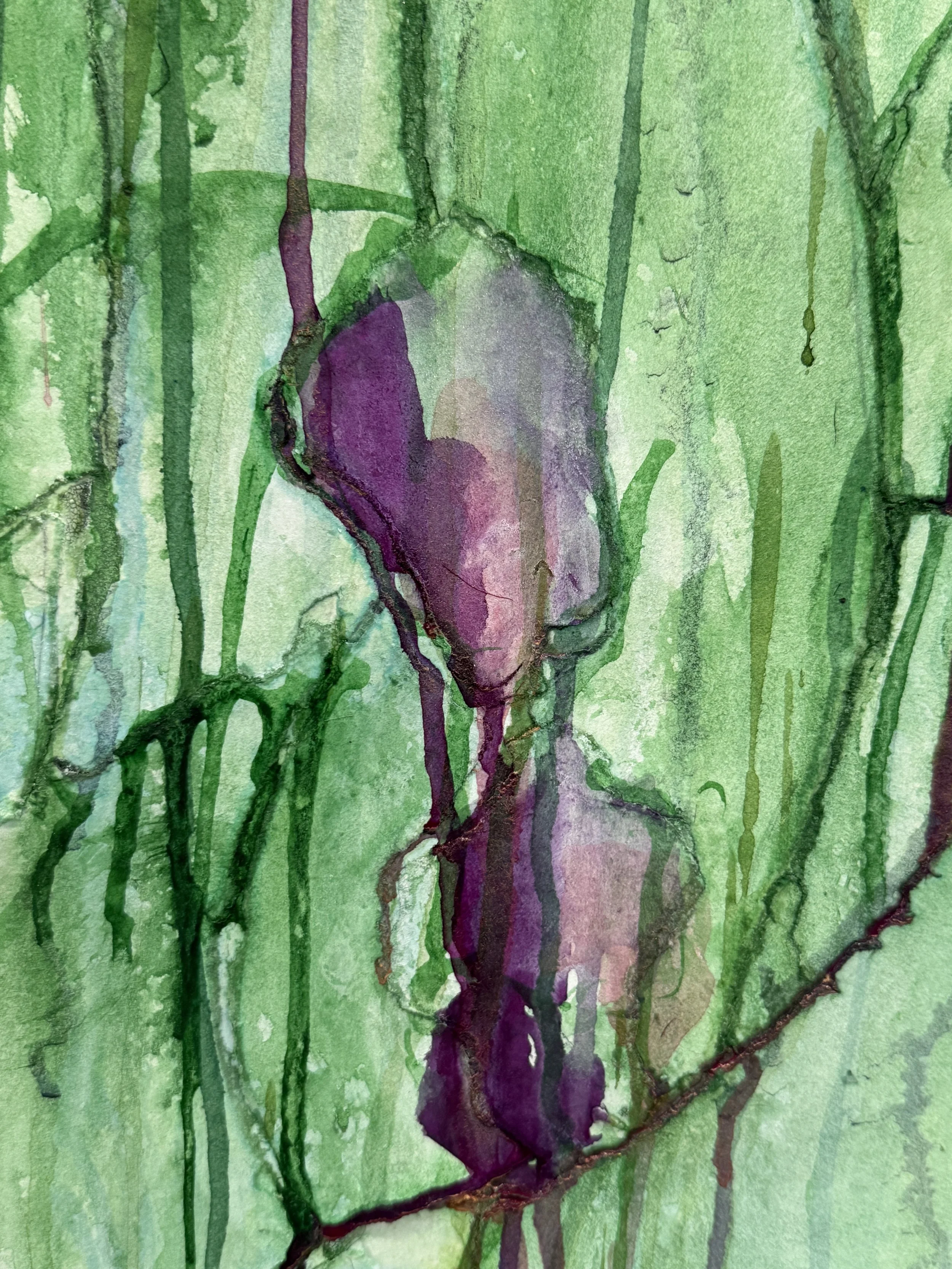
Working on Unfolding Hope, I kept returning to this plant: the way its rhizomes thread quietly through sediment, the way whole colonies emerge from a single unseen root network, the way it stabilizes shorelines without fanfare. In these details I found my visual language — drips like rhizomes reaching, pooling violet forms like flower heads heavy with rain, cracked gold lines tracing the veins beneath a leaf.

Pollinators adore it. Ducks eat its seeds. Its stalks are edible. It provides, constantly and abundantly, and then it spreads — slowly, inevitably — into something monumental. A colony becomes a landscape. A margin becomes a meadow.

These close-up images are fragments of the larger relief: moments where the violet breaks through the green, where something tender survives at the edge of the water. Each one is a small act of unfolding.

Passionate for Pre-K

This post will serve as a journal for the work.

“My four-year-old daughter saw her first butterfly and was terrified.”

— Lawndale Art Center patron, 2022

This remark, shared during my Symbiosis artist talk at the Lawndale Art Center, stopped me cold. Imagining a generation untouched by the gentleness and fragility of wings — this is a sorrow too heavy to bear and do nothing.

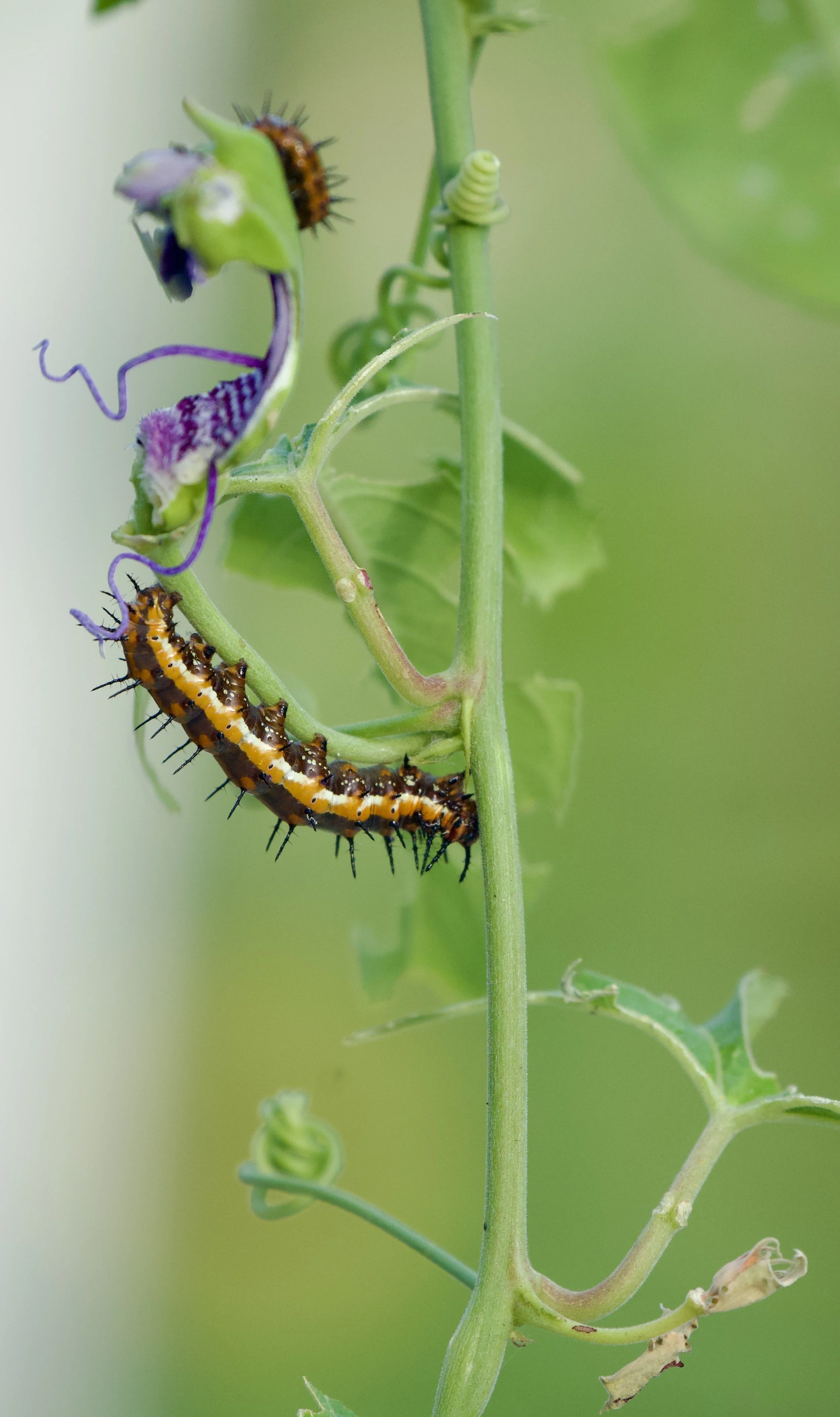
Wildlife plays a vital role in early childhood brain development. At the very least, let each school day begin with a procession past living poetry: vines sculpted in fragrant blossoms of lemon honey, trembling with the promise of caterpillars, alive with the fragile ballet of butterflies. Each child deserves to develop in the company of nature’s intelligence.

With small acts of passion, this is within reach.

DESCRIPTION

Passionate for Pre–K is a living social sculpture installed in the fall of 2025 on the chain-link fences surrounding the playground at Clemente Martinez Elementary School in Houston, Texas. I sourced approximately 90 Texas native vines from my three living sculptures: Symbiosis at the Lawndale Art Center, Deeper Than That at a private residence, and Sequel, located next to my art studio in Acres Homes. Passion vines are highlighted in the mix. Sourcing from multiple locations supports the DNA diversity of the ecosystem. Hope Stone and landscape architect Caroline Craddock coordinated this installation with the school administration.

THE PROCESS

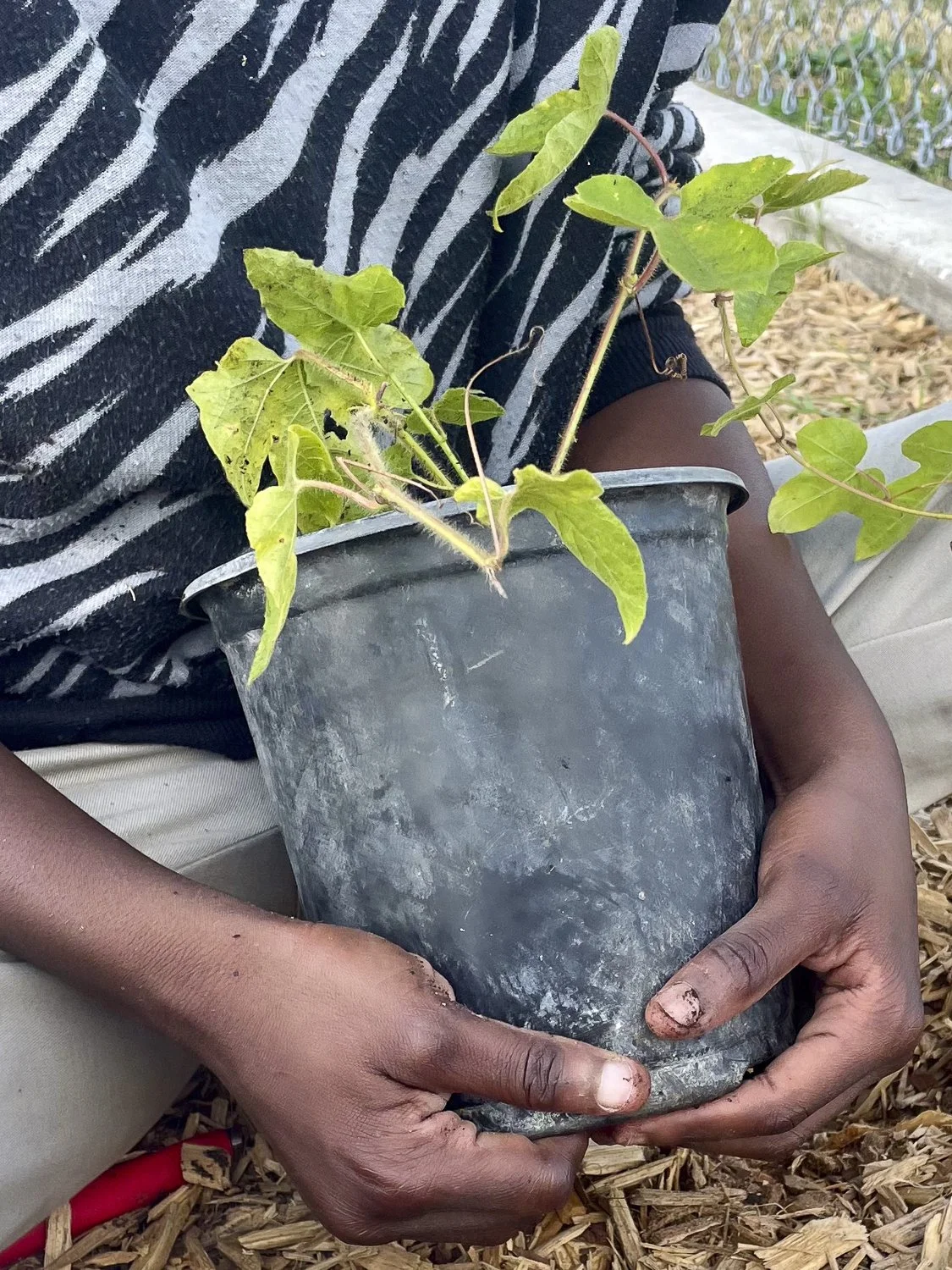
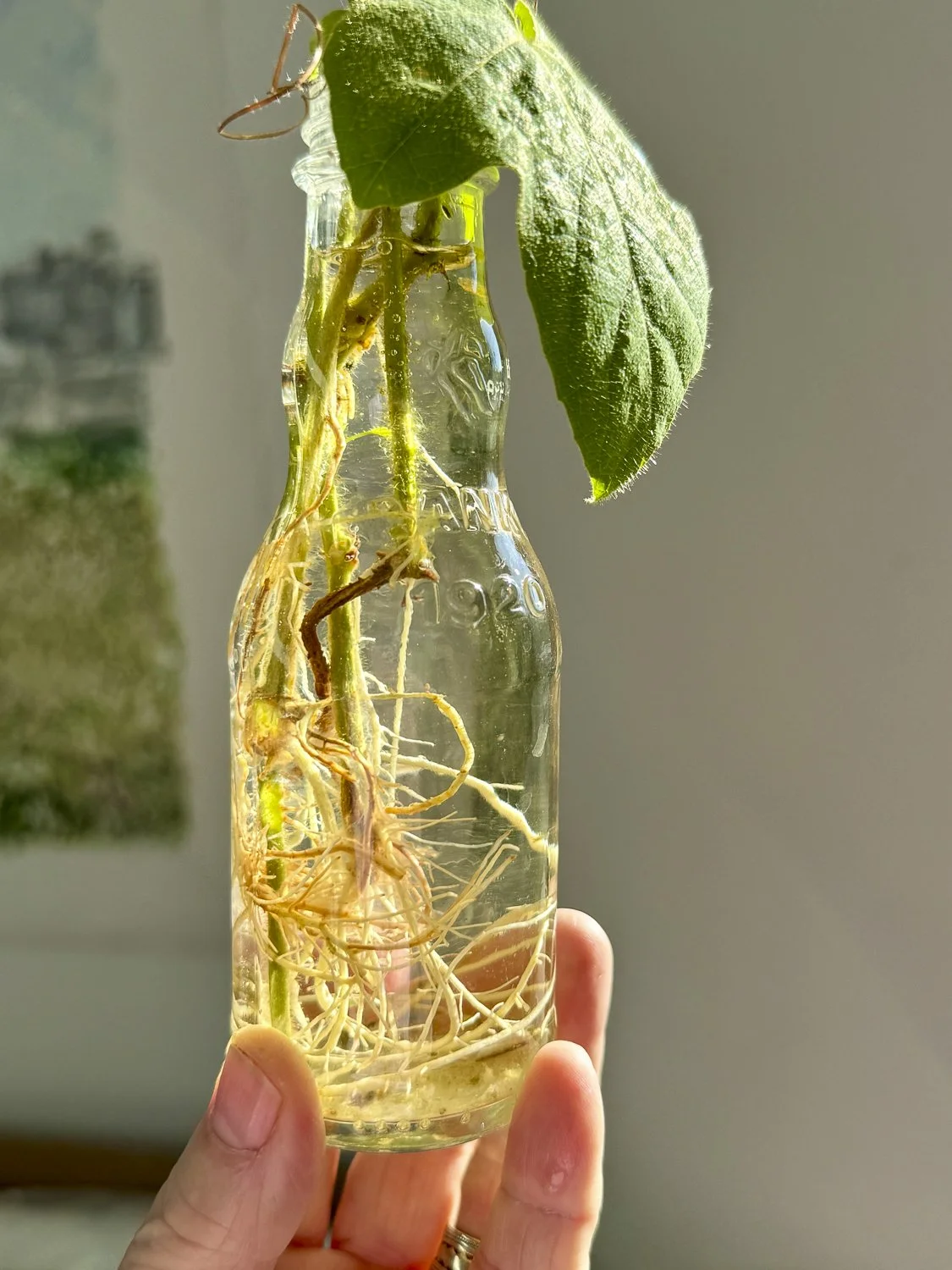
Taking tender 10-inch vine cuttings, using root stimulator and native leaf mold to propagate the plants. I selected 90 plants of different species to support a variety of wildlife and accommodate different growing seasons. The school community assisted with the planting in early October.

LONG-TERM GOAL

As ecological knowledge from Symbiosis has taken root in Deeper Than That, which has grown into Sequel, the hope is that Passionate for Pre–K will act as a catalyst. Annually, new tendrils — carefully propagated — will be gifted from Clemente Martinez Elementary School to neighboring schools, allowing the spirit of regeneration to spread from playground to playground, blossoming into a living legacy of wonder and natural intelligence.

PLANT LIST

May pop, Passiflora incarnata

Stinking passion vine, Passiflora foetida

Various proven passion vine hybrids

Trumpet honeysuckle, Lonicera sempervirens

Hairy clustervine, Jacquemontia tamnifolia

Muscadine grape, Vitis rotundifolia

American wisteria, Wisteria frutescens

Crossvine, Bignonia capreolata

Carolina jessamine, Gelsemium sempervirens

COLLABORATION

Passionate for Pre–K is a collaboration with Hope Stone, Caroline Craddock, and the Clemente Martinez Elementary School community. This would not exist without them, or without the incredible volunteers who gave their time and hands to this work.

NOVEMBER 2025 UPDATE — SETBACK & RESILIENCE

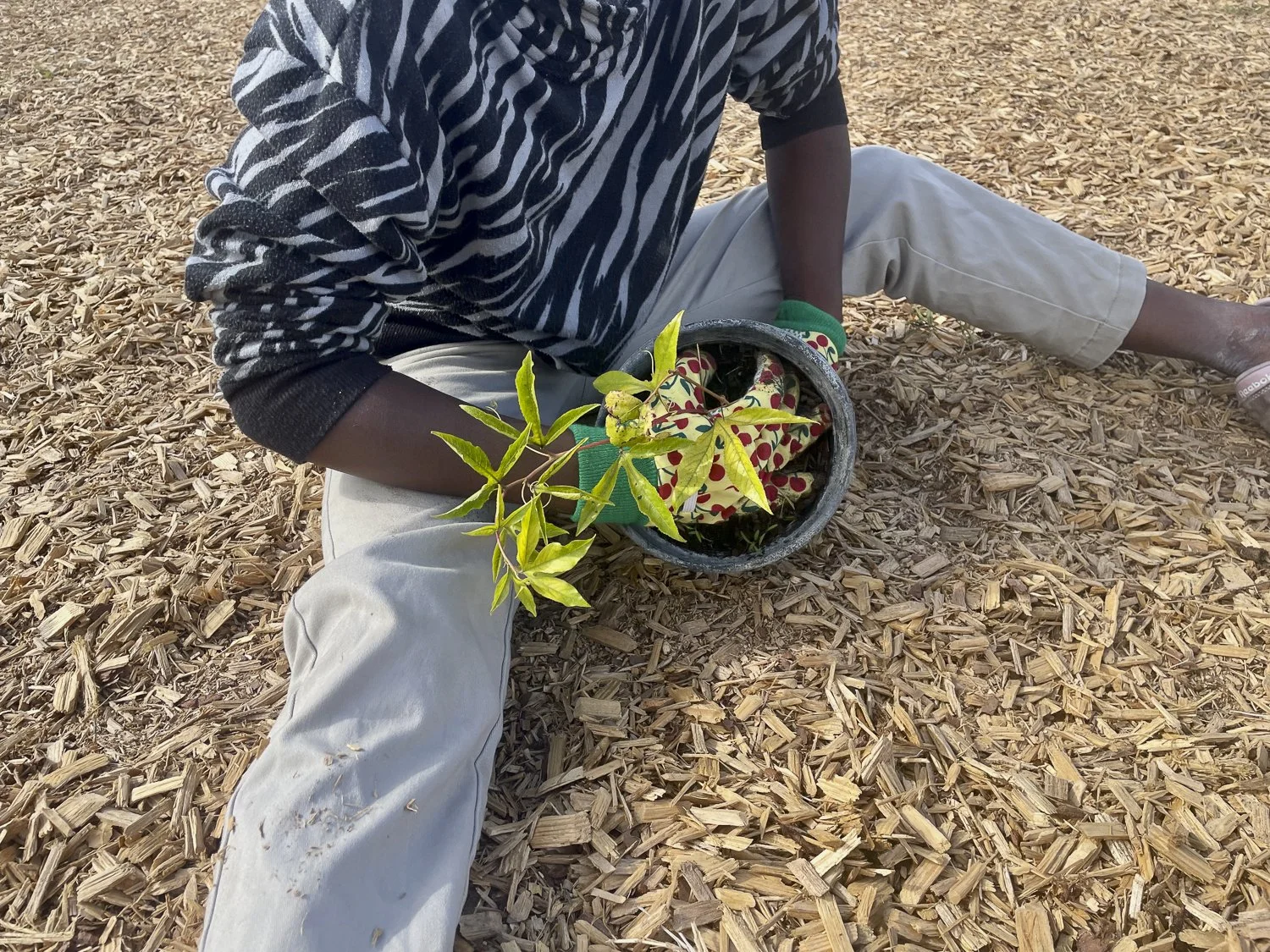
During phase two, a fifth-grade class carefully planted the remaining plants for the installation. The following week, the eager students returned to check on their plantings — and found devastation. A child left unattended in the play area had pulled up plant after plant, leaving only 7 of the original 90 still alive.

This is heartbreaking and frustrating — but it highlights exactly how important this project is. The lessons a garden teaches about social responsibility, care, and wonder are fundamental. I will not let one act derail it. Every child has the right to be inspired by nature.

I am propagating new cuttings. We plant again in the spring.

Special thanks to Caroline Craddock for capturing these moments in photographs.

—special thanks to Caroline Craddick for capturing these moments in photos.

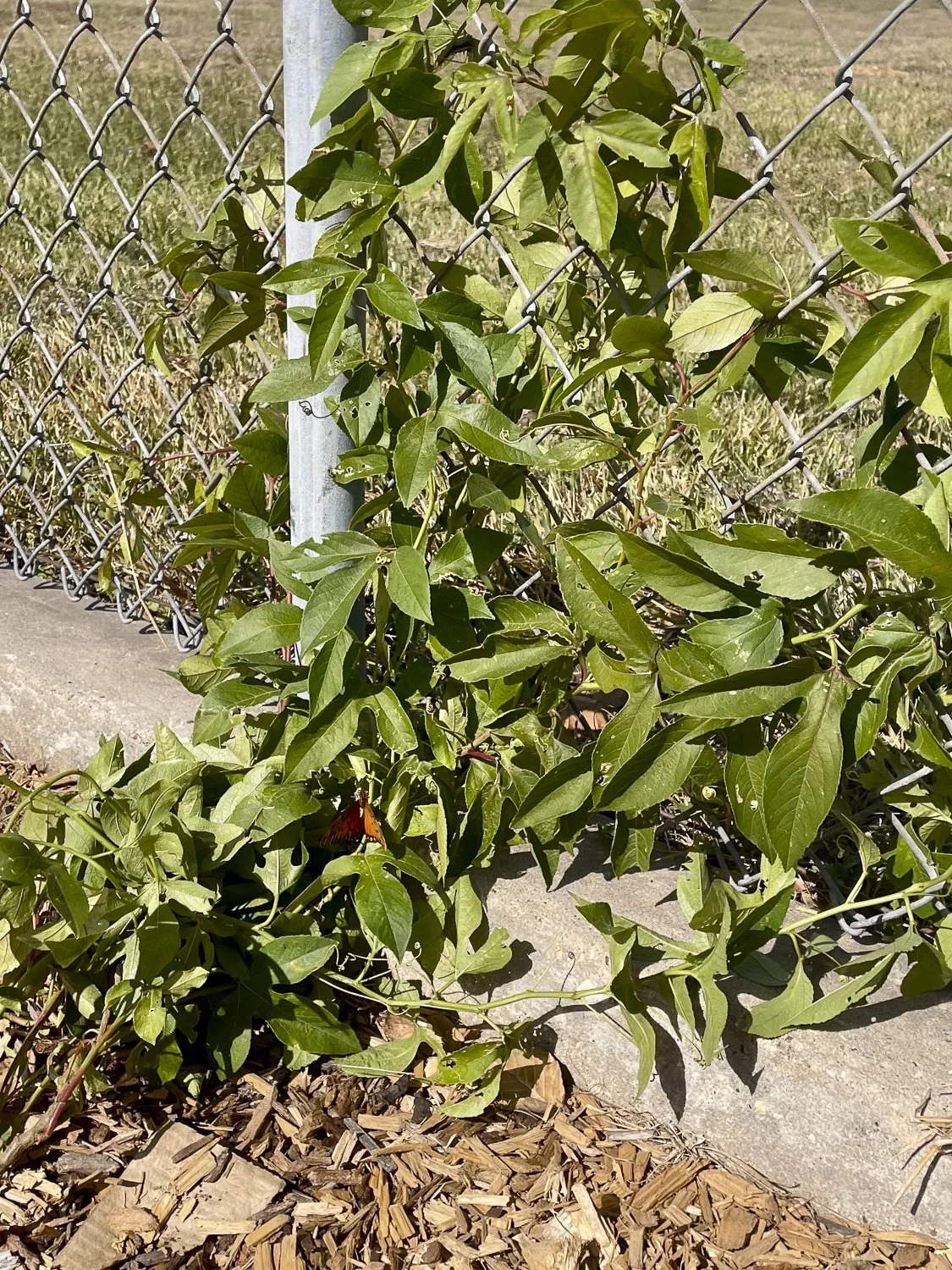
One of the plants from the previous planting that was part of the vandalism. Notice the gulf Fritillary butterfly hiding in the shadow.

propagating a passion vine in water.

The Stinky Passion flower’s scientific name is Passiflora foetida. It is also known as Fetid Passion Flower, Love-in-a-mist, Wild Maracuja, and running pop.

It has sticky, feathery, leafy bracts that surround the flower and fruit. When an insect tries to eat the fruit, it gets caught in the sticky bracts and dies. The plant then secretes a digestive enzyme and absorbs the nutrients.