One Year Old, Two Feet Tall and Already Working.
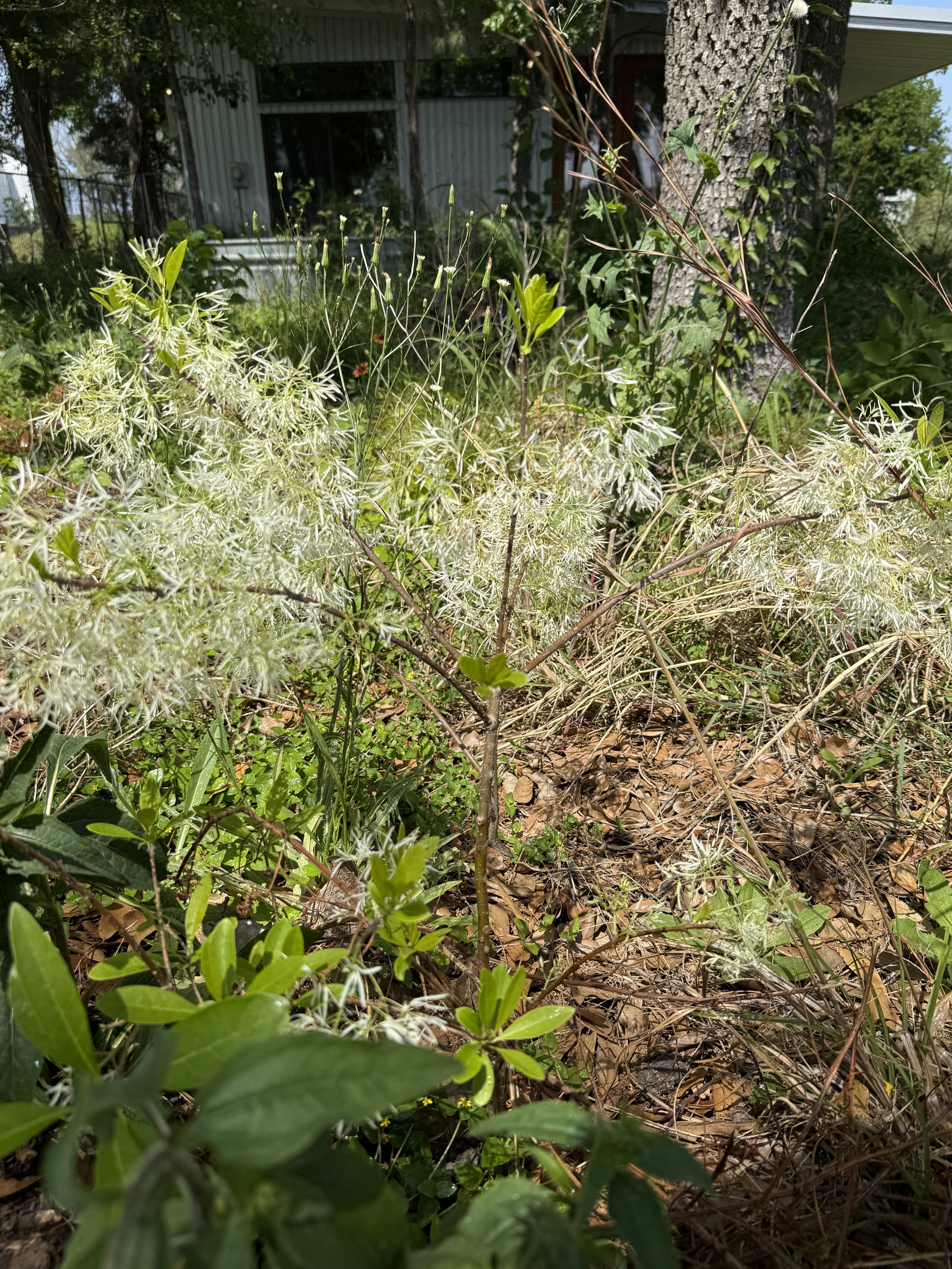
Last year I planted two American Fringe Trees — Grancy Greybeard — one on each side of the stone walking path that takes you into Sequel. They are a year old. Two feet tall. They are babies. And they are already teaching me something.
The Eastern tree is thriving. It gets full sun.
The eastern tree is thriving. It gets full sun. The western tree is the smallest — shaded by other small plants that block its access to full sun. It should eventually outgrow them.

The western tree is the smallest and is shaded by other small plants that block its access to full sun. It should eventually outgrow them.

I chose them deliberately, the way I choose every element in my living sculptures. In Symbiosis at Lawndale, every plant was a decision about relationship — who would it feed, what would it host, how would it move nutrients and carbon through the system. Sequel is the same conversation, carried forward. The fringe trees at its threshold are not decorative. They are a proposition.

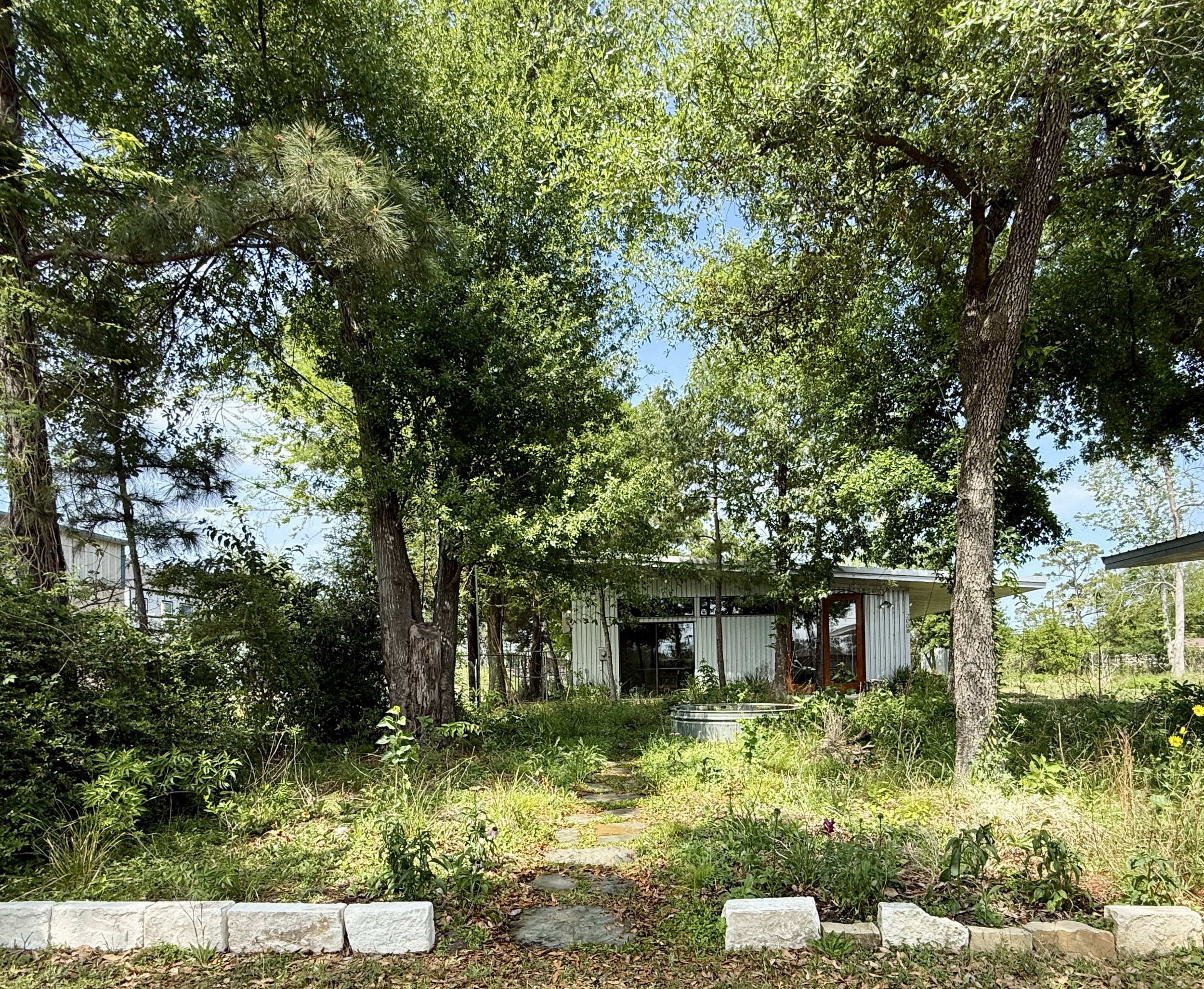
The walkway features the two one-year-old trees, barely visible, standing 10 feet away from the center.

Chionanthus virginicus grows naturally at the edges — along woody draws and stream banks, in the transitional zones where forest gives way to coastal prairie. That is exactly where I placed them: flanking the stone path, at the threshold. You pass between them to enter the work. The living sculpture begins before you know it has begun.

The fringe tree does its most important work in the margins — the places most overlooked, most degraded, most in need of rebuilding. That is where Sequel lives too.

Come April through June the white fringed blooms open — long, thread-like petals cascading like an old man’s beard in a coastal breeze. For native bees and butterflies this is a critical nectar window early in the season when little else is offering. The fringe tree is a larval host for three sphinx moth species. A host plant is not ornamental. It is food infrastructure. Female trees produce dark blue olive-like fruits in late summer — high-fat fuel for migrating songbirds. Their dense multi-stemmed structure creates cover and nesting opportunities for birds. And their roots hold the clay soil at Sequel’s entrance, moving water downward — the same function I have been studying since I first understood how roots cool this planet and absorb what Houston cannot stop flooding with.

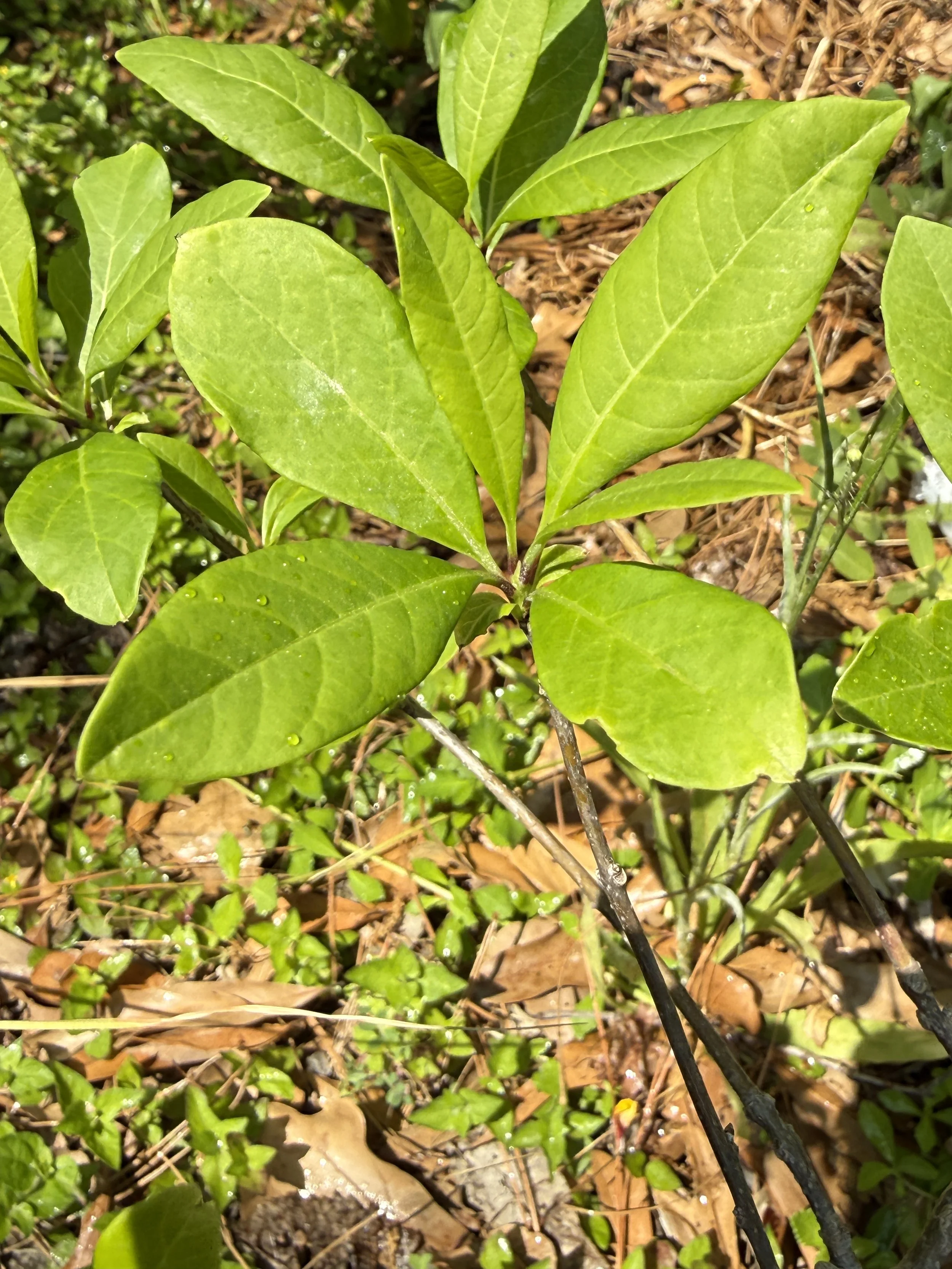
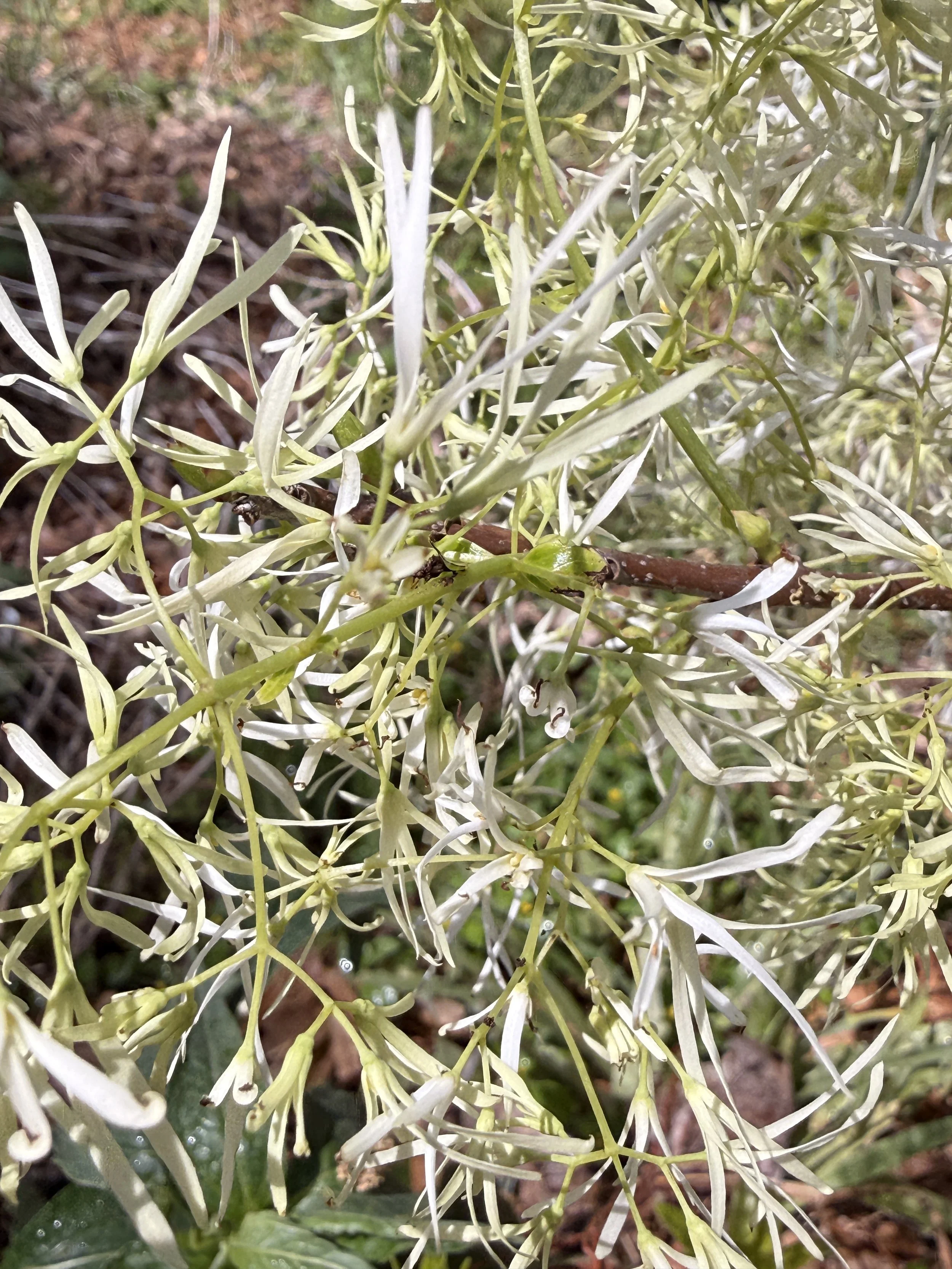
A close-up of the trees soft, airy beard.

A threshold is a sculpture.

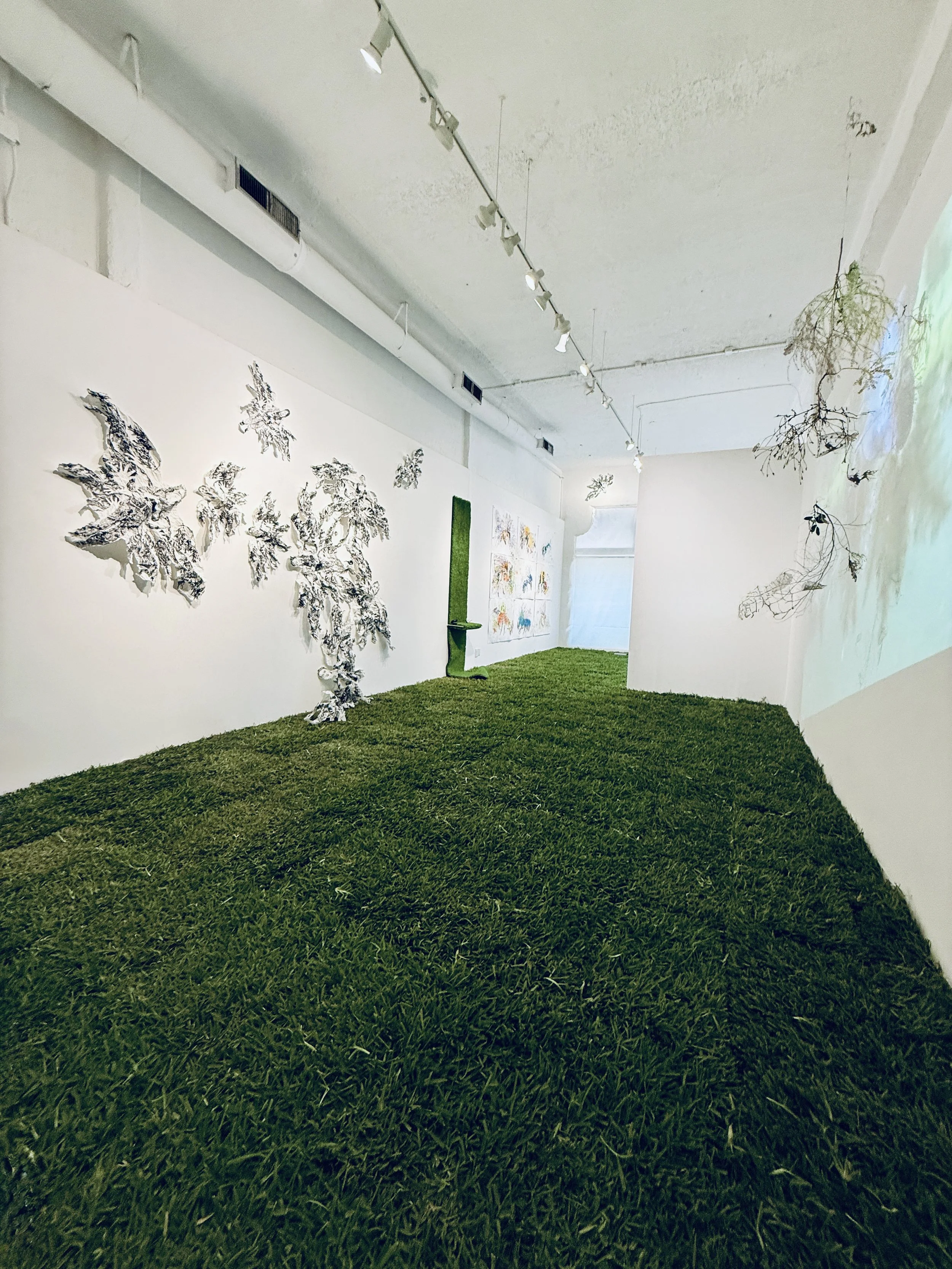
When I carved Carbon by the Yard into Lawndale’s turf, the gesture was simple: carve a shape, let the grass grow around it. The relief emerged from contrast. What was taken away revealed what was possible.

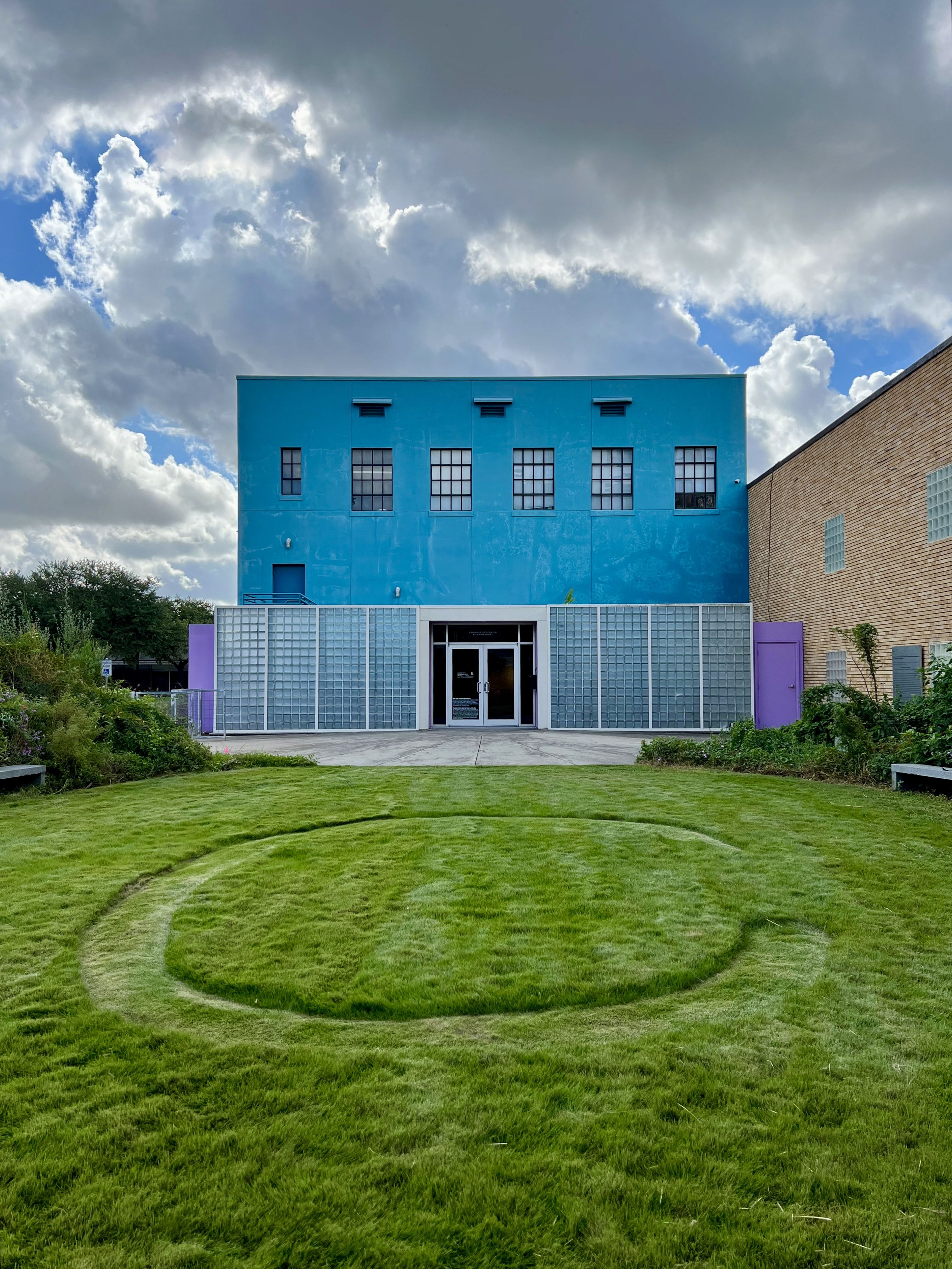
Carbon By The Yard - Lawndale 2021

The two fringe trees at Sequel’s entrance work the same way. They mark the passage from the manicured urban world outside into the living, breathing, intentionally ecological world within. They are the frame. They are also the argument — that two feet of native species, one year old, already threading itself into the insect food web, is doing more ecological work than turf and non-natives could do in a decade.

They are a year old. In twenty years they will be twenty feet tall — cascading white each April, fruiting each September, hosting moths, sheltering songbirds, holding the ground. Sequel will have grown up around them.

That is the whole conversation.

The Tyranny of Tidy

In Defense of the Uninvited — Part II

There is a particular kind of anxiety that lives at the edge of an unmowed lawn. You can feel it from the sidewalk — the low-grade disapproval radiating off a neighbor’s glance, the HOA letter with its careful language about community standards and property values. We all know this pressure. Many of us have bent to it.

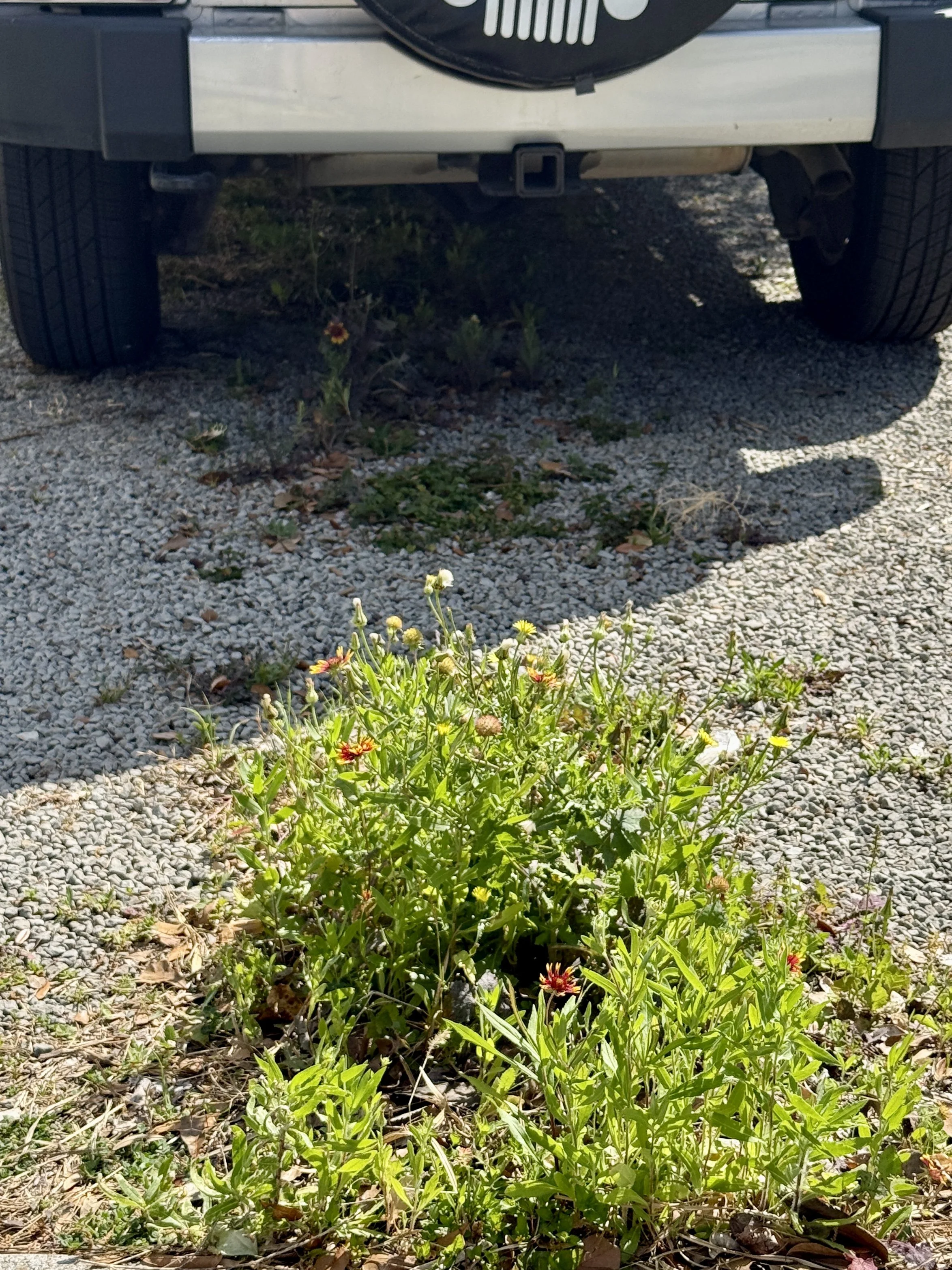
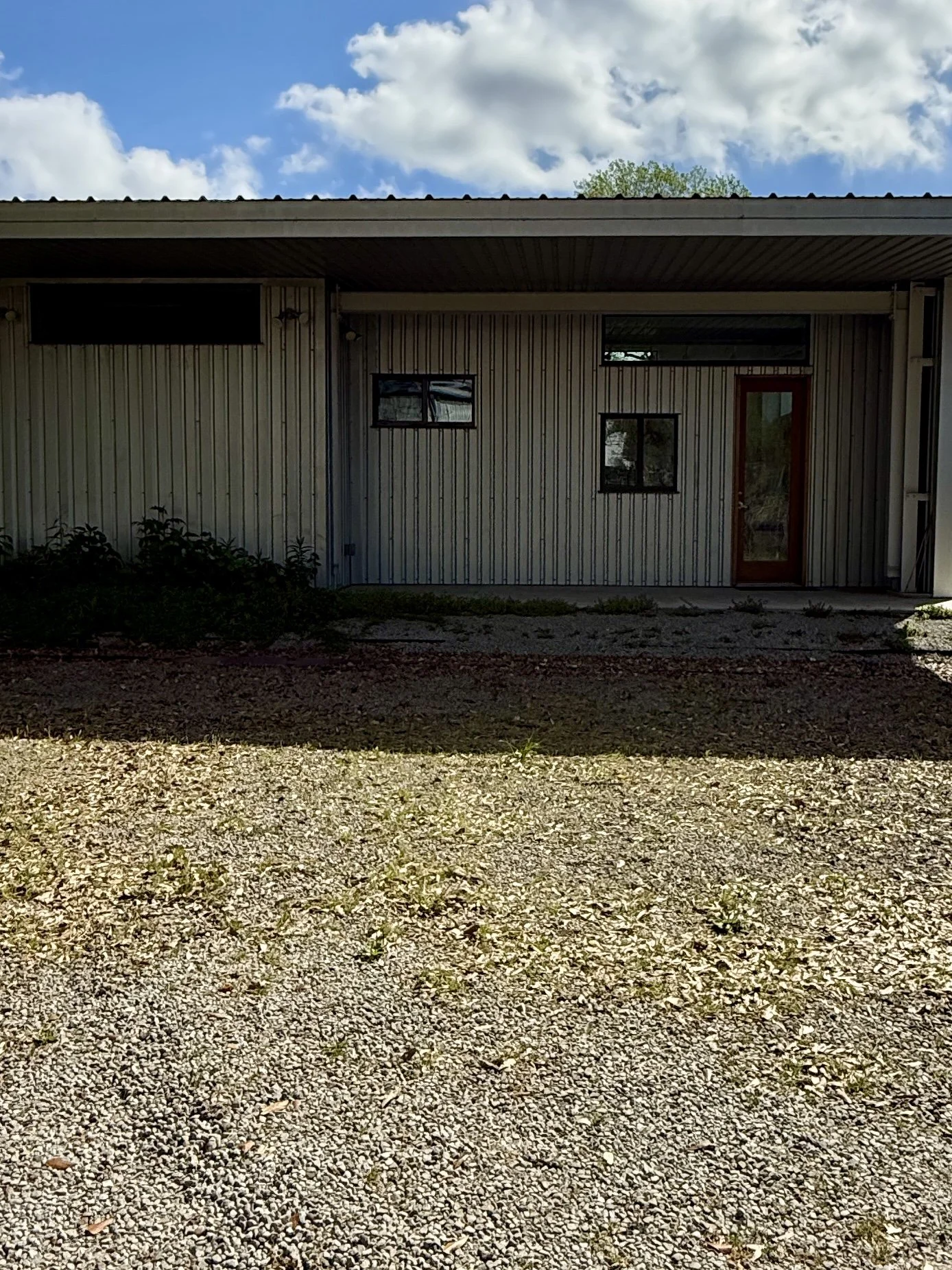
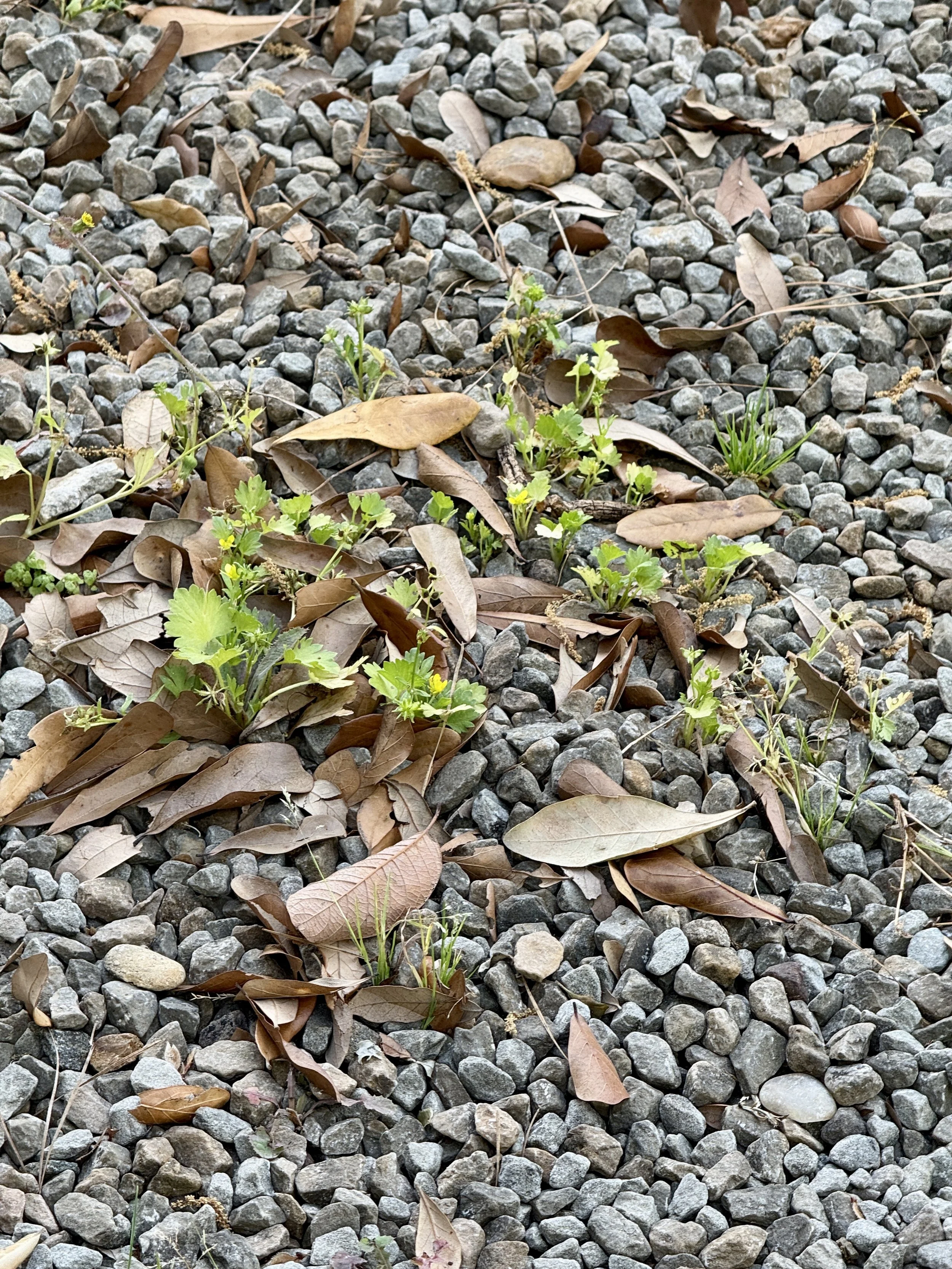
I feel it too. At my own eco-art studio, volunteer plants have started pushing up through the gravel parking lot this spring. In modern aesthetic terms, it looks unkempt. Do I groom it because that is what looks cared for to the human eye — or do I do what I preach? If I did clean it up, how? I won’t use pesticides. Pulling is more work than I can manage. I could burn them with a torch, which releases carbon — leaving the lot neat but barren. I know that option well. It’s what I did all last summer. I feel the pull of it still.

That question — how much tidiness do we owe society before we’re allowed to let something live — is exactly what this essay is about.

The ancient part of your brain that kept your ancestors alive is genuinely afraid of the tall grass. It is scanning for the snake, the bobcat, the thing with teeth. That instinct is old. It is wired in. The impulse to clear, to see, to know what’s out there — it kept people alive across tens of thousands of years. We are not wrong to have it.

But we are living in a different world now, and that old circuitry is misfiring.

Here is what the science shows: living plant systems — their moisture, their transpiration, their cooling and breathing — help move weather across the landscape. Strip those systems out and replace them with hot pavement and monoculture lawn, and you remove the very mechanisms that keep weather moving. Extreme weather increasingly gets stuck. Heat domes park over cities for days, fed not just by hot pavement but by the barren heat radiating off bare ground and fallow fields. The fires. The floods. The Guadalupe on the Fourth of July. Hurricane Harvey. We call these natural disasters — as if nature did this to us, unprovoked.

The danger is no longer the rattlesnake in the grass. The danger is the bare ground.

I know this in my body now — not just my brain. Standing in my parking lot, looking at the volunteers pushing through the gravel, I no longer see a mess. I see first responders. The plants that show up uninvited are the ones that know what the ground needs — to be covered, held, cooled, fed. They are doing the work we stopped doing when we picked up the leaf blower and the herbicide.

What would it take to shift not just individual behavior but the aesthetic itself — to make living, layered, uninvited-welcoming landscapes look like what they actually are: acts of intelligence? Acts of care?

The weeds already know what to do. The seeds are in the soil, waiting. Life is not asking permission. It is ready to come back the moment we stop yanking it out.

The question isn’t whether the land can recover. The question is whether we can — from the idea that control is the same thing as care. That bare is the same thing as clean.

The greatest threat we face isn’t what’s hiding in the weeds. It’s that we cut them all down.

Passionate for Pre-K

This post will serve as a journal for the work.

“My four-year-old daughter saw her first butterfly and was terrified.”

— Lawndale Art Center patron, 2022

This remark, shared during my Symbiosis artist talk at the Lawndale Art Center, stopped me cold. Imagining a generation untouched by the gentleness and fragility of wings — this is a sorrow too heavy to bear and do nothing.

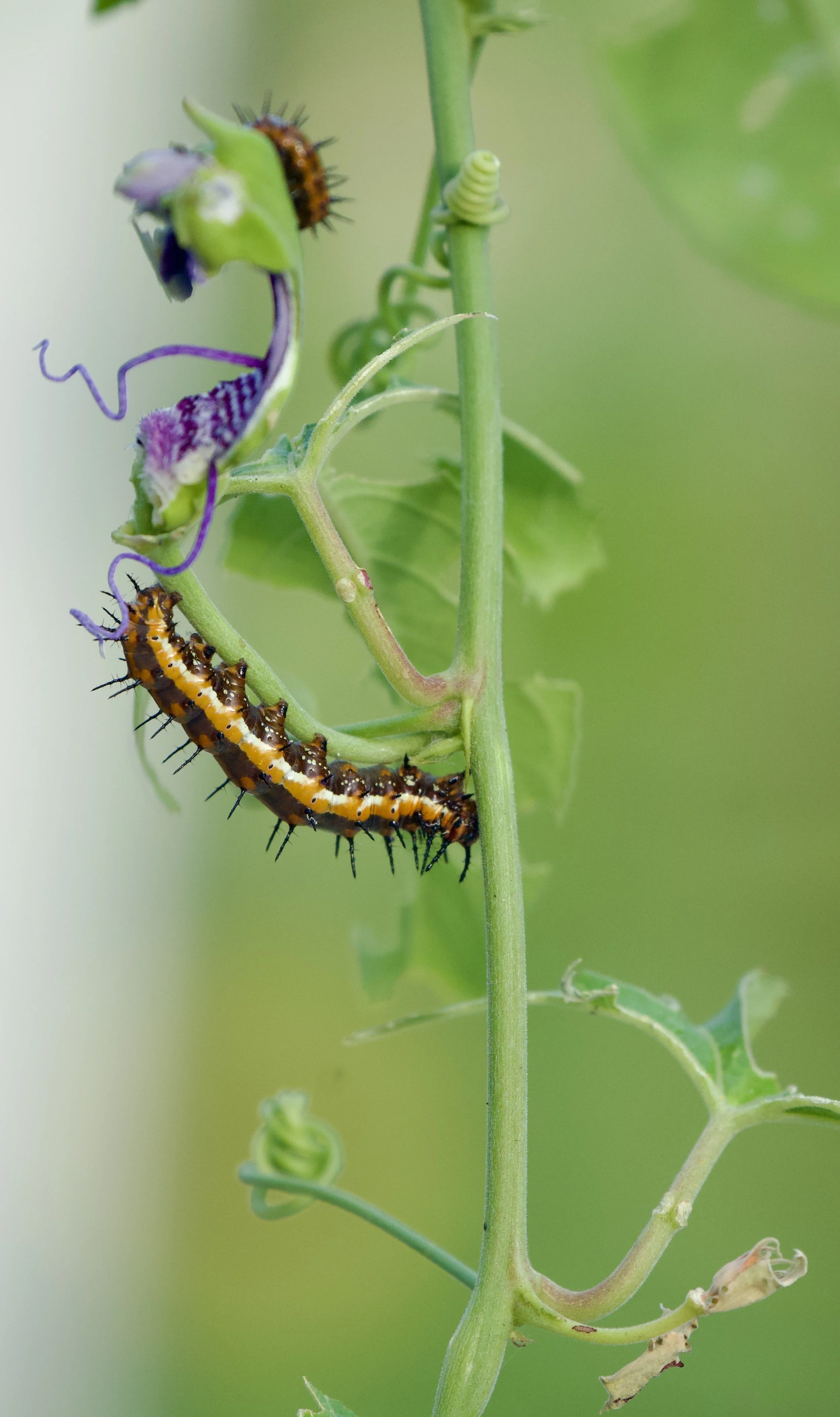
Wildlife plays a vital role in early childhood brain development. At the very least, let each school day begin with a procession past living poetry: vines sculpted in fragrant blossoms of lemon honey, trembling with the promise of caterpillars, alive with the fragile ballet of butterflies. Each child deserves to develop in the company of nature’s intelligence.

With small acts of passion, this is within reach.

DESCRIPTION

Passionate for Pre–K is a living social sculpture installed in the fall of 2025 on the chain-link fences surrounding the playground at Clemente Martinez Elementary School in Houston, Texas. I sourced approximately 90 Texas native vines from my three living sculptures: Symbiosis at the Lawndale Art Center, Deeper Than That at a private residence, and Sequel, located next to my art studio in Acres Homes. Passion vines are highlighted in the mix. Sourcing from multiple locations supports the DNA diversity of the ecosystem. Hope Stone and landscape architect Caroline Craddock coordinated this installation with the school administration.

THE PROCESS

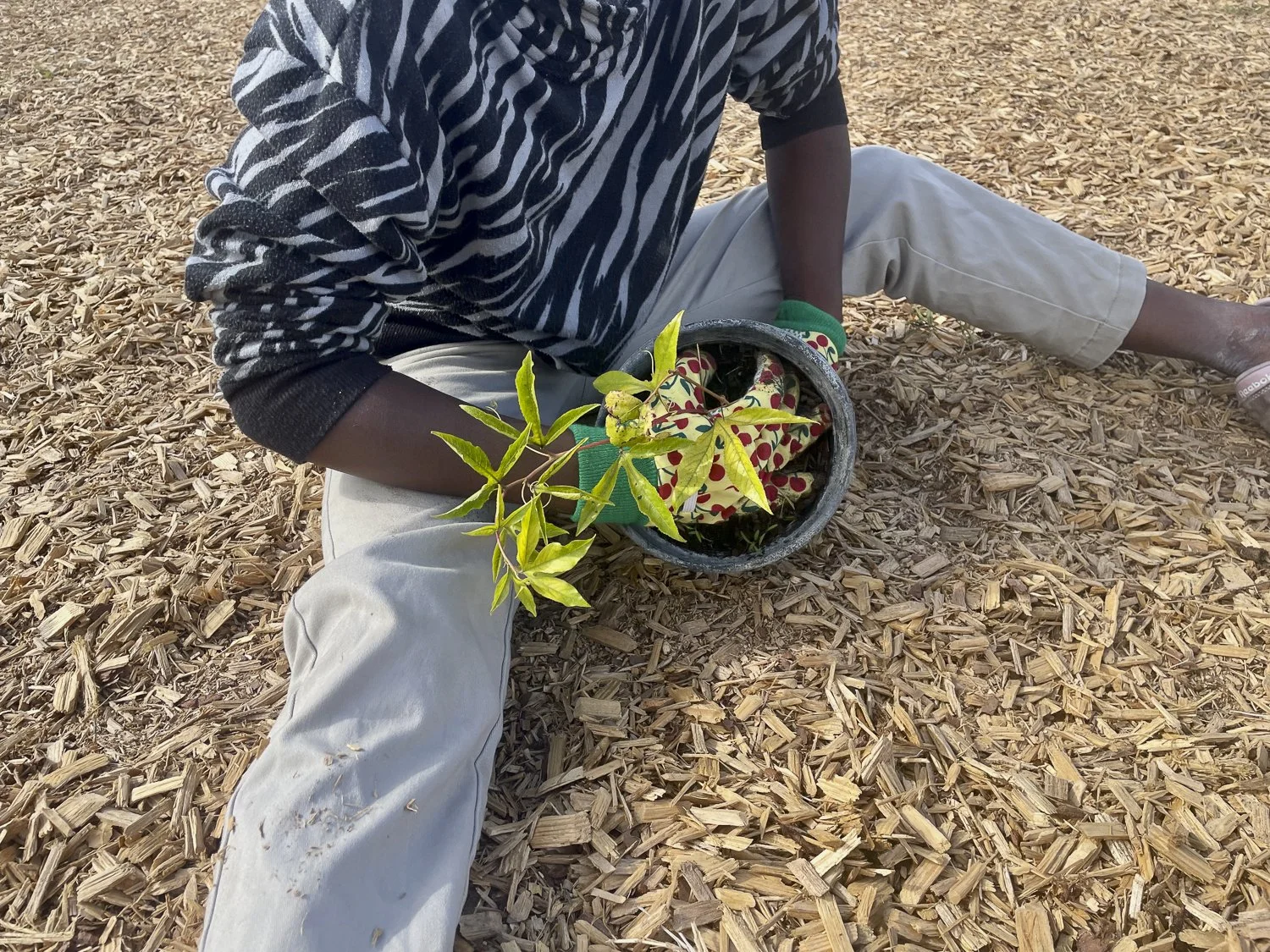
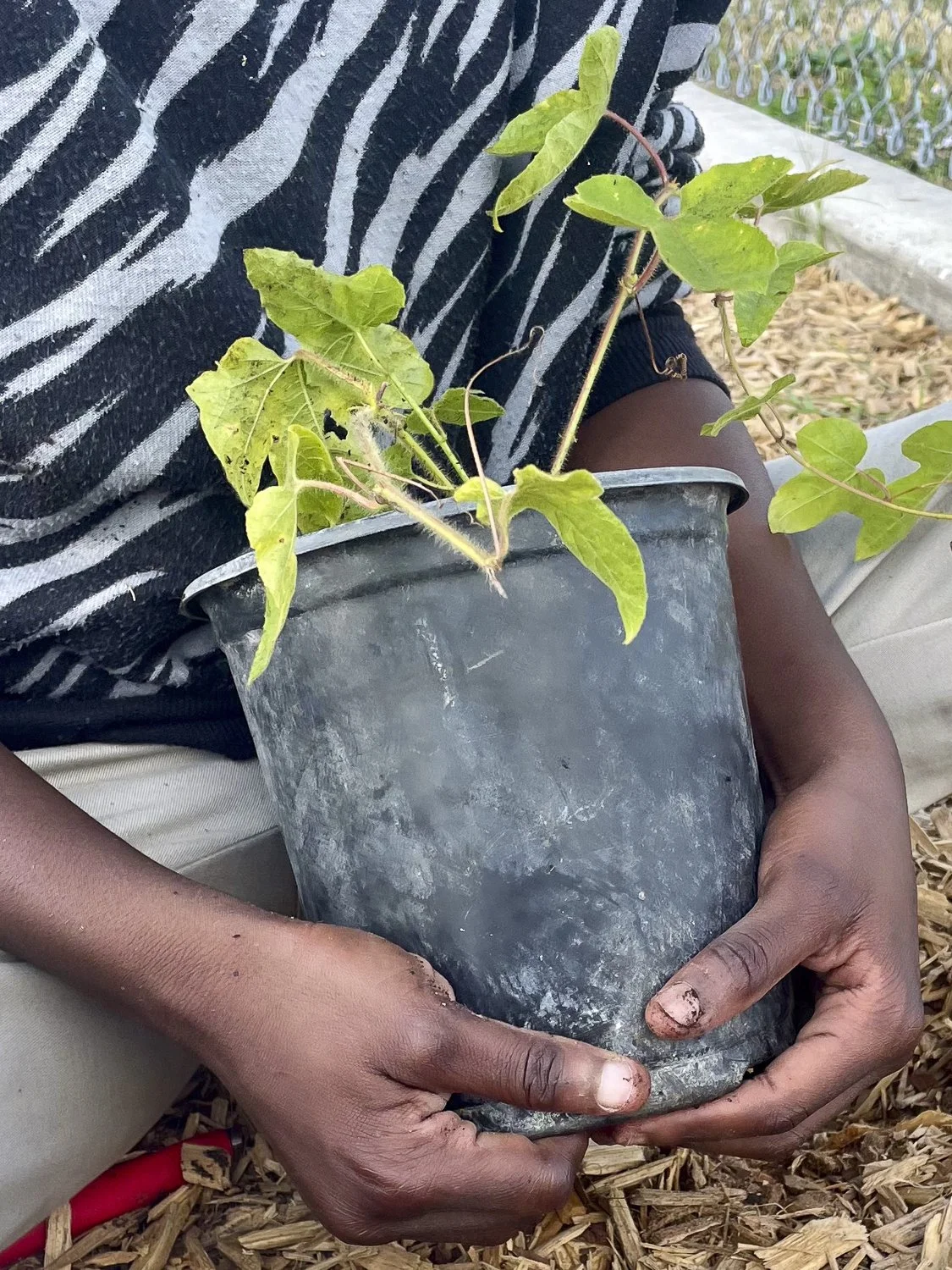
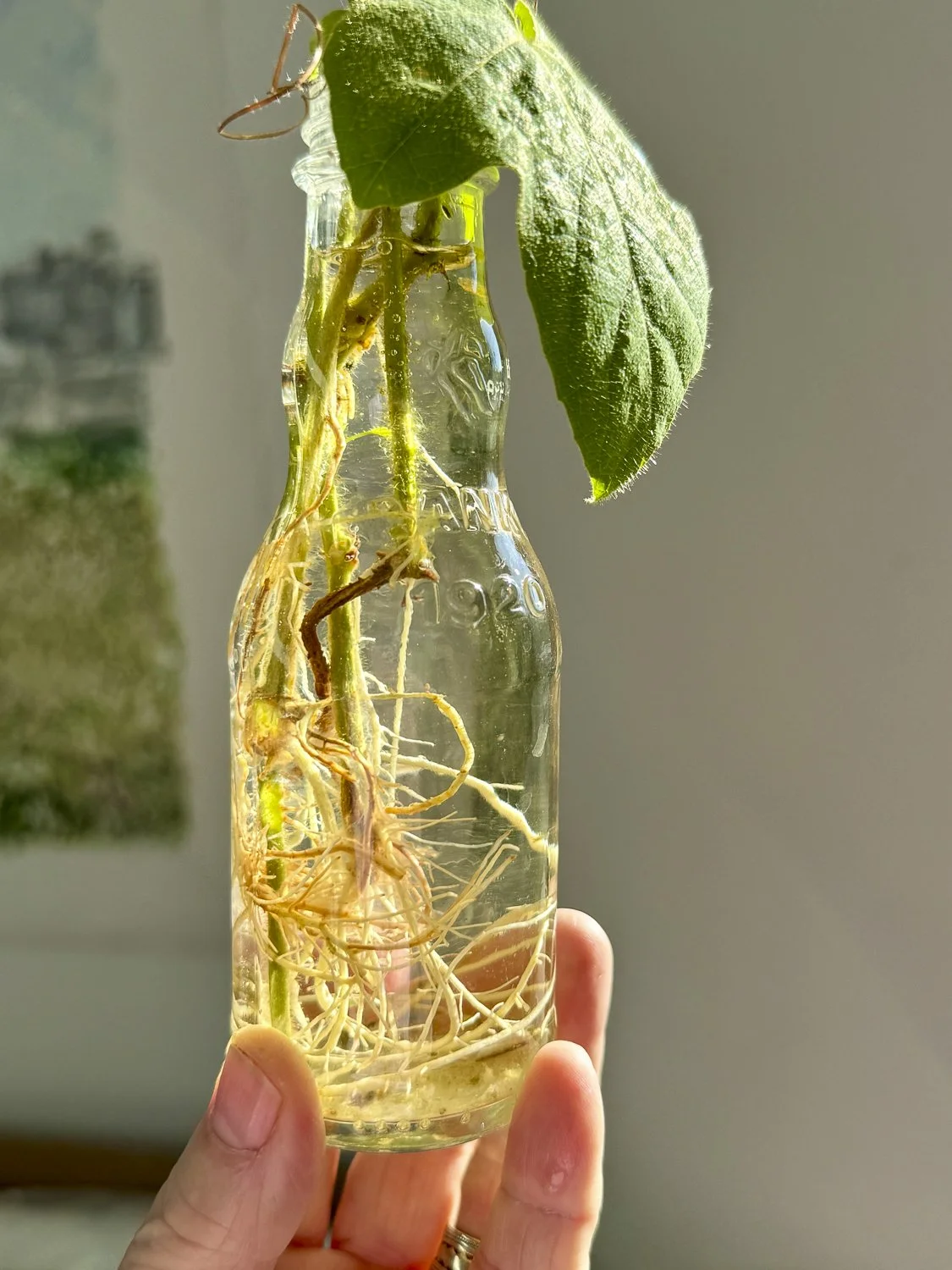
Taking tender 10-inch vine cuttings, using root stimulator and native leaf mold to propagate the plants. I selected 90 plants of different species to support a variety of wildlife and accommodate different growing seasons. The school community assisted with the planting in early October.

LONG-TERM GOAL

As ecological knowledge from Symbiosis has taken root in Deeper Than That, which has grown into Sequel, the hope is that Passionate for Pre–K will act as a catalyst. Annually, new tendrils — carefully propagated — will be gifted from Clemente Martinez Elementary School to neighboring schools, allowing the spirit of regeneration to spread from playground to playground, blossoming into a living legacy of wonder and natural intelligence.

PLANT LIST

May pop, Passiflora incarnata

Stinking passion vine, Passiflora foetida

Various proven passion vine hybrids

Trumpet honeysuckle, Lonicera sempervirens

Hairy clustervine, Jacquemontia tamnifolia

Muscadine grape, Vitis rotundifolia

American wisteria, Wisteria frutescens

Crossvine, Bignonia capreolata

Carolina jessamine, Gelsemium sempervirens

COLLABORATION

Passionate for Pre–K is a collaboration with Hope Stone, Caroline Craddock, and the Clemente Martinez Elementary School community. This would not exist without them, or without the incredible volunteers who gave their time and hands to this work.

NOVEMBER 2025 UPDATE — SETBACK & RESILIENCE

During phase two, a fifth-grade class carefully planted the remaining plants for the installation. The following week, the eager students returned to check on their plantings — and found devastation. A child left unattended in the play area had pulled up plant after plant, leaving only 7 of the original 90 still alive.

This is heartbreaking and frustrating — but it highlights exactly how important this project is. The lessons a garden teaches about social responsibility, care, and wonder are fundamental. I will not let one act derail it. Every child has the right to be inspired by nature.

I am propagating new cuttings. We plant again in the spring.

Special thanks to Caroline Craddock for capturing these moments in photographs.

—special thanks to Caroline Craddick for capturing these moments in photos.

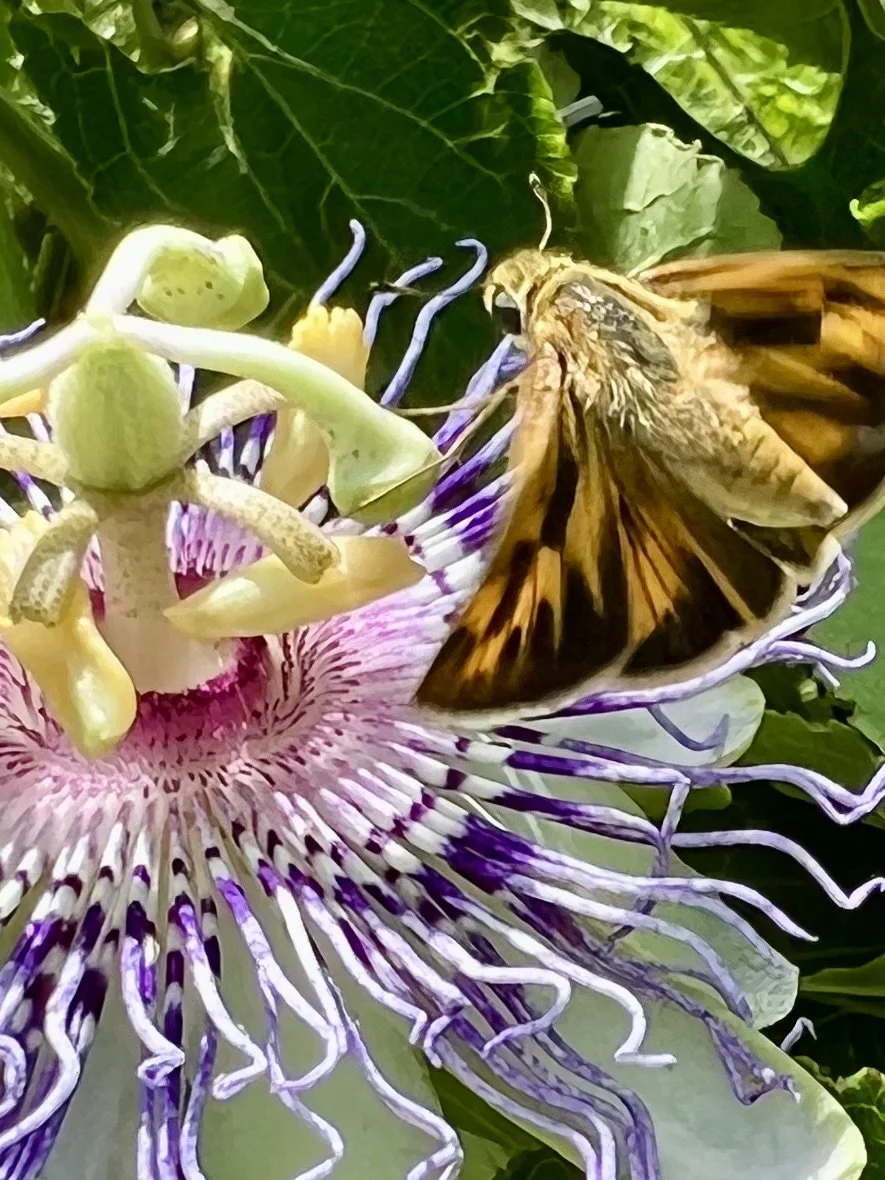
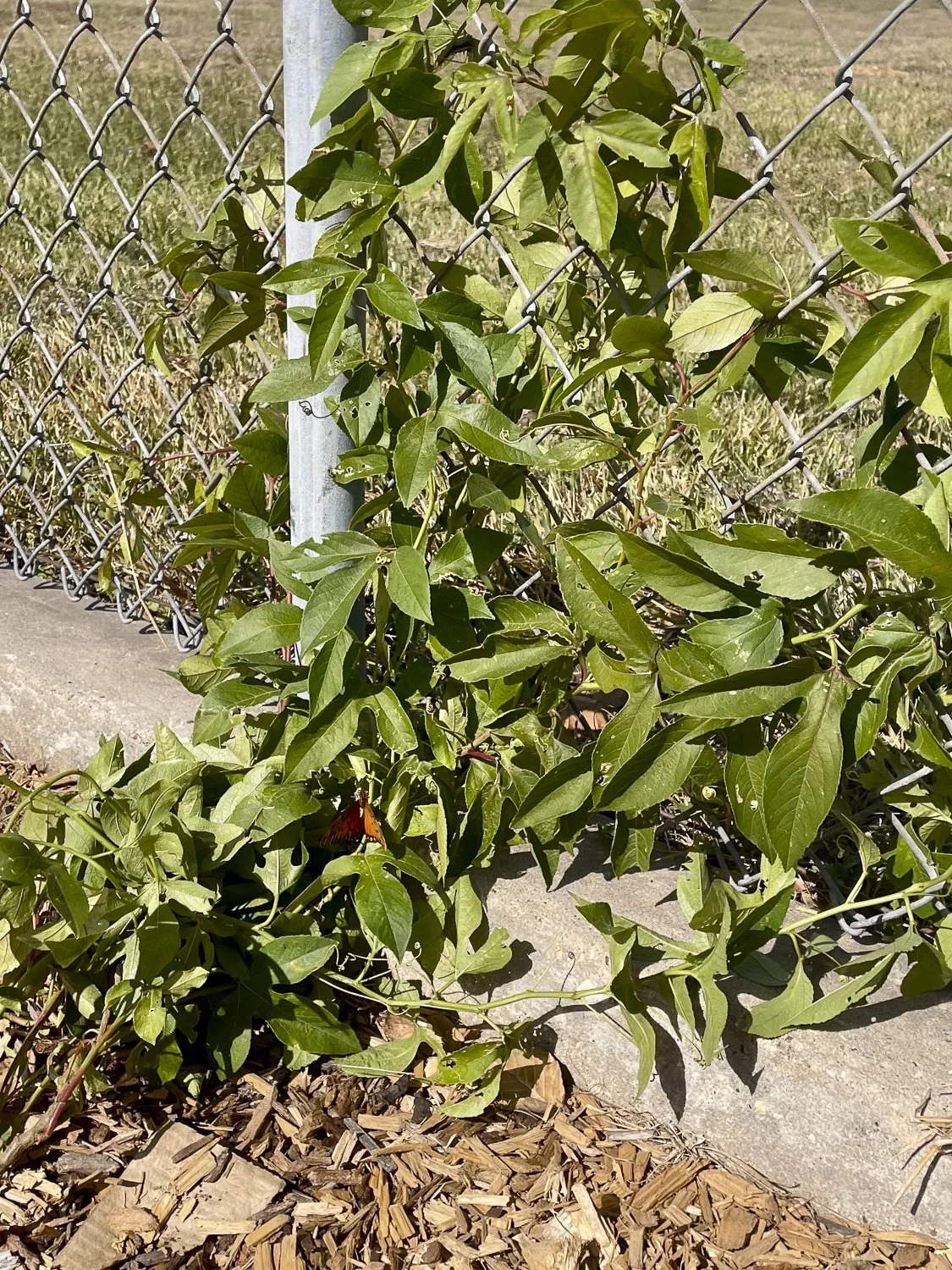
One of the plants from the previous planting that was part of the vandalism. Notice the gulf Fritillary butterfly hiding in the shadow.

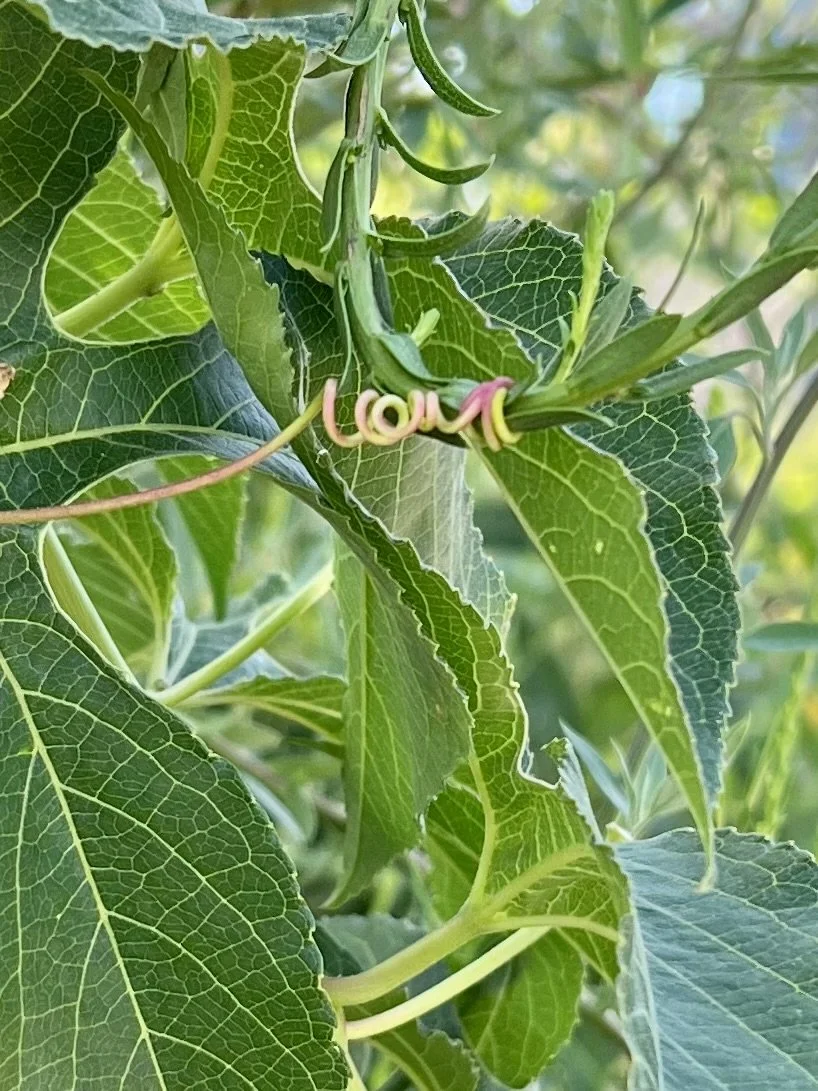
propagating a passion vine in water.

The Stinky Passion flower’s scientific name is Passiflora foetida. It is also known as Fetid Passion Flower, Love-in-a-mist, Wild Maracuja, and running pop.

It has sticky, feathery, leafy bracts that surround the flower and fruit. When an insect tries to eat the fruit, it gets caught in the sticky bracts and dies. The plant then secretes a digestive enzyme and absorbs the nutrients.

Echoes of Existence-how to engage the students

I am slowly working to find solutions to the problems that will arise when the students implement the installation.

First, how to get students that are not comfortable with nature to want tobe involved. What will draw them in?

Second, a big problem is how to control a group of college kids in a field and have them complete a detailed installation.

Bloomington is a walking city. Every day as I would walk about town and the campus I worried about how I was going to solve these two problem. And like on most college campuses everyone is in their own audio visual world contained between the ear pieces of a headset. And I was the same. The difference was I still wanted to connect to those passing by me with a “good morning” or hi. I found the IU students were very focused on the sounds in their headsets they did not need to make eye contact or say hello.

In a discussion with an English professor, Shannon Gayk, who also teaches a walking class, I learned that a novel idea for students is silent walking. The idea of walking without a headset without sound — silent.

Thinking of headsets and silent - my mind went straight to silent raves then to a silent installation.

Would the concept of a silent installation draw the students in. Could this commitment to headsets be a possible tool for crowd control during the installation?

I love the idea. But that leads to another hurdle. How do I design a silent installation? What technology makes this possible?

With a quick Google search, I found several companies that provide everything you need for a silent event.

Heat Dome

“What I propose, therefore, is very simple: it is nothing more than to think what we are doing.”

-Hannah Arendt, The Human Condition

Heat Dome

Watercolor monotype

30" X44"

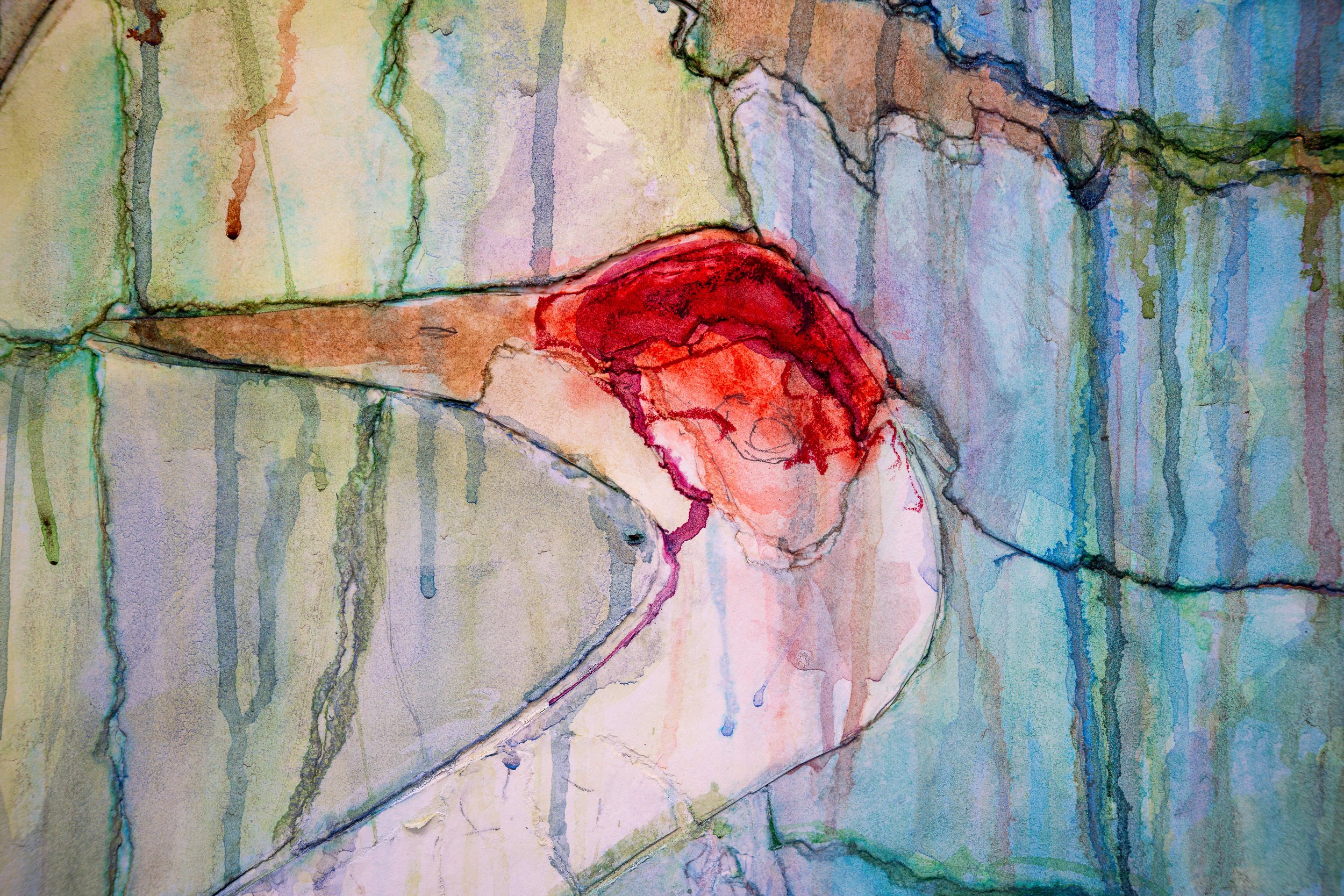
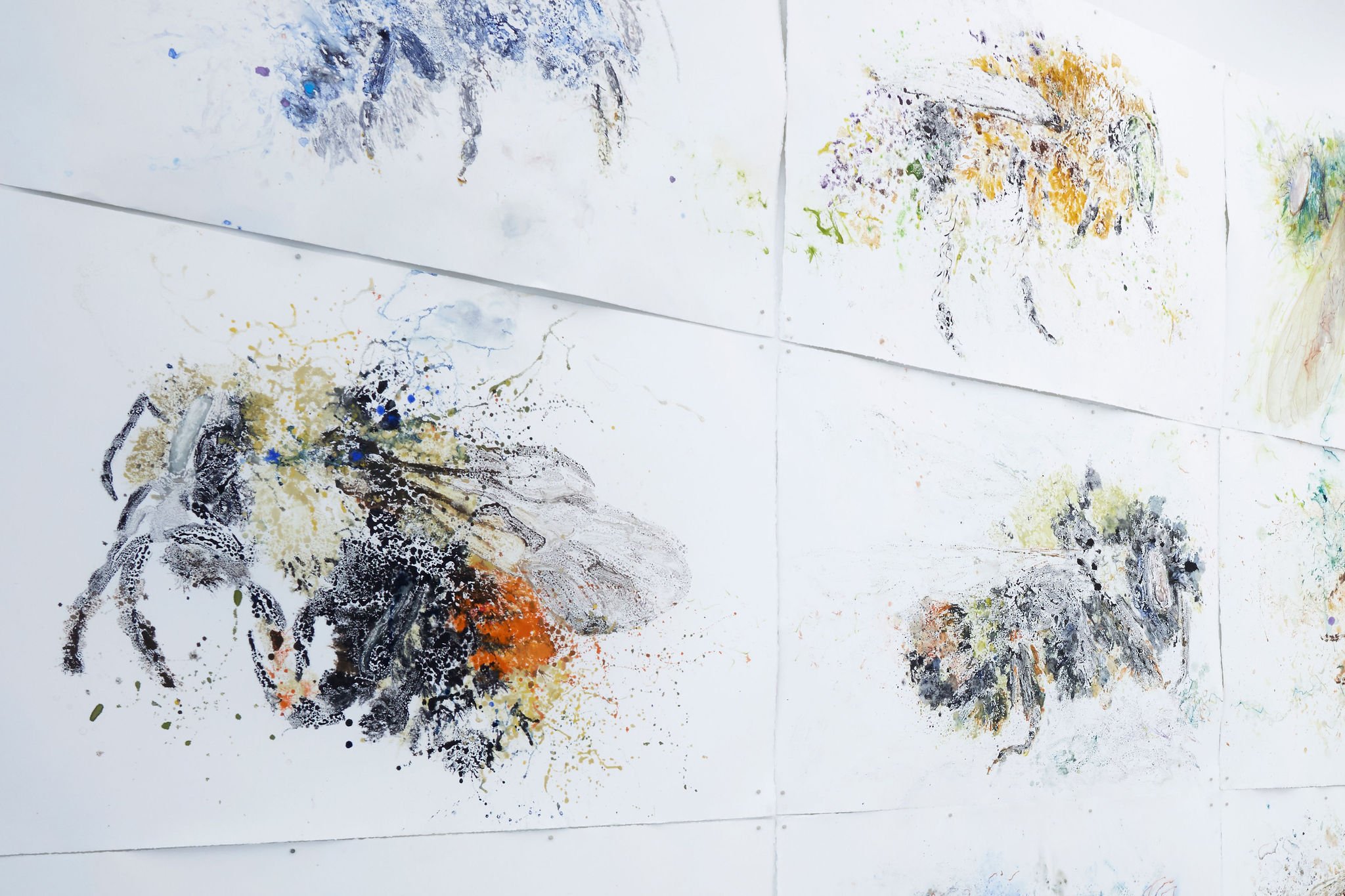
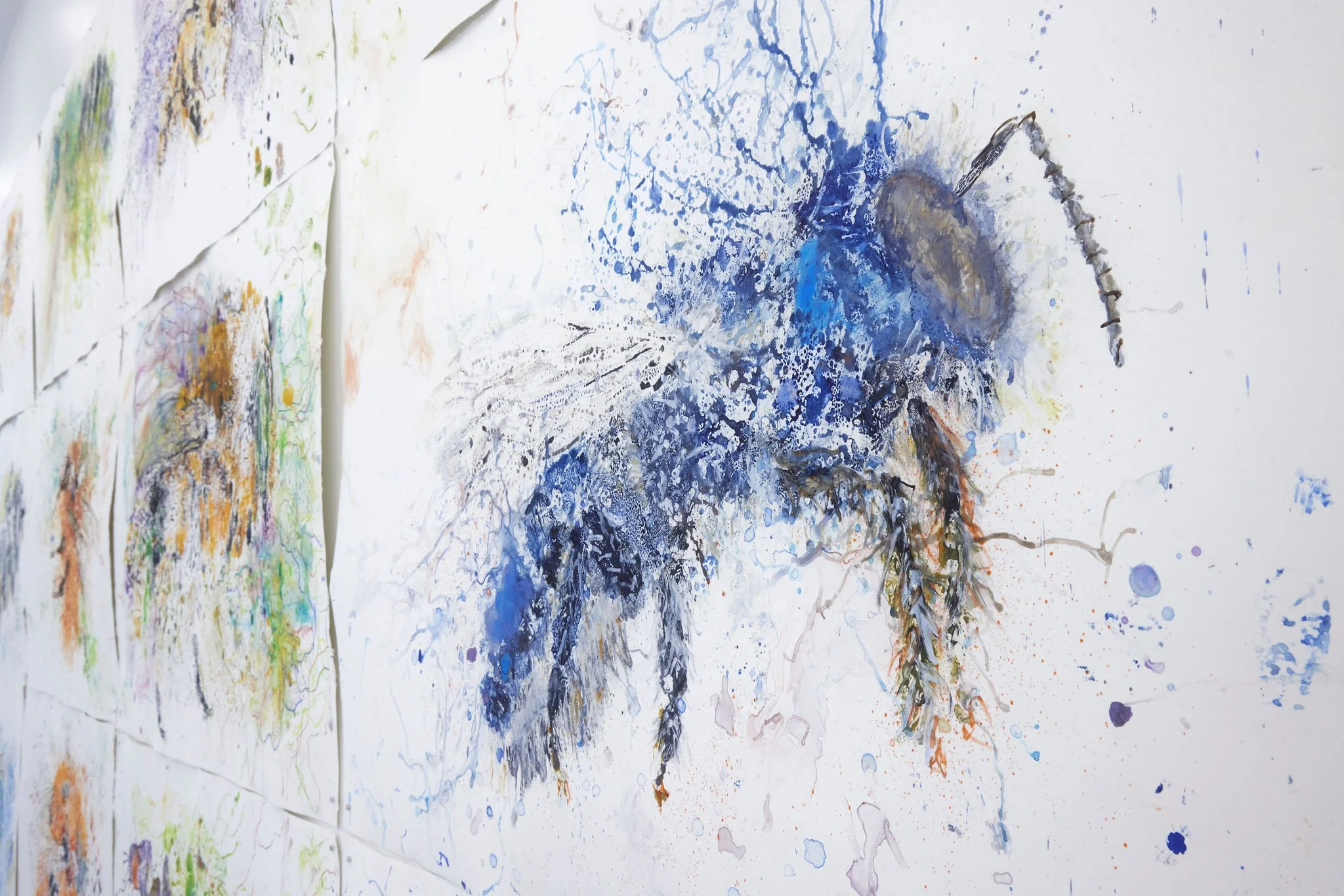
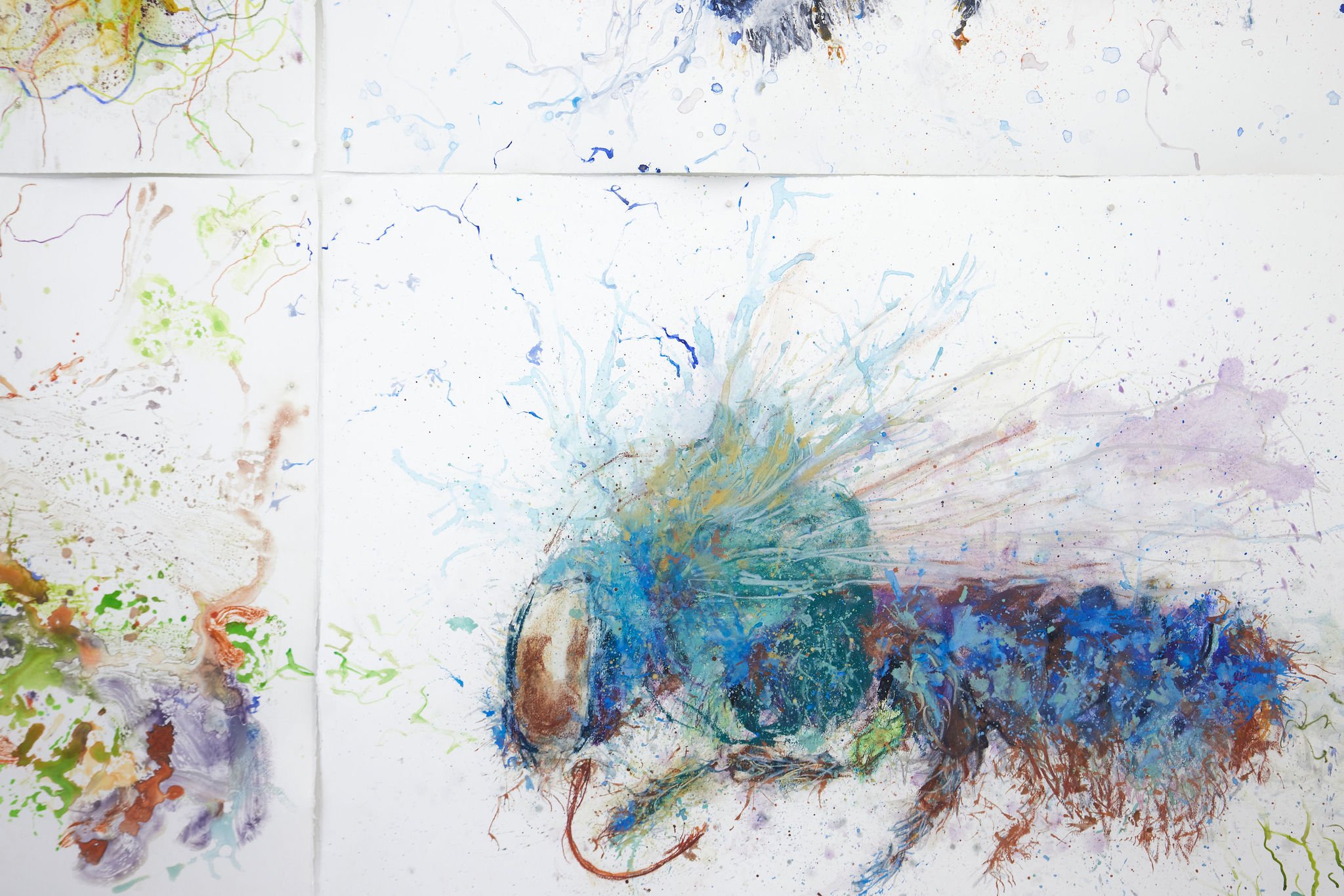
Bare ground, concrete, asphalt, and astroturf emit 4X radiant heat. Great masses of radiant heat create heat domes. Heat domes prohibit weather from moving across the land. In contrast, surfaces covered in thick layers of plants indigenous to the region store water in the soil. When the day warms, the plants transpire, releasing bacteria with the moisture to form clouds that provide shade and then rain. We each need to carry our ecological weight. We can start by considering new ways to surface our city scapes to cool the planet.

Heat Dome ghost

To Leave

The ephemeral beauty of nature lies not just in living organisms but also in their inevitable decay.

This morning, while examining “deeper than that” a private living sculpture art installation featuring indigenous plants, I was struck by the fading loveliness of the Rosinweed leaves as they withered. Contemplating the homophones “leaf”, “leave” and “leaves”, I pondered how societies historically understood the ecological value of allowing foliage to persist even after senescence. Is that why we call these objects a verb?

Leaves that have left a plant continue to nourish the soil and its microbial inhabitants even in death. Their decaying forms hold moisture, shade the living organisms in the ground, and provide nutrients as they return to earth, building a balanced ecology that sustains urban landscapes. They are an important material natures uses in its engineering of the water table.

Though a single leaf may seem a small, ephemeral thing, in aggregate and over time, the leaves left behind establish and uphold the very foundations of life.

Their decay is not an end but rather a beginning - a quiet, essential recycling of energy and matter that allows new growth to emerge.

In both the noun and the verb there are layers of beauty, and layers of ecological purpose, in the leaves left to molder where they fall. An ecosystem thrives on this gift of decay, using the ephemeral to fuel the eternal. Such is the profound, poignant cycle that the installation’s Rosinweed specimens, even as they bend and brown, help perpetuate. Out of seeming loss, abundance; out of death, life.

Leave your leaves and be grateful for their beauty as nouns and as verbs.