Symbiosis — DIY (the images for this post are under construction, stay tuned)

Symbiosis — DIY Steps

Change can happen at lightning speed when innovation is coupled with imitation. Here are the steps I took feel free to imitate them.

I became familiar with the six principles of Holistic Regenerative agriculture through the Savory Institute, Roam Ranch and was recently featured in the film Kiss the Ground. I wanted to make a difference and regenerate depleted land, too. However, a bison ranch is not in my future. It occurred to me that changing how we landscape Houston could make an ecological impact. Lawndale Art Center offered me the opportunity to install an environmental sculpture in the garden. They had just re-landscaped the sculpture garden with a traditional garden, so I did not expect them to accept my proposal. However, Lawndale is committed to artists that explore aesthetic, critical and social issues of our times. Symbiosis is a catalyst to invite the public to change Houstons’s environmental impact. Applying these principles to Houston’s greater urban landscape will significantly impact climate and extreme weather conditions. Houstonians—or anyone—can do this. Climate change is a DIY project.

Below I describe these principles as I applied them to Symbiosis.

See how others across the world have used the same principles I used below.


6 PRINCIPLES of HOLISTIC REGENERATIVE AGRICULTURE AND SYMBIOSIS


Installing this site-specific installation, I incorporated the same principles used to regenerate depleted soils worldwide.   

Holistic management — BALANCE —Symbiotic

I keep in mind that the garden is a microsystem that must contribute to and function in the greater ecosystem of the western hemisphere’s continents and waters. In Symbiosis, I balance the needs of the; art institution, urban wildlife, donors, exhibiting artists, the surrounding community, and volunteers.

Holistic management — balancing the needs to run the art center, the neighboring community and urban wildlife/landscape.

Integrating livestock to build soil microbes — GroundWORK

 Living soil does not come from synthetic inputs. Instead, it comes from decaying matter that completes the circle of life. Mimicking this process in an urban environment is a crucial step. Without it, there is no life. In the natural world, grazing livestock such as bison, cows, sheep, goats, or chickens provides the decaying matter through their waste, stomping it in the ground and eating and damaging vegetation.

In Symbiosis, I mimic this process by installing a native leaf compost with animal waste components. It is full of beneficial microbes, free of dangerous synthetic chemicals, toxic dyes, and sewage. The heat from composting kills the pathogens. It is safe for children and pets. Because this step is critical, I turned it into a community performance art event. — GroundWORK

Intergrading animal — GroundWORK

Native moldy leaf compost was installed during the GroundWORK event on behalf of RoXoR gin a sponsor of Lawndale’s spring 2021 fundraiser event.

 Eliminating tillage  — CarbonSINK

 While we work to reduce greenhouse gas emissions, it is more critical to sink the Carbon in the atmosphere back into the soil. Carbon is stabile in the roots and microorganisms of plants in the ground. When soil is disturbed, Carbon is exposed to oxygen and transformed into carbon dioxide, which warms the planet. Conversely, organisms can establish communities that feed off the soil's organic matter when the earth is undisturbed. As soil organic matter improves, so does the soil’s internal structure.

A healthy soil biome is vital for suppressing plant diseases and cycling nutrients among plants, eliminating the need for synthetic inputs whose production increases our carbon footprint.

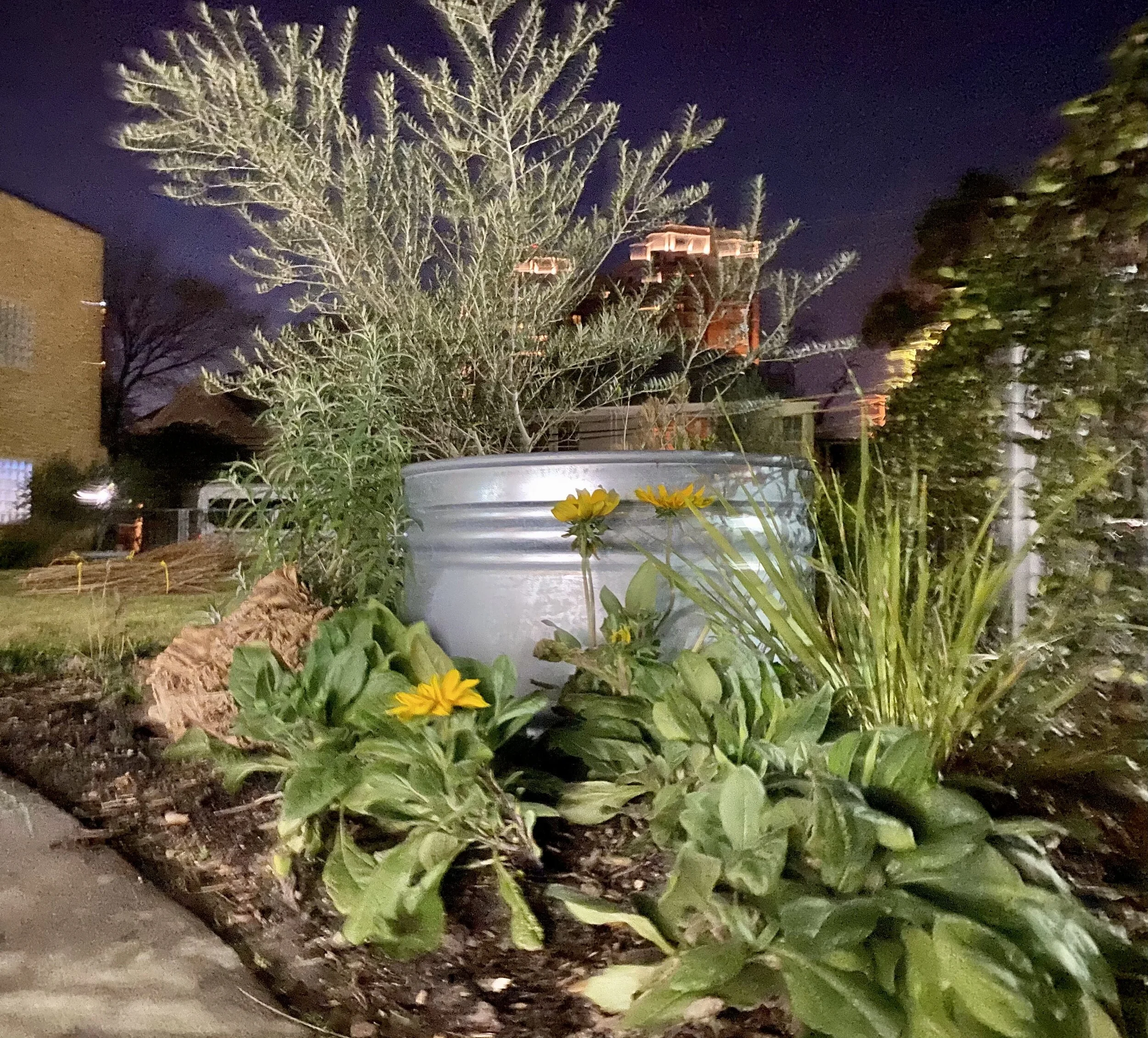
 In Symbiosis, I am building a CarbonSINK by not turning the soil over before planting, keeping the soil structure intact as much as possible, and implementing “Chop and Drop” composting when plants go dormant.  Symbiosis builds soil biology and increases soil structure, increasing the soil's ability to absorb Carbon and water, reducing runoff, soil erosion, flooding, and preventing pollution from entering nearby bayous. 

Eliminating tillage — CarbonSINK

After a freeze in 2022, the red salvia above ground suffered. I carefully chopped all the dead materials and dropped them in the garden. I always leave the roots in the ground and 6” - 10” of stems for solitary native bees to nest in.

Maximizing crop/plant biodiversity, — ReCover

 We do not know what we have lost until we recover it.

With this thought, I researched native plants and what roles they have played in the Houston area ecosystem. Identified in the Coastal Prairie are more than 1,000 plus plant species. I have not relied on hybrids/variants of species or plants considered beneficial. Instead, I selected 36 species known as indigenous to the area. Native plants have supported over 4,000 native bees, 1,107 bird species, 750 species of butterflies, 200 skippers, and 11,000 months, and 4,000 wasps.

Symbiosis is to recover and support as many of these species as possible for all four seasons. In addition to supporting wildlife, I sought out plants that helped control ground erosion and water absorption.  — Plant it and they will come—

Maximizing Biodiversity — ReCover

Hyla cinerea , there are five true tree frogs in Texas. They climb grass and require a permanent water feature, a trough pond will do. I first saw tree frogs in the garden in September 2021 on a bushy Bluestem. I have since seen them on the Mealy blue sage. I have never seen a 2.5” tree frog in Houston before. I hope we can recover a few for every yard.

Plant material selections:  Salvia Lyrata, Calyptocarpus vialis, Phyla nodiflora, Bouteloua gracilis, Carex peredentata, Tradescantia occidentalis, Calyophus brerland, Oenothera speciosa, Rudbeckia hirta, Ratibida columnifera, Monarda citriodora, Echinacea purpurea, Schizachyrium scoparium, Salvia coccinea, Gaillardia pulchella, Symphyotrichum patens, Salvia, Farinacea, Chasmanthium lati, Silphium gracile, Verbena xutha, Salvia azurea, Eryngium yuccifolium, Solidago sempervirens, Capsicum annuum, Callicarpa  Americana, Symphoricarpos orbiculatus.

Grasses:  Andropogon gerardii Vitman, Schizachyrium scoparium, Chasmanthium latifolium, Carex texensis

VINES: Lonicera sempervirens L, Gelsemium sempervirens, Wisteria frutescens, begonia capreolata, Passiflora incarnata

Keeping the soil covered — Skin =  CarbonSINK + GroundWATER  =  GlobalCOOLING

—Skin, Like human skin the palnet’s skin provides many services necessary for good health.

The Earth’s skin is green. “The Earth is a living organism, composed of millions of species and billions of organisms—bacteria, algae, microscopic insects, earthworms, beetles, ants, mites, fungi and more—representing the greatest concentration of biomass anywhere on the planet. Microbes, which make up only one-half of one percent of the total soil mass, are the yeasts, algae, protozoa, bacteria, nematodes, and fungi that process organic matter into rich, dark, stable humus in the soil."  There are more soil microorganisms in a teaspoon of healthy soil than there are people on the Earth! The living organisms in the soil receive their food and shelter from plants' biological processes and physical structure.

In Symbiosis protecting the surface of the work with green skin is an easy decision for me. The quality of the skin is intimately tied to cooling the planet through Carbon and groundwater.

Keeping the soil covered — Skin

 —CarbonSINK

I installed the plant material in a manner that mimics how seeds drift in the wind and are carried by animals in their coats or deposited in their waste — resulting in multilayered vertical, horizontal, and diagonal jigsaw puzzles of leaf shapes. These shapes have evolved over thousands of years, woven together to maximize every ray of sunlight. The living material will grow into a three-dimensional solar panel from 6" to  6' tall, sequestering Carbon out of the air and storing it in the living soil. I did not leave the ground bare around each species as is popular in traditional urban landscapes.

CarbonSINK — utilizing a variety of plant shapes to maximize carbon capture.

— GroundWater

Living organisms need oxygen. When rain hits the unprotected ground, the micro spaces that allow air to penetrate the soil collapse and the living organisms die from lack of oxygen. I selected thirty-six species of plants to include various leaf sizes and shapes, stem heights, bloom sizes, and surface textures. As the plants mature, they become a multitiered water slide of twists and turns, slowing rainwater, trickling it to the ground. This allows the Earth to respond like a sponge soaking up the precipitation and channeling it through the root systems and air pockets as freshwater to the aquifer for future generations. Slowing rainwater can mitigate flooding that has become the norm in Houston. 

— GlobalCOOLING: Soil soaked in water like a sponge and covered in plants that move, as a gentle breeze blows off the Gulf of Mexico, conditions and cools the air and the earth as it is warmed by the sun. In contrast moving cool rainwater across hot surfaces such as turf grass, artificial turf or concrete landscape, warms the water, picks up chemicals and dumps the urban solar-heated water full of toxic chemicals into the ocean. 

GroundWater and GlobalCOOLING — multiple layers of plants slow rainwater, giving the ground time to soak it up, purify and store it in the aquifer.


Maintaining living roots year-round — FoodWEB — GlobalCOOLING

Living roots in the soil are vital for feeding the bacteria and fungi that provide food for the creatures further up the chain. Living roots keep mycorrhizal fungi alive and healthy. These symbionts are vital for nourishing plants and provide convenient fertilizer and water. Maintaining living roots in the ground feeds organisms, providing year-round carbonSINK and GlobalCOOLING.
 

Endangered Knowledge: The Soul of Humus

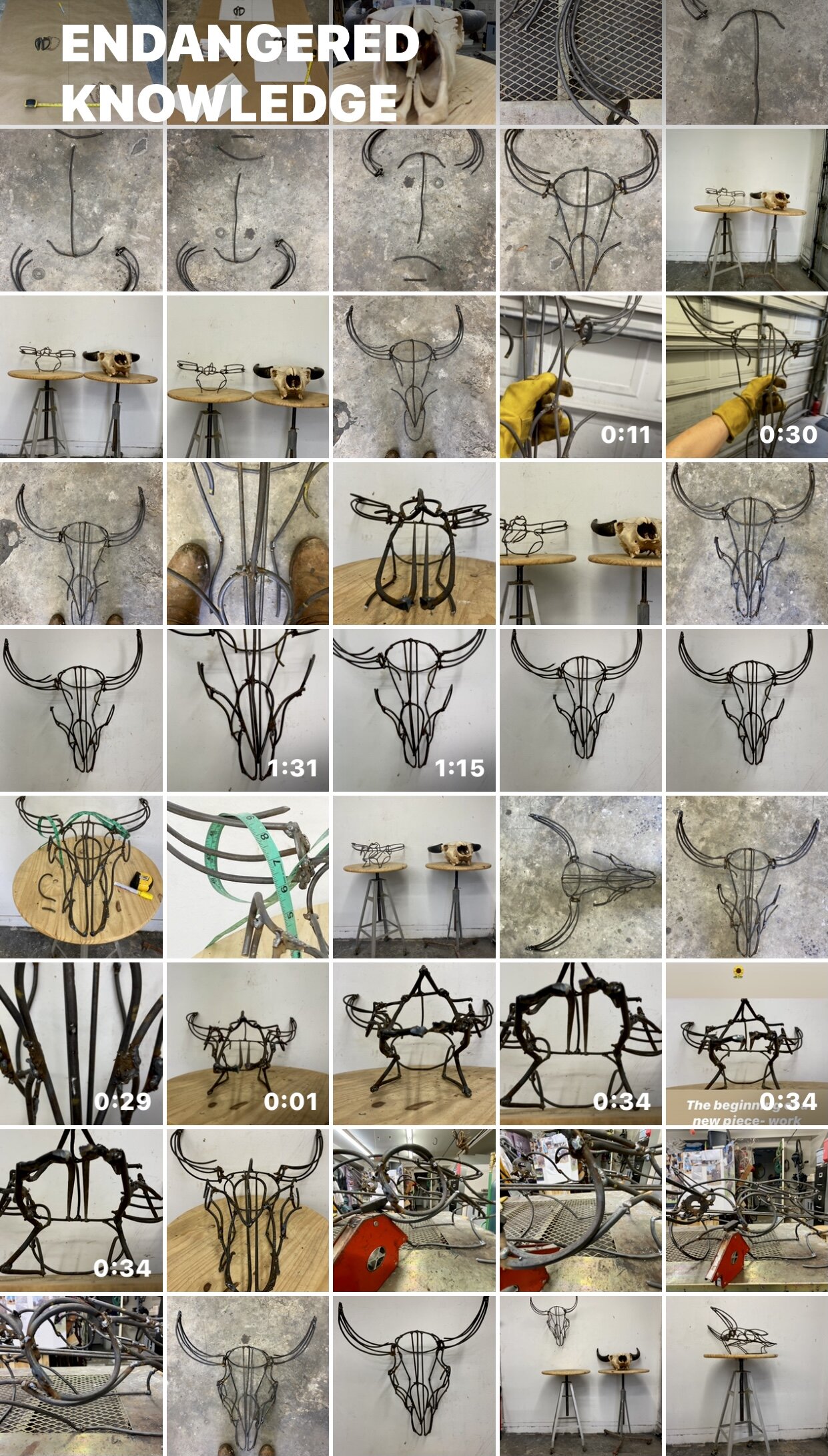
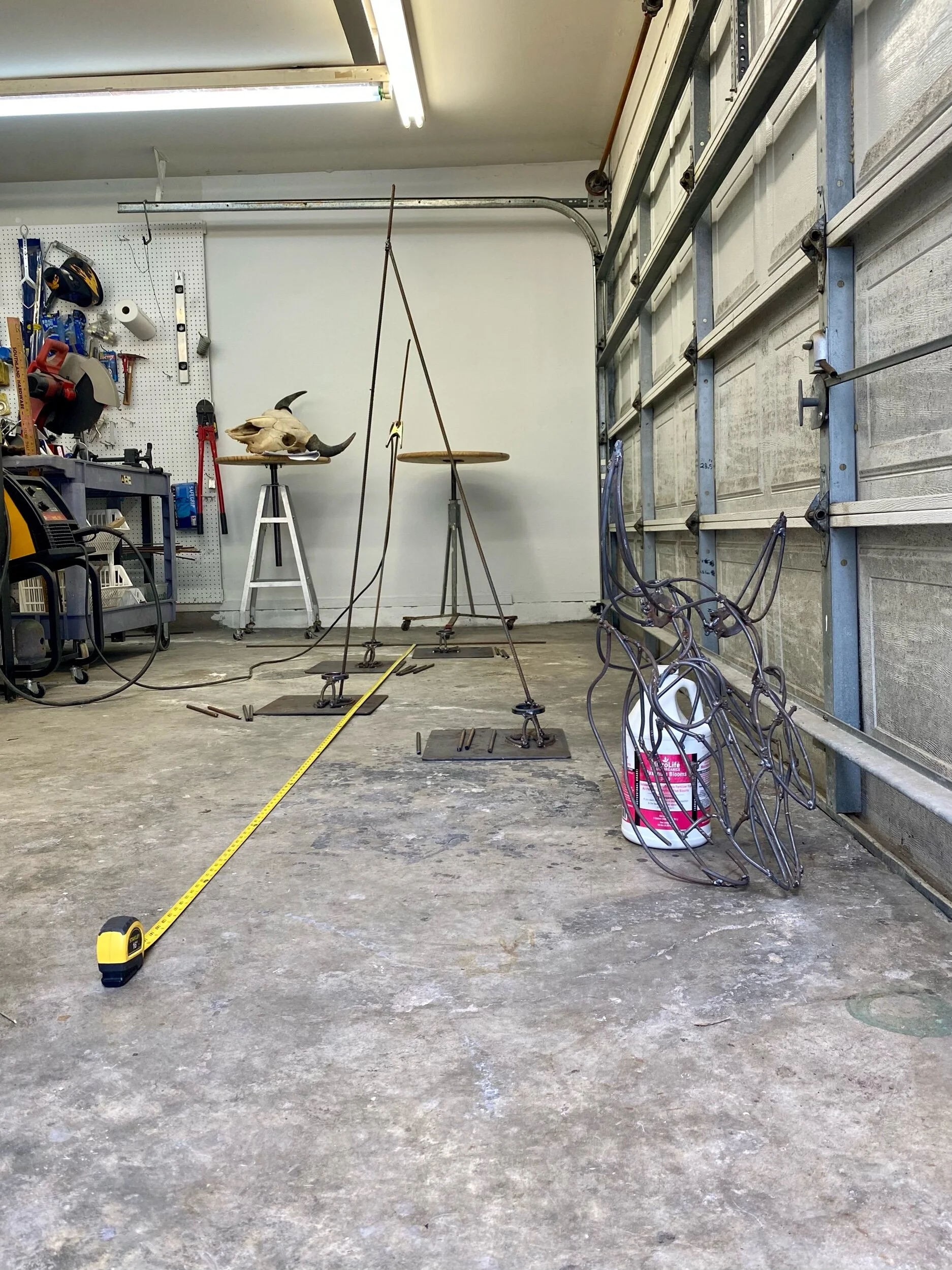
I try to do a little everyday. I am building the armature of the body. When it is finished it will be an old male - 12’ long 6’ tall . His head will be gently reaching left of center - He will be confidently and casually grazing on a variety greens native to the Texas Prairie. His neck will be supporting his massive head as it floats over the landscape. His tongue gently wraps around the next blade of little blue stem. His left front leg following the reach of his jaws as he sorts through the green haze. Right front leg is the main support in this moment of dining. It extends slightly wide to counterbalance the pendulum movement of the rhythmic massive jaw. The back left leg the main support of the shorter, less massive back end. 🤠

His right eye looking forward aware of his surroundings. They are prey animals. Prey animals eyes are on the side of their head.

His right eye looking forward aware of his surroundings. They are prey animals. Prey animals eyes are on the side of their head.

Endangered knowledge: the Soul of Humus.

SMH fall of 2020 was canceled due to Covid 19 last July of 2020. I put a halt on welding my piece and focused on planning “Symbiosis.” “Symbiosis” is installed the Big Show is opened which provided a tremendous amount of traffic. I will still check on it every day, but I will spend most of my day building my piece for SMH 2021. Today I started where I left off. Below are images from last year's work and blog posts.

When I stopped in 2020 I had the hooves on steel plate bases and new where I wanted them to bare the weight.

When I stopped in 2020 I had the hooves on steel plate bases and new where I wanted them to bare the weight.

Today I cut the rebar to form the lover part of the legs and grinded the tips. Tomorrow I weld.

Today I cut the rebar to form the lover part of the legs and grinded the tips. Tomorrow I weld.

Some of my notes from measuring Epics Bob the bison January of 2020.

Some of my notes from measuring Epics Bob the bison January of 2020.

My bison will be in motion not standing still.

The skull and upper jaw.

The skull and upper jaw.

And lower jaw

And lower jaw

4  pieces of rebar cut for each leg will provide the structure of the lower legs.

4 pieces of rebar cut for each leg will provide the structure of the lower legs.

Endangered knowledge:The Soul of Humus

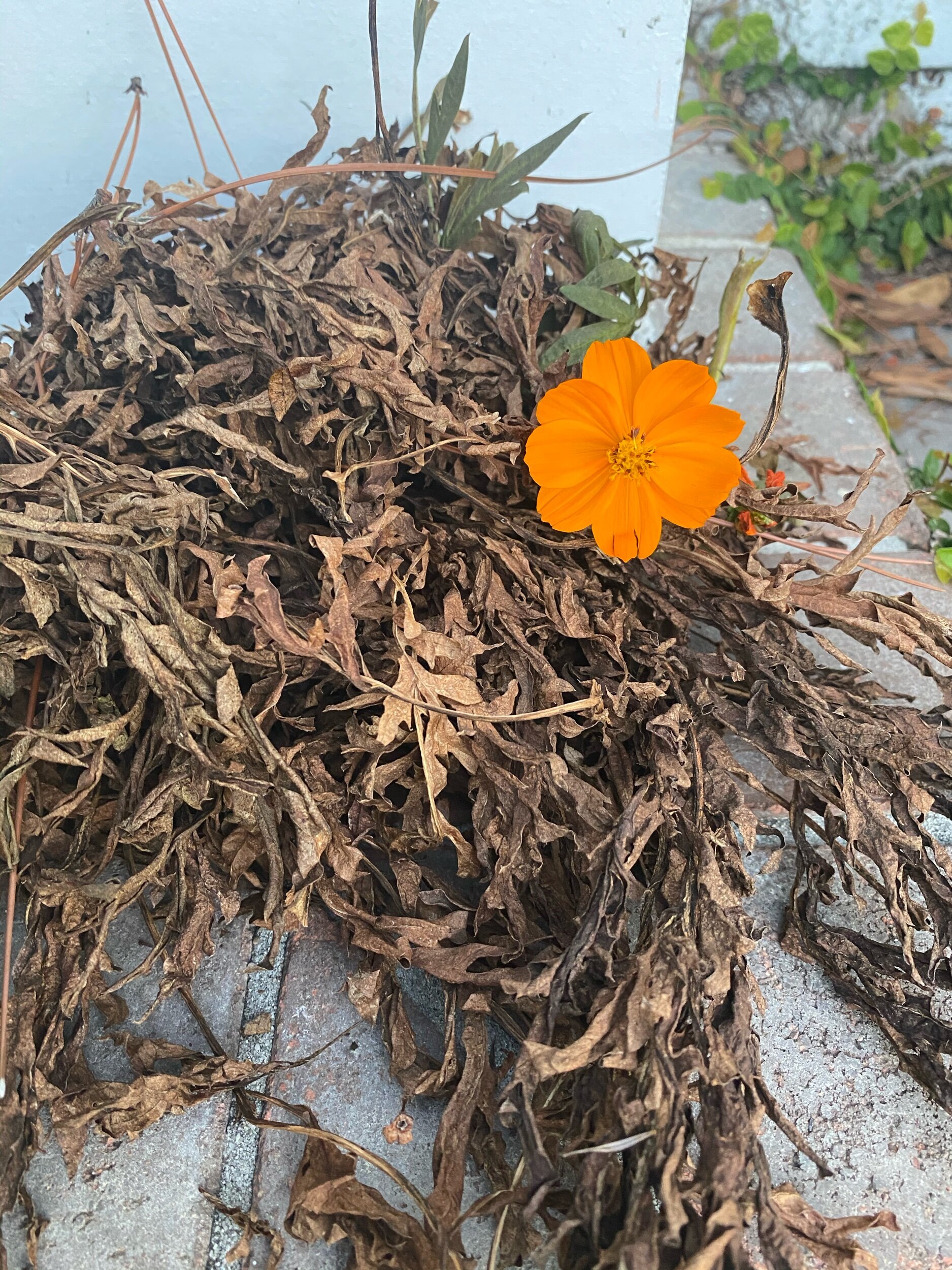
I dried some cosmos leaves to us as the coat of a sculpture that is in the works - Endangered knowledge: the Soul of Humus. The piece will be in the #sculpturemonthhouston 2021 exhibit. I started the armature during COVID for the SMH 2020 exhibit, which was postponed. The sculpture looks at the ecological history of the coastal prairie. This texture is perfect #cindeeklementart #endangeredknowledge #coastalprairie #tezasart #houstonart #bioart #environmentalart #cosmos #art #sculpture #bison

IMG_4772.jpeg

Same Time Next Year - A little something

A biological memento for Same Time Next Year

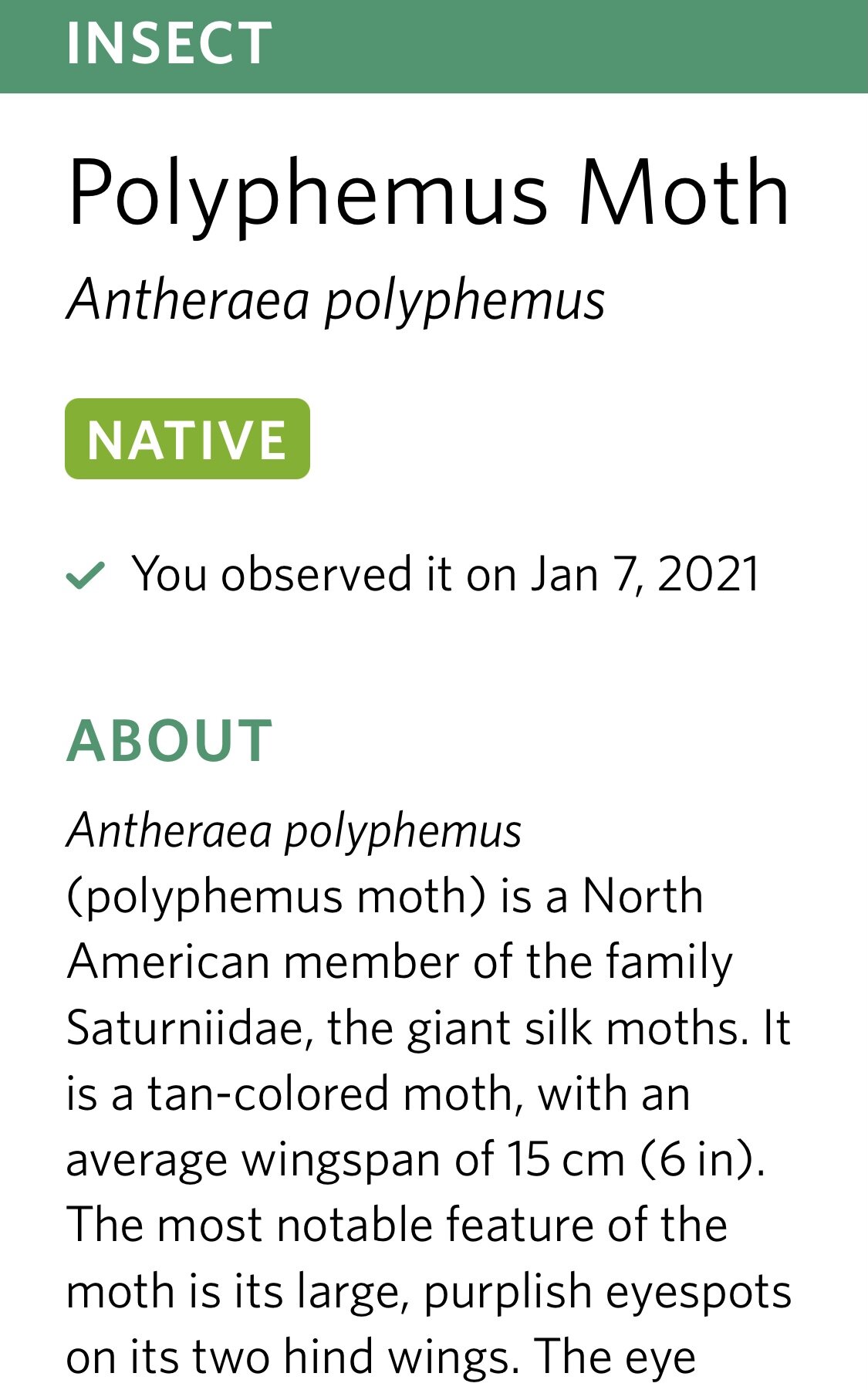
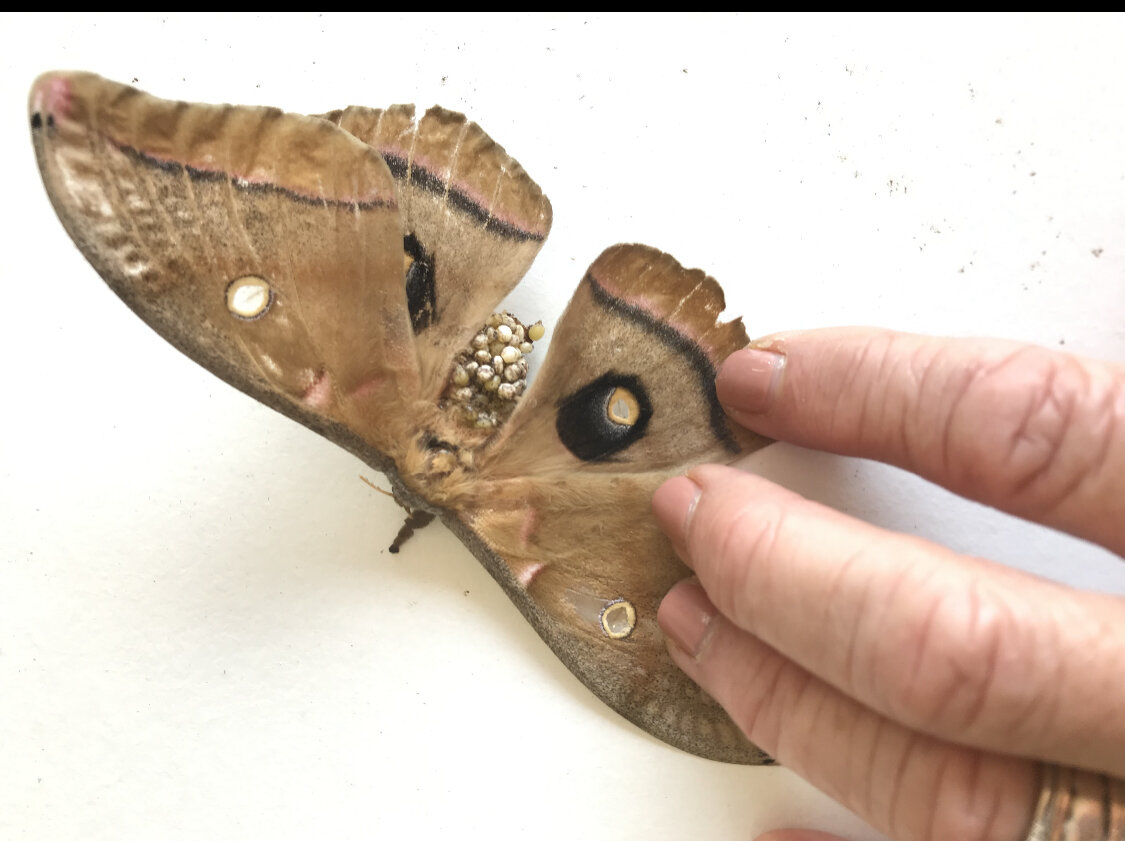
Normally I do not include fleshy or soft finds. I will break that tradition with this trinket of nature. I found this larva the first week of January 2021. It is in my freezer as I write. So that I don’t have to worry about it getting thrown away, I will put it in my 2020 nest. I am hopeful that I still have the Polytgemus Moth that I collected in fall September 2919 at my studio. The two together will spark a stronger connection to appreciate and protect urban wildlife.

The sidewalks in my neighborhood are my nature trail. I walk with my eyes on the prowl for intriguing insects, exoskeletons, insect wings, feathers, dried flowers, twigs, leaves, seeds, and pods — things my children’s eyes taught me to find during our walks together over the years. Since 2013, these biological mementos have found their way into my bronze work in the molds of nests. Each piece is a reflection of that year’s ecology and records the time and movement of environmental restoration…………n Dirt to Soil, Gabe Brown quotes Don Campbell, “If you want to make small changes, change how you do things, if you want to make big changes change how you see.” When I come across intriguing flora or fauna on my urban trail, albeit few and far between, I see them as evidence that can inspire a revolution in the landscape. If they are expired and will not decompose, I collect them. I see these bronze cast nests as urban wildlife fossils—biographies, every year a chapter recording Houston's environmental awakening……….

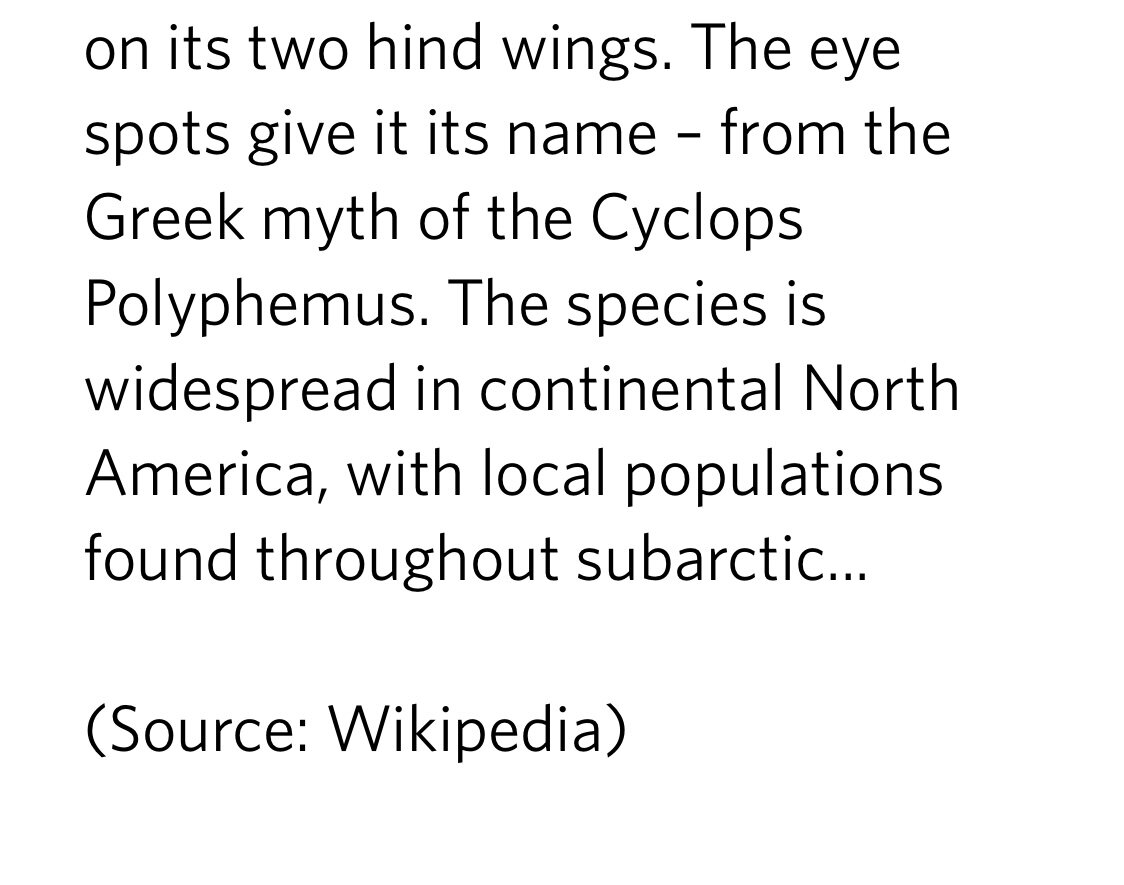
Below m are screenshots from my seek application that I use to identify species.

IMG_4835.jpeg
A screen shot from the app seek, a wonderful app for identifying species.

A screen shot from the app seek, a wonderful app for identifying species.

IMG_4848.jpeg
IMG_4849.jpeg
IMG_4850.jpeg
Fall 2019, I find- I think it is still in my studio in a Plastic cup.

Fall 2019, I find- I think it is still in my studio in a Plastic cup.

Maintenance Art-human systems

Mierle Laderman Ukeles talks about Maintenance Art

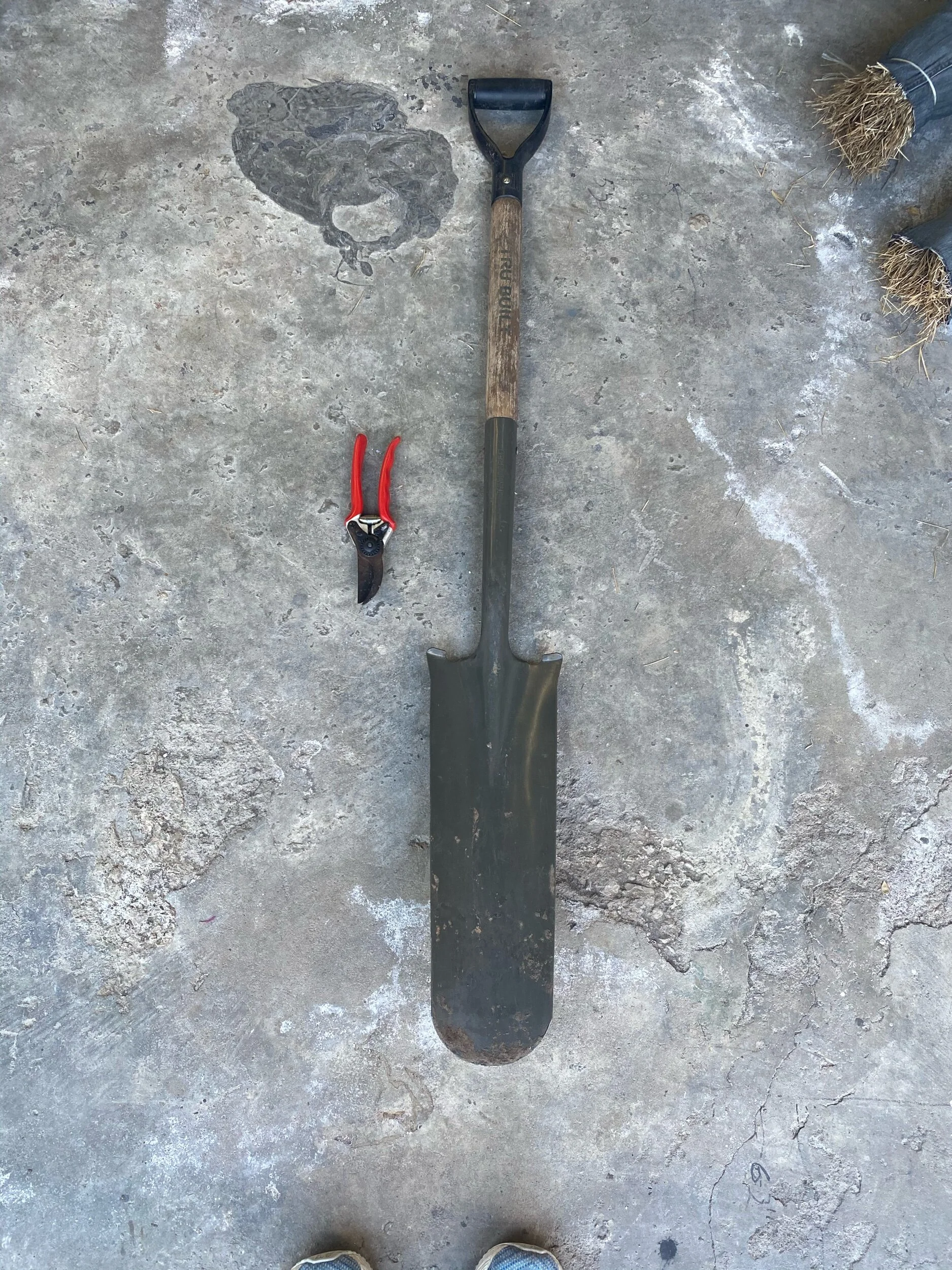
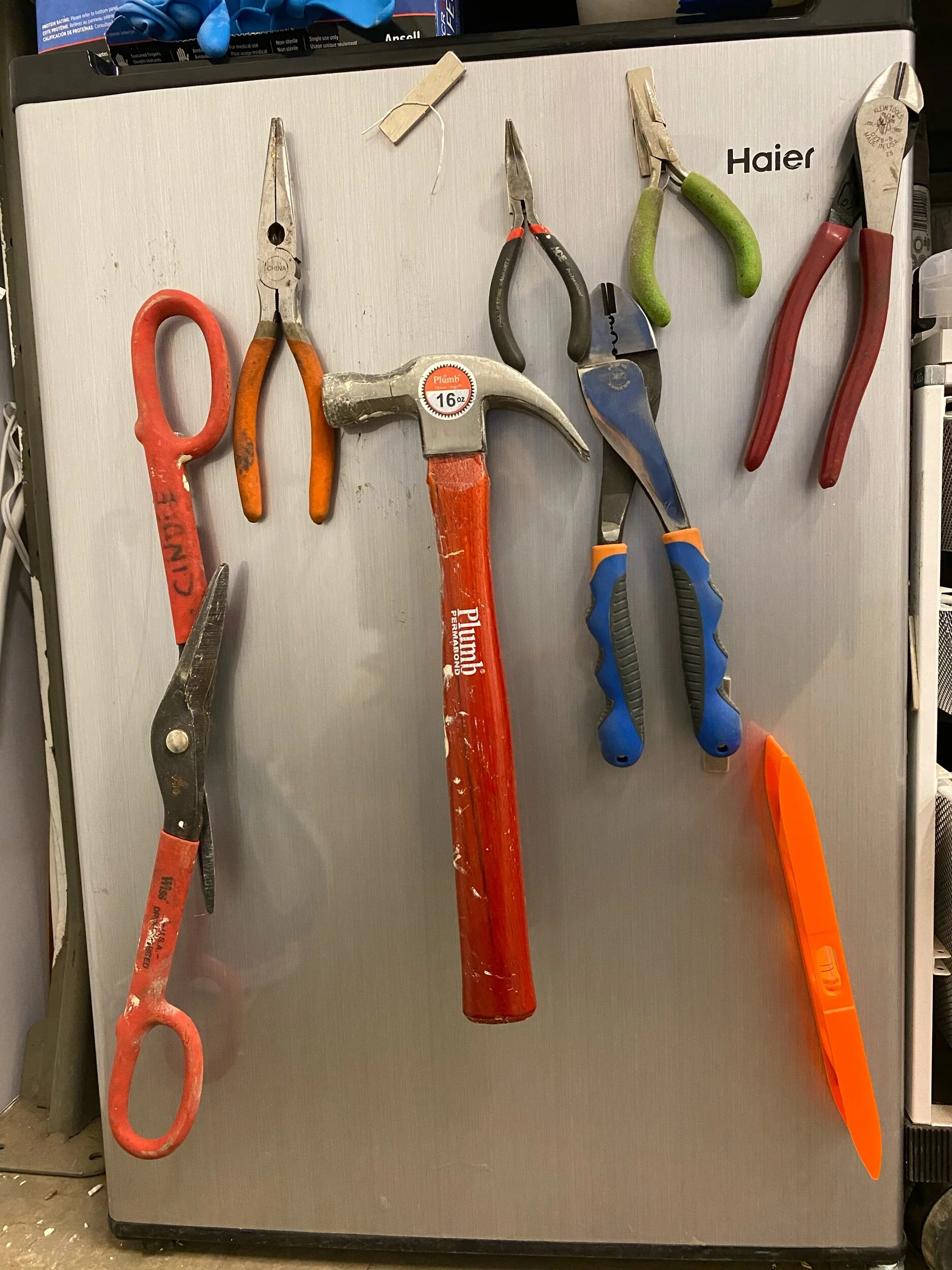
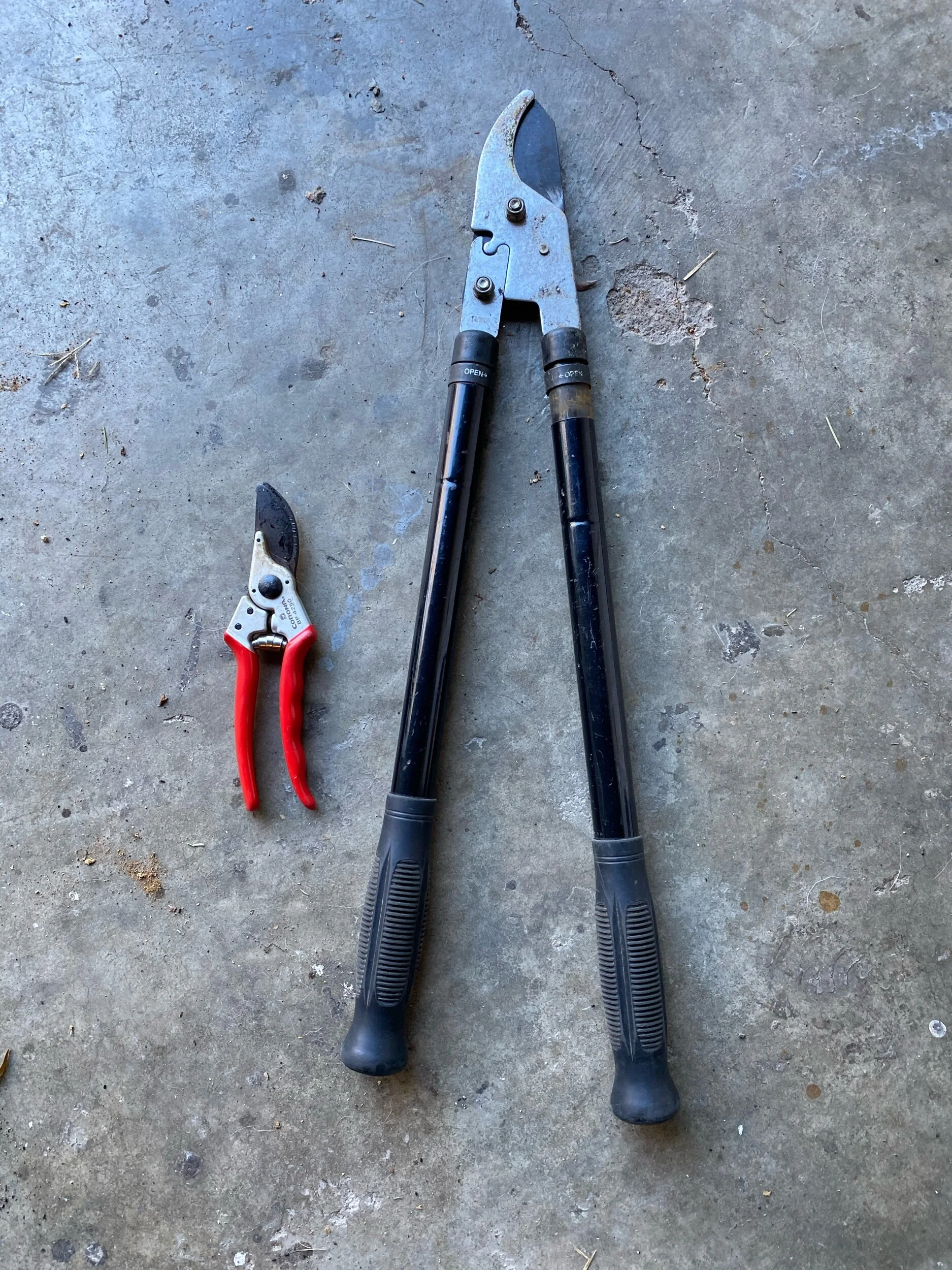
Looking at other artist that carved a new path into the world of art, l look at Mierle Laderman. She is an inspiration an amazing woman. Maintenance art is similar to creating living soil and activating a holistic way to manage urban landscape. I offer images of some of my tools as evidence.

Tools for symbiosis

Tools for symbiosis

I keep some tools on my refrigerator with magnets

I keep some tools on my refrigerator with magnets

Tools for shaping Crepe Myrtles.

Tools for shaping Crepe Myrtles.

Root to Water- when science backs your art -Art that looks at science with a critical eye.

"It is clear that the past offers a vast repertoire of cultural knowledge that we cannot ignore," highlights Professor Boivin.

It is a different way to think of things; however they are on the right root. I have a feeling there will be more areas Root to Water intersects science.

ROOT TO WATER12” X 18” X 12”found objects: rusted steel irrigation wheel, rootphoto by Nash Bake

ROOT TO WATER

12” X 18” X 12”

found objects: rusted steel irrigation wheel, root

photo by Nash Bake

Spontaneity and art - a good thing, we will see

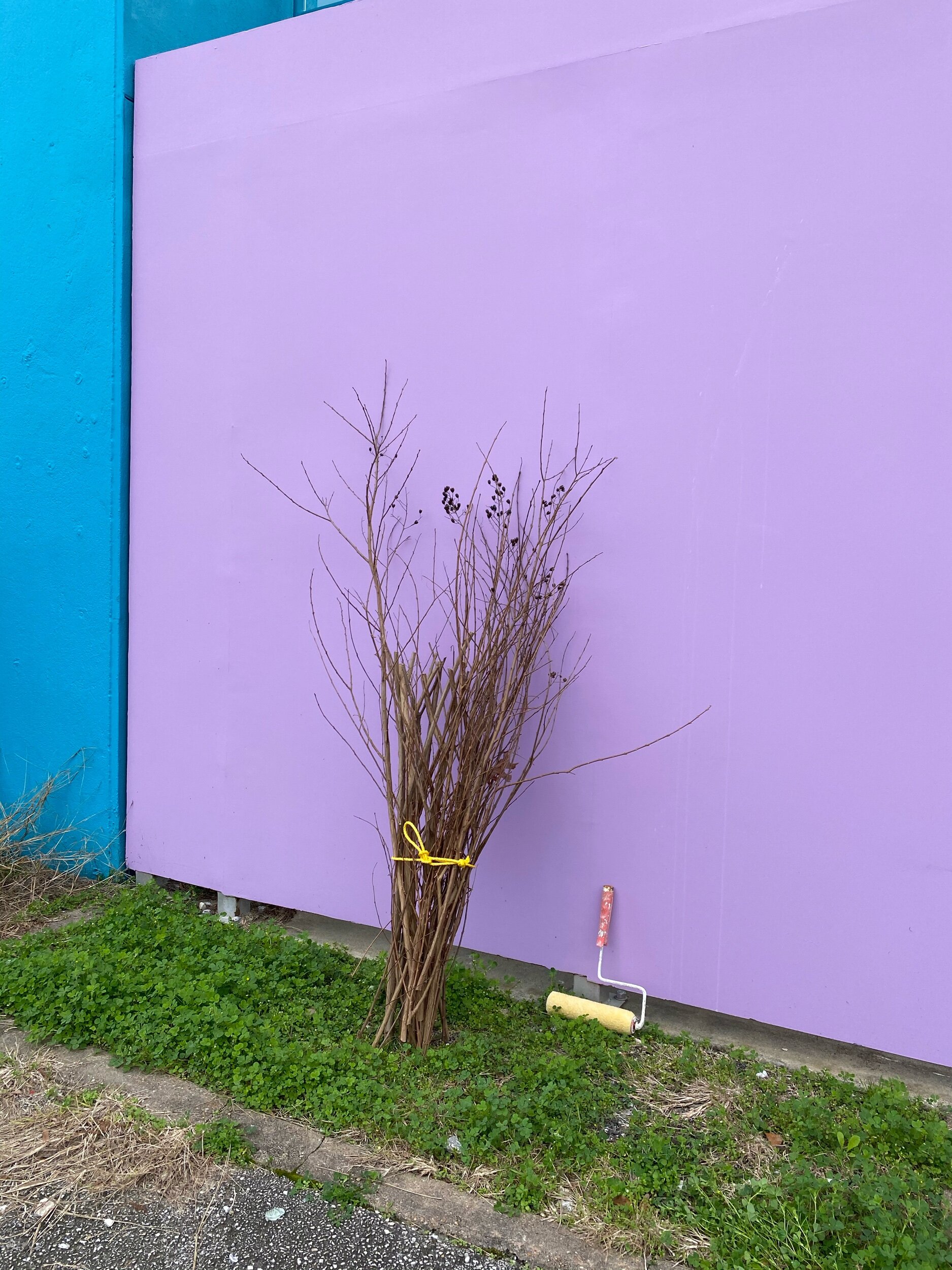
I started my day at 6:30 am, pasting images of work into a word document for a curator/art consultant. A necessary task that I was thrilled to do- however, mind-numbing, to say the least. By 12:30 crossed eyed I took the dogs on a walk. When I came across this. My mind numbing was instantly healed with inspirational thoughts.

Seven immaculately bundled trimmings from a neighbors Crape, Myrtle. Crape murdered or not I- the trees were in the backyard, could not see them.

Seven immaculately bundled trimmings from a neighbors Crape, Myrtle. Crape murdered or not I- the trees were in the backyard, could not see them.

My trimmings from a site-specific installation @Lawndale Center for the Arts.  Symbiosis

My trimmings from a site-specific installation @Lawndale Center for the Arts. Symbiosis

The image above is from last week at Lawndale (a post in am tardy with) My trimmings are wild and unruly. I am using them on social media to make a point - to change how we landscape- to landscape with habitat for wildlife in mind.

My neighbor's bundles of limbs are in sharp contrast to mine. They are an example of how controlling urban green spaces have become, the tidiness that is expected In our yards.

I am so tempted——— Such a great opportunity to turn these found object organic materials, perfectly assembled tied up with yellow cords into gorilla art. The colors will look amazing at Lawndale. It is not part of my work on Symbiosis to install anything I want. 🤔 The entire dog walk I was haunted by the bundles and their yellow cords. I am not comfortable installing gorilla art but I am excited with the idea and I know Lawndale won’t have me arrested like other institutions might if I randomly installed objects in their sculpture garden, right?

I have always challenged myself to take on the art that scares me the most- to embrace the butterflies as my son tells me. You don’t know until you try. - jump

I went to the door, I was hoping no one was home, Abby was a new neighbor and I introduced myself. - she moved in during Covid. We had a nice chat and she welcomed me to take her piles.

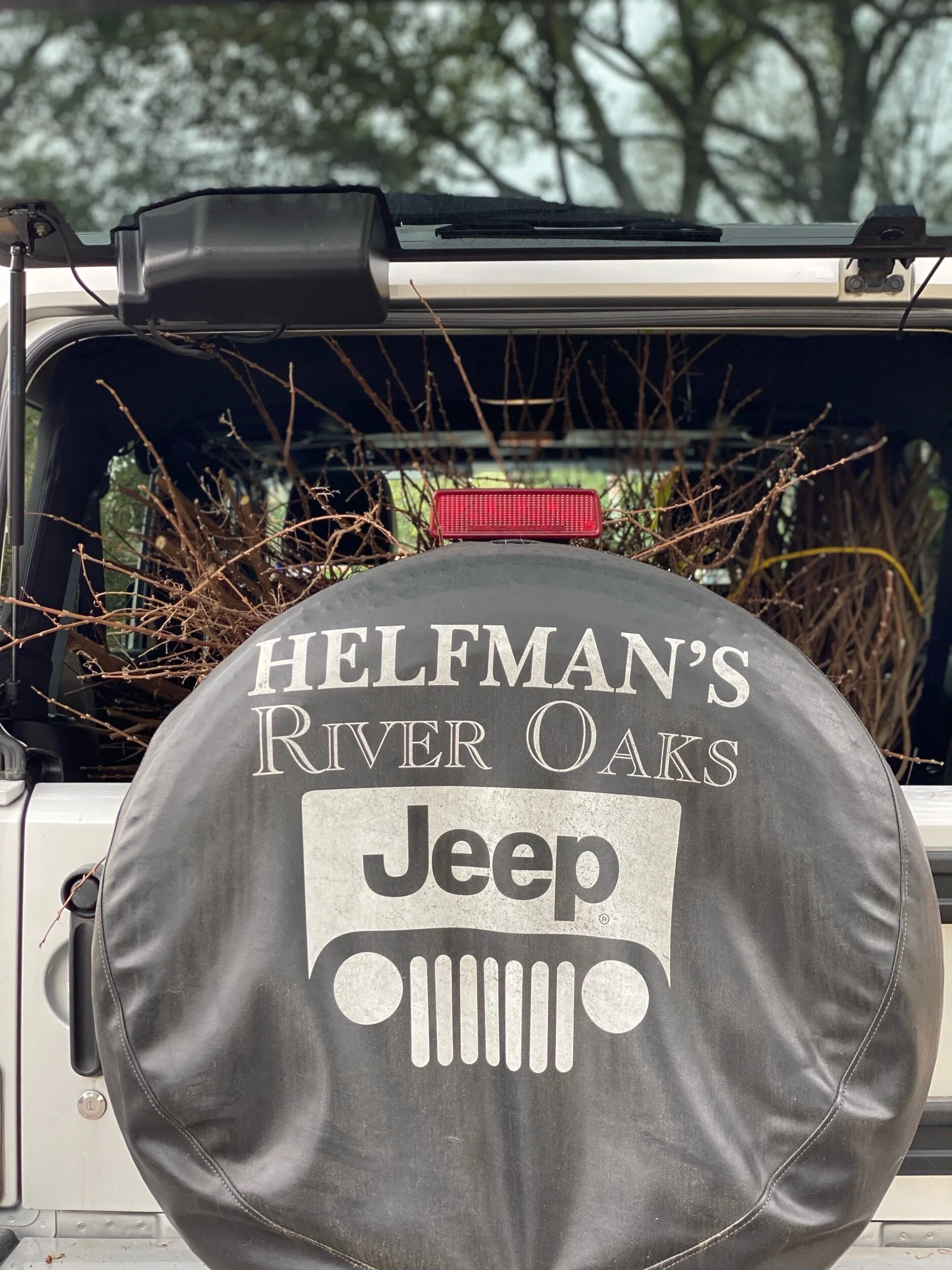
It took two trips

It took two trips

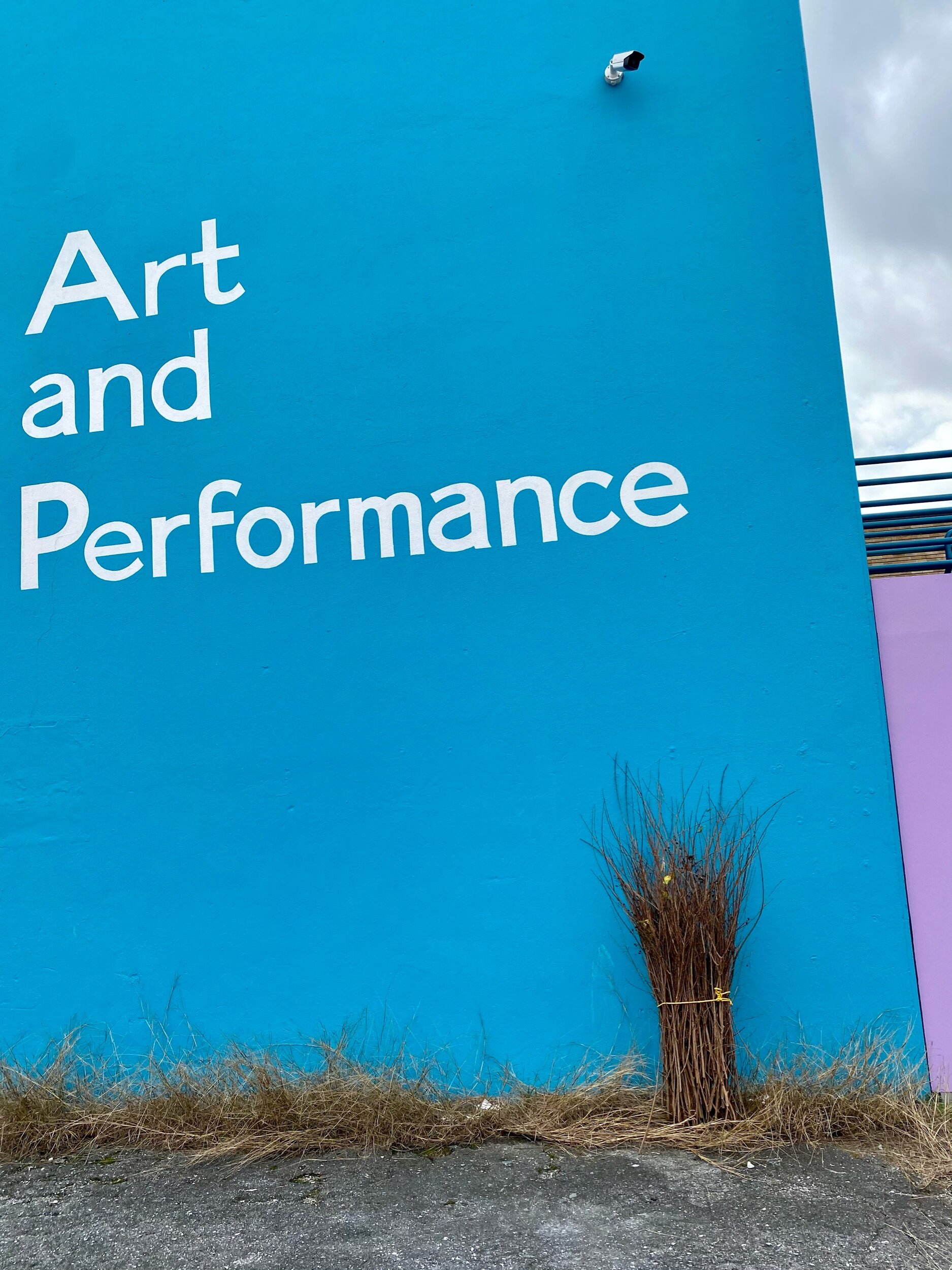
😁 when I bring new materials to Lawndale, I like to photograph them on this turquoise wall- documenting my materials. And I have to say! I love the colors - the Textures. I declare this installation number 1. Untitled.

😁 when I bring new materials to Lawndale, I like to photograph them on this turquoise wall- documenting my materials. And I have to say! I love the colors - the Textures.

I declare this installation number 1. Untitled.

This technically is not Lawndale property, the wall is theirs, but the lot is unfortunately not owned by the institution. The lot is vacant. I get all the bundles out so I can pick up load number 2.

Installation number 2

Installation number 2

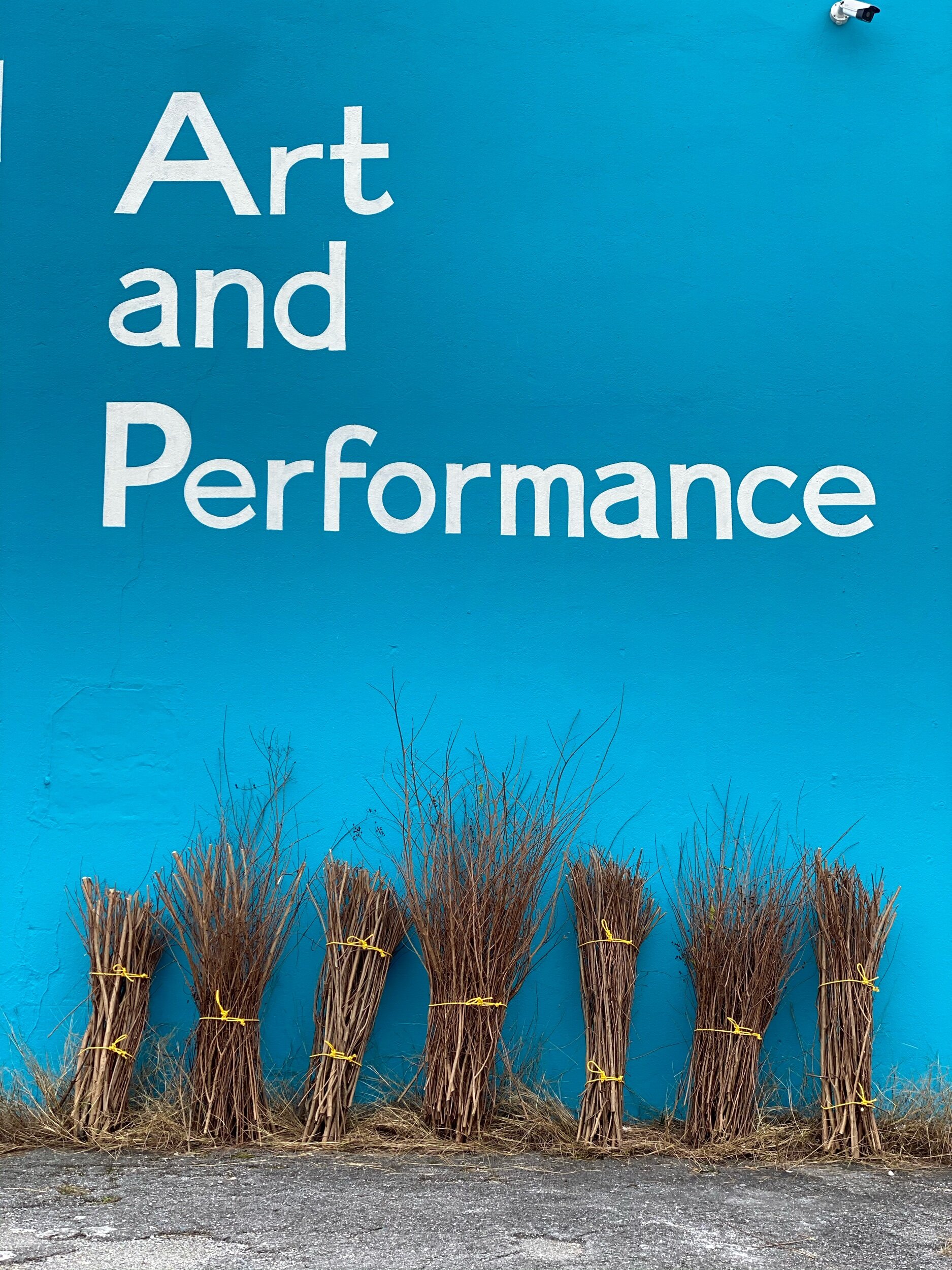
Installation number 3 The yellow ties make my heart sing, that rich brown against the turquoise, and the golden grass softening the base, I am in heaven. I see ballerinas chins up, lined up to take their bows center stage.  I had one left.

Installation number 3

The yellow ties make my heart sing, that rich brown against the turquoise, and the golden grass softening the base, I am in heaven. I see ballerinas chins up, lined up to take their bows center stage. I had one left.

A painter from last week left their yellow roller- waste not want not. The clippings Are rich on the violet too.

A painter from last week left their yellow roller- waste not want not. The clippings Are rich on the violet too.

Sometimes I feel guilty that I love my work so much.

Sometimes I feel guilty that I love my work so much.

Rumblings - work in progress-

Neonicotinoids disturb bumble bee and flies sleep and ability to know when to forage. It is banned in the EU and not in the US. This isn’t enough, these products used in urban gardens harm bees. Articles like these inspire me to plug on.

I have lost count

I have lost count

artist statements are also works in progress

as it sits

RUMBLINGS

Artist statement

A rumbling in the distance is nature's way to alert living creatures to their environment.

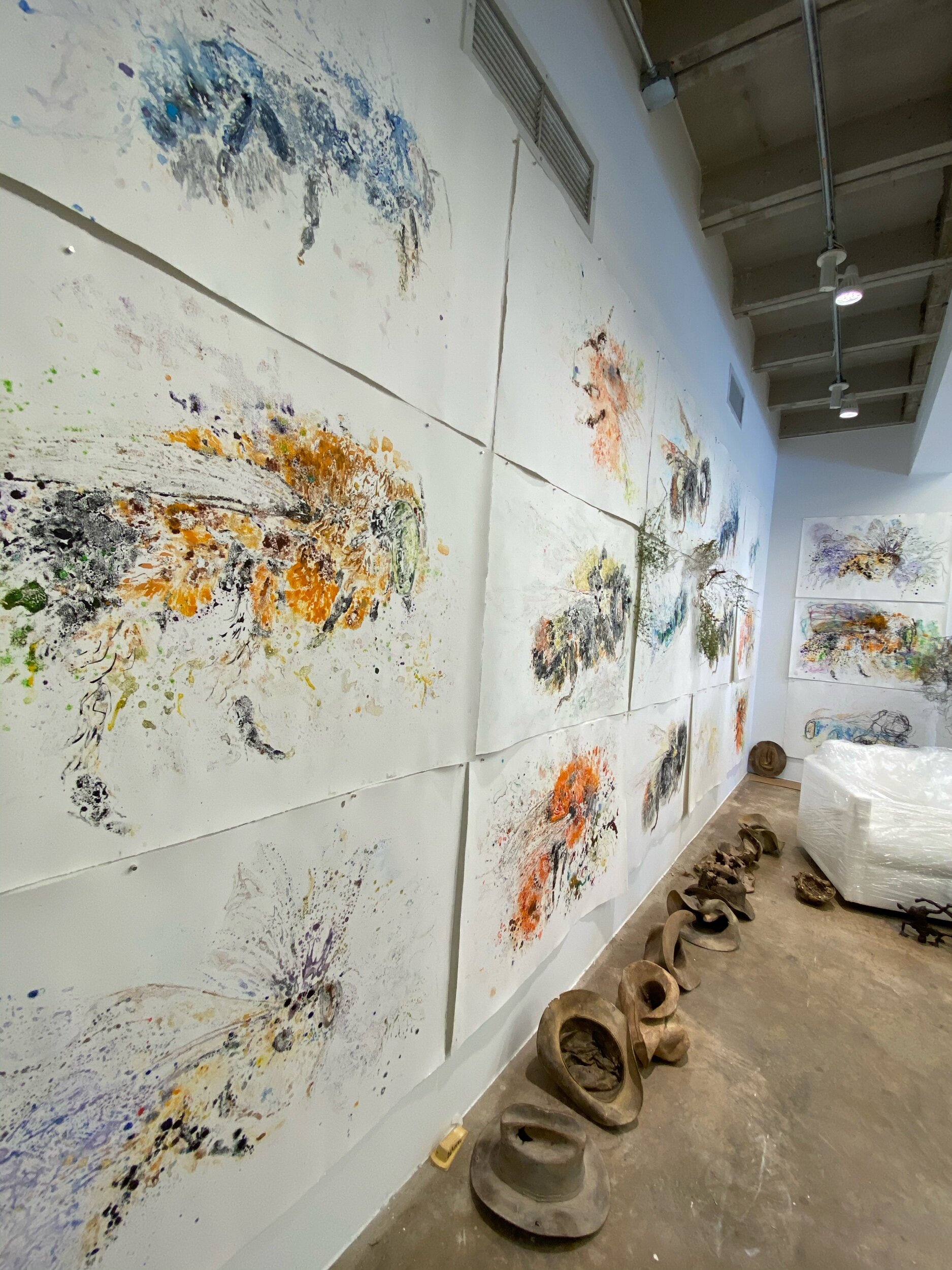
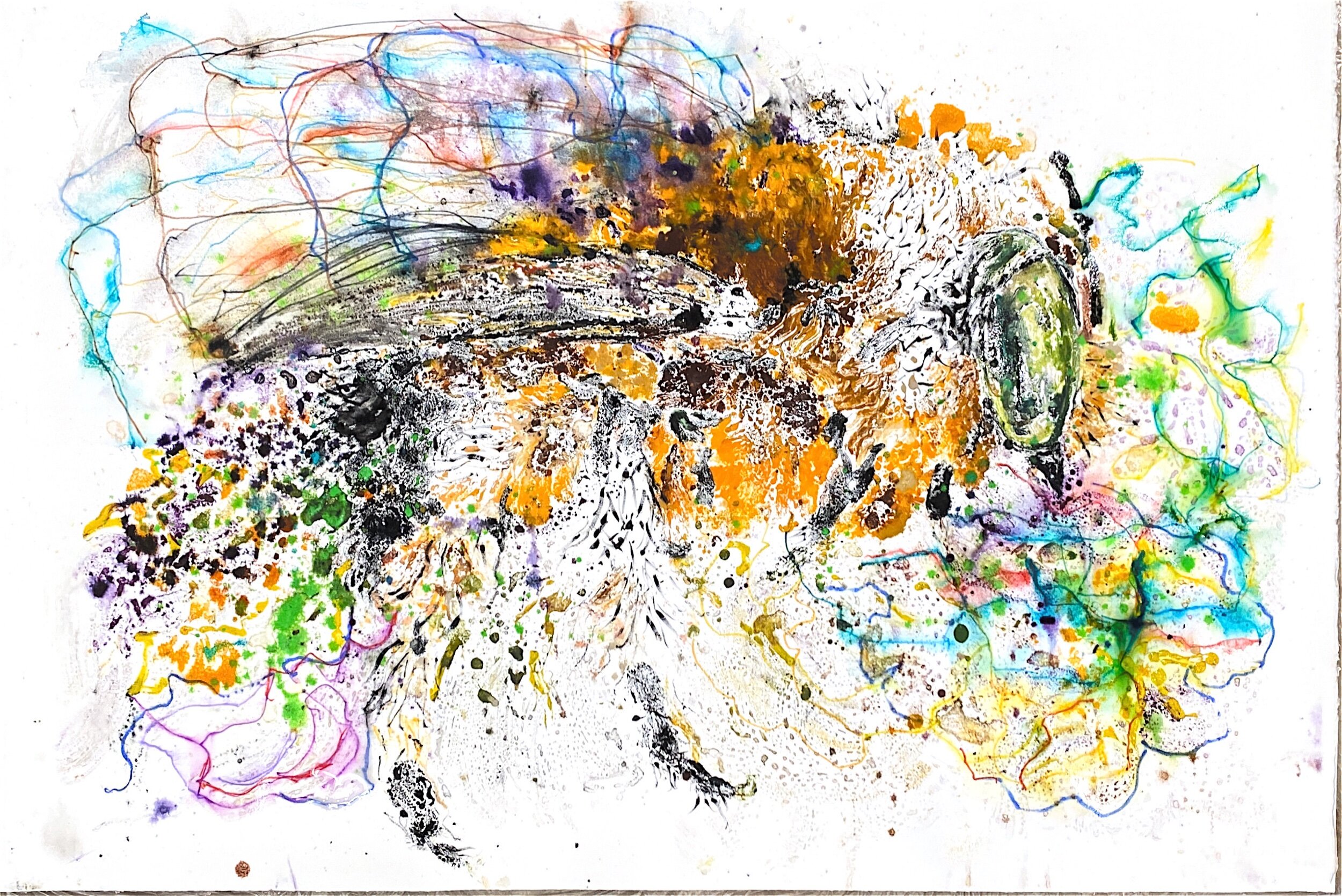
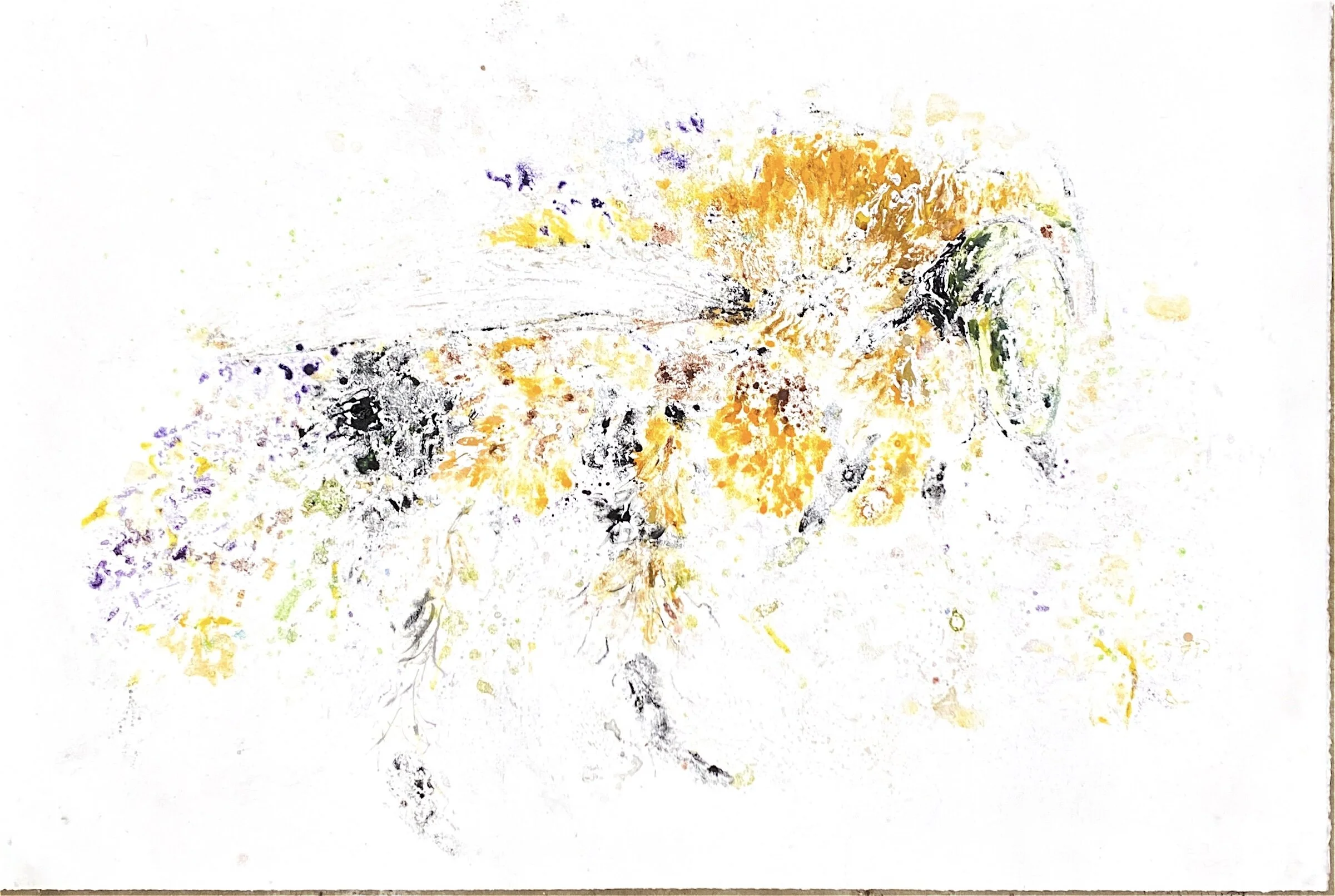
Rumblings is a work in progress, a monumental collection of fifty 30" X 44" watercolor monotypes that draw attention to the endangered knowledge of the 20,000 species of wild bees.

In these works, I carefully manipulate watercolor ink, and solvent into a chaos of infinitely miniscule paint particles. The materials are interconnected across the over-size monotypes, paralleling the synergistic, aqueous effects of the untold bee species' magnetic attraction to golden dust and their corresponding fragility due to the applied chemicals that flood residential gardens and industrial agriculture. Closely studying their exceptional ability to buzz and pollinate with their exceptional pollen-adhering bodies, I use abstraction and zoom in to depict the organized mayhem of their movements.

The installation of Rumblings inspires curiosity, alerting all viewers to pay attention, asking them to consider the unintended consequences of their actions in our-interconnected micro ecosystems. It is a resounding call to decrease pesticide usage, provide habitats for nesting, and plant native indigenous plants providing nectar for the bees that are responsible for 70% of the foods we eat.

What I do not know is when and where they will be installed, when that is in the picture I may find ways to connect the pieces visually. That will have an impact on the statement. Until the plant beautiful native plants.

There are bees that have not been seen since the 60’s that are not listed as endangered.

The bee that pollinates tomatoes is not the honeybee.

Summary from sciencedaily.com

The yield and quality of many crops benefit from pollination, but it isn't just honey bees that do this work: bumble bees also have a role. A team has used innovative molecular biological methods and traditional microscopy to investigate the pollen collecting behavior of honey bees and bumble bees in agricultural landscapes. It turns out bumble bees take much more pollen from different plant species than honey bees to satisfy their need for protein.

bumble bees are superior pollinators of tomatoes than the honey bee. The southern carpenter bee also pollinate tomatoes.

IMG_9496.jpeg
IMG_9498.jpeg
IMG_9500.jpeg

This is what I call activism - super trees

Widespread environmental change begins with envisioning (and making visible) the wisdom already inherent in the natural world. This is an inspiring example of change in the right direction. Native super Trees in the right places.

Thank you Molly Glentzer for making visible the beautifully written story Houston's newest heroes are native ‘super trees’ with special eco-powers

“Live oaks are the heaviest lifters, able to sequester 268 pounds of carbon emissions and absorb more than 2,600 gallons of flood water and 2 pounds of greenhouse gases by the time they are 10 years old. The top 12 super tree list also includes, in descending ranking, box elder, laurel oak, red maple, river birch, American elm, slipper elm, tulip tree, American sycamore, green ash, loblolly pine and white ash.” - in the words of Molly

IMG_3830.jpeg

Turning back the evolutionary clock evolution in urban neighborhoods

4" X 13" X 8"

bronze

photo by Nash Baker

The sidewalks in my neighborhood are my nature trail. I walk with my eyes on the prowl for intriguing insects, exoskeletons, insect wings, feathers, dried flowers, twigs, leaves, seeds, and pods — things my children’s eyes taught me to find during our walks together over the years. Since 2013, these biological mementos have found their way into my bronze work in the molds of nests. Each piece is a reflection of that year’s ecology and records the time and movement of environmental restoration.

Initially, I was unaware of the landscape around me, but as my art dove deeper into environmental restoration and Hurricane Harvey changed our city, I realized that my days are, in fact, full of sterile surfaces. With COVID-19 quarantine, children in my neighborhood started venturing outside and looking for things to capture their curiosity. Delighted with their new interest, I realized that the green spaces and puddles children explore now are no longer filled with a diversity of life; the box turtles, bullfrogs, tadpoles, bumblebees, and assortments of flitting insects have evaporated with the spray of insecticides and herbicides in our neighborhoods. The selection is reduced to cicadas, the common beetle, honeybees, a rare native bee, and an abundance of Cuban lizards that dwell in turf grasses, boxwoods, crepe myrtles and oaks. I have awakened to cultural landscape uniformity. COVID has changed how I see the need for perfect lawns; the dirty truth is mosquito home-misting machines, obsessive weed control, artificial turf and a lack of plant diversity have turned urban neighborhoods into manicured monocultures for humans exploring video games. These habitat changes in massive population centers are fast-forwarding evolution: loss of wildlife habitat is one of the biggest threats facing many animal species. This does not have to be—it is a societal choice, the ability to speed up evolution can go both ways. Through my works – Lawndale’s Symbiosis, Endangered Knowledge: The Soul of Humus, Gust, World of Hum, Rumblings and Root to Water—I am committed to creating work that educates and helps communities change how we landscape our cities to include valuing the natural world and turning back evolution.

In Dirt to Soil, Gabe Brown quotes Don Campbell, “If you want to make small changes, change how you do things, if you want to make big changes change how you see.” When I come across intriguing flora or fauna on my urban trail, albeit few and far between, I see them as evidence that can inspire a revolution in the landscape. If they are expired and will not decompose, I collect them. I see these bronze cast nests as urban wildlife fossils—biographies, every year a chapter recording Houston's environmental awakening. As an optimist—environmental—art—activist my work focuses on revealing endangered knowledge to change how we see urban landscapes and activate cooling the planet through our cityscapes. As migratory birds return year after year to build nests and raise their young, I return with optimism in my step. I envision witnessing the return of four hundred plus butterfly species and eight hundred bee species native to Texas. I can see this returned wildlife capturing my future grandkids' imaginations. I will tell them the story of how insects almost disappeared and how every yard is a micro-ecosystem and matters. I imagine their hands building nests with a diversity that I cannot imagine. I hear their voices telling me in one breath about the fuzziest-biggest bee they ever saw, covered in golden dust nesting in a patch of ground beneath the sunflowers not far from the silverleaf nightshade. I see them bringing me a tail-feather from a Red Shoulder Hawk and asking, "what does it hunt" and is it the bird that sounds like the squirrel's screech. After a rain, I see them finding two bullfrogs attached and their tiny ribbons of floating eggs in a pond. I hear them tell me not to touch the caterpillar of the southern flannel moth, and asking me, “how does it sting?”. At the low of evening when dragonflies hover; I will watch as they study the night heron’s quiet solitary stance as it stalks small citizens of the grass, I will smile as they question the raucous warnings of ravens and the scoldings of nut collecting squirrels. I will feel their excitement when neighborhood raccoons appear from storm sewers and scavenge treats from dog bowls and opossums waddle fence lines, searching out grubs and open garage doors. I will follow their eyes when the silent patrol of the lone coyote visits the shadows of our boulevards from their bayou bound dens. I let them sleep outside and hear their heavy eyelids ask, why do the owls ask who? I listen as they wake up to a concert of white-winged doves. I will feel peace when they are wise to nature.

Cklement_Same time next year_200807_3468.jpg

Lawndale Art Center - symbiosis

Lawndale - Symbiosis - extractive

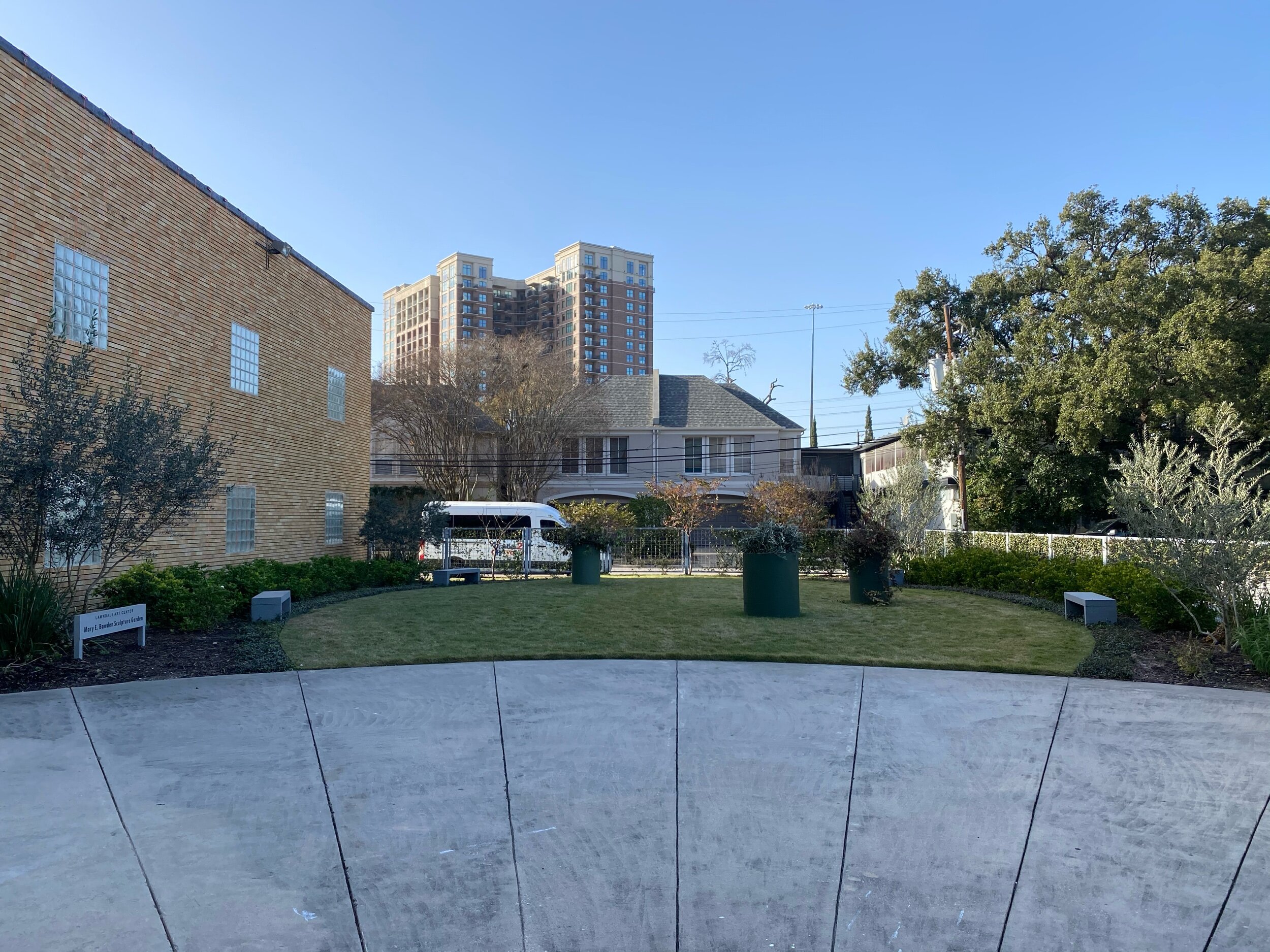
In Symbiosis I am stretching my practice and creating a living piece of site-specific art activism that will reimagine a 53.5’ X 48’ traditional urban landscape/sculpture garden and answer the question: how do we holistically restore an ecological balance in Houston? Symbiosis is a collaboration with Lawndale Art Center’s community, neighbors, urban wildlife, and the coastal prairies carbon cycle.

The west border of the garden has five 1 1/2 year old Crepe Myrtle’s a tree famous for murder. The murder refers to badly pruning the tree- down to the knuckles. I was not having these Crape Myrtle’s murdered. Today I used a extractive method of sculpting and clipped- nipped - and cut the existing branches. I shaped the branches/armature of the two end trees.

A sculpture garden has the four seasons of the year and a sculpture garden has the additional change of exhibitions. The pedestals from the last exhibit were still in the garden. 🤔perfect way to highlight the beauty in the wild- the imperfect- the not immaculate urban landscape.

FYI- crepe Myrtle’s are not native however they are a cherished gift to the Art Center. As an optimistic art activist I look at the project holistically to include the desires of the Art Centers board.

When I work in wire, or steele if I cut too much I can always weld it back it add more wire they are forgiving materials. When I clip a branch it is gone- no second chance. .

#artactivism #cindeeklementart #symbiosis #lawndaleartcenter #nativeplants #coastalprairie #sculpture

Create Myrtle cuttings wildly place on a pedestal.

Create Myrtle cuttings wildly place on a pedestal.

IMG_5226.jpeg
North West Crepe Myrtle after pruning.

North West Crepe Myrtle after pruning.

Cuttings from two Crepe Myrtle's and the olive trees from a few weeks ago.

Cuttings from two Crepe Myrtle's and the olive trees from a few weeks ago.

South end Crepe Myrtle

South end Crepe Myrtle

The Gift of Crepe Myrtles part 1 — Ready-Mades, Assemblage

Found object — Lagerstromia indica

Size varies 70"– 93" X 49' X 4'

Two of the five Crepe Myrtles on the northwest corner,  before I started sculpting Symbiosis, —  summer of 2020. The first thing I did was release the stakes supporting the trees. Just like humans trees become strong from movement, thickening their …

Two of the five Crepe Myrtles on the northwest corner, before I started sculpting Symbiosis, — summer of 2020.

The first thing I did was release the stakes supporting the trees. Just like humans trees become strong from movement, thickening their trunks and stimulating root growth.

The Crepe Myrtles were generously donated to the garden before I started sculpting Symbiosis. Donations are the lifeblood of Lawndale — it is crucial I not clip off that support. Planted in a row on the Travis street side, the treasured trees are the west border of the space next to the fence; they are a significant element of the work, objets trouvés, ready-mades. They anchor, frame and end the assemblage. They are stage left from the parking lot. Many of their characteristics will change every year; they are moving targets, living found objects. I will use them to create the above-ground kinetic components of the sculpture.

detail of the found objects

detail of the found objects

They are stage left from the parking lot. summer of 2020

They are stage left from the parking lot. summer of 2020

There is a symmetry in Symbiosis that balances the needs of the Lawndale Art Center's artists, exhibitions, neighbors, urban wildlife, and the soundscape of urban sculpture gardens. As I prune the Crepe Myrtles, I have to weigh the impact of these elements with every extraction; most features are not physically part of the garden but are part of the whole. Like all sculptures, they have components you can't see; the armature supports everything and the welds that give strength.

The Crepe Myrtles are planted in a row on Travis Street, at the far west end of the garden.

The Crepe Myrtles are planted in a row on Travis Street, at the far west end of the garden.

panorama of crepe myrtles from patio .jpg

This work requires considerable online research and quiet observations: listening, seeing, and questioning; I continue to learn and observe what wildlife these Lawndale treasures will benefit, symbiotically balancing the needs of the living organism in the heart of the arts district on the Coastal Prairie. What would the arts be without the influence of the natural world?

I took this image through the Crepe Myrtles at the Fall 2020 opening. There was plenty of room for social distancing. It was the first COVID event for Lawndale and for me.

I took this image through the Crepe Myrtles at the Fall 2020 opening. There was plenty of room for social distancing. It was the first COVID event for Lawndale and for me.

Crepe Myrtles, part 3 — The culture of gratitude sings.

3.     Lagerstromia indica—Song

Through my research, I found that Lagerstromia indica is not a Texas native species, but they do support urban wildlife. They provide nourishment for the American Goldfinches and House Finch There is hope that they will support the Coastal Prairie pollinators— some varieties are reported to support Bumble bees in Florida.

In my holistic view, as an artist of living soil, caretaker of urban wildlife, and propagator of goodwill in an art community—the cinnamon bark-free skin of the trunks of these Lagestromia indica give rise to the culture of gratitude for the gifts that are the lifeblood of the institution. Their blossoms paint the grey clouds with an appreciation for their generous donation, their limbs serve as dining rooms for winter feasts seated with our feathered friends, and their leaves shade the walkway of our neighbors.

1. seed and  twig of seeds CREPE MYRTLES  PRUNING 2:21Cindee Klement_Soil_210203_3767.jpg

My cuts will build the armature that will allow this gift to unfold into a backdrop of texture and seasonal color for exhibitions in the garden, blocking the visual noise of powerlines and parked cars on Travis Street, enhancing the photographic documentation in the space that art institutions require.

1. chop clip crop CREPE MYRTLES  PRUNING 2:21Cindee Klement_Soil_210203_3752.jpg

My marks will invite the fellow Finches' flight song to seasonally punctuate the murmur of white noise hummed by Main street The knots and knees of my carvings will serve as stages for the flutter between warbling-jumbled short notes that stir from the beaks as the feathered gentlemen court the fertile finches with seed.

white noise hummed by main street
main street
When Crepe Myrtle’s blossoms fade they form seed heads in the shape of green berries. Over time the berries turn brown and crack open. Inside the  six pronged pods are the seeds that feed the Golden Finches.

When Crepe Myrtle’s blossoms fade they form seed heads in the shape of green berries. Over time the berries turn brown and crack open. Inside the six pronged pods are the seeds that feed the Golden Finches.

The elbows and joints of my work will be the pier and beam to their nests. They will shelter the new parents as they warm and protect their light blue and brown speckled eggs from predatory creatures. From their limbs will hatch the future soloists of the garden. I can hear them now. The Crepe Myrtles are a gift that balances the humanities and, in time, will embrace the wild. They are gift — gratitude — song.

Crepe Myrtles, part 2 — The pruning and trimming is actually the creation of a living sculpture and what that effects are.

Lagerstromia indica —The ways of sculpting symbiotic relationships.


In January of 2021, I shaped the Crepe Myrtles. The living organisms impacted by this creative work are an assemblage of considerations. In holistically sculpting a regenerative site-specific sculpture of living organisms, I have to balance the hierarchy of the living creatures; with every cut, I ask how it will impact the whole?

Golden-eye Lichens  - Teloschistes chrysophthalmus- Native to the United Kingdom these lichens survive in harsh environments where algae cannot normally survive. Lichens enable algae to live all over the world. They also provide a means to convert c…

Golden-eye Lichens - Teloschistes chrysophthalmus- Native to the United Kingdom these lichens survive in harsh environments where algae cannot normally survive. Lichens enable algae to live all over the world. They also provide a means to convert carbon dioxide in the atmosphere into oxygen. I found two small patches on one of the Lawndale Crepe Myrtle’s. I took this before the Texas freeze. It survived but is now struggling. Lichens only grow on Crepe Myrtle’s that are struggling, but they do not harm the Crepe Myrtle’s. I am hunting for more information about the relationship between the lichens and the Crepe Myrtle’s.

Cutting-clipping-chopping, I work to balance and enhance four features; make them aesthetically attractive, shape the Crepe Myrtle branches to benefit the birds, the neighboring community,  pollinators and other metropolitan creatures underserved an unknown. I researched how landscapers recommend you prune Crepe Myrtles. I did not want to Crepe Murder them.

Extraction

Extraction

LOCAL CRIME SCENES

EVIDENCE OF THE COPYCAT MURDERS PLAGUING HOUSTON’S WILDLIFE HABITATS.

I also questioned past practices developed without considering the impact on nature. Landscapers recommend cutting away all horizontal branches for human visual pleasure. That gave me pause—without any horizontal elements, how do birds and squirrels support their nests? I started looking around at birds' nests, something I do all of the time anyway. I observe birds building their nest in protected areas of trees where many cross branches stabilize their nests and protect from wind, sun, and predators.

BIRDS NESTS, PROTECTED FROM WIND, AND SUN BY A WEB OF TREE BRANCHES, AND

HIGH IN THE TREES, SAFE FROM PREDATORS ATTACKING FROM ABOVE.

BIRDS NESTS, PROTECTED FROM WIND, AND SUN BY A WEB OF TREE BRANCHES, AND

HIGH IN THE TREES, SAFE FROM PREDATORS ATTACKING FROM ABOVE.

Left- high in the neighboring Crepe Myrtle is a nest.. RIGHT- A close-up showing how much protection the web of limbs provides for the nest.

If I were only shaping the trees for the birds, I would not cut a twig. For the neighbors walking on the sidewalk, I used the sculpting method of extraction to remove all branches poking out of the fence under 6 feet.

A Neighbor walking along Travis Street. In the future, the white Crepe Myrtles will canopy the sidewalk and provide a shaded path.

A Neighbor walking along Travis Street. In the future, the white Crepe Myrtles will canopy the sidewalk and provide a shaded path.

On the fence's museum side, I pruned the trees high off the ground as the flowering natives we plant beneath them will need lots of sunshine to support various pollinators. I managed to create a few nooks and Ys where limbs came together. Next year, the trees should be tall enough to provide lots of safe branches for birds to perch on that will stretch high over the sidewalk and shade the neighbors.

I picture a row of clouds spun like cotton candy out of white Crepe Myrtles blooms arching over the fence protecting those strolling from their townhouses to the museums, hiding powerlines from view. — time will twll.

I picture a row of clouds spun like cotton candy out of white Crepe Myrtles blooms arching over the fence protecting those strolling from their townhouses to the museums, hiding powerlines from view. — time will twll.

The trees limbs are the armature for several components of the assemblage.