IU - How do you build a labyrinth? From 8”X 10” to 83’ × 54’

How to go from an 8” X 10” paper to a field, Is the question ruminating in the back of my mind every day.

Unfortunately Bloomington is in between art supply stores. As a result I could not buy locally any paper larger than 8” X 10” . While I waited for an order to come in I pieced together 8 - 8” X 10” pages and scaled it up 2X.

Here I started thinking about how to take the design from

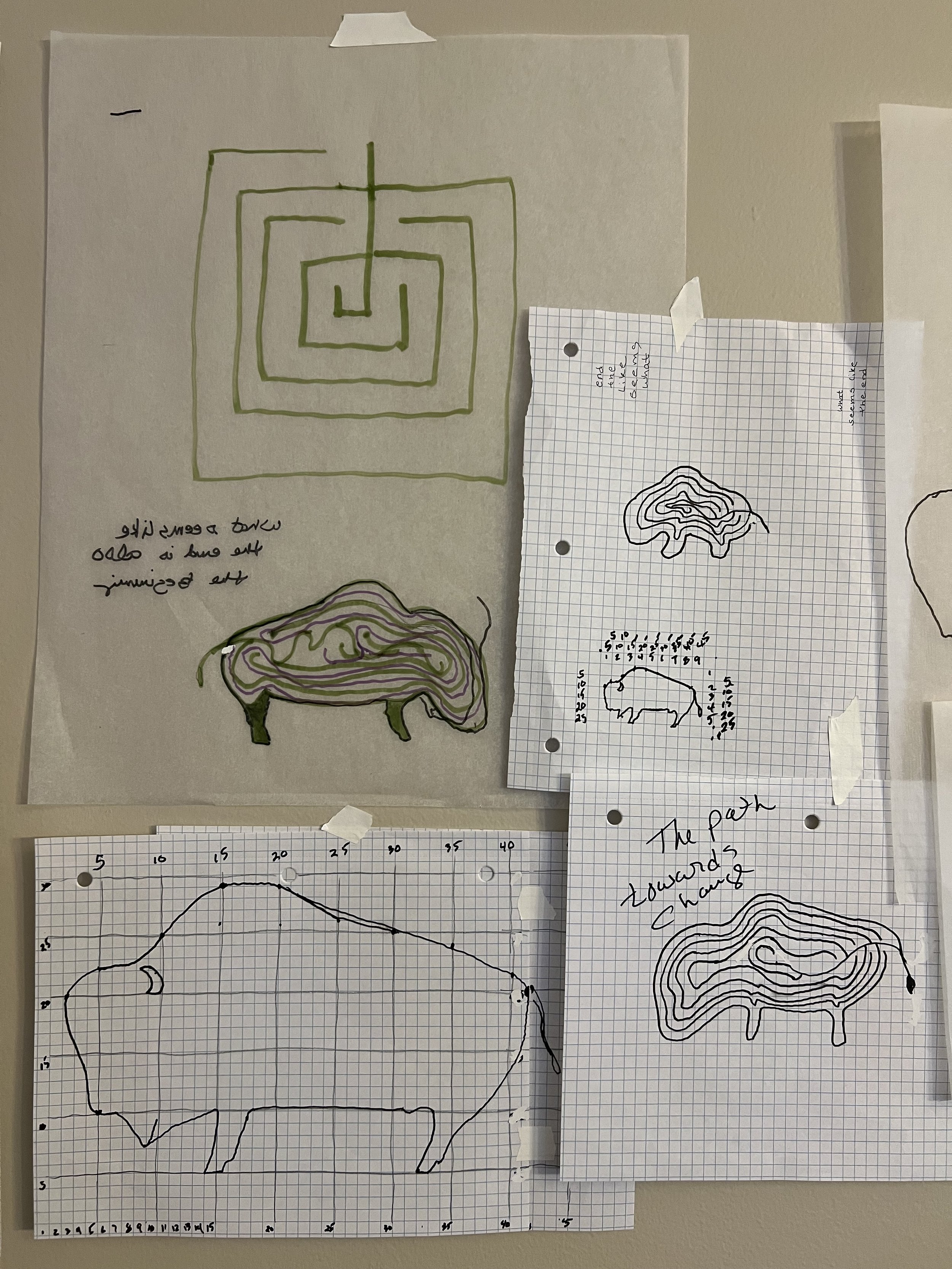
When I scaled it up 2X I started seeing that I could take it to any size I wanted by using (X, Y) coordinates. I am using a 20” scale.

8- 8” X 10” paper to a make a 18” X 30” sketch.

How I could get a 83' × 54’ rectangular grid with right angles on a field was a big concern.

An idea came to me when I toured the charming Wylie House, a fascinating piece of history nestled just off campus. This historic gem, built in 1835, was once the cherished home of Andrew Wylie, the inaugural president of Indiana University.

The Wylie House master bedroom.

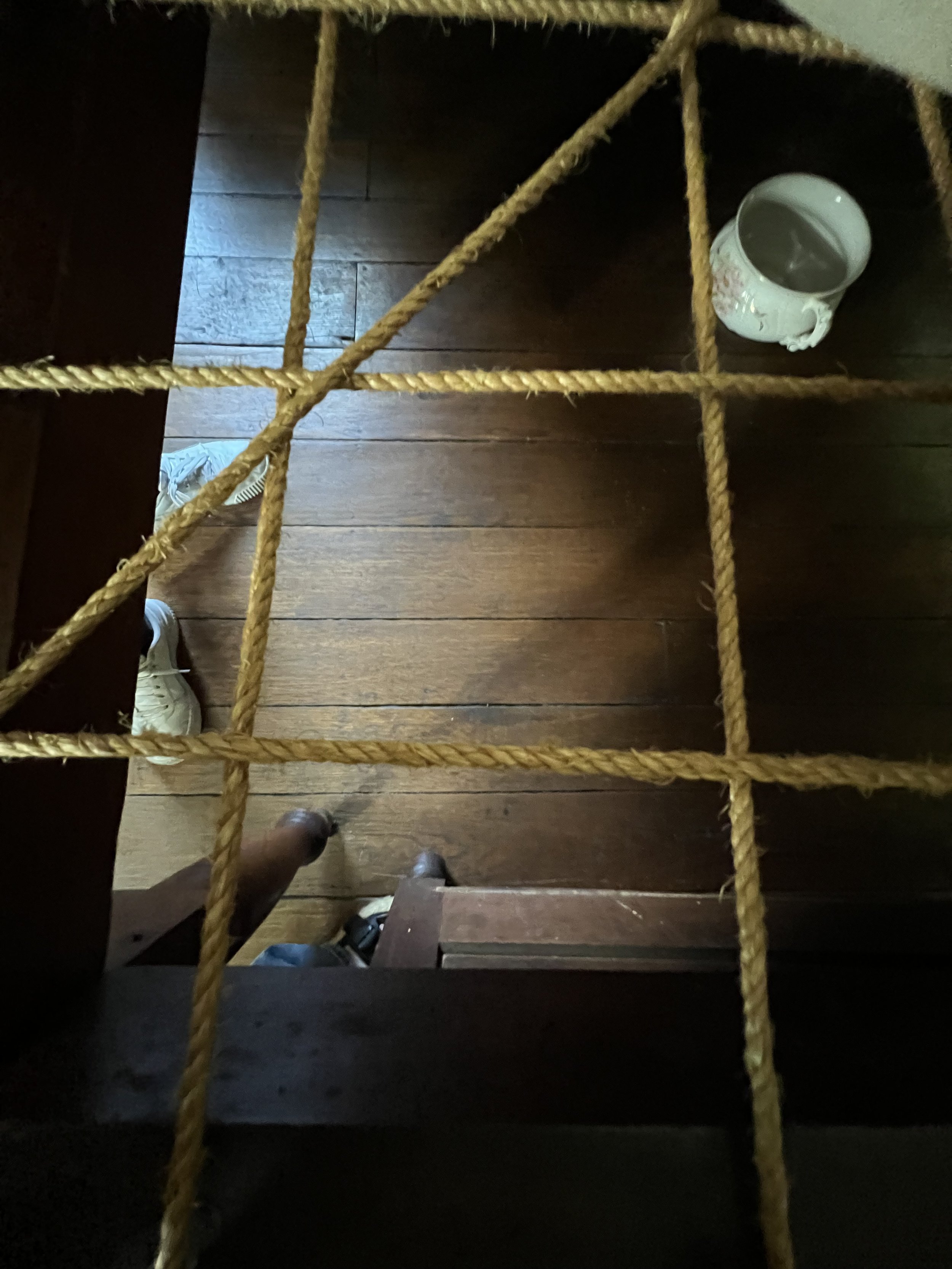
During my visit, the knowledgeable docent unveiled a captivating detail - the simple rope framework that upheld the mattress.

The antique bed’s rope framework that supports the mattress. What looks like a cup is the chamber pot.

A rope grid might be the answer to getting a proper rectangle With right-angled corners and grid onto a field.

This visual solidified my strategy for bringing the labyrinth design from paper to reality in an open field. The framework I need is 83’ × 54’ the vertical and horizontal ropes that cross every 20”. We can twist tie the coordinates together making the rectangle form.

IU - What kind of What Labyrinth should I make? What is my site-specific message?

I wrestled with this question. There was not anything in either of Kurt Vonnegut’s books that inspired me. I do feel he wrote about what he knows and my work should be true to my own heart. A list of the obvious came to my mind- butterfly, chrysalis, beatle, seed, flower, IU letters…….

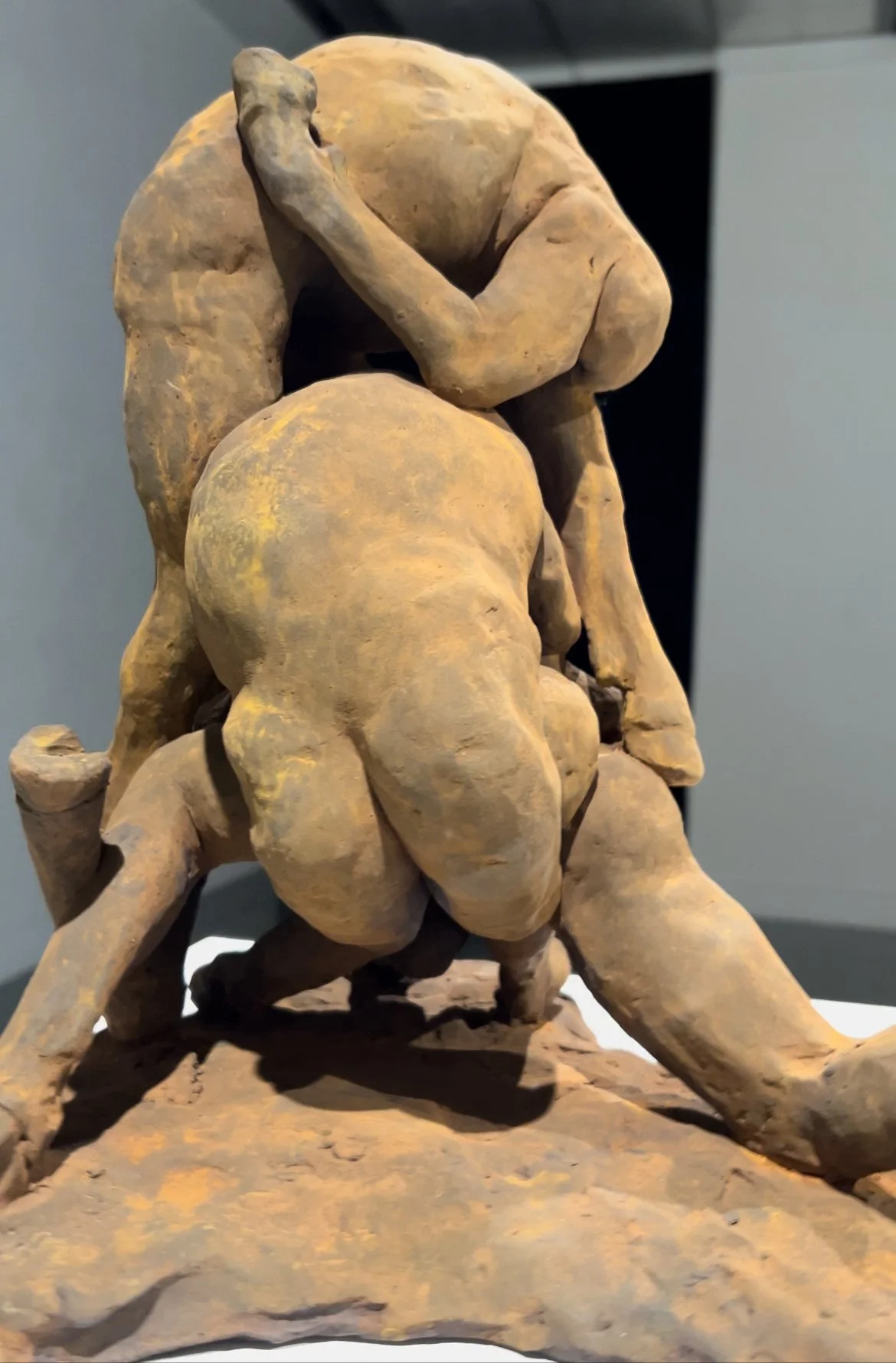
After a full day at the Eskenazie Museum on IU’s campus I was intrigued by this piece.

The museum label read-

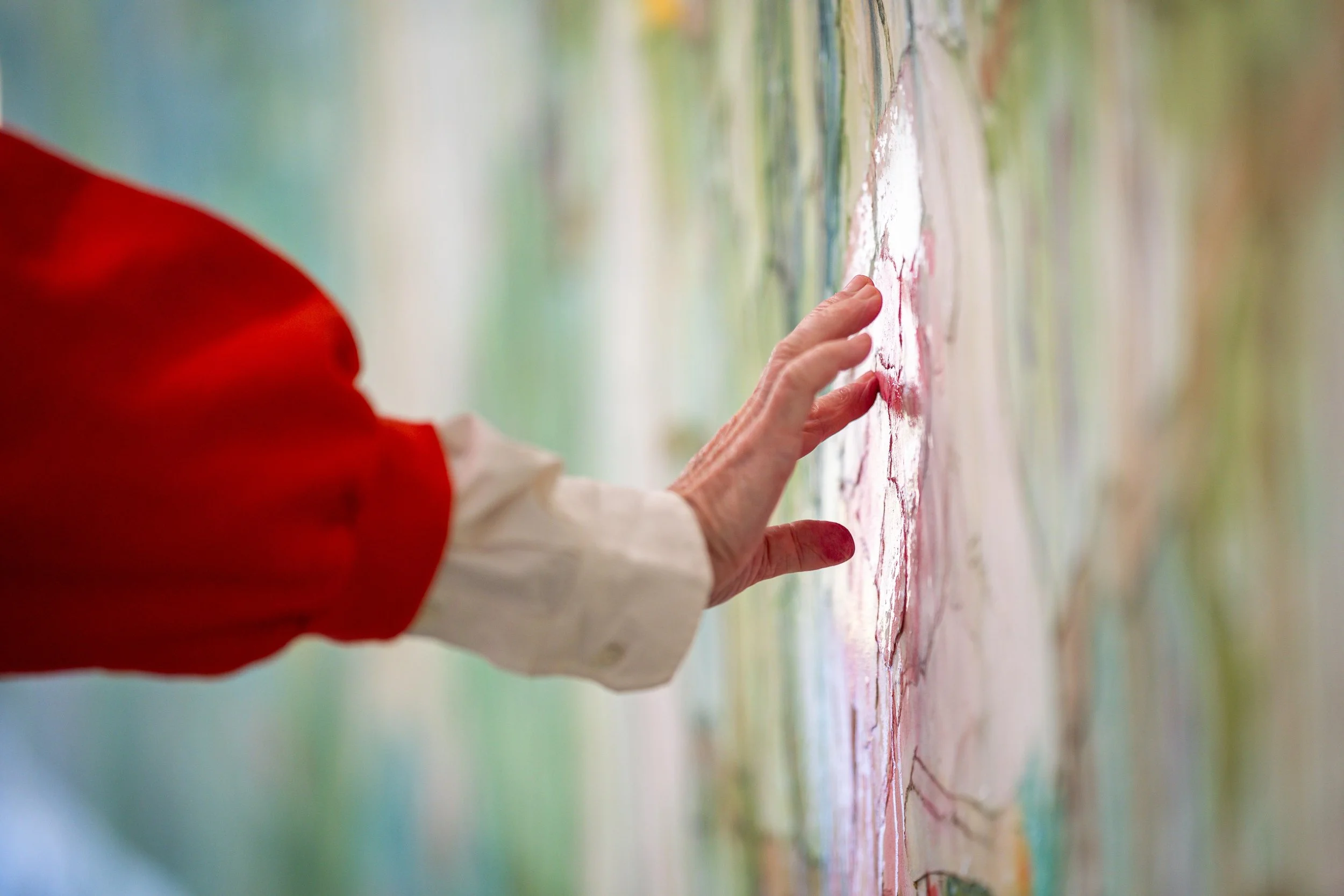
According to traditional Bamana beliefs, an energy or force called nyama animates the universe. Objects such as this boli are made to harness that energy and use it for the benefit of the community. The thick, crusty surface is the result of offerings such as millet, other vegetal matter, beer, and chicken or goat blood, all of which are applied to attract nyama and serve as physical evidence of its presence. A boli does not represent a particular creature.

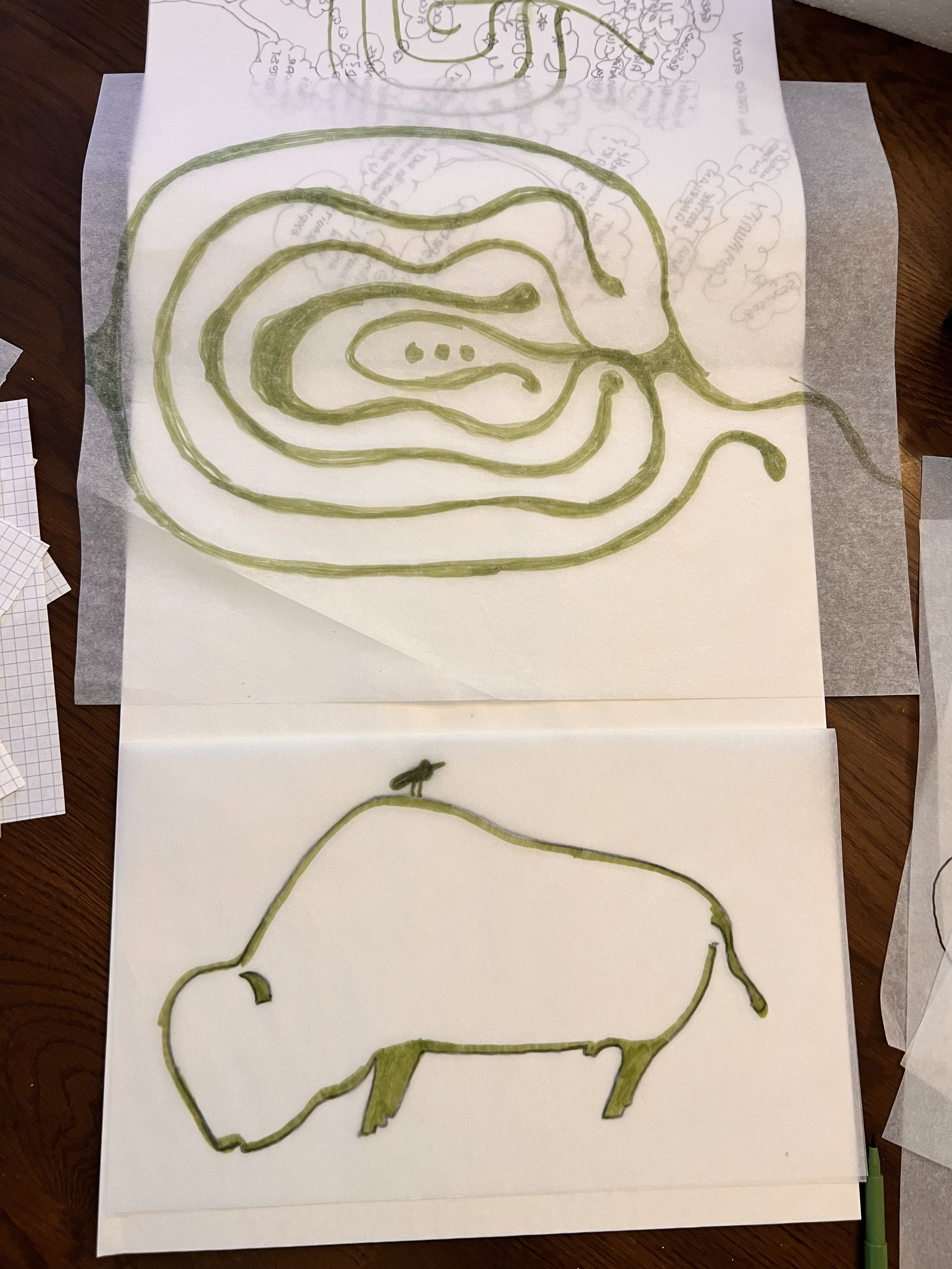
It is kind of perfect., should I make another bison? Can I make a Boli bison labyrinth?

I can see it.

Here are the steps I took

More to come tomorrow.

IU - How do you draw a labyrinth?

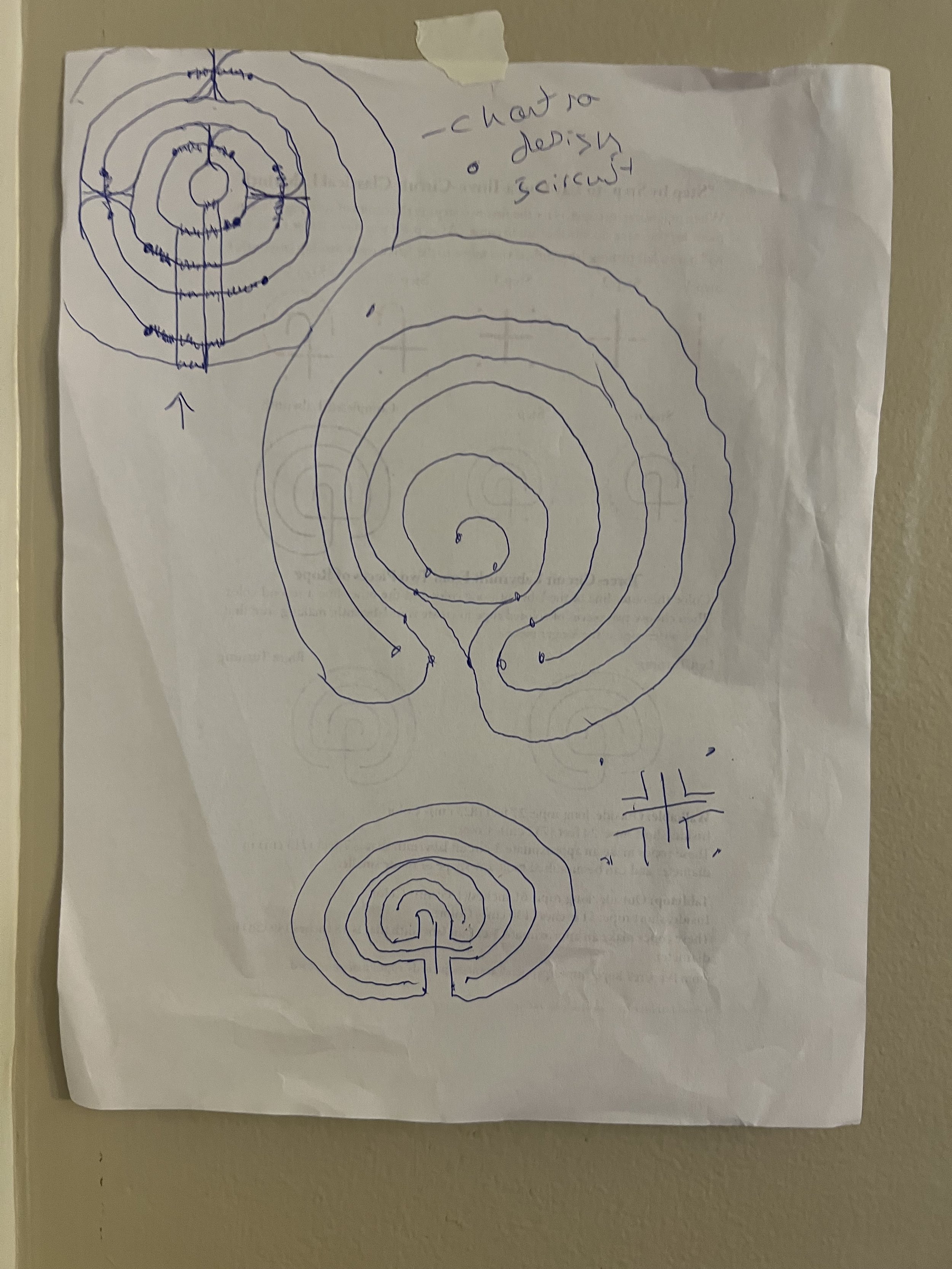
During the first week of my residency at IU when I wasn’t exploring the city, University, art, museums, ecology, architecture, and landscapes I was experimenting with labyrinth designs.

Some sketches of three different types of kabyrintgs.

This design starts with a simple cross. I need to keep this simple.

Turning the cross/square labyrinth upside down I decided to attempted a seed labyrinth. I think a design less feminine will be better.

Artist in Residency at Indiana University - Living the Dream Installation — Labyrinth

Living the Dream as an Artist in Residence at Indiana University!

I couldn't believe my luck when I was offered the opportunity to be an artist in residence at Indiana University. Not only would I have access to all the incredible resources and opportunities of a renowned research university, but it could provide the opportunity to fulfill one of my monumental artistic visions.

As part of my two month residency, I'll be giving artist talks, exploring local artist studios, landscapes of southern Indiana, and creating a special piece to be exhibited at the University or in the beautiful town of Bloomington.

During my interview for the residency, I couldn't help but ask about the size of the campus. And just as I suspected, it is massive. I imagined it with expansive fields of turfgrass. I remember feeling my heart swelling with excitement and hope. Could Indiana University be the site for the monumental installation I dream of?

Let me explain - This summer seeing CARBONsink develop within Symbiosis at Lawndale Art Center and watching the community enjoy entering it made me think. I wondered if the CARBONsink relief was a step to create a larger piece using the same process but with a deeper meaning and making a bigger impact. A little bit of research regarding Greek philosophers and labyrinths and these thoughts turned into a dream. I have a vision of completing a living labyrinth.

I began studying the designs, meanings and histories of mazes and labyrinths. I was lured by labyrinths pretty fast. Mazes are puzzles and meant to confuse you. Labyrinths check all ny boxes.

-A labyrinth is a meditation. —

-There is 1 way in and 1 way out. What seems like the end is also the beginning. It is the perfect metaphor for inspiring ecological - societal perspectives.

-As an artist whose work in the simplest form looks at time and movement a labyrinth is a logical and interesting medium.

-A living labyrinth to convert fields of turfgrass into a living sculpture to regenrrate life.

Typically in an artist in residency one would take some time getting to know the University and the City before propsing their work. I could not contain my excitement so asked if the University would be interested in a site specific living labyrinth? It would be a social sculpture in the form of a relief that demonstrates the steps for turning the largest crop in the US - turf grass into the largest CARBON sink in the US. Ed the Associate Vice Provost for Arts and Humanities responded with great enthusiasm in his voice. Every summer the University and the city of Bloomington celebrate the life and writings of Kurt Vonnegut with the Granfalloon Festival. A living labyrinth would be a fitting art installation in conjunction with the festival.

For inspiration on my drive to Bloomington, I listened to Cat’s Cradle and Slaughter House Five.

IU - Exploring the Intersection of Art and Humanity To Tackle Climate Change? Insights from Artists Miles and Melanie.

"If you hit a wrong note, it's the next note that you play that determines if it's good or bad." — Miles Davis

In humanity's quest to harmonize natural processes with industrialization and tame the beast of extreme climate, I consider problem-solving approaches from my artistic practice and the artistic world.

As a master of improvisation Davis embraced musical mistakes as valuable chances for growth—an approach we can apply to all aspects of life. How we respond to so-called errors ultimately shapes the final outcome. Humans have the unique ability to transform something "wrong" into something "right."

How does this apply to our environmental issues? Consider that as a species homosapien is a young species. Having thumbs instead of hooves our brains have evolved to create, and invent, to problem solve to make us not mammalian beasts but human.

Mountain Moving
On exhibition in the GRUNWALD GALLERY of ART IU.

The artist Melanie Cooper Pennington teaches Sculpture at Indiana University.

One of homosapien’s greatest inventions is industrialization. We are now clearly seeing and feeling the impact of industrialization on our ecosystems. The most important question humanity has to answer is — will industrialization be a “bad” note?

By adopting Miles’ mindset, we can discover new and innovative ways to address climate change and find harmony between nature and industry. As an eco-artist I consider problem solving perspectives that I use in my creative practice to visualize and transcend conventional thinking to create a better world.

I am engaged in an artist in residency program at Indiana University direct by the Arts and Humanities Department. The university recently launched an Environmental Resilience Institute, as well as a new A&H laboratory dedicated to Environmental Futures. They created a research platform to allow arts and humanities scholars at every level of education—to connect.

My first visit at IU was with Melanie Coooer Pennington. Melanie, creates mammalian sculptures to investigate the borders between the human/animal body and its psychological states. Melanie’s work provides an emotional visual to the power of thumbs by replacing them with hooves. Thumbs changed everything.

I saw Melanie’s Mountain Moving, thought provoking sculpture the day I started writing this post about Miles Davis and his creative process.

I believe through art and culture, we can move the industrial mountains facing humanity — our next note can create a masterpiece.

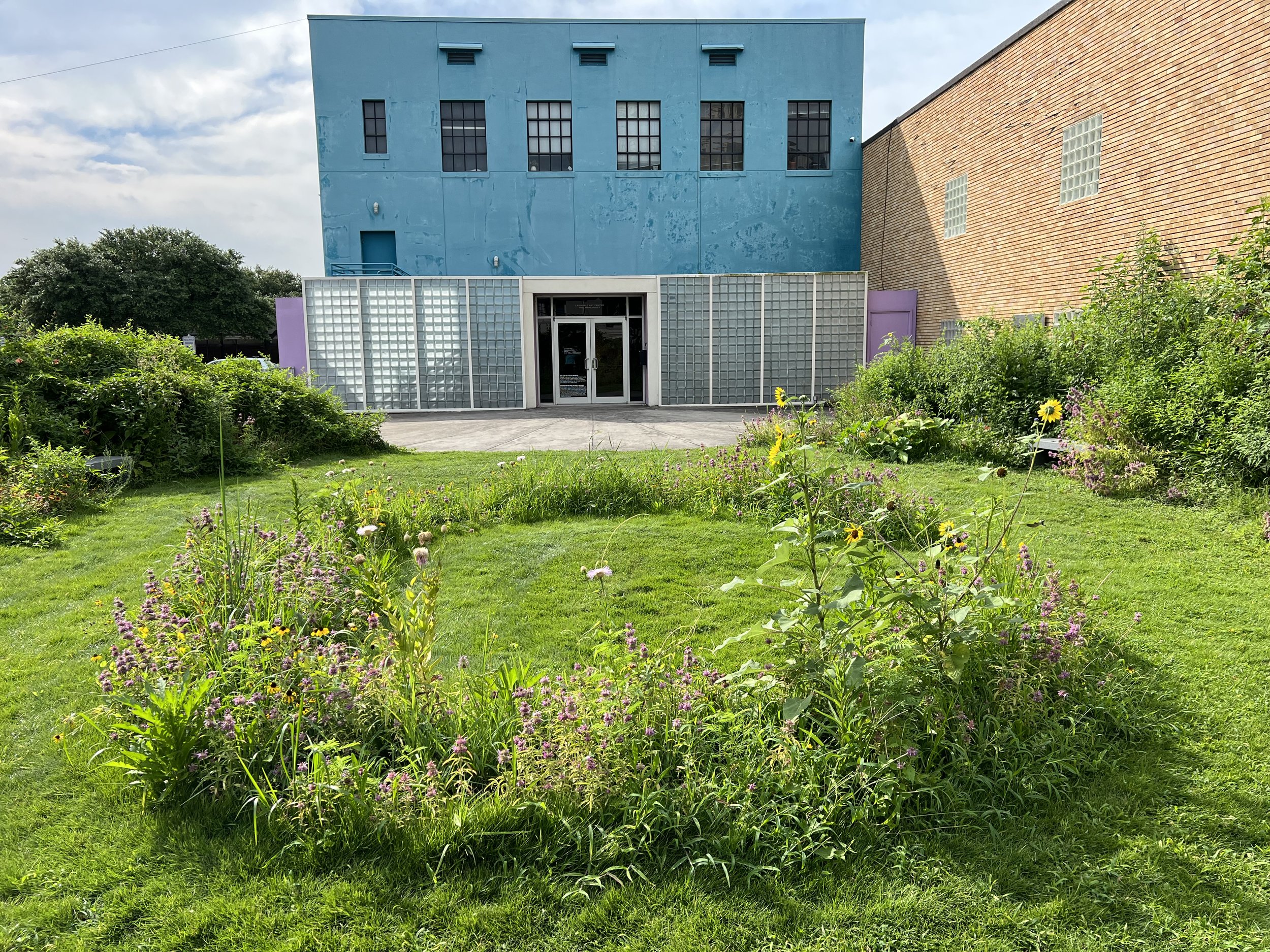
CARBONsink rises — how to get rid of your turf grass.

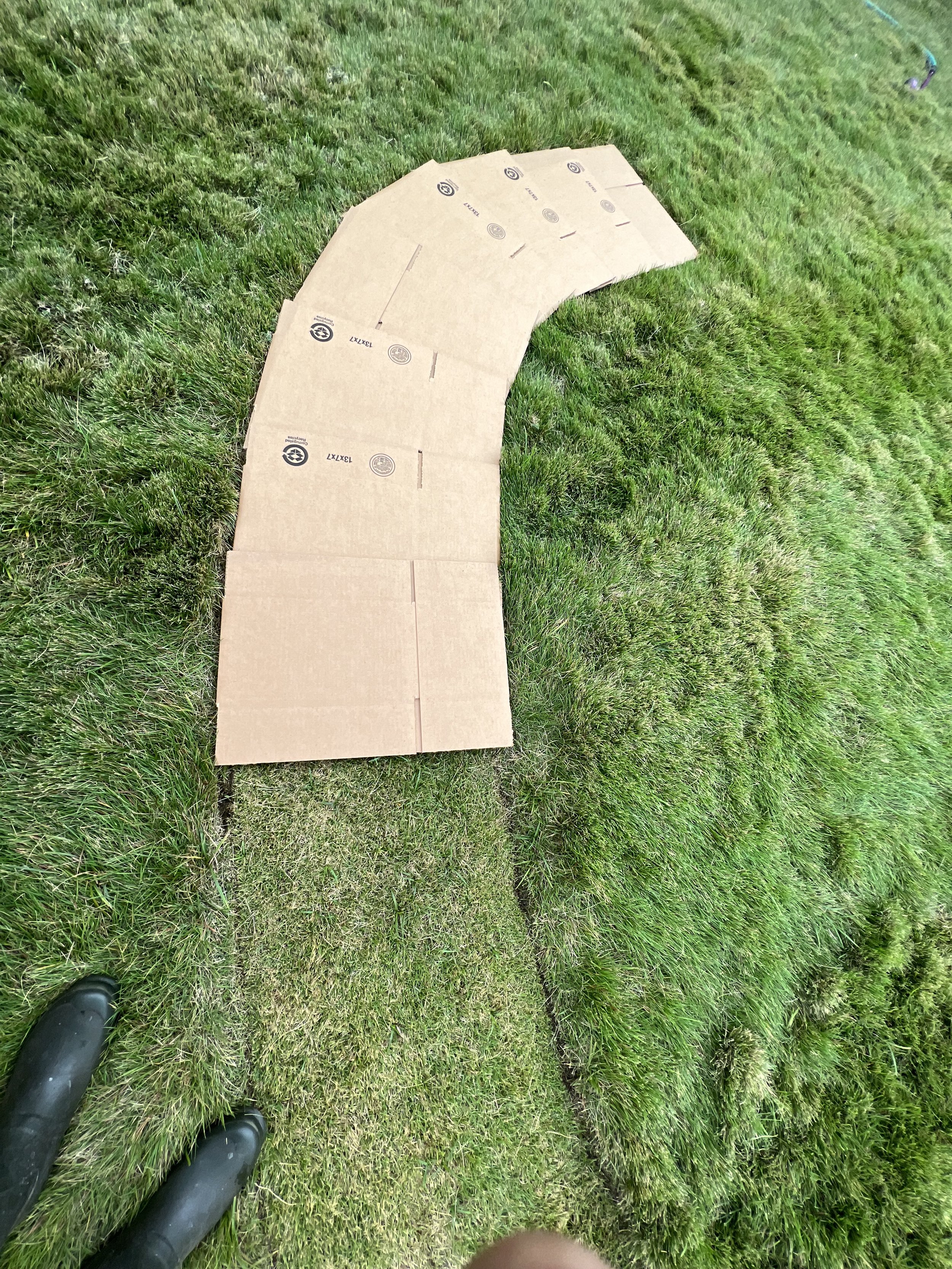
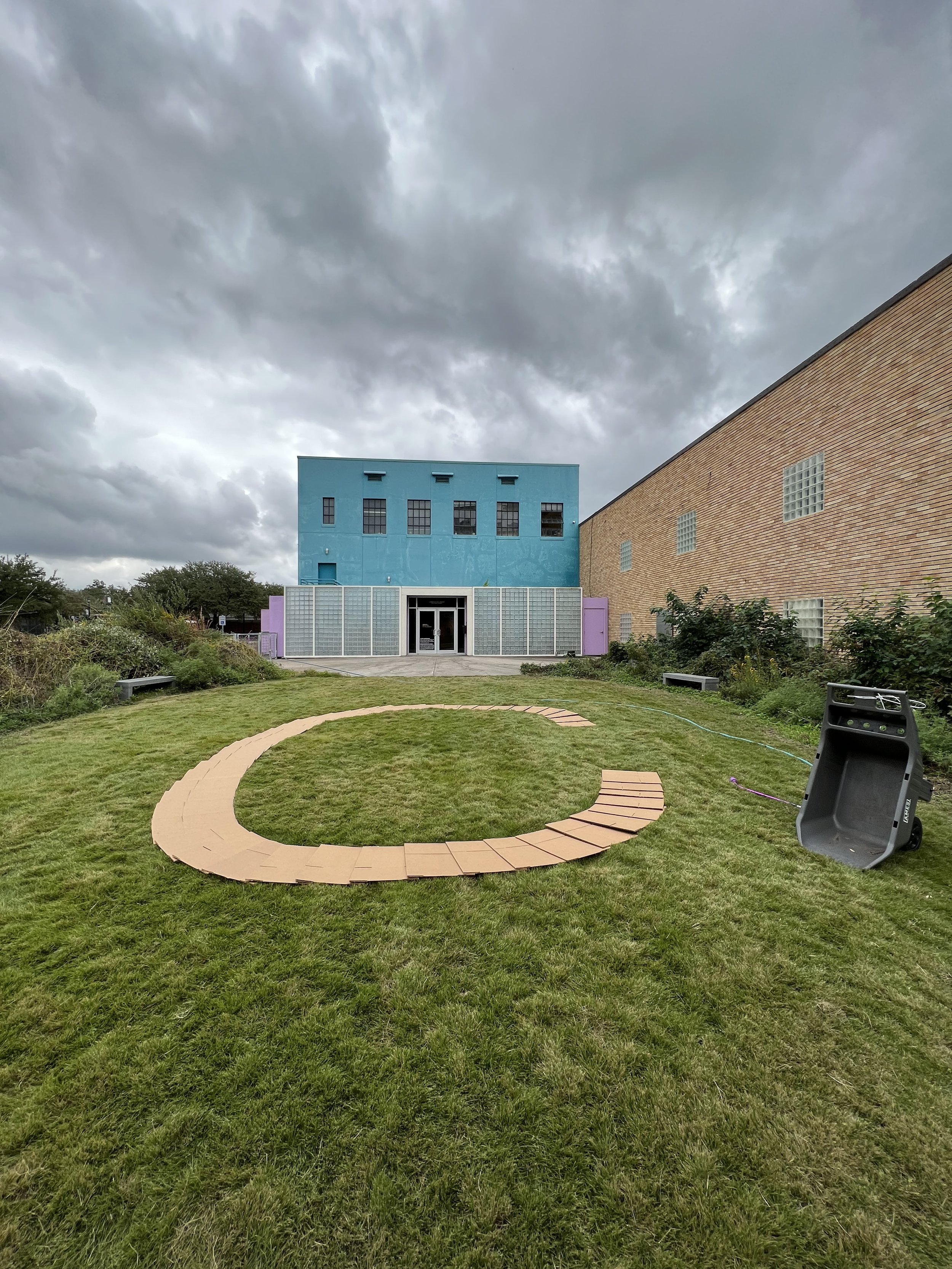
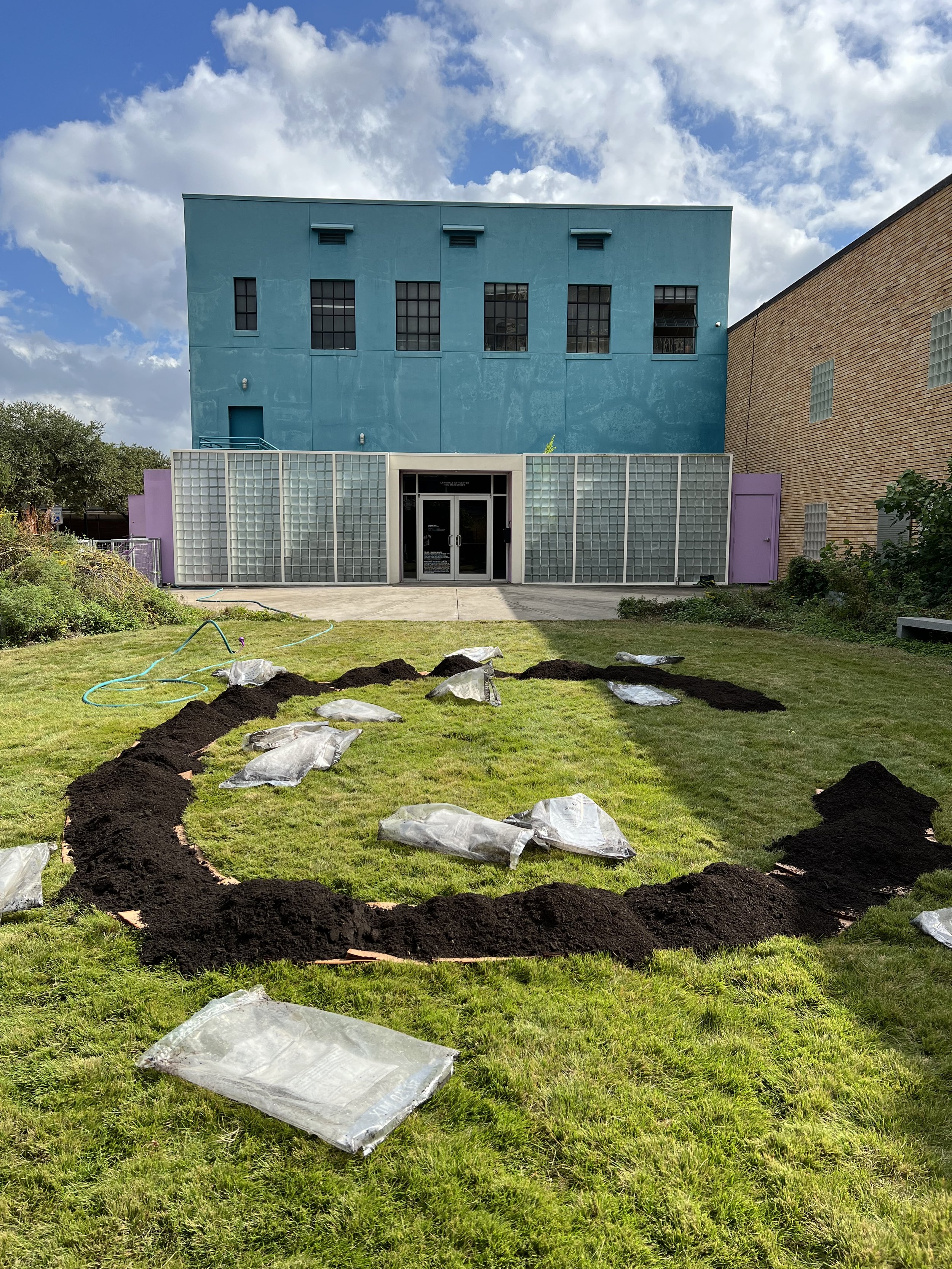
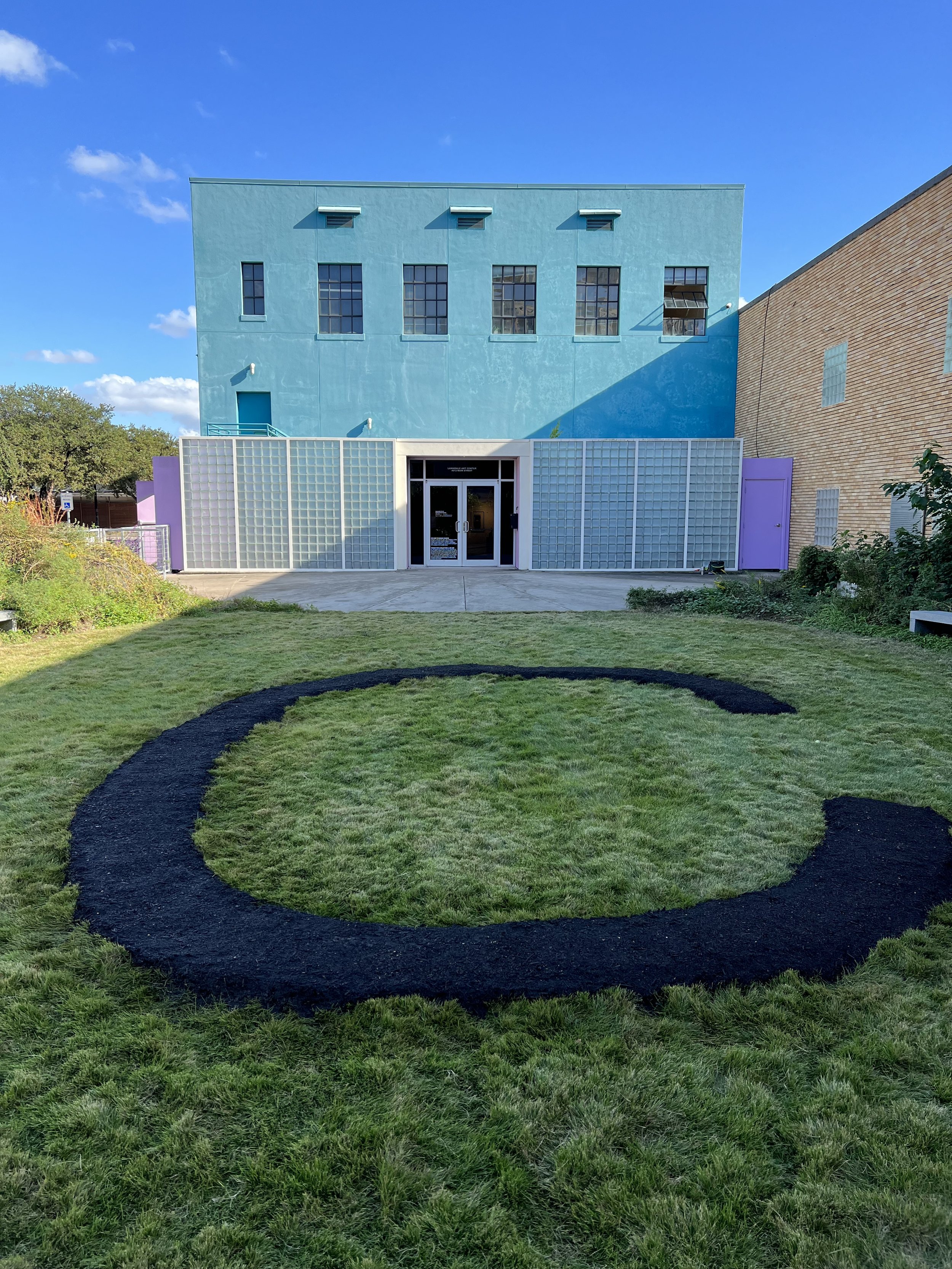
“Carbon by the Yard” was a temporary relief in the shape of the Carbon element symbol, “C”. This simple gesture brought attention to the fact that gas lawnmowers emit eleven times the emissions of a new car.

Carbon by The Yard

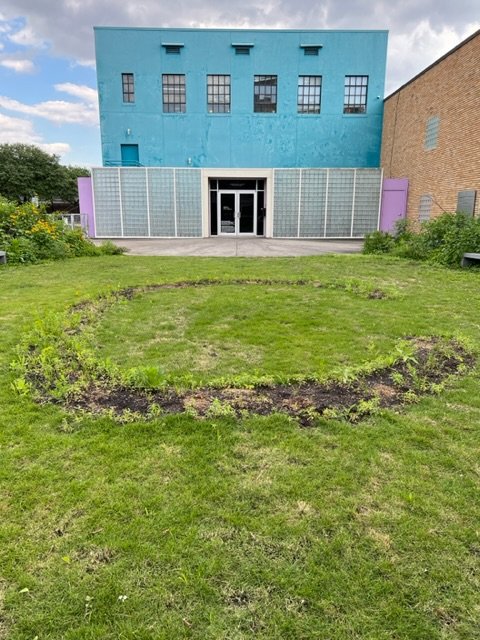
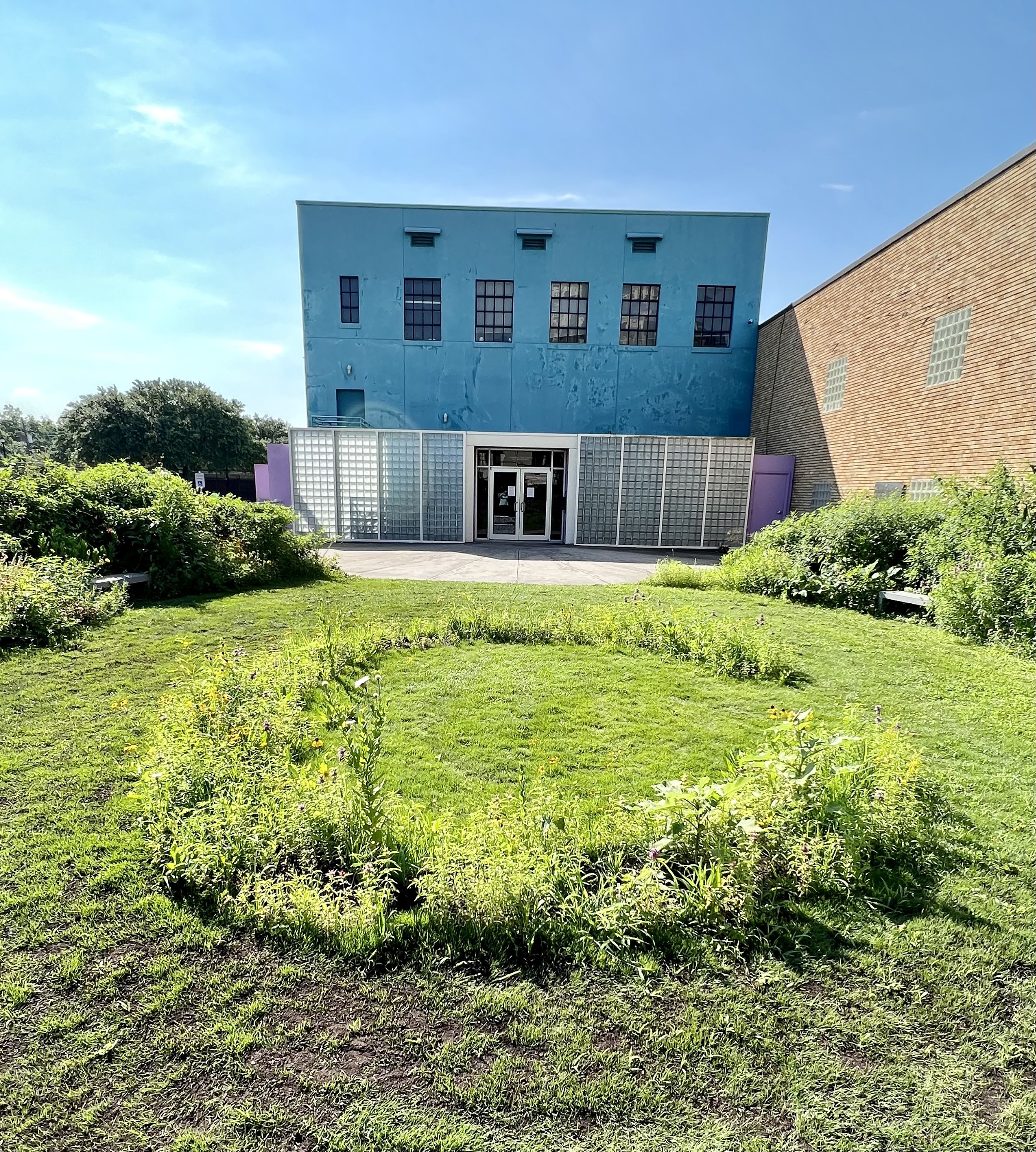
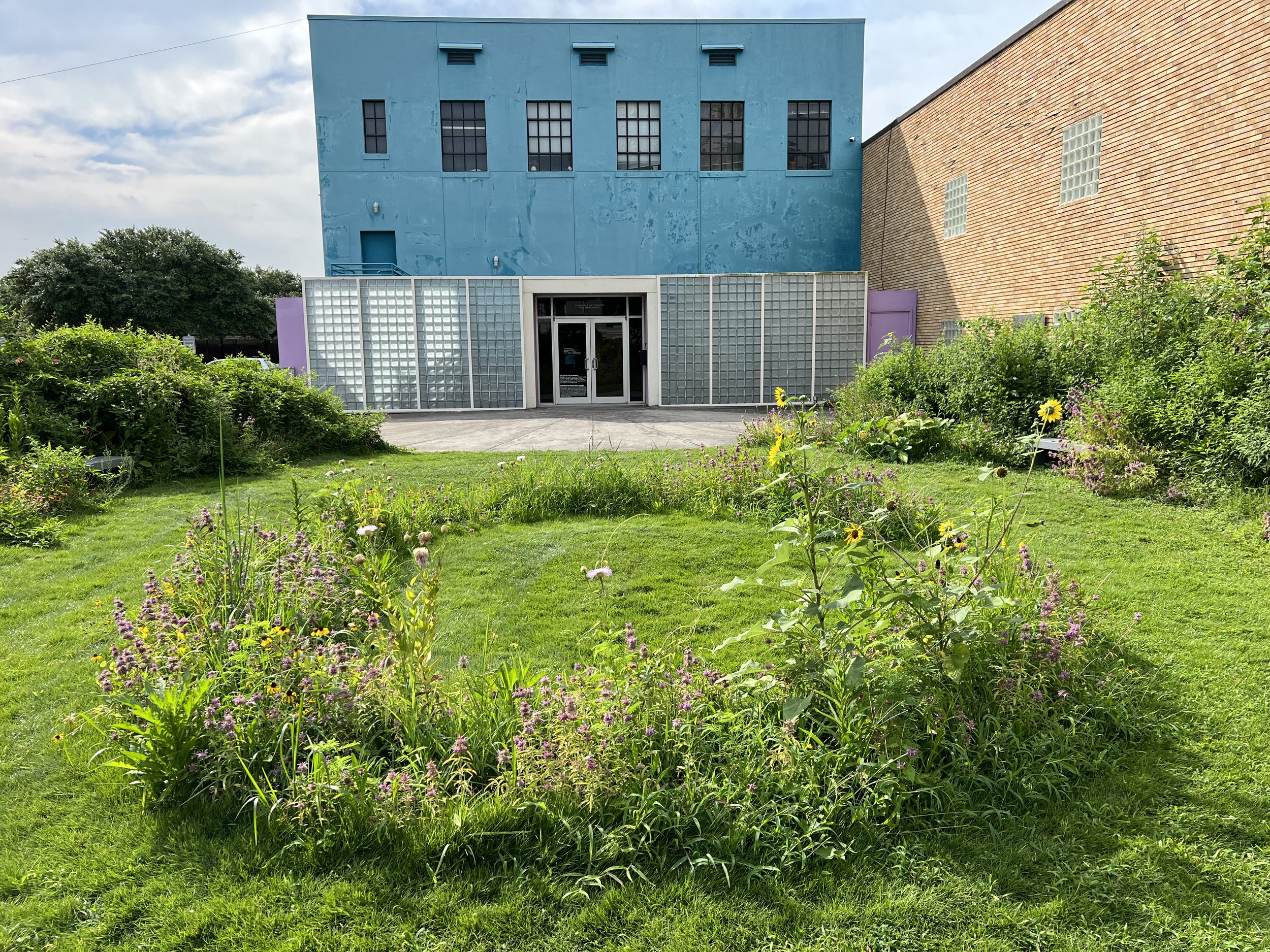
In 2022, I transformed “Carbon by the Yard” piece into “CARBONsink ” using solarization and regeneration instead of herbicides to transform the turfgrass into biology. I then seeded it with wildflowers. The new piece soaks up rainwater, stores carbon and supports pollinators.

It is important to note that the EPA estimated that non-native turfgrass monocrops use one-third of all public water. In the US, this translates to 9 billion gallons of water daily.

These two social sculptures highlight how our colonial landscape decisions impact our carbon footprints.

CARBONsink 6/8/2023

DIY- check out the steps to install your own CARBONsink.

Soak the ground.

Use the power of water in conducting heat into the plot. Proper hydration will pull heat from the surface deeper into the soil, enhancing the effectiveness of solarization.

Cover the soaked turf with two layers of cardboard. This will smother the turf grass and use the suns energy to solarize it.

Soak the cardboard layer

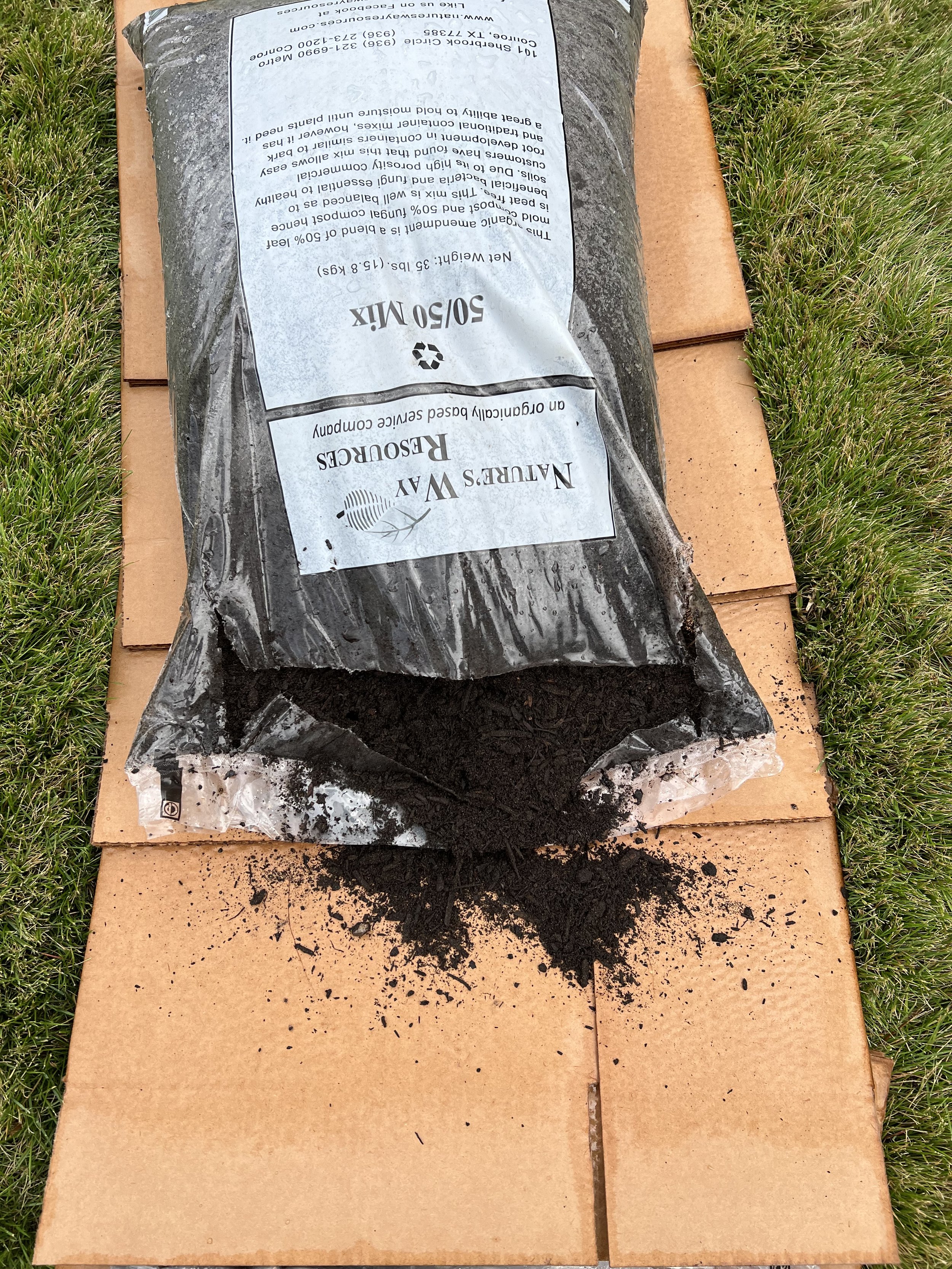
Layer 4”- 6” leaf mold compost. I use Nature’s Way Resources and Heirlooms.

Spread the compost evenly .

Soak the compost , and level it for sprinkling the seeds.

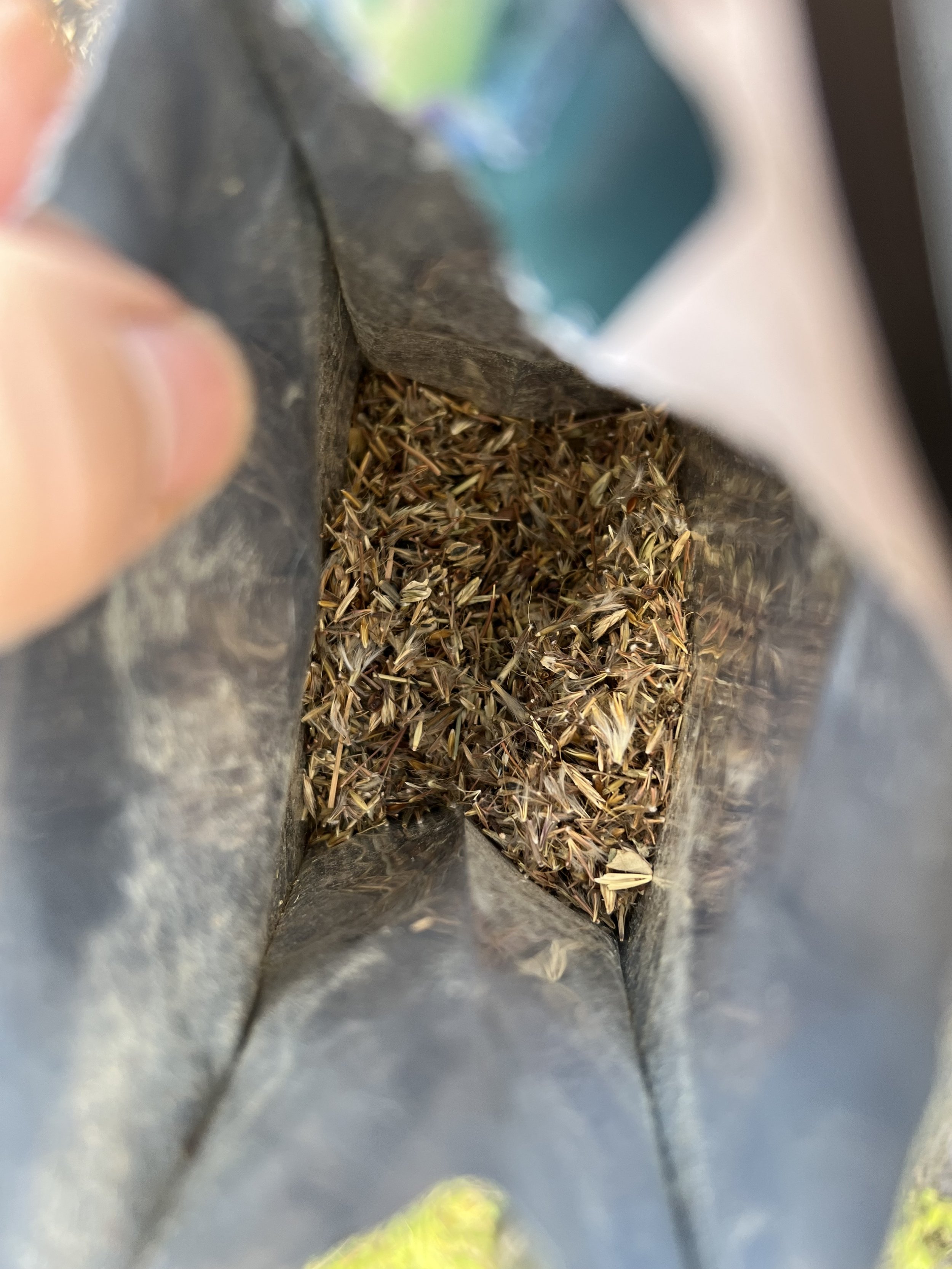
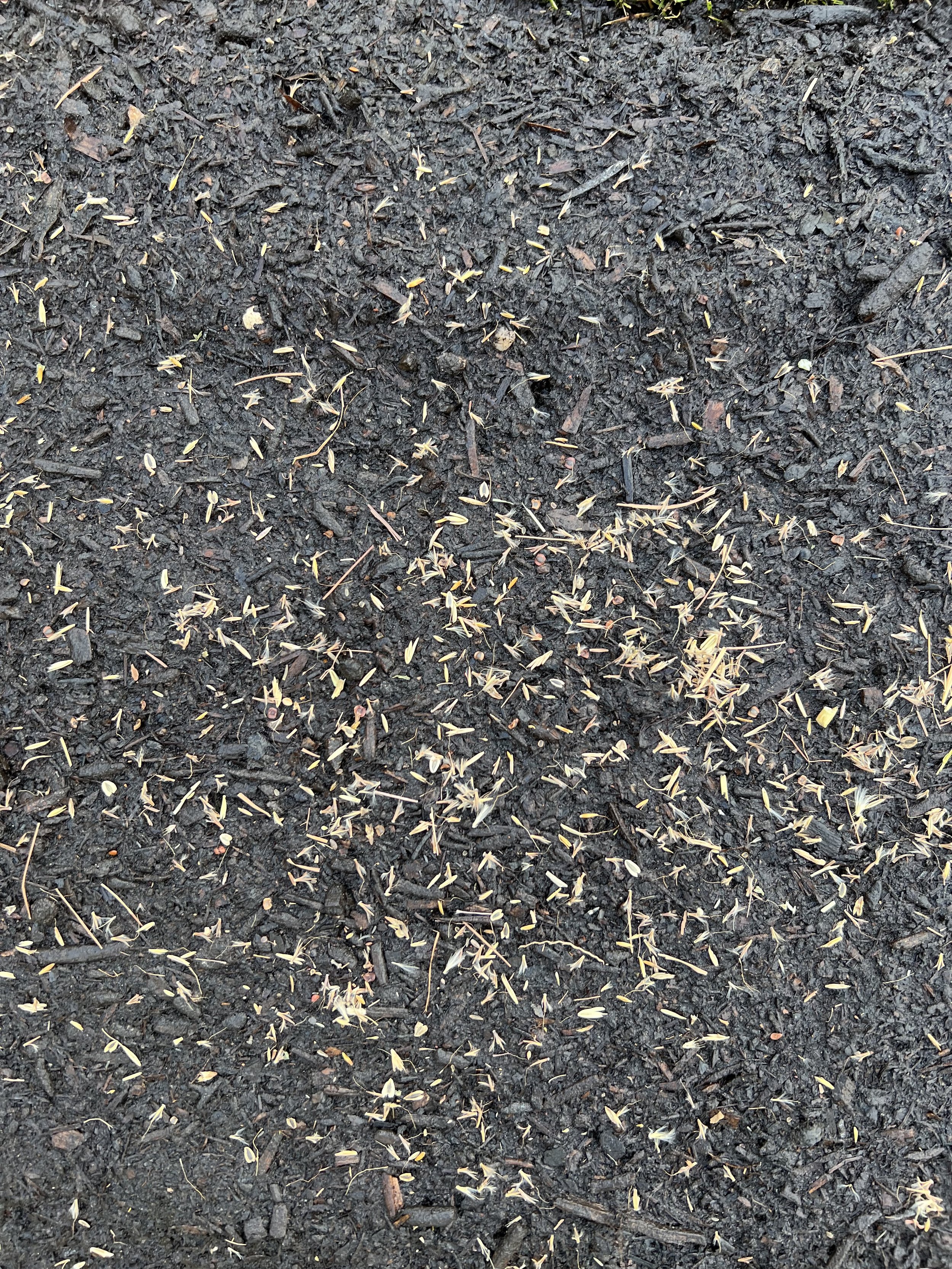
Sprinkle seeds generously.

The seeds come from Native American Seeds.

Make sure the seeds make good solid contact with the ground. Press them in.

April 2023

June 8,2023

July 29, 2023

Earth Moves - almost didn’t

Done! My gloves are proof. For weeks, my schedule was jam-packed with proposals and large-scale projects that needed my attention. Amidst all the chaos, I was also starting a brand new sculpture for the Mayor's Office of Cultural Affairs' Earth Day Celebration. I thrive when I can hyper-focus, but this time I almost let something slip through the cracks. "Earth Moves" was in danger of being incomplete by the deadline. With less than a week left to finish, I knew I had no choice but to push myself harder than ever before. I woke up at 5:00 am every day and worked tirelessly until 4:00 pm, without taking a lunch break. I felt every muscle in my arms and shoulders ache, but the feeling of being fully present and working towards something important was truly exhilarating. I couldn't disappoint Necole Irvin and let "Earth Moves" fall short of its potential. After countless hours of welding and crafting, today the sculpture was finally installed on the 3rd floor of the Julia Ideson Library. The end result is a, call for action work of art made from welded steel, lath, indigenous clay, grass, and glass beads. It was a true labor of love that I poured every ounce of myself into. #earthday @lanolalady #mayorsofficeofculturalaffairs #houstonmayor #cindeeklementart #work #gloves #drive

Symbiosis - Hairy water clover incorporates time and movement

Since the beginning of my artistic journey, I have consistently explored elements of time and movement within both two-dimensional and three-dimensional works. With "Hairy Clover," an element in Symbiosis this exploration takes on another layer of complexity - exploring how the water cycle creates motion that stores carbon, ultimately building the planet's energy.

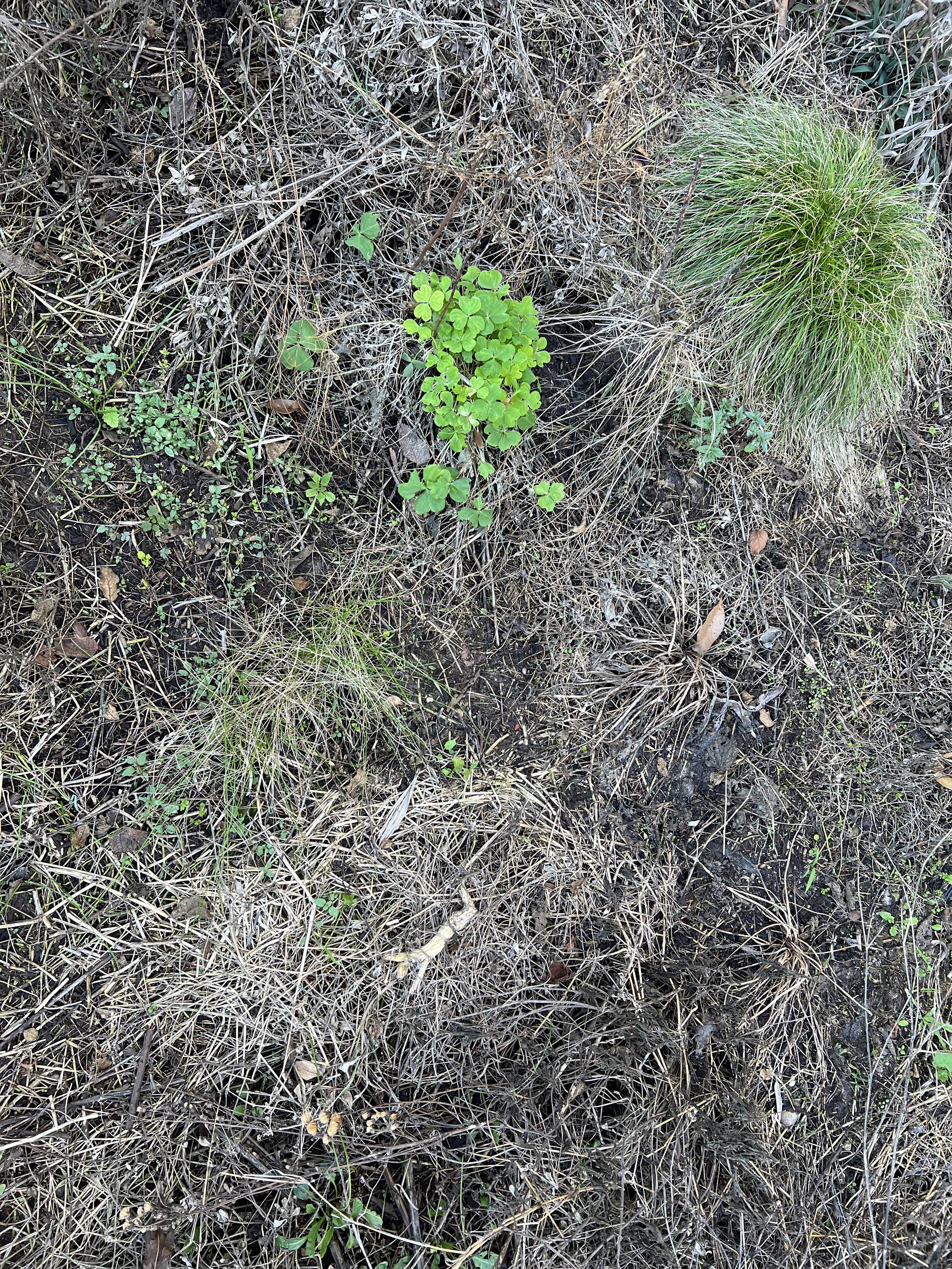
Marsilea species are an extraordinary group of ferns, displaying a fascinating phenomenon known as nyctinasty - the daily movement of leaf orientation. During daylight hours they reach out to capture sunrays and then at night fold inwards into vertical positions due to pulvinus joints located towards the base of each stalk which adjust based on water flow into motor cells. This adaptation ensures that these plants remain attuned with their environment by regulating transpiration through stomata opening and closing cycles - remarkable!

I have read that this Texas native is endangered in many states. :(

Marsilea vestita, southern water fern

8” X 8”

Ink

Symbiosis: Why I am not anti-freeze


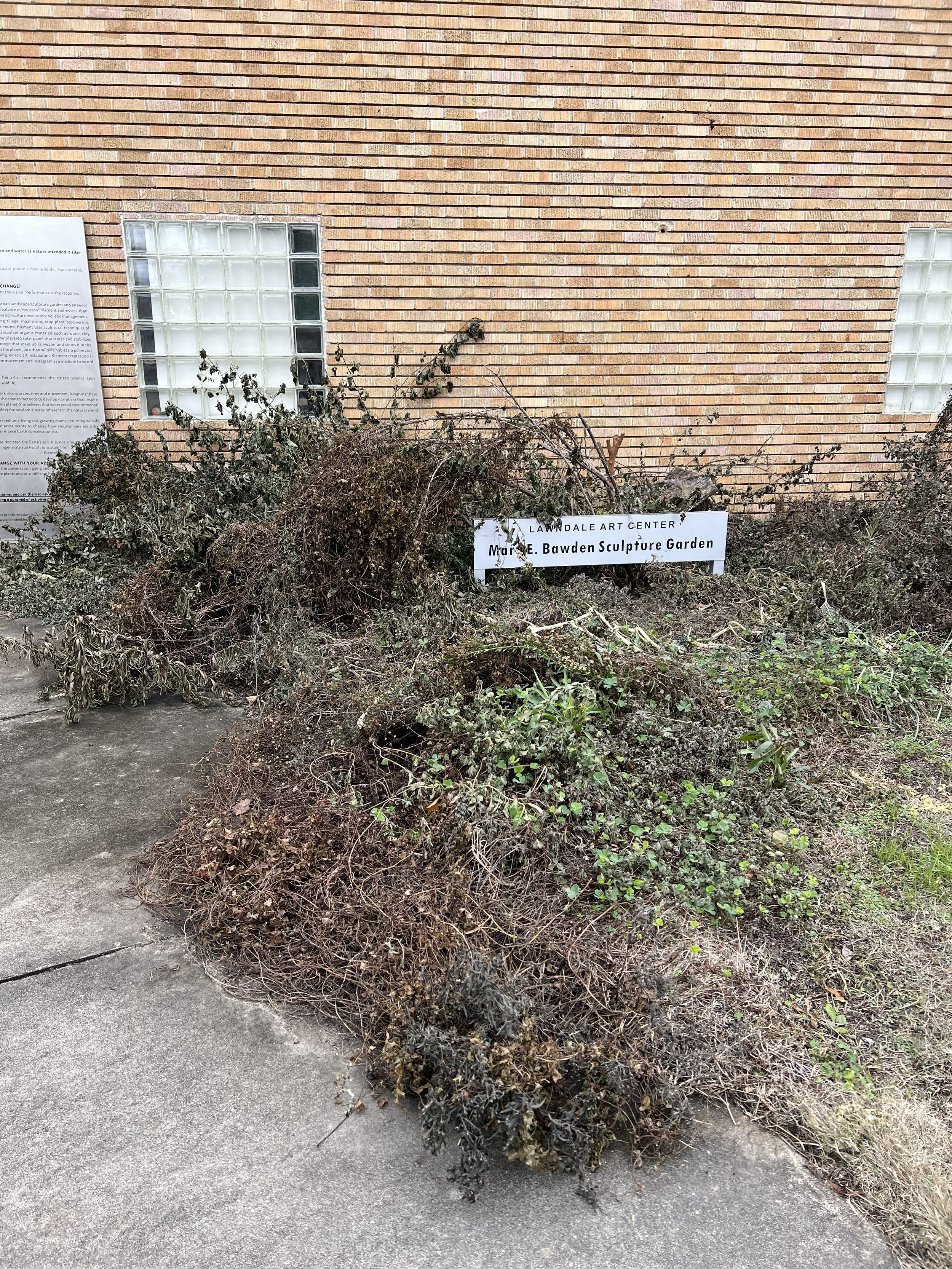
Humans naturally mourn the economic and surface loss of colorful flowers and green plants from a freeze. It is easy to become wrapped up in the superficial aspects. With systems thinking central to my eco-art practice, I wonder if there is an ecological purpose for a freeze. It has been a month since the freeze giving me time to watch and wonder. I have looked beyond the skin-deep perspective and discovered something beautiful about how a freeze gives life.

A week after the freeze, the same space is transformed into the earth tones of a 1980’s residential den.

This freeze occurred at the end of the second year since the Symbiosis installation. It was my first freeze with native plants and opened a floodgate of realizations and thoughts about freezes.

A freeze in the tropics looks and acts differently than in the northern US, but how are freezes in the tropics different than those in the Northern states? How does slimy organic matter from a freeze in the tropics impact its soil complexity? A freeze in a coastal prairie garden that has shade from a two-story building is not like a freeze in a sunny open field. Is there a relationship between the freeze and the drought, is there a relationship between seasons? For the past month, these are the questions I have taken with me when I visit Symbiosis and research on line.

What initially appears to be a destructive event can be the seed necessary for regrowth. Prairie plants are particularly delicate in these intense freezes as frozen water expands and rips apart cell walls, destroying their armature. When the thaw period eventually comes, and the water drains away, all that remains is a slimy puddle of cell slime.

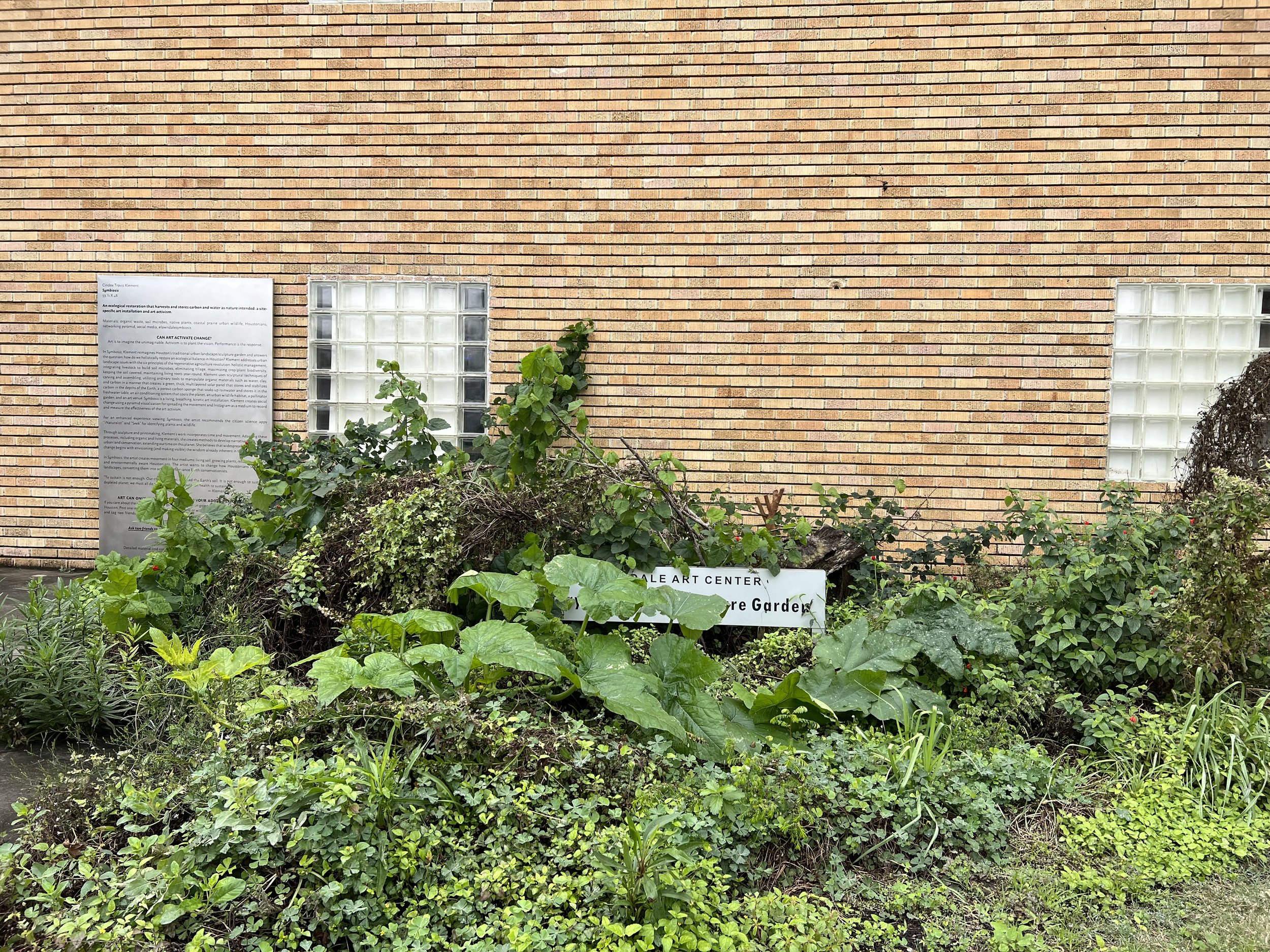
A small corner of Symbiosis before the December 2022 freeze.

These slimy puddles and decaying plants quickly milt into the soil, building its complexity and enabling it to store carbon, cooling the planet and soaking up water. When it breaks down, it provides food for microorganisms in the soil. A freeze is a quick and intense way to quickly build a large amount of living soil in the subtropics. This is a refreshing reminder of how our actions have real-world impacts. I am leaving the dead organic material to break down naturally. I am mindful of the inherent beauty of all seasons, all colors of ground cover, and the event's natural power and energy potential. Understanding and honoring freezes can improve Earth’s health for future generations. It is the fastest, most economical way to build a large quantity of soil. When it comes to soil carbon as an asset, a freeze is an economic plus.

I am not anti-freeze - instead, I'm pro-freeze!

Almost two weeks after the freeze and the new growth is noticeable. . The dried plants are crumbling into soil.

I still have unanswered questions and I am hopeful they will reveal themselves through Symbiosis. Until them I walk the garden every day in complete amazement the new growth rise through the decaying material as it melts in the armature of the soil.

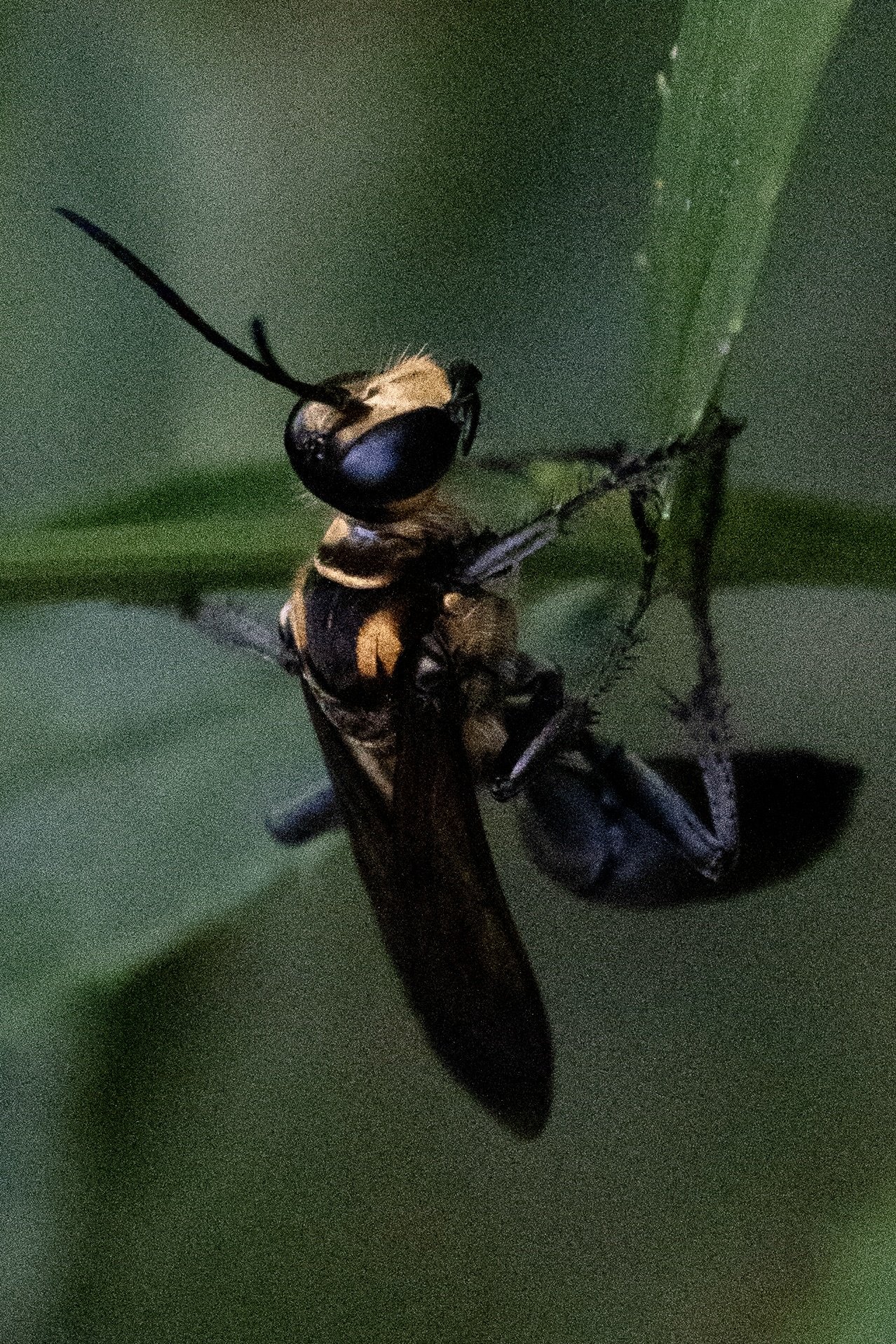
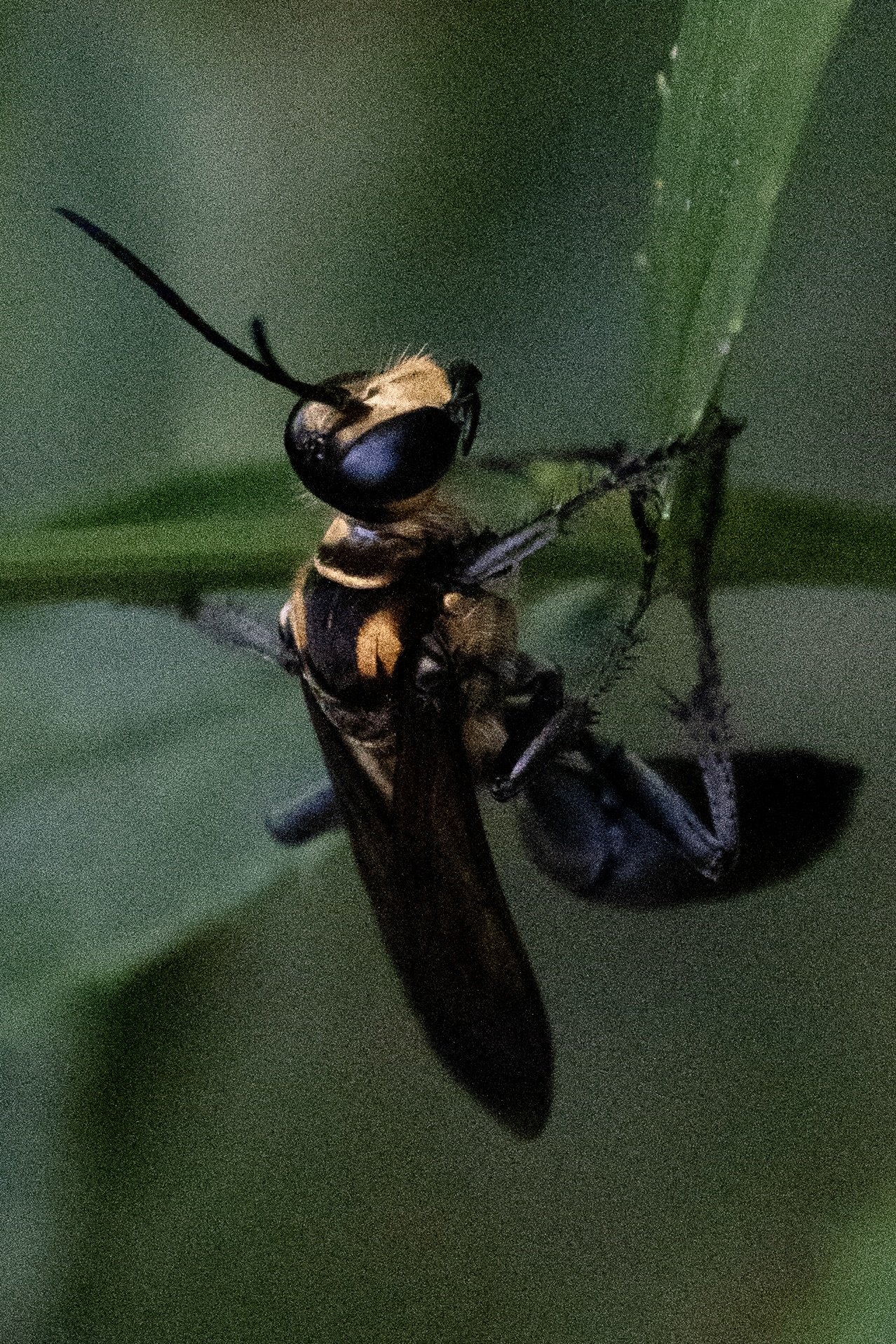
Golden-reined Digger Wasp - fascinating and gentle despite its sinister appearance.

This is one interesting creature, so interesting I pasted the article below.

Despite its vivid alarm coloration, the Great Golden Digger Wasp is not an aggressive species of wasp. They tend to mind their own business and can be found sipping on flower nectar during the summer, but in the early spring, females prepare to lay eggs.

Females will dig into loose soil and create many deep tunnels. When established, she then covers them to hide their existence. A female will track a small insect and sting them to paralyze them, but not to kill them. Once the prey is immobile, she will clutch it using her antennae and mandible (mouth parts) in order to fly it back to the tunnels. While in flight with her prey, it is not uncommon to see birds like robins or tanagers attempt to steal her meal from her by chasing her until she drops it. No other known species of Digger Wasp is known to be harassed by birds in this way. If the female is successful in returning to her tunnels with her catch, she will place the paralyzed prey aside to quickly inspect a tunnel. If it looks like it's still intact, she will pull the paralyzed insect, head first, down into it. She then lays an egg on the insect, exits the tunnel, and covers it over again. She repeats this process for each tunnel. Unlike other wasps, she does not actively defend her nest. Once hatched, the wasp larvae will feed on the living, yet immobile, insect until they are developed enough to leave the tunnel lair in the summer. Eventually, the parasitism of the paralyzed insect kills it.

Scientists are studying the behavior of this unique species. Great Golden Digger Wasps seem to display a type of internal programming. If their insect prey is moved away from the tunnel while the female inspects it, she will emerge, relocate it, bring it back to the tunnel entrance and start the inspection all over again. Every female exhibited the same repetitive 'start inspection again' behavior when tested in that way.

Females have also shown that they do not keep a tally of how many insects they catch versus how many tunnels they create. If some meals are stolen by birds, they do not realize that they are short on insects compared to tunnels.

With such gorgeous orange and black coloration, mild demeanor, and interesting behaviors, the Great Golden Digger Wasp is one to admire, not destroy. Perhaps a careful observer will discover even more fascinating things about this species.

Planet Popsicles — and spam

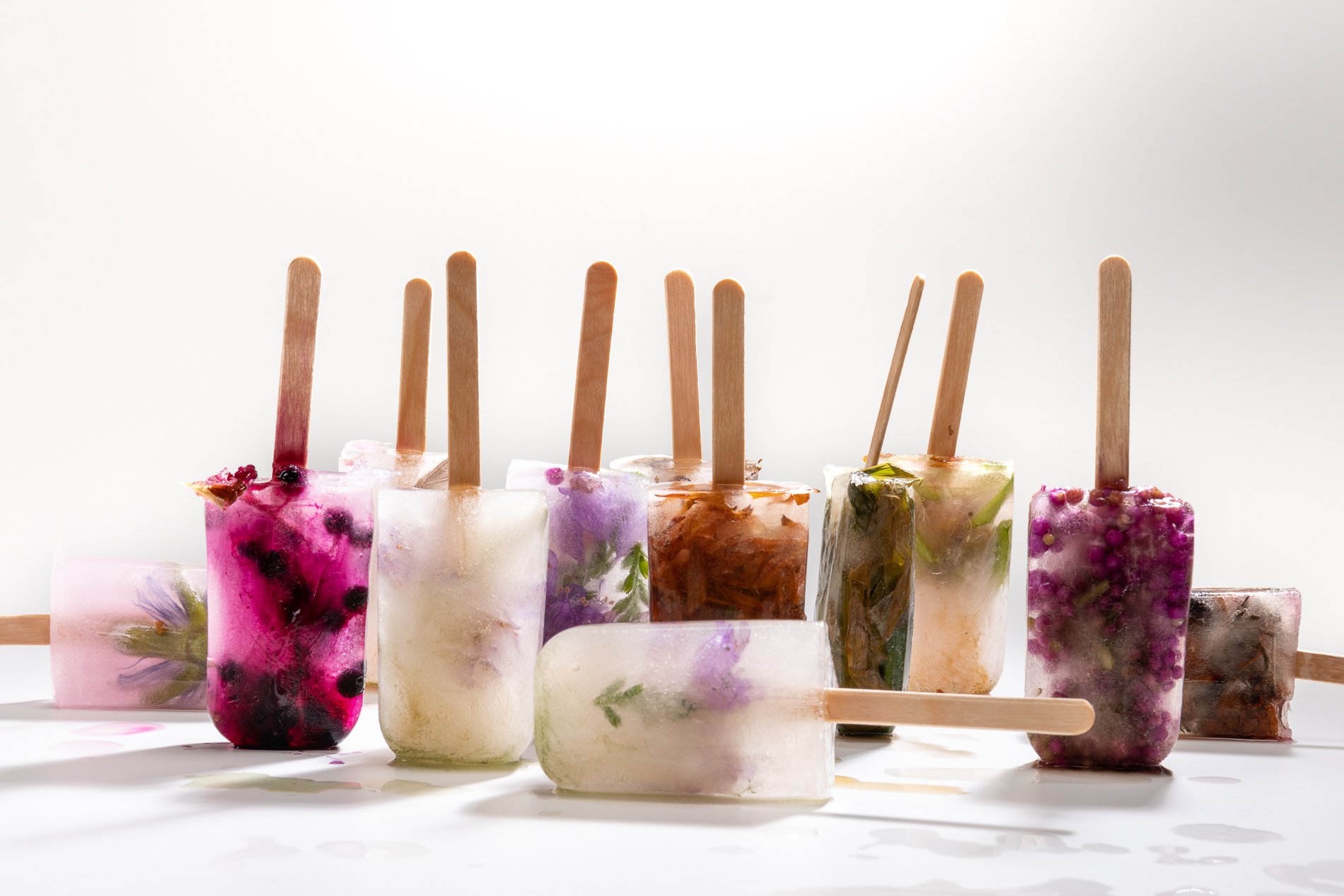
I received a spam email this summer with a bold photo of a popsicle asking, “How do you cool off in the heat of the summer?” I immediately thought about how the planet cools off. That spam email inspired these ephemeral sculptures, I used the materials mother nature uses to cool the planet.

PLANET POPSICLES

6” X 1” X 12” ephemeral

Sticks, H20, Passionflower, Fall obedient plant, and American Beautyberry

PLANET POPSICLES

6” X 6” X 24” ephemeral

Sticks, H20, Passionflower, Fall obedient plant, and American Beautyberry, Beatles, Pokeweed, Scarbs, Golden Rod, passed butterflies, and passed moths

Symbiosis Relationship 9/2022

Skipper and Pokeweed

Endangered bumble bee and Salvia

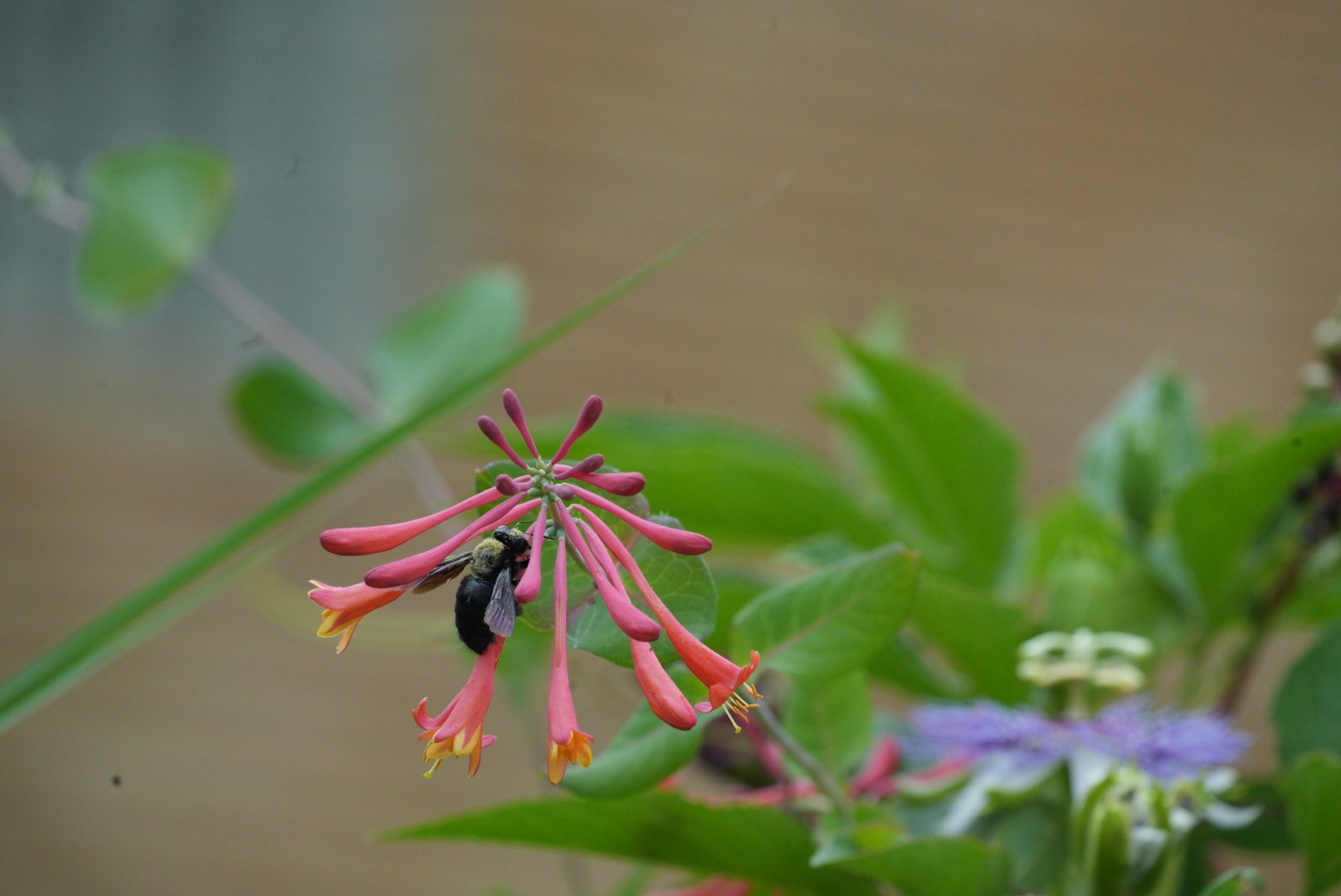
Coral honeysuckle and a native bee.

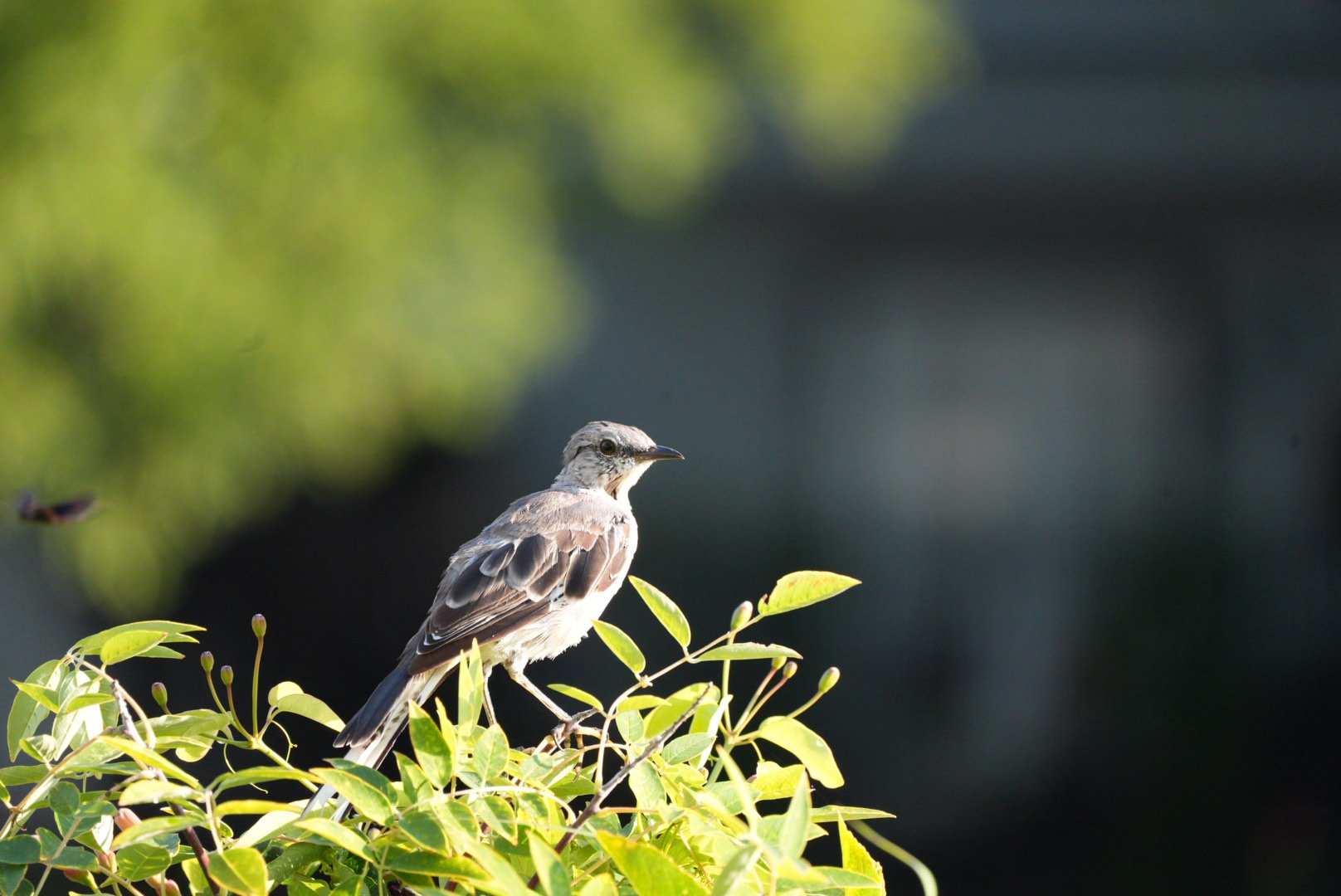
Mocking bird using an American Westeria vine as a lookout for insects to eatt.

Passiflora incarnate and carpenter bee.

Turkey tail mushrooms breakdown rotting trees recycling the nutrients.

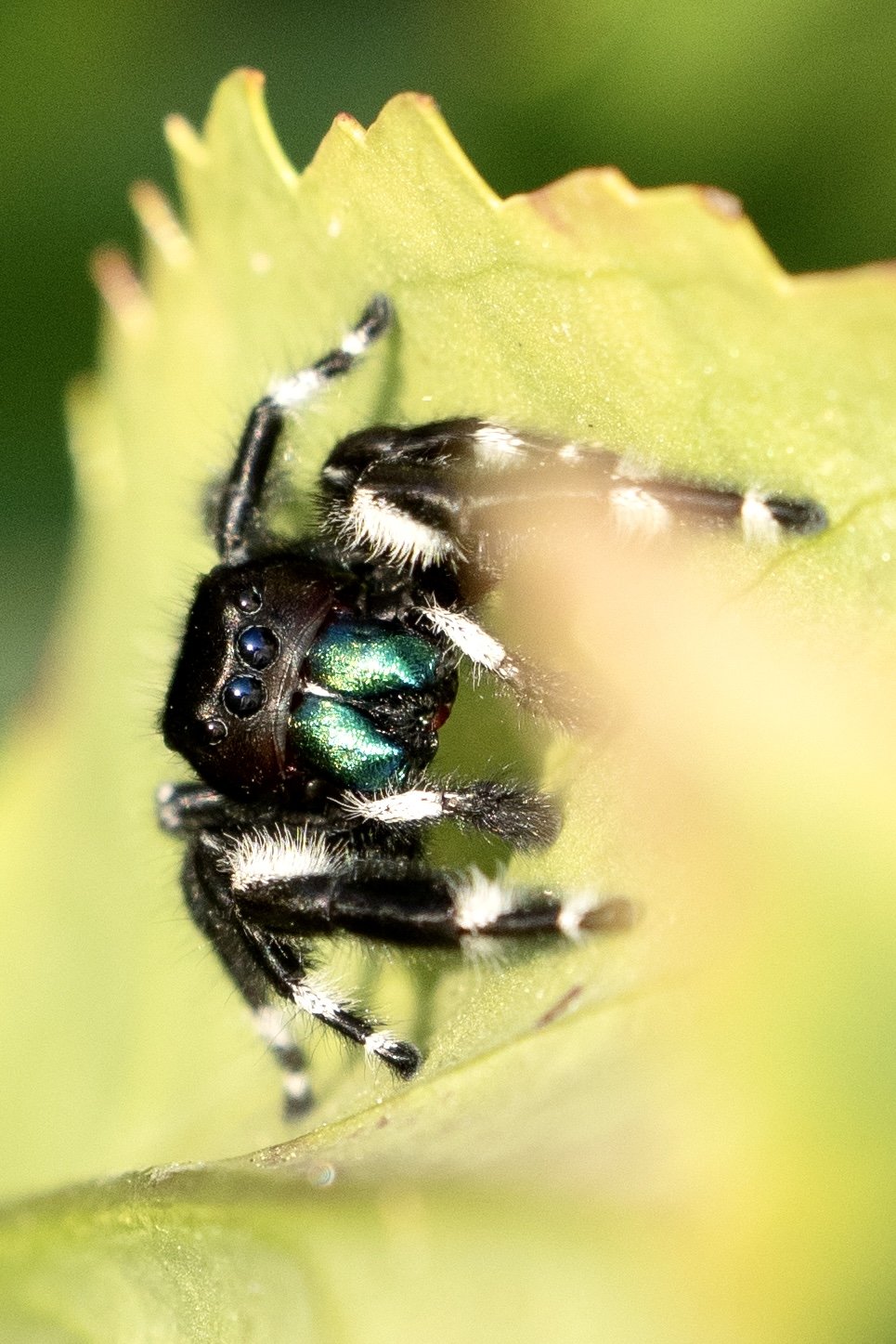
Jumping spider

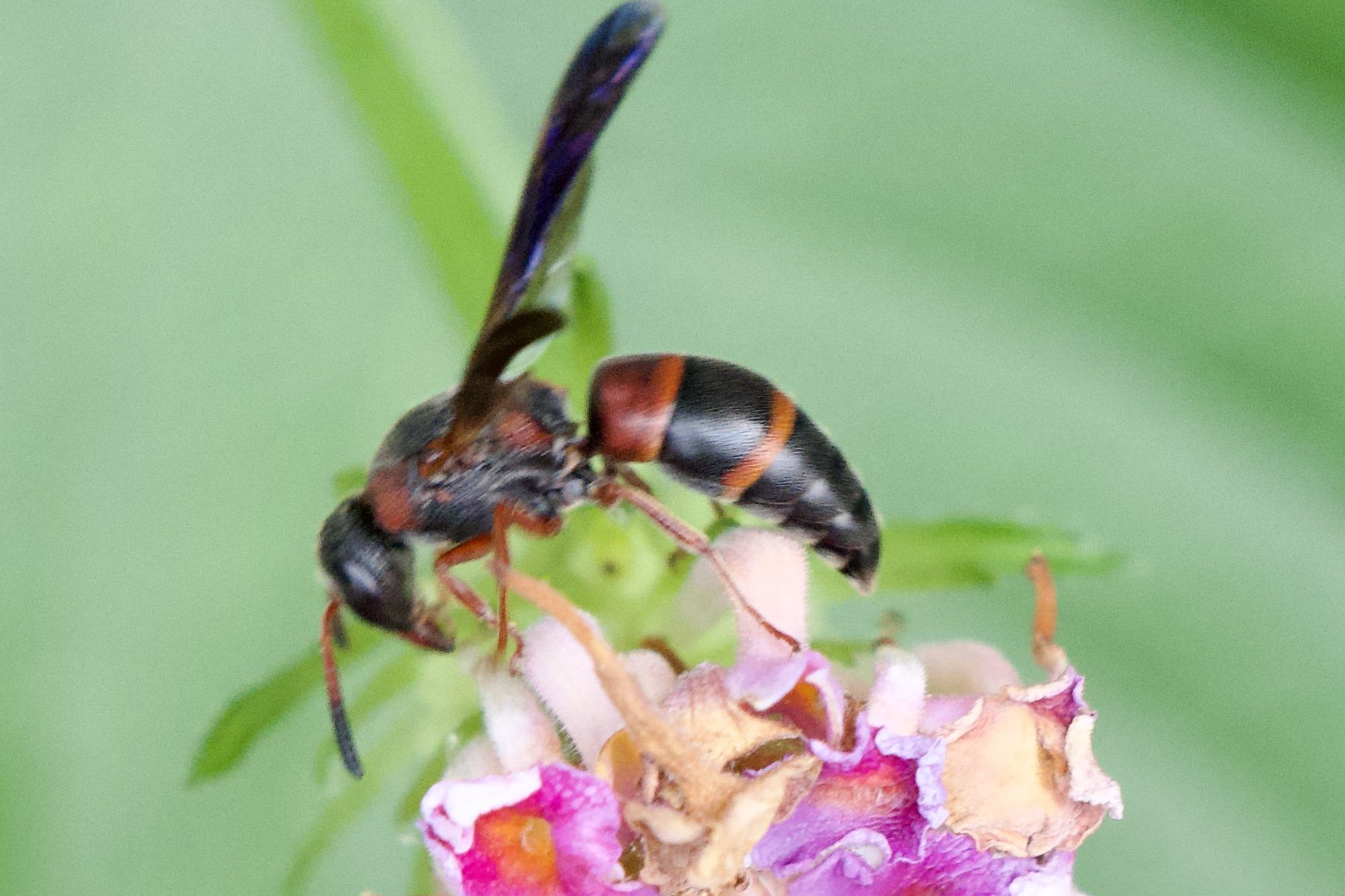
Pachodynerus erynnis, known generally as the red-marked pachodynerus or red and black mason wasp and Lantana camera. Lantanas are complex, I am not certain if this is a native to tropical US or an import. I think it is camara since I see beetles and wasps on it.

Clouded skipper on Lantana camara.

Common green June beetle and lantana camara.

Genus Pyrisitia minisa Yellow butterfly

Golden-reined Digger Wasp

Despite its vivid alarm coloration, the Great Golden Digger Wasp is not an aggressive species of wasp. They tend to mind their own business and can be found sipping on flower nectar during the summer, but in the early spring, females prepare to lay eggs.

Females will dig into loose soil and create many deep tunnels. When established, she then covers them to hide their existence. A female will track a small insect and sting them to paralyze them, but not to kill them. Once the prey is immobile, she will clutch it using her antennae and mandible (mouth parts) in order to fly it back to the tunnels. While in flight with her prey, it is not uncommon to see birds like robins or tanagers attempt to steal her meal from her by chasing her until she drops it. No other known species of Digger Wasp is known to be harassed by birds in this way. If the female is successful in returning to her tunnels with her catch, she will place the paralyzed prey aside to quickly inspect a tunnel. If it looks like it's still intact, she will pull the paralyzed insect, head first, down into it. She then lays an egg on the insect, exits the tunnel, and covers it over again. She repeats this process for each tunnel. Unlike other wasps, she does not actively defend her nest. Once hatched, the wasp larvae will feed on the living, yet immobile, insect until they are developed enough to leave the tunnel lair in the summer. Eventually, the parasitism of the paralyzed insect kills it.

Scientists are studying the behavior of this unique species. Great Golden Digger Wasps seem to display a type of internal programming. If their insect prey is moved away from the tunnel while the female inspects it, she will emerge, relocate it, bring it back to the tunnel entrance and start the inspection all over again. Every female exhibited the same repetitive 'start inspection again' behavior when tested in that way.

Females have also shown that they do not keep a tally of how many insects they catch versus how many tunnels they create. If some meals are stolen by birds, they do not realize that they are short on insects compared to tunnels.

With such gorgeous orange and black coloration, mild demeanor, and interesting behaviors, the Great Golden Digger Wasp is one to admire, not destroy. Perhaps a careful observer will discover even more fascinating things about this species.

Symbiosis - the ripples

For many artists, satisfaction comes from selling their work. For me, happiness comes when others mimic my work.

A little over a year ago, I met a young couple with a commercial landscape business dept. I invited them to be part of my social sculpture water + air + citizen that took place this past winter. I shared with them the next phase of Carbon By The Yard. This spring I among many volunteers, briefly helped Maggie and Isaac install their inspiring monumental version this spring. Luckily it survived the drought and made the Chronicle.

This Novrmber 5th carbon By The Yardwhich will take place this November 5th. During the community family celebration on November 5th, the relief Carbon By The Yard will be transformed into Carbon Sink. Stay tuned to learn more.


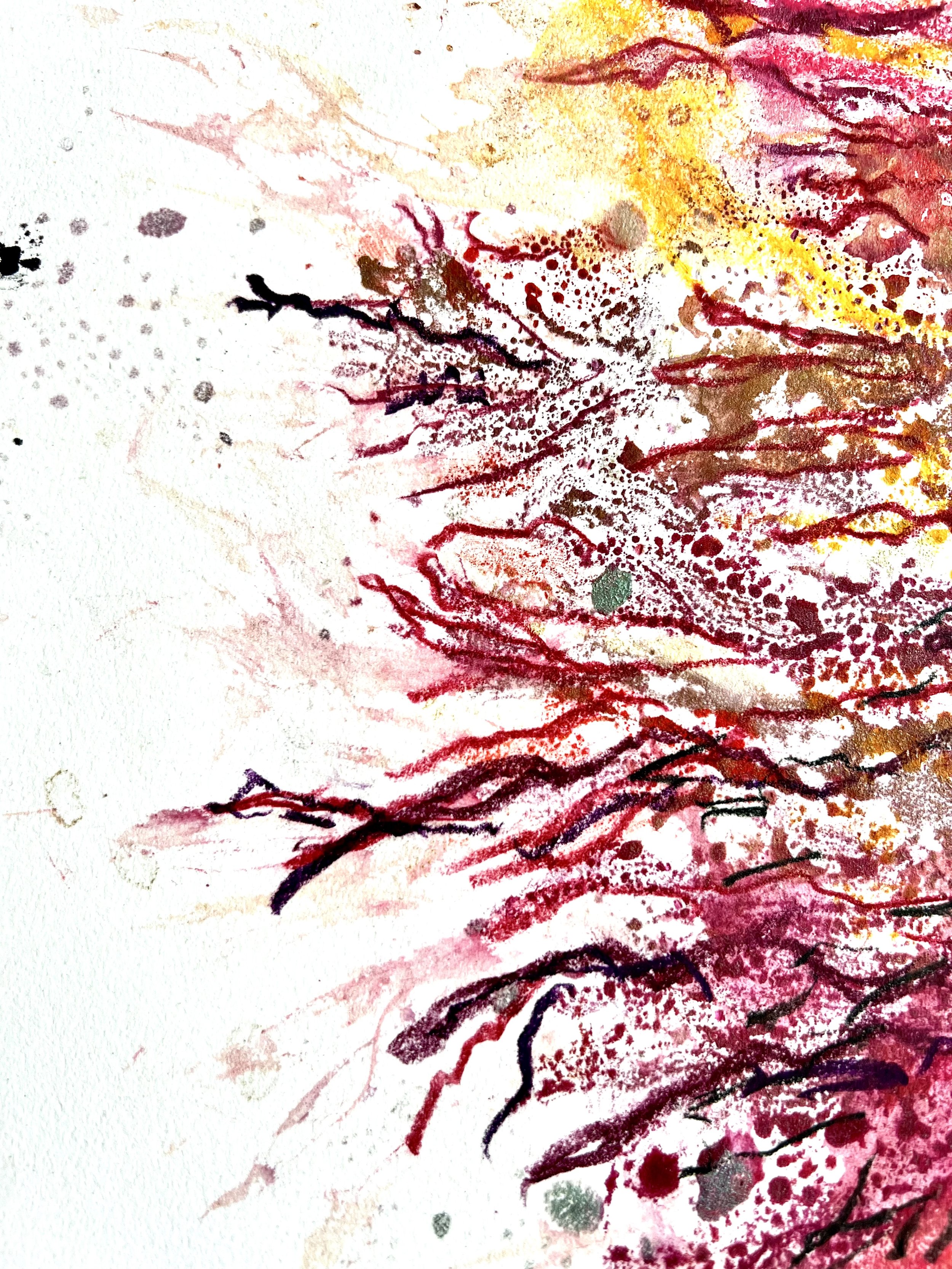
Monotype- leafcutter (petalcutter)

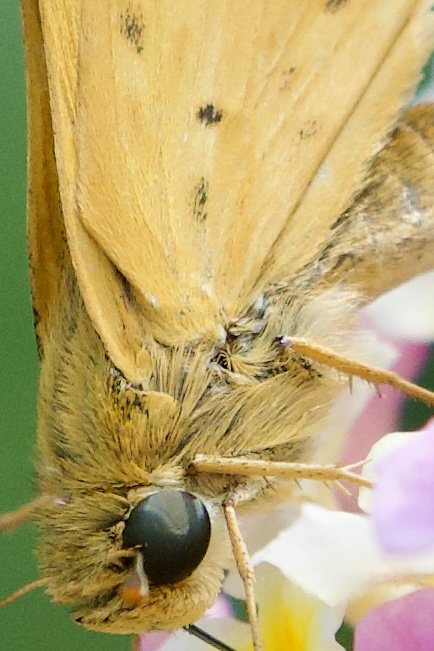
Leafcutter (petal cutter) Megachile and the Blanket flower

Watercolor and pastel monotype

30” X 44”

Leafcutter bee flying to its nest just after cutting a petal from the Texas native Gaillardia pulchella aka blanket flowers. They use the petals to protect walls and to seal their nests. In exchange for the petals, the leaf cutter pollinates the blanket flowers bloom. It is one of my favorite relationships in “Symbiosis.”

The white pedestal?

When I started in the MFAH Glassell School block program, I needed pedestals for my smaller sculptures. I made stark white cubes as I saw in museums and galleries.

Over the years, my work has transitioned to tell a specific story. I make work to reveal the beauty in diversity, the messiness in the natural world and the connections between all living things on the planet. And most importantly, I work to inspire society to step into a rhythm that will flow with the natural world and celebrate the beauty in its messiness. My work conflicts with borders that separate, clean lines that divide and sterile objects.

The white cube pedestals are a symptom of sameness, monocultures and sterile environments, a symptom of me wanting to ” look “ like I belong and fit in. A change is an imminent.

I am leting my eyes and mind play with how objects that physically support my work should look. Work that reimagines urban landscapes to balance humanity and natural systems should not be sterile cubes. What should, - what could they be?

The images below are some thoughts I am considering. .

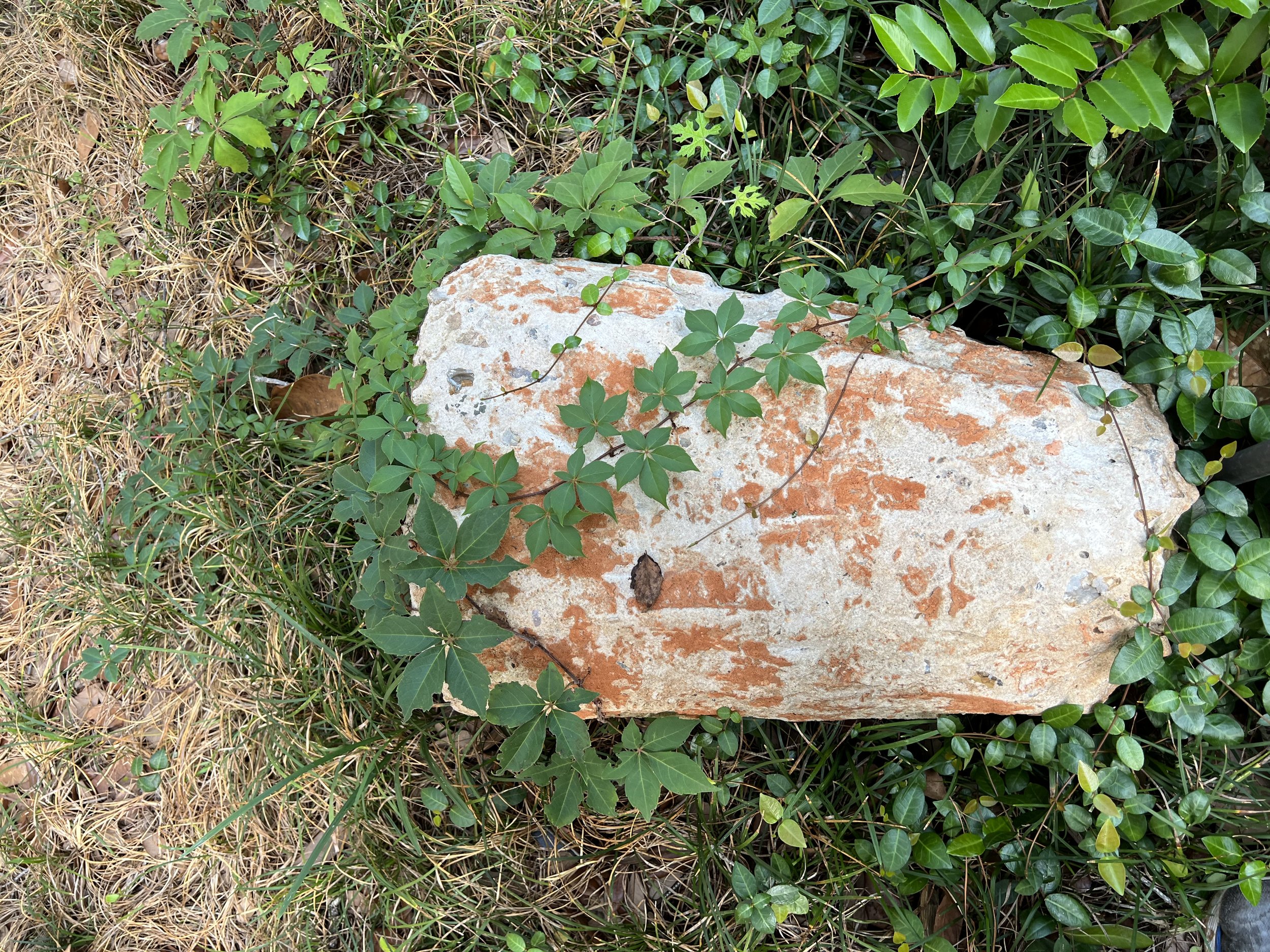
Rocks

Bricks

Stones or concrete.

Cracks

Dried plant material

Electrical wire

Upcycled lawn furniture.

Palm tree trunk skin

Salvaged construction site rotting root with interesting chain link necklace imbedded across her shoulders.

Symbiosis - relationship 8/2022

Orange blister beetle and

Orange blister beetle and Ratibida columnifera

prairie cone flower. The beetle eats problem insects.

Gulf fritillary butterfly's mating and green anole ruins the mood.

Xylocopa virginica, the Eastern carpenter bee has evolved to the exact height to Maximize pollinating Passiflora incarnation. This relationship is one of my favorites in Symbiosis.

Soaking wet American bumble bee (endangered bee) using a Missouri ironweed leaf as an umbrella.

black mud daubersa, is a solitary wasp. This female his hunting for caterpillars to provision her mud nest. Plants recognize the vibrations of caterpillars chewing. This causes the plant to send out pheromones to attract wasp to keep the caterpillars down. She seems frantic.

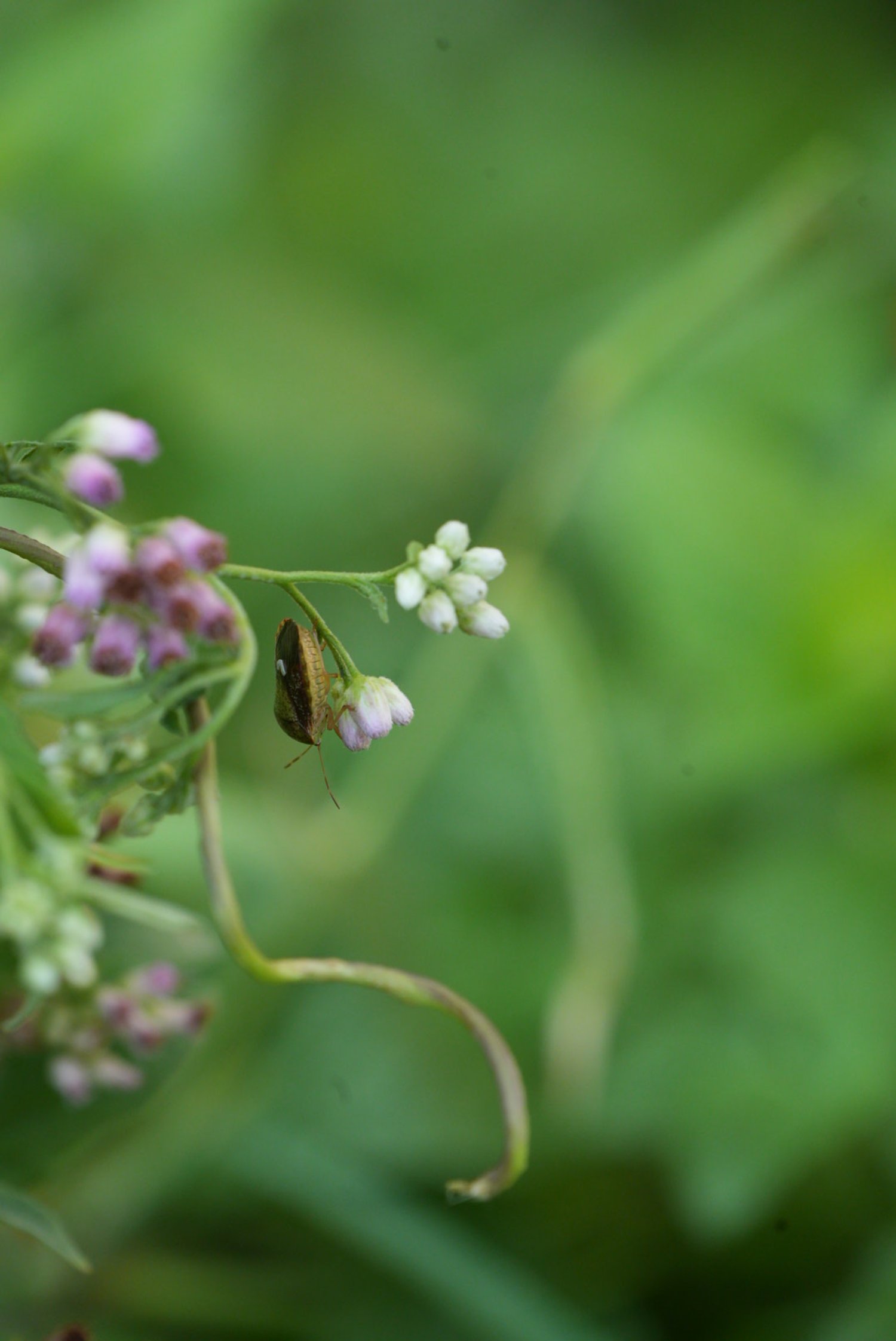
Ascra bifida, exploring crabgrass and Marsh Fleabane (both volunteer plants) hunting for moths, caterpillars, harmful beetles, aphids and other pests. They are valued citizens in “Symbiosis”. Oddly there is very little online about this sweetheart of a stink bug.

American Mockingbird and American beauty berry.

On the left side of the image perched atop the dead olive tree a Mockingbird searches for insects. Camaflouged by the orange trick background a juicy dragonfly flies into to the upper right corner of the frame and catches the alert Mockibgbirds attention.

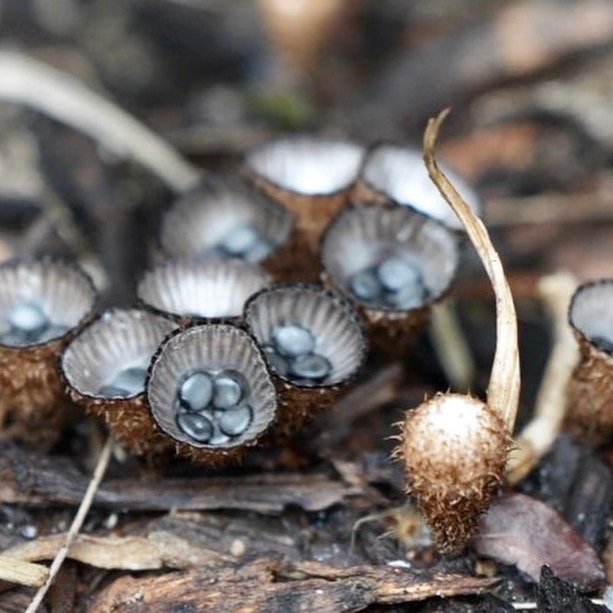
Cyathus stercoreus

Dung-loving birds nest fungus also known as splash cups.

Cyathus stercoreus

Dung-loving birds nest fungus also known as splash cups.

When a raindrop hits the cup's interior, the peridioles are ejected into the air tearing open the purse. In the lower part of the purse, the coiled funicular cord expands. The peridioles, followed by the sticky funicular cord and basal hapteron, land on a nearby plant stem or stick. Flying through the air, the line wraps around the plant's stem. The peridiole remains attached to the vegetation. In a natural setting, a grazing animal may eat it and later deposit it in that animal's dung to continue the life cycle. This amazing amazing creature breaks down dung, and captures raindrops.

Brown Anole

The ESTERN CARPENTER BEE AND PASSIFLORA INCARNATA

A dragonfly lays eggs in the still water of a trough pond. Her nymphs keep the mosquito larvae in check and are protein for the Texas mosquitofish.

Symbiosis - Pipevine Swallowtail eggs.

I saw a blue swallowtail flitting across the garden, looking for a suitable host plant for her eggs. Below are images of Eggs under the same leaves the following days. This post will be ongoing. As I see Pipevine Swallowtails, I will document them here.

Swallowtail laying eggs under a white vein Morning glory leaf. 8/13 2:29

Full view of blue swallow tail 8/13

Swallowtail caterpillars eggs . 8/13 3:57

8/14 5:04

8/14

8/14

8/17 10:19