some count what is missing.
scout, wren, and i
count who i fed.
— as told by the heritage hen
Clutch - the heritage hen poem
clutch," as told by the heritage hen to Cindee Travis Klement. Dark green script on a beige background.
Your Custom Text Here

clutch," as told by the heritage hen to Cindee Travis Klement. Dark green script on a beige background.
some count what is missing.
scout, wren, and i
count who i fed.
— as told by the heritage hen
Between those two numbers sits every warm-blooded heart on Earth, including mine. A human heart at rest keeps sixty to eighty. A hummingbird in flight passes twelve hundred, then on a cold night lets its heart fall to a fraction of that and waits for first light. Every species is an instrument keeping its own time.
Read more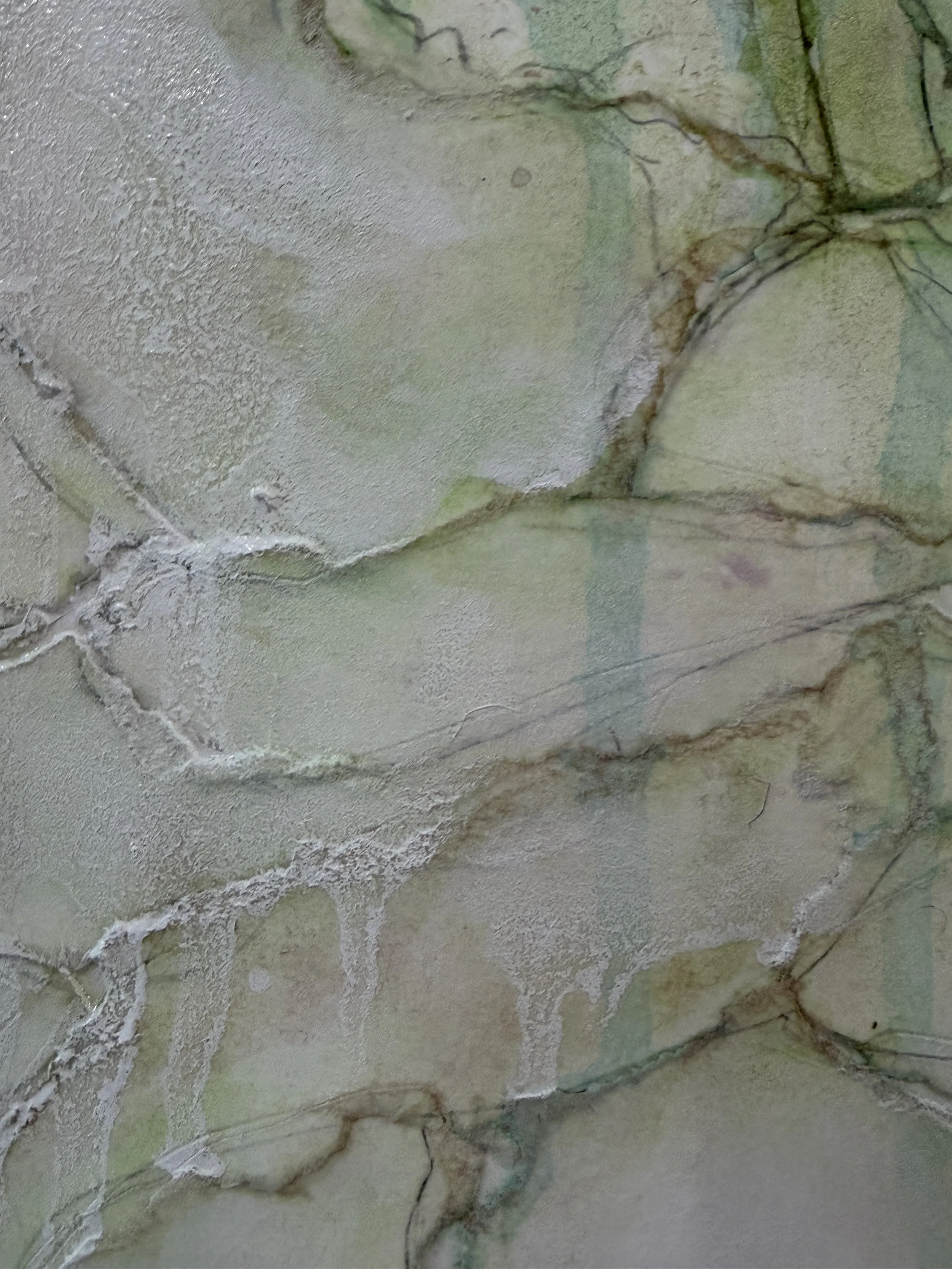
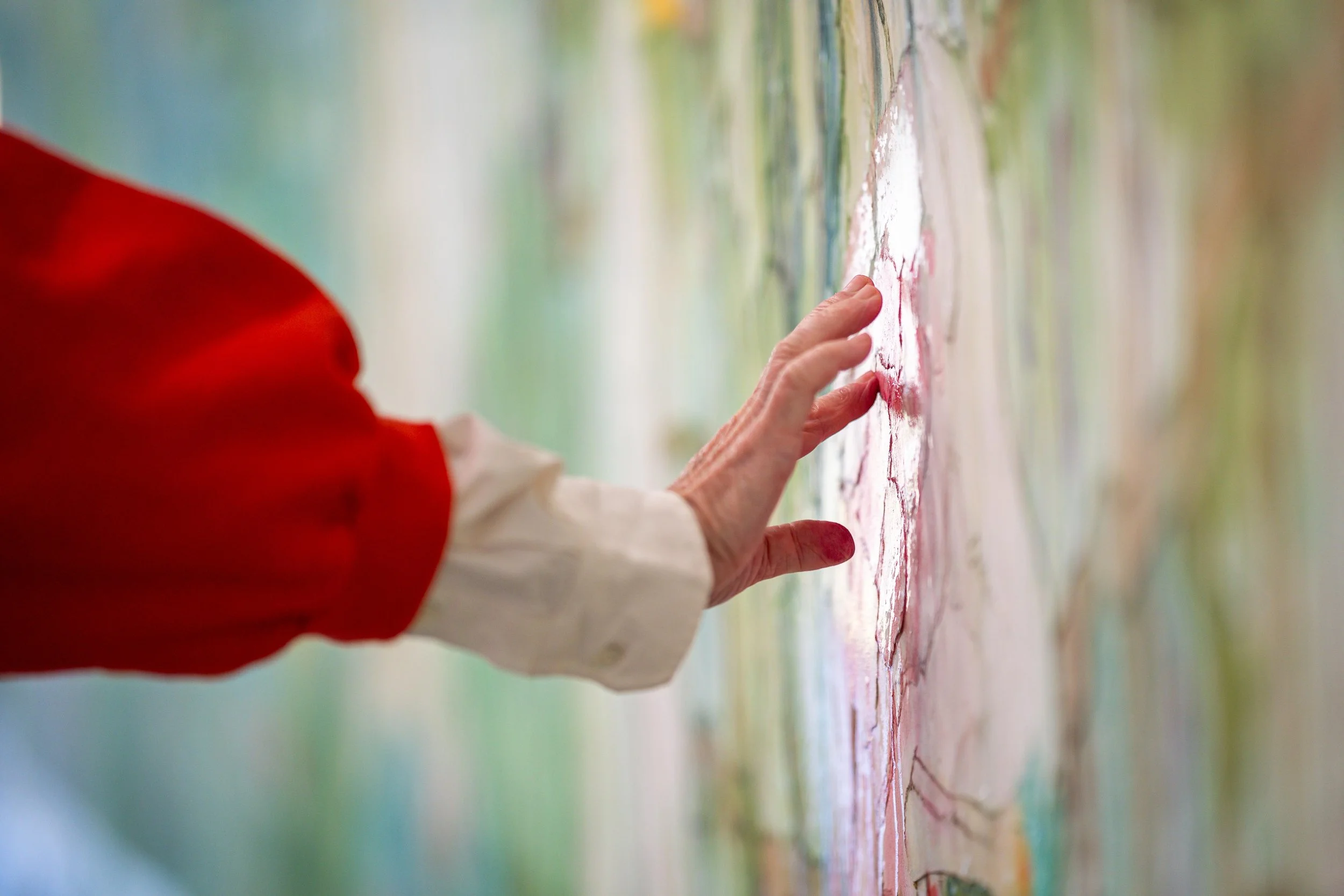
I meant for To Soar to be almost entirely white.
That was the plan from the first sketch. Torn paper glued in relief across an eight by eight foot sheet, then washed in whites so close to one another you would have to stand still to see where one ended and the next began. Sandhill cranes lifting out of a wetland, washed in sunlight, the birds and the water made of the same pale value. I wanted the relief to carry the piece, the tear lines and the ridges where one sheet lifts off another, and the quiet surface for a small intimate space.
What I had imagined depended on someone standing in front of the work, with light moving across a raised edge as they shifted their weight. The camera would never see that.
So I brought color in to find the edges.
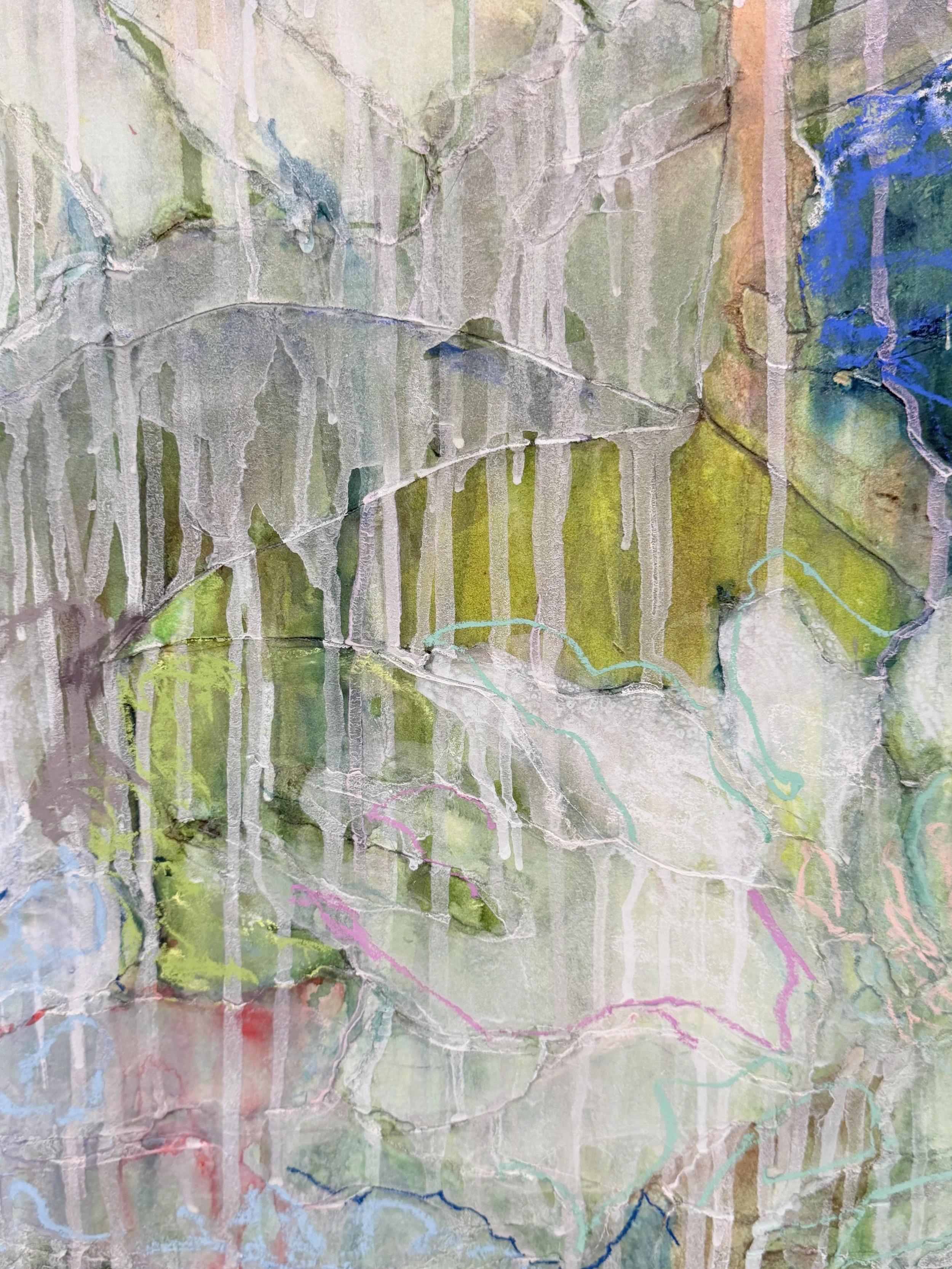
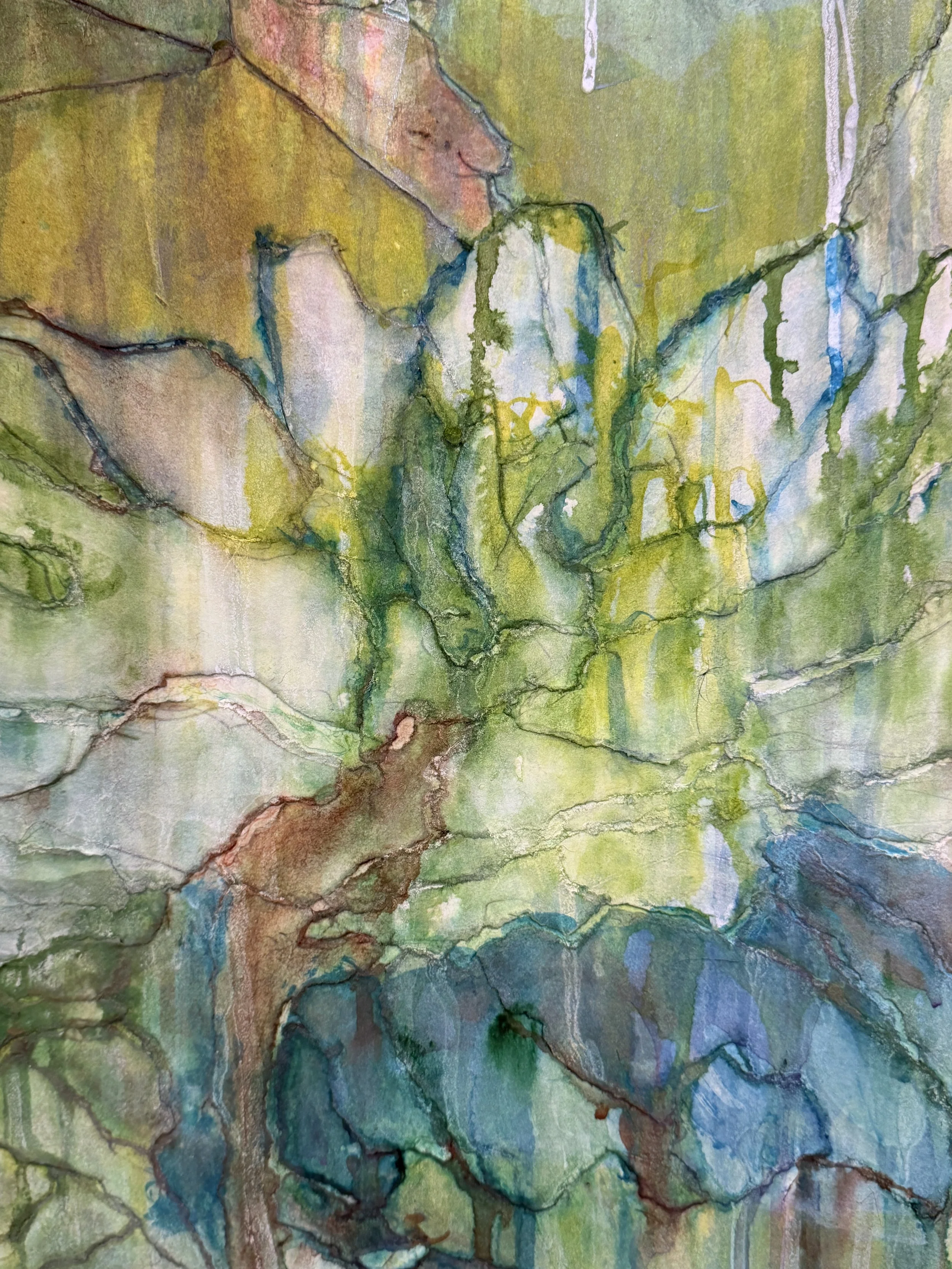
Chartreuse and moss pooled into the low places of the paper and stopped at the tear lines. Teal settled under the lily pads. Lilac and violet came down in drips, and each drip bent and caught on the ridges it crossed on the way down. Thin lines of cobalt and indigo pastel follow the tops of the folds. Coral went into the lilies and red went into the crowns.
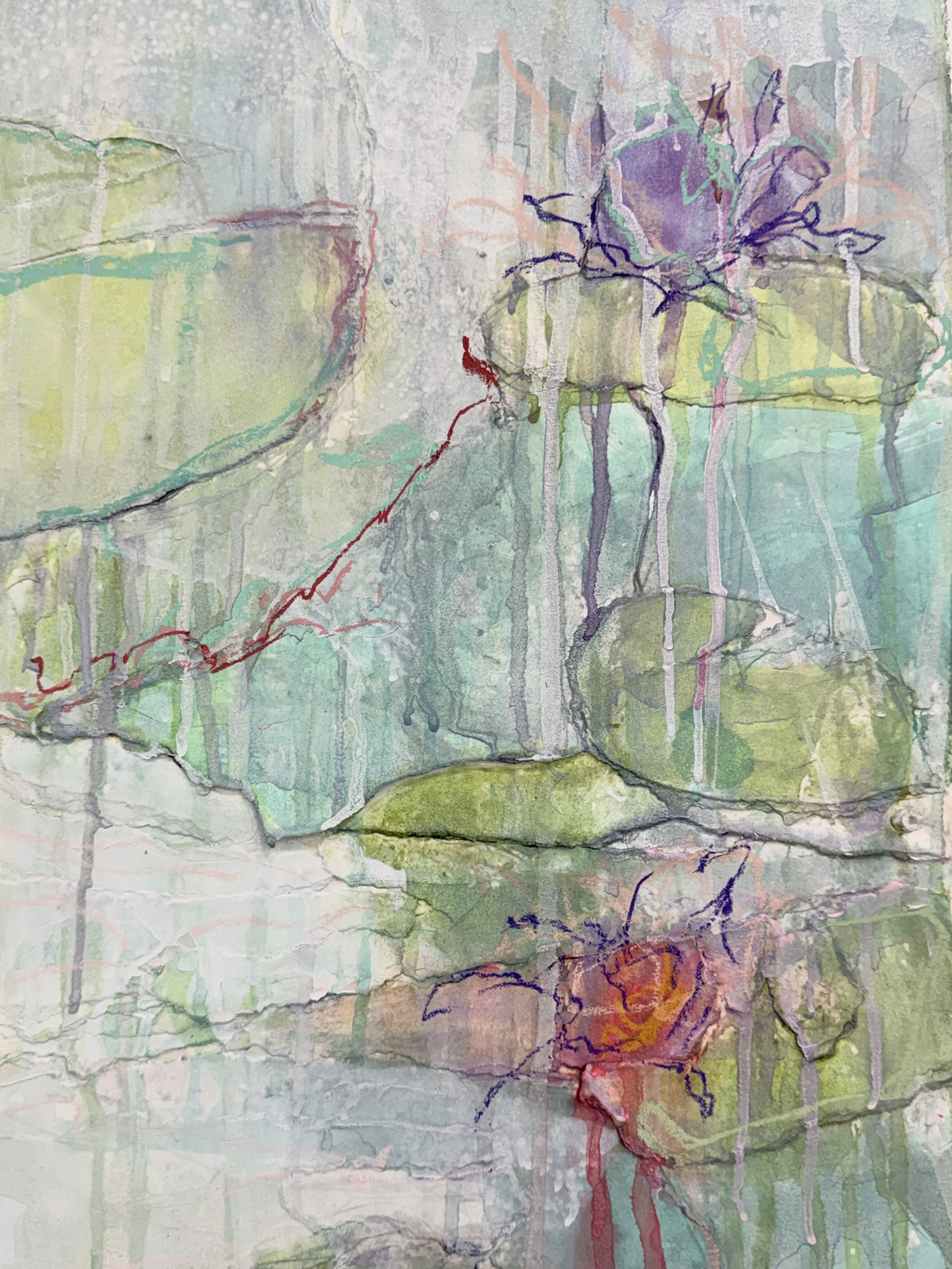
The red is accurate. A sandhill crane's crown is bare skin, and it flushes brighter when the bird is excited or alarmed. The rest of the bird is gray, and many sandhills spend part of the year stained the color of rust because they preen iron-rich mud into their feathers. They color themselves with the wetland they live in.
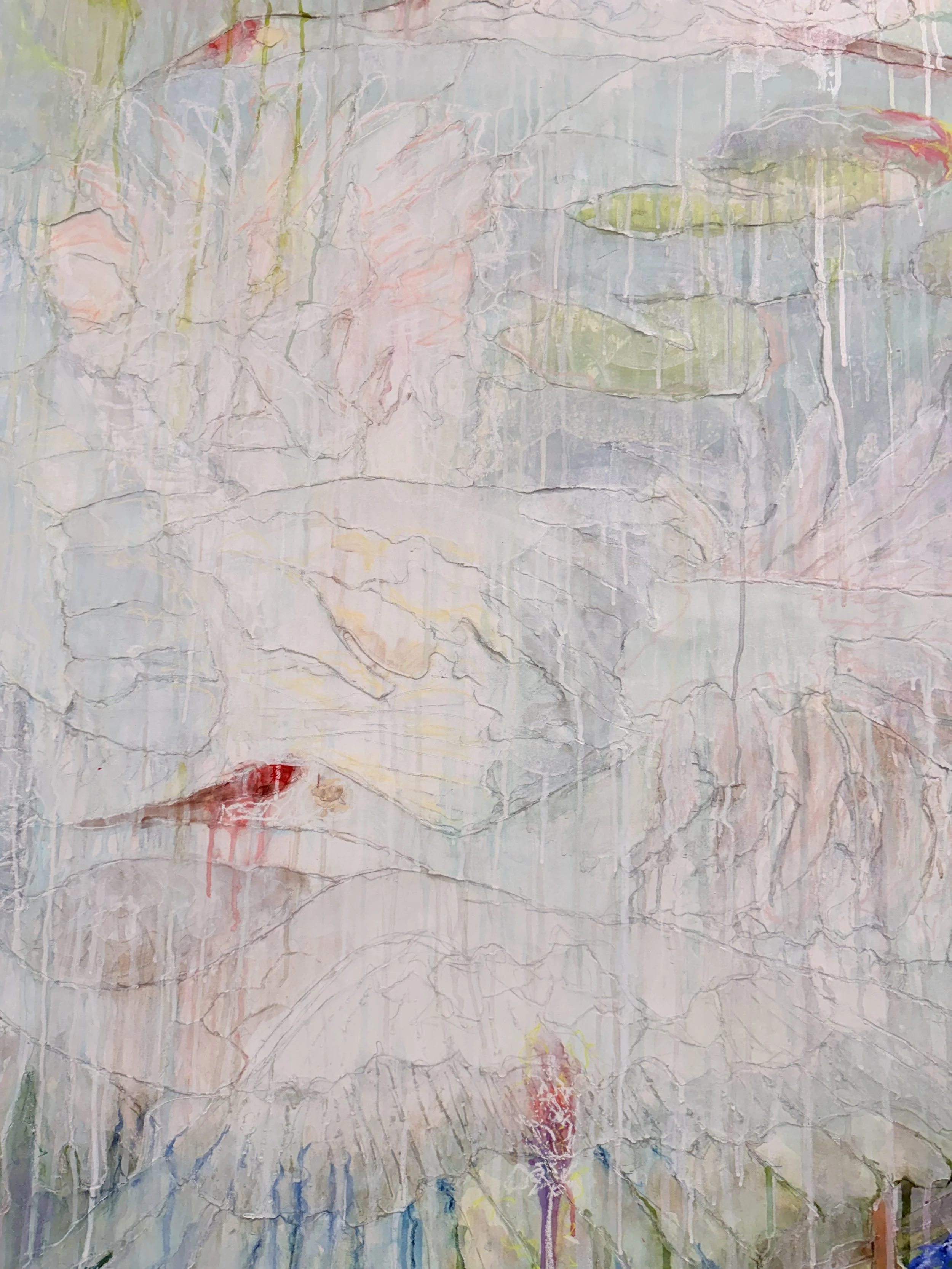
I had pictured a white bird on a white ground, clean and separate from its marsh. The real bird carries its marsh on its body. If you get close to the cranes in the foreground, you'll find faint rust on their wings, the same iron the birds pick up from the mud.
The cranes in the center of To Soar are still mostly white, but now they rise out of green water, and the white reads because of the color around it.
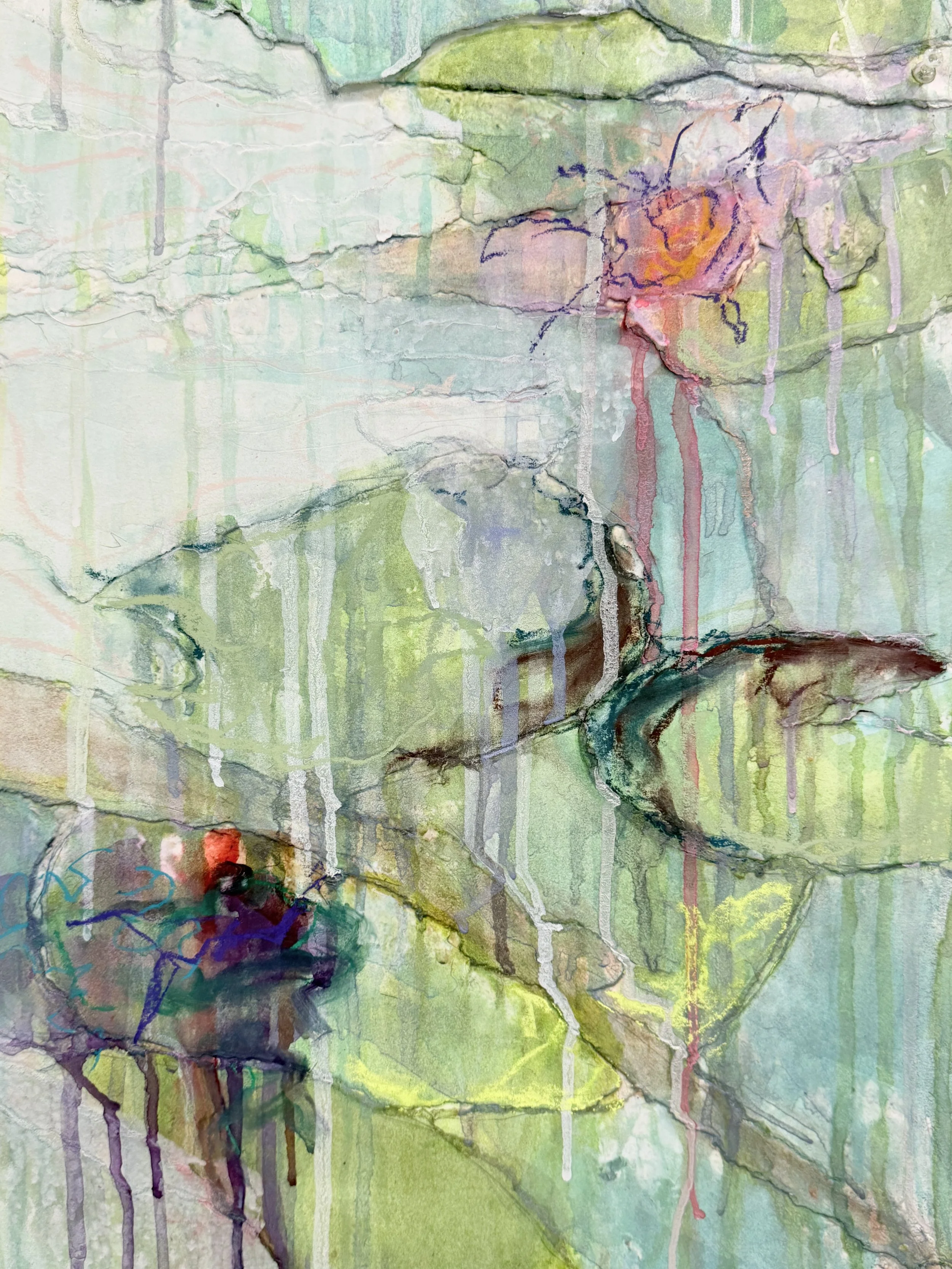
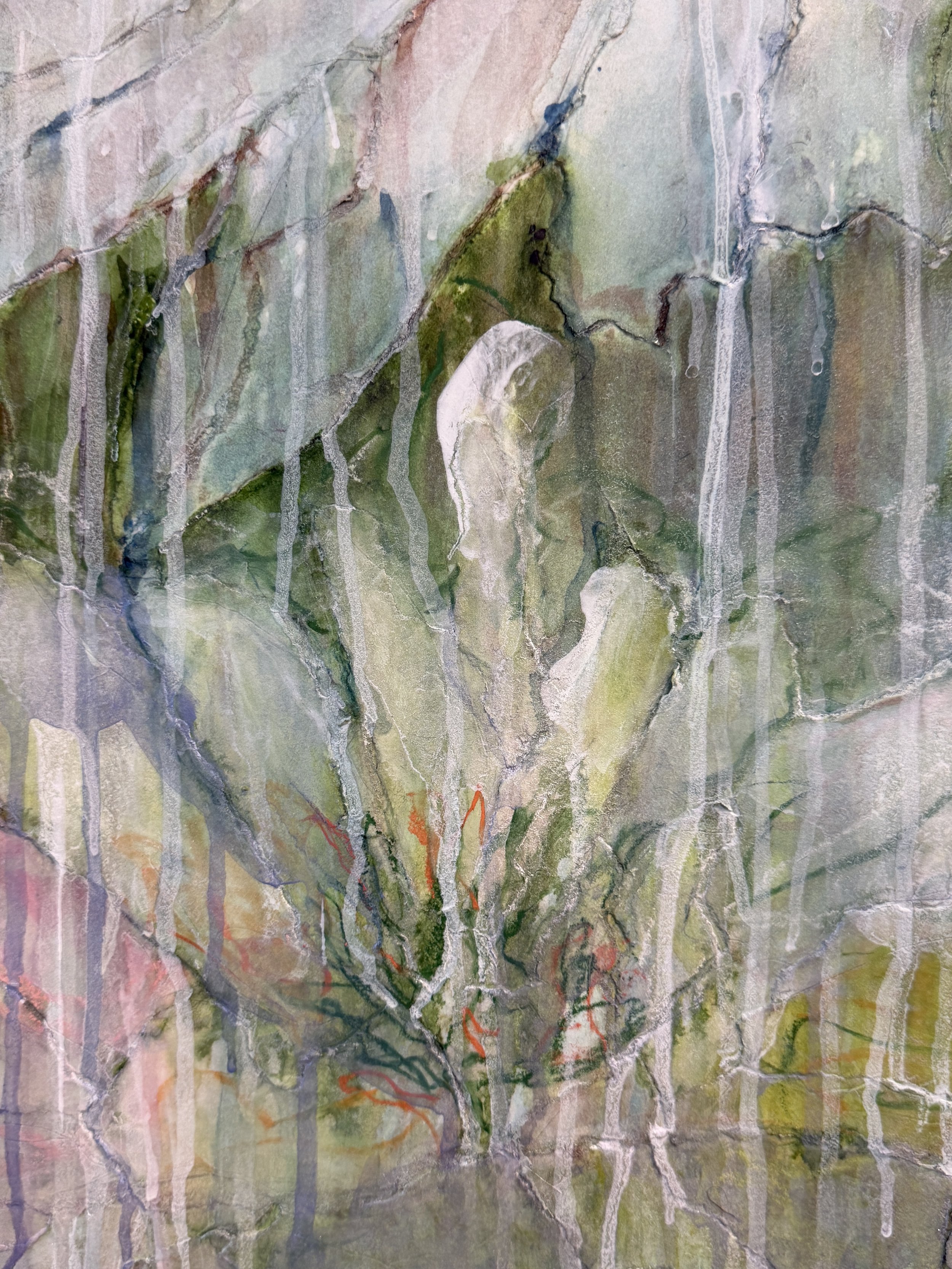
The lilies follow the same logic. A water lily roots in anaerobic muck, mud with almost no oxygen in it, and opens on the surface every morning. The flower needs the dark water under the pad to have something to rise out of.
I started adding color because of the camera. I kept adding it because the piece needed its water.
My husband Curtis and I drove to Christoval, Texas for a public hummingbird tagging event. I had been to a private tagging before, but this one was different. The public was invited in. Children were there.
Biologists carefully capture tiny hummingbirds to collect vital information — sex, age, length, weight. After gathering the data, a skilled volunteer carefully cradles each delicate bird in the palm of an observer’s hand.
The tiny creature briefly pauses. You hold your breath. You feel an almost mechanical vibration, like a toy stuck in the “on” position — the rhythm of its heartbeat. Then, in an instant, it is back into the wild.
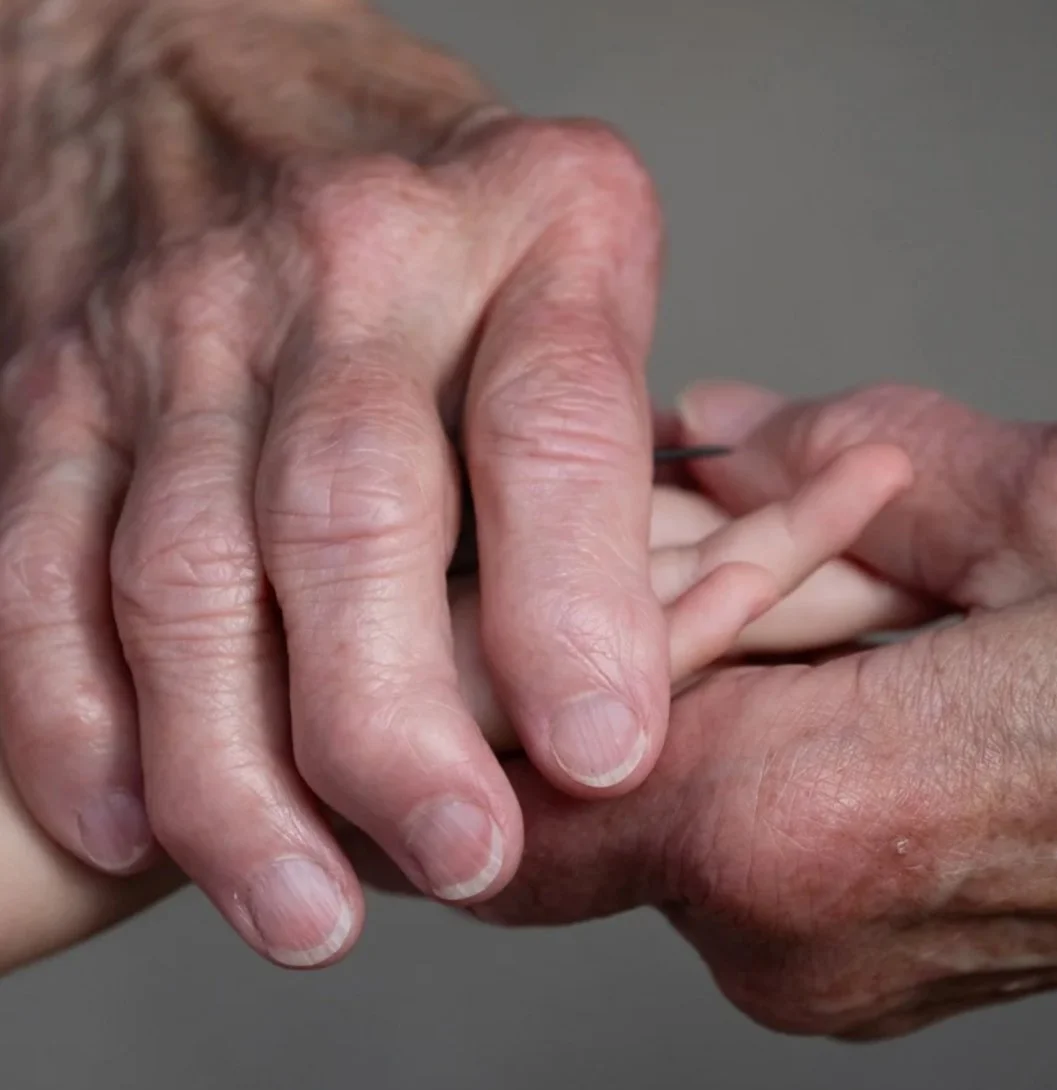
It wasn’t until I looked at my photos afterward that I saw it — a trusted volunteer placing the bird in a child’s hand. The transfer of knowledge, right there in the frame. A tiny beating heart. A child holding their breath.
That moment — the exchange of a tiny life from seasoned hands to smooth palms — is a living metaphor for what it means to nurture the passing of knowledge and care across generations. It is the story of regeneration.

This is what generational amnesia looks like in reverse.

Generational amnesia — also called shifting baseline syndrome — describes how each generation views the environment they inherit as the normal standard, even if it is significantly more degraded than that of previous generations. We absorb the world we are born into. We mistake it for the world as it is.


In the 1980s in Houston, our garden was filled with hummingbirds. Their vibrant presence shaped our daily conversations, our sense of place, our sense of wonder. They were part of our love story. Curtis proposed and hummingbirds were there. We miss them.


Today’s children in Houston have likely never seen one in a garden. They have no baseline for what’s missing. And that is the whole loss — not just the hummingbirds, but the memory of them.

Breaking this cycle requires hands willing to reach out and moments prepared to receive. It demands nurturing curiosity, empathy, and attention in children and adults alike. It calls for the deliberate passing on of more than just facts — but also the emotions and experiences that bind us to the world beyond ourselves.

The hummingbird’s pause in the palm of a stranger’s hand is brief. But it is enough. This is how we pass down the endangered knowledge of our natural history now — not around a campfire, not through a grandmother’s photo album, but in a field in Christoval, Texas, with a tiny beating heart in your hand and a trusted volunteer saying: this existed. Pay attention


.
How the bumble bee got its stripes https://www.eurekalert.org/news-releases/600078


Bombus melanopygu, a captivating bumblebee species that I recently began studying for my body of work, “Rumblings”. As an artist, my process begins with thorough research, delving into the intriguing world of each unique species. Despite the limited information available, I find myself captivated by Bombus melanopygus and its enchanting research qualities.
Incredible breakthroughs have been made by researchers in understanding the color differences within bumblebee species. A recent study, conducted by experts at Penn State, has revealed the presence of a specific gene that drives these variations in color patterns. This discovery not only sheds light on the astonishing diversity among bumblebees, but also provides insights into the evolution of mimicry, where individuals adopt similar color patterns within a given area. The gene resides in a highly conserved region of the genome, which serves as the blueprint for segmentation. This groundbreaking research was published in the renowned journal Proceedings of the National Academy of Sciences on April 29, 2019. -

Moving Forward
67” X 15” X 18”
Image by Jake Eshelman
Found object concrete and rebar curbing fragment, rusted steel, bronze, and gold leaf.
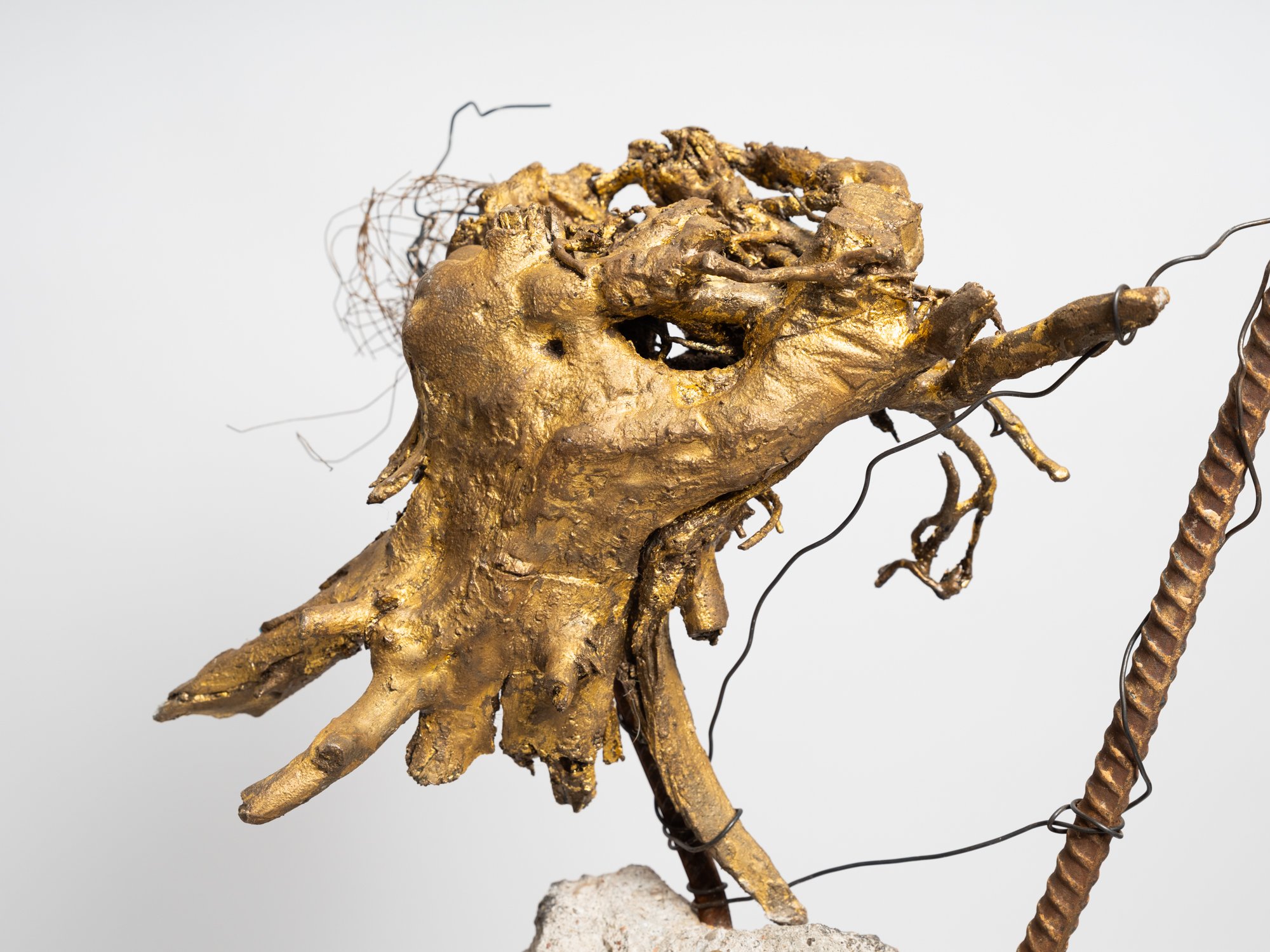
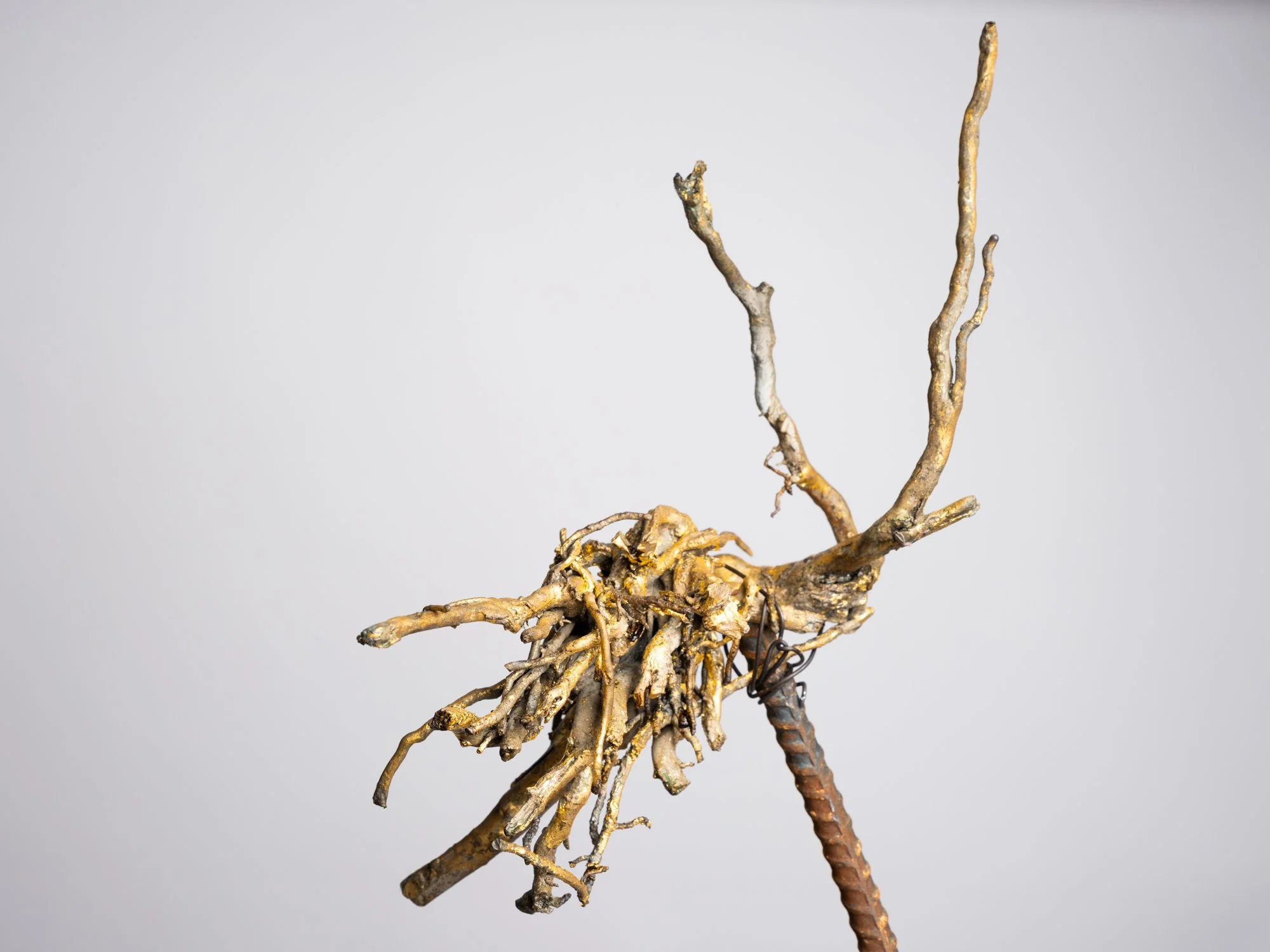
Moving Forward consists of two rectangular concrete curb fragments and two cast bronze roots, the latter with gold-leaf patinas. These objects are tethered like irregular beads strung on a wire of rusty rebar falling to the earth.
The fractured concrete and the more extensive root land at the forefront in a forward strutting anthropomorphic structure. Growing behind the long-necked bird-like form, a stem of rebar twice the creature's height reaches for sunlight. The meandering stem is counterbalanced with the smaller root in a lyrical passed sunflower shape.
The weighted composition invites viewers to reimagine the relationship between our engineered landscapes and ecological systems to support wildlife and forge a path toward a regenerative future.


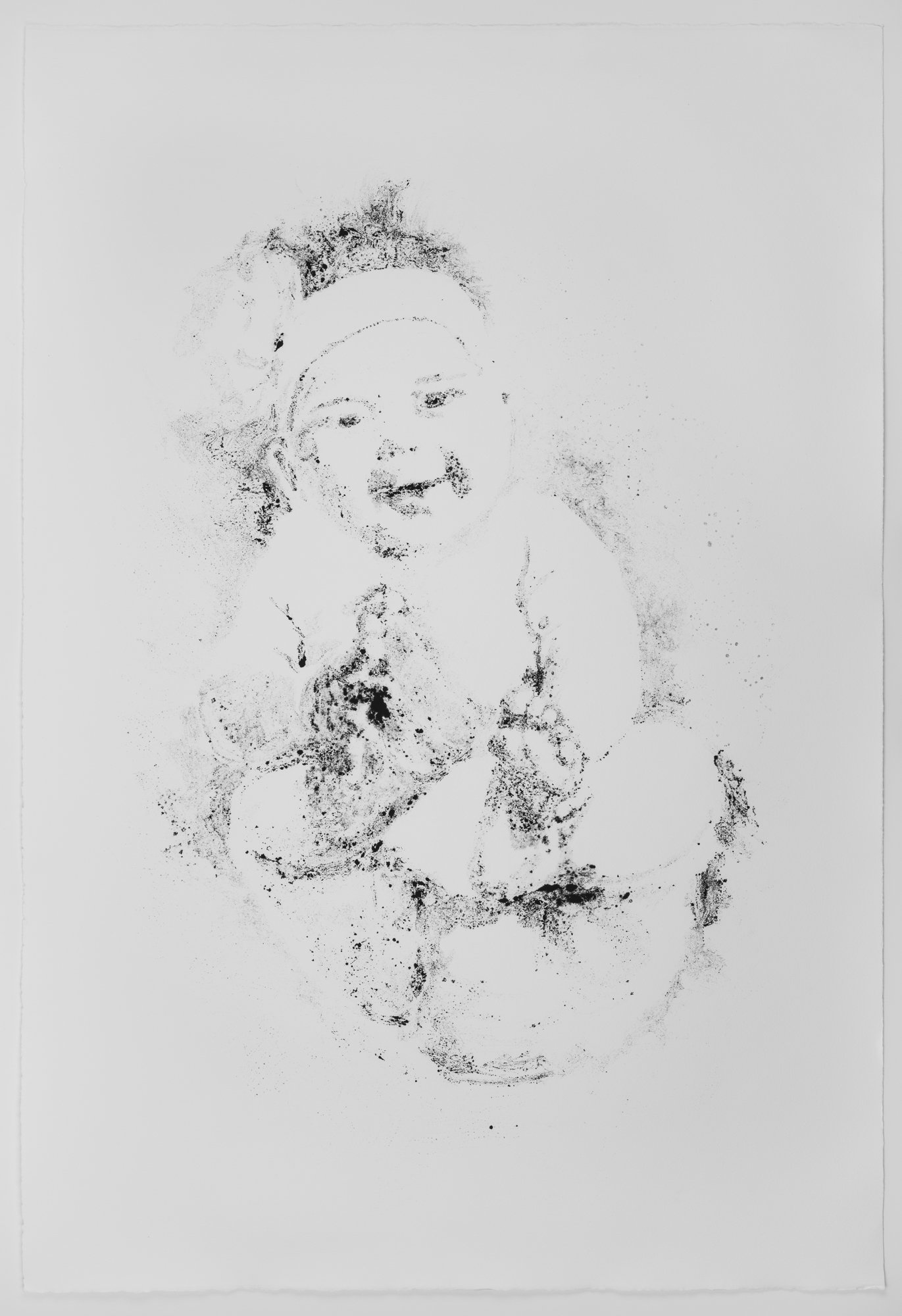
We have two granddaughters 6 months apart. Both girls are inspiring. I decided to try again to capture the moment of self discovery.
The back story-
With my commitment of shaping society for the better. My recent contemplation on human learning, sparked by observing my son and daughter-in-law’s newborn granddaughter discovering their toes, has deepened my belief in self-experiential learning. Inspired by this and other experiences, I have decided to create a conceptual installation at Indiana University, granting the students the opportunity to take ownership and install the work themselves.
In this watercolor monotype, I delve into the ways in which humans learn and highlight our crucial connection to water. Just as we care for an infant, it is vital that we care for and protect this precious resource.

Partnering with communities, schools, governments, and organizations across the country, the National Wildlife Federation is leading the charge for conservation.
Through their tireless commitment to protecting and restoring habitats, they have managed to breathe new life into endangered species like eagles, deer, elk, bighorn sheep, and whales.
I am deeply proud to have my work featured in the prestigious fall edition of the National Wildlife Federation magazine. It is a true honor to be recognized alongside such incredible conservation efforts.
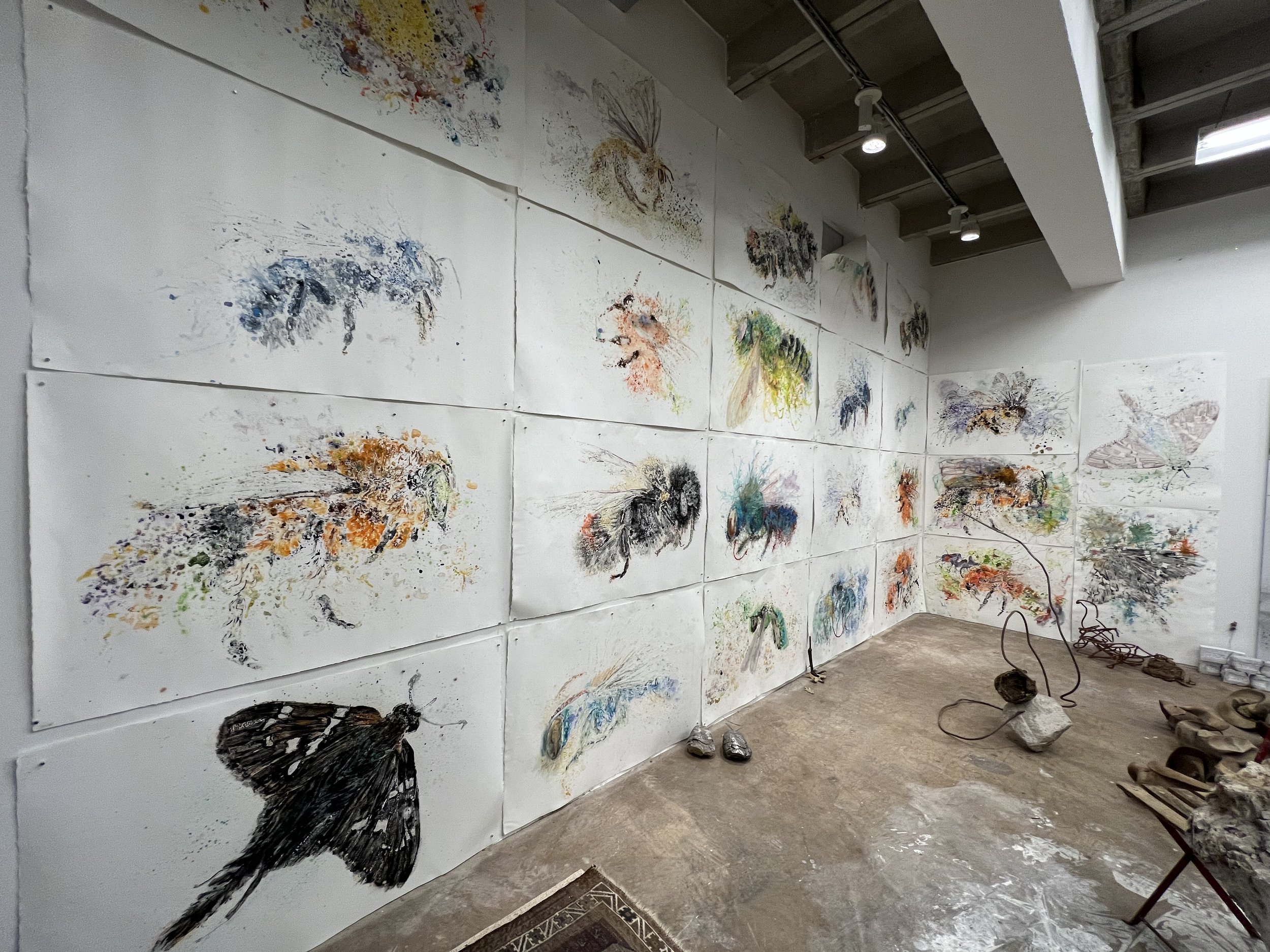
Living the Dream as an Artist in Residence at Indiana University!
I couldn't believe my luck when I was offered the opportunity to be an artist in residence at Indiana University. Not only would I have access to all the incredible resources and opportunities of a renowned research university, but it could provide the opportunity to fulfill one of my monumental artistic visions.
As part of my two month residency, I'll be giving artist talks, exploring local artist studios, landscapes of southern Indiana, and creating a special piece to be exhibited at the University or in the beautiful town of Bloomington.
During my interview for the residency, I couldn't help but ask about the size of the campus. And just as I suspected, it is massive. I imagined it with expansive fields of turfgrass. I remember feeling my heart swelling with excitement and hope. Could Indiana University be the site for the monumental installation I dream of?
Let me explain - This summer seeing CARBONsink develop within Symbiosis at Lawndale Art Center and watching the community enjoy entering it made me think. I wondered if the CARBONsink relief was a step to create a larger piece using the same process but with a deeper meaning and making a bigger impact. A little bit of research regarding Greek philosophers and labyrinths and these thoughts turned into a dream. I have a vision of completing a living labyrinth.
I began studying the designs, meanings and histories of mazes and labyrinths. I was lured by labyrinths pretty fast. Mazes are puzzles and meant to confuse you. Labyrinths check all ny boxes.
-A labyrinth is a meditation. —
-There is 1 way in and 1 way out. What seems like the end is also the beginning. It is the perfect metaphor for inspiring ecological - societal perspectives.
-As an artist whose work in the simplest form looks at time and movement a labyrinth is a logical and interesting medium.
-A living labyrinth to convert fields of turfgrass into a living sculpture to regenrrate life.
Typically in an artist in residency one would take some time getting to know the University and the City before propsing their work. I could not contain my excitement so asked if the University would be interested in a site specific living labyrinth? It would be a social sculpture in the form of a relief that demonstrates the steps for turning the largest crop in the US - turf grass into the largest CARBON sink in the US. Ed the Associate Vice Provost for Arts and Humanities responded with great enthusiasm in his voice. Every summer the University and the city of Bloomington celebrate the life and writings of Kurt Vonnegut with the Granfalloon Festival. A living labyrinth would be a fitting art installation in conjunction with the festival.
For inspiration on my drive to Bloomington, I listened to Cat’s Cradle and Slaughter House Five.
Originally Rumblings was going to be a wall of wild bee portraits, 50/10,000. It is time to start thinking about the next step.
Since I started these in 2019 my knowledge has expanded. It is no longer enough to exhibit the bees as portraits. They are an integral part of a bigger system. In incorporating systems thinking I will arrange the pieces into a 11’ X 25’ work on paper composition, an abstract eco-landscape that holistically balances urban and natural systems.
It will be a composition of twenty-eight 30” X 44” watercolor monotypes from my Rumblings* body of work. The pieces will be installed in a tight grid to reference urban development. Centered in each 30” X 44” piece is an abstract portrait of a wild pollinator.
The work will be completed in my studio when the defined space dimensions are finalized. At that time, I will select the portrait pieces and organize them in a systematic manner that works best for the size and shape of the proposed space. I will then transform the individual portraits into the monumental composition of an urban ecosystem that balances manmade and natural systems. To do this, I will add abstracted shapes representing biological systems that pollinators depend on into the blank spaces of the individual works. These marks will be extremely light and delicate, watercolor and pastel. They will be leaf and petal-like silhouettes of birds, vines, blooms, grasses, roots, water, and hooves. These shapes will weave in and out chaotically, connecting the portraits in the urban structured grid and transforming them into an ecologically balanced urban landscape composition.
RUMBLINGS* WORKS 2019 — present
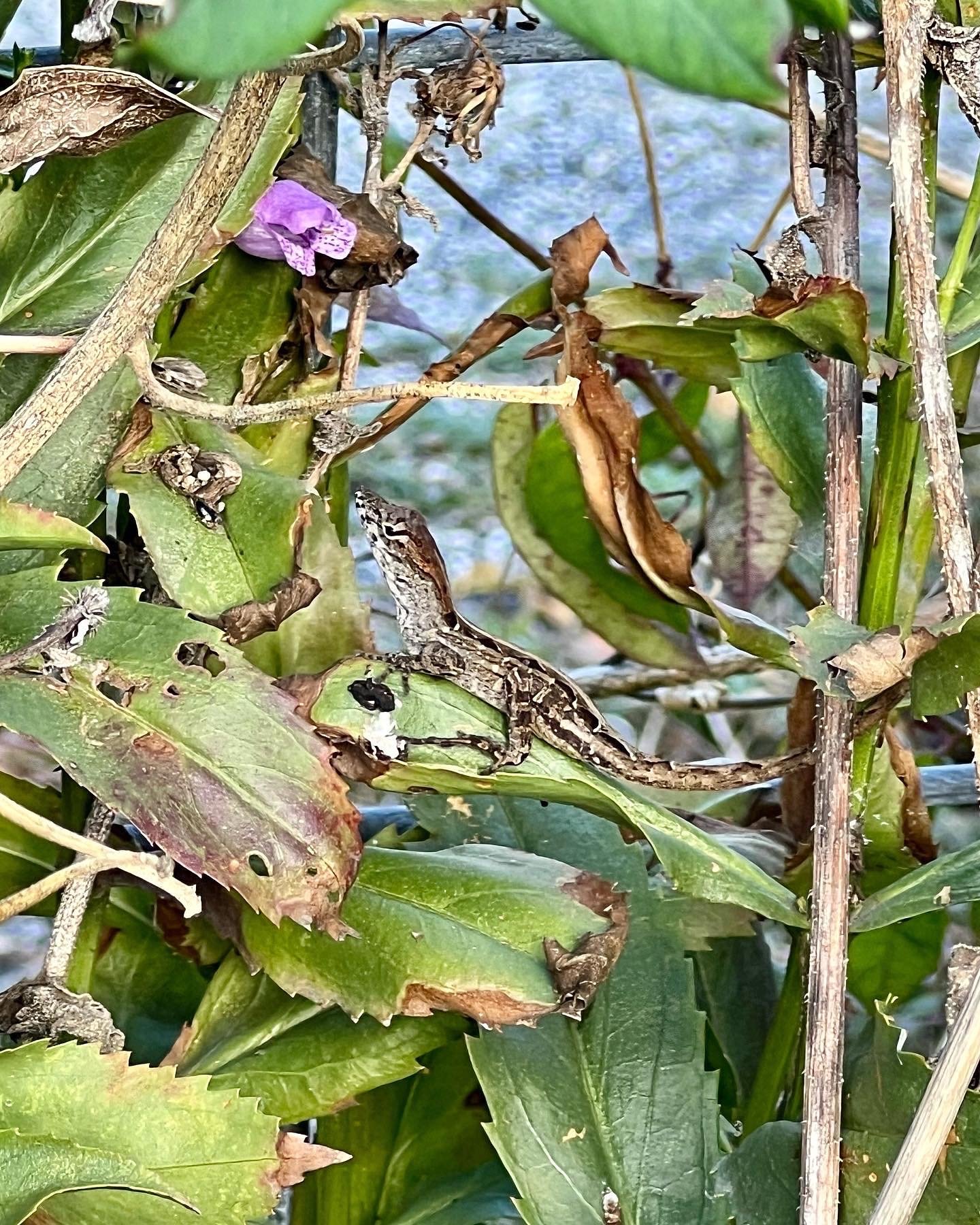
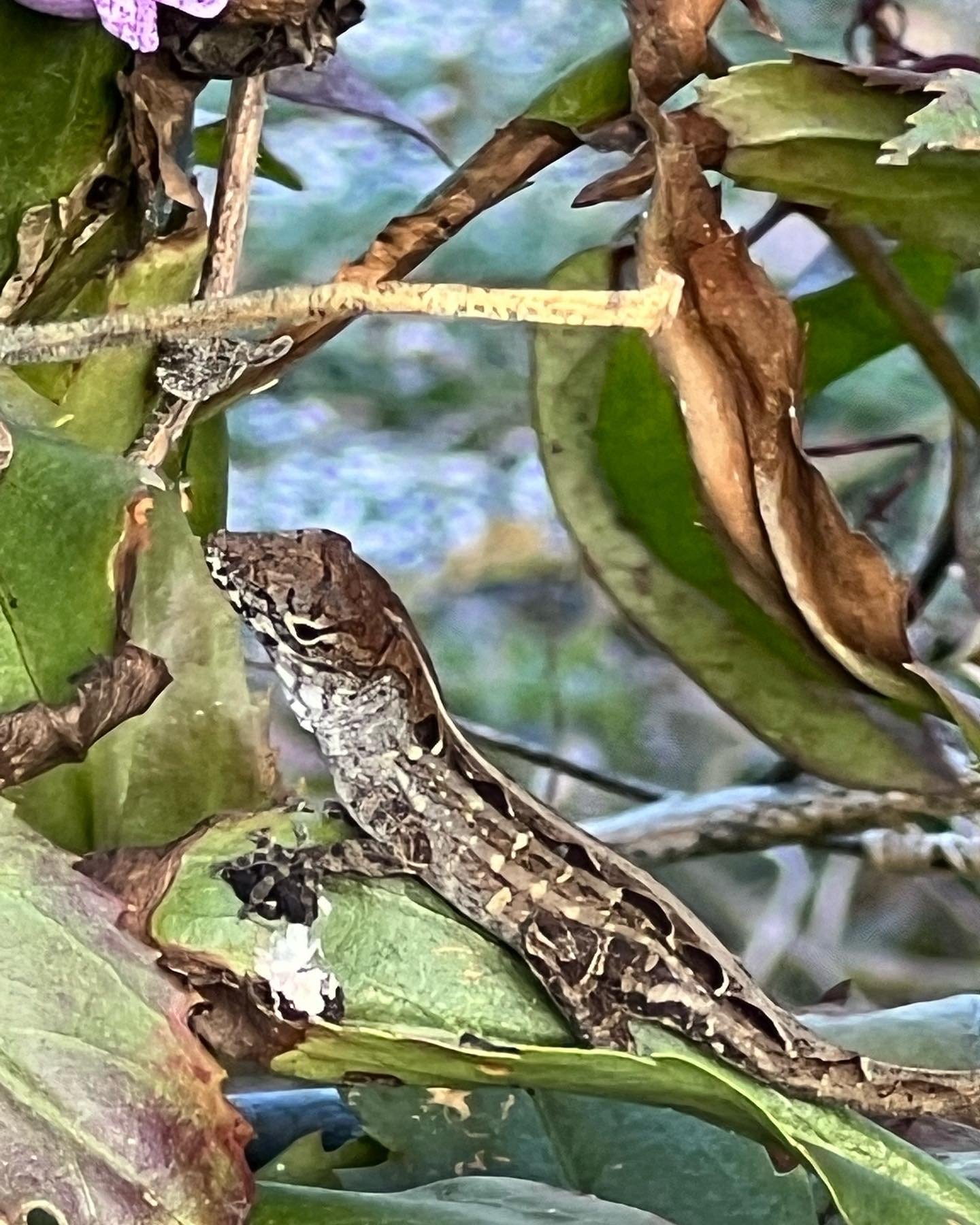
When maintaining “Symbiosis” and when I observe urban landscapes, I see the beauty in decaying plants and the tiny creatures they protect. This brown anole is a garden beneficial, keeping fire ants and other insects in check. Without camouflage, they are prey for birds, snakes, and some spiders. As an artist I find beauty through systems thinking and a balanced ecosystem.
Can you find him/her mimicking a dried, twisted leaf?


Tipping Point
36” X 24” X 36”
Bronze, Rebar and Concrete.
Our past actions formed the precarious state of our environment. What we do today shapes our future. This piece suggests a caring and protective relationship between natural systems and urban development has extraordinary potential. I believe the human species has the creative capability to make our cities lush and diverse carbon sinks. My work investigates these possibilities.
courtesy of Sculoture month.
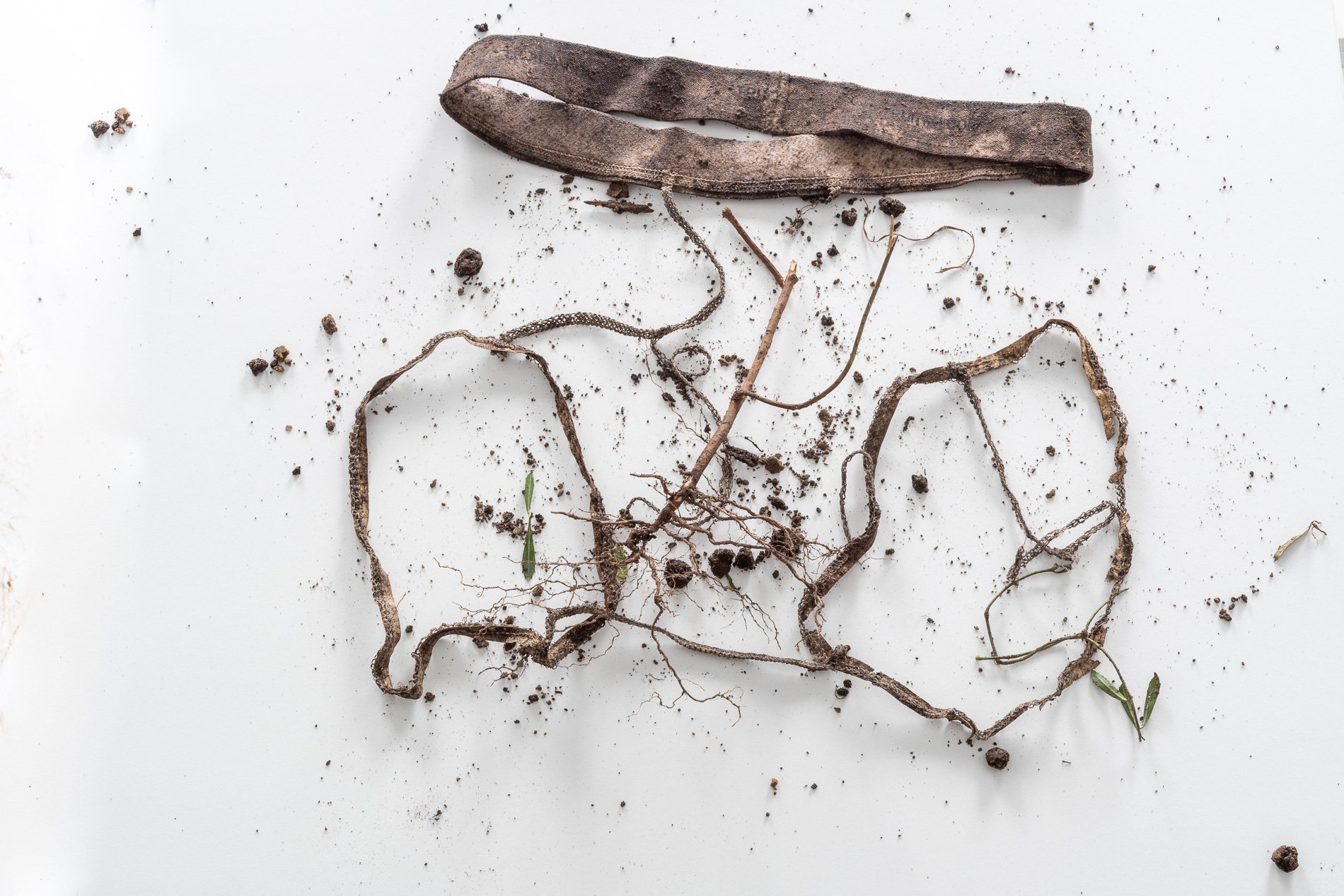
SOILED — Tighty-Whities 2021
Photograph by N. Baker
How do you document art that lives beneath our feet? Creating art beneath the Earth’s surface I am finding new ways to document the work and it's movement. This photograph is the result. Let me explain. To test soil for fungi that recycle wood and live on dead material soil, scientists buried cotton fabric. In Symbiosis, to document the Saprophytic fungi, I planted new, washed men's medium cotton briefs. This photograph demonstrates the results. In 2022 I will recreate the piece and grow the tighty-whities in a vertical column. This change will document that living soil, the diversity of microbes is built from the top down. In contrast, when my father farmed in the 50s and 60s, the farm bureau that advised him told him to invest in a new plow to dig deeper to access the richest soil.
The purpose of my work is to change how we see landscape. It isn’t just about creating beautiful gardens. Landscape can store carbon and soak up rainwater to cool the planet. It is the cheapest and fastest way to get our planet back on track.

Digging up the briefs I immediately knew I had made a mistake. I left them In the garden’s soil too long. Still, I dug them out with tender care. The petroleum-based elastic band was entwined with a plant root. The root took the elastic leg 6” deeper into the earth than I planted it. I left the elastic and the root as I found them. Laid them on a board and took them immediately to Nash’s photography studio to document the work.
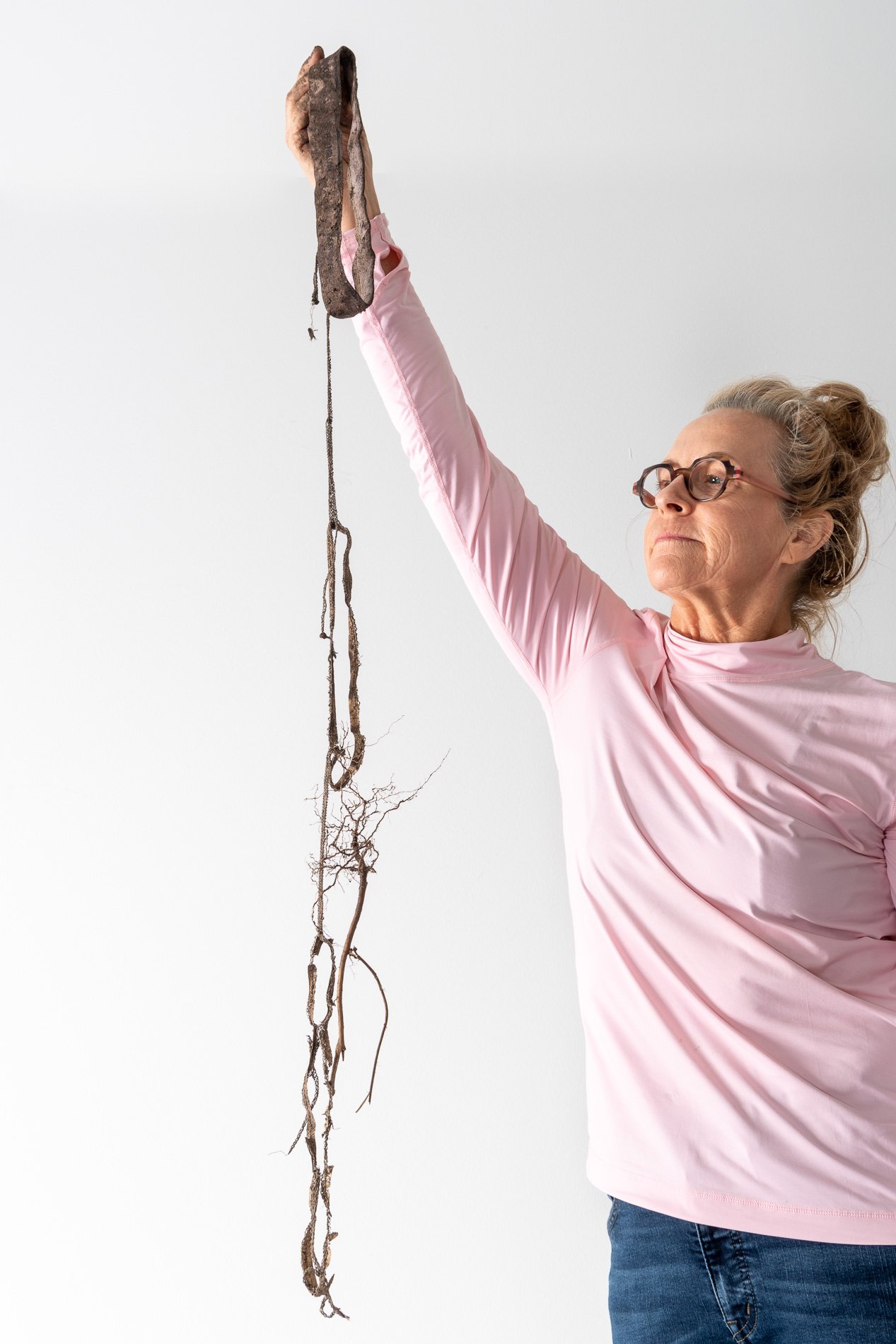
First, I delicately untangled the elastic. The cotton had completely decayed. The elastic was not biodegradable.

Seeing that the briefs were still intact minus the cotton and plus the root I started reassembling the briefs and the added appendage.

In art many times you have to listen to the materials.

I have read that a few migratory monarchs spend the winter in the Houston area and join a small resident population of monarchs. I have also read that it is essential to choose native milkweed as opposed to tropical. Tropical milkweed—doesn’t die back in the winter as native milkweed does. When a place to lay their eggs year-round is available, many monarchs don’t bother making the trip to Mexico.. I saw this caterpillar on my morning walk. It was seriously munching on the milkweed. Milkweed is the only plant that provides the nourishment that will transform the caterpillar into a monarch butterfly. It is important to plant only none-hybrid native milkweed. Texas milkweed will be included in my 2021 Lawndale Art Center Sculpture garden piece Symbiosis. In Symbiosis, I am stretching my practice and creating a living piece of site-specific art activism that will reimagine a 53.5’ X 48’ traditional urban landscape/sculpture garden and answer the question: how do we holistically restore an ecological balance in Houston? Symbols is a collaboration with Lawndale Art Center’s community, neighbors, urban wildlife, and the coastal prairies' carbon cycle. For more details see this link.
#carboncycle #cindeeklementart #texasart #houstonart #contemporaryart #modernart #caterpillar #monarch #milkweed #nativeplants #migration #energy #movement
#lawndaleartcenter #symbiosis #artactivism


The day after the caterpillar sighting.
When it comes to the environment in the 21st century grasslands beat trees when it comes to carbon sequestration. Our planet is a living breathing organism, impacted by our actions, always changing. I believe It is important that we constantly observe and evaluate how it changes as humans developed and expand across it.
Trees are a thing of beauty but they store carbon above ground in their trunks and limbs.when they catch on fire the trunks and limbs release their carbon into the atmosphere. Grasslands storing carbon underground release little carbon when they catch on fire. In addition the grasslands are a giant sponge soaking up water that prevents dryness and fires.
With the forest fires we have suffered world wide it is time to plant more grasslands and turn these areas suffer ending from droughts into giant sponges for soaking up water and carbon. When the ground is moist then we can can start adding back trees.


Drying coastal prairie native grass in my studio.
Armand Bayou Nature Center
The Armand Vayou Nature Center is a great example of the ecology and restoration of a local coastal tall grass prairie. It is great to see Texans committed to preserving natural systems. With the social unrest, a universal pandemic crippling our economies I can’t help but think about what we can learn from biological systems; the importance of species diversity, the importance of healthy bacteria, the importance of whole organic foods, the importance if finding a balance between humans and wildlife in all spaces including urban population centers. What that looks like is the focus of ny 2021 work.

After seeing the above article I was sitting at a stop light when I noticed this grass preserving in a sea of asphalt. Nature is amazing and will always win. Our challenge as humans is to learn how to live with it, preserve and respect it. In the end nature will always win. We can incorporate the coastal prairie landscape into Houston’s urban landscape.
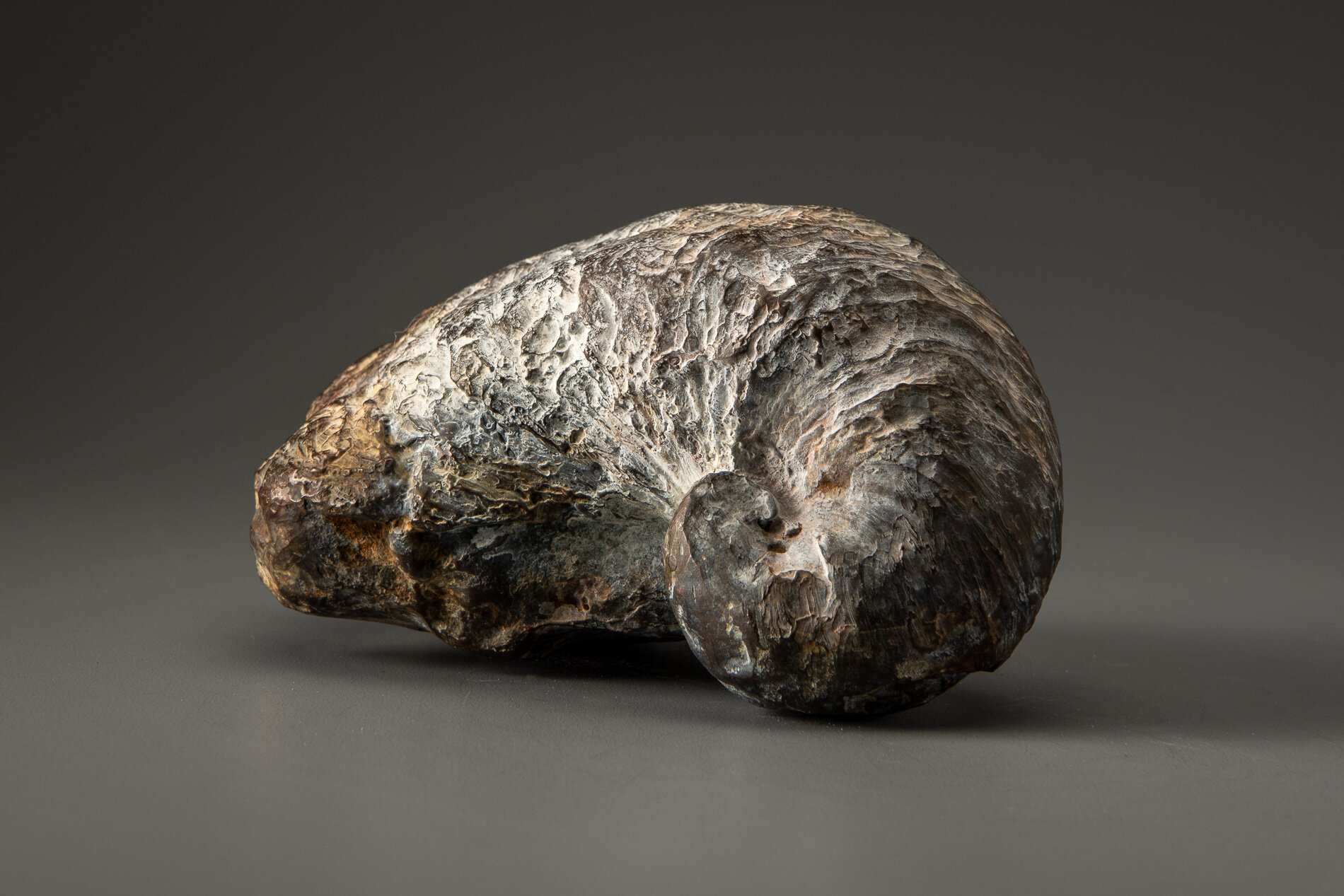
Mute Testimony.
3” X 6” X 4”
bronze
phot by Nash Baker

Stainless Steel finish changes everything 🤔 more to come
As life happens, the lens we see through shifts. The lens I interpret this work through has adapted to current events.
As a result, I am updating my artist statement.
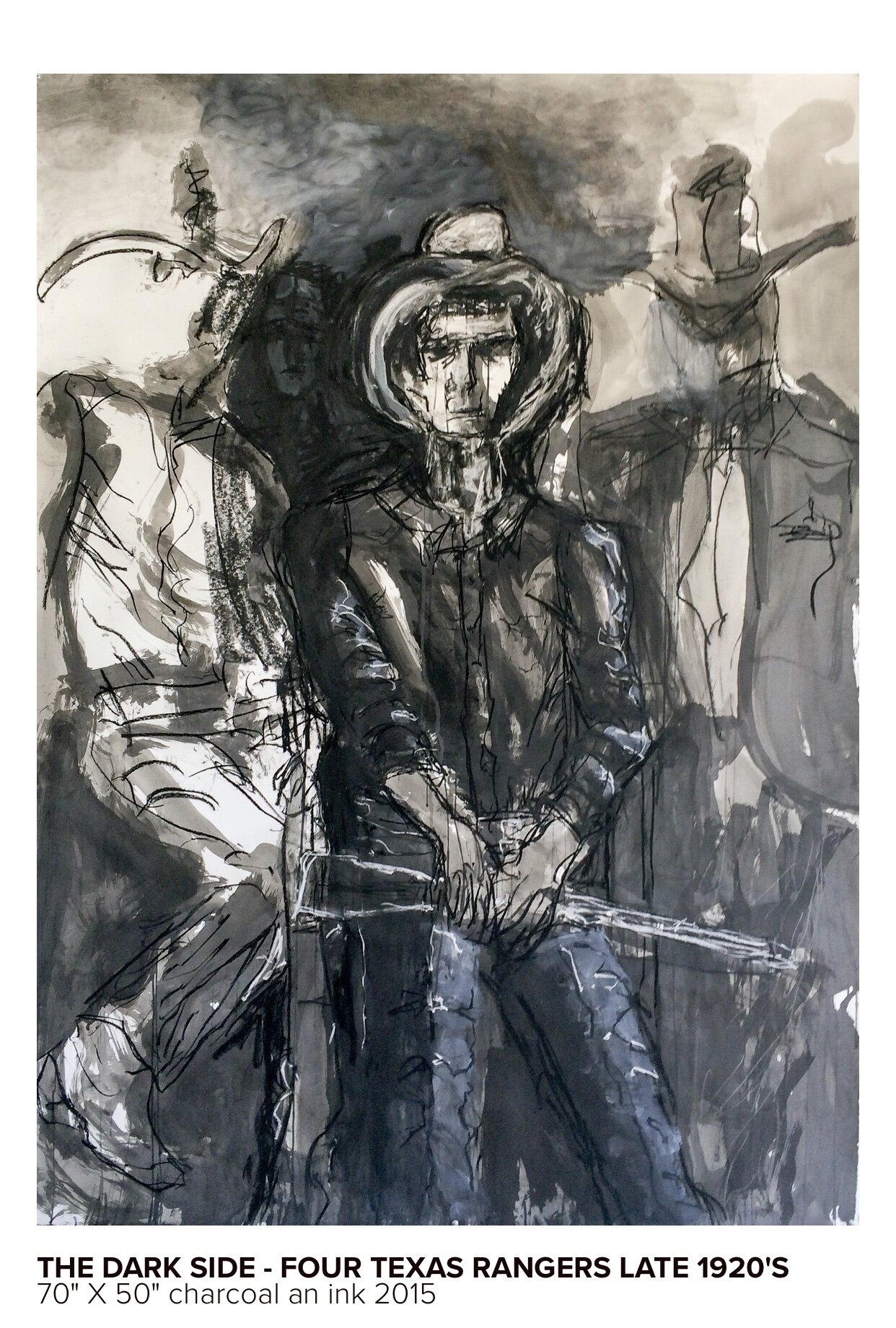
The Shadow of the Texas Rangers - late 1920's, The Texas Rangers in Fabens, Texas (a suburb of El Paso). During prohibition, the Texas Rangers traveled to the Texas/Mexico border, to deter the smuggling of illegally distilled alcohol. While on the border, they boarded in my grandparent's home; they became family friends. My reference photo for these drawings of the Rangers hung in my Grandparent’s home. As a child in the 60’s the photo always intrigued me. I was in awe of the well-heeled, respected law officials confidently posed in front of the rugged mountain and their curiously shaped shadows. I wondered why Granny Gene had a photo of the mythical cowboys and their rifles.
My father did not remember much about the Rangers; ironically, he did remember having a house full of thirsty Texas Rangers and accompanying his father to the edge of the Rio Grande River. His father would leave cash under a rock, the next day a bootlegger from Mexico would wade across the river on a mule, retrieve the compensation and place bottles of booze in the hole under the rock. This is when the term ”mule” surfaced.
The proud history of the Texas Rangers I grew up with has suffered from stories of abuses of power. In the historical photo, the overpowering southwestern sun reveals the dark shadows that tarnish the Rangers’ reputations.
Looking at this image today, through the experiences of 2020, the focus rests heavily on the dark shadows in law enforcement. Unfortunately, the deplorable actions of a few can ruin the reputation of a group. In this drawing, there is a balance of light and dark. It is important to remember history as it was experienced by the people living at the time but it is also important not to turn a blind eye to the dark side of our history. Finding this balance is where we are in 2020. It is time that we hold law enforcement to higher standards and that they find ways to police their own.
There is more good than bad. If you look for it, you will find it. The only reliable way to instill change is to lead by example and to recognize and celebrate those who are doing it right.

I started this piece 1 1/2 years ago but neglected to have it photographed until this week. Seeing it through the photographer’s eye, it has an additional layer of meaning in 8/2020.
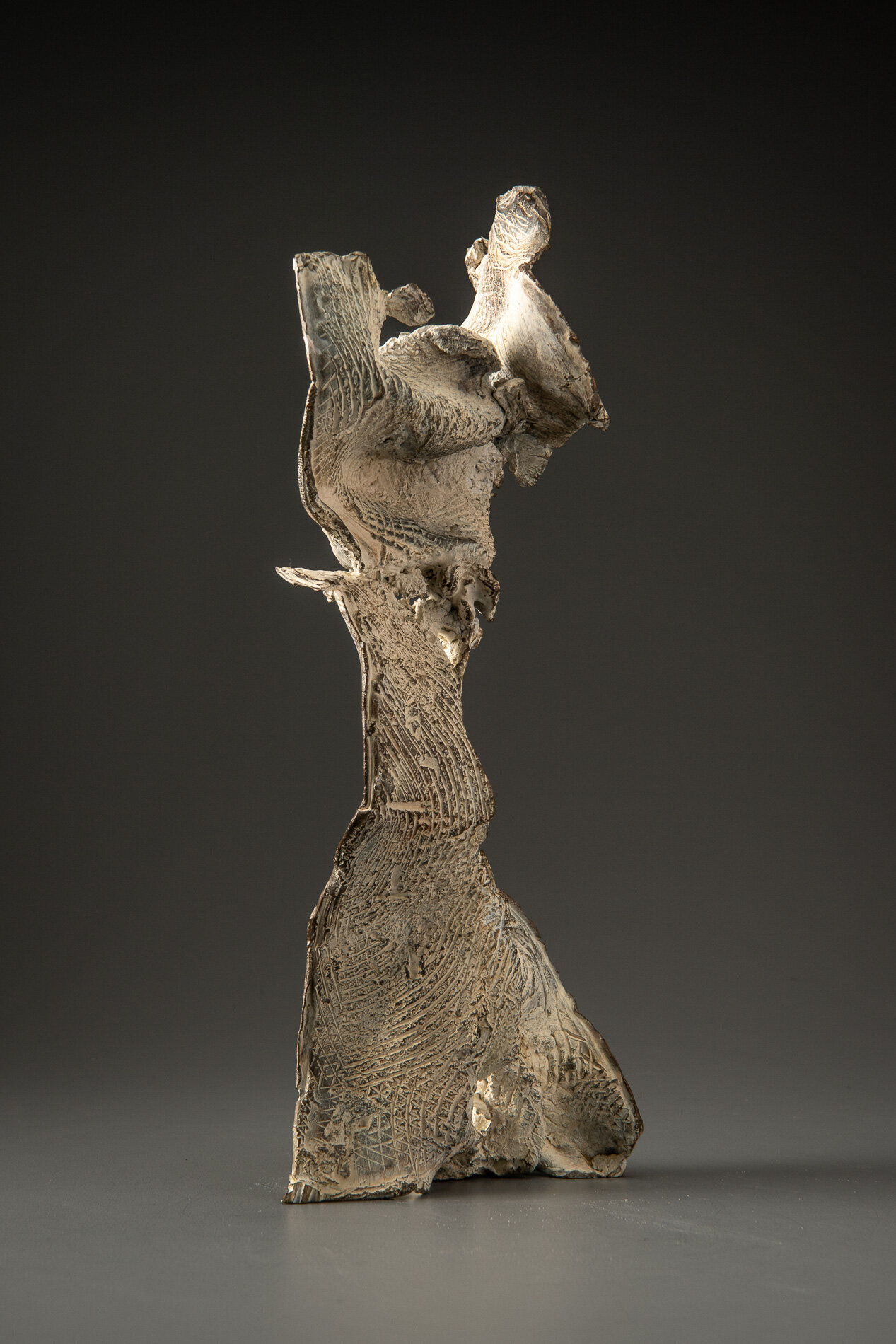
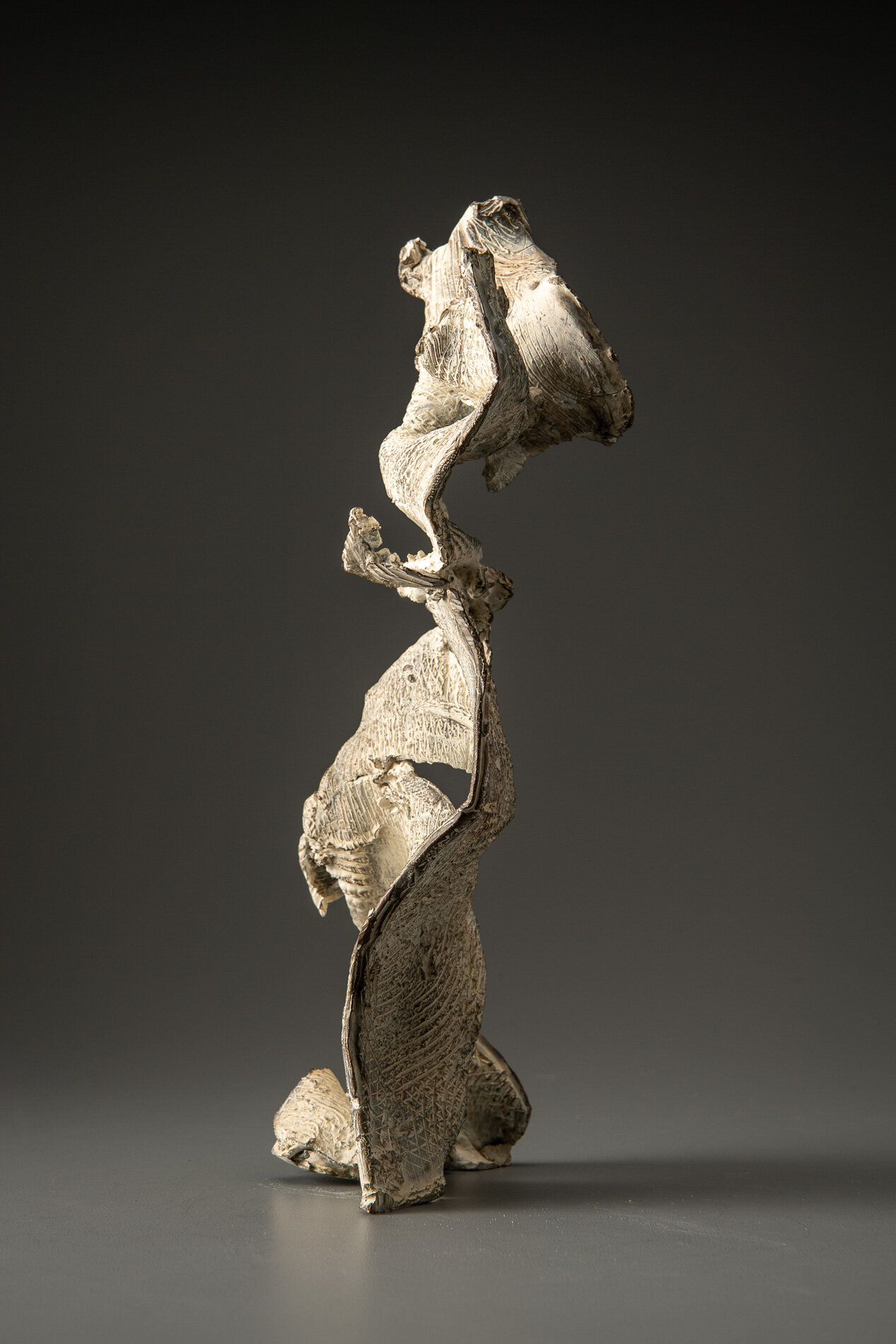
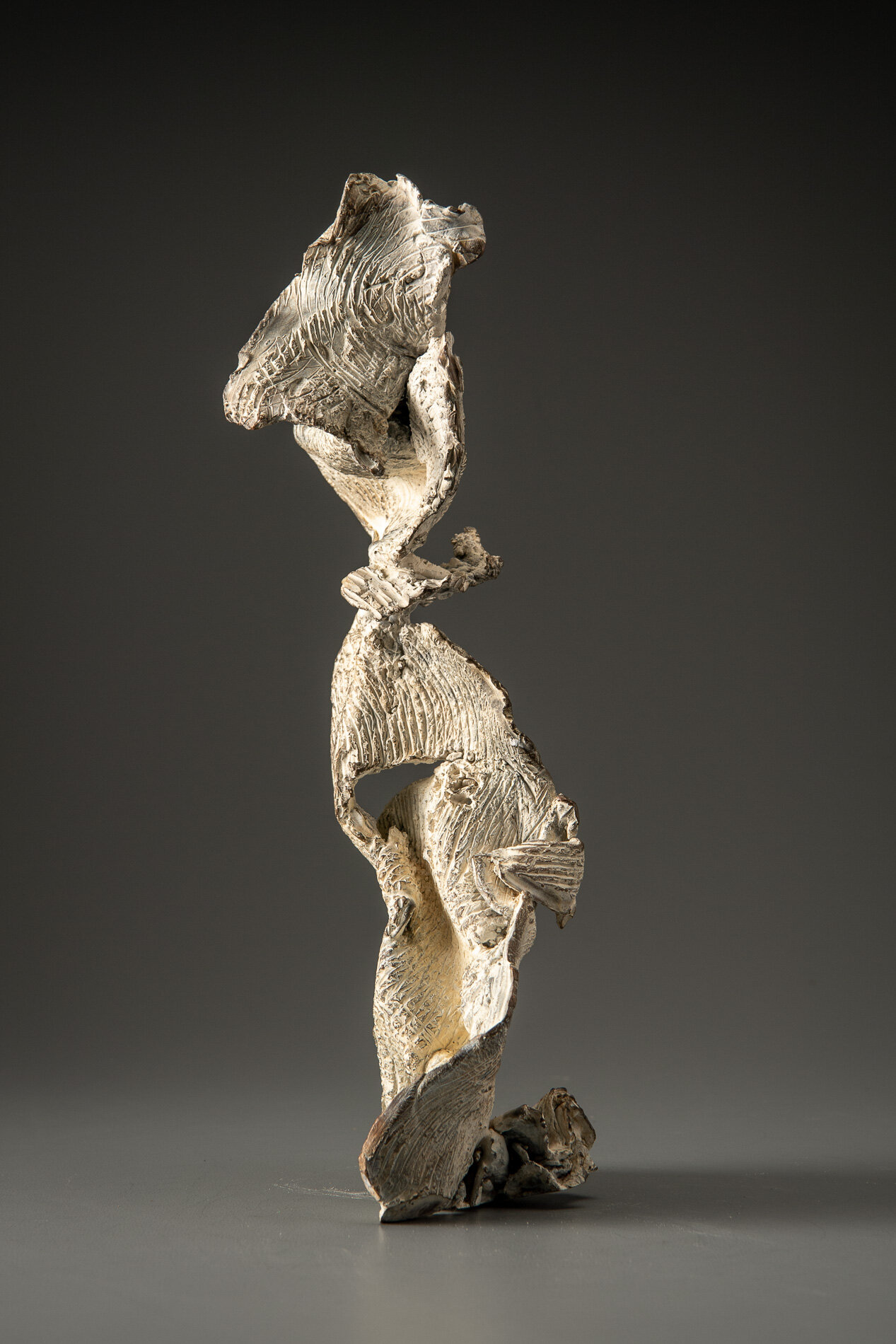
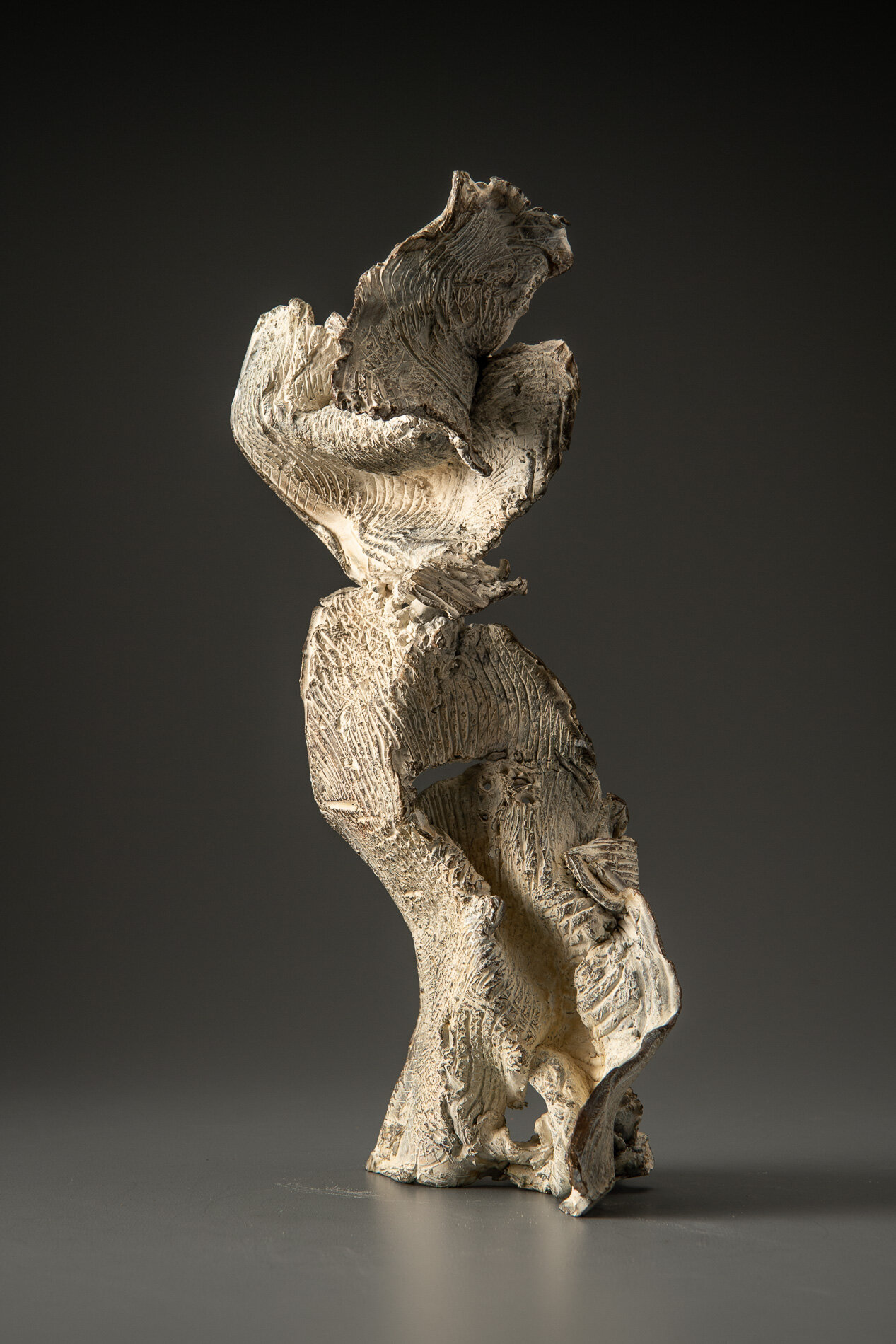
Originally it was a maquette for a memorial piece. We ended up going a different path for the memoriam. Personally I was happy this piece emerged from the event and cast it in bronze. It resonates with me because years ago I became fascinated, completely sucked in by modern neurology. Neurology was my obsession. I read everything a Mom could get her hands on. My favorite was Phantoms in the Brain by V. S. Ramachandran. The brain is amazing and especially since neurologists have learned that it is plastic and is changed with everything you do, everything you tell yourself or others tell you changes your brain. This knowledge is what gives every human a chance for hope. Dreaming is the first step, and self-talk is hugely important. You can control how you see the world, and how you see yourself, “fake it until you make it works“. What you think you will become”.
The additional layer - living through a pandemic is choosing how one reacts to stressful and depressing situations. Humans choose how we react and how we see. “what you think you will become”. The texture of the piece is composed of repetitive arched lines, they are mirrored in the profiles/contours of the work. It is an abstract sculpture but I clearly read “what we think we become”. What we look for we will find, 8/2020 is a good time to control your thoughts and look for the light. If you look for it you will find it.

“what you think you become”
bronze
12” X 4” X 3”


Quisque iaculis facilisis lacinia. Mauris euismod pellentesque tellus sit amet mollis.