The Tyranny of Tidy

In Defense of the Uninvited — Part II

There is a particular kind of anxiety that lives at the edge of an unmowed lawn. You can feel it from the sidewalk — the low-grade disapproval radiating off a neighbor’s glance, the HOA letter with its careful language about community standards and property values. We all know this pressure. Many of us have bent to it.
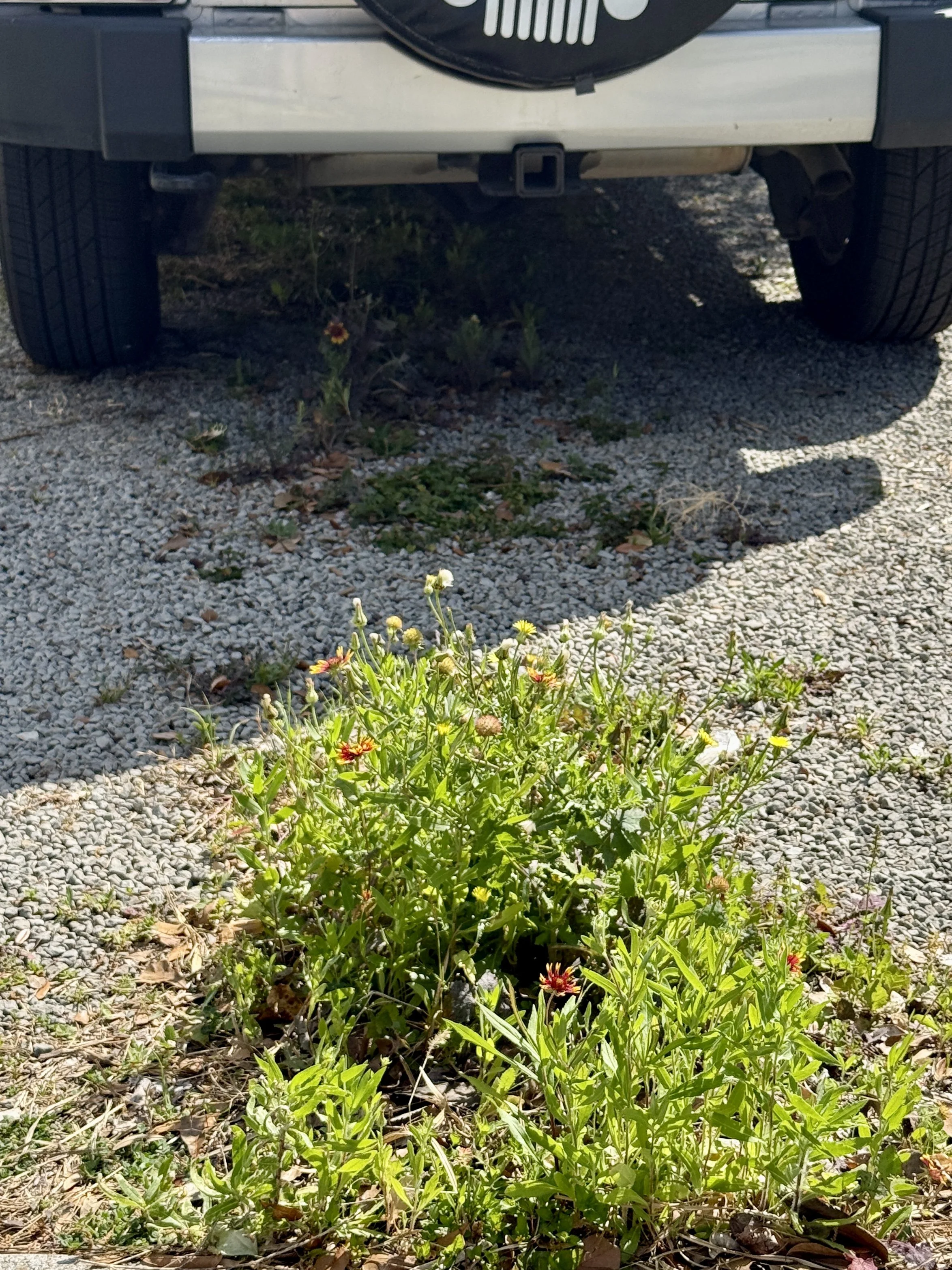
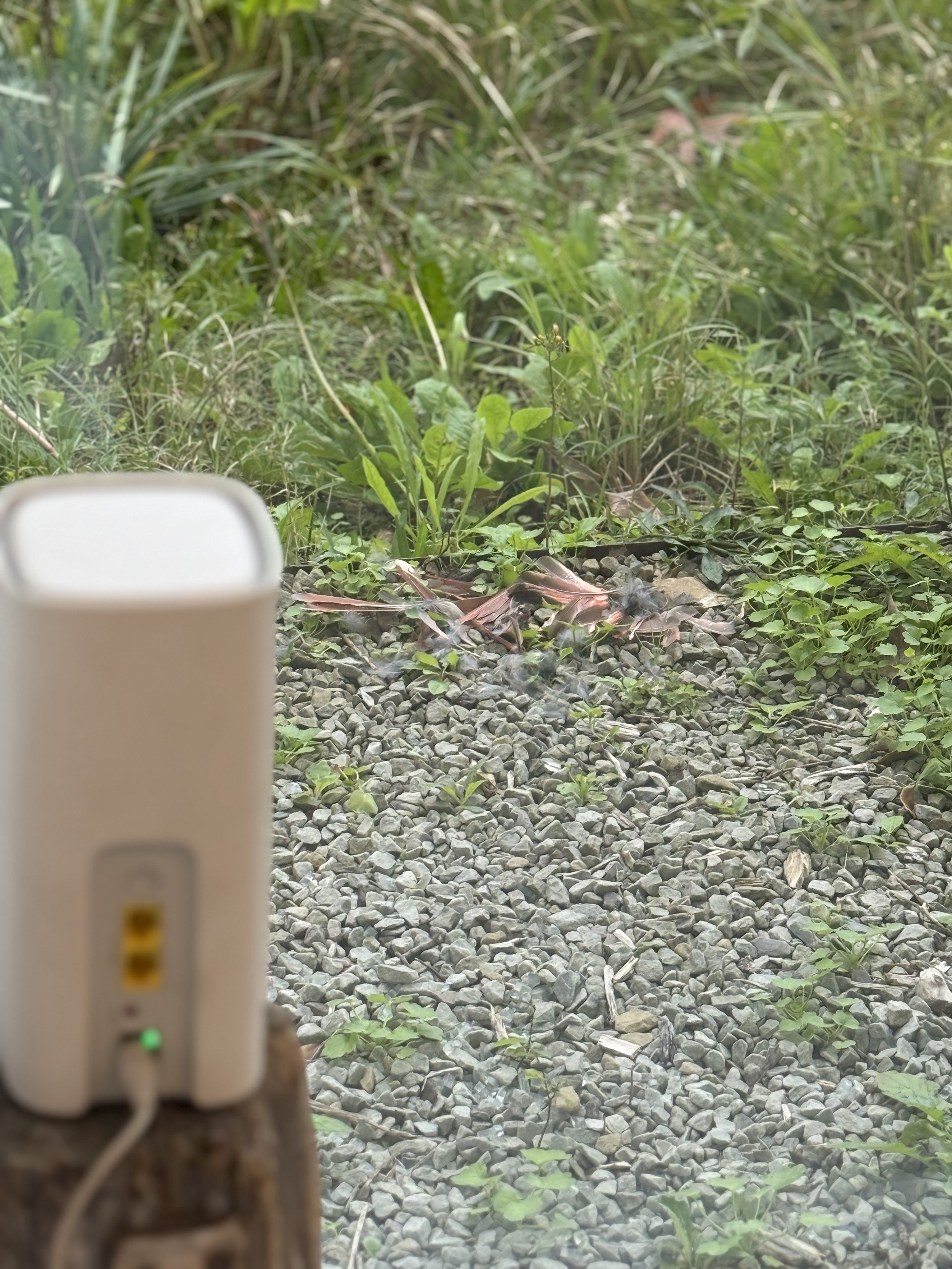
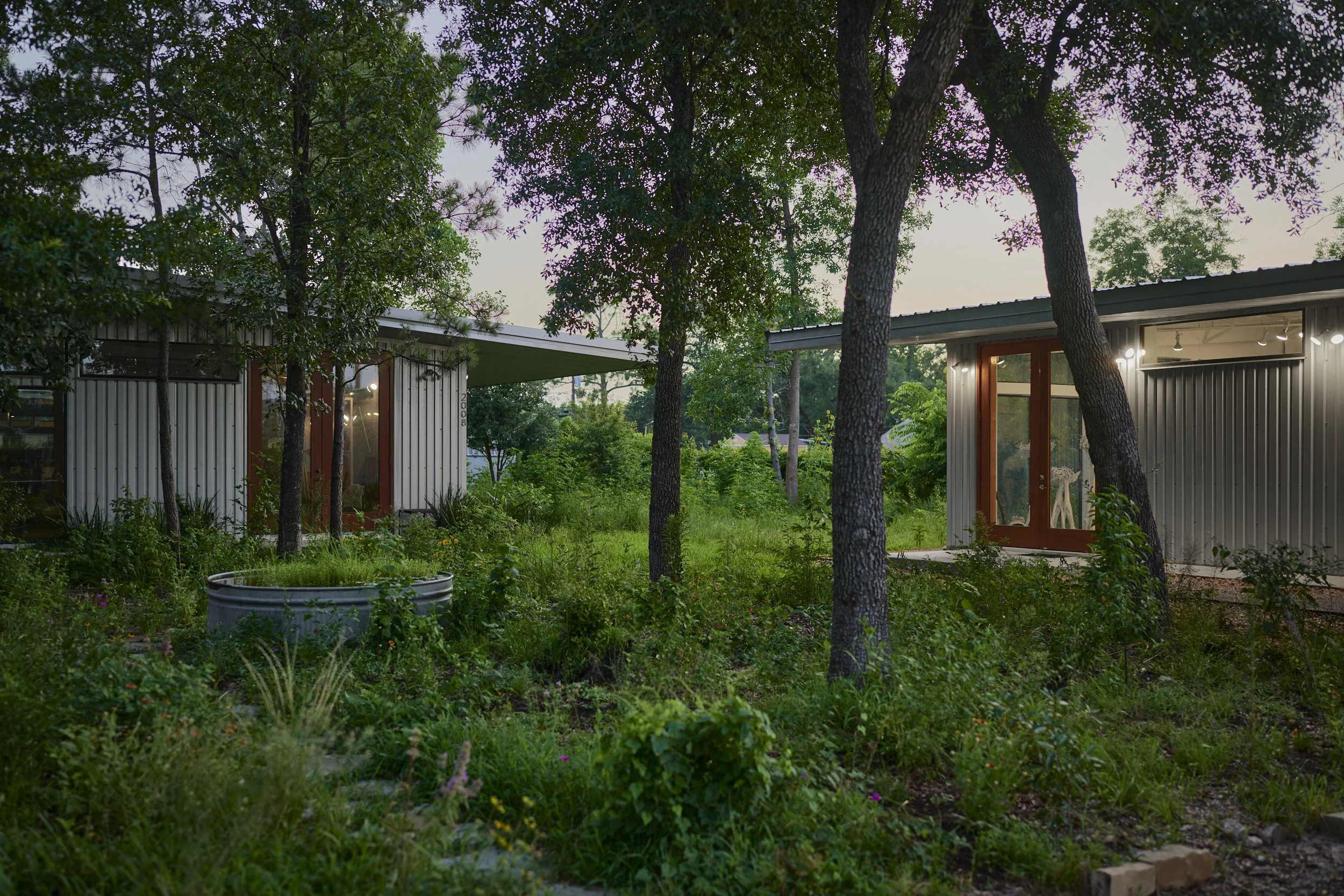
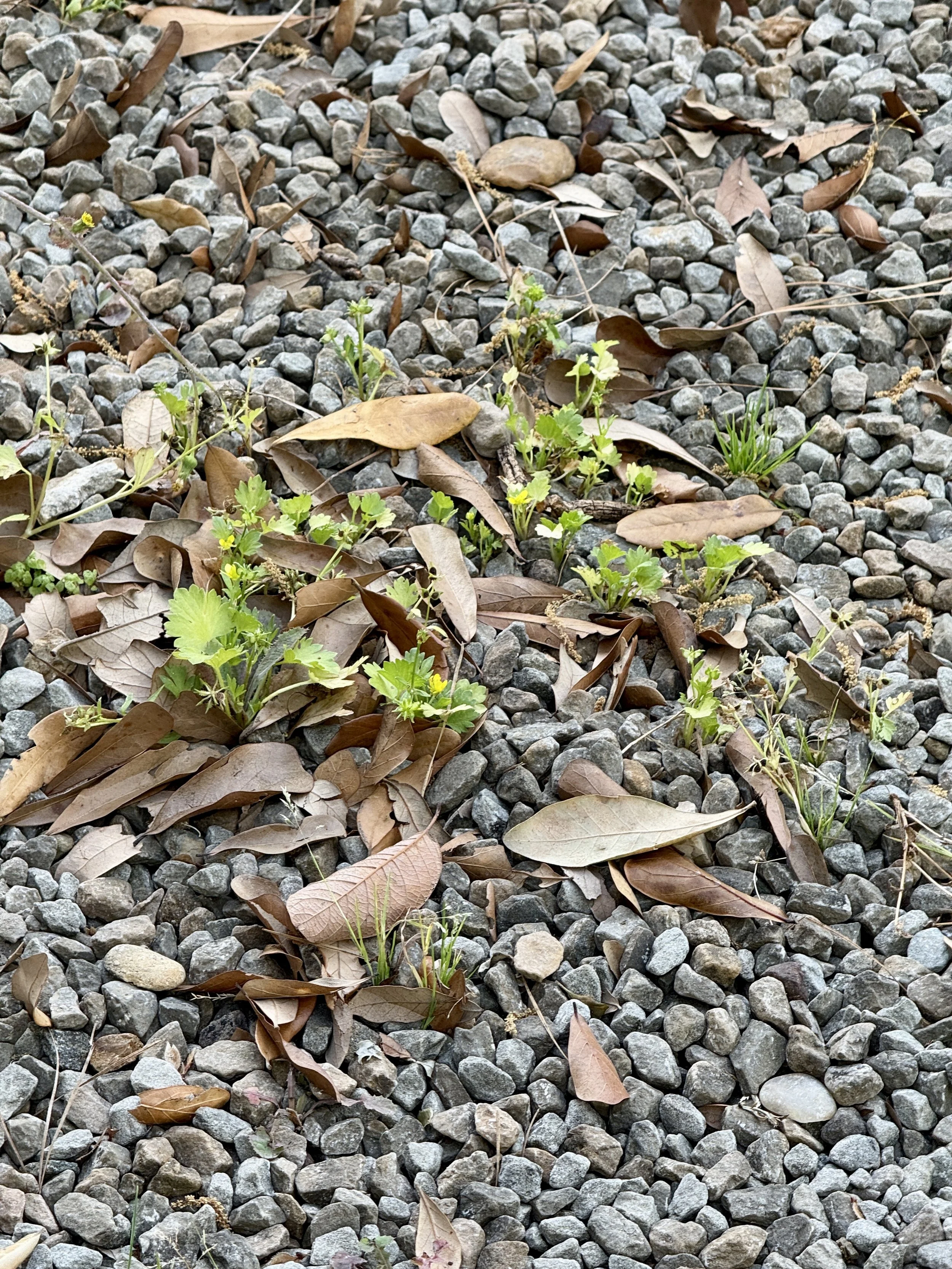
I feel it too. At my own eco-art studio, volunteer plants have started pushing up through the gravel parking lot this spring. In modern aesthetic terms, it looks unkempt. Do I groom it because that is what looks cared for to the human eye — or do I do what I preach? If I did clean it up, how? I won’t use pesticides. Pulling is more work than I can manage. I could burn them with a torch, which releases carbon — leaving the lot neat but barren. I know that option well. It’s what I did all last summer. I feel the pull of it still.
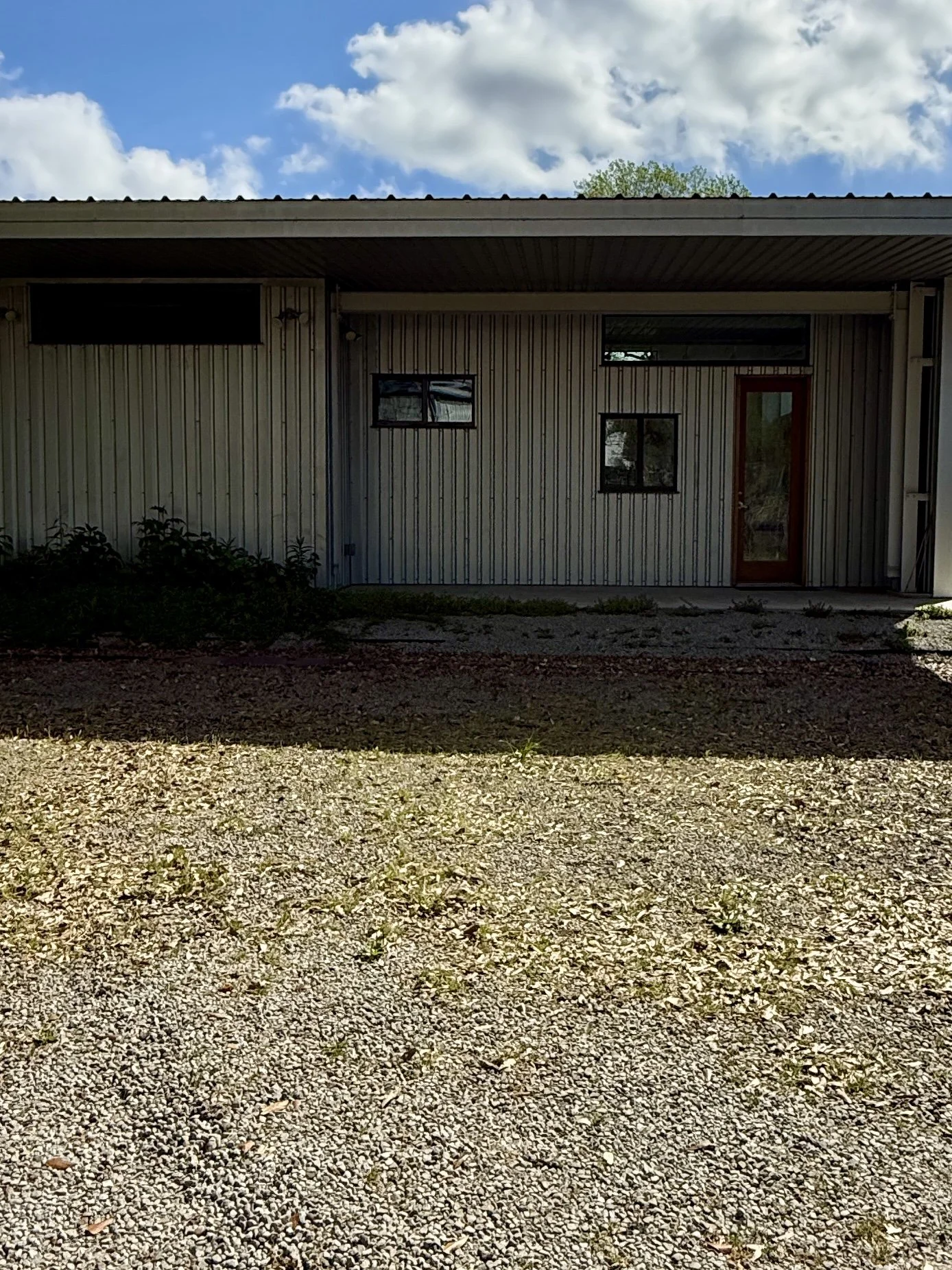
That question — how much tidiness do we owe society before we’re allowed to let something live — is exactly what this essay is about.
The ancient part of your brain that kept your ancestors alive is genuinely afraid of the tall grass. It is scanning for the snake, the bobcat, the thing with teeth. That instinct is old. It is wired in. The impulse to clear, to see, to know what’s out there — it kept people alive across tens of thousands of years. We are not wrong to have it.

But we are living in a different world now, and that old circuitry is misfiring.

Here is what the science shows: living plant systems — their moisture, their transpiration, their cooling and breathing — help move weather across the landscape. Strip those systems out and replace them with hot pavement and monoculture lawn, and you remove the very mechanisms that keep weather moving. Extreme weather increasingly gets stuck. Heat domes park over cities for days, fed not just by hot pavement but by the barren heat radiating off bare ground and fallow fields. The fires. The floods. The Guadalupe on the Fourth of July. Hurricane Harvey. We call these natural disasters — as if nature did this to us, unprovoked.

The danger is no longer the rattlesnake in the grass. The danger is the bare ground.

I know this in my body now — not just my brain. Standing in my parking lot, looking at the volunteers pushing through the gravel, I no longer see a mess. I see first responders. The plants that show up uninvited are the ones that know what the ground needs — to be covered, held, cooled, fed. They are doing the work we stopped doing when we picked up the leaf blower and the herbicide.

What would it take to shift not just individual behavior but the aesthetic itself — to make living, layered, uninvited-welcoming landscapes look like what they actually are: acts of intelligence? Acts of care?

The weeds already know what to do. The seeds are in the soil, waiting. Life is not asking permission. It is ready to come back the moment we stop yanking it out.

The question isn’t whether the land can recover. The question is whether we can — from the idea that control is the same thing as care. That bare is the same thing as clean.

The greatest threat we face isn’t what’s hiding in the weeds. It’s that we cut them all down.
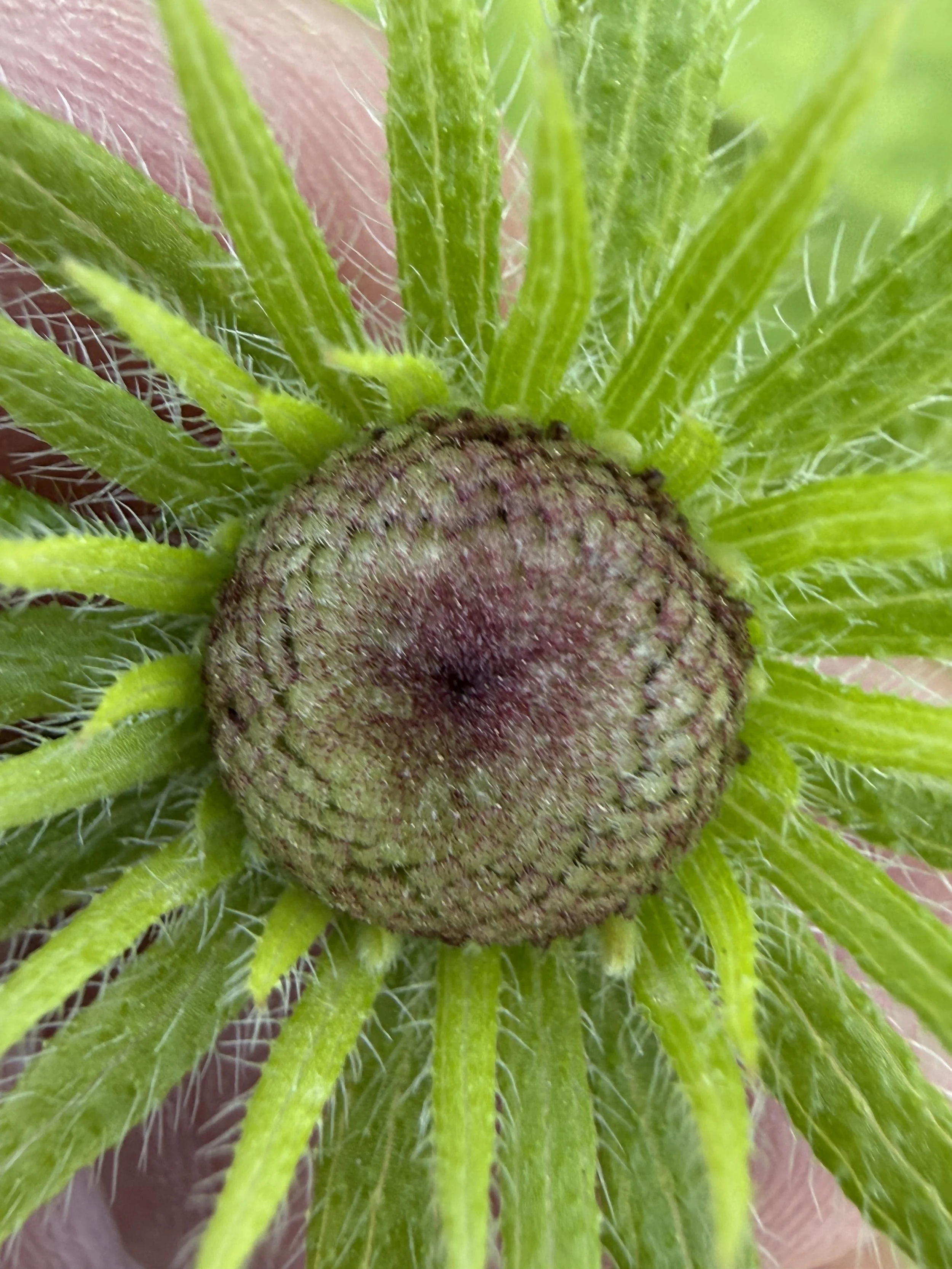
What a Purple Black-Eyed Susan in Sequel Taught Me About Resilience.

A PURPLE PETAL ON AN ORDINARY TUESDAY

I was walking through Sequel — my living sculpture — when I noticed it. A cluster of Black-eyed Susans with buds gone deep, moody purple. My first reaction was that something was wrong. That reaction is learned. My instinct — the older, truer one — was curiosity. Just ask why. The more I looked, the more I questioned. The more I questioned, the more curious I became. I wanted to understand what was actually happening.

So I went down the rabbit hole.

Turns out, that purple color isn’t a disease. It’s not dying. It’s responding. When a Black-eyed Susan experiences stress — cold nights, too much rain, soil that can’t deliver the phosphorus it needs — it produces something called anthocyanin. A pigment. A protective chemical the plant makes just to cope.

The same pigment that colors blueberries. Red cabbage. Autumn maples.

The plant doesn’t collapse under pressure. It changes color.

And once the soil warms up, once the water drains, once the nutrients find their way through, it returns to green. It was never permanently altered. Just temporarily transformed.

Sequel keeps showing me things I didn’t plan for, didn’t design, couldn’t have predicted. A purple petal on an ordinary Tuesday is its own kind of gift.

In Defense of the Uninvited

I think about weeds.

Not in an anxious, what-do-I-do-about-them way. More in a — wait, who decided these don’t belong here? — kind of way.

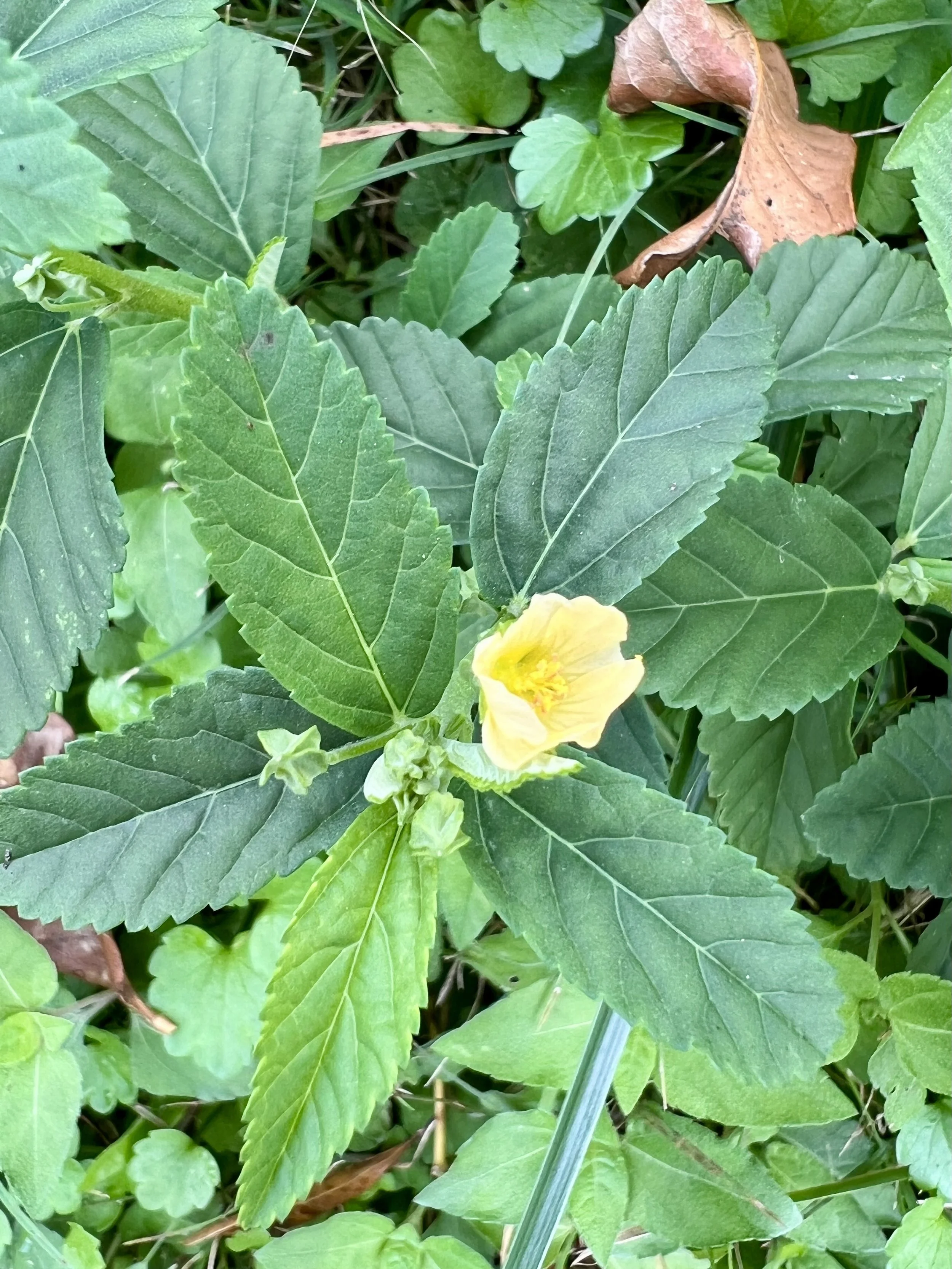
I look at these plants. Really look at them. They showed up, figured it out, and started doing the work. Nobody planted them. Nobody watered them. They just arrived, broke through whatever burning hot surface was available, and got on with it. You have to admire their spirit and determination.

We call them invasive. We call them a problem. And sometimes, they are. I am a die hard native plant enthusiast — however I have been uncomfortable with this reflex to yank out anything that wasn’t there before — particularly in cities, especially on abandoned lots and cracked pavement and post-industrial nowhere — as if those places had some pristine original state worth protecting.

They don’t. And these plants seem to know it.

Here’s what I’ve come to believe: weeds are Earth’s first responders. When the ground is left bare, tilled, stripped, burned, flooded, or just forgotten — Mother Earth sends them in. They are biologically programmed for the site’s specific conditions, temperature, moisture, daylight — speed healers. They lower soil temperatures, protect the earth’s surface, feed what lives below ground, slow rainwater, reduce erosion, sequester carbon. They show up precisely when and where they are needed most. They do not waste energy or resources.

Here’s what I’ve also noticed: the spots where something is growing — even the stuff we’re not supposed to want — are almost always healthier than the spots where we’ve cleared everything out in the name of keeping it native or neatly manicured. Bare ground isn’t neutral. It’s just… empty. It’s dead. And dead empty doesn’t really serve life.

So I’ve changed how I work. When a volunteer appears somewhere I wasn’t expecting it, I no longer yank it out in a knee-jerk response. I stop — look — think. Why was it sent in? What is it doing? Is it holding soil? Feeding something? Offering shade, cover, a landing pad? I weigh what it’s providing before I decide what to do about it.

The real question isn’t where did this come from? It’s what is it doing now that it’s here?

I’m not saying throw out the whole idea of caring about native ecosystems. I am still a die hard native plant enthusiast. I’m saying the city lot behind a parking garage is probably not the hill to die on. And the plants that moved in there — the ones in these photos — they’re working with what exists, not what existed.

There’s something I respect about that.

Just maybe they know what they are doing.

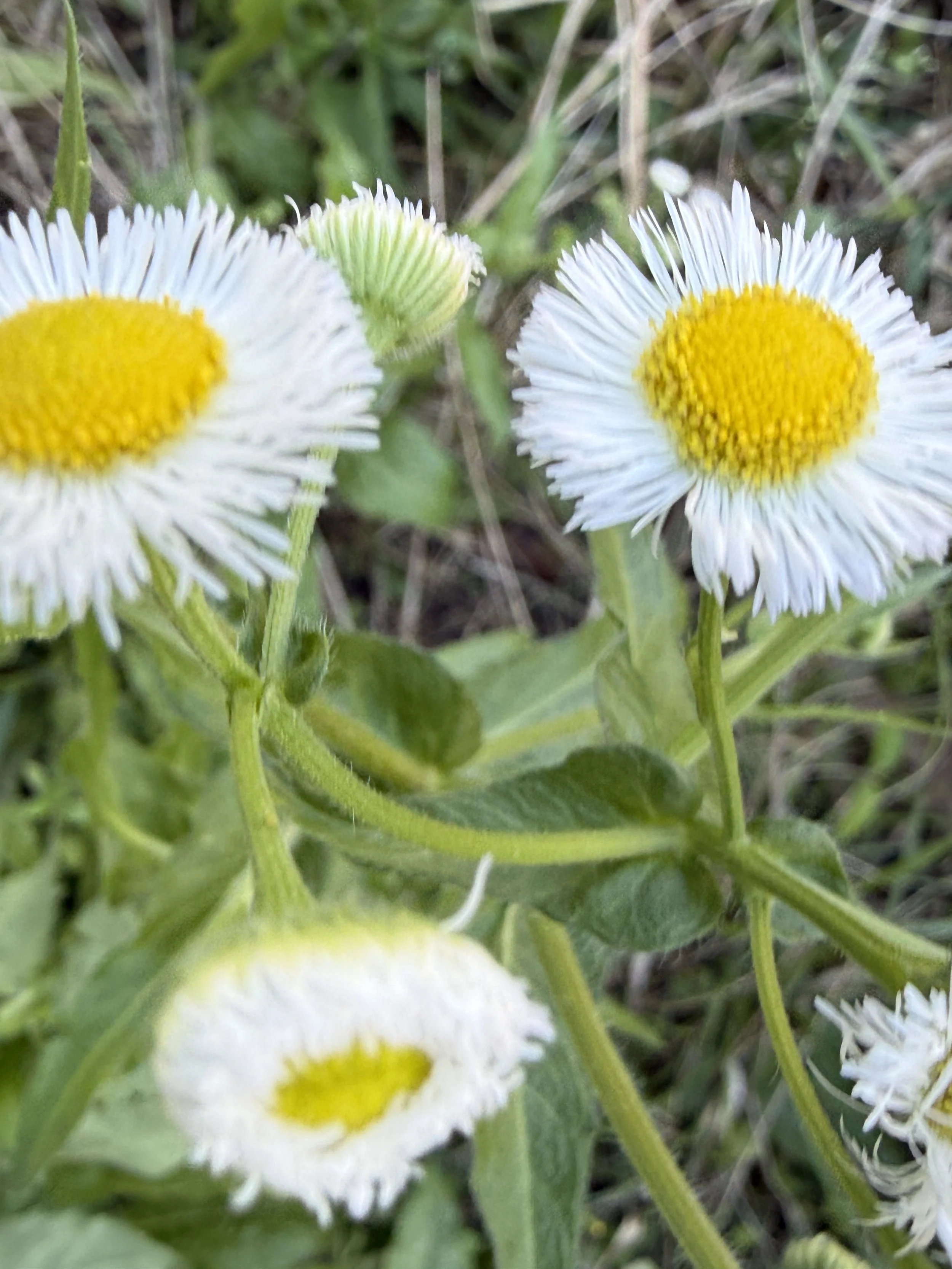
Take daisy fleabane. Erigeron annuus. Dainty and a little scraggly when alone but stunning in a bunch, shows up in places nobody planted anything intentionally. Easy to walk past. Easy to dismiss.

Here is what it’s actually doing.

It’s a pioneer species — which means it arrives first, on bare and broken ground, before almost anything else is willing to try. Disturbed soil, compacted soil, the forgotten strip between a parking lot and a fence. Fleabane doesn’t care. It moves in, stabilizes the surface, and starts feeding things. Bees, wasps, flies, small butterflies. The Lynx Flower Moth uses it as a host plant. Goldfinches pick through the seeds come fall like they’ve been waiting all season.

Nobody sent it an invitation. It just knew where it was needed.

That’s the plant in this photo. Doing exactly what I described. Showing up, figuring it out, getting on with it.

Easy to pull. I say — easy to love.

Rooted in the Shallows

Pontederia cordata · An Obsession

I discovered pickerelweed while researching plants for the third and fourth panels of Unfolding Hope. The more I learned, the more I loved it.

Heart-shaped leaves. Purple and passionate, emerging from the dark water. On so many levels, it belonged in the work — in the story.

Pontederia cordata rises from muddy shallows and still backwaters. It stabilizes shorelines without fanfare. Its rhizomes thread quietly through sediment — whole colonies emerging from a single unseen root network. Pollinators adore it. Ducks eat their seeds. Its stalks are edible. It provides constantly and abundantly, and then it spreads — slowly, inevitably — into something more.

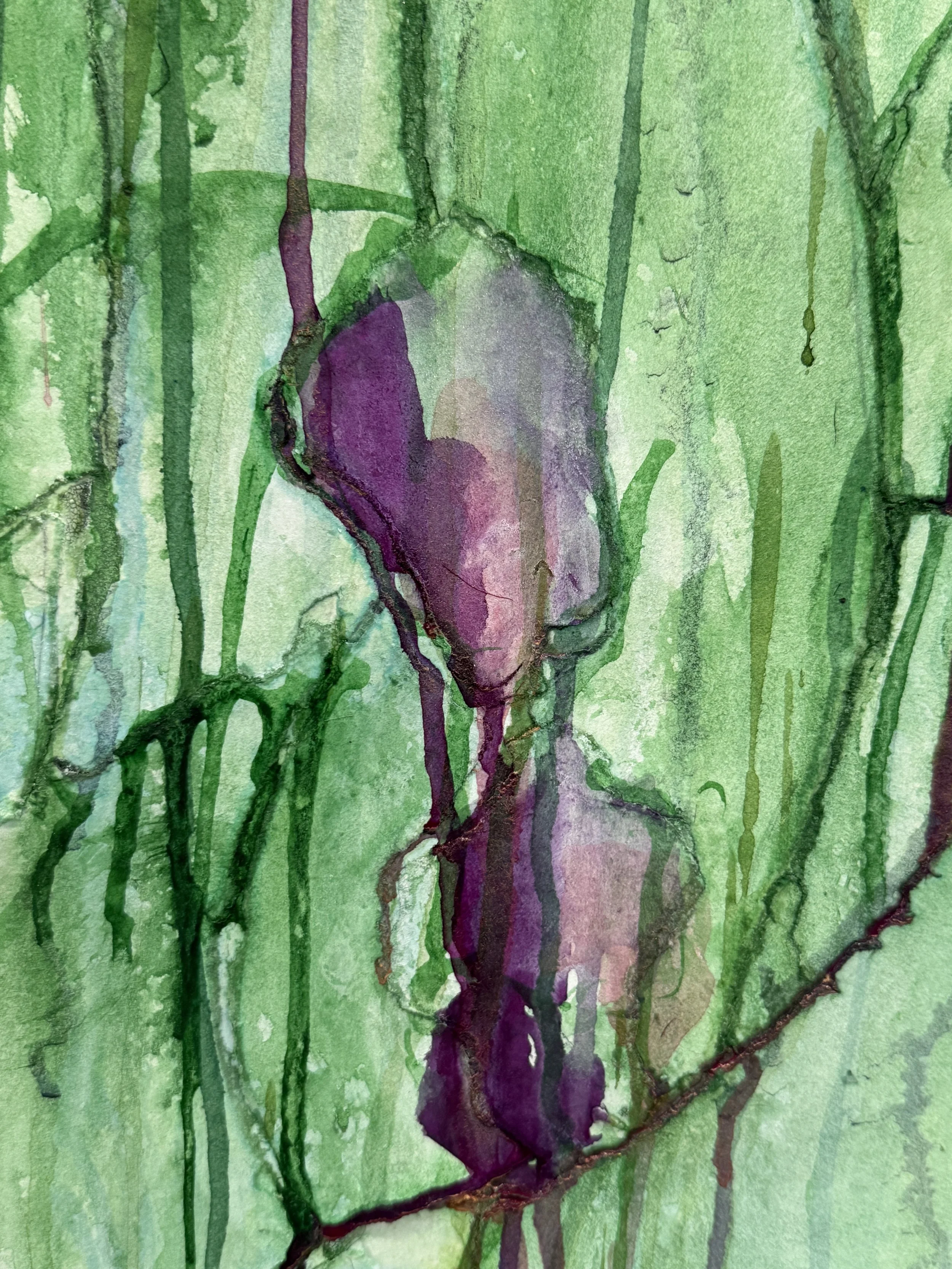
Working on Unfolding Hope, I became obsessed with this plant. In its rhizomes, I found symbolism — drips reaching through sediment, violet pooling like flower heads heavy with rain, cracked gold lines tracing the veins beneath a leaf.

Rooted in muck. Growing toward light. Feeding everything around it.

I wish everyone could obsess on pickerelweed. The world would be better.

Passionate for Pre-K

This post will serve as a journal for the work.

“My four-year-old daughter saw her first butterfly and was terrified.”

— Lawndale Art Center patron, 2022

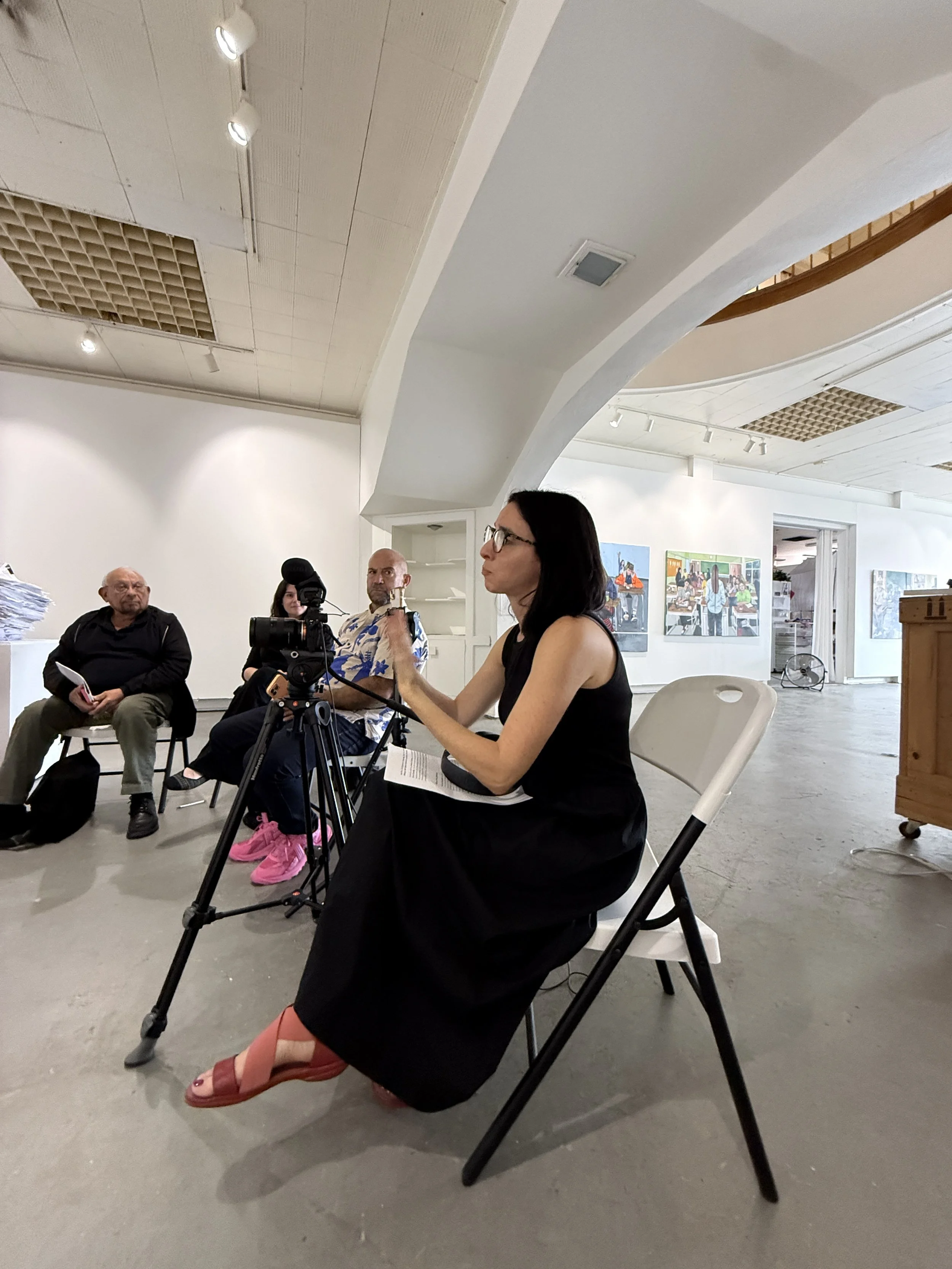
This remark, shared during my Symbiosis artist talk at the Lawndale Art Center, stopped me cold. Imagining a generation untouched by the gentleness and fragility of wings — this is a sorrow too heavy to bear and do nothing.

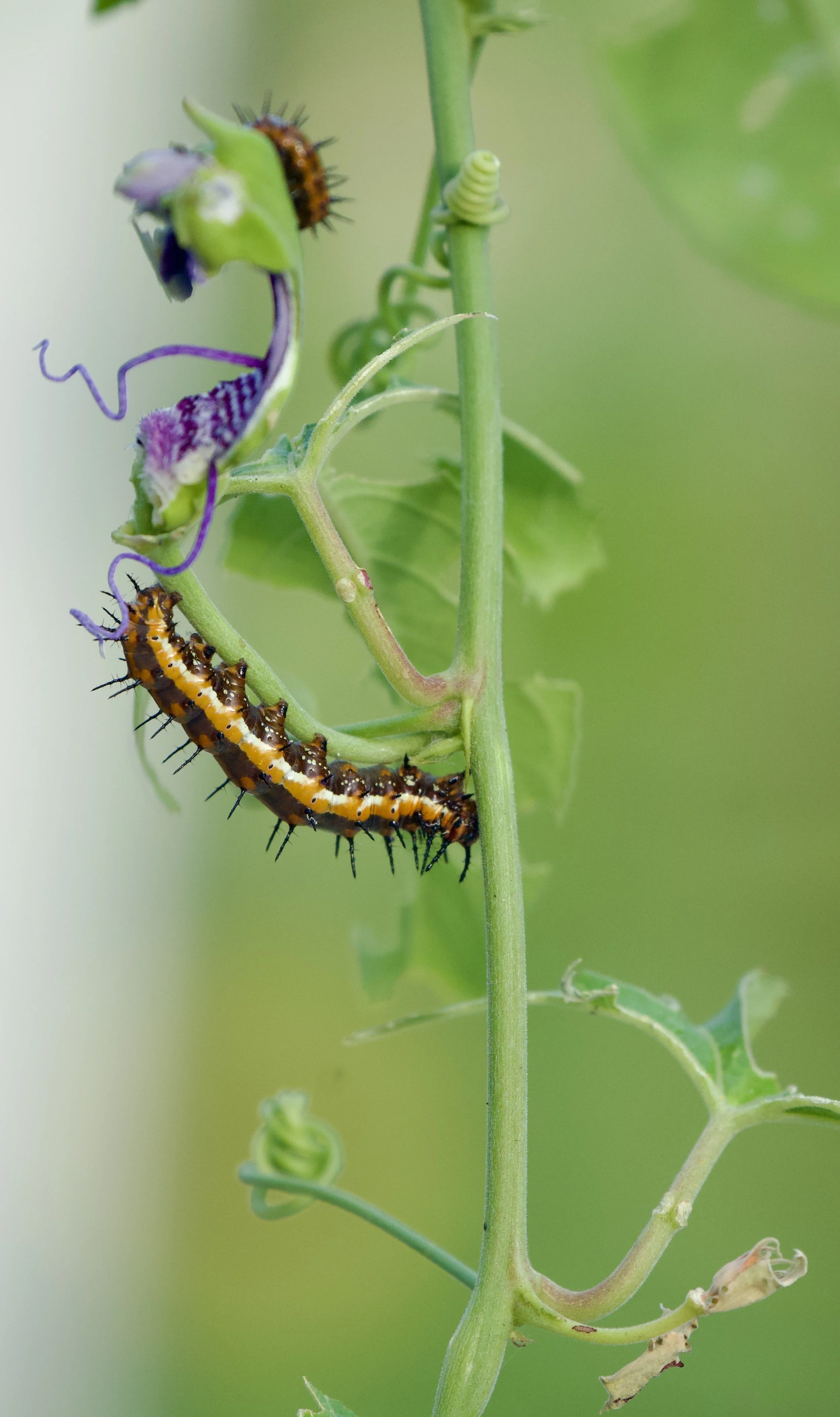
Wildlife plays a vital role in early childhood brain development. At the very least, let each school day begin with a procession past living poetry: vines sculpted in fragrant blossoms of lemon honey, trembling with the promise of caterpillars, alive with the fragile ballet of butterflies. Each child deserves to develop in the company of nature’s intelligence.

With small acts of passion, this is within reach.

DESCRIPTION

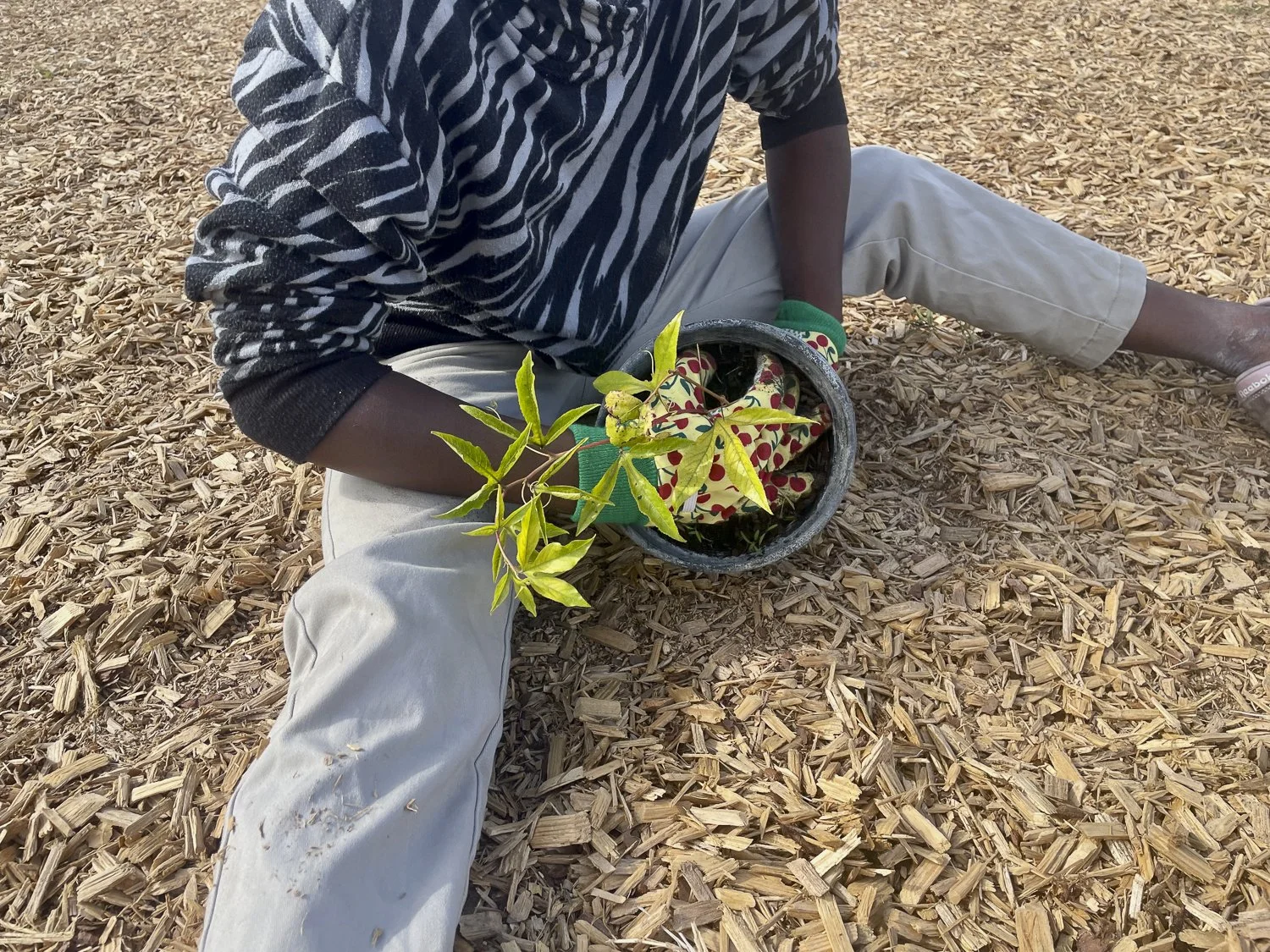
Passionate for Pre–K is a living social sculpture installed in the fall of 2025 on the chain-link fences surrounding the playground at Clemente Martinez Elementary School in Houston, Texas. I sourced approximately 90 Texas native vines from my three living sculptures: Symbiosis at the Lawndale Art Center, Deeper Than That at a private residence, and Sequel, located next to my art studio in Acres Homes. Passion vines are highlighted in the mix. Sourcing from multiple locations supports the DNA diversity of the ecosystem. Hope Stone and landscape architect Caroline Craddock coordinated this installation with the school administration.

THE PROCESS

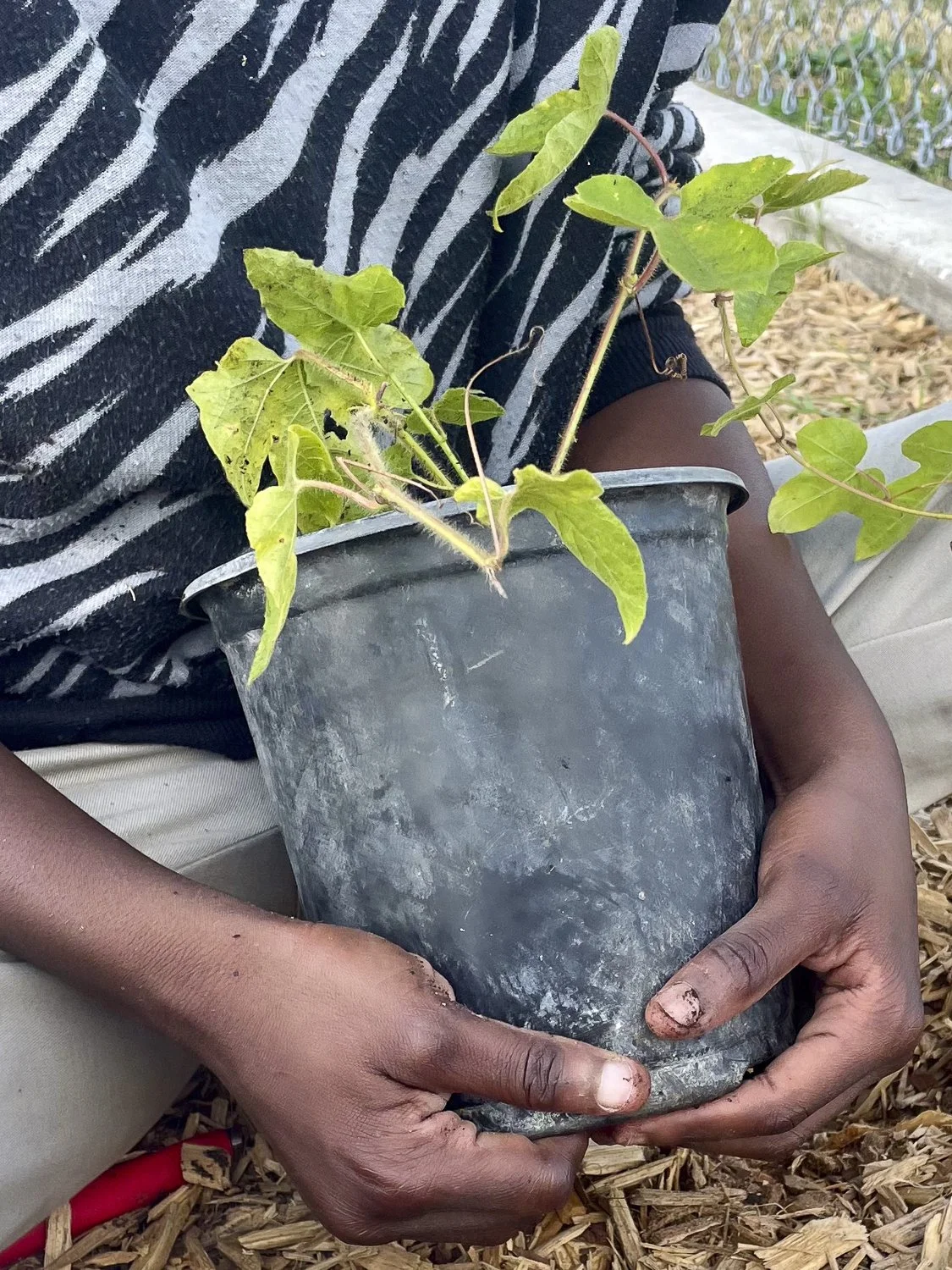
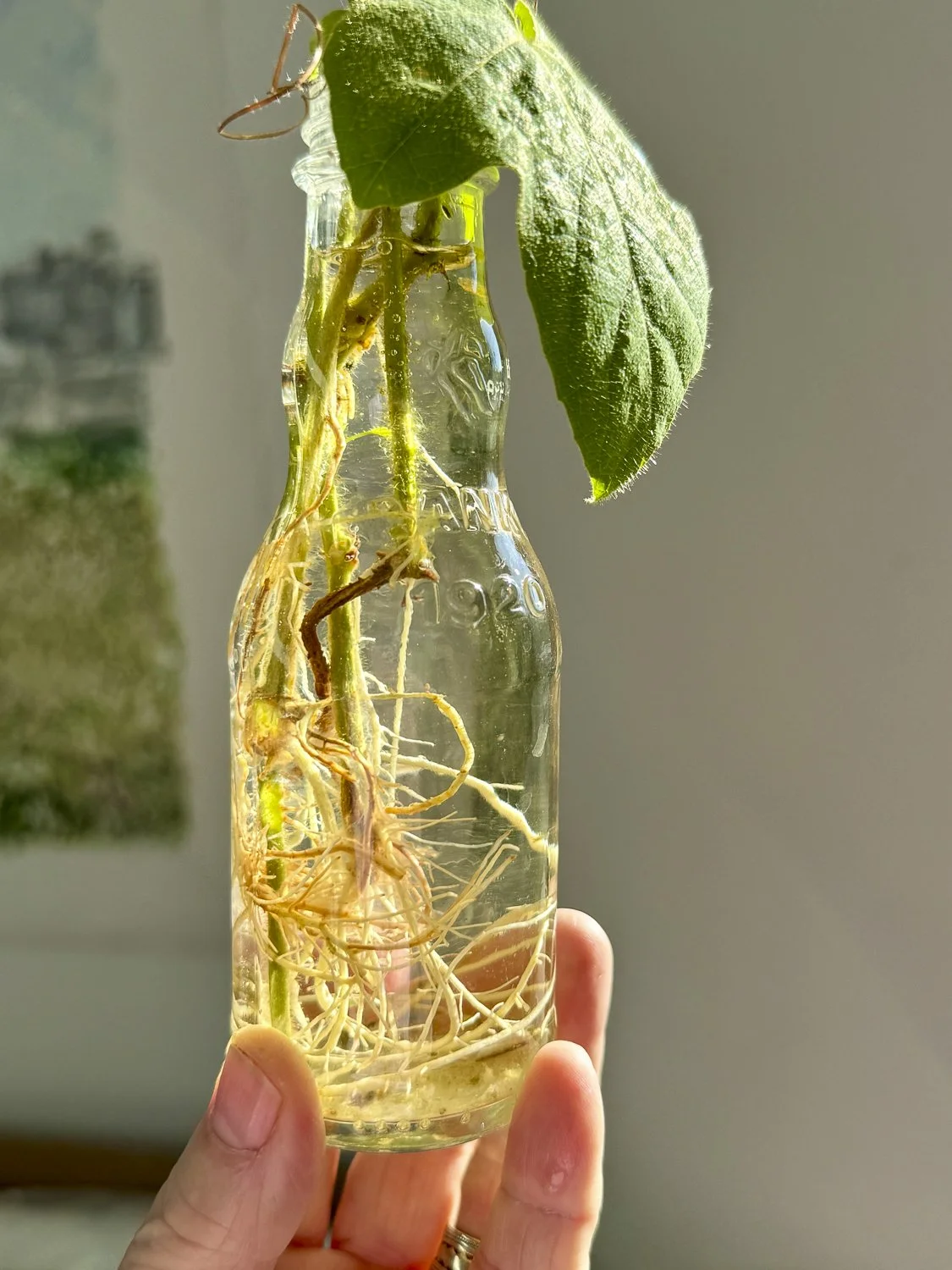
Taking tender 10-inch vine cuttings, using root stimulator and native leaf mold to propagate the plants. I selected 90 plants of different species to support a variety of wildlife and accommodate different growing seasons. The school community assisted with the planting in early October.

LONG-TERM GOAL

As ecological knowledge from Symbiosis has taken root in Deeper Than That, which has grown into Sequel, the hope is that Passionate for Pre–K will act as a catalyst. Annually, new tendrils — carefully propagated — will be gifted from Clemente Martinez Elementary School to neighboring schools, allowing the spirit of regeneration to spread from playground to playground, blossoming into a living legacy of wonder and natural intelligence.

PLANT LIST

May pop, Passiflora incarnata

Stinking passion vine, Passiflora foetida

Various proven passion vine hybrids

Trumpet honeysuckle, Lonicera sempervirens

Hairy clustervine, Jacquemontia tamnifolia

Muscadine grape, Vitis rotundifolia

American wisteria, Wisteria frutescens

Crossvine, Bignonia capreolata

Carolina jessamine, Gelsemium sempervirens

COLLABORATION

Passionate for Pre–K is a collaboration with Hope Stone, Caroline Craddock, and the Clemente Martinez Elementary School community. This would not exist without them, or without the incredible volunteers who gave their time and hands to this work.

NOVEMBER 2025 UPDATE — SETBACK & RESILIENCE

During phase two, a fifth-grade class carefully planted the remaining plants for the installation. The following week, the eager students returned to check on their plantings — and found devastation. A child left unattended in the play area had pulled up plant after plant, leaving only 7 of the original 90 still alive.

This is heartbreaking and frustrating — but it highlights exactly how important this project is. The lessons a garden teaches about social responsibility, care, and wonder are fundamental. I will not let one act derail it. Every child has the right to be inspired by nature.

I am propagating new cuttings. We plant again in the spring.

Special thanks to Caroline Craddock for capturing these moments in photographs.

—special thanks to Caroline Craddick for capturing these moments in photos.

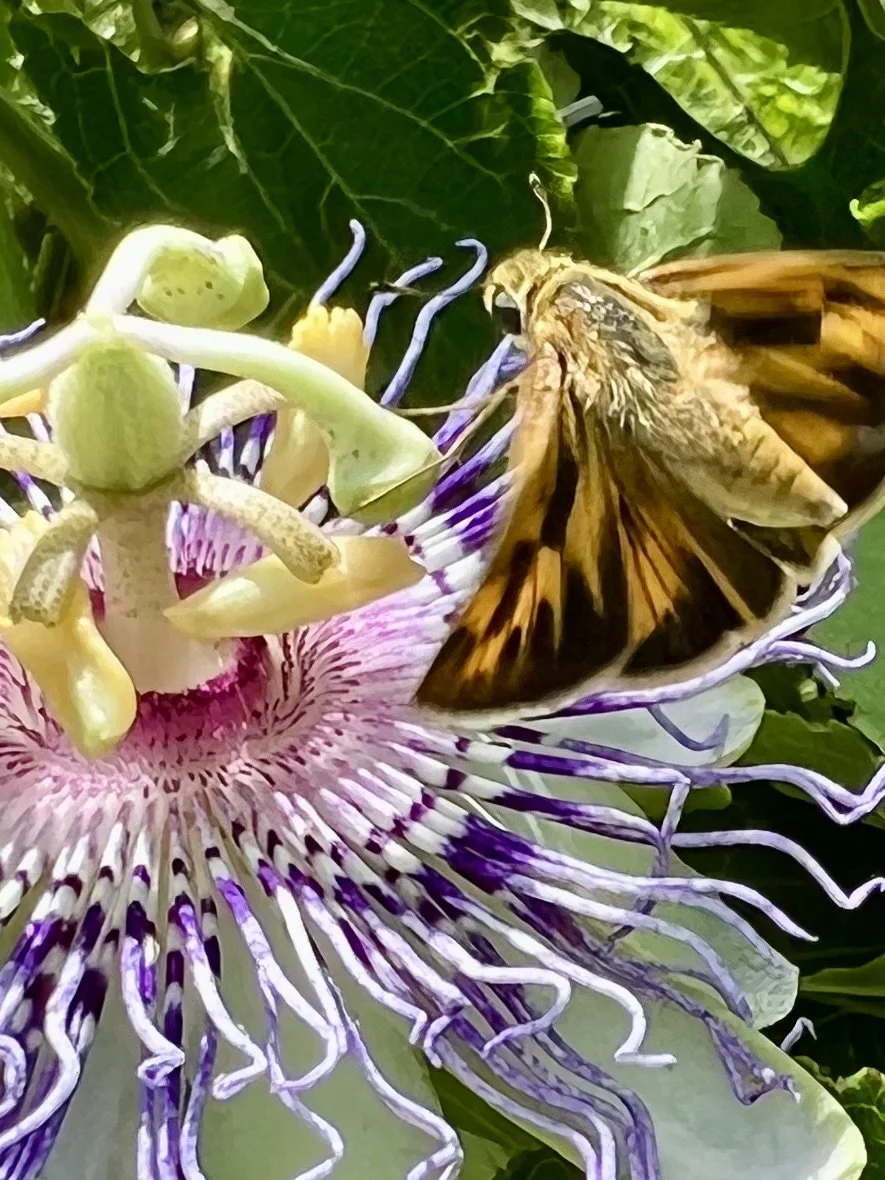
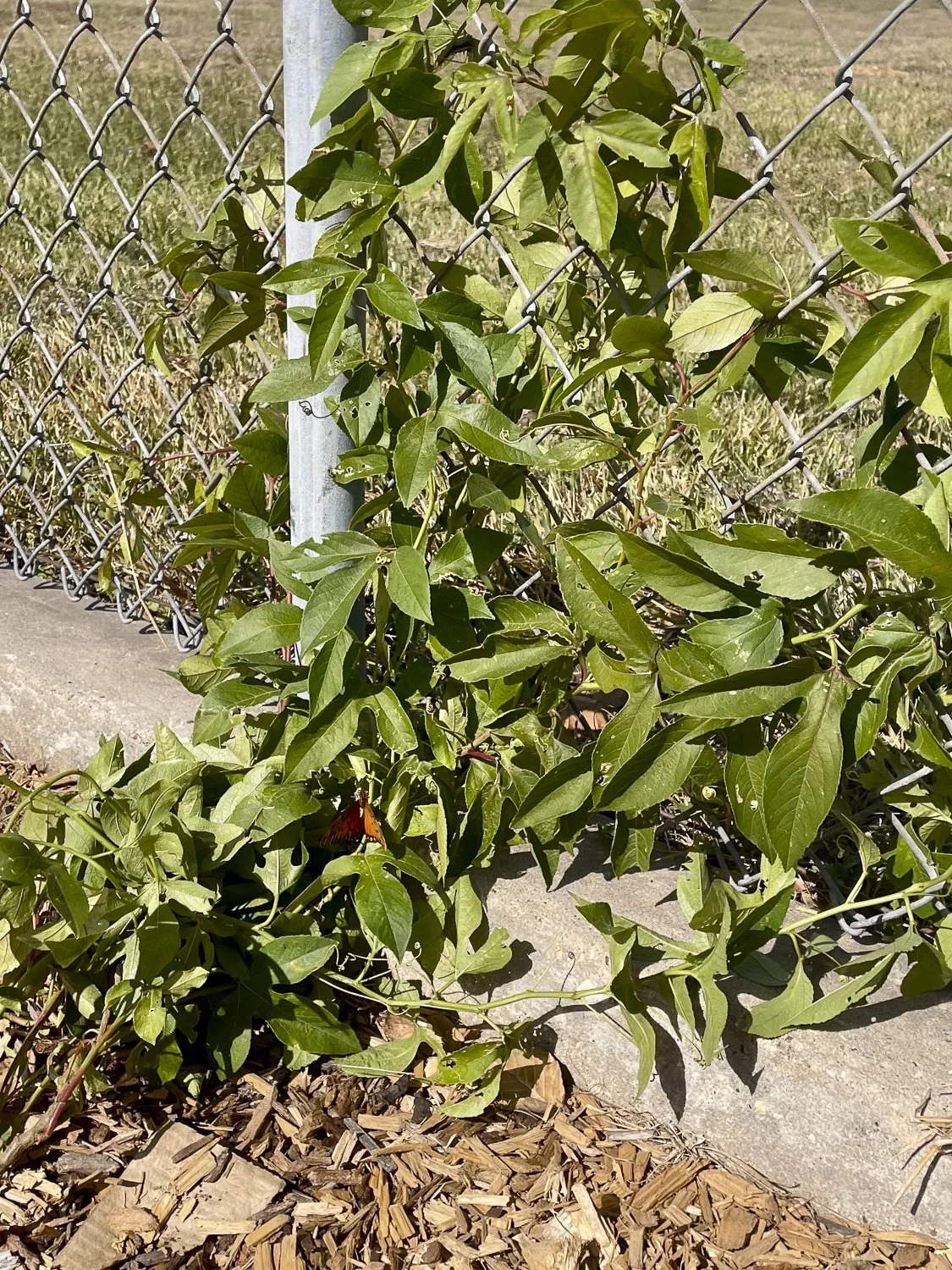
One of the plants from the previous planting that was part of the vandalism. Notice the gulf Fritillary butterfly hiding in the shadow.

propagating a passion vine in water.

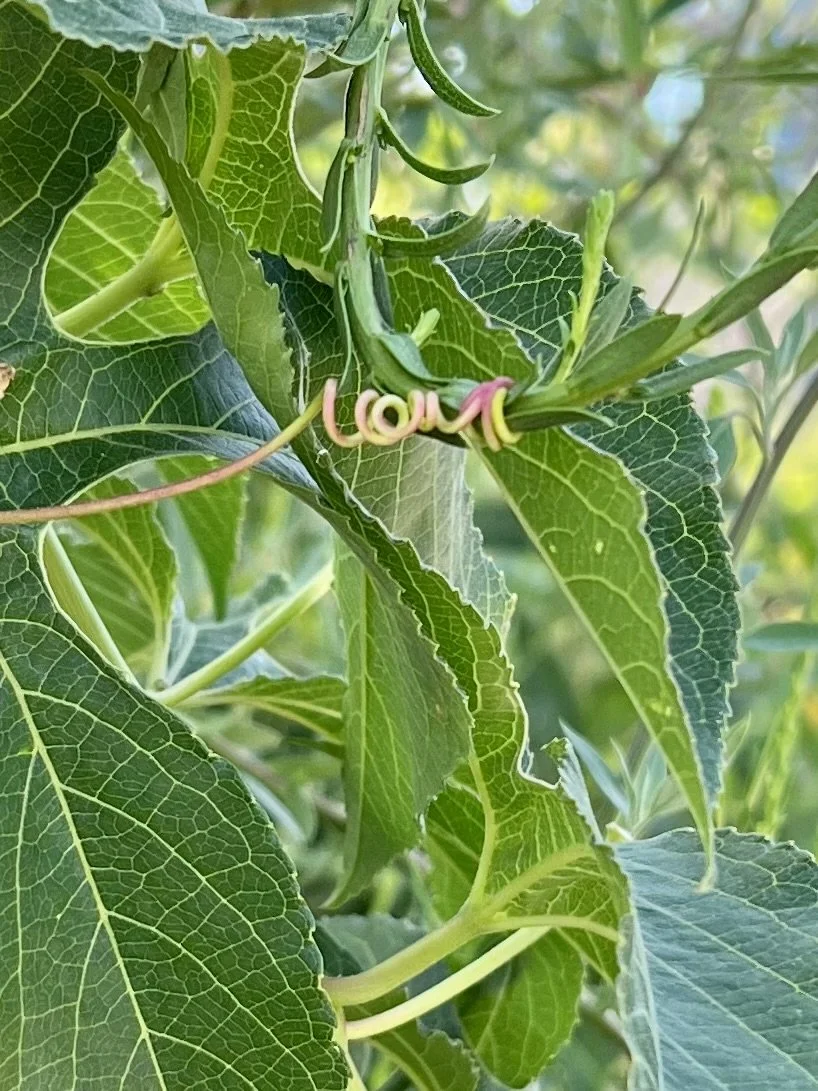
The Stinky Passion flower’s scientific name is Passiflora foetida. It is also known as Fetid Passion Flower, Love-in-a-mist, Wild Maracuja, and running pop.

It has sticky, feathery, leafy bracts that surround the flower and fruit. When an insect tries to eat the fruit, it gets caught in the sticky bracts and dies. The plant then secretes a digestive enzyme and absorbs the nutrients.

Generational Amnesia and Regeneration.

My husband Curtis and I drove to Christoval, Texas for a public hummingbird tagging event. I had been to a private tagging before, but this one was different. The public was invited in. Children were there.

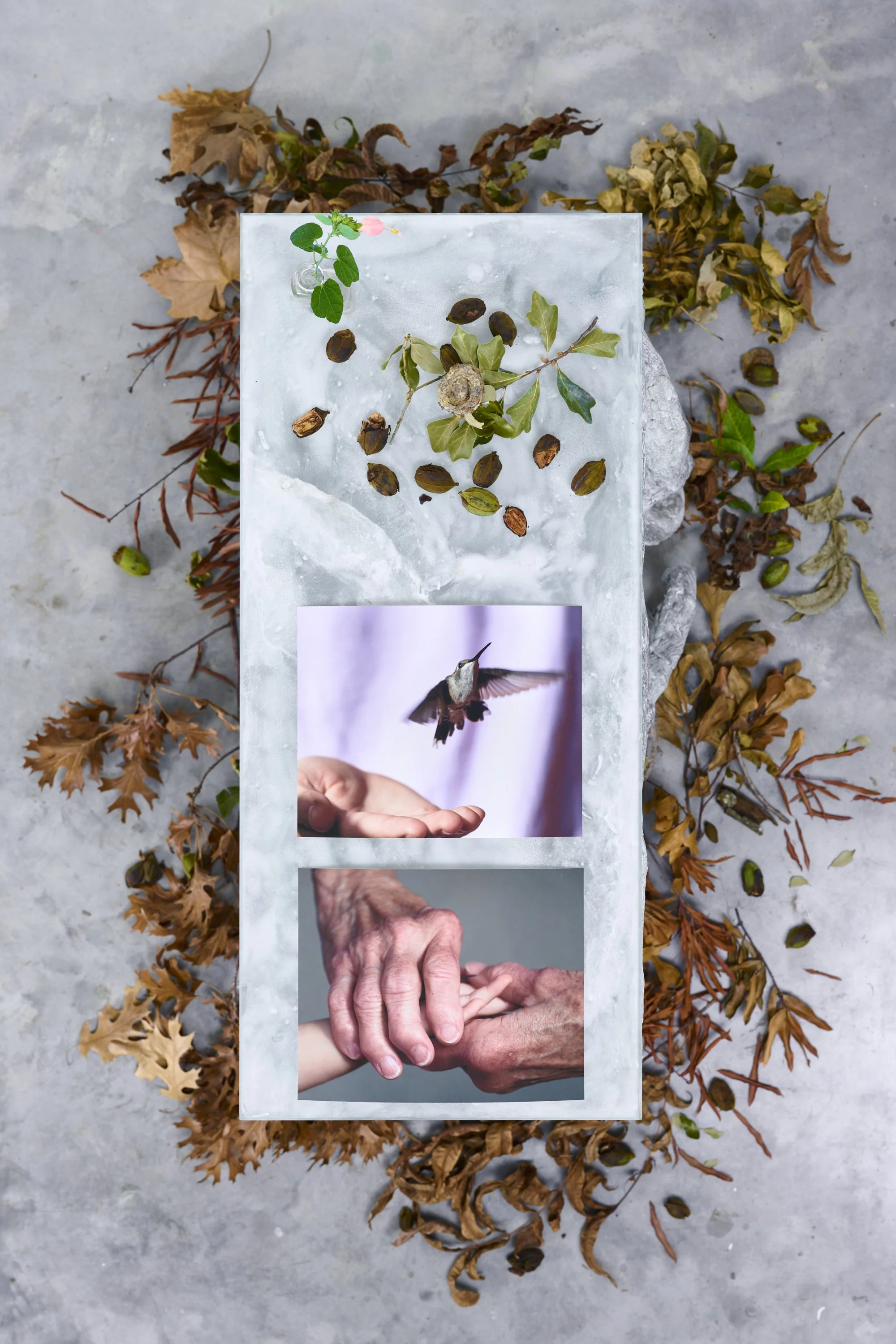
Biologists carefully capture tiny hummingbirds to collect vital information — sex, age, length, weight. After gathering the data, a skilled volunteer carefully cradles each delicate bird in the palm of an observer’s hand.

The tiny creature briefly pauses. You hold your breath. You feel an almost mechanical vibration, like a toy stuck in the “on” position — the rhythm of its heartbeat. Then, in an instant, it is back into the wild.

It wasn’t until I looked at my photos afterward that I saw it — a trusted volunteer placing the bird in a child’s hand. The transfer of knowledge, right there in the frame. A tiny beating heart. A child holding their breath.

That moment — the exchange of a tiny life from seasoned hands to smooth palms — is a living metaphor for what it means to nurture the passing of knowledge and care across generations. It is the story of regeneration.

This is what generational amnesia looks like in reverse.

Generational amnesia — also called shifting baseline syndrome — describes how each generation views the environment they inherit as the normal standard, even if it is significantly more degraded than that of previous generations. We absorb the world we are born into. We mistake it for the world as it is.

In the 1980s in Houston, our garden was filled with hummingbirds. Their vibrant presence shaped our daily conversations, our sense of place, our sense of wonder. They were part of our love story. Curtis proposed and hummingbirds were there. We miss them.

Today’s children in Houston have likely never seen one in a garden. They have no baseline for what’s missing. And that is the whole loss — not just the hummingbirds, but the memory of them.

Breaking this cycle requires hands willing to reach out and moments prepared to receive. It demands nurturing curiosity, empathy, and attention in children and adults alike. It calls for the deliberate passing on of more than just facts — but also the emotions and experiences that bind us to the world beyond ourselves.

The hummingbird’s pause in the palm of a stranger’s hand is brief. But it is enough. This is how we pass down the endangered knowledge of our natural history now — not around a campfire, not through a grandmother’s photo album, but in a field in Christoval, Texas, with a tiny beating heart in your hand and a trusted volunteer saying: this existed. Pay attention


.

The weight of truth

The concept of the “weight of truth” emphasizes the essential role honesty plays in our society and the significant pressures that accompany it. This raises an important question: when does the acknowledgment of new scientific discoveries and truths, particularly those overlooked by community leaders, become an ethical or even a justice issue?

In the fields of soil science and environmental studies, we are witnessing the alarming effects of extreme weather patterns, land subsidence, and the loss of biodiversity. Urban policies shaped by city councils, homeowners associations, and societal norms often worsen these challenges. The focus has shifted from environmentally harmful practices, such as maintaining monocultures of non-native grasses using gas-powered tools—which contribute to air and water pollution and the use of toxic chemicals—to a more regenerative approach.

These decisions not only have profound implications for our health, particularly for children who are at an increased risk for cancer, but they also endanger the fragile wildlife biodiversity that is crucial for the planet’s well-being.

Once again, I ask: when does the recognition of new ecological truths begin to outweigh the legacy of colonial landscapes? It is time that our leaders and institutions bear the weight of truth. Let’s encourage and support them. I'm thinking about the situation in Houston, where our waters drain into the Gulf of Mexico. Homeowners are required to OBTAIN A PERMIT to AVOID using cancer-causing chemicals, and reducing lawn mowing which significantly decrease emissions—up to eleven times more than those produced by a new car. This approach supports biodiversity, helps maintain the water table, and prevents land subsidence. Shouldn’t homeowners who want to use chemicals to maintain their perfect lawns and gas-emitting machinery be required to have a permit?

La Mancha's Sequel: A Mindful, Climate-Smart Urban Landscape. Redseed Plantains

January 16, 2025
Yesterday, It was raining, and Sequel was quiet and soaking in delightly rainwater. It was a great time to look closely; I was struck by the vibrant community of Redseed plantains flourishing beneath the canopy of trees. Under trees is usually an area where plants struggle to find their footing. However, This Redseed, who I am more familiar with amidst neglected landscapes and cracked sidewalks, bursts with life around these trees. It's as though the earth itself has decided to paint a masterpiece of resilience and beauty with these tiny, tenacious greens. The sight is a comfort, a reminder of nature's ability to reclaim and regenerate.

Here it is in early January. We have had one cold spell and expect another next week. The plantain leaves measure four inches tall; their bright green broad leaves blanket the area like you might expect in the spring. They mimic a verdant duvet that, for now, remains unassuming but undeniably beautiful.

To an unsuspecting eye, these plants may seem inconsequential. Yet, with a bit of research, I've discovered their incredible significance. They are the unsung heroes, supporting a diverse array of wildlife. The Redseed plantain is more than just foliage; it offers sustenance to bobwhite quail, Rio Grande wild turkeys, white-tailed deer, cattle, and the Texas tortoise. The seeds serve as nourishment for game birds like scaled quail, bobwhite quail, and mourning doves. These plants are also invaluable to insects, providing habitat and sustenance to many, including the stunning Buckeye butterflies that graced this space on January 3rd.

This living tapestry serves another crucial purpose in the conservation of our environment. Redseed plantain is a remarkable ally in our efforts to combat erosion. Its fibrous roots delve deep into the earth, breaking through compacted soil, stabilizing it, and helping to restore its vitality. This is nature’s foundation: a grassroots effort exemplified by these short tap roots, acting as first responders in reviving hardened ground.

The site I am cultivating, La Mancha's Sequel: A Mindful, Climate-Smart Urban Landscape, is meant to be a testament to our potential for harmonious coexistence with nature. The project spans 7,500 square feet, a social sculpture intended to demonstrate how thoughtful decisionsn making interwoven with nature can create regenerative environments. As I chronicle the daily developments here, each entry becomes a dialogue between myself and the land, a continuous exchange that shapes both the space and my understanding of it.

Observing the Redseed plantains, thriving against the odds, I am filled with a deep sense of reverence and wonder. They remind me that even the most unassuming forces can make a profound impact. In this interplay of plant and purpose, I find inspiration for what La Mancha's Sequel can become—a living sculpture that speaks to the possibilities of urban landscapes, rich with life, responsive to climate, a mindful corner of the world where nature and humanity flourish side by side.

Pink spotted Hawkmoth cacoon overwintering in the roots.

Redseed roots with a sprig of horseherb and the cacoon.